BANGKOK – L’Oréal Paris, the world’s number one beauty brand and part of the L’Oréal Group, introduces Han So-hee, a rising star who is already popular in Korea, as Thailand’s newest presenter for hair care products.
The campaign images highlight her charisma. She has soft and smooth hair, and the colour complements her appearance well. Han So Hee’s hair care products include Elseve Extraordinary Oil Hair Serum, Elseve Hyaluron Moisture Product Line, and Excellence Hair Colouring Products. The advertising campaign will debut in March.
Ms. Abigail Chi, Head of Brand Business, L’Oréal Paris Hair Products, stated, “With a style and character that shine out, she is precisely what the brand is seeking: a role model for the next generation to have confidence and their own personalities.”
According to Allkpop, the most recent photoshoot of Han So-hee, she emphasised the rich colours of ‘L’Oréal Paris’ hair colouring products with her attractiveness.
Han So-hee has been active as a model since 2016. She began her acting career as a supporting character in the television series Money Flower (2017), 100 Days My Prince (2018), and Abyss (2019) before transitioning into lead roles in The World of the Married (2020), Nevertheless (2021), My Name (2021), and Gyeongseong Creature (2023–2024).
She recently visited Bangkok, Thailand, to promote the series Gyeongseong Creature with leading actor Park Seo Joon and director Jeong Dong Yoon at the end of December, where they were greeted by a large audience of Thai fans.
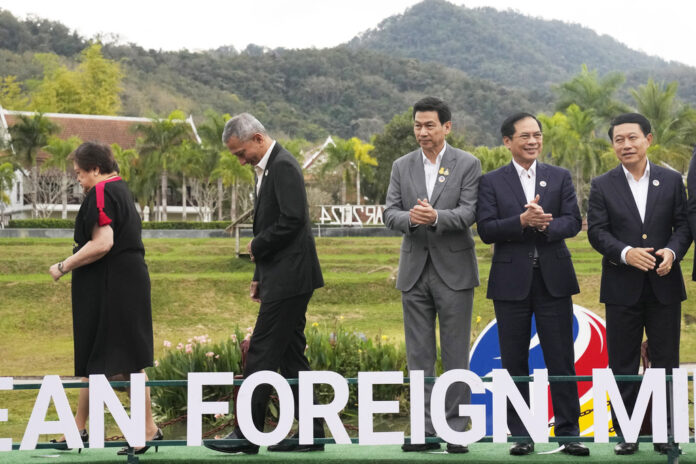
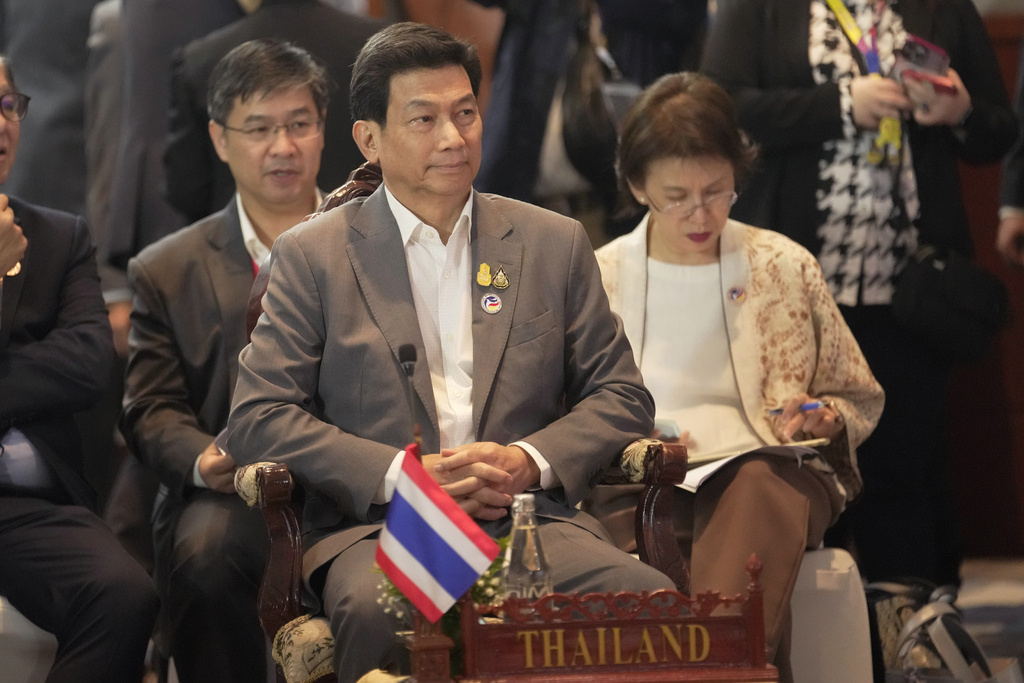
From left, Philippine Foreign Undersecretary Theresa Lazaro, Singapore's Foreign Minister Vivian Balakrishnan, Thai Foreign Minister Parnpree Bahiddha-Nukara, Vietnam's Foreign Minister Bui Thanh Son and Laos' Foreign Minister Saleumxay Kommasith leave after a group photo session during the Association of Southeast Asian Nations (ASEAN) Foreign Ministers retreat meeting in Luang Prabang, Laos, Monday, Jan. 29, 2024. (AP Photo/Sakchai Lalit)
LUANG PRABANG, Laos (AP) — China’s increasingly assertive posture in the South China Sea and escalating violence in Myanmar topped the agenda for Southeast Asian diplomats at their meeting in Laos on Monday, with the Laotian foreign minister expressing guarded optimism that progress could be made this year on both acrimonious issues.
Lao Foreign Minister Saleumxay Kommasith told reporters that Thailand was moving ahead with plans to provide more humanitarian assistance to Myanmar, where more than 2.6 million people have been displaced by civil war.
He said it was a good sign that the military leaders who seized control of Myanmar in February 2021 from the democratically elected government of Aung San Suu Kyi had for the first time sent a high-level representative to attend the meeting of ASEAN foreign ministers in the historic city of Luang Prabang in Laos.
“We feel a little bit optimistic that the engagement may work, although we have to admit that the issues that are happening in Myanmar will not resolve overnight,” Saleumxay said. “I think there is probably a small light at the end of the tunnel.”
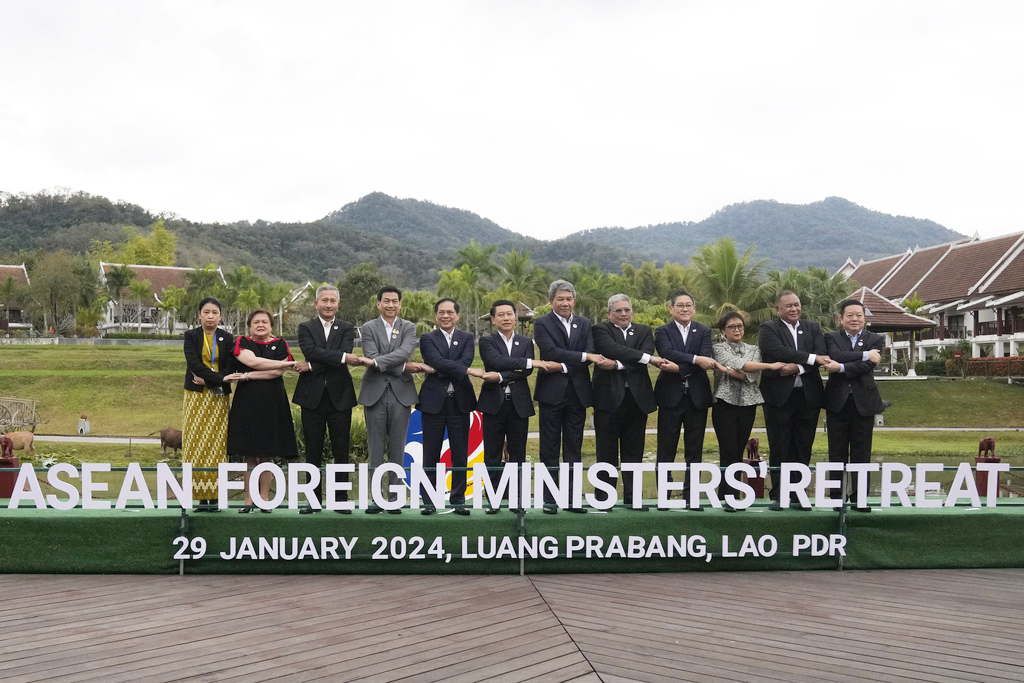
Representatives pose for a group photo during the Association of Southeast Asian Nations (ASEAN) Foreign Ministers retreat meeting in Luang Prabang, Laos, Monday, Jan. 29, 2024. (AP Photo/Sakchai Lalit)
Myanmar has been prohibited from sending its foreign minister or any political representative to high-level ASEAN meetings since the end of 2021, when it blocked the group’s envoy from meeting with Suu Kyi. Instead, it has sent non-political representatives to lower-level working meetings but has refused to send anyone to high-level meetings.
In Laos, however, it sent a Foreign Ministry civil servant, ASEAN Permanent Secretary Marlar Than Htike, which Saleumxay called “a positive sign.”
ASEAN member nations Indonesia, Thailand, Singapore, Philippines, Vietnam, Malaysia, Myanmar, Cambodia, Brunei and Laos have a combined population of nearly 650 million and GDP of more than $3 trillion.
Landlocked Laos, which has taken over this year’s rotating ASEAN leadership, is the bloc’s poorest nation and one of its smallest, and many have expressed skepticism about how much it can accomplish while the crises mount.
Still, it is the first ASEAN country that shares a border with Myanmar to serve as chair since the military took control of the country, giving it a perspective different from that of previous chairs.
Laos has already sent a special envoy to Myanmar for meetings with the head of the ruling military council and other top officials in an attempt to make progress on ASEAN’s “five-point consensus” plan for peace.
The plan calls for the immediate cessation of violence in Myanmar, a dialogue among all concerned parties, mediation by an ASEAN special envoy, provision of humanitarian aid through ASEAN channels, and a visit to Myanmar by the special envoy to meet all concerned parties.
Singaporean Foreign Minister Vivian Balakrishnan told reporters after the meeting that it was “helpful” to have a representative from Myanmar attend again, but that he would not say he was optimistic Myanmar would take concrete steps to implement the plan.
“If you take reference from the past, it can sometimes take a very long time for positive change to occur,” he said. “I do not want to raise hopes or expectations unrealistically.”
Saleumxay said ASEAN would continue to push for full implementation of the consensus while also increasing humanitarian support.
“We think humanitarian assistance is the priority for the immediate period of time when implementing the five-point consensus,” he said. “We welcome in this regard the efforts by the Thai government to … try to create a humanitarian corridor where support and assistance can be provided to all Myanmar people.”
Communist Laos is one of the ASEAN countries with the closest ties to China, and some have speculated it may look to its giant neighbor for help in dealing with the crisis in Myanmar, where Beijing also wields considerable influence.
China has said it will not interfere in the internal affairs of other states, however, and it is also unknown whether it taking on such a role would be acceptable to other ASEAN members.
Thai Foreign Minister Parnpree Bahiddha-Nukara attends the Association of Southeast Asian Nations (ASEAN) Foreign Ministers retreat meeting in Luang Prabang, Laos, Monday, Jan. 29, 2024. (AP Photo/Sakchai Lalit)
ASEAN members Vietnam, the Philippines, Malaysia and Brunei are locked in maritime disputes with China over its claims of sovereignty over virtually of the South China Sea, one of the world’s most crucial waterways for shipping. Indonesia has also expressed concern about what it sees as Beijing’s encroachment on its exclusive economic zone.
An estimated $5 trillion in international trade passes through the South China Sea each year, which has led China into direct confrontations, most notably with the Philippines and Vietnam.
The ASEAN meeting in Laos came on the same day that Philippine President Ferdinand Marcos Jr, was meeting with officials in Vietnam, among other things to discuss the ongoing tensions in the South China Sea.
The Philippines has been looking for more support from its ASEAN neighbors amid increasingly tense hostilities with China, which many worry could escalate into a broader conflict that could involve Washington, Manila’s longtime treaty ally.
The Philippine government protested the Chinese coast guard’s use of water cannons, a military-grade laser and dangerous blocking maneuvers that caused minor collisions off Philippine-occupied Second Thomas Shoal.
China and ASEAN agreed in 2002 and 2012 to a declaration on conduct in the South China Sea, seeking to “enhance favorable conditions for a peaceful and durable solution of differences and disputes,” but there has been little sign of adherence to that in recent years.
In Luang Prabang, the group “underscored the importance of the full and effective” implementation of the declaration, according to a statement issued by Laos after the talks.
“We reaffirmed the importance of maintaining and promoting peace, security, stability, safety and freedom of navigation in, and overflight above, the South China Sea,” it said.
Under last year’s chair, Indonesia, ASEAN agreed with China on guidelines to accelerate negotiations for a South China Sea code of conduct, but that has yet to produce results.
In the talks Monday, Saleumxay said several ASEAN nations brought up the tensions in the South China Sea and that Laos hoped to have a third reading of the code of conduct with China “as soon as possible.”
“That would create an environment where both ASEAN member states, especially the claimant states, and China can build more trust and confidence,” he said. “Whatever happens in the South China Sea should be resolved in a peaceful manner through dialogue and consultations.”
Saleumxay said all sides with claims in the South China Sea need to respect the United Nations convention on the law of the sea.
Under that convention, a U.N.-backed tribunal ruled in 2016 that China’s expansive claims in the South China Sea on historical grounds were invalid and that Beijing had violated the right of Filipinos to fish in the shoal.
China has refused to participate in the arbitration, rejected its outcome and continues to defy it.
___
David Rising reported from Luang Prabang. Associated Press journalist Jim Gomez in Manila, Philippines, contributed to this story.
BANGKOK – The Thai hotel industry is expected to grow by around 10,000 new rooms in 2024, according to Jasper Palmqvist, senior director for Asia Pacific at STR Global, a global provider of data, analytics, and marketing for the hospitality industry.
Most of the new rooms will be in the upper midscale category, followed by the luxury category. Nevertheless, the overall situation will remain challenging this year given rising inflation, higher costs and companies’ cost control.
“In recent months, we have seen midscale hotel room rates return to pre-COVID-19 levels, which took longer than for upper-scale hotels,” Palmqvist said to Prachachat Business.
STR Global said the overall Thai tourism industry is expected to be positive this year, and it is starting to see a more diversified tourist market that is not too dependent on any one market.
It expects the average daily rate (ADR) of hotels in Bangkok to be 18 percent higher than in 2019 and overall occupancy to be only 4 percent lower than in 2019. However, hotels in some areas are recovering to varying degrees. Hotels in Chiang Mai, which used to host a large number of Chinese tourists, only saw a price increase of 5 percent compared to other areas, which can be as high as 20 percent.
Bill Barnett, managing director of C9 Hotelworks Company, said that 2024 will be another year of recovery for the Thai tourism industry. The overall picture is positive. More large-scale real estate projects are being built, market sentiment is returning, financial institutions are lending more and investors see tourism as a good investment again.
There are around 12,000 hotel rooms under construction in Phuket province alone. More than half of these, around 6,000 rooms, are projects that were revived after being halted during the COVID-19 pandemic. These projects are expected to be completed in around 2-3 years.
“Since the second half of 2023, we are starting to see signs that hotel owners are looking to branded hotels to upgrade their properties to make them more premium and open up opportunities for increased revenue and competition,” said Barnett. “Meanwhile, banks have also started to lend more to operators.”
Wallapa Traisorat, chief executive officer and managing director of Asset World Corporation (AWC), said AWC plans to invest more than 10 billion baht this year to open four hotels with a total of about 1,000 rooms.
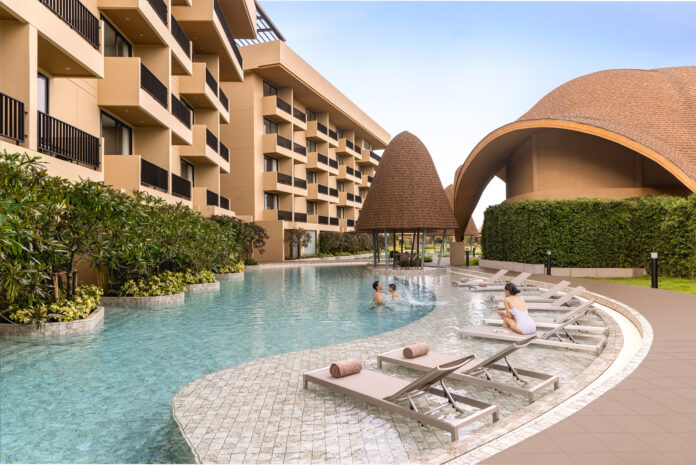
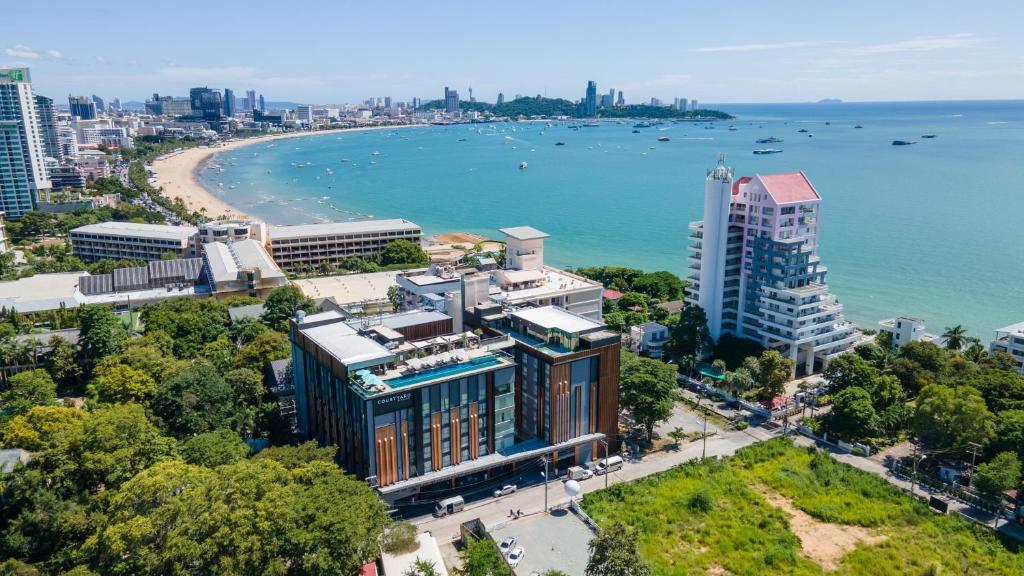
The hotels include: Two hotels in Pattaya (Chonburi): Marriott Resort Pattaya and one IHG hotel, one hotel in Hua Hin (Prachuap Khiri Khan): Kimpton Hua Hin, one hotel in Bangkok: Fairmont Bangkok Sukhumvit (a rebranding of Grand Mercure Bangkok Windsor).
Marriott Resort Pattaya
AWC also has a number of major projects in the pipeline, including the Aquatique Pattaya mixed-use project, for which agreements have been signed with the JW Marriott and Marriott Marquis brands, as well as a plan to invest more than 30 billion baht in Chiang Mai over the next five years, which is expected to represent a total investment value of more than 13 billion baht.
Suwanna Buddhaprasart, managing director of LH Mall & Hotel Co, Ltd (LHMH), the operator of the Grand Center Hotel Group, said there are currently seven Grand Center Point hotels in operation. The latest is Grand Center Point Surawong Bangkok, a 5-star luxury hotel with 399 rooms in the heart of the Surawong district. The hotel only opened at the end of 2023 with a total investment of over 2 billion baht.
The Dusit Thani Bangkok Group will open its largest project of 2024, a 6-star hotel with 257 rooms. It is part of the Dusit Central Park mixed-use project with a total value of over 46 billion baht. The hotel is scheduled to open in June.
The newest hotel of the Dusit Thani Group is the Dusit Princess Patthalung, a 4-star hotel with 132 rooms. It is the 15th hotel of the Dusit brand in Thailand and the first “Dusit Princess” hotel to open in the south.
File photo shows debris outside a building in Tokyo's Marunouchi business district following a bombing in August 1974. (Kyodo)
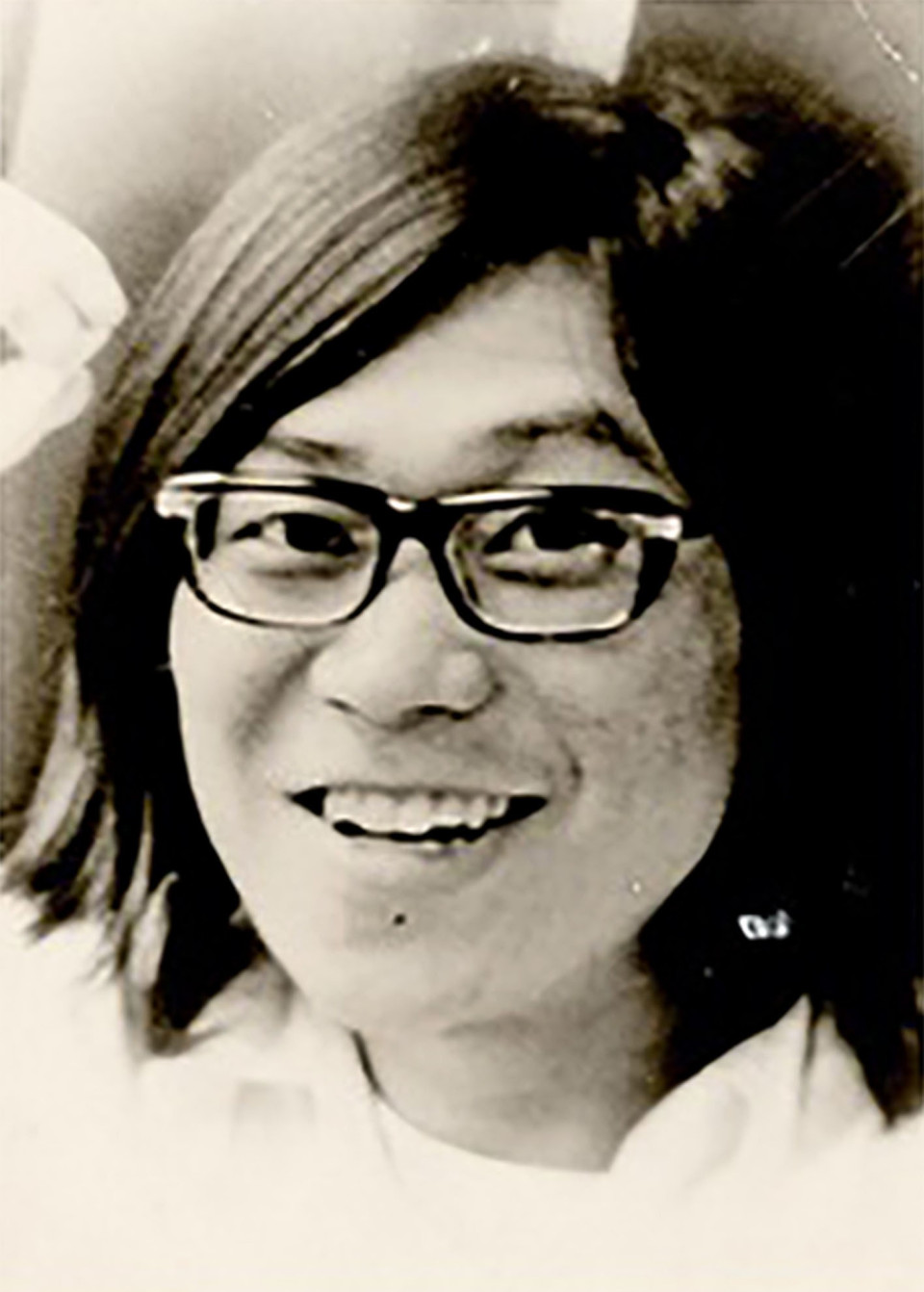
TOKYO – A man thought to be the suspect wanted for one of a series of terrorist bombings in Japan in the 1970s died Monday morning at a hospital near Tokyo, an investigative source said.
The man recently confessed to being alleged bomber Satoshi Kirishima, who was a member of an extreme left-wing group. He was undergoing treatment for terminal stomach cancer at the hospital in Kamakura, Kanagawa Prefecture, and was confirmed dead at 7:33 a.m., according to the source.
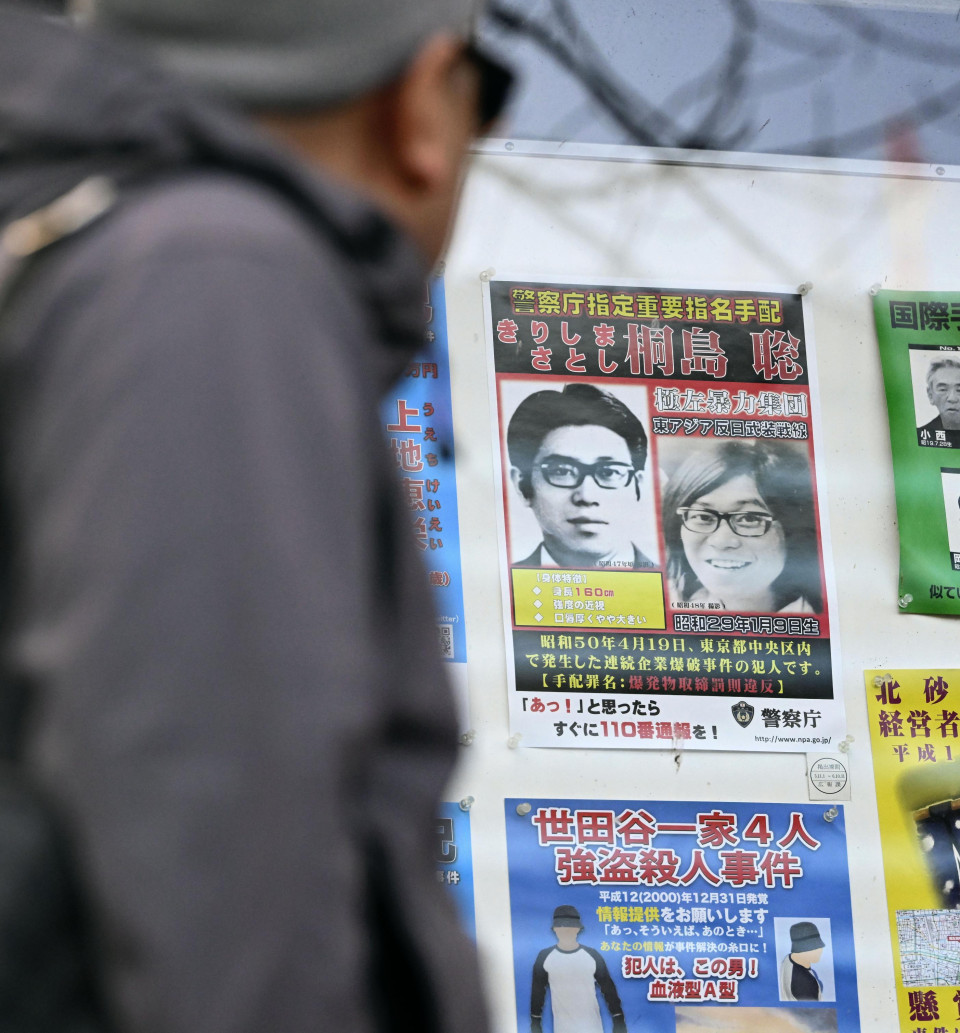
Kirishima, who would now be 70 years old, was a member of the East Asia Anti-Japan Armed Front, a radical group that carried out the high-profile bombings. He has long been wanted on suspicion that he planted and detonated a homemade bomb in a building in Tokyo’s Ginza district on April 19, 1975.
Photo taken on Jan. 29, 2024, shows a wanted poster for Satoshi Kirishima, a fugitive who has long been wanted for one of a series of terrorist bombings in Japan in the 1970s, displayed outside the Metropolitan Police Department headquarters in Tokyo. (Kyodo)
The man had been making outpatient visits to the hospital for about a year and was hospitalized earlier in January. He revealed his true identity last Thursday, saying he wanted to draw the curtain on his life under his real name.
The man had lived under the name Hiroshi Uchida and was an employee of a building firm in Fujisawa, Kanagawa Prefecture, for decades, according to other investigative sources.
He avoided bank transactions and received his wages in cash. He also did not possess a health insurance card or driver’s license and received treatment at the hospital at his own expense.
Screenshot taken from the website of the Tokyo Metropolitan Police Department shows Satoshi Kirishima. (Kyodo)
The East Asia Anti-Japan Armed Front carried out a number of attacks on Japanese companies and entities, including the bombing of Mitsubishi Heavy Industries Ltd.’s headquarters in central Tokyo in 1974 that killed eight people and injured 165.
A 73-year-old man, whose acquaintance was injured in the bombing of the Mitsubishi Heavy building, said he wondered at the time what the group’s goal was. “In the end, did he (the man thought to be Kirishima) want to speak the truth? It feels like things happened so quickly after he was found.”
In May 1975, police arrested eight individuals over their involvement in the attacks. As some suspects, including 75-year-old Ayako Daidoji, are still on the run overseas, the statute of limitations in Kirishima’s case has been suspended.
Kirishima was officially declared missing in April 2003.
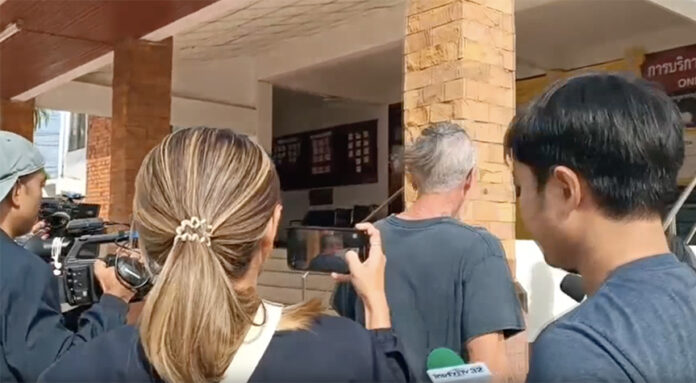
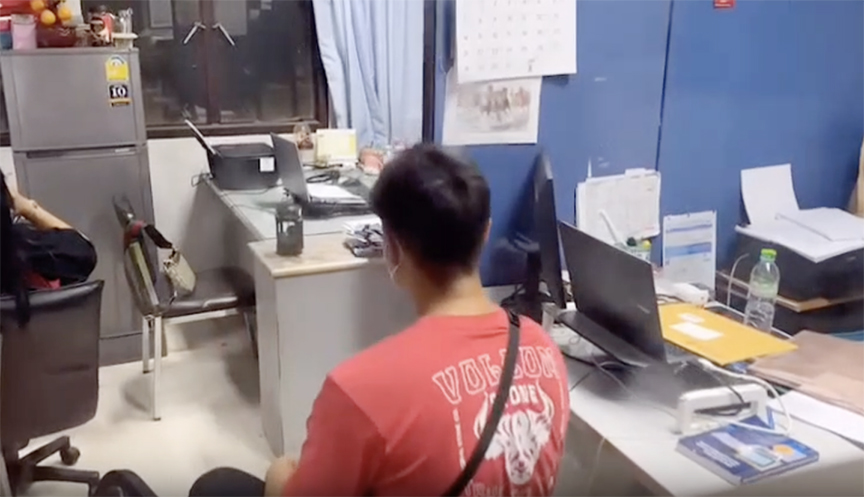
Mr. Roland, a 53-year-old Swiss, arrived at Khonburi Police Station on January 29 to be questioned. He then confessed to killing his Thai wife.
NAKHON RATCHASIMA – A Swiss man was under pressure after locals in Nakhon Ratchasima, Thailand, suspected him of being the cause of his Thai wife’s disappearance. Finally, he confessed that he had killed her.
Orathai Posingam, had been missing since January 8, 2024, from her home in Khok Khwan, Chaliang Sub-district, Khonburi District Nakhon Ratchasima province. Her Swiss husband, Roland, 53, told police that she ran away after they argued.
Orathai inherited over 13 million baht from her first Swiss husband, who died in 2021. She then married Roland, another Swiss man who was a former train driver in Switzerland. The couple moved to Thailand about two years ago.
Mr. Roland (left) came to Khonburi Police Station on January 29 to be questioned.
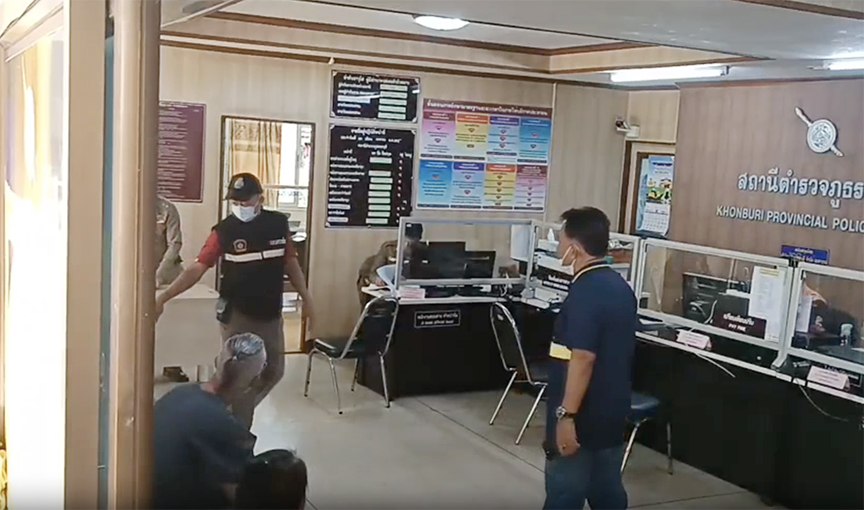
Roland came to Khonburi Police Station on January 29 to be questioned after the police found some suspicious circumstances, including his statement to Orathai’s sister that she had probably run away, but she didn’t take her shoes or any belongings with her.
Police seized Roland’s passport due to ongoing investigations into his wife’s disappearance.
Mr. Roland had stated that he was not engaged in his wife’s disappearance. He was mainly concerned about when she would return. However, after long hours of questioning, he admitted that he had killed her by strangling during a quarrel.
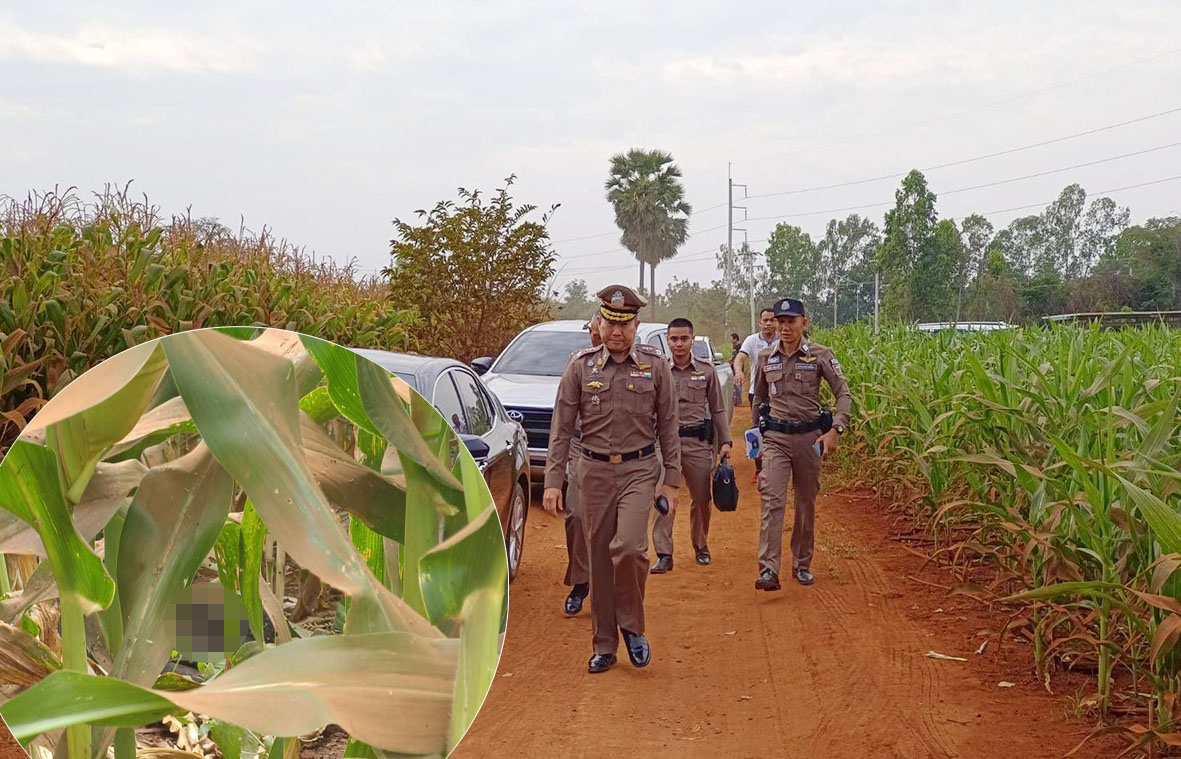
Police found Ms. Orathai Posingam’s body in the cornfield on January 29, 2024. She had been missing since January 8. Her Swiss husband confessed today that he had killed her.
He loaded his wife’s body onto a motorbike and drove to a cornfield in Ban Khok Kruat, approximately 3 km from their home. The police officers then escorted Mr. Roland to show them where to take the body for examination.
The authorities discovered a Jack of Hearts card in Ms. Orathai’s mouth, and there seemed to be duct tape covering her mouth.
Before his confession, Mr. Roland had kept to himself at home and had not observed the search. He only left the house to have coffee, eat, or respond to police calls. He has refused to speak with the media.
On January 28, when police searched the couple’s home and sent a team of divers from the Phuttham 31 Foundation in Nakhon Ratchasima to look for Orathai in a pond near the village temple, he did not even come to take part in a stakeout with her relatives and the rescue team that was looking for her in various places.
The rescue crew searched for Ms. Orathai in a variety of locations, including the pond.
Chai Tawanmai, a radio DJ who is one of Roland’s few close friends, spoke to him about the case. Roland told Chai that he was worried because people in the area suspected him of being responsible for his wife’s disappearance.
“Roland told me that he had scolded his wife for gambling and she might have run away from the people to whom she owed money. He said he didn’t know where to go searching for her because he did not know anyone,” said Chai Tawanmai.
Police investigated Ms. Orathai’s bank account and discovered that money had been transferred from it to Mr. Roland’s account at around 10:00 p.m. on January 8. Miss Orathai’s sister last saw her when she had less than 2,000 baht in her account.
Mr. Roland told the authorities that Ms. Orathai personally transferred this amount to him using a bank app to repay a loan debt. The police are awaiting verification results from the bank, after which all information will be collected as evidence and investigative guidelines.
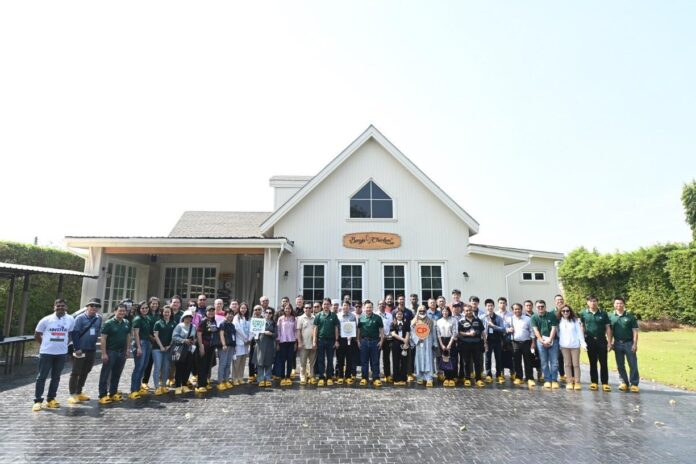
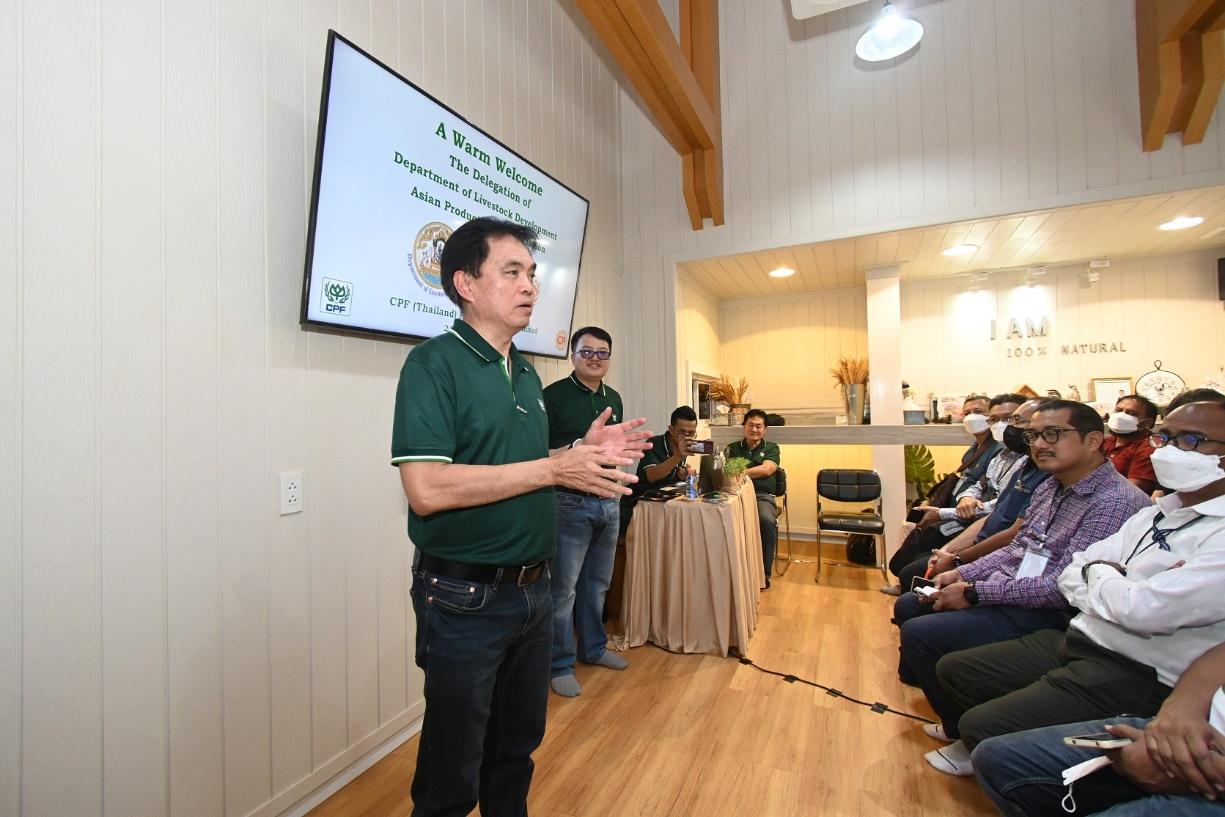
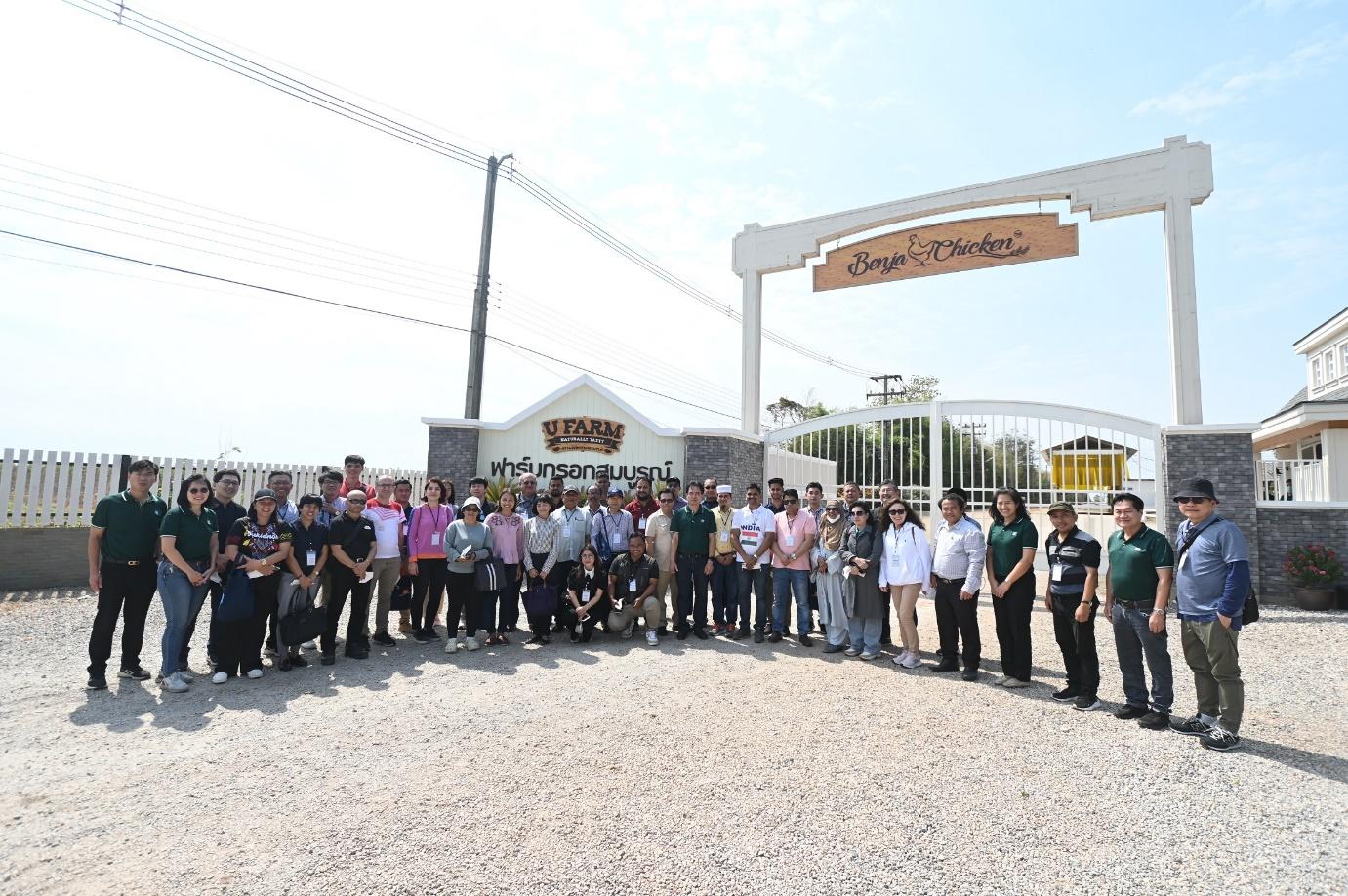
Thailand’s Department of Livestock Development, in collaboration with the Asian Productivity Organization (APO) members, including government officials, lecturers, farmers, and experts from 19 countries, lauded CP Foods’ “Kroksomboon” Broiler Farm for its outstanding adoption of smart farming technology.
This farm has successfully enhanced productivity using innovative digital solutions while upholding animal welfare standards. The insights and best practices gained will be disseminated to boost small-scale farmers throughout the Asia Pacific region, thereby aiding in regional food security.
Ratchada Asisonthisakul, Director of the Special Project Promotion Division at the Thailand Productivity Institute, emphasized the farm visit as an invaluable educational experience. APO members from diverse Asia Pacific nations gained insights into the utilization of smart farming systems and best practices in broiler farming.
The knowledge acquired is anticipated to modernize livestock farming in the region, both practically and at the policy level, and to enhance the competency of the new generation of farmers.
“CP Foods’ involvement in the APO Study Tour and advancements in Smart Chicken Farming will empower participants to implement smart farming strategies in their countries, enhancing farmer skills and regional food security,” stated Ratchada.
Dr. Mukund Marotrao Kadam, Associate Professor at the Poultry Research and Training Center, Department of Poultry Science, Nagpur Veterinary College, under the Maharashtra Animal & Fishery Science University, praised the farm’s management and biosecurity measures. He stressed that the expertise shared by CP Foods will be conveyed to farmers, students, and stakeholders, thereby promoting growth in the livestock industry.
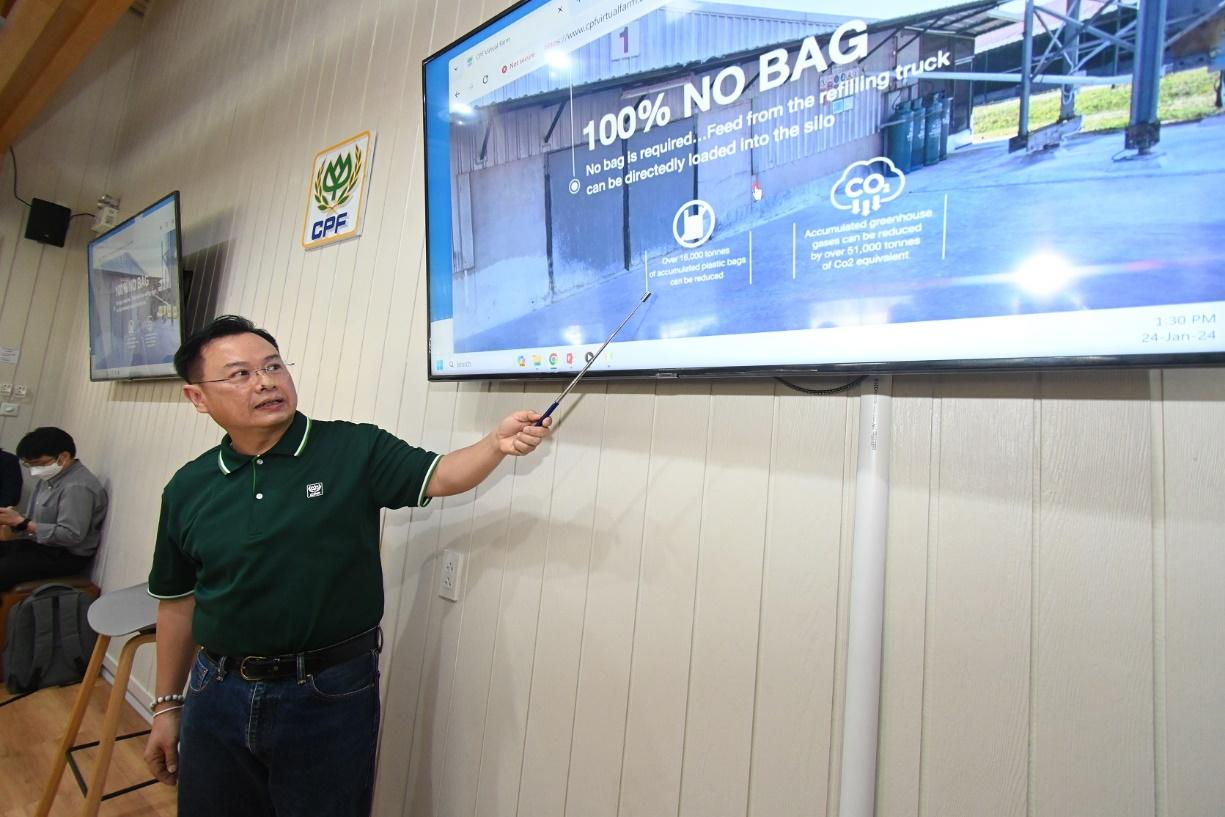
Surachate Pinklao, Senior Director at CP Foods, emphasized the company’s dedication to creating advanced ‘Smart Farms’ with a strong focus on animal welfare. Kroksomboon Farm, selected by the Livestock Development Department for a case study visit by APO member countries, showcases CP Foods’ commitment to producing high-quality, safe, and chemical-free poultry.
The farm utilizes cutting-edge digital technology and IoT systems for effective farm management and animal care, guaranteeing round-the-clock monitoring of animal health and wellbeing.
Kroksomboon Farm, acclaimed for its pioneering methods in poultry farming, distinguishes itself by antibiotics free and non- using growth promoters. Its flagship product, Benja Chicken, represents CP Foods’ premium food added nutritional value as the world’s first poultry natural fed with brown rice and other superfoods such as flaxseed. Benja Chicken has been raised under animal welfare practices without antibiotic use throughout the entire lifespan, making the chicken healthy and strong.
It was also certified by the National Sanitation Foundation (NSF) for being 100% raised without antibiotics and no hormones added. Benja Chicken has garnered recognition from esteemed global organizations, including the International Taste Institute and THAIFEX-Anuga Asia (the Asia leading food and food technology event annually organized in Thailand).
The Asian Productivity Organization (APO), a key international body in the Asia-Pacific region dedicated to enhancing productivity, included the visit to Kroksomboon Farm as a critical component of their international seminar. This event, focusing on Smart Poultry Farming, was designed to facilitate the sharing of knowledge and best practices among government representatives, educational experts, and small and medium enterprise (SME) leaders in the livestock sector.
FILE - The Evergrande Group headquarters logo is seen in Shenzhen in southern China's Guangdong province, Friday, Sept. 24, 2021.(AP Photo/Ng Han Guan, File)
HONG KONG (AP) — A Hong Kong court ordered China Evergrande, the world’s most heavily indebted real estate developer, to undergo liquidation following a failed effort to restructure $300 billion owed to banks and bondholders that fueled fears about China’s rising debt burden.
Judge Linda Chan said Monday it was appropriate for the court to order Evergrande to wind up its business given a “lack of progress on the part of the company putting forward a viable restructuring proposal” as well as Evergrande’s insolvency.
China Evergrande Group is one of the biggest of a series of Chinese developers that have collapsed since 2020 under official pressure to rein in surging debt the ruling Communist Party views as a threat to China’s slowing economic growth.
But a crackdown on excess borrowing has tipped the property industry into crisis, making it a drag on the economy, as scores of other developers ran into trouble, their predicaments rippling through financial systems in and outside China.
Global financial markets were rattled earlier by fears an Evergrande liquidation could cause global shockwaves. But Chinese regulators said risks could be contained. Only a few billion dollars of Evergrande’s debt was owed to foreign creditors.
It’s unclear how the liquidation order will affect China’s financial system.
Evergrande’s Hong Kong-traded shares plunged nearly 21% early Monday before they were suspended from trading. But Hong Kong’s benchmark Hang Seng index was up 0.8% and other property developers saw gains in their share prices.
China’s largest real estate developer, Country Garden, gained 2.9% and Sunac China Holdings jumped 4%. Some other property companies logged moderate declines.
The Shanghai Composite index dropped 0.6% while Shenzhen’s A-share index fell more than 2%.
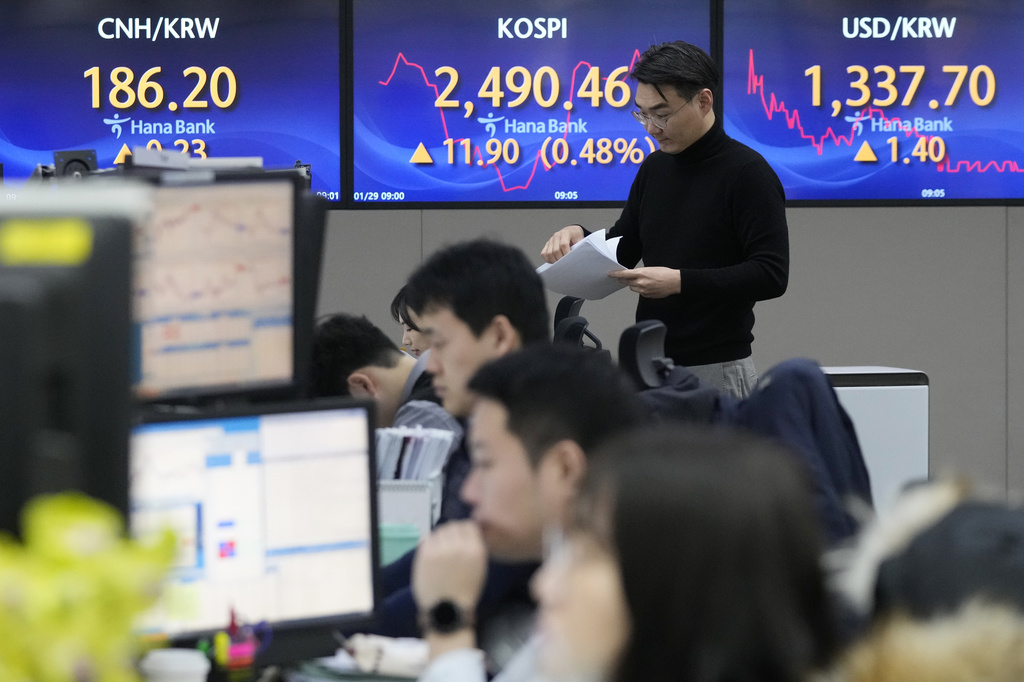
A Asian markets opened the week on a positive note, with Chinese regulators announcing measures to support the country’s teetering stock markets while heavily indebted property developer China Evergrande was ordered to undergo liquidation.(AP Photo/Ahn Young-joon)
Evergrande gained a reprieve from the Hong Kong court in December after it said it was attempting to “refine” a new debt restructuring plan of more than $300 billion in liabilities. It could appeal the ruling.
Fergus Saurin, a lawyer representing an ad hoc group of creditors, said Monday he was not surprised by the outcome.
“The company has failed to engage with us. There has been a history of last-minute engagement which has gone nowhere,” he said.
Saurin said that his team worked in good faith during the negotiations. Evergrande “only has itself to blame for being wound up,” he said.
The judge was expected to provide more reasons for the liquidation order during a separate court session Monday afternoon.
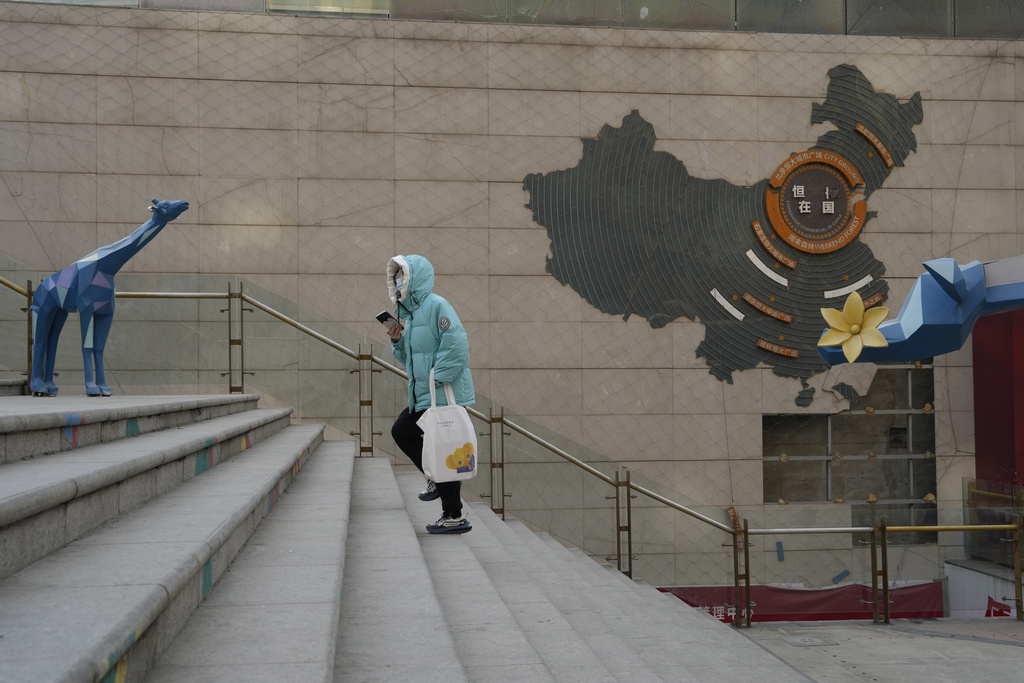
A resident walks through a partially shuttered Evergrande commercial complex in Beijing, Monday, Jan. 29, 2024. (AP Photo/Ng Han Guan)
Evergrande CEO Shawn Siu told Chinese news outlet 21Jingji that the company feels “utmost regret” at the liquidation order. He emphasized that the order affects only the Hong Kong-listed China Evergrande unit.
The group’s domestic and overseas units are independent legal entities, he said. Siu said that Evergrande will strive to continue smooth operations and deliver properties to buyers.
“If affected, we will still make every effort to ensure the smooth advancement of risk resolution and asset disposal, and we will still make every effort to advance all work fairly and in accordance with the law,” he said.
The 21Jingji article appeared to be inaccessible as of Monday afternoon, hours after it was first published.
Evergrande first defaulted on its financial obligations in 2021, just over a year after Beijing clamped down on lending to property developers in an effort to cool a property bubble.
It’s also unclear how the liquidation order will affect Evergrande’s vast operations in the Chinese mainland. As a former British colony, Hong Kong operates under a legal system that is separate, though increasingly influenced by, communist-ruled China’s.
In some cases, mainland courts have recognized bankruptcy rulings in Hong Kong but analysts say Evergrande’s is something of a test case.
Real estate drove China’s economic boom, but developers borrowed heavily as they turned cities into forests of apartment and office towers. That has helped to push total corporate, government and household debt to the equivalent of more than 300% of annual economic output, unusually high for a middle-income country.
The fallout from the property crisis has also affected China’s shadow banking industry — institutions that provide financial services similar to banks but operate outside of banking regulations, such as Zhongzhi Enterprise Group. Zhongzhi, which lent heavily to developers, said it was insolvent.
CHONBURI – Fan pages of Nathy’s sky Photography on Facebook have offered their condolences for the death of Mr. Nathy Odinson, 33, a British man who died Saturday after leaping from a 29th-floor Pattaya condominium with a malfunctioning parachute.
On January 28, police questioned Mr. Boy, 30, a friend of Mr. Nathy, for two hours, and noticed that he was still in shock but could provide information to the police. He had known the deceased for around 5 months. The British man loves extreme sports, particularly skydiving.
Police questioned Mr. Boy, 30, a friend of Mr. Nathy Odinson, for two hours on January 28, 2024.
Prior to the incident, Mr. Nathy asked him to film a skydiving video on the condo’s 29th-floor rooftop to create social media content. They rode a motorcycle parked behind the condo from an apartment in the Soi Pho San neighbourhood, which is less than 1 kilometre away.
Then they got up to the 29th-floor rooftop and began recording video. He shot footage with his phone, while Mr. Nathy used a GoPro camera mounted on his helmet.
When Mr. Nathy jumped from the 29th floor, Mr. Boy noticed the parachute was snagged on the string and failed to open, forcing him to descend and hit a tree before falling hard to the ground.
Officers discovered Mr. Nathy Odinson’s body on the floor of a condominium, with his parachute still connected.
According to the investigation, Mr. Nathy arrived in Pattaya using a student visa. Approximately four hours before his deadly mishap, he posted a photo of himself parachuting and gliding to the ground on Nathy’s sky Photography Facebook page.
Police also stated that the two entered the condominium building unauthorised and skydived from there. They will contact the condo’s legal representative for additional information and review CCTV cameras to see how the two people are secretly accessing the property in order to summarise the case.
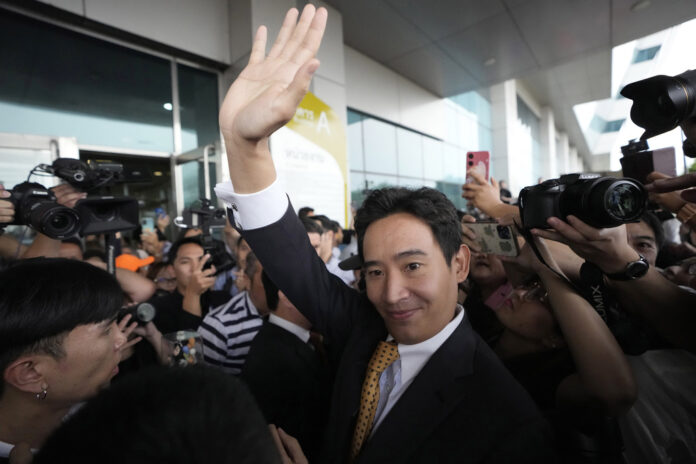
Former leader of Move Forward Party Pita Limjaroenrat, center, waves to his supporters as he leaves Constitutional Court in Bangkok, Thailand, Wednesday, Jan. 24, 2024. Photo: Sakchai Lalit / AP
It is not unthinkable that the most popular political party in Thailand could be dissolved on Wednesday.
The Constitutional Court will rule three days from now if Move Forward Party acted unconstitutionally by seeking to overthrow the current political system through pledging to amend the controversial lese majeste law, in the months leading up to the May 2023 general election. The whole executive board members, including its then party leader Pita Limjaroenrat, could also be banned from politics, possibly up to 10 years.
No less than former spokesman of the party, MP Wiroj Lakhanaadisorn, posted on social media yesterday saying even the worst-case scenario would not prevent the rest of the party from marching onward – basically by forming a new political party under a new name and letting younger MPs lead the new party.
They have done this before when they were known as Future Forward Party. In February 2020, they were found by the same court to have violated the charter by borrowing 191 million baht from its then party leader Thanathorn Juangroongruangkit. Thanathorn, along with its then executive board members, were also banned from politics for 10 years. Then the rest formed a new party under the same ideology called Move Forward Party under Pita.
Now, next week is February again.
Last year, a young and prominent MP from Move Forward Party told me the party has prepared for their “Day Zero” and because of that, he and a few select MPs are not in the executive board of the party, so they will be safe and not banned from politics for years, and able to reboot the party under a new name, under a new leadership albeit under the same ideology.
The party may be prepared for a possible dissolution, but how will its 14 million voters react? Will they take to the streets and launch another round of massive and protracted street protests that would disrupt the works for the Pheu Thai government and send Thailand into another round of political crisis that would also affect the economy – the latter still in a weak state?
There may be less people on the street this time because the so-called anti-junta, pro-democracy camp has split into pro-Pheu Thai (red shirts) and pro-MFP (orange shirts) unlike the time when both were against military dictator Gen. Prayut Chan-o-cha. Nevertheless, 14 million voters out of the population of 70 million Thais are not insignificant and it only takes a few hundred thousand protesters to paralyze Bangkok as it has been shown in the past.
My concern is when it comes to the issue of public expression of loyalty to the throne, royalists or those who pretend to be royalists tend to overdo. The court may not want to risk being seen as acting as an accessory to a concerted attempt to undermine the monarchy institution. This is a common ethos among conservative royalists and ultra-royalists who are in a state of permanent paranoia.
Thus, the majority of the court members may find it more convenient to punish the MFP than risk being accused of being disloyal or not sufficiently loyal.
On the other hand, if the court does not even allow legislators to propose to amend a law, what then is the point of having elected legislators and what hope is there for a rational and peaceful debate for change?
Dissolving the Move Forward Party for pledging to amend the royal defamation law could send a clear signal to young Move Forward Party supporters that there is no hope for change within the prevailing political system.
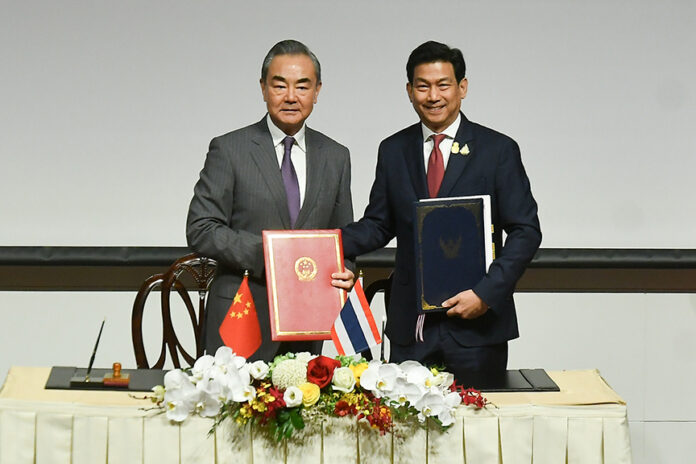
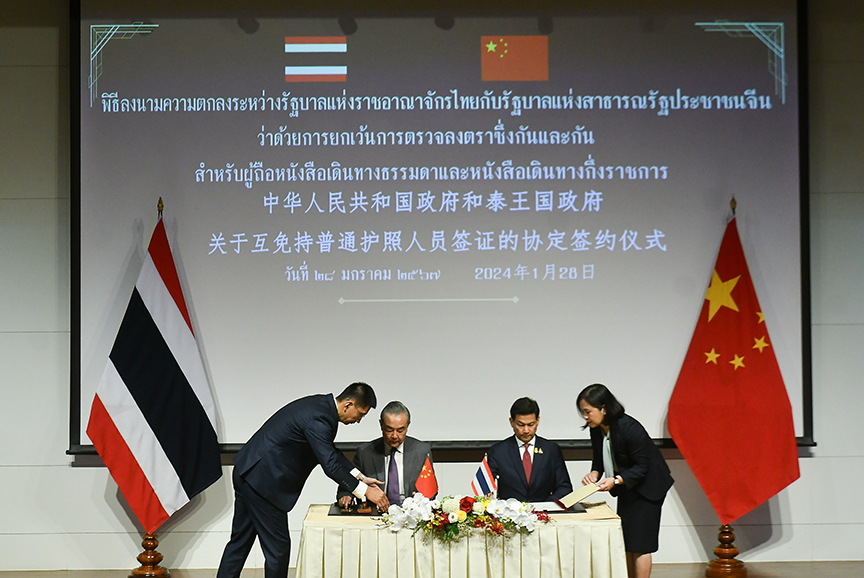
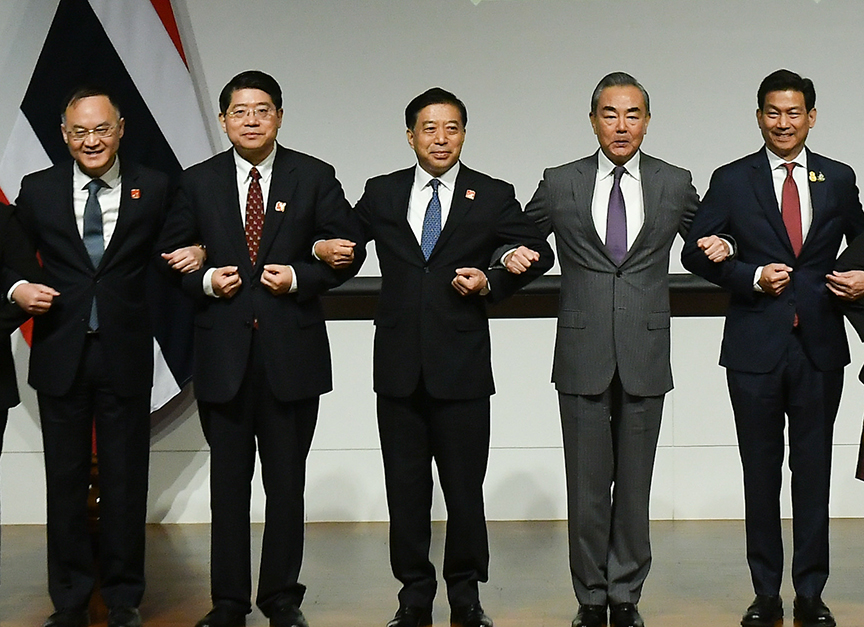
Thai Foreign Minister Parnpree Bahiddha-Nukara and Chinese Foreign Minister Wang Yi on Sunday signed a mutual visa exemption agreement.
BANGKOK – Thai Foreign Minister Parnpree Bahiddha-Nukara and Chinese Foreign Minister Wang Yi on Sunday, January 28, 2024, signed an agreement to exempt visa requirements between Thailand and China.
“Today, Thailand and China signed an important document, reflecting the close cooperation and relations between the two countries, namely, the Agreement on Mutual Visa Exemption for Holders of Ordinary Passports and Passports for Public Affairs, which will come into effect on March 1, 2024,” Foreign Minister Parnpree stated.
He added, “This agreement is a symbol of our long-lasting friendship, trust, and confidence, which is evidenced at every level. I am certain that travel between our two people, whether for tourism or business, will become more convenient and help stimulate the tourism industry in both countries.”
Wang Yi pointed out that China-Thailand friendship and mutual trust will mark the 50th anniversary of China-Thailand diplomatic relations next year.
“Over the past half a century, our bilateral relationship has stood the test of the changing international landscape and grown from strength to strength. China always sees Thailand as a priority in its diplomacy with neighbouring countries,” Mr. Wang said.
He is confident that from March 1, the mutual visa exemption will surely bring people-to-people exchanges to a new height. There will be a big increase in the number of Chinese tourists visiting Thailand. China also welcomes friends from Thailand to feel the vitality and vibrancy of China and the hospitality of the Chinese people.
Prime Minister Srettha Thavisin also posted congratulations on the signing of the Mutual Visa Exemption Agreement.
“This is an important step in Thailand-China relations and will have a great impact on stimulating the economy, not just in terms of trade or investment; mutual tourism will greatly improve income from tourists, which is sent directly to merchants in Thailand,” he stated.
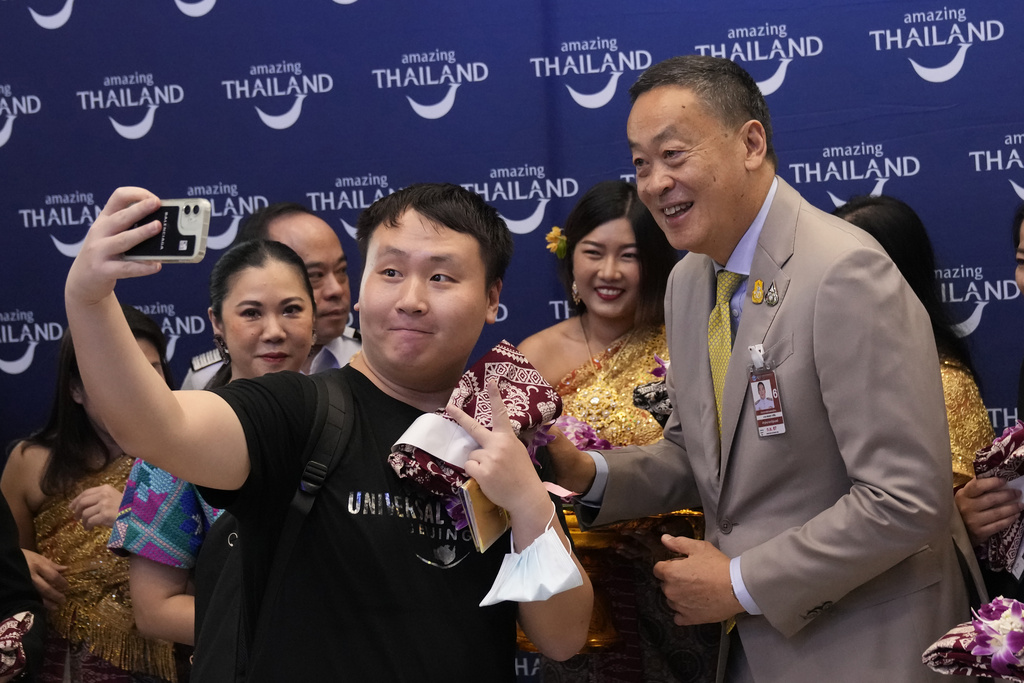
FILE – Chinese tourists takes selfies with Thailand’s Prime Minister Srettha Thavisin, right, on their arrivals at Suvarnabhumi International Airport in Samut Prakarn province, Thailand, Monday, Sept. 25, 2023. (AP Photo/Sakchai Lalit, File)
Thai Tourism agencies believe the permanent visa-free measure will bring 8 million Chinese tourists back to Thailand, or a 75 percent recovery rate from before the 2019 pandemic.
Thapanee Kiatphaibool, governor of the Tourism Authority of Thailand (TAT), said earlier that the agreement will facilitate travel and greatly benefit tourism between Thais and Chinese. It will lead to an increase in flights between the two countries, which will reduce airfares that have risen since the COVID-19 pandemic.