























31.9 C
Bangkok
Thursday, August 20, 2026
Home Blog Page 70

How Far Should Thailand Go to Accommodate China?

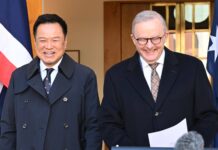
The Chinese Ambassador to Thailand is apparently not happy about Thais using the term “grey Chinese” to refer to Chinese nationals who engage in criminal activities in Thailand and has made it known. Ambassador Zhang Jianwei feels the term made Thais appear “unfriendly” to Chinese visitors.

​His message was not directly delivered to the Thai public earlier this week, not even through Thai Foreign Minister Sihasak Phuangketkeow, but through Thai Tourism Minister Surasak Phancharoenworakul, as if to hint that non-compliance could see the loss of Chinese tourists coming to Thailand. China did that to Japan not long ago, and it may try to use tourism as leverage here if Thais do not comply.

​Ambassador Zhang’s additional argument was that the term unfairly stereotypes Chinese people. What’s more, Tourism Minister Surasak added that the Chinese envoy said those who break the law should be referred to as offenders instead. Ambassador Zhang reportedly also acknowledged that some Chinese nationals have committed crimes, but said many more contribute positively to Thailand’s economy and tourism industry.

​So what happens next?

​Should the entire country comply with the Chinese ambassador’s request?

​At the very least, the government will likely avoid using the term out of deference to China’s power and feelings. This is despite the fact that PM Anutin Charnvirakul, who personally drove his car to take visiting Chinese Foreign Minister Wang Yi to lunch, did not seem to have any problem with the term in the past while discussing the issue of “grey Chinese” with the local press.

​But what shall we use instead?

“Chinese fraudsters”? “Chinese criminal gangs”? “Groups or networks of Chinese nationals engaged in illegal or law-evading activities”? Or should we merely call them foreign criminals, or mafia from a certain East Asian nation?

And if journalists ask PM Anutin about “grey Chinese” in the future, will he or other Thai officials simply pretend not to understand the term?

​What the Chinese ambassador should understand is that “grey Chinese” is neither a slur nor a blanket label for all Chinese people. It refers specifically to Chinese nationals involved in criminal activities—whether transnational or not—including scammers, those who kidnap fellow Chinese nationals in Thailand for ransom, mafia, people running illegal businesses in Thailand, money laundering, and so on.

There are quite a lot of such cases being reported, and they make headlines almost every week. This is unlike cases involving any other nationality in Thailand. Perhaps this is due to China’s enormous population.

​The term clearly does not refer to all Chinese nationals, and “grey” is not a colour associated with any form of ethnic insult. Rather, it reflects the fact that these individuals operate in Thailand’s legal grey zones—spaces that are ambiguous or murky under Thai law.

​No one would think that Ambassador Zhang and his Chinese embassy officials, Chinese executives at BYD, Chinese celebrities such as Fan Bingbing or Jackie Chan are “grey Chinese”. When people use the term, none of these individuals come to mind—and ordinary Chinese tourists certainly do not, either. This is something the Chinese ambassador ought to understand.

​There is also the issue of freedom of expression. Thailand already has problems in this regard because of the draconian and anachronistic lese majeste law. Some things cannot be said in Thailand without risking imprisonment. Is the Chinese ambassador now asking Thai people to stop using the term “grey Chinese,” adding it to the list of self-censored words in Thailand as well?

China itself has topics that cannot be openly discussed in a critical or negative light, and the list is longer than in Thailand. They include comparisons of Xi Jinping to Winnie the Pooh, Tibet, the Uyghurs, the Tiananmen Square massacre and the Hong Kong democracy movement. In 2023, Thai public broadcaster Thai PBS deleted an interview with Taiwan’s foreign minister after a protest from China. Last year, an exhibition at the Bangkok Art and Culture Centre about Myanmar military dictator Min Aung Hlaing’s collusion with other nations, including China, was partially censored by the Chinese Embassy in Bangkok without going through the Thai Foreign Ministry.

And it is no longer just about what cannot be said inside China. Earlier this week, China’s Vice Justice Minister Hu Weilie defended a provision in China’s new ethnic unity law, which takes effect on 1 July, saying China has the right to hold individuals and groups outside its borders legally accountable if they are deemed to undermine “ethnic unity and progress” or incite ethnic separatism.

Hu insisted the provision is legitimate and would not affect normal exchanges, including academic discussion, trade and people-to-people contacts. But who gets to decide what is normal and what is not? If the Chinese state itself defines what constitutes separatism, undermining ethnic unity, or unacceptable discussion of ethnic affairs, should journalists, academics, activists, publishers, editors or artists outside China feel safe commenting on these issues, or even visiting China?

Perhaps they will not, and perhaps that is the point. The law may not need to be enforced often to have an effect. It may be enough to make people outside China think twice, soften their words, avoid certain topics, or bend quietly to China’s national will before Beijing even has to ask.

This is why Ambassador Zhang’s request should not be viewed in isolation. The Thai government has no authority to make the term “grey Chinese” illegal or punishable by law simply because it is spoken. Any Thai person who agrees with the Chinese ambassador is free to refrain from using it. However, the ambassador should be careful about making such requests, because many Thais are already jittery and concerned about China’s growing influence in Thailand. They fear that something much bigger than “grey Chinese” is the “Red Chinese government” itself.

If we allow the situation to continue as it is, one day we may have a dictionary listing terms that should not, or cannot, be used in Thailand when discussing China.

Compared with the Chinese Embassy in Manila, which is very combative, the Chinese Embassy in Thailand is still very polite.

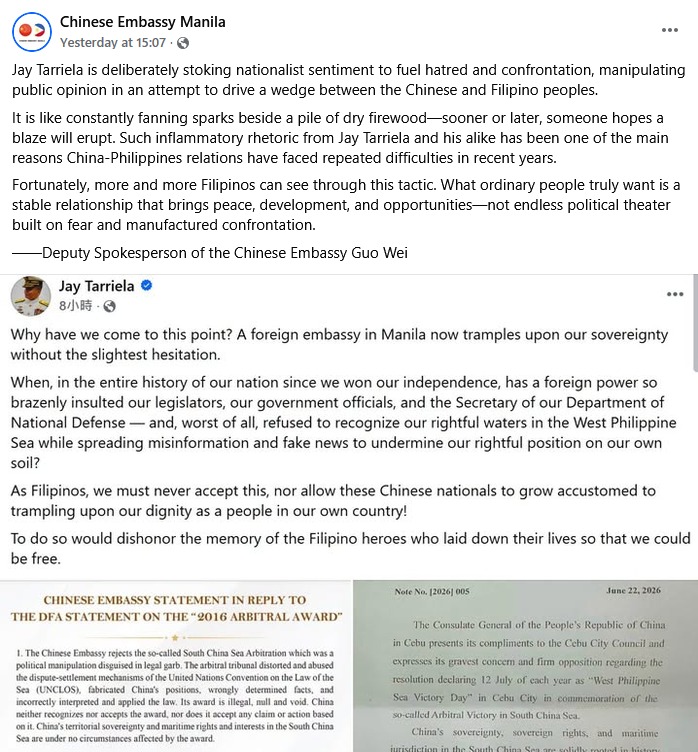
For example, on Wednesday, the Chinese Embassy in Manila published the following post. Given its undiplomatic style, one might have thought it had been written and posted by a troll. The embassy singled out one person: Jay Tarriela, spokesperson of the Philippine Coast Guard for the West Philippine Sea, who had accused the Chinese Embassy in Manila of trampling on the sovereignty of the Philippines through words.

“Jay Tarriela is deliberately stoking nationalist sentiment to fuel hatred and confrontation, manipulating public opinion in an attempt to drive a wedge between the Chinese and Filipino peoples,” Guo Wei, deputy spokesperson of the Chinese Embassy in Manila, wrote on Wednesday.
47538e69 6b24 4412 9700 b6a0aa718f13

​“It is like constantly fanning sparks beside a pile of dry firewood—sooner or later, someone hopes a blaze will erupt. Such inflammatory rhetoric from Jay Tarriela and his alike [sic] has been one of the main reasons China-Philippines relations have faced repeated difficulties in recent years.

​“Fortunately, more and more Filipinos can see through this tactic. What ordinary people truly want is a stable relationship that brings peace, development, and opportunities—not endless political theatre built on fear and manufactured confrontation.”

Whether some Thais or Filipinos like it or not, China’s influence will most likely keep rising in the foreseeable future. The balance of power between Thailand and China will become increasingly imbalanced as China gains more influence. How to manage China’s rise will be a key challenge facing Thailand and many other countries in ASEAN.

One could read this latest “request” as an undeclared attempt to see how far China can go, and how much it can get away with, without Thai resistance, to see how far Thai society will yield to such a request and bend over backwards to suit China’s preferences.

The majority of the Thai press, much of it under the spell of China’s growing soft power, proactive engagement and “incentives,” will most likely stop using the term “grey Chinese” from now on.

They are already learning the ropes. Last year, most of the Thai press ignored the story about the Chinese Embassy’s role in censoring some items at the Bangkok Art and Culture Centre (BACC). Two months ago, this writer also learned from a reliable Thai media source of a complaint about an attempt by the embassy to remove a news item about Taiwan that the Chinese Embassy did not like.

It may be the “death” of the term “grey Chinese” for the vast majority of the Thai press, but only by name.

The more important question is not whether this term should or should not be used, but whether the Thai government, Thai media and Thai society will comply with the Chinese ambassador’s requests—and to what extent.

If they do, where will this rabbit hole lead? With more “requests” in the future, how might it reshape Thailand-China relations? And what could it mean for freedom of expression, public discourse and narratives in Thailand about China?

​China must be reminded, however, that there is no significant anti-China sentiment or discrimination in Thailand, and that it should not breathe down Thailand’s neck too closely. It is counterproductive to the relationship.

Looking at the matter optimistically, this is China telling a friendly nation what she does not like to hear. Looking at it pessimistically, this is a superpower telling a much smaller and weaker nation to obey. This may not really be about the term “grey Chinese” at all, but about how far China can push its influence on Thailand.

​Realistically speaking, Thailand’s relations with both the US and China cannot be genuinely equal because of the huge discrepancy in power. That does not mean Thailand should simply submit itself and become a client state of China, however. A stance that is both tactful and firm is needed.

No matter how you see it, we can extrapolate that this is an early warning for Thailand not to become too dependent on any single nation, China or the US, grey or not grey. Ambassador Zhang’s message is a clarion wake-up call for Thailand to diversify its trade and tourism, and to avoid becoming too dependent on any single country.

Advertisement

Thammasat ranks No.1 globally in SDG16 for peace, justice and strong institutions

BANGKOK — Thammasat University has been ranked first in the world for Sustainable Development Goal 16 (SDG16), which focuses on peace, justice and strong institutions, according to the Times Higher Education (THE) Sustainability Impact Ratings 2026 released on 24 June.

The UK-based ranking body also placed Thammasat 46th globally out of 1,603 institutions for overall SDG performance, with a score of 92.9, making it the second-ranked university in Thailand.

Thammasat Rector Prof. Dr. Supasawad Chatchawan said the ranking reflected the concrete efforts of administrators, faculty members, students and staff in advancing policies on peace, justice, rule of law and strong institutions through teaching, research, public service and good governance.

Assistant Professor Chon Bunnag, Assistant to the Rector for Quality and Sustainability Development and Director of the SDG Move Research Centre, said the achievement reflected collaboration across all dimensions of the university, including teaching, research, public service and governance, with a shared goal of promoting fairness, reducing inequality and expanding equal opportunities.

The university said the achievement reflects its long-standing “university for the people” philosophy over the past 92 years. It added that Thammasat will continue to apply its globally recognised expertise to public service and national problem-solving, particularly in areas of law, human rights, equality, inequality reduction and public participation.

Advertisement

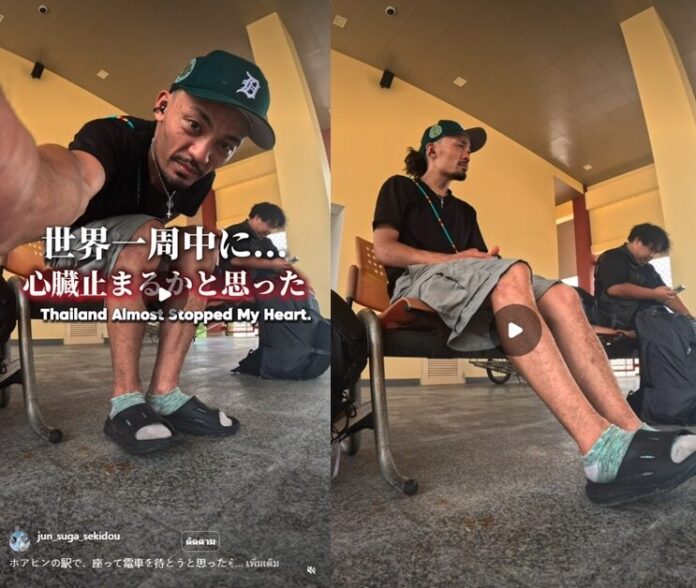
Japanese tourist’s chair collapse at Hua Hin station goes viral

PRACHUAP KHIRI KHAN — 24 June 2026, A Japanese travel content creator has gone viral after posting a video of an unexpected mishap at Hua Hin Railway Station, where a chair suddenly broke beneath him as he leaned back while waiting for a train.

The creator, who runs the travel channel jun_suga_sekidou, shared the clip under the title “Thailand almost stopped my heart.”

In the video, he is seen sitting on a chair at the station. As he leans back against the backrest, the chair suddenly gives way, causing him to fall backwards onto the ground with a loud crash.

1 58 696x588 1

Fortunately, he was not injured in the incident.

The creator’s friend can be heard laughing and joking, saying, “Don’t break things.” The Japanese tourist later commented that he had properly apologized to the station master following the incident.

The clip quickly attracted attention online, with many social media users expressing relief that he escaped unharmed while also finding humor in the unexpected accident.

2 46 696x563 1

Some commenters, however, noted that the incident raises questions about public safety and maintenance standards. They said authorities may need to inspect station facilities more thoroughly, as a similar accident involving a child, elderly person, or pregnant woman could potentially result in more serious injuries.

The video has since been widely shared across Thai social media platforms, drawing both amusement and concerns over safety at public transport facilities.

Advertisement

“What you see must be what you get,” minister warns buffets

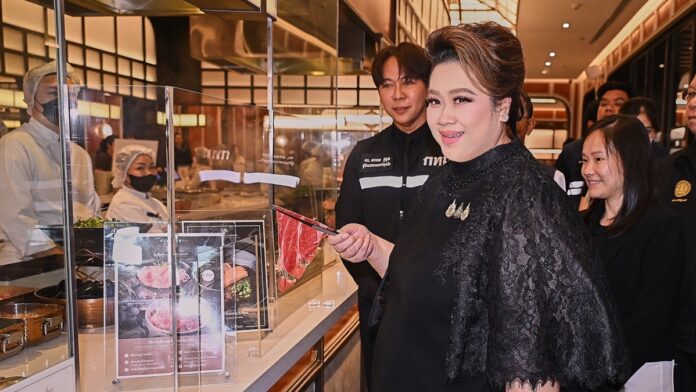
BANGKOK — A senior Thai government minister has ordered an inspection of buffet restaurants in a popular Bangkok shopping district, warning that promotional claims must accurately reflect what consumers actually receive.

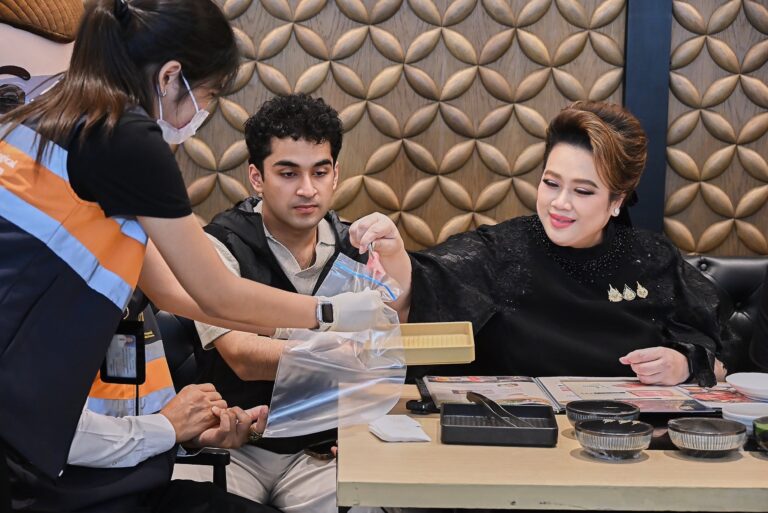
Supamas Isarabhakdi, Minister attached to the Prime Minister’s Office overseeing the Office of the Consumer Protection Board (OCPB), led an on-site inspection in the Pathumwan area on 25 June, where buffet restaurants are highly competitive due to frequent promotions.

S 326287373 0

She said promotional competition is acceptable, but must be based on honesty, adding that advertising, pricing and service conditions must match reality. “Consumers should not be misled first and then have problems resolved later,” she said.

The inspection focused on three main areas: promotional advertising and terms must be clearly disclosed before purchase; food images and menu items must match actual products served; and prices must be fully transparent, including service charges and value-added tax.

The OCPB also warned against unclear terms in online pre-sold vouchers, saying conditions must be clearly stated at the point of sale.

Supamas said the inspection was carried out in coordination with multiple agencies, including the Food and Drug Administration, the Department of Internal Trade, and the Pathumwan district office, to cover food safety, pricing fairness and hygiene standards.

She added that misleading advertising could result in penalties under the Consumer Protection Act, including fines and imprisonment, while fraudulent advance voucher sales could also fall under criminal fraud provisions.

S 326287368

Consumers were urged to check full pricing details, including tax and service charges, before purchasing, and to review receipts carefully after payment. The OCPB said complaints can be filed via its hotline 1166, the OCPB Connect app, its website, or local Damrongtham centres.

Advertisement

Cyprus marks EU Council presidency with Bangkok business luncheon

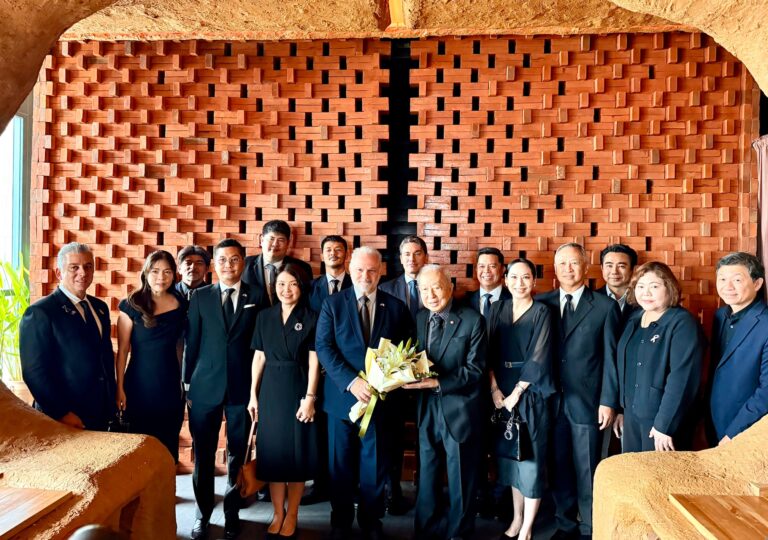
BANGKOK — The Ambassador of Cyprus to Thailand hosted a luncheon reception in Bangkok to mark the Republic of Cyprus’s Presidency of the Council of the European Union for the January–June 2026 term, bringing together Thai business leaders, government officials and diplomatic representatives.

Ambassador Evagoras Vryonides, joined by Paniti Vasuratna, Honorary Consul of Cyprus in Bangkok, welcomed guests at Tohona Restaurant at InterContinental Bangkok Sukhumvit. Attendees included representatives from the Thai government, business community and diplomatic corps. Discussions focused on strengthening bilateral relations, promoting trade and investment, and exploring new opportunities for cooperation between Thailand and Cyprus.

messageImage 1782346046193

The ambassador highlighted Cyprus’s role as a gateway to Europe and its potential to facilitate greater access for Thai businesses to European markets. The event also underscored the growing relationship between Thailand and Cyprus and their shared commitment to expanding economic cooperation and long-term partnerships.

Advertisement

Thailand positions itself as ASEAN’s water innovation hub with the launch of Aquatech Asia 2026

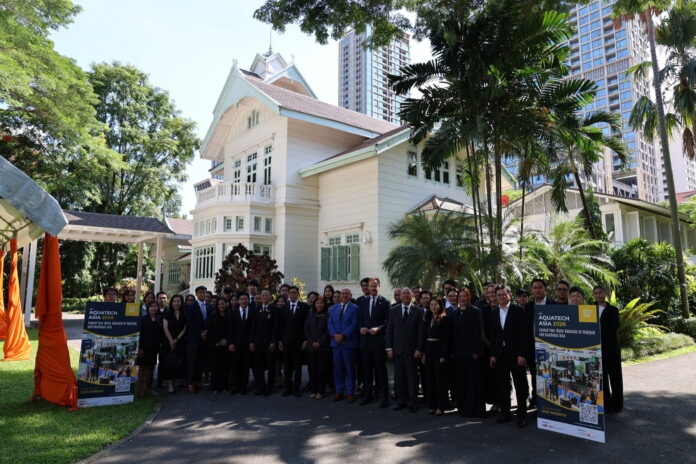
Thailand is strengthening its position as ASEAN’s emerging hub for water innovation, technology and sustainable infrastructure with the launch of Aquatech Asia 2026, the Asian edition of the world’s leading water technology tradeshow and conference.

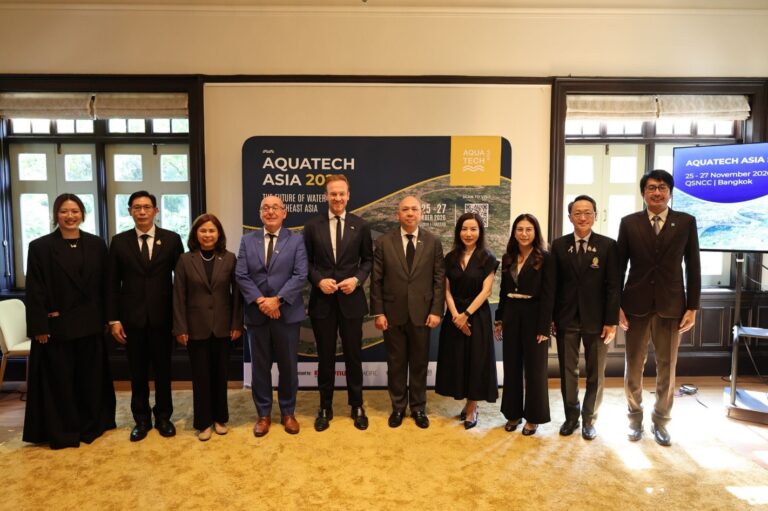
The event was officially announced during a press conference hosted by the Embassy of the Kingdom of the Netherlands in Thailand in Bangkok, underlining the strong and long-standing partnership between Thailand and the Netherlands in water management, climate resilience and sustainable development.

Organised by VNU Asia Pacific in partnership with RAI Amsterdam, Aquatech Asia 2026 will take place from 25–27 November 2026 at the Queen Sirikit National Convention Center (QSNCC). The event is set to become a leading regional platform, connecting global technology providers, policymakers, utilities, industrial users, researchers, investors and infrastructure developers from across Asia and beyond.

Picture1 12

The launch comes at a pivotal moment for Southeast Asia, where climate change, rapid urbanisation, industrial growth and increasing pressure on water resources are intensifying. Water security is no longer just an environmental concern — it is a critical factor shaping economic growth, industrial competitiveness, food security, energy resilience and quality of life.

Speaking at the launch, Mr. Christiaan A. Bergwerff, First Secretary of the Embassy of the Kingdom of the Netherlands in Thailand, emphasised the importance of international collaboration:

“Water management is a shared priority for both the Netherlands and Thailand, as well as many countries across Southeast Asia. Aquatech Asia will provide a global platform for sharing innovation, exchanging knowledge and strengthening partnerships to support sustainable growth across the region.”

Picture2 11

Globally recognised for its expertise in flood protection, delta management and integrated water solutions, the Netherlands brings valuable knowledge and experience to the partnership. For Thailand, the launch of Aquatech Asia represents more than the arrival of a leading international exhibition — it reflects the country’s ambition to become a centre for water innovation and sustainable infrastructure development within ASEAN.

Mr. Duangdej Yuaikwarmdee, CEO of VNU Asia Pacific, highlighted the strategic importance of water:

“Water is no longer simply an environmental issue — it is a strategic driver of future economic growth and national resilience. Aquatech Asia is not just an exhibition; it is a platform that brings together governments, industry leaders, researchers and innovators to address one of the world’s most pressing challenges.”

Mr. Rene Bos, Exhibition Director of Aquatech China and Asia at RAI Amsterdam, added:

“Thailand offers a unique combination of industrial demand, regional connectivity and a strong focus on sustainable infrastructure. This makes it an ideal location for Aquatech’s expansion in Asia. We see significant opportunities to connect global technology leaders with regional stakeholders and accelerate innovation and business collaboration.”

Aquatech Asia 2026 will present cutting-edge solutions across the entire water value chain, including water and wastewater treatment, water reuse, filtration and membrane technologies, smart water management, AI-powered monitoring, and flood and drought mitigation — all aimed at supporting sustainable urban and industrial development.

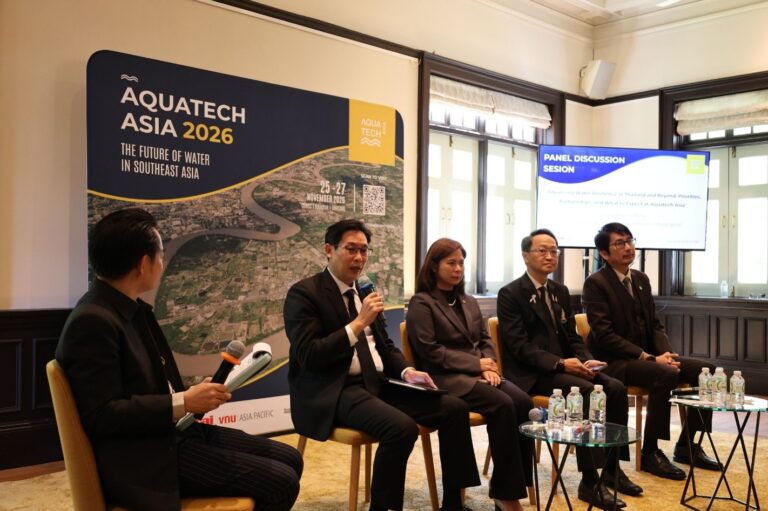
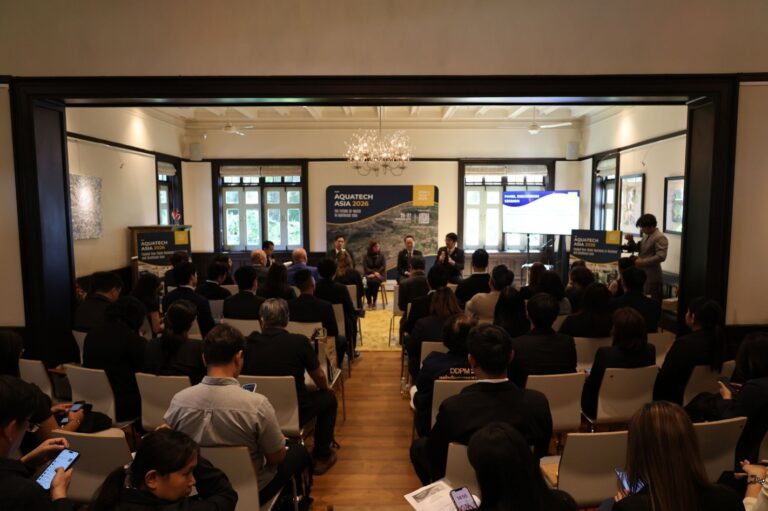
The launch also featured a high-level panel discussion titled “Advancing Water Resilience in Thailand and Beyond: Priorities, Partnerships, and What to Expect at Aquatech Asia 2026.” Experts from government, industry and academia agreed that strengthening water resilience in Thailand and across Southeast Asia requires closer collaboration, increased investment and the integration of technology, policy and data-driven approaches.

Picture3 11

Key speakers emphasised the importance of integrated planning, reliable data, long-term strategy and the translation of research into practical, scalable solutions. The discussion reinforced the need to bridge policy, technology and knowledge-sharing to build a more water-secure and climate-resilient future.


Aquatech Asia 2026
25–27 November 2026
Queen Sirikit National Convention Center (QSNCC), Bangkok, Thailand

For more information, visit: Aquatech Asia website

Advertisement

Alcohol sales banned in Bangkok and Pattaya before elections

Alcohol sales banned in Bangkok and Pattaya before elections

BANGKOK — 25 June 2026, The Election Commission (EC) has announced a ban on the sale and distribution of alcoholic beverages in Bangkok and Pattaya ahead of local elections.

The ban will be in effect from 18:00 on 27 June 2026 until 18:00 on 28 June 2026, covering the period before and during voting for the Bangkok governor and city council elections, as well as the Pattaya mayor and Pattaya City Council elections.

Violators face penalties of up to six months in prison, a fine of up to 10,000 baht, or both.

Eligible voters in Bangkok and Pattaya are scheduled to cast their ballots on 28 June 2026 between 08:00 and 17:00.

Advertisement

China says it can hold people abroad accountable under ethnic unity law

China has the right to hold people outside its borders legally accountable under its new ethnic unity law, a senior official said on Wednesday, defending a provision that has drawn criticism ahead of the law’s implementation next week.

The law, passed in March and due to take effect on 1 July, includes a clause stating that individuals and groups outside China can be held legally responsible for undermining “ethnic unity and progress” or inciting ethnic separatism.

Speaking at a press conference in Beijing, Vice Justice Minister Hu Weilie said criticism of the overseas provision was based on a misunderstanding of the law.

“This provision is based on China’s national conditions, conforms to legal principles, and is consistent with international practice. It is a legitimate, lawful, necessary and feasible legal provision,” Hu said.

He said countries around the world have the right to prevent separatist activities and maintain social order through domestic legislation.

Hu said the overseas provision targets illegal acts and uses legal measures to guard against unlawful activities involving ethnic affairs originating from outside China.

He added that enforcing the provision would help safeguard China’s sovereignty, security and development interests, as well as the lawful rights and interests of people of all ethnic groups.

Hu also said the law would not affect normal exchanges between China and other countries, including academic discussions, economic and trade cooperation, and people-to-people contacts.

Advertisement

Thai stationery maker earns four Guinness world records

Thai stationery maker earns four Guinness world records

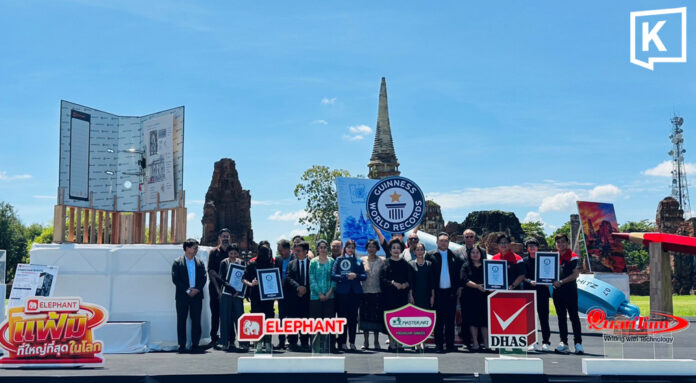
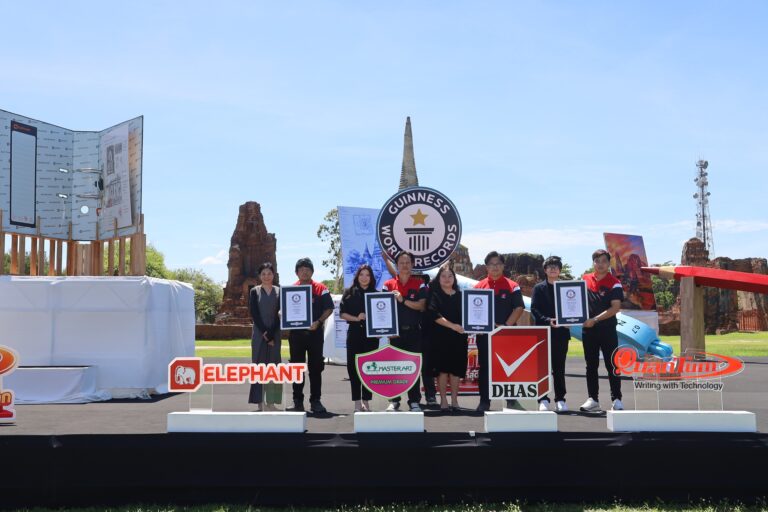
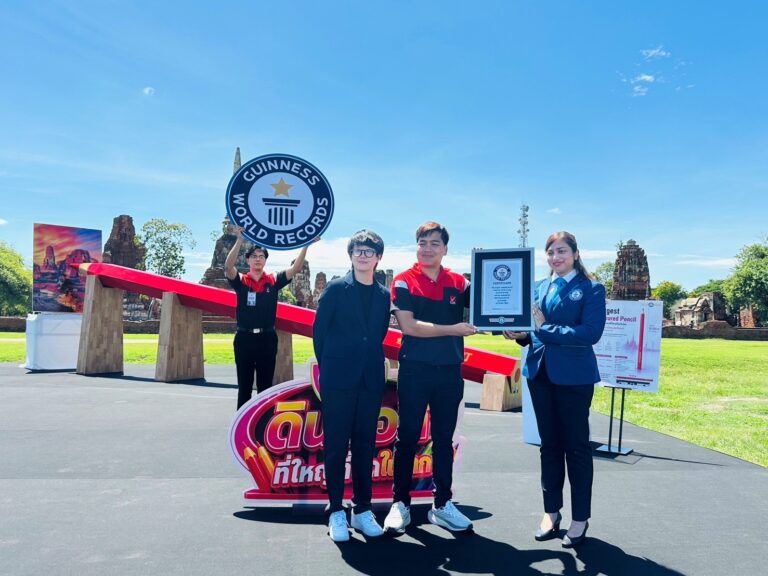
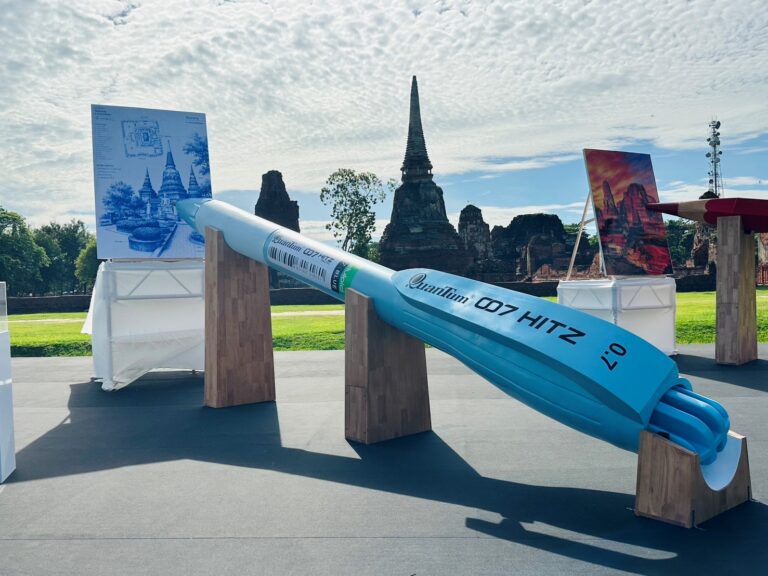
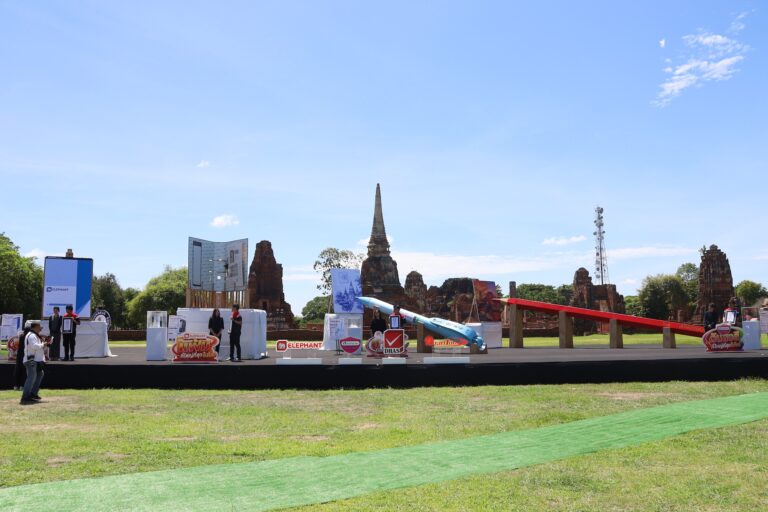
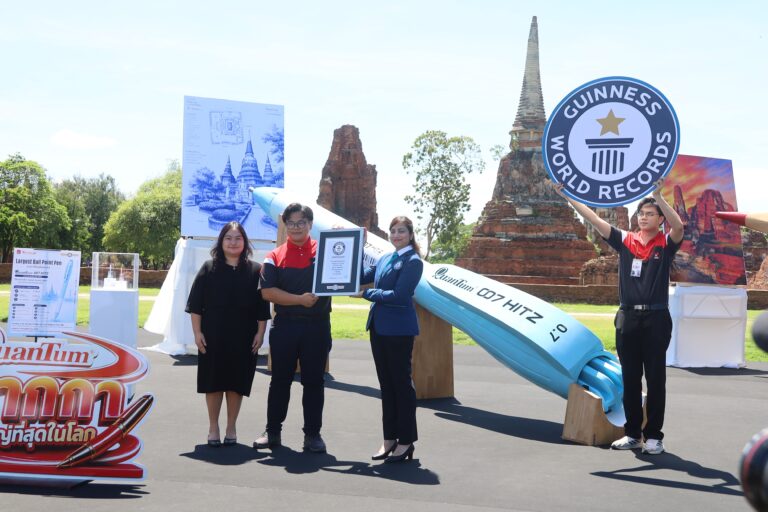
AYUTTHAYA — 25 June 2026, A Thai stationery manufacturer has gained international recognition after Guinness World Records officially certified four of its creations as the largest stationery items in the world, including a document file, tear-off notepad, pen and colored pencil.

The certification ceremony was held at the historic Wat Mahathat site in Ayutthaya Historical Park, Phra Nakhon Si Ayutthaya province. Ayutthaya Governor Chuanin Wongsathitjirakan and Provincial Administrative Organization President Somsong Phancharoenworakul attended as witnesses.

news142534 q5Sefvtw5O1782367282

The certificates were presented by Aynee Toorabally, an official adjudicator from Guinness World Records, to D.H.A. Siamwalla Co., Ltd. (DHAS).

news142534 jIRqs2oaN41782367281

The four world records recognized were:

  • World’s largest document file, modeled after the Elephant Brand No. 120 file, measuring 1.752 meters high, 1.425 meters long and 0.410 meters wide, weighing 71.42 kilograms.
  • World’s largest tear-off notepad, based on the Elephant Brand P101 notepad, measuring 2.100 meters high, 1.485 meters wide and 0.015 meters thick, weighing 33.02 kilograms and containing 53 pages.
  • World’s largest pen, modeled after the Quantum 007 HITZ pen, measuring 7.100 meters in length and 0.567 meters in diameter, containing 0.5 kilograms of ink.
  • World’s largest colored pencil, based on a Master Art colored pencil, measuring 10.534 meters in length and 0.500 meters in diameter.

news142534 25Ajte7RgK1782367280

Tisawat Tadoo, Director of Production Administration at DHAS, said the project reflects the company’s commitment to innovation, product development and continuous creativity.

news142534 B3rxKKOa4U1782367281

According to the company, all four oversized items were constructed using the same materials as the original products. The Quantum pen includes a functioning refill, ink and spring mechanism, while the Master Art colored pencil was made with genuine pencil and color-core materials.

news142534 I4pjclL4eS1782367282

Each item underwent detailed inspection, measurement and evaluation in accordance with Guinness World Records criteria before receiving official certification.

news142534 ac2VCBZlOY1782367282

Advertisement

Musk loses trillionaire status as SpaceX stock slump

Musk loses trillionaire status after SpaceX stock slump

NEW YORK — 25 June 2026, Elon Musk has lost his status as the world’s first trillionaire after sharp declines in the share prices of SpaceX and Tesla erased more than $150 billion from his fortune, according to the Bloomberg Billionaires Index.

Bloomberg’s daily wealth ranking, updated at 17:30 New York time, showed that Musk’s net worth fell to $957 billion on 23 June, down from $1.11 trillion less than two weeks earlier.

The drop came after heavy losses in SpaceX and Tesla shares amid a broader sell-off in technology stocks, as investors increasingly questioned the long-term profitability of artificial intelligence (AI) investments.

Despite losing his trillionaire status, Musk remains the richest person in the world, maintaining a significant lead over the second-richest billionaire.

Musk made history on 12 June 2026 when SpaceX debuted on the Nasdaq stock exchange in a highly anticipated public offering. The company’s initial public offering (IPO) was priced at $135 per share, while the stock opened at $150 per share on its first trading day.

The listing pushed the rocket and satellite giant’s market value above $1.77 trillion. With Musk owning about 42% of the company, his paper wealth immediately surpassed the $1 trillion mark.

Investor enthusiasm continued to drive the stock higher, with SpaceX shares reaching a record $225.64 per share on 16 June, lifting Musk’s net worth to an estimated $1.32 trillion, its highest level on record.

However, the rally proved short-lived. Concerns over rising capital expenditures, growing AI infrastructure costs and persistently high interest rates triggered a broad technology-sector sell-off, affecting major firms including Nvidia, Intel and AMD.

SpaceX shares were among the hardest hit, plunging more than 30% from their mid-June peak to around $156 per share.

On 22 June, a particularly volatile trading session saw SpaceX shares tumble 16% in a single day, wiping an estimated $240 billion from Musk’s fortune.

Meanwhile, Tesla shares fell nearly 6% the following day, adding to the losses. Musk owns approximately 12% of Tesla’s outstanding shares.

Market analysts said post-IPO volatility is common for high-value companies, but the scale of the swings highlights the tension between lofty investor expectations and business realities.

Musk’s trillionaire status is especially vulnerable because his wealth is concentrated in a small number of assets. Nearly all of his fortune is tied to just two companies — SpaceX, which accounts for almost 80% of his wealth, and Tesla.

Analysts noted that a recovery of only about 6% in SpaceX shares from current levels would be enough to push Musk’s net worth back above the $1 trillion threshold.

Advertisement

Hot News

LATEST NEWS

Bangkok
light rain
31.9 ° C
31.9 °
30.9 °
70 %
5.2kmh
100 %
Thu
30 °
Fri
31 °
Sat
30 °
Sun
32 °
Mon
32 °