































37.8 C
Bangkok
Monday, July 20, 2026
Home Blog

Review: The Evil Lawyer – When justice isn’t black and white, and the courtroom isn’t reserved for good people

Review: The Evil Lawyer – When justice isn’t black and white, and the courtroom isn’t reserved for good people

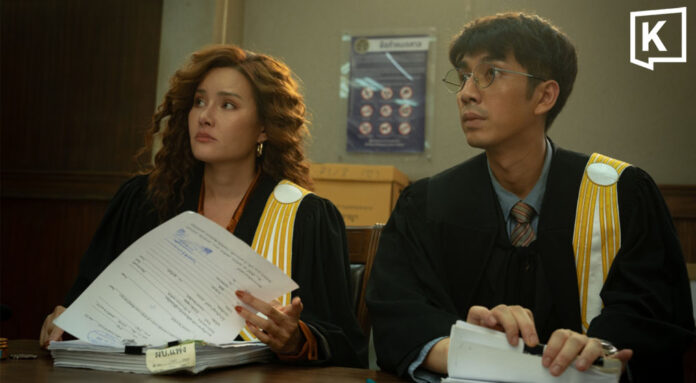
The Evil Lawyer, a new Thai legal drama series released on 11 June, is directed by Thai filmmaker Nottapon Boonprakob, known for screenwriting on SuckSeed and May Who?, co-directing and writing on One for the Road, and directing the Netflix series Mad Unicorn.

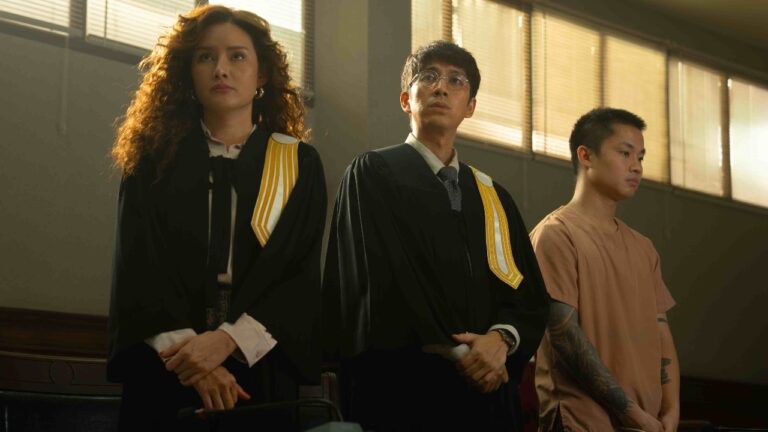
This time, he turns his attention to Thailand’s legal world through the story of Mek, an idealistic young lawyer who suddenly finds himself accused of murdering the son of a police officer. To clear his name, he is forced to team up with Jittri, a notoriously cunning attorney known for exploiting loopholes in the law. Together, they navigate a justice system where the answers are rarely black and white.

What stands out most is the series’ willingness to explore the grey areas of Thailand’s justice system. Through the eyes of legal professionals, it raises uncomfortable questions about morality, power, and justice, three forces that do not always move in the same direction.

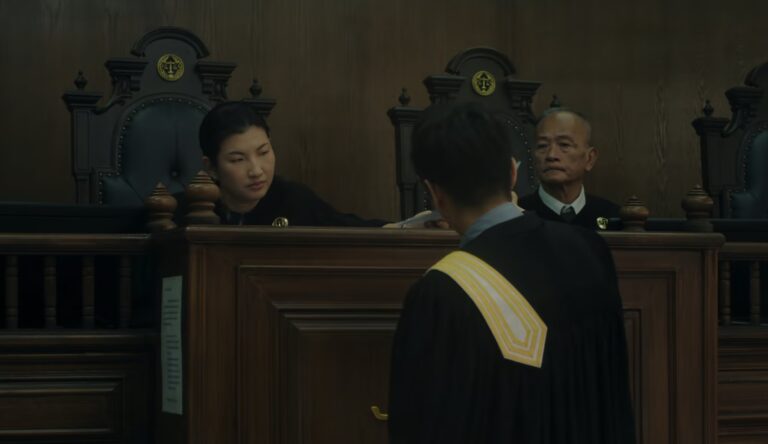
Another standout aspect is the attention to detail in depicting courtroom proceedings and cross-examinations. It is clear that the creators have done extensive research, resulting in scenes that feel remarkably authentic without unnecessary dramatisation.
HKkGnQva4AAIkvd 0

More importantly, the series reminds viewers that courtrooms are not bright, orderly or reassuring spaces, as they are sometimes portrayed in television dramas. Instead, they are spaces filled with tension, pressure, and fierce competition, where everyone fights for their own interests.

The performances are equally impressive. Not only do the lead actors deliver compelling performances, but supporting actors and even minor characters add to the sense of realism. Many of them genuinely resemble people one might encounter in Thailand’s legal profession.

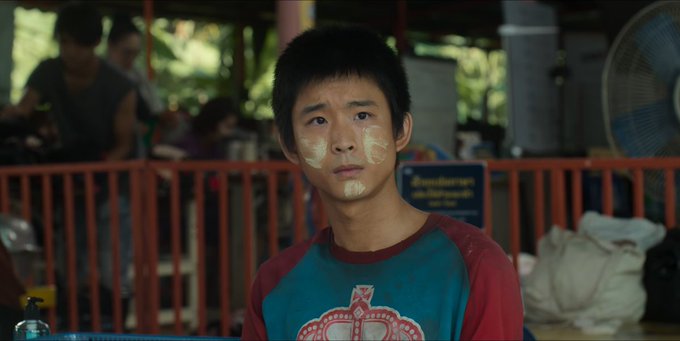
The casting choices also deserve praise for going beyond the conventional standards of attractiveness often seen in Thai series. The character Seya, for example, presents a migrant worker in a way that feels natural and believable.

Visually, the series employs muted colours and subdued lighting, creating an atmosphere of discomfort and moral ambiguity that neatly complements its themes.
Seya 0

One of the series’ most striking achievements is its incorporation of cases reminiscent of real-life incidents that have shaken Thai society. These include the mysterious death of a young woman on a boat surrounded by influential figures, recalling the highly publicised case of actress Tangmo Nida, as well as references to abandoned infant remains in hospitals and devastating industrial fires. Such elements make the series feel as though it is addressing truths that reality itself often hesitates to confront directly.

The series is not without flaws. At times, the pacing moves too quickly, leaving viewers wondering whether they have missed something important. The ending also leaves several questions unresolved, walking a fine line between setting up a second season and intentionally allowing audiences to draw their own conclusions.

Rather than being entertaining in the conventional sense, The Evil Lawyer is emotionally unsettling. It leaves viewers feeling uncomfortable, disturbed, and even disgusted by certain aspects of reality. Episode five, in particular, featuring the cross-examination of a doctor accused of sexually assaulting a patient, is among the most distressing scenes in the series.

Credit must be given to actress Ying Rhatha Phongam, who portrays Jittri and reportedly contributed to the design of this sequence by avoiding rehearsals with the actress playing the victim beforehand. The result is a painfully raw and realistic scene, capturing the desperation of someone cornered into revealing the truth before the court.

Dtbezn3nNUxytg04ayx64lWvZk3Lt5bgTxKIIlJkHgXJfo 0

The series also questions the failures of Thailand’s justice system by satirising sensationalist news talk shows that invite the public to judge social issues. It reflects a painful reality: many people no longer place enough trust in formal legal mechanisms and instead seek justice through public opinion, allowing society itself to become judge and jury.

A lawyer’s duty is to fight for the best interests of their client within the framework of the law, not to determine who deserves legal representation. In that regard, the series may help dispel some of the misconceptions surrounding the legal profession.

For viewers who enjoy heavy dramas, thrillers, and stories that challenge social norms, The Evil Lawyer is not to be missed. However, audiences should be prepared for numerous sensitive themes, including sexual violence, imbalances of power, and cases that society often chooses to ignore.

Another major strength is the space the series gives to female lawyers. While women make up a significant part of the legal profession in reality, patriarchal attitudes often cause them to be overlooked. This series demonstrates that certain issues become even more powerful when told through women’s perspectives and voices.
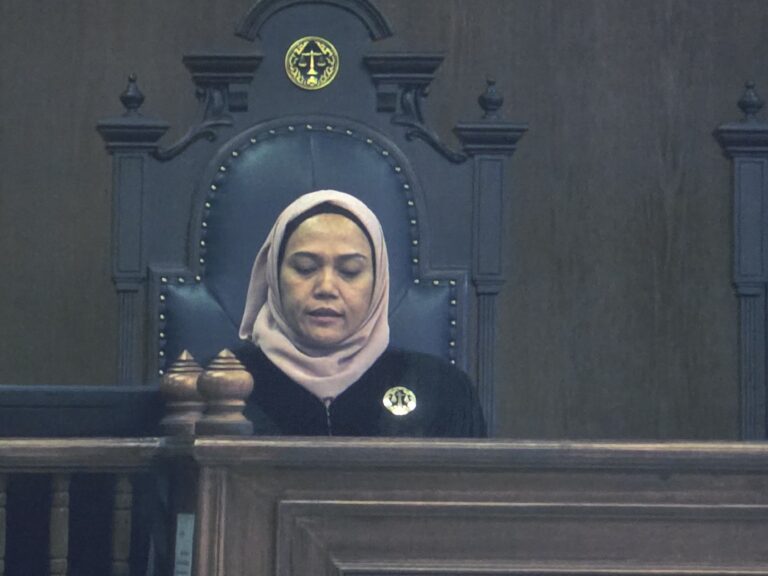
Easter Egg 0

Its biggest drawback may also be one of its strengths: the series is packed with symbolism and subtext. Viewers who dislike interpretation and analysis may find it demanding and occasionally overwhelming. But for those who enjoy unpacking hidden meanings, The Evil Lawyer is filled with Easter eggs and narrative layers that make it worth revisiting to catch details that may have gone unnoticed the first time around.

However, it is also difficult not to feel a sense of missed opportunity. While Thailand’s media and film industry have begun pushing boundaries by producing series willing to confront moral grey areas and structural problems that are plainly visible in Thai society, these stories still rarely go all the way. Certain issues could have been explored more deeply and interrogated more forcefully, yet they seem to stop short for reasons that remain unclear.

That is not to say that The Evil Lawyer lacks impact. On the contrary, it is powerful enough to leave viewers uncomfortable, angry, and questioning the nature of justice in Thai society. At the same time, it raises another question: had this series not been released on a streaming platform, would it have retained the same level of quality and boldness in its storytelling? Or would much of its sharper commentary have been diluted, leaving behind little more than another conventional legal drama?

More than a legal thriller, The Evil Lawyer is an uncomfortable reflection of a society that is still struggling to define what justice truly means. By the end, it leaves behind a disturbing question: when the system fails, who gets to decide what justice looks like?

dFQROr7oWzulq5Fa7HCSfOP3mM7WvwhlCP54SCh9O6K73CWE0kkxfM65rC1LVDvEB0W

Advertisement

Sin Sod: The Thai wedding tradition that sparks debate over money, marriage and culture

A recent wedding controversy involving a Thai bride and foreign groom has once again brought attention to one of Thailand’s most debated marriage customs: Sin Sod (สินสอด).

Often translated as a “dowry” or “bride price,” Sin Sod requires the groom or his family to provide money, gold or other valuables as part of the marriage ceremony.

To some Thai families, it is a long-standing tradition that shows respect toward the bride’s parents. But to others, the practice raises questions about whether marriage should involve a financial transaction.

A tradition rooted in the past

Historically, Thai society placed strong importance on family relationships. Marriage was not only a union between two people but also an arrangement connecting two families.

hand bride receiving holy water from elders thai culture wedding ceremony

Sin Sod was traditionally seen as compensation for the bride’s upbringing and as proof that the groom was financially capable of supporting a family.

The amount displayed at weddings could also serve as a public symbol of the groom’s social and economic status.

From tradition to controversy

While Sin Sod remains common in many Thai weddings, the practice has become increasingly controversial.

Critics argue that it can create the impression that a woman’s value is measured by money, education, appearance or family background.

Some also question why the bride’s family should receive payment when both partners are entering the marriage as equals.

Others argue that the expectation of large Sin Sod payments can place financial pressure on couples, especially when weddings become competitions over status and wealth.

What happens to the money?

In many cases, Sin Sod is not kept permanently by the bride’s family.

Some families return the money to the couple after the wedding as financial support for their new life together. However, practices vary widely depending on each family’s agreement.

Foreign marriages and misunderstandings

Sin Sod can become especially complicated in marriages between Thai citizens and foreigners.

asian bride caucasian groom have romantic time with thailand dress

Some foreign partners misunderstand the tradition, seeing it as paying money to “buy” a bride. Meanwhile, some Thai families view refusing Sin Sod as a sign of disrespect.

The reality is that expectations differ from family to family. Some Thai families insist on following the tradition, while others choose a symbolic amount or abandon it entirely.

A changing tradition

As Thai society changes, Sin Sod is also being questioned and reinterpreted.

For some, it remains an important cultural ceremony. For others, it represents an outdated practice that does not fit modern ideas of equality in relationships.

The debate surrounding Sin Sod reflects a broader conversation in Thailand about how traditions should evolve — preserving cultural identity while reconsidering customs shaped by older social structures.

Advertisement

Thailand, China agree to launch new 2+2 security dialogue

Thailand, China agree to launch new 2+2 security dialogue

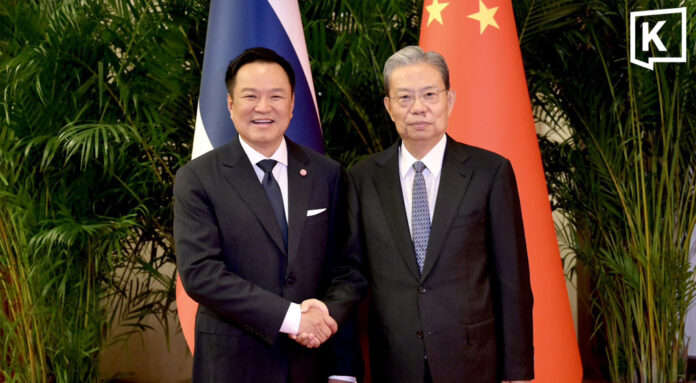
BEIJING — Thailand and China have agreed to establish a new 2+2 security dialogue between their foreign and defence ministers, strengthening cooperation against transnational crime, including call centre scam networks, human trafficking and money laundering.

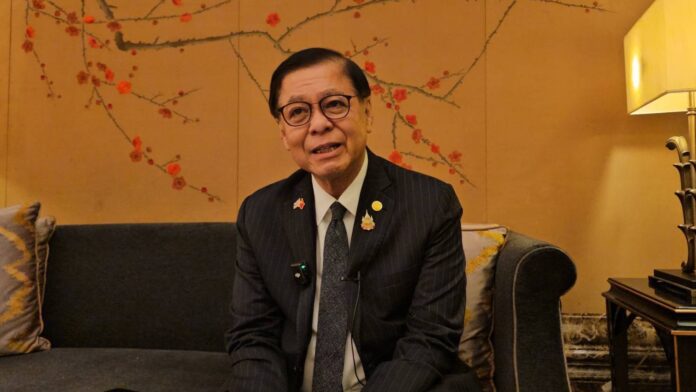
Deputy Prime Minister and Foreign Minister Sihasak Phuangketkeow announced the agreement on 20 July 2026 during an official visit to China with Prime Minister and Interior Minister Anutin Charnvirakul.

Speaking after talks with Chinese President Xi Jinping, Sihasak said both countries had agreed to establish the new ministerial-level security mechanism to enhance policy coordination and bilateral security cooperation. China has offered to host the inaugural meeting.

Sihasak said Thailand had placed the fight against call centre scam syndicates at the top of the agenda, with both sides agreeing to expand cooperation in law enforcement, anti-human trafficking operations, anti-money laundering efforts and intelligence sharing to combat transnational criminal networks.

He added that tackling scam operations and organised crime would require broader regional cooperation, particularly with Myanmar and Cambodia, to dismantle cross-border criminal networks more effectively.

Sihasak also raised concerns over grey businesses operating in Thailand, urging China to help address the issue.

He stressed that the Thai government welcomes only high-quality, sustainable investment and expects all foreign investors to fully comply with Thai law.

While describing grey businesses as a small proportion of overall Chinese investment in Thailand, Sihasak said illegal activities involving such operators could undermine public confidence and negatively affect Thai public sentiment.

“We want China to take the feelings of the Thai people into consideration,” he said, referring to the impact of illegal business activities on public confidence.

Advertisement

Thai court gives Netiwit suspended jail term for military draft evasion

SAMUT PRAKAN — 20 July 2026, A Thai court on Monday sentenced prominent student activist Netiwit Chotiphatphaisal to six months in prison, suspended for one year, after finding him guilty of evading compulsory military conscription.

The Samut Prakan Provincial Court convicted Netiwit under Sections 27 and 45 of the Military Service Act, which criminalise failure to comply with military conscription requirements.

The court ruled that Netiwit’s challenge to the constitutionality of the Military Service Act could not succeed because the Constitutional Court had previously determined that the law does not violate the constitution.

Judges also rejected his argument that he refused military service on the grounds of religious belief and conscientious objection, ruling that neither constitutes a legal exemption under the Military Service Act.

The court suspended the six-month prison sentence for one year, citing Netiwit’s lack of any previous prison record.

Netiwit was not present when the verdict was delivered. He is currently in the United States after being admitted to Harvard University Divinity School for a postgraduate programme.

Long-running challenge to conscription

The case stems from Netiwit’s refusal to participate in Thailand’s military conscription process, which he has opposed for years on moral and religious grounds.

In 2018, Netiwit reported for the annual military draft in Samut Prakan but publicly declared that he would not submit to conscription, identifying himself as a conscientious objector. At the time, he argued that forcing individuals to serve in the military against their will violated freedom of thought, conscience and religion.

He subsequently sought to challenge the constitutionality of the Military Service Act, arguing that the law failed to accommodate conscientious objectors and discriminated against those whose beliefs prevented them from bearing arms.

His legal team also asked the Constitutional Court to determine whether the provisions of the Military Service Act conflicted with constitutional protections for individual rights and freedoms. However, the Constitutional Court later ruled that the legislation was constitutional, clearing the way for the criminal case to proceed.

What is conscientious objection?

Conscientious objection refers to the refusal to perform military service because of sincerely held religious, ethical or moral beliefs. In many countries, conscientious objectors are allowed to perform alternative civilian service instead of joining the armed forces.

International human rights bodies, including the United Nations Human Rights Committee, have recognised conscientious objection as deriving from the right to freedom of thought, conscience and religion under international human rights law. However, countries differ in how they implement that principle.

Thailand’s Military Service Act does not recognise conscientious objection or religious belief as grounds for exemption from compulsory military service. Legal exemptions are generally limited to categories specified by the law, such as certain medical conditions, educational deferments and other statutory exceptions.

The Samut Prakan court reaffirmed that position on Monday, ruling that conscientious objection has no legal standing under Thailand’s current military conscription system.

A prominent activist

Now 30, Netiwit first gained national attention as a student activist campaigning for education reform and freedom of expression while studying at Chulalongkorn University. He later became known internationally for advocating democratic reforms, civil liberties and changes to Thailand’s military conscription system.

His activism has earned both praise and criticism, making him one of Thailand’s most recognisable student activists over the past decade.

Despite Monday’s conviction, Netiwit will not serve time in prison unless he violates the conditions of the one-year suspension. He is currently pursuing postgraduate studies in the United States after being accepted into Harvard University Divinity School.

Advertisement

Japan to provide patrol boats, equipment to Cambodian military under security aid program

Japan will provide patrol boats and communications equipment to Cambodia’s military under its Official Security Assistance (OSA) program, marking the first time Phnom Penh has received support through the framework.

The agreement was signed on Sunday at Cambodia’s Defence Ministry by Japanese Ambassador to Cambodia Ueno Atsushi and Cambodian Defence Minister Tea Seiha.

The aid package, worth ¥500 million (about US$3 million), includes patrol boats and communication devices aimed at strengthening security cooperation between the two countries.

Japan’s OSA program provides defence equipment and other materials to partner countries that share common security interests. Tokyo has previously supplied coastal surveillance radar systems to the Philippines under the program and agreed to provide disaster response and rescue equipment to Thailand.

Cambodia is also planning to establish a military communications school, with possible cooperation from Japan’s Ground Self-Defense Force.

The agreement comes as Japan seeks to expand security ties with countries in the region amid growing strategic competition in the Indo-Pacific.

Advertisement

Cambodia’s UNCLOS move closes door to land border talks, Thai FM says

BEIJING, China — Thailand’s Deputy Prime Minister and Foreign Minister Sihasak Phuangketkeow said Cambodia’s decision to pursue compulsory conciliation under the United Nations Convention on the Law of the Sea (UNCLOS) has undermined bilateral trust and made negotiations over the two countries’ land border increasingly difficult.

Speaking in Beijing on Monday, Sihasak said Thailand had proposed during a meeting between the two countries’ leaders on the sidelines of the ASEAN Summit in Cebu that all outstanding issues be resolved through bilateral dialogue to build mutual trust.

Instead, he said, Cambodia chose to move forward with compulsory conciliation over maritime boundary disputes rather than engaging in direct talks first.

“At this point, it has effectively closed the door to discussions on the land border. That makes things much more difficult,” Sihasak said.

He noted that UNCLOS provides several dispute-settlement mechanisms, including voluntary conciliation, and said compulsory conciliation should not have been pursued before both sides had exhausted bilateral negotiations.

Sihasak welcomed China’s offer to facilitate dialogue between Thailand and Cambodia if needed, but stressed that border issues should ultimately be resolved directly between the two countries.

“We appreciate China’s goodwill, but this is a matter that Thailand and Cambodia must discuss directly,” he said.

He added that China could play a constructive role by encouraging Cambodia to honor the commitment made in Cebu to resolve disputes through bilateral dialogue while maintaining a neutral position.

Sihasak also said Prime Minister Anutin Charnvirakul had conveyed Thailand’s appreciation to Chinese President Xi Jinping for Beijing’s neutral approach to Thai-Cambodian relations.

However, he expressed concern over Cambodian media coverage of China’s delivery of tanks to Cambodia, saying the reports came at a sensitive time when the ceasefire remains fragile and could further complicate relations between the two neighbors.

On Chinese investment in Thailand, Sihasak said Thailand welcomes quality, sustainable investment that complies with Thai law. While acknowledging that so-called “grey businesses” represent only a small portion of overall Chinese investment, he said such activities have affected public sentiment and urged China to address the issue.

Advertisement

Malaysia hopes to host FIFA World Cup, deputy PM says

Kuala Lumpur, Malaysia

Malaysia hopes to one day host the FIFA World Cup, Deputy Prime Minister Ahmad Zahid Hamidi said, outlining an ambitious vision for the country’s football future.

Speaking at a public viewing of the World Cup final between Argentina and Spain on Sunday, Zahid said he also hoped Malaysia’s national football team would qualify for the tournament and represent Southeast Asia.

“God willing, one day we aspire to make Malaysia a host of the World Cup,” he said.

“Hopefully, by then, the Malaysian team will be among the World Cup participants representing Southeast Asia.”

Malaysia has never hosted the FIFA World Cup or qualified for the men’s tournament. The country’s national team, known as Harimau Malaya, is currently ranked 136th in the latest FIFA men’s world rankings.

Advertisement

Fisherman rescues exhausted monkey found swimming at sea

Fisherman rescues exhausted monkey found swimming at sea

PHUKET — A fisherman has been praised online after rescuing an exhausted monkey found struggling in the sea off Phuket, with the animal believed to have swum more than five kilometres before being brought to safety.

The heartwarming rescue was shared on 19 July 2026 by the Phuket Times Facebook page.

According to the post, the incident occurred at around 09:30 hrs while the fisherman was anchored in waters near Koh Maphrao (Coconut Island).

news148191 3ai0XuAdyu1784477655

He spotted a monkey swimming alone in the open sea and appearing to be close to exhaustion.

The monkey is believed to have entered the water from Koh Siray, a journey of more than 5 kilometres, leaving it fatigued after a prolonged swim.

Realising the animal was struggling, the fisherman carefully manoeuvred his boat alongside it, allowing the monkey to climb aboard before transporting it safely back to shore.

news148191 QYi7bq88Hp1784477656

The story has drawn widespread praise on social media, with many users commending the fisherman for his compassion and quick response.

Many commenters described the rescue as a reminder that every life is precious, while others jokingly suggested the monkey would probably choose a boat instead of attempting another long swim in the future.

news148191 mq3YzVc96p1784477656

Advertisement

EOD team called after grenade-like object found roadside

EOD team called after grenade-like object found roadside

PHETCHABURI — 20 July 2026, Police sealed off part of a road in Phetchaburi after a suspicious object resembling a hand grenade was found beside a roadside near an overpass, prompting the deployment of an explosive ordnance disposal (EOD) team.

The Phetchaburi Provincial Police Emergency Call Centre (191) received a report from a member of the public at 08:56 hrs that a suspicious object resembling an explosive device had been left beside the road near the Ban Lat overpass, on the carriageway heading towards Ban Mo Municipality in Mueang Phetchaburi district.

Officers from Mueang Phetchaburi Police Station were immediately dispatched to the scene, where they found an object resembling a hand grenade.

Police cordoned off the area, restricted public access and managed traffic while advising motorists to avoid the route as a precaution.

An EOD team from the Phetchaburi Provincial Police Investigation Division was later called in to examine the object using specialist equipment and standard bomb disposal procedures to assess any potential risk.

The object will be sent for forensic examination, while investigators are working to determine its origin.

Police are also reviewing nearby CCTV footage in an effort to identify whoever left the object at the scene. Authorities said legal action would be taken if any criminal offence is found.

Police urged the public not to touch, move or attempt to inspect any suspicious objects that resemble explosive devices, and instead to immediately notify police or call the 191 emergency hotline so trained officers can respond safely.

Advertisement

Three die after BMW crashes into tuk-tuk in Nonthaburi housing estate

NONTHABURI — Three people were killed after a BMW allegedly driven by an intoxicated motorist crashed head-on into a tuk-tuk inside a housing estate in Bang Bua Thong district early Monday, police said.

The crash occurred at about 04:10 near Soi 12 in a residential estate in Sano Loi subdistrict. Police, rescue workers and a duty forensic doctor responded to the scene.

Two victims were pronounced dead at the scene: 82-year-old Lamai and the tuk-tuk driver, 37-year-old Prathumporn. Another passenger, 77-year-old Phattra, underwent CPR for about 30 minutes but was later pronounced dead at a hospital, bringing the death toll to three.

The tuk-tuk overturned and sustained severe front-end damage, while the black BMW came to rest after crashing into a tree. The 31-year-old BMW driver remained at the scene and cooperated with investigators.

Relatives said the two elderly women regularly hired the same tuk-tuk to travel to Bang Bua Thong Market to sell goods.

The BMW driver told police he had been driving from the entrance of the housing estate and did not see the tuk-tuk before the collision.

A breathalyser test found his blood alcohol level at 152 mg per 100 ml of blood, more than three times Thailand’s legal limit of 50 mg per 100 ml.

Police said preliminary findings indicate the tuk-tuk was emerging from Soi 12 as the BMW approached at high speed, resulting in a violent head-on collision.

Investigators are reviewing CCTV footage from the area to determine the circumstances of the crash. The BMW driver has been taken into custody and will face legal proceedings.

The victims’ bodies have been sent to the Institute of Forensic Science for autopsy.

Advertisement

Hospital dismisses doctor amid death probe

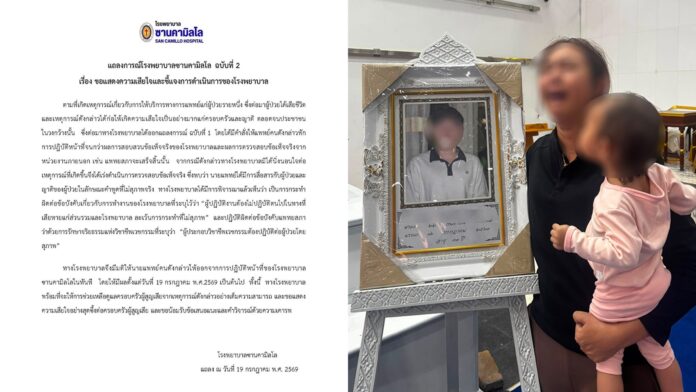
RATCHABURI — A private hospital in Ratchaburi has dismissed a senior physician after a 30-year-old man died of a heart attack hours after allegedly being diagnosed with a panic attack and denied an electrocardiogram (ECG) requested by his family.

The case drew widespread public attention after the victim’s wife, teacher and influencer Benyaporn Phanphet, known online as “Kru Sai,” shared her story on social media, claiming her husband’s death could have been prevented had he received appropriate treatment.

According to Benyaporn, her husband sought treatment at San Camillo Hospital in Ban Pong district after experiencing severe pain radiating from his arm to his chest, accompanied by excessive sweating. He was reportedly referred between several departments before an orthopedic doctor suspected a heart condition and referred him to a general practitioner.

She alleged that despite the family’s repeated requests for an ECG, the physician declined, saying the symptoms were more likely caused by stress or a panic attack. The family also offered to pay for additional tests or transfer him to another hospital but said their requests were refused.

After returning home, the man collapsed later that evening and died.

An autopsy later found that he had severe coronary artery disease involving two blocked arteries.

The family has filed a formal complaint, seeking an investigation into the medical treatment.

In its first statement issued on Saturday, the hospital suspended the physician, a doctor in his 70s who had worked at the hospital for more than a decade, pending an internal investigation and external reviews by the Medical Council of Thailand and independent experts.

On Sunday, the hospital issued a second statement announcing that the doctor had been dismissed with immediate effect.

The hospital said its internal fact-finding found that the physician had communicated with the patient and relatives using inappropriate and impolite language, violating hospital regulations requiring staff to treat patients respectfully. The conduct was also found to be inconsistent with the Medical Council’s code of professional ethics.

The dismissal took effect on 19 July.

The hospital said it would continue to cooperate with ongoing investigations and provide assistance to the bereaved family, while expressing its deepest condolences and accepting public criticism and recommendations.

Advertisement

Hot News

LATEST NEWS

Bangkok
overcast clouds
37.8 ° C
37.8 °
35.5 °
43 %
4kmh
92 %
Mon
37 °
Tue
35 °
Wed
35 °
Thu
33 °
Fri
30 °