




















34.2 C
Bangkok
Wednesday, October 28, 2026
Home Blog

Review: The Evil Lawyer – When justice isn’t black and white, and the courtroom isn’t reserved for good people

Review: The Evil Lawyer – When justice isn’t black and white, and the courtroom isn’t reserved for good people

The Evil Lawyer, a new Thai legal drama series released on 11 June, is directed by Thai filmmaker Nottapon Boonprakob, known for screenwriting on SuckSeed and May Who?, co-directing and writing on One for the Road, and directing the Netflix series Mad Unicorn.

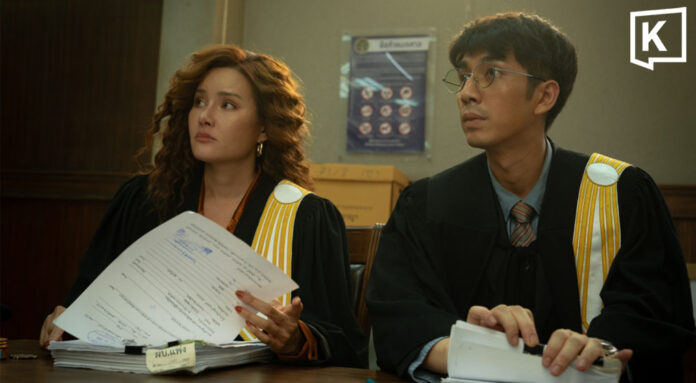
This time, he turns his attention to Thailand’s legal world through the story of Mek, an idealistic young lawyer who suddenly finds himself accused of murdering the son of a police officer. To clear his name, he is forced to team up with Jittri, a notoriously cunning attorney known for exploiting loopholes in the law. Together, they navigate a justice system where the answers are rarely black and white.

What stands out most is the series’ willingness to explore the grey areas of Thailand’s justice system. Through the eyes of legal professionals, it raises uncomfortable questions about morality, power, and justice, three forces that do not always move in the same direction.

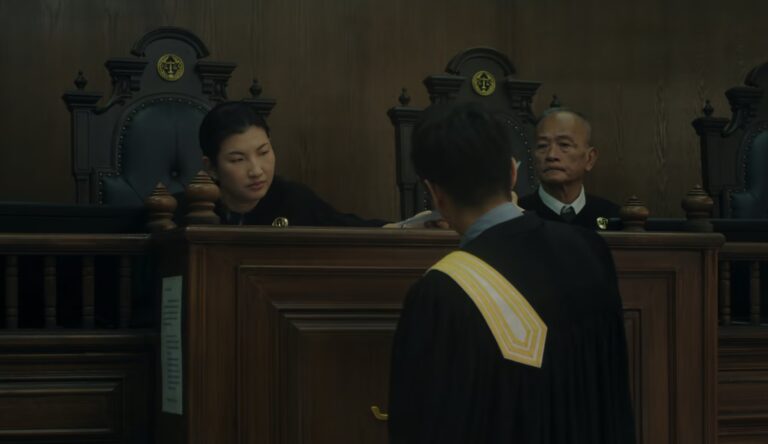
Another standout aspect is the attention to detail in depicting courtroom proceedings and cross-examinations. It is clear that the creators have done extensive research, resulting in scenes that feel remarkably authentic without unnecessary dramatisation.
HKkGnQva4AAIkvd 0

More importantly, the series reminds viewers that courtrooms are not bright, orderly or reassuring spaces, as they are sometimes portrayed in television dramas. Instead, they are spaces filled with tension, pressure, and fierce competition, where everyone fights for their own interests.

The performances are equally impressive. Not only do the lead actors deliver compelling performances, but supporting actors and even minor characters add to the sense of realism. Many of them genuinely resemble people one might encounter in Thailand’s legal profession.

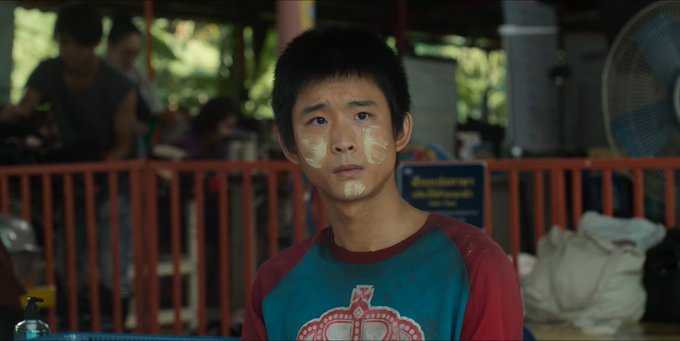
The casting choices also deserve praise for going beyond the conventional standards of attractiveness often seen in Thai series. The character Seya, for example, presents a migrant worker in a way that feels natural and believable.

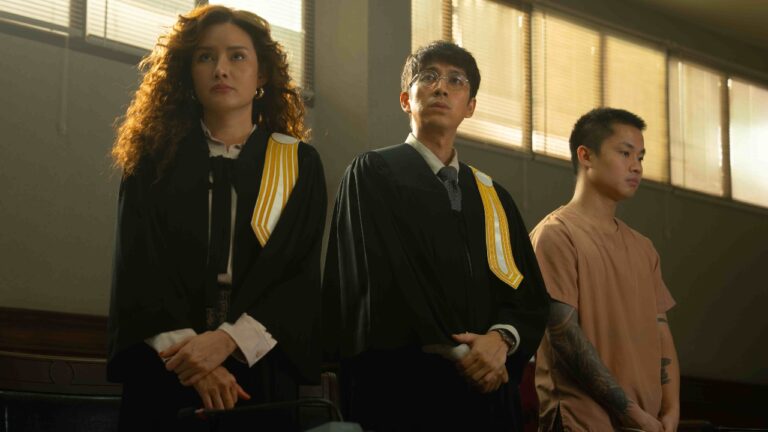
Visually, the series employs muted colours and subdued lighting, creating an atmosphere of discomfort and moral ambiguity that neatly complements its themes.
Seya 0

One of the series’ most striking achievements is its incorporation of cases reminiscent of real-life incidents that have shaken Thai society. These include the mysterious death of a young woman on a boat surrounded by influential figures, recalling the highly publicised case of actress Tangmo Nida, as well as references to abandoned infant remains in hospitals and devastating industrial fires. Such elements make the series feel as though it is addressing truths that reality itself often hesitates to confront directly.

The series is not without flaws. At times, the pacing moves too quickly, leaving viewers wondering whether they have missed something important. The ending also leaves several questions unresolved, walking a fine line between setting up a second season and intentionally allowing audiences to draw their own conclusions.

Rather than being entertaining in the conventional sense, The Evil Lawyer is emotionally unsettling. It leaves viewers feeling uncomfortable, disturbed, and even disgusted by certain aspects of reality. Episode five, in particular, featuring the cross-examination of a doctor accused of sexually assaulting a patient, is among the most distressing scenes in the series.

Credit must be given to actress Ying Rhatha Phongam, who portrays Jittri and reportedly contributed to the design of this sequence by avoiding rehearsals with the actress playing the victim beforehand. The result is a painfully raw and realistic scene, capturing the desperation of someone cornered into revealing the truth before the court.

Dtbezn3nNUxytg04ayx64lWvZk3Lt5bgTxKIIlJkHgXJfo 0

The series also questions the failures of Thailand’s justice system by satirising sensationalist news talk shows that invite the public to judge social issues. It reflects a painful reality: many people no longer place enough trust in formal legal mechanisms and instead seek justice through public opinion, allowing society itself to become judge and jury.

A lawyer’s duty is to fight for the best interests of their client within the framework of the law, not to determine who deserves legal representation. In that regard, the series may help dispel some of the misconceptions surrounding the legal profession.

For viewers who enjoy heavy dramas, thrillers, and stories that challenge social norms, The Evil Lawyer is not to be missed. However, audiences should be prepared for numerous sensitive themes, including sexual violence, imbalances of power, and cases that society often chooses to ignore.

Another major strength is the space the series gives to female lawyers. While women make up a significant part of the legal profession in reality, patriarchal attitudes often cause them to be overlooked. This series demonstrates that certain issues become even more powerful when told through women’s perspectives and voices.
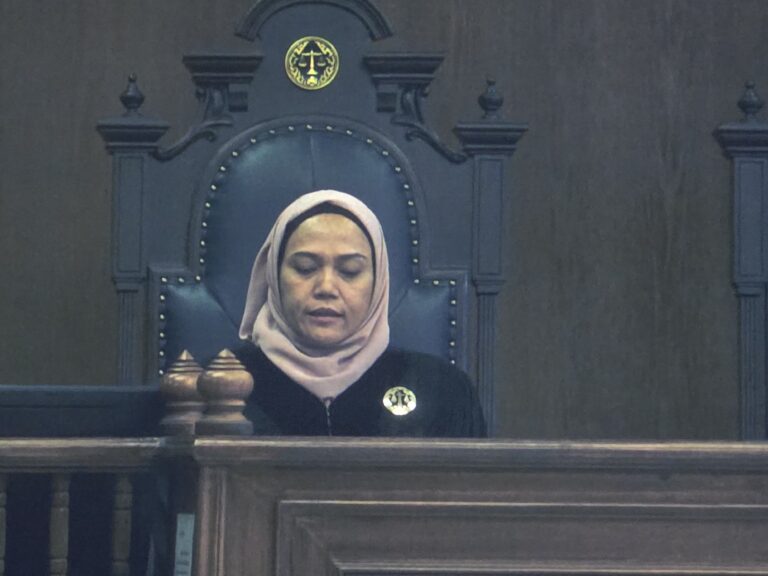
Easter Egg 0

Its biggest drawback may also be one of its strengths: the series is packed with symbolism and subtext. Viewers who dislike interpretation and analysis may find it demanding and occasionally overwhelming. But for those who enjoy unpacking hidden meanings, The Evil Lawyer is filled with Easter eggs and narrative layers that make it worth revisiting to catch details that may have gone unnoticed the first time around.

However, it is also difficult not to feel a sense of missed opportunity. While Thailand’s media and film industry have begun pushing boundaries by producing series willing to confront moral grey areas and structural problems that are plainly visible in Thai society, these stories still rarely go all the way. Certain issues could have been explored more deeply and interrogated more forcefully, yet they seem to stop short for reasons that remain unclear.

That is not to say that The Evil Lawyer lacks impact. On the contrary, it is powerful enough to leave viewers uncomfortable, angry, and questioning the nature of justice in Thai society. At the same time, it raises another question: had this series not been released on a streaming platform, would it have retained the same level of quality and boldness in its storytelling? Or would much of its sharper commentary have been diluted, leaving behind little more than another conventional legal drama?

More than a legal thriller, The Evil Lawyer is an uncomfortable reflection of a society that is still struggling to define what justice truly means. By the end, it leaves behind a disturbing question: when the system fails, who gets to decide what justice looks like?
dFQROr7oWzulq5Fa7HCSfOP3mM7WvwhlCP54SCh9O6K73CWE0kkxfM65rC1LVDvEB0W

Advertisement

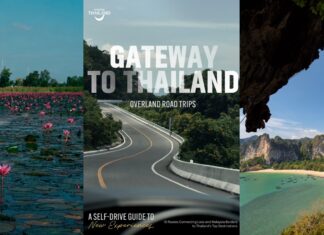
Thailand promotes 10 road trips for travellers crossing land borders

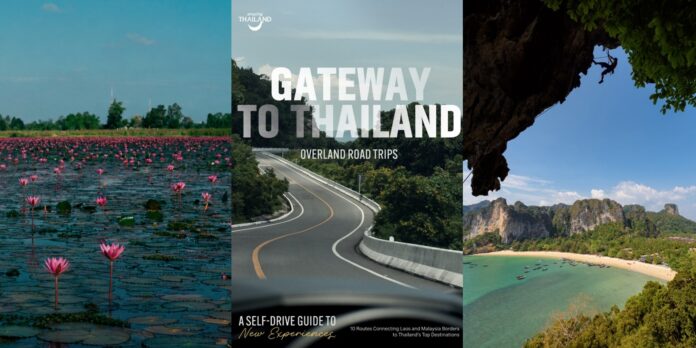
From Mekong riverside towns and misty mountains to southern food trails and Andaman islands, a new travel guide encourages visitors to explore beyond Thailand’s border checkpoints.

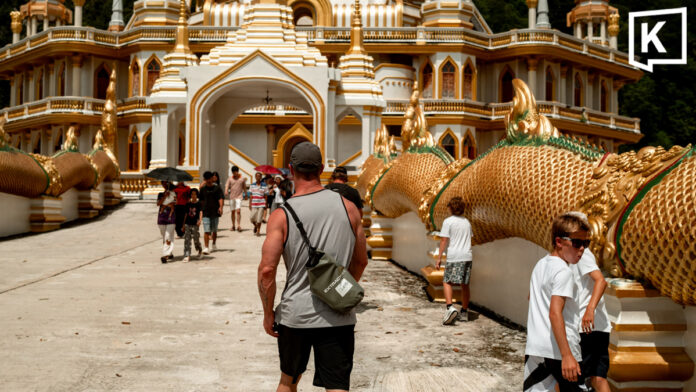
BANGKOK – Travellers entering Thailand by road can now find inspiration for journeys beyond the border gates through a new guidebook featuring 10 self-drive routes across 19 provinces.

The Tourism Authority of Thailand (TAT) launched its Gateway to Thailand travel guide on 28 October, targeting overland visitors, particularly from Laos and Malaysia, who frequently travel in private vehicles.

messageImage 1793177156416

The guide turns nine border crossings into starting points for road trips highlighting local food, cultural heritage, religious sites, natural landscapes and community life. It includes route maps, recommended stops, activities and key attractions to help travellers plan their journeys.

The nine entry points are Nong Khai, Mukdahan, Nakhon Phanom, Bueng Kan, Chong Mek in Ubon Ratchathani, Sadao in Songkhla, Wang Prachan in Satun, Betong in Yala and Su-ngai Kolok in Narathiwat.

Rather than treating border towns as places to pass through, the initiative encourages visitors to slow down, discover lesser-known destinations and spend more time in local communities.

Ten routes, ten ways to explore Thailand

In the Northeast, several routes follow the Mekong River, offering opportunities to explore riverside towns, local traditions and landscapes shaped by the waterway.

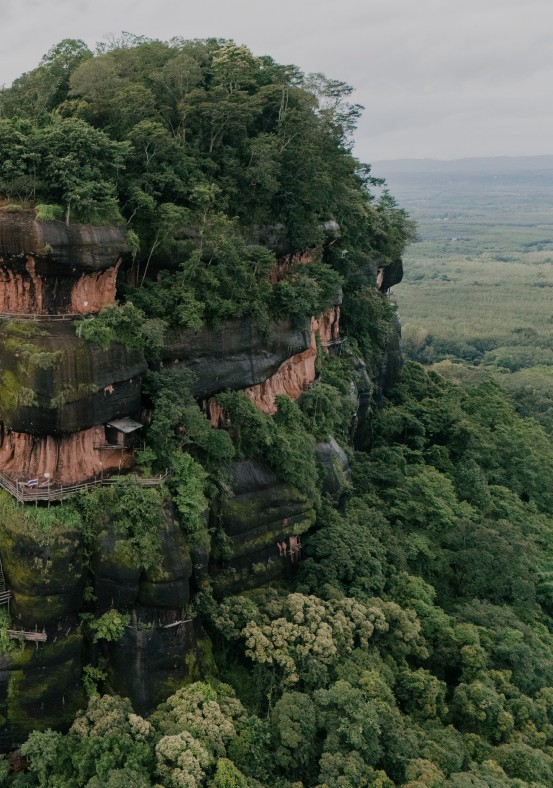
The Nong Khai route, titled Riverside Slow, City Flow, focuses on the relaxed pace, religious heritage and character of communities along the upper Mekong. In Bueng Kan, Beyond the Green, Into Naga’s Realm takes visitors towards dramatic cliffs, forests and outdoor activities, while drawing on local beliefs surrounding the mythical Naga.

Nakhon Phanom’s Traces of Indochina highlights natural indigo crafts, spiritual heritage and the province’s multicultural history. Further east, the Chong Mek route in Ubon Ratchathani explores Pha Taem and Sam Phan Bok, where rock formations and riverside communities tell stories of landscapes shaped by wind and water.

The Mukdahan itinerary, From Mythology to Deep Time Discovery, combines prehistoric geology, river legends, wilderness and local culture.

In the South, the guide shifts its focus to food, coastal landscapes, mountain scenery and cross-cultural heritage.

messageImage 1793177228604

Two routes begin at Sadao in Songkhla. Food Trail in Creative District combines local cuisine and historic architecture with creative art spaces, while A Journey Along the Gulf follows coastal scenery and old towns, highlighting local culture and religious traditions.

In Betong, Yala, Where the Mist Begins takes travellers into a mountain town known for its morning mist, plant life, cooler climate and distinctive local heritage.

The Wang Prachan route in Satun, Across the Andaman Isles, centres on coastal communities, fishing traditions and island-hopping opportunities along the Andaman Sea.

At Thailand’s southern edge, the Su-ngai Kolok route in Narathiwat, At the Kingdom’s Edge: Nature’s Grace and Cultural Jewels, highlights cultural heritage, rainforests, local knowledge and community experiences in the southern border provinces.

Bringing tourism revenue to local communities

The guidebook is designed for independent travellers who want to explore at their own pace, with practical information on routes, attractions and activities.

Printed editions are available in Thai and English, while digital editions are offered in five languages: Thai, English, Malay, Chinese and Lao.

messageImage 1793177280921

TAT is also promoting the routes through online and offline channels, working with travel bloggers and influencers to encourage visitors to turn the suggested itineraries into actual trips.

The broader aim is to spread tourism activity beyond major destinations by encouraging travellers to stop in smaller towns, experience local ways of life and spend money with businesses and communities along the routes.

For visitors arriving by land, the guide presents the border not as the end of a journey, but as the beginning of a wider exploration of Thailand.

The full guide, including route itineraries, recommended stops and activity information, is available at TAT’s tourism product website.

Advertisement

22-year-old woman killed in hit-and-run; car found at temple linked to monk

22-year-old woman killed in hit-and-run; car found at temple linked to monk

BURIRAM — 28 October 2026, A 22-year-old woman has died after being struck by a speeding sedan while collecting rice drying beside a road in Buriram province. Her relative chased the car to a temple, where it was found abandoned, raising questions about whether a monk who regularly used the vehicle was behind the wheel.

The incident came to light when a video circulated online showing a man riding a motorcycle in pursuit of a grey sedan following the crash.

According to the victim’s 28-year-old cousin, Khwanchai Rueangphaisan, the collision occurred at around 17:00 in front of Wat Khok Charoen in Ban Yang subdistrict, Mueang district, Buriram. The victim, identified only as “Ji” to protect her privacy, had been collecting rice that had been spread out to dry along the roadside.

Khwanchai said the sedan approached at high speed and struck Ji with such force that she was thrown more than 10 metres. She suffered multiple leg fractures and was unconscious at the scene.

The driver allegedly failed to stop or provide assistance and fled. Khwanchai left another relative to look after the injured woman before pursuing the car by motorcycle, shouting for the driver to stop. However, the sedan continued along the road, passed the Thep Nakhon Hotel area and turned into a side street.

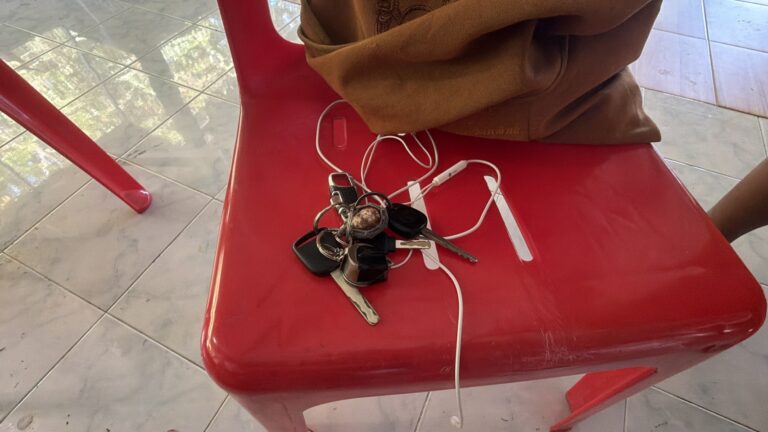
The car was eventually found parked inside a temple in Mueang district, about 10 kilometres from the crash site. The driver was nowhere to be found, and it was unclear how the person had left the temple.

news170697 0yb9zSkAyR1793164674

Khwanchai and some local residents suspected the car was regularly driven by a monk at the temple, believed to be around 50 years old. However, they could not confirm whether he was driving at the time of the collision.

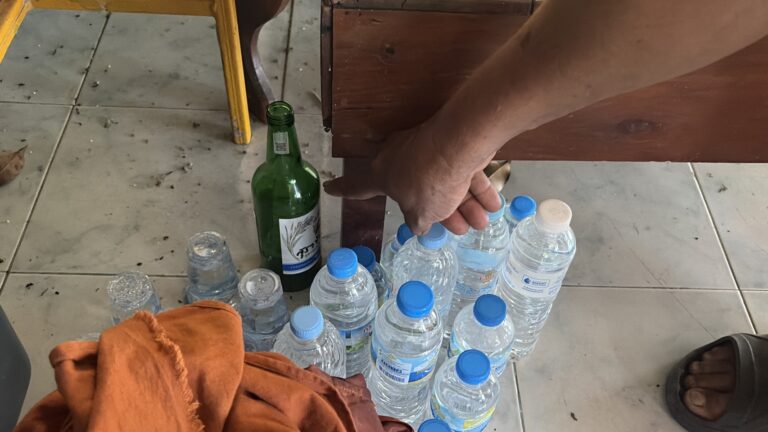
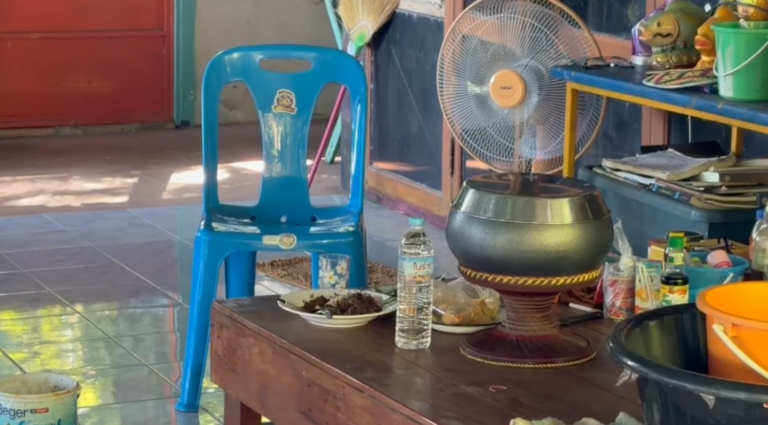
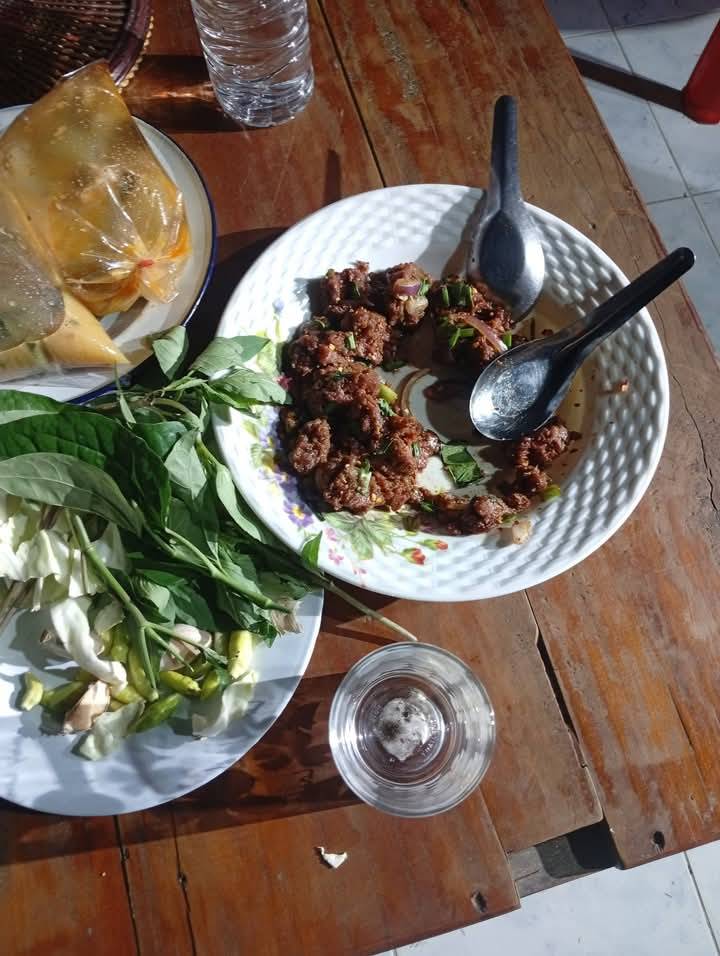
They said they later checked a monastic residence they believed might be connected to the driver. They reportedly found white liquor and dishes of food, including larb and koi, but did not find the monk. They called on authorities to investigate the driver’s identity and examine the available evidence to ensure a fair outcome.

The victim was taken to Buriram Hospital for treatment of her serious injuries but later died, according to her family.

news170697 YjH0dnKvLB1793164674

Her aunt, 49-year-old Sanan Nokyothin, said she and Ji had spread rice along the roadside to dry earlier that morning. In the evening, they were gathering it into sacks when some rice spilled. Ji bent down to collect it just as the sedan approached and struck her.

Phra Weeraphan Panyasiri, another monk at the temple, confirmed that the car was used by a fellow monk. However, he said the monk could not be found after the incident and he did not know where he had gone.

Police have yet to establish who was driving the sedan when the fatal collision occurred. The suspected driver’s identity and the allegations involving the monk remain unconfirmed pending an official investigation.

news170697 gdZ10z3APj1793164674 news170697 kTSuIAipk71793164673

Advertisement

Thailand leads 62 Asia-Pacific members in adopting Bangkok Declaration on space technology

Thailand leads 62 Asia-Pacific members in adopting Bangkok Declaration on space technology

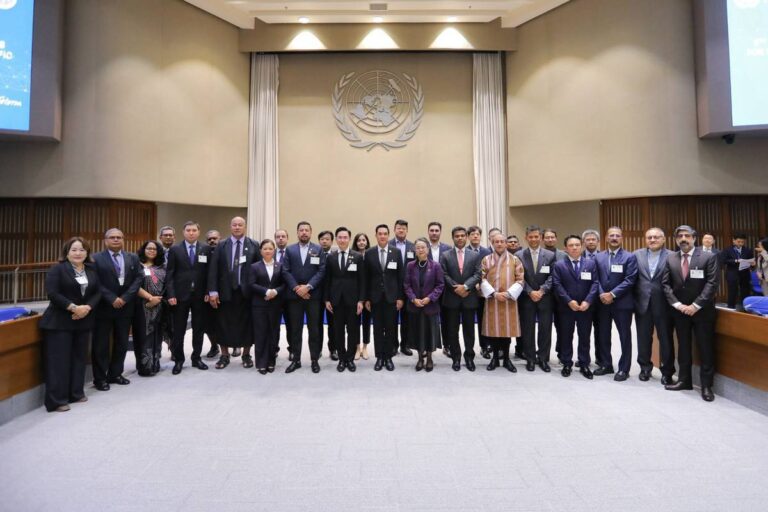
BANGKOK — 28 October 2026, Thailand has secured regional support for the Bangkok Declaration on the Use of Space for Sustainable Development in Asia and the Pacific, with 53 member states and nine associate members of the United Nations Economic and Social Commission for Asia and the Pacific (ESCAP) endorsing a framework to expand space technology cooperation and accelerate progress towards the UN Sustainable Development Goals (SDGs).

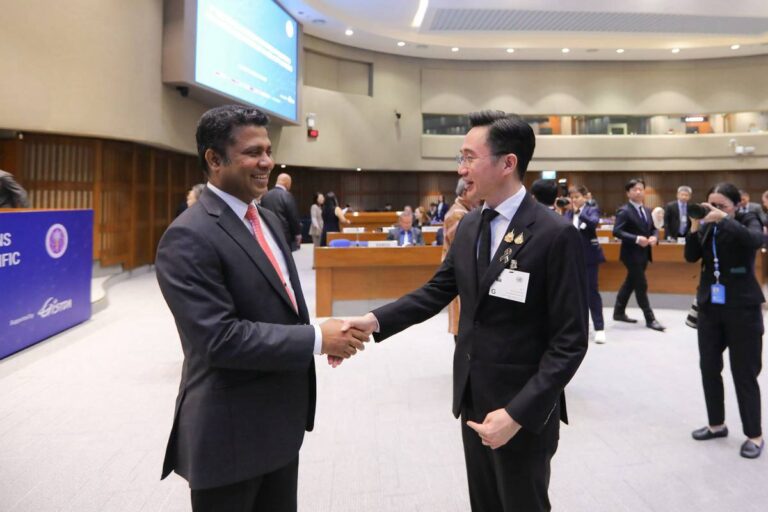
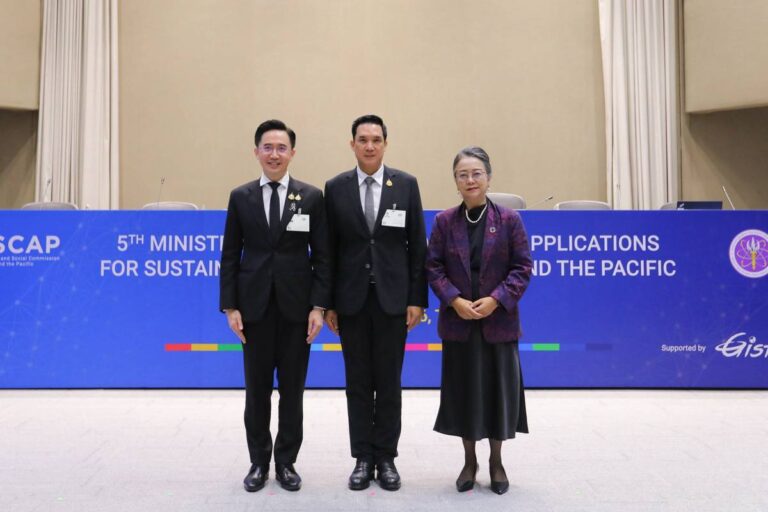
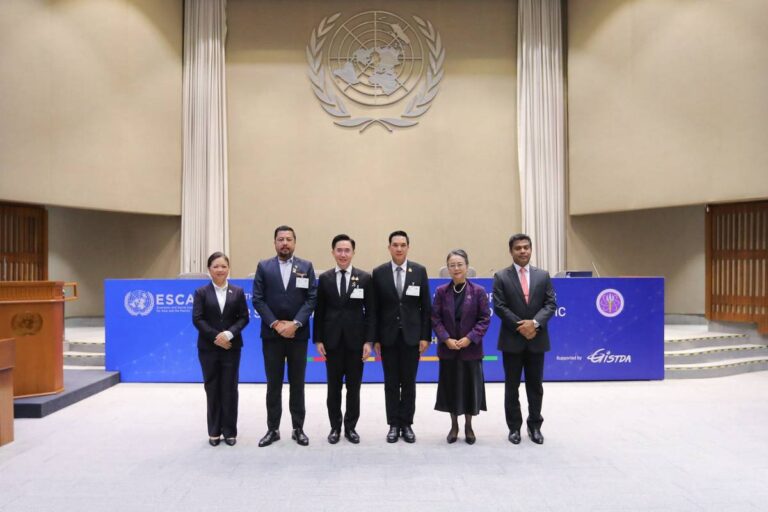
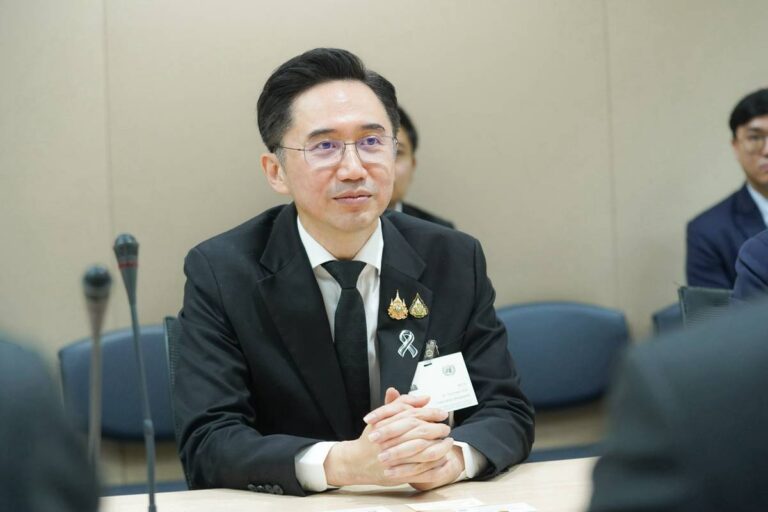
Deputy Prime Minister and Higher Education, Science, Research and Innovation Minister Yodchanan Wongsawat delivered remarks at the fifth Ministerial Conference on the Use of Space for Sustainable Development in Asia and the Pacific, held at the United Nations Conference Centre in Bangkok.

S 1703972 0 S 1703965 0

Thailand co-hosted the meeting with ESCAP, with the conference formally adopting the Bangkok Declaration to guide regional space cooperation through 2030.

The declaration comes as global progress towards the SDGs remains slow, with only an estimated 15–17% of targets on track to be achieved by 2030. It calls for greater use of space technology and geospatial data to help close development gaps and accelerate progress towards those goals.

It also promotes the practical integration of advanced technologies, including artificial intelligence (AI), big data, cloud computing, quantum technology and satellite communications, into space-related activities, while seeking to reduce technological inequalities across the region.

S 1703968 0 S 1703970 0

The framework encourages participation from the private sector, startups, small and medium-sized enterprises, universities and research institutions. It also supports voluntary data-sharing mechanisms in accordance with national laws, alongside common data standards that allow information systems to work together.

Improved access to and sharing of data are expected to strengthen disaster response, climate change monitoring and environmental surveillance, while supporting agriculture and food security.

The Bangkok Declaration will serve as a guiding framework for the third phase of the Asia-Pacific Plan of Action on Space Applications for Sustainable Development, covering 2026–2030. It will guide regional cooperation towards the sixth ministerial conference in 2030.

Turning space data into action

In his address, Yodchanan said the combined use of optical satellites, radar satellites and AI had improved the ability to monitor floods, droughts and transboundary haze. However, he stressed that the key challenge was turning the resulting data into decisions that could provide practical assistance to people during emergencies.

He outlined a “3P” strategy for regional space cooperation:

  • People: Improving early-warning systems so they can assess the direct impacts of disasters on communities.
  • Prosperity: Building capacity throughout the space value chain by connecting universities, Thailand’s Geo-Informatics and Space Technology Development Agency (GISTDA) and industry.
  • Partnership: Linking data systems across the region to enable greater integration and cooperation.

Yodchanan said the value of satellites should not be measured solely by what they can observe, but also by the lives and livelihoods they help protect.

S 1703959 0 S 1703964 0

“We must transform space technology into an economic engine,” he said, stressing that reliable science and interconnected systems would be essential to driving growth, strengthening disaster preparedness and promoting peace across the region.

The declaration also reinforces Thailand’s continuing role in regional space cooperation. Thailand previously hosted the third ministerial conference in 2018, which helped pave the way for the action plan currently in use.

“May space technology protect people, safeguard our planet, create prosperity, promote peace and strengthen our partnerships for generations to come,” Yodchanan said.

Advertisement

Around 200 cruise passengers stranded in Cambodia after ship suspends operations

This photo attained as part of the press kit by the Odyssey shows the U.S. cruise ship in Japan. (Odyssey via AP)

SIHANOUKVILLE, Cambodia – Around 200 passengers aboard a luxury residential cruise ship have been told to disembark in Cambodia after its operator suspended operations, citing soaring fuel costs linked to the war involving Iran.

Villa Vie Residences said its ship, Villa Vie Odyssey, would enter a temporary layup in Sihanoukville, with crew members remaining onboard to maintain the vessel and its essential systems.

The US-based company said it was working with passengers to arrange disembarkation and temporary accommodation while it explores restructuring and recapitalisation options over the next 60 days. It warned that no outcome was assured.

The ship’s operator said monthly fuel costs per cabin, which had historically averaged about US$1,800, had risen to as much as $8,000 in parts of Asia.

The company said it had tried to reduce consumption by slowing the ship’s itinerary and spending more time in port, but these measures had failed to offset the increase.

“Passing the full increase on to residents is not a realistic solution,” the company said.

According to The Japan Times, the company was covering accommodation and transportation for passengers but had not provided funding for them to leave Cambodia, citing founder Mikael Petterson.

The number of passengers onboard at the time of the suspension was not officially confirmed, although the vessel can accommodate up to 650 people.

Villa Vie Odyssey departed Belfast, Northern Ireland, in October 2024 on a planned 3.5-year voyage around the world, with stops in nearly 150 countries. Unlike a conventional cruise ship, it offers residential cabins for people who buy or rent accommodation onboard.

Permanent cabin prices range from about $120,000 to $440,000, while rental options start at $3,500 a month, according to the company’s website.

The suspension leaves residents facing uncertainty over their accommodation and future travel plans as the company attempts to secure its financial future.

Advertisement

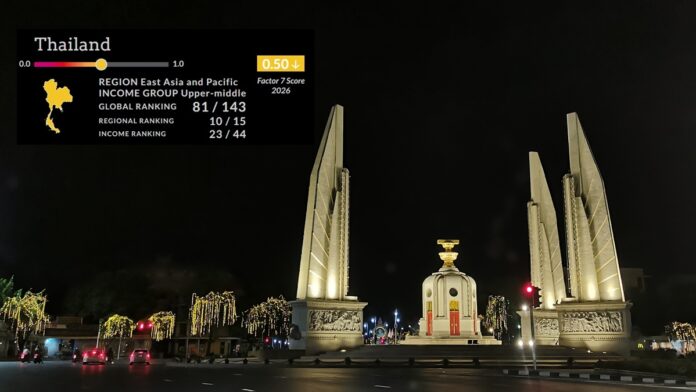
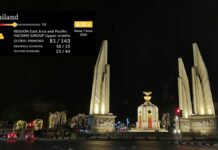
Thailand ranks 80th in global rule of law index 2026

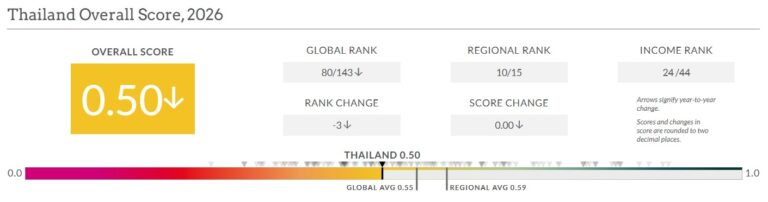
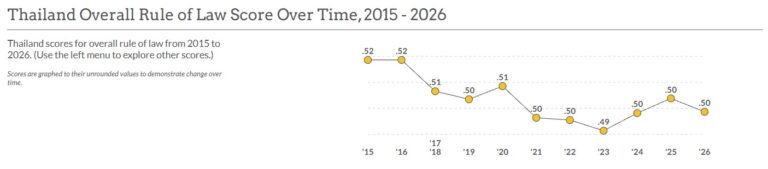
Thailand has fallen three places to 80th out of 143 countries and jurisdictions in the World Justice Project’s (WJP) Rule of Law Index 2026, scoring 0.50 out of a possible 1.00.

The country ranked 24th among 44 upper-middle-income countries, according to the index released on 21 October by the Washington-based organisation.

91 92

Singapore ranked first among Southeast Asian countries, placing among the world’s top performers with a score of 0.79. Malaysia followed with 0.57, Indonesia scored 0.51, and Thailand and Vietnam each received 0.50.

The Philippines scored 0.46, while Myanmar and Cambodia recorded 0.33 and 0.31, respectively.

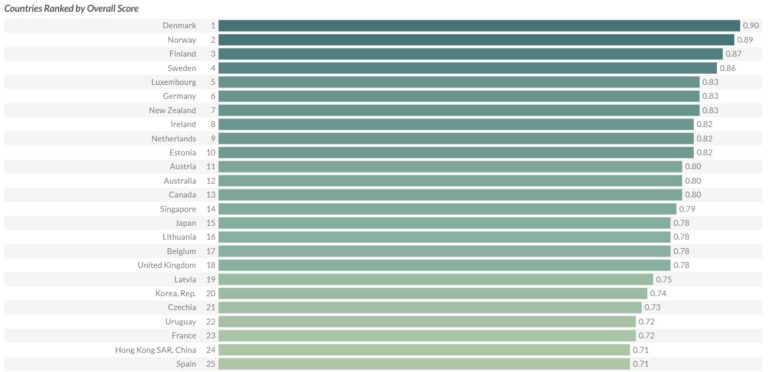
Globally, Denmark topped the index, followed by Norway, Finland, Sweden and Luxembourg. Venezuela ranked last, preceded by Afghanistan, Haiti, Cambodia and Nicaragua.

The WJP said the global rule of law downturn persisted in 2026, with more countries recording declines than improvements for the ninth consecutive year. Some 62% of countries saw their scores fall, compared with 38% that improved.

93

The organisation also found that more than 86% of countries had experienced a sustained five-year decline in at least one safeguard against authoritarian rule: constraints on government powers, open government or fundamental rights.

“Authoritarianism is no longer merely an emerging trend — it has become entrenched in many parts of the world,” WJP Executive Director Alejandro Ponce said.

Restrictions on civic freedoms remained a major concern. Freedom of opinion and expression deteriorated in 64% of countries, freedom of assembly and association declined in 67%, and civic participation weakened in 65%.

The report also found that civil justice deteriorated in 64% of countries and criminal justice in 58%, with improper government influence identified as a key factor in both areas. Judicial limits on government powers weakened in 63% of countries.

The WJP Rule of Law Index assesses eight areas: constraints on government powers, absence of corruption, open government, fundamental rights, order and security, regulatory enforcement, civil justice and criminal justice.

Scores range from 0 to 1, with higher scores indicating stronger adherence to the rule of law.

The organisation said stronger rule of law was also associated with higher economic prosperity, lower inflation and better sovereign credit ratings.

Advertisement

Chris Hemsworth wraps up weeks of filming in Thailand for ‘Extraction 3’

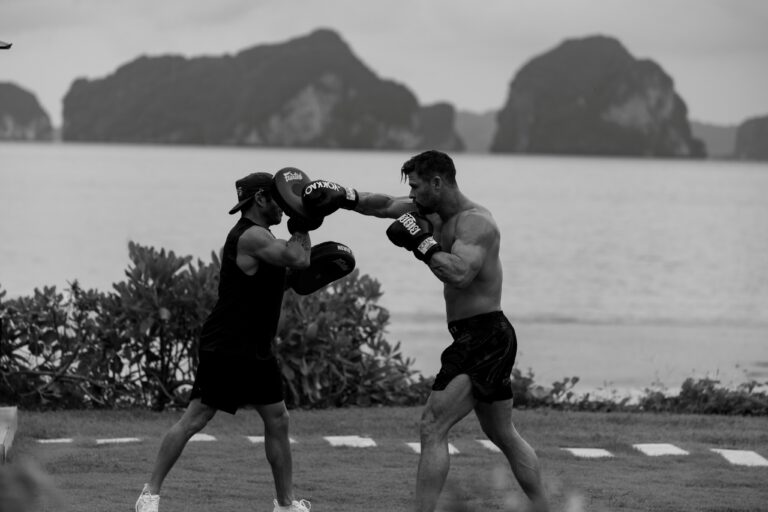
Hollywood star Chris Hemsworth is wrapping up his time in Thailand after several busy weeks filming Extraction 3, while making time for adventures away from the set.

In an Instagram post shared on 28 October 2026, the actor said he was finishing his stay in Thailand after what he described as “crazy few weeks” of filming.

SaveClip.App 867744358 18646325818002645 4784703095636027244 n SaveClip.App 870461740 18646326055002645 7206823300540325657 n

Despite his demanding work schedule, Hemsworth said he had managed to fill his weekends with fun, non-work adventures.

The post offered a glimpse into the actor’s time in Thailand as production on the third instalment of the Extraction action film series continues.

SaveClip.App 870141270 18646326277002645 4056004487951266506 n SaveClip.App 870161670 18646325821002645 2098231009742787867 n

Advertisement

21 Myanmar workers, Chinese supervisor arrested at Samut Songkhram construction site

SAMUT SONGKHRAM – Authorities arrested 21 Myanmar workers and a Chinese site supervisor at a warehouse construction site in Samut Songkhram on Tuesday after finding that none had a valid work permit.

The operation was conducted at 13.40 on 27 October by the Internal Security Operations Command (ISOC) in Samut Songkhram, the provincial employment office and immigration police following a tip-off about the suspected illegal employment of foreign workers.

Officials inspected a construction site for a fish-feed storage warehouse in Bang Kaeo subdistrict, Muang district, where they found 16 men and five women from Myanmar working without valid immigration documents or work permits.

All 21 workers were charged with working without a permit and entering and staying in Thailand without permission, authorities said.

A Chinese national identified as GUANGZHI CAO was also found supervising workers at the site. Although he had entered and was staying in Thailand legally on a tourist visa, he did not have a work permit and was charged with working illegally.

The total number of people facing legal action was 22.

Authorities also said they would pursue charges against the construction contractor for employing foreign nationals without work permits, as well as allegations related to sheltering, concealing or assisting foreign nationals to evade arrest.

All 22 suspects were handed over to investigators at Muang Samut Songkhram Police Station for legal proceedings. Authorities said they would expand the investigation to identify others involved in bringing foreign workers into the area.

ISOC’s provincial office said the discovery raised concerns about foreign-owned business operations in the construction sector, the employment of undocumented workers and labour cost controls, which it said could affect local employment and economic security.

Officials said they would continue monitoring the matter.

Advertisement

Fire damages sacred naga statue’s ceremonial necklace in Nakhon Phanom

Fire damages sacred naga statue’s ceremonial necklace in Nakhon Phanom

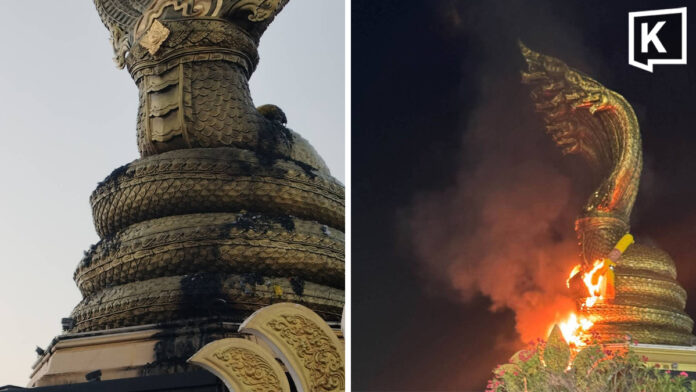
NAKHON PHANOM — 28 October 2026, A fire damaged the decorative necklace worn by the revered Phaya Sri Sattanakkharat statue, a prominent naga statue landmark along the Mekong River in Nakhon Phanom, early on 28 October. Authorities are investigating the cause, with fireworks suspected as a possible trigger.

The fire broke out at around 04:00 at the statue, located along the Mekong riverfront in Nakhon Phanom municipality. The necklace, made of silk and cotton fabric decorated with beads, was completely damaged by the flames.

Officials suspect fireworks set off nearby during the final night of the annual illuminated boat festival may have ignited the flammable materials. However, the cause has not yet been confirmed.

The bronze statue itself was not damaged by the fire, although its surface may have been affected by smoke and soot.

Niwat Chiawiriyabunya, mayor of Nakhon Phanom municipality, said officials would conduct a detailed investigation into whether fireworks had been set off in the vicinity. He believes the incident was accidental rather than intentional.

The municipality is preparing to clean and polish the bronze statue to remove soot and restore its appearance. Officials also plan to install a replacement necklace and introduce preventive measures to reduce the risk of a similar incident.

The ceremonial necklace is estimated to be worth between 20,000 and 50,000 baht. Devotees typically sponsor new necklaces, which are replaced approximately every two months as part of an ongoing tradition of religious offerings.

The Phaya Sri Sattanakkharat statue is an important spiritual landmark for residents and visitors to Nakhon Phanom, overlooking the Mekong River on Thailand’s northeastern border.

Advertisement

Mushroom hunter finds live M67 grenade, nearly triggers explosion with knife

Mushroom hunter finds live M67 grenade, nearly triggers explosion with knife

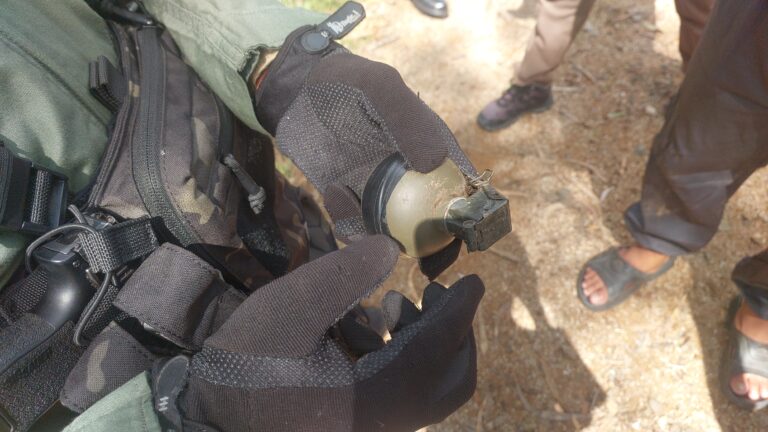
TAK — A mushroom hunter in Tak province narrowly avoided a potentially fatal accident after discovering an M67 fragmentation grenade hidden beneath dry leaves in the woods and using a knife to pry it out before realising what it was.

The discovery was reported to local authorities, who alerted Tak provincial police. Police chief Pol. Maj. Gen. Songphon Sangkhasem ordered an explosive ordnance disposal (EOD) team led by Pol. Lt. Col. Somkiat Mankaew to investigate urgently.

The grenade was found in scrubland about 20 metres from a dirt road branching off the old Phahonyothin route between Tak and Wang Chao, approximately five kilometres from Tak city.

Officers secured the area and examined the object, identifying it as an M67 anti-personnel fragmentation grenade. According to the EOD team, the grenade’s pin had been pulled, but its safety mechanism had not been fully disengaged, preventing it from detonating.

news170634 AF9R2UXvsm1793147797

The team safely recovered the grenade and planned to destroy it in a designated safe area.

Wang Hin subdistrict headman Charan Sonkaew said the incident could have ended in tragedy. The mushroom hunter had spotted a round, green object partly exposed beneath leaves near a tree. After clearing the leaves and using a knife to pry the object out, the person realised it was an explosive device and quickly alerted local leaders.

Charan and local administrative officials inspected the site before contacting provincial police to request the EOD team.

Pol. Lt. Col. Somkiat urged the public not to touch or approach suspicious objects that resemble grenades or other explosives. People should move away and promptly notify a village headman, assistant headman or police so trained personnel can respond.

He said provincial police EOD teams were on standby around the clock to handle explosive hazards and protect public safety.

Advertisement

The hidden danger lurking in your favourite hotpot ingredient

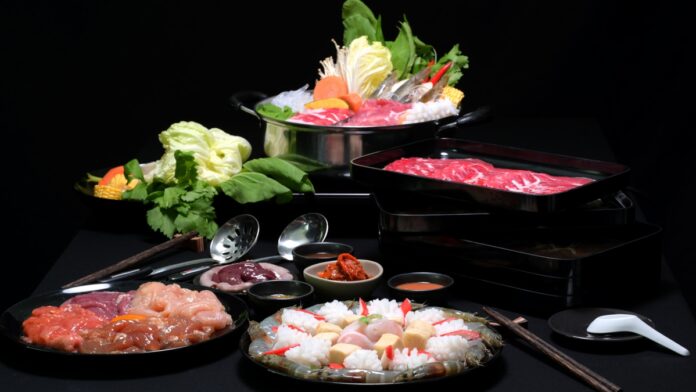
All five enoki mushroom samples collected from four vendors in Bangkok tested positive for Listeria bacteria, a Thai doctor has warned, urging consumers to cook the mushrooms thoroughly and high-risk groups to take extra precautions.

Dr. Khosit Iewchai, known as Dr. Benz Masterpiece on TikTok, posted a warning on Tuesday, 27 October, about the potential health risks associated with enoki mushrooms commonly eaten in mala, shabu and Thai-style barbecue restaurants.

He said the bacteria, Listeria monocytogenes, can survive refrigeration and may remain alive if food is not heated sufficiently. However, the five positive samples cited in his video do not establish how widespread contamination is across the market.

The doctor advised four groups to avoid enoki mushrooms if possible: older people, pregnant women, infants and people with weakened immune systems. Listeria infection can cause nausea, vomiting, diarrhoea, fever, chills, muscle pain and fatigue. Severe cases may lead to bloodstream infections, meningitis and death, particularly among vulnerable people.

The warning does not mean consumers must stop eating enoki mushrooms, he said. Instead, they should cook them properly, including boiling them in water for at least two minutes, rather than briefly dipping them into hot broth until they soften.

The National Food Institute, under the Ministry of Industry, issued similar advice in April 2024, warning that raw enoki mushrooms may be contaminated with Listeria monocytogenes through the production environment or storage.

The institute said the bacteria can survive and grow under refrigeration, meaning keeping contaminated mushrooms in a refrigerator does not eliminate the risk.

It recommended washing the mushrooms with clean water and cooking them at 70 degrees Celsius for at least two minutes, or boiling, stir-frying, deep-frying, grilling or roasting them until fully cooked before eating.

Advertisement

Hot News

LATEST NEWS

Bangkok
light rain
34.2 ° C
34.2 °
34.2 °
53 %
5.4kmh
49 %
Wed
35 °
Thu
33 °
Fri
32 °
Sat
28 °
Sun
32 °