






















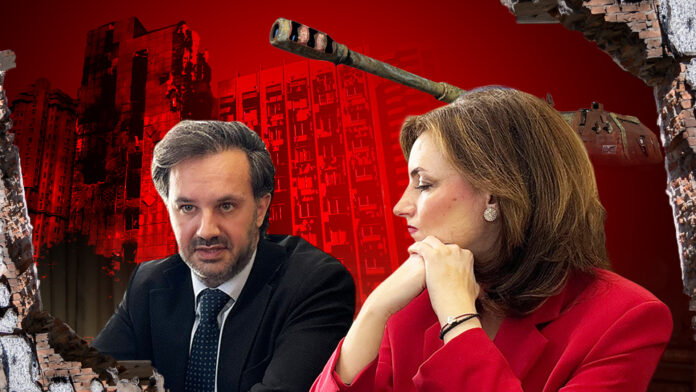
Five years after Russia launched its full-scale invasion of Ukraine in February 2022, the war in the heart of Europe still has no clear end.
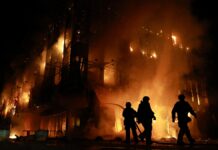
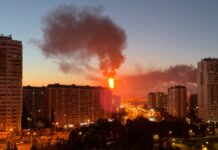
Drone and missile attacks continue, while Ukraine prepares for another winter amid concerns over energy infrastructure and public safety.
The Khaosod reporter’s visit to Kyiv in early September 2026 came as the war continued.
Even Kyiv, the capital, continued to face waves of drones and missiles launched at the city day and night.
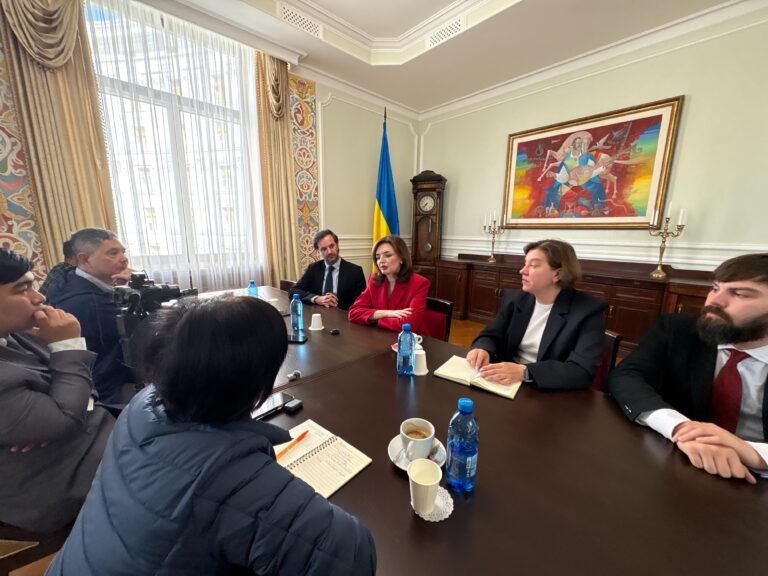
One of the key meetings during the trip was an interview with senior Ukrainian Foreign Ministry officials at the Ministry of Foreign Affairs, one of the most heavily guarded places in the country.
The reporter met Mariana Betsa, Deputy Foreign Minister of Ukraine, along with Zhanna Leshchynska, Director-General of the Department of Asia and Pacific, and Heorhii Tykhyi, spokesperson of Ukraine’s Ministry of Foreign Affairs.
The conversation covered more than the situation on the battlefield, ranging from attacks on civilians, air defence systems and the coming winter to sanctions against Russia, the future of peace talks, accountability, and the roles of ASEAN and China.
‘The situation is difficult’: Russia shifts focus to civilians
Mariana Betsa said the situation remains extremely difficult, with Ukraine viewing Russia as having escalated attacks on civilians and critical infrastructure.
She said Russia has been unable to make significant advances on the battlefield and has not seized significant additional territory, leading it to turn to attacks on civilians and children, particularly as winter approaches.
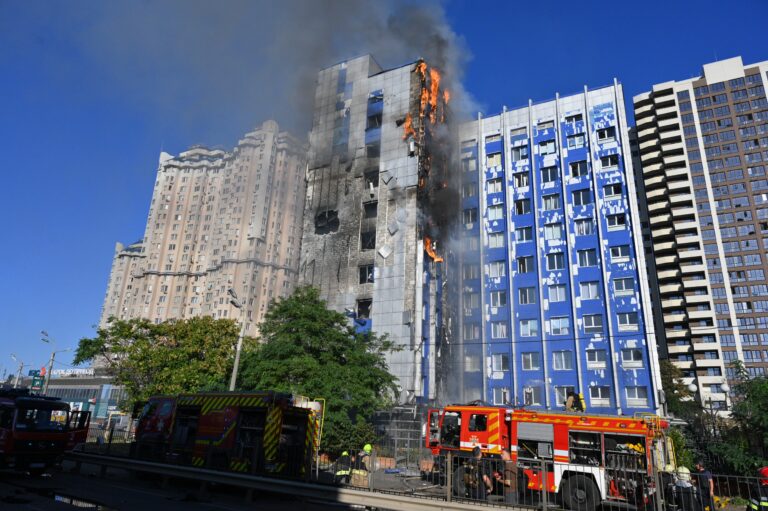
From the Ukrainian government’s perspective, the aim of such attacks is to intimidate civilians, create psychological pressure, and cause chaos and panic.
However, the Ukrainian deputy foreign minister stressed that despite the regular attacks, Ukraine continues to stand its ground.
“It is not easy because there are attacks every day, and this should not become the new normal. But Ukraine is very resilient and stands firm.”
For Ukraine, a key objective is to preserve its independence and territorial integrity within internationally recognised borders, which it regards as a red line that cannot be compromised.
But Betsa stressed that what Ukraine is fighting for is not limited to Ukraine itself.
‘We are not protecting only Ukraine’
“This should not be seen as only a regional war. We are not protecting only Ukraine, or even only Europe. It goes beyond that.”
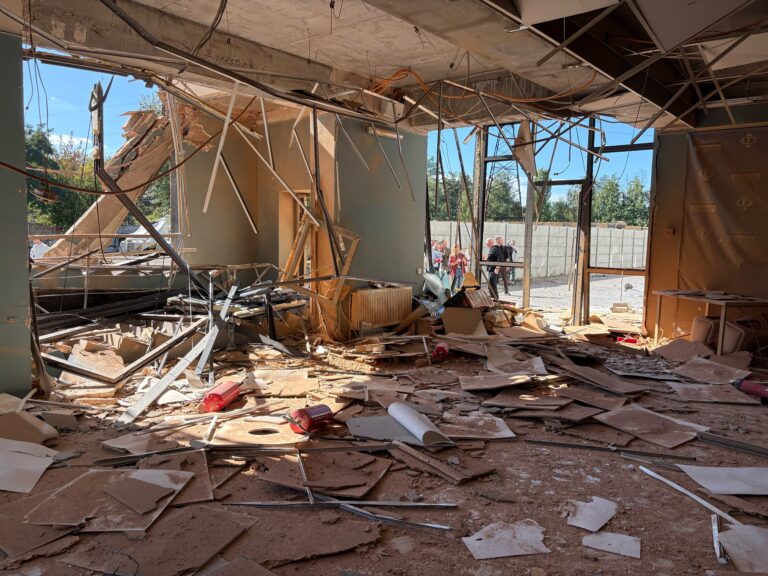
She said what is being protected is democracy, human rights, fundamental freedoms and basic values that Ukraine sees as being challenged by Russia.
“The situation is difficult, but Ukraine holds the line.”
Ukraine’s most urgent need: air defence
One of Ukraine’s most urgent needs at present is interceptors and air defence systems.
Betsa said that as the war enters its fifth year, Ukraine is facing a shortage of interceptors, while Russia is increasingly using combined attacks involving drones, different missile trajectories and ballistic missiles.
The attacks are not limited to land.
She also referred to the situation in the Black Sea, where Ukraine says Russia has attacked more than 50 vessels and more than 30 sailors have been killed.
For Ukraine, the issue is also linked to food security because the country exports food to many countries, including countries in Africa.
Betsa also pointed to the support Russia has received from Iran and North Korea, saying these factors demonstrate that the war is not affecting Europe alone but also has implications for the Indo-Pacific region.
Four things Ukraine wants from the international community
When asked what Ukraine wants from the international community, Betsa outlined four key areas.
First is military support, particularly air defence systems.
Second is political pressure on Russia to end the war. She stressed that a ceasefire is the first condition for meaningful negotiations.
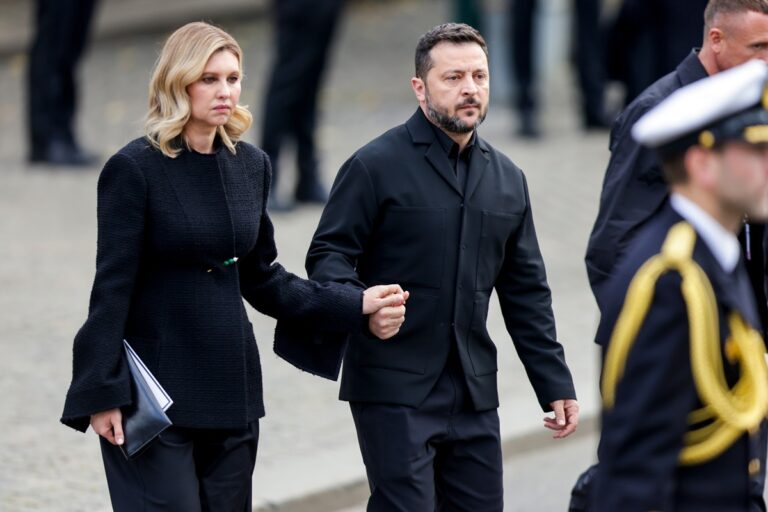
Betsa said Ukraine had agreed to a proposal for an immediate, unconditional and comprehensive ceasefire lasting at least 30 days, but Russia has not agreed.
Third is sanctions.
Ukraine wants Europe, the United States, Australia, Canada and other countries to coordinate stronger measures, particularly targeting the shadow fleet, the banking sector and loopholes used by Russia to evade sanctions.
The fourth is accountability for crimes committed during the war.
Betsa said that if Russia can avoid accountability for aggression, war crimes and crimes against humanity, it could become a precedent that affects other countries watching the situation.
‘Ukrainian children’: another red line Kyiv wants to bring home
One of the issues Betsa stressed most strongly was the fate of Ukrainian children.
She said that more than 20,000 children had been taken out of Ukraine and transferred to Russia, while as of early September, Ukraine had managed to bring back more than 2,200 children.
Betsa thanked countries in the Global South that have supported these efforts, particularly Qatar, which has played a role as a mediator. She also referred to Melania Trump’s role in helping with contacts concerning Ukrainian children.
She said many children remain in Russia and have been separated from their families, including being given Russian citizenship, while Ukraine alleges that the children have been subjected to ideological indoctrination and militarisation.
“One of Ukraine’s red lines is to bring our children back.”
In addition to children, Ukraine also raised the issue of prisoners of war and detained civilians.
Betsa said there is evidence and testimony concerning the torture of Ukrainian prisoners of war, including sexual torture and extrajudicial killings.
She referred to efforts to hold Russia accountable through international mechanisms, including the International Criminal Court and efforts to establish a special tribunal for the crime of aggression under the framework of the Council of Europe.
Peace is needed, but Ukraine’s ‘red lines’ remain
On peace negotiations, Betsa said clearly that Ukraine wants peace and wants it more than anyone else because Ukraine is the country at war.
She said President Volodymyr Zelenskyy is ready to meet with Russia’s leadership to move towards peace, but negotiations must take place on terms acceptable to Ukraine.
The key red lines are territorial integrity under international law, the return of Ukrainian civilians, prisoners of war and children, and sufficient security guarantees to prevent Russia from attacking Ukraine again.
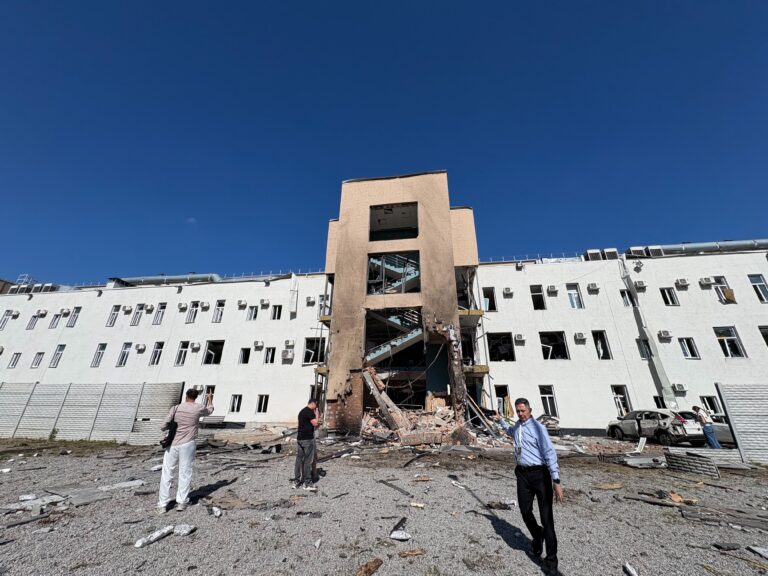
Ukraine also maintains that it will never recognise territories temporarily occupied by Russia as Russian territory.
Betsa said that after a ceasefire and a verification mechanism are in place, the issue of security guarantees should be discussed as a next step.
These could include European security personnel being present on the ground, but she stressed that it is still too early to determine what the final model would look like.
What more can ASEAN do for Ukraine?
When asked what Ukraine wants ASEAN to do to provide further support at this time, Betsa began with what she described as the most important principle: respect for territorial integrity and international law.
She called on ASEAN countries to support these principles and take clear political positions in international forums, particularly the United Nations.
Betsa said Ukraine attaches importance to support for UN General Assembly resolutions on various issues, including the return of Ukrainian children.
She also called for greater awareness of Russian disinformation and propaganda, which Ukraine believes continues to have influence in many countries, including those in the Global South.
“Russia’s goal is not only Ukraine.”
From the Ukrainian government’s perspective, the conflict is linked to the international order and the concept of spheres of influence.
If international law is replaced by the use of force, larger countries may believe they have the right to use force to compel smaller countries to comply, something Ukraine sees as unacceptable.
‘China’ may have influence over Moscow
Asked about China’s role in ending the war, Heorhii Tykhyi, spokesperson of Ukraine’s Ministry of Foreign Affairs, said Ukraine views China as one of the major powers capable of influencing Russia.
He referred to US President Donald Trump and Chinese President Xi Jinping as leaders whom Ukraine sees as capable of influencing Russian President Vladimir Putin.
In his view, China may have particular influence over Russia because of the close relationship between the two countries.
Tykhyi also believes China has economic interests with Europe and may not want to see Russia descend into instability or turmoil because China shares a long border with Russia.
He said the war has imposed costs on Russia that have long exceeded a reasonable level, and suggested that continuing the war could create risks to Russia’s own internal stability.
For this reason, he sees reasons for China to become involved and call on Putin to end the war.
Why should people thousands of kilometres away care about this war?
Another important question is why people in countries thousands of kilometres from Ukraine should care about a war taking place in Europe.
Zhanna Leshchynska, Director-General of the Department of Asia and Pacific at Ukraine’s Ministry of Foreign Affairs, said the impact of the war does not stop at Ukraine’s borders.
“People think this is a war far away, a war happening somewhere else in Europe, and it has nothing to do with them. But the impact and consequences of this war can be felt in every region.”
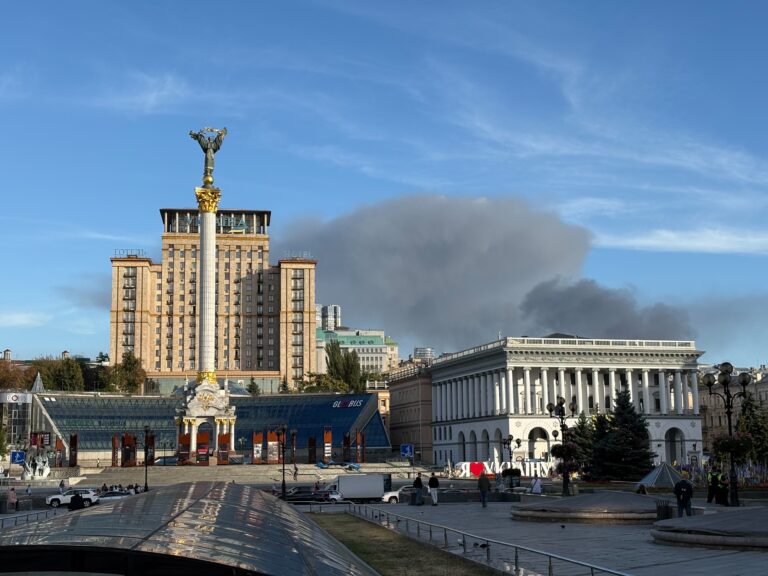
She cited food prices, oil prices and worsening economic conditions in many countries, particularly vulnerable countries such as those in Africa.
Leshchynska referred to the Grain from Ukraine programme, an initiative to send food to people in need, working with European partners to purchase and deliver grain from Ukraine.
For her, this is an example of how the impact of the war is not limited to the battlefield.
What happens if international law fails?
The point Leshchynska wants to convey to people in countries far from the war is that what is happening in Ukraine could become a model for international relations in the future.
She said that if the use of force can be used to compel a neighbouring country to change its foreign policy, the international system could change completely.
“If you don’t like the foreign policy of your neighbour, you can attack that country and change their foreign policy by force. This is something that should not happen.”
She stressed that what Ukraine is calling for is for international law to retain its meaning, as well as respect for the UN Charter and the sovereignty and territorial integrity of every country.
‘We are not protecting only Ukraine’: the message from Kyiv
Throughout the conversation with senior Ukrainian Foreign Ministry officials, one message was repeated in different forms: the war is not viewed by Ukraine as merely a conflict between two countries.
For the Ukrainian government, what is happening is connected to food security, energy prices, the economy, security in the Indo-Pacific region and the future of international law.
On the battlefield, meanwhile, drone and missile attacks continue, and Ukraine is preparing for another winter.
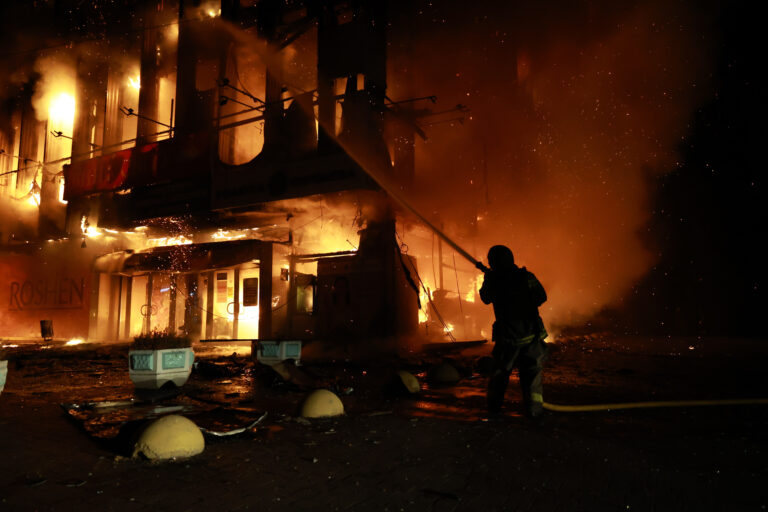
The Ukrainian government continues to send a message to the international community to help maintain pressure on Russia, support Ukraine’s defence and move towards a ceasefire.
At the same time, Ukraine insists that the “peace” it seeks must come with security guarantees, respect for sovereignty and territorial integrity, and the return of Ukrainian people.
From a meeting room at the Ukrainian Foreign Ministry in a capital still facing air-raid alerts and attacks, this is the message Ukrainian Foreign Ministry officials want to send to the outside world:
Even as the war drags on and the situation remains difficult, Ukraine continues to stand firm, while international support remains a hope for lasting peace.