
































BANGKOK — 24 November 2026, Thailand’s Pollution Control Department (PCD) has stepped up monitoring of water quality in the Mekong River following reports of cyanide and heavy metal contamination in a stream in Laos. A preliminary assessment suggests the contamination is unlikely to affect the Mekong River in Nong Khai’s Phon Phisai district.
Surin Worakijthamrong, Director-General of the Pollution Control Department, said he had instructed the Water Quality Management Division and the Environment and Pollution Control Office 9 in Udon Thani to closely monitor water quality in the Mekong River.
The move follows reports of cyanide and heavy metal contamination in Huai Hin Lai stream in Laos’ Xiangkhouang province, where large numbers of dead fish were discovered.
The monitoring aims to assess potential environmental risks and impacts on sections of the Mekong River in Thailand.
Cyanide and heavy metals exceed safety standards in Laos
On 8 November 2026, residents living between Ban Yuan and Ban Phon Ngam Nuea in Paek district, Xiangkhouang province, discovered unusually large numbers of dead fish in Huai Hin Lai stream.
Analysis of water and soil samples collected from more than 20 locations reportedly found cyanide concentrations several times above national standards, along with excessive levels of mercury and lead.
Huai Hin Lai originates in the mountainous areas of Paek district and flows into the Nam Ngum reservoir before connecting with the Nam Ngum River.
The river subsequently flows into the Mekong at Pak Ngum district in Vientiane, opposite Phon Phisai district in Thailand’s Nong Khai province.
Thailand expands water and sediment testing
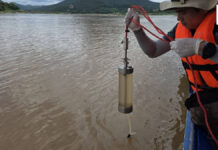
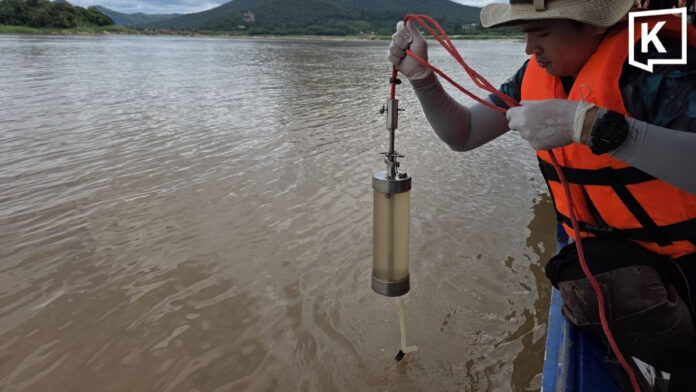
The PCD has been collecting water and sediment samples from the Mekong River in Nong Khai.
The Environment and Pollution Control Office 9 collected samples in Phon Phisai and Mueang Nong Khai districts between 9 and 10 November.
Additional sampling is being conducted by the Water Quality Management Division from 23 to 27 November, covering Nong Khai, Bueng Kan and Nakhon Phanom provinces.
The monitoring focuses on the confluence of the Nam Ngum and Mekong rivers, as well as downstream areas that could potentially be affected.
Samples will be analysed for cyanide and various heavy metals.
Preliminary assessment suggests limited risk to Nong Khai
According to the PCD’s preliminary assessment, the location of the mass fish deaths in Huai Hin Lai is approximately 285 kilometres from the point where the Nam Ngum River joins the Mekong, based on distance measurements using Google Maps.
Reports also indicated that water samples collected from Huai Hin Lai on 12 November, four days after the dead fish were discovered, showed contamination levels within Laos’ national standards.
The department explained that cyanide can undergo chemical changes and degrade under environmental conditions.
However, when it reacts with certain metals, including iron, copper and zinc, it can form more persistent chemical compounds that may remain in sediment or groundwater.
Based on the available information, the PCD preliminarily assessed that the Mekong River in Nong Khai’s Phon Phisai district was unlikely to be affected by the cyanide contamination reported in Huai Hin Lai.
The department will continue monitoring water quality and use laboratory results to further assess the situation, identify potential environmental impacts and provide reassurance to communities along Thailand’s Mekong River.