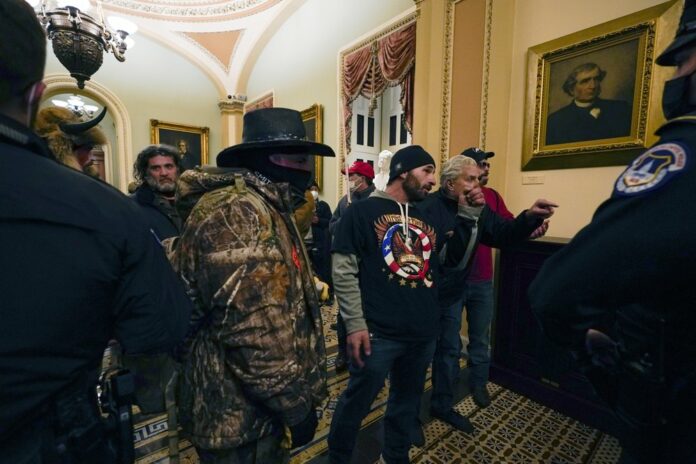
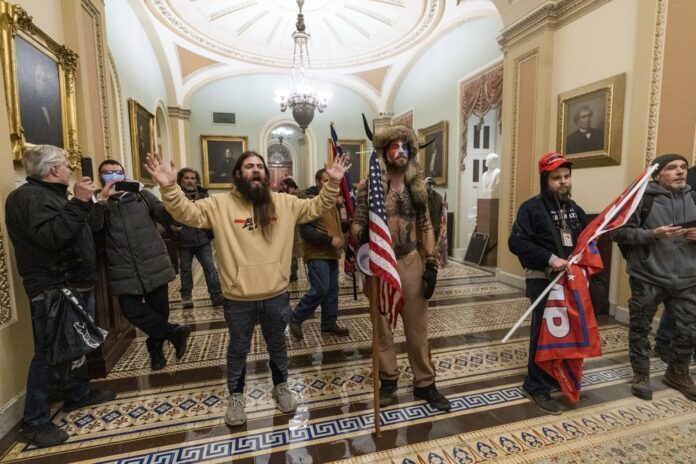
Protesters walk as U.S. Capitol Police officers watch in a hallway near the Senate chamber at the Capitol in Washington, Wednesday, Jan. 6, 2021, near the Ohio Clock. (AP Photo/Manuel Balce Ceneta)
WASHINGTON (AP) — Under battle flags bearing Donald Trump’s name, the Capitol’s attackers pinned a bloodied police officer in a doorway, his twisted face and screams captured on video. They mortally wounded another officer with a blunt weapon and body-slammed a third over a railing into the crowd.
“Hang Mike Pence!” the insurrectionists chanted as they pressed inside, beating police with pipes. They demanded House Speaker Nancy Pelosi’s whereabouts, too. They hunted any and all lawmakers: “Where are they?” Outside, makeshift gallows stood, complete with sturdy wooden steps and the noose. Guns and pipe bombs had been stashed in the vicinity.
Only days later is the extent of the danger from one of the darkest episodes in American democracy coming into focus. The sinister nature of the assault has become evident, betraying the crowd as a force determined to occupy the inner sanctums of Congress and run down leaders — Trump’s vice president and the Democratic House speaker among them.
This was not just a collection of Trump supporters with MAGA bling caught up in a wave.
That revelation came in real time to Rep. Jim McGovern, D-Mass., who briefly took over proceedings in the House chamber as the mob closed in Wednesday and the speaker, Rep. Nancy Pelosi, was spirited to safer quarters moments before everything went haywire.
“I saw this crowd of people banging on that glass screaming,” McGovern told The Associated Press on Sunday. “Looking at their faces, it occurred to me, these aren’t protesters. These are people who want to do harm.”
“What I saw in front of me,” he said, “was basically home-grown fascism, out of control.”
Pelosi said Sunday “the evidence is that it was a well-planned, organized group with leadership and guidance and direction. And the direction was to go get people.” She did not elaborate on that point in a ”60 Minutes” interview on CBS.
The scenes of rage, violence and agony are so vast that the whole of it may still be beyond comprehension. But with countless smartphone videos emerging from the scene, much of it from gloating insurrectionists themselves, and more lawmakers recounting the chaos that was around them, contours of the uprising are increasingly coming into relief.
The Staging
The mob got explicit marching orders from Trump and still more encouragement from the president’s men.
“Fight like hell,” Trump exhorted his partisans at the staging rally. “Let’s have trial by combat,” implored his lawyer, Rudy Giuliani, whose attempt to throw out election results in trial by courtroom failed. It’s time to “start taking down names and kicking ass,” said Republican Rep. Mo Brooks of Alabama.
Criminals pardoned by Trump, among them Roger Stone and Michael Flynn, came forward at rallies on the eve of the attack to tell the crowds they were fighting a battle between good and evil and they were on the side of good. On Capitol Hill, Republican Sen. Josh Hawley of Missouri gave a clenched-fist salute to the hordes outside the Capitol as he pulled up to press his challenge of the election results.
The crowd was pumped. Until a little after 2 p.m., Senate Majority Leader Mitch McConnell was at the helm for the final minutes of decorum in partnership with Pence, who was serving his ceremonial role presiding over the process.
Both men had backed Trump’s agenda and excused or ignored his provocations for four years, but now had no mechanism or will to subvert the election won by Biden. That placed them high among the insurrectionists’ targets, no different in the minds of the mob than the “socialists.”
“If this election were overturned by mere allegations from the losing side, our democracy would enter a death spiral,” McConnell told his chamber, not long before things spiraled out of control in what lawmakers call the “People’s House.”
The Assault
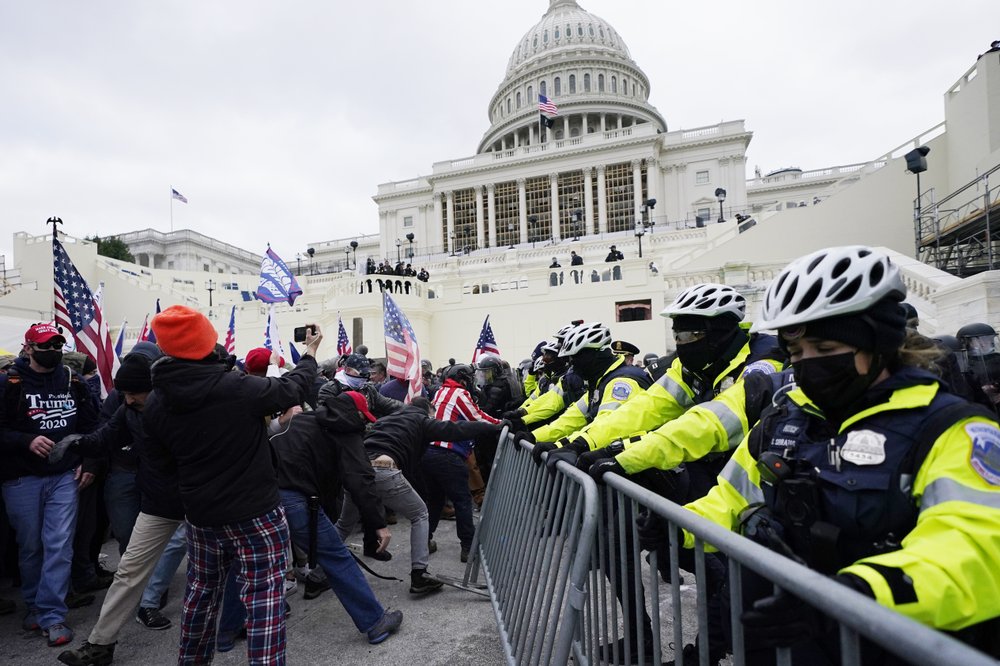
Thousands had swarmed the Capitol. They charged into police and metal barricades outside the building, shoving and hitting officers in their way. The assault quickly pushed through the vastly outnumbered police line; officers ran down one man and pummeled him.
In the melee outside, near the structure built for Joe Biden’s inauguration on Jan. 20, a man threw a red fire extinguisher at the helmeted head of a police officer. Then he picked up a bullhorn and threw it at officers, too.
The identity of the officer could not immediately be confirmed. But Capitol Police officer Brian Sicknick, who was wounded in the chaos, died the next night; officials say he had been hit in the head with a fire extinguisher.
Shortly after 2 p.m., Capitol Police sent an alert telling workers in a House office building to head to underground transportation tunnels that criss-cross the complex. Minutes later, Pence was taken from the Senate chamber to a secret location and police announced the lockdown of the Capitol. “You may move throughout the building(s) but stay away from exterior windows and doors,” said the email blast. “If you are outside, seek cover.”
At 2:15 p.m., the Senate recessed its Electoral College debate and a voice was heard over the chamber’s audio system: “The protesters are in the building.” The doors of the House chamber were barricaded and lawmakers inside it were told they may need to duck under their chairs or relocate to cloakrooms off the House floor because the mob has breached the Capitol Rotunda.
Even before the mob reached sealed doors of the House chamber, Capitol Police pulled Pelosi away from the podium, she told “60 Minutes.”
“I said, ‘No, I want to be here,’”she said. “And they said, ‘Well, no, you have to leave.’ I said, ‘No, I’m not leaving.’ They said, ‘No, you must leave.’” So she did.
At 2:44 p.m., as lawmakers inside the House chamber prepared to be evacuated, a gunshot was heard from right outside, in the Speaker’s Lobby on the other side of the barricaded doors. That’s when Ashli Babbit, wearing a Trump flag like a cape, was shot to death on camera as insurrectionists railed, her blood pooling on the white marble floor.
The Air Force veteran from California had climbed through a broken window into the Speaker’s Lobby before a police officer’s gunshot felled her.
Back in the House chamber, a woman in the balcony was seen and heard screaming. Why she was doing that only became clear later when video circulated. She was screaming a prayer.
Within about 10 minutes of the shooting, House lawmakers and staff members who had been cowering during the onslaught, terror etched into their faces, had been taken from the chamber and gallery to a secure room. The mob broke into Pelosi’s offices while members of her staff hid in one of the rooms of her suite.
“The staff went under the table barricaded the door, turned out the lights, and were silent in the dark,” she said. “Under the table for two and a half hours.”
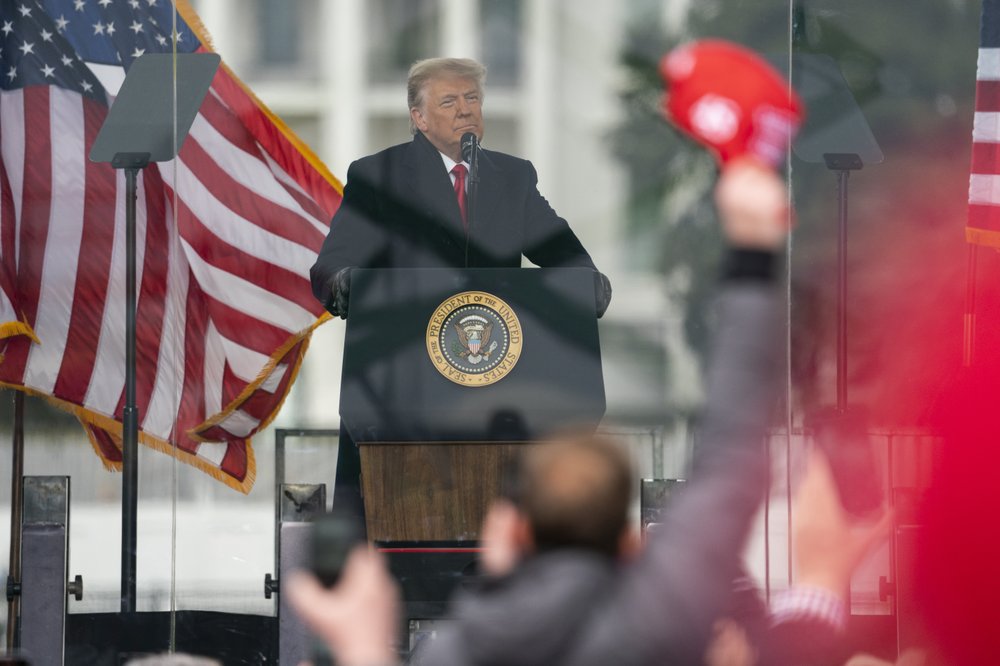
President Donald Trump speaks during a rally protesting the electoral college certification of Joe Biden as President, Wednesday, Jan. 6, 2021, in Washington. (AP Photo/Evan Vucci)
On the Senate side, Capitol Police had circled the chamber and ordered all staff and reporters and any nearby senators into the chamber and locked it down. At one point about 200 people were inside; an officer armed with what appeared to be a semi-automatic weapon stood between McConnell and the Democratic leader, Sen. Chuck Schumer.
Authorities then ordered an evacuation and rushed everyone inside to a secure location, the Senate parliamentary staff scooping up the boxes holding the Electoral Collage certificates.
Although the Capitol’s attackers had been sent with Trump’s exhortation to fight, they appeared in some cases to be surprised that they had actually made it in.
When they breached the abandoned Senate chamber, they milled around, rummaged through papers, sat at desks and took videos and pictures. One of them climbed to the dais and yelled, “Trump won that election!” Two others were photographed carrying flex cuffs typically used for mass arrests.
But outside the chamber, the mob’s hunt was still on for lawmakers. “Where are they?” people could be heard yelling.
That question could have also applied to reinforcements — where were they?
At about 5:30 p.m., once the National Guard had arrived to supplement the overwhelmed Capitol Police force, a full-on effort began to get the attackers out.
Heavily armed officers brought in as reinforcements started using tear gas in a coordinated fashion to get people moving toward the door, then combed the halls for stragglers. As darkness fell, they pushed the mob farther out onto the plaza and lawn, using officers in riot gear in full shields and clouds of tear gas, flash-bangs and percussion grenades.
At 7:23 p.m., officials announced that people hunkered down in two nearby congressional office buildings could leave “if anyone must.”
Within the hour, the Senate had resumed its work and the House followed, returning the People’s House to the control of the people’s representatives. Lawmakers affirmed Biden’s election victory early the next morning, shell-shocked by the catastrophic failure of security.
Rep. Maxine Waters, D-Ca., told AP on Sunday it was as if Capitol Police “were naked” against the attackers. “It turns out it was the worst kind of non-security anybody could ever imagine.”
Said McGovern: “I was in such disbelief this could possibly happen. These domestic terrorists were in the People’s House, desecrating the People’s House, destroying the People’s House.”
___
Associated Press writers Dustin Weaver in Washington and Michael Casey in Concord, New Hampshire, contributed to this report. Reeves reported from Birmingham, Alabama.
In this Wednesday, Jan. 6, 2021 file photo supporters of President Donald Trump are confronted by U.S. Capitol Police officers outside the Senate Chamber inside the Capitol in Washington. (AP Photo/Manuel Balce Ceneta, file)
WASHINGTON (AP) — They came from across America, summoned by President Donald Trump to march on Washington in support of his false claim that the November election was stolen and to stop the congressional certification of Democrat Joe Biden as the victor.
“Big protest in D.C. on January 6th,” Trump tweeted a week before Christmas. “Be there, will be wild!”
The insurrectionist mob that showed up at the president’s behest and stormed the U.S. Capitol was overwhelmingly made up of longtime Trump supporters, including Republican Party officials, GOP political donors, far-right militants, white supremacists, members of the military and adherents of the QAnon myth that the government is secretly controlled by a cabal of Satan-worshiping pedophile cannibals. Records show that some were heavily armed and included convicted criminals, such as a Florida man recently released from prison for attempted murder.
The Associated Press reviewed social media posts, voter registrations, court files and other public records for more than 120 people either facing criminal charges related to the Jan. 6 unrest or who, going maskless amid the pandemic, were later identified through photographs and videos taken during the melee.
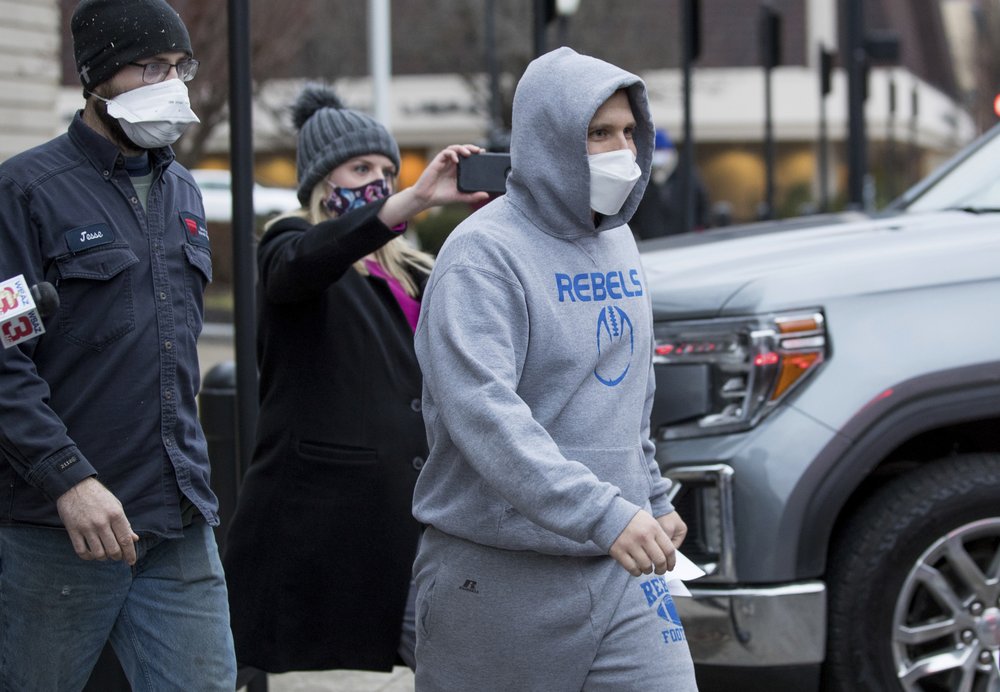
West Virginia Delegate Derrick Evans exits the Sidney L. Christie U.S. Courthouse and Federal Building after being arraigned on federal charges Friday, Jan. 8, 2021, in Huntington, W.Va. (Sholten Singer/The Herald-Dispatch via AP)
The evidence gives lie to claims by right-wing pundits and Republican officials such as Rep. Matt Gaetz, R-Fla., that the violence was perpetrated by left-wing antifa thugs rather than supporters of the president.
“If the reports are true,” Gaetz said on the House floor just hours after the attack, “some of the people who breached the Capitol today were not Trump supporters. They were masquerading as Trump supporters and, in fact, were members of the violent terrorist group antifa.”
Steven D’Antuono, the assistant director in charge of the FBI’s Washington field office, told reporters that investigators had seen “no indication” antifa activists were disguised as Trump supporters in Wednesday’s riot.
The AP found that many of the rioters had taken to social media after the November election to retweet and parrot false claims by Trump that the vote had been stolen in a vast international conspiracy. Several had openly threatened violence against Democrats and Republicans they considered insufficiently loyal to the president. During the riot, some livestreamed and posted photos of themselves at the Capitol. Afterwards, many bragged about what they had done.
As the mob smashed through doors and windows to invade the Capitol, a loud chant went up calling for the hanging of Vice President Mike Pence, the recent target of a Trump Twitter tirade for not subverting the Constitution and overturning the legitimate vote tally. Outside, a wooden scaffold had been erected on the National Mall, a rope noose dangling at the ready.
So far, at least 90 people have been arrested on charges ranging from misdemeanor curfew violations to felonies related to assaults on police officers, possessing illegal weapons and making death threats against House Speaker Nancy Pelosi, D-Calif.
Among them was Lonnie Leroy Coffman, 70, an Alabama grandfather who drove to Washington to attend Trump’s “Save America Rally” in a red GMC Sierra pickup packed with an M4 assault rifle, multiple loaded magazines, three handguns and 11 Mason jars filled with homemade napalm, according to court filings.
The truck was found during a security sweep involving explosives-sniffing dogs after two pipe bombs were found and disarmed Wednesday near the national headquarters of the Republican and Democratic parties. Coffman was arrested that evening when he returned to the truck carrying a 9mm Smith & Wesson handgun and a .22-caliber derringer pistol in his pockets. Federal officials said Coffman is not suspected of planting the pipe bombs, though he was charged with having Molotov cocktails in the bed of his truck.
His grandson, Brandon Coffman, told the AP on Friday his grandfather was a Republican who had expressed admiration for Trump at holiday gatherings. He said he had no idea why Coffman would show up in the nation’s capital armed for civil war.
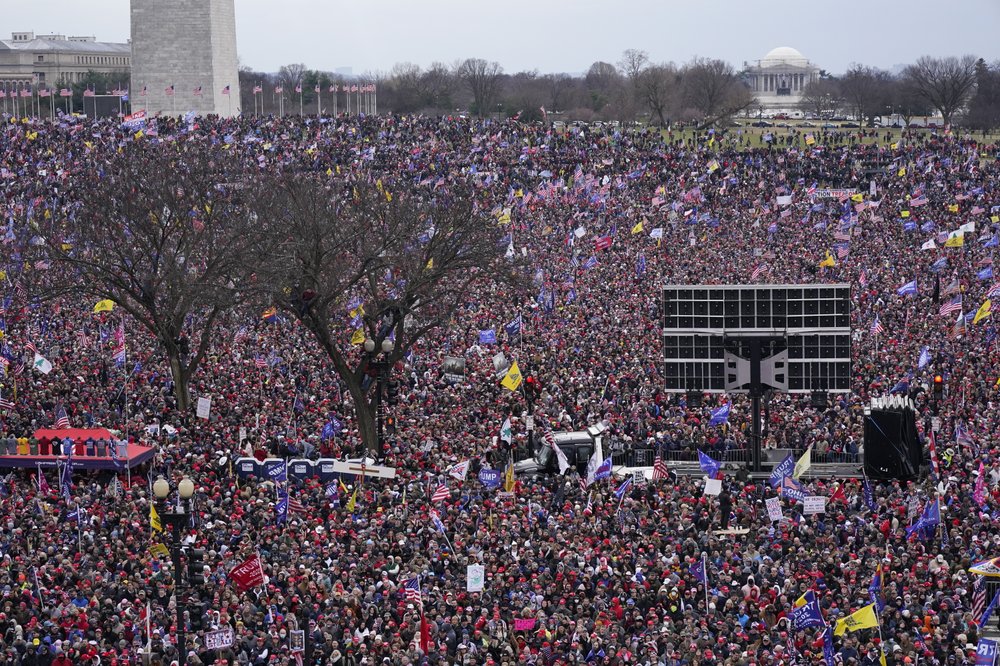
In this Jan. 6, 2021, file photo, people listen as President Donald Trump speaks during a rally in Washington. (AP Photo/Evan Vucci, File)
Also facing federal charges is Cleveland Grover Meredith Jr., a Georgia man who in the wake of the election had protested outside the home of Republican Gov. Brian Kemp, whom Trump had publicly blamed for his loss in the state. Meredith drove to Washington last week for the “Save America” rally but arrived late because of a problem with the lights on his trailer, according to court filings that include expletive-laden texts.
“Headed to DC with a (s—-) ton of 5.56 armor-piercing ammo,” he texted friends and relatives on Jan. 6, adding a purple devil emoji, according to court filings. The following day, he texted to the group: “Thinking about heading over to Pelosi (C——’s) speech and putting a bullet in her noggin on Live TV.” He once again added a purple devil emoji, and wrote he might hit her with his truck instead. “I’m gonna run that (C—-) Pelosi over while she chews on her gums. … Dead (B——) Walking. I predict that within 12 days, many in our country will die.”
Meredith, who is white, then texted a photo of himself in blackface. “I’m gonna walk around DC FKG with people by yelling ‘Allahu ak Bar’ randomly.”
A participant in the text exchange provided screenshots to the FBI, who tracked Meredith to a Holiday Inn a short walk from the Capitol. They found a compact Tavor X95 assault rifle, a 9mm Glock 19 handgun and about 100 rounds of ammunition, according to court filings. The agents also seized a stash of THC edibles and a vial of injectable testosterone.
Meredith is charged with transmitting a threat, as well as felony counts for possession of firearms and ammunition.
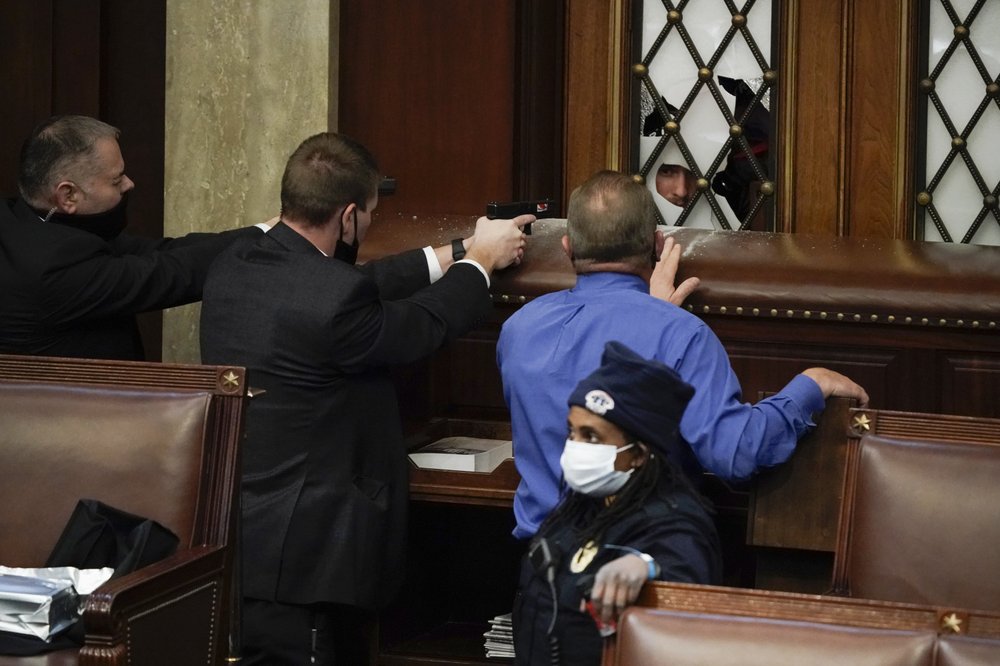
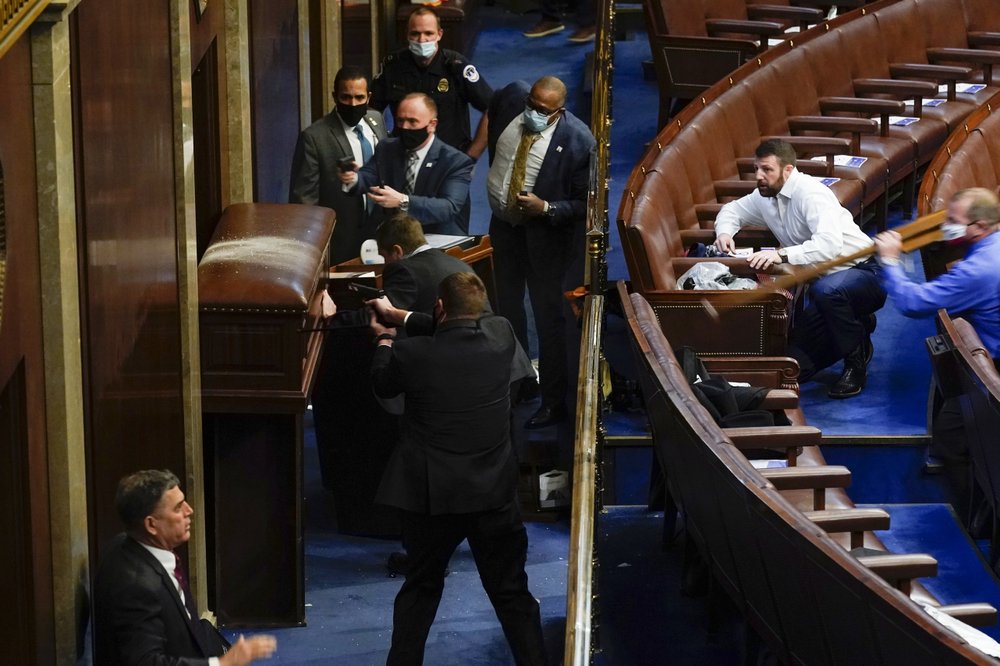
Police with guns drawn watch as protesters try to break into the House Chamber at the U.S. Capitol on Wednesday, Jan. 6, 2021, in Washington. (AP Photo/J. Scott Applewhite)
Michael Thomas Curzio was arrested in relation to the riots less than two years after he was released from a Florida prisonin 2019 after serving an eight-year sentence for attempted murder. Court records from Florida show that he shot the boyfriend of his former girlfriend in a fight at her home.
Federal law enforcement officials vowed Friday to bring additional charges against those who carried out the attack on the Capitol, launching a nationwide manhunt for dozens of suspects identified from photographic evidence
The FBI has opened a murder probe into the death of Capitol Police Officer Brian D. Sicknick, who was hit in the head with a fire extinguisher, according to law enforcement officials who spoke on the condition of anonymity because they were not authorized to discuss the ongoing investigation publicly. He died at a hospital.
The Trump supporters who died in the riot were Kevin D. Greeson, 55, of Athens, Alabama; Benjamin Philips, 50, of Ringtown, Pennsylvania; Ashli Babbitt, 35, of San Diego; and Rosanne Boyland, 34, of Kennesaw, Georgia.
Boyland’s sister told the AP on Friday she was an adherent of the QAnon conspiracy theory that holds Trump is America’s savior. Her Facebook page featured photos and videos praising Trump and promoting fantasies, including one theory that a shadowy group was using the coronavirus to steal elections. Boyland’s final post on Twitter — a retweet of a post by White House social media director Dan Scavino — was a picture of thousands of people surrounding the Washington Monument on Wednesday.
“She would text me some things, and I would be like, ‘Let me fact-check that.’ And I’d sit there and I’d be like, ‘Well, I don’t think that’s actually right,’” Lonna Cave, Boyland’s sister, said. “We got in fights about it, arguments.”
The AP’s review found that QAnon beliefs were common among those who heeded Trump’s call to come to Washington.
Doug Jensen, 41, was arrested by the FBI on Friday in Des Moines, Iowa, after returning home from the riot. An AP photographer captured images of him confronting Capitol Police officers outside of the Senate chamber on Wednesday.
Jensen was wearing a black T-shirt emblazoned with a large Q and the phrase “Trust The Plan,” a reference to QAnon. Video posted online during the storming of the Capitol also appears to show Jensen, who is white, pursuing a Black police officer up an interior flight of stairs as a mob of people trails several steps behind. At several points, the officer says “get back,” but to no avail.
Trump supporters try to break through a police barrier, Wednesday, Jan. 6, 2021, at the Capitol in Washington. (AP Photo/Julio Cortez)
Jensen’s older brother, William Routh, told the AP on Saturday that Jensen believed that the person posting as Q was either Trump or someone very close to the president.
“I feel like he had a lot of influence from the internet that confused or obscured his views on certain things,” said Routh, of Clarksville, Arkansas, who described himself as a Republican Trump supporter. “When I talked to him, he thought that maybe this was Trump telling him what to do.”
Jensen’s employer, Forrest & Associate Masonry in Des Moines, announced Friday that he had been fired.
Tara Coleman, a 40-year-old mother who lives in Lancaster, Pennsylvania, was arrested at the Capitol for a curfew violation and for unlawful entry. On her Facebook page, Coleman re-posted articles supporting the QAnon beliefs about a “deep state” conspiracy to target children. The AP could not find a working phone number for Coleman and her attorney, Peter Cooper, did not respond to an email seeking comment.
And Jake Chansley, who calls himself the “QAnon Shaman” and has long been a fixture at Trump rallies, surrendered to the FBI field office in Phoenix on Saturday. News photos show him at the riot shirtless, with his face painted and wearing a fur hat with horns, carrying a U.S. flag attached to a wooden pole topped with a spear.
Chansley’s unusual headwear is visible in a Nov. 7 AP photo at a rally of Trump supporters protesting election results outside of the Maricopa County election center in Phoenix. In that photo, Chansley, who also has gone by the last name Angeli, held a sign that read, “HOLD THE LINE PATRIOTS GOD WINS.” He also expressed his support for the president in an interview with the AP that day.
The FBI identified Chansley by his distinctive tattoos, which include bricks circling his biceps in an apparent reference to Trump’s border wall. Chansley didn’t respond last week to messages seeking comment to one of his social media accounts.
There were also current and former members of the U.S. military in the crowd.
Army commanders at Fort Bragg in North Carolina are investigating Capt. Emily Rainey’s involvement in the Wednesday rally. The 30-year-old psychological operations officer told the AP she led 100 members of Moore County Citizens for Freedom who traveled to Washington to “stand against election fraud” and support Trump. She insisted she acted within Army regulations and that no one in her group entered the Capitol or broke the law.
“I was a private citizen and doing everything right and within my rights,” Rainey told the AP.
Retired Air Force Lt. Col. Larry Rendall Brock Jr. of Texas was charged in federal court on Sunday after he was identified in photos showing him standing in the well of the Senate, wearing a military-style helmet and body armor while holding a pair of zip-tie handcuffs.
The insurrectionist mob also included members of the neofascist group known as the Proud Boys, whom Trump urged to “stand back and stand by” when asked to condemn them by a moderator during a presidential debate in September.
Nicholas R. Ochs, 34, was arrested Saturday after returning home to Hawaii, where he is the founder of the local Proud Boys chapter. On Wednesday, Ochs posted a photo of himself on Twitter inside the Capitol, grinning broadly and smoking a cigarette. According to court filings, the FBI matched photos of Ochs taken during the riot to photos taken when Ochs campaigned unsuccessfully last year as the Republican nominee for a seat in the Hawaii statehouse.
Proud Boys leader Henry “Enrique” Tarrio was arrested Monday in Washington on weapons charges and ordered to stay out of the nation’s capital. Tarrio is accused of vandalizing a Black Lives Matter banner at a historic Black church last month.
Jay Robert Thaxton, 46, was arrested near the Capitol for curfew violations on Wednesday. A North Carolina man with the same name has also been linked to the Proud Boys. He told The Stanly News & Press in 2019 that he was a Proud Boys supporter but wouldn’t say if he was an official member of the group. Another North Carolina newspaper, The Jacksonville Daily News, published a photo of Thaxton wearing a “Make America Great Again” hat at a 2019 protest over the removal of Confederate statues.
A man who answered a telephone number associated with Thaxton hung up on an AP reporter. The recipient of a text message to the same number responded with an expletive.
Also arrested at the Capitol was William Arthur Leary, who owns a manufactured housing business in Utica, New York. In an interview Friday, Leary told the AP that he strongly believes the election was stolen from Trump and that he went to Washington to show his support.
Leary said he doesn’t trust information reported by the mainstream media and that one of his main sources of information was Infowars, the far-right conspiracy site run by Alex Jones. He denied he ever set foot in the Capitol and complained that he was held for more than 24 hours and had his cell phone seized.
With the Washington Monument in the background, people attend a rally in support of President Donald Trump near the White House on Wednesday, Jan. 6, 2021, in Washington. (AP Photo/Jacquelyn Martin)
“They treated us like animals,” he complained. “They took all our phones. I didn’t get to make a phone call to tell anybody where I was.”
Leary said he remembers seeing a woman, Kristina Malimon, 28, sobbing at the detention center because she had been separated and not allowed to translate for her mother, who primarily speaks Russian. Both women had been charged with curfew violation and unlawful entry. According to a video posted on her Instagram account, the younger Malimon says she was born in Moldova, where her family had faced persecution under the Soviet-era regime for their Christian beliefs.
Malimon, who traveled to D.C. from Portland, Oregon, is vice chairwoman of the Young Republicans of Oregon, according to the group’s website and is also listed as an “ambassador” for the pro-Trump group Turning Point USA. Her social media feeds are full of photos taken at Trump events, including the earlier “Million MAGA March” held in Washington last month. She also posted photos of herself posing with Donald Trump Jr. and Roger Stone, who was convicted of crimes including obstruction of justice and pardoned by Trump on Christmas Eve.
Media reports from Oregon quoted Malimon in August as the primary organizer of a Trump boat parade on the Willamette River, where big waves created by speeding boats flying Trump flags swamped and sank a smaller boat that was not participating, throwing a family into the water to be rescued by the sheriff’s department.
“Oregon, today you came out and showed your love and support for our wonderful President, Donald J. Trump thank you!” Kristina Malimon wrote on Facebook following the parade.
Malimon also served as a Republican poll watcher in Georgia and spoke at an event organized by the Trump campaign in December, claiming to have seen voting machines and tabulation computers in Savannah, Georgia, with suspiciously blinking green lights she interpreted as a sign they were being secretly controlled by outside hackers — a claim debunked as false by GOP election officials in the state.
A phone number listed for Kristina Malimon rang without being answered on Friday. At the address listed for her in southeast Portland on Friday night, her teenage brother answered the door as other family members, including young children, ran around.
The family spoke Russian to each other and the brother, Nick Malimon, translated. He said his sister was still in Washington but had called the family following her release from jail and didn’t seem upset about her arrest.
Others are facing consequences even beyond arrest.
A Texas sheriff announced Thursday that he had reported one of his lieutenants to the FBI after she posted photos of herself on social media with a crowd outside the Capitol. Bexar County Sheriff Javier Salazar said Lt. Roxanne Mathai, a 46-year-old jailer, had the right to attend the rally but he’s investigating whether she may have broken the law.
U.S. Capitol Police with guns drawn stand near a barricaded door as protesters try to break into the House Chamber at the U.S. Capitol on Wednesday, Jan. 6, 2021, in Washington. (AP Photo/Andrew Harnik)
One of the posts Mathai shared was a photo that appeared to be taken Wednesday from among the mass of Trump supporters outside the Capitol, “Not gonna lie……aside from my kids, this was, indeed, the best day of my life. And it’s not over yet.”
A lawyer for Mathai, a mother and longtime San Antonio resident, said she attended the Trump rally but never entered the Capitol.
Attorney Hector Cortes said Mathai’s contract bars her from speaking directly with the press but that she welcomes an FBI investigation and that her actions were squarely within the bounds of the First Amendment.
Brad Rukstales, a Republican political donor and CEO of Cogensia, a Chicago-based data analytics firm, was arrested with a group of a half-dozen Trump supporters who clashed with officers Wednesday inside the Capitol. Campaign finance reports show Rukstales contributed more than $25,000 to Trump’s campaign and other GOP committees during to 2020 election cycle.
He told a local CBS news channel last week that he had entered the Capitol and apologized. He was fired Friday and did not respond to calls and emails seeking comment.
Derrick Evans, a Republican recently sworn in as a delegate to the West Virginia House, resigned Saturday following his arrest on two charges related to the Capitol riot. He had streamed video of himself charging into the building with the mob.
“They’re making an announcement now saying if Pence betrays us you better get your mind right because we’re storming the building,” Evans, 35, says in the video, as the door to the Capitol building is smashed and rioters rush through. “The door is cracked! … We’re in, we’re in! Derrick Evans is in the Capitol!”
On Saturday he issued a statement saying he regretted taking part.
“I take full responsibility for my actions, and deeply regret any hurt, pain or embarrassment I may have caused my family, friends, constituents and fellow West Virginians,” the statement said.
___
Kunzelman reported from College Park, Maryland, Flaccus from Portland, Oregon, and Mustian from New York. Associated Press writers Jake Bleiberg in Dallas; Michael R. Sisak in New York; Michael Balsamo in Washington; Rebecca Boone in Boise, Idaho; James LaPorta in Delray Beach, Florida; and Heather Hollingsworth in Mission, Kansas, contributed to this report.
While link building is challenging for any business, backlinks are still one of the major factors that Google and other search engines consider when ranking web pages. According to Xavier Cloitre, Managing Director from Inspira, one of the leading Digital Marketing Agency in Thailand, links are one of the most important rankings factors apart from content and RankBrain.
Basically, links to your domain from other websites help to boost your search engine optimization (SEO) efforts because they show search engines that your content is valuable to users. This is why it’s crucial that your business tries to build a strong backlink profile.
Here are 12 strategies that any business can use to acquire more backlinks in 2021 and beyond.
1. Ask Your Suppliers
If you’re regularly purchasing something from another business, ask them to include a link to your website. As you’re a regular customer, they’ll benefit from your success, so they should understand that linking to your business will be mutually beneficial.
2. Write Testimonials
Similar to the last point, contact other businesses that you use and offer to write a testimonial in return for a backlink. You could write an in-depth review of their product or service, or write a concise testimonial. All businesses appreciate positive reviews, and some will be happy to publish your review and link to your site.
3. Publish Expert Roundups
An expert roundup is a piece of content that features various industry experts giving insights into a particular topic. You choose the topic, so you can make sure it’s tailored to your specific audience. It takes some time and effort to reach out to experts in your field and create the post, but the results can make it worthwhile.
Once you publish it, simply ask your contributors to share or link to your content. The benefits are threefold: you’ll build your reputation, drive more website traffic, and increase your search engine rankings.
4. Offer Content Upgrades
If you have useful material such as an ebook, infographic, or report, reach out to relevant websites that might want to include additional resources in their content. Find content that is ranking quite well for a particular keyword or phrase, but could benefit from your additional content. Some sites will be happy to link to your resource if it adds value to their content.
5. Claim Your Links
If you’ve been around for a while, your company is likely to get mentioned across various online channels. However, not everyone that mentions your business will include a link to your website. To take advantage of these mentions, ask the webmaster in question if they could convert your mention into a link.
To find mentions of your brand, use tools like Moz’s Keyword Explorer, Mention, and Mentionlytics. Alternatively, set up a Google Alert for mentions of your business or blog.
6. Fix Broken Links
You need to use software for this method, but there are many tools available online. The strategy here is to find websites with external links that result in a 404 error. Then, if you have content that is relevant to the link, ask the webmaster to link to your resource instead of using the dead link. The best tools will let you search for broken links on specific industry websites.
7. Optimize Your Directory Listings
It’s important to regularly update your directory listings. First, make sure you’ve claimed your listings on Google My Business, Bing, Yelp, Yahoo, YellowPages and other main directory sites. Then, search for niche directory sites relevant to your industry and get your business listed. Make sure your listings are accurate and up to date. Providing accurate information is crucial to improving your search engine rankings.
8. Reach Out to Other People You Mention
The most successful content online often links out to other helpful resources. You should take the same route whenever you create new content. Including links to other useful pages not only offers your readers more value, it also shows search engines that you create useful and trustworthy content.
But there’s one other major benefit: these outbound links are giving value to other websites, so they might link back to your site. Whoever you link to, let them know via email that you’ve mentioned them in your new content. If they like your content, they might share it with their followers or even link to it from their website or social media channels.
9. Build New Relationships
Networking has always been an important aspect of business. It can help you meet new people and exchange ideas, it provides sales opportunities, and it can even lead to new partnerships. In today’s digital world, it also creates more linking opportunities. Think about all the people you already know. They probably have somewhere online where they could link to your business.
And what about people that you don’t yet know? You could join niche online forums, social media groups, and industry associations for a start. Also, start following the social media accounts of influencers in your industry. Listen to what they have to say and join in the conversation. There are many opportunities to expand your network.
10. Write a Guest Blog Post
Writing guest posts for other blogs has been a popular link building tactic for some time. It takes a little more effort, but it can pay off. If you target the right blogger in your industry, you can acquire a quality backlink that reaches a whole new audience. Obviously, you need to choose blogs that are relevant to your business, but you can use Google to search for blogs that accept guest posts. Type in your industry keyword and “submit a guest post” or “guest post guidelines” and you’ll find plenty of blogs that you could write for. Just remember to strictly follow their submission guidelines.
11. Conduct Original Research
One of the best types of content for earning links is original research. Studies centered around your industry might be more difficult to execute, but this is what makes them so valuable. One of the simplest options is to survey your customers. You can use email or social media to gather data, but what really matters is the finished article.
Crucially, take the time to interpret the results and present the information in an easy-to-read format with clear visuals. After publishing your original content, spread the word on social media. When you get it right, an original study can steadily generate backlinks for years.
12. Regularly Promote New and High-Performing Content
If you have a quality link building resource such as a long-form evergreen article or original study, that’s great – but people still need to know about it to link to it. This is why content promotion is vital to link building and improving your search rankings.
Regularly promoting your content via email and on social media is key. Even though email open rates and social media shares have no direct impact on search rankings, the more visible you make your content, the more website traffic and engagement you’ll receive – and this is what Google and other search engines care about. For this reason, you should always include social sharing buttons within content and ask people to share your content.
Final Thoughts
There are many ways you can build links to your website, even if you’re on a tight budget. Some of these techniques might take more time to implement, but none of these strategies require you to spend any money. Hiring an SEO company can also help you save time and let you focus on what matters most, your business development.
Ultimately, link building should be an ongoing part of your online marketing strategy. Acquiring backlinks involves reaching out to others, building relationships, consistently creating quality content, and regular content promotion. When all of these things are brought together, your business will reap the rewards for years to come.
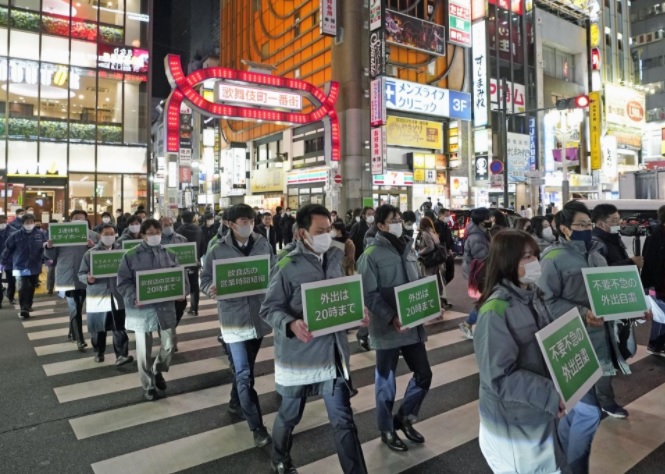
Tokyo and Shinjuku Ward officials hold signs urging people to go home and restaurants to close for the day in Tokyo's Shinjuku area on Jan. 8, 2021. (Kyodo)
TOKYO (Kyodo) — The Tokyo metropolitan government on Saturday reported an additional 2,268 coronavirus cases, topping the 2,000 mark for the third straight day.
The capital logged a record 2,447 infections on Thursday and 2,392 cases on Friday.
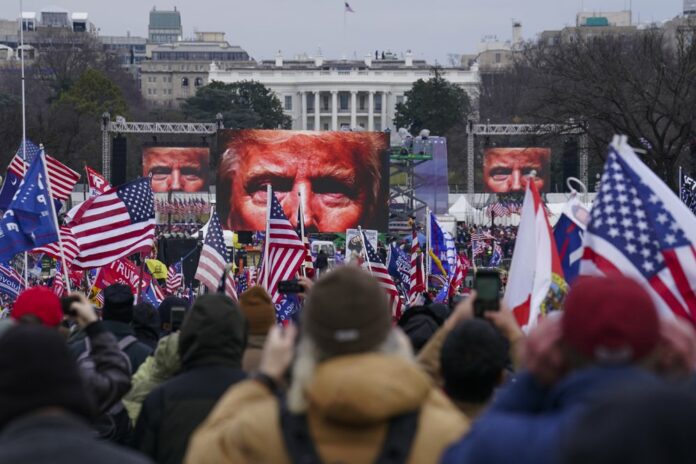
Trump supporters participate in a rally Wednesday, Jan. 6, 2021 in Washington. (AP Photo/John Minchillo)
WASHINGTON (AP) — Democrats’ momentum for a fresh drive to quickly impeach outgoing President Donald Trump gained support Saturday, and a top Republican said the president’s role in the deadly riot at the Capitol by a violent mob of Trump supporters was worthy of rebuke.
Sen. Pat Toomey, R-Pa., said he believed Trump had committed “impeachable offenses.” But he stopped short of saying whether he would vote to remove the president from office at the conclusion of a Senate trial if the House sent over articles of impeachment.
“I don’t know what they are going to send over and one of the things that I’m concerned about, frankly, is whether the House would completely politicize something,” Toomey said Saturday on Fox News Channel, speaking of the Democratic-controlled House.
“I do think the president committed impeachable offenses, but I don’t know what is going to land on the Senate floor, if anything,” Toomey said.
The new Democratic effort to stamp Trump’s presidential record — for the second time and days before his term ends — with the indelible mark of impeachment gained momentum Saturday.
Rep. David Cicilline, D-R.I, a leader of the House effort to draft impeachment articles — or charges — accusing Trump of inciting insurrection, said his group had grown to include 185 co-sponsors.
Lawmakers plan to formally introduce the proposal on Monday in the House, where articles of impeachment must originate. A vote could be possible by Wednesday — exactly one week before Democrat Joe Biden becomes president at noon on Jan. 20.
The articles, if passed by the House, could then be transmitted to the Senate for a trial, with senators acting as jurors who would ultimately vote on whether to acquit or convict Trump. If convicted, Trump would be removed from office and succeeded by the vice president.
House Speaker Nancy Pelosi, however, shared no details about her party’s plans as she addressed her hometown San Francisco constituents during an online video conference on Saturday.
“Justice will be done. Democracy will prevail. And America will be healed,” she said. “But it is a decision that we have to make.”
A violent and largely white mob of Trump supporters overpowered police, broke through security lines and rampaged through the Capitol on Wednesday, forcing lawmakers to scatter as they were putting the final, formal touches on Biden’s victory over Trump in the Electoral College.
The crowd surged to the domed symbol of American democracy following a rally near the White House, where Trump repeated his bogus claims that the election was stolen from him and urged his supporters to march in force toward the Capitol.
Five people, including a Capitol police officer, died as a result of the siege.
“It has been an epiphany for the world to see that there are people in our country led by this president, for the moment, who have chosen their whiteness over democracy,” Pelosi said of the attack.
She added: “This cannot be exaggerated. The complicity, not only the complicity, the instigation of the president of United States, must and will be addressed.”
No. 4 House Democratic leader Hakeem Jeffries of New York reiterated support for moving against what he deemed “an act of sedition that was incited and encouraged by Donald Trump.”
Speaking of Trump, Jeffries said Saturday: “He should be impeached, convicted and thrown out of 1600 Pennsylvania Avenue and forever banished to the dustbin of history.”
Outrage over the attack and Trump’s role in egging it on capped a divisive, chaotic presidency like few others in the nation’s history. There are less than two weeks until Trump is out of office but Democrats have made clear they don’t want to wait that long.
Trump, meanwhile, has few fellow Republicans speaking out in his defense. He’s become increasingly isolated, holed up in the White House as he has been abandoned in the aftermath of the riot by many aides, leading Republicans and, so far, two Cabinet members — both women.
Sen. Lisa Murkowski, R-Alaska, who has long voiced her exasperation with Trump’s conduct in office, told the Anchorage Daily News on Friday that he simply “needs to get out.”
Sen. Ben Sasse, another Trump critic, said more important than what happens to Trump “is what happens to the United States people and this union 12 days and beyond.”
But the Nebraska Republican also told “CBS This Morning” on Friday that he “will definitely consider” whatever articles the House sends over because he believes Trump “has disregarded his oath of office” to preserve, protect and defend the Constitution.
Biden, meanwhile, reiterated that he has long viewed Trump as unfit for office. But on Friday he sidestepped a question about impeachment, saying what Congress does “is for them to decide.”
Superville reported from Wilmington, Delaware. Associated Press writers Alexandra Jaffe, Lisa Mascaro, Mary Clare Jalonick and Zeke Miller contributed to this report.
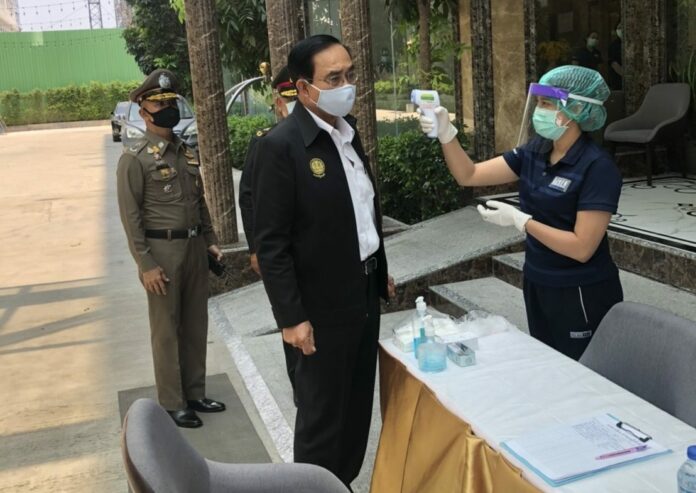
PM Prayut Chan-o-cha visits a state-run coronavirus quarantine facility in Bangkok on April 12, 2020.
Confusion, confusion and more confusions can be expected if the government doesn’t learn from this week.
As the government tries to contain the second outbreak of coronavirus, new regulations were passed, then hours later repeal, rescinded or reversed, again and again. Examples over the past week include whether parts of Thailand will be in a lockdown, whether on-site dining at restaurants in Bangkok ends at 7pm and whether the government’s tracking App is mandatory.
Do not ask me whether one can still travel from Bangkok to Chon Buri, both red-zones which means highly infected areas and restricted, without a government permit. Don’t ask me how long fitness gyms will be closed or how much longer can you buy booze legally. Things seem to be changing with little notice within hours and there’s no point trying to write a definitive rule that could be reversed in just a few hours.
What I am more interested in this column is to try to understand and explain all the confusions. Basically, it boils down to a few factors.
Let’s start from a positive explanation. The government of Gen Prayut Chan-ocha is basically like a cook trying to balance the various tastes to come up with the best dish. In this case as Prayut said himself earlier this week, he’s trying to strike a balance between protecting public health and the economy.
Let’s face it, the government cannot keep on borrowing money with no end and avoid the economy sinking into the abyss. Last year was already a painful period and if anything, Prayut must have learned that you cannot save people if you push more into unemployment and destitution.
So instead of a nation-wide lockdown that would lead to massive state compensation for workers affected, the government’s Center for COVID-19 Situation Administration spokesman Taweesin Visanuyothin said on Sunday that they won’t even use the word lockdown because by doing so “there must be some [state] compensations”.
Like fuzzy logic, Prayut is trying to strike a balance. Bear with him and his men while they try to figure out how much non-lockdown lockdown is too much or too little.
On Thursday when Taweesin said live on TV during his daily update that coronavirus patients who were found without virus tracking application would be prosecuted, it didn’t take long before he reversed the course.
It took a few hours of public outcry by netizens, civil rights and privacy activists before he did a U-turn. Taweesin and the government apparently realized it was too much and the public won’t put up with it and on Friday, he apologized on TV.
Well, even if one gives the best benefit of the doubt to Prayut and his men, one hopes they could have communicated better among themselves and be more sincere before issuing the latest order. Take dine-in restriction time for example.
Why did Bangkok Governor Aswin Kwanmuang on Monday noon wasted his time and face ordering all restaurants not to allow dine from 7pm to 6am only to see Prayut repealing it within hours before it even came into effect and extended it to 9pm to 6am instead?
This clearly shows a lack of communication and coordination among various key figures in charge.
The dine-in case shows that Prayut, despite trying to relegate authorities to all governors to decide how best to control the outbreak, with nearly 10,000 accumulated infections as of this weekend, still clings to power and reverse decisions by others whom he relegated powers if he disagrees.
Decentralization is easier said than done for Prayut, a former junta leader, as he overrides the order of the Bangkok governor.
Yes, I personally think that dine-in restrictions from 9pm makes more sense and I was told by Taniwan Koommongkon, president of Thai Restaurant Association on Wednesday that the association desperately warned the prime minister of the dire economic consequences after learning about the Bangkok governor’s decision.
I wish the three could have just held a Zoom conference for 5 minutes before the government would make the public more confused as they are in fear enough with the second pandemic outbreak.
Taniwan told me that Aswin could have rang her up. And as Wednesday, after the governor’s order was overridden, City Hall didn’t even bother to contact her to discuss the best way to balance public health and the economy going forward.
Hopefully there will be less U-turn, more coordination, more listening, sincerity and less confusions.
A week of confusion should suffice. The public deserve better.
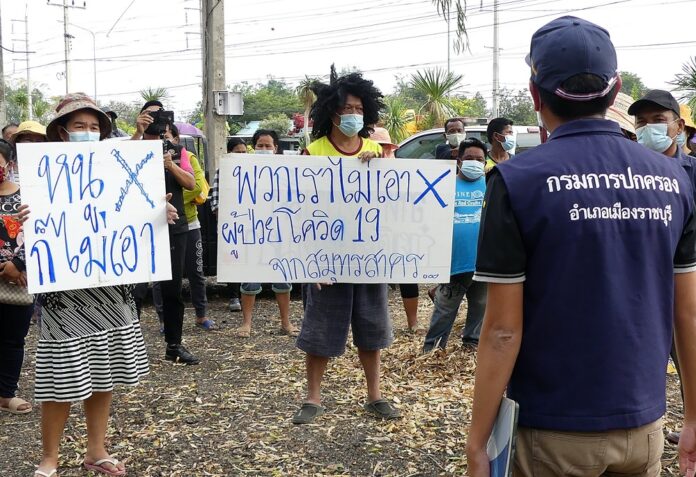
Residents in Ratchaburi protest reports of a plan to build a field hospital on Jan. 5, 2021.
Top: Residents in Ratchaburi protest reports of a plan to build a field hospital on Jan. 5, 2021.
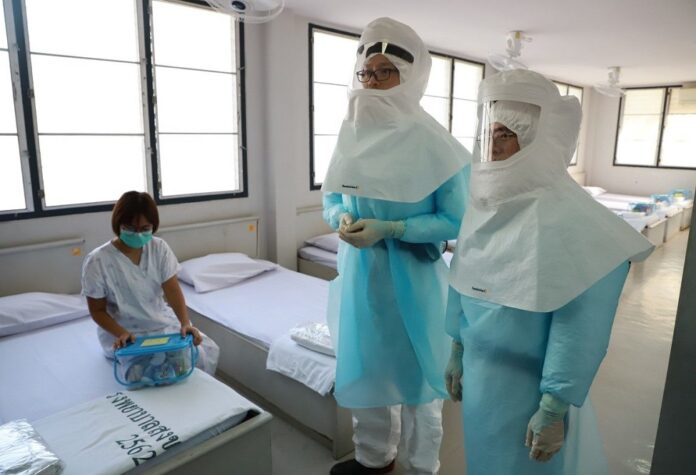
BANGKOK — Efforts by health workers to set up field hospitals for coronavirus patients are being met with opposition from some local communities, complicating Thailand’s long term strategy to grapple with the outbreak.
Protests and objections were already raised in Ratchaburi, Samut Sakhon, and Nonthaburi, where concerned residents cite fear of infections. But experts interviewed for this story say a field hospital in a community actually makes it safer and less prone to coronavirus outbreak.
“Between having a field hospital or a market near your house, the market is much scarier,” Chatchai Mingmalairak, director of the Thammasat University Field Hospital, said by phone. “You don’t know who’s who in there, but in the hospital you definitely know for sure.”
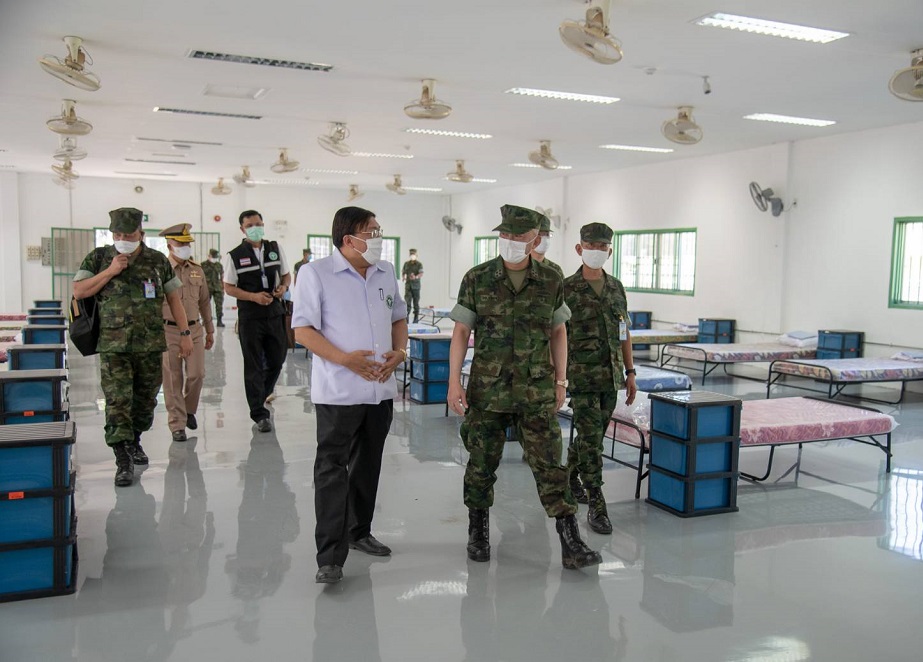
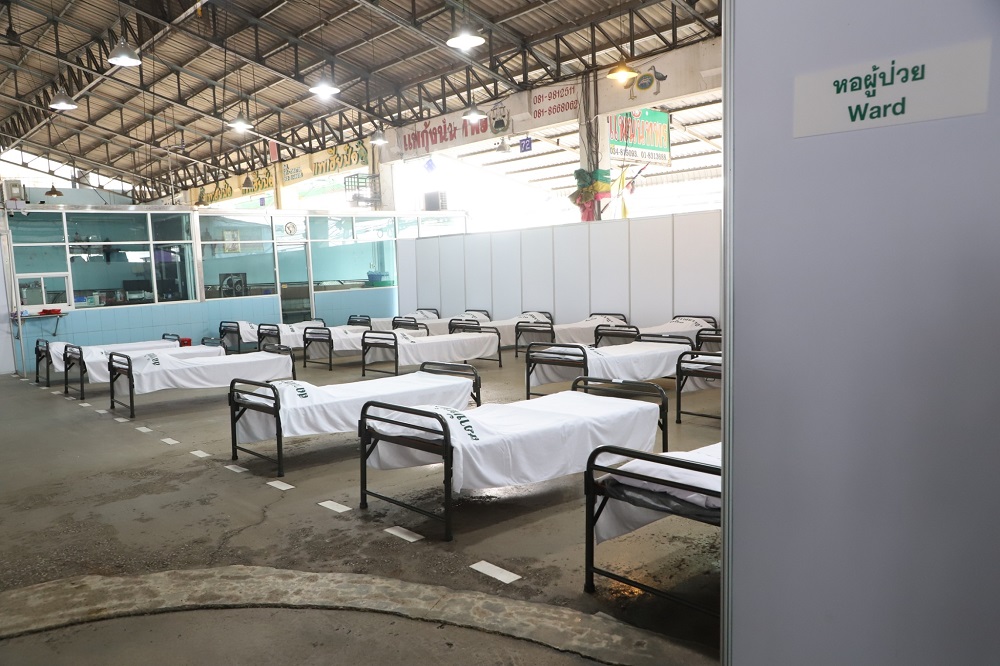
A field hospital is a temporary hospital set up to treat patients in the wake of mass casualties or disease outbreaks. In Thailand, field hospitals are often housed in large multipurpose buildings, or in the case of the Thammasat University Field Hospital, student dorms on the Rangsit campus.
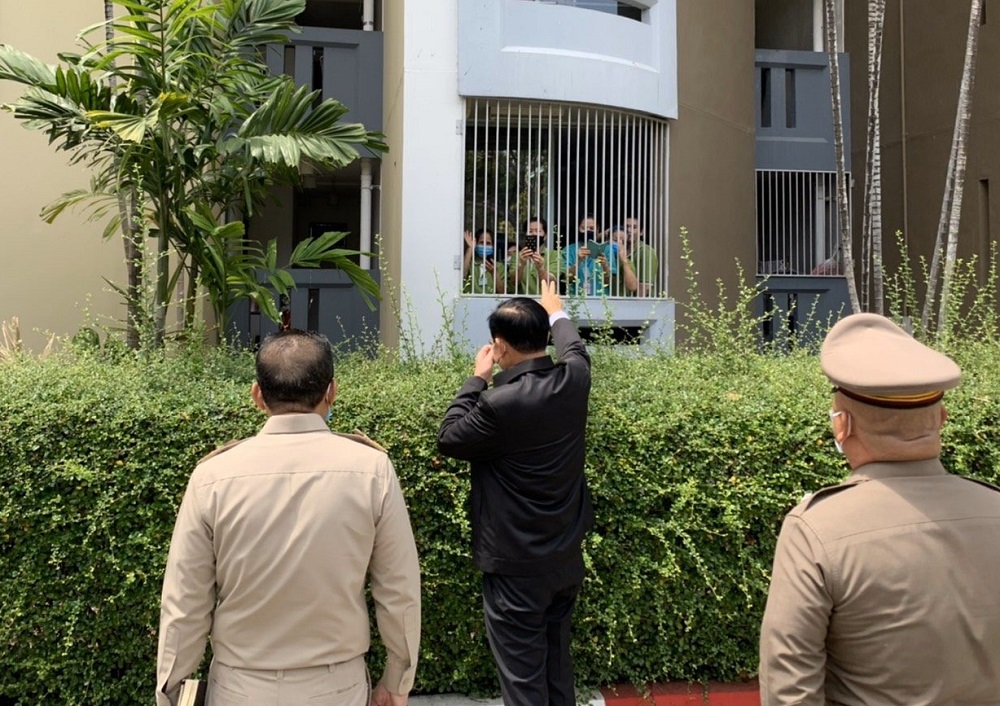
PM Prayut Chan-o-cha waves to staff at Thammasat University Field Hospital on April 19, 2020.
Thammasat’s field hospital initially opened during the first wave of the coronavirus pandemic in early 2020, admitting an overflow of patients who display mild symptoms. On Monday, the hospital’s 308 beds will be used again to house about 150 patients with COVID-19.
Chatchai said these field hospitals will play a vital role in preventing the public health system from being overwhelmed by coronavirus cases.
“In order to free up hospital resources for those with heavy symptoms, it’s best to send those with no symptoms to field hospitals,” he said. “That way, hospitals can keep a close watch on those with serious symptoms.”
As the number of infections continues to rise in triple digits nationwide – about 200 local transmissions were reported on Saturday – officials are racing to build field hospitals in anticipation of higher case loads.
Navy officers lead the media on a tour of a field hospital inside the Sattahip Navy Base in Chonburi province on Dec. 31, 2020.
A military installation in Chonburi converted some of its facilities to host coronavirus patients. Plans for more field hospitals are underway in Sa Kaeo, Korat, Lopburi, Samut Sakhon, and several other provinces.
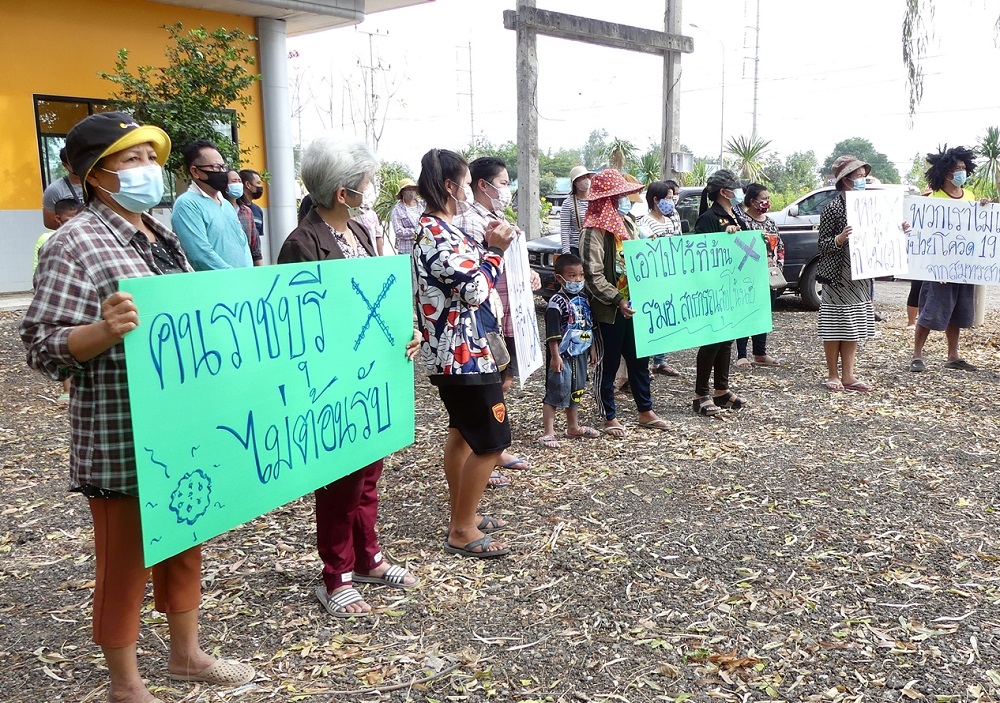
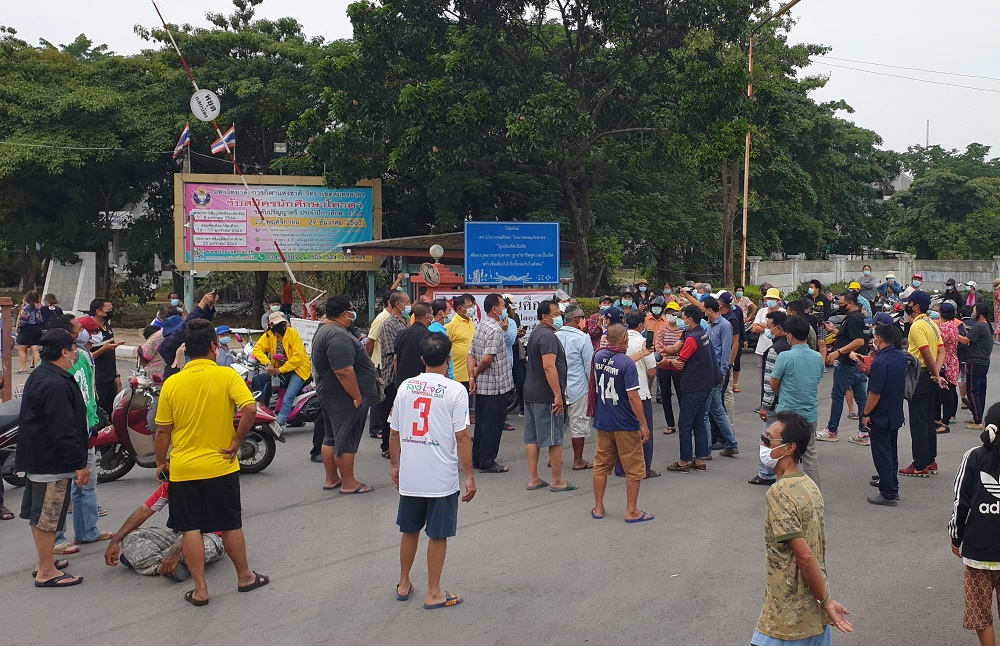
But the efforts already faced resistance in some places this week. On Tuesday, about 100 people in Ratchaburi city center gathered to protest reports that COVID-19 patients, which include infected migrant workers, will be brought from Samut Sakhon to a field hospital set up inside an army base in the province.
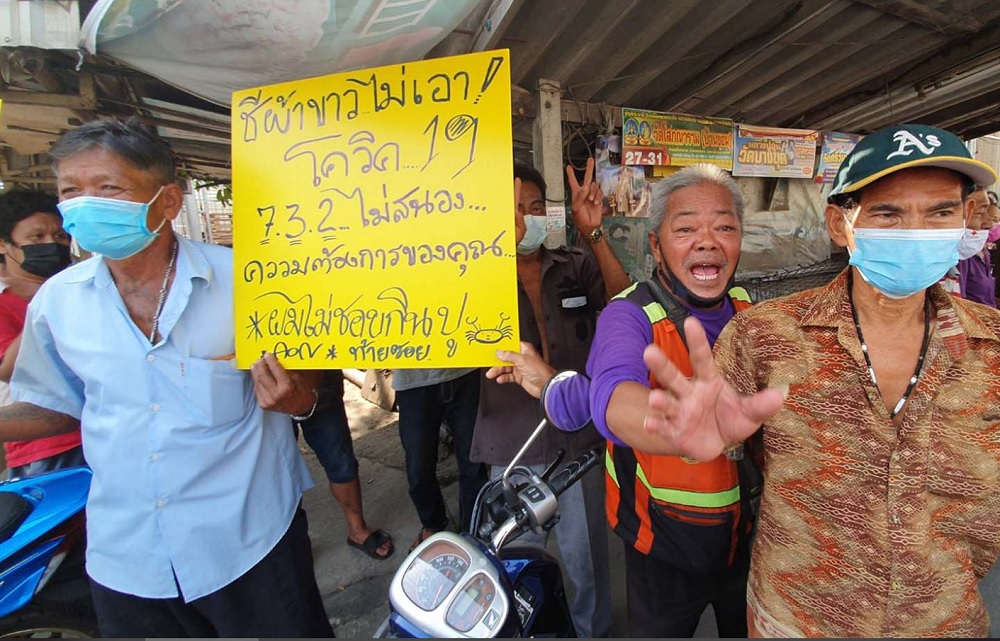
The protesters hold up signs that read, “We don’t want COVID-19 patients from Samut Sakhon,” “Ratchaburi residents do not welcome them. Put them somewhere else,” and “Put them at the Health Ministers’ house.”
Residents in Ratchaburi protest reports of a plan to build a field hospital on Jan. 5, 2021.
“If they were also from Ratchaburi, we would welcome them. But these people are from elsewhere and they are inconveniencing us,” Hin Kong district leader Prapan Boonpring said at the protest. “The governor is our father; does he want his children to be in hot water?”
Demonstrators also threatened to besiege Camp Panurangsri to prevent any transportation of coronavirus patients. Police and military representatives were eventually dispatched to defuse tensions.
The Governor later told them there is no plan to bring in coronavirus patients into the province, prompting the crowd to disperse.
Residents in Samut Sakhon protest against a plan to build a field hospital on Jan. 6, 2021.
A day later, on Wednesday, around 70 people in Samut Sakhon also protested a plan to set up a field hospital at a local cement factory. At a town hall meeting in Nonthaburi on Thursday, community leaders from Bang Sai raised an objection to having a field hospital in their subdistrict, saying that residents were afraid of infections.
“Why don’t they use the area where the [infections] took place?” Bang Sai tambon leader Sam-ang Thongpayong said at the meeting. “Why do they have to spread out the infected people into other areas? Locals in the area don’t consent to it.”
Why It’s Good for Everyone
Medical professionals said some residents appear to be mistaken that the proximity to a field hospital equals to bringing infections closer to their community.
In fact, temporary hospitals exist so that infected people can be quickly isolated rather than being let loose to spread infections to the public.
“People are panicked and scared that having a field hospital means the whole area will be infected,” Thammasat field hospital director Chatchai said. “But it’s actually safer to have a controlled area for asymptomatic COVID-10 patients to recover.”
Jakravoot Maneerit, director of Vajira Hospital, where a number of coronavirus patients are receiving treatment, said another benefit of field hospitals was the system of safely handing out food and water to patients, and disposing of waste in a sanitary way.
Residents in Samut Sakhon protest against a plan to build a field hospital on Dec. 24, 2020.
“If infected people are sent home to take care of themselves, then their neighbors or delivery people are endangered,” Jakravoot said. “But in a field hospital, everyone’s sanitary needs and food deliveries can be taken care of collectively.”
Even in areas where there are no reported local transmissions, it’s still helpful to have a field hospital nearby, the director said.
“With a pandemic like this, it won’t be over in a month or two. It’s actually very hard to know who is infected or now. Since this wave has more asymptomatic people, in the future the local people may need to use the service of the field hospital anyway.”
While some may oppose field hospitals on the grounds that asymptomatic patients should stay in their own home and isolate themselves, Chatchai from Thammasat University said no country ever succeeded in pursuing that strategy, which only resulted to surges of infections in the U.S., U.K., and Japan.
The interior view of a field hospital in Samut Sakhon province on Dec. 25, 2020.
“Having a field hospital means having a clear system where people can go. It means you know for sure who’s infected and who’s not. Having a place for infected people to go in the community makes it safer,” the Thammasat doctor said.
“With this disease, it’s scarier when you don’t know if you have it.”
Jakravoot from Vajira Hospital said if infections continue to rise, there will be more field hospitals set up here in the capital. One such facility is already deployed in Bang Khun Thian district, which borders Samut Sakhon province.
Other possible sites for field hospitals are sports stadiums and other large indoor spaces overseen by the Bangkok Metropolitan Administration, he said.
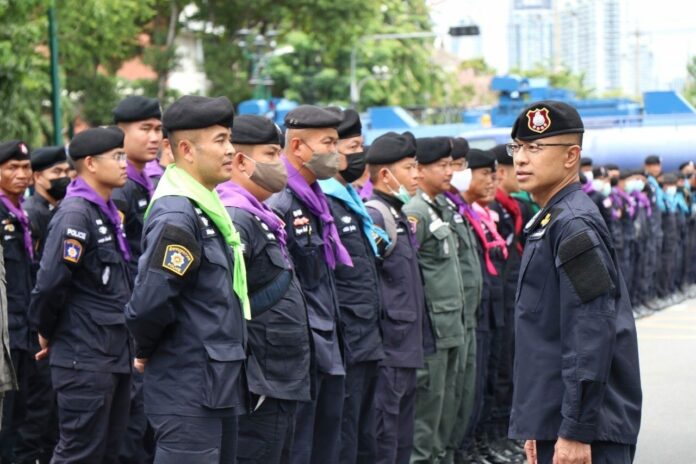
National police commissioner Suwat Chaengyodsuk inspects riot police in Bangkok on Sept. 20, 2020.
Top: National police commissioner Suwat Chaengyodsuk inspects riot police companies in Bangkok on Sept. 20, 2020.
It always plays out like a clockwork, a movement rehearsed as well as any police parade.
An embarrassing scandal breaks out – say, existence of a brothel or gambling den is brought to national attention. The police officers in charge of the area where the incident takes place get “transferred to an inactive post.” They get placed “under investigation.” Promises of disciplinary and even criminal punishment are made.
That same maneuver is repeated this month, when senior police officers in eastern Thailand were whisked away to “temporary duties” in Bangkok for allegedly letting local illegal casinos operate right under their noses. Hundreds of coronavirus cases were soon linked to the gambling dens. National police commissioner Suwat Chaengyodsuk said they will face consequences for their negligence.
“Every precinct must be strict. They cannot be negligent like this,” Gen. Suwat told reporters. “Anyone who does wrong must be punished.”
But no one can say for sure how many police officers were actually punished after they were put in “inactive duty,” away from media attention. Even the chief of the national police disciplinary division, an agency tasked with handing out penalties for misconduct, said he doesn’t know.
“There’s over a thousand disciplinary cases in the pipeline right now,” Maj. Gen. Ukrit Srisuakham said in an interview. “I can’t really tell the progress of each individual case or how many cases have been found guilty since there are so many of them.”
Contrary to popular belief, a “transfer to inactive post” doesn’t officially count as a punishment either.
“It’s an administrative procedure,” Ukrit said. “When we remove someone from their post, it doesn’t necessarily mean that they’re wrong. We want to remove their influence from the area they served.”
Police officers raid a gambling den on Chitrphan Road in Rayong province on Dec. 27, 2020, and later declare that it is not a gambling den.
An activist who monitors the police force said the lack of clear disciplinary or legal actions against members of the law enforcement that fail to uphold the law fosters a culture of corruption and impunity within the ranks.
“It doesn’t do any good. It’s not even a punishment,” police reform advocate Wirut Sirisawasdibut said of the police’s habit of putting officers in inactive positions. “Some of them may be able to return to their original position after 10 days, when the society and the media already forgot about it.”
According to the police regulations, officers can be found guilty of “serious” and “non-serious” breaches of discipline. The former involves severe punishments like suspension, discharge from the force, and expulsion without pensions, while the latter has to do with lesser disciplinary actions such as detention or being put on a probation.
A report published by the Royal Thai Police in October said 342 members of the force were either discharged or fired since the beginning of 2020, but it did not specify details of the offenses or how long their investigations lasted.
Activities in Inactive Post
But such punishments are rare. For a majority of police officers accused of corruption, taking bribes, negligence, and other acts of misconduct, the consequences of their actions mostly consist of their time in the “inactive post.”
The commonly used English translation is somewhat misleading, since it’s not really “inactive.” Officers are tasked with various desk jobs – for which they get paid.
The original term in Thai is “temporarily assisting police duties at the Royal Thai Police Operations Center.” In an interview, police spokesman Yingyot Thepchamnong explained to Khaosod English what goes on inside the center.
“There are all sorts of duties at the center,” Yingyot said. “It acts like the central command center of police forces nationwide, so duties can range from attending daily briefings, gathering intelligence data, to analyzing information.”
Government officials pose for photos in front the Royal Thai Police headquarters, where the national police operations center is located, on Dec. 7, 2016.
Maj. Gen. Yingyot said there are “hundreds” of officers working at the operation center, though he could not confirm how many of them were transferred there for some alleged misconduct.
All of the officers working at the operations center still receive their salaries in full, since they carry out official duties for the force, while the length of stay depends on their commanding officers to decide, he added.
“If they are found guilty, they will go through disciplinary procedures,” Yingyot said. “If not, they may be able to return to their original duties or somewhere else depending on their commanding officers.”
In a 2018 interview with Thairath news agency, Police Inspector General Suchart Teerasawat also described transfers to the “inactive post” at the center as a lenient measure.
“There are two types of officers assisting police duties at the Royal Thai Police Operations Center: those sent there as a punishment, and those who have their regular positions there,” Suchart was quoted as saying. “It isn’t anything serious for who got there as a punishment. They are given tasks to perform as usual.”
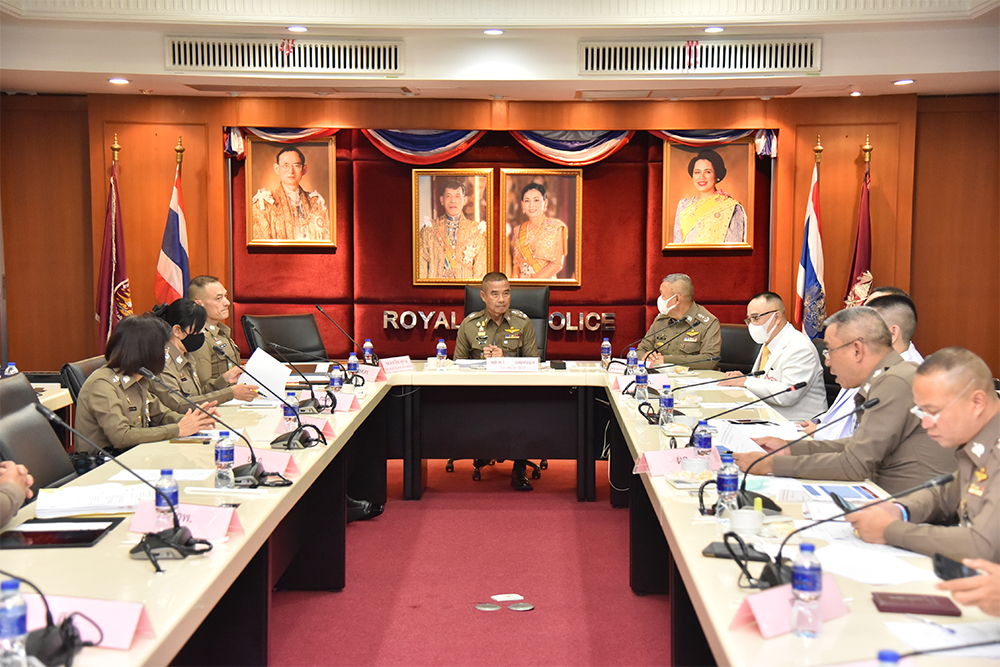
A file photo of a meeting at the Royal Thai Police Operations Center. Photo: Police Public Affairs Division
Wirut the activist said the cozy arrangement provides little to no deterrence against wrongdoers in the police force.
“It’s even better for those officers since the jobs at the operations center are relatively easy, and they still get paid,” Wirut, an ex-police corporal said. “Some of them even got promoted after they spent some time there.”
The Khaki Revolving Door
The latest high profile “transfers to inactive post” involve the commander of the eastern region police, Lt. Gen. Veera Jiraveera, Rayong provincial police chief Maj. Gen. Paphatdet Ketphan, and four officers at the Rayong City Police Station.
They were booted out of their original post in late December following the discovery of an illegal gambling den in the city center – which they initially tried to dismiss as a “warehouse.” The gambling den was soon identified as a major cluster of coronavirus infections. At least two people linked to the casino have died of the virus as of publication time.
Provincial police commanders of Chonburi, Chanthaburi, and Trat were also removed from their positions for allowing similar gambling dens to operate amid the coronavirus pandemic.
With at least 1,500 confirmed cases and rising, the four eastern seaboard provinces are now placed under a soft lockdown. Residents must seek official permission before leaving their provinces.
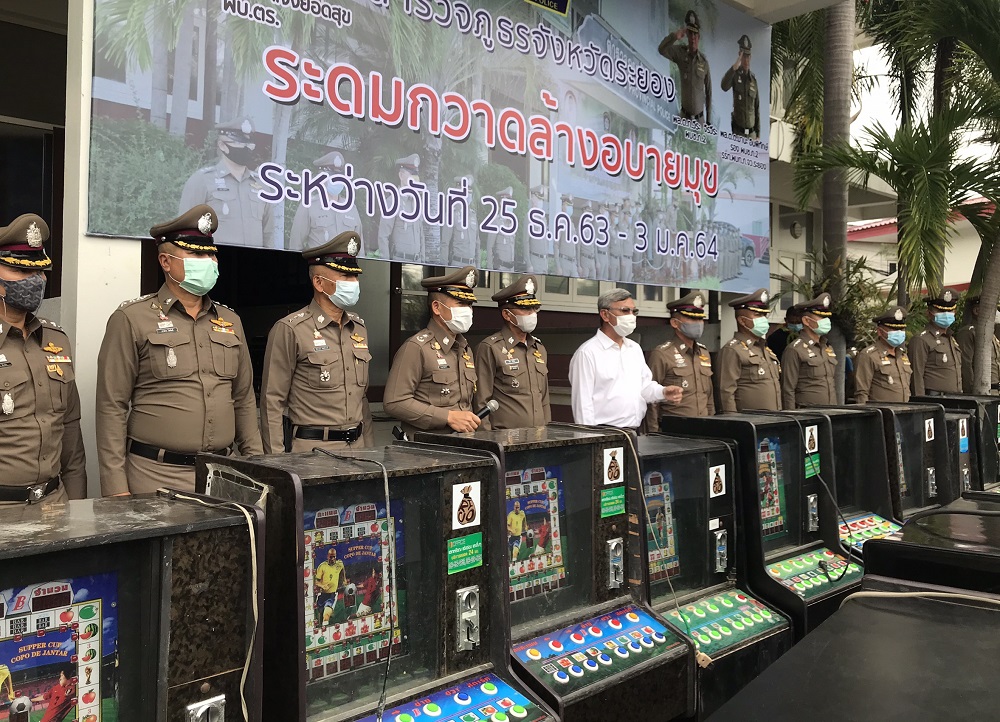
Police display gambling equipment they seized from illegal casinos in Rayong province on Jan. 4, 2021.
It is unclear what punishment Veera, Paphatdet, and other police officers ensnared in the fiasco would face and how long they would remain in inactive posts. A quick review of precedent cases shows that policemen accused of malfeasance routinely return to their posts soon after media attention fades away.
In October 2018, immigration police officer Col. Janchai Daengprasert was accused of ordering officers to request “tips” from inbound tourists at Don Mueang Airport, who would not be granted visas unless they paid up. He was transferred to an inactive post, pending an investigation.
Two years earlier, in August 2016, four police officers at Phra Khanong Police Station were moved to inactive posts after soldiers raided an illegal gambling den in their jurisdiction.
Public records show that all of them – Lt. Col Withoon Khunboonchan, Lt. Col. Somsit Santasanachok, Maj. Sanphet Jiraakharakul, and Capt. Jakkarate Upatham – soon went back to active duty.
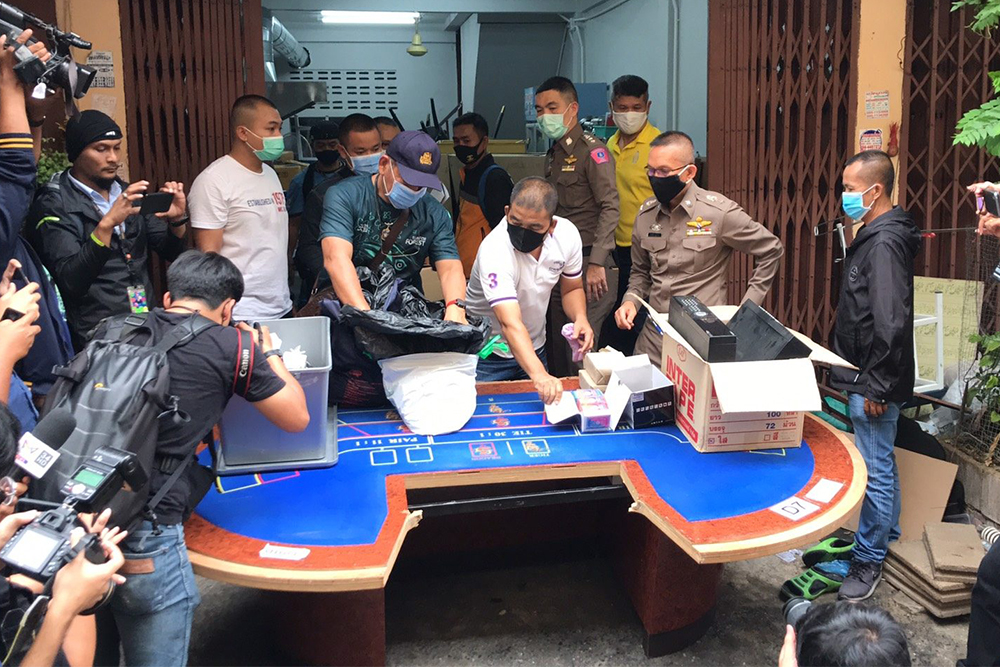
Police show a baccarat table on Aug. 10, 2020, part of a hidden stash from a gambling den in the Rama III Road area.
Withoon was back at Phra Khanong Police Station by 2017, having been promoted to the interim station chief. Sanphet and Jakkarate returned to the same station as a traffic officer and an investigative officer, respectively, while Somsit moved to Mae Wong Police Station in Nakhon Sawan province.
The head of Huai Khwang Police Station was also transferred to inactive duty in 2016 after local officials, acting on a tip from a foreign NGO, rescued underage girls from a brothel in the area.
But the hiatus wouldn’t last long for Col. Kittipong Wisetsanguan, who was back in active duty with the Special Branch Police by the following year.
It’s the same story for almost every major police station involved in a scandal. In 2017 alone, chiefs of three police stations accused of turning blind eyes to gambling dens in their area – Phaholyothin, Hua Mak, and Ladprao – returned as superintendents after spending a brief stint at the operations center.
Policing the Police
That’s not to say that a serious punishment is unheard of in Thai police force. Two police officers at Thong Lor Station were fired just days after it emerged that they extorted a sum of 245,000 baht from a French national in December 2019.
Two police officers accused of bribing each other for a promotion in 2016 are also believed to have been dismissed from the force, as no public records speak of their service after the scandal.
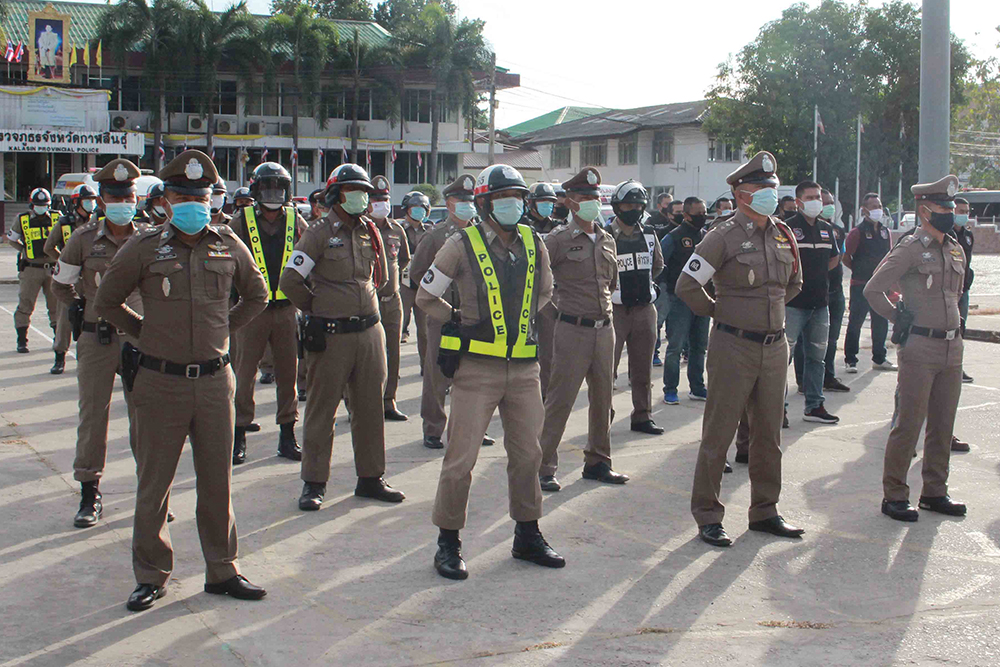
Police in Kalasin province stand at attention as they wait to be deployed on Dec. 25, 2020.
Wirut, the campaigner for more transparency in the police force, called for a tougher procedure when dealing with police officers accused of graft. He said the accused should be immediately suspended from all duties, without pay, while the inquiry is ongoing.
“This is what they are afraid of,” Wirut said.
But Ukrit, the police official in charge of the disciplinary review division, said doing so would not be fair to the men in khaki.
“Our system is a system based on accusations,” Ukrit said. “So we must give an opportunity for the accused to defend themselves with the fact-finding committee before a punishment can be handed down to them.”
He also said the notion of being transferred to an inactive post over unethical behavior is already a symbolic punishment in itself, since it would serve as a stigma to the accused.
“They’ve already lost credibility from the allegations,” Ukrit said.
President Donald Trump gestures at a campaign rally in support of U.S. Senate candidates Sen. Kelly Loeffler, R-Ga., and David Perdue in Dalton, Ga., Monday, Jan. 4, 2021. (AP Photo/Brynn Anderson)
WASHINGTON (AP) — @realDonaldTrump, the Twitter feed that grew from the random musings of a reality TV star into the cudgel of an American president, died Friday. It was not quite 12 years old.
The provocative handle was given birth by a New York real estate tycoon who used it to help him become the 45th U.S. president. It began with a May 4, 2009, tweet promoting Donald Trump’s upcoming appearance on David Letterman’s show.
It died more than 57,000 tweets later, with Trump using some of his final postings on the powerful platform to commiserate with a pro-Trump mob that besieged the halls of Congress in a deadly assault as lawmakers were set to certify his defeat.
The account met its demise when Twitter announced Friday it was pulling the plug permanently on @realDonaldTrump, citing concern that Trump would use it for “further incitement of violence.” Trump retorted that he’d be “building out our own platform in the near future. We will not be SILENCED!”
After close review of recent Tweets from the @realDonaldTrump account and the context around them we have permanently suspended the account due to the risk of further incitement of violence.https://t.co/CBpE1I6j8Y
Trump, a novice politician but seasoned salesman, realized the power of social media in ways that few other politicians did. And he wielded it with never-before-seen power to diminish his opponents, shape elections and mold reality — at least in the eyes of his supporters.
Early on, @realDonaldTrump seemed innocent enough. Its owner, who had prolific experience in marketing casinos, real estate and even Oreos, used the platform mostly to promote his books, media appearances and give friendly plugs to friends.
But as Trump began seriously toying with a White House run, it became a tool to scorch opponents and give shape to his nationalist, “America First” philosophy.
He deployed its venom equally, whether insulting celebrity enemies (Rosie O’Donnell was “crude, rude, obnoxious and dumb”) or using xenophobia to malign a country (Britain is “trying hard to disguise their massive Muslim problem”).
Peter Costanzo, then an online marketing director for the publishing company putting out Trump’s book, “Think Like a Champion,” helped bring Trump to the platform.
Twitter was still in its infancy at the time. But Costanzo, who later came to work for The Associated Press, saw the then-140-character-per-message platform as a new tool that the real estate mogul could use to boost sales and reach a broader audience.
Costanzo was given seven minutes to make his pitch to Trump — “Not five minutes, not 10,” he recalled in a 2016 interview.
Trump liked what he heard.
“I said, ‘Let’s call you @realDonaldTrump — you’re the real Donald Trump,’” recalled Costanzo. “He thought about it for a minute and said: ‘I like it. Let’s do it.’”
Other than Trump’s family, no one seemed off limits from his Twitter wrath. Trump attacked Senate Republicans, Senate Democrats, 2016 political rivals, current administration staffers, former administration staffers, the Republican Party and cable networks.
@realDonaldTrump was prolific: On days when its owner was particularly agitated, such as in the midst of impeachment proceedings, it pushed out more than 100 tweets.
In its most popular tweet, on Oct. 2, 2020, @realDonaldTrump announced that Trump and first lady Melania Trump had contracted the coronavirus. The post got 1.8 million likes and nearly 400,000 retweets, according to Factba.se., which tracks the president’s social media habits and commentary.
The account was used to announce firings. Secretary of State Rex Tillerson learned of his ouster in a tweet.
The account threatened adversaries in the most colorful terms. Before Trump “fell in love” with North Korean dictator Kim Jong Un through secretly exchanged letters, Trump used Twitter to dub him “rocket man” and vowed to respond with “fire and fury” if the authoritarian dared attack the United States.
@realDonaldTrump frequently spread misleading, false and malicious assertions, such as the baseless ideas that protesters at Justice Brett Kavanaugh’s confirmation hearings were paid by the liberal philanthropist George Soros and that November’s election was beset by voter fraud.
Trump often tweeted well past midnight and before dawn, a cathartic outlet for grievances (Witch hunt! Crooked Hillary, Russia, Russia, Russia, FAKE NEWS, and so on.) For the most part, @realDonaldTrump and its 280-character posts effectively allowed Trump to work around the Washington media establishment and amplify the message of allies.
Sometimes @realDonaldTrump stumbled. Trump deleted 1,166 tweets and, in his final months on the platform, had 471 tweets flagged by Twitter for misinformation, according to Factba.se.
In one of his most memorable Twitter stumbles, Trump in May 2017 sent (and later deleted) a cryptic post-midnight tweet that read “Despite the constant negative press covfefe.”
The gibberish set the Twitterverse afire with speculation. Theories included that the tweeter-in-chief had fallen asleep mid-message and that the man who once bragged of having “the best words” was adding a new word to the lexicon to properly describe collusion between Democrats and the press.
The mystery was never solved.
Sam Nunberg, a longtime — and now former — Trump adviser, said that in the summer of 2011, after Trump announced he wasn’t running in 2012 but wanted to remain relevant, his team decided to start using social media to boost his profile.
They chose to focus on Twitter, where he already had an account and several hundred thousand followers. Nunberg remembers sending Trump daily reports on his follower growth. Trump would sometimes hand it back with hand-written notes — “Why not more?” “Why so slow?”
They celebrated when they hit the million mark.
“Twitter definitely played a pivotal role in building Donald Trump as a political figure within Republican politics and he also greatly enjoyed it,” said Nunberg. “Remember he used to say: ‘I wanted to own a newspaper. This is great, it’s like a newspaper without the losses.’”
Trump’s eldest son, Donald Trump Jr., took to Twitter shortly after the platform banned @realDonaldTrump to note that it continues to allow Iran’s supreme leader “and numerous other dictatorial regimes” to use the platform, but cannot abide his father.
“Mao would be proud,” Trump Jr. scoffed.
In the end, @realDonaldTrump offered an in-the-moment peek into Trump’s state of mind over more than a decade, a period in which the “Apprentice” TV star transformed into the 45th American president.
Down the road, when historians look for a glimpse into Trump thoughts on the issues of his time — anything from actress Kristen Stewart’s treatment of co-star Robert Pattinson to the president’s views on Russian meddling in the 2016 election — the first stop may inevitably be one of the many digital archives that have preserved the tweets of @realDonaldTrump.
With Trump, whatever the topic, there’s always a tweet for that.
——
Associated Press writers Julie Pace, Nancy Benac and Zeke Miller contributed reporting.
Medical workers are seen inside a COVID-19 recovery ward in Yala province on April 1, 2020.
BANGKOK — Residents in Thailand will be able to sign up for the first round of vaccination against coronavirus at the end of January, the government announced Friday.
A statement released by the Department of Disease Control said “vulnerable groups” living in the five provinces with highest risk of infection will be prioritized in the initial part of the vaccination drive, before expanding the effort to include the rest of the public in “late 2021 to early 2022.”
The statement quoted Department of Disease Control director Opas Karnkawinpong as saying that the nationwide effort to vaccine Thailand’s population against the virus will be undertaken in three phases.
The first phase, running from February to April, will consist of 2 million doses, reserved for “vulnerable groups” in the five provinces of Chonburi, Samut Sakhon, Trat, Rayong, and Chanthaburi. Registration will open “either at the end of this month or early February.”
Those 2 million doses will likely come from Sinovac, a state-owned manufacturer in China. It is unclear how much the Thai government has paid Sinovac for the vaccines.
Phase 2 will take place in May and June, covering “vulnerable groups” in the rest of the country. The last phase will aim to vaccinate “as many members of the general public as possible” by early 2022, according to the Department of Disease Control.
The doses to be used in Phases 2 and 3 are believed to be the vaccines jointly developed by Oxford University and British pharmaceutical company Astrazeneca.
Health officials have said that the production of Astrazeneca vaccines will take place here in Thailand, per a knowledge sharing agreement between the British firm and Bioscience, a Thai company wholly owned by the Crown Property Bureau.
Thailand’s Food and Drug Administration has yet to approve neither of the vaccines made by Sinovac and Astrazeneca for domestic uses.