
























36.1 C
Bangkok
Saturday, June 27, 2026
Home Blog Page 1395

China’s ‘War on Terror’ Uproots Families, Leaked Data Shows

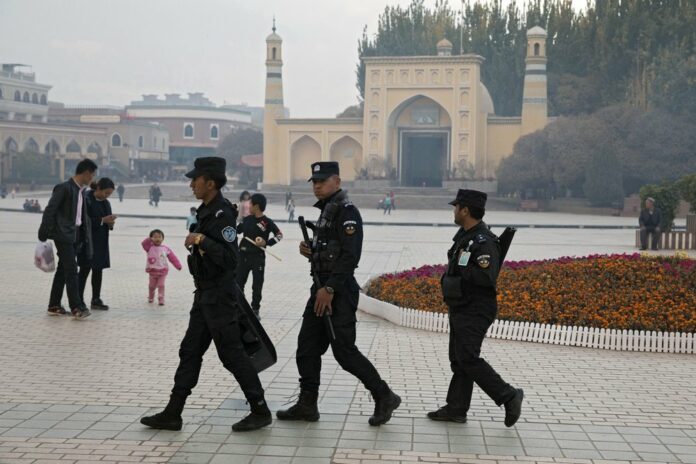
FILE - In this Nov. 4, 2017, file photo, Uighur security personnel patrol near the Id Kah Mosque in Kashgar in western China's Xinjiang region. (AP Photo/Ng Han Guan, File)

Beijing (AP) — For decades, the Uighur imam was a bedrock of his farming community in China’s far west. On Fridays, he preached Islam as a religion of peace. On Sundays, he treated the sick with free herbal medicine. In the winter, he bought coal for the poor.

But as a Chinese government mass detention campaign engulfed Memtimin Emer’s native Xinjiang region three years ago, the elderly imam was swept up and locked away, along with all three of his sons living in China.

Now, a newly revealed database exposes in extraordinary detail the main reasons for the detentions of Emer, his three sons, and hundreds of others in Karakax County: their religion and their family ties.

The database obtained by The Associated Press profiles the internment of 311 individuals with relatives abroad and lists information on more than 2,000 of their relatives, neighbors and friends. Each entry includes the detainee’s name, address, national identity number, detention date and location, along with a detailed dossier on their family, religious and neighborhood background, the reason for detention, and a decision on whether or not to release them. Issued within the past year, the documents do not indicate which government department compiled them or for whom.

Taken as a whole, the information offers the fullest and most personal view yet into how Chinese officials decided who to put into and let out of detention camps, as part of a massive crackdown that has locked away more than a million ethnic minorities, most of them Muslims.

The database emphasizes that the Chinese government focused on religion as a reason for detention — not just political extremism, as authorities claim, but ordinary activities such as praying, attending a mosque, or even growing a long beard. It also shows the role of family: People with detained relatives are far more likely to end up in a camp themselves, uprooting and criminalizing entire families like Emer’s in the process.

Similarly, family background and attitude is a bigger factor than detainee behavior in whether they are released.
879EB177 CC6E 45E0 8DBB D8D658F013D1 8
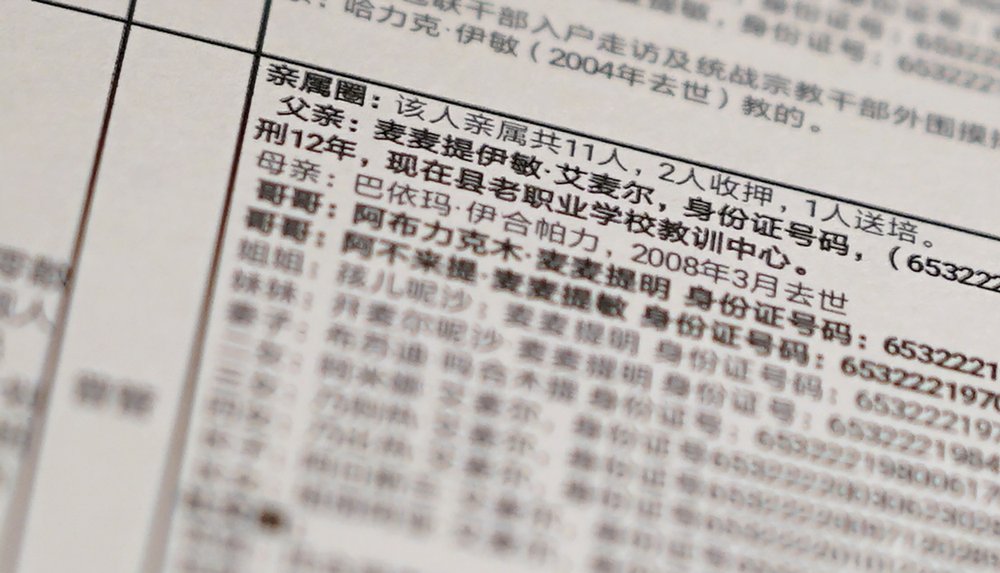
This Sunday, Feb. 16, 2020 photo shows details from a print of a leaked database obtained by The Associated Press. Text reads, “Family circle: Total relatives 11, 2 imprisoned, 1 sent to training, Father: Memtimin Emer… sentenced to 12 years, is now in the training center at the old vocational school.” (AP Photo)

“It’s very clear that religious practice is being targeted,” said Darren Byler, a University of Colorado researcher studying the use of surveillance technology in Xinjiang. “They want to fragment society, to pull the families apart and make them much more vulnerable to retraining and reeducation.”

The Xinjiang regional government did not respond to faxes requesting comment. Asked whether Xinjiang is targeting religious people and their families, foreign ministry spokesman Geng Shuang said “this kind of nonsense is not worth commenting on.”

Beijing has said before that the detention centers are for voluntary job training, and that it does not discriminate based on religion.

China has struggled for decades to control Xinjiang, where the native Uighurs have long resented Beijing’s heavy-handed rule. With the 9/11 attacks in the United States, officials began using the specter of terrorism to justify harsher religious restrictions, saying young Uighurs were susceptible to Islamic extremism.

After militants set off bombs at a train station in Xinjiang’s capital in 2014, President Xi Jinping launched a so-called “People’s War on Terror”, transforming Xinjiang into a digital police state.

The leak of the database from sources in the Uighur exile community follows the release in November of a classified blueprint on how the mass detention system really works. The blueprint obtained by the International Consortium of Investigative Journalists, which includes the AP, showed that the centers are in fact forced ideological and behavioral re-education camps run in secret. Another set of documents leaked to the New York Times revealed the historical lead-up to the mass detention.

The latest set of documents came from sources in the Uighur exile community, and the most recent date in them is March 2019. The detainees listed come from Karakax County, a traditional settlement of about 650,000 on the edge of Xinjiang’s Taklamakan desert where more than 97 percent of residents are Uighur. The list was corroborated through interviews with former Karakax residents, Chinese identity verification tools, and other lists and documents seen by the AP.

Detainees and their families are tracked and classified by rigid, well-defined categories. Households are designated as “trustworthy” or “not trustworthy,” and their attitudes are graded as “ordinary” or “good.” Families have “light” or “heavy” religious atmospheres, and the database keeps count of how many relatives of each detainee are locked in prison or sent to a “training center.”

Officials used these categories to determine how suspicious a person was — even if they hadn’t committed any crimes.

“It underscores the witch-hunt mindset of the government, and how the government criminalizes everything,” said Adrian Zenz, an expert on the detention centers and senior fellow at the Victims of Communism Memorial Foundation in Washington, D.C.

Reasons listed for internment include “minor religious infection,” “disturbs other persons by visiting them without reasons,” “relatives abroad,” “thinking is hard to grasp” and “untrustworthy person born in a certain decade.” The last seems to refer to younger men; about 31 percent of people considered “untrustworthy” were in the age bracket of 25 to 29 years, according to an analysis of the data by Zenz.

When former student Abdullah Muhammad spotted Emer’s name on the list of the detained, he was distraught.

“He didn’t deserve this,” Muhammad said. “Everyone liked and respected him. He was the kind of person who couldn’t stay silent against injustice.”

Even in Karakax county, famed for its intellectuals and scholars, Emer stood out as one of the most renowned teachers in the region. Muhammad studied the Quran under Emer for six years as a kid, following him from house to house in an effort to dodge the authorities. Muhammad said Emer was so respected that the police would phone him with warnings ahead of time before raiding classes at his modest, single-story home of brick and mud.

Though Emer gave Party-approved sermons, he refused to preach Communist propaganda, Muhammad said, eventually running into trouble with the authorities. He was stripped of his position as an imam and barred from teaching in 1997, amid unrest roiling the region.

When Muhammad left China for Saudi Arabia and Turkey in 2009, Emer was making his living as a doctor of traditional medicine. Emer was growing old, and under heavy surveillance, he had stopped attending religious gatherings.

That didn’t stop authorities from detaining the imam, who is in his eighties, and sentencing him on various charges for up to 12 years in prison over 2017 and 2018. The database cites four charges in various entries: “stirring up terrorism,” acting as an unauthorized “wild” imam, following the strict Saudi Wahhabi sect and conducting illegal religious teachings.
1000 1 12
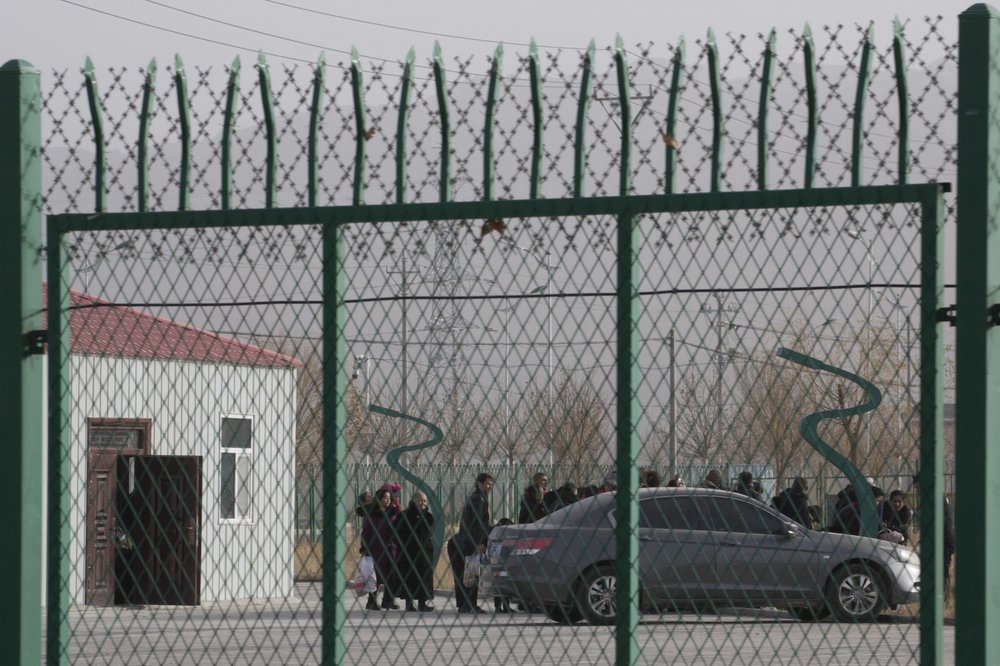
In this Dec. 3, 2018, file photo, residents line up inside the Artux City Vocational Skills Education Training Service Center which has previously been revealed by leaked documents to be a forced indoctrination camp at the Kunshan Industrial Park in Artux in western China’s Xinjiang region. (AP Photo/Ng Han Guan, File)

Muhammad called the charges false. Emer had stopped his preaching, practiced a moderate Central Asian sect of Islam rather than Wahhabism and never dreamed of hurting others, let alone stirring up “terrorism,” Muhammad said.

“He used to always preach against violence,” Muhammad said. “Anyone who knew him can testify that he wasn’t a religious extremist.”

None of Emer’s three sons had been convicted of a crime. But the database shows that over the course of 2017, all were thrown into the detention camps for having too many children, trying to travel abroad, being “untrustworthy” or “infected with religious extremism,”or going on the Hajj, the Muslim pilgrimage to the holy city of Mecca. It also shows that their relation to Emer and their religious background was enough to convince officials they were too dangerous to let out from the detention camps.

“His father taught him how to pray,” notes one entry for his eldest, Ablikim Memtimin.

“His family’s religious atmosphere is thick. We recommend he (Emer) continue training,” says another entry for his youngest son, Emer Memtimin.

Even a neighbor was tainted by living near him, with Emer’s alleged crimes and prison sentence recorded in the neighbor’s dossier.

The database indicates much of this information is collected by teams of cadres stationed at mosques, sent to visit homes and posted in communities. This information is then compiled in a dossier called the “three circles”, encompassing their relatives, community, and religious background.

It wasn’t just the religious who were detained. The database shows that Karakax officials also explicitly targeted people for activities that included going abroad, getting a passport or installing foreign software.

Pharmacist Tohti Himit was detained in a camp for having gone multiple times to one of 26 “key” countries, mostly Muslim, according to the database. Former employee Habibullah, who is now in Turkey, recalled Himit as a secular, kind and wealthy man who kept his face free of a beard.

“He wasn’t very pious, he didn’t go to the mosque,” said Habibullah, who declined to give his first name out of fear of retribution against family still in China. “I was shocked by how absurd the reasons for detention were.”
ยีลาปัน ยะลา 1
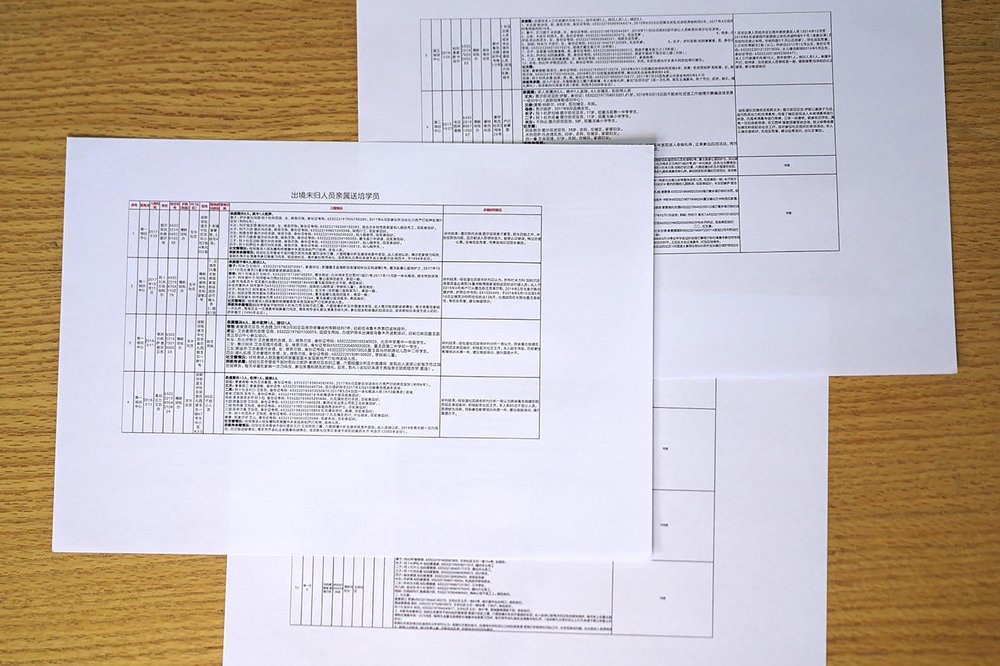
This Monday, Feb. 17, 2020 photo shows prints of information from a database in Beijing, China. The database obtained by The Associated Press offers the fullest and most personal view yet into how Chinese officials decided who to put into and let out of detention camps, as part of a massive crackdown that has locked away more than a million ethnic minorities, most of them Muslim. (AP Photo)

The database says cadres found Himit had attended his grandfather’s funeral at a local mosque on March 10, 2008. Later that year, the cadres found, he had gone to the same mosque again, once to worship and once to celebrate a festival. In 2014 he had gone to Anhui province, in inner China, to get a passport and go abroad.

That, the government concluded, was enough to show that Himit was “certainly dangerous.” They ordered Himit to stay in the center and “continue training.”

Emer is now under house arrest due to health issues, his former student, Muhammad, has heard. It’s unclear where Emer’s sons are.

It was the imam’s courage and stubbornness that did him in, Muhammad said. Though deprived of his mosque and his right to teach, Emer quietly defied the authorities for two decades by staying true to his faith.

“Unlike some other scholars, he never cared about money or anything else the Communist Party could give him,” Muhammad said. “He never bowed down to them — and that’s why they wanted to eliminate him.”

Advertisement

CPF Underlines International Animal Welfare Principles for Safe and Sustainable Food Production

Dr. Payungsak Somyanontanakul

Charoen Pokphand Foods PLC (CPF) heralds its success in promoting animal welfare, to assure global consumers of the company’s food safety standards.

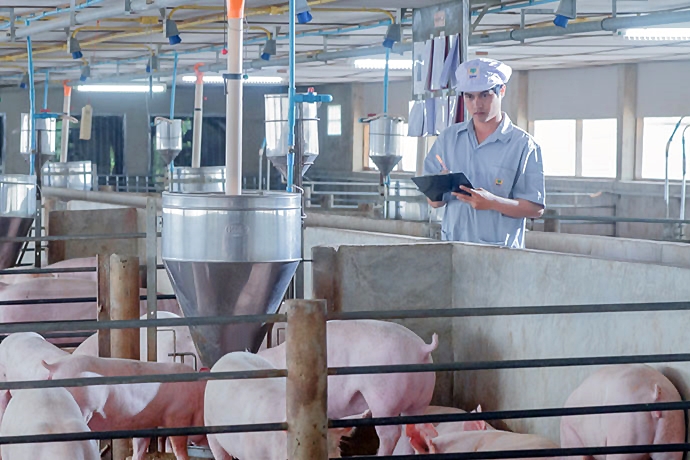
Dr. Payungsak Somyanontanakul, CPF’s Vice President as chairman of the Animal Welfare Committee, said that CPF has adhered to best and sustainable practices on animal welfare for more than 20 years and its efforts have been recognized across the globe. Throughout the years, employees have been trained to become poultry welfare officers (PWOs) who give advice to chicken farms in Thailand and all countries that CPF has invested in. To date, their coverage is 100%. Regarding to layer poultry farming, the cage free approach first adopted in Thailand shows a satisfactory result. Meanwhile, all sow breeding farms in Thailand  will adopt group housing in 2025 while the farms overseas will switch to group-pen in 2028. Swine Health and Welfare training is underway, to raise sustainable awareness in the Company’s farms as well as contracted farmers’ farms.

img4

At CPF, the animal welfare policy is exercised along with the policy on responsible use of anti-biotics, adhering to humanitarian and animal welfare principles. Sick animals are treated accordingly to their symptoms and protected against diseases for good physical and mental health, which is the practice widely adopted in Thailand and many countries.

Dr. Payungsak noted that CPF has transferred farming knowledge to chicken and swine farmers in its network, to ensure their understanding in animal welfare and compliance with international requirements on animal welfare. Such knowledge covers the farming method, transportation, capturing and processing.

img5

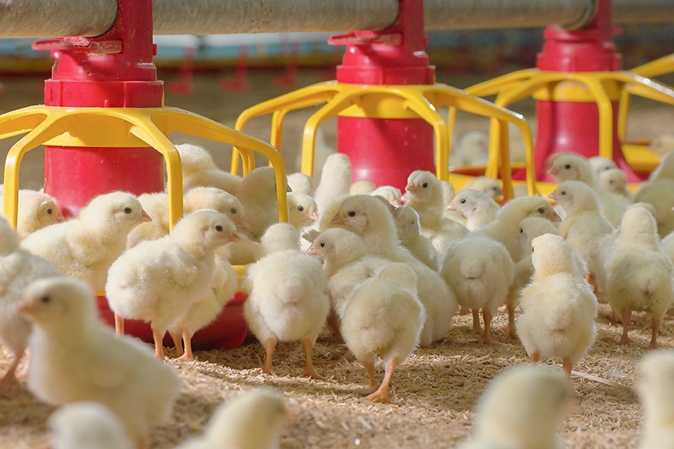
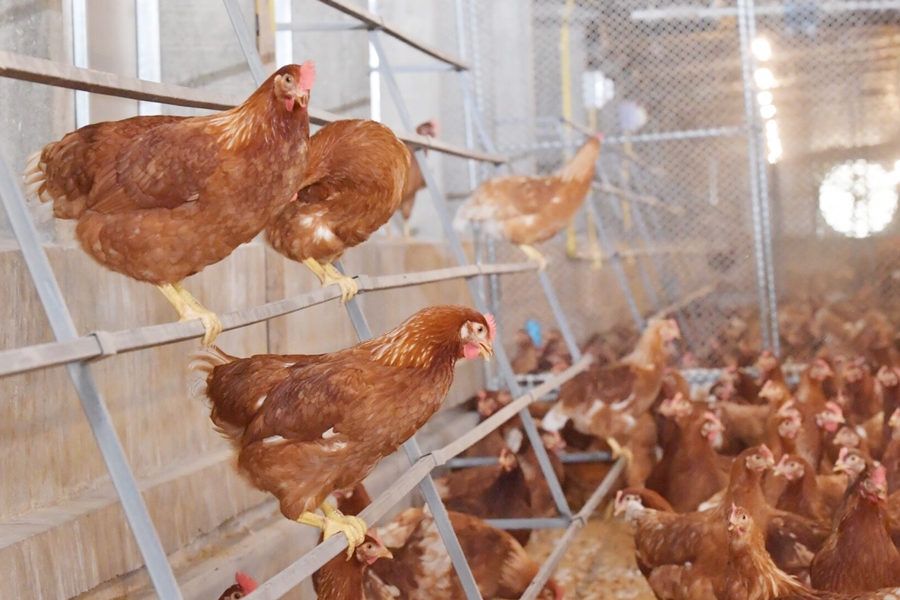
CPF’s chicken farms focus on high quality, healthy and meaty chicken, a product of years of development. Chicken are raised in closed barns, kept cool by evaporative cooling system and equipped with computerized water and food-feeding system. Under the cage-free techniques, the chicken can roam freely.

img6

CPF also adopts cage-free egg production, whereby hens move freely in closed air-conditioned barns. As guided by the Bio Security Hi-Tech Farming technique, the hens enjoy comfortable and hygienic condition aside from sufficient food and water.

All swine farms now have EVAP (evaporative) farm buildings. Farrowing crates for sows are now replaced by group housing to ensure their comfort and good environment.

Dr. Payungsak asserted that comfortable environment, protection against diseases and nutritious food keep the animals healthy and strong. Without stress and diseases, they do not need growth hormones and anti-biotics, and this guarantees the safety and quality of CPF’s food products that have been delivered to consumers across the world.

Advertisement

Celebrate the Month of Love With “Strawberry & Rose Afternoon Tea” at the Lobby Lounge, Bangkok Marriott Marquis Queen’s Park

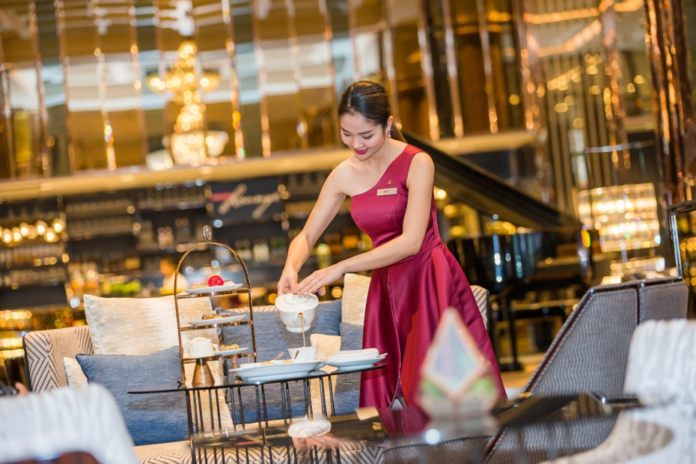
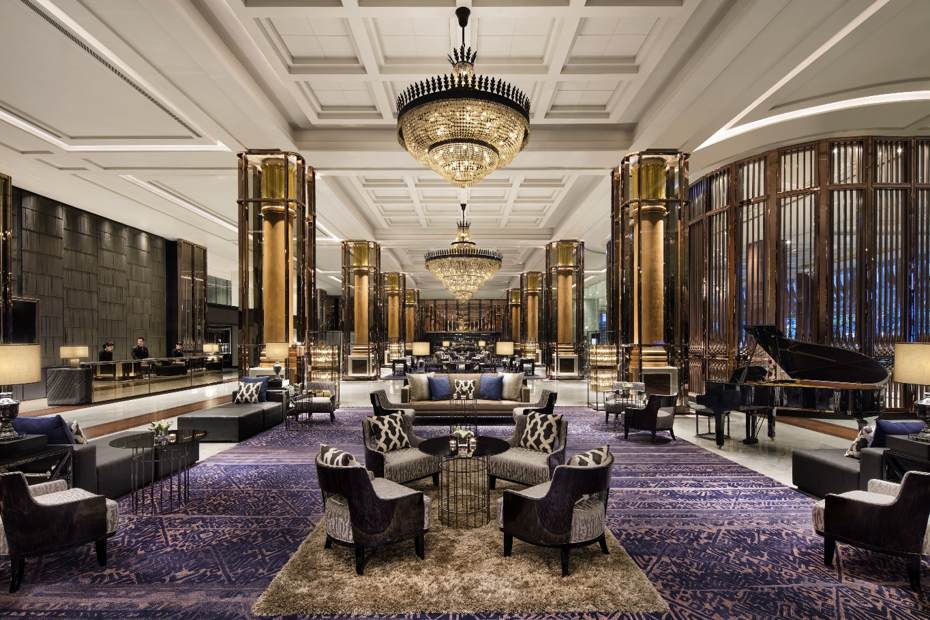
Treat your loved one to a romantic “Strawberry & Rose Afternoon Tea”, featuring a selection of delights crafted using roses and strawberries, served with an option sparkling wine or with tea or coffee. Available daily at The Lobby Lounge of Bangkok Marriott Marquis Queen’s Park throughout the month of February 2020, between 12.00-18.00 hrs.

Strawberry 2

The Lobby Lounge at Bangkok Marriott Marquis Queen’s Park, takes inspiration from the month of love to create an array of delicious treats in the special set “Strawberry & Rose Afternoon Tea”. Lovers are treated to carefully created delightful items such as rose meringue, strawberry macaroon, strawberry ring, strawberry and rose tart as well as tantalizing snacks such as homemade cottage cheese and spinach börek, tomato and strawberry bruschetta with basil caviar, chicken liver parfait and butter brioche, blue crab and green apple slaw sandwich and rose scone with strawberry jam.

Strawberry 3

“Strawberry & Rose Afternoon Tea” set is served for two at THB 999++, or THB 1,490++ with sparkling wine, at The Lobby Lounge, Bangkok Marriott Marquis Queen’s Park between 1-29 February 2020 from 12.00 to 18.00 hrs. For more information and reservations, please contact +66 (0) 2 059 5999 or email [email protected].

Advertisement

Gov’t Eyes Plan for State Media to Take Over Coverage in National Crisis

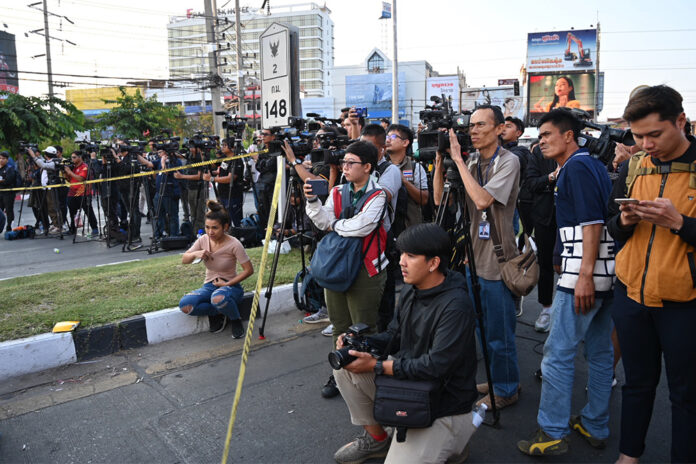
A crowd of journalists take position behind the police line near Terminal 21 Korat mall on Feb. 9, 2020.

BANGKOK — The government’s proposal to monopolize news coverage during times of national crises drew criticism on Monday from media personalities, who warn that the measure risks eroding press freedom even further.

Digital economy and society minister Buddhipongse Punnakanta, who also heads the government’s “anti-fake news center,” puts forward the idea during a Senate meeting today. He was responding to queries over allegations that the media reported sensitive information during a mass shooting which killed 29 people earlier this month.

But the president of a prominent media guild opposed the measure, saying a one-sided news coverage is counterproductive in times of crises.

“I think this idea is inappropriate,” Peerawat Chotithummo, president of Thai Broadcast Journalists Association, said in an interview. “If only state news agencies are allowed to report news when there’s a crisis, people will question its credibility.”

Thapanee Eadsrichai, a Channel 3 anchorwoman and founder of online news agency The Reporters, also called it a dangerous slippery slope.

“This idea violates freedom of the press,” Thapanee said. “Indeed, reporters can sometimes make errors, but this can be minimized by setting up a news center. If there’s no one to officially keep reporters updated with the latest developments, they will have to seek their own sources for information.”

Under Buddhipongse’s proposal, a selected state news agency will bear the sole responsibility for news reporting during times of crisis like the standoff that unfolded in Korat city.

The policy is aimed at combating “inappropriate contents,” such as photos of deceased victims and information about police movements, which the ministry has no legal power to remove from social media, Buddhipongse said.

Instead of suppressing media freedom, the government should learn from previous incidents on how to properly manage the flow of information, Peerawat said.

“They should take Luang Cave rescue as an example. There’s a news center set up to disseminate official updates to the press and there’s a clearly defined area where reporters can go. Everyone complied with the rules and almost everyone reported in the same direction,” he said.

Although all major media channels saw their ratings surge during the standoff at Terminal 21 Korat shopping mall, the press also came under intense criticism from social media for its allegedly intrusive coverage.

An online news agency, E Jan, closed its platform for five days in a public apology for identifying hiding spots of those stranded inside the shopping mall while the gunman was still roaming around.

The state media regulator, the National Broadcasting and Television Commission, also announced it will summon three TV channels for a reprimand for unspecified ethical violation in their coverage.

A veteran reporter who’s been in the field for nearly 20 years, Thapanee conceded it is difficult to keep everyone in check, especially in the era where everyone with a mobile phone and social media accounts can be a journalist.

“Career reporters should have known some media ethics and understand what is appropriate to report,” Thapanee said. “However, there are many emerging online news agencies that don’t fall under anyone’s oversight. I believe the law has to be amended to keep up with the current media climate.”

Related stories:

Reporters Reckon With Ethics of Cave Rescue Coverage

Watchdogs ‘Too Late’ to Stop Media Spellbound by Slow-Motion Suicide

Celebrity Dies, Paparazzi Frenzies, Public Rages Against Media Machine

Advertisement

Chinese Automaker to Buy GM’s Thailand Plant in Rayong

SHIJIAZHUANG (Xinhua) — China’s leading sport utility vehicles (SUV) and pickup maker Great Wall Motors on Monday said it will purchase General Motors’ Rayong car production facility in Thailand.

According to a binding agreement inked by the two companies, the transaction and handover, which include a car plant and a power assembly plant in Rayong currently operated by the Detroit carmaker, are expected to be completed by the end of 2020.

As a regional manufacturing center, the Rayong plant has produced nearly 1.4 million cars since it went operational in 2000.

It will be the Great Wall’s 11th full-process complete vehicle manufacturing base globally, the third outside China, following a plant in Russia’s Tula region which was put into operation in June 2019 and another one in Talegaon, India, bought from General Motors earlier this year.

Liu Xiangshang, the Great Wall’s global strategy vice president, said the purchase will boost the company’s development in the Thailand and ASEAN markets and help export products to other ASEAN nations and countries like Australia.

“The ASEAN automotive market is developing with great prospects and potential,” Liu said. “Our investment will create more jobs for the locals, improve their skills and stimulate supporting, R&D and related industries there.”

Headquartered in the city of Baoding, northern China’s Hebei Province, the company owns several SUV and car brands like Haval, Great Wall, WEY and ORA. With more than 500 overseas branches, its products have been exported to over 60 countries and regions including those along the Belt and Road.

Advertisement

TikTok ‘Skullbreaker Challenge’ Can Result in Jail Time: Cops

BANGKOK — Police on Sunday warned netizens not to attempt a viral Tiktok meme due to its recent record of fatalities and serious injuries.

Those who participate in the Tripping Jump Challenge, also called the Skullbreaker Challenge, may also face prosecution and possible jail time since the prank can result in fatalities, police said. In the “challenge,” two friends trick a person standing between them to jump, before kicking their legs out from under them.

“These actions should not be copied since it can result in injuries, disabilities, or even death,” Police Col. Kissana Phathanacharoen said.

Kissana said offenders could be prosecuted for physical assault which is punishable by two years in prison and a fine of 40,000 baht.

If the challenge leads to deaths, disabilities, or grievous bodily harm, punishment is raised to 10 years in jail.

It is unclear how many Thais participated in the prank before TikTik apparently scrubbed videos of the challenge from its platform on Monday.

Thanin Vejjapinan, director of the Ministry of Health’s Prasat Neurological Institute, said the prank carries a high risk of severe head injuries, such as a cracked skull, a cerebral hemorrhage, and evena a coma if brain nerves are damaged.

Neck muscles can also be hyperextended, causing paralysis or even death. And that’s not counting possible limb injuries.

“Warn your children not to play this dangerous game and stop sharing its videos. Most people doing it are teenagers who don’t fully understand its risks,” Thanin said.

On Nov. 11, Brazilian teenager Emanuela Medeiros, 16, reportedly died after her friends killed her with the prank. Valerie Hodson, from Arizona, USA, also posted a viral post about her son who was hospitalized with severe injuries after his classmates pranked him. 

Advertisement

Fire Destroyed Thousands of Rai of Forest at Phu Kradueng

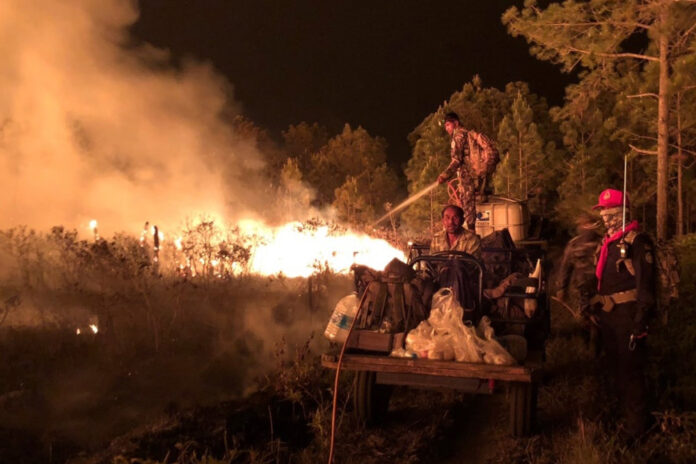
Park rangers extinguish wildfire at Phu Kradueng National Park on Feb. 16, 2020. Photo: Department of National Parks, Wildlife and Plant Conservation / Facebook

LOEI — A wildfire that scorched thousands of rai at a popular national park was extinguished on Monday morning, a local forest official said.

About 3,400 rai (544 hectare) of forest and bush at Phu Kradueng National Park in the northeastern province of Loei was devastated by the fire, chief of the park Sombat Pimprasit said. Firefighters reportedly spent 15 hours battling the blaze.

“The fire has been completely put under control,” Sombat said. “It broke out at Sum Khon Daeng scenic point around 2 kilometers from the cliff, but with strong winds and dry ground, it spread across the fire barrier to areas around the cliff.”

Although rumors floated online that a lit cigarette butt ignited the flames, Sombat said it was too early to establish the cause of fire, the first such incident to erupt in the national park in years.

More than 100 forest rangers and local volunteers rushed to the scene to douse the fire. The park opens as usual today. No injuries or property damages were reported.

The fire drew much concern and sympathy from netizens, with hashtag #SavePhuKradueng soared to top trending on Thai Twitter Monday morning.

Phu Kradueng National Park spans over a 348 square kilometers mesa rising about 1,000 meters high above the surrounding valleys.

Advertisement

Opposition Politician Resigns Amid Army Housing Gaffe

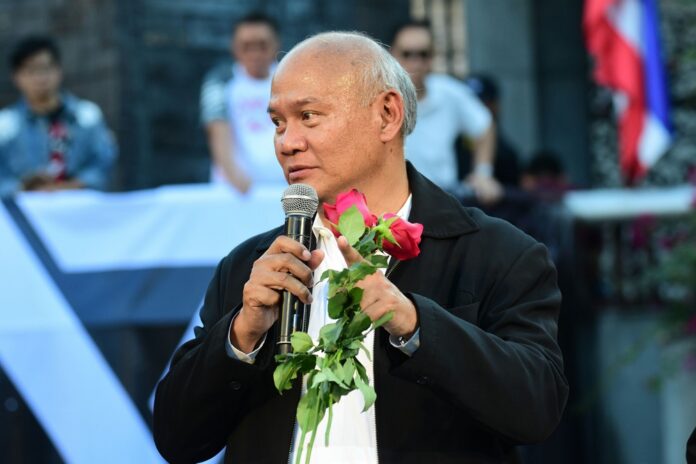
Lt. Gen. Pongskorn Rodchompoo speaks at a rally on Feb. 15, 2020.

BANGKOK — A former army general resigned from his post as a deputy leader of the Future Forward on Sunday night after it emerged that he was living in a taxpayer-funded army residence – a practice he himself condemned.

Lt. Gen. Pongskorn Rodchompoo, who appeared onstage in a Saturday rally to criticize alleged corruption inside the army, said he’s sorry for failing to inform the public about his use of the army living quarters. His party is currently campaigning to end the policy of allowing retired officers to live in army residences long after they are retired.

“I ask for forgiveness for not informing the public that I still reside at a house inside a military unit because I was in the process of preparing to move out,” Pongskorn wrote on his Facebook.

Pongskorn added that he will vacate the army residence by the end of March.

His admission came during a TV interview in which Pongskorn lashed out at generals who still use the army housing despite their retirement. But upon questioning by the host, Pongskorn said he, too, lives in one of the army-owned houses.

Pongskorn said he received permission from the army to extend his stay at the residence because he does not own any property.

According to financial declarations he filed to the national anti-graft agency, Pongskorn has about 21 million baht in debt.

In a video posted on social media, Future Forward spokeswoman Pannika Wanich apologized to its supporters.

“The Future Forward Party apologizes to the people, supporters, and all party members for causing worries regarding the stance of the party on the reform of the armed forces,” Pannika said.

She said the party will continue to push for army reforms despite Lt. Gen. Pongskorn’s gaffe.

Supporters of the party reacted with disappointment to the revelation. Many urged Pongskorn to leave the army residence immediately instead of waiting until the end of March.

“It’s shameful and egregious that Lt.Gen. Pongskorn Rodchompoo who is among the leaders spearheading reform of the armed forces is staying at a government-owned residence for free himself,” Facebook user Chainarin Kularb-um wrote.

Others said Pongskorn’s failure to practice what he preaches should not stop him from speaking out against the army in the future.

“I personally don’t like [retired] generals staying at govt-owned houses, but he has the right to continue to speak about reform of armed forces, because there’s more than one issue to the reform,” wrote Twitter user @Yo_Yo_Class7, a self-identified supporter of the party.

Advertisement

China to Decide on Postponing Annual Parliament Session

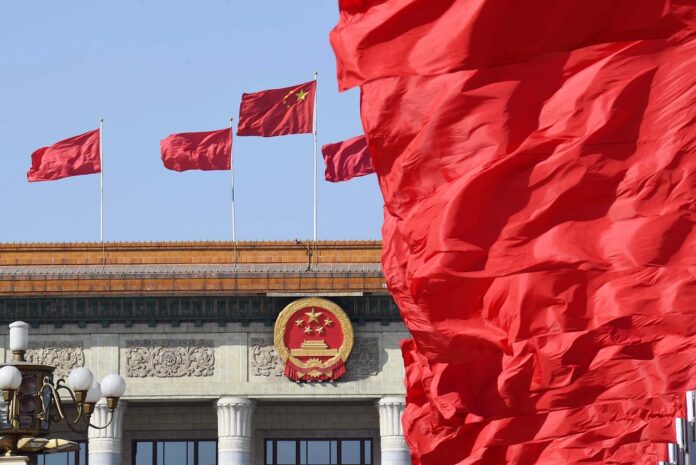
Flags are seen at the Tian'anmen Square and atop the Great Hall of the People during the opening meeting of the second session of the 13th National People's Congress in Beijing, capital of China, March 5, 2019. (Xinhua/Yang Zongyou)

BEIJING (Xinhua) — The Standing Committee of the 13th National People’s Congress (NPC), China’s top legislature, will convene its 16th bi-monthly session on Feb. 24 in Beijing, according to a statement issued after a chairpersons’ meeting Monday.

Li Zhanshu, chairman of the NPC Standing Committee, presided over the chairpersons’ meeting of the 13th NPC Standing Committee.

The chairpersons’ meeting suggested that the 16th session of the 13th NPC Standing Committee review a draft decision on banning illegal wildlife trade and eliminating the bad habits of eating wild animals to guarantee people’s lives, health and safety.

The upcoming session is also expected to deliberate a draft decision on postponing the third annual session of the 13th NPC.

Advertisement

‘United by Emotion’ Revealed as Tokyo Olympics Motto

Kyodo file photo

TOKYO (Kyodo) — “United by Emotion” has been revealed as the motto for this summer’s Tokyo Olympics and Paralympics, the games organizing committee said Monday.

A committee comprised of former athletes and others picked the motto in the hope it will inspire people of various backgrounds to acknowledge each other and connect through the emotions evoked at the Summer Games.

Continue reading the story here.

Advertisement

Hot News

LATEST NEWS

Bangkok
overcast clouds
36.1 ° C
36.6 °
35 °
61 %
3.6kmh
100 %
Sat
37 °
Sun
36 °
Mon
35 °
Tue
33 °
Wed
32 °