Update Sept. 17, 2019: Four new stations further down the extension: MRT Phetkasem 48, MRT Phasi Charoen, MRT Bang Khae, and MRT Lak Song will be opened on Sept. 21. The trains will run seamlessly along the whole Blue Line without having to transfer at MRT Hua Lamphong. Free test rides will operate from Sept. 21 to 29, before fares will be collected as usual. The trains will run from 5.30am to 11.05pm on weekdays and from 6am to 11.05pm on weekends.
Update: Two new stations further down the extension, MRT Bang Phai and MRT Bang Wa, will be opened on Aug. 24. MRT Bang Wa is connected to BTS Bang Wa on BTS Silom Line via skywalk.
BANGKOK — Going to Chinatown or Wat Pho will no longer be a hurdle when five new stations along the metro extension are opened to the public for test rides beginning next week.
The extension of the Blue Line MRT will stretch from the previous terminus at MRT Hua Lamphong to western suburbs in Bang Khae district. However, the test run will only run through five of the 11 stations along the extension, terminating at Tha Phra intersection in Bangkok Yai district.
Test rides will operate daily for free starting July 29, which is also the substitution for His Majesty the King’s birthday, until September 28, but will only run from 7am to 9pm. At MRT Hua Lamphong, passengers will have to transfer to another train to continue down the extension.
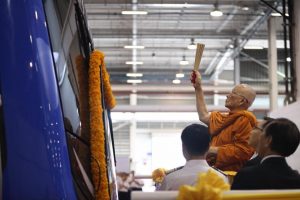
The Supreme Patriarch blessed a new train set at Rama IX depot on July 12.
A new fleet of trains, the first batch of which was delivered in April from German manufacturer Siemens, will serve the new stations. Commuters should expect to wait up to eight minutes per train as only three train sets will participate in the test run.
Pakapong Sirikantaramas, governor of the Mass Rapid Transit Authority of Thailand, said a total of 35 new train sets have been ordered. He hopes the new fleet will ease the congestion and shorten waiting times by three to two minutes.
The line will stop at Wat Mangkon, Sam Yot, Sanam Chai, before running under the Chao Phraya River to Itsaraphap and then terminating at Tha Phra.
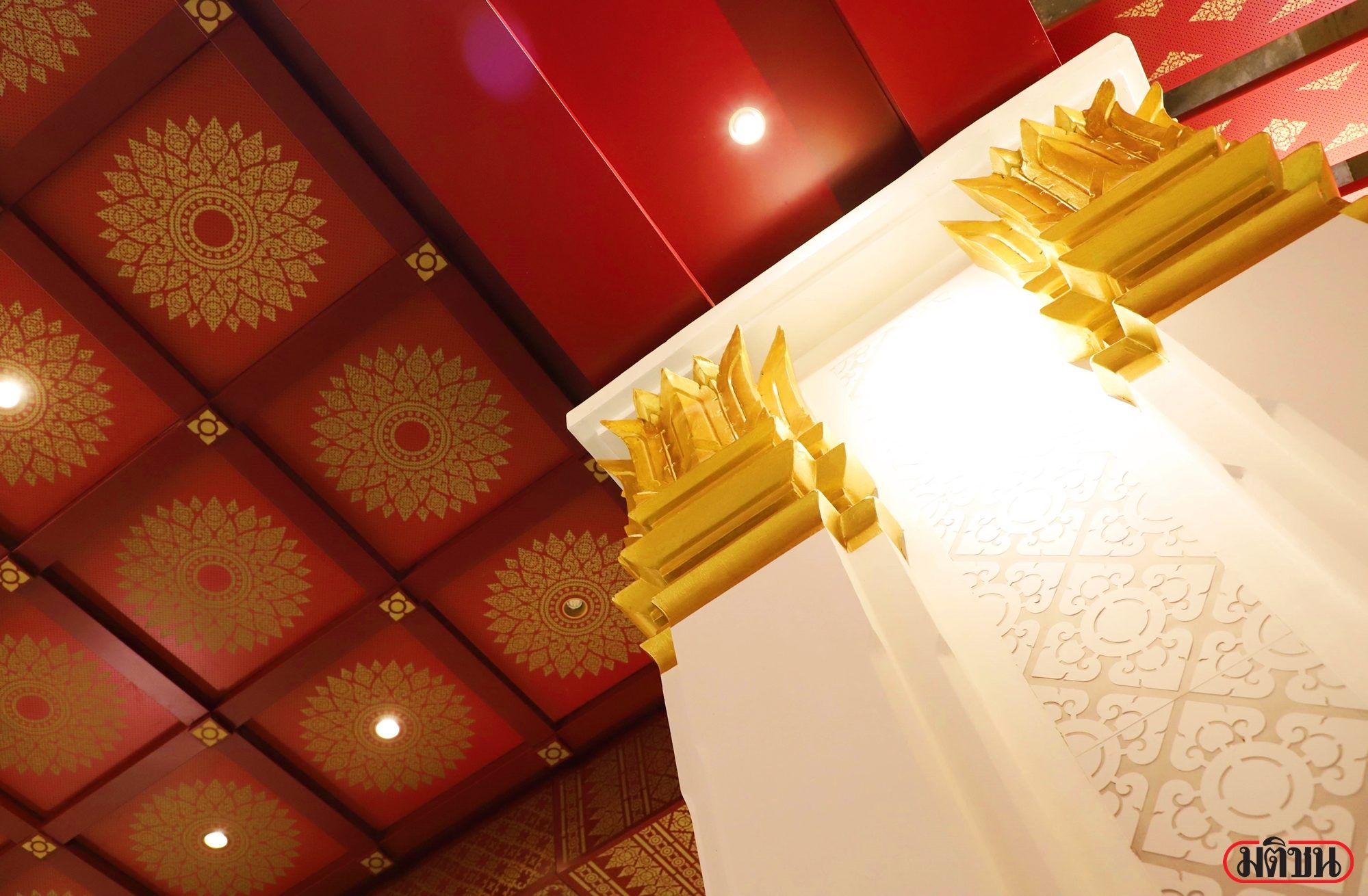
Four stations have been uniquely designed to reflect local history and blend in with surroundings.
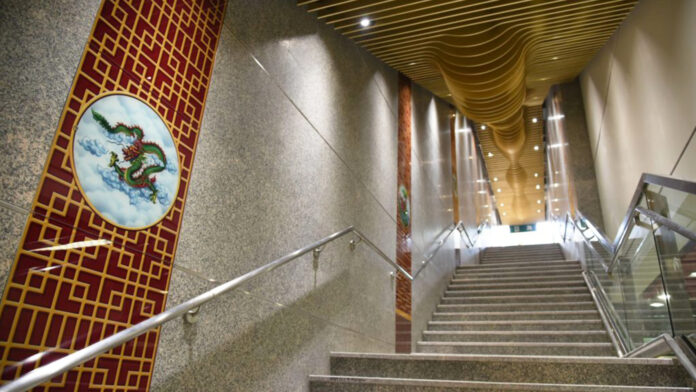
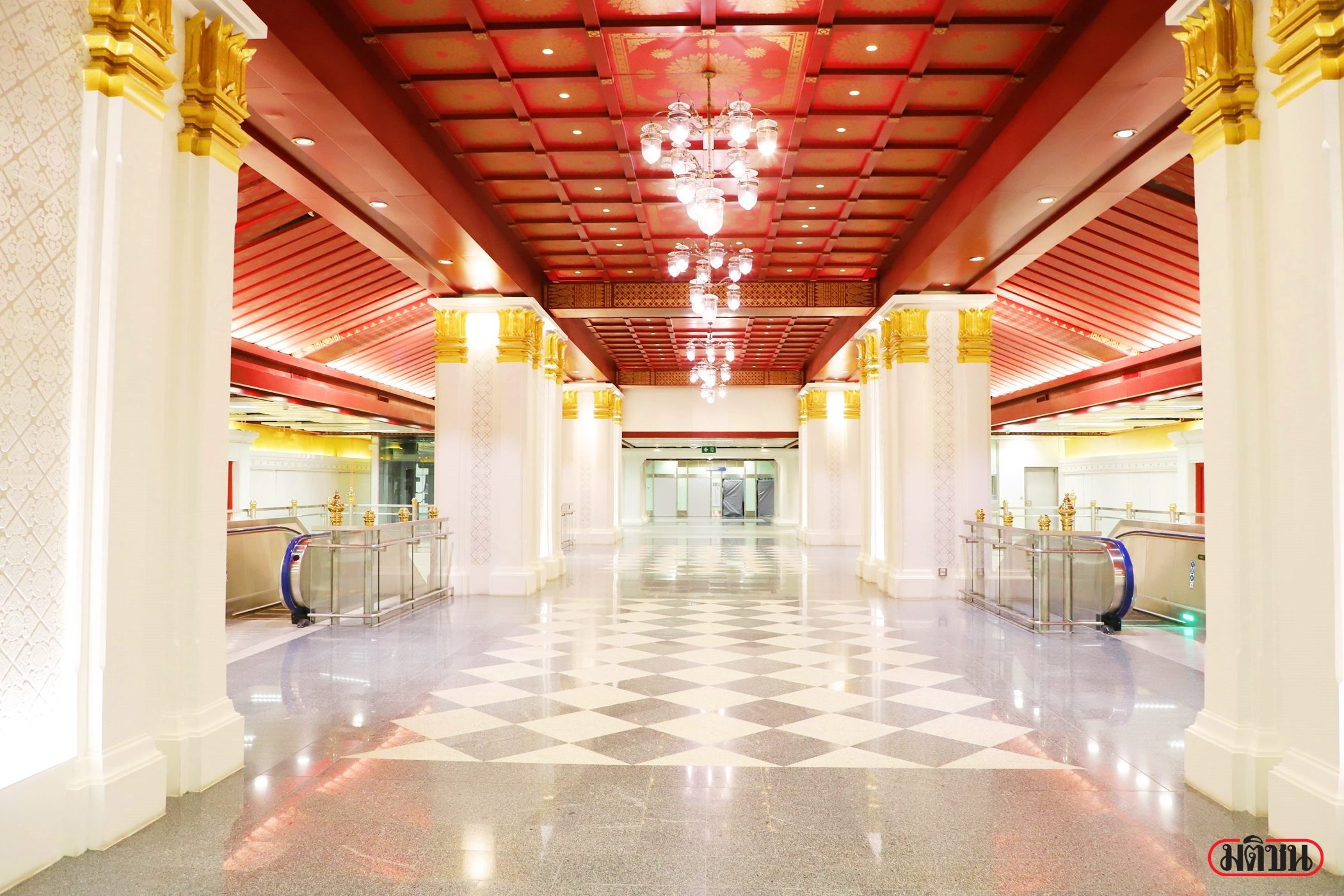
MRT Sanam Chai, located in front of Museum Siam, is designed to resemble a Rattanakosin-style stateroom, while MRT Wat Mangkon in Chinatown blends a mix of Chinese and European architecture with a dragon motif.
The full service along the 80 billion baht extension is expected to commence on September 29.
Pakapong said he expects 30,000 passengers to participate in the first day of the test run, while the line can accommodate up to 500,000 passengers when all stations are operational.
In August, a new BTS station at Ladphrao Intersection will also be opened to the public. It is a part of Sukhumvit Line’s northern extension that will reach the northern suburbs of Khu Khot in Pathum Thani in 2020. The exact date has yet to be announced.
Interior of MRT Sanam Chai. Photo: MatichonPhoto: Matichon
BANGKOK — After years of serving as the public face of the now-defunct junta, deputy prime minister Prawit Wongsuwan is reportedly ready to try his hand at party politics.
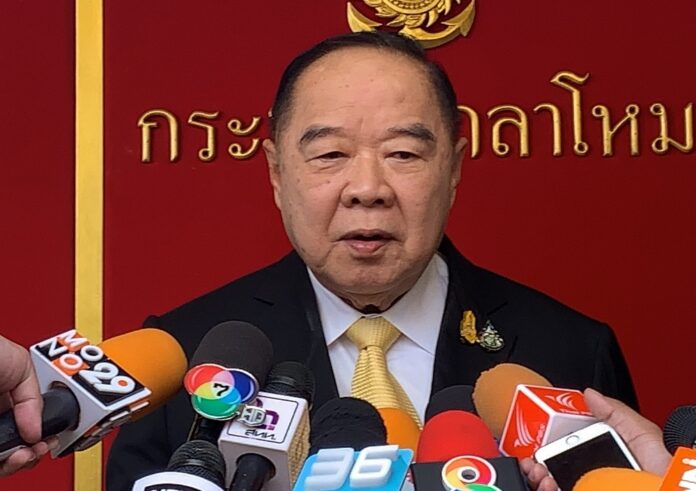
Gen. Prawit, who until recently headed the defense ministry, will “soon” join the pro-military Phalang Pracharath Party, a source said Monday. The retired general will also secure a seat in the party’s executive board according to the source, who is one of Gen. Prawit’s close aides.
Prawit would not confirm the news in a news conference with reporters today, but said he will make a formal statement after the new government makes its first policy address to parliament.
But the retired general was present at Phalang Pracharath’s overnight conference in Korat over the weekend, where he was invited to give a keynote speech as a VIP guest.
A Phalang Pracharath spokesman could not be reached for comment as of publication time.
Founded in early 2018 by those with close ties to the junta, Phalang Pracharath soon recruited former ministers, military officers, and even some of junta chairman Prayuth Chan-ocha’s cabinet members into its fold. It ran canvassing campaigns even before the junta lifted its ban on political activities.
Though critics see the party as the junta’s proxy vehicle for holding onto power, party leaders maintain they are operating independently.
At the party conference – where Phalang Pracharath executives and MPs gathered to plan their post-election future – Prawit urged the politicians to work as a “family” and serve the nation’s best interests.
“The Phalang Pracharath family is a big family that unites phalang (power) from the public and state sectors together,” Prawit said.
Ruethaipreeya “Dear” Nuanglee is crowned Miss Tiffany’s Universe 2019 on July 20, 2019 in Pattaya. Photo: Miss Tiffany’s Universe / Facebook
PATTAYA — A 27-year-old liberal arts student was crowned the winner of Thailand’s top transgender pageant Saturday.
Ruethaipreeya “Dear” Nuanglee beat out 27 other contestants to become Miss Tiffany’s Universe 2019.
“This has been my dream since I was a child. Today, that dream came true,” she wrote on her Instagram after winning.
Dear, 27, is a liberal arts student at Sukhothai Thammathirat Open University. She was awarded a diamond crown and will be Thailand’s representative at the Miss International Queen 2020 pageant.
The final question in the pageant asked contestants to define what differentiates them from the other contestants.
“Unlike the other contestants, this is my first time competing and following my dream. I’m determined to be Miss Tiffany’s Universe 2019,” Dear answered.
First runner-up went to Thanyada “Name” Kanpaipuen, while second-runner up went to Patchara “First” Sripattanakul.
Name, Dear, and First. Photo: Miss Tiffany’s Universe / FacebookDear with Miss International Queen 2018 Jazell Barbie Royale. Photo: Miss Tiffany’s Universe / Facebook
Hawkeye/Clint Barton (Jeremy Renner) in a scene from Marvel Studios' Avengers: Endgame. he global box office has a new king in “Avengers: Endgame.” The superhero extravaganza the weekend of July 20 has usurped “Avatar” to become the highest grossing film of all time, with an estimated $2.79 billion in worldwide grosses in just 13 weeks. Photo: Film Frame / Marvel Studios 2019 via AP
LOS ANGELES — The global box office has a new king in “Avengers: Endgame.”
The superhero extravaganza this weekend usurped “Avatar” to become the highest-grossing film of all time, with an estimated $2.79 billion in worldwide grosses in just 13 weeks.
“Avatar” held onto the record for a decade at $2.789 billion.
The title comes with a few caveats, however, including the fact that “Avatar’s” grosses are not adjusted for inflation. Also, domestically, “Avengers: Endgame” is No. 2 to “Star Wars: The Force Awakens” by around $80 million.
Marvel Studios president Kevin Feige gave a shout-out to “Avatar” director James Cameron Saturday night at San Diego Comic-Con for holding the record for so long. Feige also noted the inflation technicality and said Cameron will probably hold the title again someday.
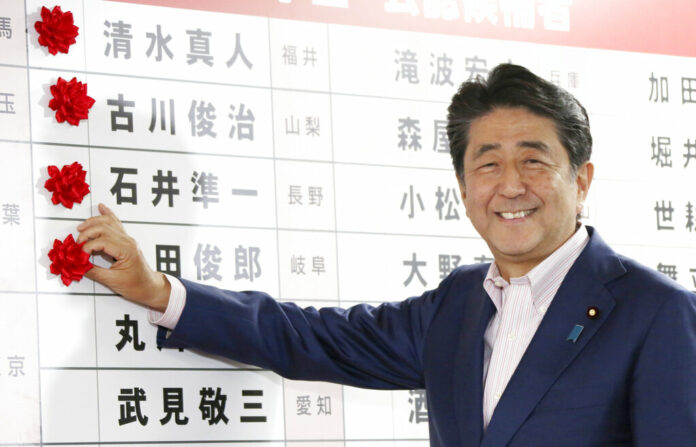
Japanese Prime Minister Shinzo Abe smiles in front of red rosettes on the names of his Liberal Democratic Party's winning candidates during ballot counting for the upper house elections at the party headquarters in Tokyo, Sunday, July 21, 2019. Prime Minister Abe's ruling coalition appeared certain to hold onto a majority in Japan's upper house of parliament, with exit polls from Sunday's election indicating he could even close in on the super-majority needed to propose constitutional revisions. Photo: Koji Sasahara / AP
TOKYO — Prime Minister Shinzo Abe’s ruling coalition secured a majority in Japan’s upper house of parliament in elections Sunday, but it lost ground and fell short of the super-majority needed to propose constitutional revisions, according to vote counts by public television and other media.
NHK public television said Monday that Abe’s Liberal Democratic Party and its junior partner Komeito won 71 seats. If Abe gained support from members of another conservative party and independents, he would reach 76, still short of the 85, NHK said.
Abe’s ruling bloc has a super-majority of two-thirds of the seats in the lower chamber, but Sunday’s results mean he has a slimmer chance of achieving his long-cherished goal of reforming Japan’s postwar pacifist constitution before his term ends in 2021.
Nonetheless, Abe welcomed the results, saying winning the majority means the public’s mandate for his government.
“I believe the people chose political stability, urging us to pursue our policies and carry out diplomacy to protect Japan’s national interests,” Abe told an interview with NHK. He was at his party’s election headquarters where he monitored results, placing red ribbons on winners’ names written on a panel.
Up for grabs were 124 seats in the less powerful of Japan’s two parliamentary chambers. There are 245 seats in the upper house — which does not choose the prime minister — about half of which are elected every three years.
Media surveys had indicated Abe’s ruling bloc would keep a majority, with most voters considering it a safer choice over an opposition with an uncertain track record.
Two-thirds of both houses must approve a constitutional revision before the revision can be decided in a national referendum.
His goal was already a challenge because voters are more concerned about their jobs, economy and social security. Abe, who wants to bolster Japanese defense capability and role, is now proposing adding the Self-Defense Force, or Japan’s military, in the war-renouncing Article 9 of the constitution. Abe said he plans to start from deepening discussion at parliamentary constitutional review board. He said he aims to propose a revision during his current leadership, and that he is not considering running for another term, denying growing speculation he might.
Abe said resolving the decades-old issue of Japanese citizens abducted to North Korea and signing a peace treaty with Russia would be his diplomatic priorities during the rest of his term.
Main opposition parties have focused on concerns over household finances, such as the impact from an upcoming 10% sales tax increase and strains on the public pension system amid Japan’s aging population, while also trying to block Abe’s ambition for a constitutional change.
Abe has led his Liberal Democratic Party to five consecutive parliamentary election victories since 2012. He has prioritized revitalizing Japan’s economy and has steadily bolstered the country’s defenses in the backdrop of North Korea’s missile and nuclear threats and China’s growing military presence. He also has cultivated warm ties with President Donald Trump.
The main opposition Constitutional Democratic Party of Japan and three other liberal-leaning parties teamed up in some districts. They stressed support for gender equality and LGBT issues — areas Abe’s ultra-conservative lawmakers are reluctant to back. Constitutional Democratic Party nearly doubled its presence to 17 seats. Party chief Yukio Edano said his party’s advance underscored a growing number of voters who are dissatisfied with Abe’s policies. “We’ll keep working so that we can be a viable option for voters who want a leadership change.”
At a polling station in Tokyo’s Chuo district on Sunday, voters were divided over Abe’s 6 1/2-year rule.
A voter who identified himself only as a company worker in his 40s said he chose a candidate and a party that have demonstrated an ability to get things done, suggesting he voted for Abe’s ruling party and its candidate, as “there is no point in casting my vote for a party or a politician who has no such abilities.”
Another voter, Katsunori Takeuchi, a 57-year-old fish market worker, said it was time to change the dominance of Abe and his ultra-conservative policies.
“I think the ruling party has been dominating politics for far too long and it is causing damage,” he said.
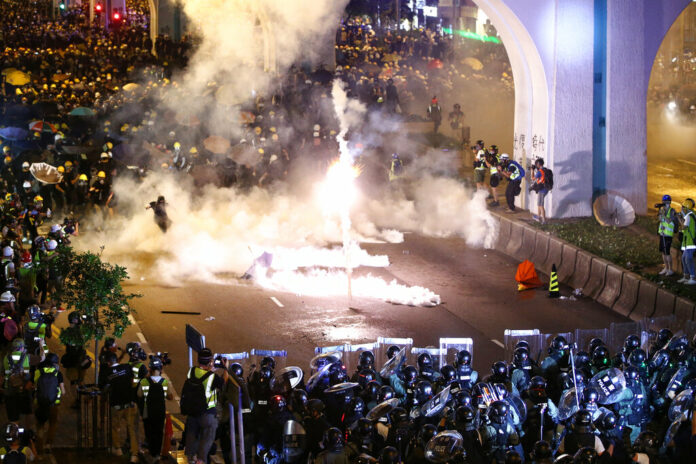
Protesters are engulfed by teargas during a confrontation with riot police in Hong Kong Sunday, July 21, 2019. Hong Kong police launched tear gas at protesters Sunday after a massive pro-democracy march continued late into the evening. The action was the latest confrontation between police and demonstrators who have taken to the streets to protest an extradition bill and call for electoral reforms in the Chinese territory. Photo: Lo Kwanho / HK01 via AP
HONG KONG — Clashes involving Hong Kong’s protest movement escalated violently late Sunday as police launched tear gas at protesters who didn’t disband after a massive march and subway riders were attacked by masked assailants who appeared to target the pro-democracy demonstrators.
The firing of tear gas was the latest confrontation between police and protesters who have taken to the streets for almost two months to fight a proposed extradition bill and call for electoral reforms in the Chinese territory.
The march had been peaceful when it reached its police-designated end point in Hong Kong’s Wan Chai district in the late afternoon, but thousands continued onward, at various points occupying key government and business districts. They then headed for the Liaison Office, which represents China’s Communist Party-led central government within the city.
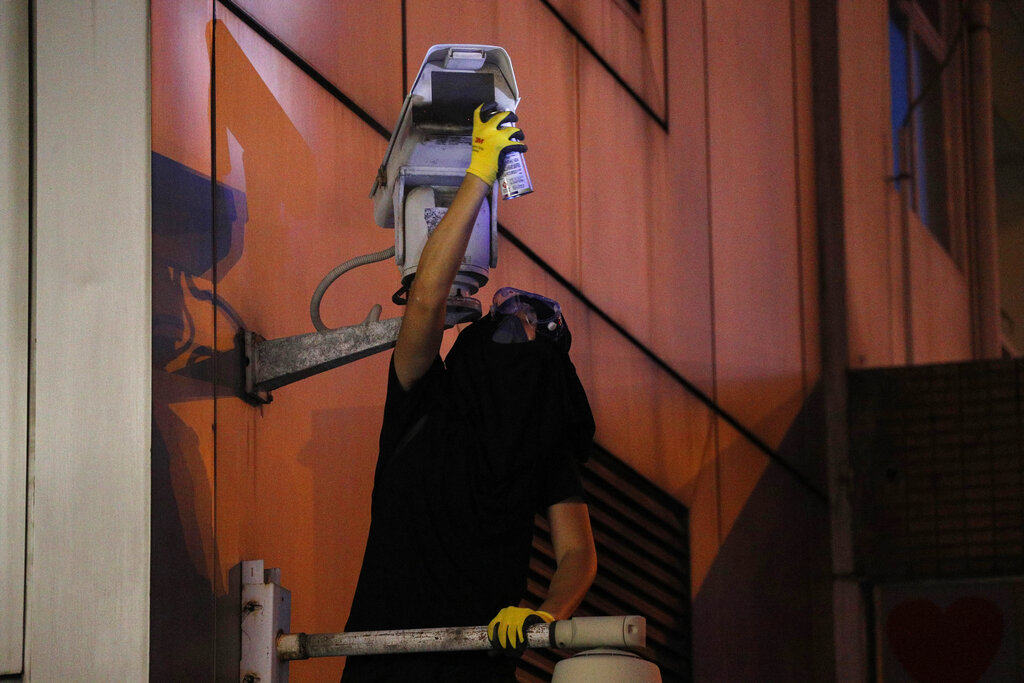
Protesters threw eggs at the building and spray-painted its surrounding surveillance cameras. China’s national emblem, which adorns the front of the Liaison Office, was splattered with black ink. The Liaison Office said in comments published on Chinese state media that the acts “openly challenged the authority of the central government and touched the bottom line of the ‘one country, two systems’ principle.”
A protester spray paints the view of the surveillance camera outside the Chinese Liaison Office in Hong Kong, Sunday, July 21, 2019. Protesters in Hong Kong pressed on Sunday past the designated end point for a march in which tens of thousands repeated demands for direct elections in the Chinese territory and an independent investigation into police tactics used in previous demonstrations. Photo: Bobby Yip / AP
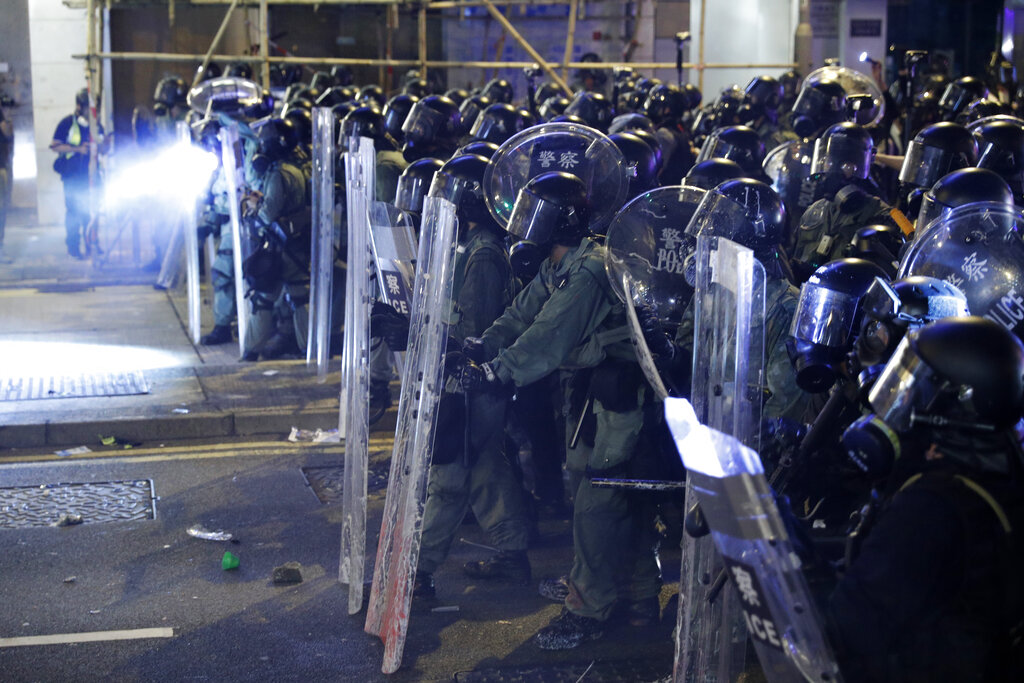
Later, police threw tear gas canisters at protesters to try to disperse them. Protesters scattered, some heading back in the direction of a key business and retail district. Police remained in place, protecting themselves with shields. Police said on their official social media accounts that protesters threw bricks and petrol bombs at them and attacked the Central police station.
Hong Kong media released video showing masked assailants attacking commuters in a subway station. Among those attacked were protesters clad in their trademark black clothing and yellow hard hats.
The attackers, meanwhile, were dressed in white with black masks pulled over their heads. On Saturday, demonstrators wore white at a counter-rally in support of police.
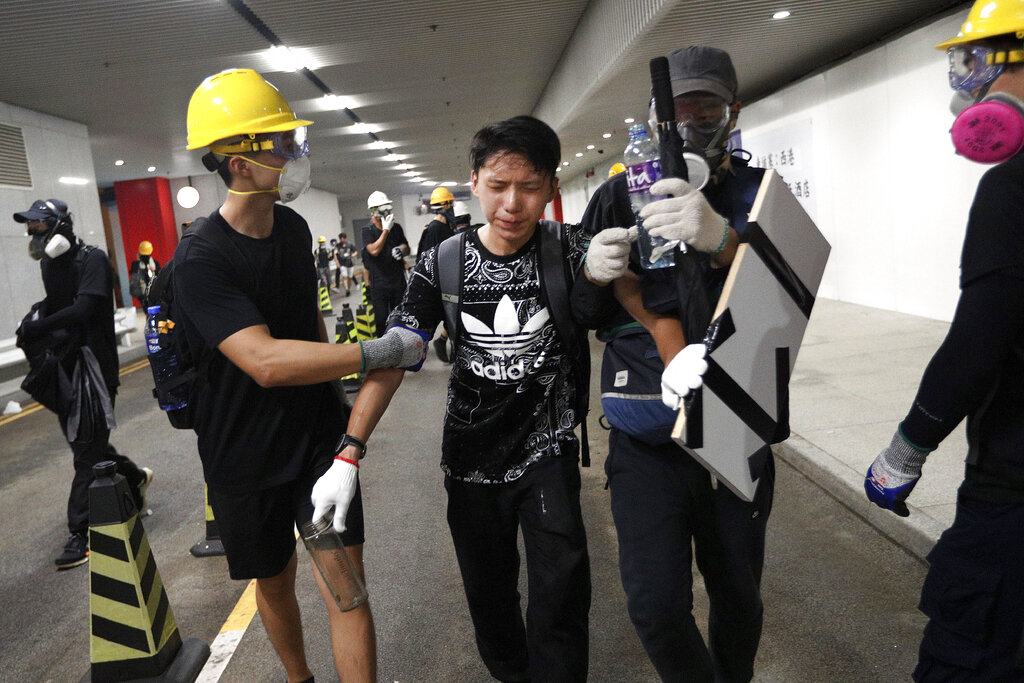
A protester reacts in pain from tear gas fired by policemen on a street in Hong Kong, Sunday, July 21, 2019. Hong Kong police have thrown tear gas canisters at protesters after they refused to disperse. Hundreds of thousands of people took part in a march Sunday to call for direct elections and an independent investigation into police tactics used during earlier pro-democracy demonstrations. Police waved a black warning flag Sunday night before lobbing the canisters into a crowd of protesters. Photo: Bobby Yip / AP
Footage from Apple Daily showed the attackers using umbrellas to beat people in the station and inside a subway car. Subway passengers filmed by Stand News and iCABLE angrily accused police officers of not intervening in the attack. Stand News reporter Gwyneth Ho said on Facebook that she suffered minor injuries to her hands and shoulder, and was dizzy from a head injury. The South China Morning Post reported several people were bleeding following the attacks, and that seven people were sent to the hospital.
The Hong Kong government said in a statement shortly after midnight that commuters were attacked at a subway station in the city’s Yuen Long neighborhood, leading to “confrontations and injuries.”
The statement also said some “radical protesters initiated a series of violent acts … despite repeated warnings” by police. They said the acts included hurling petrol bombs, setting fires and throwing bricks.
“This is absolutely unacceptable to Hong Kong as a society that observes the rule of law,” the statement said, referring to the acts of the subway attackers as well as the protesters.
Organizers said 430,000 people participated in Sunday’s march, while police said there were 138,000 during the procession’s “peak period.”
Large protests began early last month in opposition to a contentious extradition bill that would have allowed Hong Kong residents to stand trial in mainland China, where critics say their rights would be compromised.
Hong Kong’s leader, Carrie Lam, has declared the extradition bill dead, but protesters are dissatisfied with her refusal to formally withdraw the legislation. Some are also calling for her to resign amid growing concerns about the steady erosion of civil rights in the city.
Hong Kong, a former British colony, was handed back to China in 1997 and was promised certain democratic freedoms under the framework of “one country, two systems.” Fueled by anger at Lam and an enduring distrust of the Communist Party-ruled central government in Beijing, the current demonstrations have ballooned into calls for electoral reform and an investigation into alleged police brutality at the protests.
Walking in sweltering heat, protesters dressed in black kicked off Sunday’s march at a public park, carrying a large banner that read “Independent Inquiry for Rule of Law.”
“Free Hong Kong! Democracy now!” the protesters chanted, forming a dense procession through Wan Chai as they were joined by others who had been waiting in side streets.
“The government has never responded to our demands,” said Karen Yu, a 52-year-old Hong Kong resident who has attended four protests since they started. “No matter how much the government can do, at least it should come out and respond to us directly.”
Protesters repeated the five points of their “manifesto,” which was first introduced when a small group of them stormed the legislature earlier this month. Their main demands include universal suffrage — direct voting rights for all Hong Kong residents — as well as dropping charges against anti-extradition protesters, withdrawing the characterization of a clash between police and protesters as a “riot” and dissolving the Legislative Council.
Protesters read the demands aloud in both English and Cantonese in videos released Saturday.
“We did not want to embark on this path of resisting tyranny with our bare bodies,” they said, “but for too long, our government has lied and deceived, and refused to respond to the demands of the people.”
While the demonstrations have been largely peaceful, some confrontations between police and protesters have turned violent. In Sha Tin district the previous Sunday, they beat each other with umbrellas and bats inside a luxury shopping center. Demonstrators broke into the Legislative Council building on July 1 by moving past barricades and shattering windows.
On Friday, Hong Kong police discovered a stash of a powerful homemade explosive in a commercial building and arrested a man. Materials voicing opposition to the extradition bill were found at the site, local media said, but a police spokesman said no concrete link had been established and the investigation was continuing.
The People’s Daily, the Communist Party’s official newspaper, condemned “radical extremists” who attacked the legislature and “trampled” on Hong Kong’s rule of law in a front-page column Sunday. The paper said the counter-rally Saturday intended to show support for the police reflected “mainstream public opinion” in Hong Kong.
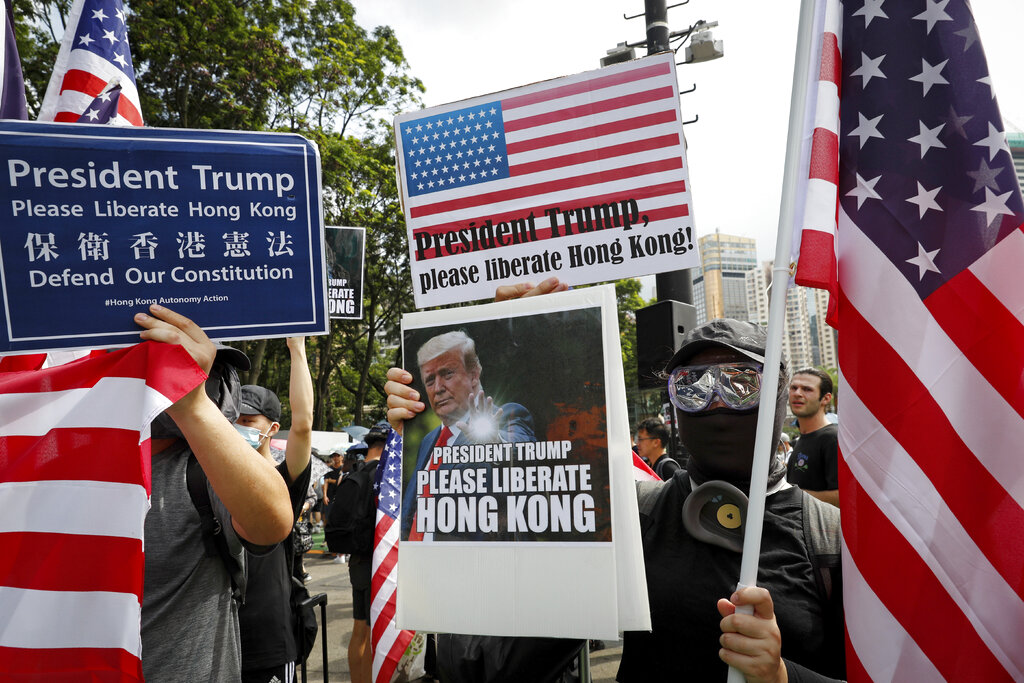
Riot police officer form up during a confrontation with protesters in Hong Kong on Sunday, July 21, 2019. Protesters in Hong Kong pressed on Sunday past the designated end point for a march in which tens of thousands repeated demands for direct elections in the Chinese territory and an independent investigation into police tactics used in previous demonstrations. Photo: Vincent Yu / APProtesters hold a placard featuring U.S. President Donald Trump and U.S. flags as they take part in a march at Victoria Park in Hong Kong, Sunday, July 21, 2019. Thousands of Hong Kong protesters marched from a public park to call for an independent investigation into police tactics. Photo: Vincent Yu / AP
Story: Alice Fung and Yanan Wang. Phoebe Lai, Nadia Lam and Chanwoo Bang in Hong Kong contributed to this report.
Charoen Pokphand Foods PCL (CP Foods) revised its contract farming agreement to allow more involvement of farmers in decision making process, assuring them of fair treatment.
The agreement are developed in line with UNIDROIT (The International Institute for the Unification of Private Law), the most well-known independent intergovernmental organization on private law. This guideline was endorsed by the Food and Agriculture Organization of the United Nations (FAO).
The company introduced contract farming model to promote employment and support income generation among Thai farmers since 1975. So far, CP Foods’ contract farming operations include over 5,500 chicken and swine farmers, of that, small farmers accounting for 90%.
CP Foods’ senior vice president Mr.Narong Jiemjaibunjong said the revised contract aims at creating win-win partnership by enhancing the participation of contract farmers in decision-making processes, for example, risk management and clarity of compensation and incentives details.
“We are the first company in Thailand that applied this international guideline in the scheme, he said. “CP Foods strives to set the best standards in which farmers are treated as our life-time partners.”
To ensure that they are treated fairly, CP Food’s established Contract Farming Complaint Center to increase communication channels between farmers and the company when questions or complaints arise. Farmers are encouraged to communicate directly to the executives through this channel in addition to voicing their concern to the local staffs.
Also, CP Foods is the first livestock company that offers disaster insurance for small farmers. Mr. Narong explained that the company is taking this risk on their behalf for the farmer’s own stability as well as educated them to recognize the importance of risk management.
He added that all contract farms are closely supervised under the same standard as it owned farms, ensuring consumers of high quality and traceable products. The company hosted both group and one-on-one training programs for farmers to boost farmers’ capacity on effective farm management and ecofriendly business practices.
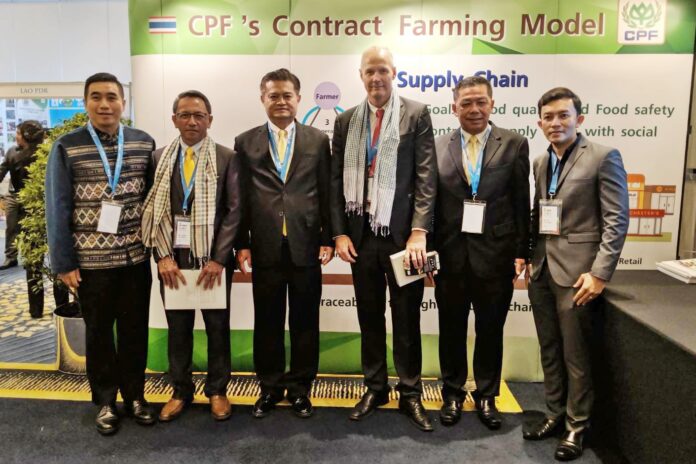
Moreover, CP Foods is the only organization from private sector to Mekong Hub Knowledge and Learning Fair (MKLF) 2019, showcasing its contract farming model to delegates across Southeast Asia.
With a clear guideline and internationally accepted standards on fair business, Dr. Thanawat Tiensin, Thailand’s permanent representative to FAO, said at MKLF 2019 that Thailand is a role model for contract farming scheme in Southeast Asia. He remarked that a strong collaboration between the government, financial institute and private sector has proven to successfully raise local farmers’ quality of life as well as standard of Thai food products.
FAO also organized a study visit to CP Foods’ contract farms for participants from seven countries including Vietnam, Cambodia, Laos, Myanmar, the Philippines, Nepal and Bhut since 2015. The study visit gave participants the knowledge and adapt the model to match their own environment.
Ethan Reynolds browses a display of archival newspaper front pages announcing the first moon landing at the Armstrong Air and Space Museum as special events are underway for visitors commemorating the milestone's 50th anniversary, Saturday, July 20, 2019, in Wapakoneta, Ohio. Photo: John Minchillo / AP
CAPE CANAVERAL — A moonstruck nation celebrated the 50th anniversary of Apollo 11’s “giant leap” by Neil Armstrong and Buzz Aldrin at parties, races, ball games and concerts Saturday, toasting with Tang and gobbling MoonPies.
At NASA’s Kennedy Space Center, Aldrin showed Vice President Mike Pence the launch pad where he flew to the moon in 1969. At the same time halfway around the world, an American and two other astronauts blasted into space on a Russian rocket. And in Armstrong’s hometown of Wapakoneta, Ohio, nearly 2,000 runners competed in “Run to the Moon” races.
“Apollo 11 is the only event in the 20th century that stands a chance of being widely remembered in the 30th century,” the vice president said.
Wapakoneta 10K runner Robert Rocco, 54, a retired Air Force officer from Centerville, Ohio, called the moon landing by Armstrong and Aldrin “perhaps the most historic event in my lifetime, maybe in anybody’s lifetime.”
At the Museum of Flight in Seattle, Gilda Warden sat on a bench and gazed in awe at the Apollo 11 command module, Columbia, on display. “It’s like entering the Sistine Chapel and seeing the ceiling. You want to just sit there and take it in,” said Warden, 63, a psychiatric nurse from Tacoma, Washington.
Visitors gather on the grounds of the Armstrong Air and Space Museum as a scale model of NASA’s developing Space Launch System is displayed as part of events commemorating the 50th anniversary of the first moon landing, Saturday, July 20, 2019, in Wapakoneta, Ohio. Photo: John Minchillo / AP
On July 20, 1969, Armstrong and Aldrin undocked from Columbia in lunar orbit and then descended in the lunar module Eagle to the Sea of Tranquility. The Eagle landed with just 17 seconds of fuel to spare. Six hours later, Armstrong was the first to step onto the lunar surface, proclaiming for the ages: “That’s one small step for man, one giant leap for mankind.” It was humanity’s first footsteps on another world.
In a speech at Kennedy, Pence paid tribute to Armstrong, Aldrin and command module pilot Michael Collins — if they’re not heroes, “then there are no heroes” — as well as the 400,000 Americans who worked tirelessly to get them to the moon.
Aldrin, 89, grabbed the right hand of Neil Armstrong’s older son, Rick, at Pence’s mention of heroes. He then stood and saluted, and received a standing ovation. Armstrong died in 2012. Collins, 88, did not attend the Florida ceremony. But Apollo 17’s Harrison Schmitt, the next-to-last man to walk on the moon in 1972, was there.
Pence reiterated the Trump administration’s goal of sending American astronauts back to the moon within five years and eventually on to Mars. He said this next generation of astronauts will spend weeks and months on the lunar surface, not just days and hours like the 12 Apollo moonwalkers did. Alongside the stage was the newly completed Orion capsule that will fly to the moon and back, on a test flight without a crew, in another year or two.
Vice President Mike Pence, left, points to Apollo 11 astronaut Buzz Aldrin during an event at the Kennedy Space Center in recognition of the Apollo 11 anniversary, Saturday, July 20, 2019, in Cape Canaveral, Fla. Photo: John Raoux / AP
NASA had other celebrations going on Saturday, most notably at Johnson Space Center in Houston, home to Mission Control; the U.S. Space and Rocket Center next door to Marshall Space Flight Center in Huntsville, Alabama, where the Saturn V moon rockets were born; and the Smithsonian Institution’s National Air and Space Museum in Washington.
And where better to celebrate than Apollo, Pennsylvania — located in Armstrong County not far from Moon Township and the town of Mars. The historical society revived the annual moon-landing celebration in honor of the big 50. All of the Apollo astronauts have long been honorary citizens of Apollo, the society’s Alan Morgan said.
At New York’s Yankee Stadium, former space shuttle astronaut Mike Massimino threw out the ceremonial first pitch to former pitcher Jack Aker, who was on the mound when the July 20, 1969, baseball game was interrupted to announce that the Eagle had landed. Armstrong and Aldrin were “A1, No. 1, higher than major league,” Aker recalled Saturday. “It’s a mutual feeling,” Massimino agreed.
Across the country in Seattle, Tim Turner was first in line Saturday to see Columbia, the mother ship piloted by Collins as Armstrong and Aldrin moonwalked.
“Good grief! It’s still amazing, the No. 1 feat of the 20th century, if not all of modern history, that first time there,” said Turner, 57, a computer programmer from Poulsbo, Washington.
As he waited to get in to see Columbia, Craig Smith, 58, a veterinarian from Tacoma, Washington, recalled thinking as a boy: “‘Dang! Seriously? A dude on the moon?’ I thought that was nifty.”
Clocks all over counted down to the exact moment of the Eagle’s landing on the moon — 4:17 p.m. EDT — and Armstrong’s momentous step onto the lunar surface at 10:56 p.m. EDT. The powdered orange drink Tang was back in vogue for the toasts, along with marshmallow and chocolate MoonPies, including a 55-pound (25-kilogram), 45,000-calorie MoonPie at Kennedy’s One Giant Leap bash.
About 100 visitors and staff at the American Space Museum in Titusville, across the Indian River from Kennedy, cheered and lifted plastic champagne glasses of Tang at the moment of touchdown.
“This is what we’re here for, to share the American space experience,” explained executive director Karan Conklin, who led the toast.
For the late night-crowd, “first step” concerts were on tap at the Kennedy Center in Washington, outside in the shadow of a replica Saturn V rocket in Huntsville, and other sweltering locales.
A real rocket lit up the night sky in Kazakhstan.
Blasting off aboard a Russian Soyuz rocket in 100-degree heat (38 degrees Celsius), American Andrew Morgan, Italian Luca Parmitano and Russian Alexander Skvortsov flew to the International Space Station. Only Skvortsov was alive at the time of Apollo 11. The three already living on the space station also were born long after the moon landings.
The crew deliberately modeled its mission patch after Apollo 11’s: no astronaut names included to show the universal nature of space flight. Morgan explained in a NASA interview that Apollo 11, and now his flight, represents “an accomplishment of the world and not one single country.”
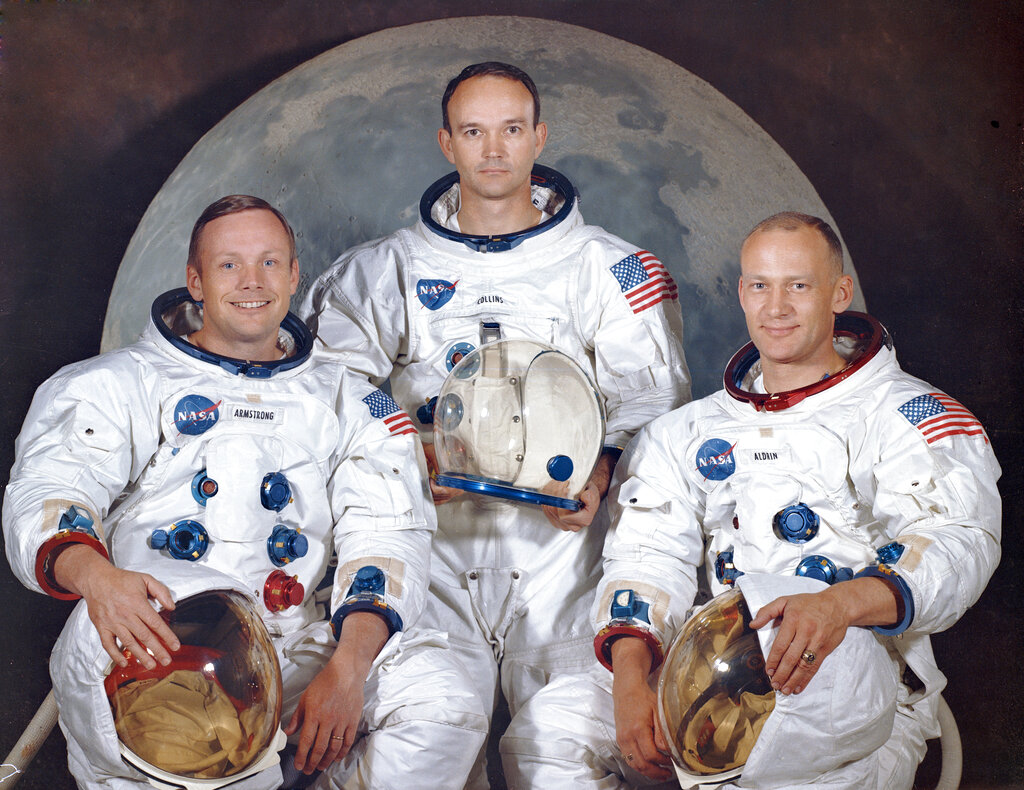
Visitors pose for photos beside a portrait of Neil Armstrong at the Armstrong Air and Space Museum as special events are underway for visitors commemorating the 50th anniversary of the first moon landing, Saturday, July 20, 2019, in Wapakoneta, Ohio. Photo: John Minchillo / APThis March 30, 1969 photo made available by NASA shows the crew of the Apollo 11, from left, Neil Armstrong, commander; Michael Collins, module pilot; Edwin E. “Buzz” Aldrin, lunar module pilot. Apollo 11 was the first manned mission to the surface of the moon. Photo: NASA via AP
Story: Marcia Dunn. Angie Wang in Wapakoneta, Ohio, and Carla K. Johnson in Seattle, and freelance writer Charles O’Brien contributed to this report.
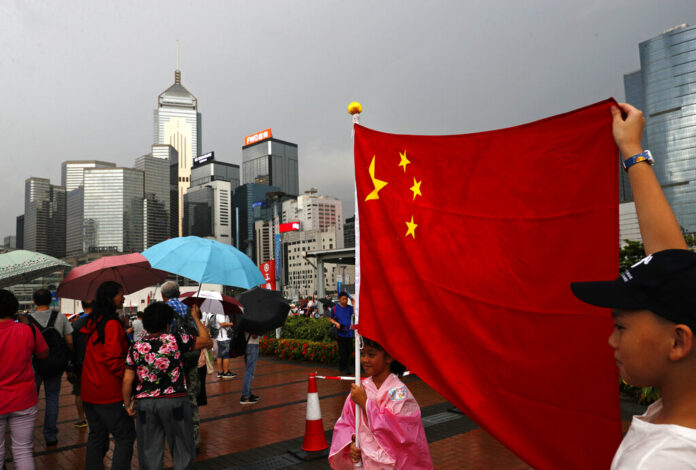
Pro-China supporters raise a China national flag during a counter-rally in support of the police in Hong Kong Saturday, July 20, 2019. Police in Hong Kong have raided a homemade-explosives manufacturing lab ahead of another weekend of protests in the semi-autonomous Chinese territory. Photo: Vincent Yu / AP
HONG KONG — Police in Hong Kong discovered a stash of a powerful homemade explosive as the semi-autonomous Chinese city readied for another major pro-democracy protest on Sunday following a pro-Beijing rally that attracted thousands.
Police said they found about 2 kilograms (4.4 pounds) of TATP and arrested a man in a raid on a commercial building late Friday night. TATP, or tri-acetone tri-peroxide, has been used in terrorist attacks worldwide.
Materials voicing opposition to an extradition bill that has sparked more than a month of demonstrations in Hong Kong were found at the site, local media said, but a police spokesman said no concrete link has been established and that the investigation is continuing.
In a rally that aimed to counter the pro-democracy movement, thousands of people filled a park in central Hong Kong on Saturday to support the police, who have been accused of using rough tactics on protesters. Some waved Chinese flags, and a giant screen behind the stage for speakers read “Safeguard Hong Kong.”
Many wore white, heeding a call by organizers, and the demonstrators did not wear masks or helmets, public broadcaster RTHK said. The anti-extradition law activists wear black and don protective gear against police pepper spray and batons.
Organizers said 316,000 people took part in the demonstration, while police put the turnout at 103,000.
Alick McWhirter, a senior bomb disposal officer, said the seizure of the explosives Friday was the largest of its kind in Hong Kong and called it troubling that such a dangerous substance was being made in a homemade laboratory in the middle of the city.
“It puts at risk everybody within the building. It puts at risk bystanders outside,” he told reporters.
Police spokesman Tse Chun-chung said more arrests may follow.
Police have erected large barricades near government headquarters in preparation for the protest march through central Hong Kong on Sunday. Earlier marches have been largely peaceful, but in a recurring pattern, police have clashed with groups of mostly young protesters who try to take over streets or refuse to disperse after the main demonstration is over.
The extradition bill, which would have allowed suspects to be sent to mainland China to face trial, fueled broader concerns that the freedoms and legal rights of Hong Kong residents are being eroded.
Hong Kong’s leader, Carrie Lam, has declared the bill dead, but protesters are demanding her resignation and an inquiry into the use of force by police to push back and disperse protesters.
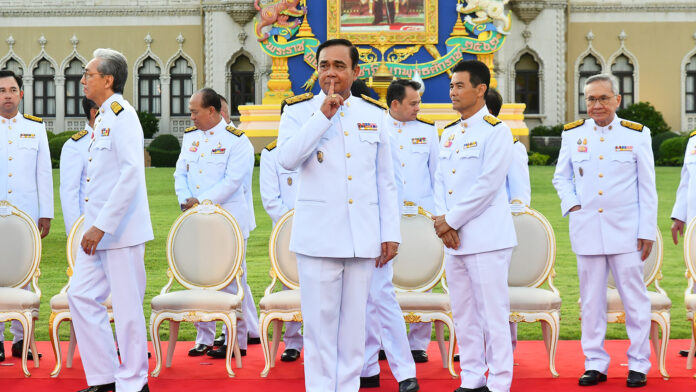
Prime Minister Prayuth Chan-ocha takes a group photo July 16, 2019 with the newly sworn-in cabinet at Government House
After five long years, the junta is officially dissolved as of Tuesday. But it has left a damning inheritance.
The military government, formally known as the National Council for Peace and Order (NCPO), was clearly not willing to simply step down. The new cabinet is largely constituted by familiar faces, still led by (former!) junta leader Gen Prayuth Chan-ocha, who was sworn in as prime minister anew on Tuesday.
In a televised address on Monday evening, Prayuth bid goodbye as junta leader, claiming that “Thailand is [after the general election and a new government] fully governed as a democratic society.” Hours later though, his deputy was already undermining such claims.
Deputy PM Wissanu Krea-ngam, who was in charge of the junta’s legal affairs, has insisted that the practice of coercion and intimidation notoriously and euphemistically called “attitude adjustment” by the junta will continue under the so-called elected government. Since the 2014 coup, more than 900 people have been detained without charge.
Wissanu confusingly insisted however that there will be no more detention, as many political opponents and critics (including this writer) have been subjected to over the years. Translated into plain English: short of detainment, we will continue to pay visits to the homes of opponents of the regime, and verbally intimidate and coerce vocal critics.
It remains unclear which organ of the state will carry out “attitude adjustment.” Wissanu insisted on Monday that it will be the Internal Security Operations Command, the anti-insurgency agency known for its repressive role in the deep south over the past decade. But a day later, the agency’s spokesman Maj. Gen. Thanathip Sawangthep claimed the agency has neither the mandate nor the authority to engage in attitude adjustment.
Confusing as the situation may be, I’m sure a legal expert like Wissanu will have no problem finding a legal solution in the weeks ahead, given he has done much to make the junta appear legal and legitimate over the years. Wissanu is continuing on in his role as a deputy PM under the new Prayuth administration.
Besides Prayuth and Wissanu, other old faces in the new “elected” cabinet include Gen. Prawit Wongsuwan, Gen. Anupong Paochinda and Don Pramudwinai. Don, a seasoned diplomat, has been unabashed in defending military rule in the past and has been duly rewarded. Other Prayuth supporters have been appointed to the Senate, including former cabinet minister Field Marshal Prajin Jantong, who graced a UN-sponsored panel on transnational crime on Thursday at the Foreign Correspondents’ Club of Thailand, apparently without any sense of shame after five years of military rule.
The legacies of the junta continue. Exiled dissident Suda Rangupan told me earlier this week that she is concerned about the National Strategy Committee headed by Prayuth which will restrict successive governments in policy making for two decades to come. Suda also said she is concerned about the recent transfer of direct control over Crown Property wealth to the King.
Titipol Pakdeewanich, dean of political science at Ubon Ratchathani University, told me he is concerned about the appointment of army generals to state university boards as well as state enterprise boards. The former could have deep implications for the future of Thai education, while the latter is tantamount to fat financial reward for loyal generals.
Yaowalak Anuphan, the head of Thai Lawyers for Human Rights, a lawyer group which defends those facing political persecution, is concerned not just about the continued practise of attitude adjustment, but the broader infiltration and embedding of the military in civilian society.
As if five years of direct military rule were not enough, the junta’s legacies will live on in the years to come and pose a challenge to those wanting to make Thailand fully democratic.