


























33.8 C
Bangkok
Saturday, June 27, 2026
Home Blog Page 1716

Moms of the Dead From Drugs: ‘Where is the Outrage for Us?’

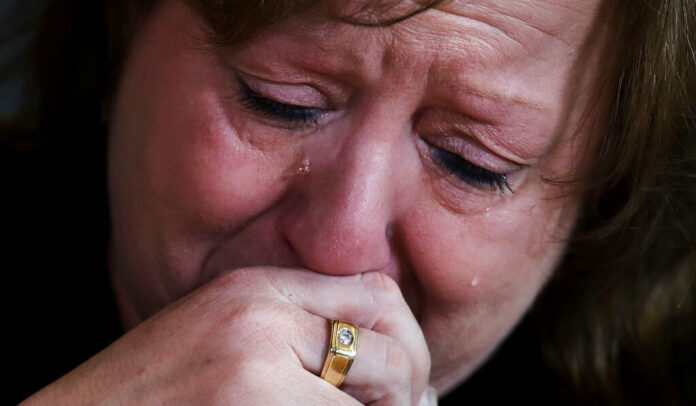
Terri Osborne, a police dispatcher in Hudson, Mass., cries as she talks about the loss of her son, to an opioid overdose in July 2018, during a group support meeting during her lunch break in Hudson, Massachusetts. Photo: Charles Krupa / Associated Press

MARLBOROUGH, Massachusetts — The moms meet in a parking lot overlooking the little white funeral home and watch the mourners drifting toward the chapel doors – a familiar scene, beginning again.

Cheryl Juaire taps nervously on her steering wheel.

“Are we ready?” she asks the two other mothers leaning into the window of her SUV.

The wake starting inside is for a stranger, another young man consumed by the great American plague. These women drove nearly two hours to shepherd his mother into their club, its thousands of members all bound by the same hell: They are parents of the dead from addiction, tasked with the unnatural act of burying their children at a rate unprecedented in modern American history.

“I’m going to stay in the car,” one mother says. “I just can’t go in.”

“I get it,” Cheryl assures her.

Cheryl, the leader of this unhappy welcoming committee, fishes a sympathy card out of her purse. She bought some in bulk not long ago and was stunned to find this was the last one left.

Each card equals another set of parents, their lives clawed apart by the opioid epidemic. Many are broke from paying for treatment or raising their grandchildren at retirement age. Some have been diagnosed with post-traumatic stress disorder.

The chaos of addiction consumed their lives. Then the chaos ended with a funeral, and the quiet proved far worse.

Cheryl reads newspapers hunting for obituaries and searches social media for the newly bereaved, to invite them into the fold. You are not alone in guilt and grief and regret and rage, she needs them all to know. It has become her own kind of addiction, a habit to quiet the demons.

Her son, Corey Merrill, overdosed on heroin at 23 years old in 2011, just as the crisis was turning into catastrophe. She had thought using drugs was a failure of morality and gumption. Back then much of America thought the same – that addiction was merely a bad choice.

So, no, she had told Corey, he couldn’t stay with her because she hadn’t raised him that way, and he’d slept instead on a park bench.

Then he died alone, and she slowly arrived at the sickening realization that addiction is a disease she hadn’t understood, and because she hadn’t understood it, she couldn’t save him. She didn’t even know he needed saving.

Now this is her penance: wake after wake, mother after mother, trying to spare them the solitary torment that almost killed her.
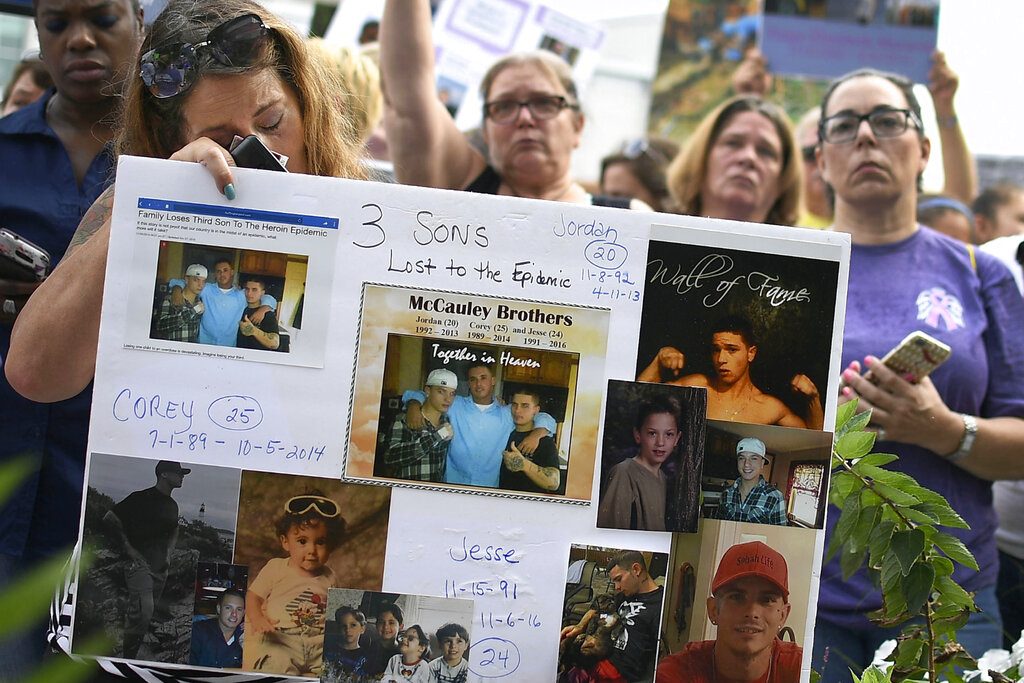
Jeanmarie McCauley, left, of Rockland, Massachusetts, rests her head on a sign she made of her three children who died within three years to drug addiction, as family and friends who lost loved ones to OxyContin and opioid overdoses stage a protest outside the headquarters of Purdue Pharma in August in Stamford, Connecticut. Photo: Jessica Hill / Associated Press

Cheryl straightens the gold cross around her neck, smooths her bob, freshly dyed chestnut brown to hide hints of gray, and climbs out of the car.

“That mom gave birth to that child,” she says. “When those doors close today, and they put her son in the ground, it’s not the end for her. It’s just the beginning.”

Earlier in the week, four bereaved mothers who make up the board of Cheryl’s nonprofit met poolside at one of their homes on a suburban cul-de-sac in Wrentham. A white sign was staked out front in the grass, with #2069 printed in black. That’s the number of people opioids killed in Massachusetts in just one year, one state’s slice of the more than 400,000 who have died in the U.S. since the epidemic began in 1999.

Overdoses now kill more each year than guns or breast cancer or AIDS at its peak. They kill more than the entire Vietnam War. They kill nearly 200 people a day on average, the equivalent of a 9/11 every few weeks. “One analogy that can sometimes get people’s attention is that it’s like an airplane full of commuters crashing every single day,” one mother offered as the group struggled to somehow depict the magnitude of their mission.

And yet it feels to these mothers that the world is getting tired of hearing about all their dead kids.

They led a campaign of thousands across America to send President Donald Trump photos of their children, all mailed last Feb. 10 to reach him by Valentine’s Day. They expected the president to say, or tweet, that he heard them and would do something. They expected media coverage from coast to coast – that people would look into their children’s eyes and be so enraged they’d march in the streets.

But there were no marches for them. That Valentine’s Day, 17 people were gunned down at Marjory Stoneman Douglas High School in Florida, consuming political and public attention. Cheryl grieves for the parents who lost a child there. But she did the math, and that many people will die from drugs by the time this three-hour board meeting concludes.

“Where is the outrage for us?” she asks. “Our kids are still dying, and the only thing I can do is try to pick up the pieces for the moms once they do.”

Her organization’s official name is “Team Sharing.” But she usually just says: “My Moms.”

When she started this group on Facebook three years ago there were only seven members, all mothers near her home in Marlborough, Massachusetts. Then another parent joined and another, as overdoses became the leading cause of death for young Americans, dragging down the nation’s overall life expectancy three years in a row for the first time in a century.

Now Cheryl, 60, begins each day at dawn in her recliner, before her part-time job as a receptionist at a church, studying a 25-page document, single-spaced, that lists the hundreds of Team Sharing members and details about their children. Some on her list have lost two children to drugs. One lost three. One lost four.

On a recent Sunday afternoon, Cheryl got a call from a mother who had already buried one addicted son, and she was screaming, incomprehensible. Cheryl sped to her house to find that her second son had overdosed in a bedroom upstairs. The paramedics were still there, and Cheryl held this mother as they carried his body out into the coroner’s truck.

Many parents of the dead try to channel their grief into change. The nation knows how to fix this, they insist; all that’s missing is the will. “Let the junkies die,” they’ve heard people say, even though the American Medical Association, the American Society of Addiction Medicine and the surgeon general all define addiction as a chronic brain disease that is, like some cancers and diabetes, fueled by a mix of genetics, behaviors and environment. The surgeon general notes that unlike those with cancer or diabetes, only about 10 percent of those with addiction get effective treatment.

This coalition of mothers believes the epidemic is unfolding much like AIDS did, with a society indifferent toward people believed to have brought their deaths upon themselves. That disease killed unabated by the thousands until masses started protesting.

So these parents testify before Congress, tell their stories in school gymnasiums and cry on local television news. They proselytize at rallies, warning that any family could be next, and see crowds filled with people who’ve already learned that the hard way. Cheryl led a picket outside Purdue Pharma, whose mass marketing of the powerful painkiller OxyContin helped unleash the crisis.

“What more do we have to do?” she wonders.

Cheryl doesn’t like to talk about politics. Both Republicans and Democrats have failed to stop this, she says. She voted for Trump, who declared a public health emergency in 2017, and remains hopeful that he’ll keep his promise to end the scourge.

Last year, Congress passed a legislative package designed to combat the crisis and appropriated $8.5 billion, a figure experts say is a welcome step but far short of the sustained funding required to build the necessary treatment infrastructure. During the AIDS crisis, the federal government increased funding by tens of billions, says Keith Humphreys, a Stanford University professor and drug policy expert. “The opioid epidemic is as serious as that one and will require similar resources.”
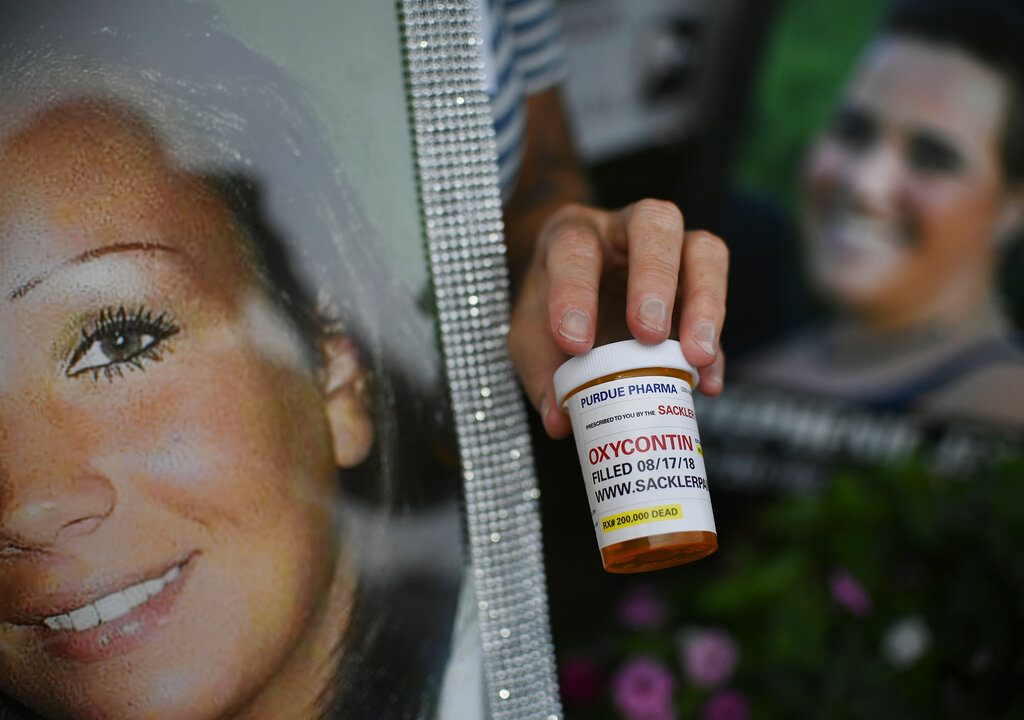
A woman holds a prescription drug bottle with a label in protest of Purdue Pharma and its product OxyContin outside the company's headquarters in August in Stamford, Connecticut. Photo: Jessica Hill / Associated Press
A woman holds a prescription drug bottle with a label in protest of Purdue Pharma and its product OxyContin outside the company’s headquarters in August in Stamford, Connecticut. Photo: Jessica Hill / Associated Press

It overwhelms Cheryl to think of all the things the nation needs to do to solve this, and so she tries to focus on what she knows.

She knows parents with no money left to bury their children; the ashes sit in cardboard boxes. So the first agenda item at her board meeting this week is to decide how much to donate for headstones and urns. Her board members grimace.

There’s Cindy Wyman, who used to knock on drug dealers’ doors carrying a picture of her daughter. And Lynn Wencus, whose son emptied her bank account and pawned her wedding ring and still she borrowed against her 401(k) to pay for treatment. She once drove him to buy heroin because he was desperate to get into a detox facility that would only take patients with drugs in their system. She sat next to him as he shot up, holding overdose reversal medication and weeping.

“That’s what we were willing to do to save our kids,” Lynn says. “And even at that, it wasn’t enough.”

They dreaded the phone call for years. For Cheryl, it came in the middle of the night, from her oldest son, Bobby, a police officer.

“Mom, Corey’s dead,” he said. Cheryl felt her knees buckle.

That call is her marker in time: There was her normal life before it and her life now, which includes an unwanted expertise in burying young Americans.

Maybe, she suggests to the board, they should give parents $500 to help bury their first child and $1,000 for their second?

Lynn rubs her temples and groans. “Second child,” she repeats. “Oh God.”

“I know,” Cheryl says. And then, before she could stop it, her mind wandered down into the basement of a funeral home and she was shopping for caskets seven years ago. On that worst day of her life, her oldest son, the officer, collapsed weeping. Her middle son, Sean, was still addicted to the “happy pills” Corey had introduced him to. And Cheryl felt helpless to fix any of it.

She had stood at her son’s wake, shaking hands, smiling awkwardly – unaware that the fog would lift and the reality would crush her until she wished she would die, too.

When Corey was born, Cheryl had pulled his bassinet next to her bed and slept with her hand on his back, counting his heartbeats. She’d had her first two sons young, but Corey was planned. She always feared she would lose him.

“I just felt life was never going to be good for me,” she says. “And then something so good came along.”

Corey’s father left when the boy was 5, and for a few years it was just Cheryl and her sons. Corey slept in her bed every night. Four years later, she met Peter Juaire, a firefighter, and was smitten.

With a new husband there were new rules to follow; Corey was a jokester, always playing pranks, and didn’t like rules. He had been a Boy Scout and Little Leaguer, then he dropped out of high school and it all spiraled quickly. Cheryl saw him for the first time in shackles when he was arrested on a drug charge at 18. “That’s my baby,” she wailed, and the guards had to hold her up. Then he was in and out of detoxes and jails and called her sometimes to say he had nowhere to go.

Peter, a recovering alcoholic who got sober 31 years ago, thought Corey had to hit bottom, so Cheryl told Corey he couldn’t stay with them. Now when she envisions her son sometimes, he’s sleeping on a bench.

“Do you ever regret it?” she asked her husband once. No, he responded. Not that part. But he had made other mistakes long before, when Corey was young, and they didn’t get along.

Corey eventually went to rehab and moved into a sober living house, and Cheryl thought the nightmare was behind them – until the call came.

At first, she found herself going to the cemetery alone to lie down on his grave. She liked to imagine his bones and worried she was going insane.

She constructed a shrine by her front door, with piles of things she found and thought Corey had sent as signs: feathers, flowers, quarters.

She obsessed over whether he’d died believing he disappointed her and prayed he might come to her in a dream. He did once; she was washing dishes and turned from the sink and there he was, smiling, his baby daughter on his hip. Then “poof, he was gone,” and she feared that her sadness scared him away.

She wasn’t suicidal, exactly; she just didn’t want to live. She started drinking. She walked out onto the porch drunk one night and looked up at the stars and was overcome with guilt for seeing such beauty when her son would never see another sky. She collapsed to the ground and laid there begging God to kill her, until her husband came out, picked her up and put her in bed.

“I was watching her go away from me,” remembers Peter. “The road she was going on, I didn’t see us lasting.”

She heard from friends less and less until she stopped hearing from them at all. Years passed in isolation, until an invitation arrived to a dinner party with seven mothers whose children all died from overdoses. They sat talking for hours and confessed: They had felt compelled to sleep on their children’s graves, collected feathers they thought were sent from heaven, and begged God to kill them, too.
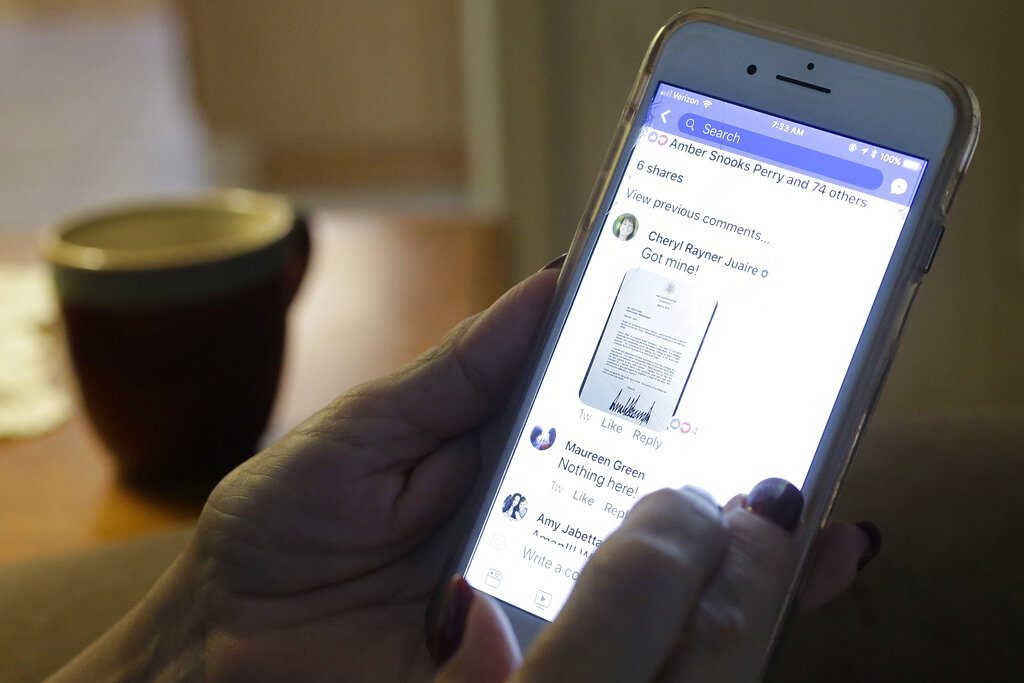
Cheryl Juaire, who lost her 23-year-old son to an opioid overdose in 2011, uses her phone to communicate with a group of other parents who have lost their children to overdoses, at her home in June in Marlborough, Massachusetts. Photo: Steven Senne / Associated Press

Cheryl went home that night and soon started her group.

“You’re not insane,” the moms tell each other.

Some tattoo their children’s ashes into their flesh. Some see mediums to try to connect with them. They share pictures of the sky and swear they see their children’s faces in the clouds.

Many worry people will forget their children or prefer to pretend they never existed, so Cheryl begins each morning acknowledging the parents whose kids were born that day, and the ones who died on it. She feels their rhythms: The first year is numbness, the second pure hell. She can tell which moms have been drinking, which have stopped leaving the house. “She’s a hard one,” she’ll say, making a mental note to keep a close watch.

She does this from the moment she wakes up until she falls asleep, sometimes phone in hand. Her husband tells her he’s worried it consumes her, but she shrugs and smiles at him.

Staying busy with other mothers means she doesn’t have to think about what she didn’t do for her own son.

All of that is what brought Cheryl to the little white funeral home in New Hampshire, a state with the nation’s fifth-highest rate of overdose deaths.

She had called in the troops: Cyndi Wood and Kay Scarpone, mothers of Marines who came home from the service changed men. All three women grew up in the same town, but they were never friends until heroin claimed their sons and lashed them together.

“All these beautiful lives,” moans Cyndi, who decides she can’t bear another wake and retreats back to the car. She pulls out a picture of her 20-year-old son Brandon, his cheeks rosy and his shirt collared. She was at the cemetery placing flowers on his grave recently and met another mother, visiting her son who had died of cancer. The woman asked Cyndi how her son died, and before she thought about it she blurted out, “An accident.” The instinct surprised her, like she’d absorbed the world’s stigma that being the mother of a drug addict is better kept a shameful secret.

“You feel alone when you lose a child like this,” she says.

Cheryl draws close to Kay as they walk together into the chapel, and she drops the sympathy card in a basket. She avoids settling her eyes on the photos of the person this young man had been or his wide-eyed child or the mourners shaking their heads because it didn’t have to end this way. The dam had broken at a recent funeral, and Cheryl had left the chapel sobbing.

“Break down later,” she tells herself, because she is supposed to be the strong one to show that life can exist after this.

Little is known about the long-term psychological implications for the hundreds of thousands of mothers and fathers who have buried their children since the opioid epidemic began. Grassroots organizations for these families are sporadic, funded mostly by bake sales and 5k races and spread out in pockets of the country at random, usually where someone like Cheryl lost a child and decided to start one.

The Partnership for Drug-Free Kids last year tried to drum up support on Capitol Hill for $10 million to establish a family support program so parents would not have to navigate the misery of addiction and death alone, says Marcia Lee Taylor, the organization’s chief policy officer. It got no traction.

“Who is saving us?” Cheryl wonders. “Nobody.”

Inside the little chapel, she folds her arms around this grieving mother. There is an electricity between women who’ve lost their children that no one else can feel, Cheryl swears, like they can sense each other in crowds.

“I shouldn’t be burying my son,” the woman says.

“You are not alone. We lost our kids, too,” Cheryl tells her, and the mother nods.

“We’re not going to have anyone left,” she says.

On the drive back home, Cheryl marvels at the sunny sky. Beautiful, she says. Maybe it’s a gift from Corey. Then she checks her phone and frowns. She was hoping for a message from another mother who recently lost her child. A mutual friend had asked Cheryl to call her, and she’s fretting now because she hasn’t heard back.

Two years ago, a member of her group told her about a mother who had just lost a son. Cheryl considered cold-calling her but didn’t want to intrude. The woman killed herself two days later, on her son’s birthday.

Regret tormented Cheryl – “What if I had called her first? Would that have made a difference?” – so she put the questions to her group on their Facebook page. They told her not to feel responsible; some told her she had saved their lives. “I know how this woman was feeling,” wrote one mother who had lost two children. “We don’t want to be on this journey.” A few months later, that mother killed herself, too.

These are the stakes for Cheryl, the keeper of so many parents’ grief. As she left the funeral home, dozens of them were starting to gather at a group member’s lake house for a potluck like any other, except the cars outside had bumper stickers or license plates commemorating lives cut short: “Jenn 29,” ”Joey 22.” And nametags read: “Debbie, Jay’s mom,” ”Lois, Robbie’s mom.”

Team Sharing’s annual party is one of Cheryl’s favorite days of the year. But to get there, she has to drive past the apartment building where her son died.

The first time she’d absentmindedly followed the GPS and suddenly there it was. “No, no, no, this can’t be happening,” she thought, and then: “Oh God, if only I’d understood. Why didn’t I spend more time with him? Ask him what was going on in his mind? Why? Why? Why?”

Now, as she passes the building again, she can’t resist the urge to pull into the parking lot. There’s the dumpster where Peter had hastily thrown the bedsheets before he let her go inside. A second-story window leads to the bedroom where Cheryl had curled on a bare mattress, imagining the imprint of Corey’s body. She remembers there were needles everywhere, even though she’d always thought he was scared of needles.

“When I’m sitting here and I’m all alone and I’m looking up at it, I don’t want to know, but I do want to know, but I don’t want to know what his last thoughts were. Was he in pain? Did he feel it? Did he know he was dying? Did he call my name?” she asks.

Most of the time, with the help of her moms, she manages not to think about it. And she has reasons to be hopeful.

Last May, personalized letters began arriving in her members’ mailboxes from the White House; they take that as a sign that the president was moved by all their Valentines. Her middle son, Sean, is in recovery and helps others struggling to get clean. Bobby, the officer, found a letter Corey had sent him and got his signature tattooed on his arm; the permanence helped him find peace.

Corey’s daughter, 4 months old when he died, is 8 and has her father’s green eyes. Cheryl takes her to the cemetery on his birthdays, sets up a little table, and they sing and eat cake. And her marriage survived. Peter accepts the shrine by the front door and her need to spend all day on the phone, talking to her moms.

She shakes her head to dislodge the tears. “OK,” she says. “I get to go to a party.”

In the SUV with a bumper sticker of her son’s name, Cheryl heads for the lake house. As she scribbles on her nametag, “Cheryl, Corey’s mom,” and stamps it to her heart, another mother steps out to take a phone call.

Three years ago, when a nurse at the hospital told this woman her son was dead from an overdose, she’d begged her to rip out her heart and give it to him. Now, her other son was on the phone, out of his mind. He just relapsed, he tells her, and he worries he won’t make it this time.

The mother tells a friend to thank Cheryl, and she quietly slips away.

Story: Claire Galofaro
Advertisement

Police Quiet on Masked Man Who Torched Activist’s Car

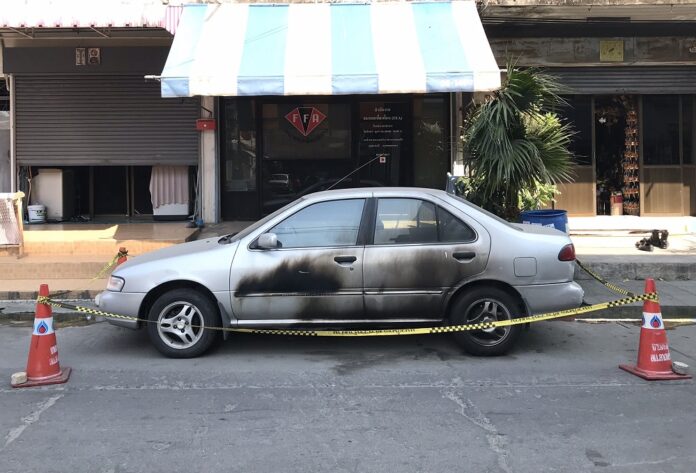
The damaged car seen on Sunday.

BANGKOK — Police on Monday declined to say whether they have identified the man who was filmed torching a prominent activist’s car over the weekend.

Supporters of Ekachai Hongkanwan, who was assaulted by masked men just a week ago, blamed the latest attack on the military regime, but an officer in charge of a local police station would not comment on the case beyond saying the investigation is ongoing.

“We cannot disclose any details at the moment,” Col. Phasakorn Ratnapanadda said by phone.

Security footage camera Ekachai shared online shows a man wearing a cap and a facemask approaching his car, which was parked Saturday night outside his home.

The man then pours gasoline on the vehicle, sets fire to it and flees the scene.

In an online post, Ekachai said it wasn’t the first time someone targeted his car. A five-inch nail was found stuck into one of the car tires some time ago, he said.

His supporters responded to the news by accusing those in power of engineering the attack.

“If they wanted to catch the perpetrators, they could, but we know which side ordered this,” user Panchit Techavichit wrote in a news thread. “It might be hard to catch them.”

Related stories:

Watchdog Activist Doused With Fermented Fish

Anti-Junta Activist Reports Being Ambushed Outside Home


Advertisement

Nicki Minaj to Drop Her ‘Super Bass’ on Bangkok for 1st Time

Update March 20: The concert has been postponed due to “unforeseen internal complications.” 

BANGKOK — The “queen of rap” will twerk her thinly-covered behind into Bangkok for the first time later this year.

Fierce American rapper Nicki Minaj perform in Bangkok in April, local promoter Godzillionaire Group announced Monday morning.

The concert will take place April 4 at SCG Stadium Muang Thong Thani.

Tickets range from 1,500 baht to 6,000 baht and can be purchased on ThaiTicketMajor from Feb. 1.

Born Onika Tanya Maraj, 36-year-old Minaj rocketed to fame after she released “Anaconda,” “Super Bass” and “Starships.” The rapper released her fourth album “Queen” in August, which features several artists such as Eminem, Lil Wayne, Ariana Grande and The Weeknd.

Advertisement

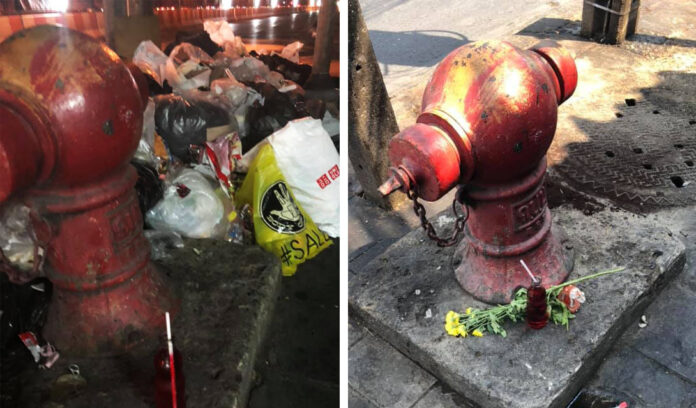
Man Sanctifies Fire Hydrant to Deter Littering

Photos: Methus Kaewsaikao / Facebook

BANGKOK — In a city overrun with smog and litter along uneven sidewalks, one Lat Phrao area man may have discovered the secret to cleaning up trash-filled streets.

In a Facebook post that has gone viral since Sunday, Methus Kaewsaikao said that placing red Fanta, flowers and a small doll at a fire hydrant in Bangkok’s Soi Lat Phrao 62 to create a makeshift shrine had deterred people from littering there – albeit temporarily.

“I started an anti-trash campaign to fight trash with superstition, to worship this red pillar,” Methus wrote.

“I got the idea from seeing signs with curses on them, like if you throw trash or pee here, then so-and-so will happen to you,” the 28-year-old said in a Monday phone interview. “I walk past this pile of trash every day, so I wanted to try it out.”

While grabbing a coke, Methus saw a Fanta and decided to place the bottle – often given as a spiritual offering at shrines – at the site instead of a sign.

The first time he tried his experiment, cleaners collected the red Fanta bottle with the rest of the trash by fire hydrant.

He knew he had to step up his game.

“I updated the latest version of offering. I put out a doll with yellow flowers and promptly told the garbage collector not to take them (I was putting them out at 5am),” he wrote.

The area was clear of trash throughout the next day, but Methus said he wasn’t quick to claim victory and was still on the watch.

“When I win, I’ll raise funds and put flowers, incense and trash cans for all the sois around here,” he wrote.

By Monday, the post had been liked more than 22,000 times and shared more than 7,000 times. Netizens applauded his idea, with some offering tips on how to embellish the shrine.

“Add some zebra figurines,” Arunee Kaikookoo Tirasriwat wrote, referring to the dolls placed near shrines at busy roads to offer luck to pedestrians walking on zebra crossings. “All the trash will be gone for sure, but then the zebras will multiply into a whole flock.

But Methus said Monday that the shrine was gone and the trash was back.

“I wonder if my neighbors hate me,” he said laughing.

However, he said he would commit to making shrines until the area is clean, and hopes more people will create shrines all over Bangkok.

“I will keep trying, both here and elsewhere. I would be so happy if a lot of people did this until the area is clean. No one will be able to tell between real and fake shrines.”

Measures to combat littering around Bangkok have often failed, such as the green trash cages introduced in May. Many Thais offer Fanta to local spirits at shrines, but also at many statues – whether it’s of the giant at Suvarnabhumi Airport or a statue of Gandhi at a university.

Related stories:

Netizens Blast Bangkok ‘Trash Cages,’ Users

Gandhi Statue Doesn’t Want Your Red Fanta Either: Professor

The Giant At Suvarnabhumi Doesn’t Want Your Fanta

Advertisement

Korean Tourist Fined for Slapping Suvarnabhumi Staff

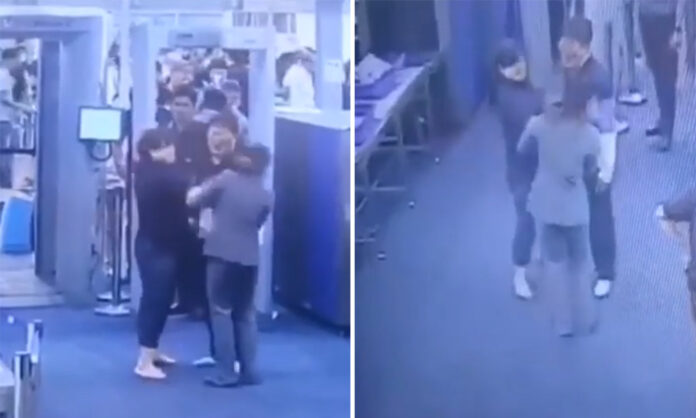
Images from security footage show a tourist assaulting an employee Saturday at Suvarnabhumi airport.

BANGKOK — A South Korean tourist was fined 2,000 baht for assaulting a Suvarnabhumi employee, the airport said Monday.

The incident was made public after a Twitter user on Sunday posted a clip of security footage, which shows the tourist walking through a full body scanner at the luggage checkpoint and being stopped by the female staff who then tries to screen her with a handheld scanner. The tourist tries to walk away several times then slaps the staff in the face during the scan.

Another man who appears to be traveling with the woman is seen immediately pushing her away while other airport employees try to control the situation. The male tourist then approaches the staff who was attacked and performs a wai to apologize.

Kittipong Kittikachorn, Suvarnabhumi vice president, identified the tourist as a South Korean and said the assault occurred Saturday night.

“The alarm went off when she walked through the scanner, so the staff asked to scan her body again with a handheld detector,” he said. “She appeared upset, then she attacked the staff.”

He then commended the staff and other employees nearby for strictly following the protocol to prevent further escalation. He said the victim won’t press charges, adding that the tourist was only fined and had already returned to South Korea.

Advertisement

CP Foods’ Research Development Center Shows the Future of Food

Charoen Pokphand Foods PCL (CP Foods) showcases its state-of- the-art service “CP Foods RD Center” in Wang Noi, Ayutthaya which will be a major driving force for developing healthy products for consumers worldwide.

The innovation complex was set up on 10 rais area, comprised of research and development building and pilot plant. Both facilities are energy-saving building with Solar Roof Top, Solar Hot Water and the state of the art equipment worth around 1.35 billion baht. The pilot plant also certified by Food and Drug Administration, ensuring the manufacturing quality.

The one-stop service food innovation center will deliver nutritional and safety foods at world-class quality to consumer around the world. It also targets that healthy food will account for 30% of the new products this year.

Mr. Sukhawat Dansermsuk, Chief Executive Officer (CEO) – Food Business and Co-President at CP Foods, said research and development are vital for making new products. The brand new research facilities will significantly accelerate and improve innovation process to encourage CP Foods’ researchers achieve their full capabilities.

The RD Center will develop products in line with global demand at all ages including foods for patient and elderly people such as food and drink for insomnia. In addition, the center pilot plant can promptly introduce variety of new products to serve with rapid changes of consumer demands.

“Increasing of health conscious and food safety demands have prompted the company to plan for more healthy goods which it will reach 30% of its new products this year, following the United Nation Sustainable Development Goals,” he said.

Mr. Sukhawat added that CP Foods’ RD Center has developed not only innovative products but special ingredients to serve food chain and restaurant demands.

CP Foods’ research and development is currently focusing on food biotechnology by applying enzymes and microorganism to boost quality of products. The center is also concentrated on sustainable packaging development to minimize environmental impacts, especially plastic footprint.

CP Foods also plans to launch new “Smart” products during the first quarter of 2019 including as follows;

Smart Meal: Vegetarian Food from high fiber grain, tofu, vegetables and other natural ingredients, offering high protein and vitamins without preservatives added

Smart Soup: Healthy soup from 100% highly selected natural ingredient made from innovative food process. The soup is an ideal choice for patients and elder consumers.

Smart Sauce: Sriracha Sauce with its distinct taste, made of premium grade red chili, rice vinegar and sea salt.

Smart Drink: Tasty Functional drinks, a fruit juice product made for specific health demand such as “Good night”, a drink to help you sleep better./

Advertisement

Negligence Trial Over Death of 23-Year-Old Man Begins

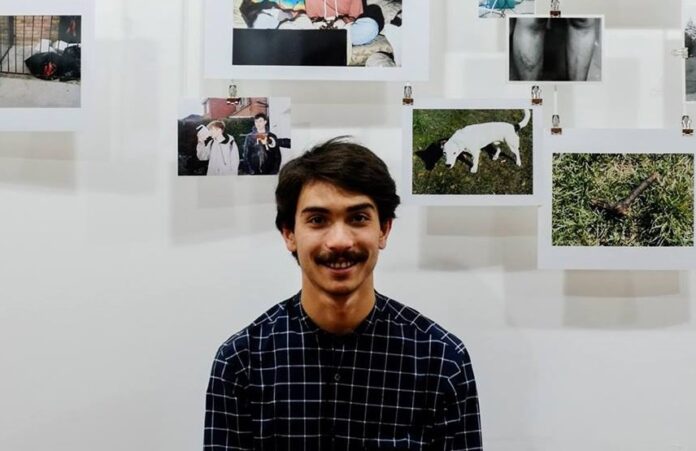
A photo of Leo Gauvain. Image: courtesy.

BANGKOK — On a sunny December afternoon, British-Thai lecturer and photographer Leo Gauvain was crossing a small street in Bangkok after finishing a meal at a nearby food stall. It would be the last moment of his life.

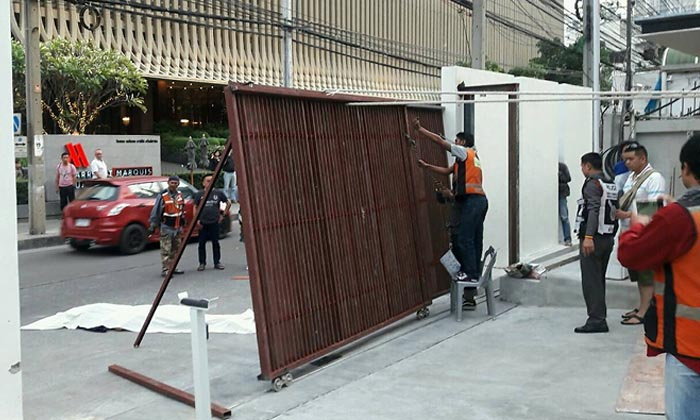
As he reached the western side of Soi Sukhumvit 22 – at a construction site opposite a five-star hotel – a huge metal gate fell and killed him on the spot, along with a Cambodian worker who was installing it.

More than a year later, Leo’s family said they have yet to receive justice. A negligence charge on building owners and contractors has gone nowhere. A separate criminal lawsuit filed by the family only had its first hearing Friday. The presiding judge proposed a settlement, but the session was adjourned two hours later without any agreement.

“Victims shouldn’t be asking for justice on their own,” Leo’s father, businessman Patrick Gauvain, said in an interview outside the courtroom, where defendant lawyers argued with the judge over the compensation.

aHR0cHM6Ly9zLmlzYW5vb2suY29tL25zLzAvdWQvOTI4LzQ2NDA5OTgvOS5qcGc
Police officers inspect the scene of the Dec. 17, 2017, accident in Soi Sukhumvit 22. Image: Sanook

Kathathong Thongyai, a mom luang, and 10 other executives of construction firm Golden Grove Ltd, are named as defendants in the negligence allegations. The contractor in charge of the site, Suthat Chumsri, was also named as a co-defendant.

Gauvain said he has requested a 21-million baht compensation from the defendants. He said it’s a reasonable amount because Leo was meant to help lead his design and marketing firm.

Gauvain, 71, said his plan to retire last year was abandoned because of Leo’s abrupt death. He added that he’s still paying back the school loans Leo took out for his education in the United Kingdom.

But while Suthat the contractor engineer is willing to contribute to the compensation, owners of Golden Grove balked at paying because they believe the contractor in charge should be held solely liable, Gauvain said.

The presiding judge, who per court practice is not named, noted to Gauvain’s family during the hearing that the laws also hold the contractor responsible for any mishap.

“But what about business ethics?” family friend Kotasit Rangsit, who holds the tile mom ratchawong, said to the judge.

20190125 120815
Scene of the accident on Friday.

A lawyer representing Golden Grove would not comment beyond saying he would contest the case in accordance to the justice process. The attorney, who declined to give his name, also asked a reporter not to publish the story about Friday’s trial because it’s a “sensitive” matter.

Speaking to a reporter outside the courtroom, Suthat said he’s remorseful for the incident and willing to pay whatever compensation the judge orders.

The hearing was eventually adjourned without any settlement reached. The next hearing is set for April 2.

‘Still Here’

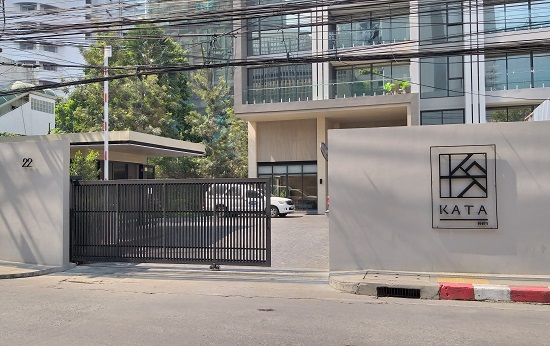
The site where Leo died is now a condominium complex called Kata, just opposite Marriott Marquis Hotel. It’s on Soi Sukhumvit 22, popular with tourist bars and Thai massage parlous. Sainampeung School is located down the alley.

Kotasit, among the first to receive news of Leo’s death, said it could have been anyone else. He also alleged that there was no warning sign at the construction site that might have alerted Leo.

“It could have been one of the tourists staying at the five-star hotel,” Kotasit said. “And if it happened on Monday, 10 school children could have died.”

LeoPup2
A photo of Leo Gauvain. Image: courtesy.

Indeed, news of the fatal accident went viral on social media, where many saw it as one of the too many examples of random hazards to Bangkok’s pedestrians and motorists.

In December 2015, a man required 100 stitches after falling into a manhole. City Hall reportedly refused to pay compensation. In October, two motorcyclists were wounded when an advertisement billboard collapsed on them.

Patrick said he was incensed by the lack of communication from Golden Grove in the aftermath of the accident. According to the businessman, the firm only contacted him four days after Leo died, and a day after Channel 3 news host Chuwit Kamolvisit discussed the case on television.

Leo Gauvain was born and raised in Bangkok until the age of 12, when he left to study in the UK. He graduated from the Arts University Bournemouth with honors at 22 and returned to lecture there briefly.

Although Leo did help manage his father’s business, his real passion was always in teaching and photography, Patrick said. An exhibition featuring Leo’s last shooting works, compiled in a photobook called Yung Yoo, or “Still Here,” will open at a gallery next week.

“It’s particularly unusual that he named it Yung Yoo,” Patrick said. “It was his signature of saying he’s still around.”

The “Yung Yoo” event will launch 6pm on Feb. 2 and run through Feb. 24 at Galerie Oasis, an art house inside the same building as Cinema Oasis. The venue is located on Soi Sukhumvit 43, a short walk from BTS Phrom Phong. Entry is free.

Advertisement

Duterte to Visit Site of Bombings That Killed at Least 20

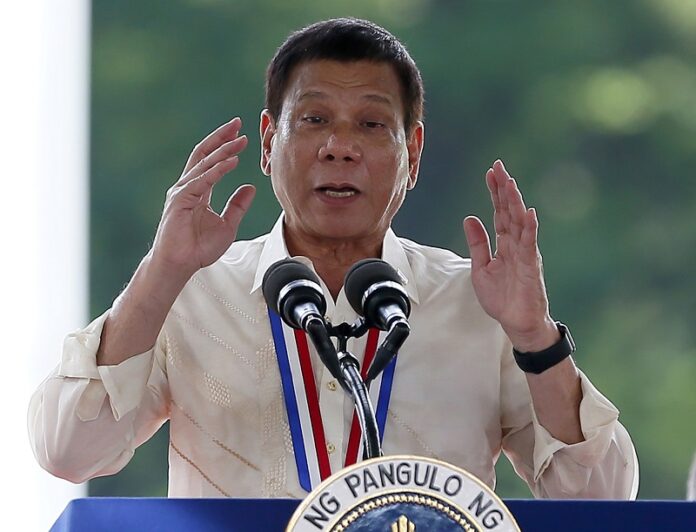
Philippine President Rodrigo Duterte gestures while addressing guests following a wreath-laying ceremony in observance of National Heroes Day Aug. 29 at the Heroes Cemetery in suburban Taguig city, east of Manila, Philippines. Photo: Bullit Marquez / Associated Press

JOLO, Philippines — Philippine President Rodrigo Duterte and his top security officials are scheduled to visit the southern Philippines where suspected Islamic militants bombed a Catholic cathedral during Sunday Mass, killing at least 20 people.

Duterte’s office vowed earlier to “pursue to the ends of the earth” the perpetrators of the attack. The president and defense, military and police officials were to visit the scene and meet survivors Monday.

The attack occurred in the provincial capital of Jolo island, which has long been troubled by Abu Sayyaf militants, who have carried out years of bombings, kidnappings and beheadings and have aligned themselves with the Islamic State group.

The SITE Intelligence monitoring group said an IS communique claimed two of its suicide bombers carried out the attack. The claim could not be independently verified.

Advertisement

Rivals Maduro and Guaido Vie for Venezuelan Military Backing

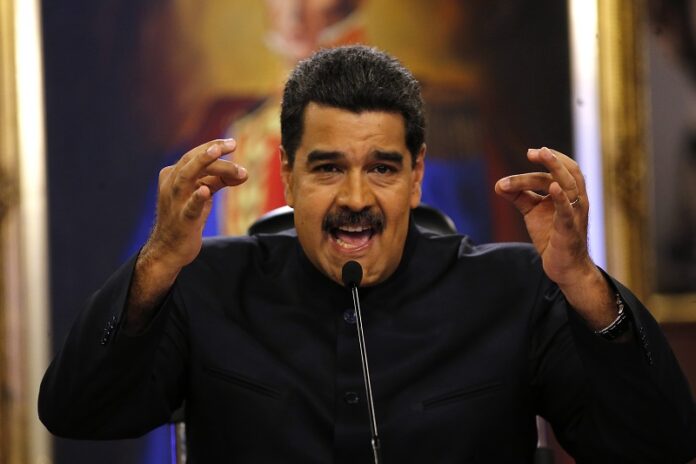
Venezuela's President Nicolas Maduro gives a news conference in 2017 in Caracas, Venezuela. Photo: Ariana Cubillos / Associated Press

CARACAS, Venezuela — The struggle for control of Venezuela turned to the military Sunday, with supporters of opposition leader Juan Guaido handing leaflets to soldiers detailing a proposed amnesty law that would protect them for helping overthrow President Nicolas Maduro.

At the same time, Maduro demonstrated his might, wearing tan fatigues at military exercises. Flanked by his top brass, Maduro watched heavy artillery fired into a hillside and boarded an amphibious tank.

Addressing soldiers in an appearance on state TV, Maduro asked whether they were plotting with the “imperialist” United States, which he accused of openly leading a coup against him.

“No, my commander-in-chief,” they shouted in unison, and Maduro responded: “We’re ready to defend our homeland – under any circumstance.”

The dueling appeals from the two rivals again put the military center stage in the global debate over who holds a legitimate claim to power in the South American nation.

The standoff has plunged troubled Venezuela into a new chapter of political turmoil that has already left more than two dozen dead as thousands took to the streets demanding Maduro step down. Guaido is calling for two new mass mobilizations over the next week.

The tumult erupted when Guaido, the 35-year-old leader of Venezuela’s opposition-controlled congress, declared before masses of supporters last week that he has temporarily assumed presidential powers, vowing to hold free elections and end Maduro’s dictatorship.

President Donald Trump and several foreign leaders quickly recognized Guaido as Venezuela’s legitimate leader, prompting Maduro to cut ties with the U.S. and order its diplomats from Caracas within 72 hours. The U.S. defied him, saying Maduro isn’t the legitimate president, and Maduro relented, suspending the deadline for 30 days for the sake of opening a dialogue.

Venezuela’s crisis came before the U.N. Security Council on Saturday, which took no formal action because of divisions among members. Russia and China back Maduro. But France and Britain joined Spain and Germany in turning up the pressure on Maduro, saying they would recognize Guaido as president unless Venezuela calls a new presidential election within eight days.

“Where do you get that you have the power to establish a deadline or an ultimatum to a sovereign people?” said Venezuelan Foreign Minister Jorge Arreaza. “It’s almost childlike.”

Venezuela’s armed forces remain the key to Maduro’s hold on power, firing tear gas and bullets on protesters, killing more than two dozen since Wednesday.

Guaido is urging Venezuelans to exit their homes, offices or wherever they may be on Wednesday for a peaceful, two-hour mid-day protest. He is also asking followers to take to the streets again Saturday for demonstrations “in every corner” of the nation and around the globe. That protest is timed to coincide with the European Union deadline for announcing a new election.

“We’re advancing well, Venezuela,” Guaido said in his broadcast, streamed live on the internet. “We’ve restored hope.”

In light of the ongoing unrest, the Caribbean Professional Baseball Leagues Confederation announced Sunday that organizers decided to not to hold an upcoming tournament in Venezuela. The Caribbean Series will instead be held at alternate yet-to-be-announced venue. The decision came a day after Venezuela Sports Minister Pedro Infante made a plea for the series to take place as planned in Barquisimeto, saying the government would guarantee the safety of players.

On Sunday, Guaido’s supporters made their case directly to soldiers, handing them leaflets that urged they reject the socialist leader and explaining how they could be eligible for amnesty if they help return Venezuela to democracy.

In Paraiso, an area of Caracas where residents and the National Guard violently clashed, opposition lawmaker Ivlev Silva, his hands raised over his head, walked up to a line of soldiers wearing riot gear and holding shields.

“The people of Venezuela believe in each one of you,” Silva said, handing them the leaflets. Their commander responded that they were defending the Bolivarian revolution and support Maduro.

Similar scenes took place at military bases across Caracas, where one soldier burned his leaflet and another man threw a stack of them out a door, rejecting the opposition’s plea.

In claiming presidential powers, Guaido said he was acting in accordance with two articles of the constitution that give the National Assembly president the right to hold power temporarily and call new elections.

Emerging from Sunday Mass, where he honored those killed and arrested in the recent protests, Guaido called on the armed forces not to shoot fellow Venezuelans.

“We are waiting for you and the commitment you have to our constitution,” Guaido said. “Don’t shoot at those who have come out to defend your family, your work and livelihood.”

He also vowed to crack down on those responsible for the killings, which he called a “massacre,” saying in a Twitter post that he wanted to bring international attention to members of the armed forces, prosecutors and judges linked to the recent deaths.

The Trump administration has maintained that all options remain open if Maduro refuses to cede leadership, acting White House chief of staff Mick Mulvaney said on “Fox News Sunday.”

“I don’t think any president of any party who is doing his or her job would be doing the job properly if they took anything off the table,” he said. “So, I think the president of the United States is looking at this extraordinarily closely.

Story: Scott Smith, Fabiola Sanchez

Advertisement

Malaysia Stripped of Paralympic Event Over Ban on Israelis

Madison de Rozario, left, races at the 2012 paralympic in London, England.

LONDON — Malaysia has been stripped of the hosting rights for the World Para Swimming Championships after refusing to let Israelis compete in the event that serves as a qualifying event for the 2020 Tokyo Paralympics.

The Malaysian government said earlier this month that no Israeli delegates can enter Malaysia for sporting or other events in solidarity with the Palestinians. Malaysia does not have diplomatic relations with Israel.

The swimming championships were due to be staged July 29-Aug. 4 in Kuching.

The International Paralympic Committee on Sunday said its governing board meeting in London decided to take the event from Malaysia after it “failed to provide the necessary guarantees that Israeli Para swimmers could participate, free from discrimination, and safely in the championships. This includes full compliance with the IPC protocols related to anthems and flags, and where required the provision of relevant visas.”

Israeli foreign ministry spokesman Emmanuel Nahshon responded to the decision on Twitter: “This is a victory of values over hatred and bigotry, a strong statement in favor of freedom and equality. Thank you @Paralympics for your brave decision !!!”

Israel’s Paralympics governing body also welcomed the decision.

“The Israeli Paralympic Committee thanks the International Paralympic Committee for its brave decision, which reflects the Paralympic spirit of equality among nations regardless of race, gender and religion,” it said in a statement.

With the IPC looking for a new host, the deadline for expressions of interest is Feb. 11.

Advertisement

Hot News

LATEST NEWS

Bangkok
overcast clouds
33.8 ° C
35 °
32.2 °
63 %
3.6kmh
100 %
Sat
37 °
Sun
36 °
Mon
35 °
Tue
34 °
Wed
33 °