32.8 C
Bangkok
Saturday, June 27, 2026
Home Blog Page 1792

Hospital Accused of Turning Dying Woman Away Faces Criminal Prosecution

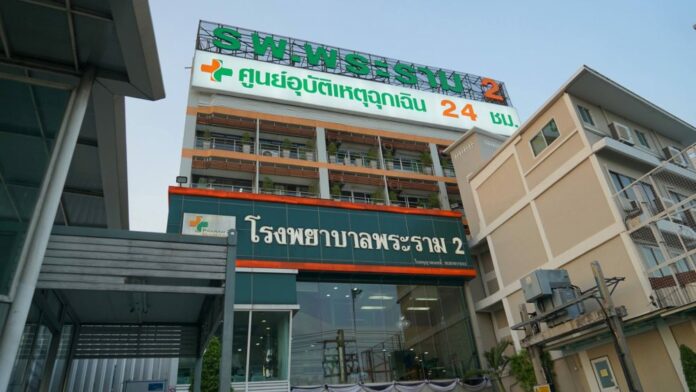
‘Emergency room services 24 hours a day,’ reads the sign outside the Praram 2 Hospital. Photo: Praram 2 Hospital / Facebook

BANGKOK — Praram 2 Hospital admins face criminal prosecution over substandard services after it was accused of refusing to treat a patient whose daughter said her face was melting from acid poured on her head.

Nattawuth Prasertsiripong, director general of the Health Ministry’s Health Service Support Department, said an initial investigation found the hospital guilty on counts related to the death of Chorladda Tarawan, who suffered a severe acid burn for which her husband has been arrested.

He declined to elaborate on the details, saying only that the full results are expected this week.

Read: Hospital Says Acid-Burn Victim Only Scalded With Hot Water

“There are some serious violations that come with high penalties,” he said. “We still can’t tell the public because they still need to be reviewed by the investigative committee.”

He only said that the hospital executives face fines and jail time for failing to maintain standards. The ministry’s probe results will be handed over to the police when concluded.

Chorladda, 38, died at Bangmod Hospital on Saturday after her 12-year-old daughter says they were turned away from the emergency room at Praram 2. Chorladda was splashed with soldering acid by her husband Kamtan Singhanat in her sleep.

In the most recent in a series of shifting accounts, the hospital said in a statement Monday that Chorladda was only scalded with hot water and refused treatment so she could go to another hospital where she could use her public health benefits. Her daughter Techinee Tarawan, who had taken her mother to the hospital, said she begged nurses to admit Chorladda only to be turned away. They went to Bangmod Hospital by taxi where Chorladda was soon pronounced dead.

Nattawuth said the committee has received contradictory statements from both hospitals. He said initial autopsy results indicate Chorladda died from respiratory failure.

He said security camera footage shows Praram 2 staff rendered first aid to Chorladda, but further review is needed to see if her condition upon arrival and departure are consistent with the hospitals’ statements.

The victim’s family however is not eligible for state compensation as Praram 2 Hospital is privately owned, Nattawuth said.

Founded in 1994, the hospital is operated by the Praram 2 Medical Group, which also owns a number of medical clinics in the capital.

Nattawuth said the hospital also faces investigation regarding the standards of its facilities which could cost its license.

Related stories:

Hospital Says Acid-Burn Victim Only Scalded With Hot Water

Hospital That Refused Acid-Burned Woman Denies it Was Emergency

Woman Dies After Hospital Refuses to Treat Acid Attack by Husband

Advertisement

Mahathir Slams Myanmar’s Suu Kyi for Handling of Rohingya

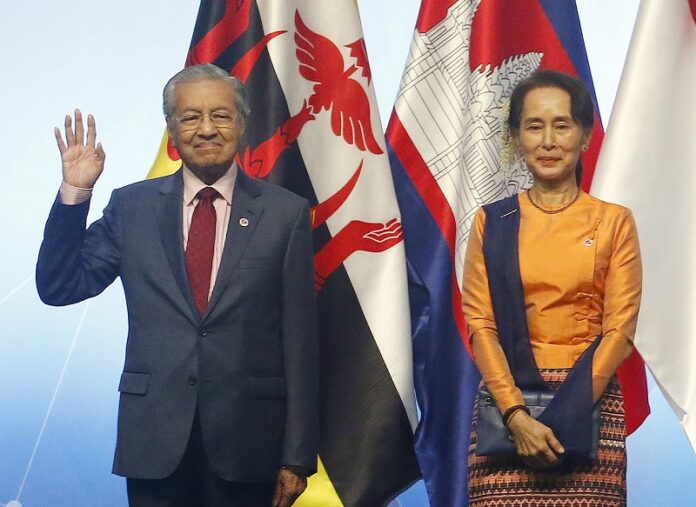
Prime Minister Mahathir Mohamad of Malaysia and Myanmar Leader Aung San Suu Kyi, pose for a group photo during the opening ceremony for the 33rd ASEAN Summit and Related Summits Tuesday, Nov. 13, 2018, in Singapore. Photo: Bullit Marquez / Associated Press

SINGAPORE — Malaysian Prime Minister Mahathir Mohamed sharply criticized Myanmar leader Aung San Suu Kyi on Tuesday for her handling of an ethnic crisis that led to mass killings and the exodus of more than 700,000 Rohingya Muslims from her country.

Mahathir said Nobel Peace Prize laureate Suu Kyi was “trying to defend the indefensible” in justifying violence by Myanmar security forces against Rohingya in Rakhine state.

Hundreds of thousands of Rohingya have fled to neighboring Bangladesh since August 2017.

“They are actually oppressing these people to the point of, well, killing them, mass killing, and burial in graves dug by the victims and that kind of thing. That may be relevant in ancient times, but in modern days, we don’t do that kind of thing,” said Mahathir, a 93-year-old political veteran whose own past treatment of dissidents at times drew opprobrium.

Asked about the issue at a news conference on the sidelines of a summit of the Association of Southeast Asian Nations in Singapore, Mahathir said that as a former political prisoner, Suu Kyi should understand suffering.

It is unusual for leaders in the 10-nation group to publicly criticize each other.

Suu Kyi became an icon for democracy after spending about 15 years under house arrest for opposing Myanmar’s earlier military dictatorship. She and her Buddhist-majority government have been widely criticized for the way they have treated the Muslim Rohingya.

In Geneva, the U.N. human rights chief said Tuesday that Bangladesh should halt plans to repatriate over 2,200 of the Rohingya refugees to Myanmar, saying such a move would endanger their lives.

Michelle Bachelet’s comments are among the strongest yet from a top United Nations official about the planned repatriation this week of some Rohingya.

Bachelet’s office said it continues to receive reports of rights violations in Rakhine state, “which include allegations of killings, disappearances and arbitrary arrests.” It said some 130,000 people, including many Rohingya, remain internally displaced in central Rakhine.

On Monday, the U.N. refugee agency UNHCR advised against the returns, saying safety should be assessed first. But it did not call for a halt to the repatriation plans.

Amnesty International announced on Monday that it has withdrawn its highest honor from Suu Kyi because of her “shameful betrayal of the values she once stood for.”

“Today, we are profoundly dismayed that you no longer represent a symbol of hope, courage, and the undying defense of human rights. Amnesty International cannot justify your continued status as a recipient of the Ambassador of Conscience award and so with great sadness we are hereby withdrawing it from you,” it said in a letter to Suu Kyi.

Advertisement

Past Explorers’ Exploits Key to Tham Luang Rescue Maps

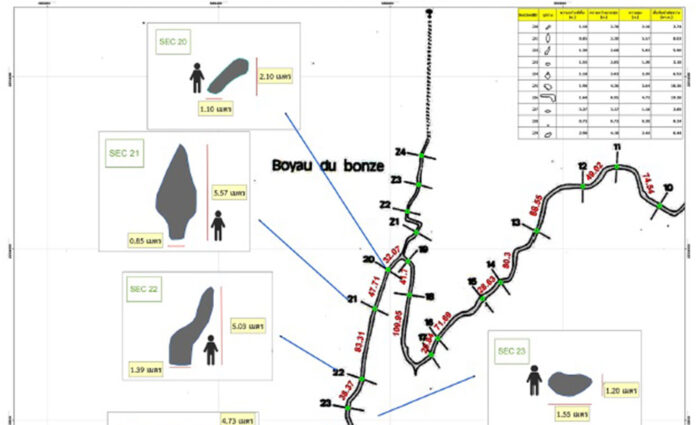
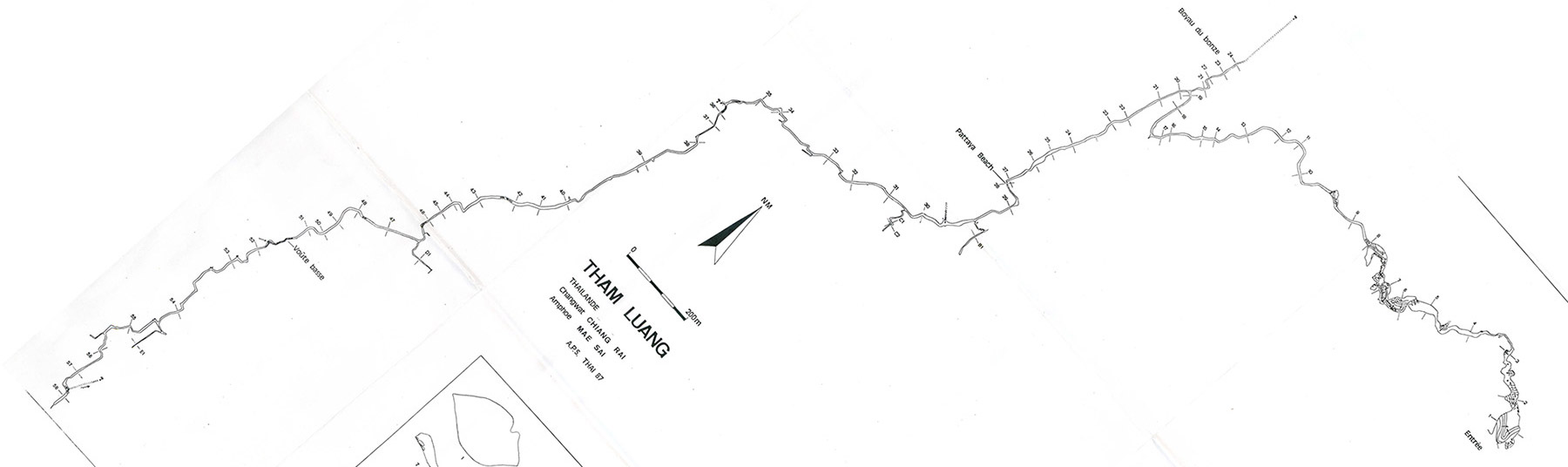
Portion of the composite map based on a 1987 French map and more recent English-made maps prepared by GIS Co. Ltd. Image and used for the rescue operation. Image: Courtesy

The rescue operation to bring back to the surface the 12 Wild Boars and their football coach in July was a story of divers, brave rescuers, self-sacrificing Navy SEALs and related experts.

Less known, the story was also one of cartographers. The painstaking task of creating accurate maps for divers to locate and retrieve those trapped inside Luang Cave relied on digitally compiling hand-drawn maps penned by past French and British explorers. Those maps proved a crucial, if little-known element in the successful rescue.

When news that the children were likely trapped in the cave located in Chiang Rai province broke June 23, there were no complete maps of the cave for immediate use. Thus, there was a need to make a composite map based on those that existed – an effort that involved Thai, French and English experts before it was completed and proved pivotal in the three-day evacuation two weeks later.

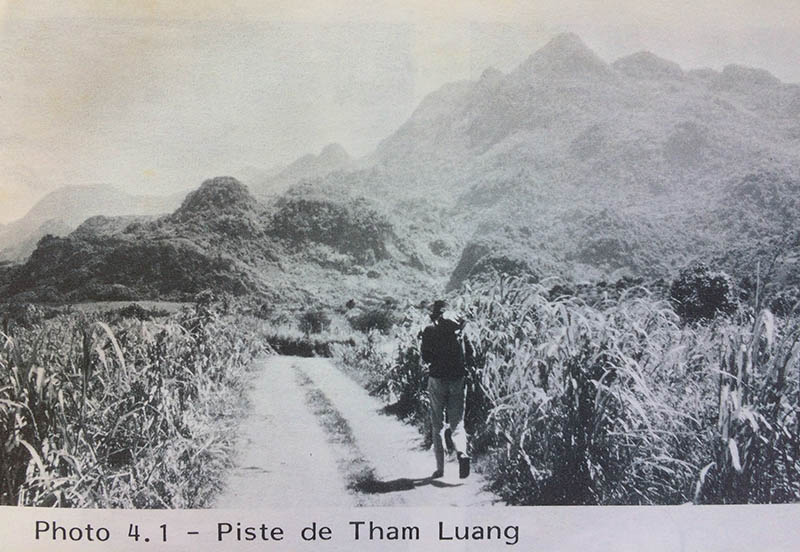
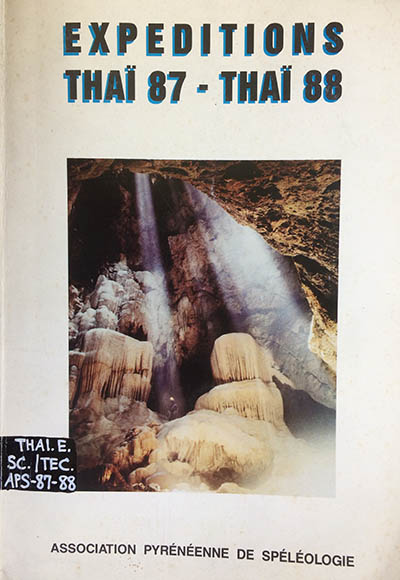
Photo 1The first map of Luang Cave was published in 1988 by the French Association Pyreneenne de Speleologie (Pyrenean Association of Speleology) one year after a mission touring caves in Southeast Asia passed through.

“There were speleologists and scientists, some of them very serious. They were six or seven camping in my home, in the living room, on the sofa,” said Louis Gabaude, a member of Ecole Francaise d’Extreme-Orient (French School of the Far-East), who accommodated the team at his Chiang Mai house. The team included Louis Deharveng, Anne Bedos, Didier Rigal and Daniel Dalger.

“For us, it was a hobby,” Deharveng said. “We were exploring caves because we liked it, but we had no financial support whatsoever, we were using our own money”.

Despite this lack of resources, the 1987 expedition was a milestone: The team surveyed most of the Luang Cave and drew a map with descriptions which were crucial for future cave surveyors. This first exploration was not without its excitement.

We were exploring caves because we liked it, but we had no financial support whatsoever

A member of the French team during the exploration of Tham Luang in 1987. Image: Pyrenean Association of Speleology / Courtesy

“We went into the cave with a village chief and an extraordinary Buddhist monk, inquisitive and athletic. He walked for about 4 kilometers inside the cave, barefoot and without helmet. When he exited the cave, he had several bleeding wounds,” Deharveng said.

The main characteristics of the cave, about 8 kilometers long, were established: It was not labyrinthine, but rather a single path following a river course. The surveyors noted it “still runs during the dry season and rises during the rainy season,” the conditions which would create the boys’ predicament three decades later.

But the cave was not completely surveyed. English speleologists completed the job between 2012 and 2016. Several English missions to Luang Cave; which involved cave experts Vern Unsworth, Rob Harper, Phil Collet and Martin Ellis; made it possible to map the unfinished sections, including the cave’s entrance, under the name Sai Thong Cave.

“The British could cross sections which we were not able to cross. They added 200 or 300 meters of surveyed cave area in the south and about 200 meters in the north,” Deharveng said.

More specifically, Martin Ellis said the English missions allowed exploration and survey of “the Nang Non series (between the cave entrance and the Sam Yaek junction), the Monk’s series and the main caves extensions; [Sai Thong Cave] was also re-surveyed in this period.”

Navigating those locales inside the cave would prove critical for rescuers who had to not only traverse them to find those lost inside, but also be able to make the return trip with them in tow.

A portion of the original 1987 map produced by the French team.

Martin Ellis, who has written several books on Thai caves and maintains a blog on the topic, was a key figure in making the final map used for the rescue. On June 26, three days after the footballers went missing, he was contacted by the Mineral Resources Department.

“They had found the cave surveys on my website,” he said via email.

Ellis supplied the department with scans of the original French survey, Rob Harper’s survey of the main cave extensions and his own composite survey, including of Sai Thong Cave, as well as digital models of the cave created from the surveys.

Ellis says he remains a bit skeptical about the accuracy of the 1987 French survey.

“The biggest problem is that there is no elevation data for the main part of the cave – it is two-dimensional,” he said.

On June 30, two days before the boys would be found alive inside, he wrote a warning on his blog.

“It must be stressed that the [Luang Cave] survey is very inaccurate and cannot be used, on its own, to select drilling targets.”

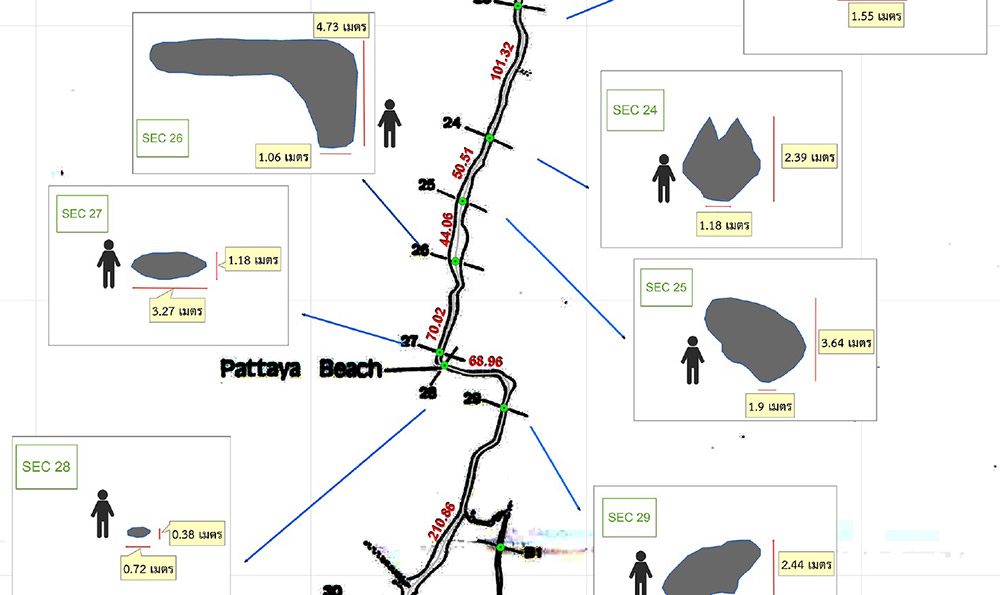
Portion of the composite map based on a 1987 French map and more recent English-made maps prepared by GIS Co. Ltd. Image and used for the rescue operation. Image: Courtesy

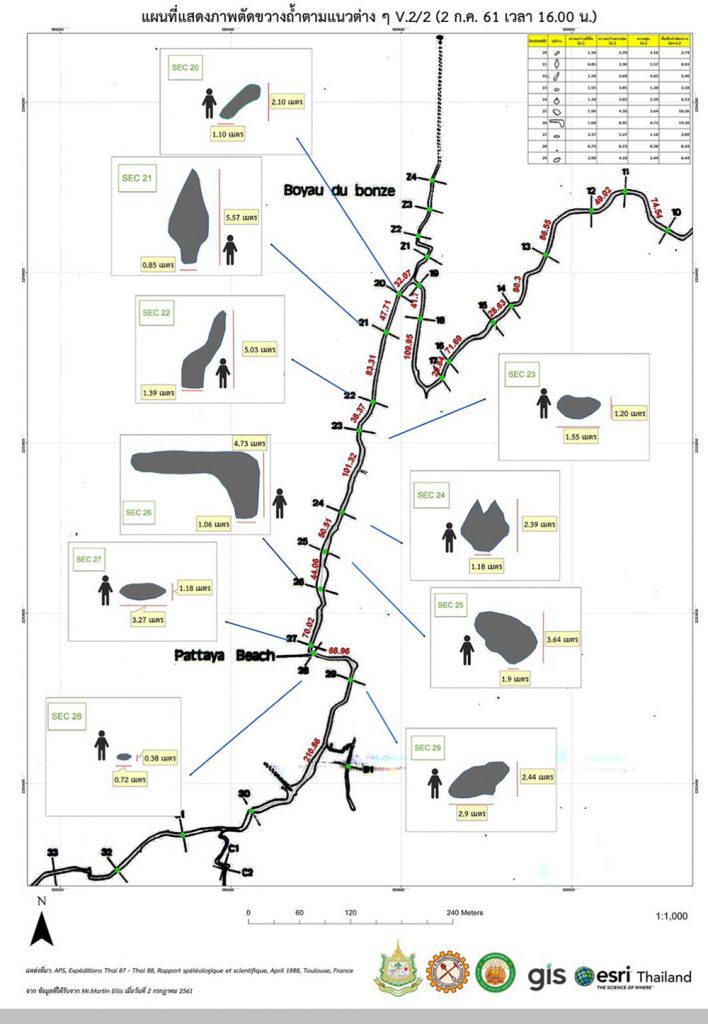
In any case, geographers with digital cartography firm GIS Co. Ltd. were willing to digitize the French and other maps for use by rescuers.

That created a need to translate the map and French notations into Thai, very technical work that had to be completed urgently. Napadol Wirakan, who holds a doctorate in French literature, was contacted and began work immediately.

“I translated the description of the cave; it was about two pages. Some words were very specific, and I could not understand with a usual dictionary. A friend provided me with a lexicon of speleology,” Napadol said. A team of Thai-French translators was set up next under the supervision of a Chulalongkorn University, as well as a team of translators for the English surveys.

The original and translated maps were given to the cartography company GIS Co Ltd, which compose a final map to be used in the rescue operation and which contributed to its success.

“This final map was very important. It helped a lot the rescuers and divers to make decisions,” said Napadol, who was granted – as well as his fellow translators – a certificate of thanks by the ministry of natural resources and environment. “At that time, I felt that it was like a moment of national union. Everyone was joining forces to save these children. It showed the unification of Thai people.”

The composite map based on a 1987 French map and more recent English-made maps prepared by GIS Co. Ltd. Image and used for the rescue operation. Image: Courtesy
Advertisement

The 30 Parks in Bangkok to Float Your Krathong

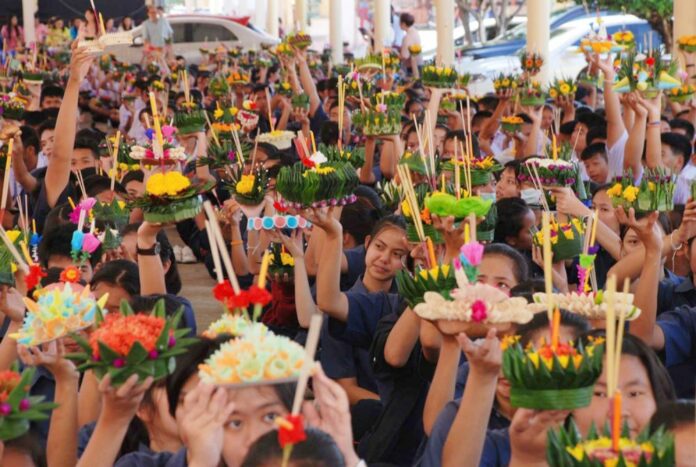
Students raise krathongs made of natural materials for the Loy Krathong festival in Phitsanulok province in a 2015 file photo.

BANGKOK — After festivities were canceled in 2016 and remained low-key for 2017, the Loy Krathong festival returns later this month with dozens of venues to celebrate in the capital.

A total of 30 parks in Bangkok will mark Loy Krathong Day on Nov. 22 by welcoming the public to float (loy) their krathong (krathong), according to the metropolitan administration.

The parks include inner-city favorites Lumphini and Benjakitti parks, as well as Wachirabenchatat Park (Suan Rot Fai), which will be open 3pm to midnight for the occasion.

The major celebrations put on by City Hall will take place at two venues: a park under the Rama VIII Bridge and at Khlong Ong Ang, where walkways have been rebuilt to improve walkability and some color added.

However, the city’s largest park – King Rama IX – and others including Queen Sirikit and Bung Nong Bon parks will not allow the public to float krathongs.

Apart from the parks, the public can gather at piers and canals or any publicly accessible waterway to float their preferably biodegradable boats.

Loy Krathong merrymakers should note that fireworks and floating lanterns remain strictly banned during the day, not to mention discharging firearms into the sky.

Here is the full list of 30 parks, by district, that will be open to public for Loy Krathong:

Pathumwan District

  • Lumphini Park

Chatuchak District

  • Chatuchak Park
  • Wachirabenchatat Park (Suan Rot Fai)

Lad Krabang District

  • Phra Nakhon Park
  • Her Majesty the Queen’s 60th Birthday Park

Phra Nakhon District

  • Saranrom Park
  • Santichaiprakan Public Park

Bang Kho Laem District

  • Public Park in Commemoration of H.M. the King’s 6th Cycle Birthday
  • Rommaninat Park

Thung Khru District

  • Thonburirom Park

Bueng Kum District

  • Seri Thai Park
  • Nawamin Pirom Park

Nong Chok District

  • Nong Chok Park

Khlong Toei District

  • Benchasiri Park
  • Benjakitti Park

Min Buri District

  • Bueng Krathiam Park
  • Wareepirom Park
  • Rattipirom Park

Ratchathewi District

  • Santiphap Park

Bang Khen District

  • Ram Indra Sports Park

Don Mueang District

  • Rommani Thungsikan Park

Prawet District

  • Maha Chakri Sirindhorn’s 50th Birthday Park
  • Wanadharm Park

Thawi Watthana District

  • Thawiwanarom Park

Bang Phlat District

  • Suan Luang Rama VIII Park

Lat Phrao District

  • Bueng Nam Lat Phrao Public Park

Bangkok Noi District

  • Sirindhra Botanical Garden,
  • Public Park in Commemoration of H.M. the King’s 80 Birthday

Sathon District

  • Public Park in Commemoration of H.M. the King’s 80 Birthday

Khlong Sam Wa District

  • Wareepirom Park, Khlong Sam Wa District
Advertisement

Cambodia Accuses 11 Pregnant Women of Breaking Surrogacy Law

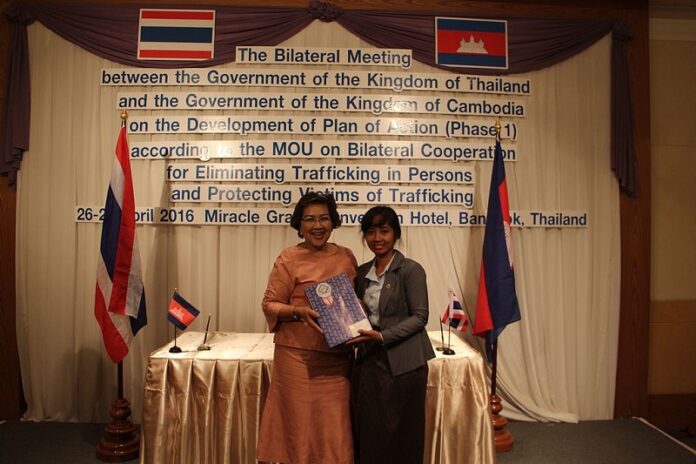
A bilaterial meeting between Thai and Cambodian officials on the Development of Plan of Action according to the MOU on Cooperation for Eliminating Trafficking in Persons held in 2016 in Bangkok. Photo: Inmean / Wikimedia Commons

PHNOM PENH — A Cambodian court on Tuesday charged 18 people, including 11 pregnant women, with violating laws against surrogate births.

Phnom Penh Municipal Court spokesman Ly Sophana said the 11 women and four other people were charged with surrogacy and human trafficking. Three more people were charged with conspiracy but did not appear.

The suspects were arrested last week in a police raid and charged under a law that specifically targets surrogacy, which was outlawed in 2016 after Cambodia became a popular destination for foreigners seeking women to give birth to their children.

Acting as an intermediary between an adoptive parent and a pregnant woman carries a penalty of one to six months in prison. The human trafficking offense is punishable by seven to 15 years’ imprisonment.

Developing countries are popular for surrogacy because costs are much lower than in countries such as the United States and Australia, where surrogate services can cost about USD$150,000. The surrogacy business boomed in Cambodia after it was put under tight restrictions in neighboring Thailand. There also were crackdowns in India and Nepal. After Cambodia’s crackdown, the trade shifted to neighboring Laos.

In early July, 33 pregnant Cambodian women hired to act as surrogate mothers were formally charged with surrogacy and human trafficking offenses, as were a Chinese man and four Cambodian women accused of managing the business.

In July last year, a Cambodian court sentenced an Australian woman and two Cambodian associates to 1 1/2 years in prison for providing commercial surrogacy services.

Advertisement

CIA Considered Potential Truth Serum for Terror Suspects

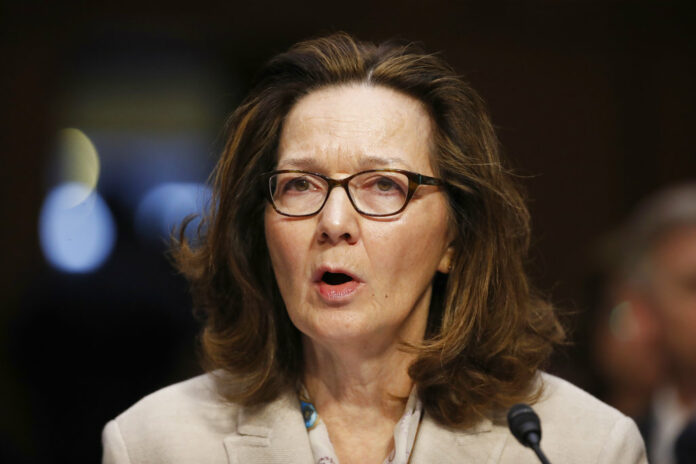
CIA nominee Gina Haspel testifies during a confirmation hearing of the Senate Intelligence Committee on May 9 on Capitol Hill in Washington. Photo: Alex Brandon / Associated Press

WASHINGTON — Shortly after 9/11, the CIA considered using a drug it thought might work like a truth serum and force terror suspects to give up information about potential attacks.

After months of research, the agency decided that a drug called Versed, a sedative often prescribed to reduce anxiety, was “possibly worth a try.” But in the end, the CIA decided not to ask government lawyers to approve its use.

The existence of the drug research program – dubbed “Project Medication” – is disclosed in a once-classified report that was provided to the American Civil Liberties Union under a judge’s order and was released by the organization Tuesday.

The 90-page CIA report, which was provided in advance to The Associated Press, is a window into the internal struggle that medical personnel working in the agency’s detention and harsh interrogation program faced in reconciling their professional ethics with the chance to save lives by preventing future attacks.

“This document tells an essential part of the story of how it was that the CIA came to torture prisoners against the law and helps prevent it from happening again,” said ACLU attorney Dror Ladin.

Between 2002 and 2007, CIA doctors, psychologists, physician assistants and nurses were directly involved in the interrogation program, the report said. They evaluated, monitored and cared for 97 detainees in 10 secret CIA facilities abroad and accompanied detainees on more than 100 flights.

The CIA ultimately decided against asking the Justice Department to approve drug-assisted interrogations, sparing CIA doctors “some significant ethical concerns,” the report said. It had taken months for the Justice Department to sign off on brutal interrogation tactics, including sleep deprivation, confinement in small spaces and the simulated drowning technique known as waterboarding. The CIA’s counterterrorism team “did not want to raise another issue with the Department of Justice,” the report said.

Before settling on Versed, the report said researchers studied records of old Soviet drug experiments as well as the CIA’s discredited MK-Ultra program from the 1950s and 1960s that involved human experimentation with LSD and other mind-altering drugs on unwitting individuals as part of a long search for some form of truth serum. These experiments were widely criticized and, even today, some experts doubt an effective substance exists.

“But decades later, the agency was considering experimenting on humans again to test pseudo-scientific theories of learned helplessness on its prisoners,” Ladin said.

Versed is a brand name for the sedative midazolam, used since the late 1970s and today sold commonly as a generic. It causes drowsiness and relieves anxiety and agitation. It also can temporarily impair memory, and often is used for minor surgery or medical procedures such as colonoscopies that require sedation but not full-blown anesthesia.

It’s in a class of anti-anxiety medications known as benzodiazepines that work by affecting a brain chemical that calms the activity of nerve cells.

“Versed was considered possibly worth a trial if unequivocal legal sanction first were obtained,” the report said. “There were at least two legal obstacles: a prohibition against medical experimentation on prisoners and a ban on interrogational use of ‘mind-altering drugs’ or those which ‘profoundly altered the senses.'”

Those questions became moot after the CIA decided against asking the Justice Department to give it a green light. “At the beginning of 2003, the Office of Medical Services’ review, informally termed ‘Project Medication’ was shelved, never to be reactivated,” the report said.

The CIA had no comment on the report’s release, but government lawyers emphasized in a court filing in the case early last year that the report, expressly marked “draft,” was just one agency officer’s impressions of the detention and interrogation program.

The document is not the CIA’s or the Office of Medical Service’s “final official history, or assessment, of the program,” the lawyers wrote.

The ACLU spent more than two years in court trying to get the report released. In September 2017, a federal judge in New York ordered the CIA to release it. Government lawyers tried three more times to keep information contained in the report under wraps, but the ACLU received the bulk of the report in August.

The government is still fighting to keep portions secret. They are to file briefs in a federal appeals court in New York on Wednesday, arguing that the judge ordered too much released.

While the CIA’s harsh interrogation program ended in 2007, the ACLU believes it’s important to continue seeking the release of documents about it, especially since President Donald Trump declared during his campaign that he would approve interrogating terror suspects with waterboarding, which is now banned by U.S. law, and a “hell of a lot worse.”

CIA Director Gina Haspel, who was involved in supervising a secret CIA detention site in Thailand where detainees were waterboarded, told the Senate during her confirmation hearing that she does “not support use of enhanced interrogation techniques for any purpose.”

The report cites many instances where medical personal expressed concern or protected the health of the detainees. Those who were thrown up against walls – a practice called “walling” – had their necks protected from whiplash by rolled towels around their necks, the report said.

When one detainee, who had been wounded during capture, was confined to a box, care was taken not to force his legs into a position that “would compromise wound healing.”

Physician assistants overruled using duct tape over the mouths of detainees during flights because air sickness could lead to vomiting and possible aspiration.

“That doesn’t mean that the doctors were sadistic or anything like that,” Ladin said. “But it means they were complicit because this pseudo-scientific torture could not have happened without the doctors’ participation.”

At the same time, the medical office’s report said waterboarding was not “intrinsically painful.” It said there was “physical discomfort from the occasional associated retching,” but that two detainees who endured the most extensive waterboarding sessions complained only “of the pain of the restraining straps.”

That contrasts with the Senate’s 2014 report on the CIA’s interrogation program, which stated that a prisoner known as Abu Zubaydah, a suspected al-Qaida operative who was waterboarded more than 80 times, “cried, begged, pleaded, vomited, and required medical resuscitation after being waterboarded.”

Some CIA medical personnel called waterboarding “little more than an amateurish experiment” and others worried that the practice would trigger spasms of the vocal cords, which could, at least temporarily, make it hard to speak or breathe.

At the same time, other medical personnel contended waterboarding actually “provided periodic relief” to a prisoner because it was a break from being forced to stand for long periods of time. The agency medical personnel also said the harsh interrogation program was “reassuringly free of enduring physical or psychological effects.”

Dr. Sondra Crosby, who has treated victims of torture, including two who were held at CIA secret sites, disagreed.

“The enduring pain and suffering experienced by the survivors of the CIA program is immense, and includes severe, complex post-traumatic stress disorder, depression, physical ailments, and psychosocial dysfunction,” said Crosby, of Boston University’s School of Medicine and Public Health. “At least one detainee was tortured to death. Their physical and psychological scars will last a lifetime.”

Story: Deb Riechmann

Advertisement

10 Indonesian Fishermen Accused of Shark Fin Smuggling
A great white shark in 2009 off the coast of South Africa. Photo: Hermanus Backpackers / Wikimedia Commons

HONOLULU — Ten Indonesian fishermen arrested in Hawaii are accused of trying to smuggle nearly 1,000 shark fins from the U.S. to Indonesia.

They had been working on a Japanese-flagged boat and were headed home via Honolulu when airport security workers found shark fins in their luggage last week, according to court documents.

At least 962 shark finds were founded in 13 pieces of luggage. Some were from oceanic whitetip sharks, authorities said.

It’s against U.S law to engage in international trade of a protected species without a permit. It’s also illegal to possess, sell or distribute shark fins in Hawaii, which was the first state in the nation to ban the pricey delicacy often used in soups.

The luggage included cardboard boxes, backpacks and suitcases.

“Fins were bundled together, and some were wrapped in foil. Some fins were sealed into clear and opaque bags, such as empty bags of rice, that obscured the contents, and those bags were, in turn, sealed within other opaque bags, apparently to contain odor or otherwise obscure the contents,” a complaint filed in court said.

During questioning, one of the fishermen told authorities that while at sea, they cut fins off live sharks and threw the bodies back. Another fisherman said he ate sharks on the boat and cut off the fins, according to court documents, and that he didn’t want dead sharks to go to waste.

Authorities estimate that the 190 pounds (89 kilograms) of seized shark fins have a street value of between USD$6,695 and $57,850.

A U.S. judge allowed them to be released on $10,000 unsecured bonds, each. Through an Indonesian interpreter, U.S. Magistrate Judge Kevin Chang explained to them they won’t have to pay any of the $10,000 if they stay out of trouble.

They were expected to be released from U.S. custody Tuesday and then taken to a Honolulu hotel.

The fishermen can’t leave the island of Oahu without court permission, Chang said, and they can’t discuss the case with each other.

Story: Jennifer Sinco Kelleher

Advertisement

Asian Leaders Push for Progress on South China Sea Pact

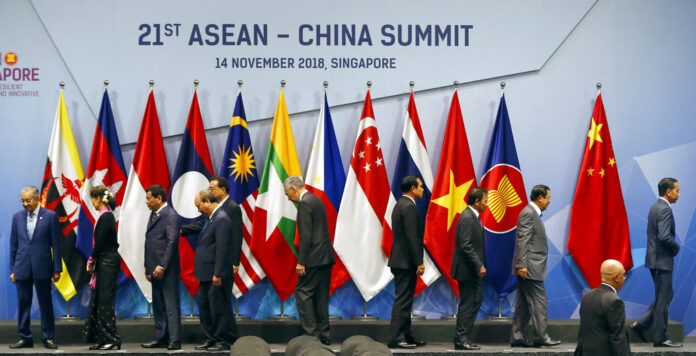
Chinese Premier Li Keqiang, fifth from left, and ASEAN leaders leave the stage following a brief group photo at the start of the ASEAN Plus China Summit in the ongoing 33rd ASEAN Summit and Related Summits Wednesday, Nov. 14, 2018 in Singapore. Photo: Bullit Marquez / Associated Press

SINGAPORE — Southeast Asian leaders and China are touting progress in keeping peace in the contentious South China Sea as they work toward a “code of conduct” to govern navigation routes and other activities in the region.

Speaking at the annual summit of the Association of Southeast Asian Nations in Singapore, Chinese Premier Li Keqiang cited the region’s management of territorial disputes as an example and said the trend was toward greater stability.

Philippine President Rodrigo Duterte said he wanted at “all cost” to set the rules governing behavior in those seas to avoid trouble.

Duterte told reporters that relations between China and its Southeast Asian neighbors were “excellent” and that friction was between Western nations and China. He said a code of conduct was needed to avoid dangerous miscalculations.

Advertisement

Pilots Say Boeing Didn’t Disclose Jet’s New Control Feature

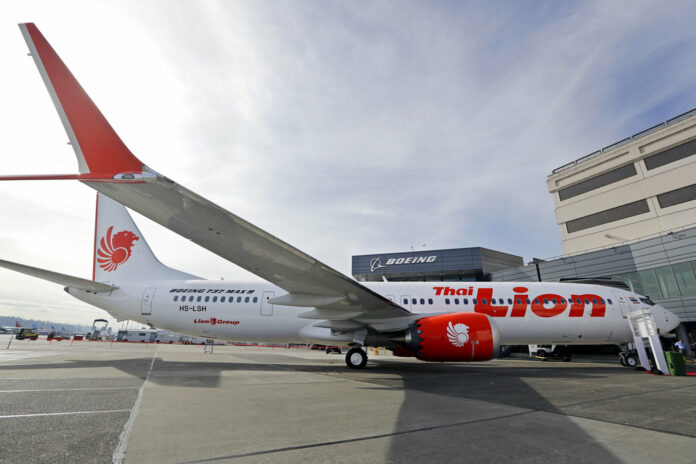
Boeing's first 737 MAX 9 jet at the company's delivery center before a ceremony transferring ownership to Thai Lion Air in Seattle in a March 2018 file photo. Photo: Elaine Thompson / Associated Press

Boeing didn’t tell airline pilots about features of a new flight-control system in its 737 MAX that reportedly is a focus of the investigation into last month’s deadly crash in Indonesia, according to pilots who fly the jet in the U.S.

Pilots say they were not trained in new features of an anti-stall system in the aircraft that differ from previous models of the popular 737.

The automated system is designed to help pilots avoid raising the plane’s nose too high, which can cause the plane to stall, or lose the aerodynamic lift needed to keep flying. The system automatically pushes the nose of the plane down.

But if that nose-down command is triggered by faulty sensor readings — as suspected in the Lion Air crash — pilots can struggle to control the plane, which can go into a dive and perhaps crash, according to a Boeing safety bulletin and safety regulators.

The bulletin included new details on how to stop a runaway series of events from leading to a crash, pilots say.

“It is something we did not have before in any of our training. It wasn’t in our books. American didn’t have it,” said Dennis Tajer, a 737 pilot and spokesman for the pilots union at American Airlines. “Now I have to wonder what else is there?”

Jon Weaks, a 737 captain and president of the pilots union at Southwest, said he couldn’t recall a similar omission in a Boeing operating manual.

“I was not pleased. How could something like this happen? We want to be given the information to keep our pilots, our passengers and our families safe,” he said.

Weaks said he is satisfied that “we have been given, finally, the correct information.”

The MAX is the newest version of the twin-engine Boeing 737. More than 200 have been delivered to airlines worldwide, including American, Southwest and United.

Boeing Chairman and CEO Dennis Muilenburg said Tuesday that the Chicago-based company remains confident the MAX is a safe airplane. He said Boeing did not withhold operating details from airlines and flight crews.

“We ensure that we provide all of the information that is needed to safely fly our airplanes,” Muilenburg told Fox Business Network. He said Boeing bulletins to airlines and pilots “point them back to existing flight procedures” to handle the kind of sensor problem suspected in last month’s crash.

A Southwest spokeswoman said the new automated maneuvering system was not included in the operating manual for MAX models. An American spokesman said the airline was unaware of some new automated functions in the MAX but hasn’t experienced nose-direction errors. A United spokesman said Boeing and the FAA do not believe additional pilot training is needed.

The Federal Aviation Administration issued an emergency directive last week to airlines, telling them to update cockpit manuals to include instructions for how pilots can adjust flight controls under certain conditions.

“The FAA will take further action if findings from the accident investigation warrant,” the agency said in a statement Tuesday.

On Oct. 29, Lion Air Flight 610 plunged into the Java Sea shortly after takeoff from Jakarta. All 189 people on board were killed.

John Cox, a former 737 pilot and now a safety consultant to airlines, said Boeing’s steps since the crash “have been exactly correct. They have increased pilot awareness, they have reminded them of the proper procedure to disable (the automatic nose-down action), which stops the problem.”

Indonesian investigators say that the Lion Air Boeing 737 MAX 8 experienced malfunctions with sensors that indicate the angle of the nose on four recent flights, including the fatal one.

The Wall Street Journal reported that U.S. and Indonesian investigators are increasingly focusing on the way that the plane’s automated control systems interact. They are also questioning whether the FAA and Boeing adequately analyzed potential hazards if the systems malfunction and send faulty data to the plane’s computers, according to the newspaper.

Shares of Boeing Co. ended Tuesday down $7.52, or 2.1 percent, at $349.51 after falling to $342.04 earlier in the day.

Advertisement

Rules Eyed After Child Dies Boxing

Photo: Matichon
Photo: Matichon

BANGKOK — The tourism and sports minister said Tuesday that the ministry would consider proposing stronger restrictions on minor boxing after a 13-year-old boy died following a knock-out during a weekend Muay Thai match.

Veerasak Kowsurat said the ministry would consider supporting the amendment of the 1999 Boxing Act that would set a minimum age for boxing matches, adding that it would push the matter to the cabinet as soon as possible.

The boy was knocked unconscious Saturday during the third round of a match, causing a brain hemorrhage from which he didn’t recover. He remained unconscious until he died Monday.

The boy and his 14-year-old rival wore no protective headgear. The match, held in Samut Prakan province, southeast of Bangkok, was an anti-drug charity bout with trophies supported by junta deputy leader Gen. Prawit Wongsuwan.

This incident led to renewed calls on restrictions to be imposed after research by Mahidol University showed last month that children boxers scored lower on IQ tests after receiving blows to the head. Those in the boxing circles were raising funds Tuesday to donate to the boy’s family by auctioning boxing shorts among others.

Pro-boxing Facebook Page Muay Thai Krobwongchorn, or Full-Circle Thai Boxing, expressed its condolences to the boy’s family in a Monday night post with a photo of the boxer in hospital breathing through a ventilator.

One comment on the post questioned why the referee did not stop the fight when it became clear that the boy could not take further blows.

On Monday, the same day the boy died, hundreds from the boxing business – including well-known boxers – held a gathering and a hearing critical of the proposed amendment made by the junta-appointed National Legislative Assembly.

Sukrit Praekrithawej, chairman of Lawyers for Boxers Club, said the proposed amendment is contrary to the “long-held tradition” and the reality of the boxing environment. The amendment seeks to ban competitive boxing for children below 12 and to require that 15 years olds wear protective gear and seek permission from authorities before each match.

Sukrit said such move limits the rights of sports personnel to develop their body, deprives people from their profession and prevents 300,000 children from earning extra income.

In Thailand, it is common for boys from poor rural backgrounds to start boxing from early on, with many beginning aged as young as five.

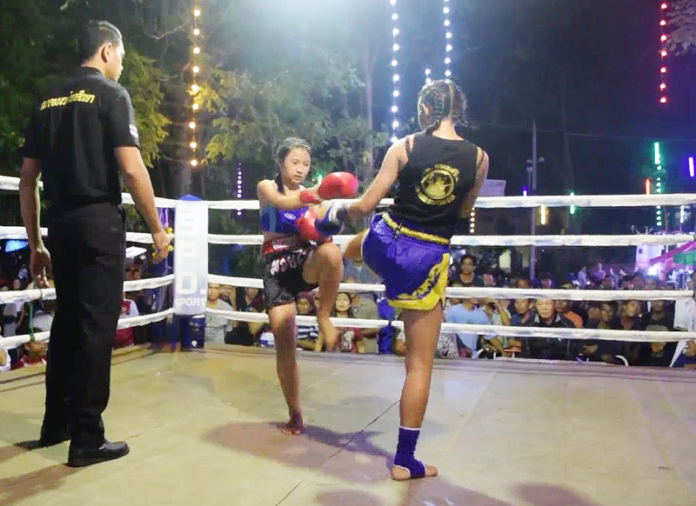
The news on the boy’s death came the same day a young muay Thai boxer – an 11-year-old girl – made headlines for her filial piety, fighting in the ring to earn 300 baht to 500 baht a bout to help support her poor family. The sixth grader from Ratchaburi province reportedly earns extra cash by collecting rubbish and taking neighbor’s dogs and cats to see the veterinarian.

The child said she has been fighting for money for two years because her family is poor and her parents must pay for her other siblings, adding that she thought she is doing good.

Her father, Krittapas Pawutinand, said he used to be a chauffeur but had been unemployed for five years because nobody wants to hire drivers over 35.

“Sometimes I pity my daughter because opponents are physically bigger. She is often 3 to 5 kilograms lighter. Sometimes she can fight, other times she can’t, but her heart is a fighting one and she has twice knocked down larger opponents,” Krittapas said.


Related stories:

Brain-Damaged Kid Muay Thai Fighters Prompt Call For Ban

Advertisement

Hot News

LATEST NEWS

Bangkok
overcast clouds
32.8 ° C
36.6 °
32.7 °
68 %
3.3kmh
100 %
Sat
37 °
Sun
36 °
Mon
35 °
Tue
34 °
Wed
33 °