























30 C
Bangkok
Sunday, June 28, 2026
Home Blog Page 1840

Krapao Avocado? This Ari Cafe is Doing It

It’s in the krapao, in the cakes and in the coffee. Avocado is in everything at a new, trendy Ari cafe that wants to get the Thai palate on board with the buttery superfood.

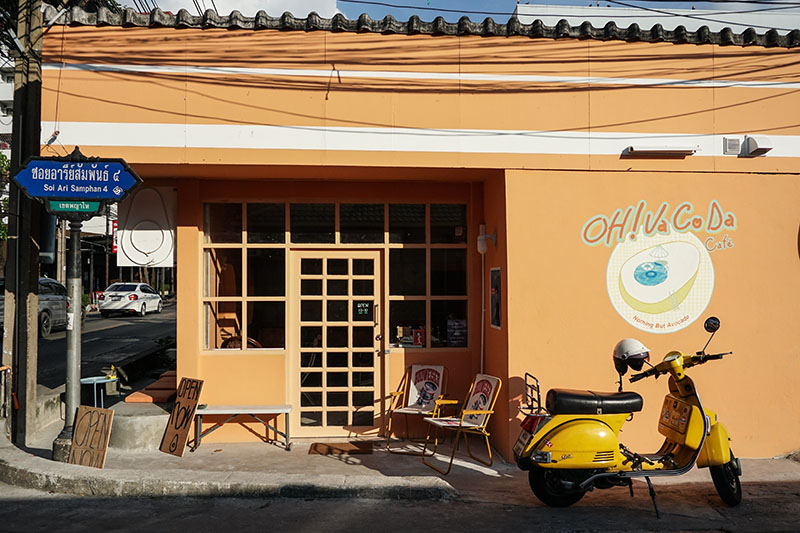
Oh! Vacoda, newly opened on Soi Ari Samphan 4, is run by an avocado-obsessed couple. Although the thoughtful fare will please avocado lovers, it’s capped by one dish that hits it out of the park – an exceptional case that highlights the fact there’s just not enough menu options ot make it a full cafe yet.

“We both love avocado, but we were bored of scooping it next to a salad. Half of Thai people eat it, the other half don’t because they say it tastes too bland and lian,” Rujiyatorn “Piang-ploy” Choksiriwan said, using a word to describe overly cheesy or greasy tastes. “So I wanted to make Bangkok-style avocado dishes.”

Piang-ploy and her boyfriend, Watcharapong “Bom” Thongyan, aren’t new to the biz: They also own the nearby Porcupine Cafe.
DSC03011
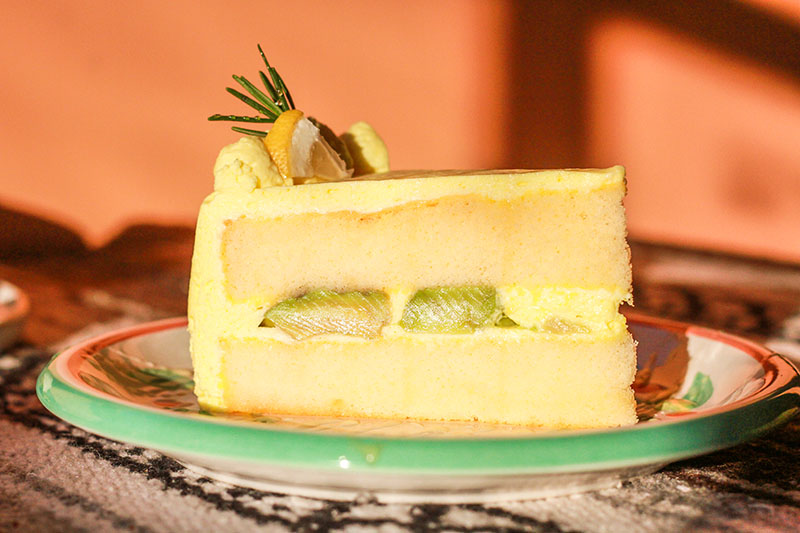
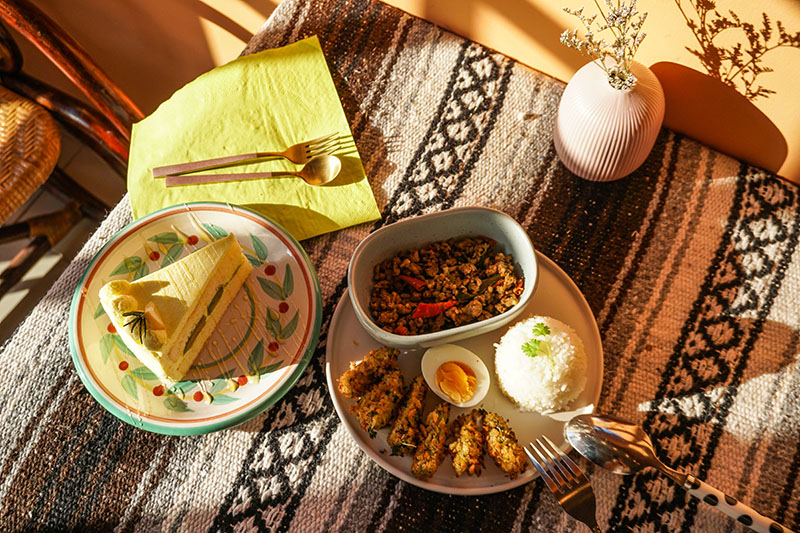
An Avocado Honey Lemon Cake (฿155) and fried avocado with krapao (฿190).

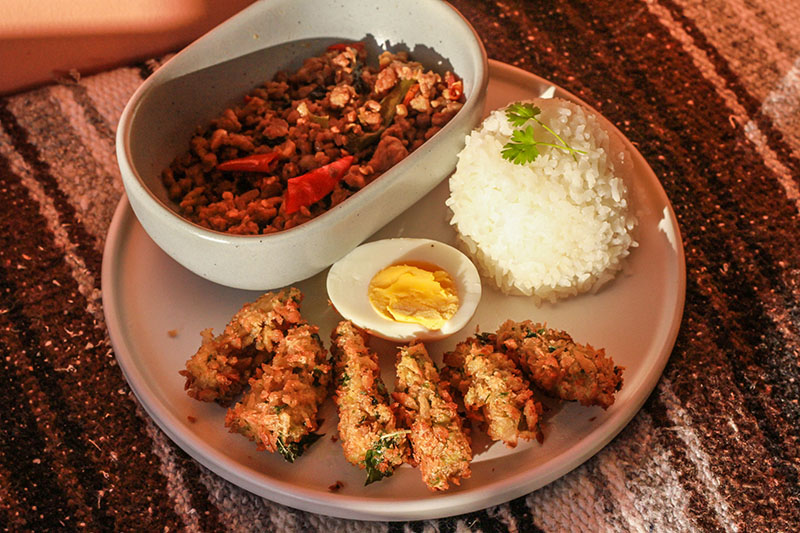
The star dish of the place – indeed, the only real Thai-ified avocado dish at the moment – is the krapao avocado (฿190). There’s a plate of krapao moo, a rice portion small enough to compensate for the extra avo and half a boiled egg. With it is the spiced avocado, rolled in breadcrumbs fried with holy basil. It’s perfect: buttery and yet Thai, with a thin layer of crunch that coats the slick green middle.

“I think krapao is the signature dish of Bangkok. Everyone eats it all the time, and farangs wanna eat it when they come here. Avocado is zaap in this dish,” Piang-ploy said.

Somehow, the greasy street food is made healthy. Finish the whole dish and it feels like street food, properly elevated and integrated with look noey (literally “butter ball,” or the Thai word for avocado).

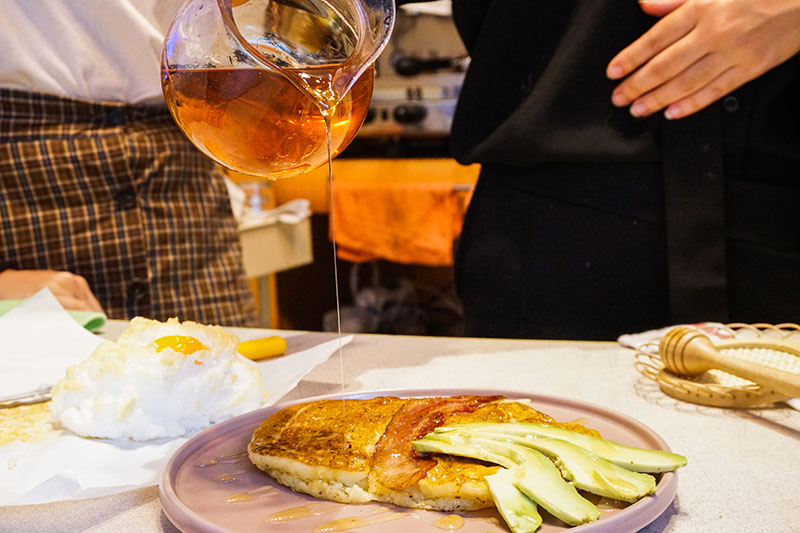
There’s no guac to be found (“we’re all bored of that,” Piang-ploy says). The only other savory fare is pancakes and bacon, with avocado mixed into the batter (฿235). The rest of the menu has avo-infused coffees, teas and desserts, but without any local adaptation.
DSC03047
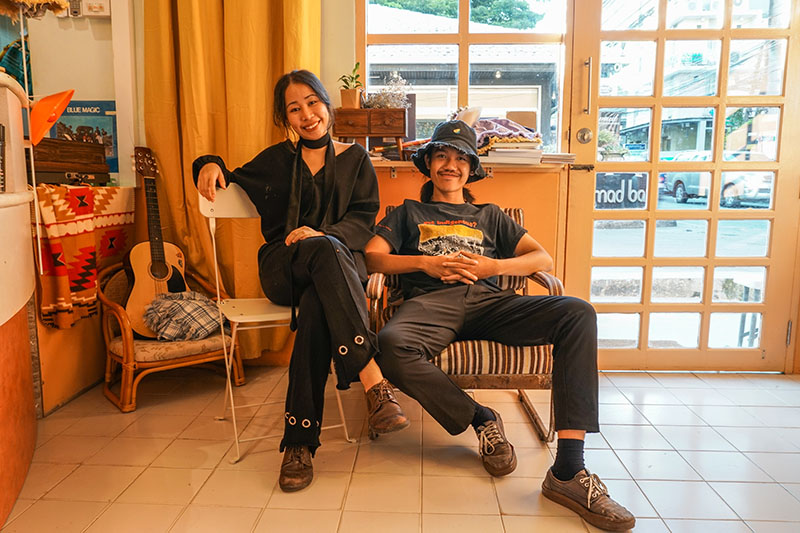
Rujiyatorn ‘Piang-ploy’ Choksiriwan, 27, and Watcharapong “Bom” Thongyan, 25.

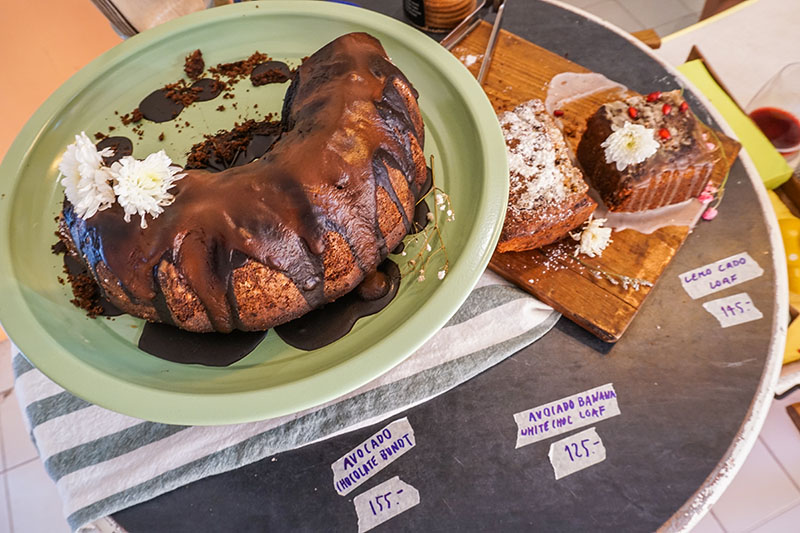
Try the avoothie (฿150) for a small yet dense citrusy blend of avocado and lime that is surprisingly filling. The Avocado Honey Lemon Cake (฿155) is a bit less impressive than the savories: The cake is powdery but tries to compensate with an avocado layer in the middle and zesty-sweet icing.

So is Oh! Vacoda a gimmick with a shelf life as brief as the fruit it celebrates?

“It’s not just a fad cafe. I put a lot of passion into this; two years in the making,” Piang-ploy said.

Going forward, she wants to find uses for all parts of the fruit – including making dyes from its peel for clothing to be sold at the store.

She disparaged Bangkok’s other avocado themed-joint, The Hass Bistro, saying Oh! Vacoda aims to incorporate its green flesh into the heart of each dish.

IMG 1132
The Avoothie (฿150).

Barista Bom makes the avocado drinks by boiling the pits in water used to make americanos, or the mixing the meat with chocolate for mochas. Teas are blended with avocado seeds but that doesn’t seem to add much more than novelty and a slight earthy smell, even the promising No. 3 blend of white tea, coconut, butterfly pea, elderflower rose and avocado seed (฿160).

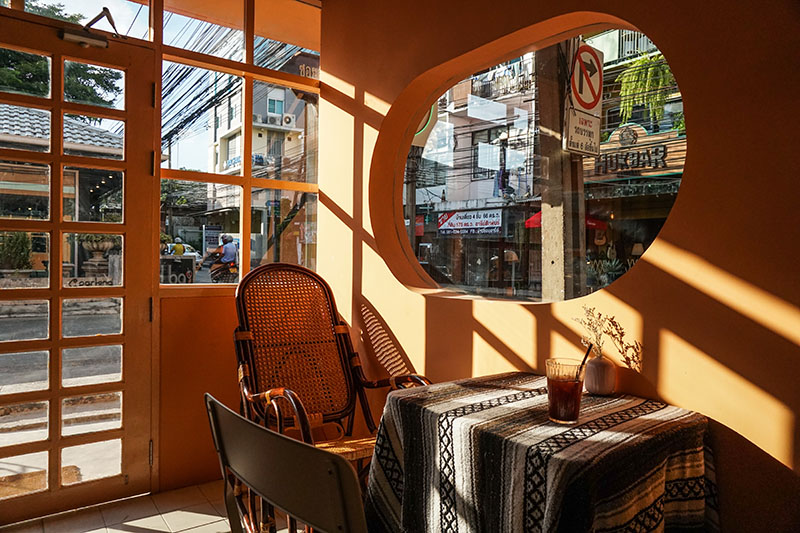
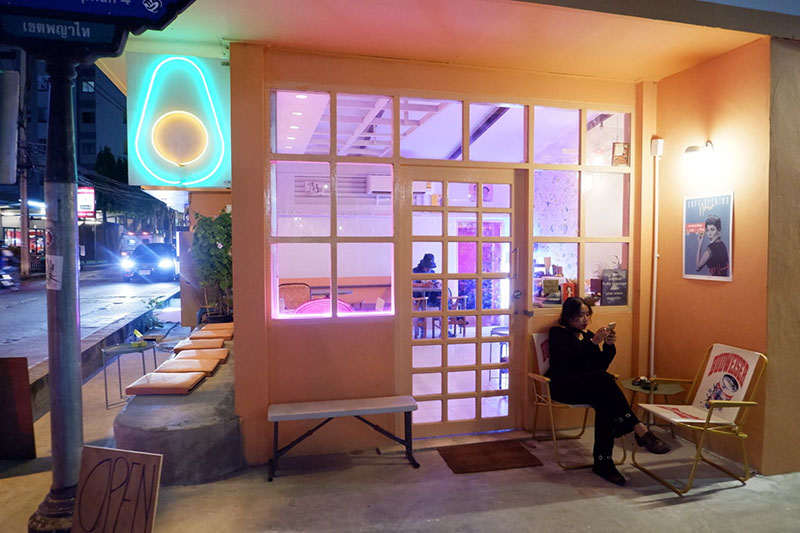
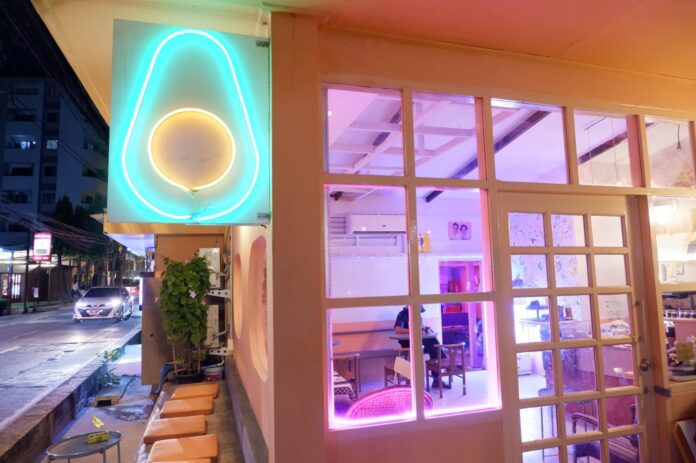
Like the menu, the decor is off to a good start and could use more development. The orange pastel walls and neon avocado sign are inviting, yet the attempted ‘60s-era theme comes across as cutesy Korean. Playful wall doodles by local artists run up against the exposed industrial aesthetic, tribal tablecloths and the second dining room’s ultraviolet lights.

Oh! Vacoda is a good start, and Piang-ploy says more dishes and drinks are in the works. Once its service picks up steam and the menu runs a little longer, its prospects will be strong. If future dishes are as thoughtful as the krapao, then Oh! Vacoda can break the curse of cafes based on a single food gimmick. Time, and many more zesty avocado, will tell.

Photos by Chayanit Itthipongmaetee

Oh! Vacoda is reachable by a ฿15 motorbike ride from BTS Ari, or a 15-minute walk to the top of Soi Ari Samphan 4. It’s open from 10am to 10pm every day.
IMG 1124
Deep-fried avocado sided with phad krapao (฿190).

DSC03032

IMG 1133
Avocado pancakes with bacon, topped with egg souffle (฿235).
IMG 1118
Avocado Honey Lemon Cake (฿155).
IMG 1108
Avocado seed tea blends (฿140 to ฿160 for a pot).

DSC03057 DSC02980 DSC02993 S 74440738

Advertisement

Brazil Museum Fire Sparks Soul Searching About Spending

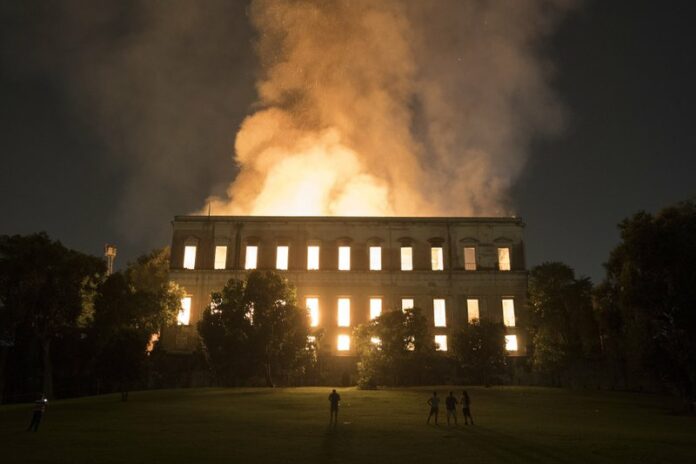
A 2018 file photo, flames engulf Brazil's National Museum in Rio de Janeiro, Brazil. Long before the museum went up in flames, the people who ran it were pleading for help to renovate the dilapidated 200-year-old building that held much of the nation’s historical and scientific heritage. Photo: Leo Correa / Associated Press

RIO DE JANEIRO — Long before Brazil’s National Museum went up in flames, the people who ran it were pleading for help to renovate the dilapidated 200-year-old building that held much of the nation’s historical and scientific heritage.

They appealed for $4.2 million in private donations three years ago — but received just $240,000, according to the Federal University of Rio de Janeiro, which oversees the museum. They’d turned to businesses for aid because government funds were declining as officials slashed budgets to cope with a recession.

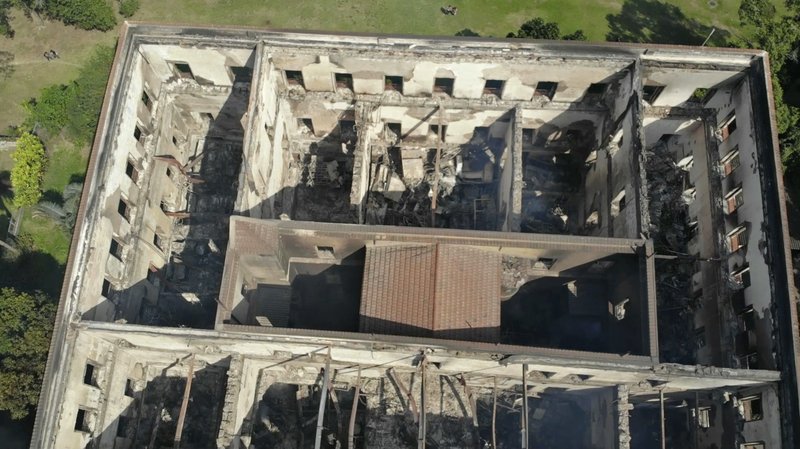
The lack of investment may have doomed the museum, which was gutted on Sept. 2 and lost most of its 20 million artifacts, many of them literally priceless, including what it likely the oldest human fossil in the Americas. It was among the greatest blows to a museum anywhere in recent times.

While the cause is still under investigation, the loss is causing belated soul-searching about why Latin America’s largest economy had devoted so few resources to protecting and maintaining the museum, housed in a structure built for Brazil’s now-defunct royal family.

“Brazil can’t set its priorities. I still can’t believe this tragedy happened,” university dean Roberto Lehrer told The Associated Press in a recent interview. “It isn’t only the state that failed the museum, it is also our society. There’s money for Disney shows in Rio, but not for the museum.”

800
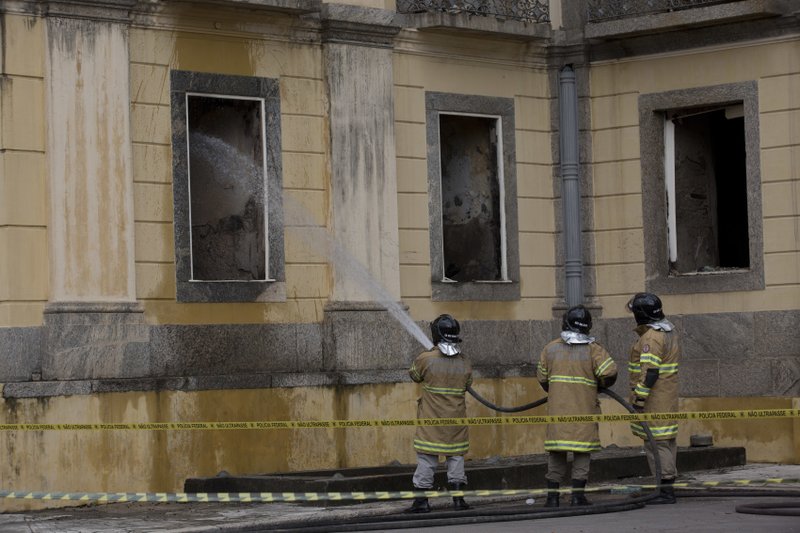
Firefighters spray water on Brazil’s National Museum during devastating fire that is causing belated soul-searching about why Latin America’s largest economy devoted so few resources to protecting and maintaining the facility. Photo: Silvia Izquierdo / Associated Press

Hours after the fire, Brazilian President Michel Temer allocated $2.5 million in emergency funds for the museum, leading many to lament that it took a tragedy for authorities to make a priority of a national treasure. While there is not yet a full accounting of what was lost, museum administrators have estimated 90 percent of its holdings were torched, including Egyptian antiquities, Brazilian indigenous art and documents going back hundreds of years.

The budget-squeezed museum had spent only $4,000 on safety equipment such as fire alarms and extinguishers from 2015 to 2017, according to Contas Abertas — “Open Accounts” in English — a nonprofit that tracks spending. Meanwhile, it said, Brazil’s Congress signed a $120,000 contract last year to wash the cars of 19 lawmakers.

The museum languished even as the country lavished billions of dollars on sports stadiums and public works to host the 2014 World Cup and 2016 Summer Olympics. Roughly $1 billion was spent on the Mane Garrincha Stadium in the capital of Brasilia, and it’s barely used today, despite costing $170,000 a month in maintenance.

The news website UOL recently compared spending on the museum to Rio de Janeiro’s most famed soccer venue: “Upgrades to Maracana Stadium would have paid for 2,400 years of maintenance for the National Museum.”

Discussions about spending priorities come at a time when Brazilians have been battered by near-daily revelations of vast sums raked off of public contracts by political corruption, in total several billion dollars over more than a decade. Launched in 2014, the “Car Wash” investigation into inflated construction contracts and kickbacks to politicians has brought down dozens of the country’s biggest names, including jailed former President Luiz Inacio Lula da Silva.

800
The gutted National Museum in Rio de Janeiro. Photo: Mario Lobao / Associated Press

Ney Santos, chairman of Observatorio Social do Brasil, another nonprofit that tracks public spending, said Brazil clearly has the resources to finance small operations like the National Museum.

“The money exists, but those resources are wasted all year round,” said Santos. “Brazil’s society is less vocal than in other countries, and only wakes up momentarily when some clearly avoidable tragedy occurs.”

The museum had a yearly budget of $1.75 million, most of which came from Federal University of Rio de Janeiro. It got about $125,000 in the past from other agencies, such as the Culture Ministry, but those funds had fallen to $90,000 this year, according to museum officials.

Some funds came from the cost of admission to the museum, about $1.25 per visitor.

In the wake of the fire, some government ministers blamed the university for not spending enough to maintain the museum. The university, which has about 70,000 students, says its overall budget has been squeezed as well, falling from $112 million to $102 million in 2017. So far this year, it has only received $94 million for all its activities.

Officials said that has translated into cuts to many things, including museum maintenance.

800
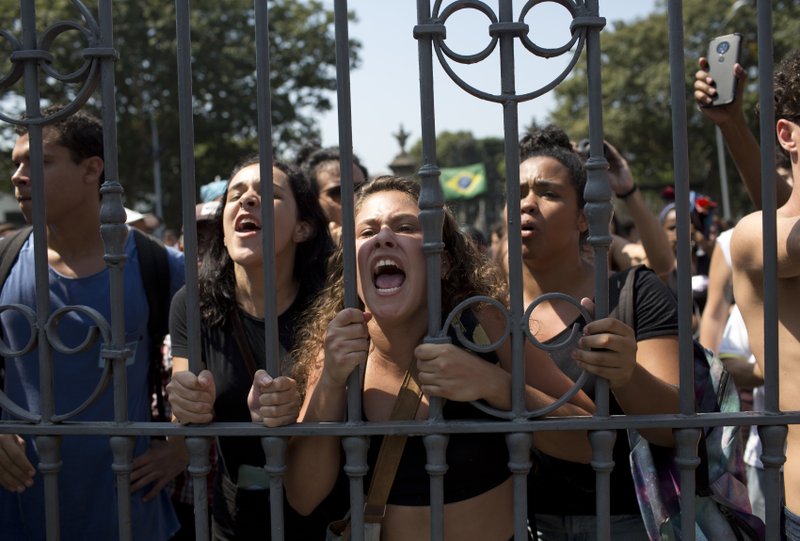
Students and employees of Brazil’s National Museum protest outside the institution after a fire that destroyed most of its 20 million artifacts. Photo: Silvia Izquierdo / Associated Press

Frustration over the loss has seeped into the country’s presidential campaign.

Before the fire, only two of the main presidential candidates had mentioned investment in culture in their platforms: environmentalist Marina Silva and left-leaning Fernando Haddad. Since the blaze, other candidates have been promising more consistent funding and more attention to such institutions, though they have been light on details.

Silva called the fire “a lobotomy in the Brazilian people” and pledged to increase funds for museums if elected. Haddad said “it is regrettable to see such neglect” in several Brazilian museums and cultural institutions, and promised change if elected.

One exception is poll leader Jair Bolsonaro, a far-right congressman who sometimes associates culture and art with left-leaning politics.

“It caught fire already. What do you want me to do?” Bolsonaro told reporters a few days after the blaze.

Advertisement

City Hall Adds Ratchadamri to Paid Parking Roads

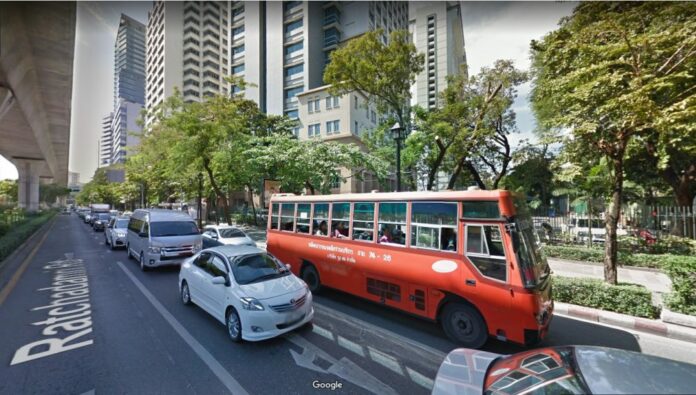
Ratchadamri Road. Photo: Google Maps

BANGKOK — Starting today, Ratchadamri Road joins 65 other Bangkok streets where motorists are supposed to pay to park.

The downtown road joined others in high traffic or tourist areas such as Phra Athit, Khaosan and Charoen Krung roads to have metered parking under an order signed by the provincial governor and published in the Royal Gazette on Wednesday.

The law declared 66 roads throughout the capital be metered, though it was already a long-standing, if poorly understood, practice.

Other roads with metered parking include Pradiphat and Din Daeng roads, along with Soi Phahon Yothin 7 (Soi Ari).

Attendants on those streets, in khaki BMA uniforms, are meant to collect the hourly parking fees; but in practice, it is unevenly enforced.

While the parking charges are meant to be enforced 24/7, they will be waived 4am to 8am on Ratchadamri Road.

According to the order, rates range from THB5 to THB50 for the first hour of parking depending on vehicle type. Motorcyclists pay THB5 for the first hour while subsequent hours are 10 baht each. Tuk-tuks and four-wheel vehicles pay THB10 for first hour and double that each additional hour.

The maximum fee is THB50 for large trucks with more than 10 wheels.

Fees are to be rounded up to the hour. How the money are to be collected was not spelled out.

The news was met with alarm online, where it was misunderstood as something new.

A representative answering the phone at City Hall’s Finance Department, who only identified himself as Auttapon, said the parking fees have in fact been around since 1960. The law is poorly enforced, however.

“Actually, we’ve collected parking fees for a long time,” Auttapon said by phone on Thursday morning. “But sometimes the officers do not collect the charges on a few roads such as Chakkraphatdiphong Road because of heavy traffic congestion in the area.”

Of all the locations, a fare machine will only be installed in a city lot on Ratchadamri Road located across from Chulalongkorn Hospital and next to Lumphini Park.

Advertisement

Prayuth Upset by Prediction He’ll Lose Power in Election

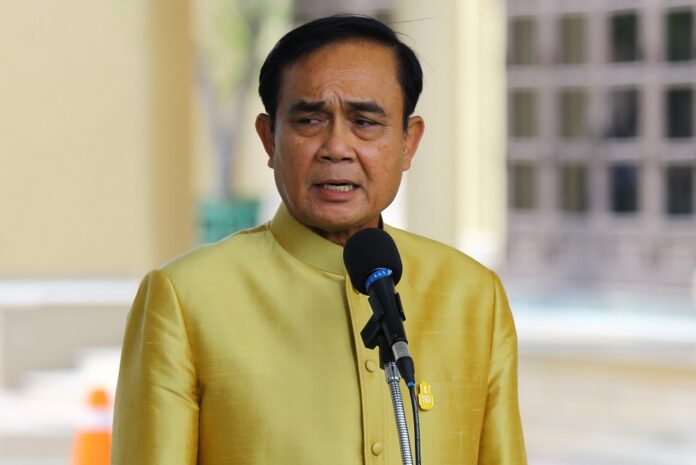
Junta chairman Gen. Prayuth Chan-ocha in September in Bangkok.

BANGKOK — Junta chairman Prayuth Chan-ocha has lashed out at a senior politician who suggested he will fail to hang onto power after elections promised for February.

Gen. Prayuth said Wednesday that Sanoh Thienthong, a well-known Pheu Thai Party kingmaker who helped formed past governments, should retire and go home because he’s old. His rebuttal came after Sanoh predicted earlier at Pheu Thai’s first executive meeting that Prayuth will be shut out because Pheu Thai will repeat its past electoral successes and land 200 seats.

“Sanoh should go and rest. He’s old. How can he look down on Thais?” Prayuth said, referring to Sanoh’s age of 84.

“Should Thais and Thailand allow that to happen?” Prayuth continued. “Do they want things to be chaotic like before? Will the country not be chaotic? How can they incite people? That’s because we allow them to do it.”

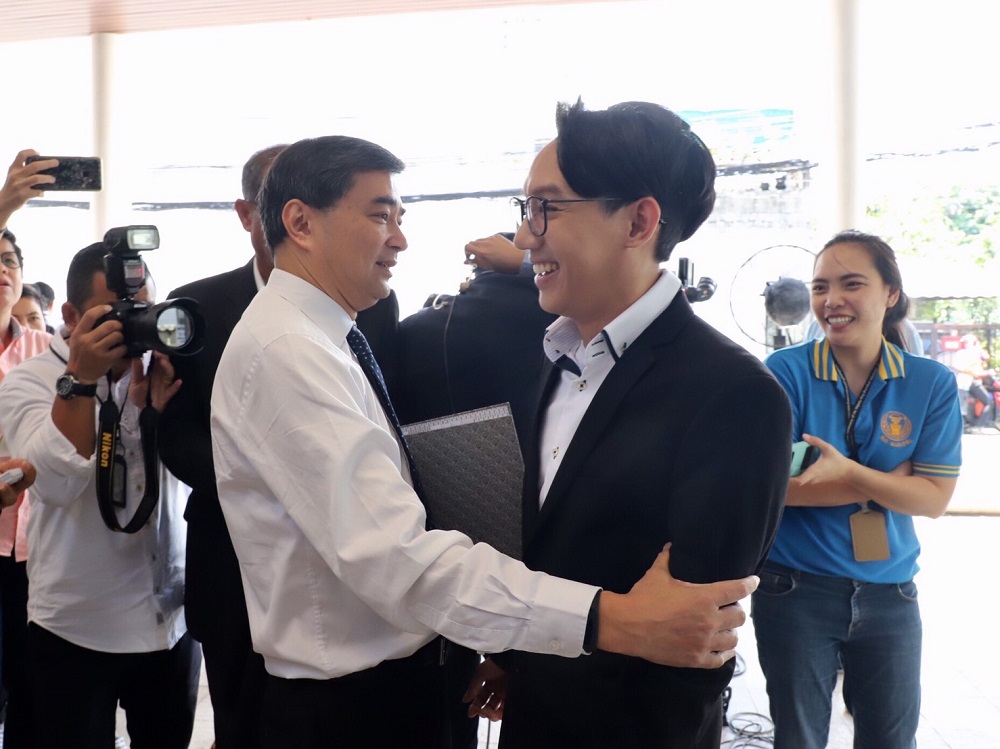
Democrat Party chairman Abhisit Vejjajiva hugs Surabot Leekpai, son of former Democrat leader Chuan Leekpai.
เพื่อไทย ๑๘๐๙๒๖ 0021
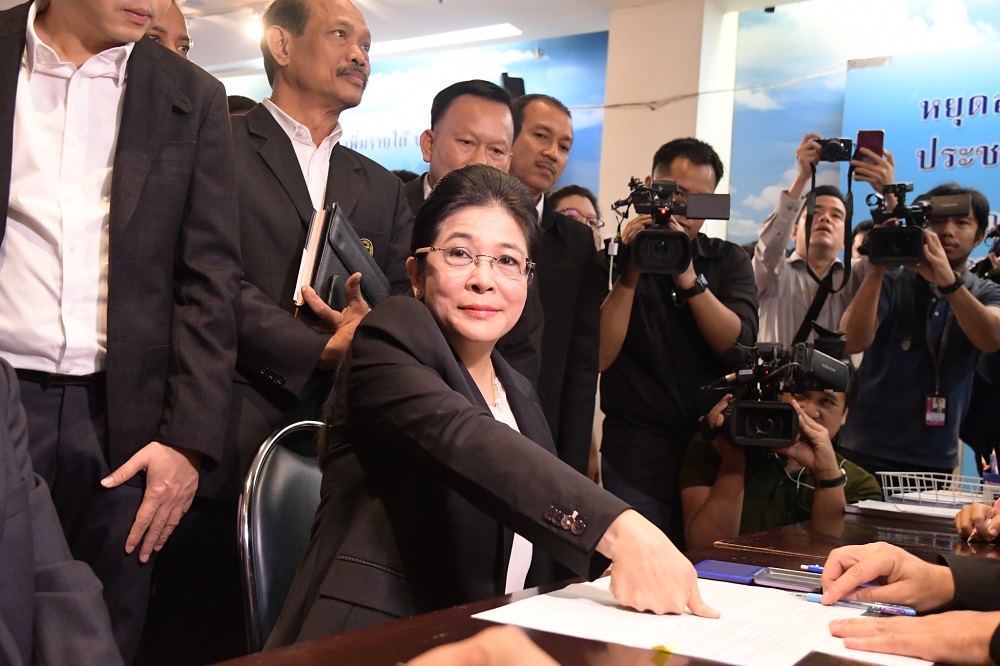
Sudarat Keyuraphan presses her fingerprint on a document Wednesday at Pheu Thai Party executive meeting in Bangkok.

Wednesday saw the two major parties, Pheu Thai and Democrat, hold their first meetings in over four years since the 2014 coup. The junta has partially relaxed its ban on civilian politics to allow parties to organize in preparation of a vote now expected in February.

Pheu Thai’s meeting saw Sudarat Keyuraphan, a leading contender to lead the party, featured visibly as she registered as a member.

The Democrat’s pow-wow saw party leader Abhisit Vejjajiva embrace new member Surabot Leekpai, a television host and son of the party’s last popularly elected prime minister, Chuan Leekpai.

Related story:
‘Pleum VRZO’ Follows Former PM Dad Into Politics, Democrat Party
As Pheu Thai Unease Grows, Sudarat Aide Denies She’s Ditching Them

Advertisement

Pheu Thai Readies Backup Party in Case it’s Dissolved

An emblem of Pheu Tham Party features the letter ธ, which transliterates to T, with the Democracy Monument in the middle.

BANGKOK — Pheu Thai is reported to be moving key members to a surrogate party, just in case it gets disbanded by the junta and banned from politics.

Fearing the party could suffer the same fate as its two predecessors, a number of potential MP candidates and party leaders were transferred to a shell party called Pheu Tham, or “For Dharma,” according to a leader of the Pheu Thai-allied Redshirt organization.

“Anything can happen,” Thida Thavornseth of the United Front For Democracy Against Dictatorship said in an interview. “Pheu Thai might be eliminated by one way or another.”

Upon hearing the news, deputy junta chairman Prawit Wongsuwan taunted Pheu Thai.

“Well, good for them,” Gen. Prawit said in a reply to reporters’ questions. “Did they do something wrong?”

Thida said Pheu Tham was founded back in the turbulent year of 2010 as Pheu Thai’s contingency plan in the event the party was disbanded prior to the general election of 2011.

“It was our spare party back then. We didn’t have to use it, but there’s a high possibility that we may need it soon,” she said.

Pheu Thai’s history of winning elections has made it a force to reckon with by its political adversaries. Perhaps seeking to capitalize on its brand, a new party was recently registered with a nearly identical logo and name: “Pheun Thai.”

An unnamed Pheu Thai source also told the media that up to 90 percent of candidates in the north and the northeast – the party’s major electoral strongholds – could be moved to Pheu Tham to save them should the hammer fall.

Their anxiety is not entirely groundless. After a 2006 coup ousted prime minister Thaksin Shinawatra, his Thai Rak Thai Party was disbanded in a court ruling and more than 100 of its executives barred from politics for five years.

Remnants of Thai Rak Thai regrouped in their surrogate party, the People’s Power Party, only to be dismantled again by the same court in 2008.

An anonymous party source who went public with the information also said former prime minister Somchai Wongsawat, a brother-in-law of Thaksin, would head Pheu Tham. Thida said she had no knowledge of that.

Advertisement

American Vet Cuts Off Arm to Escape Meat Grinder

Photo: John Giacamoni

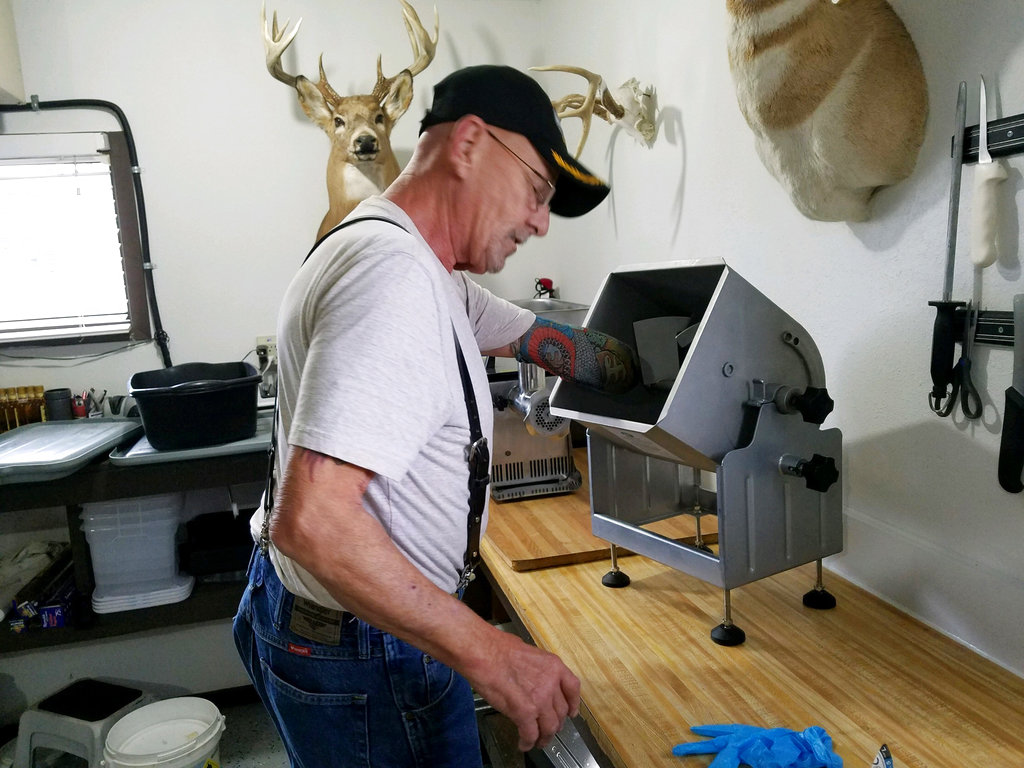
JAMESTOWN, North Dakota — A 69-year-old Vietnam vet who lost a hand after it got stuck in a meat mixer while he was making sausage at his North Dakota home says he had to slice off his left arm above the wrist with a butcher knife or risk bleeding to death.

In his first public comments since the Aug. 17 accident, Myron Schlafman said he credits two police officers with saving his life by quickly applying a tourniquet before ambulance crews took him to the hospital.

“I’ve always appreciated life, but not as much as I do now,” he told KFGO radio.

Schlafman said he was taking a chunk of meat out of the mixer in the garage of his Jamestown home when he accidentally stepped on a pedal to activate the machine.

“I just looked and knew I was in big trouble,” said Schlafman, who is right-handed.

In this Sept. 25, 2018 photo, Myron Schlafman demonstrates how his arm got caught in the meat mixer Jamestown, North Dakota. Photo: KFGO Radio / via AP

The bone was severed, but his arm was still caught by muscle, nerves and skin. He grabbed the knife, which was mercifully within reach, and cut himself free.

“If I would have hesitated, I would have stood right there and bled to death,” he said.

Schlafman spent nine days in the hospital and underwent three surgeries. He will be fitted with a prosthetic in a few months, after the stump on his left arm has fully healed.

“It would be very easy to sit back, feel sorry for myself and get depressed,” he said. “I went through Vietnam. I can handle this.”

Advertisement

People Line Streets of Hanoi to Mourn President Quang

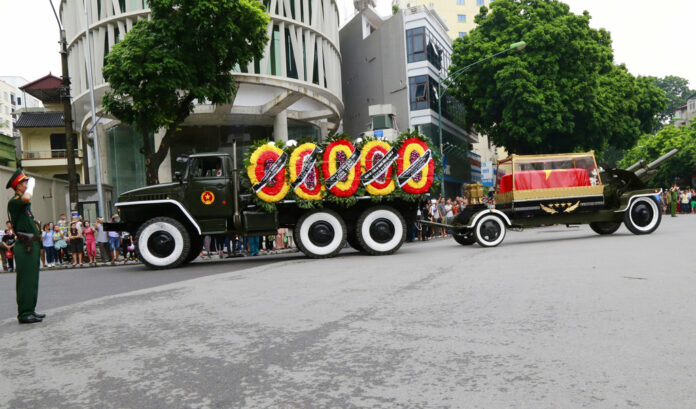
An army officer salutes as a flag-draped coffin of late President Tran Dai Quang passes on a truck-drawn artillery carriage Thursday in Hanoi. Photo: Tran Van Minh / Associated Press

HANOI — Thousands of people lined the streets of Hanoi on Thursday to pay their last respects to Vietnam’s late President Tran Dai Quang.

Many were using smart phones to catch glimpses of his flag-draped coffin as it passed by on a truck-drawn artillery carriage.

Quang died last week at 61 of what a government doctor said was a rare viral illness.

In a eulogy, Communist Party Chief Nguyen Phu Trong said Quang’s passing was a great loss to the country and praised his contributions to the nation.

Trong said Quang, who was public security minister before becoming president, had helped to “uncover and prevent many sabotage plots of the hostile and reactionary forces and other criminals.”

As president, Quang, along with other leaders, sped reforms to develop Vietnam’s socialist market-oriented economy and worked to heighten Vietnam’s international role, Trong said.

Cambodian Prime Minister Hun Sen and South Korean Prime Minister Lee Nak-Yeon were among dignitaries who paid their respects as Quang’s body lay in state at the National Funeral House.

He was to be buried in his home village in northern Ninh Binh province later Thursday in accordance with his family’s wish instead of the Mai Dich Cemetery in Hanoi where most of the high-ranking officials were buried.

Quang became minister of public security in 2011 and was elected by the National Assembly as the nation’s president in 2016.

Vice President Dang Thi Ngoc Thinh has been named acting president, the country’s first woman to hold that position. No date has been given for the election of a new president.

Advertisement

Before Wild Boars, the Untold Rescue of 4 Cave Rescuers

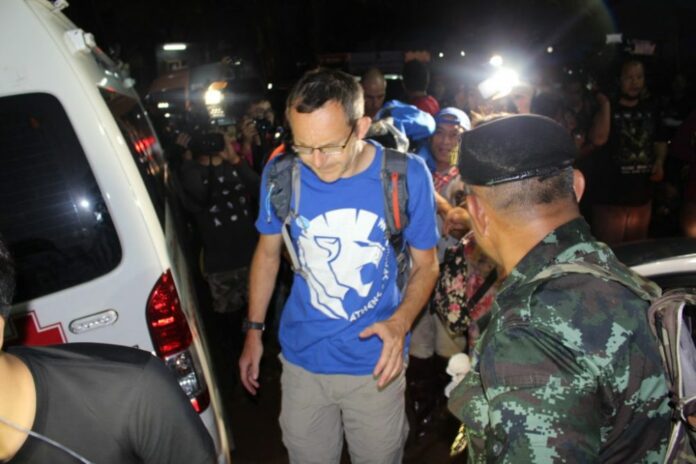
Diver John Volanthen arrived in July at Tham Luang Nang Non.

BANGKOK — There were a host of heroes in July’s dramatic rescue of 13 members of a youth soccer team from a cave in northern Thailand … and then there were the hapless would-be helpers from the Thai Well Water Association.

It turns out that 17 people in all were rescued by the expert foreign cave divers who rushed to lend their unique abilities to save the boys and their coach.

The story of the first four people to be rescued— barely reported and now mostly forgotten — was recounted Wednesday by the association’s president, Surapin Chaichompoo, who explained how he and three employees spent two days draining water from the cave in an attempt to help the rescue, took a nap, and found themselves trapped inside with the water rising.

He said that on their third day of being trapped, two British divers searching for the boys stumbled upon them and improvised a rescue, taking them out one by one after giving them a 30-minute crash course in diving. Surapin said they made their way through the murky waters by swimming and sometimes walking, trying to avoid sharp obstacles in the low visibility.

Surapin said he was unable to contact them afterward, but would still like to thank them.

“I really owe my life to these two divers. They were here to help the 13 people but I got stuck first after I went in to work. If they didn’t save me that day, I wouldn’t be here today,” Surapin said by phone from the northern city of Chiang Mai. “The same for the other three people. I really owe them, the two divers John and Richard. If they are abroad, I will fly over to personally thank them myself.”

The tale of the little-known first rescue resurfaced Saturday when Rick Stanton — who with diving buddy John Volanthen discovered the four on June 28, and the cave boys on July 2 — gave a talk at the annual “Hidden Earth” conference of British cavers in North Somerset in England, according to a report on the website Darkness Below, which carries news for underground explorers.

The two divers had arrived at the cave site just the day before they found Surapin and team.

“The foreign divers came here as volunteers. They are confident in their abilities.” said Surapin, who noted the amount of specialized equipment they carried. “You have to understand that these foreigners have a bit of crazy in them. They like to do crazy things. But they are very good at diving.”

Surapin and his group were part of an early group of helpers who rushed in before the rescue effort was properly organized. The others working inside the cave were apparently not as tired, however.

“When I woke up I thought to myself ‘Why is the cave half-flooded?’ So I ran out to look toward the entrance,” Surapin said. “I looked back and ran to the high mound where we were sleeping. It turned out everyone had left and it was only the four of us left. I told my guys ‘wake up, wake up.'”

Surapin said the group was not immediately worried if the waters did not rise further, because they had enough food and supplies to last a month.

Still, there were announcements to evacuate the cave and its surroundings because water levels began to rise again.

“I was telling my guys, if it can rise it can decrease. It will probably decrease in the morning,” Surapin said. “But no, the amount of water kept increasing.”

At one point, Surapin said, he began to hear clanking noises under the water that he later found out was the sound of the British divers and their oxygen tanks knocking against the cave’s walls.

“The sound was coming from the cave’s entrance and it was getting louder and louder,” he recalled. So he began throwing rocks into the water.

“The first rock I threw in didn’t get a reaction. The sound of clanking tanks was still soft,” he said. “So I threw another one. This time, the clanking noises got really loud and we heard clanking non-stop. After that I saw a flashlight begin to surface and told the guys ‘hey, there really is someone here.'”

He said when the divers found his group, “They thought they found 13 people. I told them ‘no, it’s four.’ They said ‘OK, oh my God.'”

Surapin said his three employees now say they will never go near a cave again.

“If you want me to go up a tree, I’ll go up a tree,” vowed one. “But no caves anymore, they’re scary.”

Story: Kaweewit Kaewjinda

Advertisement

Bank Promises to Fix ‘Blinding’ Bangkok Tower

Photo: To_moddang / Twitter

BANGKOK — A commercial bank on Wednesday said it would look into complaints its office tower is blinding residents.

SME Development Bank, whose headquarters are in Bangkok’s Phaya Thai business district, promised a remedy after pictures of the sun reflected from its windows went viral on social media.

“We apologize for the inconvenience that the reflected light troubles you. We are sorry,” the bank wrote in a reply to one of the complaining residents. “We will call a meeting to find ways to solve this.”

The issue was first brought to attention when Twitter user To_moddang wrote to popular news site JS100.

“@Js100radio I don’t know what building this is. It’s next to Pearl Building, Phahon Yothin,” To_moddang tweeted Tuesday. “It reflects sunlight causing people in buildings on the Ratchayothin side to suffer. Our eyes and heads are aching. Very dangerous!”

A city planning official told the media Wednesday that the 24-year-old building would be inspected to see whether its materials are indeed causing harm to the public. If so, the bank must fix it or face closure, department head Noppadol Chaipanya said.

The issue was taken less seriously on social media, where it didn’t take long for someone to compare it to the flame-wreathed tower of Barad-dur from the “Lord of the Rings” films.

Advertisement

Monk-Thief Alleged to Be Serial Temple Burglar

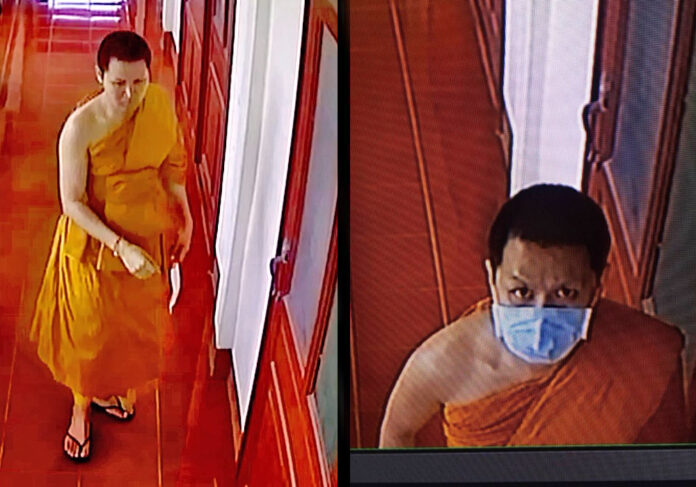
A Chiang Mai temple burglar police identified as Panupong Lakornsri, who has been a monk for most of his life, in still images taken from a security camera.

CHIANG MAI — By day he was a Chiang Mai monk. By night, police said, Panupong Lakornsri was a serial temple raider, who stole 230,000 baht in his latest burglary.

The 26-year-old man was arrested Tuesday, two days after he allegedly broke into the abbot’s room at Wat Ban Pong to steal while the temple was hosting a religious event. He was caught in the act by a security camera.

Police said he confessed to stealing 230,000 baht from the temple, located in the northern province’s Hang Dong district, and had already spent about 170,000 baht to pay off debts. He said he fled to a temple in Lampang province and voluntarily left the monkhood.

According to police, Panupong spent most of his life in an orange robe since being ordained about 20 years ago. They also said he’d robbed many temples in Chiang Mai and Bangkok to fund more material pursuits including a car and mobile phones.

Angry community members turned out to a staged police “reenactment” of Panupong’s alleged crime on Wednesday and had to be restrained from assaulting him.

He’s accused of going temple to temple, asking to join their religious events – when collections run high – as a pretense to sneak in and steal money.

Advertisement

Hot News

LATEST NEWS

Bangkok
overcast clouds
30 ° C
31.6 °
30 °
75 %
4.7kmh
100 %
Sun
31 °
Mon
33 °
Tue
33 °
Wed
31 °
Thu
29 °