


























28.3 C
Bangkok
Sunday, June 21, 2026
Home Blog Page 2102

Death in Florida, 21st Caused by Takata Air Bags

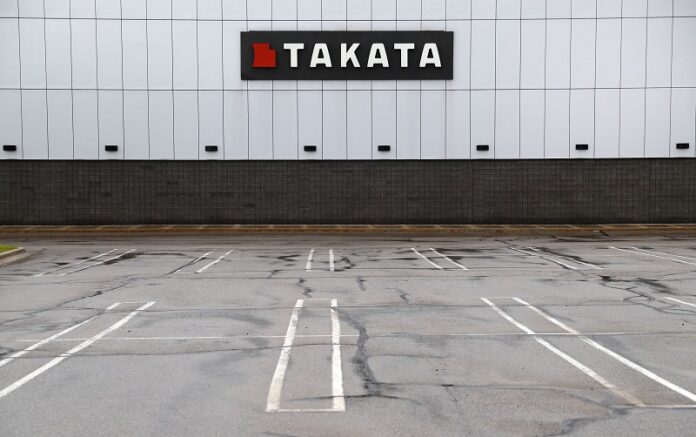
TK Holdings Inc. headquarters last June in Auburn Hills, Michigan. Photo: Paul Sancya / Associated Press

Florida officials confirmed Wednesday that 34-year-old Nichol Barker was at least the 21st person to die worldwide due to exploding Takata air bag inflators. She was involved in a relatively minor crash in July but died of a head wound caused by shrapnel that shot out of her 2002 Honda Accord’s air bag. Nineteen auto and truck makers are recalling up to 69 million inflators in the U.S. and 100 million worldwide because they can explode with too much force and hurl shrapnel at drivers and passengers. The deaths have occurred since May 2009:

— May 27, 2009: Ashley Parham, 18, of Midwest City, Oklahoma, 2001 Honda Accord

— Dec. 24, 2009: Gurjit Rathore, 33, of Richmond, Virginia, 2001 Honda Accord

— Sept. 13, 2013: Hai Ming Xu, of Alhambra, California, 2002 Acura TL

— July 27, 2014: Law Suk Leh of Sibu, Malaysia, 2003 Honda City

— Sept. 7, 2014: Jewel Brangman, 26, of California, 2001 Honda Civic

— Sept. 29, 2014: Hien Thi Tran, 51, of Orlando, Florida, 2001 Honda Accord

— Jan. 18, 2015: Carlos Solis, 35, of Spring, Texas, 2002 Honda Accord

— April 15, 2015: Kylan Langlinais, 23, of Lafayette, Louisiana, 2005 Honda Accord

— July 22, 2015: Unidentified 13-year-old boy, Mercer County, Pennsylvania, 2001 Honda Accord

— Dec. 22, 2015: Joel Knight, 52, of Kershaw, South Carolina, 2006 Ford Ranger

— March 31, 2016: Huma Hanif, 17, of Fort Bend County, Texas, 2002 Honda Civic

— April 16, 2016: Unidentified person, Sabah State, Malaysia, 2006 Honda City. Inflator ruptured, no death cause determined.

— May 1, 2016: Unidentified person, Malaysia, 2003 Honda City. Inflator ruptured, no death cause determined.

— June, 2016: Unidentified person in Malaysia. Inflator ruptured, no death cause determined.

—June 19, 2016: Ramon Kuffo, 81, Hialeah, Florida. Inflator ruptured while he was repairing interior of car.

— Sept. 24, 2016: Unidentified driver, Johor State, Malaysia, 2009 Honda City. Inflator ruptured, no death cause determined.

— Sept. 30, 2016: Delia Robles, 50, of Corona, California, 2001 Honda Civic.

— July 1, 2017: Steve Mollohan, 56, of West Virginia, 2006 Ford Ranger.

— July 10, 2017: George R. Sharp, 61, of Baton Rouge, Louisiana, 2004 Honda Civic.

— July 13, 2017: Unidentified 58-year-old man in suburban Sydney, 2007 Honda CR-V.

— July 19, 2017: Nichol Lynn Barker, 34, of Holiday, Florida, 2002 Honda Accord.

Sources: Associated Press archives, Center for Auto Safety, National Highway Traffic Safety Administration, Honda Motor Co., legal documents and police reports
Advertisement

Thai Law About to Make Medical Marijuana Legal

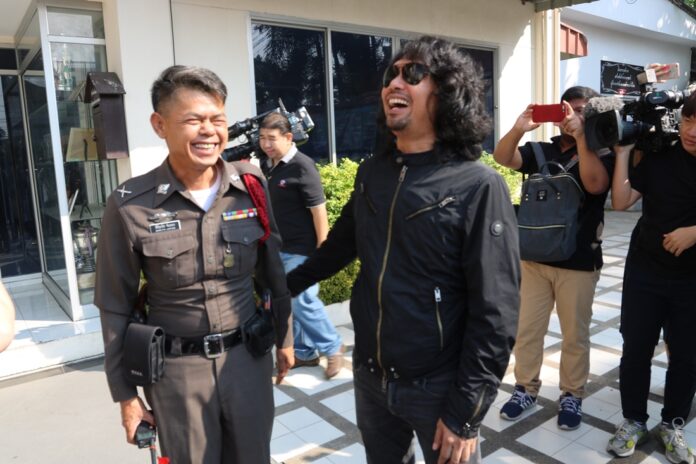
Rocker Sek Loso, who just today challenged results of a recent drug test, enjoys a moment of levity with an officer of the law.

BANGKOK — The announcement of the nation’s first legal marijuana cultivation facility presages changes to the nation’s drug laws that will soon allow medical use of cannabis, Thailand’s top drug enforcement agent said Tuesday.

A recent rewrite of the nation’s strict narcotics laws will allow marijuana to be sold legally over-the-counter with a doctors’ prescription, Narcotics Control Board director Sirinya Sitdhichai said Tuesday.

“For medical purposes, they will be able to get the marijuana, but only on a doctor’s orders. They can’t grow it on their own,” Sirinya said. “This is what we have put in the draft.”

Read: Thailand to Build First Legal Weed Farm

The drug laws were rewritten late last year and those revisions are currently on their way to the Cabinet for consideration, Sirinya said. Once the new regulations are approved, they will be put to a vote by the junta-appointed interim parliament.

Sirinya said he does not expect any opposition from lawmakers.

Notably, interviews with different agencies involved, from public health to law enforcement, have found no stated opposition.  Instead officials are voicing a pragmatic approach to what would be the biggest leap toward decriminalization of narcotics so far in a country whose policy long consisted of incarceration and execution.

Just over a decade ago, the government endorsed summary executions of suspected drug offenders in a bloody campaign that by conservative estimates killed at least 2,500 people.

But Thailand has watched changing drug policy in the developed world and conditions have become ripe under military rule for change.

The previous Justice Minister, a member of the ruling junta, declared the war on drugs a failure in 2016 and said Thailand should embrace decriminalization and common-sense regulation.

The narcotics agency announced amendment of the laws last year. A narcotics official said in October that new laws were needed so that marijuana extracts could be used for medical treatment and research. Under existing law, marijuana is a Class 5 drug that is illegal to consume or possess for any reason.

Sirinya said the revised law doesn’t go so far as to allow recreational use of marijuana, but he didn’t rule out the future possibility, saying the debate hasn’t been settled.

“Doctors in our country are still divided into two opinions,” he said. “Some fear that if we legalize it for recreational use, children may use it, and it may impact their brain development. We are looking at both the good and the bad.”

Green Acres

Sirinya’s comments came a day after an agricultural entrepreneur announced plans to build Thailand’s first legal marijuana plantation in Sakon Nakhon province, sparking a new round of discussion online about drug decriminalization.

Sirinya said the businessman, Prapat Panyachartraksa, recently sought his opinion about his plan to build the 5,000 rai plantation.

“I told him in order to grow, he must get permission from the Public Health Ministry through the Food and Drug Administration first,” Sirinya said. “I don’t know if he will get it.”

If Prapat’s plan are green-lit, the Narcotics Control Board will step in to monitor the cultivation and ensure all it produces go to medical research and not consumption, he said.

A deputy director of the Food and Drug Administration said Tuesday there are currently no plans to grant such permission.

Asked by a reporter about the proposed weed facility Tuesday, junta chairman Prayuth Chan-ocha said officials should study the issue carefully before making any decisions.

Advertisement

Missing Briton’s Body Found by Cha-am Beach

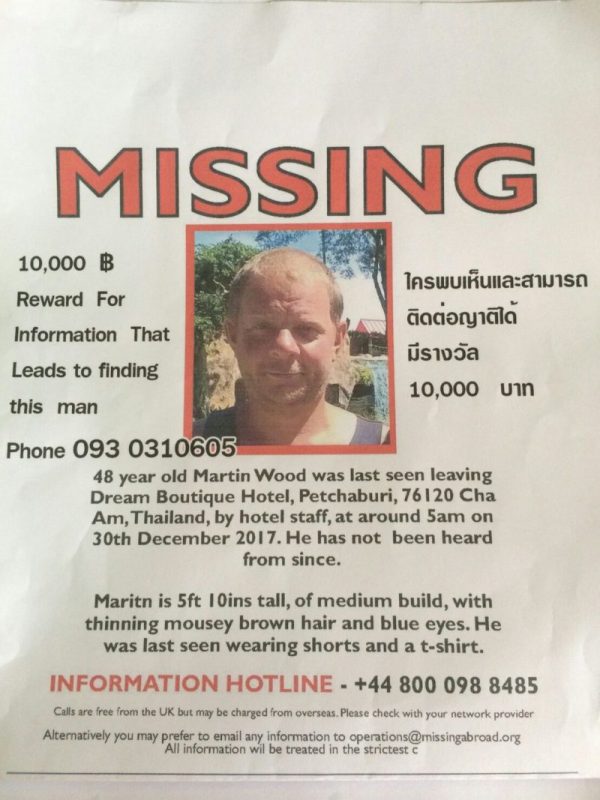
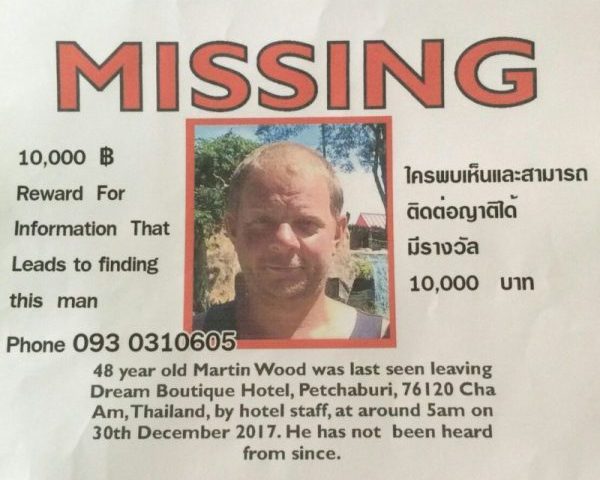
The missing person’s poster for Martin Wood distributed by his family.

PHETCHABURI — Police are awaiting the autopsy results of a British man found in the forest by Cha-am Beach on Wednesday, weeks after he went missing.

Martin Wood, 48, was found dead 300 meters inland from the gulf in Phetchaburi province, not far from where he was staying with his family when he disappeared Dec. 30.

“We’re still waiting on the autopsy results, so we don’t know whether he commited suicide or not,” Lt. Capt. Asawapitch Chaisri of Cha-am police said, adding that Wood had been dead for about 18 days. Police found 2,490 baht on his body.

Members of Wood’s family, who are in Phetchaburi looking for him, could not be reached for comment.

Wood was last seen leaving the Dream Boutiques Hotel in Cha-am at about 5am on Dec. 30. Asawapitch said Wood’s relatives hired locals and asked police to help locate Wood.

Daoroong Inpotha, 40, a housemaid at the hotel, said the body found today was indeed Wood, saying that the shorts and T-shirt at the scene matched what she last saw Wood wearing.

According to police investigators, Wood had been a frequent visitor at the hotel for four years. For his latest trip, Wood booked a month-long stay there with his family. He had checked in three weeks prior to his disappearance.

Wood’s family offered a 10,000 baht reward after he went missing.

Hotel staff told police that Wood had medical problems and was believed to be alcoholic.

684DD093 CE6A 43BE BB5B 310B0B088C7D e1516179689536
The missing person’s poster for Martin Wood distributed by his family.
Advertisement

Bangkok to Taste Vancouver Bubblegum Pop Act ‘Peach Pit’

Photo: Peach Pit / Facebook

BANGKOK — Dressed to the nines in ‘90s garb, like Screech or Ned Flanders made flesh, an up-and-coming Canadian music act will play in Bangkok in March.

Vancouver band Peach Pit will bring what they call “chewed” bubblegum pop songs to Bangkok, organizer Have You Heard announced Tuesday. The quartet will play “Peach Pit,” “Tommy’s Party” and “Drop The Guillotine.” Opening acts are local indie bands Penny Time and Lord Liar Boots.

Along with the concert, vendor stalls and food trucks will pop up at the venue as well.

Tickets are 1,200 baht and available online. The event takes place in the evening of March 2 at About Studio. Doors open at 5pm.

The music venue is a ways north of downtown on Pradit Manutham Road. For those who don’t drive, it’s best to get off at BTS Mo Chit or MRT Chatuchak, then find a van heading to Liab Duan Night Market, then take a motorbike. Or just grab a cab.

Peach Pit consists of Peter Wilton, Chris Vanderkooy, Mikey Pascuzzi and Neil Smith. The band debuted in 2016 with their “Sweet F.A.” EP. The quartet quit jobs as Amazon drivers, brewery staff and a carpenter to go on their first tour after releasing their debut LP in 2017.

Advertisement

Campaigner Rejects Prawit’s Claim All Watches Were ‘Loaners’

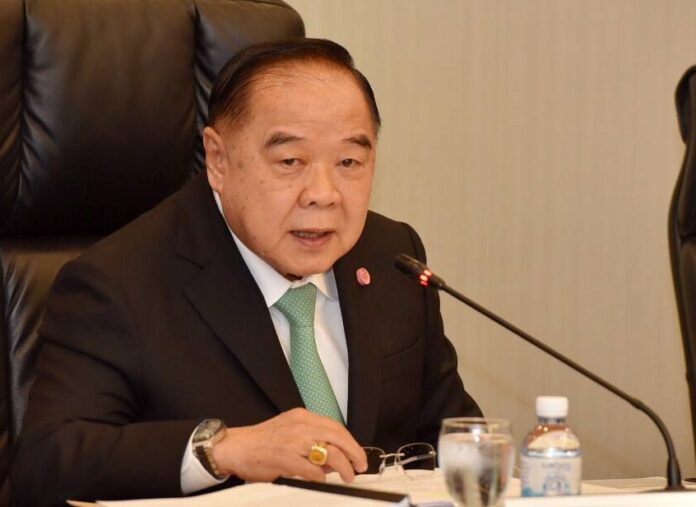
Deputy junta chairman Prawit Wongsuwan chairs a government meeting on Jan. 10

BANGKOK — An activist who called for an investigation into deputy junta boss Prawit Wongsuwan’s undeclared luxury watches said Wednesday he remains unconvinced by the general’s claim they were all loaned by friends.

After Gen. Prawit broke his silence Tuesday for the first time since the scandal surfaced a month ago to say he’d borrowed all 24 timepieces spotted in his possession so far, transparency advocate Veera Somkwamkid said it was an outright lie and urged the anti-graft agency to reject his explanation.

Read: Watchdog Says Anti-Graft Agency Stalling For Prawit

“It doesn’t fly,” Veera, who petitioned the National Anti-Corruption Commission, or NACC, about the watches in December, said in an interview. “Now I want to see how the NACC handles this. If the NACC believes Prawit, they would to explain clearly to society why it did. The NACC may end up in jail if they can’t explain clearly.”

He said it was impossible for Prawit to deny ownership of the watches because he had already admitted in media reports that at least one was his when it was first spotted in a Dec. 4 government photo shoot.

“Some reporters shouted to him, why is your diamond ring so big, and is that watch yours? He replied clearly: ‘It was mine.’ That’s it,” Veera said. “How could he say they belong to his friends now?”

Gen. Prawit has come under intense pressure to explain how he acquired the luxury timepieces which were not listed in his mandatory asset report. His silence led Veera and other activists to file complaints to the anti-graft agency to investigate the watches.  

After repeatedly refusing to answer questions from the press for over a month, Prawit told reporters at the Ministry of Defense yesterday all of the watches were loaned to him by his friends.

“I have friends, and my friends lent me those watches. They didn’t buy them [the watches] for me,” Prawit said.

Reached for comment Wednesday, anti-graft commission chairman Watcharapol Prasarnrajakij declined to talk about the issue, saying he was in a meeting.

Watcharapol has been criticized for handling the probe due to his close connections to Prawit.

Veera said he was summoned to give testimony to the commission on Jan. 10. The activist said the commission didn’t tell him when the investigation would be concluded, adding that he sensed discord within the agency.

“I could feel the low-ranking officials were unhappy about how their supervisors are handling the case,” Veera said.

Related stories:

Many Complaints, Few Results from Thai Anti-Graft Agency

Police Intercept Activist With Cheap Seiko For Gen. Prawit

Advertisement

4-Year ‘Smart Visas’ Available Starting Feb. 1

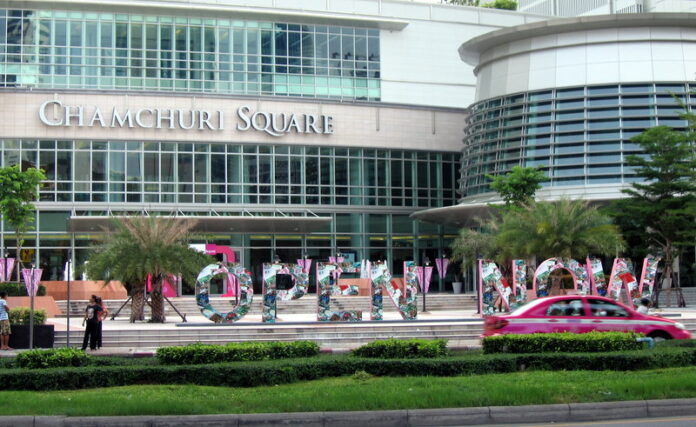
Chamchuri Square, where the One-Stop Service Center for Visas and Work Permits is located. Photo: William Ng / Flickr

BANGKOK — Starting Feb. 1, eligible foreigners in Thailand can apply for new, four-year visas, officials said Wednesday.

The long-awaited Smart Visa program, which will allow high-earning expats to maintain professional visas without needing to report to immigration every 90 days, received formal approval from the interim cabinet Tuesday. It’s intended to increase knowledge transfer and skill development in desirable fields such as technology and medicine.

“Smart Visas will be an important factor in pushing the country toward Thailand 4.0,” Duangjai Asawachintachit, secretary-general of the Board of Investment, said Wednesday.

Foreigners who meet the visa’s requirements can apply for them at Thai embassies in their respective countries or the One-Stop Service Center for Visas and Work Permits at Chamchuri Square in Bangkok.

Smart Visa holders must earn over 200,000 baht a month in specialized fields including automotives, electronics, medical tourism, agritech, food technology, robotics, aviation, biochem, digital technology and medical services.

They only need to check in annually rather than every 90 days and Smart Visas can be extended for four years rather than a single year at a time.

An aide who answered the phone for Deputy Commander Maj. Gen. Itthipol Ithisaranachai of the Immigration Police said Wednesday that eligible foreign residents could file their applications at the start of next month.

Related stories:

More Info on 4-Year Professional Visas Coming Next Month

4-Year Professional Visas Get Green Light

10-Year Visas Now Available: Thai Immigration

Tourism Minister Talks Up 5-Year Visas

Business Group Calls for 5-Year Professional Visas for Expats

Advertisement

Luksika Beats Bencic to Reach Round 3 of Aussie Open

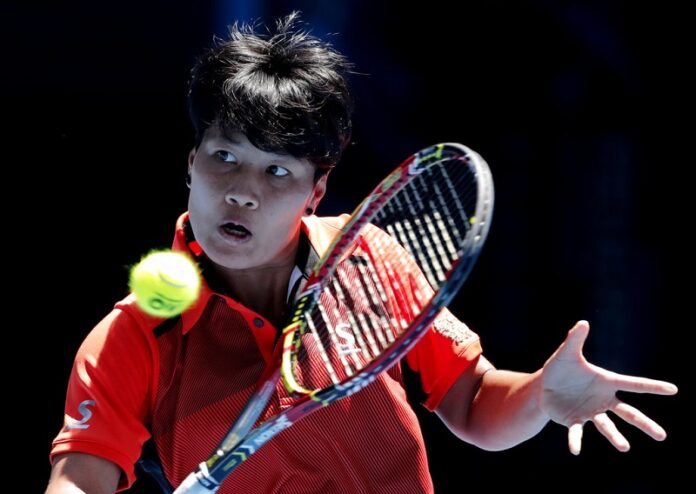
Thailand's Luksika Kumkhum plays a return shot to Switzerland's Belinda Bencic during their second round match at the Australian Open tennis championships in January in Melbourne, Australia. Photo: Vincent Thian / Associated Press

MELBOURNE, Australia — Two days after her upset win over Venus Williams, Belinda Bencic is out of the Australian Open.

Bencic was on a high after beating 2017 finalist Williams on the center court in the first round, but started flatly on Hisense Arena on Wednesday and lost 6-1, 6-3 to powerful hitting Thai qualifier Luksika Kumkhum.

The 20-year-old Swiss, who combined with Roger Federer to win the Hopman Cup in the lead-up to the season’s first major, saved three match points on her serve before netting a backhand to give No. 124th-ranked Kumkhum a spot in the third round for the first time.

A 15-year-old qualifier and the No. 4-seeded Elina Svitolina were among three Ukrainian women who had matches starting simultaneously on Day 3  and all progressed to the third round.

Former Australian junior champion Marta Kostyuk, who entered the season-opening major ranked No. 521, followed up her opening win over 25th-seeded Peng Shuai with a 6-3, 7-5 victory over wild-card entry Olivia Rogowska.

Kostyuk already is the youngest player since Martina Hingis in 1996 to win a main-draw match at the year’s opening major. And that came after three three-set matches in qualifying over six hours.

Kostyuk is managed by Ivan Ljubicic, who works with Federer, and so gets the benefit of some first-rate analysis.

“Ivan is always helping me … after every match, he’s telling me what’s wrong,” she said, smiling.

Kostyuk’s progress is set to become more difficult, with a meeting against Svitolina in the next round.

While Kostyuk was playing on Margaret Court Arena, Svitolina, who won a tour-leading five titles in 2017, had a 4-6, 6-2, 6-1 win over Katerina Siniakova on the adjoining Rod Laver Arena.

Their fellow Ukrainian, Kateryna Bondarenko, beat No. 15-seeded Anastasia Pavlyuchenkova 6-2, 6-3 in the day’s opening match on Melbourne Park’s third show court to reach the third round here for the third time.

On the men’s side, No. 10 Pablo Carreno Busta was leading 6-2, 3-0 when Gilles Simon retired from their second-round match with a leg injury.

Andreas Seppi beat Yoshihito Nishioka 6-1, 6-3, 6-4.

Advertisement

Charges Dropped Against Historian Over ‘Elephant Duel’

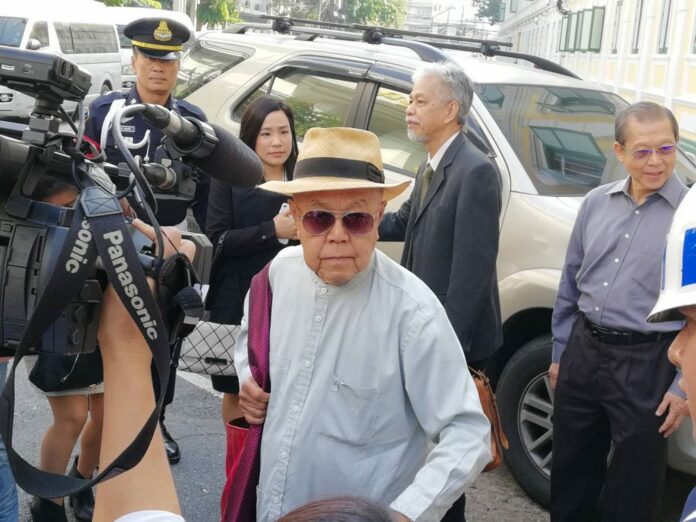
BANGKOK — All charges were dropped Wednesday morning against a renowned social critic and historian who questioned whether an ancient story of a Thai king’s elephant battle was apocryphal.

Surak Sivarak walked out of a military courtroom just before 10am after charges of royal defamation and computer crimes were dropped three years after he publicly suggested a story involving 17th century King Naresuan didn’t actually happen.

Read: 112 Case Moves Forward Against Historian For Doubting 16th Century ‘Elephant Duel’

The 84-year-old man said the military tribunal dropped the charge without explanation.

Sulak said he credited the mercy of King Rama X for the case being dropped.

Maj. Gen. Choedchai Angsusingha, chief military prosecutor, said the case lacked sufficient witnesses to prosecute Sulak for defaming the monarchy, a crime known as lese majeste, and violating the Computer Crime Act for allegedly putting false information into a computer system.

The case stems from comments Sulak made three years ago on Oct. 5, 2014, during a history discussion at Thammasat University. He questioned the historical accuracy of a story in which King Naresuan routed a Burmese army single-handedly by winning an elephant duel. The story at the time was the subject of nationalist epic period films then being promoted by the newly installed junta.

Sulak, who identifies as a royalist, previously noted that the lese majeste law only punishes insult of current royalty – the king, queen, heir apparent and regent – rather than those of the past.

A critic of the lese majeste law, he has been charged with it four times previously. The charges have been dropped each time.

Related stories:

112 Case Moves Forward Against Historian For Doubting 16th Century ‘Elephant Duel’


Advertisement

Glowing Red Lava Causes More to Flee From Philippine Volcano

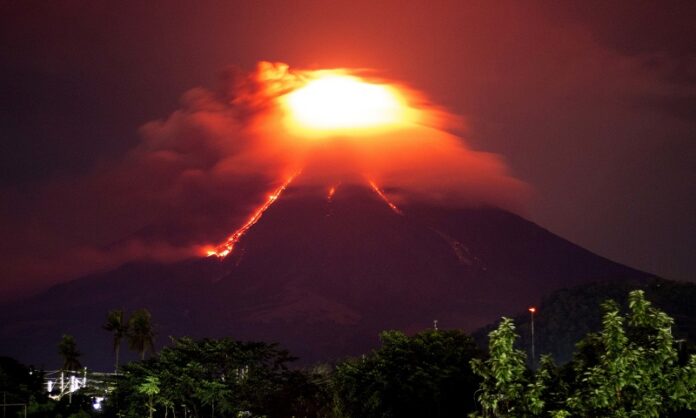
Lava cascades down the slopes of Mayon volcano as seen from Legazpi city, Albay province, around 340 kilometers (210 miles) southeast of Manila, Philippines, Monday, Jan. 15, 2018. More than 9,000 people have evacuated the area around the Philippines' most active volcano as lava flowed down its crater Monday in a gentle eruption that scientists warned could turn explosive. Photo: Earl Recamunda / AP

MANILA, Philippines — Glowing-red lava spurted in a fountain and flowed down the Philippines’ most active volcano on Tuesday in a stunning display of its fury that has sent more than 34,000 villagers fleeing to safety and prompted police to set up checkpoints to stop tourists from getting too close.

The Philippine Institute of Volcanology and Seismology said the lava flowed as much as 2 kilometers (1.2 miles) from the often cloud-shrouded crater of Mount Mayon, while ash fell on several villages in northeastern Albay province.

Officials strongly advised people not to venture into a danger zone about 6 to 7 kilometers (3.7 to 4.3 miles) around Mayon, including residents who want to check their homes, farms and animals, and tourists seeking a closer view.

“They say it’s beauty juxtaposed with danger,” Office of Civil Defense regional director Claudio Yucot said.

At least 34,038 people have been displaced by Mayon’s eruption since the weekend from two cities and six towns, many of whom took shelter in schools turned into evacuation centers, Jukes Nunez, an Albay provincial disaster response officer, said by telephone. Others took refuge in the homes of relatives.

Albay officials declared a state of calamity in the province of more than a million people to allow more rapid disbursement of disaster funds, Nunez said.

“We have witnessed lava fountaining yesterday, that’s why we have additional families who evacuated due to the threat,” said Romina Marasigan, spokeswoman of the government’s main disaster-response agency.

Renato Solidum, who heads the volcanology institute, said the flows cascading down the volcano were not generated by an explosion from the crater with superheated lava, molten rocks and steam, but were caused by lava fragments breaking off from the lava flow and crashing on the lower slopes.

Scientists have not yet detected enough volcanic earthquakes of the type that would prompt them to raise the alert level to four on a scale of five, which would indicate an explosive eruption may be imminent, Solidum said. Emergency response officials previously said they may have to undertake forced evacuations if the alert is raised to four.

In a bid to discourage villagers who insist on returning to the danger zones to check on their farm animals, officials planned to set up evacuation areas for animals, including water buffaloes, cows, pigs and poultry, Yucot said.

Temporary school sites were also being considered to ease the disruption to education after school buildings were turned into emergency shelters, he said.

Mayon is in coconut-growing Albay province, about 340 kilometers (210 miles) southeast of Manila. With its near-perfect cone, it is popular with climbers and tourists but has erupted about 50 times in the last 500 years, sometimes violently.

In 2013, an ash eruption killed five climbers who had ventured near the summit despite warnings. Mayon’s first recorded eruption was in 1616 and the most destructive, in 1814, killed 1,200 people and buried the town of Cagsawa in volcanic mud.

The Philippines lies in the so-called “Ring of Fire,” a line of seismic faults surrounding the Pacific Ocean where earthquakes and volcanic activity are common.

In 1991, Mount Pinatubo in the northern Philippines exploded in one of the biggest volcanic eruptions of the 20th century, killing about 800 people.

Story: Jim Gomez

Advertisement

Doctor: Trump Got Perfect Score on Cognitive Test

White House physician Dr. Ronny Jackson speaks to reporters during the daily press briefing in the Brady press briefing room at the White House, in Washington, Tuesday, Jan. 16, 2018. Photo: Manuel Balce Ceneta / AP

WASHINGTON — President Donald Trump performed “exceedingly well” on a surprise cognitive screening test administered last week, his doctor said Tuesday, as the White House continued to bat back questions about the president’s mental fitness for office.

Navy doctor Ronny Jackson, who administered Trump’s first presidential physical last week, said Trump received a perfect score on a test designed to detect early signs of memory loss and other mild cognitive impairment. He also reported the 6-foot-3 president weighed in at 239 pounds — three pounds heavier than he was in September 2016, the last time Trump revealed his weight to the public. That number puts Trump on the cusp — but just under — the obesity mark.

“The president’s overall health is excellent,” said Jackson, who predicted Trump would remain healthy for the duration of his presidency despite a diet heavy on fast food and an exercise regime limited to weekend golf outings.

“It’s called genetics,” Jackson said. “I don’t know. … He has incredibly good genes and that’s just the way God made him.”

Presidents don’t typically sit for cognitive assessments during their periodic physical exams. But Jackson said Trump personally requested the test as he continues to face questions about his mental acuity for office. Such questions have escalated in the wake of an unflattering new book that paints Trump as a man-child who has trouble processing information and recognizing old friends.

But the 71-year-old president performed “exceedingly well” on the test Jackson said, receiving a perfect score.

“He’s very sharp. He’s very articulate when he speaks to me,” said Jackson, who works in close proximity to the president. Jackson accused doctors who have tried to diagnose Trump from afar of performing “tabloid psychiatry.”

Still, Jackson said Trump acknowledged he’d be healthier if he lost a few pounds by exercising more and eating better. Jackson said he’d be arranging to have a dietitian consult with the White House chef to cut calories and would be recommending a low-impact, aerobic exercise program for Trump, with the aim of shedding 10 to 15 pounds this year.

“I would say right now on a day-to-day basis, he doesn’t have a dedicated, defined exercise program,” said Jackson. “The good part is that, you know, we can build on that pretty easily.”

Trump’s body mass index, or BMI, of 29.9 puts him in the category of being overweight for his height. A BMI of 30 and over is considered obese. A copy of Trump’s New York driver’s license obtained by POLITICO listed Trump’s height as 6-foot-2, instead of the 6-foot-3. That height would put Trump over the obesity threshold.

Trump’s blood pressure was 122 over 74, and his total cholesterol was 223, which is higher than recommended, even though he takes a low dose of the statin drug Crestor. Jackson said he would increase that dose in an effort to get Trump’s so-called “bad” cholesterol, or LDL level, below 120; it currently is 143.

Despite the diet and cholesterol concerns, Jackson stressed that Trump’s “cardiac health is excellent.” He passed a battery of heart exams including a stress test that Jackson said showed an above-average exercise capacity for a man of his age, despite some calcium buildup in his arteries. He also takes a low-dose aspirin for heart health.

With such a bad dietary history, how can that be? Jackson said Trump has avoided some big heart risks — he’s never smoked and isn’t diabetic — and has no family history of heart problems.

Trump has experienced several recent episodes in which he appeared to slur his words, adding to concerns about his health. Jackson said he’d ruled out a list of possible causes, and that dry mouth caused by the over-the-counter decongestant Sudafed was likely to blame.

Trump last revealed details about his health two months before the November 2016 election, when he appeared on the “Dr. Oz” show to give details of a physical performed by his longtime physician, the eccentric Dr. Harold Bornstein. A year earlier, Bornstein had released a letter that predicted Trump would be “the healthiest individual ever elected to the presidency” if he won.

The Montreal Cognitive Assessment that Trump took includes remembering a list of spoken words; listening to a list of random numbers and repeating them backward; naming as many words in a minute that begin with, say, the letter F as possible; accurately drawing a cube; and describing concrete ways that two objects — like a train and a bicycle — are alike.

Cognitive assessments aren’t routine in standard physicals, though they recently became covered in Medicare’s annual wellness visits for seniors.

“It’s not a diagnostic test, but it’s pretty sensitive in picking up subtle changes in cognition,” things involving memory, attention and language but not mental health issues, said Dr. Ranit Mishori, professor of family medicine at Georgetown University, who performs these types of routine physicals.

Mishori said Trump’s vital signs, blood tests and physical examinations suggest “he seems to be on track, what you would want to see in a 71-year-old overweight male.”

But, Mishori cautioned that despite good results on his cardiac exams, Trump is at increased risk of cardiovascular disease because of his age, weight, sedentary lifestyle and cholesterol level.

___

Story: Jill Colvin
AP Medical Writer Lauran Neergaard and Associated Press writer Darlene Superville contributed to this report.

Advertisement

Hot News

LATEST NEWS

Bangkok
overcast clouds
28.3 ° C
33.3 °
28.3 °
77 %
3.3kmh
100 %
Sun
32 °
Mon
38 °
Tue
37 °
Wed
37 °
Thu
37 °