33.3 C
Bangkok
Sunday, June 21, 2026
Home Blog Page 2111

Thailand Will Seek Yingluck Extradition From London

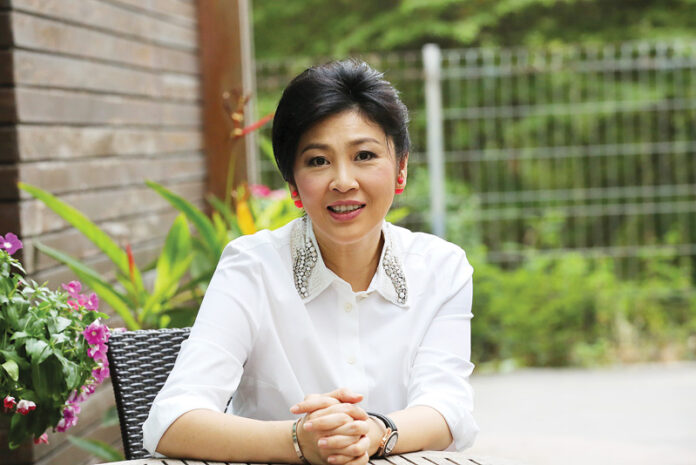
Former prime minister Yingluck Shinawatra poses for a photo on Jan. 2, 2016

BANGKOK — The foreign minister confirmed Tuesday morning that fugitive former premier Yingluck Shinawatra was in London and said Bangkok would seek her extradition.

Don Pramudwinai, minister of foreign affairs, confirmed the news after the media published three leaked photos which appeared to show Yingluck in London. Don refused to say whether the Thai government would lodge any protest against Yingluck’s much-speculated asylum seeking process.

Don told reporters that he has known Yingluck whereabouts since September, when he was informed by a minister from the British foreign office. He did not name the minister, but the timing coincides with meetings between the junta and Mark Field, foreign minister for Asia.

It was unclear whether Don had notified his superiors in the military government such as junta leader Gen. Prayuth Chan-ocha, who has routinely denied knowing where Yingluck is.

Don added that though it’s unclear how Yingluck entered the United Kingdom, he thinks she likely used one or more foreign passports since all her Thai travel documents had been revoked.

He said the government would try to seek Yingluck’s extradition, but insisted her presence in London would not affect relations between the two nations.

Yingluck fled Thailand before the Supreme Court’s Section for Political Office Holders in September found her guilty of malfeasance and sentenced her in absentia to five years in prison over corruption in a rice-subsidy scheme managed during her tenure as prime minister.

Advertisement

Dozens Accused of Raping Phang Nga Teen Still at Large

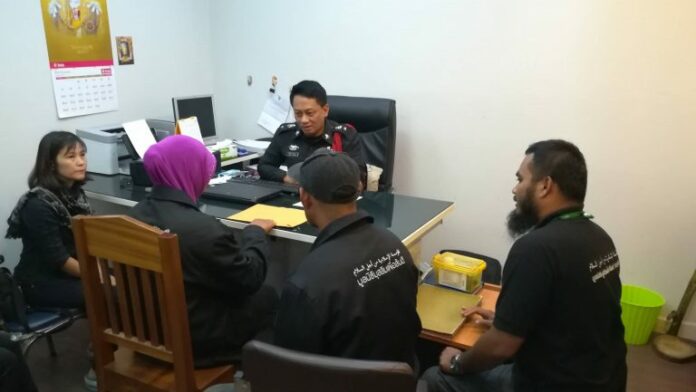
The 14-year-old alleged victim talks to police in September at the Khokkloi Police Station in Phang Nga province.

PHANG NGA — Twenty-nine of 40 people accused of gang raping a minor last year are still at large as of Tuesday morning, police said.

The case surfaced in September when a 14-year old girl came forward to accuse 40 men in the village of Ko Raet of gang raping her in 2016. Police said Tuesday that only 11 of those have been indicted as they continue searching for the remaining suspects.

“All of the 11 men have been indicted on several charges, including gang rape,” Lt. Col. Kittiphum Thinthalang of Khokkloi police in Phang Nga said Tuesday.

If convicted of raping a child under 15, the men face four to 20 years in prison and fines of 8,000 baht to 40,000 baht.

The victim said that 40 men, mostly those from her community, broke into her home, abducted her and raped her repeatedly. She also claimed that the men raped other girls from the village.

Read: Police Arrest All 11 Suspects in Phang Nga Gang Rape Case

Chanon Abdullah, president of the Muslims for Peace Foundation – a nonprofit providing legal assistance to the girl and her family – said Tuesday that the victim was currently under witness protection.

“Police are still finding them. But it will be more difficult to find these men because she doesn’t know their real names,” Chanon said of the 29 suspects still at large.

There was uproar in the village when the story first broke, with many accusing the girl of lying.

“The people in the village are now starting to believe the girl,” Chanon said. “It’s because of the information and evidence that’s come to light as well as the court’s decision [to prosecute the suspects]. So that’s as it should be.”

Related stories:

Police Arrest All 11 Suspects in Phang Nga Gang Rape Case

5 Men Held in Phang Nga Gang Rape Case

Police Seek 11 of 40 Men Accused of Raping Phang Nga Girl

Advertisement

Local Empowerment: Bueng Kan Helps Rubber Growers Succeed With Big Annual Fair

The following is a paid news release.

BUENG KAN — Rubber usually only gets public attention when prices fall and hundreds, or sometimes thousands, of farmers travel to protest in Bangkok. Despite getting a smaller spotlight compared to rice, this cash crop accounts for a great deal of revenue for Thailand, and its sinking value can affect a lot of people.

However, since the country secured the title of world’s biggest natural rubber exporter in 1991, little has been done to develop and disseminate knowledge about how to maximize its value. Most farmers still go through the exact same motions as previous generations. Their income remains unreliable and heavily dependent on world market prices.

Seeing other nations with better technology bring in higher profits from raw rubber bought inexpensively from Thailand, Pinit Jarusombat thought there must be a way to change things. Six years ago, the former deputy prime minister initiated a Rubber Day festival in Bueng Kan province in hope of empowering farmers.

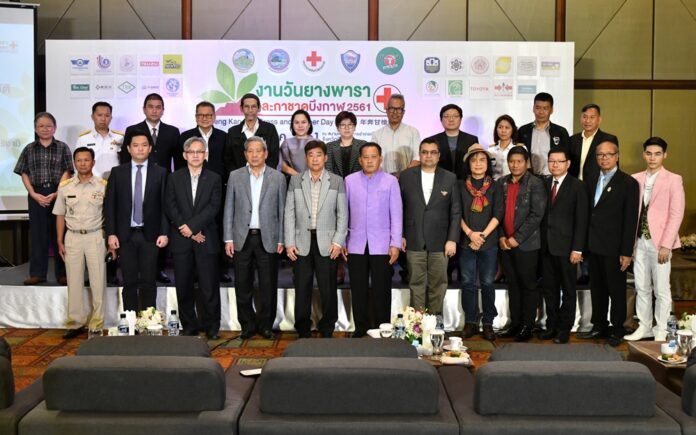
At a Monday press conference for “Bueng Kan Red Cross and Rubber Day,” which will be held for a sixth time this year, Pinit said he wanted the fair to spread expertise to farmers. By turning rubber goods into commercial products, they can finally become sustainable and independent from global rubber prices.

dr.visanu
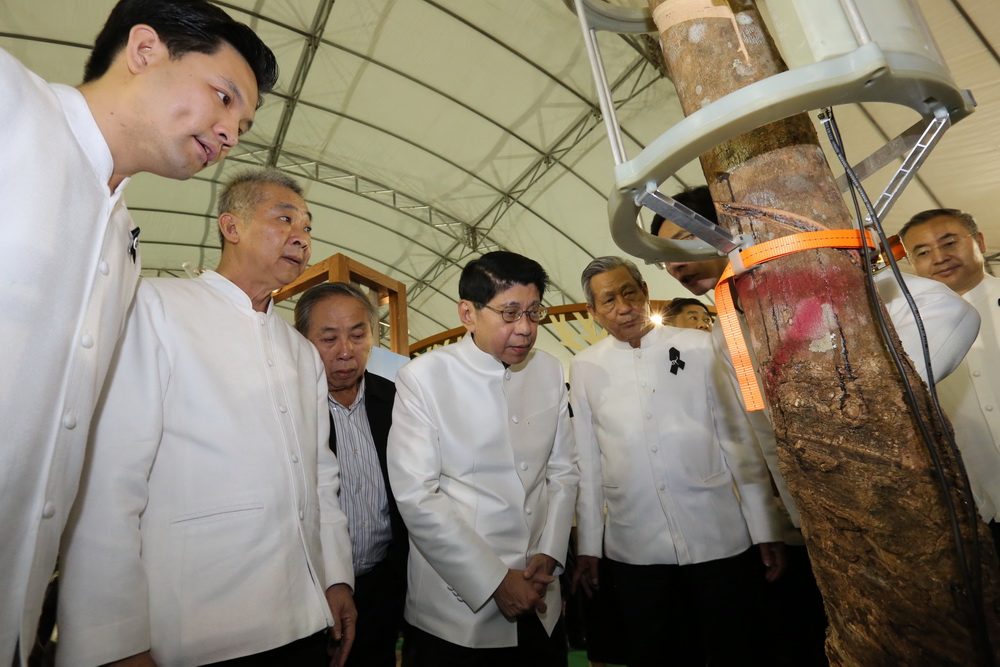
Deputy Prime Minister Wissanu Krea-ngam tours an agricultural exhibition at Bueng Kan Red Cross and Rubber Day 2017

“The price of rubber depends on the world market, not on who is the current government,” said Pinit, who now also owns a rubber farm himself.  “We don’t have to reduce rubber production. The real long-term solution is, in fact, effective processing.”

Rather than holding the fair in the southern region, where most rubber plantations are located, the fair has been staged in Bueng Kan. Seeing economic opportunity 20 years ago, this new town in the arid northeast region began to encourage residents to grow rubber instead of corn or sugarcane. Today the province has more than a million rai of rubber plantations and has become the biggest rubber producer in the region.

Chief Executive of Bueng Kan Provincial Administrative Organisation Niphon Khonkayan said the decision to change has succeeded in improving farmers’ lives.

“A year-long rice cultivation sometimes generates only 20,000 baht. So Isaan folks have to go to work in Bangkok. We were forever poor,” Niphon said. “But a rubber pillow now can be sold for a thousand baht at a shopping mall.”

Niphon said that the rubber pillow plant now run by a local farmers cooperative is an illustrated result of the previous Rubber Day festival where innovations were introduced to farmers. With the help of experts from relevant institutes, they are now developing more technologies to add value to rubber such as making it a surface for sepak takraw courts. These successes require support from government and also farmers’ ability to learn and adjust.

“Farmers today need to be capable of everything, from growing to marketing,” said Bueng Kan Governor Pisut Bussayapanpong.

Running for a week, the festival this year will consist of a new technologies exhibition, workshops, talks and everything useful for rubber growers. There will also be entertainment shows and a beautiful agricultural display.

A representative of Rubber Valley Group from China, who had contributed to educating processing technologies at this Bueng Kan fair in the past years, said it is uniquely different from the others he had been.

“It was very interesting to see that attendees of this fair are all local residents and rubber farm owners, not investors,” said Chen Husheng.

The festival will be held along with the Red Cross Fair from Jan. 17-23 in front of the Bueng Kan City Hall.

This is a paid advertorial. Khaosod English is not responsible for its content or claims.

Advertisement

Parts of Royal Crematorium to be Put in Museum

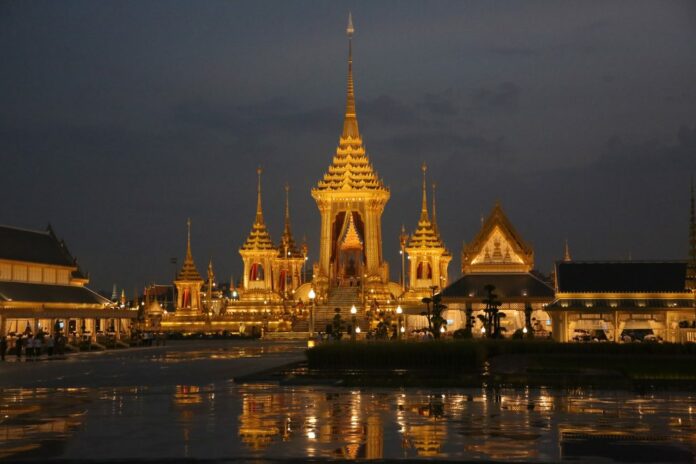
The Royal Crematorium, or Meru Mas, glimmers on Oct. 26, the day King Bhumibol was cremated.

BANGKOK — Though demolition of King Bhumibol’s Royal Crematorium will soon begin, a top official today said that parts of the massive complex will be preserved.

Over two months after the Meru Mas, which features traditional craftsmanship unseen for decades, was used to cremate the late king, workers will begin taking it apart Thursday. But Minister of Culture Veera Rojpojanarat said some of the structure would be moved to a museum where it would later be opened to the public.

A facility will be built to display these remnants of the crematorium in Pathum Thani province, which will take about two years to complete, Veera told reporters.

More than 300,000 marigolds decorating the complex will be moved to the Royal Plaza in Bangkok, where a “winter festival” will be held there by order of King Rama X.

Ancient custom requires that that the crematorium be torn down after the royal funeral. Junta chairman Prayuth Chan-ocha is set to preside over a ceremony marking the dismantling of the pyre Thursday. The complex will be entirely demolished by March 15, Veera said.

After King Bhumibol was cremated there Oct. 26, the crematorium was open for public viewing until New Year’s Eve. More than 4 million people visited the complex in those two months, officials said.

Advertisement

Samsung’s Profit Jumps 64% to Record High on Chips

Samsung Electronics' Galaxy Note 8 is displayed at its shop Monday in Seoul, South Korea. Photo: Lee Jin-man / Associated Press

SEOUL, South Korea — Samsung Electronics said its October-December operating profit jumped 64 percent to a record high, capping off 2017 with the biggest annual operating income and sales in its history thanks to the blockbuster semiconductor business.

In its earnings preview Tuesday, the South Korean company put its operating profit at 15.1 trillion won (USD $14.1 billion) for the final three months of last year, compared with 9.2 trillion won a year earlier.

The result, however, missed expectations. Analysts polled by financial data firm FactSet expected 16.2 trillion won in operating profit. Analysts lowered their views on Samsung last month, citing the one-time bonuses to employees and the appreciation of the local currency against the U.S. dollar. Nomura estimates that Samsung spent 700 billion won (USD $655 million) as bonuses to employees.

Fourth-quarter sales rose 24 percent to 66 trillion won (USD $61.8 billion), also at a record high.

For the entire year, Samsung’s operating income stood at 53.6 trillion won (USD $50.2 billion), a 83-percent surge from 2016, on sales of 239.6 trillion won (USD $224.2 billion), up 19 percent from the previous year.

Samsung did not give a quarterly net profit or breakdown figures for each businesses. The company is due to disclose more details of its financial performance later this month.

What drove Samsung’s monstrous year was the company’s semiconductor division, which has been cashing in on the skyrocketing demand and prices of memory chips. The world’s demand for more storage for pictures, videos, files and other digital data in their gadgets and servers, as well as demand for more computing power to run many programs faster, pushed up demand for memory chips that are dominated by Samsung.

Samsung controls about half of the world’s DRAM memory chips that temporarily hold data and help computers run many programs at the same time, and about one third of the world’s NAND chips, which store files. It was the biggest beneficiary of the jump in prices of those memory chips in 2017.

Some analysts however worry the price of chips may fall this year and weigh on Samsung’s earnings while others remain bullish on Samsung that a possible fall in chip prices would be outweighed by a big increase in sales.

The stellar financial achievement has coincided with Samsung’s management crisis. Its de facto leader Lee Jae-yong, a grandson of Samsung’s founder and the only son of the ailing Samsung chair, is fighting at an appeals court to overturn his five-year prison sentence for bribery and other charges. Lee has been in prison for nearly a year. Prosecutors who also appealed the lower court’s ruling have demanded a 12-year prison term for Lee. The ruling is expected on Feb. 5.

The company made major management changes in November. After Samsung’s longtime head of the semiconductor division offered to resign, the heads of the mobile business and TV divisions also stepped down. Those three divisions are now helmed by younger leaders.

Story: Youkyung Lee

Advertisement

Myanmar Trial Set to Begin for 2 Reuters Journalists

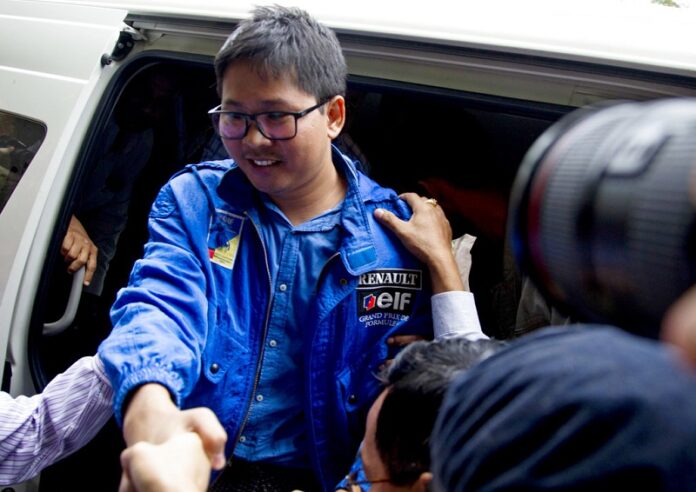
Reuters journalist Thet Oo Maung, known as Wa Lone, exits a police van as he arrives for a court appearance last December outside Yangon, Myanmar. Photo: Thein Zaw / Associated Press

BANGKOK — Myanmar is set to put two reporters from the Reuters news agency on trial this week after they were charged under a colonial-era state secrets act, in a case that highlights growing concerns about press freedom in the country.

Wa Lone and Kyaw Soe Oo were arrested Dec. 12 for allegedly acquiring “important secret papers” from two police officers. The officers had worked in Rakhine state, where abuses widely blamed on Myanmar’s military have driven hundreds of thousands of Rohingya Muslims to flee into neighboring Bangladesh.

The charges against the two are punishable by up to 14 years in prison.

Rights and media groups have criticized Myanmar’s new civilian government led by Nobel Peace laureate Aung San Suu Kyi for continuing to use colonial-era laws to threaten and imprison journalists. Such laws were widely used by the military junta that previously ruled the country to muzzle critics and the media.

Under the current government, at least 32 journalists have been charged, mostly under colonial-era laws, according to the local group We Support Journalists.

“Such arrests and laws were widely used by the military junta to shut us down,” the group’s founder, Maung Saungkha, said by phone. “But it’s sad to see media freedom is even worse under the so-called democratically elected government.”

The arrest of the two Myanmar journalists, whose trial begins Wednesday, caused an international outcry. After they were detained, U.N. Secretary-General Antonio Guterres said the arrests showed how press freedom was deteriorating in Myanmar, while U.S. Secretary of State Rex Tillerson called for their immediate release.

Reuters President and Editor-in-Chief Stephen J. Adler also has called on Myanmar to free the journalists.

“Their arrest and continued incarceration represent an egregious attack on press freedom  preventing them, and deterring other journalists, from reporting independently in Myanmar,” Adler said in a statement Monday.

Critics and rights groups say that in some respects, press freedom in Myanmar is more restrictive now than it was during the previous quasi-civilian administration, which bridged the former military government to the current civilian one. Suu Kyi’s government, which has been in power for two years, has done nothing to change laws that create barriers to a free press.

“Nearly two years later, we have been gravely disappointed by the lack of progress on legal reform and the new clampdown on journalists under Suu Kyi’s rule,” said Shawn Crispin, senior Southeast Asia representative for the New York-based Committee to Protect Journalists.

In November, Myanmar authorities sentenced two foreign journalists working for Turkish state broadcaster TRT, along with their local interpreter and driver, to two months in prison for flying a drone over the parliament building. All four were released in late December.

A few days after the Reuters journalists were arrested, Myanmar President Htin Kyaw, a close ally and confidant of Suu Kyi, the country’s de facto leader, authorized police to proceed with the charges against them.

Despite facing heavy criticism for the move, the government said it was simply implementing the rule of law.

“It’s up to the court to decide whether the journalists are guilty or not because as a government, we don’t interfere in the country’s judicial system,” said government spokesman Zaw Htay.

Wa Lone, who joined Reuters in June 2016, has covered a range of stories related to the Rohingya crisis, while Kyaw Soe Oo began working for the news agency in September. Since their arrest, they’ve been held in the country’s notorious Insein prison.

More than 650,000 Rohingya have fled from Myanmar into Bangladesh since Aug. 25, when Myanmar’s army began what it called “clearance operations” following an attack on police posts by Rohingya insurgents. The aid group Doctors Without Borders estimates at least 6,700 Rohingya civilians were killed in the first month of the crackdown.

Since the crisis in northern Rakhine state began, new restrictions on press access have made it nearly impossible for journalists to cover independently in the region.

“Suu Kyi’s government clearly feels foreign media coverage of the Rohingya crisis has damaged its international image and now it’s fighting back through bogus legal threats and jailing of journalists,” Crispin said.


Advertisement

Israeli TV Airs Audio of Netanyahu’s Son Outside Strip Club

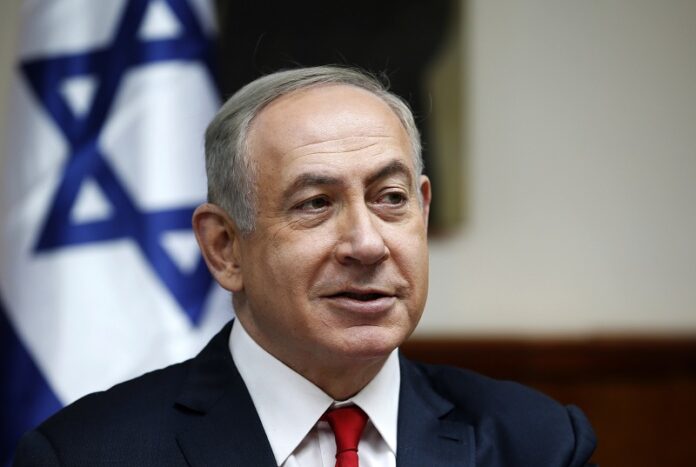
Israeli Prime Minister Benjamin Netanyahu attends the weekly cabinet meeting in 2017 in Jerusalem. Photo: Ronen Zvulun / Associated Press

JERUSALEM — An Israeli news station aired an audio recording Monday of what it said was Prime Minister Benjamin Netanyahu’s son drunkenly bragging outside a strip club in 2015.

In the recording broadcast by Channel 2 News, Yair Netanyahu tells the son of an Israeli gas tycoon that the prime minister advanced a controversial gas deal in parliament that benefited his father.

Yair and his friends are also heard talking about strippers and how much money they spent.

Netanyahu’s son and his friends were accompanied by a state-funded bodyguard responsible for providing security as they entertained themselves. One of Yair’s entourage jokes that the guard, who was privy to some of the banter, would have to be killed if he left his job.

Yair has drawn media criticism for living a life of privilege at the taxpayers’ expense and for crude social media posts.

The audio was released amid a police investigation into corruption allegations surrounding the Israeli leader.

The station relayed a statement from the Netanyahu family calling the recordings part of a witch hunt against the prime minister.

Yair Netanyahu later issued an apology saying that the remarks did not represent the values he was raised on and that they were made under the influence of alcohol.

Advertisement

Officials From North, South Korea Begin Rare Formal Talks

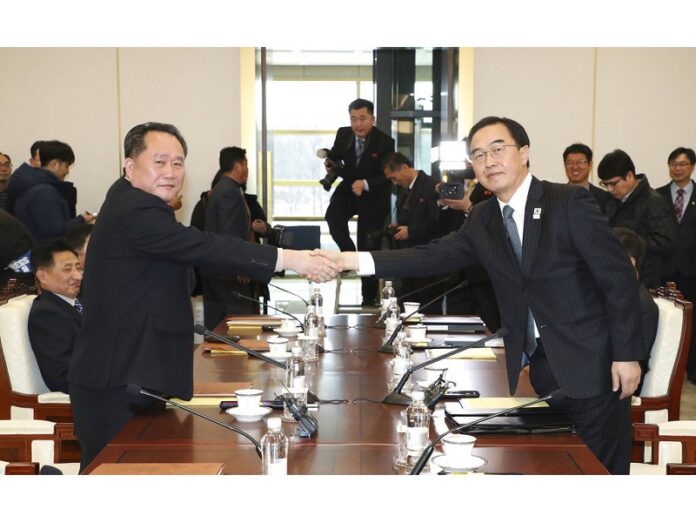
South Korean Unification Minister Cho Myoung-gyon, right, shakes hands with the head of North Korean delegation Ri Son Gwon before their meeting at the Panmunjom in the Demilitarized Zone, Tuesday in Paju, South Korea. Photo: Associated Press

SEOUL, South Korea — Senior officials from North and South Korea began the rivals’ first formal talks in about two years Tuesday to discuss how to cooperate in next month’s Winter Olympics in the South and how to improve their long-strained ties.

The talks in the border village of Panmunjom were arranged after North Korea’s leader Kim Jong Un recently made an abrupt push for improved ties with South Korea and are closely watched by the outside world after a year of elevated tensions over North Korea’s expanding nuclear and missile programs.

“I think we should be engaged in these talks with an earnest, sincere manner to give a New Year’s first gift – precious results (of the talks) to the Korean nation,” chief North Korean delegate Ri Son Gwon said at the start of the negotiations, according to media footage from the venue.

Critics of the meeting say Kim may be trying to divide Seoul and Washington to weaken international pressure and sanctions, which were toughened after his country conducted its sixth and most powerful nuclear test and test-launched three intercontinental ballistic missiles.

President Donald Trump on Saturday expressed hope for some progress from the talks and said he was open to talking with Kim himself. But U.N. Ambassador Nikki Haley later said the U.S. administration isn’t changing its conditions regarding talks with North Korea, saying Kim would first need to stop weapons testing for a “significant amount of time.”

In his New Year’s Day address, Kim said there is an urgent need to improve inter-Korean ties and that he is willing to send a delegation to the Feb. 9-25 Winter Games in Pyeongchang, South Korea. He urged Seoul to halt its annual military drills with Washington, which he called a rehearsal for an invasion, and said he has a “nuclear button” to launch missiles at anywhere in the United States.

Moon, a liberal who favors dialogue as a way to defuse the North Korean nuclear standoff, welcomed Kim’s outreach and proposed talks at the border village of Panmunjom. Kim quickly accepted Moon’s offer.

South Korean officials said they would focus first on Olympic cooperation before dealing with tougher political and military issues. Moon’s government wants North Korea to take part in the Games as a way to improve relations.

The Trump administration agreed last week to delay upcoming springtime military drills with South Korea until after the Games. Defense Secretary Jim Mattis insisted the delay was a practical necessity to accommodate the Olympics, not a political gesture.

Trump and Kim traded bellicose warlike rhetoric and even crude insults last year.

Story: Hyung-Jin Kim

Advertisement

Politicos Could Get Bigger Gifts, Anti-Graft Agency Hints

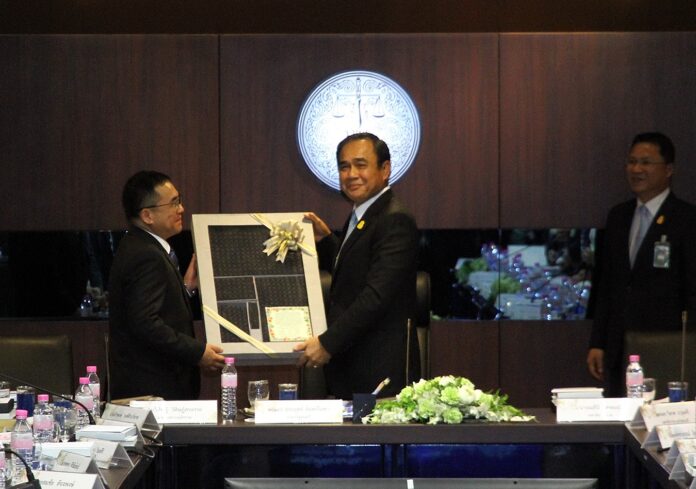
Junta chairman Prayuth Chan-ocha receives a present from an official Friday at Ministry of Justice – after making sure it cost less than 3,000 baht

BANGKOK — Just as the junta’s No. 2 boss is under pressure to explain a collection of ultra luxury watches – which far exceeded the 3,000 baht value limit of gifts he can legally receive – the agency investigating him is raising a question.

Why not raise the limit?

Top officials said in recent days they are open to raising the cap on the grounds that the 3,000 baht limit is outdated. The suggestion was met with protest from a transparency activist who accused the officials of attempting to distract from the investigation into Gen. Prawit Wongsuwan’s watches.

“There’s only one reason to make this an issue, which is to find an excuse for the watches,” Srisuwan Janya, who’s petitioned the government more than 1,000 times, said in an interview.

A 2000 regulation forbids holders of political offices from receiving presents worth over 3,000 baht. The rule is enforced by National Anti-Corruption Commision, an agency that’s supposed to operate independently from the government.

Commission sec-gen Worawit Sukboon first suggested raising the limit at a Friday news conference, though he stressed that it was just an idea and there was no immediate plan to change it.

But his comment was soon echoed by Deputy Prime Minister Wissanu Krea-ngam and anti-graft commission chairman Watcharapol Prasarnrajakij.

Wissanu told reporters that the cost of living has climbed significantly in the 17 years since the rule was issued, while Watcharapol said officials are expected by social customs to receive presents on important occasions such as New Year’s Day.

“In foreign countries, they also give some presents during Christmas,” Watcharapol said, adding that his agency is “not in a hurry” to amend the existing law.

Srisuwan, the activist, said allowing officials to receive expensive gifts would only encourage bribery and favoritism. Asked what the cap on gift value for officials should be, Srisuwan said “zero.”

“If it were to be amended, it should be amended to say zero,” Srisuwan said. “The NACC has been saying all along, their job is to get rid of corruption.”

He also said he would file a legal challenge to the Administrative Court if the commission unilaterally amends the gift value limit without consulting the public first.

A higher limit would not seem to materially benefit Prawit, who in one month’s time has been seen wearing upward of 17 watches worth millions of baht in photos from recent years. None was declared in his mandatory assets disclosures upon taking power after the coup.

The 3,000 baht rule has become a talking point since the 72-year-old’s aides told the media that at least some of the multi-million baht watches were gifts from an unidentified friend. After that explanation was met with derision, word went out that the unknown benefactor had died.

That explanation would not get Prawit off the hook. Receiving such gifts would violate the law and subject Prawit to three years in prison if convicted.

Gen. Prawit has steadfastly refused to answer questions about where he got the watches and why he did not declare them. Although he has met with the anti-graft commission to give his side of the story, officials declined to disclose what he said.

The controversy has become yet another scandal to hit the junta at a time opinion polls show withering support for the regime.

Advertisement

Yingluck Watchers See Conspiracy in London Photos

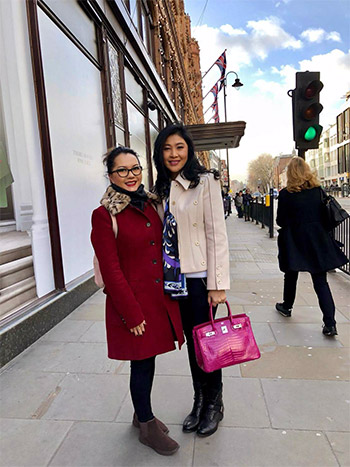
A portion of an unsourced image purportedly showing former Prime Minister Yingluck Shinawatra in London recently has been circulating online.

BANGKOK — What appeared to be candid photos of fugitive former premiere Yingluck Shinawatra in London were – to her partisan supporters and detractors – deliberately spread to test the waters of public opinion.

That was the take Monday, several days after a third photo emerged which clearly shows 50-year-old Yingluck posing with a fan on a wintry day, the Union Jack flapping in the background.

“The leaked picture is an attempt to test the water and see reactions from society as well as the military,” said Manit Sriwanichpoom, a well-known artist and prominent anti-Yingluck protester. “We don’t even know who planted the leaked photo and how the picture was obtained.”

Yingluck Spotted in London: Report

On the opposite political pole, law expert Ekachai Chainuvati, an admirer of Yingluck, also believes the leaked photo was no coincidence. “Yingluck is a person who knows what she’s doing. The fact that a photo of her standing with someone [in London] came out is definitely not a coincidence.”

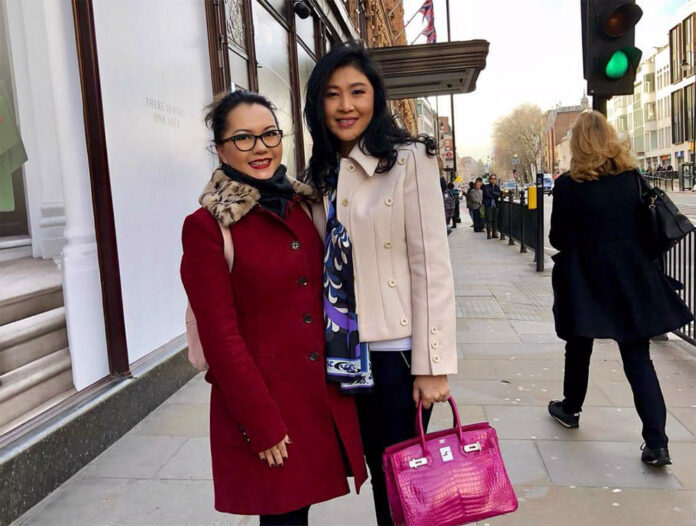
The Yingluck photos have emerged nearly five months after she fled the country and vanished from the public eye. The most recent photo, which has circulated over the Line messaging app since Thursday, shows Yingluck smiling with an unidentified woman. Yingluck is clutching a Hermes Porosus bag in rose-colored crocodile skin. Online listings indicate the bag costs over 2 million baht.

It emerged less than a week after a reported Yingluck sighting at a west London shopping mall.

Reached for comment Monday, a spokeswoman for the embassy declined to comment or even give her name.

This unsourced image purportedly showing former Prime Minister Yingluck Shinawatra in London recently has been circulating online.

On Saturday, Thanakrit Vorathanatchakul, a prosecutor in Thailand’s Attorney General’s Office, gave details about how such a process may work, however.

The prosecutor said that if the convicted former premier could convince the British authorities that returning to Thailand would result in unfair persecution or harm, she would be eligible to seek asylum in the United Kingdom. This, Thanakrit said, could cover Yingluck’s husband and son, who is still a minor. If asylum status were to be granted, Yingluck and her family could reside in the United Kingdom for up to five years.

After five years, if there remains a reasonable concern the person would still be at risk, they can apply for UK residency.

At this stage, Manit said he doesn’t expect any serious effort by the military government. A staunch critic of Yingluck, Manit believes in the conspiracy theory that had the junta letting Yingluck leave Thailand last year to avoid her becoming a potent jailhouse symbol to rally her base. Junta figures have roundly denied the claim.

The Supreme Court’s Section for Political Office Holders in September convicted Yingluck in absentia for malfeasance and sentenced her to five years in prison over corruption in a rice subsidy program that occurred under her watch.

“I don’t know if they’re serious in trying to get her,” said Manit, who’s not convinced that the military regime wants Yingluck imprisoned in Bangkok. “They have to make noise [about Yingluck being in London] to make people feel like they had nothing to do with it. It’s a little too soap-opera like.”

Deputy Prime Minister Gen. Prawit Wongsuwan said Monday that police and the Foreign Ministry would look into the matter.

Manit also asked why the United Kingdom would aide a fugitive from justice such as Yingluck.

“Is it not double standard?” said the well-known 56-year-old photographer and owner of Bangkok’s Kathmandu Photo Gallery.

He added that he no longer has any hope of seeing Yingluck extradited.

As for Ekachai, he predicts many Yingluck supporters would flock to London to try to see her. Asked if Yingluck would become politically active from exile or not, Ekachai said that’s up to Yingluck.

Manit thinks it’s up to how the public reacts to her presence in London – and her elder brother Thaksin Shinawatra, himself an ousted and fugitive former premier.

“She’s probably not doing this alone but must watch the signals from her brother,” he said.

Advertisement

Hot News

LATEST NEWS

Bangkok
broken clouds
33.3 ° C
33.3 °
32.7 °
59 %
1.3kmh
70 %
Sun
36 °
Mon
37 °
Tue
36 °
Wed
37 °
Thu
36 °