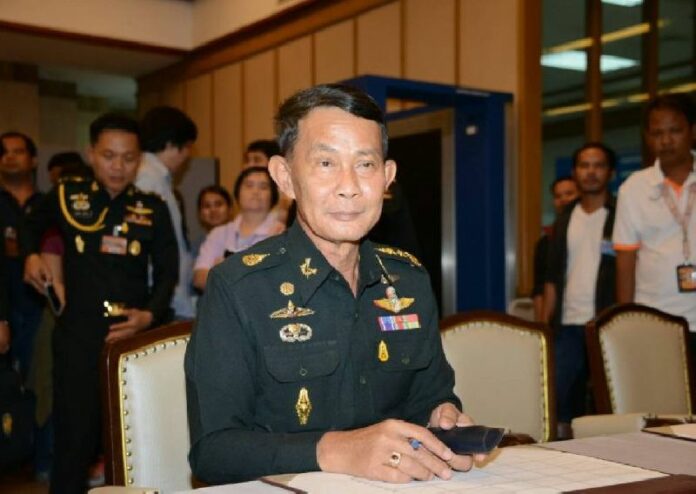
Undated file photo of Preecha Chan-ocha / Matichon
BANGKOK — It will take until Friday to know whether seven absentee members of the parliament risk losing their jobs for not meeting attendance requirements – or up to three months for a newly launched review to run its course.
Days after the interim legislature dismissed a report that seven junta appointees had failed to participate in the minimum number of votes necessary, public pressure prompted the assembly vice chairman to announce Monday that an inquiry would look into whether they had properly obtained permission.
The change of course came Monday, five days after assembly leaders said the seven, all high-ranking government officials at the time, had permission to miss more than one-third of legislative votes in 90 days, which is cause for removal under assembly regulations.
The member with the worst attendance record among the seven was Gen. Preecha Chan-ocha, the younger brother of junta chief Prayuth Chan-ocha. He cast only six votes out of a total 453 roll calls in a six-month period. The former army regional commander served as permanent secretary of the Defense Ministry at the time. In addition to that salary, he collected 113,560 baht per month to sit on the legislature.
The original report was published Feb. 5 by the Internet Law Reform Dialogue, or iLaw.
Assembly president Pornphet Vichitcholchai last week said he concluded that all seven had rightfully obtained permission to take leave.
But the assembly chairman reversed himself Sunday, saying he had ordered his No. 2, Peerasak Porjit, to head a detailed review after a familiar political gadfly behind many transparency complaints filed one Thursday. In it, Srisuwan Janya demanded an investigation into whether the leave applications were made retroactively.
Responding to strong criticism, Pornphet on Monday insisted he was strict about granting leave, saying members needed to submit the forms in advance, except for sick leave.
“I am very strict. Taking sick leaves for up to two days requires a medical certificate,” he said. “And for business leave, it must be for a government mission.”
Members of the legislature can apply for leave an unlimited number of times.
The other six members with poor attendance were: Commander-in-Chief of the Royal Thai Navy Adm. Na Areenit, Royal Thai Air Force commander ACM Chom Rungsawang, Navy Adm. Pallop Tamisanon, head of the Council of State Distat Hotrakitya, Budget Bureau Director Somsak Chotrattanasiri and Federation of Thai Industries chairman Supant Mongkolsuthree.
Answers are unlikely to be coming soon.
Legislature vice chairman Peerasak said it will take 30 days for the assembly’s secretariat to review the case in detail and then another 60 days for them to decide whether the seven members violated ethical standards.
All seven members and Srisuwan, as the petitioner, will be called before the inquiry committee, Peerasak said.
Released Norwegian hostage Kjartan Sekkingstad, left, briefly delivers his statement after meeting Philippine President Rodrigo Duterte, right in September in Davao city in southern Philippines. Photo: Manman Dejeto / Associated Press
MANILA— Gunmen attacked a Vietnamese cargo ship off the Philippines’ southern tip, killing a Vietnamese crewman and abducting six others including the vessel’s captain, the Philippine coast guard and the ship’s owner said Monday.
Coast guard spokesman Armand Balilo said the Vietnamese coast guard reported that the MV Giang Hai, with 17 crewmen on board, was attacked by pirates Sunday night about 20 miles (31 kilometers) north of Pearl Bank in Tawi-Tawi, the Philippines’ southernmost province.
Personnel of the Philippine coast guard, police and marines found the ship had drifted near the province’s Baguan Island. Upon boarding the vessel, they found 10 Vietnamese sailors alive and one dead.
Pham Van Hien, head of the safety department of Pham Hai shipping company, the owner of the cargo ship based in Vietnam’s northern port city of Hai Phong, said the captain was among those abducted. The attack occurred while the vessel was transporting 4,500 tons of cement from Indonesia to the Philippines, he said.
The gunmen destroyed some of the ship’s equipment, but the 10 remaining crew members managed to sail the ship, Hien said.
Hien said the company had informed the IMB Piracy Reporting Center in Malaysia seeking its help in securing the return of the kidnapped crew members.
Balilo said pursuit operations are underway, but the location of the abducted crewmen and the identity of the attackers remain unknown.
Abu Sayyaf militants and allied gunmen are suspected of being behind previous sea assaults in the area, including an attack last November on another Vietnamese cargo ship whose captain and five crewmen were also kidnapped. They are still being held.
Ransom kidnappings of Malaysian, Indonesian and Vietnamese crewmen have continued despite heightened coastal and border security.
An image of Gerda Liebmann spraying “A Line of Salt” posted on Jun. 10, 2014. Photo: Gerda Liebmann Arts / Facebook.
BANGKOK — A Swiss-American artist inspired by her faith will create a transient art installation from salt live Bangkok next month.
“You are the salt of the earth,” Jesus told his disciples not to lose their flavor in life.
For eight hours, Gerda Liebmann will encourage others to keep life’s flavor salty by pouring it in an extended Christian metaphor about people being the “salt of the Earth.”
“Salt has many traditional uses and customs. It is pure, white, used for flavoring, preservation, sacrifice and purification,” Liebmann wrote by email. “I want my installations to be approachable – and at the same time I hope to get a visceral response from the viewer.”
After the long line of salt is complete, visitors are invited to walk over and erase the art as a symbolic act of purification and renewal.
“I am drawn to the ephemeral beauty of the transient,” she wrote. “Hopefully the act will inspire a moment of catharsis in the participants.”
The artist will start her work at 10am and will finish at 6:30pm on March 1 at Artery Gallery on the second floor of River City Bangkok, a riverside shopping mall on Soi Charoen Krung 24. It can be reached by taxi or mototaxi from MRT Hua Lamphong.
An image of Gerda Liebmann’s “A Line of Salt” posted on Dec. 18, 2011. Photo: Gerda Liebmann / Facebook.
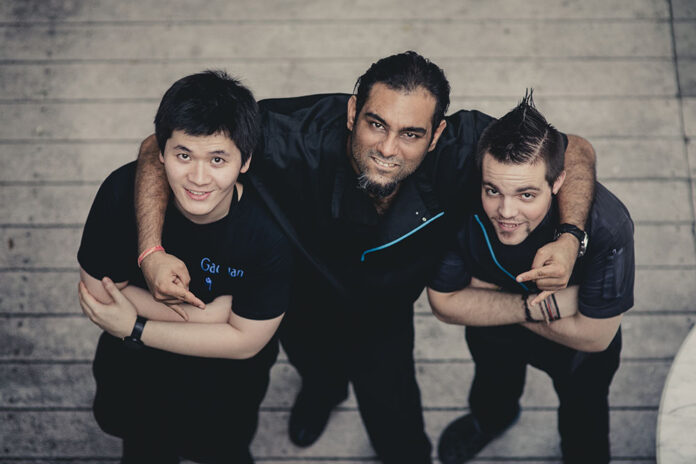
Chef Gaggan Anand, at center, of Bangkok's Gaggan restaurant. Photo: Courtesy
Top: Chef Gaggan Anand, at center, of Bangkok’s Gaggan restaurant. Photo: Courtesy
BANGKOK — “Do I care? Yes. Nervous? No. Excited? Yes.” We’re in the middle of a photo shoot in Bangkok’s Gaggan, the No. 1 restaurant in Asia on both the 2015 and 2016 Asia’s 50 Best Restaurants lists and No. 23 on the 2016 World’s 50 Best Restaurants list.
Chef Gaggan Anand is shouting for staff to have their pictures taken while fielding questions about Tuesday’s eventwith his characteristic candor. What did making the list change? Gaggan goes straight to the point.
“It changed everything, I am what I am today because of Asia’s 50 Best,” he said, adding that with the laurels came recognition and acceptance. And popularity. “What you’re doing becomes a trend.”
Over near Rama IV Road, at Issaya Siamese Club (No. 19 in Asia for 2016), Chef Ian Kittichai agreed.
“It is always great to be recognized, especially by our peers,” he wrote in a measured email reply.
The sentiment was echoed by many of the chefs we talked to, for whom the distinction is coveted recognition by fellow chefs and gourmets in the know.
Golden Ticket
Chef Ian Kittichai of the Issaya Siamese Club.
Others however suggest it is a popularity contest won by rubbing shoulders with the list’s voters known as “tastemakers,” and by PR machines with deep pockets and the right contacts. What is sure is that a spot on the list practically guarantees long waiting lists of eager diners clamoring for a table and the full coffers that come with having a packed house night after night.
Litti Kewkacha, the CEO of family concerns including Safari World and the group that includes chains like Sfree, is both a businessman and one of the World’s 50 Best Restaurant tastemakers. Acknowledging that the award was good for business, he elaborated on the importance of financial success to the creative process.
“Business brings opportunities for chefs to venture out of the orthodox, to invest in R&D, to seek and serve rare, sustainable and organic ingredients that wouldn’t be possible if the restaurant were empty.”
Somebody who has earned the luxury to explore less-traveled avenues is Chef Prin Polsuk of Nahm (No. 8 in Asia and No. 37 in the world in 2016). He talked about his passion for researching old Thai recipes, growing aromatic ginger on the roof and sourcing fiddlehead ferns grown to his specs near Chiang Rai. But the recognition brings both freedom and responsibility.
“Here at Nahm we serve family style, Thai style, and that’s against the mainstream of fine dining, right?” he said.
But he can’t break all the rules.
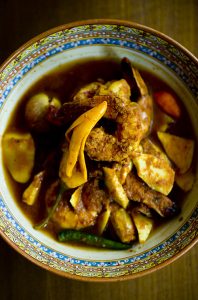
Orange curry of prawns with coconut heart at Nahm.
“We need to keep our standards. The year we got No. 1, there was a lot on my shoulders, it was really hard,” he says, referring to 2014, when Nahm ranked No. 1 in Asia.
The third generation of a Michelin-starred family, Marine Lorain came to Bangkok to open J’aime under the guidance of her father, executive chef Jean-Michel Lorain who had inherited his stars from his father. Steeped in that tradition, Lorain knows about the pressure created by expectations but expressed a different take on the 50 Best list.
“For me 50 Best means ‘best’ gastronomic restaurants in terms of cuisine and service. There has to be some sort of refinement,” she said. “I wonder about a list where Robuchon isn’t there, or Le Normandie, an institution in Bangkok, or Savelberg.”
Those are all Bangkok restaurants grounded in classic French haute cuisine, none of which appears in the current selection.
Krung Thep Rising
Bangkok placed four restaurants among the top 50 in 2016 and hopes are high to do even better this year. Chef Tim Butler of Eat Me (No. 23 last year) says that of course there will be changes to the list.
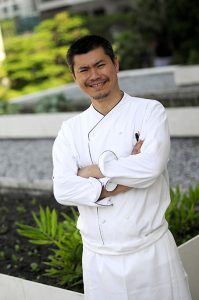
Chef Prin Polsuk of Nahm.
“We’ve been really really lucky to be included in the list over the years. But just for the longevity of the list, it has to reinvent itself,” Butler said. “You need that evolution. If [Chef Thomas Keller’s iconic California restaurant] French Laundry were No. 1 after 10 years, the [World’s 50 Best Restaurants] list would lose its relevance. I hope there are a lot of new restaurants.”
Better representation was the idea behind breaking the list up.
The Asia’s 50 Best Restaurants list was born in part to address credibility issues concerning the World’s 50 Best list, founded in 2002. Originally the only voters were chefs, voting for their peers. But the method resulted in largely stagnant lists centered on Europe and North America and raised concerns that being on the list had more to do with cronyism than quality. The pool of voters was expanded to include food experts, journalists and enlightened diners. Auditors were hired to ensure that voters followed procedures designed to reinforce fairness. In 2013, the Asia’s 50 Best Restaurants list and its cousin, Latin America’s 50 Best Restaurants, were launched to give the awards a global perspective.
So who will the new faces be? Tastemaker Litti Kewkacha said that he didn’t see anyone topping Gaggan again this year, to which Gaggan himself mused, “Three times lucky would be very lucky. I don’t know. Three years in a row? I hope the pressure ends this year…”
Some chefs, like Gaggan, diplomatically declined to make predictions or name any names. It is easy to suppose however that he has high hopes for his other horse in this race: Suhring, run by twin chefs Thomas and Mathias Suhring, in which he is a partner.
The majority of chefs interviewed for this article named Suhring as a likely entry. The restaurant even has supporters among the tastemakers.
“I’m pulling all the way for Suhring,” enthused Kewkacha. “It’s the best thing to happen in this city for years. Finally a true fine, Western dining restaurant that can compete with any in the region.”
However Mathieu Campion, manager of the restaurant, responded with a coy “no comment.” When asked if the chefs would answer questions ahead of the awards to be announced on Tuesday, he said the chefs would be happy to grant an interview.
“I would suggest the 23rd onward,” he replied.
One Night in Bangkok
Some chefs concentrated on the event itself, rather than potential prizes. Gaggan says it is not about proving himself anymore.
“It no longer a competition, it’s a gathering, meeting all the chefs,” he said. “It’ll be craziness, madness. We’ll show them what Bangkok is all about, one night in Bangkok!”
He adds that this edition will be the last in Bangkok, for now at least.
Chef Thitid “Tonn” Tassanakajohn also chose to focus on the event rather than the possibility of winning a spot on the list. “We are looking forward to the event, it’s very exciting for us.” His flagship restaurant Le Du is often tipped as a favorite, but will this be his year?
“I hope one day we make it to the list,” Tonn says. “But more than that, I’m excited about the event because a lot of chefs will come, people in the industry. Some will try my food, some will come to Bangkok and enjoy my home town, and that for me is very exciting already.”
Chef Bongkoch “Bee” Satongun of Paste was award-ambivalent.
“Awards mean that people recognize what I’m doing, but I don’t live for awards, I’m living for the people who come to eat in the restaurant.” Chef Bongkoch “Bee” Satongun of Paste, widely admired for her unique spin on historical Thai recipes while using modern ingredients and techniques, but who has not attracted the local or international plaudits conferred on her peers.
Still, “it’s a chef’s dream, having a Michelin star,” she admits wistfully. “It’s [like] you’re the student and the teacher gives you full marks.”
They might have won only one match at the Asian Women’s Rugby Sevens in Laos on the weekend, but for the Pakistan team – which formed only a year ago – it was a dream debut at an international event.
“For everyone it’s a huge deal that the women are playing rugby,” said Pakistan player Mehru Khan.
“First, that’s a big deal that women are playing rugby. And secondly that we are getting a platform to come and perform to represent our country.”
In a country of more than 200 million people, where women are believed to be half of its population, only men’s cricket gets recognition. Cultural barriers make it difficult for sportswomen to get due encouragement to take up either team or individual sport – especially contact sports like rugby.
When last year Pakistan tried to form its women’s team, Pakistan rugby officials encouraged school teachers and students and they received a good response.
“In Pakistan, opting for a sport like rugby, this is like out of the mould for our society,” said Feiza Mahmood Mirza.
“So we are here, because I think we are making change. We are the one(s) who are gonna be the inspiration for other girls.”
Pakistan finished above Nepal in the seven-team competition, which also featured winners South Korea, India, Malaysia, Philippines and Laos.
The Pakistan Rugby Union has trained more than 50,000 players since World Rugby’s “Get into Rugby” program began in the country three years ago. More than a third of them are women and girls.
“We are very keen to make a good woman rugby culture in Pakistan,” said coach Shakeel Ahmed.
“So we have a contract with different departments, as women’s teams: we have a contract with army, we have a contract with police. We have contracts with different schools, in different cities. So until 2019 we will make more than 10,000 girls to know how to play rugby.”
Many players believe there are still cultural hurdles for Pakistani girls to take up sports, such as families discouraging them or a lack of government funding to establish sports facilities.
Mehru has studied in Canada where she discovered rugby and believes the sport could play a major role in women’s empowerment in Pakistan.
“I hope women in Pakistan look towards me and think if she can do it, I can do it,” she said.
“I will go back and I will create a club in Lahore for girls. I will go to their houses and call them and play rugby because I don’t want them to feel they are less than us or than the boys or anyone. They should come and they should join and they should have fun.”
Women farm workers shovel locally-produced 'Juche fertilizer' at Migok Cooperative Farm in January near Sariwon, North Hwanghae Province, North Korea. Photo: Associated Press
PYONGYANG, North Korea — Plug your noses and ready your “Juche fertilizer.” It’s time to prep the frozen fields in North Korea.
North Korea relies on its farmers to squeeze absolutely all they can out of every harvest. It’s a tall order in a country with 25 million mouths to feed that is mostly mountains, hamstrung by international trade sanctions and, beyond a handful of showcase cooperatives, hard-pressed to modernize its agricultural sector.
Without doubt, life as a farmer in North Korea is harsh. But there are some signs of change in how North Korea is treating its fields and its farmers.
In typically propagandist fashion, the North’s state media are already reporting that workers inspired by leader Kim Jong Un’s New Year’s address are heroically churning out “117 percent” of their production quotas of what they call “Juche fertilizer.”
A grain of salt is certainly in order. What exactly the patriotic-sounding Juche fertilizer is isn’t all that clear, though it’s likely a mix of largely organic components augmented with some chemicals. Because of the general lack of livestock, human feces are a key ingredient. Juche refers to the North’s longstanding but mostly aspirational policy of self-reliance.
The battle in the fields, however, has certainly begun.
With the ground still frozen as the North waits out its notoriously cold winters, farmers, joined by workers and students mobilized from the cities, are in the process of transporting truckloads of pungent fertilizer to fields across the country for the planting season ahead.
Kim Song Ryong, head technician at the Migok Cooperative Farm in Sariwon, south of Pyongyang, said it takes about 20 to 25 days to distribute the compost. In March, it will be spread over the fields in an even layer and then ploughed in below the surface.
“Our respected supreme leader comrade Kim Jong Un instructed us that agriculture is the main approach to building a strong economy and country,” he said in an interview with AP Television News. “To get the best harvest with scientific farming, all our farmers and workers are out in the fields to improve the quality of the soil.”
In the past, the country’s over-reliance on scientific magic bullets has had tragic results.
Overuse of chemical fertilizers that began in the 1950s devastated the natural microbiotic soil environment and fueled a cycle in which its fields grew increasingly dependent on ever-more-artificial fertilization. In the 1990s, the fall of the Soviet Union and Pyongyang’s other communist benefactors disrupted the supply of that fertilizer – which, coupled with other factors, led to widespread famine.
But Pyongyang appears to have learned some lessons since.
According to Randall Ireson, a private consultant and former nongovernmental program director in the North, farmers have shifted their emphasis since about 2000 to adding compost and organic fertilizers to rebuild the organic content in the soil and revivify microorganisms.
“What I’ve seen and heard of is the use of effective rapid aerobic composting of plant residue and, where available, animal and human manure, with the composted material further augmented with some chemical fertilizer,” he said. “The addition of chemical fertilizer to the mix makes it “non-organic” by a strict definition, but the other aspects are generally sound and sustainable, if managed correctly.”
Ireson noted that the depressed economy, lack of foreign exchange and weak industrial sector combine to make the acquisition of foreign chemical fertilizer difficult. But he said the push in the North for composting, while poorly designed at first, has gradually improved so that farms have started to produce fertilizer using local, low-energy methods.
“Buying more would be the easy, if not environmentally or economically sustainable, way to boost farm production,” Ireson said. “Lacking that resource, the push has been to find local resources, which I think is quite appropriate.”
More importantly, policy revisions under Kim Jong Un have since 2012 given farmers more incentive to produce above the state quota and to take more of a personal stake in field outcomes. Though details are scant, farmers can sell excess produce for a profit and smaller, essentially family-sized, work units have been established to make the rewards more direct.
Outside experts generally agree the changes are a step in the right direction – China and Vietnam had success with similar agricultural reforms.
But they also quickly warn it remains unclear how widely and fully implemented the revisions have been.
“It’s always hard to know what the ag situation really is,” said Ireson. “There’s a tendency to concentrate on technical aspects of farming (in the North), but the farmers are pretty clever and know how to do things. The main constraint is limited resources and, at least until recently, little personal incentive to produce beyond the quota.”
BANGKOK — Festival fiends who either missed Wonderfruit or didn’t get enough of the art and music festival can look forward to Dudesweet’s redefinition of the festival from another perspective this coming weekend for wanderers to live, love and … whatever.
Just one week after Wonderfruit went down in Pattaya, Wondertoots will be staged by nightclub royalty Dudesweet. It’s kind of like the four-day festival on the sprawling country club grounds, just a little smaller and a lot gayer.
The two-day party will play out on four stages at Tapas on Soi Silom 4 with acts including DJs Tee Deeper and Tong, Quay Records, Go Grrls, The Panlert Twins, Gayaim and more. A schedule is available online.
Admission is 200 baht per day. It’s advised to dress in “spiritual” styles, Instagram-friendly attire or anything that will get the most Likes.
Join the fun starting at 8pm on Friday and Saturday at Tapas, just a few minutes walk from BTS Sala Daeng exit No. 1.
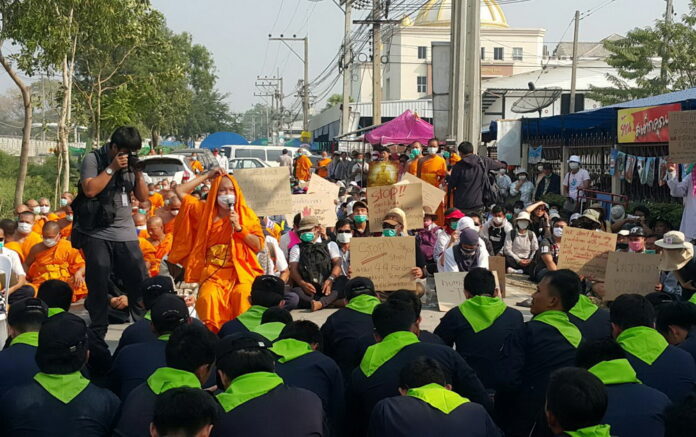
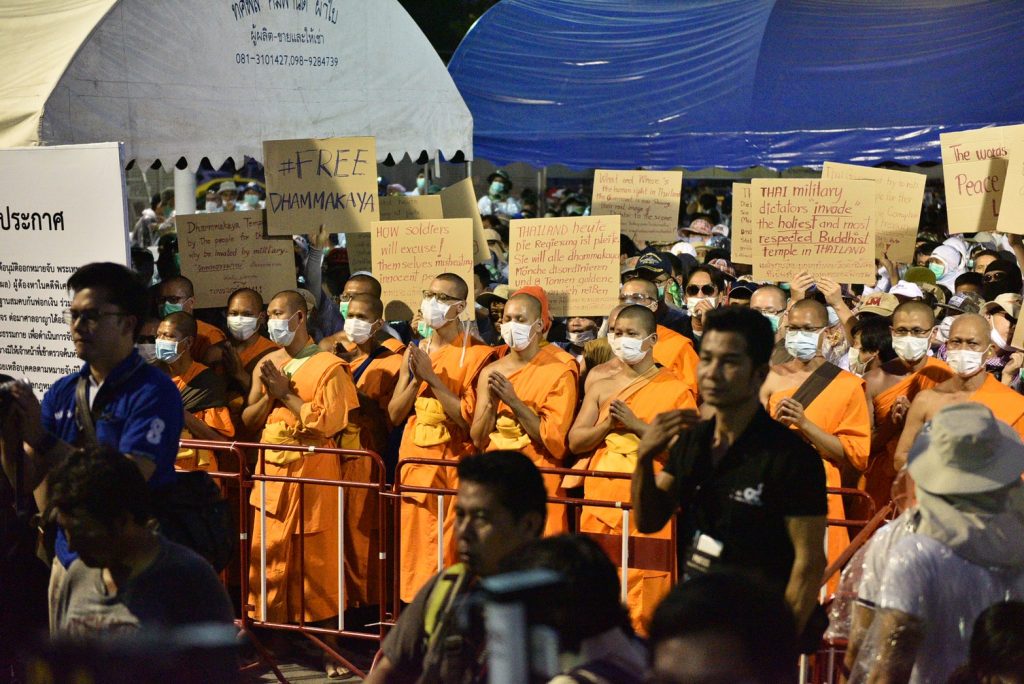
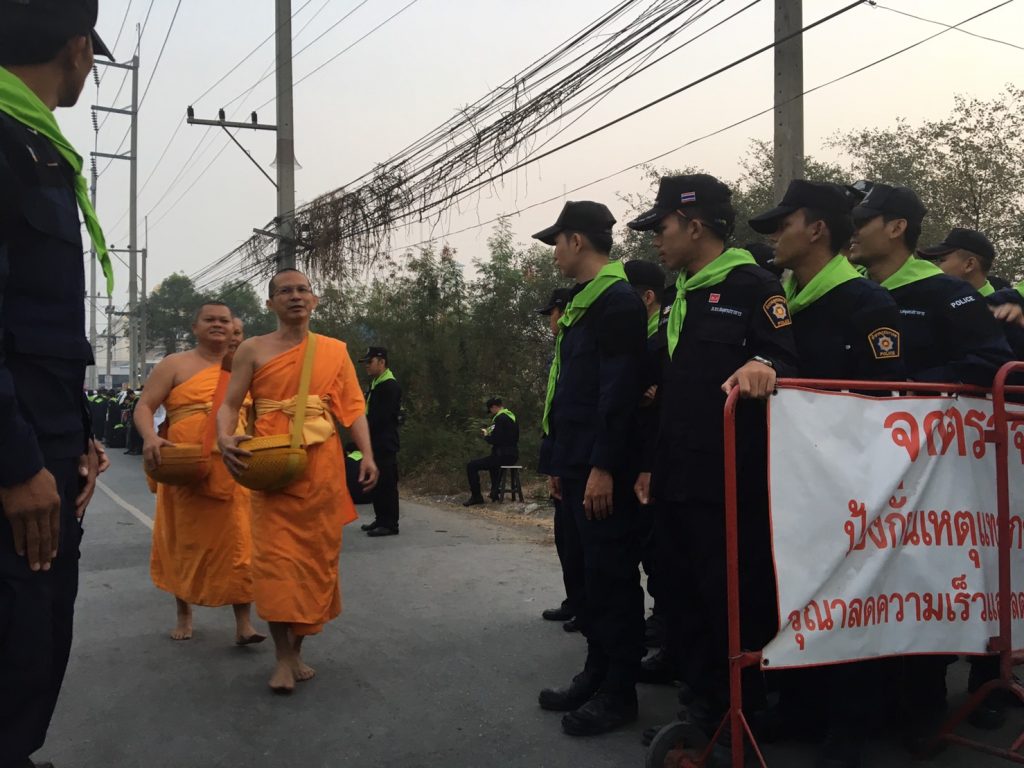
Monks and police face off close to Gates 5 and 6 of Wat Dhammakaya on Monday.
PATHUM THANI — A police operation to search headquarters of the Dhammakaya sect and look for its fugitive spiritual leader met resistance on Monday, when monks and worshipers tried to push police forces out of their positions around the temple complex.
One person was reportedly injured in sporadic clashes between the two sides Monday morning. Police pledged to continue their siege and search for the 72-year-old former abbot Dhammachayo, who’s been charged with money laundering, while a temple spokesman decried the operation as inhumane.
The clashes took place at about 8am, when supporters of Wat Dhammakaya marched to push police cordons away from Gate 5 and 6 – a key entrance to the temple that officers had blocked since Thursday in their attempt to starve the temple of supplies and reinforcements.
By 9am a woman was reportedly sent to hospital for injuries sustained during the shoving match. Gate 5 and 6 , which sit across from each other at the southern end of the complex, were in the hands of Dhammakaya supporters and monks when the confrontation was over, a lane connecting the two gates with the main road, Khlong Luang, was still blocked by phalanxes of riot police at the time of writing.
The twin gates have been a focal point in all previous standoff between police and Dhammakaya because they link the temple’s eastern complex with the rest of the compound to the west.
Dantamano Bhikkhu, a Dhammakaya monk-spokesman, described police violence during the clash. According to his messages on Twitter, a worshiper had been stomped and even attacked with a stun gun.
But Lt. Gen. Chanthep Sesavej, commander of the police units at the scene, said the woman was injured during the scuffles, and police did not use a stun gun.
“I don’t even want you to use the word clashes, they were just pushing each other,” Chanthep said. “They pushed us, so we pushed back.”
He also said electricity and water supply to Wat Dhammakaya has not been cut as reported on social media.
The situation at Wat Dhammakaya grew visibly more tense after the Department of Special Investigation, or DSI, instructed non-residents to leave the temple by 3pm on Sunday. The DSI said monks and laymen interfered with their search for Dhammachayo, which began Friday.
Instead of conceding, the Dhammakaya supporters’ reaction appeared to catch the police off guard. After the announcement was made, hundreds of Dhammakaya followers broke through police lines and entered the temple, while monks led groups of laymen to push police back from the temple gates before nightfall.
Despite the escalation Sunday, the DSI’s deputy chief maintained the situation is under control.
“I insist that we have control of the situation,” Lt. Col. Suriya Singhakamol told reporters. “We did not evaluate the situation incorrectly.”
He also said security forces would refrain from violence. Police on Monday said it sent 13 companies of crowd control units to reinforce the operation at Wat Dhammakaya as requested by the DSI.
Speaking about Monday’s clashes, a monk-spokesman for Wat Dhammakaya said the temple followers merely want to “ask to share the area” with police. Phra Sanitwong Wuttiwangso told reporters monks and worshipers need convenient access so they can leave to buy meals and do other personal business in the outside world.
He also said the 14 monks summoned by the DSI to meet with the officers on Sunday evening may not have shown up out of fear of police mistreatment.
“There is news on social media that people who previously met with officers were detained,” Sanitwong said. “So the laymen asked that they don’t meet with officers yet in this sensitive situation.”
The monk added that a much-circulated photo of Dhammakaya staff making a hole through a temple wall is true; he said some followers were afraid they would not be able get past police blockades at the gates so they had no choice but to make a new entrance.
All previous attempts by the DSI to enter the temple and search for the elusive Dhammachayo eventually came to an end after security officers encountered resistance from the temple supporters. Government officials said their priority is to avoid any possible bloodshed.
Former abbot Dhammachayo has not been seen in public since he was charged in June.
The latest search effort began Thursday after the junta declared the area a restricted area, granting security officers authority to search buildings, make arrests and cut off any water or electricity as they see fit.
The temple denies the allegations of money laundering against Dhammachayo and says they are politically motivated.
Leaders of the Dhammakaya sect also maintain that the elderly former abbot is too ill to meet with the police to discuss the charges, and deny any knowledge of his whereabouts.
Monks and police face off close to Gates 5 and 6 of Wat Dhammakaya on Sunday evening.Police briefly part way for monks to pass through checkpoints and collect morning alms on Monday.
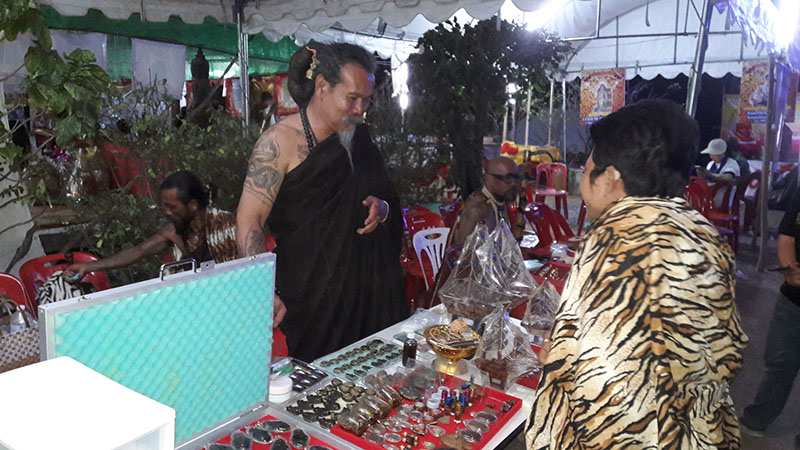
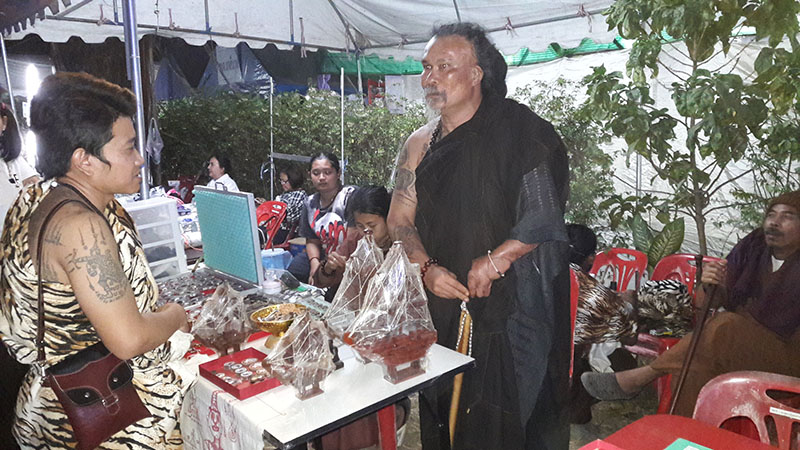
Thai and foreign hermits at the World Hermit Convention Sunday in Maha Sarakham.
MAHA SARAKHAM — More than 300 Thai and international mystics met at a World Hermit Convention Sunday evening in Isaan.
Ascetics gathered at a fair in the country’s northeast to showcase the arts and artifacts of what organizers described as a vanishing culture and way of life.
“Many of the hermit arts are disappearing. At the event many people got to see what they have only seen in movies, but are actually ancient practices,” said Ma Lue Thep, an organizer and ruu see from Chiang Mai.
Event activities included chanting to pay respect to mentors, rituals to supplicate deities and devas, and rites performed to imbue amulets with supernatural powers. The holy folk also performed prayers in line with their astrological-celestial beliefs to repel bad luck for the year and displayed regional sacred talismans.
“North, south, Isaan, and central hermits showed everyone their skills and exchanged cultures. Hermits from Isaan showed their medicines and mor lam tsong, a kind of musical therapy, while southern hermits showed their metalworking skills,” he said.
At the event, sages in traditional hermit garb exchanged their methods of chanting and meditation and shared social conditions with those from other locales.
Foreign visitors attended from Hong Kong, Singapore, Taiwan, China, Canada, Burma, Cambodia, Laos and Vietnam.
“The event was really packed. A hermit MC walked around and explained into a mic how this medicine or that talisman worked. The Ministry of Culture came as well and gave us about 50 awards,” Ma Lue Thep said.
Hermit sages, or ruu see, spend their time meditating in the forest, developing their mystic arts, communicating with animals, creating natural remedies, imbuing artifacts and teaching devotees. Mor lam tsong is an Isaan hermit practice in which a seance is held accompanied by song and dance. This is believed to summon spirits to possess a sick person in order to heal them.
KUALA LUMPUR — Security camera footage obtained by Japanese television appears to show a careful and deliberate attack last week on the exiled half brother of North Korea’s ruler, while Malaysia said Monday it had recalled its ambassador to North Korea amid rising tensions between the nations.
The footage, obtained by Fuji TV and often grainy and blurred, seems to show two women approaching Kim Jong Nam from different directions as he stands at a ticketing kiosk at the budget terminal of the Kuala Lumpur airport. One – apparently a Vietnamese woman now under arrest – comes up behind him and appears to hold something over his mouth for a few seconds.
Then the women turn and calmly walk off in different directions. More footage shows Kim, a long-estranged scion of the family that has ruled North Korea for three generations, walking up to airport workers and security officials, gesturing at his eyes and seemingly asking for help. He then walks alongside as they lead him to the airport clinic.
Fuji TV has not revealed how it acquired the video footage, which was taken by a series of security cameras as Kim arrived for a flight to Macau, where he had a home.
Kim, a portly man in his mid-40s, died shortly after the attack, en route to a hospital after suffering a seizure, Malaysian officials say.
Malaysia’s deputy national police chief, Noor Rashid Ibrahim, said Sunday that Kim had told airport customer service workers that “two unidentified women had swabbed or had wiped his face with a liquid and that he felt dizzy.”
Since Kim’s death last week, authorities have been trying to piece together details of what appeared to be an assassination. Malaysian police have so far arrested four people carrying identity documents from North Korea, Malaysia, Indonesia and Vietnam.
Investigators are looking for four North Korean men who flew out of Malaysia the same day as the attack, Malaysian police said Sunday.
Noor Rashid said the men arrived in Malaysia on different days beginning Jan. 31 and flew out of the country last Monday.
“I am not going disclose where they are,” he told a room packed with journalists, adding that Interpol was helping with the investigation.
The four men, who range in age from their early 30s to late 50s, were traveling on regular – not diplomatic – passports, he said.
Police also want to question three other people. Noor Rashid said one was North Korean, but that police had not yet identified the other two. It was not clear if they were suspects or simply wanted for questioning.
Autopsy results are expected to be released within days.
Investigators also want to speak to Kim Jong Nam’s next of kin to formally identify the body. He is believed to have two sons and a daughter with two women living in Beijing and Macau.
“We haven’t met the next of kin,” Noor Rashid said. “We are trying very hard to get the next of kin to come and to assist us in the investigation.”
Noor Rashid said charges against the four suspects in custody would be determined by prosecutors.
According to police, the Indonesian woman is a spa masseuse and the Malaysian man, a caterer, is believed to be her boyfriend. The Vietnamese woman works at an entertainment outlet and the North Korean man works in the information technology department of a Malaysian company.
The Indonesian woman has told investigators that she was duped into thinking she was part of a comedy show prank.
The case has raised tensions between Malaysia and North Korea. Pyongyang demanded custody of Kim’s body and strongly objected to an autopsy. The Malaysians went ahead with the procedure anyway, saying they were simply following procedure.
Kang Chol, North Korea’s ambassador to Malaysia, said that Malaysia may be “trying to conceal something” and that the autopsy was carried out “unilaterally and excluding our attendance.”
On Monday, the Malaysian foreign ministry said it had recalled its ambassador to Pyongyang “for consultations” and had summoned Kang to a meeting, “to seek an explanation on the accusations he made against the Government of Malaysia.”
The statement called Kang’s comments “baseless” and said it “takes very seriously any unfounded attempt to tarnish its reputation.”
It said the government had kept the North Korean embassy informed of the situation, telling them that because “the death occurred in Malaysian soil under mysterious circumstances, it is the responsibility of the Malaysian Government to conduct an investigation to identify the cause of death.”
South Korea has been quick to blame North Korea for the death of Kim Jong Nam, who as the eldest son of the late dictator Kim Jong Il was once widely seen as the ruler-in-waiting of the isolated nation. However, he fell out of favor more than a decade ago, and has spent most of his time since then living in China or Southeast Asia.
The attack “showed the reckless and brutal nature of the North Korean government,” Prime Minister Hwang Kyo-ahn said Monday during a National Security Council meeting.
A later statement from Hwang’s office said South Korea will cooperate with the international community to make an unspecified “strong” response to North Korea over the killing.