33.5 C
Bangkok
Thursday, June 25, 2026
Home Blog Page 2496

Internet is Right About ‘Fake Bird’s Nest,’ Scientist Says

Photos of butter-cup tree sap sold as edible bird’s nest. Image: www.showkhao.com

BANGKOK — For once, an online rumor has turned out to be true. Yes, some vendors really do sell cheap tree sap disguised as edible bird’s nest, a luxury delicacy in Thailand.

Responding to posts on social media warning about such a scam, well-known scientist Jessada Denduangboripant wrote online that the sap, which is extracted from butter-cup trees, has a striking similarity to actual bird’s nest but costs less to produce.

“It’s rare that a truth gets [widely] shared like this,” wrote Jessada, a Chulalongkorn University lecturer famous for debunking hoaxes on social media.

Suckers who have bought fake bird’s nest have some relief: The gum is safe as a food additive and does not pose a health risk, Jessada said.

Considered a high-status treat by many Sino-Thais, edible bird’s nest, made by the saliva of a swift, is a popular gift during the New Year season.

Jessada advised consumers to refrain from buying edible bird’s nest from dodgy street vendors and stick to established brands.

Advertisement

US Punishes Russia for Hacking Presidential Campaign

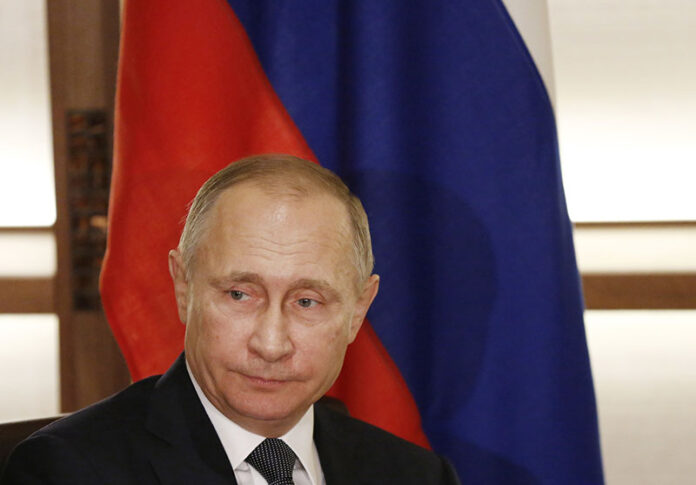
Russian President Vladimir Putin in 2016 in Nagato, Japan. Photo: Toru Hanai / Pool / Associated Press

HONOLULU — The United States struck back Thursday at Russia for hacking the U.S. presidential campaign with a sweeping set of punishments targeting Russia’s spy agencies and diplomats. The U.S. said Russia must bear costs for its actions, but Moscow called the Obama administration “losers” and threatened retaliation.

A month after an election the U.S. says Russia tried to sway for Donald Trump, President Barack Obama sanctioned the GRU and FSB, leading Russian intelligence agencies the U.S. said were involved. Those sanctions could easily be pulled back by Trump, who has insisted that Obama and Democrats are merely attempting to delegitimize his election.

In an elaborately coordinated response by at least five federal agencies, the Obama administration also sought to expose Russia’s cyber tactics with a detailed technical report and hinted it might still launch a covert counterattack.

“All Americans should be alarmed by Russia’s actions,” Obama said, adding, “Such activities have consequences.”

He said the response wasn’t over and the U.S. could take further, covert action — a thinly veiled reference to a counterstrike in cyberspace the U.S. has been considering.

Trump issued a statement saying it was “time for our country to move on to bigger and better things.” Yet in the face of newly public evidence, he suggested he was keeping an open mind.

“In the interest of our country and its great people, I will meet with leaders of the intelligence community next week in order to be updated on the facts of this situation,” Trump said.

As part of the punishment, the U.S. also kicked out 35 Russian diplomats who the U.S. said were actually intelligence operatives, and shut down a pair of Russian compounds, in New York and Maryland. The U.S. said those actions were in response to Russia’s harassment of U.S. diplomats, calling it part of a pattern of aggression that included the cyberattacks on the Democratic National Committee and Hillary Clinton’s campaign chairman.

It was the strongest action the Obama administration has taken to date to retaliate for a cyberattack, and more comprehensive than last year’s sanctions on North Korea after it hacked Sony Pictures Entertainment. The new penalties add to existing U.S. sanctions over Russia’s actions in Ukraine, which have impaired Russia’s economy but had limited impact on President Vladimir Putin’s behavior.

Russia, which denied the hacking allegations, called the penalties a clumsy yet aggressive attempt to “harm Russian-American ties.” Putin spokesman Dmitry Peskov said Russia would take into account the fact that Trump will soon replace Obama as it drafts retaliatory measures.

The day marked a low point for U.S. relations with Russia, which have suffered during Obama’s years as he and Putin tussled over Ukraine, Edward Snowden and Russia’s support for Syrian President Bashar Assad. Maria Zakharova, a Russian foreign ministry spokeswoman, took to Facebook to call the Obama administration “a group of foreign policy losers, angry and ignorant.”

It was unlikely the new sanctions, while symbolically significant, would have a major impact on Russian spy operations. The sanctions freeze any U.S. assets and block Americans from doing business with them. But Russian law bars the spy agencies from having assets in the U.S., and any activities they undertake would likely be covert and hard to identify.

“On its face, this is more than a slap on the wrists, but hardly an appropriate response to an unprecedented attack on our electoral system,” said Stewart Baker, a cybersecurity lawyer and former National Security Agency and Homeland Security Department official.

Indeed, senior Obama administration officials said that even with the penalties, the U.S. had reason to believe Russia would keep hacking other nations’ elections and might well try to hack American elections again in 2018 or 2020. The officials briefed reporters on a conference call on condition of anonymity.

Though the FBI and Homeland Security Department issued a joint report on “Russian malicious cyber activity” — replete with examples of malware code used by the Russians — it still has not released a broader report Obama has promised detailing Russia’s efforts to interfere with U.S. elections.

The report has been eagerly anticipated by those hoping to make it politically untenable for Trump to continue questioning whether Russia was really involved. But U.S. officials said those seeking more detail about who the U.S. has determined did the hacking need look only to the list of sanctions targets, which includes the GRU head, his three deputies, and two Russian nationals wanted by the FBI for cybercrimes.

The move puts Trump in the position of having to decide whether to roll back the measures once in office, and U.S. officials acknowledged that Trump could use his executive authorities to do so. Still, they suggested that building the case against Russia now would make it harder for Trump to justify easing up.

U.S. allegations of hacking have ignited a heated debate over Trump’s approach to Russia and his refusal to accept the assessment of U.S. intelligence agencies that Russia’s government was responsible and wanted to help him win. Though U.S. lawmakers have long called for Obama to be tougher on Russia, some Republicans have found that position less tenable now that Trump is floating the possibility of closer ties to Moscow.

“While today’s action by the administration is overdue, it is an appropriate way to end eight years of failed policy with Russia,” said House Speaker Paul Ryan, R-Wis.

U.S. intelligence agencies concluded that Russia was trying to help Trump win when hackers connected to the government breached Democratic Party computers and stole tens of thousands of emails that were then posted on WikiLeaks, some containing embarrassing information for Democrats. Clinton aide John Podesta’s emails were also stolen and released publicly in the final weeks of the campaign.

Story: Josh Lederman, Tami Abdollah


Advertisement

US Releases Detailed Look at Russia’s Election Hacking

United States President Barack Obama, right, and Russia's President President Vladimir Putin pose for members of the media before a bilateral meeting Sept. 28, 2015, at United Nations headquarters. Photo: Andrew Harnik / AP.

WASHINGTON — The U.S. on Thursday released its most detailed report yet on Russia’s efforts to interfere in the U.S. presidential election by hacking American political sites and email accounts.

The 13-page joint analysis by the Department of Homeland Security and the FBI was the first such report ever to attribute malicious cyber activity to a particular country or actors.

It was also the first time the U.S. has officially and specifically tied intrusions into the Democratic National Committee to hackers with the Russian civilian and military intelligence services, the FSB and GRU, expanding on an Oct. 7 accusation by the Obama administration.

The report said the intelligence services were involved in “an ongoing campaign of cyber-enabled operations directed at the U.S. government and its citizens.” It added, “In some cases, (the Russian intelligence services’) actors masqueraded as third parties, hiding behind false online personas designed to cause the victim to misattribute the source of the attack.”

Over the summer stolen emails from Democrats were posted by an online persona known as Guccifer 2.0, believed by U.S. officials to be linked to Russia. Outrage over documents that appeared to show favoritism for Hillary Clinton forced the DNC’s chair, Debbie Wasserman Schultz, to resign.

The U.S. released the report as President Barack Obama sanctioned the GRU and the FSB, the GRU’s leadership and companies which the U.S. said support the GRU.

Thursday’s sanctions were the administration’s first use of a 2015 executive order for combatting cyberattacks against critical infrastructure and commercial espionage. Because election systems aren’t considered critical infrastructure, Obama amended the order Thursday to allow for sanctions on entities “interfering with or undermining election processes or institutions.”

The retaliation against Russia, just weeks before President-elect Donald Trump takes office, culminated months of political handwringing about how and whether to respond to Moscow’s meddling. U.S. intelligence agencies concluded that Russia’s goal was to help Trump win — an assessment Trump has dismissed as ridiculous. Trump said Thursday he would meet with the intelligence community’s leaders next week for an update on the situation.

The report did not go far beyond confirming details already disclosed by cybersecurity firm CrowdStrike, which was hired to investigate the DNC hacks.

It described the intelligence services’ use of “spearphishing” — fake emails intended to trick victims into typing in their user names and passwords. At least one person opened attachments with malicious software. The report noted that actors “likely associated” with Russian intelligence services are continuing to engage in spearphishing campaigns, including one launched just days after the U.S. election.

The DNC was infiltrated by the FSB in summer 2015 and again by the GRU in spring 2016 using spearphishing emails that often appeared to come from legitimate or official organizations, the report said.

Russian officials have denied any involvement in hacking U.S. political sites and emails.

The report provides clues for cybersecurity workers in the private sector to identify compromised systems and prevent more intrusions. The Department of Homeland Security said it has already included this information within its own cyber threat information-sharing program, which automatically flags threats in real time for participating companies and agencies.

U.S. officials also provided antivirus vendors with two malicious software samples used by Russian intelligence services.

Story: Tami Abdollah

Advertisement

Vintage Flea Market Returns to Make Vintage Modern Again

Photo: Made By Legacy / Facebook

BANGKOK A treasure hunt is coming to the corner of Rama IX and Ratchadapisek roads.

After going down last year in an antique railway’s garden, this year the Made By Legacy flea market returns to the realm of vintage on a shopping mall rooftop.

Read: Made By Legacy Flea Market: Pretension or Desperation?

What is Made by Legacy? A place for vintage-obsessed folks to buy and sell antique or faux-antique items, pay 800 baht for designer T-shirts and socialize with likeminded folks. Expect anything “vintage” from vinyl records, clothing to home decor. The event will also feature live concerts and street food.

Made By Legacy will take place from 3pm to 11pm, Jan. 14 – 15 on the 10th-floor rooftop of Fortune Town. The popular IT shopping mall on Ratchadapisek Road is located right by MRT Rama IX.  

Photo: Made By Legacy : New Old Community / Facebook


Related stories:

Parting Words from Bangkok’s Reigning King of Vintage

Advertisement

NLA Grants King Power to Name Supreme Patriarch

An NCPO representative receives the blessing of Supreme Patriarch Somdet Phra Maharatchamongkhalachan, on July 16, 2014, two months after it seized power.

BANGKOK — The junta-appointed parliament rushed fast-track measures through Thursday granting His Majesty the King the sole authority to select the official head of Thai Buddhism, scrapping the system under which the monarch appointed one chosen by a religious council.

In less than an hour, the junta’s rubber-stamp parliament sailed through all three steps required for such legislation. Supporters of the change said it would solve a longstanding power struggle among Buddhist authorities and return traditional powers to the monarchy. No lawmaker voted against the amendment.

“[The amendment] is to perpetuate and preserve the ancient royal tradition,” National Legislative Assembly member Pichit Khuandechakupt, who advocated for the change, told his fellow lawmakers.

Read: Politics, Corruption in Battle for Naming New Supreme Patriarch 

Members voted on only one item: scrapping Section 7 of the 1962 Sangha Act, which required the prime minister and the nation’s supreme Buddhist authority, the Sangha Council, to decide on who to name Supreme Patriarch after the presiding one dies.

That system was replaced Thursday by new, simple language: “His Majesty the King appoints the Supreme Patriarch, whose appointment will be countersigned by the prime minister.”

Pichit said the amendment adheres to the older eras when the king alone had the royal power to appoint any qualified prelate as the Supreme Patriarch.

Thursday’s session came at a time of renewed tension between the mainstream Buddhist establishments and the influential Dhammakaya sect, who is often seen by the former as heretical.

Although the previous Supreme Patriarch died in 2013 at 100, the government had yet to finalize the appointment of his successor, Somdej Phra Maha Ratchamangalacharn. Some mainstream Buddhists have opposed Ratchamangalacharn as their new religious leader on the grounds he had ties to the Dhammakaya movement.

Advertisement

The Good, Bad & Ugly of the Computer Crime Act, in Detail

After the Computer Crime Act was passed Dec. 16 by unanimous vote despite a last-minute petition of more than 300,000 opposing the law and much-hated Single Gateway program, all eyes are now on the Ministry of Digital Economy and Society, or DE Ministry, to see how it exercises its new great powers.

Chulalongkorn University on Friday held a symposium on the next steps at which panelists argued over many of the improvements in the revised act, and how we would simply have to trust the state will not use its most-draconian elements against good people who have done nothing wrong.

But the biggest bombshells came not from the panel but the floor, with claims the single gateway is already in place by one senior regulator turned academic and tales of military harassment and bullying of the broadcasting regulator.


TL;DR Takeaways:

  • Telcos and internet providers summoned to install and test eavesdropping equipment
  • Junta happy to overrule existing broadcast censorship committee with Article 44
  • Article 20 allows DE Ministry to enter and delete information directly in your computer system
  • Article 16(2) possession of illegal material will only be used against “bad people” – trust us
  • 50,000 people prosecuted under Article 14 may escape punishment but end up with a criminal record nonetheless
  • Article 15 to protect ISPs and social media platforms worthless for e-commerce as it only protects those who are not paid directly or indirectly
  • Act is only the start of free speech crackdown – soon all journalists will need to be licensed


Opening the event, Assistant Professor Pirongrong Ramasoota, university vice president, said that since the law was passed, the question is what can be done to influence the ministerial regulations and child laws that will follow. She regretted to announce that both Line and True Corp. panelists had canceled at short notice.

The bulk of the day’s proceedings centered around articles 14 (insertion of untrue material into a computer system), 15 (aiding and abetting a computer crime), 16 (the “Photoshop Clause;” which has now been extended to mere possession of doctored images and untrue information) and 20 (setting up a committee with the power to block or delete content).


Article 14 – The Good

Article 14 is by far the most commonly used article in the current Computer Crime Act. It has become an easy way to launch defamation suits by claiming that something said on the internet is simply untrue. Since the original act was passed, more than 50,000 people have been prosecuted under this article, all of which are at heart defamation cases. The good news is that with the new act in force, all those prosecutions should end, as defamation is now explicitly excluded.

The original intent of the law was to prevent phishing sites and impersonation.

One of the people who expects to be released from a nightmare of court entanglement was Prasong Lertratanawisut, director of the Isra News Agency. Prasong noted that even former house speaker and Rangsit University President Arthit Urairat was quickly hit with a Article 14 prosecution and silenced by police after he criticized possible corruption in a police procurement project.

Paiboon Amornpinyokeat, honorary advisor to the subcommittee that drafted the act, has attended every one of the meetings during the bill’s 200-day gestation period. Paiboon said he started off as a staunch critic of the act but came to understand how its compromises were arrived at and said the new act fixes much of what was wrong with the original.

Assistant Professor Pareena Sriwanich from Chulalongkorn’s faculty of Law said there needed to be a balance between protection of people’s rights to express their opinion and safety. Nobody wants the government to intervene in their daily lives, but they also want to be safe.

Article 14 has a clause excusing those without intent from liability. However, under the Penal Code, crimes must have intent to be crimes. Writing a law this way does nothing except give people peace of mind, she said.

Arthit Suriyawongkul from the Thai Netizen Network voiced concern that 14(1) would still be used to silence critics of the state. In the run-up to the constitutional referendum it was widely used against anyone suggesting a view that ran counter to the state narrative. Despite the improvements, the wording that it applies to untrue information is still there and worse, the term “misleading information” is added to what article 14 covers.

“The new law will not change anything,” he said.


Article 15 – The Bad

Article 15 of the act punishes anyone who helps to break the law by abetting a computer crime. This has been interpreted as any service provider or platform that allows people to commit what are usually Article 14 offenses on the internet. But while the new law clearly states what kind of service providers would not be punishable, it only says they would not be punished, leaving the door open to criminal prosecution of ISPs and social media platforms.

The new article 15 explicitly exempts the following categories from punishment:

  1. An ISP or gateway or medium if the selection of information is automated (like the site which just prompted Facebook to phone in a fake bomb scare)
  2. Caching with automated selection
  3. Cloud computing services
  4. Other sites such as portals, social media as long as the selection of content is automated and they do not receive payment

Paiboon said the old Article 15 would have held ISPs and companies such as Facebook or Google criminally liable for comments or public postings and as such was a major impediment for Facebook investing in Thailand. Under the new 15, the presumption of guilt is changed and those who handle content an automated way are exempt.

Satha Hoonpayon, head of legal at e-commerce platform Lazada said that even after carefully reading the law there was much left unclear.

“We are a service provider, but I’m still not sure which category we fall under, but I have just been told that we are in category 4,” he said, despite the fact Lazda is a commercial enterprise that takes a cut from every sale.

“If something sold is illegal, do I get remuneration from the sale? Yes. But do I get special remuneration because it is illegal? No, I only get the standard percentage as I do for everything else in that category. The law is saying, ‘If you get a cut, you’re guilty’. That is simply not fair,” he said.

Satha said Lazada already receives many takedown requests from vendors trying to disrupt their competitors. He said that law needs more verification of takedown requests to prevent it from descending into chaos.

On 15, Prasong pointed out the law is worded to only say cooperative service providers in the 4-point list need not be punished but says nothing about their guilt.

Arthit said that means from now on, every service provider will have criminal records. Article 15 also places the burden of proof on defendants to prove their innocence, rather than the prosecution proving guilt. He noted that in New Zealand, Google gave evidence to parliament that 57 percent of DMCA (Digital Millennium Copyright Act) takedown requests were maliciously filed by competitors, leading to huge wastes of resources fighting them.


Article 16 – The Ugly

By far the most controversial part of the revised act is Article 16(2), which criminalises possession of defamatory “photoshopped” images. New to this version of the law, this also includes possession of untrue information. The new 16(2) says it is a crime merely to possess material ordered deleted by a court order (the old version only criminalized putting such information into a computer system). But what does that mean? Does it mean everyone who consumes information or reads news has to check with court orders to see if any item has been judicially black-listed?

Paiboon defended the law but said its aim may exceed its reach.

“For 16(2) the intention was to protect national security and the [monarchy]. I told them that it was pointless, as you cannot use this law against foreigners anyway, but they said they’ll deal with that,” he said.

One reporter pressed the point saying, “Khun Paiboon. While I thank you for your clarification on 16(2), that is not what the law says. The law clearly says that possession of information that has been ordered deleted by the courts is a criminal offense. How do we know that the authorities will selectively enforce the law as per your very nice explanation rather than enforce the letter of the law?”

Paiboon only replied that the law was designed to be used against Facebook, which often refuses to take down posts even with a court order.

“They will enforce the law only against those who are guilty,” he said, assuring that normal people have nothing to worry about 16(2) while not quite answering the question.

Pareena said that she did not agree with Paiboon’s interpretation of 16.

The way it is presented means that only the defendant who gets the court order needs to delete it? Or does everyone? As for 16(2) possession, Pareena said the law was too wide and vague. She suggested that it would seem that an officer could even check someone’s phone for possession of banned information.

Another issue she has with 16 is that it does not specify the highest court, only a court. That means blocking or deletion could be enforced even while a case was under appeal. Paiboon said he suggested that the committee use the final court for 16, but the drafters did not listen to his suggestion.

Arthit said that the issue he saw with 16(2) was that it now has been expanded from images to include 14 which includes untrue information that also affects economic security and national security. Besides, why do people have to spend time and money defending themselves against the act like Prasong is doing now, he questioned.


Article 20 – Morality Police Committee

Article 20’s provisions on blocking and deleting content were another very controversial addition.

Paiboon explained it allows for blocking information that is illegal or that runs counter to good morals. What constitutes good morals depends on a nine-member committee that will send recommendations to the Digital Economy Minister to decide upon. If the Minister agrees, then the DE will submit an application to the courts, which will summon the original poster to defend themselves. The court order will be an administrative order which can be appealed in the Central Administrative Court. Article 20 also calls for establishing a center that will serve and follow-up on blocking orders. Paiboon said the ministry has complained the safeguards means nothing can be blocked in Thailand as simply serving a court summons could take a month.

Pareena said she was most worried about Article 20 giving powers to the ministry to block or delete information that is illegal, a threat to national security or breaches intellectual property rights. Her emphasis was on the “or delete” part.

The wording here suggests that this will end up as a full-time committee that will look at every move everyone in the country makes. She said she wanted to see how the drafts came up with the exactly language in Article 20.

Worse is what happens after the committee gets a court order. The law allows ministry officers to block or delete the information. Ordering the service provider to censor or remove content is straightforward and was in the last act, but empowering the ministry to delete the information itself is new and very scary.

“I’m not a technology person but this seems to mean that everyone will need to give the ministry back-door access to their database to delete information,” she said.

The law says the ministry will set up a central organisation to oversee the blocking and censorship and will link to service providers’ database. The law says that the link to the database must not cause undue workloads on the system and must be done with the consent of the service provider. “How will the government negotiate? How do we know that the officers will not access other information?” she asked.

Pareena also noted that there is no mention of compensation if the officer damages anything else or crashes the system by deleting an offending piece of information or if he simply makes a mistake in trying to do so.

She said that the law should have been written in a way that ministry should order the service provider to remove the offending information first and only use direct deletion as a last resort. As it stands, the law says that they can order the deletion or go in and delete themselves.

Arthit added that Article 20’s extension to cover intellectual property issues also might criminalize parody and sarcasm.


So, What Difference Does it Make?

So while academics and the public wrangle over this new reality, Pirongrong took the stage to deliver an unscheduled but important footnote toward the end of the event.
“Why are we even talking about laws when the junta has shown it is ready to overrule everything with Article 44?” she asked rhetorically, referring to the junta’s self-granted absolute power to make anything it wants done “legal.”

Related stories:

Army Denies Buying Web Security Cracking Devices
Army Chief Shrugs Off Cyber Assault; Sites Remain Down
Hackers Batter ThaiGov Online as Anger Over Cyberlaw Boils Over
Computer Crime Act 2.0 Passes Unanimously


Advertisement

South Korea Investigators Look Into Alleged Artist Blacklist

Mo Chul-min, South Korea’s ambassador to France, arrives at the office of the independent counsel in Seoul, South Korea, Dec. 29. Photo: Ahn Young-joon / AP.

SEOUL, South Korea — South Korean investigators on Thursday summoned the country’s ambassador to France as they widened their inquiry into a corruption scandal involving impeached President Park Geun-hye to include allegations her administration blacklisted thousands of artists for their political beliefs.

The special prosecution team was planning to question Mo Chul-min over a supposed blacklist of 9,000 artists deemed unfriendly to Park’s administration and allegedly denied government support. Mo served as Park’s senior secretary for education and culture in 2013 and 2014.

South Korea’s opposition-controlled parliament impeached Park on Dec. 9, weeks after state prosecutors accused her of colluding with a longtime confidante to extort money and favors from companies and allow the friend to interfere with government affairs.

The political turmoil came after years of frustration over Park’s heavy-handed leadership style that critics blamed for setbacks in freedom of speech. Her government pushed to dissolve a leftist party and arrested union leaders, while journalists were pressured with legal and other threats.

Artists have complained about censorship. In 2014, organizers of the Busan International Film Festival clashed with the city’s mayor who unsuccessfully tried to block a documentary on a ferry sinking earlier that year that killed more than 300 people, a disaster partially blamed on government incompetence and corruption.

The mayor of another city, Gwangju, recently acknowledged he was pressured by the government to exclude a painting satirizing Park from an art fair in 2014.

Park’s alleged backlist reportedly included some of South Korea’s most famous cultural figures, including “Oldboy” film director Park Chan-wook and poet Ko Un, whose name frequently surfaces in discussions for the Nobel literature prize.

They had signed statements criticizing the government for its handling of the 2014 ferry disaster and supporting opposition candidates during presidential and mayoral elections, according to Do Jong-hwan, an opposition lawmaker who broke the list to the media.

Artists’ groups say that the allegedly blacklisted individuals, including actors, painters and musicians, have been inexplicably denied financial support available under government programs and prevented from using state venues.

Former Culture Minister Yoo Jinryong, who stepped down in 2014 amid a fallout with Park, said in a recent radio interview that the blacklist was passed to the ministry through Mo or another presidential secretary.

Cho Yoonsun, the current culture minister who was Park’s senior secretary for political affairs from June 2014 to May 2015, denied Yoo’s accusation that she was involved in creating the list, telling lawmakers she has never seen such a list.

The special prosecution team began investigating the blacklist allegations following a complaint submitted by a group of artists.

Investigators also summoned Kim Jae-youl, chief of the sports marketing unit of Samsung Group, as they look further into allegations that the business giant sponsored the president’s jailed friend, Choi Soon-sil, to receive government favors.

They asked a Seoul court to issue an arrest warrant for former Health Minister Moon Hyung-pyo.

Moon faces charges that he pressured the National Pension Service to support a controversial merger deal between two Samsung affiliates last year, even though the fund’s stake in one of the companies lost an estimated hundreds of millions of dollars in value. The merger helped Samsung scion Lee Jae-yong promote a father-to-son transfer of leadership and boost corporate wealth at the group.

Advertisement

Pim Thai Mai Dai Could Be the Most Relevant Thing Online Right Now

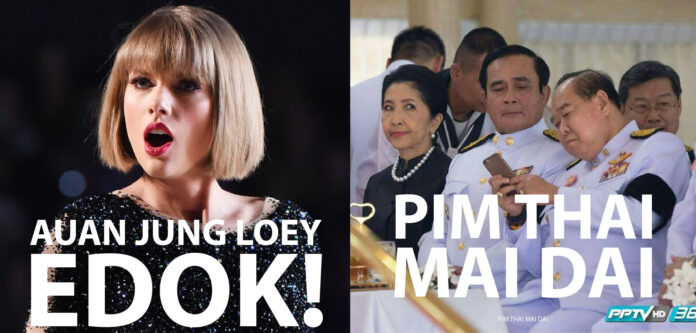
Typical 'Pim Thai Mai Dai' posts: at left, 'I’m so fat, bitch!' and, at right, junta leader Prayuth Chan-ocha and his No. 2 Gen. Pravit Wongsuwan texting. Photo: Pim Thai Mai Dai / Facebook

Top: Typical ‘Pim Thai Mai Dai’ posts: at left, ‘I’m so fat, bitch!’ and, at right, junta leader Prayuth Chan-ocha and his No. 2 Gen. Pravit Wongsuwan texting. Photo: Pim Thai Mai Dai / Facebook

Click on those colorful memes mixing Taylor Swift gifs with this minute’s hot topic and expect to be confused when it takes you to Pim Thai Mai Dai.

Unless you’re a semi-bilingual news junkie – and likely a millennial – in which case you’re probably familiar with what has become an indispensable source of lightning-quick reactions to current events and internet dramas du jour.

Pim Thai Mai Dai (Can’t Type in Thai) isn’t just a random name but the page’s main gimmick, which despite being so very Thai, contains no Thai characters.

Behind it all is author-persona “Pimtha Pimthaimaidai,” who never breaks character to write every raunchy, rude and hilarious post in phonetic “karaoke Thai,” even during an interview.

Pim only agreed to be interviewed anonymously via Facebook.

“Because I have a page, it’s more convenient for me if no one knows who I am, sis,” she wrote.

Actually what she wrote was:

“Mai saduak interview in person ka, but interview tang this chat dai. Coz tum page bab mai me kon ru wa pen who, sabuy jai kwa ka sis ♥.”

“I’ll answer everything in karaoke na ka,” she wrote.

It’s unclear whether the page admin is male or female, but since Pim identifies as female, we’ll go with it. Her responses were edited for all the ♥s appearing in every sentence.

Pim may be a knife-sharp parody of the Thaiglish-speaking, international school kids who belong to the internet more than any national identity, but it’s all in the name of satirizing current events, celeb scandals and online dramas. Pim is the self-aware, ironic voice of the international Thai millennial.

 'Answer the following,' it says, imitating popular memes about test questions at the time. 'Why does Taylor have nine lovers, and I have none?'
‘Answer the following,’ it says, imitating popular memes about test questions at the time. ‘Why does Taylor have nine lovers, and I have none?’

That means one day pairing a #TGIF message flippantly wishing followers a good weekend with a tired-looking junta leader or Bangkok’s nightmare Friday traffic.

In two years it’s won nearly 150,000 followers, most of whom embrace its conceit and post comments and messages in the same style.

“I started the page because I was annoyed at people using karaoke language, so I wanted to see just how annoying a karaoke-only page could be,” Pim wrote.

Pim says she’s not just poking fun at at dek nok, those Thai students educated overseas, or the Bangkok international students who struggle to speak Thai.

“I understand that some people are better at using English, so they type like this because it’s faster and easier. Others, however, sprinkle in karaoke language in their posts just to seem ‘suay lae ruay,’ she said, using an ironic phrase literally meaning “pretty and rich.”

A lot of Pim’s language and content is sexually charged, involving colorful exclamations about genitalia, longings for a lover or pokes at Taylor Swift’s love life – often all three.

”Keep Kareeing” is a trademark phrase. Though genuine anglophones might spell the the slang word for whore guhlee rather than karee, here it becomes a verb encouraging people in the same spirit of “Keep Calm and Carry On.”

“I think sex or dirty jokes are a normal, everyday thing in Thai society, although some won’t admit it,” she wrote. “But I think society is becoming more and more open.”

One of Pim’s most popular posts – a juxtaposition of Steve Jobs with this year’s ‘Pen Pineapple Apple Pen’ craze – shows the page’s popularity isn’t confined to Thai Netizens.

A post combining the viral lyrics of the 'Pen Pineapple Apple Pen' song with Steve Jobs exploded with more than 13,000 likes and almost 7,000 shares.
A post combining the viral lyrics of the ‘Pen Pineapple Apple Pen’ song with Steve Jobs exploded with more than 13,000 likes and almost 7,000 shares.

“This post went inter and lots of foreigners viewed it. Even 9GAG copied it,” she wrote, ending with one of her favorite exclamations, “hee tad,” roughly translated as “ Very pussy.”

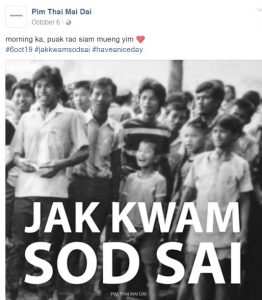
Pim also posts political content – and her views are anything but mainstream. On the 40th anniversary of the Oct. 6, 1976, massacre this year, she posted photos with captions such as “Morning ka, we’re Siam, the Land of Smiles #6Oct19 #SpreadGoodVibes #HaveaNiceDay” – a testament to her historical knowledge and tongue-in-cheek humor.

“Politics is something that you can’t talk about straightforwardly ka, because people think differently about it,” she wrote. “Therefore, before we judge each other, we have to educate ourselves as much as possible. Read a lot of history, and then you’ll understand what’s what.”

So it’s not all just for the sake of laughs?oct6

“I want a society where people can think differently but still talk using reason. Thailand will be such a great place to live,” she wrote.

PTMD is as much a community, with the barrage of comments often as equally hilarious as Pim is.

“For my followers, I’m something that gives them laughs or munsai,” she said, using a word denoting a kind of jealous annoyance. “My followers give back to me too. I love reading everyone’s comments. They’re so creative! I always laugh at them. Let’s smile together for a long time.”

Pim says that most foreigners who read her page are ones who want to learn Thai but can’t read yet.

“One of my readers with a farang boyfriend kept asking her what ‘hee’ meant. When he got it, he totally laughed and stuff,” she wrote. “They try really hard to read.”

“Khaosod English fans, come say hi on Pim Thai Mai Dai, I won’t bite,” she wrote finally. “I’m so pretty and rich. Keep kareeing everyone, see ya ka.”

An angry Taylor Swift post posted when netizens were anticipating whether revised Computer Crime Act would pass.
'I feel so bad for Leonidas. He came with 300,000 people but how did he lose to 168 people? So pussy ka,' this post reads after the Computer Crime Act was passed unanimously in December despite 300,000 petitioners against it.

‘I feel so bad for Leonidas. He came with 300,000 people but how did he lose to 168 people? So pussy ka,’ this post reads after the Computer Crime Act was passed unanimously in December despite 300,000 petitioners against it.

A post comparing a scrapped Miss Universe costume based on a Grand Palace chedi.
TThis post on World Aids Day is captioned, “who has a 'karee' friend, tag her too. So worried about her, take care ka sis”
This post on World Aids Day is captioned, “who has a ‘karee’ friend, tag her too. So worried about her, take care ka sis”
A trademark 'hee' post around the time of the #GraabMyCar drama. ‘Grab my hee’ says the overlaid words.
A trademark ‘hee’ post around the time of the #GraabMyCar drama. ‘Grab my hee’ says the overlaid words.
Advertisement

China Plans 30,000-km High Speed Rail Network by 2020

A file photo of an Amtrak train passes a New Jersey Transit train. Photo: Mel Evans / AP.

BEIJING — The Chinese government is planning to expand the country’s high-speed rail network to 30,000 kilometers (18,600 miles) by 2020, part of public infrastructure spending aimed at shoring up economic growth.

Vice Transport Minister Yang Yudong said Thursday the network would connect more than 80 percent of China’s major cities.

Yang says China plans to invest 3.5 trillion yuan ($504 billion) in railway construction between this year and 2020.

He was speaking at a briefing introducing a government white paper outlining plans to improve the country’s transportation services.

The plans call for the renovation of expressways and faster construction of railways to serve less-developed regions in central and western China.

Official statistics show China’s high-speed railway totaled 19,000 kilometers (11,800 miles) last year.

Advertisement

Sad! Say ‘Farewell’ to Chulalongkorn’s The Art Center

An exhibition by Soichiro Shimizu at The Chula Art Centre in 2014. Photo: Chulalongkorn University

BANGKOK — After 18 years providing space for local and international artists, The Art Center of Chulalongkorn University will bid adieu early next year 2017.
Provocative painter Tawan Wattuya, photographer Manit Sriwanichpoom and filmmaker Jakrawal Nilthamrong are among 50 Thai and international contemporary artists in various fields who will join hands and exhibit their works one last time in appreciation for this important gallery of nearly two decades.
All works are exhibited in a salon style to give equal recognition for those who have contributed to the gallery’s success.

Read: Art, Culture, Politics Continued to Collide in 2016

The Art Center of Chulalongkorn University has been considered one of the leading contemporary art galleries in Thailand since 1995. It will cease its operations after the final exhibition.

No clear reason was given for why the gallery is closing. It originally announced it was due to a change in management.

The “Farewell” exhibition is already open but will officially launch 6:30pm on Jan. 19. It will run through Feb. 18 at The Art Center located on the seventh floor above the library at the university’s Center of Academic Resources. It can be reached by foot or mototaxi from BTS National Stadium or MRT Sam Yan.

Advertisement

Hot News

LATEST NEWS

Bangkok
overcast clouds
33.5 ° C
35 °
32.2 °
69 %
3.4kmh
95 %
Thu
37 °
Fri
37 °
Sat
36 °
Sun
36 °
Mon
36 °