33.3 C
Bangkok
Sunday, June 21, 2026
Home Blog Page 2502

Vietnam Jails 2 Democracy Activists for Attempted Subversion

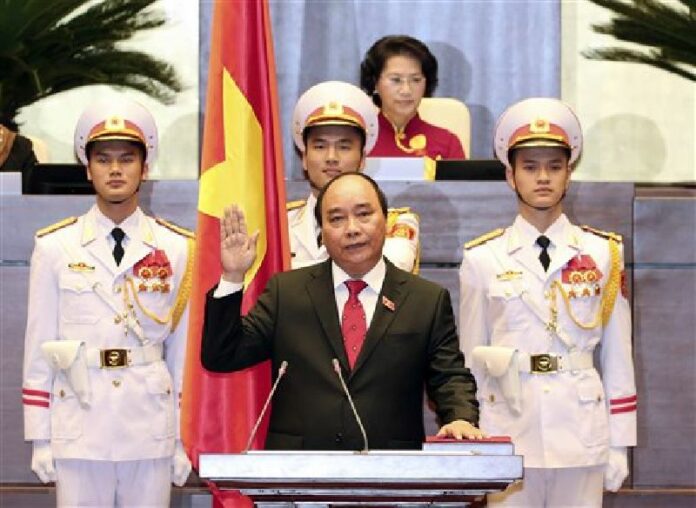
Nguyen Xuan Phuc, center, takes oath after being elected as prime minister in Hanoi, Vietnam Thursday April, 7, 2016. Photo: Thong Nhat / Vietnam News Agency / Associated Press

HANOI — A court in northern Vietnam sentenced a former army officer and another activist to more than 10 years in prison each for attempting to overthrow the communist government.

Tran Anh Kim and Le Thanh Tung were convicted of attempted subversion at a one-day trial for setting up “reactionary group in the name of National Force for Democracy,” state-run online newspaper Vietnamnet reported. They were sentenced respectively to 13 years and 12 years and must serve 4 years of house arrest after their prison terms end.

Kim, a 67-year-old former army officer, served an earlier prison term of 5 ½ years for violating national security law in a 2009 case also involving what Vietnam authorities called an attempted overthrow of the government.

Lawyers and court officials in Thai Binh province where the trial was held Friday were not available for comment Monday.

U.S. Ambassador to Vietnam Ted Osius said in a statement Monday that he was “deeply concerned by the sentencing” and that “all people should have the right to freedom of speech and association.”

“The recent trend of arrests and convictions of peaceful activists is troubling and threatens to overshadow Vietnam’s progress on human rights,” he said.

He also called on Vietnam to release the two and all other prisoners of conscience and to allow all individuals in Vietnam to express their political views without fear of retribution.

International human rights groups, U.S. government and some other Western governments have criticized Vietnam for jailing people for peacefully expressing their views, Hanoi maintains that only law breakers were put behind bars.

Advertisement

Hackers Batter ThaiGov Online as Anger Over Cyberlaw Boils Over

“#Thai police can't guard their own data from #Anonymous, is your data safe with them?’ reads a tweet with a screencap Friday alleging to show data purloined from a police system. Image: @Blackplans / Twitter

BANGKOK — Anger over the passage of the new Computer Crime Act resulted in escalating attacks on many government websites Monday.

The attacks, organized by online activist group Citizens Against Single Gateway, knocked much of ThaiGov offline with attacks continuing into the evening to disable the central site, the Defense Ministry, Ministry of Digital Economy and Society, Prime Minister’s Office and Office of the National Security Council.

Citizens Against Single Gateway, organized last year to oppose government control of the internet, was among many to object after junta-appointed legislators passed a law unanimously Friday which gave the authorities more powers to police and censor content online. The law was passed despite opposition from the public and private sectors.

“It was scary that not a single voice in the assembly stood on the people’s side,” Kanathip Thongraweewong, a law lecturer at Saint John’s University, said Monday. “What is going on inside the law-manufacturing factory?”

More than 360,000 people signed a petition opposing the law, which now goes to the king to endorse and becomes effective 120 days after being published in the Royal Gazette.

The regional office of the U.N. High Commissioner on Human Rights issued a statement Monday afternoon calling on Bangkok to respect international human rights standards as the law “could severely restrict freedom of expression, opinion, assembly and privacy.”

“The amendments enable the government to obtain user information and traffic data from Internet service providers (ISPs) without court approval,” it read. “Service providers now face the same criminal liability as users of third party online content.”

On Friday, after six hours of discussion, the National Legislative Assembly, or NLA, passed the law with minor changes, such as removing some problematically vague language. The junta-picked members also increased the membership of a committee empowered to censor content from five to nine.

Critics said other concerns raised by activists, the business community and internet users remained unaddressed.

For their part, authorities have said throughout the process that the law would not be abused and it was a misunderstanding to believe otherwise.

Latest Product of Junta’s ‘Law Factory’

For now there are no democratic mechanisms for people to challenge the law, legal expert Kanathip said, as the interim constitution does not allow people to petition against the law.

The public must wait for a new constitution to be in effect and gather the 10,000 names necessary to propose an amendment.

“But even after that, the proposal would still go to the NLA for consideration again,” he said.

Kanathip suggested another lawful approach would complaining to the Constitutional Court that the new Computer Crime Act is against the basic rights and freedom guaranteed even by the junta’s interim charter.

The law professor pointed out the Computer Crime Act was just an example of the junta’s “made-to-order law factory” which has and will continue to pass hundreds of new laws under the direction of the military running the country.

“The Computer Crime Act problem looks a lot smaller compared to the hundreds of other laws they are passing that will also affect our lives for decades,” Kanathip said.

Since the military seized power in 2014, 238 bills have come up for review, according to an NLA database.

Online Escalation

Friday’s decision by the rubber-stamp assembly upset netizens and resulted in many reactions online.

To demonstrate the government’s incompetent handling of computer data, a hacker associating himself with the international Anonymous collective tweeted pictures said to show the penetration of government servers.

The Citizens Against Single Gateway group announced Sunday it would advance its so-called “cyber war” on the government starting Tuesday.

It was unclear what methods were being used to knock the sites offline, in the past, crude forms of denial-of-service attacks consisted of coordinated refreshing of hosted pages. Forums associated with online dissidents suggested their methods were now more sophisticated.

Top government figures and police responded by warning such actions were illegal.

Deputy police spokesman Krissana Pattanacharoen said Friday they could be punished with up to five years in prison or a 100,000 baht fine under, appropriately enough, the existing 2007 Computer Crime Act.

Nine people gathered Sunday in front of the Bangkok Art and Culture Centre to protest the law.

People protest against passage of the new Computer Crime Act on Sunday at the Bangkok Art and Culture Centre.

NLA president Pornpetch Wichitcholchai said Monday the law was an improvement over the original 2007 bill. He also reiterated that it has nothing to do with enabling the government to go forward with a “single gateway” project to route all traffic through a single point of control.

On the contrary, he said the law balanced the powers granted to authorities by requiring court review.

“I insist the process of taking down computer information in many countries is weaker than Thailand,” he said. “The NLA is willing to open discussions with those opposed about how the law is against rights and freedoms.”

Amnesty International Thailand said despite weighing in and petitioning for amendment at every stage of the law’s drafting, its concerns were ignored.

“Because it’s already passed, what we can do now is monitor the effect of law enforcement,” Amnesty Thailand President Piyanut Kotsan said Monday.

Advertisement

600 Suspects Killed by Indian Cops, Rights Group Says

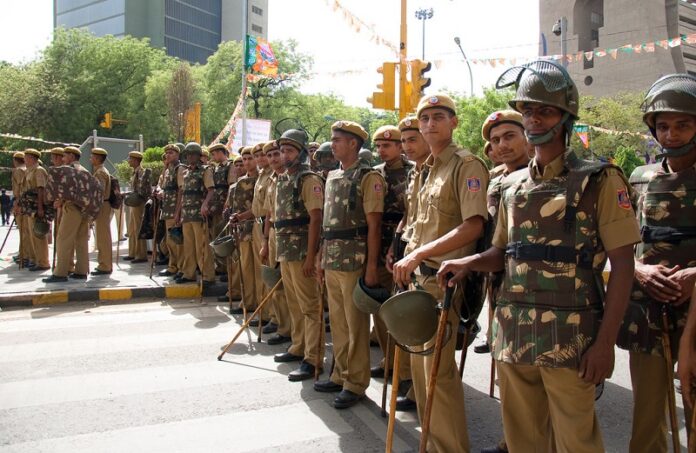
Police line up in 2010 during a BJP rally in Delhi's iconic Connaught Place, New Delhi, India. Photo: Jaskirat Singh Bawa / Flickr

NEW DELHI — Nearly 600 people died in Indian police custody from 2009-2015, many after being tortured, a human rights group said Monday, urging India to implement a string of often-ignored regulations and prosecute officers involved in the mistreatment of prisoners.

Human Rights Watch said in its report that police regularly disregard arrest procedures and torture suspects in custody to death. The police often blame such deaths on suicide or illness.

While torture is illegal in India, and law enforcement agencies in many countries now say it does little to elicit accurate information, many Indian police are open about their use of the “third degree”  a term that can encompass anything from a couple slaps to a savage beating – to extract details or confessions.

“Until you use third degree against them, they will not speak,” said Jairaj Sharma, a retired police officer in India’s Uttar Pradesh state, long a center of crime and corruption.

Citing government data, the report said that 97 people died in police custody in 2015. In 67 of those cases, authorities either failed to take the suspects before a magistrate within 24 hours of arrest, as required by law, or the suspects died within 24 hours of being arrested.

Human Rights Watch said strict enforcement was needed of existing arrest guidelines, including such things as informing the families of those arrested, providing medical examinations and quickly producing suspects before magistrates.

The New York-based group demanded that police officers who engage in torture and other ill-treatment of prisoners be disciplined and prosecuted.

Police officers will only learn that beating suspects is unacceptable when some are prosecuted, said Meenakshi Ganguly, South Asia director of Human Rights Watch. “Our research shows that too often, the police officers investigating deaths in custody are more concerned about shielding their colleagues than bringing those responsible to justice,” she said in an interview.

Vikram Singh, a top retired Indian police officer, acknowledged that the country’s criminal justice system is riddled with problems, from desperately overcrowded jails to suspects sometimes held for years as cases are investigated.

He said police officers have little concern about getting in trouble if they beat a suspect.

“My feeling is that not many cases (against police officials) have been registered, not many police officers suspended, and certainly no one has been dismissed in recent years for being brutal on accused and wanted criminals,” Singh said.

The 114-page report focused on 17 deaths in custody from 2009-2015, including more than 70 interviews with witnesses, victims’ families, justice experts, and police officials.

“In each of the 17 cases, the police did not follow proper arrest procedures, making the suspect more vulnerable to abuse,” said Jayshree Bajoria of Human Rights Watch, the author of the report.

The report cited the case of 37-year-old Shyamu Singh, who was arrested in April 2012 in Uttar Pradesh when police couldn’t tell him apart from his older brother Ramu, who was suspected of involvement in a string of extortion and theft cases. When neither brother would give his identity, a group of policemen forced Ramu to the floor.

“Four people held me down and one man poured water in my nose continuously. I couldn’t breathe,” the report quoted Ramu as saying. “Once they stopped on me, they started on Shyamu.”

When Shyamu fell unconscious “they started worrying and talking among themselves that he is going to die. One of the men got a little packet and put the contents in Shyamu’s mouth,” Ramu said.

Shyamu Singh died later in a nearby hospital. Police told his family he had killed himself by taking poison.

An initial inquiry by the State Investigation Department concluded in 2014 that seven police officers had tortured Singh and poisoned him to death. But a final inquiry report submitted a year later cleared all seven, according to the report.

Story: Ashok Sharma

Advertisement

Myanmar Hosts Regional Meeting to Discuss Rohingya Crisis

Myanmar Foreign Minister Aung San Suu Kyi, center, attends a meeting with foreign ministers from Association of Southeast Asian Nations (ASEAN) last year at a hotel in Yangon, Myanmar. Photo: Associated Press

YANGON — Myanmar leader Aung San Suu Kyi has met with regional foreign ministers to tackle growing international criticism of her army’s forceful treatment of the country’s Muslim Rohingya minority, which some critics say constitutes crimes against humanity.

Human rights groups have accused the military of perpetrating mass murder, looting and rape against the Rohingya in the western state of Rakhine, where the army went on a counterinsurgency offensive after an October attack there on police outposts that killed nine officers.

The roughly 1 million Rohingya in overwhelmingly Buddhist Myanmar face severe social and official discrimination.

Member states of the Association of Southeast Asian Nations, along with Bangladesh, have long coped with Rohingya refugees.

Suu Kyi met with ASEAN foreign ministers Monday in Yangon, Myanmar’s largest city.

Advertisement

Visit Tibet’s ‘Roof of the World’ Without Breaking a Sweat

The Tibetan Potala Palace sits beneath the enormity of Mt. Everest. Photo: Xinhua News Agency / Courtesy

BANGKOK — Taking in the beauty and charm of Tibet no longer requires an arduous journey thanks to technology, which makes it possible to sample in comfort from a world away.

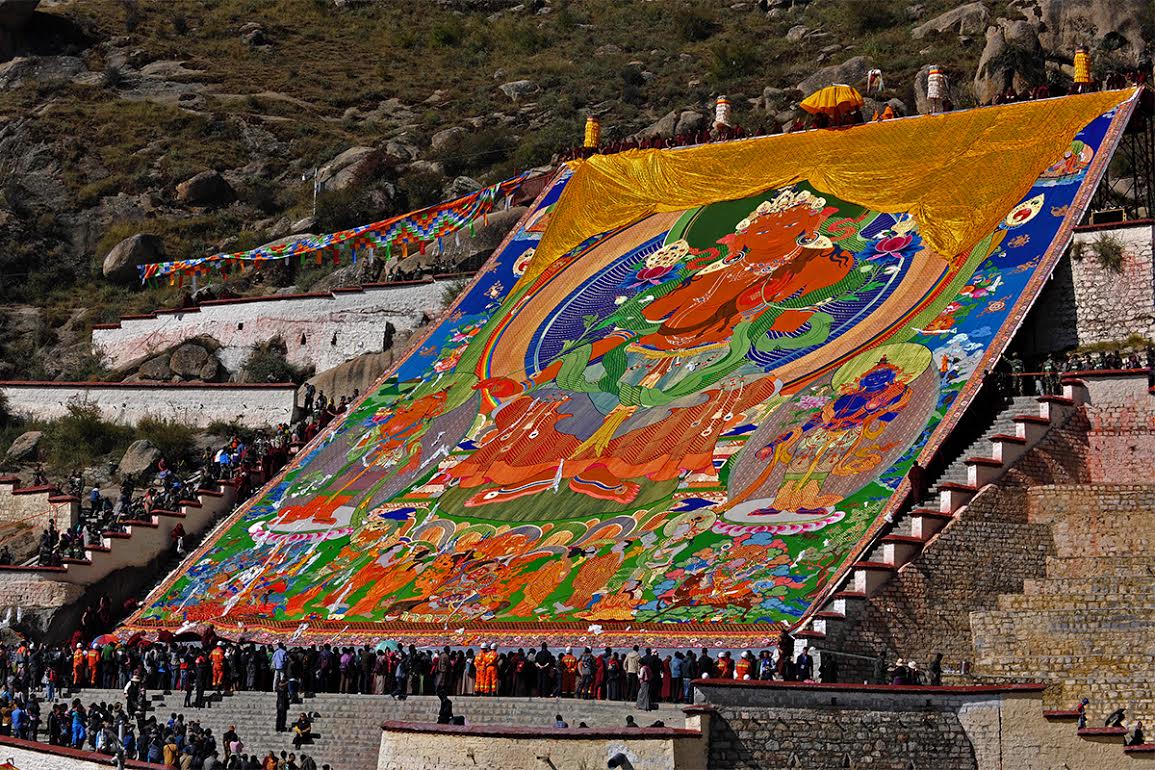
Lhasa’s picturesque Potala Palace, the towering Himalaya and the culture of the Tibetans will be viewable and visitable at an upcoming art exhibition that will make use of immersive, 360-degree video to create the sensation of being there.

Almost 100 images will be shown with 50 photos displayed on screens, along with other interactive technologies to take the exhibition off the wall and into the hearts and minds of visitors. Through an application, audiences will be able to listen to the stories behind the images.

The Chinese government is behind the project, and the photographs are provided by state media outlet Xinhua News Agency.

The exhibition will be held 10am to 10pm from Dec. 21 to 25 in the Lifestyle Hall on the second floor of the Siam Paragon shopping mall, accessible via BTS Siam exit nos. 3 and 5.

Photos courtesy: Xinhua News Agency


Advertisement

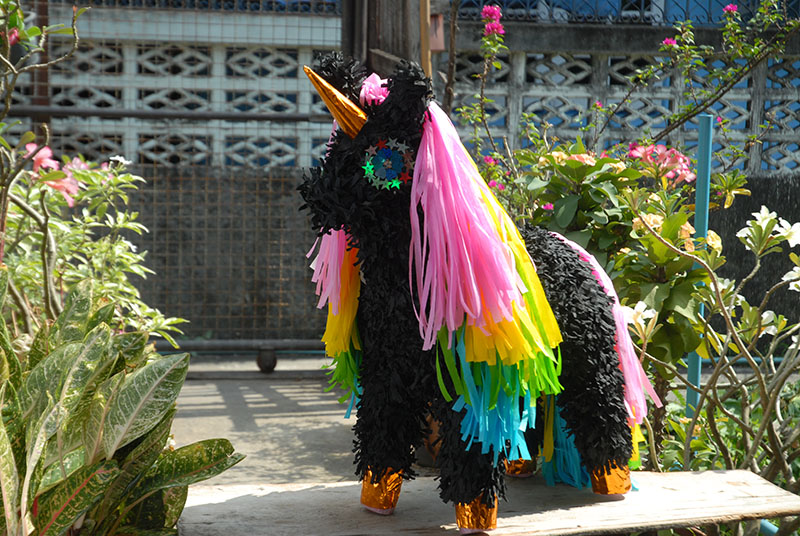
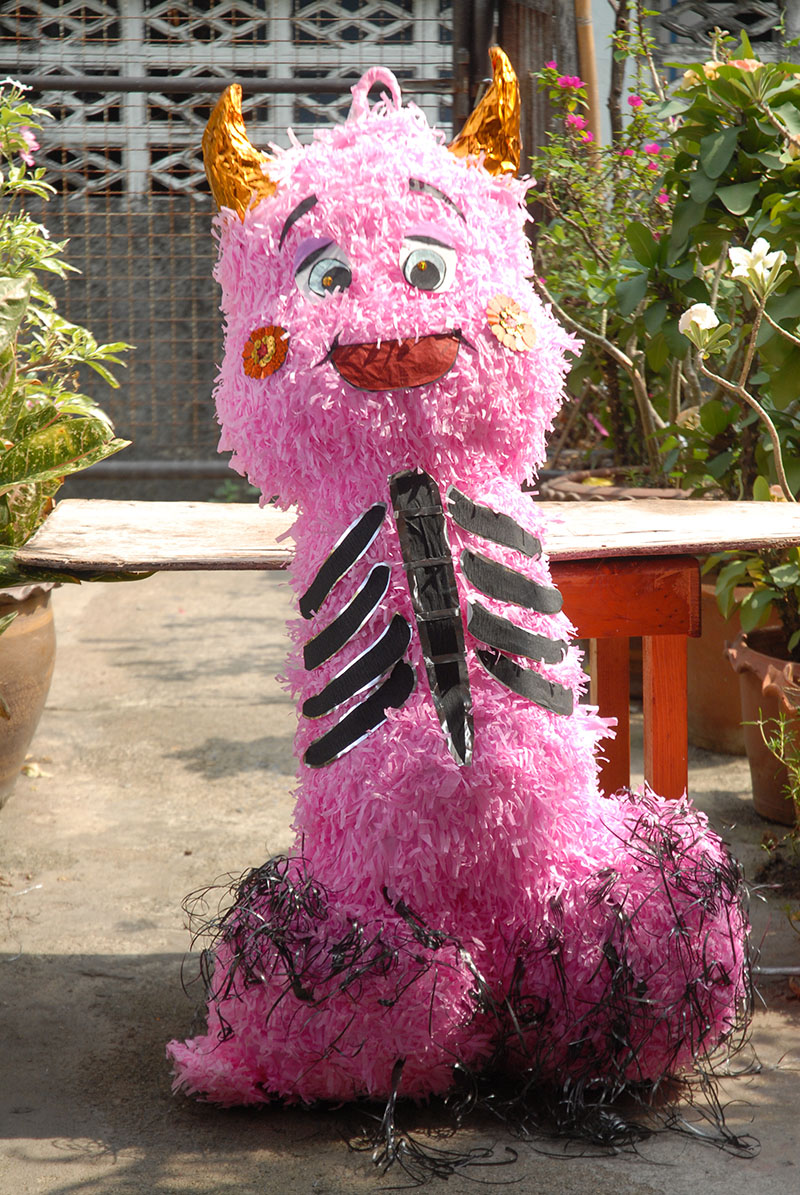
Take a Swing at Thailand’s Custom Piñatas (Photos)

Maneeporn Puangpla with her completed and in-process piñatas at her residence in Bangkok’s Bang Khae district.

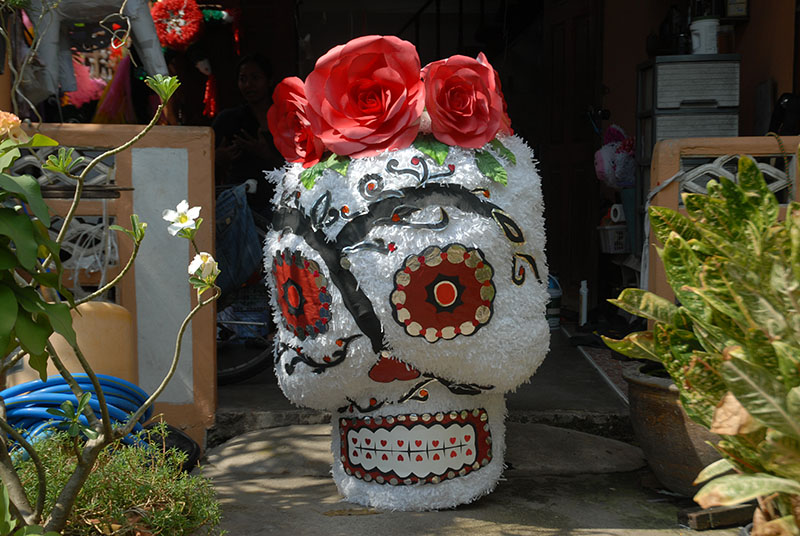
BANGKOK — Unicorns with rainbow manes, a giant sugar skull, and even a smiling penis are among the Maneeporn Puangla’s piñata creations.

Maneeporn Puangpla is one of few custom piñata makers in Thailand. She has been practicing her craft for a decade now, mostly creating special orders for her foreign clientele.

Maneeporn, 33, started making piñatas when a Canadian friend suggested she try her hand at the craft.

“I’d never heard of them before, so I had to search on the Internet how to make them,” she said.

Piñatas are a decorated paper container filled with candy or other treats. Associated with Mexican culture but also popular throughout North America, piñatas are hung at parties where people put on blindfolds and try to hit the piñata to release the sweets inside.

As Mexican restaurants and Spanish-speakers in Bangkok proliferated, so did her orders and client base.

“Ten years ago, there was only one Mexican restaurant, Sunrise Tacos. They were my first and only clients for a long time,” she said. “They’d buy some piñatas to decorate their shop and maybe resell to some customers.”

At her lotus pond-ringed, paper-filled quiet house in Bang Khae, Maneeporn hangs piñatas-in-progress from sticks and rafters to dry in the Bangkokian sun. “They take really long to dry in the rainy season,” she said, gesturing to a drying horse piñata.

A meter-tall sugar skull can take days to make, while smaller pieces can be completed within a day, drying time notwithstanding.

Her work even won the endorsement of the top Mexican in the kingdom.

“Once my piñatas decorated an event the Mexican ambassador went to,” she said. “He told me they weren’t bad!”

Her biggest clients are parents and children from international schools, who purchase princess and cartoon-shaped ones for birthday parties and the like. Maneeporn sells her piñatas without candy, since her clients are often particular about their sweets.

Disney princesses, Pokeballs and Pikachus rank among her top-requested piñatas recently.

“Sometimes children cry when the princess piñatas are smashed at birthday parties, though,” she said, laughing. “So when someone requests a ‘Frozen’ princess, I recommend they get an Olaf piñata instead.”

Maneeporn decided to make piñatas full time about six years ago.

“At first, I used balloons as the frame, but that limited me to making round piñatas. Now I know how to create my own frames,” said Maneeporn, who prides herself on making virtually any shape requested.

But a lack of crafting resources in Thailand still limits her creations.

“Overseas, they sell hundreds of shades of paint, but here there’s only seven that I can use. Mixing the colors myself ends up losing profit,” she said.

Also, the crepe paper Maneeporn decorates the outside of her piñatas with are only available in a limited number of colors.

“One client needed a Totoro piñata, but there was no gray crepe paper available, even though I searched all over for it. They ended up bringing me crepe paper from Japan so I could complete their project.”

Holiday piñatas are popular, such as ones for Halloween, Christmas and birthdays. She has also received requests for erotic piñatas, which she happily supplies.

One of her most memorable orders was placed by a wealthy Sikh man who, she said, ordered a bundle of penis-shaped piñatas for an adult party. Another order was a crotch and butt piñata with a specific request for extra hairiness. One time a Western woman ordered a naked man piñata, with a “large bulge” requested.

“I don’t really get it, but I guess they’re for some adult parties,” she said, laughing. “But I make any shape that is commissioned.”

Her Thai clients are people with international school children who are familiar with piñatas. However others are unfamiliar, and cultural misunderstandings ensue.

“Some Thai clients don’t get what a piñata is, that it’s not supposed to be completely neat and perfect,” she said. “My client just rejected a completed order for a Barbie doll because she said all the details weren’t there.”

Depending on the size, she sells small pinatas for 200 baht, with larger creations going for 900 baht or higher.

Maneeporn sells her creations online at Manee Piñatas.

Correction: The headline of an earlier version of this story mistakenly indicated Maneeporn was the only custom piñata-maker in Thailand. In fact, Jantasuda Jamjod, owner of Que Pasa Mexican Restaurant in Nonthaburi has been doing so since 2003 and sells them at Arya Piñata.

mat_0016mat_0026mat_0035

mat_0041 mat_0050 mat_0053mat_0036mat_0058 mat_0067

mat_0005 mat_0009

Advertisement

So ‘Surreal,’ Merriam-Webster Says of 2016

This Saturday Dec. 17, 2016 photo shows the "surreal" entry in a Merriam-Webster's dictionary in New York. Photo: Bebeto Matthews / Associated Press

NEW YORK — Was 2016 a dream or a nightmare?

Try something in between: “surreal,” which is Merriam-Webster’s word of the year, unveiled Monday.

Meaning “marked by the intense irrational reality of a dream,” or “unbelievable, fantastic,” the word joins Oxford’s “post-truth” and Dictionary.com’s “xenophobia” as the year’s top choices.

“It just seems like one of those years,” said Peter Sokolowski, Merriam-Webster’s editor at large.

The company tracks year-over-year growth and spikes in lookups of words on its website to come up with the top choice. This time around, there were many periods of interest in “surreal” throughout the year, often in the aftermath of tragedy, Sokolowski said.

Major spikes came after the Brussels attack in March and again in July, after the Bastille Day massacre in Nice and the attempted coup in Turkey. All three received huge attention around the globe and had many in the media reaching for “surreal” to describe both the physical scenes and the “mental landscapes,” Sokolowski said.

The single biggest spike in lookups came in November, he said, specifically Nov. 9, the day Donald Trump went from candidate to president-elect.

There were also smaller spikes, including after the death of Prince in April at 57 and after the June shootings at the Pulse nightclub in Orlando, Florida.

Irony mixed with the surreal for yet another bump after the March death of Garry Shandling. His first sitcom, “It’s Garry Shandling’s Show,” premiered on Showtime in 1986 and had him busting through the fourth wall, speaking directly to the audience and mimicking his real life as a standup comedian, but one who knew he was starring in a TV show.

“It was surreal, and it’s connected to the actual original meaning of surreal, which is to say it comes from Surrealism, the artistic movement of the early 20th century,” Sokolowski said.

Which is to say that “surreal” didn’t exist as a word until around 1924, after a group of European poets, painters and filmmakers founded a movement they called Surrealism. They sought to access the truths of the unconscious mind by breaking down rational thought.

It wasn’t until 1937 that “surreal” began to exist on its own, said Sokolowski, who is a lexicographer.

Merriam-Webster first started tracking lookup trends in 1996, when the dictionary landed online. In 2001, after the 9/11 terror attacks, the Springfield, Massachusetts-based company noticed plenty of spikes in word lookups. The most enduring spike was for “surreal,” pointing to a broader meaning and greater usage, Sokolowski said.

“We noticed the same thing after the Newtown shootings, after the Boston Marathon bombings, after Robin Williams’ suicide,” he said. “Surreal has become this sort of word that people seek in moments of great shock and tragedy.”

Word folk like Sokolowski can’t pinpoint exactly why people look words up online, but they know it’s not only to check spellings or definitions. Right after 9/11, words that included “rubble” and “triage” spiked, he said. A couple days after that, more political words took over in relation to the tragedy, including “jingoism” and “terrorism.”

“But then we finally hit ‘surreal,’ so we had a concrete response, a political response and finally a philosophical response,” Sokolowski said. “That’s what connects all these tragic events.”

Other words that made Merriam-Webster’s Top 10 for 2016 due to significant spikes in lookups:

BIGLY: Yes, it’s a word but a rare and sometimes archaic form of “big,” dating to around 1400, Sokolowski said. It made its way into the collective mind thanks to Trump, who was fond of using “big league” as an adverb but making it sound like bigly.

DEPLORABLE: Thank you, Hillary Clinton and your basket full of, though it’s not technically a noun.

IRREGARDLESS: It’s considered a “nonstandard” word for regardless. It’s best avoided, Sokolowski said. Irregardless was used during the calling of the last game of the World Series and its use was pilloried on social media, he said.

ICON: This spike came after Prince’s April 21 death, along with surreal. “It was just a moment of public mourning, the likes of which really happen very seldom,” Sokolowski said.

ASSUMPSIT: At the Democratic National Convention, Elizabeth Warren was introduced by one her former law students at Harvard, Rep. Joseph P. Kennedy III of Massachusetts. He described how on his first day she asked him for the definition of assumpsit, which he didn’t know.

“She said, ‘Mr. Kennedy do you own a dictionary?’ so everybody looked it up,” Sokolowski laughed.

For the record: It’s a legal term with Latin roots for a type of implied promise or contract. Kennedy didn’t define it when he told the story.

FAUTE DE MIEUX: Literally, this French phrase means “lack of something better or more desirable.” Supreme Court Justice Ruth Bader Ginsburg used it in a brief concurring opinion in June to support a ruling that struck down a Texas law that would have closed all but nine abortion clinics in the state.

IN OMNIA PARATUS: A Latin phrase for “ready for all things.” Curiosity surfaced when Netflix revived “Gilmore Girls” recently, including reference to this famous chant during an episode in the original series where Rory is talked into leaping off a high platform as part of the initiation for a secret society at Yale. It became a rallying cry for fans of the show.

REVENANT: Leonardo DiCaprio played one in a movie of the same name, sending people scurrying to the dictionary. It describes “one that returns after death or a long absence.” It can be traced to the 1820s and while it sounds biblical, it is not, Sokolowski said.

FECKLESS: It’s how Vice President-elect Mike Pence described President Obama’s foreign policy when he debated Democrat Tim Kaine. It means weak or worthless.

Story: Leanne Italie

Advertisement

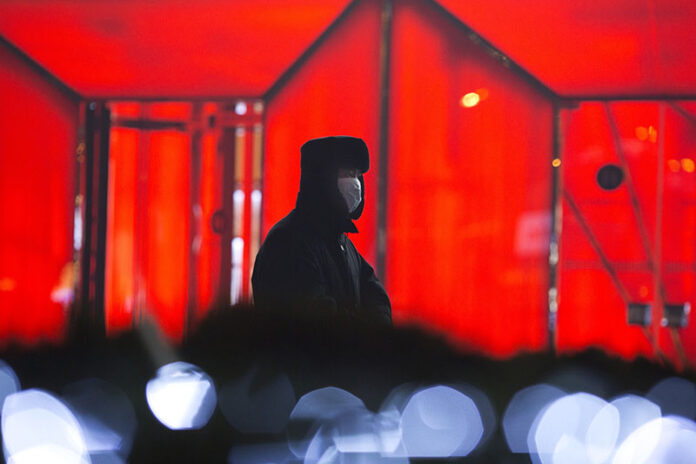
China Smog ‘Red Alert’ Closes Plants, Stops Cars

A security guard wears a mask Saturday in Beijing. Photo: Ng Han Guan / Associated Press

BEIJING — Chinese cities are limiting the number of cars on roads and have temporarily shut down factories to cut down pollution during a national “red alert” for smog.

State media reported Monday that more than 700 companies stopped production in Beijing, and that traffic police were restricting drivers by monitoring their license plate numbers. Dozens of cities closed schools and took other emergency measures after a “red alert” was issued from Friday night to Wednesday for much of northern China.

Authorities in northern Hebei province ordered coal and cement plants to temporarily shut down or reduce production. Elsewhere, hospitals prepared teams of doctors to handle an expected surge in cases of pollution-related illnesses.

China’s long-standing air pollution is blamed on its reliance on coal and emissions from older cars.

Advertisement

Reward Offered For Hooligans Behind Thai Football Firestorm

BANGKOK — Thailand’s football association offered a reward Sunday for information leading to the arrest of hooligans who lit flares, filling part of Rajamangala National Stadium with smoke and fire during a weekend match.

The flares were reportedly ignited by a hardcore fan group called Ultras Thailand each time Thailand scored during the match against Indonesia on Saturday at the AFF Suzuki Cup.

Team Thailand secured their position as Southeast Asian champions for the fifth time after defeating Indonesia 2-0. But the flare incident could cost Thai football fines upward of 700,000 baht and possibly other punishments by FIFA, according to the Football Association of Thailand.

Police were still gathering information in order to seek warrants for those related to the incident, Maj. Gen. Nanthachart Suppamongkon said Monday

Igniting flares in stadiums, which happens at football matches worldwide, is illegal in Thailand.

Nanthachart said the gang could be charged with causing a public disturbance, which carries a maximum punishment of one month in jail and a fine of 10,000 baht.

Football Association President Somyot Pumpanmuang said Sunday he would give a 30,000 baht reward for information about each person involved.

Somyot said the association had photos and videos of the incident which would be used to help identify suspects.

Many photos and footage were also shared online by other fans who were upset and blamed Ultras Thailand.

Somyot, a former police chief, said he sought help from current National Police Chief Gen. Chakthip Chaijinda to bring the group to justice. He also urged anyone injured by the flares to file complaints with the police.

In addition to a large fine, the association said Thailand risked being banned from hosting home games or see its fans barred from entry.

It wasn’t the first time Ultras Thailand was caught up in conflict. The group was behind previous flare incidents at matches between Thailand and the Philippines in the same competition in December 2014.

In response to the outrage, the group said in 2015 it would knock it off. Ultras Thailand has yet to respond publicly to the latest incident.

Advertisement

Death Sentence for Wife of Slain Olympic Shooter

An undated file photo of Jakkrit “Ex” Panichpatikum. Image: Voice TV

BANGKOK — The wife of professional shooter and star athlete Jakkrit “Ex” Panichpatikum was sentenced to die Monday for plotting her husband’s 2013 assassination.
In their verdict, Criminal Court judges said Jakkrit’s wife, physician Nitiwadee “Nim” Pucharoenyos, hired a middleman to pay a hitman to kill Jakkrit as he sat in his Porsche at a Bangkok intersection on Oct. 19, 2013. The court handed death sentences to both Nitiwadee and the middleman, while the gunman and his getaway driver were sentenced to life in prison.
They rejected the public claim of guilt by Nitiwadee’s mother, Surang, who a month after Jakkrit’s murder made a dramatic televised confession. She claimed to have arranged for the 40-year-old athlete’s death because he was as serial wife-beater.

“It was in the court’s view that she wanted to take the blame for her daughter,” said Boonrueng Uthairat, the attorney representing the slain athlete’s family.

He said her confession fell apart in court.

“She kept changing her testimony back and forth,” Boonrueng said. “Let me respectfully spell it for you here: the court is not stupid.”

The two condemned defendants are expected to file appeals. Under the law, executions can only be carried out after an appeal is heard by the Supreme Court.

After the verdict was read, Jakkrit’s mother, Boonkid Panichpatikum, said she was satisfied and has forgiven those who plotted her son’s death.

“Personally I have forgiven their trespasses long ago. I want Ex to go peacefully, so I forgave them,” Boonkid said tearfully. “Now I’m only worried for the future of my two grandchildren.”

A colorful athlete known for his maverick personality and rocky relationships with his peers, Jakkrit’s death came as he was embroiled in allegations of domestic violence. He once confessed to firing a handgun in anger at his home during a heated argument. He also spent a week in prison four months prior to his death for beating her.

Jakkrit’s killing and the subsequent revelations that Nitiwadee was implicated in his death dominated news coverage and served as tabloid fodder for weeks. Upon surrendering herself to police, Nitiwadee’s mother Surang said she could not stand Jakkrit’s behavior.

“I could not endure seeing my daughter being hurt,” Surang said in November 2013. “A mother hurts many more times than her child.”

Advertisement

Hot News

LATEST NEWS

Bangkok
overcast clouds
33.3 ° C
35 °
33.3 °
59 %
1.7kmh
100 %
Sun
36 °
Mon
37 °
Tue
36 °
Wed
37 °
Thu
36 °