



























27.7 C
Bangkok
Monday, June 22, 2026
Home Blog Page 2531

Dalai Lama: ‘I Have No Worries’ About Trump’s Election

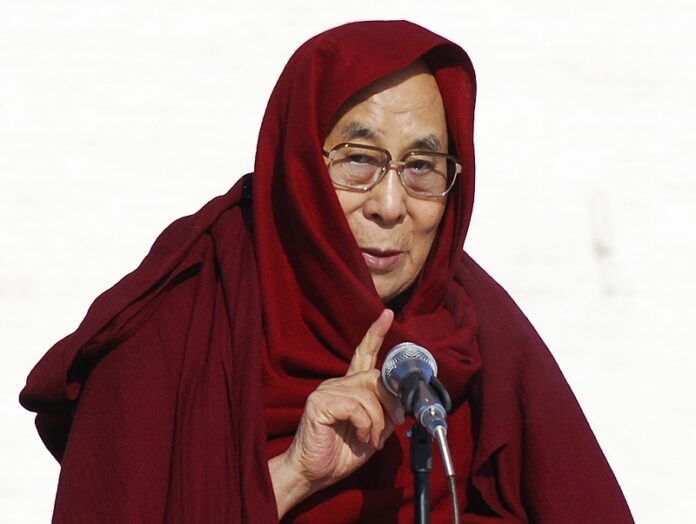
The Dalai Lama speaks Saturday at the Janraiseg temple of Gandantegchinlen monastery in Ulaanbaatar, Mongolia. Photo: Ganbat Namjilsangarav / Associated Press

ULAANBAATAR, Mongolia — Exiled Tibetan spiritual leader the Dalai Lama said Wednesday he has “no worries” about Donald Trump’s election as U.S. president and expects the businessman will align his policies with global realities.

Commenting at the conclusion of a four-day visit to Mongolia, the leader of Tibetan Buddhism says he looks forward to seeing Trump at some point following the Jan. 20 inauguration. It was not immediately clear if a meeting between the two has been planned. Such meetings usually draw China’s ire.

The 81-year-old monk said he has always regarded the U.S. as the leader of the “free world” and wasn’t concerned about remarks made by Trump during the election campaign. Some of those comments have been cited as offensive to Muslims, Hispanics and other U.S. minority groups.

“I feel during the election, the candidate has more freedom to express. Now once they (are) elected, having the responsibility, then they have to carry their cooperation, their work, according (to) reality,” he told reporters. “So I have no worries.”

China accuses the Dalai Lama of seeking to split Tibet from China and had demanded Mongolia scrap his visit. Mongolia’s fragile economy is heavily dependent on China, and the countries are in discussions on a $1.2 billion Chinese loan to help pull it out of a recession.

In his comments, the Dalai Lama said his visit to the landlocked, primarily Buddhist, nation had no political purpose and said he had not publicly advocated independence for Tibet since 1974. The Dalai Lama has long called for Tibet to remain under Chinese rule, but with greater political participation by Tibetans and stronger protections for its traditional Buddhist culture.

China says Tibet has been part of its territory for centuries, although many Tibetans say they were effectively an independent country for much of that time.

Chinese President Xi Jinping congratulated Trump in a phone call and the country’s state media has welcomed his election as harkening a less confrontational policy toward China. Those outlets have also applauded Trump’s announcement that he would abandon a U.S.-led free trade agreement in Asia that had excluded China.

However, Trump has also accused Beijing of unfair trade practices and pledged to bulk-up the U.S. military, leaving questions as to his ultimate approach to relations with the world’s second-largest economy.

Story: Ganbat Namjilsangarav
Advertisement

Huanying! Tourists From China and 18 Nations Get Visa Discount

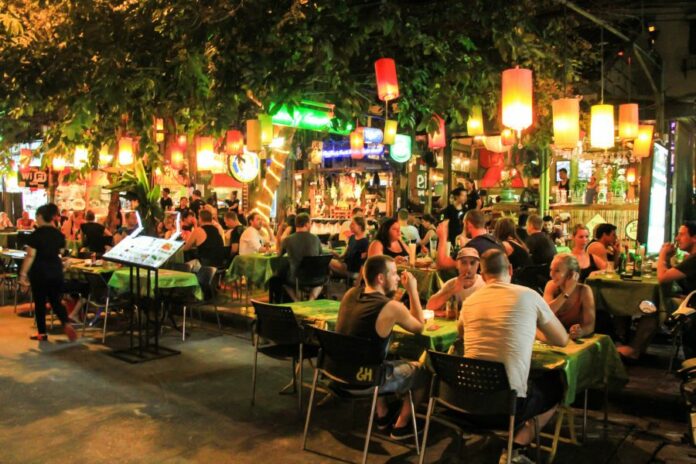
Tourists sitting in Khaosan Road in October.

BANGKOK — Tourists from China and 18 other countries will pay discounted visa fees upon arrival for three months starting in December.

Fees for these 19 countries will be halved to 1,000 baht during the December-February period to stimulate arrivals and create jobs, a government spokesman said Tuesday.

The government believes that cutting the visa fee will draw 350,000 additional tourists to Thailand to the tune of about 28 billion baht in revenues, spokesman Athisit Chainuwat said, as the time period coincides with international winter break, Christmas, New Year’s and Chinese New Year.

By its calculations, the government expects to generate more than 62,000 jobs.

The 19 countries to be exempt from a visa fee for this period are: Andorra, Bulgaria, Bhutan, China, Cyprus, Ethiopia, India, Kazakhstan, Latvia, Lithuania, Maldives, Malta, Mauritius, Romania, San Marino, Saudi Arabia, Taiwan, Ukraine and Uzbekistan.

Additional reporting: Teeranai Charuvastra, Chayanit Itthipongmaetee

Advertisement

Australian Diplomats Set to Meet Teen Drug Suspect in Bali

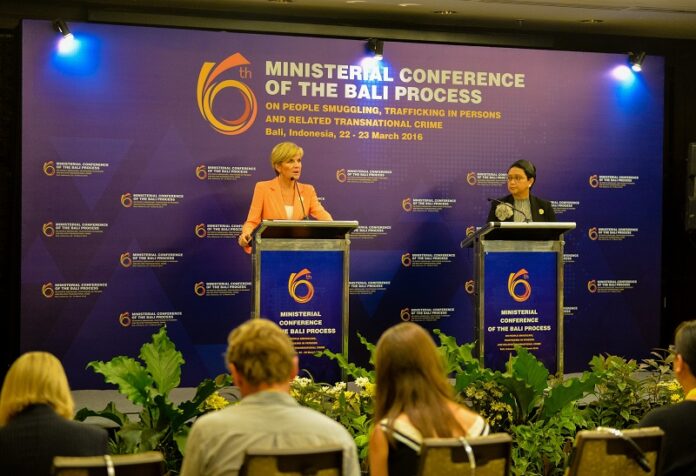
Australian Foreign Minister Julie Bishop, along with Indonesian Foreign Minister Retno Marsudi speak in March at the 2016 Ministerial Conference of the Bali Process on People Smuggling, Trafficking in Persons and Related Transnational Crime in Bali, Indonesia. Photo: DFTA / Timothy Tobing

CANBERRA, Australia — Australian diplomats will meet Wednesday with an Australian teenager detained on suspicion of drug possession during end-of-school celebrations on the Indonesian resort island of Bali, Australia’s foreign minister said.

Jamie Murphy was allegedly found with a small plastic bag of white powder by security staff at a nightclub in the entertainment precinct of Kuta early Tuesday. The 18-year-old was celebrating with fellow graduates from their high school in the Australian west coast city of Perth.

News Corp. newspapers reported he could be sentenced to 12 years in prison if the powder proves to be less than 5 grams (0.18 of an ounce) of an illicit drug.

Foreign Minister Julie Bishop said consular staff in Bali had contacted Murphy in a Kuta police cell and would meet him Wednesday.

Murphy could be held for six days before a decision is made to formally arrest him, she said.

“This is very early days. I don’t want to say anything that would compromise his circumstances or be counterproductive,” Bishop told Sky News television.

“At this stage, our focus is on assisting his family and the young man navigate their way through the Indonesian judicial system,” she said.

Bishop said the case was a warning to thousands of Australian school leavers who travel overseas to celebrate their graduations that they must abide by sometimes harsh local laws.

Australian Nicholas Langan, 26, was freed from a Bali prison in January after serving 12 months for sharing a marijuana cigarette on a beach.

A 14-year-old Australian boy, who was not named, was sentenced to two months in prison after he was arrested with 3.6 grams (0.13 of an ounce) of marijuana during a family vacation to Bali in 2011.

Diplomatic tensions increased between the countries last year when Indonesia executed eight drug convicts, including two Australians, despite Australian pleas for leniency.

Story: Rod McGuirk

Advertisement

Life Sentences on 2 Senior Khmer Rouge Leaders Upheld

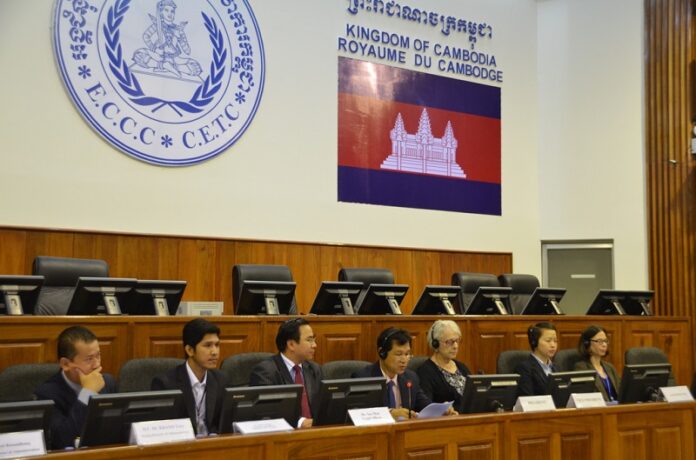
The 10th session of the Extraordinary Chambers in the Courts of Cambodia (ECCC) plenary seen here in 2011. Photo: Khmer Rouge Tribunal (ECCC) / Flickr

PHNOM PENH — A special Cambodian court on Wednesday upheld the life sentences for the two most senior surviving members of the Khmer Rouge regime, which was responsible for the deaths of 1.7 million people. The court said the massive scale of the crimes showed the two men’s complete lack of consideration for the lives of the Cambodians.

The Supreme Court Chamber said the 2014 verdict by a U.N.-assisted Khmer Rouge tribunal was “appropriate” given the gravity of the crimes and roles of the two  Khieu Samphan, the 85-year-old Khmer Rouge head of state, and Nuon Chea, the 90-year-old right-hand man to the communist group’s late leader Pol Pot.

“It is a historic day for Cambodia. For the first time in 41 years someone in the national leadership has been held criminally responsible for the crimes committed by the Khmer Rouge regime,” said tribunal spokesman Lars Olsen.

The two  who were sentenced to life imprisonment for crimes against humanity including extermination, enforced disappearances and political persecution  sat impassively as the lengthy verdict was read out. They were detained in 2007 and started serving their sentences in 2014 inside the Khmer Rouge tribunal’s facility, where conditions are much better than ordinary Cambodian prison. They have access to radio and television.

About 1.7 million people are estimated to have died from starvation, disease and execution due to the extremist policies of the communist Khmer Rouge when they held power from 1975 to 1979.

“I waited for this moment for 40 years. It has now arrived,” said Seak Ny, a 64-year-old woman whose husband died of starvation under the Khmer Rouge regime. She said the Khmer Rouge also killed her older brother and his five children when they found out he was a former soldier in the government they ousted.

“Today I am happy because these people have received justice,” she said, adding that she came to the tribunal to see the faces of the Khmer Rouge leaders.

The court said that the gravity of the crimes should be reflected in the sentences.

Kong Srim, president of the Supreme Court Chamber, said that the “massive scale of the crimes” showed a complete lack of consideration for the “ultimate fate of the Cambodian population, especially the most vulnerable group.”

In their appeals, Khieu Samphan and Nuon Chea said they were unfairly being singled out while the Cambodian government sought to block the tribunal from trying other suspects. They also alleged a slew of legal and factual errors as well as biases by the judges.

Despite upholding the sentences, the court reversed several aspects of the convictions. It found that the evidence was insufficient to convict the men for crimes against humanity connected to the 1975 evacuation of Phnom Penh and a separate population transfer, as well as a massacre of soldiers loyal to the government ousted by the Khmer Rouge.

The two defendants are still on trial in a second case where they are facing charges of genocide against ethnic minorities and foreigners, and implementing policies of rape and forced marriages.

Originally all the charges were to have been part of one trial, but fears that they would die before proceedings could finish led to their case being broken into two parts, known as Case 002/01 and 002/02.

Their two co-defendants, Ieng Sary, the third-ranking Khmer Rouge leader and its foreign minister, and his wife, Ieng Thirith, died during the first phase of their trial.

There have been charges made against other suspects in what are known as Cases 003 and 004, but they remain in limbo because of a lack of cooperation from Prime Minister Hun Sen’s government.

Hun Sen has threatened to shut down the tribunal, which was set up in 2006, if further cases are pursued. He has repeatedly said that if the tribunal targets more defendants, it could incite former Khmer Rouge members to start a civil war. Few people share his belief, since the Khmer Rouge became a spent force almost two decades ago.

Hun Sen himself was a mid-level commander with the Khmer Rouge before defecting while the group was still in power, and several senior members of his ruling Cambodian People’s Party share similar backgrounds. He helped cement his political control by making alliances with other former Khmer Rouge commanders.

The tribunal’s operations have been complicated by its unusual hybrid nature, which pairs international and Cambodian jurists and works under complicated rules that have slowed progress.

Story: Sopheng Cheang

Advertisement

Grand Palace Closed Dec. 1-2

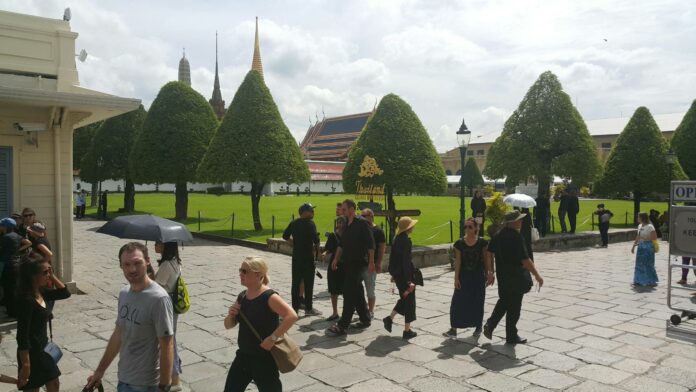
Tourists at the Grand Palace on Nov. 1.

BANGKOK — The Grand Palace will be closed to tourists and mourners alike Dec. 1-2, the royal household bureau said Tuesday.

A religious ceremony will be held at Dusit Maha Prasat Throne Hall on on those two days to mark the 50th day since the death of His Majesty the Late King Bhumibol, the statement said.

The Grand Palace houses and the Emerald Buddha are the most sacred religious symbols for Thais and are a major tourist attraction.

The body of the late monarch is lying in state at the palace for funerary rites, which hundreds of thousands of mourners have visited to pay respect to the royal coffin.

Advertisement

China Says it is Caring for Refugees from Myanmar Fighting

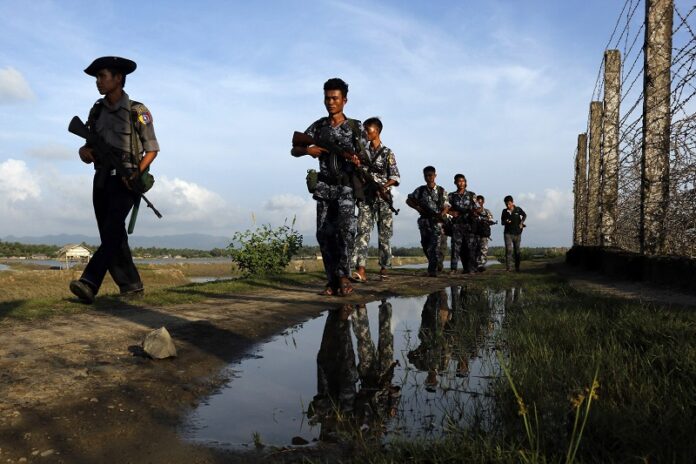
Myanmar police officers patrol along the border fence between Myanmar and Bangladesh Oct. 14 in Maungdaw, Rakhine State, Myanmar. Photo: Thein Zaw / AP

BEIJING — China is caring for about 3,000 refugees who have entered its territory to escape fighting in Myanmar between the government and ethnic rebels, including some who have been injured, the foreign ministry said Tuesday.

China has offered “proper settlement” to those seeking shelter and hospital beds for those who need them, ministry spokesman Geng Shuang told reporters at a daily briefing.

A coalition of ethnic rebel forces on Sunday attacked government outposts in Myanmar’s northern Shan State, which borders China.

The state-owned Global New Light of Myanmar newspaper reported eight dead in the attacks on military outposts, police stations and a trade center in Muse and Kutkai Townships. Killed were one soldier, three policemen, a local militiaman and three civilians.

The report blamed the Kachin Independence Army, the Ta’ang National Liberation Army and the Myanmar National Democratic Alliance Army for the attacks. Unlike other ethnic rebel groups, none of those have active ceasefire agreements with the government.

Statements from some of the groups acknowledged launching the attacks. They said they were in response to earlier government offensives.

The Kachin, based mainly in the northern state of the same name, have been in a mostly low-level state of war with the government since 2011. The Myanmar National Democratic Alliance Army is a guerrilla force comprising members of the ethnic Chinese Kokang minority.

The area has been insecure for decades, largely because the remoteness of Kachin and northern Shan state make them difficult to control, while their location along the border with China make them lucrative for trade, both legal and illegal.

Advertisement

Gov’t Approves 10-Year Visas for Foreigners Over 50

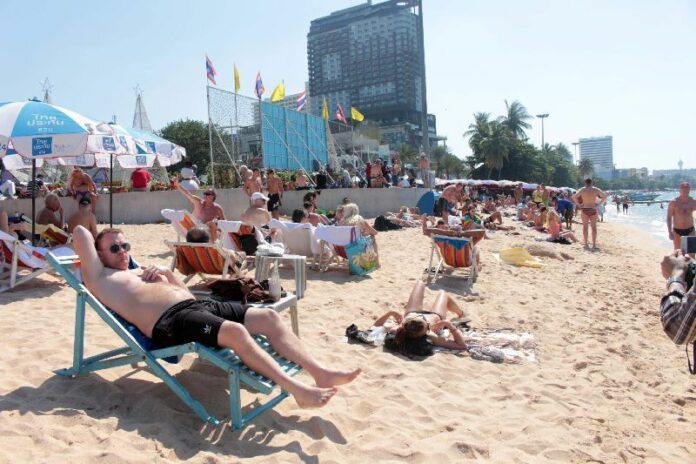
Foreign tourists relax on Pattaya Beach in a December 2014 file photo.

BANGKOK — Affluent foreign residents over 50 will soon be able to apply for 10-year visas, a government spokesman said Tuesday.

Intended to promote Thailand as a hub for medical services, the policy was approved by the interim cabinet on Tuesday, according to spokesman Athisit Chainuwat.

Update: Thailand’s New 10-Year Visas Meet Mixed Reactions

It would replace one-year renewable visas and come in two installments of five years each, Athisit said. It was not immediately clear when the plan would be implemented.

Applicants must either earn a monthly salary of at least 100,000 baht or have more than 3 million baht in their bank account, which cannot be withdrawn within the first year after receiving the visa. They must also have health insurance that covers hospital stays and provides at least USD$10,000 in annual coverage.

Visa holders will still have to check in every 90 days with the Bureau of Immigration, Athisit said.

Applicants for the visa are expected to be foreigners who live in provinces such as Chiang Rai, Chiang Mai and Chonburi, the spokesman added.

Related stories:

Thai Immigration Asks Foreigners for Bank Accounts, Social Media, Hangouts

Thousands Arrested as Visa Overstay Bans go for PM’s Endorsement

Expat Personal Records Posted to Govt Site

Advertisement

Gov’t Approves 3,000 Baht for Thailand’s Poorest

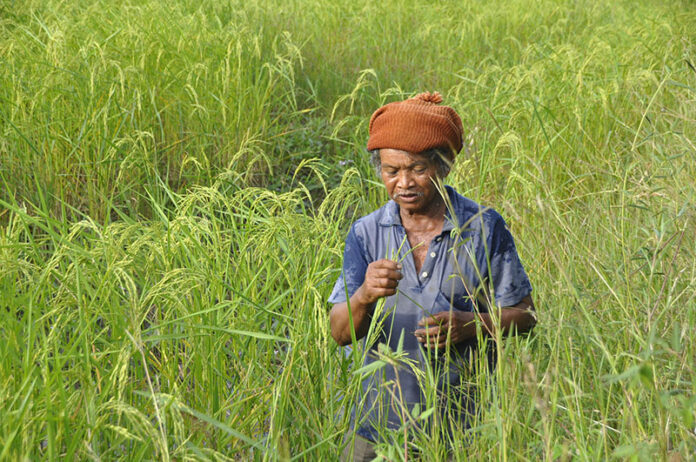
A farmer in his field outside Korat on Oct. 31, 2016.

BANGKOK Those living in abject poverty will receive a government payout of 3,000 baht next month, the military government announced Tuesday.

The money will be paid one time to those with incomes of less than 30,000 baht per year who have registered for the program, junta chairman Prayuth Chan-ocha said at a news conference. The payout, along with coupons for public transport and other measures, was meant to subsidize the cost of living, he said.

“I’m pleading you, don’t describe this measure as a government handout,” Gen. Prayuth told reporters. “Consider it a measure for low-income people.”

Most of Thailand’s low-income earners are farmers who were hurt this year by the plunge in rice prices. Prayuth said the policy will benefit farmers as well as others laboring in the same earning bracket.

The policy was proposed by the Ministry of Finance and approved in today’s Cabinet meeting. About 3.1 million people have registered for the program so far, a government official said.

The government also endorsed a Labor Ministry proposal to increase the minimum wage by up to 10 baht nationwide. While he admitted the sum was negligible, Prayuth said it would at least “improve the morale” of low-wage workers.

“It’s because we are still in the same economy. Our revenues aren’t growing that much,” Gen. Prayuth said. “Adjusting anything has to consider the business operators.”

Advertisement

Prayuth Orders ‘Workout Wednesdays’ for Officials

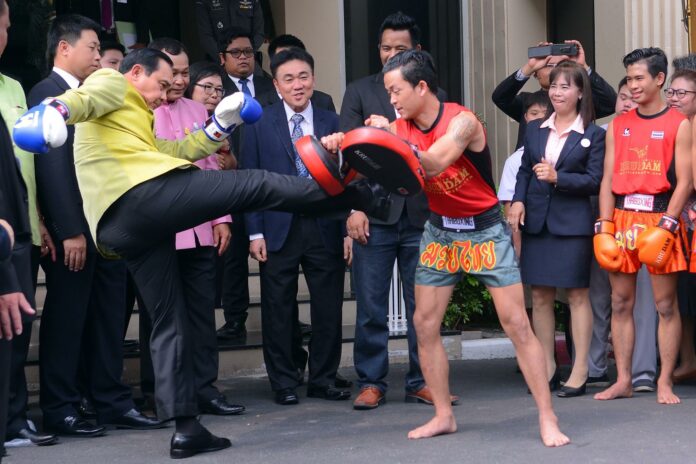
Prime Minister Prayuth Chan-ocha shows off his Muay Thai skill in March at Government House.

Top: Prime Minister Prayuth Chan-ocha shows off his Muay Thai skill in March at Government House in Bangkok.

BANGKOK Concerned about the health of his government officials, junta chairman Prayuth Chan-ocha on Tuesday ordered public servants to exercise every week.

Coming on the heels of an international fitness conference held in Bangkok, a government spokesman said Prayuth ordered government officials exercise every Wednesday in response to reports Thais were becoming more sedentary.

Therefore from 3pm to 4:30pm every Wednesday starting Nov. 30, officials will be expected to work out at the Government House and other government facilities. The lawn of the Government House will be used as an exercise venue, and Prayuth said he’ll join on any day he can find the time, according to spokeswoman Col. Taksada Sangkachan.

New gym clothes aren’t required – the retired general insisted that any sportswear would do.

Back in March, officials were asked to avoid running and cycling in front of the Government House as it’s the seat of administrative power and hosts important meetings.

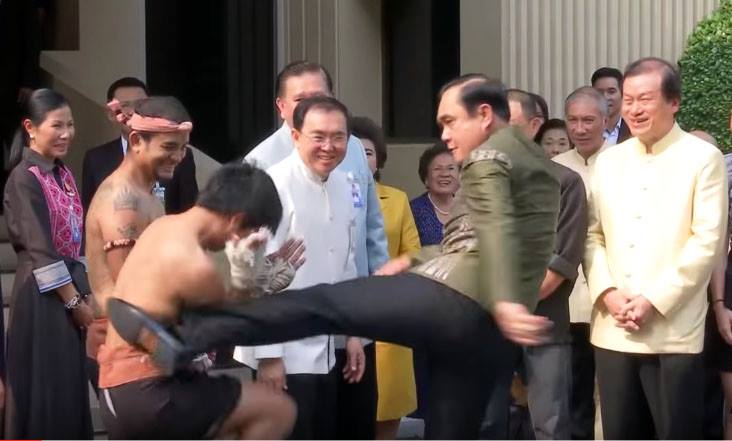
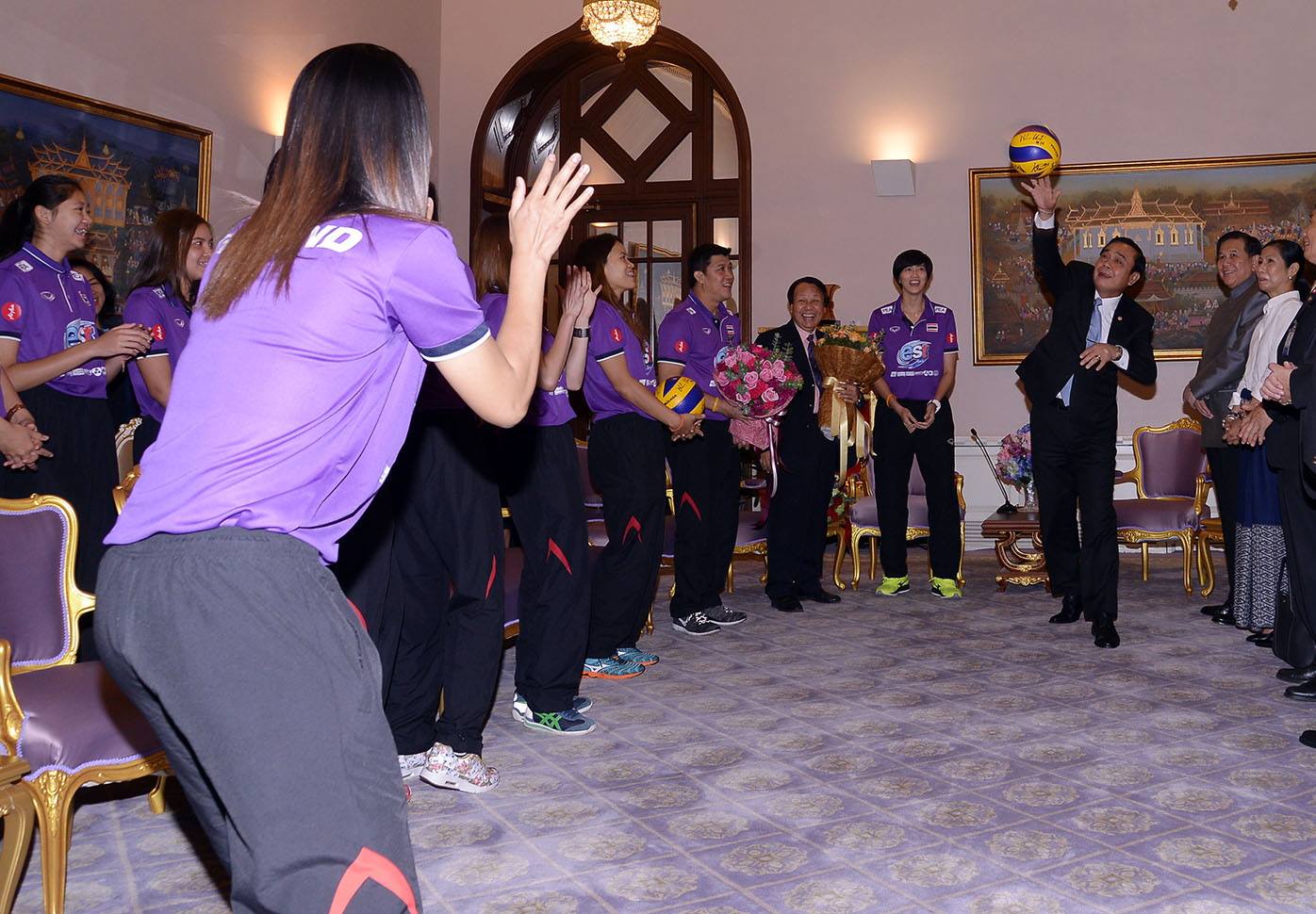
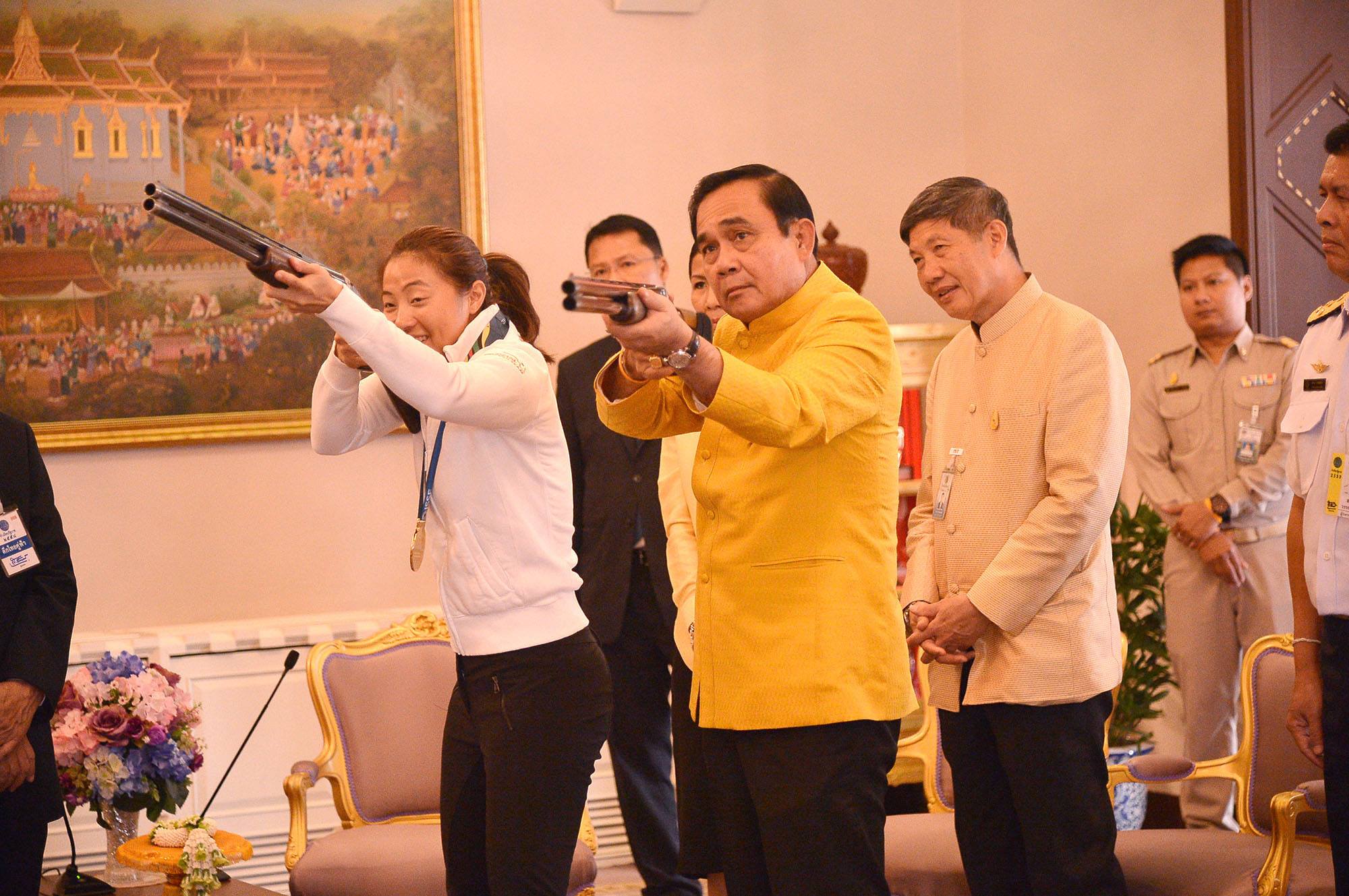
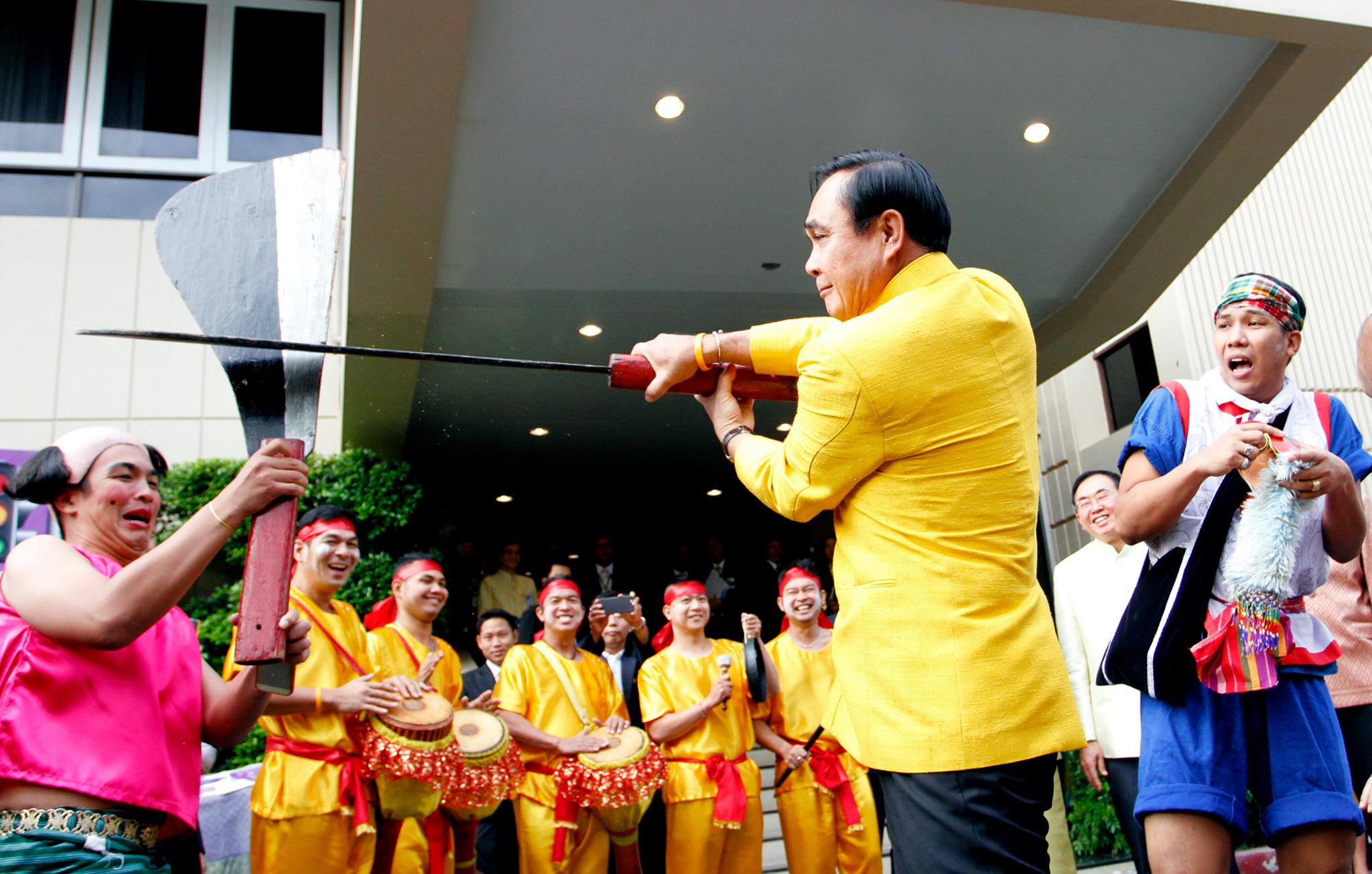
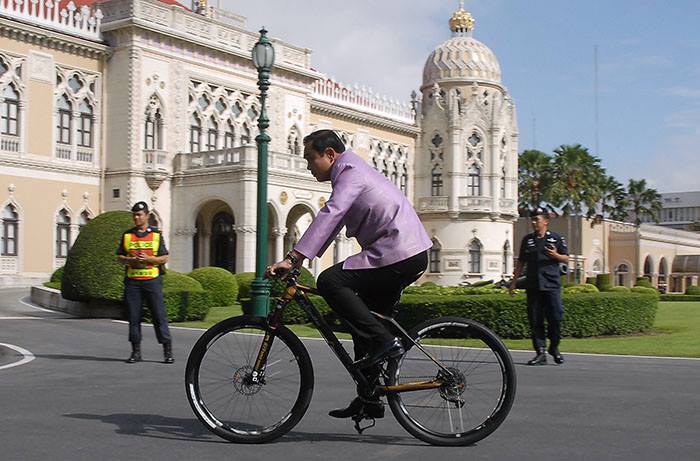
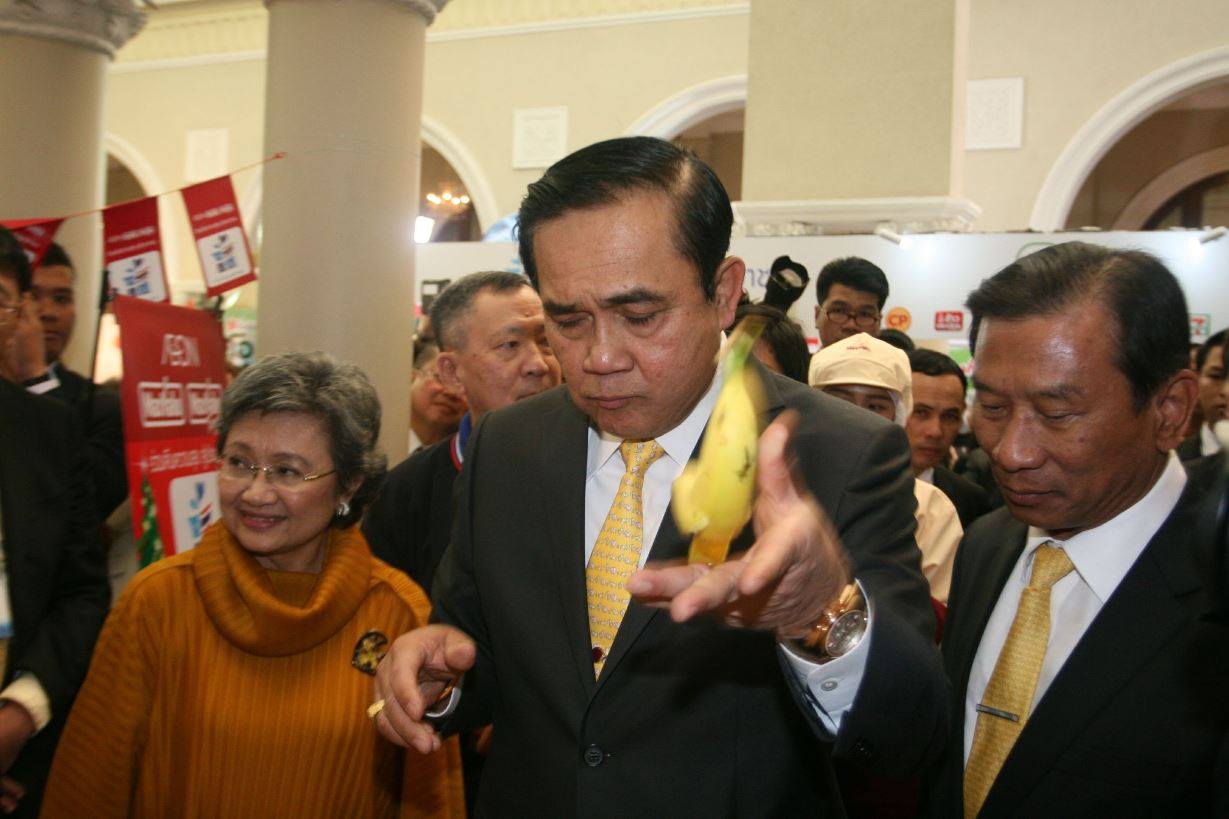
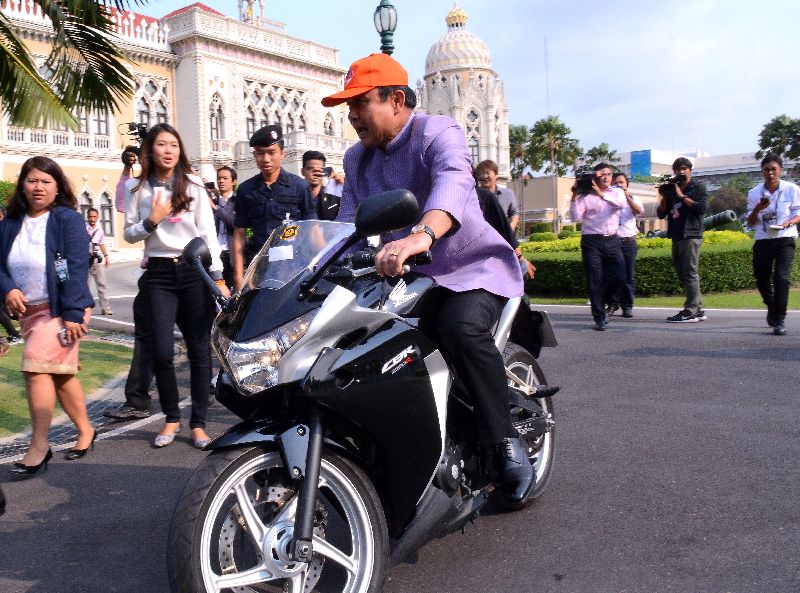
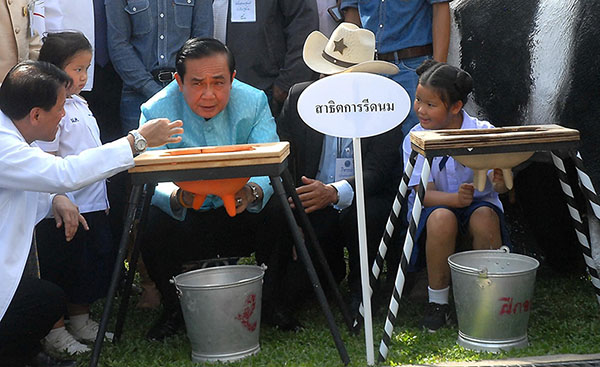
Prayuth frequently makes displays of physicality at Government House photo ops. Here are some of his memorable moments.

Kicks a Muay Thai fighter
Serves a volleyball
Serves a volleyball
Aims a gun
Aims a gun
Swings a blade
Swings a blade
Rides a bike
Rides a bike
Throws a banana
Throws a banana
Rides a motorcycle
Rides a motorcycle
Milks a ‘cow’
Milks a ‘cow’
Advertisement

Vietnam Commutes Death Sentence on Aussie Drug Trafficker

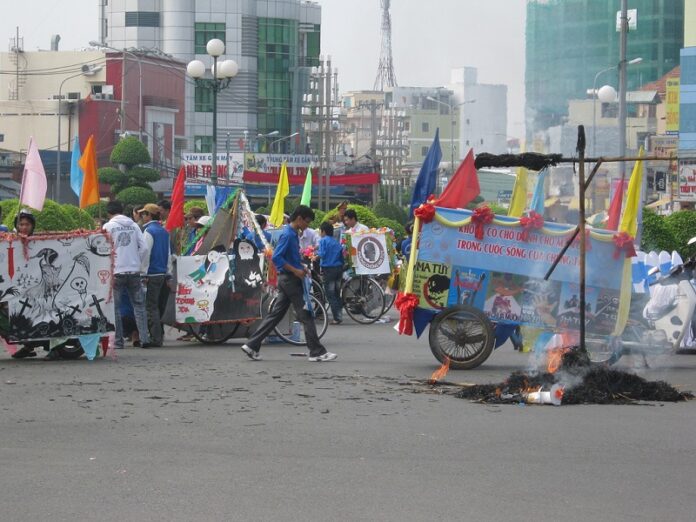
A 2011 anti-drug protest in Binh Duong, Vietnam. Photo: garycycles7 / Flickr

HANOI — An appeals court in Vietnam has commuted the death sentence of a 73-year-old Australian woman convicted of heroin trafficking.

The online state media outlet Vietnamnet quoted the People’s High Court in Ho Chi Minh City as citing Nguyen Thi Huong’s sincere confession and age for granting leniency. The sentence was reduced to life in prison at the appeals trial Monday.

Court officials were not available for comment Tuesday.

Huong was sentenced to death in June after being convicted of trafficking 3.5 pounds of heroin.

She was arrested in December 2014 when checking in for a flight to Australia after the heroin was found hidden in 36 bars of soap in her luggage.

Vietnam has some of the world’s toughest drug laws where trafficking even small amounts of heroin is punishable by death.

Advertisement

Hot News

LATEST NEWS

Bangkok
overcast clouds
27.7 ° C
27.7 °
27.7 °
80 %
1.2kmh
100 %
Sun
30 °
Mon
36 °
Tue
37 °
Wed
37 °
Thu
36 °