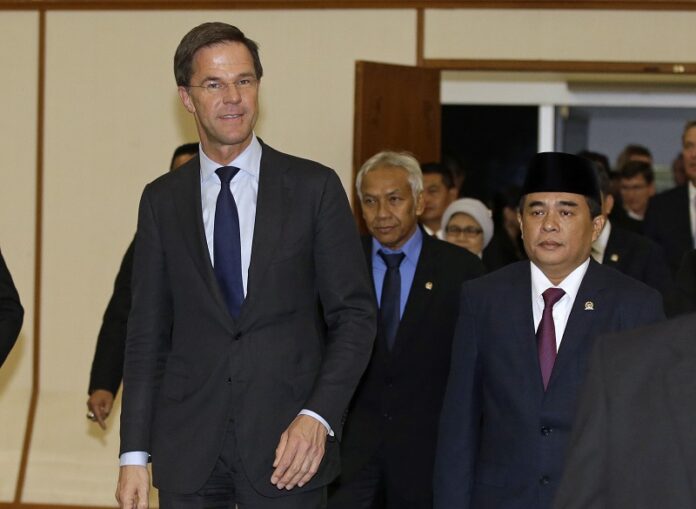
Dutch Prime Minister Mark Rutte, left, walks with Indonesian House Speaker Ade Komarudin, right, Wednesday during a visit at the parliament in Jakarta, Indonesia. Photo: Achmad Ibrahim / Associated Press
JAKARTA — Indonesia has offered to help investigate the disappearance of the wreckage of three Dutch warships that sank during World War II off Java island, Dutch Prime Minister Mark Rutte said Wednesday.
Rutte, who is on an official visit to Indonesia, said the two countries will work together to determine what happened to the ships that sank in a 1942 battle in the crystal blue Java Sea.
An international investigation found that the wrecks of two of the warships are completely gone, while another has lost most of its pieces.
Some investigators believe scavengers may have looted the wrecks to obtain scrap metal.
“We will work together to find clarity on what happened and we will coordinate in the future,” Rutte said at a news conference after meeting with President Joko “Jokowi” Widodo.
The ships, along with three British warships and a U.S. submarine, were sunk by Japanese forces during the Battle of the Java Sea.
Reports say the wreckage of the British heavy cruiser HMS Exeter and destroyer HMS Encounter have also been almost totally removed. Underwater scans showed that parts of the wreck of the destroyer HMS Electra had also been plundered.
Indonesian Foreign Ministry spokesman Armanatha Nassir confirmed the bilateral cooperation to investigate and protect the historic relics. He did not rule out possible arrangements with other concerned countries.
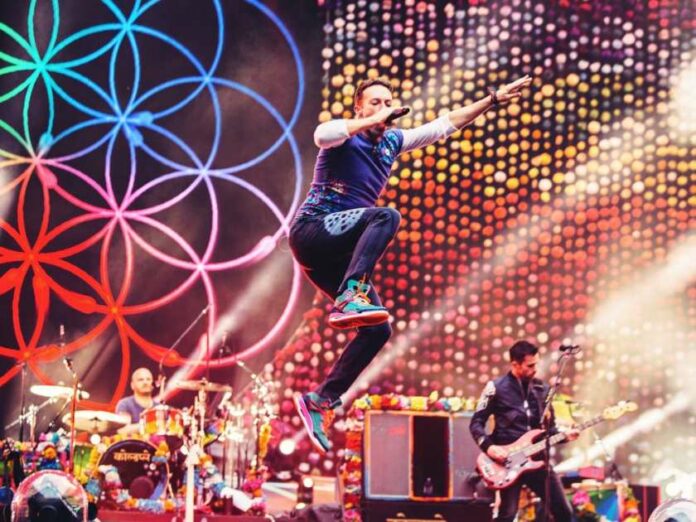
BANGKOK— British rock band Coldplay surprised their Thais fans by confirming they will stop to perform in Bangkok next year.
Best known for “The Scientist,” “Paradise,” and “Yellow,”the foursome led by the frontman Chris Martin will play in Bangkok on their “A Head Full Of Dreams Tour.” The band released its latest studio album of the same name in 2015.
The band formed 20 years ago and once visited Bangkok in 2003.
A Head Full Of Dreams Tour will take place April 7 at Rajamangala Stadium. Tickets start at 1,800 baht and will be available for sale online Dec. 16.
The band last week announced its Asian tours in many countries including Singapore, Philippines, Taiwan, Korea and Japan. Many disappointed Thai fans purchased tickets in neighboring countries earlier this week to see the four rockers perform.
Correction: An earlier version of this article said the tickets start at 2,500 baht. The official site of BEC-Tero Entertainment said the tickets will start at 1,800 baht.
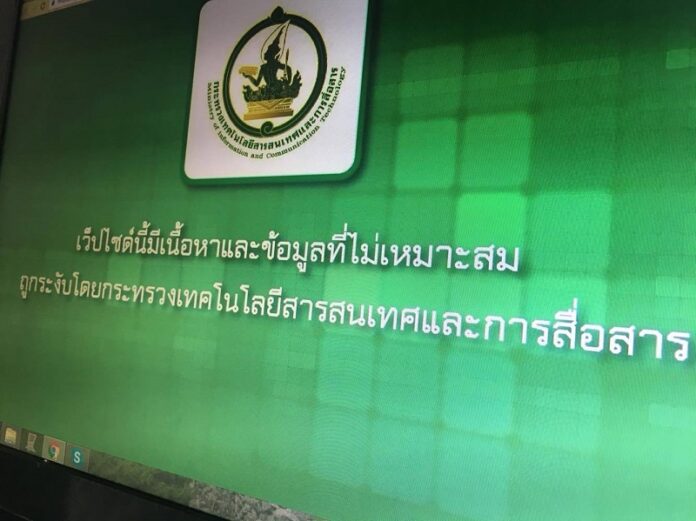
The screen that used to appear when users try to access websites banned by ICT Ministry in Thailand.
BANGKOK — Those tasked with rewriting the national cybercrime law on Wednesday dismissed suspicions the process was being used to revive a project to route and control internet traffic through a single gateway.
Speaking at Parliament House, drafters said recently introduced language that would open a backdoor for authorities to directly censor content was not part of bringing back the controversial project digital rights activists suspect is still moving forward.
“There are currently comments on the internet that this could be another origin of the single gateway due to some management processes written into the law,” said Surangkana Wayuparb, who directs a public e-commerce development agency and spokeswoman for the committee revising the 2007 Computer Crime Act. She said that was a misunderstanding of regulations intended to integrate the work of different agencies.
Dozens of attendees drawn from government organizations, rights groups and the private sector voiced doubts and anxieties at was to be the last chance for public input on the process of rewriting the decade-old law’s flaws. In return they were told not to worry about the letter of the law but put trust in its intent.
At the hearing, most concerns were raised about the law’s problematic Article 14, which has a long record of being used to stifle expression. A representative from the Technology Crime Suppression Division said he’s received more than 1,400 complaints filed under the article this year alone.
Drafters insisted changes were made in the latest draft out Friday to restore its original purpose of combating phishing, scamming and identity theft.
“After this amendment, Article 14(1) can no longer be used for defamation offenses,” said Paiboon Amonpinyokeat, a lawyer specializing in cyber law who helped with the drafting process. “If somebody files a complaint using this article, it can’t be used to file any charges.”
Those assertions did little to relieve concerns expressed by members of the public, who said the article’s language was still too broad and thus ripe for ongoing abuse.
As examples of this, representatives from Human Rights Watch and Isra News pointed out times their websites were shut down on the grounds they instigated unrest or were deemed threats to national security.
Paiboon said he understood the problem but denied the fault was in the law’s language.
“I really can’t help with the wrong use by law enforcement,” he said.
Targets Content, Not Crime
When it came to Article 20, which in Friday’s draft gave authorities more causes for censoring content, the drafters said people should place faith in the judgment of a committee of appointees which would provide oversight.
Under the revised Article 20/1, law enforcement authorities could move to censor content not only deemed a threat to national security, but anything considered “contrary to public order or good morals.”
The police major general heading the drafting committee acknowledged that they did not define just what “content contrary to public order or good morals” was, but said people should put their faith in the five appointees who would review such cases before they go to a court.
“Two out of the five committee members will be from the private sector,” Maj. Gen. Chatchaval Suksomjit said. “They will help consider in many dimensions, and the last step is the court. So that assures that they won’t just block whatever they want.”
Speaking before the hearing, a law professor from Saint John’s University noted Tuesday that widening the range of offenses covered by the Computer Crime Act would make the law lose its way.
“The legal system will be ruined if every offense related to computers are dragged under the Computer Crime Act,” Kanathip Thongraweewong said.
As written now, Kanathip said, the law would be a significant break from international legal norms by targeting content instead of criminality.
Business Concerns
Along with speakers concerned about their rights were those worried about their bottom lines.
Representatives from the private sector, including DTAC and Line Thailand, came to express worries about many unclear regulations involving service providers, and the legality of the process for removing content.
The law only applies to Thai service providers, which Poomjit Sirawongprasert of the Thai Hosting Service Providers Club said put them at a competitive disadvantage with foreign companies.
“People then won’t want to host their website in Thailand,” she said.
Paiboon responded by saying supporting laws already indemnified ISPs or mobile operators from legal action unless they actively disseminated the content themselves.
The majority of work revising the law is complete, but drafters said they would consider today’s comments into the final amendment process.
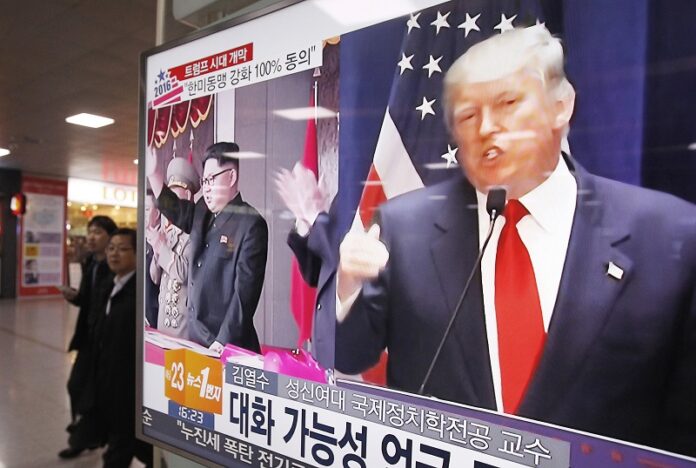
A TV screen shows pictures of U.S. President-elect Donald Trump, right, and North Korean leader Kim Jong Un, Nov. 15 at the Seoul Railway Station in Seoul, South Korea. Photo: Ahn Young-joon / Associated Press
CANBERRA— Whether or not US President-elect Donald Trump behaves better once in office than he did on the campaign trail, America’s global authority has already taken a battering, not least among its allies and partners in Asia.
Exercising soft power – leading by democratic and moral example – will not be easy for Trump, given the disdain he showed for truth, rational argument, basic human decency, and racial, religious, and gender differences, not to mention the fact that he was not actually elected by a majority of voters. And when it comes to exercising harder power – doing what it takes to counter serious challenges to peace and security – there will be little confidence in Trump’s judgment, given that almost every statement he made during his campaign was either wildly contradictory or downright alarming.
Maintaining security, stability, and prosperity in Asia requires a cooperative environment, in which countries secure their national interests through partnerships – not rivalries – and trade freely with one another. The only grounds for confidence on this front after Trump’s victory is that he may actually do none of the things he said he would, such as starting a trade war with China, walking away from alliance commitments, and supporting Japan and South Korea going nuclear.
With little or no hard knowledge of international affairs, Trump is relying on instincts that are all over the map. He combines “America first” isolationist rhetoric with muscular talk of “making America great again.” Staking out impossibly extreme positions that you can readily abandon may work in negotiating property deals; but it is not a sound basis for conducting foreign policy.
Trump’s dangerous instincts may be bridled if he is capable of assembling an experienced and sophisticated team of foreign-policy advisers. But this remains to be seen, and the US Constitution grants him extraordinary personal power as Commander-in-Chief, if he chooses to exercise it.
US leadership in Asia is a double-edged sword. Noisy assertions of continued primacy are counterproductive. China’s legitimate demand to be accepted as a joint rule-maker, not just a rule-follower, has to be recognized. But when China overreaches, as it has done with its territorial assertions in the South China Sea, there does need to be pushback. On that front, a quiet but firm US role remains necessary and welcome.
Shortly after former President Bill Clinton left office, I heard him say privately (though never publicly) that the US could choose to use its “great and unrivaled economic and military power to try to stay top dog on the global block in perpetuity.” A better choice, however, would be “to try to create a world in which we will be comfortable living, when we are no longer top dog on the global block.” That kind of language seems to be anathema for anyone holding high office in the US, at least publicly. But it is what Asia wants to hear.
For Australia and other US allies and partners in the region, this presidential election makes it clear that we can no longer – assuming we ever could – take coherent, smart American leadership for granted. We must do more for ourselves and work together more, while relying less on the US.
Trump will probably have more instinctive sympathy for Australia than he will for many other US allies. We are seen as paying our alliance dues, not least by having fought alongside the US in every one of its foreign wars – for better or worse – over the past century. And, as cohabitants in the Anglosphere, we are in Trump’s cultural comfort zone. But Australia will be anything but comfortable if the larger regional dynamics go off the rails.
We should have learned by now that the US, under administrations with far more prima facie credibility than Trump’s, is perfectly capable of making terrible mistakes, such as the wars in Vietnam and Iraq. We now have to be ready for American blunders as bad as, or worse than, in the past. We will have to make our own judgments about how to react to events, based on our own national interests.
This does not mean that Australia should walk away from its alliance with the US. But we will need to be more skeptical of American policies and actions than in recent decades. Australia should become much more self-consciously independent, and assign much higher priority to building closer trade and security ties with Japan, South Korea, India, and especially Indonesia, our huge near-neighbor.
No one should give ground if China overreaches, and Australia should, now more than ever, work closely with our Asian neighbors to ensure that it does not. But we must also recognize the legitimacy of China’s new great-power aspirations, and engage with it non-confrontationally. We will all benefit from a common regional-security framework based on mutual respect and reciprocity, not least when confronting regional threats such as North Korea’s nuclear chest-beating.
We can only hope that Trump will dispel our worst fears when he is in office. But in the meantime, Australian and other regional policymakers should adhere to a simple mantra: More self-reliance. More Asia. Less US.
Gareth Evans, former Foreign Minister of Australia (1988-1996) and President of the International Crisis Group (2000-2009), is currently Chancellor of the Australian National University. He co-chairs the New York-based Global Center for the Responsibility to Protect and the Canberra-based Center for Nuclear Non-Proliferation and Disarmament. He is the author of The Responsibility to Protect: Ending Mass Atrocity Crimes Once and For All and co-author of Nuclear Weapons: The State of Play 2015.
UTTARADIT— Casualties rose Wednesday to 18 killed and 20 injured after a bus plunged off a cliff yesterday in Uttaradit province.
Thirty-eight people were aboard the Bangkok-bound bus when it dove 100 meters into a ravine in Uttaradit city. All passengers were CAT Telecom retirees traveling back to the capital from Nan and Phrae provinces.
It took more than 200 rescue workers hours to rope down and lift the injured and recover the bodies.
Bus driver Udom Samart was serious injured. He was sent to a hospital for treatment was was not yet able to answer questions about the accident, police Maj. Ratchata Sroikaew said Wednesday.
No one has been charged, he said, but police are investigating and questioning witnesses.
BANGKOK — A call’s gone out for filmmakers to submit their work in any style for an upcoming festival with one catch: They only have 60 seconds to tell the story.
After hosting a 30 second film fest earlier this year, Whiteline is kind enough to give filmmakers double the time to express themselves at the upcoming 60 Second Film Festival.
Films on any subject, in any genre, style or language are welcome so long as their total run time does not exceed one minute.
Information on how to submit by the Feb. 1 deadline is available online.
All films will be screened starting at 9pm on Feb. 10, followed by an award presentation and after-party at Whiteline, a cultural arts venue on Soi Silom 8 that can be reached by taxi or on foot from BTS Chong Nonsi.
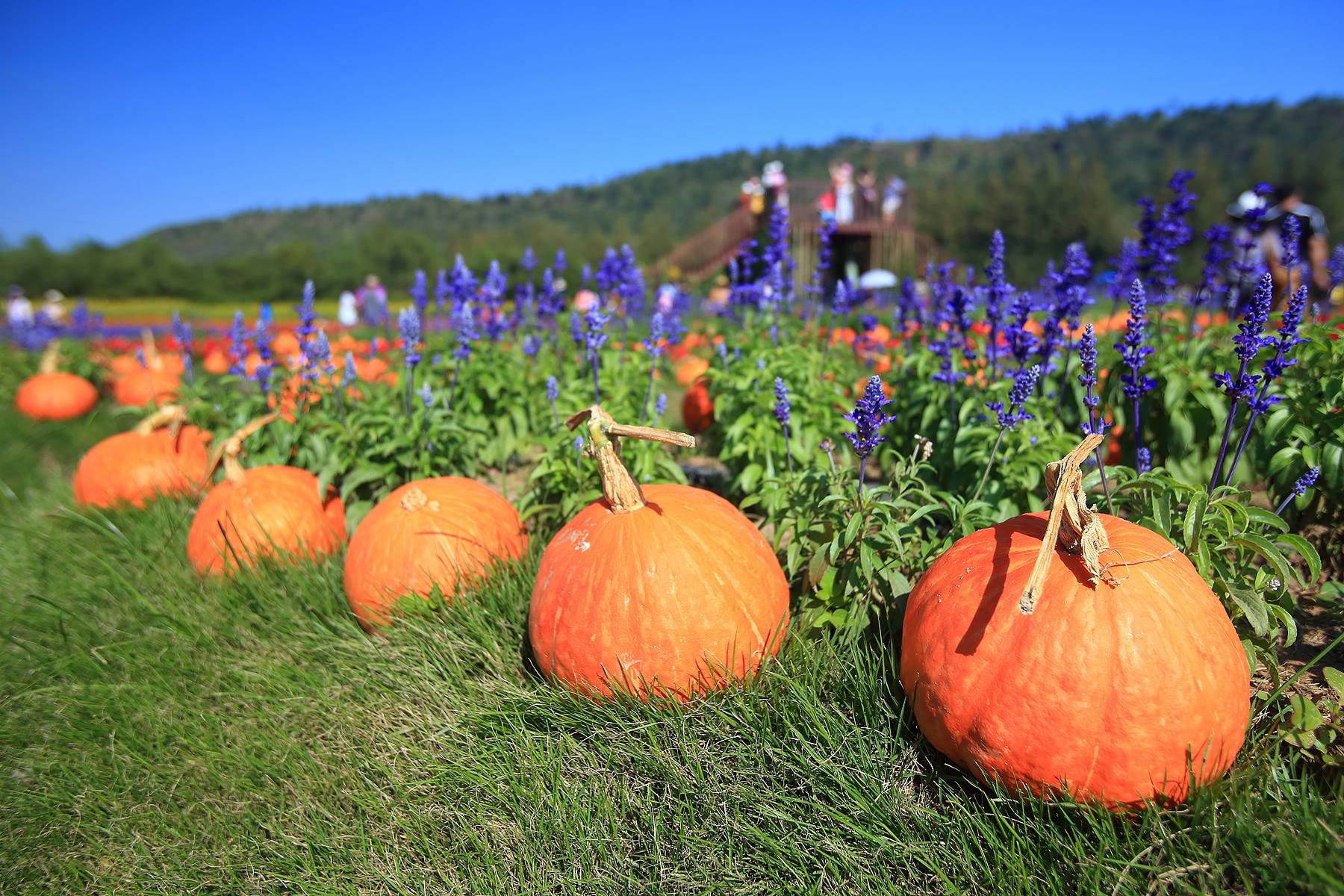
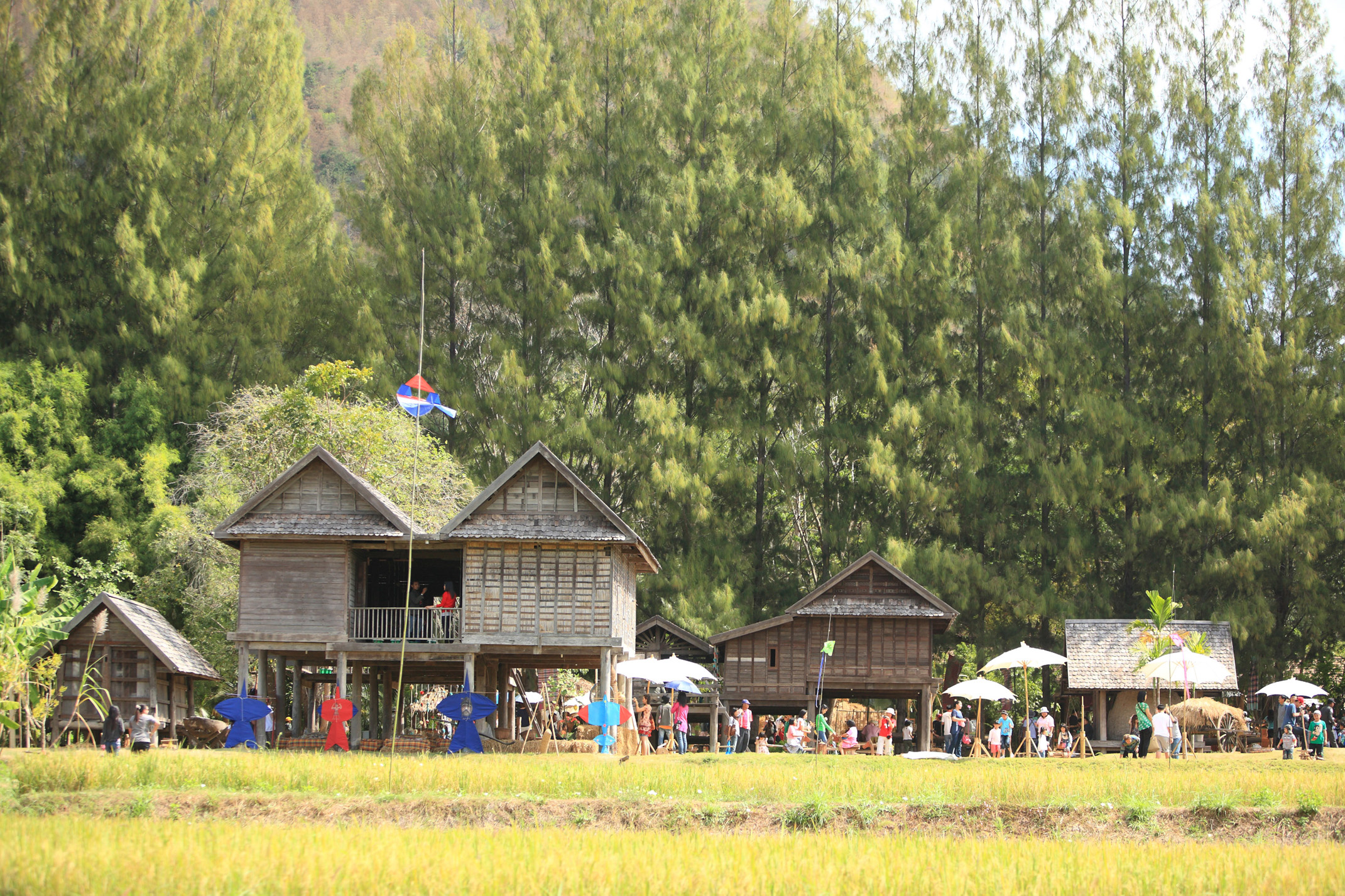
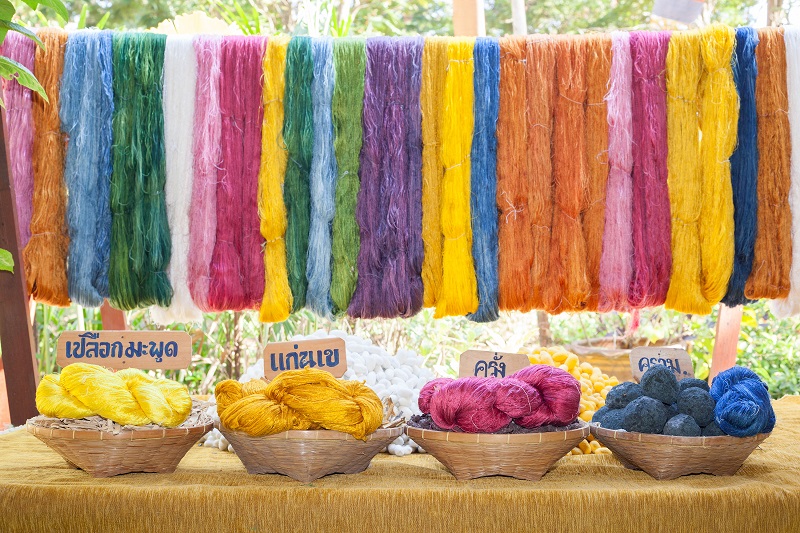
NAKHON RATCHASIMA — Taste the Isaan life and see fields of pink flowers, pumpkin patches, silkworms, antique wooden houses and more starting next month.
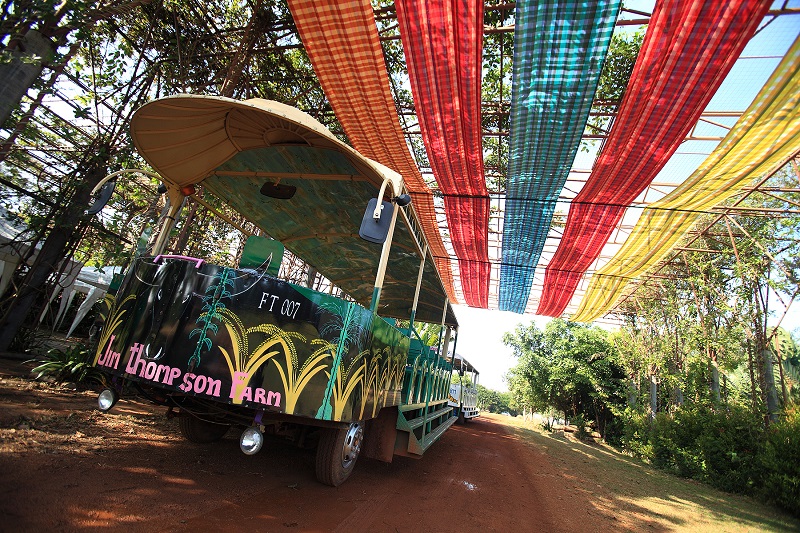
The Jim Thompson Farm will open its doors to the public for five weeks starting next month for visitors to see silk farming up close and tour rice fields and gardens of organically grown fruit and vegetables.
Timed with the start of the cool season, the farm will be open Dec. 3 through Jan. 8.
City slickers can indulge their Farmville fantasies through activities such as picking cherry tomatoes. Gardeners can shop for pesticide-free farm products while those just along for the ride can pose for photos in the farm’s signature giant pumpkin patch.
The Jim Thompson Farm will be open daily 9am to 5pm. Weekday tickets for children are 100 baht and 150 baht for adults. Weekend tickets for children are 140 baht and 180 baht for adults. Between Dec. 31 to Jan. 3, holiday pricing is 160 baht and 240 baht for adults.
All tickets can be purchased online, at the Jim Thompson House and Museum in Bangkok or Jim Thompson shops in Siam Paragon, CentralWorld and The Emporium.
The farm, which covers an area of 721 rai (280 acres), was established in 1988 primarily for producing silkworm eggs and silk cocoons. It later started opening to the public annually in 2001 as an agritourism attraction.
Jim Thompson Farm is situated in the Pak Thong Chai district of Nakhon Ratchasima province, about a four-hour drive from Bangkok.
Photo: Jim Thompson Farm / FacebookPhoto: Jim Thompson Farm / CourtesyPhoto: Jim Thompson Farm / CourtesyPhoto: Jim Thompson Farm / Courtesy
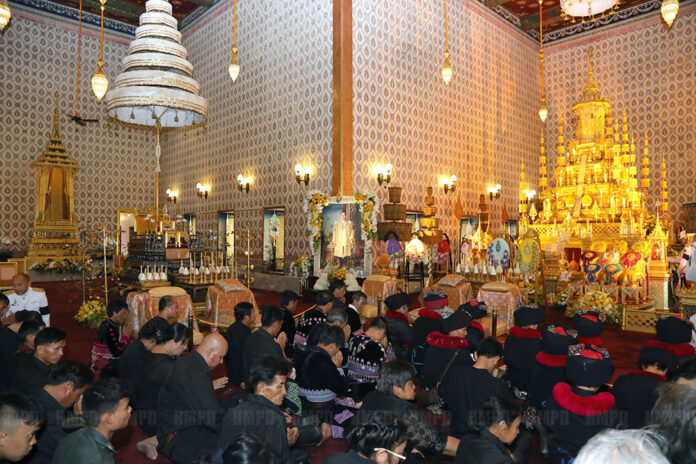
Members of the public pay their respects to the royal urn on Oct. 29. King Bhumibol lies in state behind it. Photo: Royal Household Bureau
BANGKOK — When King Rama III died in 1851, all but a few Siamese including his successor were required to shave their heads. When Rama IV passed away in 1868, commoners only glimpsed the royal urn after it was brought to the pyre at Sanam Luang days before his cremation. But today, upward of 30,000 people enter the Grand Palace daily to honor the royal urn of King Bhumibol.
Over the centuries, royal funeral rites have become more accessible to the public, according to an expert on royal rituals, who said the trend is continuing with those for His Majesty the Late King Bhumibol, who died Oct. 13 at 88.
Thongthong touched on wide-ranging issues in a recent speech at Matichon Academy on the history of royal funerals, from the public’s access to participating, the transition from mourning in white to black, and the scaling down of once-massive funerary structures.
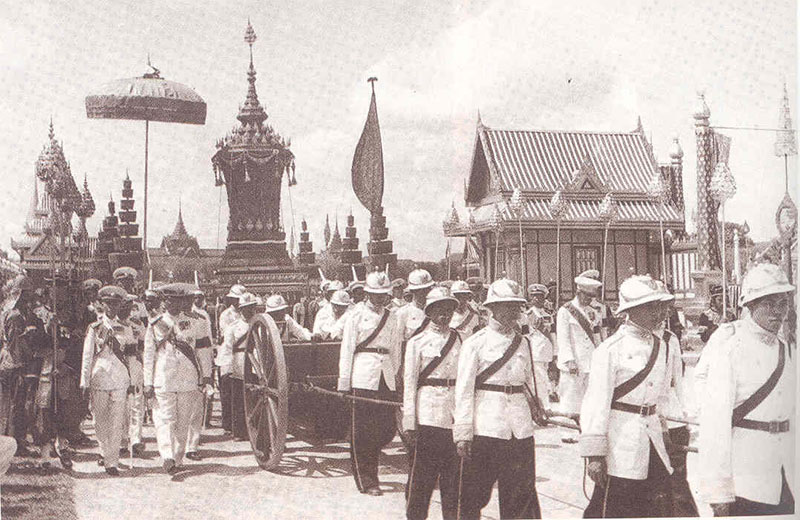
A royal funeral procession carries the urn of Rama VIII after his death in 1946.
More Accessible, Less Strict
Traditionally commoners were not allowed to enter the Grand Palace to see the royal urn and coffin of a sovereign, according to Thongthong, a 61-year-old former permanent secretary to the Prime Minister’s Office. What’s more, the public would not be permitted to host Buddhists rites for a dead King. These changes, he stressed, are a sign of time and adaption, though the principles remain intact. Thongthong predicted more changes to come in the coming year pertaining to the rituals for King Bhumibol but didn’t go into specifics.
Thongthong noted that King Rama VI, or King Vajiravudh (1910-1925), introduced a number of significant changes upon the death of his father Rama V, or King Chulalongkorn, in 1910.
He allowed commoners in to formally pay respects to Rama V’s royal urn, keep their hairstyle and organize Buddhist prayers for the late King.
“This opportunity for commoners to sponsor [Buddhist prayer] had never occurred before,” Thongthong said.
Since then, things have only become more participatory, he said, pointing out that an estimated 30,000 people are queuing daily at the palace. The Royal Household Bureau noted a couple days ago that some 700,000 people had passed through.
Rama VI made the change because he thought his father was much loved by his subjects and therefore thought it fitting to allow them closer to his body.
Up through the reign of Rama IV (1851-1868), commoners would only see the urn after it was transported to the funeral pyre for cremation.
Rama VI made another tangible change when he abolished mandated head-shaving to mourn the death of a king. Thongthong said when it was still practiced, commoners in the kingdom‘s border territories were exempt for fear of alerting Western powers which may take advantage of the situation.
Nonthaporn Yumangmee wrote in 2008’s “Royal Funeral Rites” that King Vajiravudh ordered the end of the practice in 1910 upon the death of his father.
“Such mourning practices cause a lot of hardship and should be abolished at once,” read a portion of his decree, cited on page 81 of the text.
From White and Black to Black
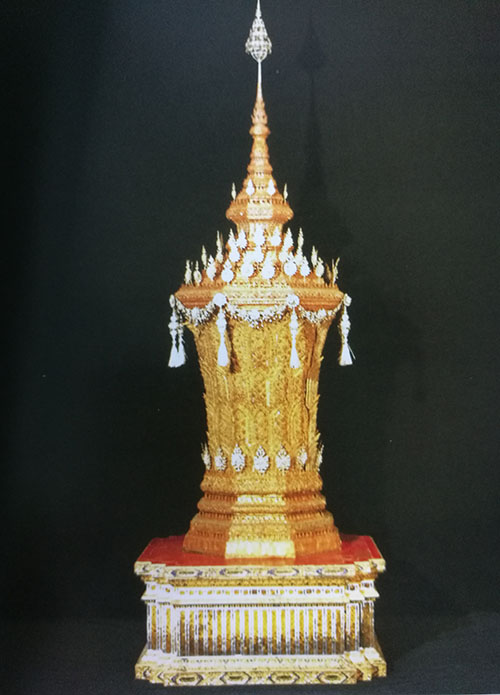
A royal urn made during the reign of King Rama I on display at the National Museum in Bangkok.
Look in old photographs and find people mourning King Chulalongkorn and other past monarchs almost entirely in white. It was not until after the end of absolute monarchy in 1932 that black gradually became the preferred color of mourning. Thongthong attributed the shift to Field Marshal Plaek Phibunsongkhram, an influential prime minister in office from 1938 to 1944 and again from 1948 to 1957.
Thongthong was unable to pin down the exact year but displayed a photograph of the King Bhumibol wearing a formal white uniform to the funeral of his brother, King Ananda Mahidol or Rama VIII, who died of a gunshot wound to the head in 1946.
In the same book, Nonthaporn noted that it used to be that people would wear white if they were younger than the deceased king and black if they were older. Other colors, including a dark blue and dark purple, were also used in some cases.
Royal Funeral Pyre Used to be Grander
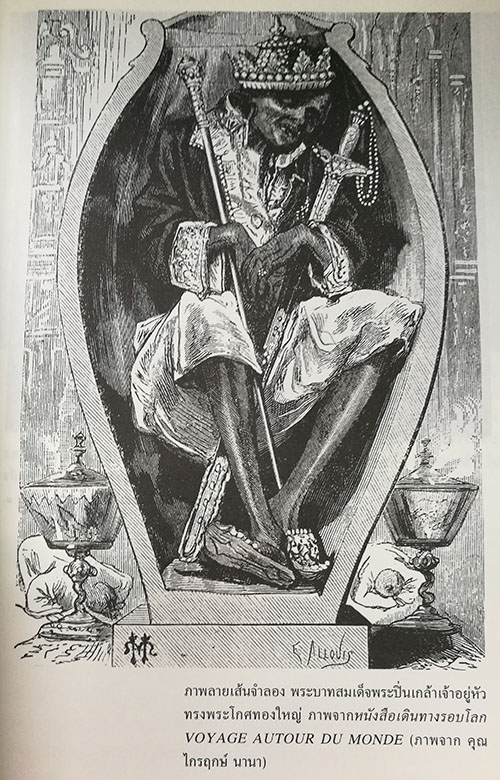
A sketch of Vice King Pinklao, who served under his younger brother King Rama IV, in the royal urn upon his death in 1866. Image from ‘Voyage Autour Du Monde’ in the collection of Krairoek Nana / Arts and Culture Publishing House
Royal cremation ceremonies are held in the Sanam Luang, which is the primary purpose of the landmark in the capital’s old quarter.
Photographs of the funeral pyre for King Rama IV or King Mongkut (1851-1868) show a stupa-like main structure rising 80 meters, about the height of the famous riverside Temple of Dawn, or Wat Arun.
Architecturally, the elaborate complex erected there represents Mount Meru, the mythical and heavenly abode of Hindu Gods considered sacred to Buddhists as well. Both Thongthong and Nonthaporn noted it’s a reminder that Thai kings were regarded as semi-divine and would return to heaven after their deaths. Thus the temporary funeral pyre complex was designed to cosmologically represent the gods’ heavenly abode.
It was King Chulalongkorn who found the gigantic structure built his father to be over the top. He ordered it scaled down for when he died.
“Rama V said constructing a funeral pyre like during Rama IV’s funeral was too wasteful,” Thongthong said.
For His Majesty Rama IX
Some in the capacity audience asked about the exact ceremonies to expect when King Bhumibol is cremated next year at Sanam Luang, but Thongthong made it clear he did not know. It was clear the body of His Late Majesty was not placed inside the metal cylindrical container as was customary practice for royals in the olden days.
The last chronicled royal body to be placed inside such a phra lorng, which is then placed inside the royal urn or kot, was that of Her Majesty Queen Rambhai Barni, consort of Rama VII, who died in 1984. Thongthong said the art of placing the royal body inside the metal cylinder remains a highly guarded secret to this day. The practice has not been used in two royal funerals to take place since then.
Pattaya - Hua Hin ferry Royal 1 on Saturday at Pattaya’s Bali Hai pier
Update: Free ride offered on Jan. 1-15 as a New Year gift
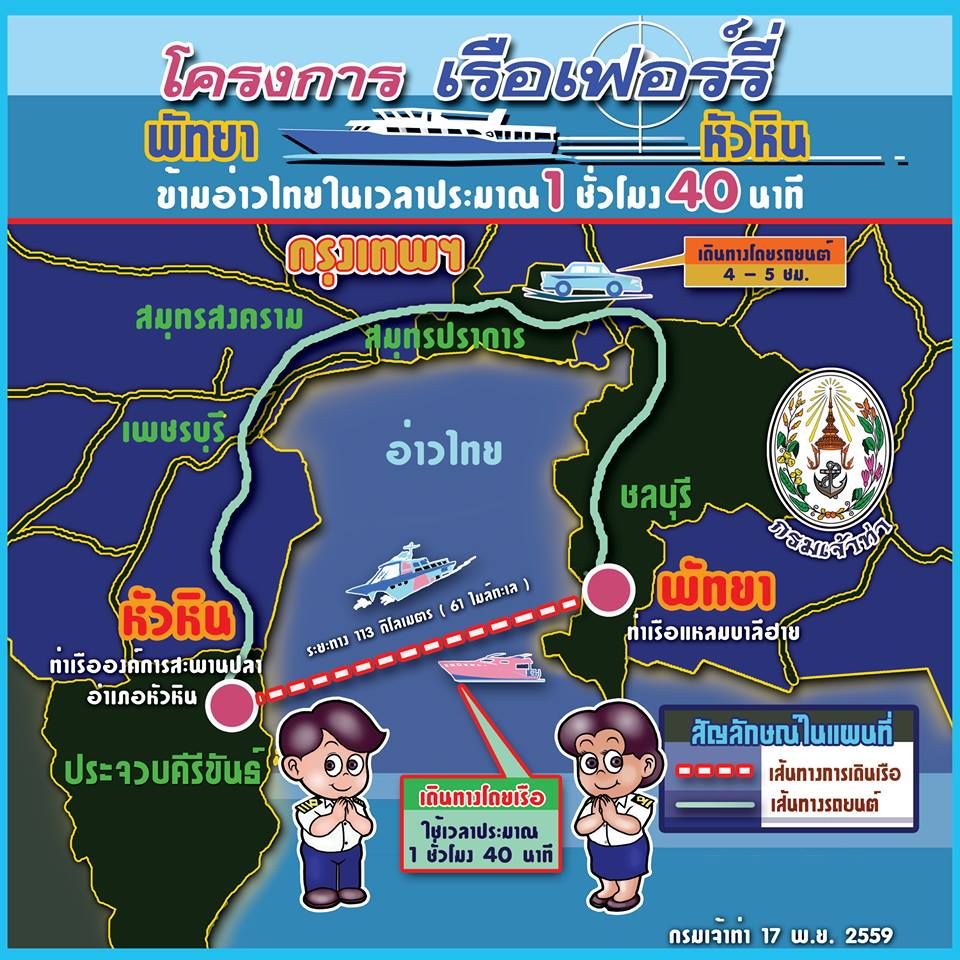
BANGKOK — Skip the four-hour drive between Pattaya and Hua Hin in favor of a 100-minute boat ride across the Gulf of Thailand when it launches in January.
The ferry service connecting the two popular tourist spots begins testing in December. The boats will leave from Pattaya’s Bali Hai pier and Hua Hin’s Fish Marketing Organization Port.
The January launch begins with one ferry which can accommodate up to 150 people on one round-trip per day, leaving Pattaya at 8:30am and Hua Hin at 3:30pm.
A larger vessel which can carry up to 262 passengers will go into service in February.
The project is operated by Royal Passenger Liner, the only firm to win a license from the Marine Department to operate along the route. Royal Passenger Liner also plans to launch water taxis connecting Pattaya to Sattahip, and Cha-am to Hua Hin.
Roll-on and roll-off ships designed to carry vehicles are also in the long-term plan, according to Marine Department chief Sornsak Saensombat.
The operator sought approval for a fare of 1,200 baht, but the rate had yet to be finalized.
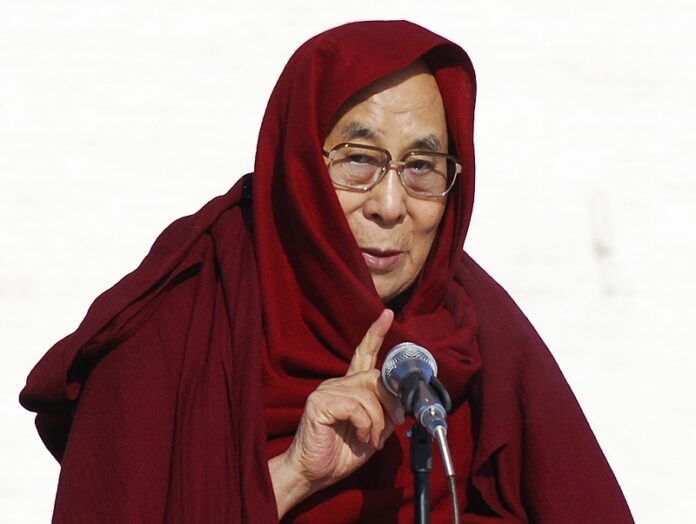
The Dalai Lama speaks Saturday at the Janraiseg temple of Gandantegchinlen monastery in Ulaanbaatar, Mongolia. Photo: Ganbat Namjilsangarav / Associated Press
ULAANBAATAR, Mongolia — Exiled Tibetan spiritual leader the Dalai Lama said Wednesday he has “no worries” about Donald Trump’s election as U.S. president and expects the businessman will align his policies with global realities.
Commenting at the conclusion of a four-day visit to Mongolia, the leader of Tibetan Buddhism says he looks forward to seeing Trump at some point following the Jan. 20 inauguration. It was not immediately clear if a meeting between the two has been planned. Such meetings usually draw China’s ire.
The 81-year-old monk said he has always regarded the U.S. as the leader of the “free world” and wasn’t concerned about remarks made by Trump during the election campaign. Some of those comments have been cited as offensive to Muslims, Hispanics and other U.S. minority groups.
“I feel during the election, the candidate has more freedom to express. Now once they (are) elected, having the responsibility, then they have to carry their cooperation, their work, according (to) reality,” he told reporters. “So I have no worries.”
China accuses the Dalai Lama of seeking to split Tibet from China and had demanded Mongolia scrap his visit. Mongolia’s fragile economy is heavily dependent on China, and the countries are in discussions on a $1.2 billion Chinese loan to help pull it out of a recession.
In his comments, the Dalai Lama said his visit to the landlocked, primarily Buddhist, nation had no political purpose and said he had not publicly advocated independence for Tibet since 1974. The Dalai Lama has long called for Tibet to remain under Chinese rule, but with greater political participation by Tibetans and stronger protections for its traditional Buddhist culture.
China says Tibet has been part of its territory for centuries, although many Tibetans say they were effectively an independent country for much of that time.
Chinese President Xi Jinping congratulated Trump in a phone call and the country’s state media has welcomed his election as harkening a less confrontational policy toward China. Those outlets have also applauded Trump’s announcement that he would abandon a U.S.-led free trade agreement in Asia that had excluded China.
However, Trump has also accused Beijing of unfair trade practices and pledged to bulk-up the U.S. military, leaving questions as to his ultimate approach to relations with the world’s second-largest economy.