32.8 C
Bangkok
Saturday, June 27, 2026
Home Blog Page 2539

Homeless Man Addresses Soldiers From Atop Chedi

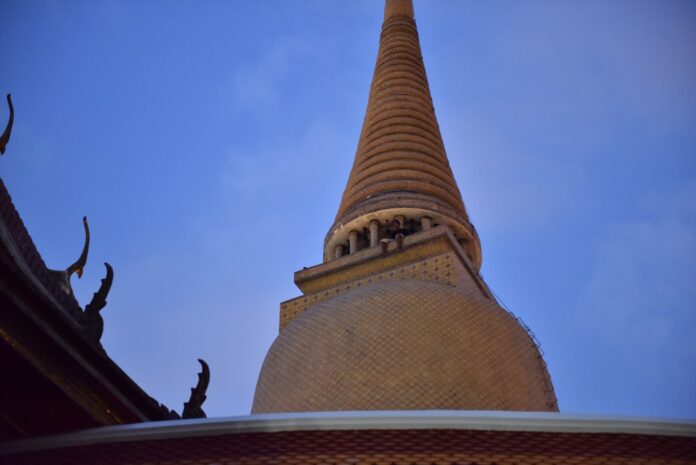
A man sits atop a chedi at Wat Ratchabophit on Monday evening in Bangkok.

BANGKOK — An emotionally disturbed man scaled a chedi at a temple in the capital’s old quarter Monday evening before police managed to talk him down.

The unidentified man, believed to be in his late 20s, climbed the central chedi at Wat Ratchabophit at about 5:30pm and began singing loudly. Police Lt. Col. Jaturong Jusing said he and rescue workers who showed up could not understand the man, who was ranting and raving incoherently while talking in circles.

He reportedly refused to cooperate with police and insisted they send soldiers instead.

“Soldiers are here! Ten-hup. Left, face!. Right, face!” he yelled upon seeing the military men before offering an explanation. “I wanted to see the sunrise from here!”

Wasan Imsawat, an officer at the Ministry of Defense, said he often saw the homeless man wandering in the area in disheveled clothing. Wasan said that he overheard the man earlier Monday saying he wanted to return home to Sisaket province prior to his appearance atop the chedi.

Officers took about 40 minutes to coax him into coming down. He appeared frightened and continued ranting verbally. He wasn’t carrying any money or identification, but said his name was “Lun Fa” and that he had ambitions to be a rapper.

Officers gave him water before sending him to Samran Rat police station where he was given a sobriety test.

“There was no alcohol or drug use, his mental faculties just aren’t all there,” said station chief Torkiat Porahombut, adding that they sent him to a hospital specializing in the mentally ill. “He’s safe now.”

Advertisement

Trump: US to Quit TPP, Abe: Deal to Become ‘Meaningless’

President-elect Donald Trump speaks during an election night rally Nov. 9 in New York. Photo: Evan Vucci / Associated Press

BUENOS AIRES, Argentina — Japan’s prime minister said Monday the Trans-Pacific Partnership trade deal would be “meaningless” without U.S. participation, as Donald Trump announced he planned to quit the pact.

Shinzo Abe’s comment came shortly before the U.S. president-elect released a short video about his plans for his administration, including an intention to have the United States drop out of the TPP pact.

“I am going to issue a notification of intent to withdraw from the Trans-Pacific Partnership, a potential disaster for our country,” Trump said. “Instead, we will negotiate fair, bilateral trade deals that bring jobs and industry back onto American shores.”

Abe spoke after attending a weekend meeting of Asia-Pacific leaders in Peru at which some said they might try to modify the 12-nation TPP pact to make it more appealing to Trump or seek to implement it without the U.S.

But Abe discounted the idea of going ahead without the Americans being a part of the deal.

“TPP is meaningless without the United States,” he said at a news conference during an official visit to Argentina.

He also said the pact couldn’t be renegotiated. “This would disturb the fundamental balance of benefits.”

As Japan’s most powerful leader in a decade, Abe had invested political capital in overcoming strong domestic opposition to the TPP, which Trump has called “a disaster for jobs” in the United States.

Abe and the other 20 leaders of the Asia-Pacific Economic Cooperation group closed their annual summit Sunday with a unified call to resist the protectionist sentiment highlighted by Trump’s victory and Britain’s vote to leave the European Union.

The Japanese leader declined to comment on possible policies of the incoming Trump administration.

Last week, he became the first world leader to meet with Trump since his election. Abe, who was seeking reassurances over the future of U.S.-Japan security and trade relations, described the meeting as “really, really cordial,” but he offered few details of their discussion.

There are growing concerns in Japan that Trump might follow up his campaign rhetoric and demand that Tokyo pay more for the 50,000 American troops stationed in Japan under a security treaty. Japan pays about $2 billion a year, about half of the non-personnel costs of stationing the U.S. troops, while South Korea pays about $860 million a year for about 28,000 American troops based there.

Japan’s pacifist constitution, drafted under U.S. direction after World War II, forbids the use of force in settling international disputes, but the government has reinterpreted the constitution to allow Japanese troops to use force in some situations.

For the first time since World War II, Japanese peacekeepers arrived in South Sudan on Monday with a mandate allowing them to use force to protect civilians.

Earlier Monday, Abe met with Argentine President Mauricio Macri and signed trade deals in the first visit by a Japanese premier to Argentina in 57 years. Abe was joined by business leaders and CEOs of major Japanese companies and banks, including Mitsubishi, Bank of Tokyo and Toyota.

“From here on, through the joint public and private sectors, we will promote Japanese involvement in infrastructure and other sectors in Argentina,” Abe said, praising the huge potential of South America’s second-largest economy and Macri’s efforts “to encourage free and open economic policies.”

Business-friendly Macri has promised to revive Argentina’s weak economy after 12 years of protectionist policies under his predecessors. Since taking office in December, Macri has focused on attracting foreign investors, cutting government spending and ending economic distortions. But some industries are still struggling and Argentines continue to lose purchasing power to one of the world’s highest inflation rates.

Abe also said that he had discussed the importance of world peace and stability with Macri and agreed with him on the “importance of solving conflicts peacefully.”

“We’ve also exchanged opinions about the need to pressure North Korea more because the nuclear missile threat from that country has increased,” Abe said.

Abe has urged an expanded role for Japan’s military so that it can respond to threats that include China’s growing military assertiveness and North Korea’s nuclear ambitions, and he hopes to eventually rewrite the pacifist constitution. Many in Japan oppose such constitutional amendments.

Story: Luis Andres Henao

Advertisement

I Was Born In the Reign of Rama IX: The Series

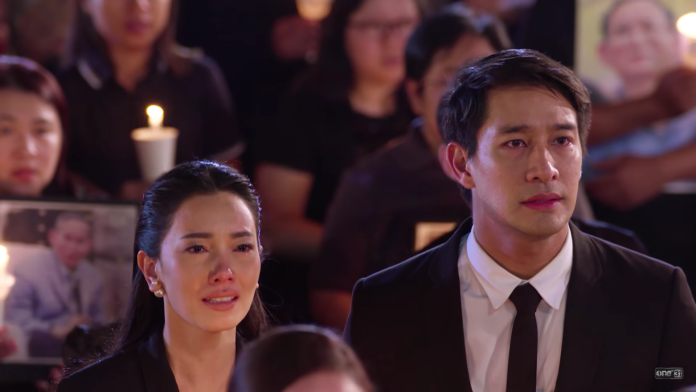
Woranut ‘Nune’ Bhirombhakdi and Nawat ‘Pong’ Kulrattanarak, actors frequently paired as a couple, play an estranged couple who reconcile in ‘I Was Born In the Reign of Rama IX: The Series.’

BANGKOK — Thursday concluded a primetime soap series glorifying His Majesty the Late King, with multiple storylines blending fact and fiction.

Produced by GMM One, “I Was Born in the Reign of Rama IX: The Series” aired Monday through Thursday last week with lessons of morality and a political subtext weighted by reverence for King Bhumibol.

A character prays for the King’s health on Oct. 13. Image: GMM One / YouTube

The four-episode series, which began after a month-long ban on entertainment lapsed, followed several middle-class Thais from Oct. 13 when they heard the news through Oct. 22, when they attend a mass performance of the royal anthem at Sanam Luang.

Asked to comment on its cultural significance, several experts on mass media culture declined, either saying they hadn’t seen it or weren’t comfortable with the topic. However an expert at Chulalongkorn University’s Faculty of Arts said that, as a work of cultural expression, the series’ fixation on the past doesn’t help society move forward.

“The lakorn ‘I Was Born In the Reign of Rama IX’ pushes people to keep living in that time, prolonging the grief and mourning period,” Pasavit Boonkongchuen said. “Even the time-travel plot element keeps people in the past instead of preparing people for the future.”

More than 100 cast and 300 crew members collaborated to create several stories of middle class characters reacting to the King’s death. They included a dek van, (motorcycle gangster) who changes his ways, fighting siblings who reconcile, and an office worker who tries to hide the devastating news from his parents who love the King.

A portrait collector hears from a woman who experiences a time-traveling coma to tell her of the King’s future death. Image: Image: GMM One / YouTube

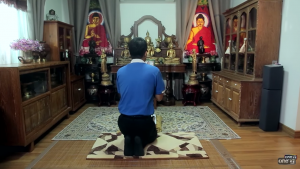
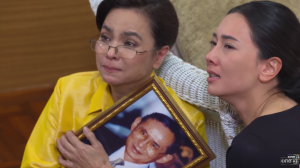
In another vignette, a couple solves their marital problems after an accident sends the woman into a coma and back 10 years to the 60th anniversary of the King’s accession to the throne. There she meets a yellow-clad portrait collector who shows her photos of the King and Queen’s relationship. The husband, waiting in the hospital lobby near a portrait of the King, is taught the same lesson by nearby nurses.

“In matters of love, I will follow the King’s footsteps,” the husband says.

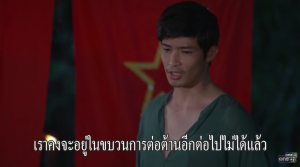
‘I can’t stay in this rebellion any longer,’ a repentant communist says. Image: GMM One / YouTube

Another young male character is transported back to Sakon Nakhon in 1980 where he falls in with red communists, who eventually abandon their ideology.

“I used to fight to have material goods, but we never succeeded. But this King is like a monk that brings forth everything else. I would be an evil, degenerate person if I didn’t respect him,” a character says.

Interspersed with 13 songs glorifying Rama IX and montages of the late King and actual footage of crowds in yellow in 2006 and in black, the series blends fact and fiction to try to keep alive the stabilizing moral force that many in the status quo attribute to the King’s reign.

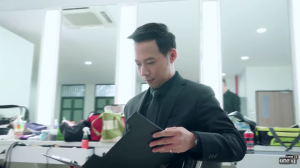
Weerasak Kobkhet, the royal news anchor who announced the King’s death on Channel 11 has a cameo in the lakorn as well. Image: GMM One / YouTube

There is even a cameo by the royal news presenter who announced the King’s death, which went viral for his ability to hold back his tears.

Pasavit described the series as an “ideological project” that actually serves to further polarize society by reinforcing a myth of social unity.

“The soap assumes that everyone is grieving and doesn’t give people the space to be neutral on the matter,” he said. “You either react like the world is ending, or else you’re a traitor to the fatherland.”

The entire series can be watched via Line TV or YouTube.

Advertisement

The Overstay Hosts Head-Shaving Charity Benefit Party

Photo: The Overstay / Facebook

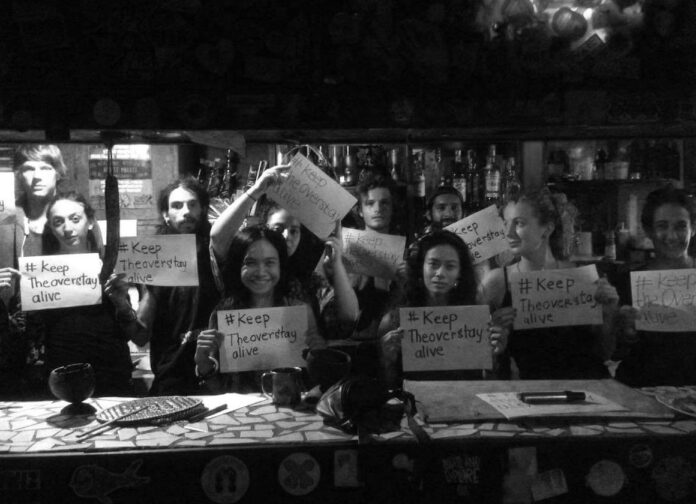
BANGKOK — Get a buzz cut for a good cause and hear new music at a Pinklao hostel-shophouse-underground music venue’s fundraiser for charity and its legal troubles.
Night owls are invited to show their support for cancer patients and the venue itself at The Overstay’s Shave to Save the Overstay charity event next month.
Visual artist Sweedx XAcid will do the cutting, and all hair shaved will be donated to the National Cancer Institute to make wigs for cancer patients.

There will be live music and food provided by Chomp Deli. The lineup includes underground gypsy rockers WooDoo Band and instrumental rock trio Spring Fall Sea.

According to event organizer Gili Back, donations will go to cover the cost of lawyers, bail bonds and other expenses resulting from a recent raid by soldiers, police and other officers that led to the arrests of several guests and the venue’s Israeli owner on drug-related charges.

“Many canceled their bookings, and because of irresponsible reporting by the press, people thought the place was closed or too dangerous to visit,” Gili wrote in reply to an inquiry, saying the venue has remained open since the Oct. 28 raid.

The inspiration for the event came from the shaving of owner Yuval Schwok’s decade-plus dreadlocks in jail. He has been free on bail since Nov. 3.

Shave to Save the Overstay will take place Dec. 6. The venue is located near Soi Charansanitwong 40. Taking a motorbike or taxi from Phra Pinklao pier is the best way to get there.

Related stories:

Foreigners Seek Bail After Warrantless Raid on Overstay

The Overstay Raided, 11 Foreigners Arrested

All Six Floors of Overstay to Burst With Rock & Art on Saturday

Advertisement

Boxing Cat: Shanghai Beer Lands at Ekkamai Bar in December

Photo: Boxing Cat Brewery Shanghai / Facebook

BANGKOK — It’s time for Bangkok’s hopheads to expand their beer repertoire with a quality craft beer arriving to Ekkamai from Shanghai next month.

For the first time, Chinese microbrewery Boxing Cat will drop their drink exclusively at one Bangkok bar to top-up local beer culture.

The Boxing Cat lineup features 16 drool-worthy beers such as Sucker Punch Pale Ale, Standing 8 German Pilsner, TKO India Pale Ale, Mao Mat Lemongrass Lager and Xixi Goji Ale (made with Chinese goji berries).

Want to try them all? Four-by-100-milliliter flights will be provided. Chinese-inspired bar snacks will be provided by Chef Dan Bark.

Admission is free. Brewmaster Michael Jordan (not the NBA legend) and co-founder Lee Tseng will be present at the bar.

Boxing Cat Tap Takeover and Meet the Brewer takes place Dec. 15 at Mikkeller Bangkok. The Danish beer bar is located in Soi Ekkamai 10 and can be reached by motorbike from BTS Ekkamai.

Advertisement

Pattaya Hotel With Pool Built Into Gulf Ordered Closed

Photo: Golden Cliff House Boutique Hotel Pattaya / Facebook

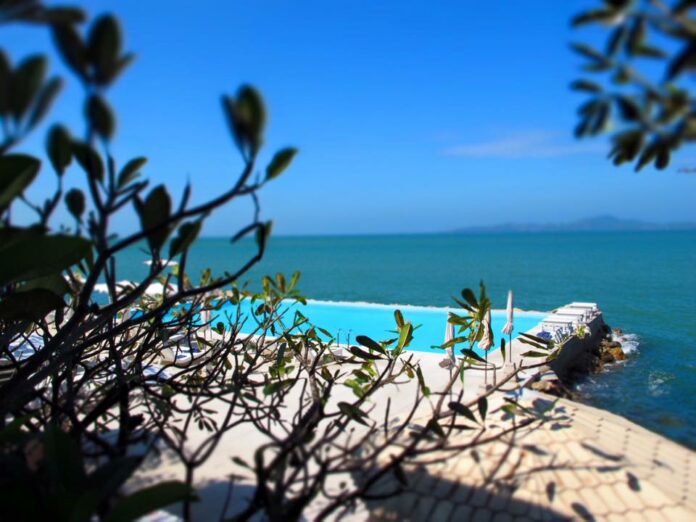
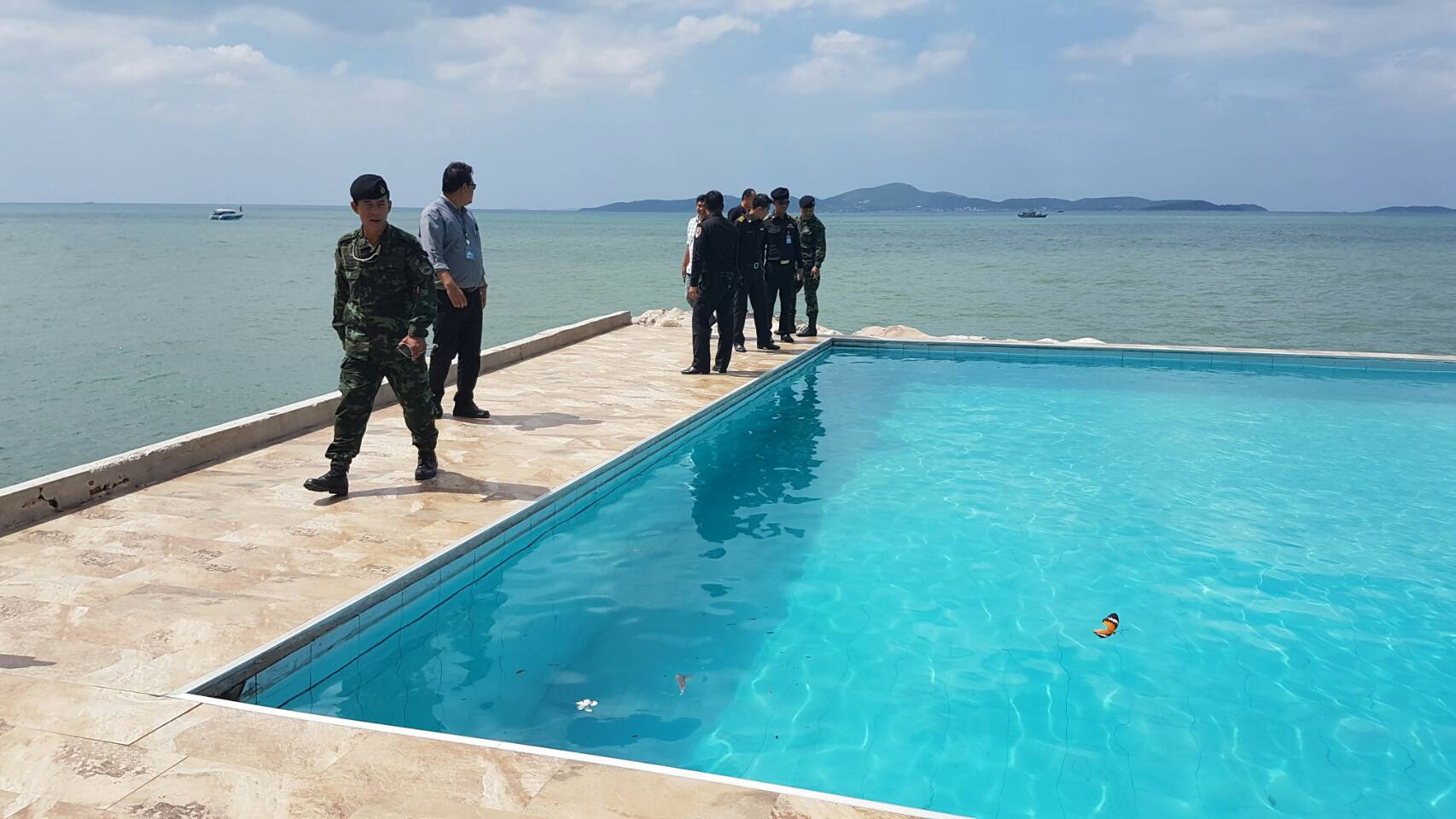
PATTAYA A Pattaya hotel with a swimming pool that jut into the sea was ordered shut down Monday for encroachment.

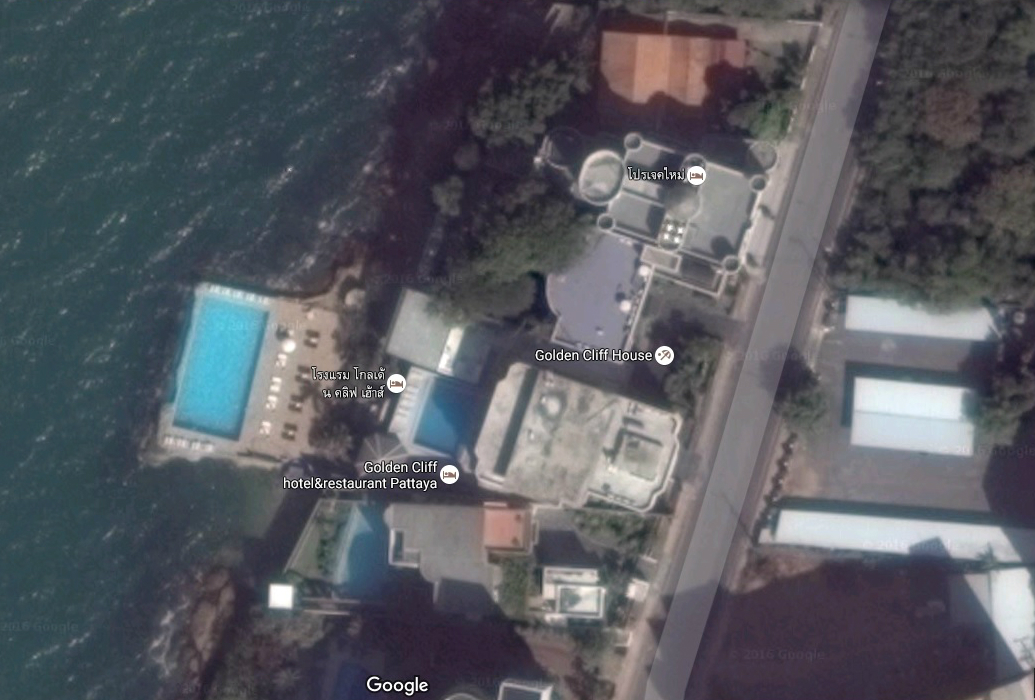
Local officials gave the Golden Cliff House Hotel in South Pattaya 45 days to demolish its 26-by-30-meter swimming pool built into the gulf, saying it violated maritime law. The hotel was also ordered closed.

Owners of the small, luxury hotel located on Soi Phra Tamnak 5 violated the Navigation in Thai Waters Act, which prohibits structures from encroaching into public canals, lakes, waterways and other bodies of water, according to deputy Pattaya chief Chatnatpong Sriwiset.

Owner Watthanan Yimlamai told officers that the hotel opened in January 2015 and has more than 45 rooms.

201611191728085-20041019161308

Image: Google
Image: Google


Advertisement

Cambodia Opposition Ends Boycott of Parliament

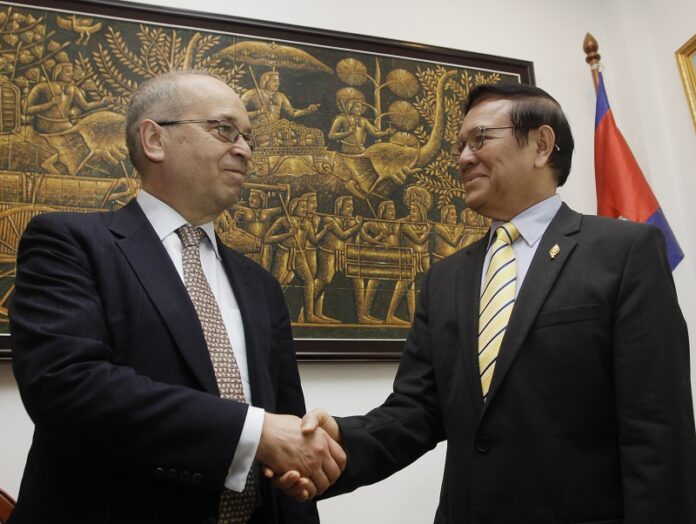
U.S. Assistant Secretary of State Daniel R. Russel, left, shakes hands with Cambodia's main opposition Cambodia National Rescue Party's Deputy President Kem Sokha, right, in October during the arrival at party headquarters for meeting, in Phnom Penh, Cambodia. Photo: Heng Sinith / Associated Press

PHNOM PENH — Cambodia’s opposition party has ended a six-month boycott of the parliament, saying it wants to ensure the national budget for 2017 is debated properly in the house.

The Cambodia National Rescue Party had stopped attending parliamentary sessions after its members were stripped of their parliamentary immunity and confronted with lawsuits by Prime Minister Hun Sen’s government. The opposition and human rights groups say the cases against the opposition are politically motivated, mounted to harass them.

Eng Chhai Eang, a senior opposition lawmaker, said ahead of the National Assembly session on Tuesday that the party’s position remains unchanged but it wants a political truce with the ruling party.

Hun Sen attended the session but opposition leader Sam Rainsy didn’t — he is in self-imposed exile to escape a defamation conviction.

Advertisement

Gay Rights Supporters Win Victory to Keep UN LGBT Expert

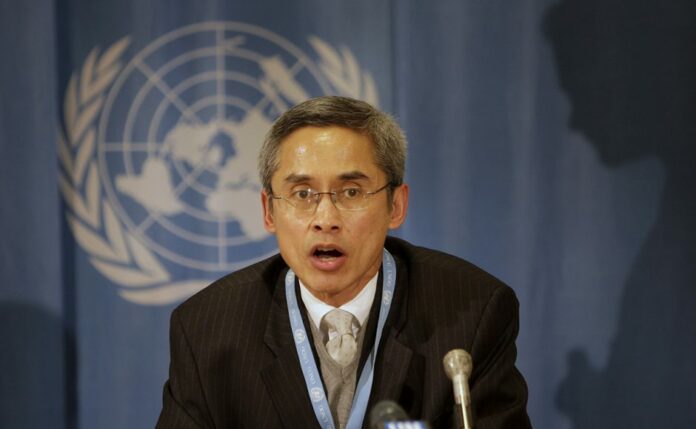
Vitit Muntarbhorn, a Chulalongkorn University law professor, was appointed in September by the U.N. Human Rights Council to be the first independent expert on protection against violence and discrimination based on sexual orientation and gender identity. Photo: Associated Press

UNITED NATIONS — Supporters of gay rights won a victory at the United Nations Monday when an African attempt to suspend the first U.N. independent expert charged with investigating violence and discrimination based on sexual orientation and gender identity failed.

African nations had urged the General Assembly’s human rights committee to delay implementation of a resolution adopted by the U.N. Human Rights Council in Geneva to determine “the legal basis” for the expert’s mandate. They also sought to suspend the expert, Vitit Muntarbhorn of Thailand, who was appointed on Sept. 30 and has started his work.

Latin American and Caribbean nations, who supported the appointment of the expert, introduced an amendment to get rid of the paragraph in the African-backed resolution calling for a delay in implementing the Human Rights Council resolution and suspension of the expert’s activities.

That amendment was adopted by a vote of 84-77 with 12 abstentions by the assembly’s human rights committee  a move that was welcomed by LGBT supporters.

The amended resolution, taking note of the Human Rights Council’s report without any reference to suspending the expert, was then approved by a vote of 94-3 with 80 abstentions.

It now goes to the 193-member General Assembly for a final vote next month, when the Africans could again try to seek a delay. But the result is likely to be very similar to Monday’s vote.

The vote on the amendment  and the 23-18 vote with 6 abstentions in the Human Rights Council that established the LGBT expert  reflect deep international divisions on gay rights.

The U.N. has worked to improve the rights of the LGBT community in recent years but has repeatedly run into opposition from some member states  especially from countries in the Middle East and Africa as well as China and Russia. Many of those countries spoke against the amendment on Monday.

According to a U.N. human rights report last year, at least 76 countries retain laws used to criminalize and harass people on the basis of their sexual orientation and gender identity or expression, including laws criminalizing consensual same-sex relationships among adults.

Botswana’s U.N. Ambassador Charles Ntwaagae, who sponsored the resolution seeking the delay, reiterated Africa’s alarm that the Geneva-based Human Rights Council is delving into national matters and attempting to focus on people “on the grounds of their sexual interests and behaviors” while ignoring intolerance and discrimination on other grounds including color, race, sex or religion.

U.S. deputy ambassador Sarah Mendelson countered that the council has approved numerous resolutions on violence and discrimination against minorities and others. She warned before the vote on the amendment that having the General Assembly re-open a Human Rights Council mandate for the first time could undermine its ability to function.

Gay rights groups campaigned hard against the African resolution.

A statement endorsed by 850 organizations from 157 countries around the world highlighted the need for all countries to respect the authority of the Human Rights Council and to vote in favor of the independent expert.

Jessica Stern, executive director of the U.S.-based gay rights group OutRight Action International, said the vote confirmed that countries believe in the council. “A lot can be accomplished when forces join hands,” she added.

Story: Edith M. Lederer

Advertisement

Quake in Northeastern Japan Revives 2011 Tsunami Memories

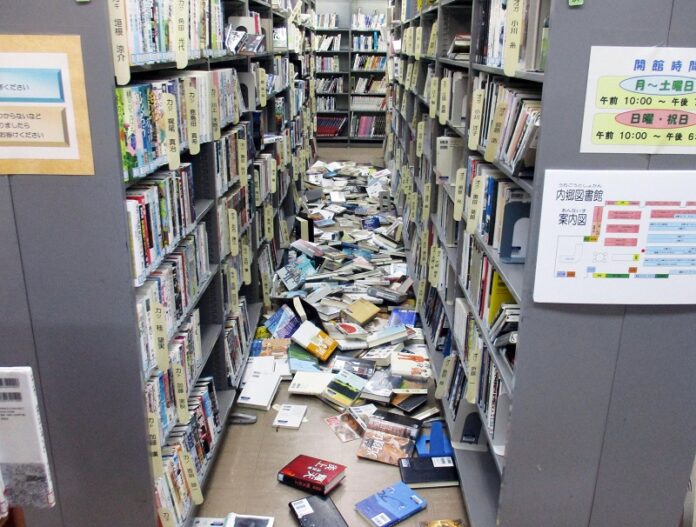
Books are scattered on the floor at a library in Iwaki, Fukushima prefecture Tuesday after a strong earthquake. Photo: Kyodo News via AP)

TOKYO — The earthquake in northeastern Japan sent people in coastal towns scrambling for higher ground after tsunami alerts were issued in two prefectures, Fukushima and Miygai. The reaction brought to mind the painful memories of the devastating quake, tsunami and nuclear disaster in March 2011 in the same area. People said it brought back those memories, but added they were relieved it was not as horrible as what had happened five and a half years ago. Below are a few of their voices:

___

Katushiro Abe, 47, an official at the Ishinomaki Tourism Association in Miyagi Prefecture, was on an early shift so he was already in his office when the quake struck. But his wife and high school-age daughter had to flee their home.

Luckily, a routine is in place for the residents of the coastal area. His family jumped in their car and drove for about three minutes to the foot of a nearby hill and rushed up it. Similar tsunami alerts have been issued at least two or three times since 2011, and so he wasn’t that alarmed and his family was ready.

“The shaking wasn’t as big as in 2011, although of course we must be cautious,” he said. “We stayed in touch by email,” he added of his family.

___

Kazuhiro Onuki, 68, a former librarian in Tomioka, a Fukushima town that became a no-go zone after the 2011 disaster, was staying at what he calls one of his temporary homes in Iwaki, Fukushima Prefecture, when the quake struck.

“It really shook, and there are still aftershocks. And I remembered 3/11,” he told The Associated Press by phone, using the numbers Japanese use for the March 11, 2011, disaster.

“It really came back. And it was so awful,” he said quietly.

His wife and son were in his other temporary home in Tokyo.

“I was alone, and so I was truly worried. Whether this is an aftershock from 3/11, or whether it’s a warning for what is to come, I am extremely worried,” he said.

A further reminder of what had happened in 2011, he said, were the reports of problems at the Fukushima Dai-Ni nuclear plant, near Fukushima Dai-ichi nuclear plant, which was hit by multiple meltdowns in 2011. The latest problems were minor and were fixed quickly, but it was not reassuring for Ounki.

“I felt again that we should not have nuclear power,” said Onuki. “I am still in the state of being evacuated. And I still have not found a real home. And this reminds me of that more than ever.”

___

Daisuke Kida, an Iwaki resident who works for the Iwaki Board of Education, says he rushed to work, a 30-minute drive, to make sure everyone was responding to the disaster warnings.

Residents have become well-rehearsed on disaster drills since 2011, said Kida, who lives with his parents. Some elementary and junior high schools by the coast were going to be closed, he said.

“There was this boom, and a shaking, a swaying to the side kept going,” he said, adding it lasted about 30 seconds.

Story: Yuri Kageyama

Advertisement

Return to Rice: See Farm-Born Director’s Trilogy on Rural Life and Music Free Saturday

NAKHON PATHOM — Thai farmers suffered even before the recent plunge in rice prices.

A filmmaker who grew up in a northern farming family’s award-winning trilogy of tales on that subject can be seen for free on Saturday.

Born and raised in the north, Uruphong Raksasad knows best when it comes to rice and the lives of those who cultivate it. With this knowledge and his filmmaking excellency, Uruphong has directed three docs offering unmatched insights into the real lives of rice farmers.

First off is 2005’s “Stories from the North,” composed of Uruphong’s shorts illustrating the simple life in the northern village where he grew up, from the cultivating culture to younger generations looking to leave it all behind.

“Agrarian Utopia” follows. In the 2009 film, two farming families are about to lose their land, so they have to farm the same field to survive. The doc received a Special Mention award at the Rotterdam International Film Festival.

Rounding out the trilogy is “The Songs of Rice,” in which harmonious melodies are played and sung after rice harvesting in different parts of Thailand. Before its 2015 release, the acclaimed doc won another award in 2014 from Rotterdam and recently won two awards from Thailand National Film Association.

All films are in Thai with English subtitles. Admission is free.

The screenings are at 1pm, 3pm and 5:15pm respectively on Saturday at the Thai Film Archive’s Srisalaya Community Theater. The archive is located on Phutthamonthon Sai 5 Road west of Bangkok in Nakhon Pathom. It can be reached by taxi or bus No. 515 from Victory Monument in front of Rajavithi Hospital.

Advertisement

Hot News

LATEST NEWS

Bangkok
overcast clouds
32.8 ° C
36.6 °
32.7 °
68 %
3.3kmh
100 %
Sat
37 °
Sun
36 °
Mon
35 °
Tue
34 °
Wed
33 °