37.7 C
Bangkok
Thursday, June 25, 2026
Home Blog Page 2552

Vocational Students Attack Wrong Guy, Slash His Face

Factory worker Eakarin Thurapat, is attacked by three men Wednesday on a Samut Prakan province road in a series of still images taken from an eyewitness video.

SAMUT PRAKAN — Three of six vocational students suspected of slashing the face of a 20-year-old factory worker turned themselves into police Thursday morning.

Eakarin Thurapat was left with deep facial wounds by six students who thought he was from their rival school on Wednesday afternoon as he was riding to his factory workplace in southwestern metro Bangkok. Along the way, he was chased by six men on three motorcycles who blocked his way and asked which school he was from. Eakarin did not answer but attempted to flee. The group gave chase and slashed his arm with a knife, causing him to lose control and crash his motorcycle.The gang then stopped and slashed his face.

“They said they misunderstood that he was from a rival school because of the shirt uniform he was wearing,” said the commander of Phra Samut Chedi police, Col. Anan Chaichan.

The shirt Eakarin wore was his uniform as an employee of Thailand Iron Works PCL.

The incident caused a big sensation online after a rescue worker who witnessed the incident posted video showing Eakarin’s attack. It had been watched nearly four million times by Thursday morning.

In the video, two of the three attackers’ identities are concealed by helmets.

Police inspected footage from a roadside CCTV camera and identified six suspects, all students from the Phra Samut Chedi Industrial and Community Education College, Anan said. He declined to disclose their names, saying it was because they were under 20.

Three of the suspects turned themselves in Thursday morning and reportedly confessed. They were charged with assault.

“We expect the other three to surrender to police today too,” Col. Anan said.

Related stories:

Bangkok Man Says He Slashed Stranger Because He Was Drunk, Confused

Cache of Weapons Seized from Feuding Bangkok Tech Colleges

Advertisement

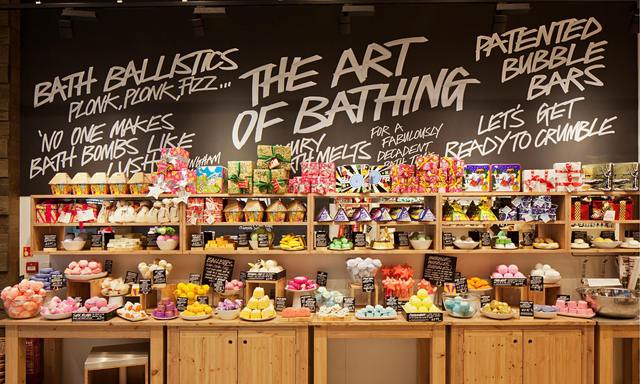
‘Lush’ Up Your Bath When U.K. Brand Lands in Bangkok

A display at September’s Lush Creative Showcase in London. Photo: Lush / Facebook

BANGKOK — Indulging in aromatic and colorful bath bombs will become much easier starting next month with the arrival of famous U.K. beauty brand Lush in Bangkok.

Social media was buzzing Thursday over news that Lush would open its first store in Thailand in mid-December on the first floor of Siam Center.

Apart from its signature, fizzy bath bombs of various fragrances and colors, Lush is known for never testing their products on animals and artisanal cosmetics ranging from soaps, shower gels, lotions, creams, scrubs, moisturizers, makeup and perfumes. As their main ingredients are fruits and vegetables, all products are 100 percent vegetarian.

Lush was founded by clinical hair specialist Mark Constantine and beauty therapist Liz Weir in 1995.

Find out more online at Lush Thailand.

Siam Center is located at BTS Siam.

10339301 10154958422890054 7223762357291344701 o

14352520 10157468762505054 8251577551220344965 o

tumblr static 2pmzv9corosgw0w84800wckgs 640 v2

Advertisement

Flock to Park With Birds of a Feather For Ornithology Fair

Photo: Bird Conservation Society of Thailand (BCST) / Facebook

BANGKOK — Wing over to Queen Sirikit Park later this month for a weekend dedicated to bird nerds.

Win a prize by finding and correctly identifying the most birds Saturday in contests held in both child and adult divisions. “Birds of Prey” is the theme of the annual Bird Fair, and conservation nonprofit Flyway Foundation will host seminars to teach about them. Up to 10,000 baht in scholarship money will be awarded to the student who draws the most awesome bird in two contests, one for grades 4-6 and another for grades 7-9.

No clue where to start? A raptor drawing workshop will teach how to paint birds of prey in watercolors 10:30am to noon on Saturday. The workshop will cost 300 baht (200 baht for Conservation Society members). Seats can be booked through the society’s Facebook pageraptor

Sunday will also include other activities. Go on a “Bird Walk” to identify common birds in the park and play bird-related trivia games.

Throughout the weekend, there will also be booths set up by local and international ornithology organizations with information and products for sale such as as bird-watching cameras.

Birds of Prey will be held 10am to 6pm on Nov. 26 and 10am to 4pm on Nov. 27 at the park located just a short walk from BTS Mo Chit. Admission is free.

The fair is organized by the Bird Conservation Society of Thailand and the Flyway Foundation, a nonprofit that researches migratory birds in the country.


Advertisement

Man Slips From Khlong Saen Saep Pier, Drowns (Video)

BANGKOK — A 50-year-old man died this morning after he jumped from a boat pulling up to a pier and fell into the Saen Saep canal during the rush hour commute.

Police named the victim as Teerapong Silalit. A security camera filmed Teerapong leaping from the boat onto the pier near St. Dominic School before the boat came to a complete stop. He slips and falls into the canal, appearing to hit his head against the boat as he enters the water.

Capt. Sema Liamchob of Makkasan Police Station said the boat’s skipper was being questioned to see if he had acted recklessly, but no charges had been filed.

Teerapong’s body was later found by rescue divers at about 10am, said Pairat Boondum, a manager of Krob Krua Kon Song Ltd., the canal taxi service operator.

“The boat didn’t stop yet,” Pairat said, adding that the conductor had yet to tie the boat to the pier. “He thought he could do it, but he lost his balance.”

Once other passengers started shouting that someone had fallen into the water, the boat operator killed the engine and staff searched for Teerapong. He couldn’t be found, Pairat said.

The manager added that the company would “fully compensate” Teerapong’s family for the accident.

The Khlong Saen Saep taxi is used by many passengers as an alternative to the clogged roads of downtown Bangkok, but its reputation is tainted by a record of accidents.

In March, 67 people were injured when one of the boats’ engines exploded at a pier. Police later ruled the accident was caused by a faulty design.

Advertisement

Brawl Breaks Out at Kasikornbank Branch Over Commemorative Bills

A brawl breaks out after a older lady appears to cut in front of a younger woman at the Big C Bangpakok branch of Kasikornbank Wednesday where long lines had formed to buy limited edition banknotes.

BANGKOK  — Chaos erupted Wednesday at a Kasikornbank branch when a woman cut in front of a group of younger people in a long queue to purchase new commemorative banknotes.

Lines started forming early in the morning to buy Kasikornbank’s two special edition bills: one commemorating His Majesty the Late King Bhumibol’s 60th birthday in 1987 and another the 100th anniversary of paper currency in 2002. Each customer was limited to one purchase.

But when a woman cut in line at a branch located at Big C Bangpakok in the capital’s Rat Burana district, tempers flared.

In a clip of the ensuing fisticuffs posted by Facebook page Wanna Be Famous? Leave It To Me V.4, two women engage in an athletic slapfest, while onlookers try to break it up.

“Enough, enough! What’s all this?” someone yells.

For some reason two men who had been trying to stop the two women almost get into a melee of their own.

Advertisement

Donald Trump’s Foreign-Policy Challenges

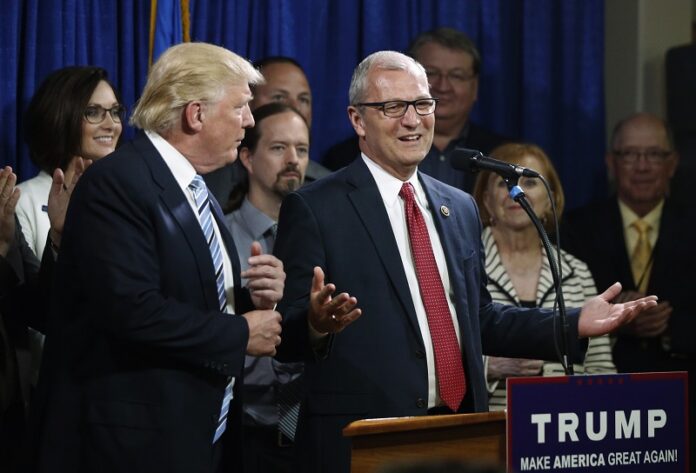
U.S. Rep. Kevin Cramer, R-N.D., right, talks about being one of the first to endorse then Republican presidential candidate Donald Trump in May during the North Dakota Republican National Convention in Bismarck. Photo: Charles Rex Arbogast / Associated Press

CAMBRIDGE — During his campaign, US President-elect Donald Trump questioned the alliances and institutions that undergird the liberal world order, but he spelled out few specific policies. Perhaps the most important question raised by his victory is whether the long phase of globalization that began at the end of World War II is essentially over.

Not necessarily. Even if trade agreements like the Trans-Pacific Partnership and the TTIP fail and economic globalization slows, technology is promoting ecological, political, and social globalization in the form of climate change, transnational terrorism, and migration – whether Trump likes it or not. World order is more than just economics, and the United States remains central to it.

Americans frequently misunderstand our place in the world. We oscillate between triumphalism and declinism. After the Soviets launched Sputnik in 1957, we believed we were in decline. In the 1980s, we thought the Japanese were ten feet tall. In the aftermath of the Great Recession of 2008, many Americans mistakenly believed that China had become more powerful than the United States.

Despite Trump’s campaign rhetoric, the US is not in decline. Because of immigration, it is the only major developed country that will not suffer a demographic decline by mid-century; its dependence on energy imports is diminishing rather than rising; it is at the forefront of the major technologies (bio, nano, information) that will shape this century; and its universities dominate the world league tables.

Many important issues will crowd Trump’s foreign policy agenda, but a few key issues will likely dominate – namely great power relations with China and Russia and the turmoil in the Middle East. A strong American military remains necessary but not sufficient to address all three. Maintaining the military balance in Europe and East Asia is an important source of American influence, but Trump is correct that trying to control the internal politics of nationalistic populations in the Middle East is a recipe for failure.

The Middle East is undergoing a complex set of revolutions stemming from artificial post-colonial boundaries; religious sectarian strife, and the delayed modernization described in the United Nations’ Arab Human Development Reports. The resulting turmoil may last for decades, and it will continue to feed radical jihadist terrorism. Europe remained unstable for 25 years after the French Revolution, and military interventions by outside powers made things worse.

But, even with reduced energy imports from the Middle East, the US cannot turn its back on the region, given its interests in Israel, non-proliferation, and human rights, among others. The civil war in Syria is not only a humanitarian disaster; it is also destabilizing the region and Europe as well. The US cannot ignore such events, but its policy should be one of containment, influencing outcomes by nudging and reinforcing our allies, rather than trying to assert direct military control, which would be both costly and counterproductive.

In contrast, the regional balance of power in Asia makes the US welcome there. The rise of China has fueled concern in India, Japan, Vietnam, and other countries. Managing China’s global rise is one of this century’s great foreign-policy challenges, and America’s bipartisan dual-track strategy of “integrate but insure” – under which the US invited China to join the liberal world order, while reaffirming its security treaty with Japan – remains the right approach.

Unlike a century ago, when a rising Germany (which had surpassed Britain by 1900) stoked fears that helped precipitate the disaster of 1914, China is not about to pass us in overall power. Even if China’s economy surpasses America’s in total size by 2030 or 2040, its per capita income (a better measure of an economy’s sophistication) will lag. Moreover, China will not equal US military “hard power” or its “soft power” of attraction. As Lee Kuan Yew once said, so long as the US remains open and attracts the talents of the world, China will “give you a run for your money,” but will not replace the US.

For these reasons, the US does not need a policy of containment of China. The only country that can contain China is China. As it presses its territorial conflicts with neighbors, China contains itself. The US needs to launch economic initiatives in Southeast Asia, reaffirm its alliances with Japan and Korea, and continue to improve relations with India.

Finally, there is Russia, a country in decline, but with a nuclear arsenal sufficient to destroy the US – and thus still a potential threat to America and others. Russia, almost entirely dependent on revenues from its energy resources, is a “one crop economy” with corrupt institutions and insurmountable demographic and health problems. President Vladimir Putin’s interventions in neighboring countries and the Middle East, and his cyber attacks on the US and others, though intended to make Russia look great again, merely worsen the country’s long-term prospects. In the short run, however, declining countries often take more risks and are thus more dangerous – witness the Austro-Hungarian Empire in 1914.

This has created a policy dilemma. On the one hand, it is important to resist Putin’s game-changing challenge to the post-1945 liberal order’s prohibition on the use of force by states to seize territory from their neighbors. At the same time, Trump is correct to avoid the complete isolation of a country with which we have overlapping interests when it comes to nuclear security, non-proliferation, anti-terrorism, the Arctic, and regional issues like Iran and Afghanistan. Financial and energy sanctions are necessary for deterrence; but we also have genuine interests that are best advanced by dealing with Russia. No one would gain from a new Cold War.

The US is not in decline. The immediate foreign-policy task for Trump will be to adjust his rhetoric and reassure allies and others of America’s continuing role in the liberal world order.
Joseph S. Nye, Jr. is a professor at Harvard and author of Is the American Century Over?

Copyright: Project Syndicate, 2016.
www.project-syndicate.org

Advertisement

Obama, Urging Unity, Says He’s Rooting for Trump’s Success

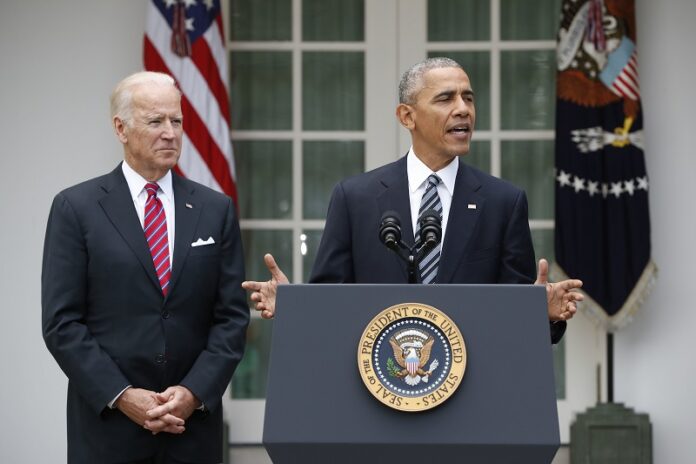
President Barack Obama, accompanied by Vice President Joe Biden, speaks in the election, last December in the Rose Garden of the White House in Washington. Photo: Pablo Martinez Monsivais / Associated Press

WASHINGTON — In an awkward political ritual, President Barack Obama urged the nation Wednesday to join him in rooting for President-elect Donald Trump’s success, even as he and his shell-shocked aides prepared to watch a successor undo much of their work.

Conceding Hillary Clinton’s staggering loss, Obama vowed to do all he could to facilitate a smooth transition and to ensure Trump would be well-positioned to run the country when he takes office Jan. 20. In a brief conversation, he’d congratulated Trump by phone and invited him to sit down together Thursday at the White House.

“We all want what’s best for this country,” Obama said.

Obama delivered his sunny call for unity while standing in the Rose Garden, much as his predecessor President George W. Bush did after Obama’s victory in 2008. It was a symbolic moment meant to signal the calm transfer of power from one president to the next.

But it was also a bit of counseling for devastated Democrats. Obama spoke to more than a hundred of his White House staffers, who stood silently, dazed, some crying, before breaking out into a prolonged round of applause that continued long after Obama returned to the Oval Office.

Obama made no direct reference to Trump’s vows to erase much of what Obama has accomplished. He downplayed the notion that Trump’s presidency would mean an about-face for the nation. He said the U.S. has a tendency to “zig and zag” rather than move in a straight line, and he added, “That’s OK.”

Obama remarks were striking after a campaign in which the Democrats declared Trump was unfit to serve and Obama told voters that “the fate of the republic” rested on defeating Trump.

The brief call between Obama and Trump in the wee hours of Wednesday, after Trump claimed victory, was a “warm conversation” and a “gracious exchange,” Trump’s campaign manager said.

Senate Majority Leader Mitch McConnell said Republicans would first target the heart of Obama’s legacy, the health care law they have tried and failed to repeal since it was passed in 2010. With control of both chambers of Congress and the White House, they’ll soon be in position to virtually gut it.

It’s not clear exactly how Trump and GOP allies would go about it. But Republicans last year passed legislation that eliminated Obama’s Medicaid expansion, government subsidies for insurance bought on marketplaces and some new taxes used to cover costs. The replacement would have increased the number of uninsured by about 22 million, according to nonpartisan analysts. Obama vetoed it.

White House officials said they could continue to make the case against repeal as they walked out the door. But they were largely left hoping that Republicans wouldn’t follow through on their repeal pledge, once put in the uncomfortable position of taking away people’s health insurance.

Other parts of Obama’s legacy even more vulnerable, largely because he’s relied on executive actions. A hefty list of Obama’s initiatives rest on regulation, executive orders or unenforceable international agreements the next president is under little obligation to follow.

Trump has supported reinstating waterboarding and other extreme forms of torture that Obama banned. He’s also vowed to tear up Obama’s immigration actions and discard the Trans-Pacific Partnership trade deal Obama painstakingly negotiated.

The Republican has pledged to “cancel” U.S. participation in the international Paris climate change deal. Withdrawing would take four years under the terms of the agreement, but Trump could also decide to simply ignore its U.S. commitments to reduce carbon emission.

Trump has also criticized Obama’s nuclear agreement with Iran. But he’s suggested he wants to renegotiate it, rather than scrap it. It’s unclear, though, how he might persuade Iran to accept less favorable terms.

But White House spokesman Josh Earnest tried to be optimistic, arguing it wasn’t a given that Trump would follow through on vows to roll back Obama’s key accomplishments.

“I think it is too early to tell what decisions Trump will make and what impact they will have in the priorities that President Obama has so proudly achieved,” Earnest said.

Story: Josh Lederman, Kathleen Hennessey

Advertisement

Trump Elections Draws Cheers and Fears Accross Globe

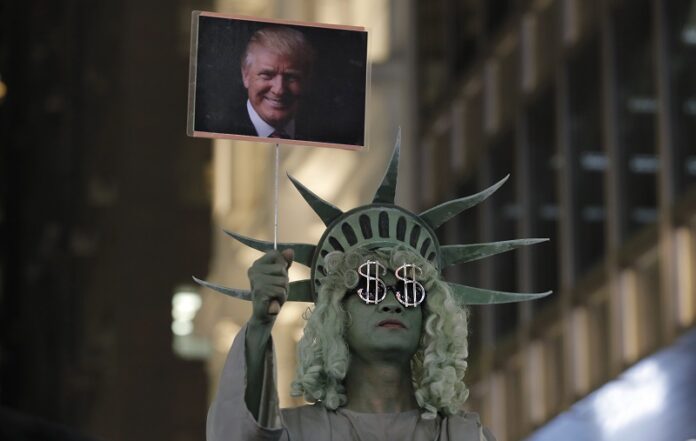
A street performer dressed as the Statue of Liberty holds up a picture of U.S. President-elect Donald Trump Wednesday in Hong Kong's downtown. Photo: Kin Cheung / Associated Press

MOSCOW — The world will face a starkly different America when President-elect Donald Trump takes the oath of office in January.

While the billionaire businessman’s triumph was welcomed in some countries, others saw it as a big shock, as governments will now have to deal with a man who has cozied up to Russian President Vladimir Putin, told NATO allies they would have to pay for their own protection and vowed to make the Mexican government pay for a multibillion-dollar border wall.

Leaders weren’t sure what to expect after a U.S. campaign in which Trump upended foreign policy orthodoxy on numerous fronts, including the international movement to contain the spread of nuclear weapons.

Putin sent Trump a congratulatory telegram Wednesday morning and made a televised statement expressing the hope that frayed U.S.-Russian relations could be put back on track. He said Moscow is ready to try to restore good relations.

“We aware that it is a difficult path, in view of the unfortunate degradation of relations between the Russian Federation and the United States,” he said, adding that “it is not our fault that Russian-American relations are in such a state.”

Russia was at times a focal point during the U.S. campaign, with government officials and the Hillary Clinton campaign team suggesting the Russian government was involved in hacking her campaign’s emails. Trump expressed admiration for Putin and his tough leadership style, and some Clinton surrogates questioned Trump’s business dealings with Russia.

Dmitri Drobnitski, a columnist at the popular, generally pro-Kremlin website LifeNews, said Trump’s victory will help the entire world.

“I congratulate the American people with their will and with their democracy and with their strength and with their courage,” he told The Associated Press. “So this is not only a victory for the Americans, who defended their democracy against the liberal, global elite— no, this is a victory that the American people brought to the whole world.”

Trump’s win caused trepidation in Mexico, where his remarks calling Mexican immigrants criminals and “rapists” were a deep insult to national pride. Trump has suggested slapping a 35 percent tax on automobiles and auto parts made by U.S. companies in Mexico. Financial analysts have predicted a Trump win would threaten billions of dollars in cross-border trade, and government officials say they have drawn up a contingency plan.

“It’s DEFCON 2,” Mexican analyst Alejandro Hope said. “Probably something as close to a national emergency as Mexico has faced in many decades.”

Trump’s electoral triumph is also being felt strongly in the volatile Middle East, where multiple crises are unfolding.

In Iran, leaders emphasized the need to keep the historic nuclear deal between Iran and world powers on track despite Trump’s harsh criticism of it during the campaign.

Iran’s president said Wednesday the deal “cannot be overturned by a single government.”

Trump has suggested he would try to renegotiate the agreement under which Iran curbs its nuclear program in exchange for a gradual lifting of international sanctions.

In Israel, Prime Minister Benjamin Netanyahu hailed Trump as a “true friend of the State of Israel.”

Netanyahu said that he believes the two leaders “will continue to strengthen the unique alliance between our two countries and bring it to ever greater heights.”

Palestinian President Mahmoud Abbas said that he hopes “peace will be achieved” during Trump’s term.

Iraqi Prime Minister Haider al-Abadi congratulated Trump. In a statement on his website, al-Abadi said he hopes the “world and the United States will continue to support Iraq in fighting terrorism.”

The Taliban called for the withdrawal of all U.S. forces from Afghanistan once Trump takes office.

In a statement sent to The Associated Press, Taliban spokesman Zabihullah Mujahid said a Trump administration “should allow Afghans to become a free nation and have relationships with other countries based on non-interference in each other’s affairs.”

In Europe, NATO allies will wait to see if Trump follows through on suggestions that the U.S. will look at whether they have paid their proper share in considering whether to come to their defense.

Trump’s rhetoric has challenged the strategic underpinning of the NATO alliance, rattling its leaders at a time when Russia has been increasingly aggressive.

“As a candidate, Trump called into question NATO and trade agreements, and reached out to Moscow,” said Daniela Schwarzer, an expert on trans-Atlantic relations at the German Council on Foreign Relations.

“His campaign of discrimination, lies and aggression harmed the principles of liberal democracy. Even if President Trump doesn’t implement everything, Germany and Europe can’t rely on the trans-Atlantic partnership as usual and have to stand up for Western values themselves.”

Trump’s victory pleased leaders of the nationalist Alternative for Germany party, which has campaigned strongly against Chancellor Angela Merkel’s policy of letting hundreds of thousands of migrants into the country.

“It was high time that people disenfranchised by the political establishment get their voices back in the United States of America too,” party co-leader Frauke Petry said.

The French populist, anti-immigrant politician Marine Le Pen congratulated Trump even before the final results were known, tweeting her support to the “American people, free!”

Trump’s victory was viewed with shock in Ireland, a country fearful of Trump’s campaign pledge to confront U.S. companies using Ireland as a tax shelter. Irish Times columnist Fintan O’Toole wrote Wednesday: “The republic of Washington, Jefferson, Lincoln and Roosevelt is now the United Hates of America.”

In Asia, security issues and trade will top the agenda for the new administration, from North Korea and the South China Sea to the contentious and yet-unratified Trans-Pacific Partnership trade agreement.

China is seen as favoring Trump because he appears less willing to confront China’s newly robust foreign policy, particularly in the South China Sea.

Clinton, by contrast, was disliked in Beijing for having steered the U.S. “pivot” to Asia aimed at strengthening U.S. engagement with the region, particularly in the military sphere.

Scholar Mei Xinyu wrote in the Communist Party newspaper Global Times that China would find it easier to cope with a Trump presidency.

“Trump has always insisted on abandoning ideological division and minimizing the risks that unnecessary conflicts with other countries may bring to the U.S.,” Mei wrote.

News of Trump’s victory hit hard in Cuba, which has spent the last two years negotiating normalization with the United States after more than 50 years of Cold War hostility. Trump has promised to roll back Obama’s opening with Cuba unless President Raul Castro agrees to more political freedoms.

“If he reverses it, it hurts us,” taxi driver Oriel Iglesias Garcia said. “You know tourism will go down.”

Some said Trump’s win might alter their life plans.

Muki Bosco, a hotel worker in South Sudan’s capital, Juba, said it discouraged him from pursuing his dream of going to the United States.

“What Trump said about the immigration policy, saying that he would deport (immigrants). He was saying those things during the campaign … I don’t think I’ll go to America.”

Story: Jim Heintz, Gregory Katz

Advertisement

Clinton Says Highest Glass Ceiling Will Be Shattered One Day

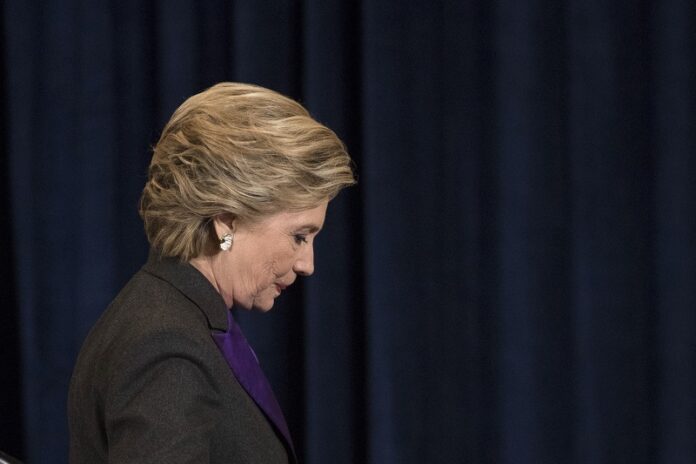
Democratic presidential candidate Hillary Clinton walks off the stage after speaking Wednesday in New York. Photo: Matt Rourke / Associated Press

NEW YORK —€” Gone was the ballroom with a soaring glass ceiling, the confetti and the celebrity guest stars. Instead, Hillary Clinton looked out to a group of grief-stricken aides and tearful supporters, as she acknowledged her stunning loss of the presidency to Donald Trump.

“This is painful,” Clinton said, her voice crackling with emotion, “and it will be for a long time.” But she told her faithful to accept Trump and the election results, urging them to give him “an open mind and a chance to lead.”

Before Clinton took the stage at a New York City hotel, top aides filed in, eyes red and shoulders slumped, as they tried to process the celebrity businessman’s shocking win after a campaign that appeared poised until Election Day to make Clinton the first woman elected U.S. president.

Clinton, who twice sought the presidency, told women: “I know we have still not shattered that highest and hardest glass ceiling. But someday, someone will and hopefully sooner than we might think right now.” Her remarks brought to mind her 2008 concession speech after the Democratic primaries in which she spoke of putting “18 million cracks” in the glass ceiling.

“To all the little girls who are watching this, never doubt that you are valuable and powerful and deserving of every chance and opportunity in the world to pursue and achieve your own dreams,” she said as her husband, former President Bill Clinton, stood wistfully by her side.

In perhaps a subtle nod to bridging the red state and blue state divide, Clinton wore a purple blouse and a dark blazer with a purple lapel while her husband wore a purple tie.

It may have been the final public act for the enduring political partnership of the Clintons, who appeared on the verge of returning to power after 16 years. If Clinton had won, it would have marked the first time a former first lady was elected U.S. president.

Clinton’s campaign was trying to make sense of a dramatic election night in which Trump captured battleground states like Florida, North Carolina and Ohio and demolished a longstanding “blue wall” of states in the Upper Midwest that had backed every Democratic presidential candidate since her husband won the presidency in 1992.

As Democrats were left wondering how they had misread their country, mournful Clinton backers gathered outside the hotel Wednesday.

“I was devastated. Shocked. Still am,” said Shirley Ritenour, 64, a musician from Brooklyn, New York. “When I came in on the subway this morning there were a lot of people crying.”

Flanked by her husband, daughter Chelsea Clinton and running mate Virginia Sen. Tim Kaine, Clinton said she had offered to work with Trump on behalf of a country that she acknowledged was “more deeply divided than we thought.”

The results were startling to Clinton and her aides, who had ended their campaign with a whirlwind tour of battleground states and had projected optimism that she would maintain the diverse coalition assembled by President Barack Obama in the past two elections.

On the final day of the campaign, Clinton literally followed Obama to stand behind a podium with a presidential seal at a massive rally outside Independence Hall in Philadelphia. As she walked up to the lectern, the president bent down to pull out a small stool for Clinton. Before leaving the stage, Obama leaned over to whisper in Clinton’s ear, “We’ll have to make this permanent.”

The devastating loss for the party, which will no longer hold the White House and will continue to be in the minority of both chambers of Congress, was certain to open painful soul-searching among Democrats, who had endured a lengthy primary between Clinton and Vermont Sen. Bernie Sanders. The so-called democratic socialist drew strong support among liberals amid an electorate calling for change but then backed Clinton’s general election bid.

Yet her team spent the bulk of their time focused on attacking Trump, while failing to adequately address Clinton’s deep liabilities €” or the wave of frustration roiling the nation.

Every time the race focused on Clinton, her numbers dropped, eventually making her one of the least-liked presidential nominees in history. And she offered an anxious electorate a message of breaking barriers and the strength of diversity hardly a rallying cry leaving her advisers debating the central point of her candidacy late into the primary race.

Story: Lisa Lerer, Ken Thomas

Advertisement

Millions Scramble as India Scraps Largest Banknotes

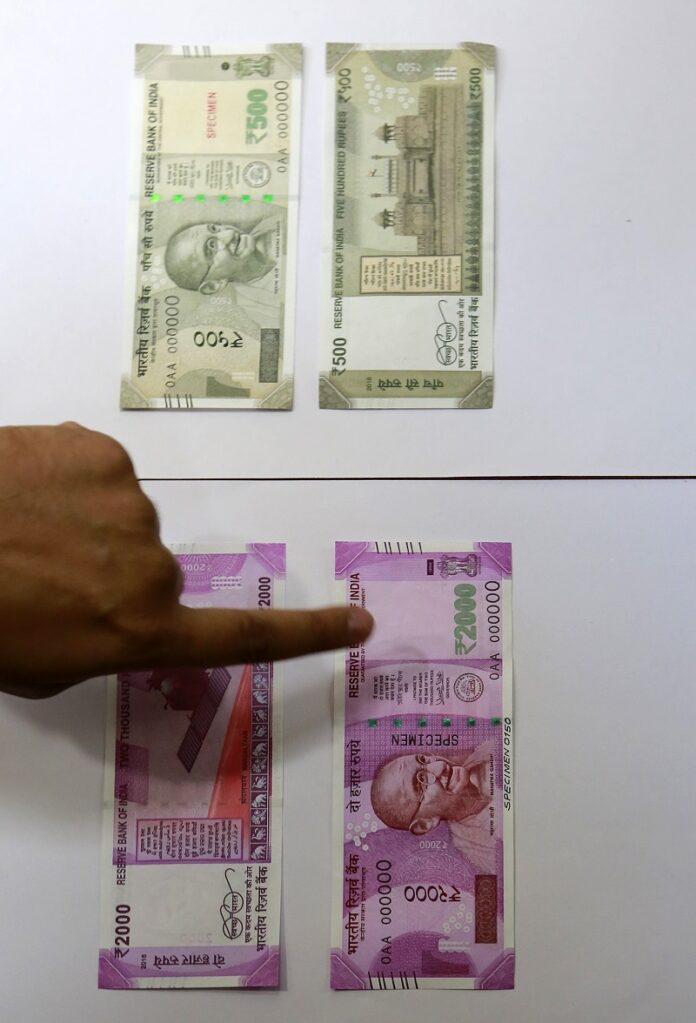
Specimens of the new Indian Rupees 500, top, and 1,000 currency are displayed Wednesday at the Reserve Bank of India headquarters in Mumbai, India. Photo: Rajanish Kakade / Associated Press

NEW DELHI — Indians awakened to confusion Wednesday as banks and ATMs remained closed after the government withdrew the highest-denomination currency notes overnight to halt money laundering in a country where many in the poor and middle-class still rely mainly on cash.

Roadside vegetable sellers, kiosks selling biscuits and tea, small mom-and-pop stores selling groceries, all saw a sharp drop in customers on Wednesday, the day after Prime Minister Narendra Modi’s surprise televised announcement.

As of midnight Tuesday, all 500- and 1,000-rupee notes had no cash value. People holding the discontinued notes can deposit them in banks and post office savings accounts before the end of the year. But anyone making large bank deposits might invite the unwelcome attention of Indian tax authorities.

Finance Minister Arun Jaitley told state-run news channel Doordarshan that if the money deposited in banks was illegal then the depositors would find themselves in “trouble.”

Banks and ATMs were likely to stay closed Thursday, too, to help prepare for the swarms of people who will rush to deposit their 500- and 1000-rupee bills and withdraw money to spend once they reopen.

When ATMs open Nov. 11 there will be an initial cap of 2,000 rupees ($30) on withdrawal per card, which will gradually be increased to 4,000 ($60) rupees within a week.

The government will issue new banknotes of 500 and 2,000 rupee denominations soon, Jaitley said, adding that the new currency should be available in banks within three or four weeks.

For a few days, the old bills can be used at hospitals, gas stations, crematoria and for other businesses and services deemed essential.

But many, like student Ankit Saini, woke up Wednesday morning with money in their wallet. Just in the wrong denomination.

“I have three 500-rupee notes and only about 40 rupees (about 60 cents) in small change. I can either buy lunch or a bus ticket home,” he said as he chose food over transport at a roadside food stall in central Delhi. “But what will I do tomorrow?”

“Maybe what Modi has done is good for the country in the long run, but what about ordinary people like us today?” asked Om Prakash Singh, an office manager. “I have 200 rupees to get through the next two days and even after that who knows how long the lines at the bank will be.”

The move is expected to bring billions of dollars into an economy and tax base long hobbled by corruption and money laundering.

Businesses routinely use cash to avoid paying taxes. Raids on corrupt politicians and businesses regularly uncover millions of dollars’ worth of rupees in dozens of boxes of cash.

Modi said authorities have discovered 1.25 trillion rupees, or about $18.8 billion, in illegal cash over the last two and a half years. Counterfeiting was also a major concern, he said, and, in an indirect reference to rival Pakistan, accused a neighboring country of circulating fake Indian currency to damage the Indian economy.

“We as a nation remain a cash-based economy, hence the circulation of fake rupees continues to be a menace,” India’s central bank said in a statement late Tuesday night.

In the past, other governments such as Myanmar have taken notes out of circulation to undermine challenges to their power and regain stronger control over the economy.

Much of India’s illicit money stores are believed to be used for land purchases, or secreted away in overseas accounts. The scrapping of bank notes could send real estate prices crashing, an expectation reflected in slumping stock prices of major real estate companies on the Bombay Stock Exchange by early afternoon.

Shares of real estate giants DLF Ltd, Housing Development & Infrastructure Ltd. and India Bulls Real Estate Ltd. had all dropped more than 20 percent from their closing Tuesday.

But the move will also hurt the poor, many of whom do not have bank accounts and keep their savings in cash.

“We are not the ones with the black money and if we don’t earn for two days we don’t eat,” said Bachchu Lal, as he stood next to his hand pushed wooden cart. He had only one customer in the first few hours of Wednesday morning, usually a busy time.

Story: Muneeza Naqvi

Advertisement

Hot News

LATEST NEWS

Bangkok
overcast clouds
37.7 ° C
37.8 °
36.1 °
53 %
4.6kmh
92 %
Thu
38 °
Fri
37 °
Sat
36 °
Sun
36 °
Mon
37 °