



































36.6 C
Bangkok
Monday, June 22, 2026
Home Blog Page 2643

Amnat Ruenroeng’s Fight from Thai Prison to Olympics and Back Again

Amnat Ruenroeng, right, throws a punch at China's double Olympic gold medalist Zou Shiming during their IBF flyweight title boxing match on March 7, 2015, at the Venetian Macao in Macau. Photo: Kin Cheung / Associated Press

RIO DE JANEIRO — Amnat Ruenroeng speaks openly, even eagerly, about his years in a Thai prison.

His path out of poverty, crime and drug addiction began in a cell. He wants it to end in an Olympic ring with a medal around his neck, and he was willing to return from the pro ranks to try for that storybook ending again.

“There are some good parts of being in prison,” Amnat said through a translator. “You get discipline. You learn how to know what’s right and what’s wrong. In the prison, they provide education, and they have boxing, football and martial arts. I’m good at boxing.”

Eight years after Amnat fell just short of a medal in Beijing, the 36-year-old former IBF flyweight champion got his second Olympics off to another winning start Sunday night.

Fighting 11 kilograms above his professional weight after qualifying for the games just one month earlier, he still beat Argentina’s Ignacio Perrin by decision.

“I felt good, but I must do better because this is my chance,” he said.

When AIBA invited professional boxers to attempt to qualify for the Rio de Janeiro Games earlier this year, no big international names accepted the offer, and only three pros are in the Rio field. But Amnat eagerly seized the chance just a few weeks after losing his professional title, and he earned qualification last month.

He is hardly a man among boys in the amateur game, however: Amnat decided to fight at the 60-kilogram lightweight limit, a whopping 11 kilograms above his flyweight professional limit. He was stopped during the qualifying tournament in Venezuela last month, and he will have to beat two more veteran Olympic-style fighters to get a medal in Rio.

“It’s difficult, because my opponents have an advantage,” Amnat said. “They’re bigger, but I have the will.”

The risk was negligible to Amnat, who still feels he owes a debt to boxing. He also shares many Thai athletes’ devotion to the King of Thailand, who pardoned him from a 15-year sentence after he showed boxing talent.

“That’s why I came here for a second time, to prove myself,” he said. “I have to find out whether I can get the Olympic medal or not.”

The second chapter of Amnat’s life has been all about righting wrongs.

A grade-school dropout, Amnat said he went to jail three times and was serving a 15-year sentence for robbing a tourist when he first discovered his knack for boxing through a prison athletics program. He soon had a national title, a pardon and a purpose: To win internationally for Thailand, which has a decent history of boxing success.

He earned a spot at the Beijing Olympics and won two fights, but fell one fight short of a medal in the light flyweight division. He lost a painful 5-2 decision to Mongolia’s Purevdorjin Serdamba, who went on to win silver.

Amnat didn’t turn pro until 2012, but he had quick success. He won his title in January 2014 and defended it five times, even trouncing two-time Olympic gold medalist Zou Shiming last year.

The amateur sport has changed since Amnat and Zou left it. The fighters no longer wear headgear, and the Olympics are scored under a version of the 10-point professional standards instead of the punch-counting system used in Beijing.

Amnat didn’t change much about his approach, sticking to the skills that had kept him unbeaten as a pro under Johnriel Casimero stopped him and took away his belt in May.

Amnat misses his wife and son back in Thailand, but he speaks to them daily. He sounds like the very definition of a rehabilitated prisoner when he looks back at the path behind him and the possibilities ahead.

“(Prison) made me know the importance of the family, of my friends,” Amnat said. “It taught me that whatever I do, I have to have a conscience. I have to think before acting.”

Story: Greg Beacham

Advertisement

Plan to Track All Foreigners – Not Just Tourists – By SIM Cards Moves Forward

Photo: Sascha Kohlmann / Flickr

BANGKOK — A plan to require all foreigners in Thailand to use a special SIM card that can track their location will be reviewed by authorities Tuesday afternoon.

Announced last week by the national telecom regulator, the plan would require anyone – not just tourists but everyone who doesn’t hold a Thai passport – to use the new SIM card which would enable the authorities to track its owner’s location at any time, said the Secretary General of the Office of the National Broadcasting and Telecommunications Commission.

No exceptions would be made for resident aliens on long-term visas such as those for employment, marriage or retirement.

“We will separate SIM cards for foreigners and Thais,” Takorn Tantasith said Monday. “The location will always be turned on in this SIM card for foreigners. And it cannot be turned off.”

The plan was first announced Aug. 2 following a meeting between telecommunication regulators from 10 ASEAN countries in Phuket, where Takorn claimed he learned about the same plan from Malaysian and Singaporean officials.

While those countries require SIM cards be registered under valid IDs, as is also the case in Thailand, they do not seem to have any such tracking system. The technical specifics, as to whether it would rely on a smartphone’s GPS signal or another method were not clear.

Takorn said the rationale was to maintain national security and prevent the transnational crime.

Foreign tourists would be able to continue to use SIM cards brought in from other countries under roaming service and would not be required to turn their location on. They would only receive a location-tracking SIM card once they showed their passport to purchase one from a Thai service provider.

Update: Expats Could be Exempt From SIM Card Tracking

Takorn said he was unconcerned about any rights or privacy issues raised by the system, as he likened it to address foreigners writing in the address of their residences in immigration documents.

“We would just facilitate the police. So they could more easily track foreigners who enter the country and commit crimes,” he said. “The function is not in SIMs card for Thais because we can always easily track them.”

Takorn expects the policy to come into effect in six months.

While the system would raise concerns Thailand was moving closer to a Big Brother state, Takorn said foreigners shouldn’t worry, as police would need to seek a court order to track someone by their SIM card. He said any abuse of the system would be punished.

“If a service provider tracks the SIM’s location without a court order, they would be charged with a criminal offense.”

Takorn said it would also help maximize the use of pre-paid phone numbers in the country. Currently numbers must go unused 90 days before they are “recycled,” but he proposed that anyone leaving the country could have their number revoked after 15 days, instead.


Related stories:

Cabinet Approves Mandatory SIM Card Registration

Confusion Over Controversial New Immigration Form

Thai Immigration Asks Foreigners for Bank Accounts, Social Media, Hangouts

Advertisement

Italian Sailor Uses Mouth-to-Mouth to Revive Drowning Kitten

MILAN — The Italian coast guard has rescued and revived a drowning kitten at a Sicilian port, after children on shore drew attention to its plight.

A sailor jumped in the sea to rescue the cat, which was floating apparently lifeless in the water, as the coast guard ship entered the port Marsala after a patrol mission.

A video released Friday showed crew members administering mouth-to-mouth resuscitation and massaging the kitten to remove water from its lungs, encouraging it: “Breathe, breathe. Wake up.” After a few minutes, the kitten emitted a few weak “meows.”

A veterinarian on shore says the kitten is now in good health. He has been given a home at the Marsala maritime district office and has been named Charlie.


Advertisement

Disappointed Charter Opponents Take Landslide Defeat in Stride

Activists Janewit Chueasawatee and Kittithat ‘Champ 1984’ Sumalnop, console each other Sunday at Thammasat University’s Tha Prachan campus in Bangkok. Photo: Sirawith Seritiwat / Facebook

BANGKOK — As opponents of Sunday’s charter referendum reflected on what happened and looked for answers, they offered different explanations for its support by 61 percent of voters Sunday.

Some faulted the process and its ban on campaigning and deep dislike for corrupt politicians to voters wanting the country to hold elections as quickly as possible, and more.

Others said it should not overtly be seen as a clear victory for the military junta, however.


Let’s Have Elections Soon

Nobody seems to know how many voters were motivated by a desire to see a quick return to elections at any cost, despite the controversial aspects of the charter draft, such as allowing the junta to appoint the 250-member Senate.

Political activist Chotisak Onsoong led a campaign against the previous junta-sponsored charter back in 2007. He said there are many anecdotes of people saying they would vote to endorse the charter draft so elections could be held as quickly as possible.

“We can’t interpret these votes as being in support of either the National Council for Peace and Order or the charter draft. They are desperate enough that they will support whatever means so we can move forward. I have no figures, though,” Chotisak said. “Even among some who oppose the NCPO, they may have voted yes because they wanted to get out of this situation.”

Also believing in the existence of such voters is Titipol Phakdeewanich, dean of political science at Ubon Ratchathani University in the northeast. “They believe that if the charter gets endorsed, we will return to normalcy. They don’t know about the negative aspects of the charter draft, say the appointed senate system, however.”

Titipol also added that the restrictions on free expression, namely placed on those opposed to the charter, were also a key factor.


Distrust for Politicians and Corruption

The narrative that politicians are self-serving and corrupt resonated deeply among some sections of Thai society. Especially in regions where support for the charter ran the highest such as the south — where it was passed by 76.9 percent of voters — which remains a stronghold of anti-Shinawatra sentiments among supporters of the People’s Committee for Absolute Democracy with the King as Head of State, or PCAD.

There, arguments that the charter was built as a bulwark against corruption were likely persuasive with voters.

“The anti-corruption discourse is truly deeply planted in many” said Puangthong Pawakapan, a political scientist at Chulalongkorn University. “The discourse is only limited to corruption among politicians, however. This reflects a state of denial, as they don’t accept that the bureaucracy and armed forces aren’t exempted from it. Politicians were castrated, as they were prevented from campaigning in the lead-up to the referendum.”

The turnout also shows the kingdom remains deeply divided, Puangthong added, as the results hewed to decade-old divisions and political polarization.

“They voted according to whichever side they belong to more than on the merits of the charter draft,” she said. “Those who hate politicians continue to hate, all the same.”

The three southernmost provinces known as the Deep South comprised a united cluster strongly rejecting the charter by PERCENTAGE/average?.

There, Puangthong said, long-standing mistrust of the military continues, prompting Thai-Malay Muslims to vote no because they’ve already lived under military rule for a much longer time due to the ongoing separatist movement.

“They recognized that conflicts cannot be resolved through military means. Bangkokians have yet to face such [a reality],” Puangthong said.


‘We Still Have a Base’

Anti-junta activist Sombat Boonngam-anong gave a more quantitative read, saying a comparison to the 2007 referendum on a previous junta-backed charter shows the base of junta-skeptical voters is more or less stable.

In 2007, 10.4 million voted no compared to the 9.7 million who did so Sunday. Sunday’s tally does not include 6 percent of votes withheld Sunday by the Election Commission for release on Wednesday.

“Ten million is not bad. It’s not just an echo chamber. The ‘Vote No’ figures were more or less the same,” Sombat said. “It’s just that a million more voted ‘Yes’ this time,” said Sombat, referring to 15 million who voted to adopt the charter on Sunday.

That number was 14 million back in 2007, when he led a campaign against it.

Sombat attributed the million additional Yes votes to the existence of the PCAD, also known as the PDRC, which did not exist back in 2007 and emerged as an anti-government force in late 2013.

His read is that pro-democratic forces should rethink and work harder to spread the principle of democracy, particularly among the mass.

“It shows that many people still do not value democratic principle. They may have forsaken electoral democracy and want this sort of ‘peace’ [under the military].”

Chotisak went further to declare that in fact pro-democratic forces should consider Sunday a defeat.

“We may feel we have lost, but in terms of the percentile, the ‘Yes’ vote back in 2007 was 32 percent of the 45 million eligible voters. This time it’s more or less the same,” Chotisak said. “So I just wanted to say that we didn’t lose, because despite the deteriorating situation under military repression, we have still have a base of voters.”

Advertisement

Officials Want Pokemon Go Developer to Restrict Pokestops

Members of the press corps hunt for some Pokemon on Monday in front of the Government House.

BANGKOK — After weeks being widely misrepresented as the company bringing Pokemon Go to Thailand, True Corp. has been summoned by the authorities for a meeting Tuesday to carry their concerns to the developer.

Seeming to know little about the subject, Thailand’s telecom regulators said Monday they’ll ask the conglomerate to take a message to the developer of the ferociously popular location-based game: Keep your “monsters” out of our sensitive areas.

“To let Pokemon appear in some spots is dangerous and infringes on other people’s rights, such as on roads or in hospitals, temples or the palace,” said Takorn Tantasith, secretary general of the Office of the National Broadcasting and Telecommunications Commission.

The reaction comes as a number of nations have taken hardline stances against the popular game which has sent many players scouring the streets for Pokemon to capture. Iran on Friday became the first nation to ban it outright due to security concerns. On July 20, Indonesia banned all police and military from playing the game while on duty.

In Thailand, many news reports last month erroneously cited True as being responsible for bringing the game to Thailand in September. It launched Saturday and had nothing to do with the telecommunications company, which holds licenses for its intellectual property and has shown the program through its True Visions division.

Takorn didn’t seem particularly well-informed about the game, its workings or partnerships.

He acknowledged that although True isn’t directly responsible for the game, he said the company should cooperate with authorities because, he believes, it owns the right to publicize the game and is in contact with the game’s developer.

Despite lacking knowledge on the subject, Takorn said the phenomenon may not be a good fit for Thailand.

“The developer may think it’s fine in their country, but it needs to be adjusted when arriving here,” said Takorn, expressing his belief the locations used in the game were chosen through Google Maps by Japanese gaming company Nintendo, Co. Ltd. “For example, our sidewalks are a lot smaller compared to Japan.”

The game’s developer, Niantic, Inc., is in San Francisco.

The secretary also raised concerns that in-app purchases could cause problems for parents.

“Some Pokemon are 2,000 to 3,000 baht. If children aren’t aware of it, parents might have to pay expensive bills at the end of the month,” he said. “Also the app requires users to turn on the internet all the time, which will increase monthly charges.”

Those concerns aren’t entirely misplaced, as 2014’s hit game Cookie Run saw children run up bills in the hundreds of thousands of baht.

The commission will present its list of restricted areas at Tuesday’s meeting, where media will be present to join in the discussion and raise other fears about the game.

Takorn insisted he didn’t want to signal disapproval for the game, but he considered it the duty of the commission to oversee what he views as a worrying situation and warn consumers about it, saying he had studied Pokemon-related issues in other countries.


Related stories:

Pokemon Go is Here and You Can Play It Right Now

Official Suggests Flooding Tourist Sites With Pokemon

Pokemon Invade Streets of Bangkok, Running Battles Ensue

Cellphone Operator Waives 200,000 Baht ‘Cookie Run’ Bill

Advertisement

Trasher to Dish on Viral Hit-Making at ‘Daat Day’

BANGKOK — Party monsters Trasher Bangkok will give a peek inside their provocative social media empire at Daat Day 2016, a one-day digital marketing conference examining savvy tech trends.

Creative Director Saroj Kunatanad will discuss making Trasher’s many viral hits such as crazy covers of ‘90s bubblegum pop, tributes to teen soundtracks and a Katy Perry parody that even won a retweet by the singer herself at the event organized by the Digital Advertising Association of Thailand.

Saroj will be among 20 experts in digital marketing who will share their knowledge and the latest trends at the fifth Daat Day conference coming Aug. 29 to the Bangkok Convention Center.

Other speakers will include Dan Inamoto of the AKQA digital agency; Hiroki Nakamura of creative Japanese “supergroup” Party; Carl Costa of AOL Platforms and Vikas Gulati of Opera Mediaworks.

Charles Clapshaw, president of Digital Arts Network in New York speaks about ‘The Rise of Creativity in Digital’ at Daat Day 2015. Photo: Digital Advertising Association (Thailand) / Facebook

Headsets will be available for Thai and English translations of all talks. The schedule can be checked at Daat Day.

Apart from the conference, there will be seminars on programmatic media, campaign measurement and content creator. A networking party starts at 5pm.

Tickets are available online for 3,500 baht. The one-day event runs 9am to 8pm on Aug. 29 on the 22nd floor of the Bangkok Convention Center located at CentralWorld’s Centara Grand.

Advertisement

Separatist Violence Surged as Thailand Voted

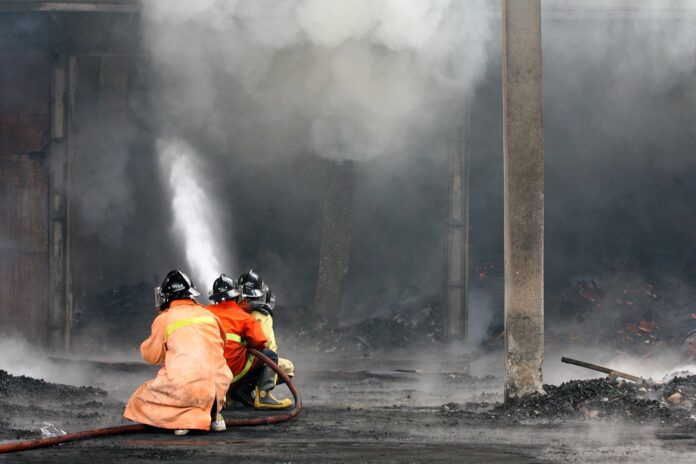
Firefighters work to extinguish a blaze Monday at the remnants of a rubber processing plant in Yala province.

BANGKOK — While Sunday’s charter referendum unfolded peacefully through the rest of the country, the three southern border provinces were hit by a spree of bombings and arson attacks bearing the hallmarks of local separatists.

The attacks were described by several experts as an attempt to disrupt the vote and show discontent toward the military regime in the Deep South, where the majority of voters have long lived under martial law and rejected the junta-backed constitution.

Read: Referendum Graffiti Puzzles Deep South Observers

Although the provinces of Pattani, Narathiwat and Yala are familiar with daily incidents of violence during the last dozen years, the frequency of attacks in the last two days was remarkable, said Chamroon Den-udom, chairman of the Southern Islamic Culture Foundation.

At least 35 small bombings rocked the region throughout Saturday and Sunday, including a roadside bomb that struck a convoy carrying referendum ballots in Pattani. On Monday morning, the largest rubber factory in Yala was burned down by unidentified assailants, and a grenade was fired at a ranger base there. The attacks left one person dead and three injured.

“The attacks are more numerous than usual,” said Chamroon, a former police commander. “The movement wants to send a signal to the military that people in the three southern border provinces are not happy with the constitution, because it’s a constitution that comes from the military and the coup regime.”

Puangthong Pawakapan, a political scientist at Chulalongkorn University, also said it’s understandable that many people in the Deep South voted no.

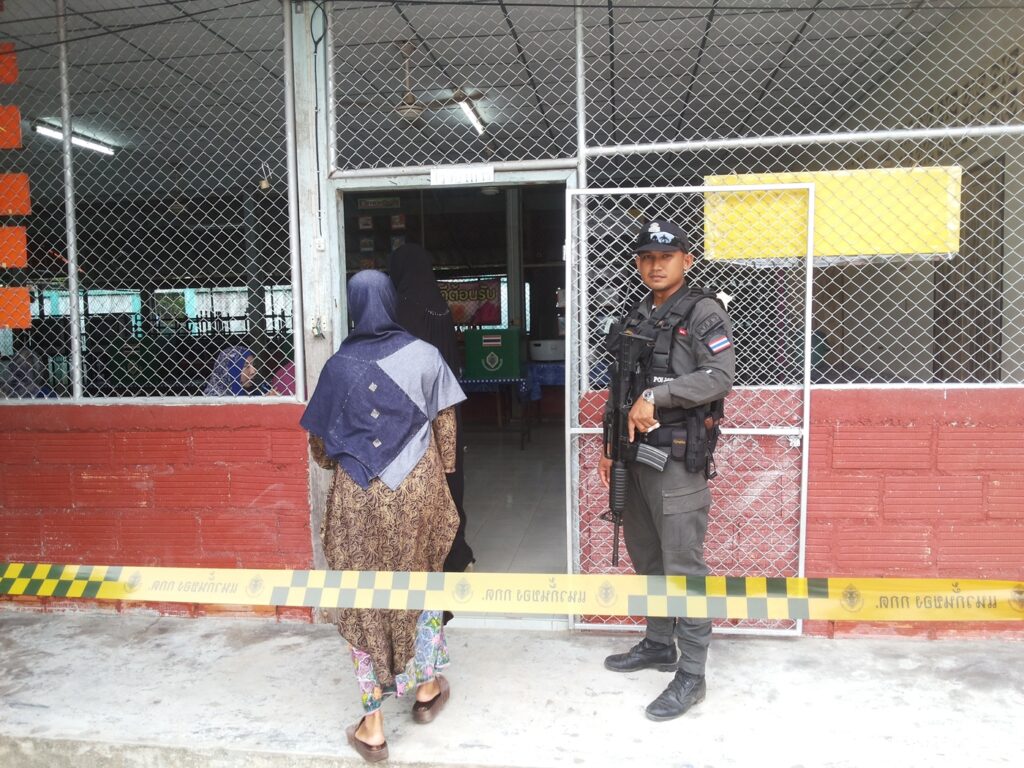
A security officer guards a polling station as a woman enters to vote Sunday in Pattani province.

Residents in the three southern border provinces have been on the receiving end of military repression for a long time, she said, and they clearly do not want the military to play a greater role in society.

The militants’ goal is to secede the Muslim-majority region and revive the independent sultanate of Patani, which was annexed by Bangkok in the early 20th century.

Who Won?
Panu Uthairat, sec-gen of the Southern Border Provinces Administrative Center, said the insurgents increased attacks to scare away voters, which they failed to do.

“There were attempts to cause confusion, terror and intimidation to keep people from exercising their rights to vote,” Panu told reporters Monday. “But in the end, people came out to exercise their vote beyond our expectation. So it’s satisfactory.”

Chamroon saw it otherwise, pointing to the vote tally in the three provinces, where 60 percent voted to reject the charter.

“It’s like a contest to win the hearts and mind of the masses in the region,” Chamroon said. “Now, let’s analyze the fact that a majority of people voted against [the charter], so it means that the movement managed to win a big part of the people to their side.”

Chairman of the National Security Council Taweep Netniyom conceded that the outcome suggested a win for the regime’s opponents, but blamed it on the threat posed by secessionists.

“One factor we have to be aware of is the possibility that people in the three southern border provinces feel pressured by many dangers, and from those who think differently,” Taweep said at news conference, using a euphemism for the insurgents.

Related stories:

Authorities Anxious About Muslim Critique of Constitution Draft


Additional reporting Pravit Rojanaphruk

Advertisement

In Address to Japan, Emperor Suggests Desire to Retire

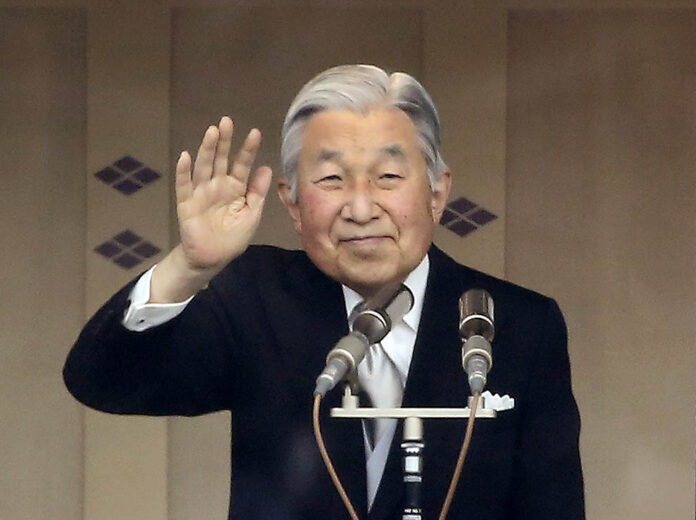
Japanese Emperor Akihito waves to well-wishers as he appears on the balcony of the Imperial Palace to mark his 82nd birthday on Dec. 23 in Tokyo. Photo: Eugene Hoshiko / Associated Press

TOKYO —The Japanese emperor, in a rare address to the public, signaled Monday his apparent wish to abdicate by expressing concern about his ability to carry out his duties fully.

“When I consider my age of over 80, as well as my gradually deteriorating physical condition despite being luckily healthy at this moment, I am concerned about being able to fulfill by duties as a symbol with the utmost efforts, as I have done so far,” he said in a 10-minute pre-recorded speech broadcast on national television.

It may be the closet he could come to saying he wants to step down, given restrictions on what he can say as a symbolic monarch with no political power. As expected, he avoided using the word “abdication,” which could have violated those restrictions.

The 82-year-old monarch spoke publicly after recent media reports that he may want to abdicate. If he does, it isn’t expected to happen immediately, as legal changes would be needed to allow him to do so.

Akihito suggested in his speech a need to consider how to make the succession process smoother.

Akihito has reportedly told palace officials and his family that he doesn’t wish to cling to his title if his responsibilities have to be severely reduced, and his two sons have accepted the idea.

Advertisement

China’s Imports, Exports Fall Again in July

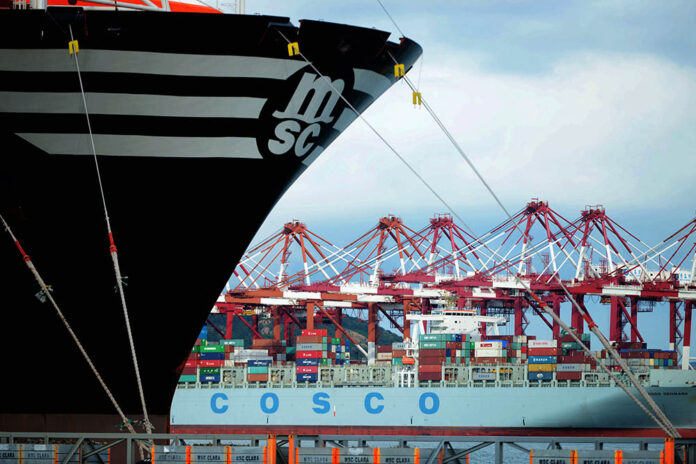
Container ships are docked at a port in Qingdao in eastern China's Shandong province Monday. Photo: Chinatopix / Associate Press

BEIJING — China’s exports fell again in July by an unexpectedly wide margin while a decline in imports accelerated in a possible sign of weakness in the world’s second-largest economy.

Exports contracted 4.4 percent to USD$184.7 billion (6.45 trillion baht), a slight improvement over June’s 4.8 percent contraction, customs data showed Monday. Imports fell 12.5 percent to USD$132.4 billion, accelerating from a decline of 8.4 percent.

Weak global demand has hampered efforts to shore up Chinese trade and stave off job losses in export industries. The contraction in imports reflects possible weakness in the domestic economy, but the figures also are depressed by a decline in prices of oil and other commodities.

Chinese economic growth held steady at 6.7 percent in the quarter ending in June compared with a year earlier, though that was the lowest quarterly level since the aftermath of the 2008 global crisis.

The declines in both exports and imports were worse than many forecasters expected.

“The data dash hopes that a pick-up in global manufacturing growth last month might have buoyed shipments from China,” said Julian Evans-Pritchard of Capital Economics in a report.

“The country’s export growth is likely to remain subdued for some time,” said Evans-Pritchard. “While we think the worst is probably over for many emerging markets, global growth is likely to remain lackluster well into next year.”

The slump in imports meant China’s global trade surplus swelled by 22 percent from the same month a year ago to USD$52.3 billion.

China’s trade surplus with the European Union, its biggest trading partner, was USD$11.8 billion. The surplus with the United States was USD$24.7 billion.

Even taking lower prices into account, the Chinese figures suggest imports fell by 5.3 percent, according to Louis Kuijs of Oxford Economics.

“It implies that volumes dropped substantially month on month,” said Kuijs in a report. “It may herald that domestic demand started to slow down in July.”

Story: Joe McDonald

Advertisement

Fashion Photog Feasts on Thai Unknowns in ‘Daydreamed Road Movie’

BANGKOK — It took a lot of time in the backseat of a van digesting music, people and billboards he couldn’t understand in western metro Bangkok for a Swiss-Malaysian photographer to find his inspiration.

Killing time during his journey in Nakhon Pathom province, where many things didn’t make sense, fashion photographer Lee Wei Swee created a road movie from the photographs he made, from vibrantly painted trucks to a couple kissing at a traffic light.

“As long as you don’t understand, you imagine in order for things to have a meaning to you,” Swee wrote. “I could find hints that helped me make sense of situations and location but when I would run out of clues, I would fill gaps with stories and characters I make up.”

His photographs, contrived into an “inverted storyboard” will show later this month in Bangkok at “Nakhon Chai Si, Stills From a Daydreamed Road Movie.”

The opening reception starts at 6pm on Aug. 20 and the exhibition runs until Sept. 10 at 3rd Rock Gallery on Soi Rama IX 18.

The up-and-coming contemporary gallery is open 10:30am until 8pm, Thursday through Sunday.

Advertisement

Hot News

LATEST NEWS

Bangkok
broken clouds
36.6 ° C
37.8 °
35.5 °
47 %
3kmh
82 %
Mon
35 °
Tue
37 °
Wed
37 °
Thu
36 °
Fri
36 °