



































36.6 C
Bangkok
Monday, June 22, 2026
Home Blog Page 2642

Fourth Day of Hunger Strike For Jailed Referendum Activist

Wiboon Boonpattararaksa talks to his son Jatupat Boonpattararaksa, at center, on Aug. 6 at a police station holding cell in Chaiyaphum province. Jatupat was on a hunger strike to protest his arrest for campaigning against the charter. Photo: Thai Lawyer for Human Rights

KHON KAEN — An activist imprisoned for handing out leaflets on the eve of the charter referendum remained on a hunger strike Wednesday to protest his arrest and a raid of his family home by police.

Jatupat “Pai” Boonpattararaksa was campaigning against the charter draft at a market in Chaiyaphum province when he was arrested Saturday and charged with violating the referendum law. The 25-year-old activist has refused to post bail, insisting the authorities should free him because his actions were lawful.

Boycott Camp Rejects Results of ‘Fake’ Referendum

“The kid had no intent to break the law,” Jatupat’s father, Wiboon Boonpattararaksa, said by telephone Tuesday. “He didn’t secretly hand out those flyers. He didn’t have any intent to cause unrest. His actions lacked criminal intent. If they did, he would have done it somewhere far from the eyes of police.”

Jatupat, a member of the northeastern Dao Din community rights group, immediately began a hunger strike since being imprisoned Sunday in Chaiyaphum province. Wiboon said it was to protest a raid by police of his family home shortly after his arrest.

Wasin Prommanee, a fellow activist arrested along with Jatupat, has already been released on bail.

Wiboon, a lawyer, is representing his son in court.

“He’s very angry about that. He didn’t care much that police arrested him, but the fact that officers from an entire police station raided his home where his family lived? He’s angry, he wants to know why they had to do that,” Wiboon said.

Although the referendum ended Sunday with a victory for the junta, critics of the draft charter still face prosecution under a draconian law that banned any campaigning that “misled” the public into voting in favor or against the charter draft. Jatupat and others charged under the law face up to 10 years in jail.

The junta has already ruled out amnesty for the dissidents, but an anti-junta activist and friend of Jatupat said they wouldn’t accept it.

“We aren’t hoping for amnesty anyway, because if we accept it, it would mean we admit that we did something wrong, and they gave us pardons,” said Chonticha Jaeng-rew, a member of the Bangkok-based New Democracy Movement, who visited him Monday. “We assert our right to exercise free expression.”

Chonticha said she’s worried for Jatupat, who looked exhausted and sickly when she saw him, but remains in good spirits.

“Right now we are trying to set queues for his family and friends to visit him,” Chonticha said. “We want to help him first before we engage in any activism. Right now we’re trying to spread the news of his imprisonment and contact international organizations.”

Wiboon said he respects his son’s decision not to seek bail, and played down concerns about Jatupat’s health.

“He once spent three months in the monkhood. He knows how to discipline his consciousness. When he was a monk, he only ate one meal per day anyway,” Wiboon said. “He is not in any life-threatening condition. His morale is high. He’s a strong man.”

Correction: An earlier version of this article reported that Jatupat Boonpattararaksa was imprisoned in a Khon Kaen prison. It fact, the prison is in Chaiyaphum province.

Related stories:

Prayuth Promises 2017 Election

More Arrested in Connection to Referendum Letters

Advertisement

A Survival Guide for Bangkok Pokemon Go Trainers

Sunday was both a national constitutional referendum and Pokemon Go’s first full day of release. Many chose to spend their day chasing Pokemon, as these players in Korat.

BANGKOK — Since the global obsession that is Pokemon Go arrived Saturday in fad-prone Thailand, players have been out in droves in parks, plazas and malls.

It’s double the trouble for players in Bangkok who must contend with obstacles like searing heat, unreliable sidewalks and zooming motorcycle taxis in their epic quest to find and catch and train all the Pokemon.

What are some best practices to keep in mind? We talked to the admin of Pokémon Go Thailand FanClub, which has more than 120,000 fans, to get some advice how best to pursue that noble goal.

1. Put Down the Phone
One of the main grievances many people have about Pokemon Go players (called “trainers”) is how they resemble phone-addicted zombies, eyes glued to the screen and oblivious to their surroundings as they shuffle around.

“Admin K,” who said he’s been a Pokemon fan since high school over a decade ago, said players can simply set the game to alert them by vibration whenever they encounter a Pokemon. One caveat: The app must be running to get the notifications.

Another alternative is to buy Pokemon Go Plus, a bracelet device that will vibrate when Pokemon are near. It’s an official accessory supported by developer Niantic Inc. that will work even if the app isn’t running. It’s expected to hit next month but don’t expect to see it sold in Thailand immediately.

2. Hit the Malls, Beat the Heat
Bangkok is not exactly a walk in the park, what with the sunlight, humidity and pollution. Luckily, the best places to catch Pokemon are indoors, air-conditioned shopping malls, Admin K said. His favorite spots are Siam Paragon and CentralWorld Plaza.

While it may defeat the purpose of getting out and exploring the world, there is an advantage to concentrating players in one space. Admin K said the more populated the area, the more likely Pokemon will spawn there.

“It means that crowded a place like Siam has a lot of Pokestops,” he said using the term for Pokemon spawning grounds. “If any player uses that item, you can simply sit there and catch Pokemon. I once spent an hour doing that, and I got 40 of them.”

Since the game’s release Bangkok’s Siam Paragon shopping mall has been swarming with players such as these on Monday.

3. Keep it Downtown
On the other hand, Pokestops far from crowded areas spawn much fewer Pokemon. It’s also less safe at night, since these stops can show up in dodgy parts of town.

“The other day I tried going to Phutthamonthon. I tried out of the assumption that there should be some rare Pokemon,” Admin K recalled. “It turned out, there were none.”

He continued, “So it’s not worth it … and it’s dangerous. I’d like to warn all the younger players out there. Many parents are worried about this,”

Watch: Khaosod English Livestreams Pokemon Go Craze at Siam Paragon

4. You can report cheaters
Trainers aren’t catching all those Pokemon for nothing – they’re for fighting. Some players have been perplexed to see certain “gyms” (battlegrounds which can be controlled and occupied) were guarded by impossibly strong Pokemon, such as Dragonites with more than 3,000 combat power.

Admin K said that’s most certainly because someone is cheating. Fortunately, cheaters can be reported. Screencaps of such players can be submitted to the game’s developer, Niantic, through the app’s reporting feature: Pokeball > Settings > Report High-Priority Issue > Report inappropriate gameplay.

Some players may be foreigners who started playing before Saturday.

“For example, my brother went to Denmark recently, and when he came back, he was already at level 25,” Admin K said. “So he was accused by many people of cheating.”

Nothing’s sacred for one player Monday at Bangkok’s Wat Bua Kwan.

5. Don’t Do Stupid Stuff
Driving in Bangkok can be more like crawling, only inside an air-conditioned bubble. This is a great opportunity to scoop up Pokemon without risking the misery that is walking.

But as the game says – and can’t be stressed enough – do NOT play Pokemon Go while driving. That will only serve to fan fears, Admin K said, and feed the media narrative of the overblown dangers associated with the game.

“I’d like to tell them that even without video games, good things and bad things happen anyway,” he said. “Don’t blame video games.”

6. Keep the Battle Virtual
Admin K said he worries the more trollish players may get into conflicts that escalate into violence when they meet to engage in gym battles. Gang violence happens every day over lesser matters, after all.

He worries real-world conflict may erupt from the game’s factions feature – players can align with one of three teams (two of which, Red and Yellow, already hold troubled associations in Thailand).

“Don’t be a troll. Don’t shout ‘Hey I’m Red! I’m here for your Gym!’,” Admin K said. “It’s like when you go to football matches, you wouldn’t wear your team’s jersey in the rival stands. Same goes here. Use common sense.”

7. Stay Informed
From video guides and podcasts to exhaustive wikis, the game already has a deep body of reference material, and Admin K urged new trainers to read up as much as possible.

He said that knowledge will help trainers know how to get Pikachu as their starter Pokemon, save battery life and judge which Pokemon are better in combat.

Two intrepid trainers in Korat park their motorbike Monday before hunting Pokemon.

He realizes that most people do not do this.

“There’s one time I literally just posted a technique for saving battery by turning off the [augmented reality display] and how to do it, then someone commented, how do I turn it off?” Admin K said. “Even the name of my Page confuses some people. We aren’t the developers. … But some people still message me asking me to place more Pokestops!”

In that respect, even high-ranking officials and media professionals aren’t faring better. A top government regulator has shared his concern some players are buying Pokemon from each other, while media from Bangkok Post and Associated Press continue to mistake True Corp as being the game’s distributor in Thailand (There is none).

Related stories:

Officials Want Pokemon Go Developer to Restrict Pokestops

Official Suggests Flooding Tourist Sites With Pokemon

Pokemon Invade Streets of Bangkok, Running Battles Ensue

Advertisement

After All the Bad Blood, King Beats Efimova at Rio Olympics

United States' Katie Meili, left, congratulates teammate Lilly King as she celebrates winning the gold medal in the women's 100-meter breaststroke final during the swimming competitions at the 2016 Summer Olympics on Monday in Rio. Photo: Michael Sohn / Associated Press

RIO DE JANEIRO — This one will surely be seen as a victory for clean athletes over the dopers.

No doubt, that was Lilly King’s take.

The feisty American stared down Yulia Efimova, a swimmer at the center of Russia’s doping scandal, and then beat her in the pool Monday night.

King could hardly contain her satisfaction at capturing gold in the 100-meter breaststroke — especially given who was in the next lane.

“It just proves you can compete clean and still come out on top with all the hard work you put in behind the scenes, behind the meet, at practice and weight sessions,” the 19-year-old Indiana University student said giddily. “There is a way to become the best and do it the right way.”

Efimova arrived in Rio as one of the symbols of the massive Russian doping operation, an athlete who had already served a 16-month suspension and tested positive again this year for the now-banned substance meldonium.

Russia's Yulia Efimova cries after placing second in the women's 100-meter breaststroke final Monday in Rio. Photo: Matt Slocum / Associated Press
Russia’s Yulia Efimova cries after placing second in the women’s 100-meter breaststroke final Monday in Rio. Photo: Matt Slocum / Associated Press

Efimova was initially banned from the Olympics, but that decision was overturned on appeal. King took umbrage at Efimova’s No. 1 finger wag during the semifinals, and the bad blood carried over to the final.

After glaring at Efimova in the ready room and giving her a look of disdain on deck, King led all the way to take the gold in 1 minute, 4.93 seconds. Efimova settled for the silver, more than a half-second behind. The bronze went to another American, Katie Meili.

Efimova was booed by many in the crowd when introduced before the race, though a smattering of Russian fans cheered her on.

“I really don’t know how I even reached the final,” Efimova said, her face red from crying. “It would have really been the end of a fairytale, a horrible dream, if I’d won gold. But that was all I could do right now.”

King didn’t acknowledge Efimova during a raucous victory celebration.

While Efimova hung on the rope separating their lanes in the middle of the pool, King took off in the other direction to congratulate Meili. The medalists all climbed out of the pool together, but the Americans quickly got back to celebrating on deck. Efimova walked away by herself.

Finally, as the swimmers were picking up their Olympic credentials, King gave Efimova a quick pat on the shoulder.

Nothing more.

“I basically said what everybody’s thinking,” King said, adding that other swimmers “were glad I spoke out and had the guts to say that and I appreciate their support.”

Efimova said she’s been treated unfairly, having already served a penalty for a doping violation that occurred while she was training in Los Angeles with one of America’s most prominent coaches, Dave Salo. As for the second positive test, any possible sanctions were put on hold while the World Anti-Doping Agency does more research on meldonium, which was only put on the banned list at the beginning of the year.

“Athletes used to be outside politics,” Efimova said. “It’s really painful for me that a lot of athletes don’t understand that and just watch the TV and accept everything that’s said there.” She called on them “to swap places with me and understand how I feel.”

King’s victory highlighted another big night for the Americans, who also extended their domination in the men’s 100 backstroke with Ryan Murphy’s victory and wound up with six medals in all.

Murphy was fourth at the turn, but rallied on the return lap to give the Americans their sixth straight gold medal in the 100 back. Their last loss came at the 1992 Barcelona Games.

For good measure, David Plummer — a 30-year-old Olympic rookie — claimed the bronze.

Hungary’s Katinka Hosszu became the first two-time gold medalist at the Olympic Aquatics Stadium, adding the women’s 100 backstroke title to her world-record victory in the 400 individual medley.

Hosszu, known as the Iron Lady for her grueling schedule, propped herself on the lane rope and made a heart sign in the direction of her coach and husband, Shane Tusup.

The silver went to American Kathleen Baker.

“I knew that I could win,” Hosszu said. “But I was so tired that I told the Hungarians before the race that I could get anything from first place to eighth place.”

In another result sure to stir the doping debate, China’s Sun Yang captured gold in the men’s 200 free. Two years ago, he served a three-month suspension for taking a banned stimulant.

Yang rallied from his customarily slow start to pass South Africa’s Chas le Clos, who went out fast and tried to hang on.

It nearly worked.

Yang surged to the front on the final lap, but Le Clos still managed to grab the silver. Conor Dwyer took the bronze, adding to the U.S. medal haul.

Even on a red, white and blue night at the pool, Missy Franklin endured another stunning disappointment. The darling of the London Games failed to qualify for the final of the 200 freestyle, extending a mystifying loss of form since turning pro last summer.

Franklin finished last in her semifinal heat with only the 13th-fastest time among 16 swimmers. She actually went slower than she did during the afternoon preliminaries.

As a bubbly, 17-year-old high schooler, Franklin won four golds and a bronze at London, where she competed in seven events. This time, she struggled just to qualify for two individual events and it looks like her only realistic shot at a medal will be on the 4×200 free relay.

“It’s so hard,” she said, “knowing all the work you put in every day, and then to get here and be so far behind where you feel like you can be.”

Story: Paul Newberry

Advertisement

Olympic Gold Hero Rewarded With Paved Road Home

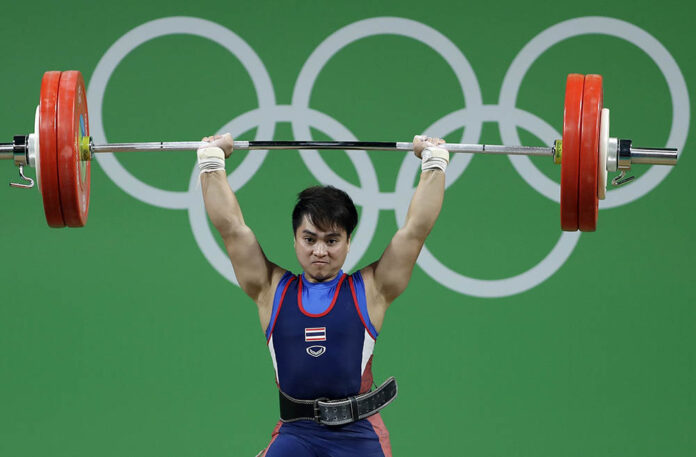
Sopita Tanasan, of Thailand, competes in the women's 48kg weightlifting competition at the 2016 Summer Olympics in Rio de Janeiro on Saturday. Photo: Mike Groll / Associated Press

CHUMPHON — While Leicester City FC players are doubtless enjoying their multi-million baht BMW supercars for winning the Premier League, a Thai Olympian will be treated to something more practical: a concrete road to her home.

Two days after 21-year-old weightlifter Sopita Tanasan grabbed a gold medal – Thailand’s first in the Rio Games – heavy machinery moved into compress the rough dirt road leading to her home in the southern province of Chumphon.

That will pave the way for pouring some literal pavement.

Workers on Tuesday compacted the earth along the dirt road leading to the home of Olympic medalist Sopita Tanasan in Chumphon province.

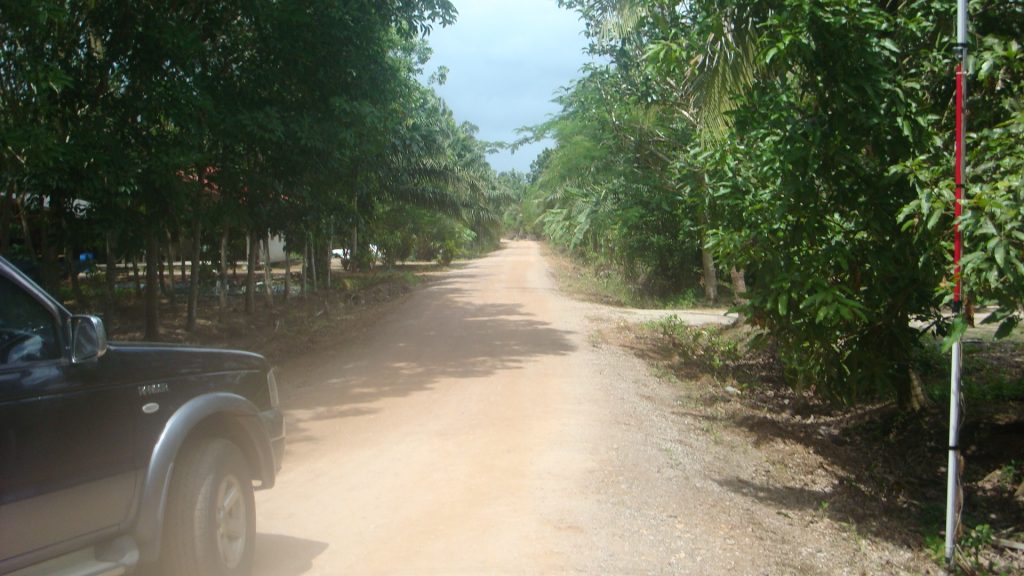
Local administrator Suphon Junsai said the existing dirt road was pretty awful and unusable after rain fell. He promised his office would spend another 7 million baht to build a proper, two-kilometer road as a reward to the Olympic strongwoman.

Sopita snatched Thailand’s first gold medal at the 2016 Games in the women’s 48-kilogram category.

She is expected to get a hero’s welcome at Suvarnabhumi Airport when she returns to Thailand on Aug.17.


Related stories:

Sopita Tanasan Wins 48kg gold in Olympic Debut

Thai Owner Treats Leicester Title-Winners to BMW Sports Cars – 1 Each

Advertisement

Boycott Camp Rejects Results of ‘Fake’ Referendum

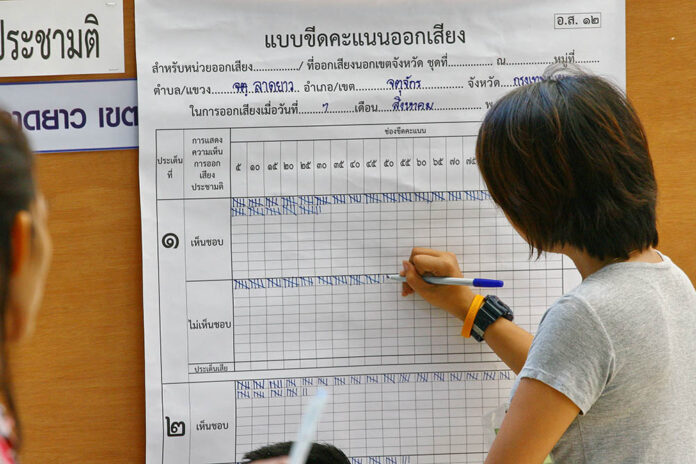
Votes are tallied Sunday at a polling station in Bangkok's Chatuchak district.

BANGKOK — Activists who boycotted the referendum called Tuesday for annulling the results of the junta-backed plebiscite, saying it was neither free nor fair from the start.

Four academics and activists said they want to see the results overturned at a symposium held at Thammasat University to discuss the outcome of Sunday’s vote in which voters adopt by the charter by a large margin.

Read: Returns Show Landslide Win for Junta in Charter Poll

“We do not accept the results of a referendum that’s neither free nor fair. The results should be nullified,” said political activist Jittra Cotchadet at the conference, along with others calling themselves the Group of Comrades. “It was a fake referendum, it was an illegal referendum. I cannot accept it.”

A group who had called for a boycott of the charter referendum called Tuesday for its results to be rejected at Thammasat University in Bangkok.

They had called the boycott on the principle that the junta had no legitimacy; therefore, its charter vote was equally invalid.

Jittra said 200 people signed on to boycott Sunday’s referendum, but that number would have been much higher had the junta not criminalized the boycott effort with a penalty of up to 10 years in prison.

After months of aggressive suppression of dissent by the authorities, Sunday’s referendum saw the charter supported by 61.4 percent of voters, according to 94 percent of unofficial returns.

Other activists who had a philosophically different strategy – they urged people to participate but vote no – such as the New Democracy Movement, accepted the results.

Sustarum Thammaboosadee, an assistant professor at Thammasat University’s College of Interdisciplinary Studies, said there’s no need for people to accept the results because it was neither free nor fair. He said a new referendum is needed.

“We should not accept this defeat. We don’t need to accept the results of the referendum,” Sustarum said.

Sustarum said the distortion and twisting of a credible referendum was found in the fact that its defeat would have only spelled the junta, which calls itself the National Council for Peace and Order, doing the same thing all over again for a third time.

“The choice the NCPO gave us was a charade; its outcome thus inconsequential,” he said. Sustarum added that charter opponents must not vilify those who disagree with them or place them in a “gas chamber.”

Jittra accused the Election Commission of only providing positive information to people while tolerating a widespread crackdown under which those who said otherwise were arrested.

“A referendum should really be about choice…We respect all votes, but we do not accept the results of this referendum,” Jittra said.

She said the blame was with the military, who had no authority to oversee a vote.

“The NCPO has no right to host elections. Those who voted Yes are not our enemies. We can map a new path of struggle,” she said.

Her small political party, the Democratic Force Party, would likely issue a statement formally rejecting the results.

Sustarum said the struggle for democracy activists and junta opponents would be be a long-term one.

“It wasn’t the end of the world. The struggle continues. The fact that the charter has been passed is no reason to become cowed to it. We can pile on pressure, using our rights as human,” Sustarum said.

Rackchart Wong-arthichart, another boycotter, said it was inaccurate to even call it a referendum.

“All the rules were wrong; we shouldn’t accept it. Under such rules, there can be no win or lose,” Rackchart said. “No matter how the results came out, the process was not up to international standards. So should we even call it a referendum?”

Rackcart said he’s willing to join any group refusing to recognize the outcome.

Tewarit Maneechai, an activist reporter with nonprofit Prachatai news, said now is the time for rejecting the results. Sounding disappointed by other activists’ decisions to accept the outcome, Tewarit said it wasn’t too late for them to change their minds.

“I hope people will not accept this fake social contract. If we accept this charter draft, it’s like we accept this system, and it will cause damage [to society],” Tewarit said.

Advertisement

Prayuth Promises 2017 Election

Prime Minister Prayuth Chan-ocha promotes the junta-backed Prompt Pay system on Aug. 9 at Government House in Bangkok.

BANGKOK — Fresh from a win at the polls for a constitution written under his supervision, junta chief Prayuth Chan-ocha on Tuesday promised elections would be held in 2017.

Dispelling concerns a vote could be delayed further – and despite international pressure it come sooner – Prime Minister Prayuth Chan-ocha said at Government House he would stick to the latest plan to hold a general election in 2017.

“Trust in the roadmap,” he said. “I never say anything else. No need to ask.”

Asked whether he would accept selection to the post of prime minister, Prayuth declined to answer and admonished reporters to not create any more issues. Instead, he referenced Murphy’s Law for his reasoning, getting it a little wrong in the process.

“Murphy’s Law is when you do something, there will be a consequence. If I do nothing, there won’t be an issue,” said the junta chief. “But why did I choose to do something? Think about it.”

Since seizing power in 2014, Prayuth has often made the case that his actions were necessary to right a country plagued by political strife and endemic corruption.

Prayuth said the roadmap process would be done by November 2017, after which an election could be scheduled.

The 62-year-old retired general also made mention of a “ghost,” which has been a verbal stand-in for former Prime Minister Thaksin Shinawatra, whose political influence the coup sought to disrupt.

“I told you, don’t be afraid of the ghost you cannot see.”

Junta spokesman Col. Winthai Suvaree said that in a meeting of the junta’s interim cabinet, Prayuth had expressed gratitude to everyone who helped facilitate Sunday referendum, especially Constitution Drafting Committee Chairman Meechai Ruchuphan.

The prime minister will issue an official statement on the outcome Wednesday, Winthai said.

Their comments come on the heels of statements by both the United States and European Union expressing concern about the suppression of rights in the referendum process.

The E.U. statement criticized the junta’s “serious limitations” placed on freedoms of expression and assembly and urged it to quickly hold a credible election.

“It is essential that the current restrictions on freedom of expression and assembly are lifted to allow for an open, inclusive and accountable political process,” it read. “The EU continues to call upon the Thai authorities to create the conditions for a genuine democratic transition leading to early general elections.”

A spokeswoman for the U.S. State Department said that while Washington held reservations about the referendum, it was time to move forward with the “next steps to return Thailand to elected civilian-led government as soon as possible.”

Head charter drafter Meechai said Sunday after seeing the landslide returns accepting the charter that elections would definitely be held in 2017 but could be delayed one or two months due to possible problems.

Advertisement

The Aristocrats Are Back to Rock Bangkok

BANGKOK — Prog-rocking trio The Aristocrats return to Bangkok next month.

A little metal, a little jazz; the fusion supergroup combines the talents of three acclaimed musicians: English guitar guru Guthrie Govan, American bass player Bryan Beller and German drummer Marco Minnemann.

Two years after throwing a concert in Bangkok, the band whose name is an infamous dirty joke will be back again Sept. 10 as part of their world tour kicking off next month in Japan.

The Aristocrats have released three studio albums: The Aristocrats (2011), Culture Clash (2013) and Tres Caballeros (2015), along with three live albums.

Tickets for the show, including an afternoon band clinic at 3pm, range from 800 baht to 2,500 baht and can be bought online at ThaiTicketMajor.

The concert starts rocking at 8pm on Sept. 10 at M Theatre on New Petchburi Road, which can be reached by taxi from MRT Phetchaburi, Airport Rail Link Ramkhamhaeng or BTS Thong Lo.


Advertisement

See New Godzilla Before Anyone Else at House RCA

BANGKOK — An art house cinema will celebrate its 12th years with 12 films, including an advance look at the the King of Monsters’ latest rampage in “Godzilla Resurgence.”

Called “Shin Godzilla” in Japan, it will will show Aug. 28 – a fortnight before it hits theaters Sept. 8. The Kaiju flick is a reboot by the same Japanese studio who made the 1954 original, and it released recently in Japan to rave reviews. Be ready to cower at the show’s Sunday matinee.

One of Bangkok’s scarce homes for alternative cinema for a dozen years, House Rama RCA will also screen a roster of recent film-buff favorites: Spike Jonze’s operating system seduction that is “Her” (2013), Cannes’ favorite of 2008 “Tokyo Sonata,” award-winning Iranian drama “A Separation” (2011) and “Drive,” the 2011 neo-noir thriller starring a young pretty goose.

Miss the recent dystopian, black comedy “The Lobster?” See that too.

Thai films in the program include 2007’s “Love of Siam,” a groundbreaking film for its frank look at gay teens, and Nawapol Thamrongrattanarit’s “36,” the conceit of which is 36 fixed shots examining memories in the digital age.

House RCA’s special program runs Aug. 19-Aug. 21 and Aug. 26-28.

poster_program house ครบรอบ

Tickets for each show are 100 baht and can be reserved by telephone only.

The stand-alone theatre is located on Phetchaburi Road. Get there from MRT Petchaburi by taxi or motorbike.

Advertisement

More Gold, Silver for Thailand’s Women Weightlifters

Pimsiri Sirikaew competes in the women's 58kg weightlifting competition at the 2016 Summer Olympics in Rio de Janeiro on Monday. She won the silver medal. Photo: Mike Groll / Associated Press

RIO DE JANEIRO — Sukanya Srisurat and Pimsiri Sirikaew gave Thailand gold and silver medals Monday in the women’s 58-kilogram class at the Rio de Janeiro Olympics.

Srisurat gave Thailand its second gold medal in women’s weightlifting. Sopita Tanasan opened the games with a gold in the 48-kilogram category on Saturday, and Sinphet Kruaithong became the first Thai male to win an Olympic weightlifting medal when he won bronze on Sunday at 53kg.

Thailand has now won 11 medals in women’s weightlifting.

“I never thought I could do it,” Srisurat said. “This is my first time at the Olympics, so I am very happy to win a gold medal and bring it back to Thailand.”

In taking silver, Sirikaew became the third lifter to take multiple medals at 58kg. She also won silver in London four years ago.

“I am so happy to be one of them, because we are representing the Thai people and Thailand,” she said of Thailand winning four weightlifting medals. “There are 60 million people (in Thailand). We are happy to be a few of the people who can make Thai people happy.”

World record holder Chen Lijun pulled out of the men’s weightlifting 62-kilogram class because of leg cramps, which opened the class for Oscar Albeiro Figueroa Mosquera of Colombia to win gold at the Rio de Janeiro Olympics.

Chen pulled out during the snatch round after he found treatment on the cramp to be “pretty useless.”

“They tried to massage my leg, it was just not useful,” he said. “It has never ever happened before.”

Mosquera lifted 142 kilograms in snatch, 176 in clean and jerk and won gold with a total score of 318 kilograms. He was the silver medalist four years ago at the London Games.

Eko Yuli Irawan of Indonesia won silver — one spot better than the bronze he won in London, and Farkhad Kharki of Kazakhstan won bronze in his Olympic debut.

Kuo Hsing-Chun of Taiwan won bronze — giving Taiwan its first Olympic medal in this class. She wasn’t pleased with her performance, though.

“I did not do as good as I wanted,” she said. “I am very disappointed. I hope I can have a better result in the next Olympic Games. This medal does not meet my expectation, but I will keep doing my best and keep trying going into future competitions.”

Srisurat set an Olympic record of 110 kilograms in the snatch on her way to the win. She lifted 130 kilos in clean and jerk for a total score of 240 kilograms.

Story: Janna Fryer

Advertisement

Amnat Ruenroeng’s Fight from Thai Prison to Olympics and Back Again

Amnat Ruenroeng, right, throws a punch at China's double Olympic gold medalist Zou Shiming during their IBF flyweight title boxing match on March 7, 2015, at the Venetian Macao in Macau. Photo: Kin Cheung / Associated Press

RIO DE JANEIRO — Amnat Ruenroeng speaks openly, even eagerly, about his years in a Thai prison.

His path out of poverty, crime and drug addiction began in a cell. He wants it to end in an Olympic ring with a medal around his neck, and he was willing to return from the pro ranks to try for that storybook ending again.

“There are some good parts of being in prison,” Amnat said through a translator. “You get discipline. You learn how to know what’s right and what’s wrong. In the prison, they provide education, and they have boxing, football and martial arts. I’m good at boxing.”

Eight years after Amnat fell just short of a medal in Beijing, the 36-year-old former IBF flyweight champion got his second Olympics off to another winning start Sunday night.

Fighting 11 kilograms above his professional weight after qualifying for the games just one month earlier, he still beat Argentina’s Ignacio Perrin by decision.

“I felt good, but I must do better because this is my chance,” he said.

When AIBA invited professional boxers to attempt to qualify for the Rio de Janeiro Games earlier this year, no big international names accepted the offer, and only three pros are in the Rio field. But Amnat eagerly seized the chance just a few weeks after losing his professional title, and he earned qualification last month.

He is hardly a man among boys in the amateur game, however: Amnat decided to fight at the 60-kilogram lightweight limit, a whopping 11 kilograms above his flyweight professional limit. He was stopped during the qualifying tournament in Venezuela last month, and he will have to beat two more veteran Olympic-style fighters to get a medal in Rio.

“It’s difficult, because my opponents have an advantage,” Amnat said. “They’re bigger, but I have the will.”

The risk was negligible to Amnat, who still feels he owes a debt to boxing. He also shares many Thai athletes’ devotion to the King of Thailand, who pardoned him from a 15-year sentence after he showed boxing talent.

“That’s why I came here for a second time, to prove myself,” he said. “I have to find out whether I can get the Olympic medal or not.”

The second chapter of Amnat’s life has been all about righting wrongs.

A grade-school dropout, Amnat said he went to jail three times and was serving a 15-year sentence for robbing a tourist when he first discovered his knack for boxing through a prison athletics program. He soon had a national title, a pardon and a purpose: To win internationally for Thailand, which has a decent history of boxing success.

He earned a spot at the Beijing Olympics and won two fights, but fell one fight short of a medal in the light flyweight division. He lost a painful 5-2 decision to Mongolia’s Purevdorjin Serdamba, who went on to win silver.

Amnat didn’t turn pro until 2012, but he had quick success. He won his title in January 2014 and defended it five times, even trouncing two-time Olympic gold medalist Zou Shiming last year.

The amateur sport has changed since Amnat and Zou left it. The fighters no longer wear headgear, and the Olympics are scored under a version of the 10-point professional standards instead of the punch-counting system used in Beijing.

Amnat didn’t change much about his approach, sticking to the skills that had kept him unbeaten as a pro under Johnriel Casimero stopped him and took away his belt in May.

Amnat misses his wife and son back in Thailand, but he speaks to them daily. He sounds like the very definition of a rehabilitated prisoner when he looks back at the path behind him and the possibilities ahead.

“(Prison) made me know the importance of the family, of my friends,” Amnat said. “It taught me that whatever I do, I have to have a conscience. I have to think before acting.”

Story: Greg Beacham

Advertisement

Hot News

LATEST NEWS

Bangkok
broken clouds
36.6 ° C
37.8 °
35.5 °
47 %
3kmh
82 %
Mon
35 °
Tue
37 °
Wed
37 °
Thu
36 °
Fri
36 °