































29.7 C
Bangkok
Tuesday, July 7, 2026
Home Blog Page 2651

Samba, Reflections and Pride in Final Rio Olympics Party

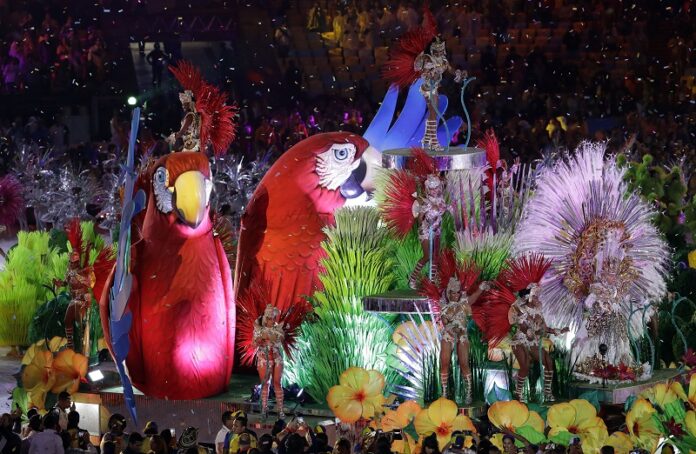
Samba dancers perform during the closing ceremony in the Maracana stadium on Sunday at the 2016 Summer Olympics in Rio de Janeiro. Photo: Natacha Pisarenko / Associated Press

RIO DE JANEIRO — Shaking to samba and expressing a sense of longing with uniquely Brazilian words, Olympians and fans said goodbye to the Rio Games with one last big bash that was both revelatory and a sigh of relief.

The closing ceremony Sunday celebrated the 16-day spectacle that was the Rio Games, which combined numerous highlights with ugly and even bizarre episodes that sometimes overshadowed competition. Cariocas — as Rio’s residents are known — weren’t swayed by the issues that led up to these Olympics, and braved rain and strong winds on the final night to cap their moment in the worldwide spotlight.

While South America’s first Olympics are over, safely and with a grandiose finale, many problems remain. Still, Brazil showed Sunday it still definitely knows how to party.

“These were marvelous Olympic Games in the ‘marvelous city,'” said International Olympic Committee President Thomas Bach, playing off the “cidade maravilhosa” nickname of Brazil’s postcard city of inviting coastlines, year-round sun and lush tropical vegetation.

While the stadium erupted in applause at that declaration, a few minutes later there were boos of sadness when Bach announced: “I declare the Games of the XXXI Olympiad closed.”

The closing ceremony in iconic Maracana Stadium was also meant to take care of some business — formally signaling the transition to the 2020 Summer Olympics in Japan.

Japan's Prime Minister Shinzo Abe appears during the closing ceremony in the Maracana stadium on Sunday at the 2016 Summer Olympics in Rio de Janeiro. Photo: Matt Dunham / Associated Press
Japan’s Prime Minister Shinzo Abe appears during the closing ceremony in the Maracana stadium on Sunday at the 2016 Summer Olympics in Rio de Janeiro. Photo: Matt Dunham / Associated Press

But Sunday’s party was all about Brazil, designed to be more low-key than the opening, which focused heavily on Rio.

The ceremony featured original footage of Alberto Santos Dumont, the man that Brazilians recognize as the inventor of the airplane. The theme, “Brazilians can do with their bare hands,” was a nod to the emerging economy of the world’s fifth most populous nation.

Dressed in colorful feathers, dozens of dancers formed in the shape of the arches of Lapa, a popular area of Rio akin to Roman ruins, then morphed to make the shape of iconic Sugarloaf before quickly changing again, this time to the official 2016 symbol.

Samba legend Martinho da Vila, whose tunes make their way into many popular telenovelas, sang “Carinhoso,” or “Affectionate.”

Olympians poured in under light rain, waving their flags while many shook their bodies to samba-infused pop that made the stadium feel like a Carnival parade. Britain’s athletes wore shoes with soles that lit up in changing colors of red, white and blue, while Tongan taekwondo athlete Pita Taufatofua danced onstage in a grass skirt as a DJ performed, reprising a moment that captured attention when he carried the flag for his country during the opening ceremony.

The show widened its lens to greater Brazil, a massive country with a land mass slightly larger than the continental United States. There was a tribute to cave paintings of some of the first inhabitants of the Americas, in Serra da Capivara, in Northeastern Brazil, today one of the nation’s poorest regions.

Spectators watched performers shake it to frevo, a frenetic dance that — if it’s even possible — makes high-octane samba seem like a staid ballroom affair. Holding small umbrellas, dancers jumped and marched while performing acrobatics.

They shook it to “Vassourinhas,” which means “small brooms,” a popular song that was also the name of a famous club in the northeastern city of Recife.

The show also built performances around “saudade,” which means anything from longing for someone to sadness to remembering good times. It is one of the most important words in Brazilian Portuguese. Lights flashed translations for the word in many languages, and a group of women sang “Mulher Rendeira,” or “Lace-making Woman,” a nod to the country’s African heritage. Brazil was the last country in the Americas to outlaw slavery, in 1888.

The games had many memorable moments, both for Brazilian competitors at home and athletes from around the world.

Soccer-crazed Brazil got partial payback against Germany, winning gold two years after a 7-1 World Cup semi-final shellacking that left Brazilians fuming. American gymnast Simone Biles asserted her dominance with four golds, swimmer Michael Phelps added five more to up his staggering total to 23 and the world’s fastest man, Usain Bolt, put on his usual show with three golds just days before turning 30 years old.

But there were also ugly episodes, like American swimmer Ryan Lochte’s fabricated story about a harrowing robbery that was actually an intoxicated-fueled vandalism of a gas station bathroom, and bizarre issues like Olympic diving pools going from crystal blue to gunky, algae green — at a time when Rio’s water quality in open waters is one of the biggest local environmental issues.

With the games over, Brazilians now return to problems that have long consumed the country of 200 million people. The economy is mired in its worst recession in decades, and later this week the Senate is expected to begin the trial on whether to permanently remove suspended President Dilma Rousseff, who was impeached in May for breaking fiscal rules in her managing of the federal budget.

There’s widespread expectation that the games in Tokyo, one of the world’s richest, most recognizable, cosmopolitan cities, will run more smoothly than they have in Rio. But there’s also worry in Japan over whether the Olympics will eventually further drag down an economy that has been struggling for decades.

The governor of Tokyo, Yuriko Koike, accepted the flag from International Olympic Committee President Thomas Bach andRio Mayor Eduardo Paes, signaling the transition.

Many people, from Brazilians to IOC members, will analyze how things went for the Rio Games in the months ahead. But on Sunday, one strong sentiment was relief — that despite some problems, overall the games went well.

That wasn’t a given going in. The Zika virus scared away some competitors and tourists, rampant street crime in Rio and recent extremist attacks around the world raised fears about safety and Brazil’s political crisis, and the economic angst behind it, threatened to cast a pall over the competitions.

“We are very resilient, we didn’t leave anything important unaddressed,” said Augusta Porto, 36, a translator and Rioresident. “We can welcome people despite the serious problems that we have faced in the recent past.”

Story: Peter Prengaman and Mauricio Savarese
Advertisement

Duterte Threatens to Pull Philippines From UN, Hits US

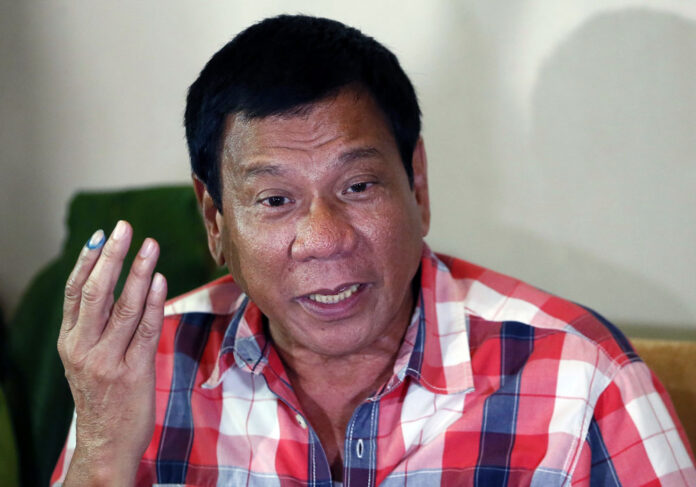
Philippines president Rodrigo Duterte, then mayor, gestures during a May 9 news conference in Davao city in the southern Philippines. Photo: Bullit Marquez / Associated Press

DAVAO, Philippines — The Philippines’ brash-talking president threatened Sunday to withdraw his country from the United Nations and lashed out at U.S. police killings of black men in his latest outburst against critics of his anti-drug campaign, which has left hundreds of suspects dead.

President Rodrigo Duterte pointed to the haunting image of a bloodied child being pulled from the rubble of a missile-struck building in the Syrian city of Aleppo to note the inability of the U.S. and the U.N. to stop such deadly conflicts, complaining that he comes under fire for the killings of criminals.

The U.S. State Department and two U.N. human rights experts have urged Duterte and Filipino authorities to stop extrajudicial killings in the fight against illegal drugs and ensure law enforcement compliance with international human rights obligations. Philippine police say more than 500 drug suspects have been killed in gunbattles with police since Duterte was sworn in eight weeks ago.

Agnes Callamard, the new U.N. Special Rapporteur on summary executions, suggested that Philippine officials could be held liable, saying in a recent statement that “claims to fight illicit drug trade do not absolve the government from its international legal obligations and do not shield state actors or others from responsibility for illegal killings.”

Criticisms against Duterte’s crusade against a problem that he says has become a pandemic provoked an angry outburst from Duterte, who held a news conference after midnight Saturday that dragged on for more than two hours.

“Maybe we’ll just have to decide to separate from the United Nations. If you’re that rude, son of a bitch, we’ll just leave you,” Duterte told reporters in Davao, where he first built a reputation for his tough crime-busting style while serving as the southern city’s longtime mayor.

Duterte also belittled U.N. work in the Philippines without providing facts, raising questions, for example, about the performance of the world body’s agency that fights hunger.

If the Philippines breaks off from the U.N. — which Duterte called “inutile” and “stupid” — he said he would invite other countries like China and African nations to form a new international body. The U.N., he said, should return Manila’s financial contributions.

“Look at the iconic boy that was taken out from the rubble and he was made to sit in the ambulance and we saw it,” Duterte said, referring to the photo of a 5-year-old Syrian boy, Omran Daqneesh, that has gone viral online.

“Why is it that United States is not doing anything? I do not read you,” Duterte said. “Anybody in that stupid body complaining about the stench there of death?”

When asked about the possible repercussions of his remarks, Duterte replied: “I don’t give a shit about them. They are the ones interfering.”

Duterte wondered whether U.N. officials were threatening to put him in prison and repeated that he was ready to sacrifice his life and presidency for his country.

Reacting to U.S. criticisms, Duterte cited the string of shootings involving police and black men that have sparked protests in the U.S.

“Why are you Americans killing the black people there, shooting them down when they are already on the ground?” he asked. “Answer that question, because even if it’s just one or two or three, it is still human rights violations.”

Duterte’s drug crackdown has left more than 500 suspected dealers dead and more than 4,400 arrested since he took office on June 30. Nearly 600,000 people have surrendered to authorities, hoping to avoid getting killed. The arrests have further overwhelmed the Philippines’ overcrowded jails.

Advertisement

Former Thai Political Prisoners Band Together ‘For Friends’

Patiwat ‘Bank’ Saraiyam, at left, sings traditional mor lam Saturday night at Bangkok’s Rattanakosin Hotel for the first time since he was granted an early release on a royal pardon after serving two years for his performance in a student play.

BANGKOK — When Patiwat ‘Bank’ Saraiyam took the stage Saturday night at the Royal Rattanakosin Hotel to play mor lam for the first time in public following his surprise release days earlier from prison, it proved an auspicious time and place to launch a group dedicated to supporting prisoners of conscience.

After all, it had been 112 days since the For Friends Association got to work, and the hotel has provided sanctuary to previous generations of pro-democracy protesters, even serving as a triage center for wounded when the 1992 popular uprising became “Black May.”

Read: Ex-Convict Crowdfunds Help for Lese Majeste Prisoners

“The association is very important for those inside, as they help comfort us and make sure that we’re not left behind,” said the 27-year-old singer who was convicted of defaming the monarchy with his performance in a 2013 student play. “That’s why I want to perform today, as gratitude to all my supporters who gave me hope and made life inside not too miserable.”

Relatives and former political prisoners gather at the official launch of For Friends Association on Saturday night at the Royal Rattanakosin Hotel in Bangkok.

Patiwat was among former convicts and their loved ones to give heartfelt speeches at the official launch for the association, a group which offers a transparent and accountable system to lend aid to prisoners whose crimes make them subject to the harshest conditions, the marginalized of the marginalized.

It was also a means to raise much-needed funds.

“The 200 tickets almost sold out, which cost 1,100 baht each. We’ll get approximately 100,000 baht after deducting the expenses, which we’ll use as a starter fund to help provide better welfare for 30 jailed political activists and students,” said Piyarat ‘Toto’ Chongthep, association president.

Piyarat saw the need for the organization after Patiwat and other friends were convicted of crimes such as lese majeste – Section 112 of the Penal Code. Seeing such crimes as politically motivated, and the hardships faced by those even accused of them, the idea was to provide humanitarian assistance for them and others found guilty of thought crimes, as well as their families.

Along with others such as former political prisoner Ekachai Hongkangwan, he co-founded the association, which obtained legal status March 30. Their first efforts came a few weeks later after the arrest of eight dissident Facebookers, and it claims to have assisted 35 prisoners in the past four months.

Already involving matters of social taboo, suspects and convicts in such cases have seen increased restrictions, such as contact only with a short list of visitors approved by authorities.

Piyarat ‘Toto’ Chongthep, president of For Friends Association, spoke Saturday night at the Rattanakosin Hotel in Bangkok.

“While the numbers of prisoners for thought crimes have increased, we have limited staff to help out, and each prison has different rules on visitation,” Piyarat said. “Also, the interference from authorities makes things even more unpredictable, as the court could close early in the afternoon or stay late to give a verdict at midnight,” he said.

Despite the optimism of the association’s launch party, its fate hangs by a thread. Piyarat himself risks being jailed up to 10 years for famously tearing his ballot in protest on the day of the Aug. 7 referendum.

He will appear Tuesday in the Phra Khanong Circuit Court to answer a charge of violating the Referendum Act, which essentially criminalized dissent to the proposed charter.

“We have cautiously planned our work structure and management, so I think it won’t have much effect, with or without me,” Piyarat said, saying he’s prepared for whatever legal outcome.

The group has pledged transparent disclosure and effective use of contributions.

As a registered charity, it receives government scrutiny and runs entirely on donated funds and membership dues. Apart from 30,000 baht in monthly office overhead, funds are spent to facilitate visits and assist prisoners of conscience and their family members by helping to pay for things like toiletry items and transportation. Detailed expenditures are posted on their Facebook page and website.

Piyarat may be an activist, but he said the group’s aims are apolitical.

“For Friends Association has no political aim or desire to put the government down. We provide humanitarian assistance equally, to everybody,” he said. “We take no sides. If one day any authority is in the same struggle, and asks for help, we’re ready to give them assistance.”


Related stories:

Ex-Convict Crowdfunds Help for Lese Majeste Prisoners

Freed Lese Majeste Offender Loses Faith in UDD, Pins Hope on ‘Ordinary Folks’

Advertisement

Books and Booze: Inside RCA’s ‘Not Boring’ Hybrid Bookstore (Photos)

Photos: Chayanit Itthipongmaetee

BANGKOK — While the place makes sense at night, it’s unclear what to do on RCA when the sun is out. Those waiting for showtimes at House RCA have had little more to do than eat 25-baht omelettes or wander around Tops Supermarket.

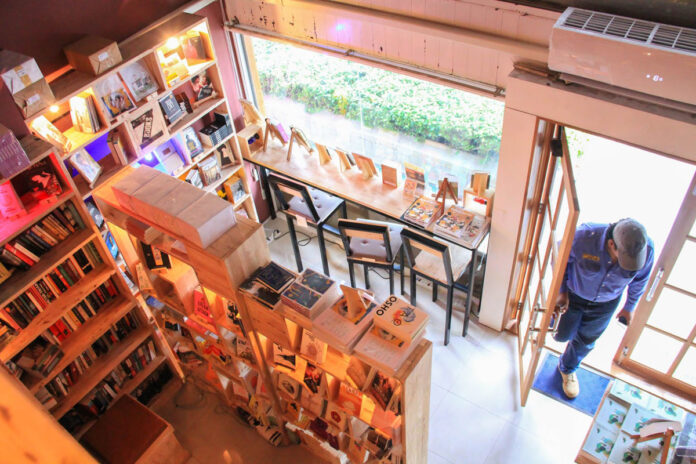
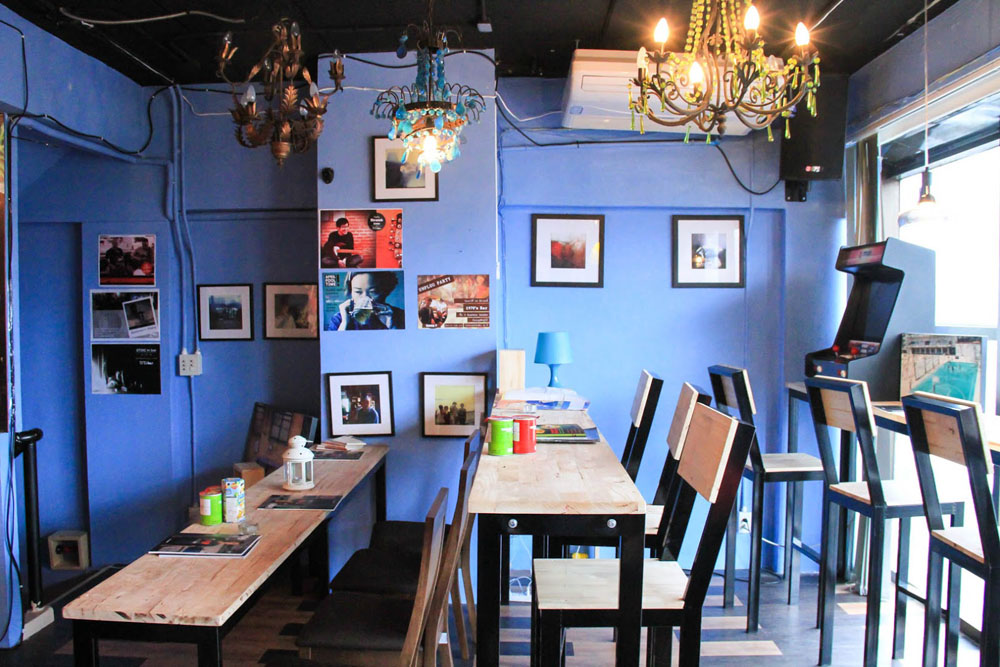
That’s changed now with new kid on the avenue Zombie Books, a multi-story building that opened a few months back to offer everything the idle class yearns for, from bookstore and gallery to coworking space, cafe and bar.

Walk about a five-minute walk up the road from the movie theatre and step inside to find wooden shelves lined with thousands of new and used books in both Thai and English. Covers range from Charles Dickens’ classics to post-feminist, chick lit “Bridget Jones’s Diary,” to the bestselling adventures ala “Into the Wild.”

Not into books, just thirsty? That’s alright because at the back of the first floor sits a coffee shop serving your basic iced Cappuccino to exotically named soft drinks such as Zombie Blood, a mix of apple and strawberry sodas.

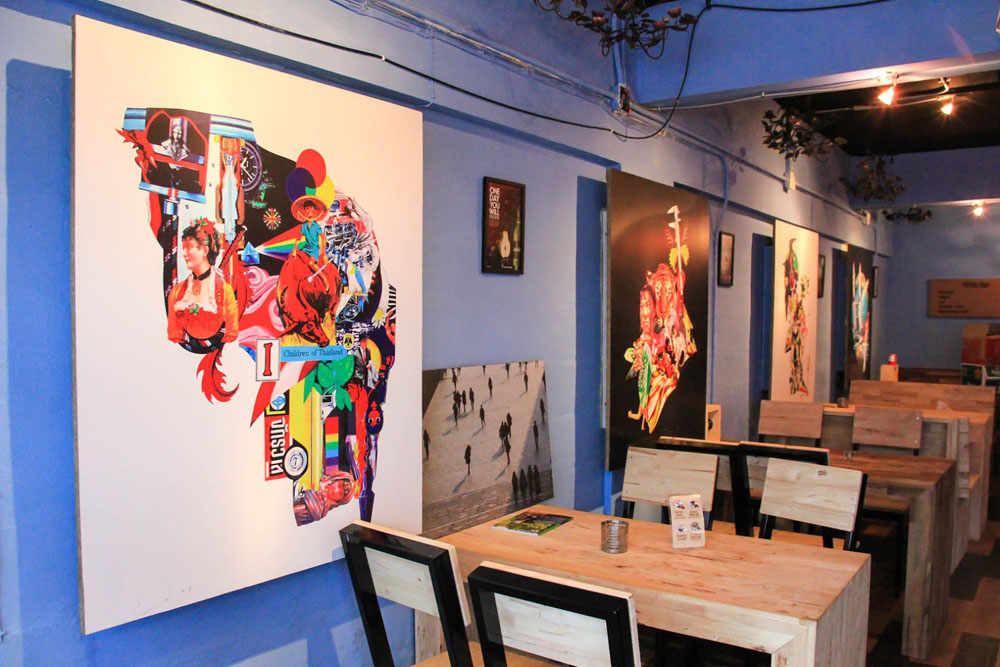
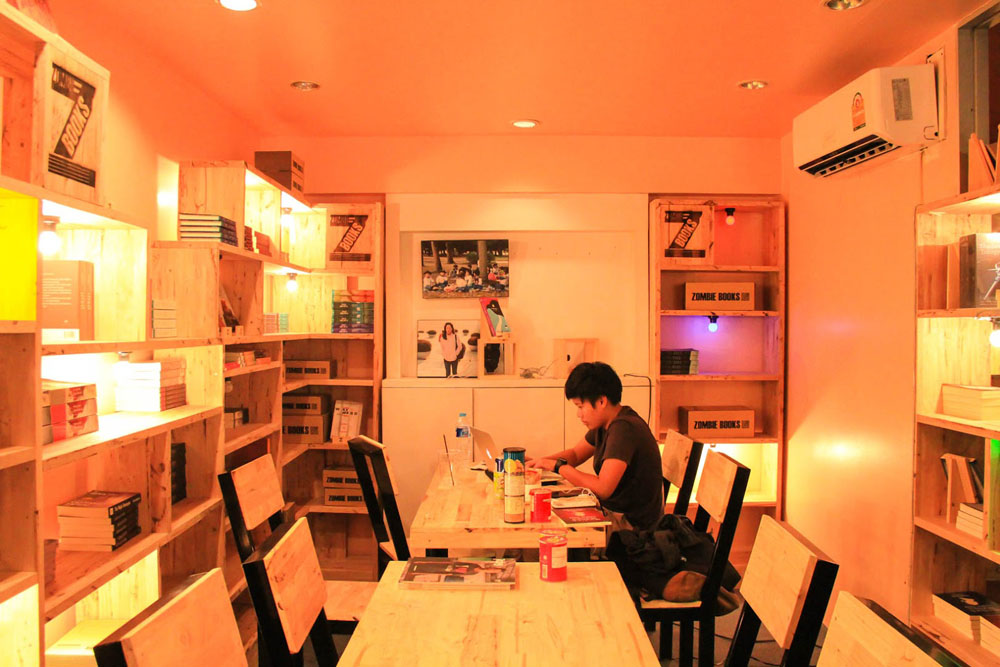
Stairs lead up to the mezzanine, where tables and chairs are ready for chit-chat, workshops, meetings or just working in peace under warm lighting. The second floor is quite similar, and lined with a dozen of framed pictures on the walls.

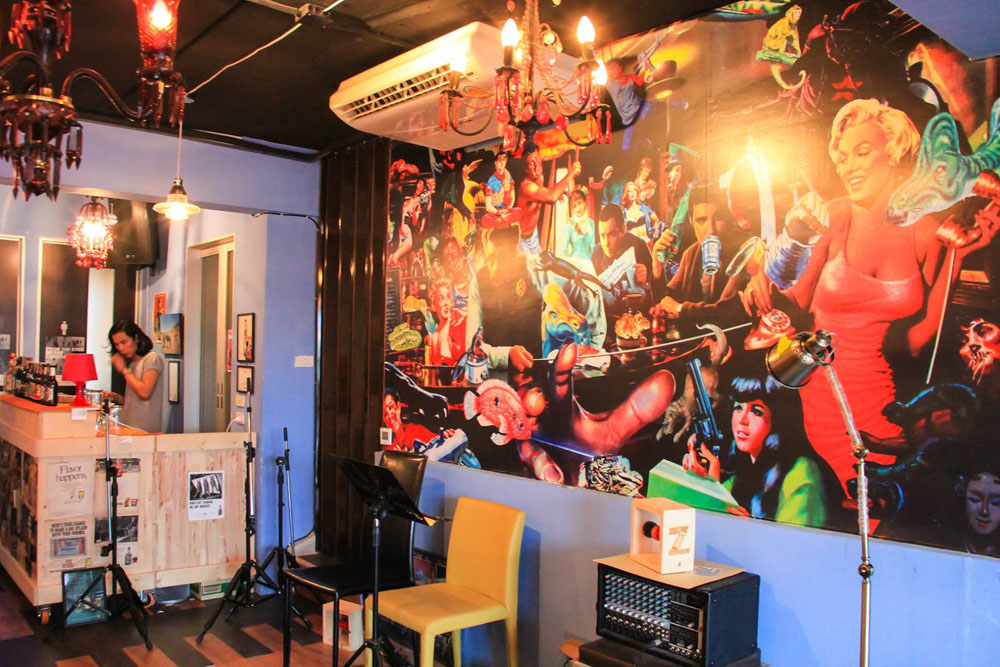
The third floor is a bar where some artful collage works, a record player and gaming machine area available. The bar opens at 6am and closes at midnight. Live bands of various genres from acoustic to jazz perform live on Fridays and Saturdays. The space is sometimes used for events such as mini-concerts or stand-up comedy.

“It’s rare for someone who goes to a bookstore just to buy only one book. So I want my bookshop to be somewhere interesting and not so boring,” the owner explains. “And I gotta make it not boring too.”

He only identifies himself as Tong and says at first he only wanted to create an online bookstore. But since space is needed to store the books, he decided to open a physical shop too.

Each book sold, mostly works of fiction, come from Tong’s preferences.

“The shop comes from my tastes. It is built from who I am and what I like,” said Thong, who is also writer under the pen name “10 Decibels.”

Zombie Books is Tong’s third bookshop, after his first in Pai and another in Bangkok. He said the the undead-themed name came from his return after a previous business failure.

“I’m still alive. I’m not dead yet,” Tong said. “Another reason is my belief that when a customer comes into our shop once, they’ll come back again. It’s like they’re one of us, they’re bitten by a zombie.”

Zombie Books is located along the RCA party strip off Phetchaburi Road, can be reached by a motorbike from MRT Phetchaburi.

zombie.ext

zoombie.shelves zombie.wall zombie.tables zombie.girl zombie.games
zombie.desks zombie.chairs zombie.books zombie.beer zombie.art

Advertisement

Down the ‘Single Gateway’ Rabbit Hole to Transparency Battles Unfought

Fan art from Facebook page DrawAndDxng depicting the single gateway as an evil character wearing a coconut shell controlling all the data streams.

Many things have been said about the Single Gateway super surveillance project since the story broke this past September.

The Good People who run the country have been arguing about the need for mass surveillance in light of current laws that leave them powerless to protect the general public. They have evoked Applebaum’s four horsemen of the Infocalypse – child porn, terror, crime and drugs to justify the need for increased powers.

Let’s forget the few pros and many cons of the gateway project for a moment and review the trail of evidence that led to its public disclosure, a Pyrrhic victory for transparency if it prompts the government to better hide its tracks and find even darker corners to conduct the public’s business.

Yes, there is clear, publicly available information that would suggest not only that General Happiness knows about the project, but actually ordered it expedited. Many times.


The Cleric and His Four ‘Mistaken’ PM Orders

There are suggestions that some of the evidence has been, at the least, subjected to overabundant brevity in its public presentation at the highest levels to mislead the public.

The official narrative goes that there was never an order regarding the Single Gateway and any appearance otherwise resulted from a clerical error.

However, there are at least four Prime Ministerial orders to the Ministry of Information and Communication Technology, or MICT, regarding the Single Gateway project published on the Cabinet Secretariat website.

On June 30, 2015, the Cabinet Secretariat issued a Prime Ministerial order to the Ministry of Social Development and Human Security to solve the “problem” of gaming addiction and, in the same paragraph, the MICT and Justice Ministry to set up a Single Internet Gateway to control the flow of information from overseas.

Read: Govt ‘Gateway’ Denials Contradict Cabinet Resolutions

Next month on July 21, 2015, the Cabinet Secretariat issued another order directing the MICT to expedite the establishment of the Single Gateway as per the June 30 cabinet resolution.

Two Tuesdays later on Aug. 4, 2015, the Cabinet Secretariat published a third PM order that included acknowledging progress by the MICT on the Single Gateway and ordering them to engage with the people and answer questions, so the public would be cooperative.

Three meetings later on Aug. 25, 2015, the Cabinet Secretariat published order No. 4 which insisted the MICT expedite the project and demanded “significant” progress by Sept. 30, the fiscal year-end.


Section 1.2 of the June 30 cabinet minutes includes this section: The Ministry of Information and Communication Technology must also work with related agencies, such as Ministry of Justice and Royal Thai police, to proceed with implementation of a single gateway to be used as a device to control inappropriate websites and flow of news and information from overseas through the internet system.


Four orders from Prime Minister Prayuth Chan-ocha published on the official Cabinet Secretariat website would be cast-iron proof most anywhere on this planet, but here in Thailand where fact-checking is a long-lost art form, few bothered to confront General Happiness with these orders and most took his word as gospel.

And that word was a whopper: The Single Gateway did not exist but rather was a clerical error.

For some, that was the end of the story. Some bumbling bureaucrat in the cabinet secretariat mistakenly issued an order in the name of the prime minister. Repeated four times, that would make it epic bungling worthy of Homer (Simpson – not Iliad).


Following the Rabbit

But while most were happy to take the red pill and wake up blissfully unaware in the Matrix, a few of us took the blue and are only now scratching the surface to see how deep the rabbit hole goes – and it certainly seems deep.

And deeper invariably means darker, which is even more worrying.

The government no longer publishes full cabinet resolutions. In what has much further ramifications than just a little Single Gateway, if one is to look closely at the myriad of quasi-cabinet resolutions that have been published, one discovers they are actually mere summaries instead of the full, legally binding resolutions.

Some say summary; some say summary of the important points.

Either way, it is not the legally binding cabinet resolution.

To be fair, this practice did not start under this military government.

Now the real question people should be asking is, have other minor inconsequential details been omitted in the published cabinet resolutions that have been acted on by that bungling, clueless, scapegoat in the cabinet secretariat, who could still be making these clerical errors?

What else has been enacted and then obfuscated and omitted by governments, unelected or elected, that has been kept secret, other than the Single Gateway?


Related news stories:

Thailand to Welcome New Digital Ministry
Junta Approves 20 Billion Baht for Internet Broadband, Gateway
Gamers, Geeks on Epic Quest for Internet Freedom
Govt ‘Gateway’ Denials Contradict Cabinet Resolution
Junta Readies ‘Great Firewall of Thailand’

Advertisement

Wait Not Over For Loved Ones of Jailed ‘Wolf Bride’ Actress

Inmate Pornthip Munkong's boyfriend of nine years, Weeranan Huadsri, at left, and mother Nual Munkong on Friday outside the Klong Prem Central Prison in Bangkok.

BANGKOK — Two farmers from Phitsanulok province continued waiting outside a Bangkok women’s prison for Pornthip Munkong to go free Friday, much as they did every day last week.

Pornthip, their daughter, was jailed on a 2014 conviction for insulting the monarchy in a play she staged with a fellow activist the year before. After the other activist convicted of the same crime was suddenly released last week among those to receive annual royal pardons, Pornthip’s family and friends had hope that she, too, would follow.

But the problem is that no one can tell them when or if her freedom will come, so they have had no choice but to endure the waiting.

“There’s no clarity of whatsoever on the release,” said Pornthip’s mother, Nual Munkong. “Two years is already a long time for parents to not see their child. We were glad when we heard about the release, but this leaves us devastated.”

Read: Exasperating Wait For Release of Loved Ones From Prison

According to Nual, she and her husband Manit had to leave their home in Phitsanulok and stay with cousins in the capital city for the past week just so they could make the daily commute to the  Women’s Central Prison in Bangkok’s Chatuchak district. Each trip to and from the prison costs at least 300 baht, a large sum for rural farmers like Nual and Manit.

And they’re not alone. Loved ones of other convicts have been idling outside the prison during the past week since hearing up to 26 pardoned convicts would be released.

Under the military government that seized power in May 2014, Pornthip was convicted of lese majeste (insulting the monarchy) for acting in a student play called “The Wolf Bride,” which was staged in the Main Hall of Thammasat University in October 2013. Authorities said the play included defamatory allusions to the Royal Family.

Pornthip was found guilty along with her acting partner Patiwat Saraiyaem. They were scheduled to be released later this year in October, but the prison let Patiwat walk free the morning of Aug. 12, Her Majesty the Queen’s Birthday, on the grounds he qualified for a mass royal pardon handed down on that special occasion.

Since then, Pornthip’s loved ones hope she would be granted the same pardon. But officials at the women’s prison won’t confirm or deny even the possibility, saying that they will free any pardoned inmates as soon as they receive an order from the Department of Corrections.

Another person caught in Godotesque limbo is Pornthip’s boyfriend, Weeranan Huadsri. Like Pornthip’s family, Weeranan has waited up to six hours per day in front of the women’s prison.

“As someone who has to wait, this is not alright,” Weeranan said . “Everyone has to work and is not always available. Also, there’s a cost that we must pay for the waiting, such as transportation and accommodations. Still, we want to wait for our loved one.”

The  Women’s Central Prison is one part of a sprawling corrections complex collectively known as Klong Prem Central Prison.

Weeranan said when he called the Department of Corrections about his girlfriend, the officials replied that those pardoned would be out soon, but wouldn’t say when. They also told him the delay was due to new measures that require detailed information about the convicts before they are released.

The next chance for Pornthip’s release is Monday. Manit, her father, won’t be there, because he has to return to work on his farm Sunday. Nual will continue waiting in Bangkok, something she is trying to keep from her daughter so that she doesn’t worry.

Weeranan, who works for the civil rights group Thai Lawyers for Human Rights, said Pornthip is already concerned her parents are going through a lot of difficulty just to wait for her.

“There’s a saying ‘Justice delayed is justice denied,’ which I think is appropriate to the situation,” Weeranan said.

Advertisement

SMAP Decision: Japan’s Long-Running, All-Male Pop Act to Break Up

TOKYO — The on-again, off-again breakup of an all-male Japanese pop group with a strong following throughout Asia is back on: The five members of SMAP will go their separate ways at the end of this year, after performing together for more than two decades.

The group’s agency, Johnny & Associates, announced Sunday that SMAP would disband, according to Japanese media reports. The agency said its members would focus on their solo careers, Kyodo News service reported.

A possible split was widely rumored in January, until the group’s members made an unusual television appearance to say they would stay together and apologized for causing concern among their fans.

Johnny & Associates said that it had recently proposed the band take a hiatus, but that some members wanted to break up for good, according to the media reports.

“We judged it difficult for them to continue activities as a group,” Johnny & Associates said, according to Kyodo.

SMAP, which stands for “Sports Music Assemble People,” was formed in 1988 as a six-person teenage boy band. Its first CD came out in 1991, and the group surged to stardom with choreographed singing and dancing.

SMAP’s members now range in age from 39 to 43, and it remains a popular group that is a staple of entertainment shows and commercials. Each member has also performed individually in variety shows and films.

Feel the power of SMAP.

Advertisement

Chiang Rai Rangers Searching for Missing Asian Tourist

Search parties on Friday inspect one of many caves in the Tham Luang - Khun Nam Nang Non forest park, where a tourist went missing.

CHIANG RAI — Park rangers in Chiang Rai province launched a search Thursday for a foreign tourist who went into the forest to meditate a week ago and then vanished.

The tourist, who was only described by a witness as Asian-looking, was last seen Aug. 12 as he made his way to the Tham Luang – Khun Nam Nang Non forest park, known for its many caverns.

“We have sent out search parties until we find him, dead or alive,” forest park director Sawasdi Taweerat told reporters Friday. “But I believe he’s still alive, because the missing man had plenty of food supplies with him.”

Pavinee Mayer, a vendor who appeared to be the last person to have seen the missing tourist, said the man stopped by at her stall on the afternoon of Aug. 12 and told her, in Thai, that he was trekking into one of the caves in the forest to meditate for several days.

The tourist, who “looked either Chinese or Japanese,” left his bicycle at her stall and carried his supplies into the jungle, Pavinee said. When she returned to her stall on Wednesday, the bicycle was still there, so she alerted police.

After the search was halted Friday with no sign of the man, officials said they still have one large cave to search in a few days once flood water drains from its entrance chamber.

Advertisement

Media’s Self-Inflicted Punishment is the New Censorship

Nattakorn Devakula and Atukkit Sawangsuk in a promotional image for Voice TV's Wake Up News program.

RetentionPublic and foreign diplomats are routinely told by the military regime that Thai media enjoys freedom to criticize. That’s only half true at best. The reality is that, two years after the 2014 coup, the selective pressures being applied on some media critical of the junta have just become more subtle and sophisticated, thus rather invisible.

Apparently, the junta doesn’t need to muzzle the media, as at least one outlet has shown it’s willing to strap it on for them.

Take what happened at Voice TV earlier this week. It began when Voice TV news director Prateep Kongsib announced Sunday on Twitter the station’s decision to pull two well-known political news commentators off the air from some programs for 10 days in order “to survive under these special circumstances.”

Prateep, who also tweeted the station “was given a condition that can’t be refused,” later told me the decision resulted from a meeting between representatives of Voice TV, telecoms regulators and the junta. (Was the junta rep there to ensure the regulator from the National Broadcasting and Telecommunications Commission, or NBTC, remained pro-active?)

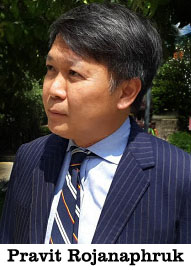
Pravit RojanaphrukLast month, junta leader Gen. Prayuth Chan-ocha used his absolute power under Article 44 of the provisional charter to empower the commission to censor any media deemed a threat to national security and shield it from legal consequences for doing so. According to an outstanding junta order from 2014, security threats include anything construed as defaming the monarchy, “insincere” criticism of the junta, or anything that might sway public opinion against it.

After the news got out, there was criticism of the junta, but even more so criticism of the commission.

Commissioner Thawatchai Jittrapanun soon tweeted Wednesday that the commission did not order the suspension of any staff at Voice TV, adding that the law does not grant it the power to punish any particular media worker as the power rests with each media company.

“There’re still misunderstanding regarding the resolution of the NBTC regarding Voice TV. The commission did not suspend any staff. Instead it was a proposal made by the TV station so the commission did not act further,” Thawatchai tweeted.

I tweeted back and asked why would Voice TV submitted a letter to the commission Monday informing it of the disciplinary action if it had nothing whatsoever to do with the NBTC? There was no answer from Thawatchai. Another commissioner, Supinya Klangnarong, explained to me earlier by telephone that this was an offer made by the station in a desperate attempt to thwart the possibility of heavier punishment meted out by the commission.

Supinya said Voice TV had been warned several times in the past by the NBTC and heavier punishment could mean an order to permanently remove two popular political programs. This, she added, would have severe repercussions on the station’s advertising revenues.

Although Voice TV is owned by Panthongtae Shinawatra, the only son of ousted and fugitive former premier Thaksin Shinawatra, it is also a corporate media outlet and turning a profit matters as much as scrutinizing the military regime, if not more.

Voice TV chose to engage in pre-emptive self-punishment in order to appease the NBTC, thus the junta, in a bid to avoid greater calamity. On the surface, it lends the appearance that the junta and the NBTC had nothing to do with the move and thus should not be held responsible for what happened.

Supinya and Prateep’s accounts suggested a more subtle and sophisticated model of self-censorship at work, however. Supinya said that basically any criticism against the junta on television could be construed as violating the MoU reached with the junta/NBTC. Prateep meanwhile told me the two staff members have been accused of harboring a “negative attitude” toward the junta and its military government.

Does this mean it’s now unacceptable to have a negative attitude toward the coup makers who illegitimately seized power?

In this new model of pre-emptive self-censorship, it’s the media organization which “voluntarily” takes the initiative to censor itself by punishing its own staff to avoid the appearance of another infringement on press freedom by the junta or broadcast commission.

No statement was issued by any of the media associations condemning this violation of press freedom.

The two suspended staff members also feel compel to speak as little about it as possible, as they do not want to be accused by colleagues of jeopardizing the future of the TV station itself.

Nattakorn Devakula, who along with Atukkit Sawangsuk was suspended 10 days, was even sympathetic to those who suspended him. He told me via Facebook message: “I would rather stay quiet on it. Trying to cooperate with [the commission] to prevent further escalation of the conflicts. But to sum it short, they are unhappy with commentary on political/divisive issues of most kinds.”

A female Voice TV staff who was not suspended and asked not to be named due to the sensitivity of the issue referred to the act as “self-punishment” instead of blaming the junta or the NBTC for curbing press freedom. The issue is thus framed as a matter of internal regulation than external threat to press freedom, as illustrated by the stance taken by NBTC commissioner Thawatchai. It shifts the language from “rights” to that of “regulation.”

It also pits staff against management, further diverting attention and possible repercussion from the junta and the commission. No wonder Nattakorn doesn’t denounce his management, as staff could accuse the two of jeopardizing the station’s survival if they didn’t comply.

This is the latest in a long history of threats against Thai media. Under Thaksin Shinawatra, one outlet highly critical of his government, Matichon Group, which owns Khaosod and Khaosod English, was pressured to back off via threats of an attempted corporate takeover by a Shinawatra proxy company back in 2005. There was no proof beyond a reasonable doubt the company which tried to take over Matichon was doing so on Thaksin’s behalf as alleged. Under Thaksin as it is now, the awarding of lucrative state-agency ads and commercials to friendly media firms have become a common practice.

The junta, aka National Council for Peace and Order or NCPO, has evolved from the first days after the coup when it use naked force to muzzle opposition media by sending troops “guard” various TV stations thus ensuring self-censorship, ordering some shut down, and detaining journalists without charge for “attitude adjustment.” It now implicitly “enabled” Voice TV to punish its own staff for doing a competent job at holding the regime accountable.

I asked Prateep if it would be difficult for Voice TV to survive if it doesn’t soften its content and he replied, “That’s the signal they are sending.” Given the situation, news organizations more committed to maximizing profits instead of holding the powers that be accountable will eventually relent and tell its staff to go easy on the junta. Such processes lead to internalized censorship where a line would be drawn as to what is permissible and what is not without any knowledge of the public.

Internalizing self-censorship is nothing new for Thailand, where media have routinely self-censored themselves for decades (and still do so) on any news which might be construed of as mildly critical of the monarchy – and even some that are not – for fear of violating the draconian lese majeste law.

We must give credit to the junta and the NBTC for the new paradigm of voluntary, preemptive self-punishment, however.

Advertisement

Antlers Stolen by Hunter S. Thompson Returned to Hemingway Home

Anita Thompson, left, is joined by Library Executive Director Jenny Emery Davidson, middle, and Program Manager Scott Burton as they pose with trophy antlers while returning them to the former home of writer Ernest Hemingway on Aug. 5 in Ketchum, Idaho. Photo: Christina Jensen / The Community Library / Associated Press

BOISE, Idaho — A young Hunter S. Thompson went to Idaho to write about Ernest Hemingway and decided to take a piece of his hero home with him — a set of trophy elk antlers.

More than half a century later, the gonzo journalist’s wife returned the antlers to Hemingway’s house in the mountain town of Ketchum.

“He was embarrassed that he took them,” Anita Thompson told The Associated Press on Thursday, noting the deep respect her husband had for Hemingway’s work. “He wished he hadn’t taken them. He was young, it was 1964, and he got caught up in the moment.

“He talked about it several times, about taking a road trip and returning them,” she said.

She gave back the antlers Aug. 5 to Ketchum Community Library, which helps catalog and preserve items in the residence where the author took his own life. It’s now owned by the Nature Conservancy.

In 1964, Hunter Thompson, then 27, came to Ketchum when he was still a conventional journalist. He had not yet developed his signature style, dubbed gonzo journalism, that involved inserting himself, often outrageously, into his reporting and that propelled him into a larger-than-life figure.

Thompson was writing a story for the National Observer about why the globe-trotting Hemingway shot and killed himself at his home three years earlier at age 61. Thompson attributed the suicide in part to rapid changes in the world that led to upheavals in places Hemingway loved most — Africa and Cuba.

Even Ketchum, which in the 1930s and 1940s attracted luminaries such as Gary Cooper, had fallen off the map of cafe society by the late 1950s, Thompson wrote.

In the story, later collected in his book “The Great Shark Hunt,” he noted the problem of tourists taking chunks of earth from around Hemingway’s grave as souvenirs.

Early in the piece, he wrote about the large elk antlers over Hemingway’s front door but never mentioned taking them.

For decades, the antlers hung in a garage at Thompson’s home near Aspen, Colorado.

“One of the stories that has often been told over the years is the story of Hunter S. Thompson taking the antlers,” said the library’s Jenny Emery Davidson, who helped accept the trophy. “These are two great literary figures who came together over the item of the antlers.”

Davidson said historian Douglas Brinkley, who spoke at the library in May and was familiar with the antler story after interviewing the writer, contacted Anita Thompson. She called the library on Aug. 1.

Davidson said the antlers have since been shipped to a Hemingway grandson in New York who wanted them. It’s not clear if the antlers came from an elk killed by the author, who was a noted big game hunter, or if they were a gift.

Sean Hemingway didn’t respond to emails or phone messages seeking comment.

Like Ernest Hemingway, Thompson ended his own life by shooting himself, dying in 2005 at age 67 at his Colorado home.

His widow wants to turn the house where he lived and worked into a museum, planning to open it next year by invitation only. Like Hemingway’s home, it’s much the same as it was when Thompson was alive.

“I couldn’t open it with a clear conscious knowing there’s a stolen pair of antlers,” Anita Thompson said, noting the theft was unusual behavior, even by her husband’s standards.

Story: Keith Ridler

Advertisement

Hot News

LATEST NEWS

Bangkok
scattered clouds
29.7 ° C
30 °
27.2 °
78 %
3.2kmh
38 %
Tue
35 °
Wed
36 °
Thu
33 °
Fri
32 °
Sat
29 °