28.3 C
Bangkok
Monday, June 29, 2026
Home Blog Page 2687

Long-Lost, Restored ‘Santi-Vina’ Returns to Thailand for Fest of Epics

Promotional poster of ‘Santi Veena’ after screened in Cannes. Photo: Thai Film Archive / Courtesy

BANGKOK — After resurfacing outside Thailand, a long-lost film restored in Italy and screened at Cannes will show again 62 years after it debuted in Siam Square’s vintage cinema house.

The cinematic love triangle at the heart of 1954’s “Santi-Vina” will be among seven groundbreaking, classic epics at Scala Theater along with all-time beloved musical “The Sound of Music” (1965), Alfred Hitchcock’s scarefest “Psycho” (1960), proto-historical action “Spartacus” (1960) and sweeping romance of “Doctor Zhivago” (1965).

The Film Archive selected these films as all were seen by King Bhumipol at local theaters in the ‘50s and ‘60s.

Read: Cannes First, Then Thailand for Restored ‘Lost’ Classic

Admission is 100 baht. The 114-minute “Santi-Vina” screens at 8pm on July 15 at Scala Theater as part of the opening ceremony.

“The Sound of Music” will show Aug. 7 at the same location. The other five films are queued to show on the silver screen through December.

King Bhumipol in the lobby of the former Empire Theater for the 1954 premiere of ‘Santi-Vina.” The theater was located near Saphan Phut. Photo: Thai Film Archive / Courtesy

Related stories:

Cannes First, Then Thailand for Restored ‘Lost’ Classic

Advertisement

Pentagon Ends Ban on Transgender Troops in Military

A former U.S. Army soldier poses for a portrait at his home on June 22 in Atlanta, Georgia. Photo: John Bazemore / Associated Press

WASHINGTON — Saying it’s the right thing to do, Defense Secretary Ash Carter announced Thursday that transgender people will be allowed to serve openly in the U.S. military, ending one of the last bans on service in the armed forces.

“Americans who want to serve and can meet our standards should be afforded the opportunity to compete to do so,” said Carter, laying out a one-year plan to implement the change. “Our mission is to defend this country, and we don’t want barriers unrelated to a person’s qualification to serve preventing us from recruiting or retaining the soldier, sailor, airman, or Marine who can best accomplish the mission.”

Under the new policy, by Oct. 1, transgender troops already serving should be able to receive medical care and begin formally changing their gender identifications in the Pentagon’s personnel system. And, a year from now, the military services will begin allowing transgender individuals to enlist, as long as they meet required standards and have been stable in their identified genders for 18 months.

Carter’s announcement comes despite concerns from senior military leaders that the department is moving too fast and that more time is needed to work through the changes.

According to defense officials, the military leaders, including Gen. Mark Milley, the Army chief of staff, and Gen. Robert Neller, commandant of the Marine Corps, said that while they aren’t opposed to lifting the ban, they thought the new rules didn’t include enough specifics to guide commanders who will have to make decisions about people in their units.

Carter said he discussed the plans extensively with his military leaders and that, based on their recommendations, he made adjustments to the timeline. He said he has been told that the services now support the timeline.

According to Carter, a study by the RAND think tank found that there are between 2,500 and 7,000 transgender service members in the active duty military, and another 1,500 to 4,000 in the reserves.

“Although relatively few in number, we’re talking about talented and trained Americans who are serving their country with honor and distinction,” said Carter.

Under the new policy, transgender troops would receive any medically necessary care including surgery, Carter said.

The new rules give military commanders broad flexibility, noting that not all transition cases are the same. Commanders will have the discretion to make decisions on a case-by-case basis, including on job placement, deployments, training delays and other accommodations, based on the needs of the military mission and whether the service members can perform their duties.

For people coming into the military, the plan says that those with gender dysphoria, a history of medical treatments associated with gender transition and those who have had reconstruction surgery may be disqualified as military recruits unless a medical provider certifies that they have been clinically stable in the preferred gender for 18 months, and are free of significant impairment. And transgender troops receiving hormone therapy must have been stable on their medications for 18 months.

The policy provides guidelines for transgender service members currently in the military. They will be able to use the bathrooms, housing, uniforms and fitness standards of their preferred gender only after they have legally transitioned to that identity.

Over the next year, the military services will develop and distribute training guidelines, medical protocols and other guidance to help commanders deal with any issues or questions about transgender troops.

The military policy differs from civilian gender transitions, where transgender individuals often dress, live socially and work fulltime in their preferred gender during the process. Under the new policy, service members would only be able to do that when off-duty and away from their duty station.

Last July, Carter said he intended to rescind the ban, calling it outdated. He has long argued that the military must be more inclusive to bring in the best and brightest.

At the time, he ordered a six-month study to include extensive medical and scientific research and discussions with other nations and companies with experience in the process. He extended the study because the military wanted more time. Officials said he wanted to ensure there was no impact on military readiness, but over time, he became frustrated with the slow progress.

Rep. Mac Thornberry, R-Texas, the House Armed Services Committee chairman, called the announcement another example of the administration “prioritizing politics over policy.” He questioned whether the change would affect military readiness and said the committee will push for answers.

Others praised the move as historic. Aaron Belkin, director of the Palm Center, a research institute at the University of California, Los Angeles, said the decision enhances “readiness as well as core values of honesty and integrity, an enormous accomplishment with a durable impact on all service members.”

Story: Lolita C. Baldor

Advertisement

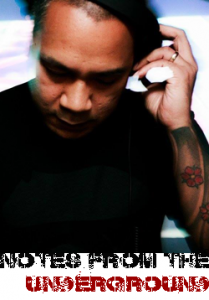
Notes From the Underground, Vol. I

DJ Bomba Selecta emerges on top Friday at the Red Bull Thre3style DJ Competition.

Top: DJ Bomber Selecta came out on top Friday at the Red Bull Thre3style DJ Competition. Photo: Red Bull Thailand

Let’s trace the source of Bangkok’s club scene back to the turn of the millennium and a place called Cafe Democ.

It wasn’t posh. The sound system wasn’t great, and the decor was a mixture of neocolonial-modern bombed out in graffiti.

Notes from the Underground - Mongkorn 'DJ Dragon' TimkulBut like the monument that stood outside for which it was named, the venue was where all DJs had their voices heard. At the start, Thai clubbers were not well educated in electronic music and everyone was there to experience something new. For us DJs, it was a time of learning and experimentation.

I talk about this now, four years after it closed for good, because I believe everyone should know about this place, because understanding the history of the scene here in the capital is important to understanding where it’s at today.

And for many people such as myself, its inspiration continues to motivate what we do to this day.

I like to imagine that If the Thai club-goers were pups weaned off the milk from our mother Cafe Democ during our infancy, we’ve learned how to walk and have since run amok throughout the capital city, all finding our niche somewhere some place.

For me it’s a path that hasn’t stopped since I was part of the early drum ‘n bass scene as part of Homebass Communications, not to mention Dubway Sessions and even some dabbling in deep house and disco.

Welcome everybody to Notes From the Underground, a place I want to share all things weird and wonderful from Bangkok’s club scene.

Starting off the column I want to talk about the new kid on the block – Beam.

With a state of the art sound system, lighting and a lineup of the best A-list DJs, the venue has set a new bar for clubs without crossing the line into douchebag.

Dark? Check. Loud? Check. Must be Beam. Photo: Beam / Facebook

Although it’s been going some time now, Beam just held its opening party last Friday. The guest of honor on the decks was the UK’s Roska. Although many Bangkok clubs built up from humble beginnings, we can say that we now have one venue that has spared no cost in design – and most importantly – bookings. After all the club has already seen DJs such as Zinc, Ian Pooley and Detroit Swindle pass through.

Here’s the inevitable question: Does it have what it takes to stand the test of time? Bangkok’s clubbing history is full of closed doors of once banging megaclubs we’ve already said goodbye to with names such as Ministry of Sound and Club Astra.

“The club is hands down the best club in Bangkok. Incredible sound and lighting system, but sadly there isn’t enough of a crowd to really take full advantage of somewhere like that yet,” Bangkok Dnb DJ Delorean said. “For now the uptake seems to be mostly the Thonglor hipsters who jump on anything new, but only time will tell if Beam can keep to their guns of playing underground music and bringing upcoming DJs and producers, as it’s not an easy thing to do in this city –  especially trying to make money doing it.”

Me personally, I think it’s going to take clever bookings to create a loyal following with both local and international DJs. In the end, only time will tell, and I wish them best of luck.


State of the DJ Union

DJ Krush spins Saturday at House RCA. Photo: Brady Weeks

On the same day as Beam’s opening party was Red Bull’s Thre3style World DJ contest. This event takes place in 24 cities around the world, where the best of the best battle it out for world supremacy. (Ed. note: Through modesty false or genuine, Dragon fails to mention he was a competitor last year.)

For the initiated, this is not the kind of cake-throwing or fist-pumping action found at every commercial EDM rave, but more about technical turntable wizardry as contestants mix, scratch and mash-up tracks in a 10-minute time limit.

Six of Bangkok’s best turntablists battled it out Friday for a chance to represent their homeland in the world finals. It was an intense battle, but in the end DJ Bomber Selecta destroyed the set and was crowned winner. To see this year’s winner go against the world’s best shows Thailand has world class talent.

(Though wouldn’t it be great if one day we could have booking agents, clubs and record labels looking toward the land o’ smiles to add artists to their roster?)

Prishda Jumsai, aka DJ Wen, is part of Bangkok’s drum ‘n bass scene and a Homebass Communications homie. A longtime Thre3style supporter, Wen said it’s difficult making it as a dude Asian DJ.

“That’s unless you grow a pair of breasts – then you will get bookings all across Asia,” Wen said. “It’s going to be hard to compete with DJs from UK or Japan, where the DJ scene is so strong. I wish the 2016 winner, Bomber Selecta, all the best to make Thailand proud.”

On Saturday, I hosted renowned Japanese producer and master turntablist DJ Krush at a Dubway Sessions show on RCA/

Despite a monsoon downpour, an enthusiastic crowd turned out for DJ Krush on Saturday at House RCA.

Fusing elements of jazz, ethnic Japanese instruments and spirituality in his work, this is a man who has taken Japanese hip-hop to the world stage – all on his own terms – so I wanted to ask him what makes a DJ succeed.

Embracing identity, he suggested.

“It’s best to look into yourself and find your own original sound,” Krush said in the afternoon before his show. “As I traveled the world, I had deeper sense of appreciation of where I was from, and I really wanted to show that in my music.”

“Nobody wants to hear a producer copy from another producer, that’s why it’s important to have faith in your own work,” he said.

This is the kind of attitude DJs and artists from Thailand need to adopt more of.

We need to look toward our own culture, find ideas from that and let that reflect in our art. It’s the only way we can stand out.

Wrapping up, I want to give due credit to the fans who pack the clubs that make all this possible. I heard from Krush’s manager the day after his show that the DJ was very impressed by the energy he got from the crowd, which despite the pounding rain, came to enjoy the vibes.

See you out there.

Top: DJ Bomber Selecta emerges on top Friday at the Red Bull Thre3style DJ Competition.

Advertisement

Boris Bows Out: UK in Shock as Johnson Drops PM Bid

Former London mayor Boris Johnson waves after announcing Thursday he will not run for leadership of Britain's ruling Conservative Party in London. Photo:Matt Dunham / Associated Press

LONDON — In a real-life political drama mixing Shakespearean tragedy with “House of Cards,” Britain’s victorious anti-EU campaigner Boris Johnson saw his chances of leading his country evaporate Thursday after the defection of a key ally.

The former London mayor dropped his campaign to become Conservative Party leader and prime minister after Justice Secretary Michael Gove abruptly withdrew his support for Johnson and announced he would run himself.

Johnson, a prominent campaigner for Britain’s withdrawal from the 28-nation European Union, told a news conference where he was expected to announce his candidacy that the next Conservative leader would need to unite the party and ensure Britain’s standing in the world.

“Having consulted colleagues and in view of the circumstances in Parliament, I have concluded that person cannot be me,” he said to the astonishment of gathered journalists and supporters.

Johnson paraphrased Shakespeare’s “Julius Caesar,” saying it was “a time not to fight against the tide of history but to take that tide at the flood and sail on to fortune.” It appeared to be a dig at Gove — the reference is to a line spoken by Brutus, the Roman leader’s ally turned assassin.

Others drew a more contemporary parallel.

“It makes ‘House of Cards’ look like ‘Teletubbies,'” Conservative lawmaker Nigel Evans told the BBC.

Johnson’s departure makes Gove and Home Secretary Theresa May the favorites among five contenders to lead the Conservatives.

It is an unexpected twist in a career that has seen the 52-year-old Johnson serve as journalist, lawmaker and mayor, building a public profile on Latin quips, cycling and rumpled eccentricity while nurturing a poorly concealed ambition to lead his country.

Johnson’s decision to break with longtime ally Prime Minister David Cameron and back the “leave” side in Britain’s EU referendum seemed to have paid off when Cameron announced he would resign after last week’s vote in favor of exiting the bloc.

Cameron’s announcement triggered a Conservative leadership race in which Johnson was expected be a front-runner, with Gove as his campaign manager.

The two men had campaigned together to yank Britain from the EU. But since their unexpected victory, they have been accused of failing to lay out concrete plans for Britain’s divorce from the EU.

Johnson addressed the issue in a Daily Telegraph column that seemed to say Britain would continue to enjoy most of the benefits of EU membership — a claim dismissed by European leaders as wildly unrealistic. That fueled concern among Conservatives who felt Johnson lacks the attention to detail to be a leader.

Gove, a former journalist on the Rupert Murdoch-owned Times newspaper, had long disclaimed any ambition to be Britain’s leader. Asked earlier this month if he would run, he said: “Count me out.”

Gove tried to explain the 180-degree turn Thursday, saying the country “needed someone who would be able to build a team, lead and unite.”

“Boris is an amazing and an impressive person, but I’ve realized in the last few days that Boris isn’t capable of building that team and providing that unity,” he said.

The first public signs of a split between Johnson and Gove came in an email from Gove’s wife, newspaper columnist Sarah Vine, obtained by Sky News on Wednesday. It suggested that Gove should ensure he had specific guarantees from Johnsonbefore backing the latter’s bid. Vine added that influential media barons Murdoch and Paul Dacre, editor of the right-wing Daily Mail, “instinctively dislike” Johnson.

Steven Fielding, professor of politics at the University of Nottingham, said Johnson “wasn’t trusted enough by the people who really wield power in British politics — Rupert Murdoch and Paul Dacre.”

“Gove, as Rupert Murdoch’s representative in politics, basically knifed him,” Fielding said.

The drama was a reminder of past ruthlessness in the Conservative Party, which has a history of overturning its leaders. Even its most successful prime minister, Margaret Thatcher, was ousted by her own party in 1990.

Britain’s main opposition Labour Party is also in turmoil, but is finding it harder to change its leadership. Party chief Jeremy Corbyn is under intense pressure to resign after losing a confidence vote among his lawmakers. He says he still has the support of the party rank-and-file and of several influential trade unions.

By Thursday, the situation had reached a stalemate: Corbyn would not resign and no Labour legislator had yet come forward to challenge him.

Apart from Gove and May, contenders for the Conservative leadership are Work and Pensions Secretary Stephen Crabb, Energy Minister Andrea Leadsom and former Defense Secretary Liam Fox.

Conservative lawmakers will choose two finalists before more than 100,000 party members select the winner in a postal ballot. The result will be announced on Sept. 9.

The bookies’ early favorite is 59-year-old May, who is seen as a safe pair of hands as the country struggles to disentangle itself from the EU. Her six years as Britain’s interior minister, considered one of the toughest jobs in politics, gives her credibility to deal with the EU on the issue of immigration, sure to be one of the thorniest topics in the exit talks.

Although May supported remaining in the EU during the referendum campaign, she said she would respect the vote result.

“The United Kingdom will leave the EU,” she said, pledging to create a new government department devoted to negotiating Britain’s “sensible and orderly” departure from the bloc.

The new prime minister will also have to deal with an economy weakened by the EU vote. Bank of England Governor Mark Carney said Thursday that the economy had suffered a “large, negative shock.”

“The economic outlook has deteriorated and some monetary policy easing will likely be required over the summer,” he said — but cautioned there was only so much the central bank can do to ease the pain.

What, if any, role Johnson will play in a new government is unclear. But Johnson has bounced back before, and few would rule out an eventual return to front-line politics by one of Britain’s great political survivors.

“Knowing Boris Johnson, he probably doesn’t think this is the last chance for him,” said Tim Bale, professor of politics at Queen Mary, University of London.

Story: Jill Lawless

Advertisement

Little England and Not-so-Great Britan

AMSTERDAM — As an Anglo-Dutchman – British mother, Dutch father – I cannot help but take Brexit rather personally. I’m not a wholehearted Euro-enthusiast, but a European Union without Britain feels like losing a limb in a terrible accident.

Not all my fellow citizens are unhappy. The Dutch anti-EU, anti-Muslim demagogue Geert Wilders tweeted: “Hurrah for the British! Now it is our turn.” This kind of sentiment is more alarming, and more ominous, than Brexit’s implications for the future of the British economy. The urge to destroy can be contagious.

The United Kingdom’s image has changed literally overnight. For more than 200 years, Britain represented a certain ideal of liberty and tolerance (at least for many Europeans; Indians might have taken a somewhat different view). Anglophiles admired Britain for many reasons, including its relative openness to refugees from illiberal continental regimes. It was a place where a man of Sephardic Jewish origin, Benjamin Disraeli, could become Prime Minister. And it stood up to Hitler virtually alone in 1940.

The Hungarian-born writer Arthur Koestler, a former Communist who knew all about European political catastrophes, and was almost executed by Spanish fascists, escaped to Britain in 1940. He called his adoptive country the “Davos for internally bruised veterans of the totalitarian age.”

My generation, born not long after the war, grew up with myths based on truth, promoted in comic books and Hollywood movies: myths of Spitfires fighting Messerschmitts over the home counties, of Winston Churchill’s growling defiance, and Scottish bagpipers walking onto the beaches of Normandy.

The image of Britain as a country of freedom was boosted further by the youth culture of the 1960s. Spitfire pilots were replaced as vigorous symbols of liberty by the Beatles, the Rolling Stones, and the Kinks, whose music swept across Europe and the United States like a gust of fresh air. Having a British mother filled me with a naive and undeserved sense of pride. For me, despite its industrial decline, shrinking global influence, and increasingly inept football, something about Britain always remained best.

There were, of course, many reasons why 52% of those who voted backed the “Leave” campaign. There are reasonable grounds for victims of industrial decline to feel aggrieved. Neither the left nor the right looked after the interests of the old working class in busted mining towns, rusting ports, and decaying smokestack cities. When those left behind by globalization and London’s Big Bang complained that immigrants were making it even harder to find jobs, they were too easily dismissed as racists.

But this cannot excuse an ugly strain of English nationalism, whipped up by Nigel Farage’s UK Independence Party and cynically exploited by the Conservative Party’s Brexiteers, led by former London Mayor Boris Johnson and Michael Gove, the justice secretary in Prime Minister David Cameron’s cabinet. English xenophobia has thrived especially in areas where foreigners are rarely seen. London, where most foreigners live, voted to remain in the EU by a wide margin. Rural Cornwall, which benefits hugely from EU subsidies, voted to leave.

The most sickening irony for a European of my age and disposition lies in the way narrow-minded and dispiriting nationalism is so often expressed. Bigotry against immigrants is cloaked in the very symbols of freedom that we grew up admiring, including film clips of Spitfires and references to Churchill’s finest hour.

The wilder Brexiteers – shaven heads, national flag tattoos – resemble the English football hooligans infesting European stadiums with their particular brand of violence. But the genteel ladies and gentlemen in the shires of Little England, cheering the lies of Farage and Johnson with the kind of ecstasy once reserved for British rock stars abroad, are no less disquieting.

Many Brexiteers will say that there is no contradiction. The wartime symbols were not misplaced at all. To them, the argument for leaving the EU is no less about freedom than World War II was. “Brussels,” after all, is a dictatorship, they say, and the British – or, rather, the English – are standing up for democracy. Millions of Europeans, we are told, agree with them.

It is indeed true that many Europeans take this view. But most are followers of Marine Le Pen, Geert Wilders, and other populist rabble-rousers, who promote plebiscites to undermine elected governments and abuse popular fears and resentments to clear their own paths to power.

The EU is not a democracy; nor does it pretend to be one. But European decisions are still made by sovereign – and, more important, elected – national governments after endless deliberation. This process is often opaque and leaves much to be desired. But the liberties of Europeans will not be better served by blowing up the institutions that were carefully constructed in the ruins of the last calamitous European war.

If Brexit triggers a Europe-wide revolt against liberal elites, it would be the first time in history that Britain leads a wave of illiberalism in Europe. This would be a great tragedy – for Britain, for Europe, and for a world in which most of the major powers already are turning toward increasingly illiberal politics.

The final irony is that the last hope for turning this tide and preserving the freedoms for which so much blood was shed probably now lies with Germany, the country that my generation grew up hating as the symbol of bloody tyranny. But, so far at least, the Germans appear to have learned the lessons of history better than a disturbing number of Brits.

Ian Buruma is Professor of Democracy, Human Rights, and Journalism at Bard College, and the author of ‘Year Zero: A History of 1945.”
Copyright 2016, Project Syndicate.
Advertisement

US Takes Thailand Off Human Trafficking Blacklist

Migrant workers from Myanmar clean fishing nets aboard a trawler after a fishing trip in the Gulf of Thailand in Samut Sakhon province in a Sept. 3, 2013, file photo. Photo: Sakchai Lalit / Associated Press

WASHINGTON — The U.S. has removed Thailand from its human trafficking blacklist, though forced labor is still widespread in the nation’s lucrative seafood industry.

The State Department made the assessment in its annual Trafficking in Persons Report, which examines the efforts of 188 governments in fighting modern-day slavery.

Read: Positive Reaction to US Upgrade of Thailand in Trafficking Report

The report’s section on Thailand is far from sparing. It identifies the kingdom as “a source, destination, and transit country for men, women, and children subjected to forced labor and sex trafficking.”

“Thai victims of trafficking and some of the estimated three to four million migrant workers in Thailand are forced, coerced, or defrauded into labor or sex trafficking,” it continues. “Some labor trafficking victims are exploited in commercial fishing and related industries, factories, agriculture, and domestic work, or forced into street begging. Migrant workers who are trafficking victims may be deported without effective screening for indicators of trafficking. Sex trafficking remains a significant problem in Thailand’s extensive commercial sex industry.”

However, it finds that although Thailand does not meet the minimum standards for eliminating trafficking, “it is making significant efforts to do so.”

“The government amended its 2008 anti-trafficking laws and other laws related to forced labor in the fishing and seafood industry, which increased criminal and civil penalties on traffickers, allowed for the closure of businesses involved in forced labor, and provided legal protection for whistleblowers,” it reads. “The government increased the numbers of investigations, prosecutions, convictions, and victims identified in 2015, compared with 2014.”

Key U.S. trading partner Malaysia was taken off the blacklist controversially in 2015, soon after the discovery of mass graves of suspected trafficking victims. Malaysia retains its ranking, though it has initiated fewer trafficking investigations and prosecutions in the period covered by this year’s report.

The report was released by Secretary of State John Kerry, who calls it an attempt to bring public attention to the full nature and scope of the $150 billion human trafficking industry.

Story: Matthew Pennington, Khaosod English

Advertisement

Avoid Ratchawithi Road While it Gets Ugly Cabling Makeover

Overhead wires adorn Bangkok’s Ratchawithi Road. Photo: Google

BANGKOK — Starting Friday, Ratchawithi Road will be partially closed as authorities begin moving its infamous tangle of overhead cables underground.

A few days after Bill Gates drew the ire of the kingdom for comments about the Garuda’s nests of messy cabling Bangkok is famous for, the electrical utility sought offered reassurances it undergrounding process continues, next along a stretch from Victory Monument to Tuek Chai Junction.

Starting Friday and every weekday until Aug. 15, lanes will be closed or reduced on both sides of Ratchawithi Road from 9am to 3pm and 10pm to 5am. Expect limited availability all weekend, when crews will work 24 hours.

The tangle of overhead wires became a trending topic after the Microsoft billionaire posted a photo Friday which he incorrectly identified as an example of people stealing power illegally.

That drew a lot of anger locally, as people who live in Thailand know the cables, haphazardly installed by various private firms, provide telecommunications services and not power.

The controversy however provided a chance to raise the topic again. Interior Ministry officials on Wednesday said the junta ordered the process rushed for taking cables across the capital underground.

Instead of a decade, the project was ordered to be completed in five years.

Nearly 50 billion baht was budgeted for the first phase of undergrounding, which called for undergrounding along 130 kilometers of capital city roads.

Advertisement

Thai-American BMX Athlete Targets Olympic Gold For Thailand

BMX rider Amanda Carr poses for a photograph during a June 23 visit to Bangkok. Photo: Chris Lines / Associated Press

BANGKOK — Amanda Carr didn’t let the disappointment of missing selection for the 2012 Olympics hold her back for long.

She got back on her BMX, changed direction and is now finalizing her packing plans for Rio de Janeiro, and harboring genuine medal ambitions. Just not for the United States.

Carr will be representing Thailand in Rio, having switched allegiance after missing a spot on the U.S. team for London four years ago. She has already won a gold medal for Thailand at the 2014 Asian Games.

A dual U.S.-Thai citizen from Punta Gorda, Florida, Carr been racing BMX since she was five.

She won her age-group events at the BMX World Championships in 2005 and 2006 but, realizing she would not be quite old enough to be eligible for the 2008 Olympics in Beijing, she put the sport aside and decided to work toward becoming a student athlete. She won a soccer scholarship to North Carolina State. After a transfer to Florida State she trained in heptathlon.

It was in her dorm room in North Carolina, watching the Beijing Olympics on TV, when she had a sudden realization.

“That’s when I saw BMX and thought ‘I’ve raced all those girls before, I can do this,'” she told The Associated Press during a recent visit to Thailand. “From there, that was when the path came back to BMX and to the Olympics.”

Carr joined the U.S. national team training program and, with her years of top-level experience and elite fitness standards, she had a strong chance at qualifying for London. Final selection came down to performances at the world championships in Birmingham, England.

“I really did have a fighting shot,” Carr recalled. “In the quarterfinals the top four would transfer on to the semifinals. I was top four going into the first turn, and the first person fell. One person lost a little bit of control, and it caused us to domino.”

After years of preparation, her London Olympic dream was over because of a collision in which she was blameless.

“It is ruthless, and that’s what a lot of us love and hate about it at the same time,” Carr said. “Growing up, we just understood that’s what the sport entails. You just have to roll with the punches.”

It was a mature response, but reflects a sense of perspective that she developed after witnessing the family home burn down in 2007.

“We lost everything in the fire, I lost trophies,” Carr said. “We were very lucky to walk away from the fire. I was only 17, so I didn’t process it like my parents did because I didn’t go through the financial sacrifices of building it. But I have learnt all the material things can be replaced but family things can’t be replaced.”

So despite the disappointment of missing the 2012 Olympics, she wasn’t surprised when the same competition presented her with an alternative direction.

“I saw a gentleman sitting there — the Thai national coach,” she said. “Under Thai culture, if you see another Thai you walk up and politely say hello. He looked at me and said ‘You’re half Thai? You should consider racing for Thailand.'”

Within months, she followed up the offer.

Switching allegiance was a pragmatic decision for Carr. Olympic berths are allocated on the basis of country’s ranking points, not those of individuals. Rather than face the intense competition for the spots reserved for the U.S., she had a much easier path and less competition under the Thai flag.

“I have no hard feelings toward the U.S. team,” Carr said. “My chances of making the U.S. team for 2016 were still very high, but I knew I would have a better chance of making the Olympics if I competed for Thailand.”

It was no flag of convenience, though. Carr has strong connections to Southeast Asia.

He mother Lamoon is from Udon Thani, in northeast Thailand near the Laos border. It was there Lamoon met Amanda’s father, Darol, who was stationed at the U.S. Air Force base during the Vietnam War.

Lamoon moved to Florida at age 26 and was 39 when Amanda was born.

Regular visits home with her daughter followed. And Carr, since officially becoming a Thai athlete, now visits two or three times a year and has become fluent in the language. Her affection for the country and its people is more than reciprocated, especially since the Asian Games.

“That was a very cool moment,” Carr said. “I won the race, but didn’t understand the magnitude of it until I watched my Facebook jump by the thousands, and that’s when I thought ‘this is a really big deal.’

“Flying back to Thailand, walking through the airport, we came out and there was an orchid arch, and we met the minister for the airport and there was all this media. I was like ‘Ok, that was really important for the country.'”

The switch of allegiance to Thailand, she insists, was no snub to the U.S. program or people.

“The U.S. girls, I see them almost more than I see my own family because I’m on the U.S. circuit,” Carr said. “Now I show up at a race and it’s like ‘What’s up, what’s up, fist bump, let’s roll’. Before it was like ‘Oh God, I’ve got to do better than her because that determines funding for the next race.’ Now we can just enjoy racing each other.”

That camaraderie will be tested in Rio, with the frantic nature of BMX competition creating a very level field.

“Of all the girls at this Olympic Games, there is not one without a chance,” Carr said. “Being an extreme sport, anything can happen. I’d love to be in the final, and once I’m in the final, I’ll let it all hang and roll with it.

“It’s obvious to say ‘I’ll go for gold,’ but the realistic and honest answer for me is to be in the final, enjoy it, and keep Thailand proud.”

Story: Chris Lines

Advertisement

Positive Reaction to US Upgrade of Thailand in Trafficking Report

Army Gen. Manas Kongpaen, at center, was implicated by authorities in human trafficking in Thailand. Photo: DPA

BANGKOK — Critics and human rights activists agreed Thailand deserves to be removed from the United States’ list of the worst human trafficking offenders, as was expected to be announced Thursday night.

Although concerned it could mean Washington will take a softer approach to the military regime which came to power by way of the 2014 coup d’etat, several activists said the government’s efforts in reining in trafficking should be acknowledged in the annual U.S. State Department’s updated Trafficking in Persons report to be released at 8pm Bangkok time.

Phil Robertson of Human Rights Watch’s Asia Division, who gives frequent voice to criticism of the junta’s rights record, gave credit to the regime for tackling human trafficking and winning a lift from Tier 3 – the worst ranking – to Tier 2 in the American report.

“I think that the upgrade is U.S. recognition of Thai efforts in some areas, like legal reform and trying to rein in the rogue finishing industry that has abused migrants with impunity for years, but that everyone understands that this must be the start of long, concerted effort to end these widespread abuses against migrants and Thais alike,” Robertson said. “The decision ultimately came down to a judgement call in Washington on whether upgrading would encourage Thailand to do even more to end trafficking, or whether it would lead Bangkok to think that they had done enough and ease up on their efforts – and the former argument won.”

He said anyone concerned it overly rewards the junta should consider the broader picture of Thai-US relations, which cannot be judged by one report alone.

“People should understand the TIP report is not a terribly good vehicle to send messages about the health of the wider Thai-U.S. bilateral relationship. There are plenty of other, less quantifiable areas of activity where such messages can be sent,” Robertson said.

Andy Hall, a British advisor for the Migrant Worker Rights Network, said significant improvements have been made by the Thai government in addressing trafficking, there’s still a long way to go.

“A year at Tier 2 on the watch list is a year when Thailand can show to the international community it’s genuine commitment to address trafficking in persons,” Hall said. “If there is not further significant progress during this one year, or if developments backtrack or slow, it could and should be back to Tier 3.”

He added that his organization remains very critical of Bangkok’s migration and human trafficking policies some positive indicators.

Thai authorities have sought recognition for their investigation into human trafficking operations that began in May 2015 after several slave camps were discovered near the border with Malaysia, including mass graves where many victims died or were executed. That investigation was shelved five months later, not long after it was announced Thailand would be kept at Tier 3 in last year’s TIP report.

As for the impact on Thai-U.S. relations, two international relations experts held differing views.

Thammasat University lecturer of Virot Ali said ties will improve as a result while his counterpart at Chulalongkorn University, Puangthong Pawakapan, thinks they won’t change.

“I don’t think [the upgrade] will better relations as long as human rights in general are still being suppressed,” Puangthong said, adding that Washington is likely to continue pressing on violations of political rights in the kingdom.

Virot predicts a more positive outcome. He thinks soft power will be exerted more by the United States in areas such as educational cooperation as a result.

“If they believe the junta will be around until the end of next year, they will try to relax a bit in order to enable its policies to be more smoothly connect to the new government” when it comes to power, Virot said.

After all, he added, political considerations likely factored into the decision to upgrade Thailand.

Advertisement

Apichatpong to Rule Oscars as 1st Thai Academy Member

Apichatpong Weerasethakul / Photo: Kick the Machine

BANGKOK — Apichatpong Weerasethakul, the only Thai filmmaker to win a Palme d’Or, was named today as the first Thai member of the Academy of Motion Picture Arts and Sciences.

The Khon Kaen-born director said he learned Wednesday night he would be recognized internationally once again as one of 683 new Academy members, which means the next year’s 89th Oscars will be in his hands.

“I’m glad for the honor. This reflects that there’s fewer boundaries between filmmakers and audiences,” said Apichatpong, joking the news has been met with more hype in Thailand than when he won cinema’s highest prize at Cannes in 2010 for “Uncle Boonmee Who Can Recall His Past Lives.”

Apichatpong’s films are often praised for an unconventional approach to narrative and themes which have brought him many prestigious awards, including Cannes’ Un Certain Regard for 2002 “Blissfully Yours” and the Prix du Jury for “Tropical Malady” in 2004.


His invitation to join the Academy comes as it is under greater pressure to diversify its membership after another year of handing out awards to a pool of mostly white recipients. Not a single actor of color has been even nominated since 2014.

While Apichatpong’s films have won wide acclaim, they’ve sometimes been suppressed back home.

In 2007, his fifth film “Syndromes and a Century” was banned domestically after he refused to remove four scenes the Censorship Board asked be removed, including monks playing guitar, and doctors kissing and drinking alcohol while on duty.

Afterward Apichatpong formed the Free Thai Cinema movement to push for modernization of the film ratings system.

Even so, some films remain banned under the Motion Pictures and Video Act of 2008.

Citing the film ratings system and current political climate, Apichatpong decided to forego screening his latest feature at home, declining to submit “Cemetery of Splendour” to review by censors.

Asked about his views on the Oscars, the 45-year-old Chiang Mai-based director admitted he would like to learn from their system to strengthen Thailand’s film industry.

“In the United States, private organizations play a big role in the film business. There are unions and guilds for each profession which give liberty in creating works and controlling their own circles. The government hardly has anything to do with them,” he said. “By being a member of the Academy, I’m given a chance to learn their system, so that I can suggest and express my voice to help strengthen the Thai film industry.”

Also among the 683 new inductees to the Academy, Thai-American costume designer Suttirat Anne Larlarb. Her prominent works include 2008’s “Slumdog Millionaire” and the 2015 “Steve Jobs” biopic.


Related stories:

World-Famous Thai Director’s Retrospective to Open New Chiang Mai Museum

Apichatpong’s ‘Love in Khon Kaen’ Wins Best Film

Advertisement

Hot News

LATEST NEWS

Bangkok
overcast clouds
28.3 ° C
28.3 °
28.3 °
79 %
4.1kmh
100 %
Sun
28 °
Mon
34 °
Tue
34 °
Wed
32 °
Thu
33 °