28.3 C
Bangkok
Monday, June 29, 2026
Home Blog Page 2686

Delight in a Weekend of Literary Vibes

Visitors at the 2015 Bangkok Book Festival at Bangkok Art and Culture Centre. Photo: Bookmoby

BANGKOK — Pore over piles of books from dozens of indie publishers, learn how to ink your own comic book and be inspired by book lovers at the upcoming Bangkok Book Festival.

Not to be confused with the big, brash affairs held at the convention center, this is a more focused fest featuring independent publishers with interesting workshops and engaging discussion panels.

Bangkok Book Festival returns not only to commemorate the giants such as the 400th anniversary of Shakespeare’s death and the 150 anniversary of H.G. Wells’ birth, but also to offer opportunities for today’s readers, authors, artists, and academicians to exchange their knowledge.

Jakob Hinrichs, German’s talented graphic novelist, will lead a comic and illustration workshop and a talk session with Thai illustrationist Songsin Tiewsomboon. His famous literature-inspired works such as “Dream Story (Traumnovelle)” and “The Drinker (Der Trinker)” will also be exhibited from July 13 – 17.

There will be 12 discussion sessions on topics such as the role of book fairs and the sacredness of copyright in today’s boundless world held by Claudia Kaizer from the Frankfurt Book Fair, and a discussion on Mauriac’s realist novel “Genitrix” with Jean-Marcel Paquette, an expert on Thai and French literature.

If you can speak Thai and Shakespearean, there’s a panel to commemorate the 400th anniversary of his death, along with H.G. Wells’s 150 birthday, which will discuss “The Country of the Blind” and “The Invisible Man.” Also, there will be talks on Latin American literature and Thai literature which relate to current society.

Movies adapted from literature will also be screened for free in original sounds at the event, starting from “Mood Indigo,” “Osaka Hamlet,” which show with Thai subtitles, and “Effi Briest” with English subtitles.

The schedule can be found online along with an event page for more information.

The festival is supported by the Goethe-Institut, Japan Foundation and Alliance Francaise de Bangkok. It will be held 11am to 6pm on July 15-17 on multiple floors of the Bangkok Art and Culture Centre, which can be reached via skywalk from BTS National Stadium.

Advertisement

Brexit and the Exits for Thailand

Flags fly outside Europe House, the European Parliament's British offices, in central London, with European flag, right, and Britain's Union flag, Tuesday June 21, 2016. Photo: Lauren Hurley / Associated Pres

Retention

In Thailand, people often believe there can only be one notion of national interest. And if you disagree with this commonly held belief of what constitutes national interest, then you are against it. The current military dictatorship, known as the National Council for Peace and Order, claims to be protecting “national interest” while trying to maintain hegemony on what it is perceived to be.

The recently concluded Brexit referendum in the United Kingdom, where the 51.9 percent who voted to leave prevailed over the 48.1 percent who wanted to remain, showed that people can have different opinions on what constitutes their best national interest. A look at the backgrounds of the Brexiters who wanted to divorce the European Union and how they rationalized what constituted national interest is quite telling.

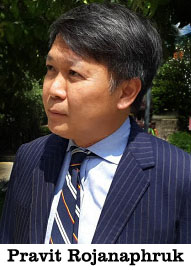
Pravit RojanaphrukWhite right-wing nationalists, xenophobes and even neo-Nazis want “England for the English,” despite the fact that many are mongrels with DNA from the Romans, Vikings, Saxons and elsewhere mixing over the millennia. Their national interest is breaking free from any supra-national control from Brussels in order to avoid accepting more foreign refugees. (It’s ironic that Neo-Nazism is not British but German in origin.)

There are also those Eurosceptics who voted to break the union because they’re poor, little-educated Britons facing unemployment threats as they have to compete against the influx of migrant workers from the former Eastern Europe, namely Romanians and Polish, and more, example.

Some leftists on the other hand voted to leave as well, not because they are xenophobic, but because they want Britain to have more a democratic, direct control of what’s going on. They might see the E.U. as representing the rich capitalist class. (Never mind if this eventually means Scotland, which voted overwhelmingly to remain, and Northern Ireland, where 55.7 percent voted to stay, may eventually leave the U.K. to rejoin the E.U. in future referendums.)

On the other hand, younger and more urbane Britons feels more European. In London, which is one of the most cosmopolitan cities on earth, some 60 per cent backed British membership of the E.U., thinking that Britain is far better off remaining with the union despite the common costs it has to shoulder. As many as 75 per cent of voters age 18 to 25 chose to remain within the E.U. while 56 per cent of those age between 50 to 64 voted to leave. The older they get, such as those 65 and above, the more they desire to leave because they perceived national interest is their life savings and feel may be undermined by the monetary tributes made to Brussels and cost of shouldering migrants and refugees.

Considering Europe’s self-destruction during the First and the Second World Wars, the seeming exorbitant ‘membership fees’ charged by the Eurocrats in Brussels and MPs in Strasbourg amount to nothing more than a loose change when it effectively prevents Europe from hosting the third world war. This doesn’t meant the E.U. doesn’t need a major reform, however.

Back in Thailand, thanks to decades of compulsory education stressing multiple-choice examination question, many still believe there can only be one right answer, however.

On Tuesday, this writer heard a middle-aged woman with the Asia Foundation lament at a symposium on the junta-sponsored charter draft that she’s not sure what’s happening when listening to the guest speakers.

If comparing Thailand to a patient being examined by a medical doctor for treatment, she said it’s unclear if the people were talking about the same patient when talking about what’s wrong with Thailand. The woman added she also wonders if it’s the same doctor making the diagnosis and offering prescription and treatment.

I don’t see why people should have difficulty understanding why we may not agree on what is wrong with Thailand and how to handle the prolonged political crisis.

Is it a different patient (nation) we are referring to? Why not, when people may perceive the situation differently? Are there two medical doctors offering different diagnoses and treatments? That’s understandable.

I told the woman if there are indeed two different doctors, the problem is that one of them (read: the junta) holds a gun and is telling the other doctor to simply keep quiet.

Advertisement

Vendors Paralyze Traffic With Floral Blockade to Protest Eviction

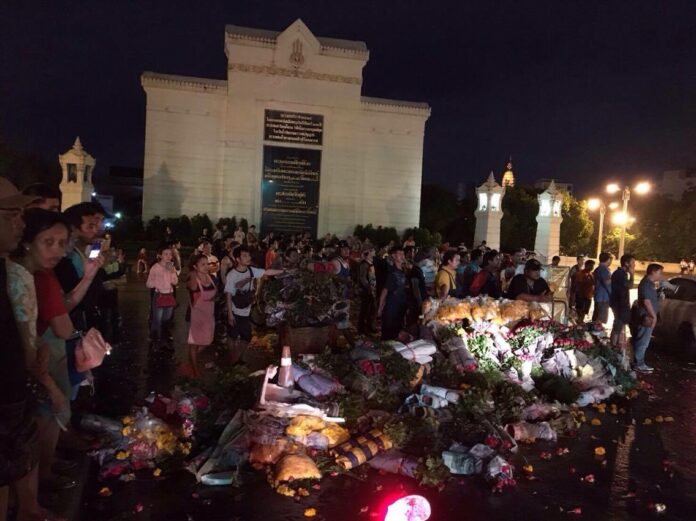
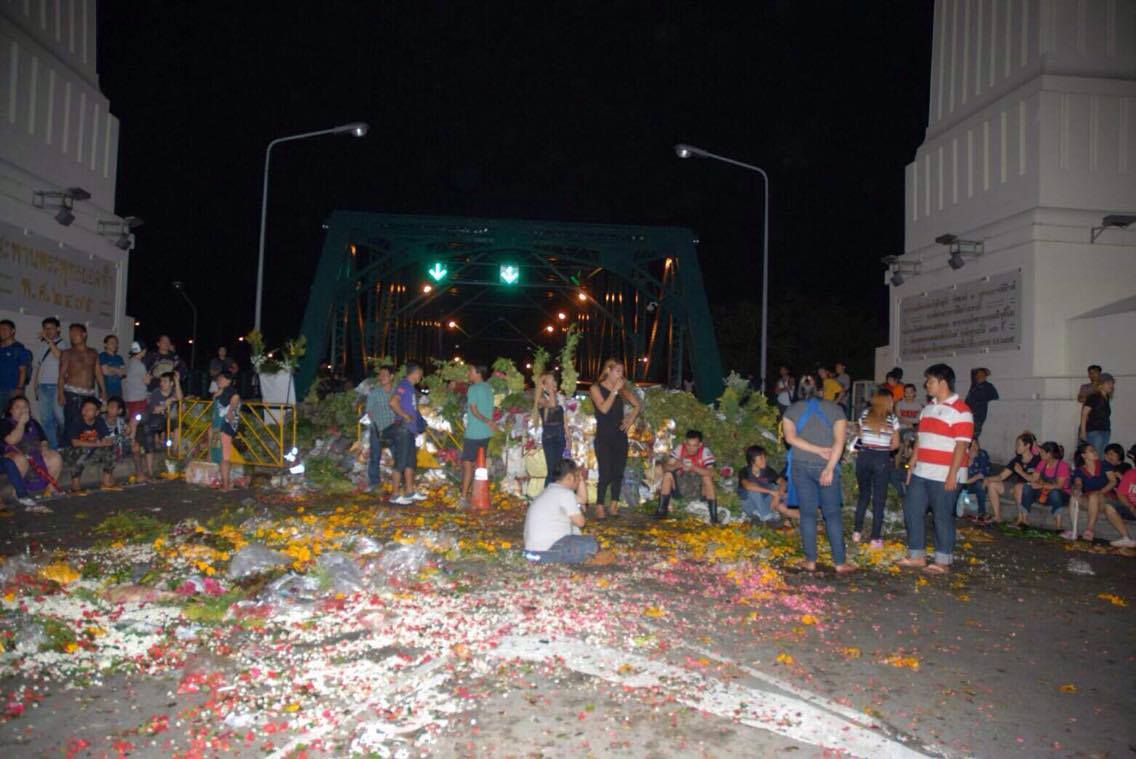
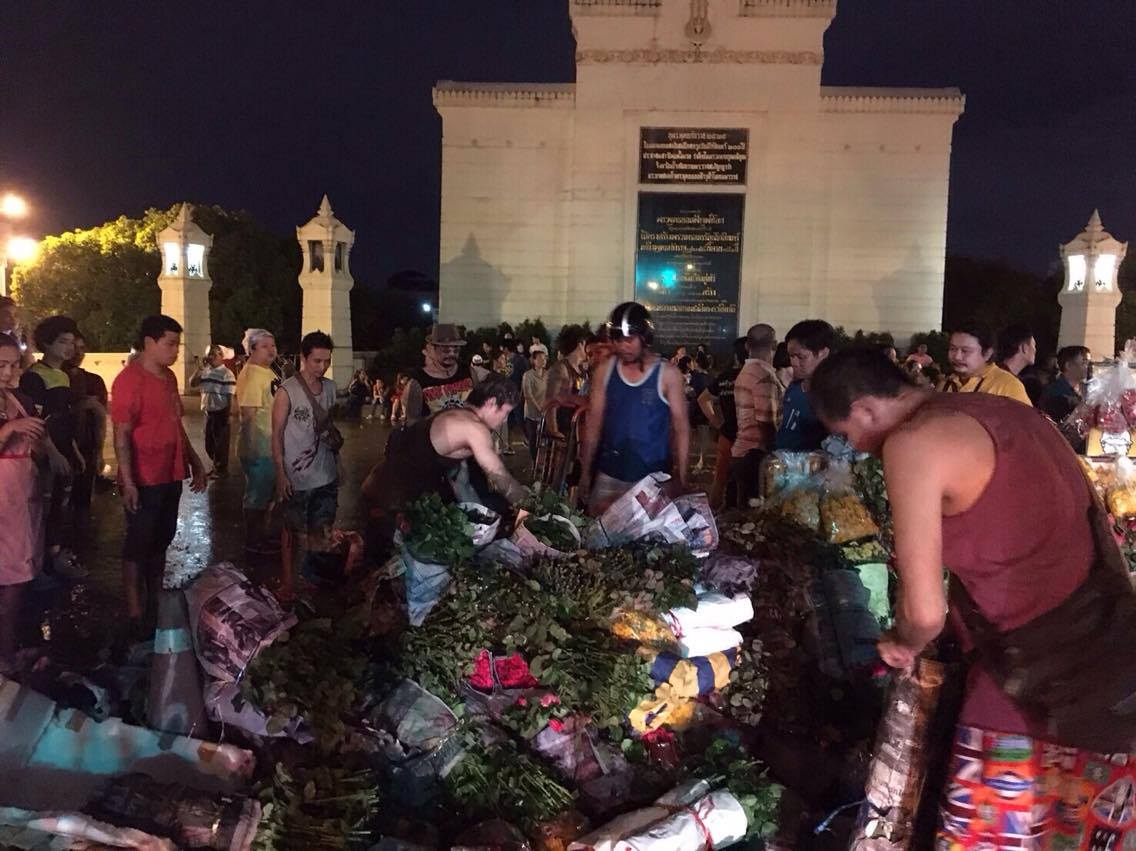
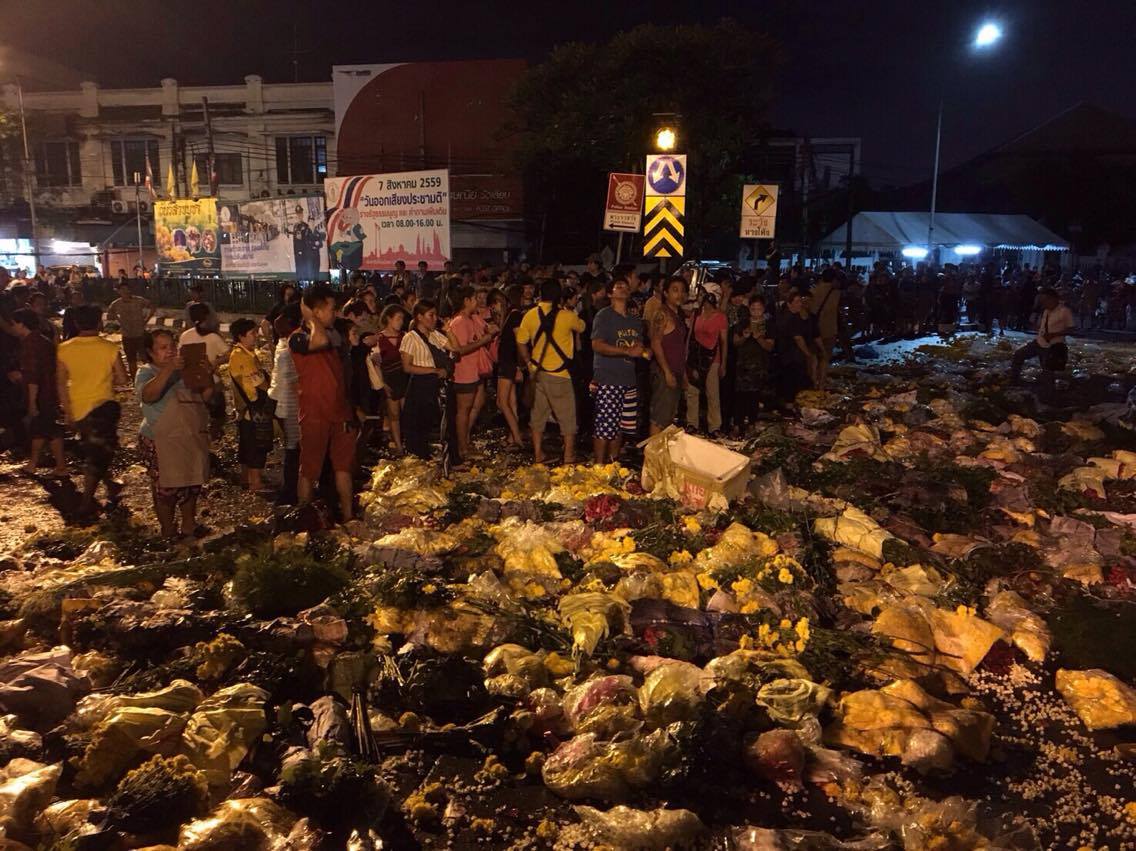
Bangkok's Pak Khlong Talad Vendors threw flowers on streets at a Friday protest against City Hall’s decision to evict them from the sidewalks

BANGKOK — Traffic near the Pak Khlong Talad market was stopped for three hours Friday night by a blockade of roses, marigolds and garlands as vendors protested their eviction by City Hall.

Friday was the Bangkok Metropolitan Administration’s deadline for the vendors to quit the iconic flower market, which has been in almost continuous operation for six decades. The vendors have resisted being swept away by the ongoing cleanliness and order campaign, and about 300 flower vendors gathered near Memorial Bridge at 10pm to toss an estimated 10,000 unsold flowers into the road to call attention to their situation.

The situation grew tense as vendors refused to disperse, demanding to speak directly to Bangkok Gov. Sukhumbhand Paribatra. More than 50 police officers from the Phra Ratchawang Station gathered to to observe the situation along with upward of 20 municipal officers.

However, the vendors abandoned their street blockade at 1am, allowing officers to clear the area. No one was hurt or injured.

The vendors vowed to continue selling flowers Saturday and Sunday evening before returning to City Hall on Monday to take up the matter again.

Starting July 1, no stalls were permitted on the sidewalks and streets under penalty of 2,000 baht fines. The vendors were asked to move to a new site, Pak Khlong Triphet, but some refused to move there due to the lack of shoppers and expensive rent.


13548807 10156991756975618 186568628 o

13549183 10156991756995618 1119769414 o

13570014 10156991756960618 569716362 o

13548816 10156991757150618 1703474888 o


Related stories:

Flower Market ‘Cleanup’ Conflict Continues

Say Goodbye to Bangkok’s Flower Market

Saved by St. Valentine: Flower Market Crackdown Extended

Amulet Market Gone, City Swivels to Flower Market and Banglamphu

Advertisement

Shrimp Slaves Still Waiting For Justice After Thai Raid

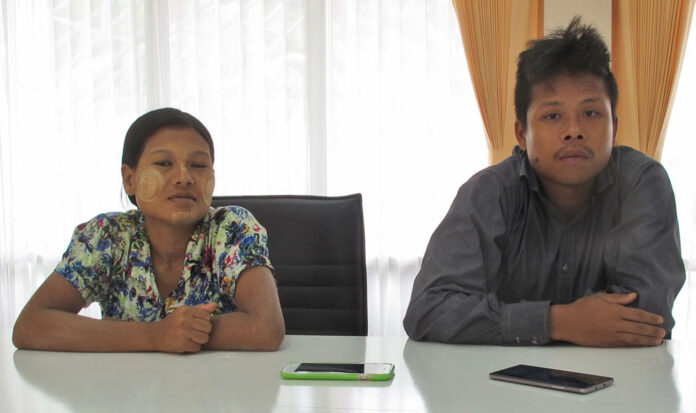
Burmese former shrimp shed worker Tin Nyo Win, right, sits with his wife, Mi San, during a June 24 interview in Patum Thani north of Bangkok. Photo: Margie Mason / Associated Press

PATHUM THANI — Nearly eight months ago, migrant worker Tin Nyo Win thought he was doing the right thing — the only thing — to help free his pregnant wife from slavery inside a Thai shrimp peeling shed. He ran for help and prompted police to raid the business, freeing nearly 100 Burmese laborers, including children.

Yet the couple ended up first in jail and then held inside a government shelter, even though they were victims of trafficking. That’s where they remain today with a few other workers from the Gig Peeling Factory, waiting to testify in a slow-moving court case while their former employers are free on bail. Angry and frustrated, they just want to go home.

“I feel like I’ve been victimized three times. Once in the shrimp shed, the second time in … jail and now again in the shelter,” Tin Nyo Win said on a mobile phone smuggled in by another Burmese worker.

“Even prisoners know how many years or months they will be in prison, but we don’t know anything about how many years or months we’ll be stuck here,” he added. “It’s worse than prison.”

On Thursday, Thailand was lifted off the U.S. State Department’s blacklist, where it had been listed for the past two years as one of the world’s worst human trafficking offenders alongside North Korea, Syria, Iran and others. Some activists saw the upgrade as a political move by Washington to appease an ally, and 21 labor, anti-trafficking and environmental groups expressed their disappointment in an open letter to Secretary of State John Kerry.

Burmese shrimp shed worker Tin Nyo Win, left, and his wife, Mi San, stand in a jail cell after they were arrested Nov. 13 in Samut Sakhon. Photo: Robin McDowell / Associated Press

The Thai government lobbied hard ahead of the announcement, saying new laws have been passed to help protect victims. The government also said that 241 human traffickers were sentenced in 2015, and 34 officials are facing prosecution for involvement or complicity in the trade.

But critics say low-level people or brokers from other countries are typically the ones jailed instead of Thai business owners, corrupt police or high-ranking officials.

“Debt bondage for migrants is still the norm, and police abuse and extortion happens on a daily basis all over the country,” said Phil Robertson of Human Rights Watch in Bangkok. “While it’s good that prosecutions are going up, the reality is that we’re still talking about the tip of the iceberg here.”

The country has been under international pressure to clean up its $7 billion annual seafood export industry, including the threat of a seafood import ban from the European Union. An Associated Press investigation last year uncovered a slave island with migrant fishermen locked in a cage and buried under fake Thai names. The reporting, which led to more than 2,000 men being freed, followed the slave-caught seafood to Thailand and on to American dinner tables.

The investigation also focused on the Gig Peeling shed in Samut Sakhon, just outside of Bangkok, where Tin Nyo Win and his wife, Mi San, were forced to work 16 hours a day. They had to rip the guts, heads and tails off shrimp that entered supply chains feeding some of America’s biggest companies, including Red Lobster, Whole Foods, Wal-Mart and most major U.S. supermarkets. Many companies have said they are taking steps to prevent labor abuses.

Col. Prasert Siriphanapitat, the Samut Sakhon deputy police commander, said witness testimony began in April in the Gig shed case against three Thai defendants and two Burmese brokers. Only one Burmese suspect has been located. He added that new laws mandate quick prosecution of human trafficking, meaning the Gig case will likely be closed by the end of the year. But Tin Nyo Win said he and his wife have not spoken to a prosecutor or been informed about the case’s progress.

Suwalee Jaiharn, director of the country’s Anti-Trafficking in Persons division, said Thailand’s eight shelters are there to protect undocumented workers and denied that those housed inside are prohibited from leaving. She added, however, that some victims of trafficking are more closely monitored if they are expected to testify in criminal cases.

“We are protection centers and not detention centers,” she said. “There is an exception when some victims are witnesses in human trafficking cases. We have to give them extra protection.”

Suwalee said Thailand’s laws allow victims to testify ahead of their trials so they can go home quickly, or stay and work in the country. But aid workers said these options are rarely made available to migrant workers, leaving victims to wait in facilities far from home.

“Somebody’s always ordering you, and you are always under watch by someone and having to get permission all the time. This is totally what trafficking victims would have gone through while they were being trafficked,” said Ohnmar Ei Ei Chaw, senior case adviser at the Bangkok-based nonprofit Project Issara, which assists trafficking victims. “It is very difficult for them to feel empowered and like their needs are being met.”

For the first few months that Tin Nyo Win and Mi San were in the shelter, they said they were not allowed to have a phone. They couldn’t leave the shelter unaccompanied. They couldn’t work.

“If victims see that when they come forward they are kept in government shelters but not given freedom to work and move around, then what incentive do they have to come forward?” said Susan Coppedge, the U.S. anti-trafficking ambassador.

Following a supervised interview with AP at the shelter last week, Tin Nyo Win spoke candidly on a call. He said restrictions eased a couple of months ago, and victims can now have a phone and go outside the compound unsupervised. However, only eight people from the Gig case are still in the shelter, after 12 undocumented workers ran away. Those who remain worry they will never be compensated for unpaid wages and the abuses they suffered.

“My sister is in another shelter. She is 17 years old, and we have no chance to see each other. I’ve asked permission to see her many times, but I’m not allowed,” said Hkin Tet Mun, 31, adding that phone calls to her sibling are also prohibited. “I’m worried about her, and my sister wants to stay with me.”

Win Kai, 19, said he’s also desperate to leave, but feels trapped.

“My family is so worried about me,” he said by phone. “I don’t want to stay in the shelter. Can you help me quickly?”

Tin Nyo Win’s wife, now seven months pregnant, rubs the growing bump under her bright flowered shirt. She yearns to have the baby at home, where she can be with her sick mother. But her husband says he won’t go — even if it means missing the birth of his child.

“We want to show the boss that we are really victims, and we want to show this to the court,” he said. “We want to see justice carried out.”

Story: Margie Mason

Advertisement

Texas Town Battles Over Library Cat. Library Cat Wins.

WHITE SETTLEMENT, Texas — A North Texas city council has voted unanimously to reinstate Browser the cat to his job as live-in mascot of the city’s public library.

Photo: White Settlement Library / Facebook

KRLD-AM in Dallas-Fort Worth reports the governing council of the Fort Worth suburb of White Settlement voted 3-0 to let Browser stay at the library two weeks after voting 2-1 to give the tabby 30 days to check out.

Mayor Ron White had said the move against Browser was a response to officials’ denial of permission to an employee to bring a puppy to work at City Hall. But he says he was overwhelmed with more than 1,000 messages on social media, all in support of keeping Browser on the job.

The vote was taken without hearing from Browser’s supporters who jammed the council chamber.

Advertisement

Navy Renews Bid For Chinese Subs

A Chinese Yuan-class submarine. Photo: U.S. Navy Office of Legislative Affairs

BANGKOK — Thailand’s navy will seek Cabinet approval to purchase its first submarines in 65 years, the defense minister and a member of the junta said Friday.

Prawit Wongsuwan, who is also deputy prime minister, said the submarines will cost 36 billion baht and be paid for over 10 years. He said the first of the Chinese-made Yuan class S26T submarines will be purchased out of the 2017 budget.

The purchase of such a major weapons system from China has political as well as defense ramifications because the ruling junta has sought closer relations with China to balance traditional close ties with the United States, which has been critical of Thailand’s turn away from democracy.

The navy has been seeking to buy submarines for almost a decade, having been forced to decommission its last subs in 1951 after being on the losing side of a failed coup by naval officers. In recent years, it has also considered buying submarines from Germany or South Korea.

A 540 million baht submarine base and training center was inaugurated in July 2014 despite the lack of any subs.

When the navy revived its plan last year, it delayed submitting it to the interim cabinet after widespread criticism it would be wasteful, and that the Gulf of Thailand is too shallow for submarines to operate efficiently.

Prawit said submarines would be useful because Thailand has resources in the Andaman Sea to protect and because neighboring countries are also acquiring them.

Advertisement

Jailed Activists Describe Life in Prison

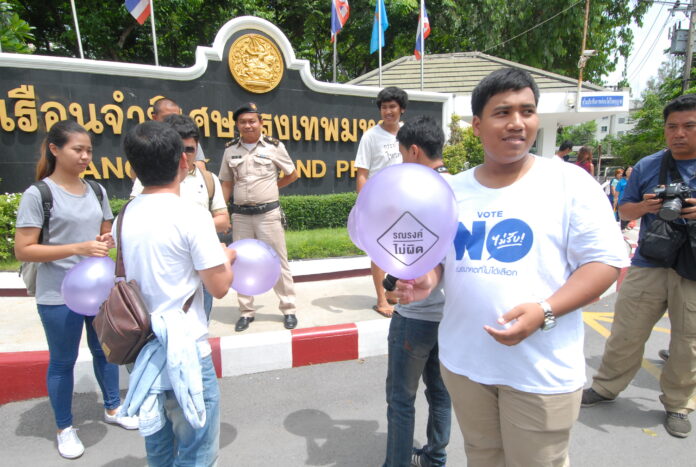
Friends of seven “Vote No” activists pose for photo on Thursday before their prison visit in front of Bangkok Remand Prison.

BANGKOK — Despite the harsh treatment seven jailed activists say they are being subjected to for campaigning against the junta-backed charter draft, they said Thursday they won’t seek bail because they did nothing wrong.

Speaking from behind bars, the activists said the military court has no legitimacy to try them and therefore must release them unconditionally a hardline stance that their supporters fear will only see them imprisoned for a long time.

“I’m not supposed to be here in the first place,” Rangsiman Rome, the 24-year-old student leader of the New Democracy Movement group said during visiting hours. “I didn’t do anything wrong. Instead of asking me why I won’t ask for bail, the question is, why am I being held here?”

Rangsiman was among 13 people arrested June 23 for handing out leaflets urging the public to reject the constitution draft when it’s put to a vote on Aug. 7. Campaigning either for or against the draft is punishable by up to 10 years in prison under a law passed earlier this year.

While six of the 13 suspects posted bail and were subsequently freed, Rangsiman and six others refused to do so, as they rejected the military tribunal’s authority to try them. Instead, they demanded to be tried in a civilian court.

A representative with the Department of Corrections said Friday that the activists are being treated as normal inmates, and there is no discrimination against them.

Somsakul Thongsuksai, a 20-year-old Ramkhamhaeng University student, said he didn’t seek bail because if he did, he would be released under conditions set by the military judges, such as not participating in any political activities.

“It’s like getting out of prison and into another prison,” Somsakul said.

New prison regulations don’t allow inmates to see any visitors not on a list of 10 people approved in advance. Therefore Rangsiman and Somsakul conversed with a reporter through several approved visitors who relayed messages between a corridor in view of the visiting room.

The activists are not strangers to arrest, incarceration and court proceedings. Exactly a year ago, Rangsiman and 13 other New Democracy Movement activists were jailed for refusing to post bail after being arrested for violating the junta’s ban on protests.

Their predicament sparked outrage domestically and abroad, as well as daily protests calling for their freedom. As the opposition movement began gaining momentum, the military court suddenly freed all activists 12 days after they were imprisoned.

But some of those close to the seven referendum activists fear public outrage won’t coalesce this time around, and the seven may remain behind bars a long time. That’s the gist of what Thammasat law professor Worachet Pakeerut told his graduate student, Rangsiman.

“Think about your position carefully. But I will respect your decision no matter what you choose,” Worachet communicated to Rangsiman.

Speaking to reporters later, Worachet said, “As for their decision to post bail or not: They are adults now, so they know what they’re doing, and I will not interfere with their decision.”

Krisadang Nutcharus, the activists’ lawyer, said he also fears for them.

“I don’t want to see my clients in prison. It’s very hard for us to prepare the case,” Krisadang said. “But they chose this themselves. They said they can stay in there just fine. They said if they got released [on bail], they wouldn’t be able to do anything anyway.

He denied playing any part in their decision and said they were aware of the consequences.

“I told them, you may end up being jailed for 84 days [the maximum remand session], and you may be jailed for the next two to three years as you fight the case, but they said they already chose this. They already accepted this.”

Even other inmates encouraged the activists to change their minds.

“Some prisoners tell us to just get a bail,”  Somsakul said.


Singled Out

They said the price of defiance has been harsh treatment from the guards. Rangsiman has told visitors he and others were ordered to do menial work such as collecting garbage and cleaning toilets tasks usually reserved for convicted inmates, not those awaiting trial.

After the story made ripples in the media, the activists and their lawyer said Thursday that the guards already stopped assigning them jobs, and now they mostly spend time in the prison’s library.

But the activists said they’re still subject to many restrictions,chiefly, the new visit rules limiting them to a list of only 10 people as approved visitors.

Harit Mahaton, an inmate in the same prison awaiting trial on royal defamation charges, communicated through an intermediary Thursday that his aunt had flown from his hometown of Khon Kaen to see him but was turned away because he misspelled her name on the list.

There were some people Harit said he wanted to see, but he couldn’t remember their full names.

Another grievance was a complete news blackout. According to Harit, inmates aren’t allowed to watch TV news or read newspapers. They believe the warden wants to keep them in the dark. The only news comes during the 20 minutes of visiting time each day.

“They’re afraid those on the inside will organize something, or coordinate with those outside,” Harit said. “But this measure violates the rights of all prisoners, because it applies to the entire prison.”

Even food has gone missing, the jailed activists complained. Friends said they sent food and snacks – a welcome break from the horrid meals served inside  – to the seven activists, yet they had only received two cans of tuna by Thursday.

The activists said they haven’t been able to receive money either, as they have yet to be provided “cash cards” used inside the prison.

But Patikhom Wongsuwan, director of the Department of Corrections, said prison officials are not mistreating the political prisoners as alleged by the activists.

He said restriction of visitors is in line with international standard, and meant to screen out people not related to the prisoners. “In the past, even mia noi (mistresses) show up for the visits,” Patikhom said by telephone Friday.

Patikhom also defended the policy of censoring news, saying that it’s necessary to prevent “dangerous” material from reaching the inmates.

“We only give necessary information,” Patikhom said. “What is dangerous, or what risks affecting national security or peace in the prison, we don’t allow yet.”

He added, “Let me insist that I am not singling [political prisoners] out. In fact, we took care of them like special people. I think they even got better treatment than other prisoners.”

Not Discouraged

Yet the activists said they’re resolute.

“They said they can endure it in there,” New Democracy Movement member Pakorn Areekul said Thursday after the prison visit. “They want people outside to keep campaigning and not to worry about them.”

Somsakul, one of the seven activists, said he would pass the time writing a song about voting against the charter draft in the Aug. 7 referendum.

Krisadang, their lawyer, said his clients are in good spirits.

Their next bail hearing is set for Tuesday. Krisadang said he hope to convince the military court to free them without posting bail.


Advertisement

Election Commissioner Drops Case Against Matichon Cartoonist

Election Commissioner Somchai Srisutthiyakorn joins in the trend of expressing views through toys Thursday with his own Stormtrooper urging the public to participate in the Aug. 7 charter referendum.

BANGKOK —  The official tasked with policing the upcoming charter referendum has ruled out prosecution of a newspaper cartoonist for criticizing a previous version of the draft constitution.

In a case that highlighted the aggressive enforcement of the referendum law banning “rude” or “aggressive” remarks about the proposed charter, editors of Matichon Weekly were forced to explain to the Election Commission on Thursday that cartoons it recently deemed objectionable were nearly a year old. The commission declared they were not guilty of any crime.

“Now that they have conceded there was a mistake, this matter is over, and there will not be any legal action,” Election Commissioner Somchai Srisutthiyakorn announced.

On June 17, Matichon Weekly re-published a collection of work by cartoonist Arun Watcharasawat from August 2015 in which he criticized the charter draft being debated at the time. The draft was voted down by a junta-appointed body weeks later in September.

Somchai responded by threatening legal action and summoning the cartoonist and his editors to the Thursday meeting.

Somchai said afterward the editors told him they published the cartoons by accident, and later deleted the set once they realized the error.

He said other media agencies should learn from this incident and be careful about what they publish on social media.

Matichon Weekly and Khaosod English are part of the Matichon Group.

Advertisement

Myanmar Decries Placement on US Human Trafficking Blacklist

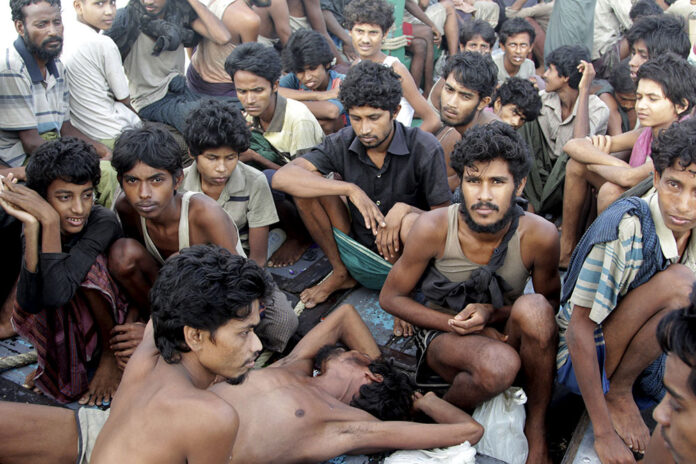
Migrants including Myanmar Rohingya Muslims sit on the deck of their boat as they wait to be rescued by Acehnese fishermen on May 20, 2015, on the sea off East Aceh, Indonesia. Photo: S. Yulinnas / Associated Press

YANGON — Myanmar called sad and regrettable a move by the United States to place the country on a list of the world’s worst human trafficking offenders, while rights groups welcomed it as long overdue.

The demotion came Thursday when the U.S. State Department released its closely watched annual Trafficking in Persons report, which examines 188 governments’ efforts in combating modern-day slavery.

It placed Myanmar alongside countries like Iran, North Korea and Syria, and says the Southeast Asian country has failed to meet “the minimum standards for the elimination of trafficking.” It also removed Thailand from the blacklist despite what the State Department described as widespread forced labor in the country’s seafood industry.

The downgrade for Myanmar appeared aimed at sending a message to the country’s new democratically elected government, headed by Nobel Peace Prize winner Aung San Suu Kyi, and its still-powerful military to curb use of forced labor, sex trafficking and the recruitment of children as soldiers into the armed forces.

Suu Kyi has been criticized for failing to address widespread persecution of the Rohingya Muslim minority in the Buddhist country.

Her government criticized the demotion as failing to recognize the country’s progress.

“We are very sad that we have not been recognized for making positive changes,” said presidential spokesman Zaw Htay. “In their report, they didn’t mention the progress and development we have made for our country.”

Myanmar’s Foreign Ministry called the downgrade “regrettable” and urged the U.S. not to impose restrictions that would hamper U.S.-Myanmar relations.

It also promised to step up efforts to combat trafficking measures. “The issue of human smuggling and trafficking will be addressed vigorously in close cooperation with international partners,” it said.

President Barack Obama now has 90 days to determine whether to apply sanctions on so-called Tier 3 nations, includingMyanmar. But the U.S. often chooses not to, based on its national security interests.

Myanmar had faced a mandatory move up or down the rankings after four years on the watch list.

Human rights groups applauded the downgrade, noting that Myanmar was evaluated mostly on the basis of what was done under the previous army-backed government. Suu Kyi’s civilian administration took power in March.

“Myanmar’s downgrade is overdue,” said Matthew Smith of Thailand-based advocacy group Fortify Rights. “The military has long been one of Southeast Asia’s worst perpetrators of human trafficking.”

There was disappointment in Yangon, Myanmar’s commercial center, since the U.S. action virtually precludes trade privileges that would help jumpstart economic growth after decades of ruinous military rule.

“The government and people have been trying hard for our country,” said Win Aung, chairman of the Myanmar Chambers of Commerce. “We don’t want anything that negatively affects our country’s economy and our businesses. We are all putting so much energy in the country’s transition period and we want encouragement instead of blame.”

Rights groups also criticized the upgrade of Thailand, which was removed from the bottom-rung Tier 3 category and placed on the Tier 2 watch list.

Labor abuses in the Thai seafood industry gained in prominence around the globe after a two-year investigation by The Associated Press that led to the freeing of more than 2,000 slaves and the arrest of more than a dozen alleged traffickers. Several have been convicted.

“2015 was an historically bad year for human trafficking in Thailand,” Fortify Rights said in its statement, calling the upgrade premature.

Thailand’s Foreign Minister Don Pramudwinai said the government was happy to see its efforts rewarded and planned to work harder.

“We are pleased today that all the efforts of the past year culminated into a certain degree of success,” he told a news conference Friday. “I’m determined to work vigorously in order to rid the country of this modern slavery.”

Story: Esther Htusan

Related stories:

US Takes Thailand Off Human Trafficking Blacklist
Positive Reaction to US Upgrade of Thailand in Trafficking Report

Advertisement

Thai Sharks Predict Outcome of Euro 2016

CHIANG MAI — According to a bunch of sharks in an aquarium at the Chiang Mai Zoo, Team Germany will be the champions of Euro 2016.

Following in the wake of Paul the Octopus, the world-renowned German cephalopod who correctly predicted the outcome of 11 of 13 matches in the 2010 World Cup, the zoo put its five sharks to work to augur the outcome for European football.

Here’s how the maritime divination played out at the aquarium Friday morning: dead fish were hung from the eight national flags representing countries which made it into the quarter-finals – Poland, Portugal, Wales, Belgium, Germany, Italy, France and Iceland.
After swimming around and nibbling at the flags for a while, one shark tore away the bait under the German flag, ignoring other nations. The zoo staff hence proclaimed a prophecy had been made in favor of Germany.

The German national team, nicknamed “the Iron Eagles” by Thai football fans, will play Italy at 2am on Monday, local time.

Four years ago, during the 2012 UEFA European Championship, Chiang Mai Zoo employed celebrity panda Lin Ping to predict the winner. She correctly chose Spain by chomping on a bamboo shoot attached to its flag.

Well done panda!
Well done panda!
Advertisement

Hot News

LATEST NEWS

Bangkok
overcast clouds
28.3 ° C
28.3 °
28.3 °
79 %
4.1kmh
100 %
Sun
28 °
Mon
34 °
Tue
34 °
Wed
32 °
Thu
33 °