31.6 C
Bangkok
Sunday, June 28, 2026
Home Blog Page 2769

Taliban Attack on Pakistan Park Kills 65

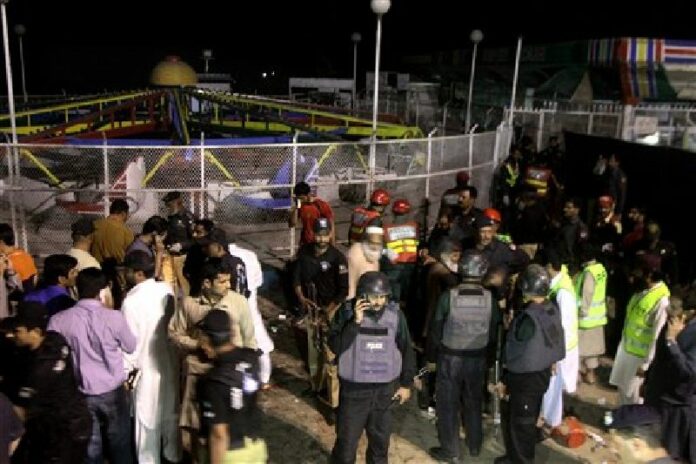
Pakistani police officers and rescue workers gather at the site of bomb explosion in a park in Lahore, Pakistan, Sunday, March, 27, 2016. Photo: K.M. Chuadary / Associated Press

ISLAMABAD — A bombing on Easter Sunday killed 65 people in a park in the eastern city of Lahore that was crowded with Christians, including many children.

A breakaway Pakistani faction of the militant Taliban group claimed responsibility. Ahsanullah Ahsan, spokesman for Jamaat-ul-Ahrar, told the Associated Press that a suicide bomber with the faction deliberately targeted the Christian community.

The explosion took place near the children’s rides in Gulshan-e-Iqbal park local police chief Haider Ashraf said. He said the explosion appeared to have been a suicide bombing, but investigations were ongoing.

The attack killed 65 people and wounded over 300, said Deeba Shahnaz, a spokesman for Lahore rescue administration.

Punjab’s chief minister Shahbaz Sharif announced three days of mourning and pledged to bring the perpetrators to justice, said Zaeem Qadri, a spokesman for the provincial government.

The park was manned by police and private security guards, police chief Haider Ashraf said. “We are in a warlike situation and there is always a general threat but no specific threat alert was received for this place,” he added.

Schools and businesses in the city will remain closed on Monday, the city’s schools association and the Union of Lahore Traders said.

Prime Minister Nawaz Sharif held a meeting to assess the security situation in Lahore, according to a government statement. Pakistan’s army chief, Gen. Raheel Sharif, also convened an emergency meeting of the country’s intelligence agencies to begin to track down those responsible for the attacks, said army spokesman Gen. Asim Saleem Bajwa.

Salman Rafiq, a health adviser to the Punjab government, called on people to donate blood, saying that many of those wounded were in a critical condition.

One witness, who wished to be identified only by his first name, Afzal, told AP that he had taken 20 children to hospital and carried three dead bodies to a police car. “I can’t explain to you the tragic situation,” he said.

Another witness, Tariq Mustapha, said that he had just left the park when he heard an explosion. He said his friend was still missing.

Footage broadcast on local television stations showed chaotic scenes in the park, with people running while carrying children and cradling the wounded in their laps.

A witness, not identified by name on Pakistan’s Geo TV station, said he was heading toward a fairground ride with his wife and two children when he heard a huge bang and all four of them were thrown to the floor. A woman was shown crying while looking desperately for her missing 5-year-old son.

A spokesman for the U.S. National Security Council said that the United States “condemns the attack in the strongest terms,” describing it as a “cowardly act in what has long been a scenic and placid park.” Ned Price said the U.S. would continue to work with Pakistan and its partners to “root out the scourge of terrorism.”

Vikas Swarup, spokesman for India’s External Affairs ministry, tweeted that Prime Minister Narendra Modi telephoned Pakistani premier Nawaz Sharif to express his deep condolences. He said Modi “underlined the need for uncompromising efforts to fight against terrorism.”

Story: Zarar Khan / Associated Press


Advertisement

China Orders Military to End All Paid Outside Work

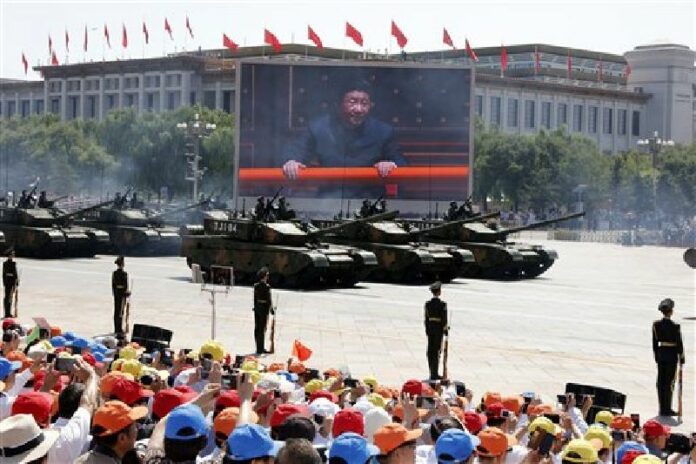
In this Thursday, Sept. 3, 2015 file photo, Chinese President Xi Jinping is displayed on a big screen as Type 99A2 Chinese battle tanks roll across during a parade commemorating the 70th anniversary of Japan's surrender during World War II from Tiananmen Gate, in Beijing. China said Friday, March 4, 2016. Photo: Ng Han Guan /  Associated Press

BEIJING — China has ordered its armed forces to end all paid outside work within the next three years as part of a push to make the world's largest standing military more professional and battle ready.

A Defense Ministry notice viewed Monday said both the regular army and the paramilitary People's Armed Police would be covered under the ban. It identified no specific fields but is thought to mainly target military art troupes, publishing houses and hospitals that accept paying civilian patients.

The ban is a "major political task concerning the overall scope of military construction and development," the notice said, emphasizing the need for officers and troops to adhere to the guidance of the ruling Communist Party headed by President Xi Jinping, who also leads the party and government commissions that control the armed forces.

The 2.3 million-member People's Liberation Army was ordered more than a decade ago to divest itself from its vast business empire that included factories and transport firms and was viewed as fueling corruption and slack discipline.

The latest round of reforms have reorganized parts of the command structure and will reduce troop numbers by 300,000, mainly by culling non-combat units and those using outdated equipment.

The reforms are also seeing a shift away from the land forces, which now account for about 73 percent of total troop strength, and more toward the navy and air force that are seen as responsible for dealing with the main perceived threats to China's interests — a conflict over control of the South China Sea and a move by self-governing Taiwan toward formal independence that China has threatened to respond to with force.

After decades of large annual increases, the defense budget is also growing at a smaller pace in line with lower growth in the overall Chinese economy.

Military spending will rise 7.6 percent this year, despite tensions with China's neighbors over disputed portions of the South China Sea. The military budget of 954 billion yuan (USD$146.5 billion) keeps China in second place in global defense spending behind the United States.

Story: Associated Press


Advertisement

Zeal For Rubber Drives Out Cambodian Ethnic Group


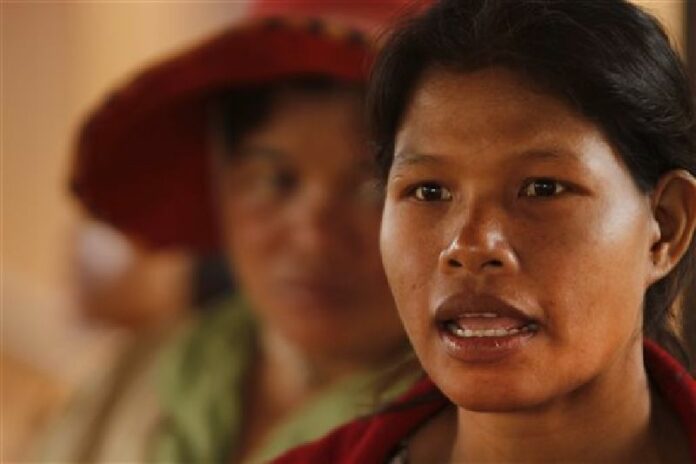
Kwet Yon, 30, a Bunong woman, speaks in a Feb. 26 interview with The Associated Press in Bousra commune, Mondulkiri province, in eastern Cambodia. Photo: Heng Sinith / Associated Press

BOUSRA, Cambodia — For generations, the indigenous Bunong were famous as the elephant keepers and masters of the forests in eastern Cambodia. They called the fertile, rolling hills of their ancestral homeland "meh ne," or mother. From its rich red soil, they harvested rice, pumpkins and bananas. From the forests, they gathered honey, resin and medicinal plants. Under the leafy canopies, they buried their dead and worshiped spirits.

That changed in 2008, when without warning, bulldozers made way for rubber plantations the government granted to a European-Cambodian joint venture in poor, rural Mondulkiri province. Such economic land concessions were meant to promote development, but for 800 Bunong families, the long-term leases have brought mostly hardship and loss.

The Cambodian human rights group LICADHO estimates more than 200 state-linked land deals have harmed 500,000 people, and the U.N. has called land-rights-related conflicts Cambodia's top human-rights problem.

Josie Cohen, land campaigner at Global Witness, which investigates economic networks behind environmental destruction, said land leases are "altering the very fabric of rural societies" in Cambodia and nearby Laos and Myanmar.

\
The remains of trunks and stumps from old forests cut down to make way for a rubber plantation operated by Socfin-KCD, a European-Cambodian joint venture, near Bousra commune, Mondulkiri province, in eastern Cambodia in a Feb. 26 photo. Photo: Heng Sinith / Associated Press


The Bunong of Bousra commune now must earn money to buy rice they once grew, and outsiders hold most of the plantation jobs. Despite promised development, many roads are still dirt.

Kop Let, wife of a village chief, says her family has struggled since the plantation swallowed most of their 12 hectares. She grows cassava on their remaining land, sells homemade rice wine and has taken out a USD$3,000 loan.

"I have now become a poor woman," she says. "Our identity as a people is disappearing little by little."

The Bunong say they never were warned their land would be taken and were not offered compensation before the land started to be cleared — two steps required under Cambodian law. Many say they felt forced to accept what they considered to be inadequate compensation.

Socfin, the Luxembourg-based agro-industrial company whose unit owns most of all three Bousra plantations, said it was invited by the government and that villagers were informed and compensated beforehand, but declined to provide evidence. Its joint venture with Cambodian developer Khaou Chuly Development Co., or KCD, operates two of the plantations.

"We brought wealth to a place where there was nothing," Socfin CEO Luc Boedt told The Associated Press in an interview in Brussels.

A 2009 legal analysis obtained by the AP and written by Maia Diokno, a human-rights lawyer hired by Socfin-KCD as a consultant, said the plantation work began without warning, and produced the "unfortunate result of dispossessing indigenous persons of their land."

"They didn't comply with Cambodian law," Diokno told the AP.

Even so, Sok Sam Ouen, a human-rights lawyer in Phnom Penh, noted that Cambodian authorities approved the lease-holder's actions.

Cambodia's environment minister, Say Sam Al, said the overall aim of the concessions program was to improve people's livelihoods throughout the country, but acknowledged problems in carrying it out. "We are changing that now," he said.

The government put a moratorium on new leases in 2012 and has reviewed each one. It revoked 40, but many disputes remain.

Today, Bousra's hills are covered in rows of rubber trees, many nearly ready to be tapped.

\
Indigenous Bunong residents of Bousra commune gather Feb. 26 in Mondulkiri province, in eastern Photo: Heng Sinith / Associated Press
 

Most villagers are trying to negotiate with Socfin and key shareholder Bollore Group to seek better roads, services and jobs. They've joined forces with communities in four African countries — Cameroon, Liberia, Ivory Coast and Sierra Leone — that also have complaints about Socfin operations.

A smaller group of 83 villagers trying to get their land returned has filed suit against Bollore, which holds 39 percent of Socfin. Bollore declined to comment on the dispute.

Cambodia began granting land concessions in the late 1990s. No published official data measures their economic impact, but University of Copenhagen researchers estimate incomes of families living near concessions were 15 to 19 percent lower than they would have been had the leases never been granted.

The Bunong lost rice fields and grazing land, and were cut off from forest resources that once earned some families more than $2,000 a year, said Esther Leemann, a Swiss social anthropologist who has worked in Mondulkiri.

"There has been an impoverishment of the majority of the families," Leemann said.

Concessions require the approval of Cambodia's Council of Ministers, which operates with little oversight. The government has not revealed the leases' full extent; LICADHO said it has identified 272 covering 21,000 square kilometers (8,100 square miles), over a tenth of the country.

Violence and evictions have accompanied concessions. In 2012, security forces fatally shot a 15-year-old girl during a clash with residents. One case still before the courts stems from the 2006 eviction of some 4,000 villagers by armed military police to make way for a sugar concession.

"It has failed as a tool of development. It's a scheme for quick bucks," said Ou Virak, an economist in Phnom Penh.

Last month, Prime Minister Hun Sen declared the review process complete and pledged to return nearly 10,000 square kilometers (3,860 square miles) to poor families. But human-rights groups doubt the figures and that land would actually be returned.

Socfin says it invested $80 million to create the plantations, pay workers and construct roads, a school and employee housing. The company says families cultivating rubber could earn more than $10,000 a year.

"I invite you to spend only one night in Bousra village, and you will know how poor it is," Boedt said. "And this gives the occasion for the people to get out of that misery."

Yet villager Yin Rouey considers the day the bulldozers rumbled in to be the most devastating moment of his life — worse than losing half his family to U.S. bombs in the Vietnam War.

"In war, people die, but that's not as bad as losing our land," he said. "For us, if there's no land, it will kill us."

Some villagers worry the bulldozers destroyed something forever: their ancestral religion.

"They are afraid the spirits are angry at them because we haven't taken care of them," said Neth Prak, an informal community representative. "They killed the trees, and the spirits were there.

"Should I still pray to this forest?" he asked. "Where are the spirits now?"

Story: Malcolm J. Foster, Denis D. Gray / Associated Press

Advertisement

Myanmar's Military Vows to Join Hands With Civilian Leaders

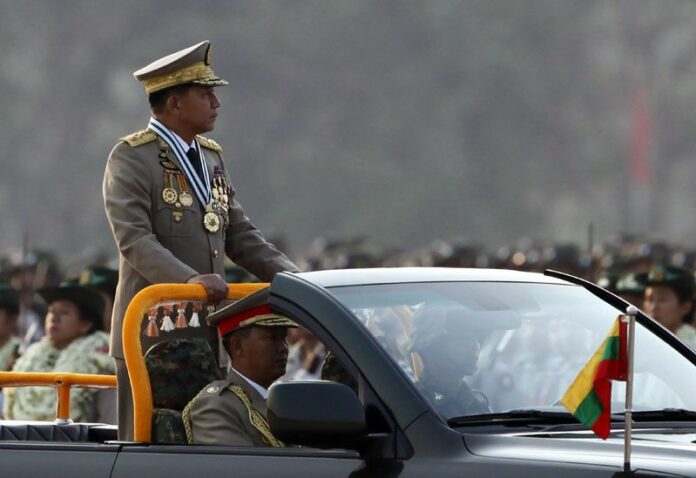
Myanmar's commander-in-chief General Min Aung Hlaing inspects officers during a parade Sunday to commemorate the 71st Armed Forces Day in Naypyitaw, Myanmar. Photo: Aung Shine Oo / Associated Press

NAYPYITAW, Myanmar — Myanmar's military chief on Sunday pledged to join hands with a new civilian government that takes over the Southeast Asian country next week, after 54 years of rule by the junta or its proxy.

Senior General Min Aung Hlaing said that the armed forces will work to bring about prosperity for the nation but also warned about challenges.

"The two main hindrances to democratization are not abiding by the rule of law and the presence of armed insurgencies. These could lead to a chaotic democracy," he said in a speech during the annual Armed Forces Day parade in the capital of Naypyitaw.

Myanmar's military ran the country directly or indirectly for five decades before handing over to a quasi-civilian government in 2011. Last year's elections propelled Aung San Suu Kyi's National League for Democracy into power, although the military remains a powerful political force.

Suu Kyi's aide, President-elect Htin Kyaw, will take office next Friday.

\
Tanks are driven during a parade to commemorate 71st Armed Forces Day on Sunday in Naypyitaw, Myanmar. Aung Shine Oo / Associated Press

 

The relationship between Min Aung Hlaing and Suu Kyi is likely to be the key to the next five years in Myanmar. The Nobel Peace prize laureate is still barred from the presidency by a clause in the military-drafted constitution that was almost certainly aimed specifically at her.

The military also has reserved 25 percent of the seats in parliament for itself, guaranteeing that no government can amend the constitution without its approval. It also ensured that one of Htin Kyaw's two vice presidents is a former general, Myint Swe, a close ally of former junta leader Than Shwe.

\
Military officers atop trucks loaded with missiles salute during a parade to commemorate 71st Armed Forces Day on Sunday in Naypyitaw, Myanmar. Photo: Aung Shine Oo / Associated Press

 

Story: Associated Press

Advertisement

Rising Chinese Risk Tarnishes Hong Kong's Luster

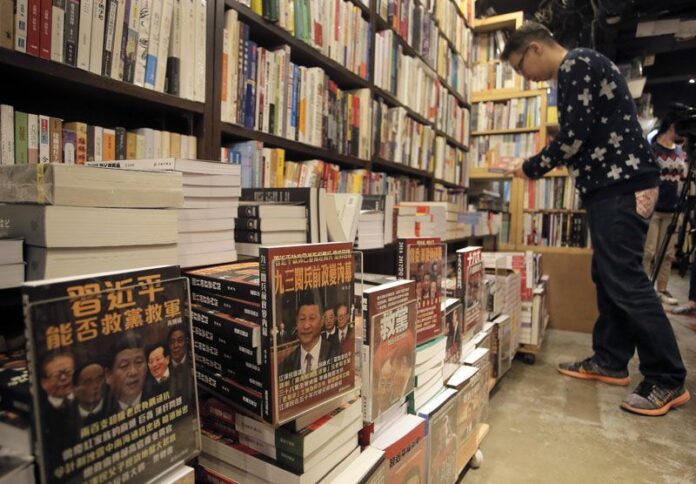
Books featuring photos of Chinese President Xi Jinping and other senior Chinese officials on the coverage are displayed Jan. 7 at a book shop in Hong Kong. Photo: Vincent Yu / Associated Press

HONG KONG — For decades, Hong Kong thrived as an Asian business hub thanks to its killer combination of Western freedoms, independent courts and closeness to mainland China's booming market. Now political and economic ills from the mainland are eroding that edge.

Swedish-Chinese author Gui Minhai was counting on Hong Kong's freedoms when he chose the city as the base for the publishing empire he has built up over the past decade, churning out exposes on elite Chinese politics that were snapped up by visitors from mainland China, where they are prohibited.

The recent temporary disappearances of Gui and four colleagues, including his British chief editor Lee Bo, rising political volatility and slowing growth in China are undermining confidence in Beijing's promises to leave the city's freedoms intact for a half-century after taking control of Hong Kong in 1997.

Local frustrations will likely intensify as the city's pro-Beijing elite prepares to choose a new leader for the specially administered Chinese region next year.

In unusually blunt comments, Financial Secretary John Tsang predicted recently that Hong Kong's economy would eke out its smallest expansion in four years in 2016.

"Politics and economics are closely intertwined. Political volatility will unavoidably impact on our economy," Tsang said in his budget speech last month. Tension and turbulence have left many in Hong Kong feeling suffocated by an confrontational atmosphere, said Tsang, warning of "even greater chaos" ahead if tensions aren't resolved.

Hong Kong remains wealthier and freer than the mainland, but the city of 7.2 million is riven with inequality and faces growing competition from other Chinese business hubs like nearby Shenzhen and Shanghai. Meanwhile, Chinese President Xi Jinping has sought to crush dissent in other regions like Xinjiang and Tibet, showing little sympathy for the yearning among many in Hong Kong for greater democracy.

Investors aren't rushing for the exits yet, but in the financial industry, backbone of the economy, the mood is darkening.

"If Hong Kong is gradually being taken over by all these Chinese business practices and also politically there's more and more pressure and influence coming from mainland China, this will definitely destroy Hong Kong in the end," said Edward Chan, an investment fund manager.

Foreign investors might start to "think that if Hong Kong does not have rule of law or anything, why don't they just move their investment directly to Shanghai or Beijing? What's the difference?" he said.

As Beijing increasingly opts more for the "one country" part of the "one country, two systems" framework guaranteeing its separate legal and financial systems until 2047, Hong Kong is paying a price.

Dimming Hong Kong's image as a global financial center, HSBC decided in February not to move its headquarters from London back to Hong Kong despite a restructuring focused on "pivoting" toward Asia. The Hongkong & Shanghai Banking Corp. was founded in the city in 1865 and shifted its headquarters to Britain in the early 1990s.

In explaining its choice, HSBC did not refer to China, though lauded Britain's "internationally respected regulatory framework and legal system."

On Mar. 12, credit rating agency Moody's Investors Service cuts Hong Kong's outlook to negative from stable, citing rising political risks and China's slowing growth. It had downgraded China's rating two weeks before.

"Increasing political linkages are likely to weigh on Hong Kong's institutional strength," the agency said. "In addition, the risks to China's economic and financial stability may also undermine Hong Kong's own economic and financial outlook."

Hong Kong's freedoms were on global display in late 2014, when hundreds of thousands of people took to the streets, blocking busy thoroughfares for 79 days to protest Beijing's plan to restrict elections. The peaceful protests highlighted discontent with China's influence among local youths, but also among older Hong Kong citizens, many of whose families fled past political turmoil in the Chinese mainland.

More recently, the independent film "Ten Years" was a surprise hit with its dystopian portrayal of the eradication of the city's Cantonese-language identity under Beijing's rule a decade from now.

Activists defending local culture from mainland Chinese influence clashed with police last month when authorities ordered fishball vendors, a traditional fixture during the lunar new year, off the streets of gritty Mong Kok.

Steve Vickers, chief executive of political and economic risk consultancy SVA, said requests for information and help with crisis preparedness spiked after the Mong Kok riot. Political polarization and the slowing economy are threatening Hong Kong's reputation, while China's slowdown could worsen tensions by pushing up unemployment and hurting property prices, he said.

"Any economic weakness would surely stoke political anger, given the social grievances that underpinned recent protests," Vickers said.

The bookseller disappearances shocked many Hong Kongers because of suspicions that mainland Chinese security agents snatched Lee and spirited him across the border, violating Beijing's promise to stay out of most local affairs including law enforcement. Gui apparently was apprehended in Thailand and taken to mainland China.

Many ethnic Chinese in Hong Kong hold foreign passports as a sort of "insurance policy" in case of a crisis. The difficulties Britain and Sweden faced in getting consular access to Lee and Gui raised doubts about that strategy.

Chan, the investment fund manager, holds a Canadian passport. "Now it's totally useless," he said. "This passport is not going to protect me in any sense if the Lee Bo case is going to re-occur again."

Three of Gui and Lee's colleagues are now free on bail in the mainland, but the pair appear to be still detained without charge. They both surfaced briefly on Hong Kong-based pro-Beijing Phoenix TV, where Lee said he was aiding an investigation while Gui tearfully confessed to an old crime — having fled overseas to avoid a suspended two-year prison sentence for a fatal drunk driving accident. Their Causeway Bay Bookstore remains shuttered.

The booksellers' case shook the relatively freewheeling publishing industry in Hong Kong, whose status as a base for independent-minded financial research could suffer if investment banks with business interests on the mainland avoid releasing reports critical of Chinese state-owned companies or the economy, said Chan.

Simon Baptist, chief economist at the Economist Intelligence Unit, whose latest global cost of living survey ranked Hong Kong No. 2, said companies would likely pay closer attention to Hong Kong's fragile press and judicial freedoms when deciding whether to deploy staff or investment here.

"Hong Kong is still one of the freer places in Asia," Baptist said, "but perhaps that gap, that advantage, it has is narrowing."

Story: Kelvin Chan / Associated Press

Advertisement

Songkhla Teen Commits Suicide After Internet Eggs Her On

SONGKHLA — Health officials are urging concern about the effects of social media after a teen girl was thought to have been prodded by Facebook comments to go through with hanging herself.

The 15-year-old, Grade 9 student in southern Thailand was found dead by police Friday after she wrote about committing suicide on Facebook and her comments were widely shared. Prior to her death, the girl posted a photo posing with a rope in a manner suggesting she intended to kill herself.

“I’m not seeking attention. I’m sorry I have to do this,” she wrote. “Goodbye. I’m so tired. I have devoted everything, even my life. Now this is what you want.”

The post drew a slew of mixed reactions, including numerous comments challenging her to kill herself.

"If you really have the courage, you won't post it. Just hang yourself. Done. Why post it on the social network? It's a bad example," wrote one comment to the original post.

Local police in Songkhla province were informed Friday afternoon of the girl’s death by her family. Police Maj. Aphiwat Buathong said relatives told them they found her dead at 5am that morning, hanged in the living room. The said they were in too much shock to notify police until 2pm.

“We already performed the autopsy. It indicated that she died from suffocation,” Aphiwat said.

A reporter said the family mentioned the girl being emotionally distraught over love, but that they did not find the death suspicious and did not want to discuss it further.

Panpimol Wipulakorn of the Mental Health Department urged people to reach out and notify someone to help those expressing such sentiments on social media.

“This case showed that people in the society are interacting with other people online without considering each other’s feelings,” she said. “They say anything just to express themselves.”


Advertisement

Danke, Merci, Thanks and More to Those who Haven’t Forsaken Thailand for Juntaland

By Pravit Rojanaphruk
Senior Staff Writer

\

One of pressing challenges facing some of the foreign diplomats who’ve refused to forsake Thailand for Juntaland is how to effectively pressure the military government to respect human rights and promptly return the kingdom to democracy.

Should they stick to discreet, back-door diplomatic channels or publicly express concerns that risk bilateral frictions? They also wonder how frequently to issue such statements as the message is diluted by repetition and risks tipping the junta from resistant to indifferent. 

\These concerned ambassadors and senior diplomats representing their states, as well as some senior officials at international organizations, have been trying hard for nearly two years to exercise their diplomatic clout in hope of halting the free-fall in Thailand’s rights and liberties.

Foreign diplomats are here in Bangkok chiefly to advance their national interests and forge better ties. They could easily have shrugged off the coup and proceeded “business as usual” with the military regime as if current coup maker-cum-Prime Minister Gen. Prayuth Chan-ocha was just another “normal” prime minister.

Indeed some countries and their ambassadors have done just that. This may disappoint those currently suffering under repression and limitation of their rights by the regime, but it’s understandable such countries consider their national interests as paramount and turn a blind eye. I’ve lost count of how many official visits dictator Prayuth has made to Japan, for example. Perhaps Japan, with deep economic interests and proximity to China simply believes she can’t afford to shun Thailand’s military regime, as it would give a stronger hand to China, itself a dictatorial nation.

Indeed diplomats to Thailand could simply enjoy the endless receptions, banquets and drinks. Once a year, pen stirring annual messages for their ambassador on their national day. Pick a good photo, pay the papers to publish it and pretend all is well in Juntaland.   

Yet there are some still trying to balance national interests with genuine concern about the deteriorating political and human rights situations because it’s so different from the values they cherish. They see liberty, nascent democracy and the rule of law trampled by the threat of guns and detention in the name of national security by the self-styled National Council for Peace and Order.  

These are the countries which have not abandoned Thailand, and their ambassadors do what they can when the military summons and detains people secretly without charge. They are the envoys of their countries’ ideals, values and goodwill. Personally, I thank the diplomats and organizations who reached out when it happened to me, twice.

I am grateful that, nearly two years on from the coup, some of these people have not forsaken Thailand and let the men with guns morph the kingdom into Juntaland without questioning them and reminding them it’s not acceptable, especially to the international community.

Good friends are like mirrors – they reflect and remind us of who we are, and what we risk becoming.

Their persistence reminds the junta and its Foreign Ministry that a norm of rights violations, arbitrary detention, strictly limited space for expression, bans on gatherings and arbitrary use of power are not kosher. It also serves to remind Thais who support the junta of the abnormality of the situation.

It’s worth noting that their counterparts, Thai diplomats posted abroad under taxpayer-paid salaries, ungratefully carry out Siamese diplomacy by defending and whitewashing the military regime oppressing its citizens back home.

These diplomats and their countries deserve the thanks of all who cherish liberty and democracy. Thank you, Danke, Dank U, Gracias, Tusen Tack, Merci, Kiitos, Obrigado … and in all the other tongues which have taken up our plight.

To express gratitude, Thais who care for democracy can buy more products and services from these countries as well as pay them a visit when and if they can, or support the international organizations that still care about the situation here, such as the various bodies of the United Nations.

Going back to the original question, as to how they can most effectively cajole Prayuth back in the right direction, there’s no definitive answer. But I believe acts of genuine concern and goodwill will be remembered by the many Thais struggling against military dictatorship long after Prayuth is a fading footnote in history.   

Advertisement

Motor Taxi Passenger Killed in Bus No. 8 Collision

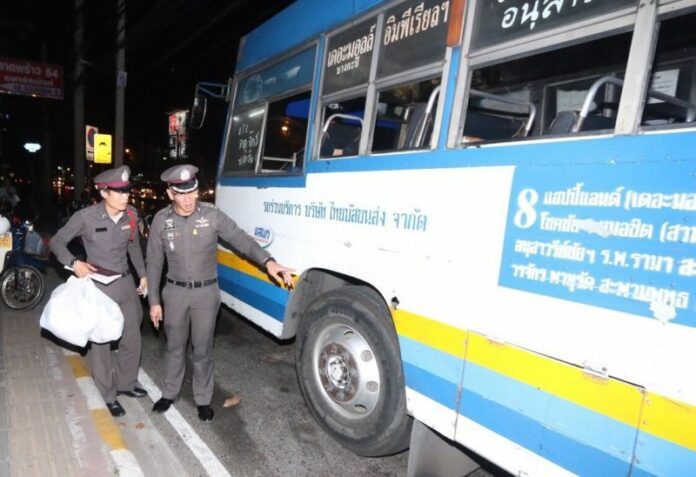
Police inspect a No. 8 bus Friday night after it collided with a motorcycle taxi at the entrance of Soi Lat Phrao 54/1 opposite Chokchai Police Station

BANGKOK — A 60-year-old woman died Friday evening when the motorbike taxi she was riding collided with a city bus notorious for its danger.

Police last night charged Tim Aumvithi, 57, the motorbike taxi driver and Manu Pilaiphan, 55, the driver of bus No.8 for reckless driving after their vehicles collided on Lat Phrao Road just opposite the Chokchai Police Station, killing motorbike passenger, 60-year-old Inthira Srivimol.

“They were charged at 11pm,” said police Lt.  Aekkarit Roopsa-ard. “The details cannot be confirmed yet since we are still investigating.”

Witnesses said the incident took place because a taxi was parked in the bus lane, forcing another bus, No. 44, to swerve into the middle lane. The motorbike taxi riding in that lane then had to steer out of its way, prompting it to crash with the No. 8 bus which was close behind.

Inthira was thrown from the motorcycle and run over by the bus’s rear left tire, according to witnesses.

Bus No. 8 is infamous for its poor service and dangerous driving. It consistently tops the ranks of complaints, last year drawing 345 complaints.


Advertisement

US Man Sentenced for Attempted Exploitation of Children in Cambodia

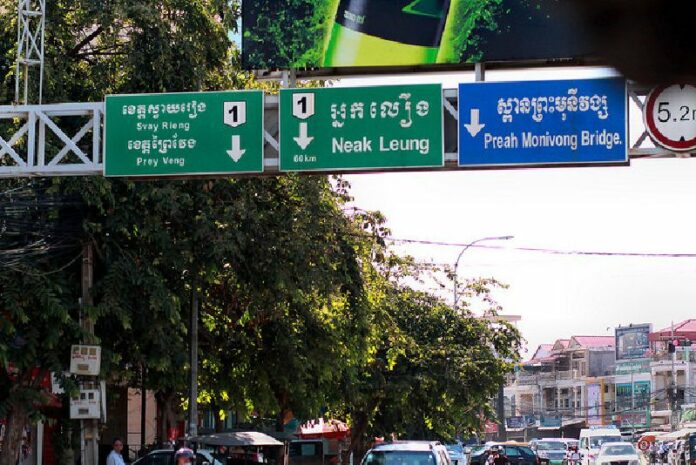
A road in Phnom Penh, Cambodia in June, 2015. Photo: Phalinn Ooi / Flickr

ANCHORAGE, Alaska — A 45-year-old Anchorage man has been sentenced to 18 years in federal prison for attempted sexual exploitation of children and attempted foreign travel for illicit sexual conduct.

Federal prosecutors in an announcement say Jason Jayavarman attempted to arrange a child sex tourism trip for himself and others to Cambodia.

He was convicted in March 2015.

Prosecutors at Jayavarman's trial presented evidence that he made 12 trips to Cambodia before his arrest in 2013 and made videos of himself engaging in sexual acts with a person he believed was a child.

An undercover FBI agent collected evidence indicating Jayavarman planned another trip for himself and others and explained to a potential traveler how to groom a child for sex and avoid arrest.

Story: Associated Press

Advertisement

Dinosaurs Come to Life at Bangkok’s Own Jurassic Park
A girl rides a triceratops Friday morning at Dinosaur Planet’s Dino Farm zone in Bangkok. Photo: Dinosaur Planet / Facebook

BANGKOK — Fulfill your dinosaur-riding dreams as the capital welcomes the arrival of a T-Rex, raptors, triceratops and others who moved into their new home today near a luxury shopping mall on Sukhumvit Road.

They’ll be among a number of full-size dinosaurs roaming eight zones at a Jurassic adventure park that’s part of the sprawling EmSphere development being built by The Mall Group.

At Dinosaur Planet, guests can get a cruelty-free ride on one at the Dino Farm, battle for survival in the Raptor X-treme game, ride a 50-meter Dino Eye ferris wheel and learn from interactive exhibits in the Dinosaur District. Visitors can then learn about the extinction event that killed them all at the Great Volcano live show.

The 500-million baht project was a joint venture between three entertainment and exhibition companies: Workpoint Entertainment, Fresh Air Festival and Rightman.

The venue opens at 8pm until midnight tonight.

Admission is 600 baht for adults and 400 baht for children. Children under 90 centimeters get in free. theme park is open from 10am until 10pm daily.

Dinosaur Planet is located at EmSphere between Soi Sukhumvit 22 and Benjasiri Park. To reach the venue, head to BTS Phrom Phong and walk toward Benjasiri Park.

Photo: Dinosaur Planet / Facebook
Photo: Dinosaur Planet / Facebook   
Photo: Dinosaur Planet / Facebook  


Advertisement

Hot News

LATEST NEWS

Bangkok
overcast clouds
31.6 ° C
32.7 °
31.6 °
99 %
5.2kmh
100 %
Sun
30 °
Mon
34 °
Tue
33 °
Wed
31 °
Thu
29 °