30 C
Bangkok
Sunday, June 28, 2026
Home Blog Page 2772

Ex-Husband Prime Suspect in Attempted Assassination on Rama IV Road

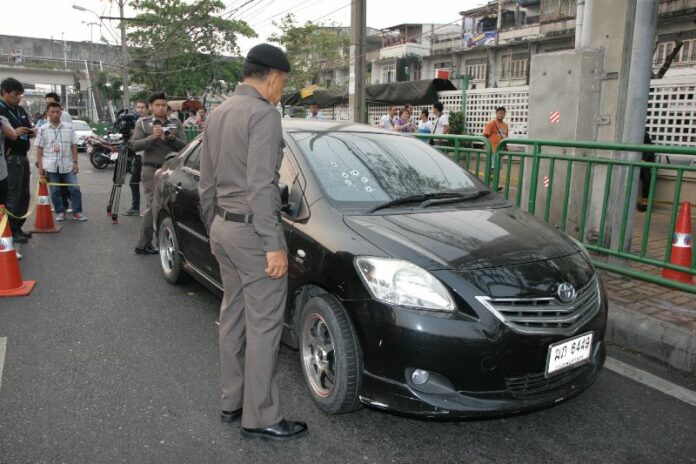
Acting metro police chief Sanit Mahatavorn inspects the scene of an apparent attempted murder Wednesday on Rama IV Road in Bangkok.

BANGKOK — Police suspect the man who pulled up and shot the driver of a Toyota six times yesterday was the ex-husband of the victim’s wife, who was also riding in the car but escaped unharmed.

Police still are searching for the two attackers who pulled alongside Suvit Anannateechai’s Toyota and shot him through the windshield seriously injuring the driver Wednesday morning on Rama IV Road near the Khlong Toei Market.

Suvit Anannateechai, 47, is still in hospital where he is recovering from five bullet wounds to the torso and one to the hand. His 41-year-old wife Suwimon Kwan-on is safe and sound.

Lt. Col. Yanyong Suwansa-ard of Tha Ruea Police Station said Suwimon gave useful details to police, which led them to identify two suspects, one of which is her ex-husband, Puritchakarn Wongdee.

Suwimon said that the gunman looked like her former spouse, who is a merchant at sprawling Khlong Toei Market. After they divorced, the two still quarreled and Puritchakarn often threatened her, Suwimon told police.

The man operating the motorbike wore a helmet but is believed to be Panupong Chulathip, Yanyong said, while his gun-toting passenger did not.

After questioning witnesses and inspecting security cameras in the area, Yanyong said, Puritchakarn is the lead suspect.

Police searched the homes of both suspects Wednesday afternoon in the Khlong Toei district but came up empty-handed.

The Bangkok South Criminal Court approved arrest warrants for Puritchakarn, 46, and 31-year-old Panupong for attempted murder and gun possession.


Related stories:

Motorist Survives Rama IV Road Assassins


Chayanit Itthipongmaetee can be reached at[email protected] and @chayaniti92.


\


Advertisement

The Balcony Did It? Why Thailand’s Falling Deaths Raise Eyebrows

Bangkok's Sathorn Unique Tower, aka the Ghost Tower. Photo: Side Guacamole / Flickr

PATTAYA — When Unto Kilvonen’s body was found 10 floors below a Jomtien Beach condo, it didn’t take long for speculation to mount.

Despite the Finnish man’s advanced age and reputed poor health, and even though he left a handwritten note to a Swedish friend stating his intention to jump from the balcony, the internet was unsatisfied with the police determination it was a suicide. It was much the same when Neftali Perez, a 27-year-old American, was found Monday a few whisky bottles later and five floors below his Udon Thani room.

“Of course it was suicide. Duh. It’s on page 46 of the police handbook, balcony fall + death = suicide,” commented user KKup on the ThaiVisa expat webboard.

Those cases and frequent other incidents reignited decades-running discussion about suspicious cases of people, mostly male foreigners, dying in balcony-related circumstances.

Hardly a week or day goes by without someone’s terminal descent screamed from a headline: “Man Dead After Balcony Plunge,” “Balcony Fall Kills Man,” “Aussie Dies After Falling From Hotel Balcony.”

In such headlines there’s only one clear cause of death – gravity. What led up to the fall is often less clear. Even in the many cases ruled suicides, the word “jump” is seldom used, perhaps owing to the skepticism of headline writers.

The topic was the subject of a 2008 article in The Independent, which suggested jumping from balconies is a “favored method” for “suspicious-sounding suicides” of British citizens in Thailand.

Yet the perennial suspicion of balconies and questions about those who fall from them them may result from observational bias. Is it sinister conspiracy seen only by those with the most jaundiced views of Thailand? Or is there something particularly perilous about Thai balconies?

We sought data to determine the most reliable answer but found none. Police in Thailand, as elsewhere, do not track balcony-related deaths.

An unscientific review of media reports found 32 reports of deaths under such circumstances in 2015.

Although bodies have been discovered below balconies from Chiang Mai to Buriram, they seem to turn up most frequently beneath those of Pattaya. But is the number unusual?

\

Police had no comment to that question, though one thing they are sure of is that only a few of the balcony-related deaths were investigated as crimes.

“Some are accidents, some are suicides,” said Lt. Col. Preecha Samrit from Pattaya Police station. “Few are crimes.”

Speculation persists however that balconies are accessories to murder in Pattaya, which is known for its high rate of crime involving foreigners.

“I first started to wonder why you never hear of balcony-related deaths anywhere other than Pattaya,” wrote a reader’s letter in 2013 to local online newspaper Samui Times. “Hardly any of the reports of ‘death by balcony’ seem to look into the idea that perhaps there is some deranged gang going around in Pattaya pushing people off!”

That perception got a big boost in December when four transgender women were arrested after the death of 28-year-old Briton Naami Keyghobadi. One of those arrested claimed Keyghobadi fell from the fourth floor while trying to escape paying them for sexual services. Police didn’t buy that, but eventually dropped the case against them for lack of evidence.

Apart from police, field reporters frequently find themselves at the ground-level scene. Covering balcony deaths for more than 20 years in Pattaya, a Khaosod regional reporter said the deaths seem common because of the increased coverage of Pattaya due to it being a popular tourist destination.

“Pattaya has tons of news stories featured [in the media],” said Udomkiat Thipsrikul, 56. “And foreigners living in other provinces usually live as a family with their Thai wives, so there is usually no problem.”

Embedding himself in the eastern coastal town’s scene for 14 years, the British founder of local news site Pattaya One agreed there is no unusual number of balcony deaths and chalked it up to perception.

“Pattaya is a small town where it’s easy to get the story,” Howard Miller said. “In Bangkok, you don’t report every story of farang death.”

It’s true that more people do fall to their deaths from balconies in Bangkok. Of the 32 reports from 2015, the most occurred in the capital city: 17 deaths, six of which were foreign men.

But Chonburi province, which includes Pattaya city, topped the list of provinces outside Bangkok with nine cases, five involving foreign men. Two expats fell to their deaths from separate balconies last year in Chiang Mai, the review found, with one case each in Phuket, Hat Yai, Nonthaburi and Samut Prakan provinces.

With roughly one-fifth the population, that leaves Pattaya with many more plummets per capita.

A criminologist provided an explanation that would surprise few: booze.

“Pattaya is famous worldwide for its beach, cheap food and bars,” said police Lt. Col. Krisanaphong Poothakool of Rangsit University. “Many foreigners go there to drink.”


Why They Fall

In 2012, the UK government’s Foreign Office and The Travel Association launched a very specific campaign: preventing young Britons abroad from suffering balcony mishaps after three died falling from overseas balconies that year.

“Please use your balcony sensibly and safely to ensure the view you see won’t be your last,” it urged, soberly. “Dozens of British holidaymakers die or are severely injured every year as a result of inappropriate behavior on balconies, often after having a few drinks or taking drugs.”

Pattaya One’s Miller agreed booze could be a factor, but also added another local commodity found in ready supply – despair.

“Pattaya does some very strange things to people,” he said. “People come for love, and it doesn’t turn out to be like they wanted. It can make them do very bad things to themselves.”

And, as Miller said, it’s not just Westerners dying.

“You know there’s another case of a Thai woman who jumped from a balcony a few days ago,” he said. “It’s the same when we drink and have a troubled life.”


A Pattaya One news video helps illustrate Miller’s statement

Khaosod reporter Udomkiat agreed, and from his experience covering the city, attributed the majority of deadly descents to two scenarios: foreign man gets too drunk or foreign man gets swindled of his last penny by Thai girlfriend. No pushing, no shoving involved.

There are some cases possibly linked to encounters with nefarious sex workers, he said, but most cases cannot be closed due to a lack of evidence.

Cultural misconceptions can cut both ways. In discussion forums, some Thais suggest that Westerners suffer accidents because they lack familiarity with balconies because they have fewer high-rise buildings back home, where it’s too cold for them to go outside.


When Push Comes to Shove

From the 32 cases reviewed from January 2015 to January 2016, suicide was the most common cause of death. Investigators ruled 16 cases were self-inflicted impacts. Eleven were deemed accidents. Four were left unsolved, and one case was believed driven by mental illness.

Even that poor case closure rate, Miller of Pattaya One admits, could be misleading.

“No one knows since the police never investigate the cases properly,” he said. “They see the room looks okay, then they just close the case. But maybe they don’t have enough resources.”

Criminologist Krisanaphong said under the law, police are obligated to investigate all unnatural deaths. He believes that if a murder took place, the scene should have been able to tell the story.

“There must be some traces if people kill each other,” he said, such as DNA, pulled hair, signs of a struggle, residents in neighboring rooms, or even security camera footage.

But filing charges without anything less than a rock-solid case can be disastrous.

“Police are at risk to be sued back if they file a murder charge without adequate evidence,” he said.

In this case, Udomkiat said the business operators can lend a hand. But he said apparently not all of them are willing to cooperate to install security cameras. At least footage showing the dead appeared to be drunk when walking into the residence could help resolve some cases.

But without adequate evidence and investigation, the question on do foreigners really just fall off the balcony to dead in Thailand will never stop appearing.

“I feel all of the cases were suspicious, of course,” Miller said. “But we just report and move on to another case.”

Advertisement

The Balcony Did It? Why Thailand’s Falling Deaths Raise Eyebrows

Bangkok's Sathorn Unique Tower, aka the Ghost Tower. Photo: Side Guacamole / Flickr

PATTAYA — When Unto Kilvonen’s body was found 10 floors below a Jomtien Beach condo, it didn’t take long for speculation to mount.

Despite the Finnish man’s advanced age and reputed poor health, and even though he left a handwritten note to a Swedish friend stating his intention to jump from the balcony, the internet was unsatisfied with the police determination it was a suicide. It was much the same when Neftali Perez, a 27-year-old American, was found Monday a few whisky bottles later and five floors below his Udon Thani room.

“Of course it was suicide. Duh. It’s on page 46 of the police handbook, balcony fall + death = suicide,” commented user KKup on the ThaiVisa expat webboard.

Those cases and frequent other incidents reignited decades-running discussion about suspicious cases of people, mostly male foreigners, dying in balcony-related circumstances.

Hardly a week or day goes by without someone’s terminal descent screamed from a headline: “Man Dead After Balcony Plunge,” “Balcony Fall Kills Man,” “Aussie Dies After Falling From Hotel Balcony.”

In such headlines there’s only one clear cause of death – gravity. What led up to the fall is often less clear. Even in the many cases ruled suicides, the word “jump” is seldom used, perhaps owing to the skepticism of headline writers.

The topic was the subject of a 2008 article in The Independent, which suggested jumping from balconies is a “favored method” for “suspicious-sounding suicides” of British citizens in Thailand.

Yet the perennial suspicion of balconies and questions about those who fall from them them may result from observational bias. Is it sinister conspiracy seen only by those with the most jaundiced views of Thailand? Or is there something particularly perilous about Thai balconies?

We sought data to determine the most reliable answer but found none. Police in Thailand, as elsewhere, do not track balcony-related deaths.

An unscientific review of media reports found 32 reports of deaths under such circumstances in 2015.

Although bodies have been discovered below balconies from Chiang Mai to Buriram, they seem to turn up most frequently beneath those of Pattaya. But is the number unusual?

\

Police had no comment to that question, though one thing they are sure of is that only a few of the balcony-related deaths were investigated as crimes.

“Some are accidents, some are suicides,” said Lt. Col. Preecha Samrit from Pattaya Police station. “Few are crimes.”

Speculation persists however that balconies are accessories to murder in Pattaya, which is known for its high rate of crime involving foreigners.

“I first started to wonder why you never hear of balcony-related deaths anywhere other than Pattaya,” wrote a reader’s letter in 2013 to local online newspaper Samui Times. “Hardly any of the reports of ‘death by balcony’ seem to look into the idea that perhaps there is some deranged gang going around in Pattaya pushing people off!”

That perception got a big boost in December when four transgender women were arrested after the death of 28-year-old Briton Naami Keyghobadi. One of those arrested claimed Keyghobadi fell from the fourth floor while trying to escape paying them for sexual services. Police didn’t buy that, but eventually dropped the case against them for lack of evidence.

Apart from police, field reporters frequently find themselves at the ground-level scene. Covering balcony deaths for more than 20 years in Pattaya, a Khaosod regional reporter said the deaths seem common because of the increased coverage of Pattaya due to it being a popular tourist destination.

“Pattaya has tons of news stories featured [in the media],” said Udomkiat Thipsrikul, 56. “And foreigners living in other provinces usually live as a family with their Thai wives, so there is usually no problem.”

Embedding himself in the eastern coastal town’s scene for 14 years, the British founder of local news site Pattaya One agreed there is no unusual number of balcony deaths and chalked it up to perception.

“Pattaya is a small town where it’s easy to get the story,” Howard Miller said. “In Bangkok, you don’t report every story of farang death.”

It’s true that more people do fall to their deaths from balconies in Bangkok. Of the 32 reports from 2015, the most occurred in the capital city: 17 deaths, six of which were foreign men.

But Chonburi province, which includes Pattaya city, topped the list of provinces outside Bangkok with nine cases, five involving foreign men. Two expats fell to their deaths from separate balconies last year in Chiang Mai, the review found, with one case each in Phuket, Hat Yai, Nonthaburi and Samut Prakan provinces.

With roughly one-fifth the population, that leaves Pattaya with many more plummets per capita.

A criminologist provided an explanation that would surprise few: booze.

“Pattaya is famous worldwide for its beach, cheap food and bars,” said police Lt. Col. Krisanaphong Poothakool of Rangsit University. “Many foreigners go there to drink.”


Why They Fall

In 2012, the UK government’s Foreign Office and The Travel Association launched a very specific campaign: preventing young, Britons abroad from suffering balcony mishaps after three died falling from overseas balconies that year.

“Please use your balcony sensibly and safely to ensure the view you see won’t be your last,” it urged, soberly. “Dozens of British holidaymakers die or are severely injured every year as a result of inappropriate behavior on balconies, often after having a few drinks or taking drugs.”

Pattaya One’s Miller agreed booze could be a factor, but also added another local commodity found in ready supply – despair.

“Pattaya does some very strange things to people,” he said. “People come for love, and it doesn’t turn out to be like they wanted. It can make them do very bad things to themselves.”

And, as Miller said, it’s not just Westerners dying.

“You know there’s another case of a Thai woman who jumped from a balcony a few days ago,” he said. “It’s the same when we drink and have a troubled life.”


A Pattaya One news video helps illustrate Miller’s statement

Khaosod reporter Udomkiat agreed, and from his experience covering the city, attributed the majority of deadly descents to two scenarios: foreign man gets too drunk or foreign man gets swindled of his last penny by Thai girlfriend. No pushing, no shoving involved.

There are some cases possibly linked to encounters with nefarious sex workers, he said, but most cases cannot be closed due to a lack of evidence.

Cultural misconceptions can cut both ways. In discussion forums, some Thais suggest that Westerners suffer accidents because they lack familiarity with balconies because they have fewer high-rise buildings back home, where it’s too cold for them to go outside.


When Push Comes to Shove

From the 32 cases reviewed from January 2015 to January 2016, suicide was the most common cause of death. Investigators ruled 16 cases were self-inflicted impacts. Eleven were deemed accidents. Four were left unsolved, and one case was believed driven by mental illness.

Even that poor case closure rate, Miller of Pattaya One admits, could be misleading.

“No one knows since the police never investigate the cases properly,” he said. “They see the room looks okay, then they just close the case. But maybe they don’t have enough resources.”

Criminologist Krisanaphong said under the law, police are obligated to investigate all unnatural deaths. He believes that if a murder took place, the scene should have been able to tell the story.

“There must be some traces if people kill each other,” he said, such as DNA, pulled hair, signs of a struggle, residents in neighboring rooms, or even security camera footage.

But filing charges without anything less than a rock-solid case can be disastrous.

“Police are at risk to be sued back if they file a murder charge without adequate evidence,” he said.

In this case, Udomkiat said the business operators can lend a hand. But he said apparently not all of them are willing to cooperate to install security cameras. At least footage showing the dead appeared to be drunk when walking into the residence could help resolve some cases.

But without adequate evidence and investigation, the question on do foreigners really just fall off the balcony to dead in Thailand will never stop appearing.

“I feel all of the cases were suspicious, of course,” Miller said. “But we just report and move on to another case.”

Advertisement

Chinese Media Say 19 Have Been Killed in Coal Mine Accident

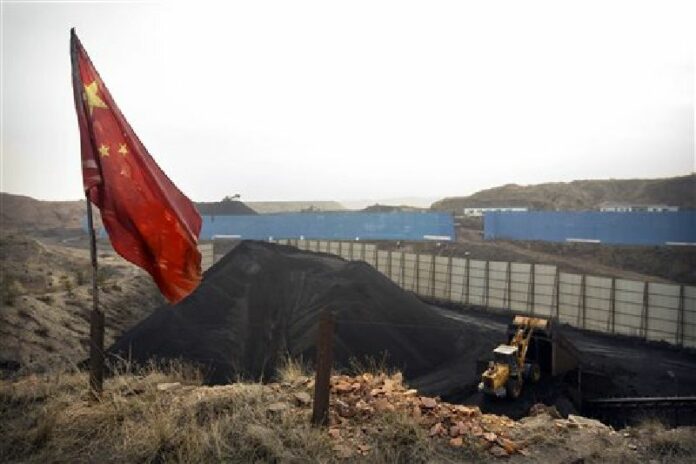
In this Nov. 4, 2015 photo, a Chinese flag stands in the breeze as a loader moves coal at a coal mine near Ordos in northern China's Inner Mongolia Autonomous Region. Photo: Mark Schiefelbein / Associated Press

BEIJING — A late-night coal mine accident in northern China has killed 19 miners, Chinese state media reported Thursday.

The accident happened Wednesday night on an underground platform in a mine in Shuozhou city in Shanxi province, the official Xinhua News Agency said. Its brief report cited the Shanxi Datong Coal Mine Group, which runs the mine.

State broadcaster CCTV said there were 129 people underground when the accident happened. The others reached safety.

China's mines had long been the world's deadliest, but safety improvements have reduced the number of deaths in recent years.

Story: Associated Press

Advertisement

Australia: Mozambique Debris 'Highly Likely' From Flight 370

In this Feb. 28, 2016 image provided by Blaine Gibson and the Australian Transport Safety Bureau (ATSB), a piece of aircraft debris with the words "NO STEP" is photographed after it was found washed up on a beach in Mozambique. Photo: Blaine Gibson / Associated Press

SYDNEY — Two pieces of debris recently discovered along the coast of Mozambique are "highly likely" to have come from missing Malaysia Airlines Flight 370, Australian officials said Thursday.

An analysis of the parts by an international investigation team showed both pieces are consistent with panels from a Malaysia Airlines Boeing 777 aircraft, Transport Minister Darren Chester said in a statement.

"The analysis has concluded the debris is almost certainly from MH370," Chester said.

The discovery of the two pieces provides another piece of the puzzle into the plane's fate, and bolsters authorities' assertion that the plane went down somewhere in the Indian Ocean. But whether the debris can provide any clues into exactly what happened to the aircraft and why is uncertain.

Flight 370 disappeared on March 8, 2014, with 239 on board and is believed to have crashed somewhere in a remote stretch of the southern Indian Ocean about 6,000 kilometers east of Mozambique. Authorities had predicted that any debris from the plane that isn't on the ocean floor would eventually be carried by currents to the east coast of Africa.

Until now, the only other confirmed piece of debris from the Boeing 777 was a wing part that washed ashore on the French Indian Ocean island of Reunion last year.

Given the vast distances involved, the variability of winds and the time that has elapsed, it is impossible for experts to retrace the parts' path back to where they first entered the water. And chances the debris itself could offer any fresh clues into precisely where the plane crashed are slim.

"Close examination of the debris might possibly give some additional information relative to the search, but it's unlikely," said Dan O'Malley, spokesman for the Australian Transport Safety Bureau, which is leading the hunt for the plane off Australia's west coast.

In a bid to glean whatever information they could, investigators from Australia, Malaysia, and Boeing spent several days scrutinizing both pieces. The parts were rinsed, submerged and agitated in water to capture any loose marine life. The water was then sieved and any potential biological material that was captured will be examined to see if it can be identified.

Experts will also likely examine the debris to see if it can offer any hints about what happened on board, such as structural deformities that could show the angle at which the plane entered the ocean or markings that could indicate a mid-air explosion.

Still, that would take some luck as the wing part found on Reunion Island has not yet yielded any significant revelations into the plane's fate.

What investigators really need to find is the main underwater wreckage, which would hold the plane's coveted flight data recorders, or black boxes. The data recorder should reveal details related to the plane's controls, including whether aircraft systems that might have helped track the plane were deliberately turned off, as some investigators believe.

But prospects for finding the debris field are running thin: Crews have already covered more than 70 percent of the search zone, and expect to complete their sweep of the area by the end of June. No trace of the underwater wreckage has been found.

One of the parts in Mozambique was discovered by American lawyer and part-time adventurer Blaine Gibson, of Seattle. Gibson, who said he's been searching for Flight 370 over the last year, found the piece on a sandbank.

Soon after Gibson's find was publicized, a South African teenager realized a piece of debris he'd found on a beach during a family vacation in Mozambique might also be from the plane. Liam Lotter came upon the grey piece of debris while strolling on a beach in southern Mozambique in December and thought it might be from an aircraft.

His parents dismissed it as trash that may have come from a boat, but the teen insisted on bringing it back to South Africa to research it further. Once back at home, the piece ended up in storage alongside the family's fishing gear and was nearly forgotten. It was only when Lotter read about Gibson's find about 300 kilometers from where he had made his discovery that the family alerted authorities.

Earlier this week, an archaeologist walking along South Africa's southern coast found a piece of debris with part of an aircraft engine manufacturer's logo. Malaysian Transport Minister Liow Tiong Lai said there is a possibility it came from an inlet cowling of an aircraft engine. Authorities will examine the part to see if it, too, came from Flight 370.

Story: Kristen Gelineau / Associated Press

Related Stories: 

Malaysia Says Metal on Thai Beach Not Flight 370

Malaysia to Inspect Debris Found on Thai Beach for MH370 Link

Advertisement

Democratic Governance: Striving for Thailand’s New Normal

Former Prime Minister Anand Panyarachun in an undated file photo.

Ed. Note: On Wednesday evening, former Prime Minister Anand Panyarachun revisited a vision he laid out in a speech eight years ago about Thailand. Now 83, the man who served two brief terms in the early '90s and oversaw the drafting of Thailand's best-regarded and longest-enduring constitution in 1997 delivered the keynote address at the InterContinental Bangkok hotel at an event hosted by the Foreign Correspondents’ Club of Thailand. The following is provided from an advance copy of the speech supplied to the media.
 

By Anand Panyarachun

March 23, 2016

Thailand is currently at an important crossroads.  Major changes are occurring in the economic, social and political spheres that will have far reaching implications for the future of this country.  

With the forces of change coming from both within and outside, what will constitute Thailand’s “new normal?"

My predictions are probably as good as yours.  What is clear in hindsight is that globalization, consumerism, extravagance, dishonesty, and immoderation have led to management failures in both government and business.

It is therefore time to have a better understanding of our past behavior and how it contributed to the present situation. We should be mindful of the Sufficiency Economy thinking formulated by His Majesty King Bhumibol Adulyadej in terms of its key principles of moderation, rationality, and immunity. A better grasp of these concepts can help us confront problems or crises and find solutions.

I would like to use this occasion to suggest to you what I believe to be the four essential elements of the new normal in the development of Thailand – the elements that will contribute to true and enduring change.


Element One

The first element in Thailand’s “new normal” rests on ensuring sustainable and widespread economic development. Here I emphasize “sustainable and widespread.”

In the past, we have focused too much on the overall rate of economic growth, but neglected the quality of that growth and the equitable distribution of income and opportunities.

The Asian financial crisis of 1997, and the more recent global financial crisis, both illustrate the dangers of unbridled economic growth. We have also been reminded that growth fuelled by populist measures that disregard fiscal discipline are unsustainable and leave problems in their wake. In Thailand, the first-car purchasing and rice-pledging schemes were both examples of short-term stimulus measures. Policies of this kind are pushed by governments the world over to secure quick popular support with inadequate regard for their negative economic repercussions.  

Sustainable economic development must focus on strengthening the foundations of the economy.  This entails raising underlying economic competitiveness, be it through improving public sector efficiency, state enterprise reforms, developing skilled and flexible labor, or upgrading education and research.

At the same time, sustainable development requires that the fruits of economic growth be spread widely and equitably to ensure social cohesion and continued economic and political legitimacy.

Many of the problems that we currently face, including the simmering political tensions and sporadic clashes suffered in the past decade, can be traced back to the injustice and inequality inherent in our society.

Economic disparity, in itself, retards economic growth, as has been shown in numerous studies.  Unless firmly addressed, inequality and injustice in their various forms will eventually hold back a country’s development and breed political upheaval, even violence.  We have witnessed this to some degree in Thailand already.


Element Two

The second element in Thailand’s new normal should be to promote an open and inclusive society.  

Apart from the need for more equitable distribution of income, as I just mentioned, we must also ensure equality of rights, liberties, and opportunities for all segments of society.

Liberty and equal rights are not simply about the right to vote. The demands and views of everyone must be heard and respected – not just those of the victors in elections. Majoritarian rule does not give a mandate to the winning party to do as it pleases in a winner-takes-all fashion. As the American libertarian James Bovard once observed, "Democracy must be something more than two wolves and a sheep voting on what to have for dinner."

Every group, every religion, every region and every rung of society must be able to participate collectively in shaping the direction of Thailand’s development.  This will instil a critical sense of ownership in our nation’s destiny that will compel each and every member of society to keep the state under constant scrutiny.

The demands and views of all groups, not just those in power or positions of authority, must be heard and respected.  As a people, we tend to see things strictly in black and white – right or wrong. Often in life, there is no absolute right or wrong, just different perspectives and judgments.  

The role of the media in serving as an unbiased and objective platform for voicing different views and perspectives in a balanced manner is also critical.  Modern technology has opened up unprecedented space for public discourse. In the vast marketplace of ideas, not everything is of equal value. So long as our institutions enable people to understand how to assess ideas in this marketplace – selecting the rigorous and rejecting the shoddy, democracy is not only sustained, it thrives.

As Thailand approaches elections in the near future, it will be imperative for the winners to consider themselves representatives of the entire country, and not just of the people who voted them in.  They have a duty to address the concerns of all interest groups and promote consensus in society. Striking that balance is an art.  I hope all political parties have learned important lessons from our painful past, and will do their utmost to pursue this vital principle of governance.


Element Three

The third element of the new normal in Thailand is respect for the rule of law. This goes beyond simply the application of the law. It requires adherence to both the spirit of the law as well as its underlying moral principles.

The World Justice Project has attempted to make global comparisons of the rule of law. The figures for 2015 see the four top places occupied by the Nordic countries: Denmark, Norway, Sweden, and Finland. With a score of 0.52 out of one, Thailand ranks 56th among 102 countries and 11th out of 15 in the region. Thailand trails the Philippines, Greece and Ghana, and this should remind us that we still have far to travel on our journey to attaining the rule of law.

Every individual and organization, private and public, and even the government itself, must be subject to the law.

The legislative and enforcement processes must be transparent and just. The judicial system must be neutral, independent, efficient, and have full integrity.

Importantly, the law must not be used as a means for attaining political goals. State actions must not be arbitrary and based on whims. Dissidents must not be prosecuted or deprived of their legal rights. The human rights of every citizen must be strictly upheld across the board.  

Lawful governance does not imply using the law to govern people or enforce the state’s will. We must have rule of law rather than rule by law.

Here in Thailand, a semblance of calm and stability belies tensions beneath the surface. Society cannot flourish in the long run if order and stability are rooted in measures that inhibit public discourse. When order and stability are imposed rather than allowed to emerge naturally in accordance with the rules and norms of society, there can be no transparency.

When the rule of law is weak, corruption flourishes. Democracy becomes dysfunctional when politicians, civil servants, the private sector, the judiciary, the police, and the military use their power to enrich themselves and advance their own interests at the expense of civil society.

We read about the impunity of the rich and powerful in our newspapers every day. An independent and neutral judiciary is fundamental to the rule of law. If judges use one law for the powerful and another for the powerless, the entire political and judicial system is compromised, and the people’s trust in the government to see justice served is eroded.

The rule of law demands public responsibility and the transparency of state institutions and their personnel. A government that is not held accountable, not answerable to anyone, and whose actions are not subject to public scrutiny, is more likely to abuse its power and disregard the public interest.


Element Four

Governance through the rule of law together with public accountability and transparency form the basis of responsible government. This is related to the fourth and final element of the new normal that I would like to talk about, namely the need to recalibrate the balance of power between the state and the people.

Responsive government lies at the core of true democracy.  It can occur only when there is comprehensive decentralization and local political empowerment. The closer a government is to the people governed, the more responsive the government will be.

A centralized system of governance cannot keep pace with the increasing complexity of today’s society. Decentralization enables the participation of more diverse interest groups and represents one way to curb the concentration of power and influence exercised by political forces.

By decentralization, I do not mean the distribution of power to local government bodies that report to the central authority. I mean dispersion of power directly into the hands of the people or their representatives.

In the past, we have established local institutions but always retained centralized control over them. Going forward, we must reform these local bodies so that they become answerable to the needs and demands of the local populace, rather than to the central government.

The heart of democracy beats only with the participation of all citizens in exercising their rights on issues that affect them directly. They must be well informed on these issues if there is to be ‘active citizenship’. In each locality, province, and region, the demands and solutions to various challenges may or may not be similar. The formulation of policies and plans of action should give precedence to the input of local communities.

The success of decentralization hinges on a balanced and diverse flow of information, which brings me next to the crucial role of civil society. An active civil society provides a mechanism whereby the collective views of citizens can shape and influence government policy. By bringing arguments and information into the public domain, policies can be examined and challenged. A genuinely democratic government will feel obliged to present counterarguments or to modify its position. Such interactions are healthy for democracy, and enhance the decision-making process.

A vibrant civil society relies on the wisdom of the populace and its ability to make rational and informed decisions. Democracy becomes a force for meaningful progress when voters not only understand the issues at hand, but are also conscious of their context, the various alternatives available, as well as their responsibilities as democratic citizens. We must therefore urgently reform our education system from one that simply produces graduates to one that nurtures the ability of people to think critically and make constructive changes in society.

There has been much discussion on this topic over the years but little tangible progress. We must take a step back and carefully reassess our fundamental approach. No one here, or anywhere else for that matter, can predict with confidence what that world will be like five years from now, let alone in that distant future. Yet we are tasked with educating our children for that world – to ensure they are equipped to solve the problems of their time.

In my view, the best way to do this is to shift the emphasis of education away from memorizing facts and rote learning to focus instead on nurturing creativity and adaptability. This all starts with getting teachers to teach less, encouraging students to read more diversely, and ensuring teachers engage in dialogues with students. The main focus should not be on getting the right answer but on instilling confidence to think problems through, to voice opinions and to articulate reasoned arguments.

In an age where a staggering amount of information is available at the touch of a button or the swipe of a smartphone, learning will be more important than knowing. If our children are to be able to solve the complex problems of the future – and climate change is but one – they will need a high degree of creativity. This is something I feel has been sadly neglected so far.  

The enemy of creativity is the fear of being wrong or making mistakes. I believe every child is born with an immense amount of creativity and the capacity to innovate. But an education system that stigmatizes mistakes, focuses on correct answers, and penalizes wrong ones, serves to retard creativity. By the time children grow into adults, they have been deprived of their creative impulse by the fear of being wrong.

Innovation does not come from a fear of being wrong. On the contrary, the courage to risk making mistakes, the relentless process of trial and error, and the ability to bounce back from repeated failures are the seeds of innovation and advancement. Let us not forget that the iPhone many of you carry around was regarded with some scepticism when it was first released in 2007. Its success is a testament to Steve Jobs’ willingness to be wrong rather than his fear of not being right.

An education system that promotes good learning skills in children will contribute to a citizenry capable of grasping issues of concern and placing them in the right context.  This contributes to well-informed, rational decisions, and helps ensure that the responsibilities of society under democratic rule are met.  


A New Normal for Thailand

What I have laid out so far is a vision for a new normal for Thailand built upon the foundations of democratic governance. It broadly represents a framework for governance that Thailand has lacked up to now.  

We have a tendency to focus on democracy in form rather than in substance. We follow procedures and go through the motions of elections. Yet we have paid little attention to developing the institutions that are critical to sustaining democracy. The challenges that we are presently facing have their roots in the fact that we have never had a true democratic transition – a genuine change in our political system.

Change has always been superficial, old wine in a new bottle – or you could even say old wine in an old bottle but with a new cork. Critically, we have not dug deeply enough to uncover the true underlying cause of current divisions in Thai society.

Much of this is not related to the actual policies of governments, present or past, nor is it about a fight between pro-government or anti-government forces. Rather it is about poverty, social injustice, unequal rights and opportunities, and about the way power is divided between the state and the people – or even among groups of people.

Thais have traditionally been good at creating problems. Some say that they are also good at solving them, but is this not really a bit of a myth? Our development path has been one of muddling along, an ‘ad-hocracy’ you might say. Little has been done in the way of strategic longterm planning or effective implementation.

While substantial progress has been achieved in terms of economic development, we have not taken sufficient note of its negative political and social impact. At this juncture, it has become patently clear that many of our economic, social and political institutions are inadequate when faced with the challenges of globalization. We have simply not kept up. Rather than face up to our problems, we Thais often yearn for a knight in shining armor to ride to the rescue. But the time for that kind of ‘I-know-best’ style of management has passed.


The Road to Reform

To make headway towards the new normal that I have described, we must embark on comprehensive structural reforms now.

Successful reforms often result from leveraging on opportunities that arise, such as at times of crisis. I have always held the view that we did not make the most of the 1997 financial crisis.

Thus at this point we should not waste time debating where we are, or if we got here in the right or wrong way. These are important and legitimate questions that deserve reflection, but they should not prevent us from moving forward or seeking solutions to the problems at hand.

A reform strategy must always be assessed within the context of the bigger picture. In the past, the main thrust has been through constitutional reform, which is not ideal and may even be counterproductive. We have been rather profligate with our constitutions. We are on our 19th in the space of 83 years – which happens to coincide exactly with my age.

I was involved in drafting Thailand’s 1997 constitution, which for the first time involved broad-based public participation.  I had hoped it would make Thai democracy more open, transparent and accountable, and that electoral reforms would limit money politics and corruption.

That said, I have always recognized that a constitution is not a silver bullet for all that ails society. For a constitution to make a real difference, society must first embrace the underlying values it espouses. A constitution alone cannot bring about meaningful change without the necessary reforms to other key democratic pillars, particularly political institutions and the people’s mindset.  

Structural reform is a continuous process rather than a one-shot exercise. It might begin with drafting a new constitution, but the process must evolve. We must not imagine that certain initiatives today will bring about lasting change and forever resolve prevailing problems. There are no once-and-for-all solutions.

There is no unique blueprint for reforms to bring about true democracy. The seeds of democracy must be sown from within each society for the shoots to be accepted and nurtured. People must want democracy for it to take hold. As Mahatma Gandhi once observed, “The spirit of democracy cannot be imposed from without. It has to come from within.”

The elements of democratic governance that I have outlined can serve as overarching supports to encourage democracy to evolve meaningfully.

As a nation, we have come far, and there is no turning back to the way things were. Change is inevitable and permanent. Each and every one of us has a stake in the future of our country. We must forge a collective vision that is progressive and contributes to change that is constructive.

Democratic governance is ultimately a state of mind, rather than a set of tangible rules or procedures. Over and above the implementation of critical reforms, moving forward requires that we fundamentally change our way of thinking, attitudes, and mindsets to embrace openness, a diversity of views, as well as values that support societal change.  

Democratic governance opens up channels through which the diversity in our society can come together to advance political, economic and social development. It thus represents the most direct route to true sustainability.  That is my hope for Thailand’s new normal.

Advertisement

Junta Probe Clears Former Army Chief of Royal Monument Graft

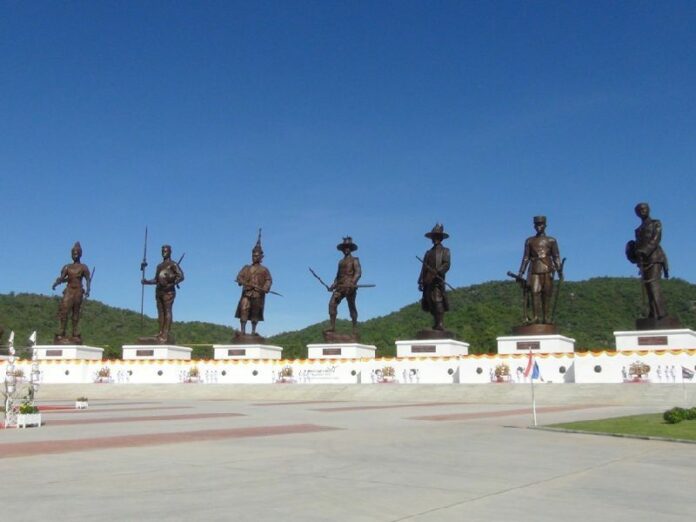
Rajabhakti Park in Prachuap Khiri Khan province.

BANGKOK — No trace of corruption or malfeasance was found in the construction of a royal monument overseen by former army chief Udomdej Sitabutr as widely alleged in media reports, a junta-appointed committee declared today.

Concluding a three-month investigation, the Public Sector Anti-Corruption Commission said Wednesday there was no evidence to back up allegations Gen. Udomdej, himself a member of the junta, engaged in any corrupt practices in the Rajabhakti Park project completed last year in Prachuap Khiri Khan province. 


No Corruption in Rajabhakti Park, Army Rules


“There was no violation of bureaucratic procedure,” said head investigator Pisit Leelavachiropas, adding that his commission inspected “more than 95 percent” of all documents available.

Starting in late October, media began publishing accounts by anonymous sources that the Rajabhakti Park project was mired in financial irregularities. 

Allegations included sub-standard quality, overpriced materials and a shady practice in which the army contracted statue foundries via a an amulet businessman who collected a 10 percent “commission fee” from the state budget.

That middle man, Watcharapong Radomsittipat, was previously exonerated by the same commission in February. 

Pisit disputed all of the allegations. He said investigators even cut out chunks of the statues and sent the material to a lab in Chulalongkorn University, in order to check whether their quality was up to standard.


Related stories:

Park Scandal: Udomdej Blessed by Prem Just Before He Was Cleared

Rajabhakti Scandal: Military Closes Park 'For Maintenance,' Detains Dozens of Activists

Govt Not Responsible for Rajabhakti Park Graft, Minister Says

Army Colonel Accused of Insulting Monarchy as ‘Royal Impostor’


Teeranai Charuvastra can be reached at[email protected] and @Teeranai_C.


\

Advertisement

China, Southeast Asian Leaders Seek Greater Cooperation

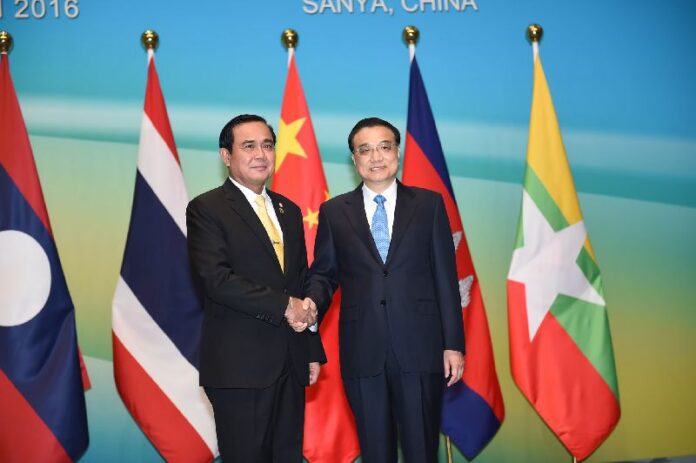
Junta chairman Prayuth Chan-ocha, left, shakes hands with Chinese Premier Li Keqiang, Wednesday, March 23, 2016, at the inaugural Lancang-Mekong Cooperation meeting in Sanya, China.

SANYA, China — Leaders from China and five neighboring Southeast Asian countries met in a southern Chinese resort city on Wednesday amid wariness but also hope for greater regional cooperation.

The inaugural Lancang-Mekong Cooperation meeting, named for the mighty waterway that begins in Tibet and discharges into the South China Sea in southern Vietnam, was framed by the Chinese and Thai co-hosts as a chance to deepen ties and cut trade deals in a fast-growing region.

The five Southeast Asian countries that run along the Mekong represent a key market for China under a sweeping strategy to boost trade and foreign investment called "One Belt, One Road." China has wooed the region with eye-catching projects including a textile-making hub in Cambodia, a deep sea port in Myanmar and new railways in Thailand.

Chinese Premier Li Keqiang, who co-hosted the summit in the city of Sanya with Thai Prime Minister Prayuth Chan-ocha, called on participants from Myanmar, Cambodia, Laos and Vietnam to improve mutual trust, enhance trade and "make this region an important force for stability."

A number of development and trade deals were expected to be signed.

However, several countries have expressed concern about their giant neighbor's rise, including Vietnam, which has competing maritime claims in the South China Sea.

Escalating territorial conflicts have complicated what has generally been a decades-long Chinese effort to court its neighbors, with Beijing concerned over signs those countries may be drawing closer to regional rival the United States.

Earlier this month China released water from the Lancang River — the segment of the Mekong River in southwestern China — to alleviate drought in the Vietnamese Mekong Delta as a diplomatic gesture ahead of the summit.

Story: Associated Press


Advertisement

Find Natural Bliss at Bangkok’s Suan Luang Rama IX

Bangkok’s Rama IX Park in a recent photo

BANGKOK — Thailand’s capital is infamously lacking in options for those seeking respite under a verdant canopy and fresh air. There is the “Green Lung” of Bang Krachao, but development is beginning to creep in along with the hordes of weekend warriors pedaling through its swampy causeways.

For a lush and quiet alternative, head just east of downtown behind the Paradise Park mall on Srinakarin Road to find a green and serene expanse of over 80 hectares known as Suan Luang Rama IX, or Rama IX Park.

Best of all, visitors have little competition to enjoying its sprawling grounds. After paying the 10 baht entrance fee and cycling through the gate on a recent visit, I was surprised to be greeted by an empty parking lot.

\

Two cyclists ride through Suan Luang Rama IX

It’s the kind of park that seems to defy Bangkok norms. Staff, clad in perfectly pressed green uniforms, patrol the grounds and keep the trees and hedges neatly trimmed. Don’t be surprised by a friendly salute and smile as you pass. There are bins for trash at every turn, and guests don’t seem to even think about littering.

And there’s something mysterious about the massive plot of greenery that can fool guests into believing they’re hundreds of kilometers from Bangkok. It’s hard to put your finger on at first, but then it hits:  the supreme air quality. The park is so large and so well maintained that it’s simply easier to breathe here than elsewhere in Bangkok.

\

A couple look across the park’s expansive lake toward its Ratchamangkala Pavilion

Visitors are likely to walk away with a blissful feeling from Rama IX Park, and they may also pick up some knowledge of the local flora, as most plant species are labeled with plaques denoting their scientific name and origin.

Also find a Chinese garden, an herb garden showcasing plants used in local cuisine, a pretty amazing cactus garden and a hedge maze that may leave its explorers disoriented.

\

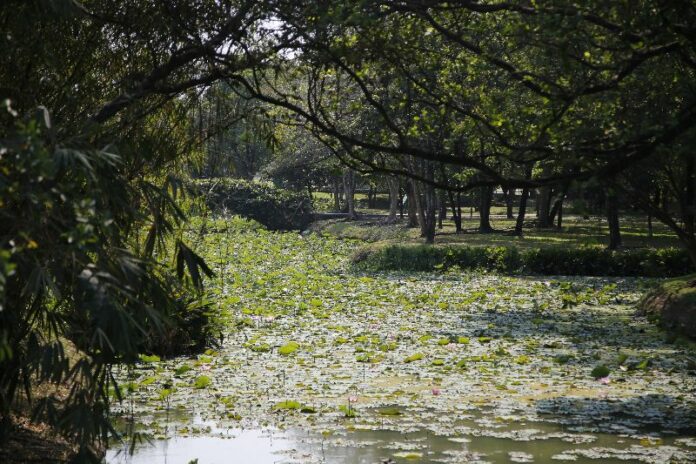
Lilies choke the Chinese garden in Suan Luang Rama IX Park in a recent photo

Forget the Green Lung, head to Rama IX Park for natural tranquility far removed from the city. If you have children they are sure to enjoy the paddle boats on the large lake.

For the car-free, the Rama IX Park can be reached by taxi from Paradise Park Shopping Center. The closest rail line is BTS Udom Suk, from there take a taxi or buses No. 48 then 207 to reach the mall. Find some basic information in English on its non-updated website.

 

Advertisement

Body of Unknown Man Pulled from Chao Phraya

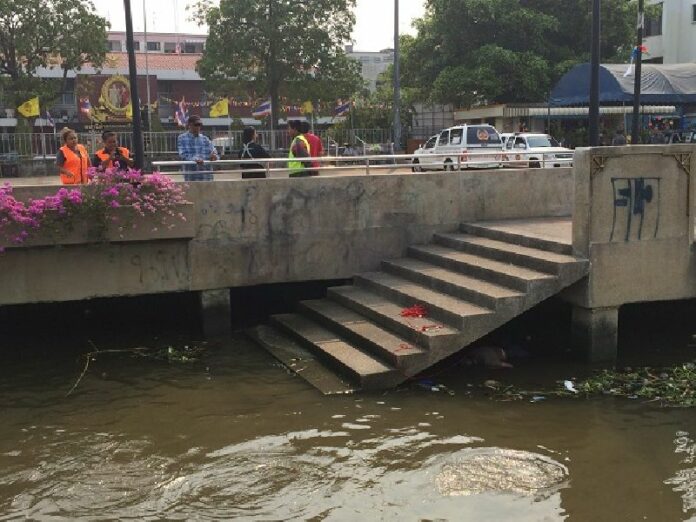
Onlookers linger where a rescue boat retrieved the body of an unidentified middle-aged man Wednesday morning from Bangkok’s Chao Phraya River near the Rama V Bridge.

NONTHABURI — A dead body was found floating again in the Chao Phraya River this morning near the Rama V Bridge.

Police are still searching for the relatives of an unidentified man of about 50 found in the same area part of a dismembered Spanish man was discovered in February.

No identification was found on the body of the white-haired man. He wore black pants and a Khaki shirt with a still-functional G-Shock watch.

The man probably died about three days ago, according to Lt. Piyanat Jiamrum of Nonthaburi Police Station. No injuries were found on the body which was taken to Thammasat University Hospital for further examination.


Advertisement

Hot News

LATEST NEWS

Bangkok
overcast clouds
30 ° C
31.6 °
30 °
75 %
4.7kmh
100 %
Sun
31 °
Mon
33 °
Tue
33 °
Wed
31 °
Thu
29 °