



























34.4 C
Bangkok
Tuesday, June 23, 2026
Home Blog Page 2801

Testosterone is No Fountain of Youth, Study Finds

CHICAGO — A landmark study suggests that testosterone treatment is no fountain of youth, finding mostly modest improvement in the sex lives, walking strength and mood of a select group of older men.

The long-awaited results from a rigorous, government-funded study are the first solid evidence of whether these hugely popular supplements can help treat low sex drive, lack of energy and other symptoms sometimes blamed on aging.

The researchers emphasized that the findings pertain only to use of testosterone gel by men 65 and older with low hormone levels and related symptoms; whether similar benefits would occur in younger men or with testosterone pills, patches or shots is unknown.

Also, the research was not extensive enough to determine whether long-term use raises the risk of heart attacks and prostate cancer, as some studies have suggested.

Lead author Dr. Peter Snyder, a University of Pennsylvania hormone specialist, said it would be premature to recommend the treatment even for men like those studied.

"Making a recommendation depends on knowing all the benefits versus risks," he said. "We still don't know everything we want to know."

The study involved almost 800 men 65 and older at 12 centers nationwide. All had low blood levels of testosterone, the main male sex hormone. They were randomly assigned to use testosterone gel or fake gel without hormones, rubbed daily on the skin for a year. They had to fill out questionnaires and take a six-minute walking test.

The study design is considered the most rigorous, gold-standard type of research.

Improvement in sex lives was modest among the testosterone group, and the benefits in erectile function were less that what has been seen with Viagra and similar drugs. The men on testosterone had slightly greater improvement in mood and walking strength than the other men, but there was no difference in energy boost between the two groups.

The research is among seven testosterone studies the National Institute on Aging launched in 2009 to examine the risks and benefits of testosterone supplements widely marketed on television to men with "low T."

Testosterone levels typically decline with age. Supplements are approved only for treating testosterone deficiency caused by certain medical conditions, such as problems with the testes, but they have become a multibillion-dollar industry, feeding on aging men's desire to remain youthful. The men in the study did not have any of those specified conditions.

The new research combines results from three of the government-funded studies. Results are expected later from the four other studies, which tested the hormone's effects on mental function, bone density, heart function and anemia.

The current results are in Thursday's New England Journal of Medicine.

The findings "bring some real rigor" to questions surrounding testosterone use and suggest that the treatment is "not a panacea" for age-related ills, said Dr. Eric Orwoll, a physician-researcher at Oregon Health and Science University in Portland.

On average, the testosterone increased men's hormone levels to what would be normal for someone 19 to 40 years old.

About 20 percent of testosterone men reported much improved sexual desire, and 30 percent reported a slight improvement, but almost half reported no change. Less than one-third of the fake-gel men reported any improvement in sexual desire.

On the walking test, testosterone and placebo men showed similar improvements when the comparison was only among men who started out with low scores. When the comparison was expanded to include other study men, about 21 percent of testosterone men achieved the walking goal versus about 13 percent of those on a placebo.

Snyder said those findings suggest but don't prove that the hormone builds muscles and increases strength and energy.

The men in the study didn't learn until it was over whether they had been given testosterone or the fake gel.

Dave Bostick, who participated at the University of Pittsburgh, said that as soon as he stopped using the gel he correctly guessed he had gotten the real thing. Bostick, 71, a retired vocational rehab counselor, said his low mood and energy level improved "a little bit" during the study but suddenly worsened afterward.

He said he has resumed using testosterone at his doctor's recommendation and isn't overly concerned about the potential risks.

"Something's going to get me sooner or later," Bostick said.

A small number of men had heart attacks or were diagnosed with prostate cancer during or after the study, but the rates were similar between the two groups. Dr. Richard Hodes, director of the National Institute on Aging, said the agency is awaiting results from the additional testosterone studies to determine whether to pursue research on potential long-term risks.

ABBVie Pharmaceuticals provided its AndroGel for the study and helped pay for the research but was otherwise not involved.

Company spokeswoman Libby Holman called the research "an important contribution" to understanding the role of testosterone therapy.

Story: Lindsey Tanner / Associated Press
Advertisement

Police Deny Torturing Bangkok Bombing Suspect

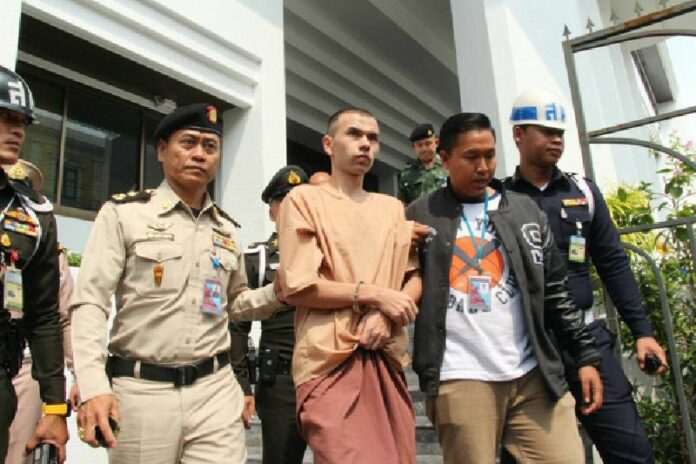
Adem Karadag,31, aka Bilal Mohammed, is led Tuesday from the military court in Bangkok.

BANGKOK — The head investigator of Bangkok’s deadly August shrine bombing said today their chief suspect in the attack was never tortured as alleged by his lawyer, who may be charged for defaming the police.

A day after defense lawyer Schoochart Kanpai publicly accused police of torturing his client, 31-year-old Adem Karadag, police officials today insisted neither Karadag, who is also known as Bilal Mohammed, nor co-defendant Yusufu Mieraili were ever physically or psychologically abused.

“The case has already passed the interrogation stage, there is nothing we can do,” said police Lt. Gen. Sriwarah Rangsitpramkul. “We shall wait for the court’s judgment.”

Schoochart said he petitioned the court Jan. 15 to investigate the alleged abuse of his client.

Seeking to discredit Schoochart, Sriwarah on Wednesday showed a clip of the lawyer speaking to reporters after visiting Karadag on Sept. 30, about a week after his client alleges he was tortured into confession. In the clip, the lawyer states his client confessed to placing the bomb that killed 20 people Aug. 17.


After first denying his client had confessed, lawyer Schoochart Kanpai tells reporters Sept. 30 that Adem Karadag had admitted his role in the Aug. 17 attack.


“Adem (Karadag) confessed willingly to placing the bomb at Erawan Shrine himself,” Schoochart says in the video. “He said Abdullah Abdullahman, who helped him enter the country, ordered him to do it.”

In a statement provided to reporters Tuesday, Schoochart said Abdullahman was a trafficker Karadag used to enter Thailand illegally in a bid to reach Malaysia for employment.

Schoochart also denied that his client ever made a lawful confession, and therefore did not recant his statement. He said it was police who spread word of a confession. Karadag himself, however, alleged in a letter that he did make a false confession after hours of torture.

Asked about his recorded comments from Sept. 30 that Karadag had voluntarily confessed, Schoochart said he didn’t have all the facts at the time.

“It was because that day I had not yet talked with the defendant in detail,” he said. “It also concerned the security issue of both the defendant and the lawyer.”

Both the lawyer and police official said medical records would support their version of events.

Sriwarah said he’s ordered Schoochart’s statements be investigated, saying the lawyer will be criminally charged if they conclude he intended to defame the police or nation.


Related stories:

Source Material: Translated Excerpt of Bombing Suspect’s Letter Alleging Torture

Bombing Suspects Deny All Charges in Military Court

Top Brass Present During Torture, Bombing Suspect Alleges

Chinese Uighur Karadag Tortured Into Confession, Lawyer Says


Advertisement

North Korean Follows Path to Freedom in Bangkok

Hyeonseo Lee talks to the press Friday Feb. 12, 2016, at the Shangri-La Hotel, Bangkok.

By Simon Duncan
Deputy Editor

BANGKOK — In January 2008, Hyeonseo Lee boarded a flight from Shanghai to Bangkok via Seoul. Lee differed from the millions of Chinese who fly to Thailand each year: Her Chinese passport was fake.

She was actually North Korean.

Lee never made it to Bangkok that day, as she got off the plane on her stopover in Seoul and sought asylum. After months spent in detention centers, she won her freedom after proving to authorities she was a North Korean refugee.

Now in her mid-30s, Lee finally set foot on Thai soil last week, eight years after her exodus from China, not just to promote a Thai language version of her book but also create awareness for the thousands of North Korean refugees who sneak into Thailand each year in hope reaching the South Korean embassy in Bangkok.

Eighteen years after she sneaked out of North Korea at 17, the first glimpse of the vast metropolis that is Bangkok shocked Lee, who said she was taught in North Korea that Thailand was “low status” and less developed than her homeland. In North Korea, she said “memorizing the fake history of the Kim dynasty is important” and something she excelled at, to the delight of her teachers.

Thailand is “the most important country for North Koreans,” Lee said Saturday in her speech at Bangkok Edge, because it allows safe passage from the border with Laos to Bangkok and the South Korean embassy.

“A shining beacon of hope at the end of a dark journey,” she said.

\
Hyeonseo Lee speaks Saturday at the Bangok Edge Festival.

Straight Lines Not Always the Shortest Distance

Most North Koreans looking to start a freer life in South Korea do so by traveling overland to Thailand via China and Laos. After some time in an immigration detention center, they may apply for asylum at South Korea’s embassy. That is if they are not caught and sent home before reaching Thailand – a fate that happens to many.

According to Lee, some 90 percent of the 30,000 or so North Korean refugees living in South Korea came via the embassy in Bangkok.  

Once in the Thai capital, Lee worried few would attend her discussion Saturday, despite the fact her 2013 TED talk has been watched more than 4 million times and was named the series “most riveting” ever by Oprah Winfrey.

It was hard to find a free chair in the room.

Contrasting the stereotype of North Koreans as dour people, Lee peppers her speech with witty comments and constant gestures. She recounted for the audience how, as a child, she asked her mother why the ruling Kim family was so fat. Her mother told her it was due to Kim Il Sung passing an “unlucky” disease to his son, Kim Jong Il.

Mocking the leader is a serious offense in North Korea, unthinkable in public and risky even in private, as people may inform the police.

Why does she dare criticize Kim Jong Un now? Somebody has to do it, Lee said.

“North Korea is the most ridiculous country [in the world], I believe,” she said.

\
Hyeonseo Lee speaks to reporters Friday at Bangkok’s Shangri-La Hotel.

The Ethical Dilemma

In an interview the day before her talk, Lee said she knew about Bangkok’s Pyongyang-owned restaurants and had even visited those in Shanghai when she grew homesick during the decade she lived in China. Passing herself off as Chinese, she risked discovery and deportation back to North Korea just for a taste of home.

Now she discourages people from visiting them. The staff at such places only receive about 5 percent of the income, she said, with the remainder funneled back to Pyongyang. She also alleged that some staff in these establishments are encouraged to have sex with some customers in exchange for money or information.

Lee’s admonishment was echoed several days later by South Korea’s Foreign Ministry, which on Wednesday warned its citizens to avoid North Korean restaurants when abroad.

As for visits to North Korea, Lee was adamantly opposed.

“The money will be used for more missile tests,” she said.

At the sound of a popping balloon, Lee appeared distressed. It’s been nearly 20 years since she snuck out of her homeland, but she said she still lives with one eye over her shoulder and believes there are North Korean spies in Thailand.

There are worse places to unwind, she said, adding that she’s partial to her hotel’s massage service.

Hyeonseo Lee’s “The Girl with Seven Names: A North Korean Defector’s Story,” is available now in English with a Thai translation to be released in March.


Related stories:

South Koreans Told to Boycott Overseas North Korean Restaurants

Table the Politics and Bite Into North Korean Cuisine at ‘Pyongyang Okryu’

7 North Koreans Arrested on Thai-Laotian Border


Advertisement

South Koreans Told to Boycott Overseas North Korean Restaurants

In this April 5, 2009, file photo, North Korean women perform at a North Korean restaurant in Dandong in northeastern China's Liaoning province. Photo: Ng Han Guan / Associated Press

SEOUL, South Korea — South Koreans' stomachs are the latest front in the standoff with North Korea.

South Koreans have been told not to eat at North Korea's restaurants around the world, although such visits aren't illegal, the South's Foreign Ministry said Wednesday.

Most of the restaurants are in China, and Chinese and other nationalities frequent them more than South Koreans do, so analysts see little impact. But the move is symbolic of a tougher stance from the South since North Korea's nuclear test last month and its recent rocket launch, which many outsiders see as a banned test of ballistic missile technology.

Washington and Seoul have been calling for more stringent financial and trade sanctions against Pyongyang. President Park Geun-hye has taken a much harder line than during past standoffs with the North, closing a jointly run factory park that the South believes helped finance Pyongyang's nuclear weapons and ballistic missiles program. Park on Tuesday also warned of "regime collapse" in the North, formerly a taboo subject in the South, which cherishes the notion of an eventual peaceful reunification on the peninsula that was divided at the end of World War II by the Soviet Union and the United States.


\

A man walks past a branch of the North Korean-operated Haedanghwa restaurant in Beijing, Wednesday, Feb. 17, 2016. Photo: Mark Schiefelbein / Associated Press

North Korea runs about 130 restaurants in other countries — about 100 in China and the others in Russia, Southeast and South Asia, according to a South Korean National Intelligence Service official who didn't want to be named, citing office rules. South Korean officials wouldn't say how many South Koreans visit those restaurants or how much money the businesses generate for North Korea, reportedly more than USD$100 million (3.5 billion baht) annually.

Restaurants such as Beijing's Okryukwan, known for its cold buckwheat noodles and grilled marinated beef, have been popular among some South Korean leisure and business travelers.

Story: Kim Tong-Hyung / Associated Press

Related Stories: 

Table the Politics and Bite Into North Korean Cuisine at 'Pyongyang Okryu'

North Korean Follows Path to Freedom in Bangkok


Advertisement

Though None May Listen, Law Experts Go Through Democratic Motions on Charter

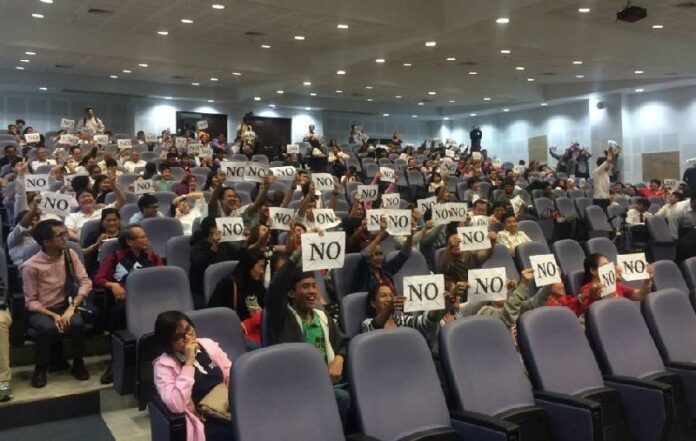
Audience members at a Chulalongkorn University seminar display their opposition Feb. 8 to the junta-sponsored draft charter in Bangkok.

By Pravit Rojanaphruk
Senior Staff Writer

BANGKOK — A dozen men and women stoically push on, deliberating what should be amended in nearly every article of law proposed for the kingdom’s future. While they could almost be mistaken for members of the junta-appointed Constitution Drafting Committee, they are not.

What’s more, these shadow framers, who’ve labored over proposals to improve the proposed constitution before it goes to voters in July, are all but resigned to the fact their recommendations will be ignored by the committee’s real framers. Yet they go on, believing their parallel process of deliberation is one they are duty-bound to complete and essential to a functioning democracy.

“I don’t have any hope that what we propose will have any impact on them,” said prominent human rights lawyer Somchai Hom-laor, one of the dozen participants who met Feb. 9 at the Law Reform Commission of Thailand in Bangkok to finalize their suggested improvements to the first draft released late last month.

“Seeing [the proposals] lead to amending the draft charter is among our final steps. It empowers our network, however,” said Somchai, referring to the meeting spearheaded by former election commissioner Gothom Arya.

Specific suggestions raised during the day’s deliberations on the charter included reintroducing community rights, calibrating the senate selection process, strengthening press freedoms and improving its overall clarity for the general public.

One participant said a male member of the charter drafting committee estimated no more than 1,000 Thais have read the first draft in full. It’s thus a challenge, she said, to simplify the final draft to be more accessible to more people who are not experts in such matters.

The meeting ended late in the afternoon with all the proposals collected for the drafting committee. Those proposals were formally submitted Friday.

If adopted, the draft charter would become constitution No. 20 for Thailand after the previous was nullified by the military coup in May 2014. It’s being promoted by junta sponsors as a means to turn back the endemic corruption in politics. Its critics say it enshrines an undemocratic system to shut out the political influence of fugitive former prime minister Thaksin Shinawatra and his proxies.

Despite low expectations their recommendations will be taken seriously by the charter drafters, Gothom, a lecturer at Mahidol University’s Institute of Human Rights and Peace Studies, said the group will only go through proper channels to be heard. He said the group itself will not seek to lobby anyone on the committee for special consideration of their proposals.

Those participating in the exercise with him, however, are welcome to reach out on a personal basis, he said.

“As the organizer, we must use the normal channels, but if you have other channels, you may use them,” said Gothom.

Laddawan Tantivitayapitak, secretary general of the Law Reform Commission of Thailand, is also active in the deliberation process. She told Khaosod English last week she’s already made up her mind: She’s going to reject the draft charter when it goes to vote July 31, even though its second and final drafts have yet to be revealed.

Raewadee Prasertcharoensuk, a veteran community development worker, insisted all is not lost.

“It’s not about what we propose, but what we make public and communicate through the mass media. We can also rely on informal channels. But what we’re doing is not a secret, and we need to directly communicate [to the public] too,” she said.

Poonsab Piya-anand, a retired bureaucrat, said she the key thing is to make the group’s proposals known to the public, regardless of their direct impact on the drafting process. Still, members are free to try.

“Whether someone can lobby or not is a separate matter,” she said.
 

Related stories:

Charter Vote Risks Being ‘Laughing Stock’ Poll Monitor Says

Junta Threatens to Summon Critics of Charter Draft

Charter Gets Broadcast Boost, But Criticism Will Not be Televised

Charter’s Uncertain Fate Mirrors Junta’s Own Lack of Confidence

The Quixotic Quest to Alternative Charter Drafting


Pravit Rojanaphruk can be reached at [email protected] and @PravitR.

Follow Khaosod English on Facebook and Twitter for news, politics and more from Thailand. To reach Khaosod English about this article or another matter, please contact us by e-mail at [email protected].


Follow @KhaosodEnglish

\

Advertisement

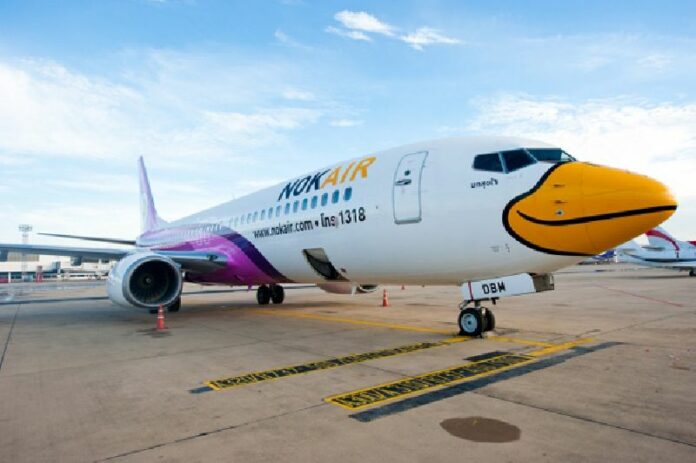
Nok Air Denies Flying Unqualified Trainee Pilots

Photo : Prachachat

BANGKOK — Nok Air has been warned it could lose its license if it repeats the poor handling of a crisis that left hundreds of passengers stranded Monday as the airline denies a former manager’s accusation that it has been using unqualified trainees to fly its planes.

The Tuesday warning from the Ministry of Transport came a day after representatives of the budget airline failed to show up at a meeting to discuss solutions to the situation that left more than 1,500 passengers stranded Sunday.

“When this kind of incident happens, the CEO or top executives must take responsibility immediately,” government spokesman Maj. Gen. Sansern Kaewkamnerd said. “But in this case, there were only lower rank staff members trying to solve the situation.”

Meanwhile a pilot who served as the airline’s manager of flight standards – and was fired Tuesday – accused his former employer of violating regulations.

Sanit Kongpetch said Nok failed to deal with a pilot shortage and instead has been posing unqualified trainees as pilots. He said the airline failed to hire adequate numbers of pilots for its flights since there were at least 30 pilots resigned last year.

Nok Air CEO Patee Sarasin this afternoon dismissed the accusation, saying all of the airline’s pilots are qualified in accordance with international standards, and that the airline has enough pilots as it reduced its number of flights.

The CEO said it would violate regulations to field unqualified student pilots as Sanit alleged because they must be authorized by Department of Civil Aviation.

The Civil Aviation Training Center and Department of Civil Aviation could not be reached for comment.

Nok Air was called in by the government Tuesday for a stern warning. Minister of Transport Akom Termpitayapaisit said Nok’s license will be suspended if an incident such as Sunday’s happens again and will be revoked after a third offense.

The airline, whose major stakeholder is Thai Airways International, was given until Thursday to submit immediate contingency and risk management plans.

At least five flights were abruptly canceled on Sunday. The airline quickly blamed striking pilots who failed to meet heightened standards; the pilots denied organizing a work stoppage and accused the airline of trying to paper over internal issues.

Patee said Tuesday that his airline now has only 130 pilots due to many leaving for other airlines during the past year.

“After some pilots resigned, we have been reducing flights by 10 percent to 15 percent,” he said. “Hence it was our weakness that caused a problem when pilots suddenly took leave together on the same day.”

Patee said he did not solve the matter in a timely fashion because he was out of town with his wife for Valentine’s Day and failed to delegate authority to other executives.

The CEO further explained the airline’s woes on the Chinese zodiac.

Three company executives were born in the Year of the Tiger, the airline CEO explained, which makes for great misfortune in this Year of the Monkey. To turn things around, Patee said the executives plan to make merit together at a temple.


Advertisement

Battle for Myanmar Continues Despite Advent of Democracy

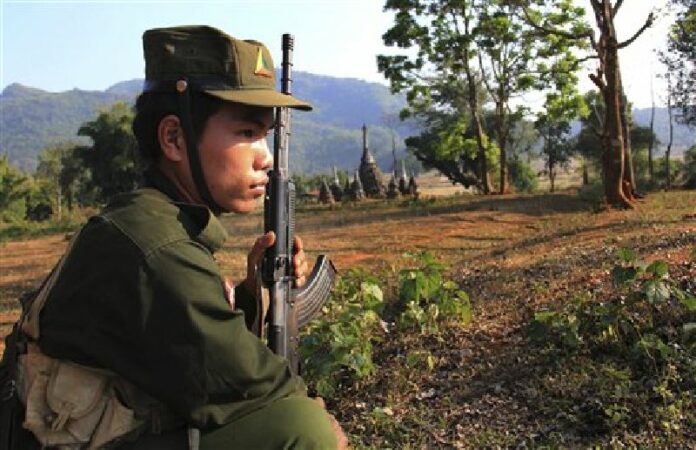
A rebel fighter of the Shan State Army North stands guard on Feb. 4 close to the front line of the fighting area in Mong Ark, in an area under the insurgent armiy's control in northeastern Shan state, Myanmar. Photo: Esther Htusan / Associated Press

MONG ARK, Myanmar — On a freshly scarred battlefield, a diehard rebel army is facing off at gunfire range against a military that for decades has imposed iron-fisted rule over this Southeast Asian nation. Overhead, vultures circle the mountainous terrain while insurgent soldiers crouch near deep foxholes, prepared, they say, to throw back another possible assault.

Myanmar's civil war the longest in modern world history hasn't ended, even with democracy triumphant in recent elections and the winner, Aung San Suu Kyi, pledging to end hostilities between the central government and a host of autonomy-seeking ethnic minorities. Prospects for stopping the bloodshed are balanced on a knife's edge.

Suu Kyi, whose National League for Democracy swept November's elections, has promised that bringing peace will be the top priority when her government assumes power April 1. "We will try for the all-inclusive ceasefire agreement," the Noble Prize laureate said recently. "We can do nothing without peace in our country."

But suspicions of the country's military were again aroused as it battled the Shan State Army-North in these remote hills of northeastern Myanmar just as voters were casting their ballots across the country. As the countdown to democracy proceeds, so do clashes with the Kachin Independence Army, the Ta'ang National Liberation Army and others.

\
Rebel fighters of Shan State Army North stand close to a wood fire on Feb. 5 after participating in morning drills in Wan Hai, an area under their control in northeastern Shan state, Myanmar. Photo: Esther Htusan / Associated Press
 

The rebel armies represent various ethnic groups that for decades have been fighting for autonomy while resisting "Burmanization," a push by the Burman ethnic majority to propagate its language, religion and culture in ethnic minority regions.

"No, no, no we don't trust them," Shan army Maj. Gen. Hso Hten said of Myanmar's military, vowing they would only lay down their arms if their goals were fully implemented, the foremost of which is a federal system in which ethnic minorities are granted genuine autonomy. That would include use of ethnic languages in schools and greater control over forests, hydro-power and other natural resources.

During the battles in Shan state, which ended with a fragile ceasefire at the end of November, government jet fighters and helicopter gunships strafed and bombed military and civilian targets. They swept into villages, driving more than 10,000 from homes they looted and sometimes destroyed, according to refugee and Shan army accounts.

Both sides accuse one another of sparking yet another round of warfare in an insurgency that erupted in the early 1960s among the Shan, the largest of 135 officially recognized ethnic minorities that make up 40 percent of the population. The first uprising, that of the Karen, was launched 67 years ago, shortly after the country's 1948 independence from Great Britain, followed by numerous others.

The generals ceded power to a military-backed government in 2011, paving the way for the recent elections. But the armed forces remain the country's most powerful institution, stoking fears they will take orders not from the elected government but their commander-in-chief.

\
A rebel fighter of Shan State Army North adjusts his equipment Feb. 4 as another soldier follows, at rear, to the front line in Mong Ark, an area under their control in northeastern Shan state, Myanmar. Photo: Esther Htusan / Associated Press

Hso Hten, who joined rebel ranks in 1958, expressed some hope in Suu Kyi's future government, given her overwhelming popular support.

"We are compelled to trust her because we don't have any choice," said the 80-year-old general in an interview in the town of Wan Hai from which his rebel army says it commands more than 10,000 troops and 18,000 square miles (46,600 square kilometers) of territory.

Like the other major insurgencies — notably the Kachin and Karen — this Shan group is not a classic guerrilla outfit swooping down from jungle hideouts but more akin to a state within a state. It runs 28 departments, including health and agriculture, schools, a hospital and orphanage, and even issues its own vehicle license plates.

The Shan treasury, which gathers revenue from taxes on residents, can purchase weaponry on the black markets of China, Thailand and Cambodia. Some groups in the Shan State and elsewhere in Myanmar have traditionally financed their insurgencies through drug trafficking.

On the frontline, some 5 miles (8 kilometers) from Wan Hai, soldiers wield everything from Czech pistols to U.S.-made grenade launchers from the Vietnam War. A 24-hour alert is in force, and at night the soldiers observe the campfires of the Burmese military dug into a range of undulating hills.

The fighters sleep burrowed into tiny molehill-like shelters camouflaged against aerial attacks by withered brown leaves. Use of airpower is a recent development in the fighting, and some powerful ordnance appears to have been dropped: one bomb crater measured some 1.5 meters (5 feet) in depth.

The soldiers talk of combat in October and November that killed 70 of their comrades. They file past a shattered house where they killed a Burmese commander with a rocket-propelled grenade. A few meters (yards) away, stretching across a beautiful valley carpeted by terraced rice fields, begins a no-man's land sown with mines.

"We have this small piece of territory and want to live in peace but they still come and attack us," said Lt. Sao Mong. "They are all over these mountains. If they don't intend to attack again why are they still here, why don't they withdraw?"

The Shan State Army-North, one of two main Shan rebel armies, refused to sign a ceasefire agreement last October between the government and eight insurgent groups. But none of the more than 20 armed insurgencies have given up their weapons. The Shan general said the armed groups in total field some 100,000 soldiers, although analysts believe the figure may be less.

"The government has always said, 'Put down your guns and we will talk politics,' while the insurgents said, 'Let's talk politics and then we will put down our guns, maybe.' That issue is still there," says David Steinberg, an American author of several books on Myanmar.

Suu Kyi's party promise to expunge the legacy of nearly seven decades of hatred, suspicion and blood may prove difficult.

While some rebel groups have committed unlawful acts, including the recruitment of boy soldiers, international agencies, the United Nations and others have over several decades detailed widespread rape, torture and extra-judicial killings of civilians, even crucifixions, by the military. Villagers have been used as human minesweepers. More than half a million people have been driven from their homes just in eastern Myanmar.

The former government acknowledged that some atrocities did occur while its forces were fighting what it called "terrorist organizations." But nobody has been brought to justice, Suu Kyi has announced no plans to do so and the military continues to operate in its former fashion, although the scale of atrocities appears to have lessened.

"We ran away with only the clothes we were wearing. We are afraid to go back," said Pa Phit, a 45-year-old woman who fled with all other 60 residents when government troops entered Ho Nam village while firing their guns. "We have nothing left, not even a small spoon."

Among more than 1,400 refugees encamped on a bare hilltop was 102-year-old Nai Nang, carried over the hills by grandchildren after the troops occupied her village.

With such acts, the insurgents do not lack for fresh recruits to their cause, even if a private in the Shan army earns just $8 a month.

"We have been facing injustice, bullying and oppression since I was young," said Sao Siha as he walked around a Wan Hai monastery where damage from mortars and air-launched rockets had been freshly repaired.

After years of witnessing killings of innocent people, he finally had enough when in October the military attacked his town of Maing Naung. The abbot of a Buddhist monastery and a monk for 36 of his 45 years, Sao Siha made what he said was a wrenching decision to exchange his robes for a Shan army uniform.

"I wanted to take action against injustice," he said. "I had no choice."

Story: Denis D. Gray / Associated Press

Additional reporting Esther Htusan

Advertisement

Appeals Court Rejects Murder Case Against Abhisit, Suthep

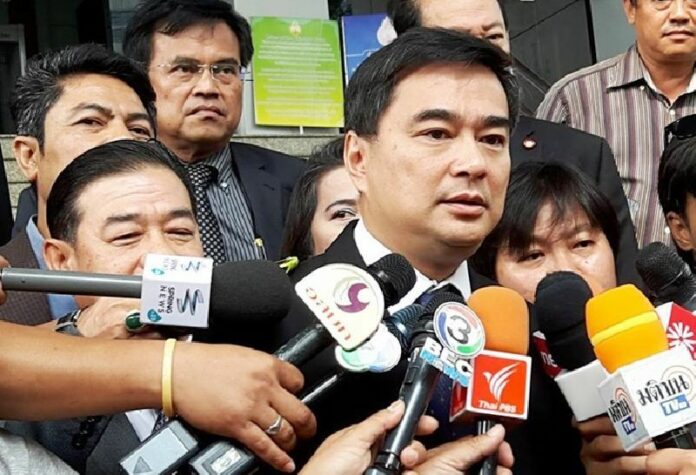
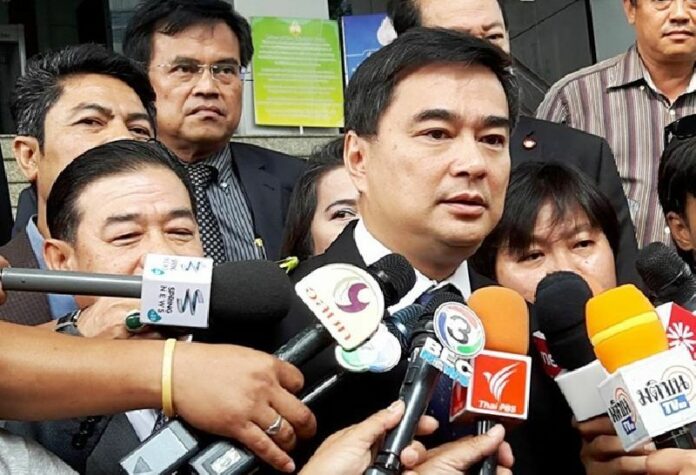
Former Prime Minister Abhisit Vejjajiva, head of the Democrat Party speaks to reporters Wednesday at the Appeals Court in Bangkok.

BANGKOK — Former Prime Minister Abhisit Vejjajiva and his former deputy Suthep Thaugsuban will not face charges of murder stemming from a 2010 military crackdown on Redshirt demonstrators after the Appeals Court today upheld a lower court's decision not to hear the case.

The court upheld a 2014 decision by the Criminal Court to dismiss the charges, saying it was the wrong venue for the case because when Abhisit and Suthep authorized the order, which sent soldiers to clear the streets and left at least 20 people dead, they did so in their legal capacity as officials in charge of managing the crisis.

The suit was filed by families of three killed during the crackdown.

Suthep, who went on to lead the street protests which helped dislodge the Redshirt-backed government elected in the wake of 2010, declined to comment on the decision.

Abhisit said after the ruling that the case isn’t settled yet, as prosecutors could take it further to the Supreme Court.

Chokchai Angkaew, a lawyer representing the families, said he will collect more evidence and appeal the ruling. Being prime minister and deputy prime minister, he said, did not mean they could authorize murder.

Additional reporting Sasiwan Mokkhasen

Advertisement

Abhisit and Suthep Acquitted of Murder for 2010 Crackdown

Former Prime Minister Abhisit Vejjajiva, head of the Democrat Party speaks to reporters Wednesday at the Appeal Court in Bangkok.

BANGKOK — Former Prime Minister Abhisit Vejjajiva and his former deputy Suthep Thaugsuban were acquitted by the Appeal Court today of murder charges stemming from the military crackdown they ordered on Redshirt demonstrators in 2010.

The Appeal Court upheld a 2014 lower court ruling that although Abhisit and Suthep authorized the order, which sent soldiers to clear the streets and left at least 20 people dead, in their legal capacity at the time, the Department of Special Investigation did not have the authority to investigate the case.

The suit was filed by families of three killed during the crackdown.

Suthep, who went on to lead the street protests which helped dislodge the Redshirt-backed government elected in the wake of 2010, declined to comment on the decision.

Abhisit said after the ruling that the case isn’t settled yet, as prosecutors could take it further to the Supreme Court.

Chokchai Angkaew, a lawyer representing the families, said he will collect more evidence and appeal the ruling. Being prime minister and deputy prime minister, he said, did not mean they could authorize murder.

Additional reporting Sasiwan Mokkhasen

Advertisement

China Deploys Missiles in Disputed South China Sea: Taiwan

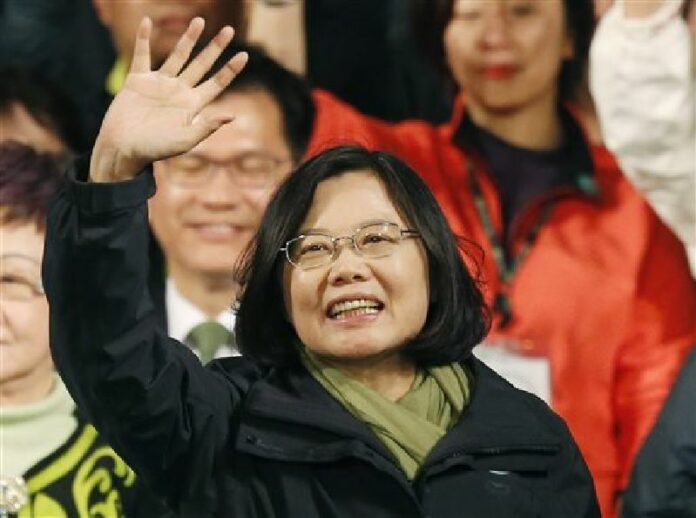
In this Jan. 16, 2016, file photo, Taiwan's president-elect Tsai Ing-wen waves as she declares victory in the presidential election in Taipei, Taiwan. Photo: Wally Santana / Associated Press

TAIPEI, Taiwan — Taiwan said Wednesday that China had positioned anti-aircraft missiles on a disputed South China Sea island, as Australia's foreign minister began talks in Beijing expected to deal with tensions over China's moves to assert its maritime claims.

Taiwan's Ministry of National Defense said in a statement it had "grasped that Communist China had deployed" an unspecified number of missiles on Woody Island in the Paracel group. The Philippines said the development increased regional tensions.

The move would follow China's building of new islands in the disputed sea by piling sand atop reefs and then adding airstrips and military installations. They are seen as part of Beijing's efforts to claim virtually the entire South China Sea and its resources, which has prompted some of its wary neighbors to draw closer to the U.S.

The most dramatic work has taken place in the Spratly Island group, where the militaries of four nations have a presence, although similar work has also gone on at Woody and other Chinese holdings in the Paracels.

"The military will pay close attention to subsequent developments," the Taiwanese ministry statement said. Relevant parties should "work together to maintain peace and stability in the South China Sea region to refrain from any unilateral measure that would increase tensions," the statement added.

U.S. network Fox News also said China had moved surface-to-air missiles to the Paracels, identifying them as two batteries of the HQ-9 system, along with radar targeting arrays. The missiles have a range of about 200 kilometers making them a threat to all forms of civilian and military aircraft.

Called Yongxingdao by China, Woody island is also claimed by Taiwan and Vietnam. Along with an artificial harbor, it boasts an airport, roads, army posts and other buildings and recent satellite imagery appears to show it is adding a helicopter base likely dedicated to anti-submarine warfare missions.

Taiwan and China claim almost the whole 3.5 million-square-kilometer South China Sea, including the Paracel chain. Vietnam and the Philippines claim much of the ocean, as well. Brunei and Malaysia have smaller claims.

Home to some of the world's busiest sea lanes, the ocean is also rich in fisheries and may hold oil and natural gas reserves under the seabed.


Foreign Reaction


China's move is likely to rattle Vietnam the most because of its proximity to the Paracels and because of a history of maritime tensions with China that spiked in 2014 with a standoff after China moved a massive oil rig into disputed waters.

Neither Bishop nor Chinese Foreign Minister Wang Yi mentioned the South China Sea directly during opening statements ahead of their talks.

In comments Monday to Japanese broadcaster NHK, Bishop said Australia — like the U.S. — does not take sides on the issue of sovereignty, but urges all parties to "exercise restraint, de-escalate tensions and not act in a way that would inflame the situation."

"Australia has called on all parties to cease reclamation, construction work and any militarization of the islands," Bishop said.

China regards Australia and the U.S. as unwelcome outside interlopers in regional waters. Wang and Bishop engaged in a testy exchange in December 2013 after Australia criticized China's unilateral declaration of an air defense zone in the East China Sea.

Ahead of Bishop's visit, President Barack Obama and the leaders of the 10-member Association of Southeast Asian Nations called Tuesday for the peaceful resolution of the region's maritime disputes.

Obama told a news conference that disputes must be resolved by legal means, including a case brought by the Philippines challenging China's sweeping claims over most of the South China Sea.

China has refused to take part in the proceedings, but Obama said parties to the U.N. law of the seas are obligated to respect the ruling, expected later this year.

Obama also accepted an offer to make a May visit to Vietnam, further strengthening a reconciliation between former foes driven largely by concerns over China.

Chinese Foreign Ministry spokesman Hong Lei reiterated Tuesday that China considered the legal proceedings initiated by the Philippines to be illegitimate and said they would "never be accepted by China."

China was deploying "necessary national defense facilities" on its territory, Hong said. He said Australia should be remain unbiased and refrain from doing anything to undermine regional stability.

Philippine Defense Secretary Voltaire Gazmin said the deployment of missiles on Woody Island "increases tensions in the South China Sea."

In Vietnam, about 100 people gathered to commemorate the start of a brief but bloody 1979 invasion by Chinese forces chanted "down with the aggressors," and "Hoang Sa, Truong Sa," the Vietnamese terms for the Paracel and Spratly islands.

Analysts say China's military moves in the South China Sea are primarily aimed at intimidating the Philippines and Vietnam, while solidifying its hold on the islands and boosting its ability to project force.

That is meanwhile strengthening those in the U.S., especially in the Pentagon, who "will want to more vigorously challenge China," said Thomas Berger, an expert on the region at Boston University.

The new bases are also highly vulnerable to U.S. attack in a conflict and the U.S. will continue to defy Beijing by sailing its Navy ships inside China's claimed territorial waters, said Edward N. Luttwak, a China expert and military strategist based in the U.S. state of Maryland.

"China, under President Xi Jinping, continues to work hard to endow the U.S. with allies all around its periphery," Luttwak said.

Story: Ralph Jennings and Christopher Bodeen / Associated Press


Advertisement

Hot News

LATEST NEWS

Bangkok
few clouds
34.4 ° C
36.6 °
34.4 °
59 %
2.7kmh
11 %
Tue
37 °
Wed
37 °
Thu
37 °
Fri
37 °
Sat
37 °