























31.1 C
Bangkok
Wednesday, June 17, 2026
Home Blog Page 2853

Head Human Trafficking Investigator Seeks Asylum in Australia

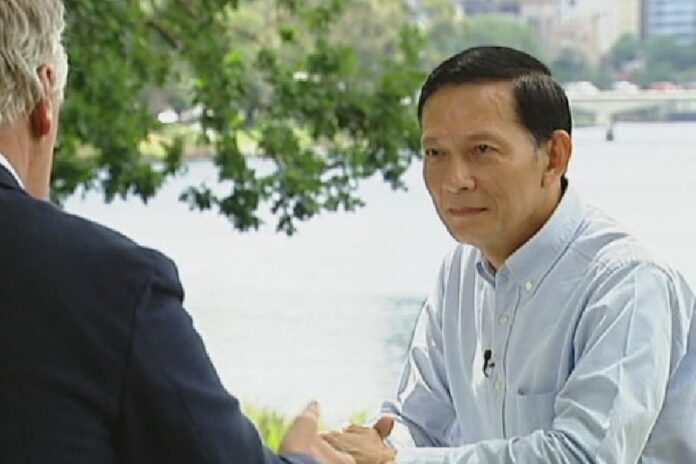
A still image of Maj. Gen. Paween Pongsiri from an interview with the Australian Broadcasting Corp. to air Thursday night. Image: ABC

MELBOURNE — The police officer who headed the human trafficking investigation before fleeing the country in fear of his life has turned up on Australia where he is requesting political asylum due to fear of influential figures in the Thai government, military and police.

Maj. Gen. Paween Pongsiri quit his job Nov. 5 after he was abruptly transferred to the southern borders provinces where earlier this year he led a crackdown on trafficking rings which led to the arrest of 88 suspects from the government, military, police and private sector. He said the transfer was effectively a death sentence last month, fled Thailand and landed in Melbourne recently, where he told ABC he hopes to win asylum.

“Human trafficking is a big network that involves lots of the military, politicians and police. While I was supervising the cases I was warned all along,” he told The Guardian. “By re-posting me to the deep south of Thailand it means they want to kill me.”


Head Human Trafficking Investigator Rumored to be Fleeing Country


Following the discovery of human slave camp in the border of Thailand on May 1, Paween was appointed to lead the investigation which resulted to 153 arrest warrants. Eighty-eight people were arrested, including bureaucrats, local administrators, businessmen, police officers and one high-ranking army officer.

In the interview to be broadcast tonight, Paween claimed his investigation was obstructed every step of the way by high-ranking officials in Thailand’s government.

“Influential people involved in human trafficking. There are some bad police and bad military who do these kind of things. Unfortunately, those bad police and bad military are the ones that have power,” Paween said through the interpretation. “A person who can detain hundreds of people without being arrested for so many years cannot be an ordinary citizen.”

His concern now was that all the trials would be compromised, and the case would not be prosecuted properly.

“I feel so sad and it’s so unfair that these people will not be punished.”

Embarrassment over the discovery of death camps near the border in May forced Thailand to take action on the long-ignored open secret that it was a hub for kidnapping, ransom, trafficking and enslavement of people, particularly Rohingya and Bangladeshi refugees transiting from Myanmar and Bangladesh, respectively.

For a time the investigation seemed sincere until it was suddenly declared “finished” and put on ice, over Paween’s protests, in September.


Related stories:

Head Human Trafficking Investigator Rumored to be Fleeing Country

Trafficking Investigator Quits Case for Fear of Reprisal

Police Shelve ‘Solved’ Human Trafficking Investigation

Death Camps: Police Arrest 12, Seek 56 Others in Trafficking Probe

 

Advertisement

More Charges Against Facebooker for 'Liking' Photos

BANGKOK — A 27-year-old factory worker detained for posting infographics about Rajabhakti Park corruption scandal received additional lese majeste and sedition charges for liking "inappropriate" Facebook pictures.

Maj. Gen. Wicharn Jodtaeng, the head of the junta's law office, and Col. Burin Thongprapai of the military Judge Advocate General’s Department, filed additional charges Wednesday under Article 112 of the criminal code, which criminalizes lese majeste (defaming the monarchy), as well as Article 116, which pertains to sedition, against the suspect identified as Thanakorn Siripaiboon.


Military Arrest Facebooker Over Park Graft Infographic


The military officers said that on Dec. 2, Thanakorn had clicked "like" on "inappropriate" Facebook pictures. Although the officers did not disclose any information about the Facebook pictures, they alleged that Thanakorn’s actions defamed the monarchy and threatened national security.

Read the full story at Prachatai English.

Related stories:

Military Arrest Facebooker Over Park Graft Infographic

Advertisement

'Supreme Honor’ for Junta Charter Salesman

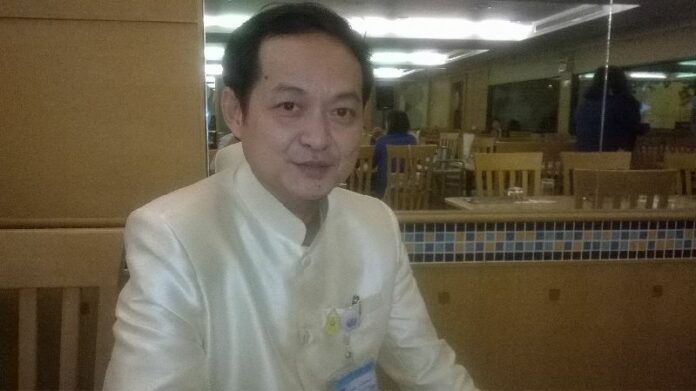
Chulalongkorn University lecturer and charter drafter  Amorn Wanichwiwatana at a restaurant earlier this month in Bangkok.

By Pravit Rojanaphruk
Senior Staff Writer

BANGKOK — Being both a drafter and mouthpiece on the body tasked with writing Thailand’s next constitution is a dream job for Amorn Wanichwiwatana, something he says is difficult not to admit.

Questions of legitimacy and even decency over the fact that the ruling junta sponsors the charter drafting process and hand-picked everyone involved – Amorn included – hardly bother him, or if they do, the Oxford-educated sociologist tries his best to make it unnoticeable.

“We are truly independent… But if you refuse to believe it, then that can’t be changed,” he said. “We are ready to listen to criticism, but please give us criticism that comes with suggestions or recommendations.”

Though Amorn and I first met 14 years ago as postgraduate students at the same university in England, we are aware that we see Thailand under the military junta differently.

Son of a merchant from Chachoengsao province east of Bangkok, 50-year-old Amorn has taught in Chulalongkorn University’s Faculty of Political Science for two decades. He’s not an academic rock star although he spent seven years at Oxford from 1998 to 2005, reading his doctorate in sociology.

He took three years longer than expected at Oxford and had to fund them because Chulalongkorn University would not pay for an academic overstay.

In his bespoke, cream-colored silk Prarachathan collar-neck shirt (he has more than seven in different colors and asked the price not be mentioned), Amorn now looks more like a well-paid technocrat than a modestly-paid college lecturer. It’s his newest job as charter drafter and co-speaker of the drafting committee that he finds very challenging and satisfying.

“I could co-draft the supreme law,” he said. “I’m very honored. It’s a supreme honor.”

About a year before he was appointed to the Constitution Drafting Committee, Amorn and I met by chance when he was a member of the now-defunct, junta-appointed National Reform Council, and I can still recall his reply on the issue of the coup makers’ legitimacy. Amorn said it was fait accompli, and there’s no point thinking about the matter, adding that bureaucrats were already taking orders from the junta, as if they were just another legitimate regime.

Now his task is to sell the new charter, still in the drafting process, to the public in the hope it will be approved through a national referendum within a year or so from now.

Amorn sounds like a salesman who's very upbeat about his product.

“We can’t see any reason why the draft would not be approved,” he said, referring to the referendum, which would add legitimacy, or the veneer of legitimacy, to the whole process, dependent on whom you ask.

Not even a recent remark by junta-leader-cum-Prime-Minister General Prayuth Chan-ocha that doubts about the charter’s chances in a referendum make him unsure there will be elections in 2017 can dampen Amorn’s salesmanship.

“I think it was more like a ‘lamentation,’” Amorn said. “I don’t think he takes it for real.”   

“We’re confident that [the draft charter] will provide mechanisms that prevent [future political] crisis, and that situations in the past would not recur.”

Was Amorn referring to another possible military coup in the future that would nullify yet another constitution?

He said yes.

I reminded Amorn that there are many Thais out there who believe the draft charter, even if approved through a referendum to become Thailand’s 20th “permanent constitution” would not be very “permanent” since there could be more coups in the future. Amorn flatly refused to entertain such an ominous prospect.

“I will not dispute with all groups of people, and if I am invited [to such a discussion] I won’t accept it,” he said, as he began chewing his shrimp fried rice at a restaurant near the parliament, where he works.

His focus is in the “now.” he said, stressing that despite doubts about the drafting committee’s independence (all members were selected by the junta), he will continue to insist that the committee is truly independent and participatory, despite political gatherings of five or more people being illegal for over a year and looking to stay that way.

Specific issues, such as whether room should be left for a non-elected MP to become prime minister, or whether there should be a body that could override an elected government in times of crisis are controversial, but Amorn said we all should at least wait until the first draft is out at the end of January before making noise, as nothing is written in stone at the moment.

Amorn said there’s one thing he could do better, which is being more efficient in communicating about the whole process to the public. He said some Thais are not even aware a charter is being drafted.

And what about his lecturing job at Chulalongkorn, where there are academics who support as well as those who oppose the junta?

“I can talk with all sides. I have neither enemies nor friends. They’re all colleagues. I surely don’t forbid people to have a differing [political] opinion.”

What about his future? Is Amorn keen to become a politician one day or remain an unelected technocrat well into his old age?

The quick-talking Amorn was coy and noncommittal, with a politically “professional” response.

“I can serve in whatever capacity, as long as I can serve the country and society,” he said.

Related stories:

Critics See Insecurity in Junta’s Charter Wish List

Rebooting Charter Process Enables Longest Military Rule Since 1969


Advertisement

No Stone Free but Loads of Shows to Check Out

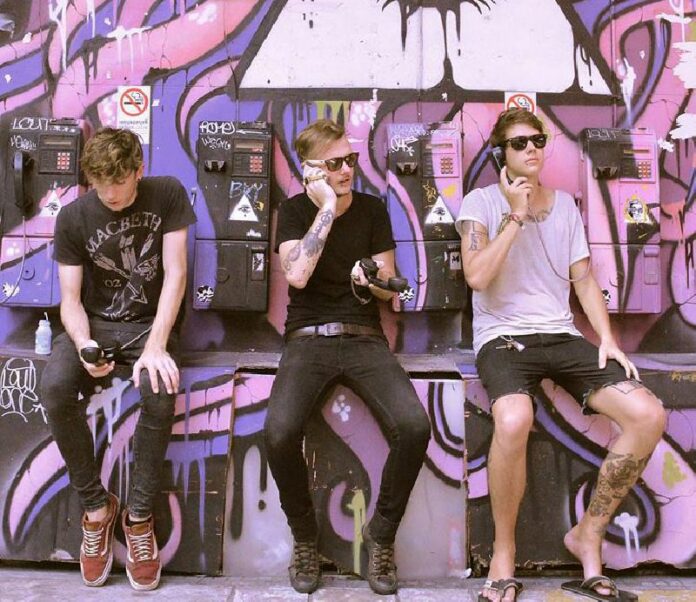
The three dudes that are ‘Spring. Fall. Sea.’ play Saturday in Bangkok. Photo: Spring. Fall. Sea.

By Lisnaree Vichitsorasatra

BANGKOK — Without the Stone Free Music Festival this weekend to escape a city awash in “Last Christmas,” “All I Want for Christmas,” find some musical relief from international and local acts bounding in by sleigh this month.

Those still planning a Friday road trip can head to Korat for the Grass Tone Sound Music Festival, where many of the same bands from the now-canceled Stone Free will be playing. Catch Hugo, Aire, Folk White, Monomania, Yellow Fang, Fwends, Stylish Nonsense and Degaruda there, as well as Proud, THE389, and Zero Hero.

\

A band plays the Grass Tone festival. Photo: Grass Tone Sound Music Festival / Facebook

“This year's Grass Tone Sound Music Festival will take everyone in a time machine back to the origins of the alternative music scene in Thailand the year 1995, when alternative music was booming” wrote the organizers.

The Grass Tone Sound Music Festival will be held Friday and Saturday at Korat Circuit in Nakhon Ratchasima province. Tickets are 600 baht per day or 1,000 baht for both.

Fans of Japanese musicians will be catered to this month by Katsui Yuji of avant garde act Rovo who is traveling the realm with his electric violin through Dec. 14. Katsui Yuji will be touring Thailand from today until Dec. 14. Catch him tonight at Studio Lam and Friday at the Grass Tone festival. Full schedule here.

\

Katsui Yuji is on tour in Thailand through Dec. 14. Photo: Katsui Yuji / Facebook


Other Japanese bands including Sawagi, How to Count One to Ten, and Denims also slated to play Stone Free have found new gigs. Sawagi, How to Count One to Ten and Denims will play Tuesday at Moose on Ekkamai. Tickets are 300 baht.

If you simply must hear three men performing Indie rock, then get thee to: “Spring. Fall. Sea.” The Samut Prakan trio, consisting of Dylan, Clive and Marvin, will release their first EP “Deep Down, all of Them Felt as he Did, They Felt Abandoned” at 8:30pm on Saturday at Sky Train Jazz Club@Rooftop near the Victory Monument.

Happy Listening!

Advertisement

Military Arrest Facebooker Over Park Graft Infographic

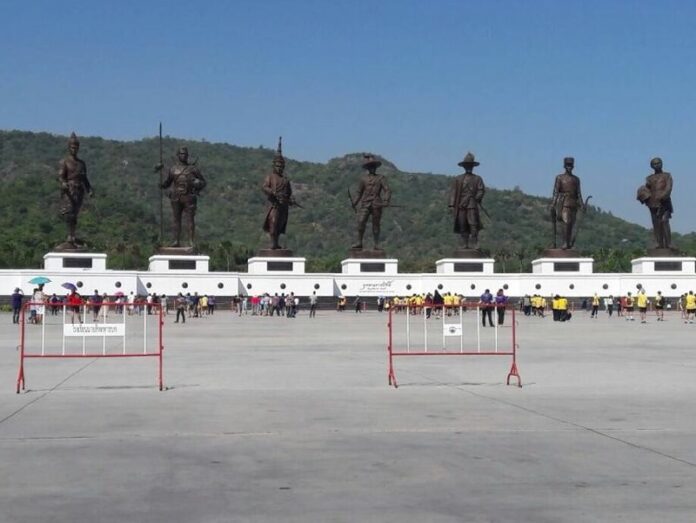
Tourists at Rajabhakti Park in Prachuap Khiri Khan province today.

By Teeranai Charuvastra
Staff Reporter

BANGKOK — Soldiers today arrested a Facebook user for sharing an infographic about alleged corruption in the army-built royal monument complex.

Sriwarah Rangsipramnakul, deputy police chief, said the suspect – identified in media reports as a 27-year-old factory worker in Samut Prakan – is being interrogated in military custody and will be charged with inciting unrest in the country for sharing the graphic – the latest crackdown on those who publicly question transparency in the billion-baht Rajabhaki Park project. 

“As far as I know, the suspect is an ordinary person, but I haven’t seen the evidence yet. The military is inspecting the issue,” Sriwarah said. “I don’t know the intention of the perpetrator. We have to see whether it was done out of recklessness or political ideology.”

Prachatai news identified the man as Thanakorn Siripaiboon and said he was arrested Tuesday and is now being held at the 11th Infantry Circle base in Bangkok, where the military has created a special prison.

The infographic was created first and posted Monday by the New Democracy Movement, a pro-democracy group opposed to the ruling junta that came to power last May. It was removed Tuesday night after junta chairman Prayuth Chan-ocha lashed out at the chart during a news conference. Some supporters of the movement also expressed concern about the accuracy and fairness of some of its details.

Thanakorn’s family was not allowed to visit him at the detention facility, his mother told Prachatai. 

Sriwarah, the deputy police chief, said Thanakorn will be charged with inciting unrest in the country and violating the Computer Crimes Act. The latter is a sweeping law that forbids publishing information on the internet deemed false or a threat to national security.

The arrest reportedly came a day after military and police stopped a group of activists, including members of the New Democracy Movement, from touring Rajabhakti Park in Prachuap Khiri Khan. The activists said they were hoping to visit the site to draw attention to the reports of corruption during the park’s construction.

Leaders of the military regime have warned the public and media to steer clear of the topic. 

“Don’t ask too much about Rajabhakti,” deputy junta chairman Prawit Wongsuwan told reporters today. “Ask something else. There’s no point asking about this.”

He went on, “Please stop mentioning this already. It damages confidence a lot. You’re Thais, why do this? The government is working for the country. Therefore, the media must help us out.” 


Related news:

Former Army Chief Explains Royal Park Project Graft

Govt Not Responsible for Rajabhakti Park Graft, Minister Says

Army Colonel Accused of Insulting Monarchy as ‘Royal Impostor’


To reach us about this article or another matter, please contact us by e-mail at: [email protected].

Follow Khaosod English on and Twitter for news, politics and more from Thailand.

\

Advertisement

China Criticizes Warning Shots By South Korean Navy

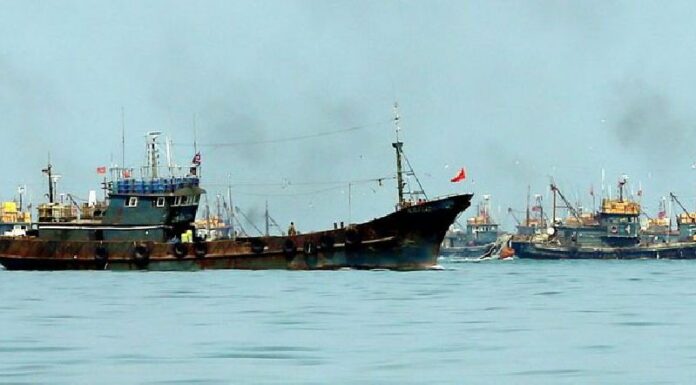
A file photo of Chinese boats allegedly fishing illegally in South Korean waters May 2, 2013. Photo: EPA

BEIJING — China reacted angrily Wednesday to the warning shots fired by the South Korean navy at a Chinese patrol boat near the maritime border with North Korea the previous day.

"China has expressed its concern about the situation," Foreign Ministry spokeswoman Hua Chunying said.

The South Korean military said it fired the shots after the Chinese boat sailed two kilometers into its territory from the North Korean side on Tuesday, despite six radio warnings, Yonhap News Agency said.

Beijing's state-run Global Times on Wednesday called the action "very imprudent behavior."

North Korea does not recognize the Northern Limit Line which split the East China or Yellow Sea, to the west of the peninsula, between the North and South at the end of the 1950-53 Korean War.

China is the only major international ally of the isolated, communist North Korean regime.

Hua said the authorities in Beijing "have not yet received any impact reported from Chinese ships or affected personnel."

Chinese diplomats were following up the incident with Seoul, she said.

Story: DPA


Advertisement

Myanmar Launches Stock Exchange

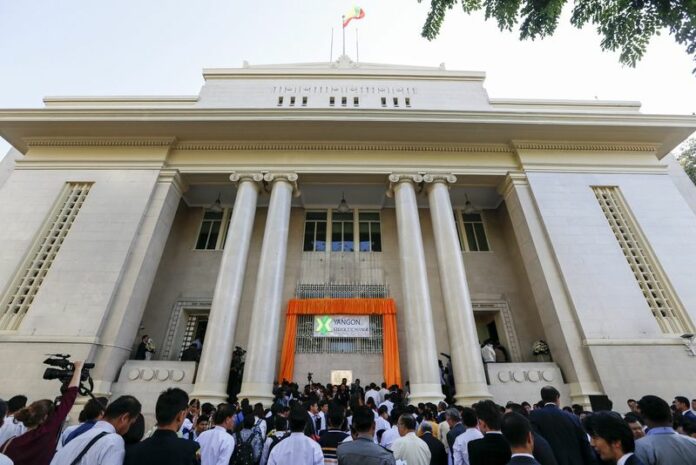
Myanmar opens Yangon Stock Exchange
Photo: Lynn Bo Bo /EPA

YANGON — Myanmar formally launched its first equities stock exchange today with six local companies listed.

Headquartered in the former Central Bank of Myanmar building, the Yangon Stock Exchange, or YSX, was founded with an estimated USD$24 million of investment from partners in Myanmar and Japan.

It has been a longstanding goal of the authorities in Myanmar to have a bourse,as the biggest economy in Asia without its own stock exchange, according to financial newswire Bloomberg.

The launch marks another step in the opening up of the country after decades of army rule and about five years under a military-backed government.

However, trading in shares will not begin straight away and foreign investors are not allowed to trade yet.

"I do not think trading will start until March next year," said Deputy Finance Minister Maung Maung Thein.

"Even when local companies are ready to sell shares, foreign investors will not be allowed to buy or sell them," he told reporters.

"Like other sectors such as telecommunication, we want to give more time for locally owned companies to expand," he said.

First Myamar Investment, First Private Bank, Great Forkham, MAPCO, Myanmar Citizens Bank and Myanmar Thilawa Public Company were the first six companies on the exchange, Maung Maung Thein said at the formal opening.

Each company had to have MMK500 million (USD$390,000) in paid-up capital and a minimum of 100 existing shareholders to be listed.

Tokyo Stock Exchange and Daiwa Securities Group hold a 49-per-cent stake in YSX, while the Myanmar Economic Bank owns a controlling 51 per cent.

Technically, YSX will be Myanmar's second stock exchange after the Myanmar Securities Exchange Center, which was established in 1996, and trades in just two stocks.

Story: DPA

Advertisement

Data Contradicts New York Times on Crime Increase Under Junta

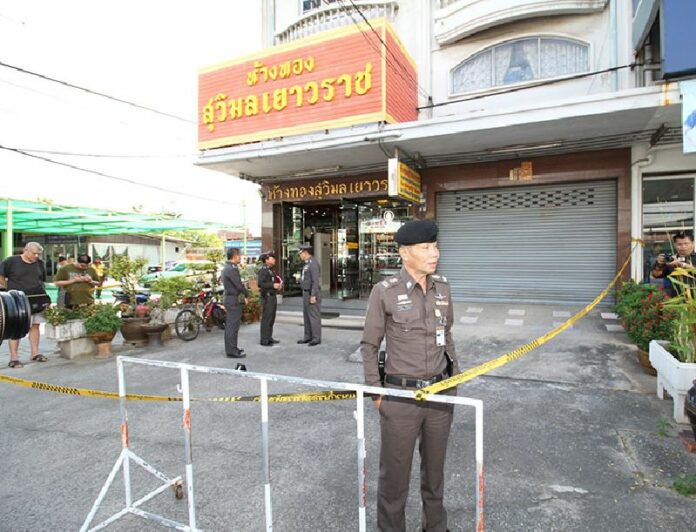
Police inspect the scene of an armed robbery and murder on Dec. 2 at a gold store in Samut Prakan province.

By Teeranai Charuvastra and Todd Ruiz

BANGKOK — A recent article by the New York Times appeared to overstate a surge in crime it claimed has hit Thailand since the military seized power.

Report of a dramatic increase in crime under the junta – one of the central assertions in a Nov. 29 article about economic and social malaise in the kingdom – is not supported by crime statistics, and a criminology professor at Chulalongkorn University disputes the figure.

According to “Thai Economy and Spirits are Sagging” by regional correspondent Thomas Fuller, “[r]obberies and other property crimes have risen more than 60 percent this year.”

Crime statistics from the Royal Thai Police show a statistically negligible increase of 1.9 percent, with 920 additional crimes reported during the same period after a general decline since 2009.

\


New York Times Local Publisher Redacts Article on ‘Sagging’ Thailand


The article, which painted a dire picture of Thailand’s economic prospects, did not include any attribution for the figure or conclusion. Reached for comment, Fuller said it was based on a November news conference at which police spokesman Dechnarong Suticharnbancha said 75,557 property-related crimes were reported in the fiscal year from Oct. 1, 2014 to Sept. 30, 2015.

The actual crime statistics collected by the Royal Thai Police indicate otherwise, with only 48,657 reports of property-related crimes during the same period. Such crimes include theft, robbery and extortion.

The article was one of several recently redacted in local print editions of the International New York Times by its Bangkok-based publisher. It was held up by a number of commentators on social media as an example of the perils of censorship. The reported wave of crime was a striking detail, as it had not been widely reported elsewhere.

Fuller was traveling Wednesday and could not be reached by telephone. Responding by email, he referred questions about the story to the police statistics division, which published the data which is inconsistent with his report.

He also sent links to two reports in Thai media which mention the figure of 75,557 such crimes.

\
Number of reported property-related crimes by year. Source: Royal Thai Police


Indeed the Nov. 18 article by Thai Post cites the 75,557 figure and attributes it to police spokesman Dechnarong, who reportedly blamed it on an economic slump, natural disasters such as this year’s severe drought, and people losing their jobs.

Asked by email whether he had attended the press conference himself, and whether he and the New York Times stand by the story, Fuller again referred inquiries to police officials to confirm its details.

Attempts to reach the police spokesman, Dechnarong, for comment over a period of seven days were not successful. His assistant, Col. Napatpong Supaporn, said Dechnarong was too busy organizing security for a nationwide cycling event to be held Friday.

Amorn Wanichwiwatana, who teaches criminology at Chulalongkorn University, said he was not aware of any significant uptick in crime since the military came to power in May 2014.

“I don’t think that’s the case. It’s not possible,” he said of the 60 percent increase reported by the Times. “There may be some exaggeration.”

Amorn said he’s satisfied with crime levels under the junta, though he has not reviewed the most recent data.

“The coup had nothing to do with crime,” said Amorn, who also serves as a member of the junta-appointed Constitution Drafting Committee.

Statistics published by police differ slightly from those collected by the National Statistics Office, which only goes through 2014. The data from the statistics office still confirms a trend of falling crime in Thailand. According to its historical data, reports of property-related crimes have not exceeded 70,000 since 2007.

\
Number of reported property-related crimes by year. Source: National Statistics Office


Update: On Dec. 17, the New York Times retracted the claim and published a correction.

Editor's Note: After this story was published, Thomas Fuller wrote on Twitter late Wednesday night the “story is wrong.” Without elaborating, he wrote that “Thai police confirm there were 75,557 property crimes in 2015 fiscal year.” He also forwarded to a reporter a link to the website of the Royal Thai Police Operations Center, where a document indicates there were 75,557 property-related crimes reported during the past fiscal year.

However, the data in that same document counted 69,771 property-related crimes for fiscal year 2014, and it explicitly notes that such crime “increases 5,786 cases (8.29%),” and not the 60 percent as reported by Fuller in the Nov. 30 article. Fuller could not be reached by telephone today and referred a reporter by email to a police statistician.

\

Image from the police document states a rise in property-related crimes of 8.29 percent. Source: Royal Thai Police Operations Center


Advertisement

Police Probe US Ambassador for Defaming Monarchy

A still image taken from a video of U.S. Ambassador Glyn Davies on Nov. 25 at the Foreign Correspondents' Club of Thailand in Bangkok. Image: FCCT / YouTube

BANGKOK — U.S. Ambassador Glyn Davies is under investigation for critical comments he made about Thailand’s harsh law against defaming the monarchy, known as lese majeste.

Police are investigating whether Davies himself is guilty of defaming the monarchy for comments made late last month at the Foreign Correspondents Club of Thailand, where the top American diplomat expressed “concern” about recent record sentences handed down by military tribunals for the crime, the club's president confirmed Wednesday.

FCCT President Jonathan Head, a longtime BBC correspondent, said on Twitter this morning the club had been asked to cooperate with a police investigation into Davies after Sontiya Sawasdee, a member of a group calling itself Federation Monitoring the Thai State, filed a complaint Thursday.

Sontiya reportedly presented to police as evidence a Facebook post from Jermsak Pinthong, a member of the now-defunct National Reform Council, criticizing the ambassador's talk to police to keep as an evidence.

The representative of the group urged police to obtain a transcription of the speech and investigate the event organizer’s “hidden agenda.”

A response from the U.S. Embassy could not be immediately obtained.

In his comments at the Nov. 25 event, Davies raised concerns about recent convictions and sentences for civilians tried in military courts. He said no one should be jailed for peacefully expressing their opinion.

"We're also concerned by the lengthy and unprecedented prison sentences handed down by Thai military courts against civilians for violating the lese majeste law," he said, according to AFP.


The comment provoked an uproar from ultra-royalists. On Nov. 27 a politically extremist monk led about 200 to protest in front of the embassy, despite a junta ban on political gatherings of more than five people. A few days later on Nov. 30, small protests were held in an apparently orchestrated campaign in provinces throughout the country to call for Davies’ removal.

Under the law, anyone can accuse anyone else of the crime, and police are obligated to investigate every accusation. It's punishable by prison sentences of up to 15 years per individual offense. Prosecutions which had been growing in recent years spiked since the junta seized power in 2014, according to rights observers and data from iLaw.

Whereas the law, Article 112 of the criminal code, was written to narrowly apply to direct offenses against His Majesty the King, Her Majesty the Queen, the Crown Prince and their Regent, it has become more broadly applied over the years, with some suggesting it applies to criticism of the law itself.

Davies was not the first U.S. official to criticize the law. Prior to the 2014 coup, it was a subject of regular discussion and debate at events hosted by the correspondents’ club. One month after the military seized power in May 2014, the junta banned such a discussion at the club.

In 2011, ultra-royalists staged a similar protest outside the U.S. diplomatic mission in response to comments from then-Ambassador Kristie Kenney, who said prosecution of the law was troubling and inconsistent with international rights standards.

The United States is well aware of the topic’s sensitivity. A 2007 diplomatic cable published by Wikileaks discusses the possible backlash from criticizing the law.

It also describes the use of the law as a “political tool” and  “formidable weapon in the Thai political arsenal.”

“The palace appears quite sensitive to the possibility that lese majeste could be abused by non-palace actors to achieve their own ends,” read the cable titled “Swiss Offer Lese Majeste Survival Guide."

Related stories:

An Open Letter to Ultra-Royalists

Ultra-Royalists Nationwide Demand Investigation of US Ambassador

Ultra Royalists Call for Removal of U.S. Ambassador

Lese Majeste Discussion Blocked by Junta: FCCT

Advertisement

111 Billion Baht Skytrain Orange Line Approved

A map of Bangkok's future rapid transit plans. Photo: Oran Viriyincy / Flickr

BANGKOK — A 21-kilometer light rail extension to the eastern outskirts of the capital city was approved yesterday by the junta cabinet with a budget of 111 billion baht.

The Orange Line extension from the Thailand Cultural Centre in Huai Khwang district to Min Buri was approved Tuesday for planned completion by the end of 2022, with a specific request from the junta chairman that the project use at least 30 percent domestic materials in its construction.

“The cabinet meeting urged that bidding should take place within six months, which would be by May 2016,” Transportation Minister Akom Termpittayapisit said.

Akom said 85 billion would be financed through borrowing while the remainder would be taken from revenues of the Mass Rapid Transit Authority of Thailand and other sources.

The budget covers seven elevated stations and 10 underground stations expected to accommodate 500,000 passengers daily.

Starting from the Thailand Cultural Centre off Ratchadapisek Road, the Orange line will continue to Rama IX Road, then go along Ramkhamhaeng Road to eventually end at in intersection between Ramkhamhaeng and Suwinthawong roads.

Prime Minister Prayuth Chan-ocha insisted that future light rail projects must use domestically sourced materials to support the economy. He said 30 percent of construction materials must come from Thailand.


Advertisement

Hot News

LATEST NEWS

Bangkok
overcast clouds
31.1 ° C
31.1 °
31.1 °
57 %
2.7kmh
100 %
Wed
33 °
Thu
34 °
Fri
37 °
Sat
37 °
Sun
37 °