35 C
Bangkok
Friday, June 19, 2026
Home Blog Page 2937

US Missionary Arrested for Smuggling North Koreans into Thailand

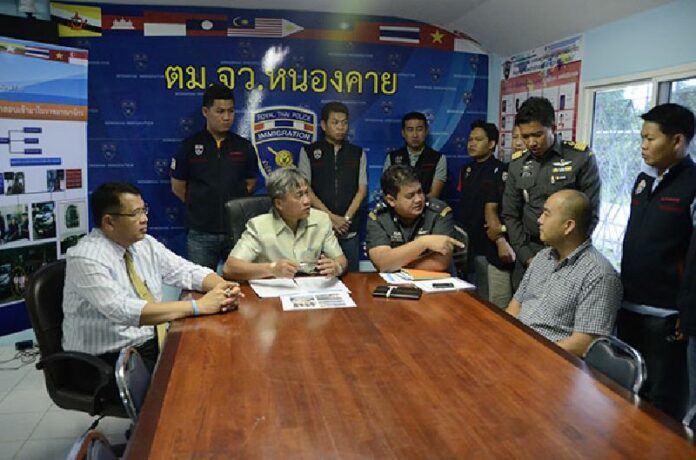
Korean-American Lee Isaac Byundo sits on the right at a police news conference Tuesday in Nong Khai province.

NONG KHAI — A Christian missionary from the United States was arrested Monday for smuggling seven North Koreans into Thailand.

Police Col. Pallop Suriyakul, commander of the Nong Khai Immigration Police, said yesterday the arrest came after police were alerted 17 June that the North Koreans – six men and one woman – had crossed the border illegally from Laos into Nong Khai province.

“After inquiring them for their purpose of travel, they have relatives in their destination country, which is South Korea,”  Pallop said.

Based on footage from security cameras installed along the roads, police tracked the car that carried them into Thailand and identified the driver as Korean-American Lee Isaac Byundo, Pallop said.

The court issued an arrest warrant for Lee on 27 July, and police took him into custody Monday. Lee has been charged with aiding them enter the kingdom illegally. The seven North Koreans are currently being held by immigration police, police said.

Lee has worked as a Christian missionary in Thailand for 19 years, Pallop said, and told police he was contacted by an American in Laos to help bring the group into Thailand.

“As for their route, after the North Koreans escaped from their country with the intention to travel to South Korea or other countries, they would find work and save some money in China first,” Police Col. Pallop told reporters. “After they could find some contacts, they would travel to Vietnam, and then to Laos, and cross the Mekong into [Thailand].”

Pallop said the seven North Koreans appear to have relatives in South Korea. He added that Thailand will not deport them back to North Korea if South Korea grants them entrance.

At least 230 people from North Korea, which is known formally as the Democratic People’s Republic of Korea, have been arrested for entering Thailand illegally this year, according to police.

The DPRK is ruled by an autocratic Communist regime which has been accused by numerous international organizations of ruthless human rights violations.


For comments, or corrections to this article please contact: [email protected]

You can also find Khaosod English on Twitter and Facebook
http://twitter.com/KhaosodEnglish
http://www.facebook.com/KhaosodEnglish
 
Advertisement

Five Arrested for Trafficking Women to China as Sex Slaves

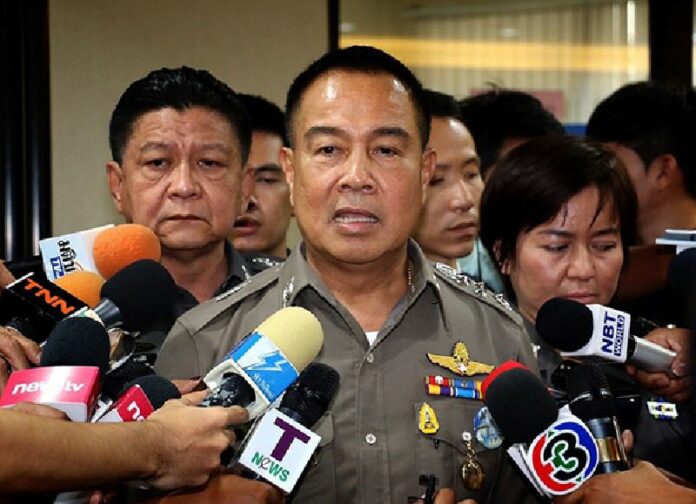
Thai Police Chief Somyot Pumpanmuang speaking to reporters in Bangkok on 4 August, 2015

BANGKOK — Thailand has arrested five people suspected of trafficking Thai women into sex slavery in China and believed to be part of a ring that has also trafficked women into Malaysia and Singapore, Thai police said on Tuesday.

The arrests come a week after the United States kept Thailand on its list of worst human-trafficking centers. The Thai government has said it hopes the U.S. will removed it from the blacklist following a crackdown.

"Thailand is determined to tackle and eliminate human trafficking," Thai Police Chief Somyot Pumpanmuang told reporters on Tuesday.

Thailand in July indicted 72 people, including 15 state officials, over suspected links to human trafficking after what Thai police described as their biggest ever investigation into the crime.

Chinese and Thai authorities worked together on the latest case after a Thai woman escaped her captors in Chongqing in China, Somyot said. The woman told Chinese police that she and three others were forced to have sex with men after being lured to China with the promise of jobs as hostesses through a modeling website.

Thai police arrested four women and a man and had issued warrants for another four suspects, Somyot said. Chinese authorities had also arrested two Chinese nationals suspected of being part of the trafficking ring, the Thai police said in a statement.

Police suspect more than 20 women were trafficked by this ring, said Police Maj. Gen. Thiti Saengswang, the commander of Thailand's Anti-Human Trafficking Division.

Story: Reuters / Juarawee Kittisilpa


For comments, or corrections to this article please contact: [email protected]

You can also find Khaosod English on Twitter and Facebook
http://twitter.com/KhaosodEnglish
http://www.facebook.com/KhaosodEnglish
Advertisement

Market Manipulation Goes Global

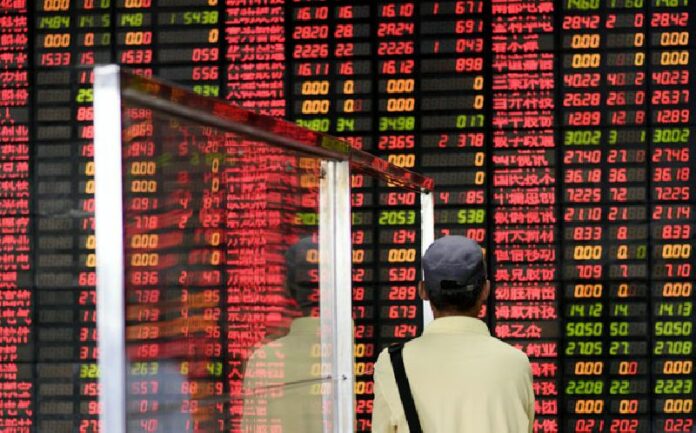
An investor looks at screens showing stock market movements at a brokerage house in Shanghai on July 29, 2015. AFP PHOTO / JOHANNES EISELE

By Stephen S. Roach

NEW HAVEN – Market manipulation has become standard operating procedure in policy circles around the world. All eyes are now on China’s attempts to cope with the collapse of a major equity bubble. But the efforts of Chinese authorities are hardly unique. The leading economies of the West are doing pretty much the same thing – just dressing up their manipulation in different clothes.


Take quantitative easing, first used in Japan in the early 2000s, then in the United States after 2008, then in Japan again beginning in 2013, and now in Europe. In all of these cases, QE essentially has been an aggressive effort to manipulate asset prices. It works primarily through direct central-bank purchases of long-dated sovereign securities, thereby reducing long-term interest rates, which, in turn, makes equities more attractive.


Whether the QE strain of market manipulation has accomplished its objective – to provide stimulus to crisis-torn, asset-dependent economies – is debatable: Current recoveries in the developed world, after all, have been unusually anemic. But that has not stopped the authorities from trying.


In their defense, central banks make the unsubstantiated claim that things would have been much worse had they not pursued QE. But, with now-frothy manipulated asset markets posing new risks of financial instability, the jury is out on that point as well.


China’s efforts at market manipulation are no less blatant. In response to a 31% plunge in the CSI 300 (a composite index of shares on the Shanghai and Shenzhen exchanges) from its June 12 peak, following a 145% surge in the preceding 12 months, Chinese regulators have moved aggressively to contain the damage.


Official actions run the gamut, including a $480 billion government-supported equity-market backstop under the auspices of the China Securities Finance Corporation, a $19 billion pool from major domestic brokerages, and an open-ended promise by the People’s Bank of China (PBOC) to use its balance sheet to shore up equity prices. Moreover, trading was suspended for about 50% of listed securities (more than 1,400 of 2,800 stocks).


Unlike the West’s QE-enabled market manipulation, which works circuitously through central-bank liquidity injections, the Chinese version is targeted more directly at the market in distress – in this case, equities. Significantly, QE is very much a reactive approach – aimed at sparking revival in distressed markets and economies after they have collapsed. The more proactive Chinese approach is the policy equivalent of attempting to catch a falling knife – arresting a market in free-fall.


There are several other noteworthy distinctions between China’s market manipulation and that seen in the West. First, Chinese authorities appear less focused on systemic risks to the real economy. That makes sense, given that wealth effects are significantly smaller in China, where private consumption accounts for just 36% of GDP – only about half the share in more wealth-dependent economies like the US.


Moreover, much of the sharp appreciation in Chinese equity values was very short-lived. Nearly 90% of the 12-month surge in the CSI 300 was concentrated in the seven months following the start of cross-border investment flows via the so-called Shanghai-Hong Kong Connect in November 2014. As a result, speculators had little time to let the capital gains sink in and have a lasting impact on lifestyle expectations.


Second, in the West, post-crisis reforms typically have been tactical, aimed at repairing flaws in established markets, rather than promoting new markets. In China, by contrast, post-bubble reforms have a more strategic focus, given that the equity-market distress has important implications for the government’s capital-market reforms, which are viewed as crucial to its strategy of structural rebalancing. Long saddled with a bank-centric system of credit intermediation, the development of secure and stable equity and bond markets is a high priority in China’s effort to promote a more diversified business-funding platform. The collapse of the equity bubble calls that effort into serious question.


Finally, by emphasizing a regulatory fix, and thereby keeping its benchmark policy rate well above the dreaded zero bound, the PBOC is actually better positioned than other central banks to maintain control over monetary policy and not become ensnared in the open-ended provision of liquidity that is so addictive for frothy markets. And, unlike in the West, China’s targeted equity-specific actions minimize the risk of financial contagion caused by liquidity spillovers into other asset markets.


With a large portion of China’s domestic equity market still closed, it is hard to know when the correction’s animal spirits have been exhausted. While the government has assembled considerable firepower to limit the unwinding of a spectacular bubble, the overhang of highly leveraged speculative demand is disconcerting. Indeed, in the 12 months ending in June, margin financing of stock purchases nearly tripled as a share of tradable domestic-equity-market capitalization.


While Chinese equities initially bounced 14% off their July 8 low, the 8.5% plunge on July 27 suggests that that may have been a temporary respite. The likelihood of forced deleveraging of margin calls underscores the potential for a further slide once full trading resumes.


More broadly, just as in Japan, the US, and Europe, there can be no mistaking what prompted China’s manipulation: the perils of outsize asset bubbles. Time and again, regulators and policymakers – to say nothing of political leaders – have been asleep at the switch in condoning market excesses. In a globalized world where labor income is under constant pressure, the siren song of asset markets as a growth elixir is far too tempting for the body politic to resist.


Speculative bubbles are the visible manifestation of that temptation. As the bubbles burst – and they always do – false prosperity is exposed and the defensive tactics of market manipulation become both urgent and seemingly logical.


Therein lies the great irony of manipulation: The more we depend on markets, the less we trust them. Needless to say, that is a far cry from the “invisible hand” on which the efficacy of markets rests. We claim, as Adam Smith did, that impersonal markets ensure the most efficient allocation of scarce capital; but what we really want are markets that operate only on our terms.


Stephen S. Roach, a faculty member at Yale University and former Chairman of Morgan Stanley Asia, is the author of Unbalanced: The Codependency of America and China.


Copyright: Project Syndicate, 2015.
www.project-syndicate.org

Advertisement

Report: Berlusconi Agrees to Sell AC Milan Stake to Thai Investor


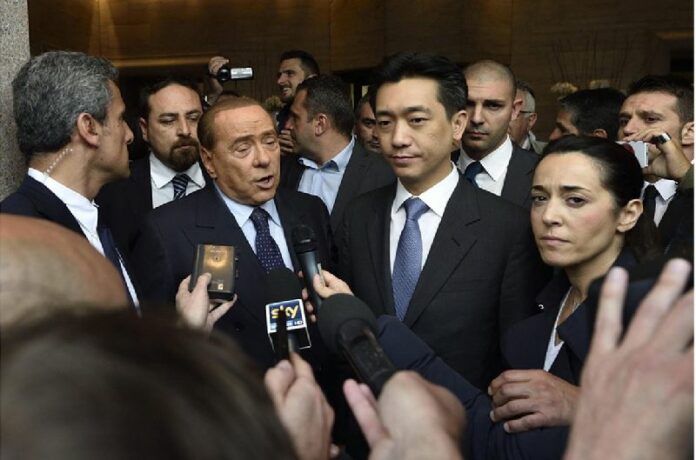
AC Milan president and former Italian prime minister Silvio Berlusconi (centre left) has agreed to sell a minority stake in his Serie A football club to Thai businessman Bee Taechaubol (centre right) for almost 500 million euros (550 million dollars), news reports said Sunday. The two businessmen, shown here during talks in May, sealed the deal in negotiations Friday and Saturday when Bee visited Berlusconi at his villas near Milan and in Sardinia, news reports said. EPA/FLAVIO LO SCALZO

ROME (DPA) – Former Italian premier Silvio Berlusconi has agreed to sell a minority stake in his Serie A football club AC Milan to Thai businessman Bee Taechaubol for almost 500 million euros (550 million dollars), news reports said Sunday.

The agreement was sealed following top-level talks Friday and Saturday between Berlusconi and Taechaubol, who visited the Italian tycoon at his villas near Milan and in Sardinia.

According to the ANSA news agency, which cites sources close to the Berlusconi family holding company Fininvest, the Thai billionaire signed a preliminary binding agreement to acquire a 48-per-cent stake in the club for about 480 million euros.

Taechaubol will become the club's vice-president – while Berlusconi, who has owned AC Milan since 1986, will stay on as president – and will get to appoint a third chief executive alongside long-time Berlusconi aide Adriano Galliani and daughter Barbara Berlusconi.

The new addition to the management team should be responsible for marketing the AC Milan brand in Asia, ANSA said.

According to La Gazzetta dello Sport, Italy's biggest sports newspaper, the deal will be finalized by September 30, and will be made official by Fininvest and Taechaubol's Thai Prime Fund only after the closing.

Fininvest was not immediately available for comment.

Under Berlusconi's 29-year tenure, AC Milan won eight national titles and five European ones from a total of 28 trophies. Last year they had one of their most disappointing seasons, finishing 10th in the Serie A.


For comments, or corrections to this article please contact: [email protected]

You can also find Khaosod English on Twitter and Facebook
http://twitter.com/KhaosodEnglish
http://www.facebook.com/KhaosodEnglish
Advertisement

Death Toll Surpasses 200 in India Floods, Landslide

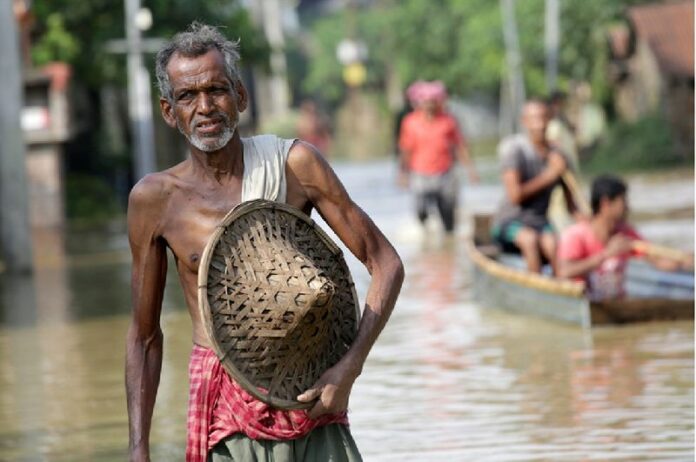
An Indian villager wades through a flooded street in Prafulla Nagar, some 120km north of Calcutta, India, 03 August 2015. More than 100 people have been killed, most of them in India's eastern states, during heavy rains and floods over the past week. EPA/PIYAL ADHIKARY

At least 215 people have died in floods and a landslide in India over the past week.

 NEW DELHI (DPA) – At least 215 people have died in floods and a landslide in India over the past week, a Home Ministry official said Tuesday.

Eighty-three deaths were reported from the western state of Gujarat and 69 from eastern West Bengal.

Most of the deaths were caused by lightening strikes, wall collapses, electrocution and drowning brought on by heavy rain and accompanying floods.

Another 38 deaths in rain-related incidents were reported from Rajasthan, five from Odisha and four more from Manipur where on Saturday 20 people died in a landslide.

India's monsoon season between June and September often sees heavy rains that are vital for agriculture.

The worst-affected states were West Bengal, Gujarat and Rajasthan, the Home Ministry said.

India's Metereological Department forecast heavy rain still to come in West Bengal and Gujarat along with Madhya Pradesh, Goa and some other areas of northern and western India for the next five days.


For comments, or corrections to this article please contact: [email protected]

You can also find Khaosod English on Twitter and Facebook
http://twitter.com/KhaosodEnglish
http://www.facebook.com/KhaosodEnglish
Advertisement

Booze Ban to be Arbitrarily Enforced During 6-month ‘Study’

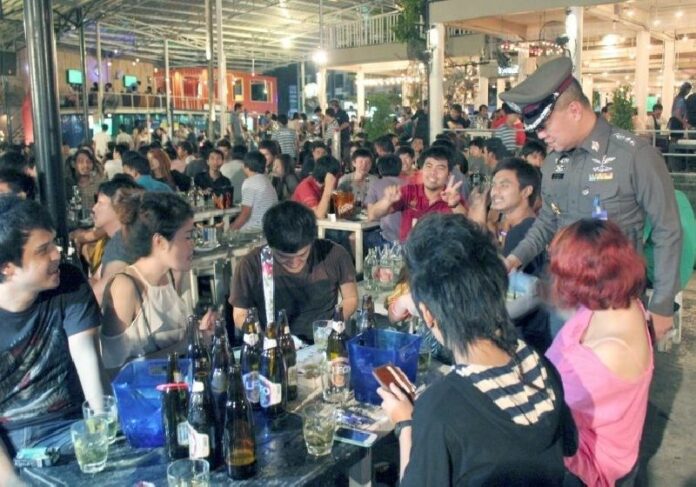
Police officers raid a bar close to a university in northern metropolitan Bangkok in a file photo from 22 March, 2013.

BANGKOK — Thailand will go back to the drawing board with its unilateral ban on sales of alcohol near schools, while leaving it on the books as vaguely written for selective enforcement based on the “judgment” of law enforcement officers.

Two weeks after the military government issued two confusing orders – one banning sales within 300 meters of some schools and universities and a second prohibiting all sales "in the vicinity” of all school property, a deputy prime minister said a committee will spend six months deliberating what “vicinity” means.

“There is still a point that we have to define, which is the word ‘vicinity,” Deputy Prime Minister Yongyuth Yuthavong said today. “What does that mean? The committee is collecting opinions from relevant agencies to reach a clear understanding … It will take about six months.”

The former of the two orders, which had yet to go into effect since being signed on 20 July, will be indefinitely suspended. The latter, issued by fiat by the junta to immediate effect on 23 July, will remain the law of the land while its implementation is studied.

“In the meantime, security officers will have to exercise their judgement, based on appropriateness of the situation,” Saman Footrakul, director of the Alcohol Beverage Office, told reporters today.

Agencies involved in working out the details include the Royal Thai Police, Ministry of Public Health, Excise Department, Ministry of Finance, Ministry of Education, and Ministry of Interior Affairs, Saman said.

Thanakorn Kuptajit, president of Thai Alcohol Beverage Business Association, said the decision to leave enforcement up to the judgment of law enforcement officers was troubling.

“When it comes to legal action and criminal laws, the words ‘exercise of judgment’ are very scary,” he said. “Because we have different opinions and judgments. It will breed different standards and unfairness.”

During the 180 days while the law’s implementation is studied, he said security forces should refrain from closing any bars until they receive clarification. “As far as I have been reading news, the [junta] never explicitly told officers to shut down bars.”

In the wake of the order, several bars including two near Rangsit University in northern Bangkok were raided and shuttered, while officials elsewhere in some other parts of Thailand hand-delivered orders for places to close.

The moment it went into effect, the law enacted on 23 July immediately created dry spots throughout the capital, from luxury malls such as Siam Paragon and CentralWorld to red light areas such as Soi Cowboy. It effectively imposed prohibition in villages throughout the kingdom where most everything is near a school.

It came as a great surprise to most everyone and seemed all but unenforceable. Accordingly, it was all but ignored except for those few cases of selective enforcement.

The law was especially surprising because it landed a few days after another decree had been issued by from Prime Minister Prayuth Chan-ocha on 20 July.

That decree, which was more specifically constructed to ban sales within 300 meters of certain schools and carried exceptions, now effectively goes away.

It wasn’t long before the military government first back pedaled from the ban. Within days of its enactment, Justice Minister Gen. Paiboon Koomchaya went from supporting its expansion to 500 meters from 300 meters to saying it would be shelved for six months of study.

On 27 July, Paiboon told the media the government would use that time to map out new entertainment zones to clarify where alcohol could and could not be sold.

Today, Deputy Prime Minister Yongyuth said the reason Prayuth’s 20 July decree was suspended was because it might conflict with Prayuth’s sweeping ban of 23 July.

“We have to go back to deliberate on and study it again,” he said.


For comments, or corrections to this article please contact: [email protected]

You can also find Khaosod English on Twitter and Facebook
http://twitter.com/KhaosodEnglish
http://www.facebook.com/KhaosodEnglish
Advertisement

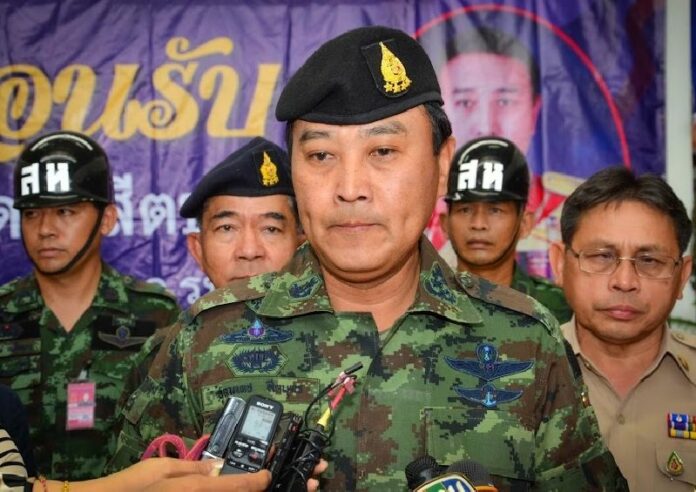
Army Chief Says Elections Could Be Delayed

Royal Thai Army Chief Udomdet Sitabutr in a file photo from the military press office.

BANGKOK — Thailand’s army chief said today its plan for new elections may be postponed if unspecified events take place.

Repeating assertions the military would adhere to its “road map” for a return to civilian rule, Gen. Udomdet Sitabutr today indicated exceptions were possible under certain circumstances.

“But some parts of the road map may be extended in their time frame, because some events may take place,” Udomdet, who also serves as secretary-general to the ruling junta, said at an army academy in Bangkok today. “However, everyone is trying their best, and we will proceed [with the road map] in the best manner.”

Udomdet was responding to conservative activist Suthep Thaugsuban’s recent proposal the junta should indefinitely postpone new elections until the process of national reforms is completed first.

READ: Suthep Stresses 'Reforms Before Elections,' Unveils Plans for New Foundation

“That opinion is a personal one. We have our own procedures for accepting or rejecting those opinions,” he said of Suthep’s proposition. “The prime minister has always insisted that everything has to be in accordance with the road map.”

However, Udomdet added that if certain events were to transpire, the military might remain in power longer. He did not specify what those events might be.

Under the current road map announced by junta chairman and Prime Minister Prayuth Chan-ocha, who seized power from an elected government in May 2014, a referendum on the new constitution will take place in January 2016, and a new election will be held in September 2016, so long as the public approves the charter drafted by junta appointees.

But Suthep, who spearheaded the anti-government protests which paved way for the military coup, said Thursday he and his supporters “want see this government successfully reform the country before any election, no matter how long it takes."

\

Suthep Thaugsuban raises his fist during a street protest in Bangkok in this January 2014 file photo.

Asked whether the election would now be postponed to 2017, Gen. Udomdet replied, “I have to calculate the number in detail first. If I answer you now, it may be inaccurate.”

After staging the coup, the junta first promised an election would be held in late 2015. The time frame was later postponed to early 2016 and again to late 2016.

Speaking to reporters today, Gen. Prayuth said that Suthep and his foundation, which has the same leadership and uses the same language as the protest movement he led before entering the monkhood, are free to express their opinions, as long as they comply with the laws and refrain from causing conflicts.

“Everyone who comes out to do something has to be under the rules and laws, which clearly state what can and cannot be done these days,” Gen. Prayuth said at Government House. “He [Suthep] has said things and expressed support for me, and I thank him as a person, because I have known him for a long time.”

Prayuth nonetheless encouraged Suthep, a particularly polarizing character among the kingdom’s outsized political personalities, to refrain from stirring up dissent.

“But I would like to ask him not to cause any more conflicts,” he added. “Today, I am a referee. I have to be a fair referee.”

Gen. Prayuth has yet to directly address Suthep’s proposal for “reforms before election.”

“What does it have anything to do with me? It’s the business of the foundation,” he said Sunday. “They can do things, but [I can’t let them] break any laws, because my job is to enforce the laws, enforce the rules, with the same set of laws.”

Leaders of the Redshirt movement were incensed when the junta allowed Suthep to hold a press conference last week and accused it of practicing a double-standard by silencing only those on one side of the political divide.

Army chief Gen. Udomdet dismissed those allegations, saying the junta was not “giving weight” to Suthep’s proposal or taking sides. He said it came down to the quality of their opinions.

“If they are good, it’s fine. If they are not good, we will talk with them and reach some understanding,” he said. “The NCPO [the junta’s National Council for Peace and Order] has been doing this all along.”

Gen. Udomdet added, “I want all sides to be assured that the security force is treating every side equally.”


Related stories:

Redshirt Leaders Vow Response to Suthep Speech

Govt Officials React to Suthep's Return to the Spotlight

Interim Parliament Chairman Rejects Suthep’s Call for ‘Reform Before Election’


For comments, or corrections to this article please contact: [email protected]

You can also find Khaosod English on Twitter and Facebook
http://twitter.com/KhaosodEnglish
http://www.facebook.com/KhaosodEnglish


Advertisement

Phetchaburi Muslim Community Protests Bacon Factory

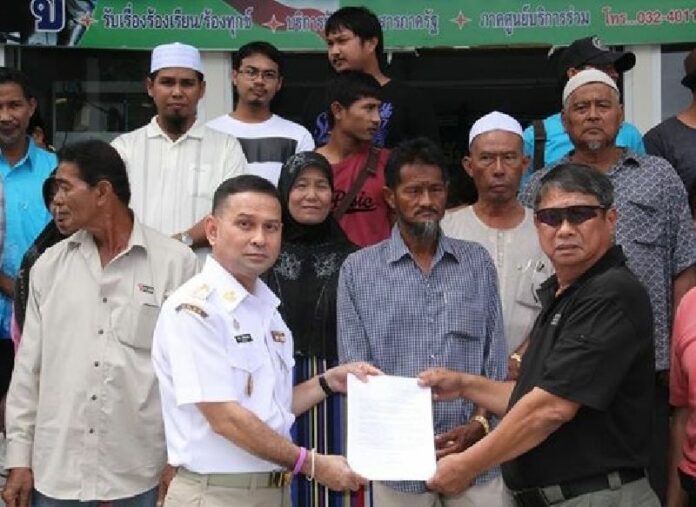
Saying they would suffer indignity and environmental damage, protesters from a Muslim community in Phetchaburi province present a petition yesterday against a bacon-making factory that would open close to three mosques.

PHETCHABURI — A group of Muslims rallied yesterday against a food company’s plan to construct a pork processing plant near their community southwest of Bangkok.

Around 50 members of a Muslim community in the Cha Am district of Phetchaburi province submitted a petition to officials over the construction of a facility they say is an indignity to their faith.

In the letter, the residents said they are opposed to a plan by Hua Hin Inter Foods Co. to build a factory for making bacon, sausages and ham near the Muslim-majority community. Pork is considered unclean in the Islamic faith and consuming it is forbidden.

“We have considered the plan, and we believe the factory should not be located in this area because 99 percent of the people are Muslims,” the letter said. “People in the community feel it will violate their livelihoods and practice of Islam.”

Three mosques are clustered near to the site of the planned factory. The letter also raised concerns that wastewater from the pork processing may contaminate sources of drinking water in the area.

Nearly 300 people have signed the petition so far. Nattawut Petchpromsorn of the provincial governor’s office accepted the letter on behalf of authorities.

There are approximately 4 million Muslims in Thailand, according to the 2010 census, amounting to around 6 percent of Thai population, which is predominantly Buddhist. More than half of Thailand’s Muslim population – 2,200,000 – live in southern provinces.

A municipal official said authorities have yet to grant a license for the company to construct the bacon factory.

“Currently, it is under the process of announcing the plan to the people, and to collect their opinion,” Nat Areekul, director of the municipal factory registration division, said yesterday.


For comments, or corrections to this article please contact: [email protected]

You can also find Khaosod English on Twitter and Facebook
http://twitter.com/KhaosodEnglish
http://www.facebook.com/KhaosodEnglish
Advertisement

Thai Police Break Up Alleged Counterfeit ID Card Ring for Foreigners

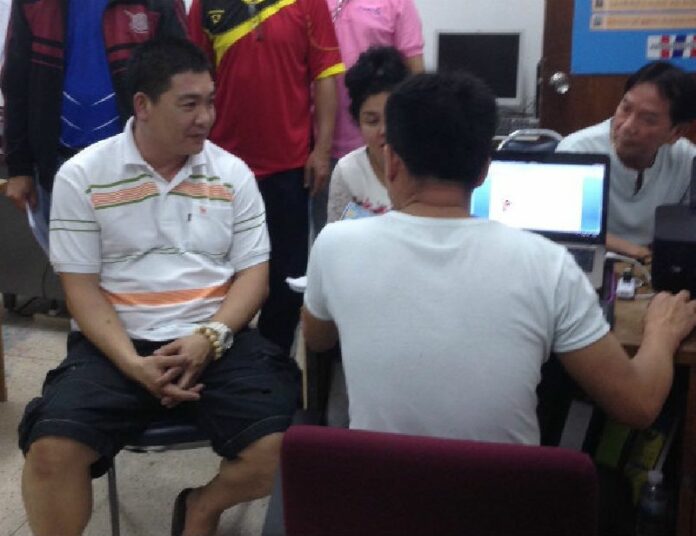
Police interview an unidentified Singaporean businessman accused of using a fake Thai ID in Chiang Rai province shortly after his arrest at the border with Myanmar on 28 July, 2015. Photo: Immigration Police

UTTARADIT — Five people are wanted by police for allegedly run a criminal scheme that produced fake Thai ID cards for foreigners living in Thailand.

Police Col. Pramuan Yimchan, a station superintendent in Uttaradit province, said at a press conference today that the five suspects sought for issuing the bogus cards are a state official, a monk and three civilians, though he did not identify any of them by name.

“All of the cards belonged to people who already died, but their names have not yet been removed from the citizens registration database.” Pramuan said. “The deceased were from different provinces … Their cards were used as new national ID cards for foreigners so that they can stay in Thailand indefinitely without ever having to acquire or extend visas.”

\

A fake Thai ID card allegedly found on a Singaporean businessman attempting to cross over the border in Chiang Rai province to Myanmar. Photo: Immigration Police


The scheme came to light after police in Chiang Rai arrested a 50-year-old Singaporean businessman trying to enter Myanmar with a fake Thai ID card, according to Pramuan. The Singaporean man’s ID card bore the name of a Thai man from Uttaradit province who died long ago, he added.

The Singaporean man was reportedly arrested after he presented the fake ID card to Thai immigration police at Thai – Myanmar border in Chiang Rai province on 28 July. The Singaporean works as a business manager in Bangkok, according to police reports.

Pramuan said further investigation reveals that a total of 11 counterfeit ID cards have been issued. Two, including the one carried by the Singaporean national, were allegedly issued at Baan Khok District Office in Uttaradit province.

According to Police Col. Pramuan, the forgers charged each foreigner 200,000 baht for their service.

He told reporters that the five suspects have not been arrested, and that police need permission from the National Anti-Corruption Commission to issue an arrest warrant for one of the suspects, who works as a permanent secretary in the Baan Khok District Office.

“Since this is an abuse of power within the bureaucracy, we have to file the request to the commission, and it will grant us permission,” Pramuan explained. “Then, we will proceed as told by the commission. We have already filed the request, but we have not yet received a reply.”

Pramuan added that police still have not identified the foreigners who have been using the counterfeit ID cards either.

“This case is a case that affects national security, and it is clearly committed by a criminal syndicate. We cannot know where these foreigners who are using Thai ID cards are, because the cards can be issued anywhere in the country,” Pramuan said.


For comments, or corrections to this article please contact: [email protected]

You can also find Khaosod English on Twitter and Facebook
http://twitter.com/KhaosodEnglish
http://www.facebook.com/KhaosodEnglish
 
Advertisement

US State Dept. Watered Down Human Trafficking Report

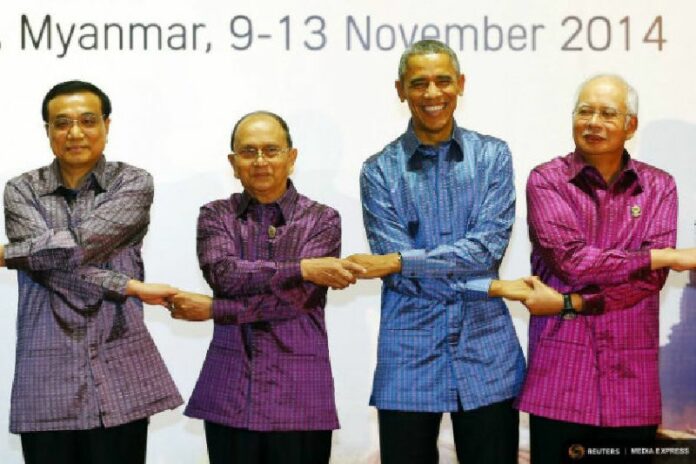
From the left, Chinese Premier Li Keqiang, Myanmar President Thien Sein, U.S. President Barack Obama and Malaysia's Prime Minister Najib Razak join hands at the 25th Association of Southeast Asian Nations summit in Nayppyitaw, Mayanmar, in this 12 November, 2014, file photo. Photo: Reuters/Damir Sagolj

WASHINGTON — In the weeks leading up to a critical annual U.S. report on human trafficking that publicly shames the world’s worst offenders, human rights experts at the State Department concluded that trafficking conditions hadn’t improved in Malaysia and Cuba. And in China, they found, things had grown worse.

The State Department’s senior political staff saw it differently — and they prevailed.

A Reuters examination, based on interviews with more than a dozen sources in Washington and foreign capitals, shows that the government office set up to independently grade global efforts to fight human trafficking was repeatedly overruled by senior American diplomats and pressured into inflating assessments of 14 strategically important countries in this year’s Trafficking in Persons report.

In all, analysts in the Office to Monitor and Combat Trafficking in Persons – or J/TIP, as it’s known within the U.S. government — disagreed with U.S. diplomatic bureaus on ratings for 17 countries, the sources said.

The analysts, who are specialists in assessing efforts to combat modern slavery – such as the illegal trade in humans for forced labor or prostitution – won only three of those disputes, the worst ratio in the 15-year history of the unit, according to the sources.

As a result, not only Malaysia, Cuba and China, but countries such as India, Uzbekistan and Mexico, wound up with better grades than the State Department’s human-rights experts wanted to give them, the sources said. 

\

Of the three disputes J/TIP won, the most prominent was Thailand, which has faced scrutiny over forced labor at sea and the trafficking of Rohingya Muslims through its southern jungles. Diplomats had sought to upgrade it to so-called “Tier 2 Watch List” status. It remains on “Tier 3” – the rating for countries with the worst human-trafficking records.

The number of rejected recommendations suggests a degree of intervention not previously known by diplomats in a report that can lead to sanctions and is the basis for many countries’ anti-trafficking policies. This year, local embassies and other constituencies within the department were able to block some of the toughest grades.

State Department officials say the ratings are not politicized. “As is always the case, final decisions are reached only after rigorous analysis and discussion between the TIP office, relevant regional bureaus and senior State Department leaders,” State Department spokesman John Kirby said in response to queries by Reuters.

Still, by the time the report was released on July 27, Malaysia and Cuba were both removed from the "Tier 3" blacklist, even though the State Department’s own trafficking experts believed neither had made notable improvements, according to the sources. 

The Malaysian upgrade, which was highly criticized by human rights groups, could smooth the way for an ambitious proposed U.S.-led free-trade deal with the Southeast Asian nation and 11 other countries.

Ending Communist-ruled Cuba’s 12 years on the report’s blacklist came as the two nations reopened embassies on each other’s soil following their historic détente over the past eight months.

And for China, the experts’ recommendation to downgrade it to the worst ranking, Tier 3, was overruled despite the report’s conclusion that Beijing did not undertake increased anti-trafficking efforts.

That would have put China alongside the likes of Syria and North Korea, regarded by the United Nations as among the world’s worst human right abusers. 

Typically, J/TIP wins more than half of what officials call “disputes” with diplomatic sections of the State Department, according to people familiar with the process. 

“Certainly we have never seen that kind of an outcome,” said one U.S. official with direct knowledge of the department.


Ability to Embarass

The Trafficking in Persons report, which evaluated 188 countries and territories this year, calls itself the world’s most comprehensive resource of governmental anti-human trafficking efforts. Rights groups mostly agree.

It organizes countries into tiers based on trafficking records: Tier 1 for nations that meet minimum U.S. standards; Tier 2 for those making significant efforts to meet those standards; Tier 2 "Watch List" for those that deserve special scrutiny; and Tier 3 for countries that fail to comply with the minimum U.S. standards and are not making significant efforts.

While a Tier 3 ranking can trigger sanctions limiting access to aid from the United States, the International Monetary Fund or the World Bank, such action is frequently waived.

The real power is its ability to embarrass countries into action. Many countries aggressively lobby U.S. embassies to try to avoid sliding into the Tier 3 category. Four straight years on the Tier 2 Watch List triggers an automatic downgrade to Tier 3 unless a country earns a waiver or an upgrade.

The leverage has brought some success, including pressuring Switzerland to close loopholes that allowed the prostitution of minors and prompting the Dominican Republic to convict more child trafficking offenders.

President Barack Obama has called the fight against human trafficking “one of the great human rights causes of our time” and has pledged the United States “will continue to lead it.”

But the office set up in 2001 by a congressional mandate to spearhead that effort is increasingly struggling to publish independent assessments of the most diplomatically important countries, the sources said.

The rejection of so many recommendations could strengthen calls by some lawmakers to investigate how the report is compiled.  After Reuters on July 8 reported on the plans to upgrade Malaysia, 160 members of the U.S. House and 18 U.S. senators wrote to Secretary of State John Kerry urging him to keep Malaysia in Tier 3, based on its trafficking record. They questioned whether the upgrade was politically motivated.

Senator Robert Menendez, a Democrat, has threatened to call for a Senate hearing and an inspector general to investigate if top State Department officials removed Malaysia from the lowest tier for political reasons.

The final decision on disputed rankings this year was made in meetings attended by some of the State Department’s most powerful diplomats, including Deputy Secretary of State Tony Blinken, Under Secretary of State for Political Affairs Wendy Sherman and Kerry’s Chief of Staff, Jonathan Finer, according to the sources. 

Sarah Sewall, who oversees J/TIP as Undersecretary of State for Civilian Security, Democracy and Human Rights, presented the experts’ recommendations, the sources said.  The State Department declined to make any of those officials available for comment.


'No, No, No'

The unprecedented degree of discord over this trafficking report began to become clear after Reuters early last month revealed plans to upgrade Malaysia from the lowest Tier 3 rank to Tier 2 Watch List.

The improved ranking came in a year in which Malaysian authorities discovered dozens of suspected mass migrant graves and human rights groups reported continued forced labor in the nation’s lucrative palm oil, construction and electronics industries. As recently as April, the U.S. ambassador to Malaysia, Joseph Yun, urged the country to take prosecution of human trafficking violations more seriously.

U.S. officials have denied that political considerations influenced Malaysia’s rankings. 

“No, no, no,” said Sewall, when asked by reporters last Monday whether Malaysia was upgraded to facilitate trade negotiations. She said the decision was based on how Malaysia was dealing with trafficking.

Representative Chris Smith, a New Jersey Republican who authored a 2000 law that led to the creation of J/TIP, said in an interview that the office’s authority is being undermined by the president’s agenda. “It’s so politicized,” he said.

If Malaysia had remained on Tier 3, it would have posed a potential barrier to Obama's proposed trade pact, the Trans-Pacific Partnership. That deal is a crucial part of his pivot to Asia policy. Congress approved legislation in June giving Obama expanded trade negotiating powers but prohibiting deals with Tier 3 countries such as, at that time, Malaysia.

Congressional sources and current and former State Department officials said experts in the J/TIP office had recommended keeping Malaysia on Tier 3, highlighting a drop in human-trafficking convictions in the country to three last year from nine in 2013. They said, according to the sources, that some of Malaysia’s efforts to end forced labor amounted to promises rather than action. 

The analysts also clashed over Cuba’s record with the State Department’s Western Hemisphere Affairs Bureau, whose view took precedence in the final report. 

Human rights groups and people with knowledge of the negotiations over the rankings said an unearned upgrade for Cuba, especially at a time of intense attention due to the historic diplomatic thaw between Washington and Havana, could undermine the integrity of the report.

Cuba had been on the “border line” for an upgrade in recent years, a former State Department official said. And although Cuba ended up with an upgrade, the final report remained highly critical, citing concerns about Cuba’s failure to deal with a degree of alleged forced labor in medical missions that Havana sends to developing countries. 

China was another source of friction. J/TIP’s analysts called for downgrading China, the world’s second-biggest economy, to Tier 3, criticizing Beijing for failing to follow through on a promise to abolish its “re-education through labor” system and to adequately protect trafficking victims from neighboring countries such as North Korea. The final report put China on Tier 2 Watch List.


Showing Deference

But the candor of J/TIP can run afoul of other important diplomatic priorities, particularly in countries beset by instability or corruption where U.S. diplomats are trying to build relationships. That leads every year to sometimes contentious back-and-forth over the rankings with far-flung embassies and regional bureaus – the diplomatic centers of gravity at the State Department.

“There is supposed to be some deference to the expertise of the office,” said Mark Lagon, J/TIP’s ambassador-at-large from 2007 to 2009 and now president of Freedom House, an advocacy group in Washington. If the office is now losing more disputes over rankings than it is winning, that would be “an unfortunate thing,” he said.

Most U.S. diplomats are reluctant to openly strike back at critics inside and outside of the administration who accuse them of letting politics trump human rights, the sources said.

But privately, some diplomats say that J/TIP staffers should avoid acting like “purists” and keep sight of broader U.S. interests, including maintaining open channels with authoritarian governments to push for reform and forging trade deals that could lift people out of poverty. 

From the start, J/TIP has tried to be impartial. It is based in a building a few blocks away from State Department, adding to the sense of two separate identities and cultures.

But establishing genuine independence has been difficult. At first, the heads of regional bureaus, representing the business and political interests of U.S. embassies, would join the J/TIP team around a table and have almost an equal say in deciding country rankings in the final report.

John Miller, a former Republican congressman from Washington state named by President George W. Bush to head the bureau from 2002 to 2006, overhauled that structure.

“I said ‘no way’,” Miller said in an interview. By 2004, decisions on how to rank countries were made by his office. Diplomats who objected could appeal to then deputy secretary of state Richard Armitage. “He rarely overruled me,” said Miller. Armitage, who is no longer in a government job, did not respond to a request for comment sent through his office.

Laura Lederer, who helped set the office up as senior human trafficking adviser from 2002 to 2007, said its job was “to assess and rate countries solely on their progress in addressing the prevention of trafficking, the prosecution of traffickers, and protection and assistance of victims.”

But officials who worked in the office over the past 15 years acknowledge that countries with sensitive diplomatic or trade relationships with the United States sometimes received special treatment following pressure from local embassies and other constituencies within the department.

One such country is Mexico – a key trading partner whose cooperation is also needed against drug trafficking and illegal immigration. It was kept at Tier 2 despite the anti-trafficking unit’s call for a worse grade, according to officials in Washington and Mexico City.

The controversy over this year’s report comes at a time when J/TIP lacks a congressionally confirmed leader. 

The prior chief, ambassador-at-Large Luis CdeBaca, left in November of last year. His deputy, Alison Friedman, then resigned to join a non-profit anti-slavery organization. And then it took until mid-July for Obama to nominate Georgia federal prosecutor Susan Coppedge as the next ambassador-at-large.

The lack of a director can increase the unit’s exposure to political influence, said Lederer.

Some say the perceived hit to the integrity of the 2015 report could do lasting damage.

“It only takes one year of this kind of really deleterious political effect to kill its credibility,”  said Mark Taylor, a former senior coordinator for reports and political affairs at J/TIP from 2003 to 2013.

Story: Reuters / Jason Szep and Matt Spetalnick


For comments, or corrections to this article please contact: [email protected]

You can also find Khaosod English on Twitter and Facebook
http://twitter.com/KhaosodEnglish
http://www.facebook.com/KhaosodEnglish
Advertisement

Hot News

LATEST NEWS

Bangkok
overcast clouds
35 ° C
35 °
34.4 °
55 %
3.1kmh
99 %
Fri
35 °
Sat
31 °
Sun
35 °
Mon
36 °
Tue
37 °