

































36.6 C
Bangkok
Wednesday, June 24, 2026
Home Blog Page 2997

Nearly 800 Migrants Rescued From Sinking Boats in Indonesia

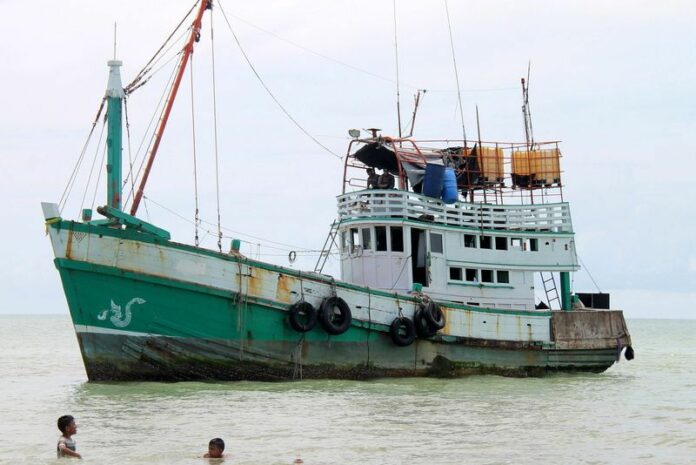
A picture made available on 12 May 2015 shows a traditional Thai style fishing boat which was used by Myanmar Rohingya refugees, stranded in Seunedon village of North Aceh, Sumatra, Indonesia, 11 May 2015 [DPA]

JAKARTA (DPA) — Indonesian fishing boats and marine police rescued nearly 800 migrants Friday from a sinking vessel, a military official said, as South-East Asia's migrant crisis continued to unfold.

The migrants, believed to be mostly of the Rohingya ethnic group from Myanmar and Bangladesh, were initially prevented from reaching the shore pending a consultation with the Indonesian Foreign Ministry, military spokesman Fuad Basya said.

However, because their boat was about to sink off Aceh province, local fishermen and marine police moved to rescue the migrants and took them to the Kuala Langsa port in Aceh's Langsa city.

"Our job is to prevent undocumented ships from entering our territory, but if it is a humanitarian situation we will help," Fuad said.

Langsa police chief Sunarya Sik said the boat was crowded, and passengers were jostling when fishermen spotted the vessel.

"According to information from the migrants, they had entered Malaysian waters, but Malaysian security authorities turned them away," the police chief was quoted as saying by news website Tempo.co.

Indonesia is not a party to the 1951 United Nations refugee convention but in the past has sheltered migrants pending verification of their refugee status by UN refugee agency UNHCR.

The military said it towed a migrant boat Monday out of Indonesian waters, insisting that the migrants intended to go to Malaysia.

Nearly 600 Bangladeshis and Rohingyas were rescued from another boat Sunday off Aceh.

In Kuala Lumpur, Malaysian Prime Minister Najib Razak called Friday for an international solution to the worsening situation.

"This is an issue of international and regional importance," he said. "We are in contact with all relevant parties with whom we share the desire to find a solution to this crisis."

Malaysia's Maritime Enforcement Agency beefed up patrols to prevent migrants from entering the country, after more than 1,000 Rohingya and Bangladeshi boat people landed this week on the northern island of Langkawi.

On Wednesday, Malaysian maritime patrols intercepted two vessels carrying about 1,000 migrants.

One of the vessels was escorted out of Malaysian waters while the other – which suffered damage – was undergoing repairs before it would be sent back to its point of origin.

Thai authorities on Friday turned back a boat thought to be carrying hundreds of Rohingya migrants from Myanmar.

The Thai Navy spotted a boat late Thursday off the south-west coast, and towed the vessel back out to sea after giving the migrants food, water and medicine.

"About 10 people died during the journey," one of person on the boat shouted in Rohingya to a boat of reporters that drew alongside. "We threw their bodies into the water."

The policy of pushing migrant boats back out to sea is putting the lives of migrants at serious risk, said Zeid Ra'ad al-Hussein, UN high commissioner for human rights. He said such practices were "incomprehensible and inhumane" and would "inevitably lead to many avoidable deaths."

In Washington, White House spokesman Eric Schultz called the situation "heartbreaking" and said the US would continue to pressure the Myanmar government to address the crisis.

US President Barack Obama raised concerns about ethnic minorities when he visited Myanmar last year, after the US resumed ties with the country, in the wake of a restoration of civilian rule.

"The reforms that are happening in Burma are important, are significant, but the process isn't done," Schultz said. "The United States is going to continue to raise concerns with that government and underscore the urgent need to fulfil that government's commitment to respecting these human rights."

Zeid said the Bangladeshi and Rohingya migrants need protection: "Just because they have taken to boats, does not mean they forfeit the human rights afforded to every human being under international law."

Some 920 mostly people from the Muslim Rohingya minority in Myanmar died between September and March in the Bay of Bengal, according to the UN rights chief's office.

Thailand has proposed temporary camps for migrants on its territory, but would wait until a May 29 regional meeting because Bangkok "cannot go it alone," a security advisor to the government was quoted as saying.

Thousands of Rohingya, a stateless minority in predominately Buddhist Myanmar, travel each month through Thailand to reach Muslim-majority Malaysia or Indonesia.


For comments, or corrections to this article please contact: [email protected]

You can also find Khaosod English on Twitter and Facebook
http://twitter.com/KhaosodEnglish
http://www.facebook.com/KhaosodEnglish
Advertisement

Nearly 800 Migrants Rescued From Sinking Boats in Indonesia

Migrants from Myanmar and Bangladesh sit at a police station in Kuah, Langkawi. In Malaysia 1,018 migrants were found in two operations Sunday on the island of Langkawi, about 400 kilometres north of Kuala Lumpur. EPA/STR

JAKARTA (DPA) — Indonesian fishing boats and marine police rescued nearly 800 migrants Friday from a sinking vessel, a military official said, as South-East Asia's migrant crisis continued to unfold.

The migrants, believed to be mostly of the Rohingya ethnic group from Myanmar and Bangladesh, were initially prevented from reaching the shore pending a consultation with the Indonesian Foreign Ministry, military spokesman Fuad Basya said.

However, because their boat was about to sink off Aceh province, local fishermen and marine police moved to rescue the migrants and took them to the Kuala Langsa port in Aceh's Langsa city.

"Our job is to prevent undocumented ships from entering our territory, but if it is a humanitarian situation we will help," Fuad said.

Langsa police chief Sunarya Sik said the boat was crowded, and passengers were jostling when fishermen spotted the vessel.

"According to information from the migrants, they had entered Malaysian waters, but Malaysian security authorities turned them away," the police chief was quoted as saying by news website Tempo.co.

Indonesia is not a party to the 1951 United Nations refugee convention but in the past has sheltered migrants pending verification of their refugee status by UN refugee agency UNHCR.

The military said it towed a migrant boat Monday out of Indonesian waters, insisting that the migrants intended to go to Malaysia.

Nearly 600 Bangladeshis and Rohingyas were rescued from another boat Sunday off Aceh.

In Kuala Lumpur, Malaysian Prime Minister Najib Razak called Friday for an international solution to the worsening situation.

"This is an issue of international and regional importance," he said. "We are in contact with all relevant parties with whom we share the desire to find a solution to this crisis."

Malaysia's Maritime Enforcement Agency beefed up patrols to prevent migrants from entering the country, after more than 1,000 Rohingya and Bangladeshi boat people landed this week on the northern island of Langkawi.

On Wednesday, Malaysian maritime patrols intercepted two vessels carrying about 1,000 migrants.

One of the vessels was escorted out of Malaysian waters while the other – which suffered damage – was undergoing repairs before it would be sent back to its point of origin.

Thai authorities on Friday turned back a boat thought to be carrying hundreds of Rohingya migrants from Myanmar.

The Thai Navy spotted a boat late Thursday off the south-west coast, and towed the vessel back out to sea after giving the migrants food, water and medicine.

"About 10 people died during the journey," one of person on the boat shouted in Rohingya to a boat of reporters that drew alongside. "We threw their bodies into the water."

The policy of pushing migrant boats back out to sea is putting the lives of migrants at serious risk, said Zeid Ra'ad al-Hussein, UN high commissioner for human rights. He said such practices were "incomprehensible and inhumane" and would "inevitably lead to many avoidable deaths."

In Washington, White House spokesman Eric Schultz called the situation "heartbreaking" and said the US would continue to pressure the Myanmar government to address the crisis.

US President Barack Obama raised concerns about ethnic minorities when he visited Myanmar last year, after the US resumed ties with the country, in the wake of a restoration of civilian rule.

"The reforms that are happening in Burma are important, are significant, but the process isn't done," Schultz said. "The United States is going to continue to raise concerns with that government and underscore the urgent need to fulfil that government's commitment to respecting these human rights."

Zeid said the Bangladeshi and Rohingya migrants need protection: "Just because they have taken to boats, does not mean they forfeit the human rights afforded to every human being under international law."

Some 920 mostly people from the Muslim Rohingya minority in Myanmar died between September and March in the Bay of Bengal, according to the UN rights chief's office.

Thailand has proposed temporary camps for migrants on its territory, but would wait until a May 29 regional meeting because Bangkok "cannot go it alone," a security advisor to the government was quoted as saying.

Thousands of Rohingya, a stateless minority in predominately Buddhist Myanmar, travel each month through Thailand to reach Muslim-majority Malaysia or Indonesia.


For comments, or corrections to this article please contact: [email protected]

You can also find Khaosod English on Twitter and Facebook
http://twitter.com/KhaosodEnglish
http://www.facebook.com/KhaosodEnglish
Advertisement

Thai Labor Minister to Push for Shorter Return Period for Myanmar Workers

A "One Stop Service" center in Samut Sakhon province for migrant workers to register and receive 60 day work permits, June 2014.

BANGKOK — Thailand's Minister of Labor will visit Myanmar next week to discuss reducing the amount of time Burmese workers are required to stay in Myanmar before returning to Thailand, state media reported.

The current Memorandum of Understanding (MoU) between the two countries requires Burmese workers to return to Myanmar for three years after four years of working  in Thailand.

Thai Minister of Labor Gen. Surasak Karnjanarat will meet with his counterpart in Myanmar on 21-23 May to suggest the mandatory "return stay" be reduced from three years to three months, in order to help assuage labor shortages in Thailand.

In total, an estimated two million people from Myanmar live and work in Thailand, many of whom lack proper documentation and are thus vulnerable to exploitation by Thai employers and human traffickers. 

Many Burmese migrants work in dangerous environments without medical insurance, struggling to earn Thailand’s 300 baht daily minimum wage. Severe labor shortages in Thailand's fishing industry has also led many boat captains to staff their ships with Burmese men who have been duped by traffickers into working on the boats as slaves. 

Burmese boat people turned away

Meanwhile, Thai junta chairman Gen. Prayuth Chan-ocha warned today that Thailand could not accept boatloads of Burmese migrants who are currently languishing at sea because they might "steal the jobs and livelihoods of Thais," Reuters reported.

The boats are carrying mostly Bangladeshis and Rohingyas, a Muslim minority that faces state-sponsored discrimination in Myanmar. The surge of boatpeople in the Andaman sea followed a crackdown on established human smuggling routes this month in Thailand, where migrants are often brought to land before traveling on to Malaysia. 

6,000 people are estimated to be stranded off shore with dwindling supplies of food and water, as no country in the region appears willing to take the migrants in.

Thai authorities say their policy to is provide food and humanitarian assistance, and then encourage the boats to continue to their final destination, usually Malaysia or Indonesia. Migrants that land on Thai soil will be prosecuted for illegal entry, a government spokesperson said yesterday.

Indonesian and Malaysian authorities have also balked at the influx of migrants, pushing some boats back out to sea.

Thailand has scheduled an international summit to address the mounting humanitarian crisis on 29 May, but the UN and other human rights agencies say immediate action must be taken to prevent a tragic loss of life.

"The first priority is to save lives," Volker Türk, a UNHCR official, said in a press release. "Instead of competing to avoid responsibility, it is key for States to share the responsibility to disembark these people immediately."

Related coverage:
106 Migrants Land on Thai Island Amid Refugee Crisis

 
For comments, or corrections to this article please contact: [email protected]

You can also find Khaosod English on Twitter and Facebook
http://twitter.com/KhaosodEnglish
http://www.facebook.com/KhaosodEnglish
Advertisement

106 Migrants Land on Thai Island Amid Refugee Crisis

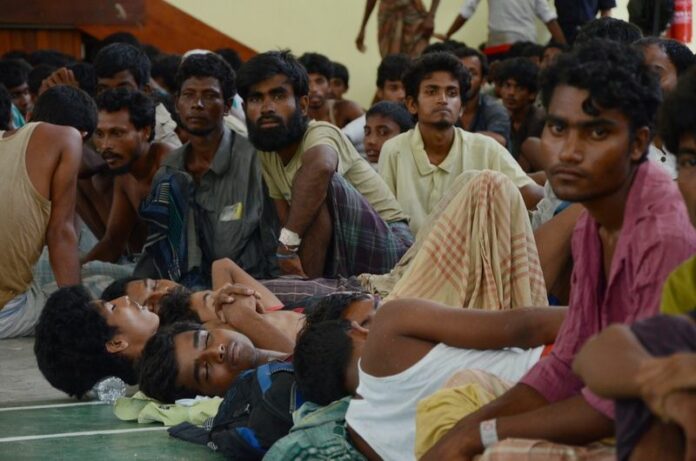
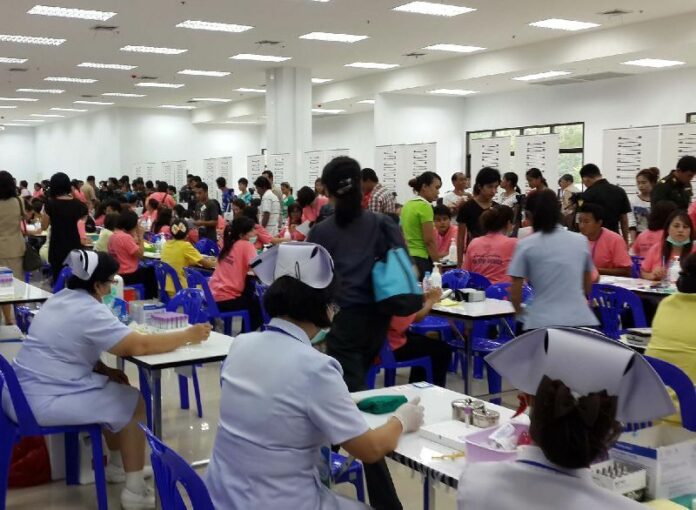
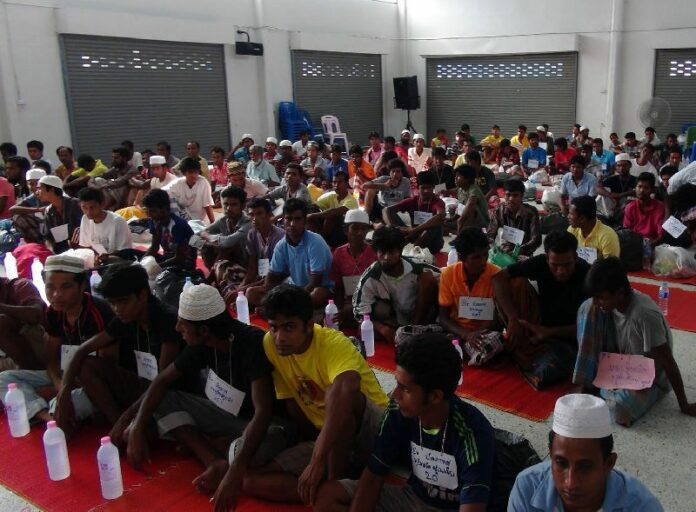
Rohingya and Bangladeshi refugees rescued by police at a shelter in Songhkla province, 11 May 2015.

BANGKOK — One hundred and six migrants landed on a Thai island in Phang Nga province yesterday, while thousands of others languish at sea, unable to find ports willing to take them in.

The group, which consisted mostly of men but also some women and children, were found on Surin island northwest of Phuket and taken to the mainland for questioning.

"It's not clear how they ended up on the island," Phang Nga’s governor told AP. "We are in the process of identifying if they were victims of human trafficking."

The Thai Navy encountered another boat carrying between 300-400 migrants from Myanmar in Thai waters off of Lipe island yesterday, but did not bring the vessel to shore.

According to a military spokesperson, the refugees told Navy officers they intended to travel to another country, likely to be Malaysia or Indonesia, although the boat's passengers told the New York Times they had already been rejected by Malaysian authorities.

Following a crackdown on established human smuggling routes in Thailand, a surge of boatpeople from Myanmar and Bangladesh have been left out at sea, with every country in region making it clear that the migrants are not welcome.

Thai authorities say their policy to is provide food and humanitarian assistance, and then encourage the boats to continue to their final destination, usually Muslim-majority Malaysia or Indonesia. Migrants that land on Thai soil will be prosecuted for illegal entry, a government spokesperson said yesterday.

Indonesian and Malaysian authorities have also balked at the influx of migrants, pushing some boats back out to sea.

"Our job is to prevent undocumented ships from entering our territory, but if it is a humanitarian situation we will help," an Indonesian military spokesman told dpa.

Human rights workers say as many as 8,000 people are currently stranded off shore with dwindling amounts of food. Some of the boats have been abandoned by captains who fled in fear of the crackdown.

Many of the refugees are Rohingyas, a stateless Muslim minority who face violent persecution in Buddhist-majority Myanmar. Most of the others hail from impoverished Bangladesh, where an estimated 300,000 Rohingyas also live in refugee camps.

Thailand has scheduled an international summit to address the mounting humanitarian crisis on 29 May, but the UN and other human rights agencies say immediate action must be taken to prevent a tragic loss of life.

"The first priority is to save lives," Volker Türk, a UNHCR official, said in a press release. "Instead of competing to avoid responsibility, it is key for States to share the responsibility to disembark these people immediately."

The  UN's human rights chief, Zeid Ra'ad Al Hussein, also stressed in statement on Friday that the migration crisis will not be resolved until Myanmar ceases to discriminate against the Rohingya people.

"Until the Myanmar government addresses the institutional discrimination against the Rohingya population, including equal access to citizenship, this precarious migration will continue," he said. 

Yet Thailand's military leader has suggested that sensitive issues, such as Myanmar's state-sanctioned discrimination against the Rohingya, may be off the table during the 29 May summit.

"Some things can be said, but some other things should not be said," Gen. Prayuth Chan-ocha said yesterday. "Our country has enough problems already. If we affect other people too much, we won't be able to ask for cooperation from them."

He continued, "If we say these things out loud – what about the other countries that keep silent? About human trafficking, Rohingya, fishing. Do they speak about it? They don't speak about it at all. But we keep fanning the issue. In the end, we will be the center of all the evil things in ASEAN." 

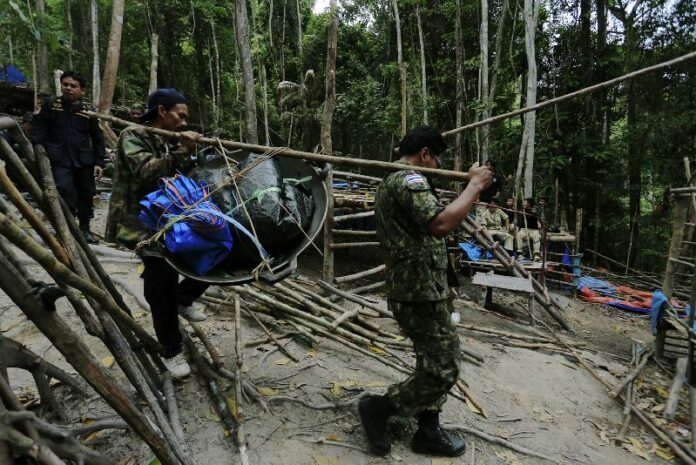
The crackdown in Thailand was spurred by the discovery of a mass grave of Rohingya corpses near a jungle camp southern Thailand on 1 May. After a sweep of the area was ordered, police found four more major detention sites that they believe were used by human smugglers to imprison migrants and demand hefty ransom fees from their relatives before transporting them across the Malysian border. 

Human rights groups say Thai authorities have been aware of the trafficking operation for years, but mostly turned a blind eye in exchange for bribes. At least 19 suspects have been arrested in connection with the suspected trafficking operation, including several local Thai officials.

After the crackdown was ordered, Thai police encountered nearly 300 Rohingya and Bangladeshi migrants who were left to fend for themselves in the jungle after their smugglers fled in fear of prosecution. According to police, at least 187 of the refugees will be prosecuted for illegally entering Thailand, while 63 have been categorized as victims of human trafficking. 

Read more:
187 Rescued Refugees to be Prosecuted for Illegal Entry in Thailand 
Prayuth Rules Out Permanent Shelters for Rohingyas


Advertisement

Thailand to Lure Unhappy Couples in Bid at Tourism Boost

A file photo shows wooden boats loaded with tourists passing a seller of Thai fruits at the famous Damnoen Saduak Floating Market in Ratchaburi province, Thailand, 20 February 2015. Thailand is to be a destination for couples seeking to save failing marriages and stagnant relationships, according to a new tourism marketing scheme. EPA/BARBARA WALTON

BANGKOK (DPA) — Thailand is to be a destination for couples seeking to save failing marriages and stagnant relationships, according to a new tourism marketing scheme.

The Tourism Authority of Thailand said it wants to make Thailand a destination for "couples therapy," according to the Bangkok Post.

\
A handout photo shows boats on Maya Bay on Koh Phi Phi Leh, Thailand. [Photo: TAT]

Tanes Petsuwan, the TAT's executive director for Europe said that while Thailand already markets itself successfully as a honeymoon location, he also wants Thailand to be a destination for couples looking to ignite a spark into their relationships.

Widespread political unrest and a military coup contributed to a terrible 2014 for tourism in Thailand with numbers down by 6.6 per cent from the previous year.

In response, the TAT have released numerous campaign ideas to woo the tourists back.

Read more:
Thai Authorities To Promote 'Martial Law Tourism'
Thailand Fast-Tracks Immigration for Honeymooning Couples


Advertisement

106 Migrants Land on Thai Island Amid Refugee Crisis

A Malaysian official marks an Rohinghya migrant in Kuah, on Langkawi island. More than 8,000 migrants were adrift off the coasts of Thailand, Malaysia and Indonesia, an IOM official said Tuesday, posing a potential humanitarian crisis for the region's governments. EPA/STR

BANGKOK — One hundred and six migrants landed on a Thai island in Phang Nga province yesterday, while thousands of others languish at sea, unable to find ports willing to take them in.

The group, which consisted mostly of men but also some women and children, were found on Surin island northwest of Phuket and taken to the mainland for questioning.

"It's not clear how they ended up on the island," Phang Nga’s governor told AP. "We are in the process of identifying if they were victims of human trafficking."

The Thai Navy encountered another boat carrying between 300-400 migrants from Myanmar in Thai waters off of Lipe island yesterday, but did not bring the vessel to shore.

According to a military spokesperson, the refugees told Navy officers they intended to travel to another country, likely to be Malaysia or Indonesia, although the boat's passengers told the New York Times they had already been rejected by Malaysian authorities.

Following a crackdown on established human smuggling routes in Thailand, a surge of boatpeople from Myanmar and Bangladesh have been left out at sea, with every country in region making it clear that the migrants are not welcome.

Thai authorities say their policy to is provide food and humanitarian assistance, and then encourage the boats to continue to their final destination, usually Muslim-majority Malaysia or Indonesia. Migrants that land on Thai soil will be prosecuted for illegal entry, a government spokesperson said yesterday.

Indonesian and Malaysian authorities have also balked at the influx of migrants, pushing some boats back out to sea.

"Our job is to prevent undocumented ships from entering our territory, but if it is a humanitarian situation we will help," an Indonesian military spokesman told dpa.

Human rights workers say as many as 8,000 people are currently stranded off shore with dwindling amounts of food. Some of the boats have been abandoned by captains who fled in fear of the crackdown.

Many of the refugees are Rohingyas, a stateless Muslim minority who face violent persecution in Buddhist-majority Myanmar. Most of the others hail from impoverished Bangladesh, where an estimated 300,000 Rohingyas also live in refugee camps.

Thailand has scheduled an international summit to address the mounting humanitarian crisis on 29 May, but the UN and other human rights agencies say immediate action must be taken to prevent a tragic loss of life.

"The first priority is to save lives," Volker Türk, a UNHCR official, said in a press release. "Instead of competing to avoid responsibility, it is key for States to share the responsibility to disembark these people immediately."

The  UN's human rights chief, Zeid Ra'ad Al Hussein, also stressed in statement on Friday that the migration crisis will not be resolved until Myanmar ceases to discriminate against the Rohingya people.

"Until the Myanmar government addresses the institutional discrimination against the Rohingya population, including equal access to citizenship, this precarious migration will continue," he said. 

Yet Thailand's military leader has suggested that sensitive issues, such as Myanmar's state-sanctioned discrimination against the Rohingya, may be off the table during the 29 May summit.

"Some things can be said, but some other things should not be said," Gen. Prayuth Chan-ocha said yesterday. "Our country has enough problems already. If we affect other people too much, we won't be able to ask for cooperation from them."

He continued, "If we say these things out loud – what about the other countries that keep silent? About human trafficking, Rohingya, fishing. Do they speak about it? They don't speak about it at all. But we keep fanning the issue. In the end, we will be the center of all the evil things in ASEAN." 

The crackdown in Thailand was spurred by the discovery of a mass grave of Rohingya corpses near a jungle camp southern Thailand on 1 May. After a sweep of the area was ordered, police found four more major detention sites that they believe were used by human smugglers to imprison migrants and demand hefty ransom fees from their relatives before transporting them across the Malysian border. 

Human rights groups say Thai authorities have been aware of the trafficking operation for years, but mostly turned a blind eye in exchange for bribes. At least 19 suspects have been arrested in connection with the suspected trafficking operation, including several local Thai officials.

After the crackdown was ordered, Thai police encountered nearly 300 Rohingya and Bangladeshi migrants who were left to fend for themselves in the jungle after their smugglers fled in fear of prosecution. According to police, at least 187 of the refugees will be prosecuted for illegally entering Thailand, while 63 have been categorized as victims of human trafficking. 


Read more:

187 Rescued Refugees to be Prosecuted for Illegal Entry in Thailand 
Prayuth Rules Out Permanent Shelters for Rohingyas


For comments, or corrections to this article please contact: [email protected]

You can also find Khaosod English on Twitter and Facebook
http://twitter.com/KhaosodEnglish
http://www.facebook.com/KhaosodEnglish

Advertisement

Gunmen Seize Restaurant Owner, Customer in Eastern Malaysia

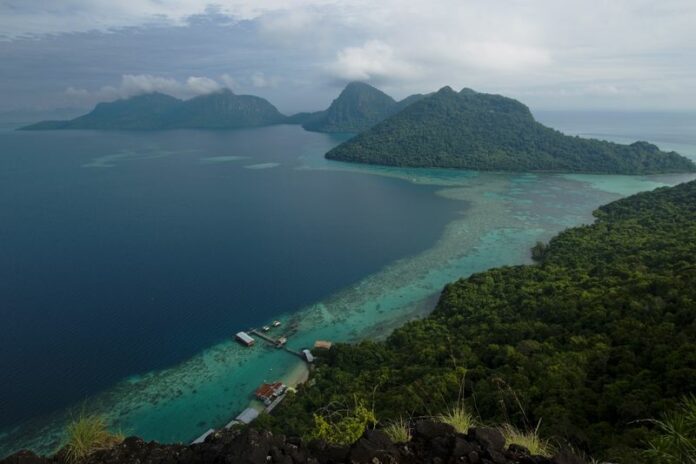
A file photo shows a view of Tun Sakaran Marine Park from Bohey Dulang Island, Semporna, on the east coast of Sabah, Borneo, Malaysia, 01 July 2011. Masked gunmen seized the owner of a seaside restaurant and one customer in eastern Malaysia, police said, in the first reported kidnapping since a curfew was imposed in the area last year. EPA/AHMAD YUSNI

KUALA LUMPUR (DPA) — Masked gunmen seized the owner of a seaside restaurant and one customer in eastern Malaysia, police said Friday, in the first reported kidnapping since a curfew was imposed in the area last year.

The attack occurred late Thursday in Sandakan town in the state of Sabah, some 1,850 kilometres east of Kuala Lumpur, according to state police chief Jalaluddin Abdul Rahman.

Four masked men, carrying M16 automatic rifles were said to have entered the Ocean King Seafood Restaurant and seized Thien Nyuk Fun, 49, the co-owner of the restaurant and a customer identified as Bernard Ted Fen, 38.

Jalaluddin said the suspects took the Malaysian pair to a waiting motor boat.

It was the first kidnapping in eastern Malaysia since the government imposed a dusk-to-dawn curfew in the area in July 2014.

The curfew was prompted by a rash of kidnappings in Sabah perpetrated by suspected Muslim Abu Sayyaf militants from the nearby Philippine island of Jolo.

Home Minister Ahmad Zahid Hamidi said additional forces have been deployed in Sabah following Thursday's kidnapping.

For comments, or corrections to this article please contact: [email protected]

You can also find Khaosod English on Twitter and Facebook
http://twitter.com/KhaosodEnglish
http://www.facebook.com/KhaosodEnglish

Advertisement

Massive Coordinated Bomb Attack Rocks Yala

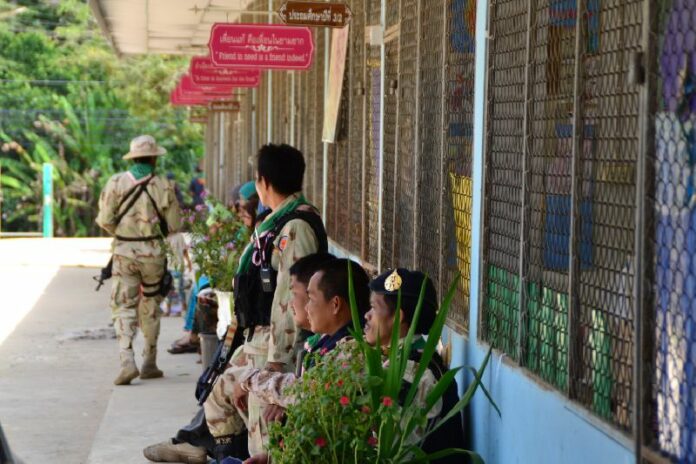
Security officers stationed at a school in Yala province to prevent insurgent attacks, 13 May 2015.

YALA — More than a dozen bombs exploded in southern province of Yala on Thursday night, injuring at least 12 people.

The explosives were planted near several banks, a college campus, a train station, and other sites in the provincial capital’s commercial district. There were reportedly 17 blasts in total, not including the handful of unexploded devices that were found and dismantled by authorities. 

The injured are being treated at a hospital, and no fatalities have been reported so far. An 11-year-old boy was among the injured, but his injuries are minor, a nurse told the AP.

Lt.Gen. Prakarn Chollayuth, the commander of the Fourth Region army, said the bombs were an attempt to "harass" the public. 

"The perpetrators intended to encourage and boost eachother's morale," he said. "I would like the media to emphasize that these attacks affect Muslim people [too]. Some of the bombs whent off in histortic Muslim quarters."

Although the explosions themselves were relatively small, the incident was one of the most coordinated attacks to strike the Muslim-majority region in recent months.

Yala is one of three southern provinces near Malaysia that has been plagued by a bloody Islamic insurgency for the past decade. Daily violence is common in the region, known as the Deep South, though normally in the form of shootings and roadside bombs targeting military vehicles and Buddhist civilians. 

Experts say the insurgency, which aims to create an independent Muslim state, is mostly fueled by ethnic and religious differences. While the vast majority of Thailand is Buddhist, the Deep South is mostly populated by Malay Muslims who speak a distinct dialect and trace their ancestry back to the sultanate of Patani, which was annexed by Thailand in early 20th century.  

Although most of the estimated 6,200 casualties have died in attacks staged by insurgent groups, Thai authorities have also been criticized for using excessive violence and violating human rights in their effort to combat the secessionist campaign.

Police said a 28-year-old militant behind several major attacks in the region was killed in a shootout with authorities in Pattani this week. Two other suspected militants were arrested at the scene, police said. 


For comments, or corrections to this article please contact: [email protected]

You can also find Khaosod English on Twitter and Facebook
http://twitter.com/KhaosodEnglish
http://www.facebook.com/KhaosodEnglish

Advertisement

Massive Coordinated Bomb Attack Rocks Yala

Security officers stationed at a school in Yala province to prevent insurgent attacks, 13 May 2015.

YALA — More than a dozen bombs exploded in southern province of Yala on Thursday night and Friday morning, injuring at least 12 people.

The explosives were planted near several banks, a college campus, a train station, and other sites in the provincial capital’s commercial district. There were reportedly 17 blasts in total, not including the handful of unexploded devices that were found and dismantled by authorities.  

The injured are being treated at a hospital, and no fatalities have been reported so far. An 11-year-old boy was among the injured, but his injuries are minor, a nurse told the AP.

Lt.Gen. Prakarn Chollayuth, the commander of the Fourth Region army, said the bombs were an attempt to "harass" the public. 

"The perpetrators intended to encourage and boost eachother's morale," he said. "I would like the media to emphasize that these attacks affect Muslim people [too]. Some of the bombs whent off in histortic Muslim quarters."

Although the explosions themselves were relatively small, the incident was one of the most coordinated attacks to strike the Muslim-majority region in recent months.

Yala is one of three southern provinces near Malaysia that has been plagued by a bloody Islamic insurgency for the past decade. Daily violence is common in the region, known as the Deep South, though normally in the form of shootings and roadside bombs targeting military vehicles and Buddhist civilians. 

Experts say the insurgency, which aims to create an independent Muslim state, is mostly fueled by ethnic and religious differences. While the vast majority of Thailand is Buddhist, the Deep South is mostly populated by Malay Muslims who speak a distinct dialect and trace their ancestry back to the sultanate of Patani, which was annexed by Thailand in early 20th century.  

Although most of the estimated 6,200 casualties have died in attacks staged by insurgent groups, Thai authorities have also been criticized for using excessive violence and violating human rights in their effort to combat the secessionist campaign.

Police said a 28-year-old militant behind several major attacks in the region was killed in a shootout with authorities in Pattani this week. Two other suspected militants were arrested at the scene, police said. 


For comments, or corrections to this article please contact: [email protected]

You can also find Khaosod English on Twitter and Facebook
http://twitter.com/KhaosodEnglish
http://www.facebook.com/KhaosodEnglish
Advertisement

Prayuth Rules Out Permanent Shelters for Rohingyas

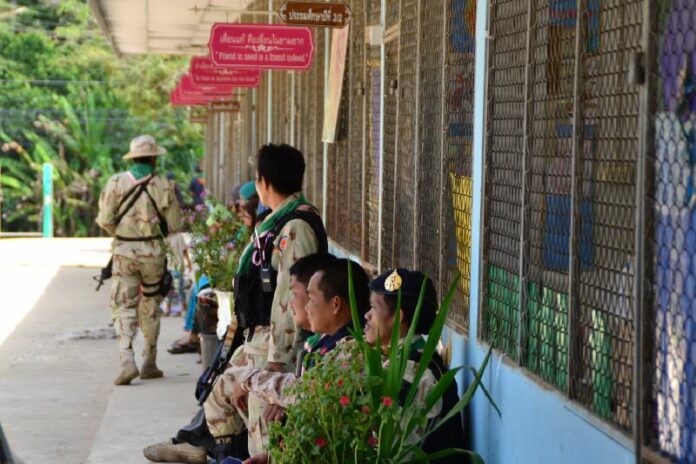
Thai security officers dismantle Rohingya detention camps in Songkhla province, 14 May 2015

BANGKOK — Thailand's military leader said the government will not build permanent refugee centers for Rohingyas who have fled ethnic persecution in Myanmar.

"These people entered illegally," said junta chairman and Prime Minister Prayuth Chan-ocha, referring to the nearly 300 migrants from Myanmar and Bangladesh that police have found in the jungles of southern Thailand this week. The groups were abandoned by smugglers who presumably caught wind of the crackdown Thai authorities ordered on human traffickers in the beginning of the month.

"We need a place where we can detain them for legal prosecution, because there's only limited space now," Gen. Prayuth said, but clarified that "this will not be a permanent refugee center for ten or twenty years." 

The junta chairman stressed that setting up refugee centers would place a great financial strain on Thailand.

"We would have to use budget from Thai taxpayers to take care of them, would we not?" he asked reporters.

When a reporter asked whether Thailand could request financial assistance from the United Nations to build refugee centers, Gen. Prayuth replied, "Yes, I can. But will they give me the money? Are you the UN? I can ask them, but will they give it to me? Is it 100 percent [guaranteed]? Can I build the centers first and ask them later? Can you promise me on their behalf? If I cannot get the money, can I ask the money from your office? You act like you are the master of the world."

The crackdown in Thailand, a common pit stop for traffickers seeking to smuggle migrants into Malaysia, has spurred some boat captains to abandon their human cargo at sea. Human rights workers estimate that at least 8,000 migrants are currently stranded off shore, with no country in the region willing to take the desperate passengers in.  

Many of the migrants have been identified as Rohingya Muslims, a persecuted minority from western Myanmar. The others hail from impoverished Bangladesh, where an estimated 300,000 Rohingyas live in refugee camps.

The United Nations' refugee agency estimates that 25,000 people fled Myanmar and Bangladesh on boats in the first quarter of 2015, a number twice as high as the same period last year.

A spokesperson for Thailand's military government said the country's policy is provide food and fuel to ships headed for other countries, but that any migrants who arrive on Thai shores will be prosecuted with illegal entry. 

"We have given the Navy clear policy that if the refugees have an intention to land on the Thai coast, they are welcomed to do so, and we will give them humanitarian assistance, but we will treat them in accordance with laws about illegal entry into the country," said Maj.Gen. Sansern Kaewkamnerd.

Meanwhile, Muslim-majority Indonesia and Malaysia – the two most common destinations for Rohingya refugees – have both pushed away boats of migrants in recent days. 

Thailand has called for an international summit to address the mounting humanitarian crisis on 29 May, but the UN and other human rights agencies say action must be taken sooner, before the Andaman sea becomes a floating cemetery.

"The Thai, Malaysian, and Indonesian navies should stop playing a three-way game of human ping pong, and instead should work together to rescue all those on these ill-fated boats," said Phil Robertson, Human Rights Watch’s Asia Director. "The world will judge these governments by how they treat these most vulnerable men, women, and children."

Speaking to reporters today, Gen. Prayuth suggested that sensitive issues, such as the state-sanctioned discrimination that has driven tens of thousands of Rohingya to flee Myanmar, may be off the table during the 29 May summit.

"Some things can be said, but some other things should not be said," Gen. Prayuth said obliquely. "Our country has enough problems already. If we affect other people too much, we won't be able to ask for cooperation from them."

He continued, "If we say these things out loud – what about the other countries that keep silent? About human trafficking, Rohingya, fishing. Do they speak about it? They don't speak about it at all. But we keep fanning the issue. In the end, we will be the center of all the evil things in ASEAN." 


For comments, or corrections to this article please contact: [email protected]

You can also find Khaosod English on Twitter and Facebook
http://twitter.com/KhaosodEnglish
http://www.facebook.com/KhaosodEnglish
Advertisement

Hot News

LATEST NEWS

Bangkok
few clouds
36.6 ° C
36.6 °
34.4 °
49 %
4kmh
12 %
Wed
37 °
Thu
39 °
Fri
37 °
Sat
36 °
Sun
37 °