




























32.2 C
Bangkok
Wednesday, June 24, 2026
Home Blog Page 3000

Democrat Demands New Inquiry Into 2010 Grand Palace Attack

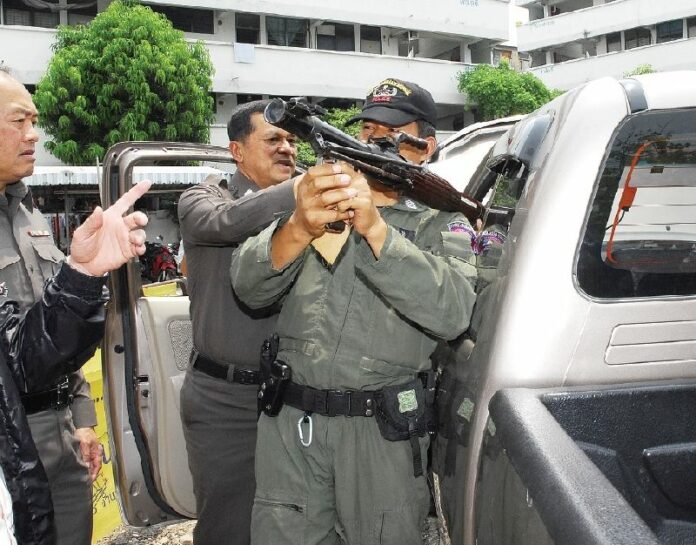
A police officer shoulders an unarmed RPG during a ballistic test at Ministry of Defense, 21 March 2010.

BANGKOK — A Democrat Party politician has demanded the Division of Special Investigation (DSI) launch a fresh investigation into a rocket attack near the Grand Palace in Bangkok in 2010.

The attack took place on the night of 20 March 2010, while tens of thousands of Redshirt demonstrators were occupying nearby Ratchadamnoen Avenue to demand the Democrat-led government call a new election.

Police say a rocket propelled grenade (RPG) was fired at the Temple of Emerald Buddha, a sacred site located in the same compound as the Grand Palace, but missed and slammed into an electric pole next to the Ministry of Defense instead. No one was injured in the attack. 

Bundit Sitthithum, a Redshirt supporter and former police officer, was arrested and accused of firing the rocket. He was found guilty and sentenced to 38 years in prison in December 2011, but later acquitted in a court of appeals, which cited insufficient evidence and contradictory testimony from witnesses.

Wachara Petchthong, a former Democrat Party MP, urged the DSI to re-open the case duing a press conference at the Democrat Party's headquarters in Bangkok today. Wachara also specifically criticized former DSI chief Tharit Pengdith for dropping charges against a police colonel who he believes was the mastermind of the attack. 

Wachara also asked the DSI to investigate Arisman Pongruangrong, a prominent Redshirt activist who urged Redshirt protesters in January 2010 to bring gasoline to the next mass rally in Bangkok. He also warned in the speech that if the military attempts to disperse the protests, Redshirts will turn the capital city "into a sea of fire." 

Five months after the speech, arson attacks broke out across Bangkok during the military crackdown on Redshirt protests on 19 May 2010. Democrat Party politicians have accused Arisman and other Redshirt leaders of engineering the attacks.  

Wachara said he will personally submit his demands to Gen. Paiboon Khumchaya, Minister of Justice, on 14 May.


For comments, or corrections to this article please contact: [email protected]

You can also find Khaosod English on Twitter and Facebook
http://twitter.com/KhaosodEnglish
http://www.facebook.com/KhaosodEnglish
Advertisement

Ball in Junta's Court After Charter Drafters Endorse Referendum

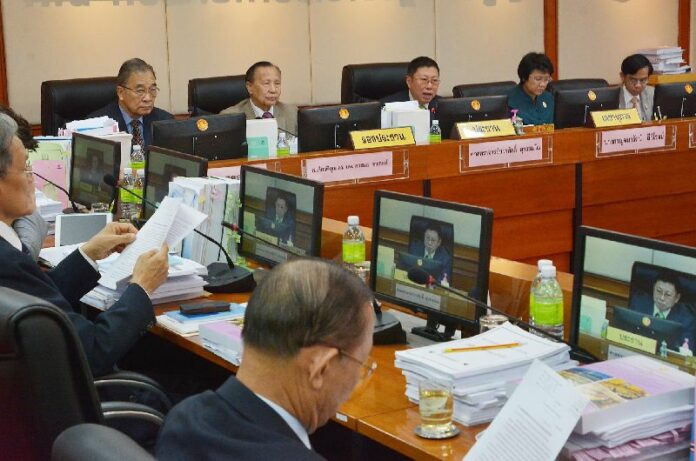
The Constitutional Drafting Committee (CDC) decided to endorse a referendum during a meeting on 13 May 2015.

BANGKOK — The Constitutional Drafting Committee (CDC) will formally ask the ruling military junta to organize a referendum on the new constitution, a spokesperson said.

The CDC, a body appointed by the junta to replace the charter dissolved after the May 2014 coup, reached a consensus on the question of a referendum after a two-hour meeting today, said Gen. Lertrat Rattanavanich.

\
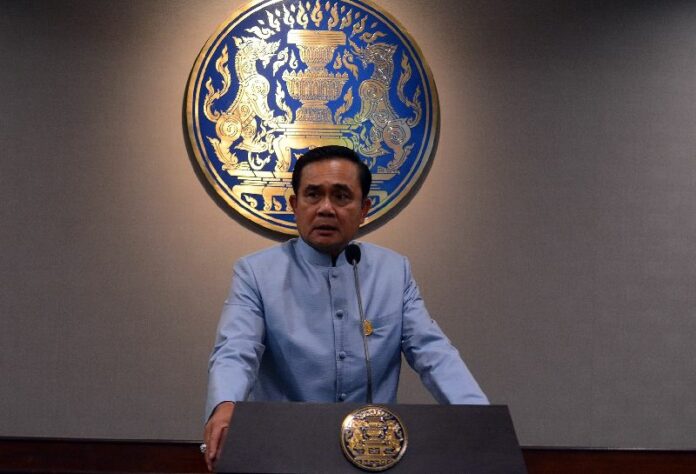
Junta chairman Gen. Prayuth Chan-ocha will have the final say on a referendum, 12 May 2015.

The committee will now submit its opinion to the junta and the Cabinet, both of which are led by coup leader Gen. Prayuth Chan-ocha, who will have the final say.  

According to Gen. Lertrat, the CDC agreed that as the highest body of law, the constitution requires "social consensus." Gen. Lertrat also noted that there was a referendum for the previous constitution, which was written after the 2006 coup. 

"In this [current] draft of the constitution, we focus on the participation of the citizens as our main principle," Lertrat told reporters. "Therefore, there should be a referendum."

Gen. Lertrat said the constitution will be considered legally "accepted" if more than half of the country’s eligible voters participate in the poll, and more than half the participants vote in favor of the charter. According to these conditions, at least 11.75 million people would need to approve the constitution for it to pass.

Other details about the format and options put forth in the referendum will be left to the junta to decide, Gen. Lertrat said.  

Asked whether he believes a referendum will derail the junta's "road map" to democracy, which calls for a national election in early 2016, Gen. Lertrat replied, "I don't think it will affect the road map, because some political parties said themselves that they can wait another year for an election."

Gen. Prayuth, who has neither endorsed nor ruled out a referendum, has expressed concern that the vote will push back the timeline for elections.

The junta’s charter draft has been widely condemned by pro-democracy activists and politicians on both sides of the aisle. Critics say the constitution cripples elected politicians with an uneven balance of power that favors appointed watchdog groups, whose members are historically allied with the traditional elite. The charter’s most controversial features include the establishment of a mostly-appointed Senate and the option for an unelected Prime Minister.

Some pro-democracy activists and politicians have proposed the junta organize a referendum that would allow voters to choose between the junta’s charter and the 1997 constitution, which was written by an elected assembly and is known as the “People’s Constitution” for its egalitarian nature.

Other activists in Thailand have campaigned for a referendum that would give Thais the chance to elect a fresh assembly of drafters to pen a new charter altogether.

In the referendum for the 2007 charter, which was also drafted by a junta-appointed council, voters were only permitted to accept or decline the document. Critics say that many voters reluctantly approved the junta’s charter out of fear that the undisclosed alternative would be worse.

Gen. Lertrat added that the CDC has also dismissed a suggestion by a member of the junta-appointed National Reform Council (NRC) that the junta to stay in power for two more years. 


For comments, or corrections to this article please contact: [email protected]

You can also find Khaosod English on Twitter and Facebook
http://twitter.com/KhaosodEnglish
http://www.facebook.com/KhaosodEnglish

Advertisement

Ball in Junta's Court After Charter Drafters Endorse Referendum

Thai junta chairman Gen. Prayuth Chan-ocha, who will have the final say on a referendum for the new charter.

BANGKOK — The Constitutional Drafting Committee (CDC) will formally ask the ruling military junta to organize a referendum on the new constitution, a spokesperson said.

The CDC, a body appointed by the junta to replace the charter dissolved after the May 2014 coup, reached a consensus on the question of a referendum after a two-hour meeting today, said Gen. Lertrat Rattanavanich.

\
The 
Constitutional Drafting Committee (CDC) decided to endorse a referendum during a meeting on 13 May 2015.

The committee will now submit its opinion to the junta and the Cabinet, both of which are led by coup leader Gen. Prayuth Chan-ocha, who will have the final say.  

According to Gen. Lertrat, the CDC agreed that as the highest body of law, the constitution requires "social consensus." Gen. Lertrat also noted that there was a referendum for the previous constitution, which was written after the 2006 coup. 

"In this [current] draft of the constitution, we focus on the participation of the citizens as our main principle," Lertrat told reporters. "Therefore, there should be a referendum."

Gen. Lertrat said the constitution will be considered legally "accepted" if more than half of the country’s eligible voters participate in the poll, and more than half the participants vote in favor of the charter. According to these conditions, at least 11.75 million people would need to approve the constitution for it to pass.

Other details about the format and options put forth in the referendum will be left to the junta to decide, Gen. Lertrat said.  

Asked whether he believes a referendum will derail the junta's "road map" to democracy, which calls for a national election in early 2016, Gen. Lertrat replied, "I don't think it will affect the road map, because some political parties said themselves that they can wait another year for an election."

Gen. Prayuth, who has neither endorsed nor ruled out a referendum, has expressed concern that the vote will push back the timeline for elections.

The junta’s charter draft has been widely condemned by pro-democracy activists and politicians on both sides of the aisle. Critics say the constitution cripples elected politicians with an uneven balance of power that favors appointed watchdog groups, whose members are historically allied with the traditional elite. The charter’s most controversial features include the establishment of a mostly-appointed Senate and the option for an unelected Prime Minister.

Some pro-democracy activists and politicians have proposed the junta organize a referendum that would allow voters to choose between the junta’s charter and the 1997 constitution, which was written by an elected assembly and is known as the “People’s Constitution” for its egalitarian nature.

Other activists in Thailand have campaigned for a referendum that would give Thais the chance to elect a fresh assembly of drafters to pen a new charter altogether.

In the referendum for the 2007 charter, which was also drafted by a junta-appointed council, voters were only permitted to accept or decline the document. Critics say that many voters reluctantly approved the junta’s charter out of fear that the undisclosed alternative would be worse.

Gen. Lertrat added that the CDC has also dismissed a suggestion by a member of the junta-appointed National Reform Council (NRC) that the junta to stay in power for two more years. 


For comments, or corrections to this article please contact: [email protected]

You can also find Khaosod English on Twitter and Facebook
http://twitter.com/KhaosodEnglish
http://www.facebook.com/KhaosodEnglish
Advertisement

Vietnamese Editor Charged for Publishing Reports About Corruption

Two Vietnamese street vendors chat in front of a magazine stand as they wait for costumers in a busy street in Ho Chi Minh City in Vietnam on Tuesday, 26 April 2005. A Vietnamese magazine editor was charged with crimes against the state for publishing articles accusing senior officials of corruption. EPA/MAST IRHAM

HANOI (DPA) — A Vietnamese magazine editor was charged with crimes against the state for publishing articles accusing senior officials of corruption, reports said Wednesday.

Kim Quoc Hoa was dismissed in March as editor-in-chief of Nguoi Cao Tuoi (The Elderly), accused of "abusing his freedoms and democratic rights in publishing articles that disseminated false information," Vietnamnet reported.

\
A man buys a newspaper at a newspaper stall in Hanoi, Vietnam, 05 October 2013. EPA/LUONG THAI LINH

The publication was also shut down and fined around 32,000 dollars.

Police searched Hoa's residence Tuesday. He was not detained ahead of his trial.

The publication had revealed several cases of graft including a former top anti-corruption official who allegedly amassed an illicit real estate portfolio worth more than 10 million dollars.

The Information Ministry said the articles "distorted the truth" and were "aimed at insulting and making false accusations against some organisations and individuals."

They also revealed "confidential information related to national security," it said.

Limited discussion of corruption is tolerated in Vietnam's official media, but authorities are sensitive to criticism from independent media and bloggers.

Hoa previously served in top positions at three Vietnamese newspapers before joining The Elderly in 2007.

The crackdown on media is expected to intensify as internal rivalries sharpen ahead of the Communist Party Congress in 2016.

An earlier report by the ministry said an inspection discovered several online articles between January 1, 2013 and October 30, 2014 that were offensive to organizations and individuals.

 
For comments, or corrections to this article please contact: [email protected]

You can also find Khaosod English on Twitter and Facebook
http://twitter.com/KhaosodEnglish
http://www.facebook.com/KhaosodEnglish

Advertisement

Hua Hin Man Arrested for Truck Covered in Monarchy Banners

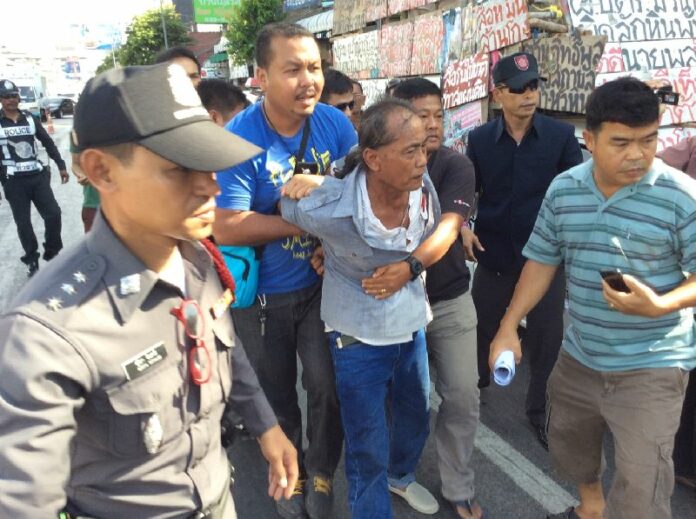
Khantichai Kampha, 63, arrested by police for driving a truck with controversial banners in Hua Hin, 13 May 2015.

PRACHUAP KIRI KHAN — Police have arrested a 63-year-old man who decorated his pick-up truck with dozens of wooden signs criticizing bureaucrats and calling on officials to follow "His Majesty the King's teachings."

Most of the rambling signs accuse bureaucrats of corruption, and urge them to follow the teachings of King Bhumibol, Thailand’s revered monarch. A sticker on the side of the car also demands authorities "return legal justice to Phra Thep," referring to Princess Sirindhorn, a daughter of His Majesty the King. Another sign condemned an unidentified "influence" trying to supersede the monarchy.

\
A car covered with signs criticizing local officials and urging them to follow the King's teachings, Hua Hin, 13 May 2015.

Police said they were forced to break into the truck and haul Khantichai Kampha out of his seat after he refused to get out of the vehicle in downtown Hua Hin.

Khantichai, a native of Petchburi province, refused to explain the signs, police said. He has been taken to Hua Hin Police Station for interrogation. Police said Khantichai was also distributing flyers with “inappropriate text,” prior to his arrest.

The flyers, portraits of the King and Queen, and a one-meter sword were found inside Khantichai's car.

The monarchy is a sensitive topic of conversation Thailand, where criticism of the Royal Family is punishable by up to 15 years in prison under the country's draconian lese majeste law. 

 
For comments, or corrections to this article please contact: [email protected]

You can also find Khaosod English on Twitter and Facebook
http://twitter.com/KhaosodEnglish
http://www.facebook.com/KhaosodEnglish

Advertisement

Thailand Calls Regional Meeting on Migrant Crisis

Migrants from Myanmar and Bangladesh at a police station in Kuah, Langkawi, Kedah, Malaysia, 11 May 2015. [DPA]

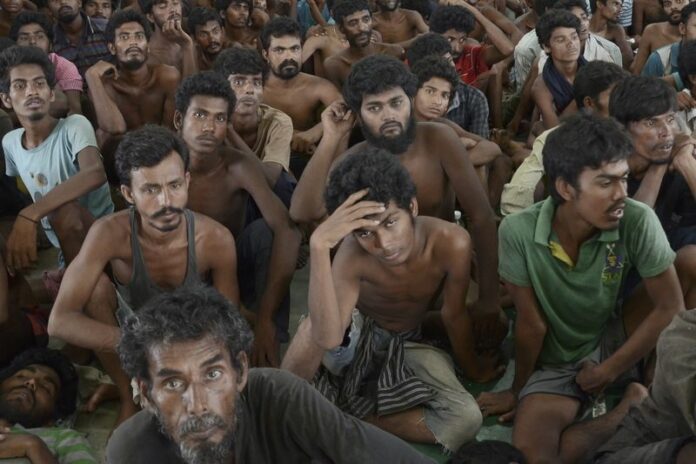
BANGKOK (DPA) — Thailand has called for a regional meeting to discuss the thousands of refugees, many from Myanmar's Rohingya minority, found on boats off several countries this week.

Senior officials from Myanmar, Bangladesh, Malaysia and Indonesia would participate in the May 29 meeting, the Bangkok Post reported, citing the Foreign Ministry.

More than 8,000 migrants were adrift off the coasts of Thailand, Malaysia and Indonesia, the International Organization for Migration (IOM) said Tuesday, posing a potential humanitarian crisis.

Most are thought to be members of Myanmar's ethnic Muslim Rohingya group, with many also from Bangladesh.

"The increasing complexity of the problem demands a multi-faceted approach," the statement was reported as saying. "Countries of origin, transit, and destination must work together to address the problem comprehensively."

Thai Prime Minister Prayuth Chan-ocha had called for a summit, but other countries had opted to send senior officials, the report said.

Representatives from Australia, Cambodia, Laos, the United States, Vietnam and others would also attend, and observers had been invited from the UN High Commission for Refugees, the UN Office on Drugs and Crime and the IOM, the ministry statement was reported as saying.

The IOM's Jeffrey Labovitz said Thailand's recent crackdown on illegal migrants had deterred people smugglers already in transit from landing, leaving thousands of migrants stranded at sea.

Thailand has charged several officials and moved dozens of police officers to inactive posts following the high-profile discovery of mass graves in the south of the country, thought to be of migrants.

Bangladeshis and Rohingyas from Myanmar often attempt to migrate through Thailand en route to the Muslim-majority nations of Malaysia and Indonesia. Many are held in camps in Thailand until their family pay ransom for their safe passage.

For comments, or corrections to this article please contact: [email protected]

You can also find Khaosod English on Twitter and Facebook
http://twitter.com/KhaosodEnglish
http://www.facebook.com/KhaosodEnglish

Advertisement

Vehicles Torched by Suspected Insurgents in Yala

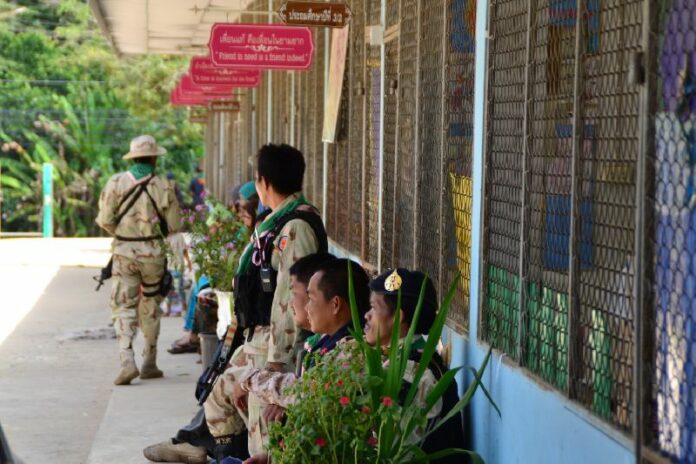
Security officers stationed at a school in Yala province to prevent insurgent attacks, 13 May 2015.

YALA — Police say Islamic separatists torched six motorcycles belonging to civilians in the southern border province of Yala last night.

The vehicles were burned across Than To district, where police also found what appeared to be fake explosives planted by the road. Police believe local insurgents organized the incidents as part of their campaign to cause "daily unrest" in the region.

\
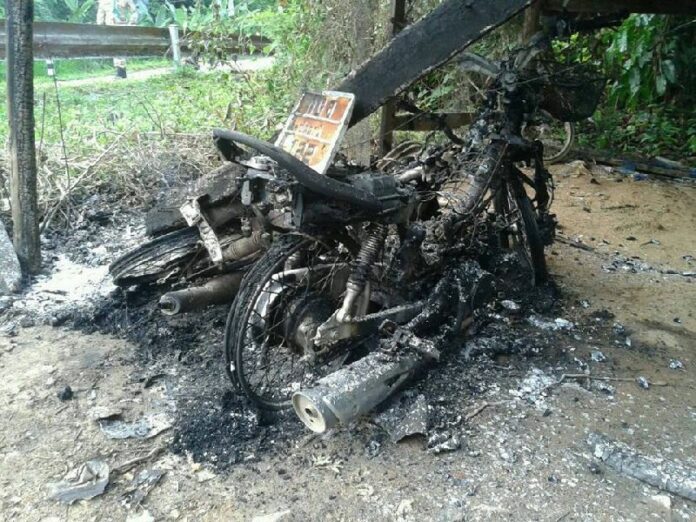
One of six motorcycles set on fire in Yala province on 12 May 2015.

The southern provinces of Yala, Narathiwat, and Pattani have been a hotbed of separatist violence for the past decade, with a shadowy network of insurgents staging near-daily attacks in an effort to secede the region and form a breakaway Islamic state.

Although most of the estimated 6,200 casualties have died in bombings and shootings staged by insurgent groups, Thai authorities have also been criticized for using excessive violence and violating human rights in their effort to combat the secessionist campaign.

Damrong Deesakul, chief officer of Betong district, said security officers have been instructed to increase patrols around public schools, which are opening this month.

Schools and public teachers in the region are regularly targeted by insurgents, presumably because they are viewed as instruments of the Buddhist state. Nearly 200 school teachers have been killed since 2004, and many now travel with a large convoy of bodyguards and soldiers.

Last October, six public schools in Pattani province were set on fire in a coordinated arson attack at night. The buildings were severely damaged, though no one was killed or injured. 

"Security officers, like armed village volunteer corps and rangers, and teachers and some parents will organize shifts to keep guard and maintain security around the school buildings," Damrong told reporters.  

Experts say the insurgency is mostly fueled by ethnic and religious differences. While the vast majority of Thailand is predominantly Buddhist, the Deep South is mostly populated by Malay Muslims who speak a distinct dialect and trace their ancestry back to the sultanate of Patani, which was annexed by Thailand in early 20th century.  

 
For comments, or corrections to this article please contact: [email protected]

You can also find Khaosod English on Twitter and Facebook
http://twitter.com/KhaosodEnglish
http://www.facebook.com/KhaosodEnglish
Advertisement

Vehicles Torched by Suspected Insurgents in Yala

One of six motorcycles set on fire in Yala province on 12 May 2015.

YALA — Police say Islamic separatists torched six motorcycles belonging to civilians in the southern border province of Yala last night.

The vehicles were burned across Than To district, where police also found what appeared to be fake explosives planted by the road. Police believe local insurgents organized the incidents as part of their campaign to cause "daily unrest" in the region.

\
Security officers stationed at a school in Yala province to prevent insurgent attacks, 13 May 2015.

The southern provinces of Yala, Narathiwat, and Pattani have been a hotbed of separatist violence for the past decade, with a shadowy network of insurgents staging near-daily attacks in an effort to secede the region and form a breakaway Islamic state.

Although most of the estimated 6,200 casualties have died in bombings and shootings staged by insurgent groups, Thai authorities have also been criticized for using excessive violence and violating human rights in their effort to combat the secessionist campaign.

Damrong Deesakul, chief officer of Betong district, said security officers have been instructed to increase patrols around public schools, which are opening this month.

Schools and public teachers in the region are regularly targeted by insurgents, presumably because they are viewed as instruments of the Buddhist state. Nearly 200 school teachers have been killed since 2004, and many now travel with a large convoy of bodyguards and soldiers.

Last October, six public schools in Pattani province were set on fire in a coordinated arson attack at night. The buildings were severely damaged, though no one was killed or injured. 

"Security officers, like armed village volunteer corps and rangers, and teachers and some parents will organize shifts to keep guard and maintain security around the school buildings," Damrong told reporters.  

Experts say the insurgency is mostly fueled by ethnic and religious differences. While the vast majority of Thailand is predominantly Buddhist, the Deep South is mostly populated by Malay Muslims who speak a distinct dialect and trace their ancestry back to the sultanate of Patani, which was annexed by Thailand in early 20th century.  

 
For comments, or corrections to this article please contact: [email protected]

You can also find Khaosod English on Twitter and Facebook
http://twitter.com/KhaosodEnglish
http://www.facebook.com/KhaosodEnglish

Advertisement

Royal Thai Navy Surveys Andaman for Rohingya

The navy vessel Tor993 on looking for boats of refugees in the Andaman sea, 12 May 2015 [The Phuket News]

(The Phuket News)

PHUKET – A team from the Phuket-based Royal Thai Navy (RTN) went on an aerial survey mission on 12 May looking for Rohingya detention camps. The mission came after reports of Rohingya camps located around the Andaman region.

"Two days ago we received a report about six Rohingya boats [in the Andaman area] so we sent out survey ships to look for them," said Capt Pongjak Uraiman, Commander of Naval Air Section.

"This morning we received a report from a survey ship stating there was an an empty boat which was suspected of being used to smuggle Rohingyas which had sunk 15 miles from the Similan Islands. We believe it was sunk by smugglers who wanted to hide the boat as it is evidence."

Read more here.

Note: Khaosod English is not responsible for content on other websites.

Advertisement

Thailand Calls Regional Meeting on Migrant Crisis

A Malaysian official marks an Rohinghya migrant in Kuah, on Langkawi island. More than 8,000 migrants were adrift off the coasts of Thailand, Malaysia and Indonesia, an IOM official said Tuesday, posing a potential humanitarian crisis for the region's governments. EPA/STR

BANGKOK (DPA) — Thailand has called for a regional meeting to discuss the thousands of refugees, many from Myanmar's Rohingya minority, found on boats off several countries this week.

Senior officials from Myanmar, Bangladesh, Malaysia and Indonesia would participate in the May 29 meeting, the Bangkok Post reported, citing the Foreign Ministry.

More than 8,000 migrants were adrift off the coasts of Thailand, Malaysia and Indonesia, the International Organization for Migration (IOM) said Tuesday, posing a potential humanitarian crisis.

Most are thought to be members of Myanmar's ethnic Muslim Rohingya group, with many also from Bangladesh.

"The increasing complexity of the problem demands a multi-faceted approach," the statement was reported as saying. "Countries of origin, transit, and destination must work together to address the problem comprehensively."

Thai Prime Minister Prayuth Chan-ocha had called for a summit, but other countries had opted to send senior officials, the report said.

Representatives from Australia, Cambodia, Laos, the United States, Vietnam and others would also attend, and observers had been invited from the UN High Commission for Refugees, the UN Office on Drugs and Crime and the IOM, the ministry statement was reported as saying.

The IOM's Jeffrey Labovitz said Thailand's recent crackdown on illegal migrants had deterred people smugglers already in transit from landing, leaving thousands of migrants stranded at sea.

Thailand has charged several officials and moved dozens of police officers to inactive posts following the high-profile discovery of mass graves in the south of the country, thought to be of migrants.

Bangladeshis and Rohingyas from Myanmar often attempt to migrate through Thailand en route to the Muslim-majority nations of Malaysia and Indonesia. Many are held in camps in Thailand until their family pay ransom for their safe passage.

For comments, or corrections to this article please contact: [email protected]

You can also find Khaosod English on Twitter and Facebook
http://twitter.com/KhaosodEnglish
http://www.facebook.com/KhaosodEnglish
Advertisement

Hot News

LATEST NEWS

Bangkok
broken clouds
32.2 ° C
36.6 °
32.2 °
69 %
5.3kmh
67 %
Wed
32 °
Thu
37 °
Fri
36 °
Sat
37 °
Sun
36 °