

























29.4 C
Bangkok
Friday, June 26, 2026
Home Blog Page 3015

Prayuth: Politicians Cannot Change Election Date

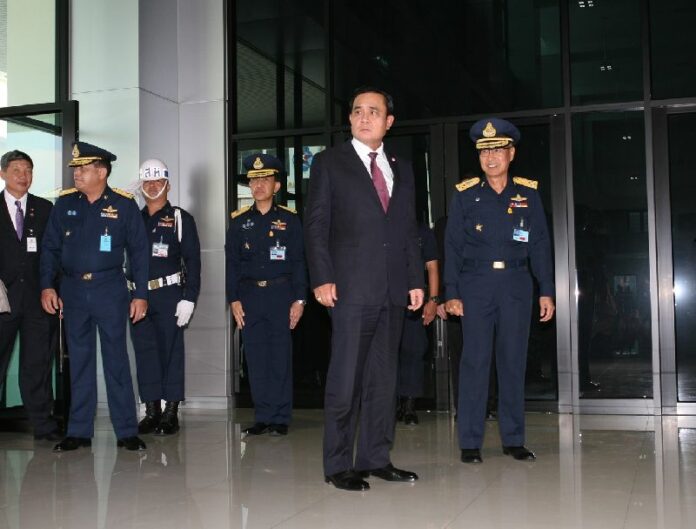
Gen. Prayuth Chan-ocha at the Air Force Base in Bangkok, 26 April 2015.

BANGKOK — Junta chairman and Prime Minister Prayuth Chan-ocha expressed resistance to postponing the election scheduled for early next year, citing the time frame outlined in the interim constitution.

Gen. Prayuth's remark came after politicians from across the political spectrum called for a delaying the poll in order to change what they see as a flawed charter, which was drafted by a junta-appointed council.

\
Gen. Prayuth Chan-ocha at the Air Force Base in Bangkok, 26 April 2015.

"Who said that? What power do politicians have to do that?" Gen. Prayuth quipped at a reporter who asked him to comment on the issue yesterday, "What does the Constitution say?"

Answering his own question, Prayuth continued, "The [interim] constitution has already been written … this is my road map. We have 60 days, 90 days, it has to be like that. If it can be different, find me a way. How can I amend that?"

According to the time frame outlined in the junta’s interim charter, the draft of the new constitution must be finished in early August. The junta has said it will promulgate the new charter – Thailand’s 20th – by 4 September and hold a new election 150 days afterwards, estimated to be in February 2016. 

The charter draft was written by the Constitution Drafting Committee (CDC), whose members were chosen by the junta last year. The draft is currently under deliberation by the National Reform Council (NRC), another junta-appointed body.

Last week, Jatuporn Prompan, leader of the Redshirt movement's official umbrella organization, called for postponing the election in order to address the new charter’s “undemocratic” nature, including a  clause that allows MPs to appoint an unelected Prime Minister, the establishment of an unelected Senate, and the establishment of powerful unelected "independent" agencies.

"Do not be afraid that a delayed election will damage the country," Jatuporn wrote on his official Facebook account. "Be afraid that a quick election under undemocratic rules will cause far more damages, in an unmatched way. We all wish to see a good, correct, and fair constitution, with rights and liberty that will lead to equality and fraternity that will take place in this society."

Other politicians from Thailand's both primary parties, Pheu Thai and Democrat, also urged postponing the election. 

In the press conference yesterday, Gen. Prayuth also spoke about other issues, including:

Media freedom

"The media has to write well. I will keep my eyes on what you write. You understand when I talk to you, but when you write, it turns out to be something different. I circle so many passages from newspapers when I am in the car. You are all geniuses. You suggest that I fix this issue and that issue. What kind of [professional] background do you have? I ask you. Those people who criticize me, have you ever done anything successful? Or you are only at good working for newspapers, since you were a baby, until you are old? You keep criticizing the government harshly. But this is a government that seized power. Don't criticize me like I'm a normal government. You cannot. We do everything for you. We fix everything. But you still criticize me. What the hell is matter with you? Am I being too kind? I don't know."

Decentralization

"Can [decentralization] be done? Today, we have decentralized a lot. We have PAOs [Provincial Administrative Organizations], we have SAOs [Subdistrict Administrative Organizations]. We have good ones and bad ones. Today, you may not want Governors, that's okay, but on that day, the country will be divided and there will be a war. Believe me, that will happen if you keep thinking like that. If you are ready, I'm fine with it. You may want something like the United States of America. But ask them how far apart each district, subdistrict, village, and state is to each other. It takes 5-6 hours on a plane ride. Is Thailand that far apart? Today we have DLA [Department of Local Administration], we have Municipal Offices. They are already good. It's just we need to improve their quality and rearrange works. What will people have? Where will be the budget come from? Today you say you want decentralization, but even without decentralization, things are a mess already. How far do you want it to be decentralized?"

The new background for his weekly TV show 

\
Gen. Prayuth used a new background for his weekly television show on 24 April 2015.

"I want to convey a message that forests are beautiful. Thailand should preserve its forests. Think, think! I want people to see that Thailand has beautiful forests, that we have an orderly society. Or do you want me to use something bad for the background? Do you want that?" 


For comments, or corrections to this article please contact: [email protected]

You can also find Khaosod English on Twitter and Facebook
http://twitter.com/KhaosodEnglish
http://www.facebook.com/KhaosodEnglish
Advertisement

Nepal Struggles to Help Injured, Homeless Amid Quake Rubble

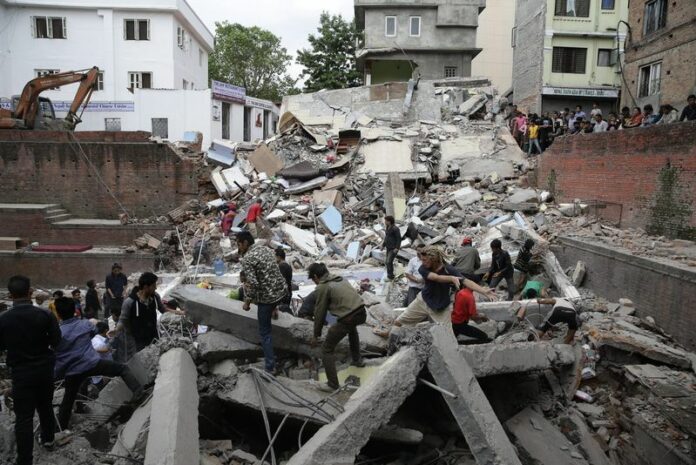
People search for survivors stuck under the rubble of a destroyed building, after an earthquake caused serious damage in Kathmandu, Nepal, April 25, 2015. A 7.9-magnitude earthquake rocked Nepal destroying buildings in Kathmandu and surrounding areas, with hundreds of casualties expected. The epicentre was 80 kilometres north-west of Kathmandu, according to the United States Geological Survey. Strong tremors were also felt in large areas of northern and eastern India and Bangladesh. EPA/NARENDRA SHRESTHA

KATHMANDU (DPA) — The death toll from the 7.8-magnitude earthquake at the weekend in Nepal was upped to 2,847, the Interior Ministry said Monday.

\

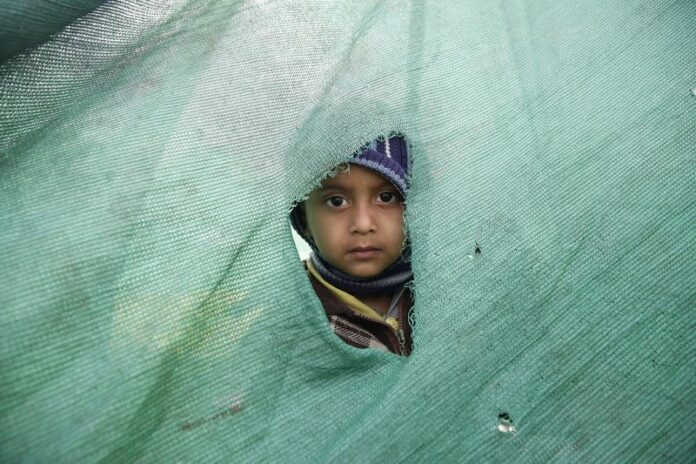
A child looks out of a hole in a temporary tent in Kathmandu after a powerful earthquake and aftershocks struck Nepal, in Kathmandu, Nepal, 27 April 2015. EPA/NARENDRA SHRESTHA

Around 6,238 people were injured in the quake that hit on Saturday, according to the government.

Communications Minister Minendra Rizal told people not to panic over rumours and to pay attention to safety.

Chief Secretary Lilamani Poudel asked all government employees and bodies to work on a "war footing" to help the injured and the displaced.

\
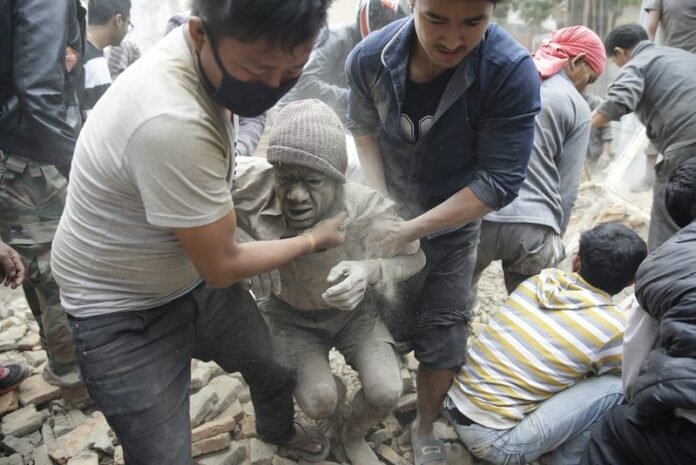
People try to free a man from the rubble of a destroyed building after an earthquake hit Nepal, Kathmandu, Nepal, April 25, 2015.​

The Tourism Ministry said it was also focusing on rescuing the foreigners trapped around the country.

"We rescued around 82 people from the Everest Base Camp yesterday," ministry secretary Suresh Man Shrestha said.

"There are 18 dead bodies on Mount Everest but we brought down only the wounded. Hopefully there will be no more casualties."

"We are also using smaller helicopters and those from the Indian army too for rescue. We are focused on the Everest region and on Gorkha, Dhading, Nuwakot and Sindupalchowk districts."

\
People search for survivors stuck under the rubble of a destroyed building, after an earthquake caused serious damage in Kathmandu, Nepal, April 25, 2015.

The Nepal Army has also deployed forces.

"We have mobilized 90 per cent of our resources," military official Jagdish Chandra Pokharel said. "We're working on a war footing and we request people to do what they can to help people around them."

Prime Minister Sushil Koirala arrived back in Nepal on Sunday after cutting short a visit to Indonesia.

Authorities were struggling with limited capacity to respond to the crisis, he said.

"But we are expecting more foreign help now and now need to work on cremating people, on sanitation, on clean drinking water."

Efforts were also under way to fix phone lines and restore power on Monday, he said.

Reporting by Pratibha Tuladhar


For comments, or corrections to this article please contact: [email protected]

You can also find Khaosod English on Twitter and Facebook
http://twitter.com/KhaosodEnglish
http://www.facebook.com/KhaosodEnglish

Advertisement

Nepal Cremates its Dead, Searches for Earthquake Survivors

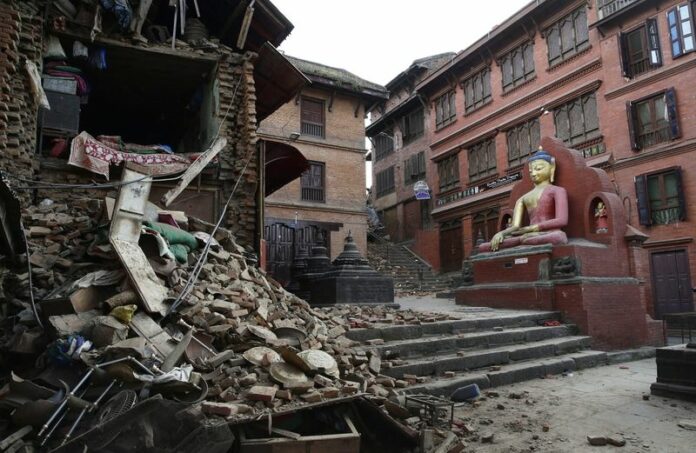
Syambhunaath Stupa, a heritage site in Kathmandu also known as monkey temple, has been severly damaged by Saturday's 7.8-magnitude earthquake. EPA/NARENDRA SHRESTHA

KATHMANDU (DPA) – Rescue workers in Nepal on Sunday searched through rubble for survivors as the death toll from the worst earthquake in more than 80 years reached 2,450 and new tremors sent people rushing outdoors.

Many people slept outside fearing aftershocks, which have forced some hospitals to treat the injured in the streets.

\
People try to free a man from the rubble of a destroyed building after an earthquake hit Nepal, Kathmandu, Nepal, April 25, 2015.​

A magnitude-6.7 aftershock, the strongest tremor after Saturday's magnitude-7.8 earthquake, sent people running for safety into the open streets and hampered rescue efforts that were starting to intensify as international rescue teams and relief aid arrived.

In the ancient city of Bhaktapur, a few kilometres south-east of Kathmandu, the dead were cremated by friends and relatives in open fields. Women wept as men brought stacks of hay and wood. Dead bodies lay on wooden slabs.

The earthquake, the worst to hit Nepal since a 1934 tremor in the Himalaya region killed 17,000 people, prompted avalanches on Mount Everest that killed 19 people. Many others are missing,

More avalanches were reported on Sunday following aftershocks.

Nepal's Interior Ministry said 2,352 had been killed, with most of the victims reported in the capital, Kathmandu. A further 50 have died in neighbouring India, while casualties have also been reported in China and Bangladesh.

Most of the deaths were caused by roof and wall collapses.

Some 6.6 million people live in areas affected by the earthquake, UN emergency aid spokesman Jens Laerke told dpa from Geneva. The worst-hit areas are in the Kathmandu valley.

With roads and communication lines destroyed, officials said the overall death toll in Nepal was expected to rise as reports came in from remote districts, where entire villages were said to have been reduced to rubble. More than 5,000 people have been injured.

"Every house is a pile of bricks and frames in our village," said a resident from Dharampur, a small town on the outskirts of Kathmandu, said.

In Kathmandu, relief workers were seen moving iron roofs and broken walls with their bare hands to reach people trapped in the debris.

Buildings and historic monuments had been reduced to piles of rubble, including in some of the country's most ancient districts such as Kathmandu's historic centre and the royal square in nearby Bhaktapur.

"We have been hearing that another 9-magnitude earthquake is going to hit," said Anuj Shrestha, who was camping with his two daughters and wife in an open space in Kathmandu.

According to Winfried Hanka, a seismologist at the German Geological Research Centre in Potsdam, near Berlin, more aftershocks should be expected.

"It will certainly continue like this for weeks or months and only slowly die down," Hanka told dpa.

In some villages, entire families were buried under the rubble of their homes, according to distress calls that people sent to local media.

"Help is not arriving. We are here in Sindupalchowk, Bhotang-2. Nine villages without food, and homeless," a woman identifying herself as Puja said.

The Nepalese government was scrambling to deal with the disaster.

Prime Minister Sushil Koirala said the country would overcome "these dark times, whatever the cost."

The Nepalese army said in a statement that 90 per cent of its personnel was taking part in rescue operation and providing security. The government has said it would award some 400 dollars to the family of each person killed in the earthquake.

The power supply has been cut indefinitely in many parts of the country due to damaged reservoirs feeding hydropower production. Water supplies have also been affected.

The Pashupati Area Development Trust, which oversees the biggest cremation ground in Nepal, said they were doing their best to manage.

In hospitals, doctors were running blood donation camps and working on "war footing."

"We don't know if there will be another quake, but what we do know is that we need to take steps now to take care of the people who were injured," said Ananta Shrestha, a physician at Kathmandu hospital.

"There are flies in places where we're treating the injured, people are living in groups and sharing limited resources, there are hygiene problems. If we do not take precaution now, we'll be facing an epidemic and that might kill more than the earthquake already has."

Rescue operations could be hampered by heavy rain, which is forecast to hit Nepal over the next two days.

Some 65 people injured in avalanches on Mount Everest were flown to Kathmandu, rescuers said. Santa Bir Lama, of the Nepal Mountaineering Association, told dpa that rescuers were trying to establish contact with 100 to 150 climbers. He refused to say they were missing.

In 1934, a magnitude-8.2 quake killed at least 10,000 in Nepal and a further 7,000 in Bihar.

A magnitude 6.7 tremor in 1988 killed 750 people.

Reporting by Pratibha Tuladhar


For comments, or corrections to this article please contact: [email protected]

You can also find Khaosod English on Twitter and Facebook
http://twitter.com/KhaosodEnglish
http://www.facebook.com/KhaosodEnglish

Advertisement

Nepal Struggles to Help Injured, Homeless Amid Quake Rubble

A child looks out of a hole in a temporary tent in Kathmandu after a powerful earthquake and aftershocks struck Nepal, in Kathmandu, Nepal, 27 April 2015. EPA/NARENDRA SHRESTHA

KATHMANDU (DPA) — The death toll from the 7.8-magnitude earthquake at the weekend in Nepal was upped to 2,847, the Interior Ministry said Monday.

\
A child looks out of a hole in a temporary tent in Kathmandu after a powerful earthquake and aftershocks struck Nepal, in Kathmandu, Nepal, 27 April 2015. EPA/NARENDRA SHRESTHA

Around 6,238 people were injured in the quake that hit on Saturday, according to the government.

Communications Minister Minendra Rizal told people not to panic over rumours and to pay attention to safety.

Chief Secretary Lilamani Poudel asked all government employees and bodies to work on a "war footing" to help the injured and the displaced.

\
People try to free a man from the rubble of a destroyed building after an earthquake hit Nepal, Kathmandu, Nepal, April 25, 2015.​

The Tourism Ministry said it was also focusing on rescuing the foreigners trapped around the country.

"We rescued around 82 people from the Everest Base Camp yesterday," ministry secretary Suresh Man Shrestha said.

"There are 18 dead bodies on Mount Everest but we brought down only the wounded. Hopefully there will be no more casualties."

"We are also using smaller helicopters and those from the Indian army too for rescue. We are focused on the Everest region and on Gorkha, Dhading, Nuwakot and Sindupalchowk districts."

\
People search for survivors stuck under the rubble of a destroyed building, after an earthquake caused serious damage in Kathmandu, Nepal, April 25, 2015.

The Nepal Army has also deployed forces.

"We have mobilized 90 per cent of our resources," military official Jagdish Chandra Pokharel said. "We're working on a war footing and we request people to do what they can to help people around them."

Prime Minister Sushil Koirala arrived back in Nepal on Sunday after cutting short a visit to Indonesia.

Authorities were struggling with limited capacity to respond to the crisis, he said.

"But we are expecting more foreign help now and now need to work on cremating people, on sanitation, on clean drinking water."

Efforts were also under way to fix phone lines and restore power on Monday, he said.

Reporting by Pratibha Tuladhar


For comments, or corrections to this article please contact: [email protected]

You can also find Khaosod English on Twitter and Facebook
http://twitter.com/KhaosodEnglish
http://www.facebook.com/KhaosodEnglish


Advertisement

Hundreds Dead in Nepal Earthquake

People free a man from the rubble of a destroyed building after an earthquake hit Nepal, in Kathmandu, Nepal, April 25, 2015.

KATHMANDU (DPA) — Hundreds of people died and many more were feared buried under rubble Saturday after a 7.9-magnitude earthquake devastated Nepal's capital and provoked a deadly avalanche on Mount Everest.

The earthquake hit at 0611 GMT, with its epicentre about 80 kilometres north-west of Kathmandu, according to the United States Geological Survey (USGS).

\
People try to free a man from the rubble of a destroyed building after an earthquake hit Nepal, Kathmandu, Nepal, April 25, 2015.​

A spokesman for the Nepalese Interior Ministry said the provisional death toll stood at around 700 by early evening.

The tremor was the worst to hit Nepal since 1934, when a similarly powerful quake killed 17,000 people, mostly in Kathmandu. Saturday's tremor was also felt in India, China, Pakistan and Bangladesh. Over 40 deaths were reported in those countries, with most of the casualties occurring in India's eastern Bihar state, which borders Nepal.

Most of the deaths were caused by building and wall collapses.

\
People search for survivors stuck under the rubble of a destroyed building, after an earthquake caused serious damage in Kathmandu, Nepal, April 25, 2015.

The ancient historic centre of Kathmandu was a picture of devastation, with roads cracked wide, buildings collapsed into rubble and panicked people standing on roads as a series of aftershocks followed the quake.

"There is devastation everywhere. I saw two people get hit by bits of a falling building and die in New Road," said Yogesh Sitaula as he walked through the city. "There are fallen buildings and walls all over. People are being treated on streets. Hospitals are crammed."

The city's international airport was briefly closed as a precaution, with flights diverted to airports in India.

No commercial flights were operating from the Kathmandu airport, but Indian aircraft with relief materials and rescue equipment were landing, India's Foreign Secretary S Jaishankar said.

The main earthquake was followed by 14 aftershocks ranging from 6.6 to 5 in magnitude.

Buildings in Durbar Square, a UNESCO World Heritage site in the centre of Kathmandu, were destroyed, leaving mounds of timber and rubble, Nepal's Kantipur television reported.

Television images showed scores of injured people being treated outside hospitals in the capital.

"I saw people who were very scared but also helping each other. A lot of people are feared buried under these old houses, some of them are 100 years old," Kathmandu-based journalist Kashish Shreshtha added.

"Kathmandu Durbar Square, a historic UNESCO heritage site, has turned into a rubble. All the temples are destroyed. There was a blood donation camp ongoing at one of the heritage sites. The building collapsed and it seems everyone is dead," Shreshtha added.

The earthquake also triggered avalanches on Mount Everest, a popular destination for climbers. At least eight people were killed in one such avalanche near the Everest base camp.

"The communication is not very good up there, and the toll could still go up," Gyanendra Shrestha, a tourism official, told dpa.

"We are not certain about the nationality of those killed. Several hundred climbers were in the base camp area."

Daniel Mazur, a climber, said on Twitter that the camp had been "severely damaged."

Nepal's Prime Minister Sushil Koirala cut short his trip to Bangkok and Jakarta, where he was due to attend a meeting of Asian and African leaders on Sunday.

Reporting by Prateebha Tuladhar

 
For comments, or corrections to this article please contact: [email protected]

You can also find Khaosod English on Twitter and Facebook
http://twitter.com/KhaosodEnglish
http://www.facebook.com/KhaosodEnglish
Advertisement

Thai Airline Apologizes for Insulting Phuket Heroines

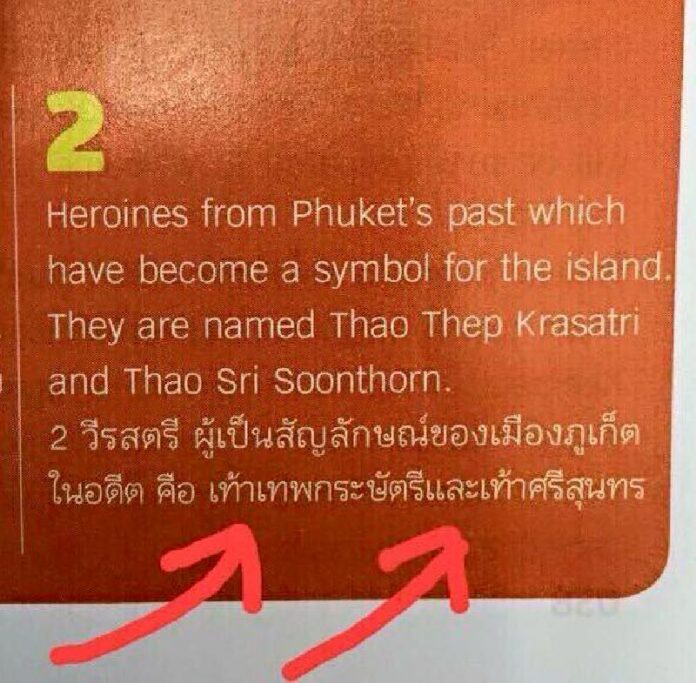
Screenshot of the misspellings in the Thai smile in-flight magazine.

PHUKET – A Thai airline has apologized for misspelling the names of two historical figures in its in-flight magazine, which was deemed offensive by some residents of Phuket province.

In the April issue of Thai Smile's magazine, the names of Thao Thep Kasattri and Thao Sri Sunthon, two warriors who led a local resistance against Burmese invaders in the 18th century, were misspelled to read "Feet of Thep Kasattri and Feet of Sri Sunthon." 

Feet, which are pronounced as “tao” in Thai, are considered offensive in Thai culture. 

\
Thai Smile representatives apologize to statues of the two warriors in Phuket province, 24 April 2015.

Photos of the misspellings quickly surfaced on the internet and were widely shared on social media, with some commentators taking offense at the error. Thai Smile is a low-cost airline that is owned and operated by Thai Airways, the national flag carrier of Thailand.

Kornthichart Wattanapat, secretary of the Phuket-based Thao Thep Kasattri and Thao Sri Sunthon Foundation, also issued a letter to Thai Smile headquarters demanding an apology.

"Your publication lacks careful [oversight] and misspelled the names of Thao Thep Kasattri and Thao Sri Sunthorn, as the attached document shows. Such action is deeply inappropriate," the letter said. 

Natenapang Teerawat, deputy chairperson of Thai Smile, and other representatives from the company also conducted a ceremony in front of the statues of Thao Thep Kasattri and Thao Sri Sunthon in Phuket province to apologize to the spirits of the two warriors. 

She told reporters that the magazine was the first issue to be produced solely for a Bangkok – Phuket flight, and admitted that there was a lack of editorial oversight. Natenapang said the content of the magazines was produced by a separate company contracted by the airline.

"I have to admit that we didn't carefully check the magazine, which led to the error," Natenapang told reporters, "But as soon as the errors were discovered, we took the matter seriously. We have ordered a recall of the magazines from the aircrafts." 

She added, "We are aware that the two heroines are respected and worshiped by the people of Phuket and Thailand. I insist that we never had the intention to insult or violate the two ladies. It was an error that took place without our intention." 

Suriya Krutpan, the author of the article who was also present at the ceremony, said he was working under a tight deadline. "This mistake will be a lesson of a life time for me," Suriya told Khaosod. 

According to local legend, Thao Thep Kasattri, the wife of Phuket's ruler, and her sister, Thao Sri Sunthon, rallied local residents to fight Burmese soldiers that landed on the island in 1785. After a five-week battle, the Burmese army retreated from Phuket, which state history attributes to the bravery of the two heroines. 

Many communities of Thailand are fiercely loyal to their local heroes and heroines – historical or mythical. 

In 1996, protests broke out in the northeastern province of Nakhon Ratchasima after Matichon Group published a book that suggested the tale of a local heroine's fight against Laotian invaders was largely fabricated. Matichon Group later withdrew the books from the market, while the author, historian Saipin Kaewngamprasert, had to move from her home in Nakhon Ratchasima following death threats. 


For comments, or corrections to this article please contact: [email protected]

You can also find Khaosod English on Twitter and Facebook
http://twitter.com/KhaosodEnglish
http://www.facebook.com/KhaosodEnglish
Advertisement

Bomb Attack in Deep South as Anniversary of Mosque Massacre Nears

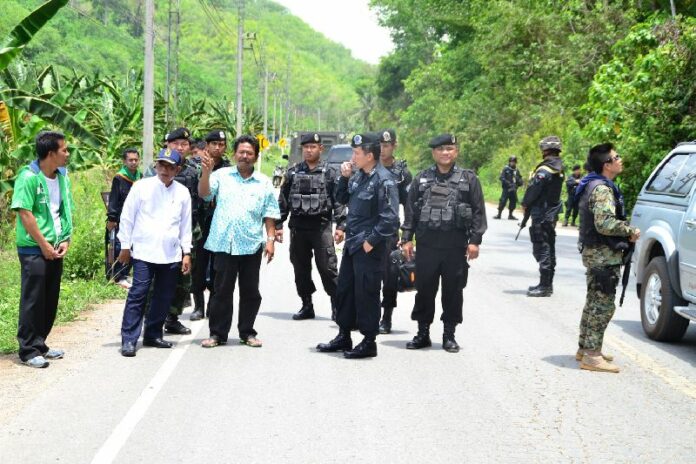
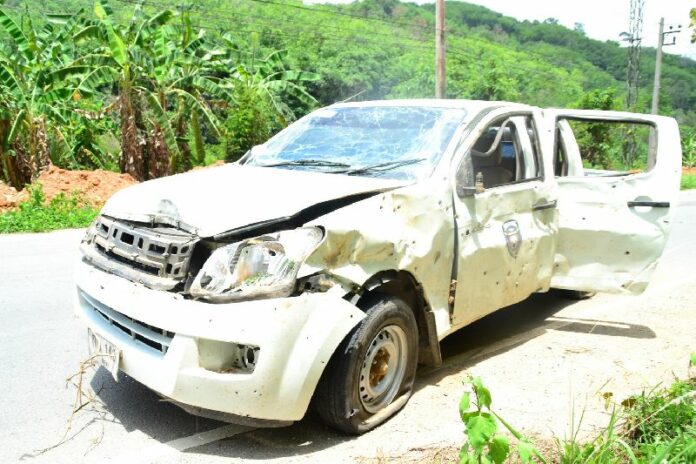
The military vehicle damaged by a roadside bomb in Yala province on 25 April 2015.

YALA — A bomb injured five security officers and a civilian in the southern border region of Thailand today, as security forces prepare for further attacks surrounding the 11th anniversary of a massacre at a local mosque.

Police say the roadside bomb exploded in Yala's Betong district at around 11.40 am. According to police, the 5-kilogram homemade explosive targeted a military patrol vehicle, wounding one police officer and four soldiers. An 18-year-old woman who happened to be riding a motorcycle near the site was also injured by the blast. 

\
Security officers inspect the site of a roadside bomb in Yala province, 25 April 2015.

Police officers found another unexploded IED on 410 Road in Yala province at around noon.

The attack came hours after the military command in Pattani, Yala, and Narathiwat – a region known the Deep South – issued an order to step up security measures in the region in anticipation of retaliatory attacks by insurgents marking the 11th anniversary of the Krue Sae mosque massacre. 

On the morning of 28 April 2004, scores of young militants armed with knives and wooden sticks stormed security checkpoints across the three southern border provinces in a coordinated attack. Although the better-armed security officers quickly put down the ambush, around 30 militants stole firearms from a police checkpoint and barricaded themselves in the historic Krue Sae mosque in Pattani province. 

Gen. Pallop Pinmanee, commander of a local army unit, eventually ordered troops to retake the mosque. The operation killed all 32 insurgents, and extensively damaged the 300-year-old mosque. 

It later emerged that Gen. Pallop's command contradicted with his superior commander's order to negotiate with the insurgents and find a peaceful end to the standoff. Gen. Pallop was then transferred from the Deep South region, although he retained a position in a counter-insurgency agency and no legal action was taken against him. 

More than 6,200 people are believed to have been killed by the secessionist campaign that broke out in 2004. Around 60,000 security officers are stationed in the region to combat the insurgency, which is aiming to revive the independent Islamic state of Patani that was annexed by Thailand in early 20th century. 

For comments, or corrections to this article please contact: [email protected]

You can also find Khaosod English on Twitter and Facebook
http://twitter.com/KhaosodEnglish
http://www.facebook.com/KhaosodEnglish
Advertisement

King's Power Untouched in New Charter, Drafter Assures

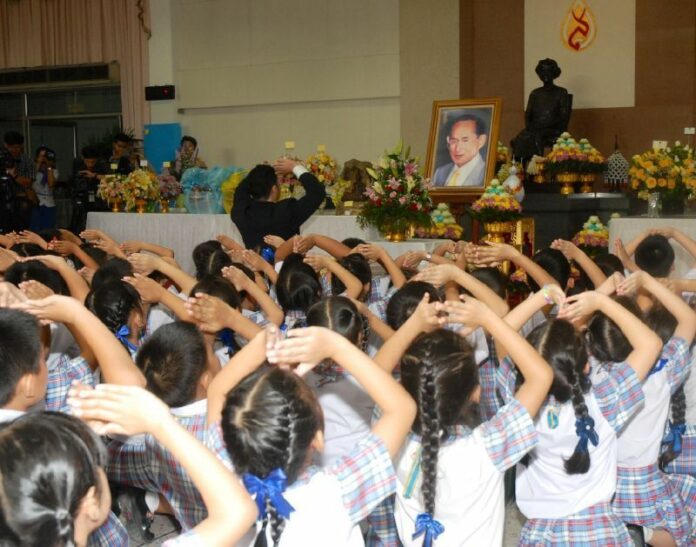
School children pay respect to a portrait of HM the King to wish him a speedy recover from his illnesses at Siriraj Hospital, 6 October 2014.

BANGKOK – The Thai king’s royal power will not be diminished in the new charter, the chairman of the junta-appointed constitution drafting committee (CDC) said today.

The CDC chairman was speaking in response to complaint filed by the royalist monk Buddha Issara, who expressed alarm over a clause in the charter draft that permits Parliament to pass legislation without the King's signature.

According to Section 157 of the current draft, the Parliament must submit legislation to His Majesty the King for a royal signature. However, if 90 days pass without a signature, Parliament can re-submit the bill to the king with support from two-thirds of the chamber. In the event that the King does not sign the bill in the next 30 days, the Prime Minister will be authorized to enact the bill as a law. 

Buddha Issara argued that the clause will allow politicians to limit the King's power without His Majesty's approval, and asked the CDC to remove the clause.

However, CDC chairman Bowornsak Uwanno, also known a staunch royalist, explained that Section 157 has been included in Thai constitutions since 1949, including the recent 2007 constitution that was dissolved by the military junta who seized power last May. 

The CDC chairman also insisted that it is extremely difficult for politicians to decrease the King’s power.

"To lessen royal powers, there needs to be a constitution amendment, which is very difficult to do," Bowornsak said. "It would need at least two-third votes of the Parliament, and there needs to be a referendum to ask the entire nation. I insist that this Section doesn't affect the royal power. In fact, it gives more power to the King than the British [constitutional monarchy] system."

Following a revolution that overthrew absolute monarchy in Thailand in 1932, the Thai king has been granted largely ceremonial powers through the constitution. However, he remains an influential figure who occasionally intervenes in politics, and is worshipped by many Thais as a demi-god. 

Buddha Issara was a core leader of the protest movement against the government toppled in the May 2014 coup, which urged His Majesty the King to unilaterally intervene and replace then-Prime Minister Yingluck Shinawatra with a royally-appointed leader. 

Following six months of deadly street protests, the military stepped in and overthrew the government 22 May 2014, citing a responsibility to restore public order and launch a national reform effort. 

The coup was endorsed by His Majesty the King several days later. 

Related coverge:
Thai King Leaves Hospital for River Viewing

 
For comments, or corrections to this article please contact: [email protected]

You can also find Khaosod English on Twitter and Facebook
http://twitter.com/KhaosodEnglish
http://www.facebook.com/KhaosodEnglish
Advertisement

Bomb Attack in Deep South as Anniversary of Mosque Massacre Nears

Security officers inspect the site of a roadside bomb in Yala province, 25 April 2015.

YALA — A bomb injured five security officers and a civilian in the southern border region of Thailand today, as security forces prepare for further attacks surrounding the 11th anniversary of a massacre at a local mosque.

Police say the roadside bomb exploded in Yala's Betong district at around 11.40 am. According to police, the 5-kilogram homemade explosive targeted a military patrol vehicle, wounding one police officer and four soldiers. An 18-year-old woman who happened to be riding a motorcycle near the site was also injured by the blast. 

\
The military vehicle damaged by a bomb in Yala province, 25 April 2015.

Police officers found another unexploded IED on 410 Road in Yala province at around noon.

The attack came hours after the military command in Pattani, Yala, and Narathiwat – a region known the Deep South – issued an order to step up security measures in the region in anticipation of retaliatory attacks by insurgents marking the 11th anniversary of the Krue Sae mosque massacre. 

On the morning of 28 April 2004, scores of young militants armed with knives and wooden sticks stormed security checkpoints across the three southern border provinces in a coordinated attack. Although the better-armed security officers quickly put down the ambush, around 30 militants stole firearms from a police checkpoint and barricaded themselves in the historic Krue Sae mosque in Pattani province. 

Gen. Pallop Pinmanee, commander of a local army unit, eventually ordered troops to retake the mosque. The operation killed all 32 insurgents, and extensively damaged the 300-year-old mosque. 

It later emerged that Gen. Pallop's command contradicted with his superior commander's order to negotiate with the insurgents and find a peaceful end to the standoff. Gen. Pallop was then transferred from the Deep South region, although he retained a position in a counter-insurgency agency and no legal action was taken against him. 

More than 6,200 people are believed to have been killed by the secessionist campaign that broke out in 2004. Around 60,000 security officers are stationed in the region to combat the insurgency, which is aiming to revive the independent Islamic state of Patani that was annexed by Thailand in early 20th century. 

For comments, or corrections to this article please contact: [email protected]

You can also find Khaosod English on Twitter and Facebook
http://twitter.com/KhaosodEnglish
http://www.facebook.com/KhaosodEnglish

Advertisement

Ex-Convict Arrested for Stealing From Russian Tourist

CHONBURI – A former convict pardoned earlier this month was arrested yesterday for robbing a foreign tourist in the resort town of Pattaya, police say.

The 24-year-old Russian woman notified police around 3am and said a Thai man stole her purse while she was sitting and drinking beer on Jomtien beach. 

Police officers later found a man who matched her description and was carrying cash and a mobile phone that belonged to the Russian tourist, Pol.Maj. Saranyapong Maithongkul said.

The suspect, identified as Narong Chanrasmi, said he approached the tourist, pretended to make a toast with her, and snatched her bag after she let her guard down. Narong, 21, also said he hired a motorcycle taxi to flee the scene and threw the purse away in Soi 1 after emptying its contents.

Narong was pardoned from serving a prison term for theft on the occasion of Her Royal Highness Princess Sirindhorn's 60th birthday, April 3 2015.  He said he has struggled to find work because of his prison record, and decided to steal from the tourist to make ends meet.

Pattaya, a coastal resort town east of Bangkok, is notorious for its red light district and high crime rate.

Several hours prior to the incident, police also received a report that a Thai man attempted to steal a purse from a Chinese tourist in North Pattaya. According to police, the man approached the victim on a motorcycle, kicked her down, and tried to steal her bag, but the tourist shouted for help and fought him off. The suspect reportedly fled the scene when several bystanders ran to help the tourist. 


For comments, or corrections to this article please contact: [email protected]

You can also find Khaosod English on Twitter and Facebook
http://twitter.com/KhaosodEnglish
http://www.facebook.com/KhaosodEnglish
Advertisement

Hot News

LATEST NEWS

Bangkok
broken clouds
29.4 ° C
32.2 °
29.4 °
74 %
5.4kmh
58 %
Fri
29 °
Sat
36 °
Sun
37 °
Mon
37 °
Tue
32 °