30 C
Bangkok
Saturday, June 27, 2026
Home Blog Page 3030

Thailand's Military Junta Pledges Elections in Early 2016

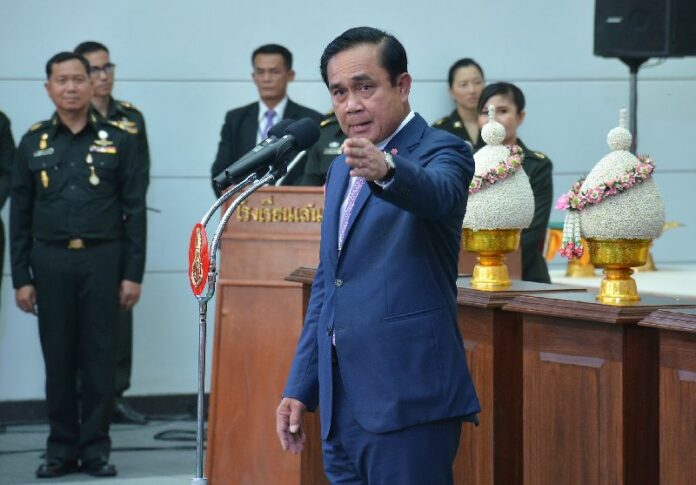
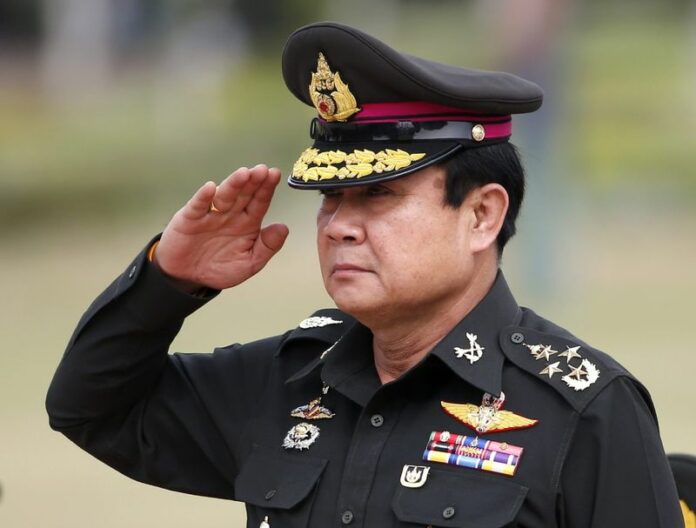
File photo of Thai junta leader Gen. Prayuth Chan-ocha.

BANGKOK (DPA) — Thailand's military government is keeping to a schedule that includes elections in early 2016, an official said Tuesday.

"We are committed to the roadmap where elections would happen after the new constitution is put in place," junta spokesman Colonel Winthai Suvaree said.

He said the constitution is due to be completed later this year.

Winthai refused to comment on statements made by other government officials that the junta could remain in power longer if necessary.

Those statements came after Prime Minister Prayuth Chan-ocha reportedly visited a famous astrologer who said he should stay in power for three more years.

Prayuth led a military coup in May after several months of political street violence.


Advertisement

4 Southern Men Killed By Soldiers Innocent, Inquiry Reveals

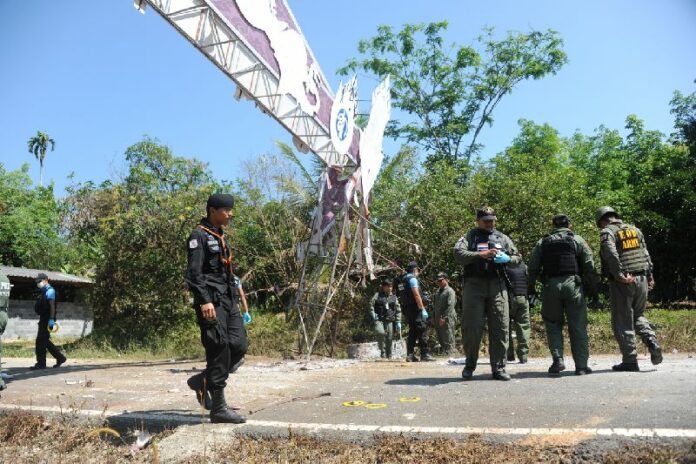
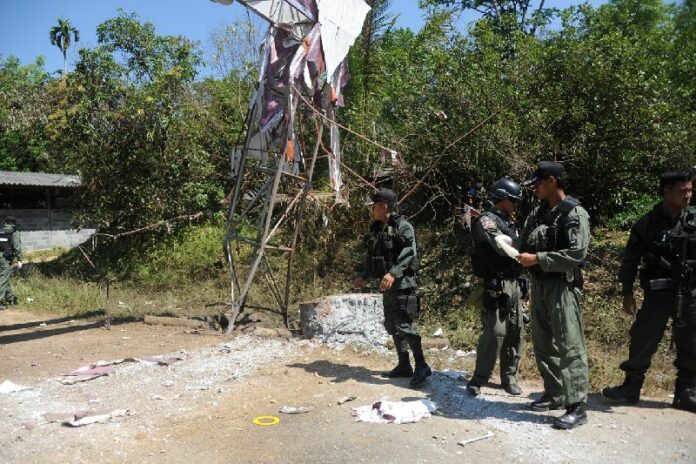
Security officers inspect site of a roadside bomb attack in Narathiwat province, 4 April 2015​

PATTANI — The four men shot dead by soldiers during a raid in the restive province of Pattani last month had no links to the local Islamic insurgency, an investigative committee ruled in a report released today.

The four men, in their early twenties and thirties, were killed when security officers raided To Chud village on 25 March. The military said the operation was an effort to arrest local Islamic separatists, and initially identified the victims as members of a militant group that regularly stages attacks in the region. 

\
Security officers inspect site of a roadside bomb attack in Narathiwat province, 4 April 2015​

However, community leaders and relatives of the four men disputed the military's accusations, prompting authorities to form a 15-member panel to investigate the raid. The panel's members included local administrators, human rights officials, military officers, representatives from the Central Islamic Committee of Thailand, and officials from Fatoni University, where two of the victims were enrolled as students. 

Waedueramae Mamingi, director of Pattani's Central Islamic Committee and chairman of the panel, said today that the four men did not have any links to the insurgency. 

"The committee concludes that the four deceased were not extremists, and were not members of any extremist group," said Waedueramae Mamingi, director of Pattani's Central Islamic Committee and chairman of the panel. "Some of them were previously arrested, but only for drug charges."

The military told the media that officers only began shooting after they encountered gun fire from the suspects, who they believed were gathering in the village to plot new attacks in the region. After the raid, officers detained twenty-two other men and confiscated three assault rifles they said were found near bodies of the victims. 

However, Waedueramae said the panel’s findings raised serious doubts about whether anyone in the village exchanged gunfire with the security officers during the raid.

According to the committee, the security officers surrounded the village at around 5 pm, which prompted four men to run and hide in a rubber farm behind the village. The security officers chased after them, and gunfire was later heard from the direction of the farm. Afterwards, the four men were found dead, Waedueramae told reporters. 

"There was no clear evidence that linked the deceased with the firearms. We also have skepticism about some other aspects [of the raid]," Waedueramae said, citing forensic test results. He added that witnesses and security officers also said they did not see the four men carrying any firearms while they ran to the rubber farm. 

"Therefore, the committee believes that the confiscated firearms did not belong to the deceased," he said.

Nevertheless, Waedueramae said the committee did not dispute the legality of the raid, because the security officers were acting on an intelligence report, and had the right to search properties without warrants under martial law, which had been imposed over Pattani and its neighboring provinces for the last nine years.

The committee recommended prosecuting officers involved in the raid for the botched operation, financially compensating the families of the victims, and allowing community leaders to observe military raids in the areas they oversee, for the sake of transparency. 

According to police, seven soldiers will be charged with premeditated murder over the killings. A senior police officer told Khaosod yesterday that the soldiers will report to hear the charges "in mid-April." The group failed to report for their first summons to Thung Yang Daeng Police Station last week. 

Lt.Gen. Prakarn Chollayuth, the army commander who oversees Pattani and its neighboring provinces, said he accepted the panel's findings and apologized to the families of the victims. 

"Today, every side must join hands and overcome the crisis of what has happened at To Chud village, so that things will return to normalcy under the laws and human rights principles. I humbly accept the verdict that the committee read to the press today," Lt.Gen. Prakarn said. "As for what happened, I apologize to all sides." 

He promised that the army will respect legal procedures, but added that "fairness must be granted to the security officers. We have to give time for them to prove themselves. We must also understand that security officers who work under these conditions may be frightened at times, which can affect their decision-making." 

More than 6,200 people have been killed since secessionist violence broke out in the three southern border provinces of Pattani, Yala, and Narathiwat in early 2004, according to data compiled by rights groups. 

Approximately 60,000 security officers are stationed in the region, known as the Deep South, to combat insurgents seeking to revive the independent sultanate of Patani, which was incorporated into modern-day Thailand in the early 20th century.  

Although suspected insurgent attacks are responsible for the majority of casualties, human rights activists have also documented cases of excessive brutality and foul play by security officers in the region. 

In January 2012, security officers shot dead four local men near a checkpoint in Pattani and identified them as insurgents. An independent investigation later reveals that the four men were unarmed civilians unrelated to the insurgency. 

More recently, in August 2014 a volunteer ranger admitted to killing a local 14-year-old boy and planting a firearm on his body to implicate him as an insurgent.

Related coverage:
Bomb Attacks in Deep South Amid Inquiry into Deadly Raid


For comments, or corrections to this article please contact: [email protected]

You can also find Khaosod English on Twitter and Facebook
http://twitter.com/KhaosodEnglish
http://www.facebook.com/KhaosodEnglish

Advertisement

4 Southern Men Killed By Soldiers Innocent, Inquiry Reveals

Security officers inspect site of a roadside bomb attack in Narathiwat province, 4 April 2015

PATTANI — The four men shot dead by soldiers during a raid in the restive province of Pattani last month had no links to the local Islamic insurgency, an investigative committee ruled in a report released today.

The four men, in their early twenties and thirties, were killed when security officers raided To Chud village on 25 March. The military said the operation was an effort to arrest local Islamic separatists, and initially identified the victims as members of a militant group that regularly stages attacks in the region. 

However, community leaders and relatives of the four men disputed the military's accusations, prompting authorities to form a 15-member panel to investigate the raid. The panel's members included local administrators, human rights officials, military officers, representatives from the Central Islamic Committee of Thailand, and officials from Fatoni University, where two of the victims were enrolled as students. 

Waedueramae Mamingi, director of Pattani's Central Islamic Committee and chairman of the panel, said today that the four men did not have any links to the insurgency. 

"The committee concludes that the four deceased were not extremists, and were not members of any extremist group," said Waedueramae Mamingi, director of Pattani's Central Islamic Committee and chairman of the panel. "Some of them were previously arrested, but only for drug charges."

The military told the media that officers only began shooting after they encountered gun fire from the suspects, who they believed were gathering in the village to plot new attacks in the region. After the raid, officers detained twenty-two other men and confiscated three assault rifles they said were found near bodies of the victims. 

However, Waedueramae said the panel’s findings revealed serious doubts about whether anyone exchanged gunfire with the security officers during the raid.

According to the committee, the security officers surrounded the village at around 5 pm, which prompted four men to run and hide in a rubber farm behind the village. The security officers chased after them, and gunfire was later heard from the direction of the farm. Afterwards, the four men were found dead, Waedueramae told reporters. 

"There was no clear evidence that linked the deceased with the firearms. We also have skepticism about some other aspects [of the raid]," Waedueramae said, citing forensic test results. He added that witnesses and security officers also said they did not see the four men carrying any firearms while they ran to the rubber farm. 

"Therefore, the committee believes that the confiscated firearms did not belong to the deceased," he said.

Nevertheless, Waedueramae said the committee did not dispute the legality of the raid, because the security officers were acting on an intelligence report, and had the right to search properties without warrants under martial law, which had been imposed over Pattani and its neighboring provinces for the last nine years.

The committee recommended prosecuting officers involved in the raid for the botched operation, financially compensating the families of the victims, and allowing community leaders to observe military raids in the areas they oversee, for the sake of transparency. 

According to police, seven soldiers will be charged with premeditated murder over the killings. A senior police officer told Khaosod yesterday that the soldiers will report to hear the charges "in mid-April." The group failed to report for their first summons to Thung Yang Daeng Police Station last week. 

Lt.Gen. Prakarn Chollayuth, the army commander who oversees Pattani and its neighboring provinces, said he accepted the panel's findings and apologized to the families of the victims. 

"Today, every side must join hands and overcome the crisis of what has happened at To Chud village, so that things will return to normalcy under the laws and human rights principles. I humbly accept the verdict that the committee read to the press today," Lt.Gen. Prakarn said. "As for what happened, I apologize to all sides." 

\
Security officers inspect site of a roadside bomb attack in Narathiwat province, 4 April 2015​

He promised that the army will respect legal procedures, but added that "fairness must be granted to the security officers. We have to give time for them to prove themselves. We must also understand that security officers who work under these conditions may be frightened at times, which can affect their decision-making." 

More than 6,200 people have been killed since secessionist violence broke out in the three southern border provinces of Pattani, Yala, and Narathiwat in early 2004, according to data compiled by rights groups. 

Approximately 60,000 security officers are stationed in the region, known as the Deep South, to combat insurgents seeking to revive the independent sultanate of Patani, which was incorporated into modern-day Thailand in the early 20th century.  

Although suspected insurgent attacks are responsible for the majority of casualties, human rights activists have also documented cases of excessive brutality and foul play by security officers in the region. 

In January 2012, security officers shot dead four local men near a checkpoint in Pattani and identified them as insurgents. An independent investigation later reveals that the four men were unarmed civilians unrelated to the insurgency. 

More recently, in August 2014 a volunteer ranger admitted to killing a local 14-year-old boy and planting a firearm on his body to implicate him as an insurgent.

Related coverage:
Bomb Attacks in Deep South Amid Inquiry into Deadly Raid


For comments, or corrections to this article please contact: [email protected]

You can also find Khaosod English on Twitter and Facebook
http://twitter.com/KhaosodEnglish
http://www.facebook.com/KhaosodEnglish

Advertisement

Thailand's Military Junta Pledges Elections in Early 2016

Thai Army General Prayuth Chan-ocha, now the country's prime minister, salutes during a military commemoration ceremony in Chonburi province, Thailand, 21 August 2014. Thailand's military government is keeping to a schedule that includes elections in early 2016, an official said Tuesday. EPA/RUNGROJ YONGRIT
BANGKOK (DPA) — Thailand's military government is keeping to a schedule that includes elections in early 2016, an official said Tuesday.

"We are committed to the roadmap where elections would happen after the new constitution is put in place," junta spokesman Colonel Winthai Suvaree said.
He said the constitution is due to be completed later this year.

Winthai refused to comment on statements made by other government officials that the junta could remain in power longer if necessary.

Those statements came after Prime Minister Prayuth Chan-ocha reportedly visited a famous astrologer who said he should stay in power for three more years.

Prayuth led a military coup in May after several months of political street violence.


Advertisement

Malaysia Passes Tough New Anti-Terrorism Law

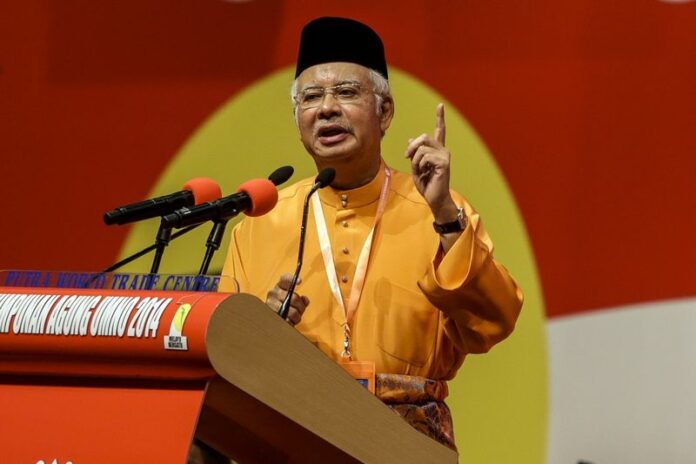
Malaysian Prime Minister Najib Razak speaks during the opening ceremony of the ruling party UMNO's 68th General Assembly in Kuala Lumpur, Malaysia, 27 November 2014. Malaysia's parliament passes a tough anti-terrorism law that will allow police to detain suspects without trial for up to two years. EPA/AZHAR RAHIM

KUALA LUMPUR (DPA) – Malaysia's parliament on Tuesday passed a tough anti-terrorism law that will allow police to detain suspects without trial for up to two years, state media reported.

The Prevention of Terrorism Bill was passed before dawn after 12 hours of intense debate and amid objections from opposition legislators who expressed fears the new law would be used against critics and opponents of the government, Bernama news agency reported.

Seventy-nine legislators voted in favour of the bill without amendments, while 60 disagreed, Bernama added.

Home Minister Ahmad Zahid Hamidi said the new law should be seen in light of the government's efforts to address the growing domestic threat of extremism linked to groups such as the Islamic State.

During the final hour of debate, Ahmad Zahid gave parliament details about a group of 17 Malaysians arrested over the weekend who were suspected of planning attacks in Kuala Lumpur.

The group was planning to attack police and army camps, and to kidnap several high-profile individuals, he was quoted as telling the parliament.

Among the 17 detained were two soldiers, two students, one security guard and two electricians, as well as two who returned from Syria.

Phil Robertson, a deputy director of the New York-based Human Rights Watch, described the passage of the anti-terrorism law as "a giant step backwards for human rights in Malaysia."

"By stripping accused persons of the right to trial in a court, access to legal counsel, and other legal protections if they are accused under the very broad provisions of this law, the government is continuing its slide into rights-abusing rule," he said in a statement.

At least 63 Malaysian citizens are estimated to have gone to Syria and Iraq to fight alongside Islamic State militants and dozens more have been charged in court since last year for attempting to join the militants.

 
Advertisement

Britain's Prince Harry in Australia for Army Secondment

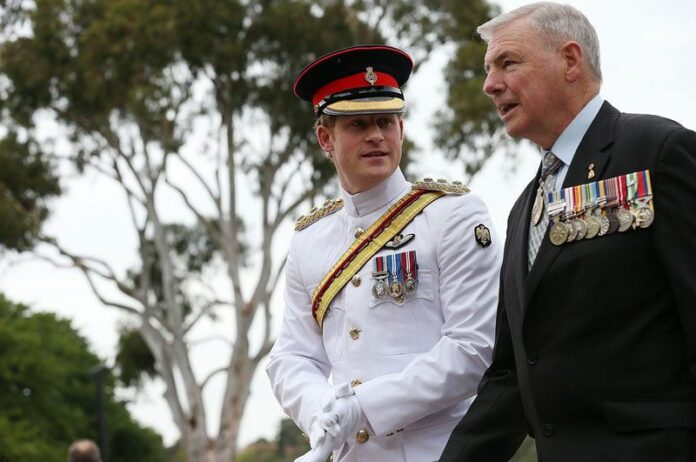
Britains's Prince Harry (L) is taken into the Australian War Memorial by Chairman of the Council of the War Memorial Ken Doolan in Canberra, Australia, 06 April 2015. Harry laid a wreath at the war memorial at the start of a four-week secondment with the armed forces. EP

SYDNEY (DPA) – Britain's Prince Harry laid a wreath at a war memorial in Australia's capital Canberra on Monday at the start of a four-week secondment with the armed forces.

Harry arrived in Sydney and flew to Canberra, where he visited the Tomb of the Unknown Soldier and toured the War Memorial, broadcaster ABC said.

A crowd of hundreds greeted the prince in the capital, the report said.

Harry was due later Monday to meet Defence Force chief Mark Binskin to report for duty. 

The army last week said Captain Harry Wales will embed with a number of units and regiments in Sydney, Darwin and Perth for "a challenging programme" that includes urban and field training exercises and domestic deployments.  

The second son of Prince Charles and the late Princess Diana is due to conclude a 10-year career in the British military in June.

Harry is expected to visit New Zealand after his Australian attachment. 

Advertisement

Thousands Attend Anti-Islam Rallies and Counter Rallies in Australia

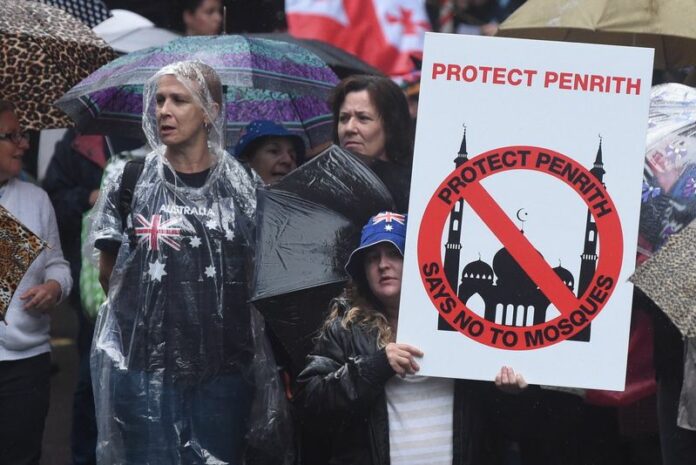
Protesters supporting the 'Reclaim Australia' group hold anti-Muslim placards during a protest rally in Sydney, Australia, 04 April 2015. EPA/MICK TSIKAS AUSTRALIA AND NEW ZEALAND OUT

SYDNEY (DPA) — Rallies across Australia staged by a group that says it opposes radical Islam drew thousands of supporters and anti-racism demonstrators Saturday, media reports said.

The Reclaim Australia group spoke out against Islamist extremism, sharia law, halal certification and the burqa at 16 rallies in cities and towns, broadcaster ABC said.

On its Facebook page, the group says: "We as patriotic australians need to stand together to stop halal tax, sharia law & islamisation."

Socialist groups, trade unions and several representing Muslims and indigenous Australians staged counter-rallies.

"We're not against any particular race or any particular religion," John Oliver of Reclaim Australia was quoted as saying in the report.

"We're against the extremists of one particular religion."

One of the organizers of an anti-racist rally, Mel Gregson, accused Reclaim Australia of spreading "conspiracy theories". 

He said the group linked halal food with the militant Islamic State group fighting in the Middle East.

"It's basically implicating good Muslim people in the political movements of a tiny minority," Gregson was quoted as saying.

ABC said Pauline Hanson, the former leader of the right-wing One Nation party addressed a crowd in Brisbane.

"I'm not a racist – criticism is not racism. I am a proud Australian fighting for our democracy, culture, and way of life," she was quoted as saying.

Hanson made international headlines in the late 1990s with an election campaign that was widely regarded as xenophobic.  

(Reporting by Benita van Eyssen, dpa)

 
Advertisement

Human Rights Official Visits Terror Suspects Allegedly Tortured by Soldiers

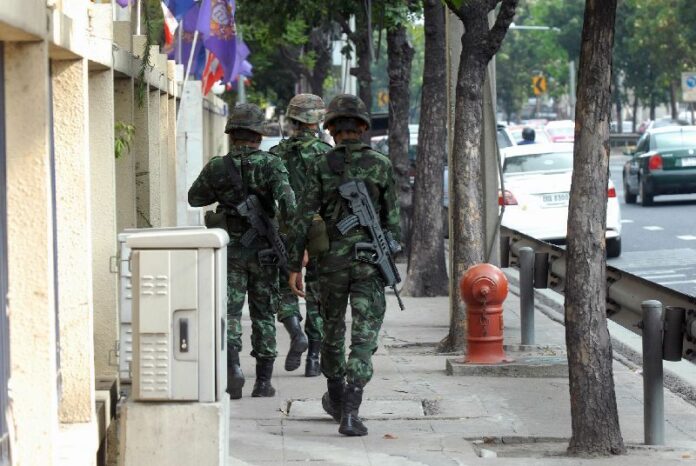
Soldiers patrol the Criminal Court in Bangkok on 16 March 2015.

BANGKOK – The director of Thailand's National Human Rights Commission (NHRC) says he visited two of the four men who were allegedly tortured by soldiers during their detention at an army camp last month.

The four men, who are currently awaiting trial for terrorism charges at Bangkok Remand Prison, told their lawyers they were beaten by military officers who detained them at an army barrack for six days before transferring them to police in March. 

NHRC chairman Niran Pitakwatchara said he was accompanied by experts from the Forensic Science Institute yesterday who examined the two prisoners. 

Niran said one of the suspects displayed wounds that appear to have been caused by electrocution, but the official stressed that further investigation is needed. 

"We are waiting for examination results from the Forensic Science Institute, which will be sent to a subcommittee of the NHRC for further deliberation," Niran said. 

One of the suspects, Sansern Sri-unruen, told his lawyer last month that soldiers applied electric shocks to his thighs "30-40 times" because he refused to confess to terror charges. 

The NHRC chairman was previously barred from visiting the four suspects in prison on 25 March. Prison wardens turned Niran away because they said the visit had not been authorized by the director of the prison. 

The four men, Sansern Sri-unruen, Charnvit Jariyanukul, Norapat Luepol, and Wichai Yoosuk, have been accused of participating in a terror plot to "creat chaos" and incite an intervention from the United Nations by staging bomb attacks around Bangkok. 

Police say the network was also responsible for the grenade attack at the Criminal Court on the night 7 March. No one was injured in the explosion, which caused minor damages to the court’s parking lot.

At least 17 arrest warrants have been issued in connection with the case so far.

All arrested suspects have been detained at army camps for up to seven days of interrogation prior to hearing their charges. They are now facing trial in martial court.

According to Niran, the two suspects he met in prison yesterday said they were only tortured under military custody, and not by police officers or prison wardens. 

"The subcommittee will invite representatives of the military to testify about the case. We expect that it will take place after Songkran festival," said Niran, referring to the traditional Thai New Year holiday on 13-15 April. 

If it is established that the four suspects were tortured by the military, Niran said the NHRC will inform the police and urge them to prosecute the officers who committed the wrongdoing. 

Related coverage:
Martial Court Denies Alleged Torture Victim Bail
Army Chief Threatens Legal Action Over Torture Allegation


For comments, or corrections to this article please contact: [email protected]

You can also find Khaosod English on Twitter and Facebook
http://twitter.com/KhaosodEnglish
http://www.facebook.com/KhaosodEnglish

Advertisement

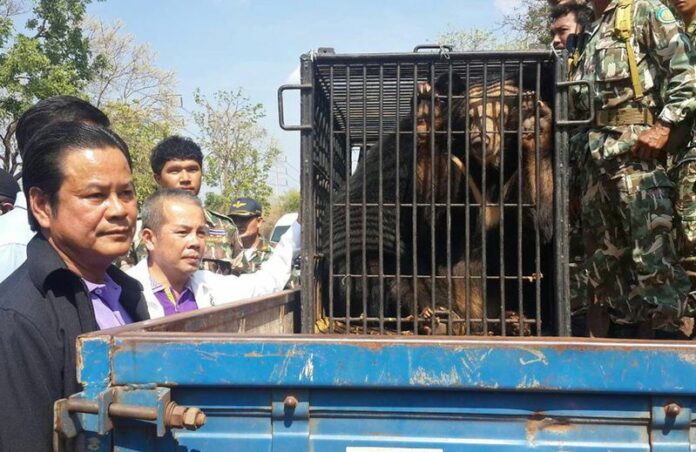
Asian Black Bears Seized From Thailand's Tiger Temple

Thai wildlife officials seize Asian black bears from the Tiger Temple in Kanchanaburi province, Thailand, 03 April 2015. Thai officials seized at least six illegally possessed Asian black bears from the Tiger Temple, which has been allegedly abusing and trafficking wild animals. EPA/STR THAILAND OUT

BANGKOK (DPA) — Authorities seized six Asian black bears from Thailand's famous Tiger Temple after a standoff with monks and disciples, local media reported Saturday.

Officials were blocked from entering the temple grounds earlier in the week. 

The bears were discovered Wednesday when wildlife officers visited the temple to investigate a report of three missing tigers.

Officials said the temple was not authorized to have Asian black bears, which are a protected species.

Hornbill birds and Siamese fireback pheasant were previously confiscated from the temple located 180 kilometres northwest of Bangkok.

Officials said they would continue to investigate the report of missing tigers.

Wat Pa Luang Ta Bua, or Tiger Temple, is a Buddhist monastery that specializes as an animal sanctuary and tiger-breeding facility.

The tourist attraction is home to more than 100 tigers and other species.

For comments, or corrections to this article please contact: [email protected]

You can also find Khaosod English on Twitter and Facebook
http://twitter.com/KhaosodEnglish
http://www.facebook.com/KhaosodEnglish

Advertisement

Article 44 Will Only Target 'Distorting' Media, Junta Says

Gen. Prayuth at a ceremony at Thailand's Command and General Staff College in Bangkok, 3 April 2015

BANGKOK — Thailand’s military junta says it will only use new censorship powers to target media agencies that "distort" the facts.

"We won't interfere with the media if they do not present distorted news, and if they report only facts," said Gen. Prawit, the deputy leader of the junta and Minister of Defense.

He was responding Thai media associations’ demand that the junta set clear guidelines for the censorship order, which was issued after martial law was repealed on 1 April 2014.

The order grants military officers power to shut down any media agency that causes "panic" or "misunderstanding" that may affect national security.

The Thai Journalist Association (TJA) and the Press Council of Thailand expressed concern over the order in a joint statement yesterday.

"If there are no clear guidelines or conditions … it may lead to practices that are not in accordance with the intention of the order," the statement said.

The order was issued alongside other thirteen other provisions by junta chairman Gen. Prayuth Chan-ocha to replace martial law, which had been in place since the military seized power in May 2014. The provisions retained key powers granted to the military under martial law, such as soldiers’ power to detain suspects without charge, search properties without warrant, and ban political gatherings. 

Gen. Prayuth enacted the fourteen provisions by invoking Article 44 of the interim charter, which permits the junta leader to unilaterally intervene in the national administration to suppress any threat to public order, the economy, and the monarchy. Any order Gen. Prayuth promulgates through Article 44 will be deemed legal and binding, the clause states.

Asked whether he thinks Article 44 will affect the press in Thailand, Gen. Prawit replied, "It will be the same. No effect. No interference. I told you we will not interfere, and we will not interfere. We have to invoke the [article], so that we can move our country forward. You keep writing that it is this, it is that. You have imagined the whole thing."

When a reporter asked if the junta will try to explain Article 44 to foreign media agencies, the general said, "This is our country. We want to live in peace. When the country was in flames, and when people killed each other, let me ask, could the foreign countries help us?"


For comments, or corrections to this article please contact: [email protected]

You can also find Khaosod English on Twitter and Facebook
http://twitter.com/KhaosodEnglish
http://www.facebook.com/KhaosodEnglish

Advertisement

Hot News

LATEST NEWS

Bangkok
overcast clouds
30 ° C
30 °
30 °
74 %
4.4kmh
100 %
Sat
29 °
Sun
36 °
Mon
35 °
Tue
33 °
Wed
32 °