



























30.5 C
Bangkok
Sunday, June 28, 2026
Home Blog Page 3033

China's New Normal and America’s Old Habits

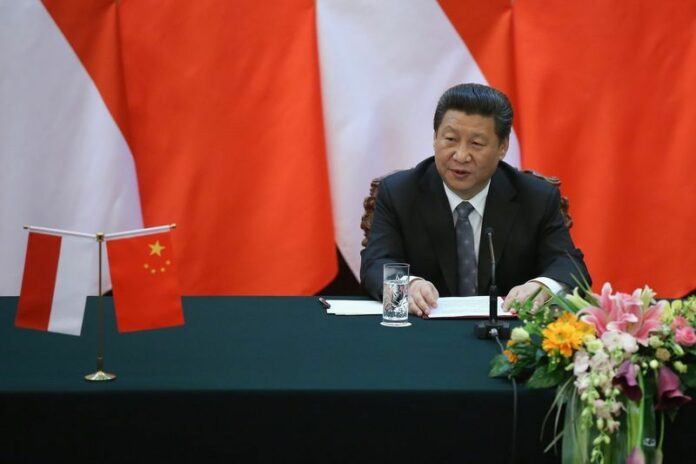
Chinese President Xi Jinping during a press conference with Indonesian President Joko Widodo (unseen) in the Great Hall of the People in Beijing, China, 26 March 2015. EPA/FENG LI / POOL

By Stephen S. Roach

NEW HAVEN — China is generating a lot of confusion nowadays, both at home, where senior officials now tout the economy’s new normal, and abroad, exemplified by America’s embrace of Cold War-style tactics to contain China’s rise. On both counts, the disconnects are striking, adding a new dimension of risk to the impact of the “China factor” on a fragile world.

The official view in China is that its economy has already arrived in the Promised Land of the “new normal.” Indeed, that was the theme of the just-concluded China Development Forum (CDF) – an important platform for debate among China’s senior officials and a broad cross-section of international participants that occurs immediately after the annual National People’s Congress.

Since the CDF’s inception in 2000, the Chinese government has used the event to signal its policy priorities. In 2002, for example, the CDF focused on the impact of China’s accession to the World Trade Organization – a precursor to a spectacular surge of export-led growth. In 2009, the emphasis was on China’s aggressive post-crisis stimulus strategy. And last year’s event addressed implementation of the so-called Third Plenum reforms.

This suggests that China’s “new normal” will be the government’s top priority this year. But there remains considerable ambiguity as to what exactly the new normal entails – or whether it has even been achieved.

In his keynote speech at the CDF, Zhang Gaoli, one of the seven members of the Politburo Standing Committee (the Chinese Communist Party’s highest decision-making body), declared that the senior leadership has rendered the “strategic judgment that China’s economy has entered the stage of the new normal.” Yet, at the CDF’s wrap-up session, Premier Li Keqiang suggested, a bit less decisively, that China is basically following the world economy in its transition to a new normal.

In short, China’s government is confusing a path with the final destination – a point that I stressed in my remarks to the CDF, in which I argued that China is in the early stages of rebalancing its economy toward services and consumption. In fact, China is far from settling in to a new normal.

The best way to measure how far China still has to go is to consider the development of its services sector – the infrastructure of consumer demand in an economy. The good news is that services are now growing faster than any other sector, having reached 48% of GDP in 2014 (thus surpassing the end-2015 target of 47% well ahead of schedule). The tough news is that this remains significantly lower than the 60-65% share typical of a more “normal” economy.

Given this, it is worrying that China’s leaders believe that the new normal is already at hand. The notion that this critical transition has occurred risks generating complacency at a time when China should be focused on the wrenching, but essential, process of structural adjustment – one that will take at least another decade to complete.

Continuing the shift to a services-led growth model is important for a number of reasons. With services in China employing 30% more workers per unit of output than manufacturing and construction, the sector’s expansion will help to preserve social stability, even as economic growth slows to 7%. Observers in the West, focused largely on the slowdown of headline GDP growth, continue to miss this key point. Moreover, because the services sector also requires fewer commodities and less energy, this transition will help China address its serious environmental problems.

In the meantime, China faces another, equally daunting challenge: the United States’ growing determination to contain its growing influence. At this year’s CDF, tensions between the hegemon and the rising power were widely discussed, both in the formal sessions and on the sidelines.

Three developments were especially noteworthy: US resistance to China’s efforts to establish the Asian Infrastructure Investment Bank – a stance now rejected by most of America’s closest allies; President Barack Obama’s signature trade initiative, the Trans-Pacific Partnership, which excludes China; and yet another effort by the US Senate to enact legislation on currency manipulation that takes dead aim at China. Combined with ongoing disputes over cyber security and territorial claims in the East and South China Seas – not to mention questions about America’s geostrategic “pivot” toward Asia – these issues have chilled the Sino-American relationship.

It fell to Henry Kissinger, who was present at the dawn of the modern US-China relationship, to put it all into context. At the CDF, he stressed how different the situation is now, compared to 1972, when he and then-President Richard Nixon first met with Mao Zedong and Zhou Enlai. Unlike the immediate military threats back then, today’s challenges – such as climate change, cyber security, and global health – can be addressed only through collaborative strategic engagement.

The imperative to cooperate is an inevitable outgrowth of globalization. As Kissinger emphasized, the Middle Kingdom of China’s dynastic era knew nothing of the Roman Empire, and vice versa. In today’s world, however, no great power can afford to operate in a vacuum. They receive instantaneous feedback from one another – especially on shared challenges – whether they like it or not.

In a sense, it is no surprise that the US is bristling over China’s ascendance. After all, dominant powers have always struggled to cope with rising ones. Nonetheless, China, burdened by 150 years of perceived humiliation by the West, does not take kindly to that reaction.

As China confronts the challenges of its economy’s shift to a new normal, it will need to find common ground with the US. And America will need to work to deepen its understanding of China’s transition. Both countries will have to show leadership, vision, and openness to collaborative engagement. Sadly, there was little sign of that at this year’s CDF.


Stephen S. Roach, a faculty member at Yale University and former Chairman of Morgan Stanley Asia, is the author of a new book Unbalanced: The Codependency of America and China.

Copyright: Project Syndicate, 2015.
www.project-syndicate.org

 
For comments, or corrections to this article please contact: [email protected]

You can also find Khaosod English on Twitter and Facebook
http://twitter.com/KhaosodEnglish
http://www.facebook.com/KhaosodEnglish
Advertisement

Deep South Raid: Soldiers Refuse to Report for Murder Charges

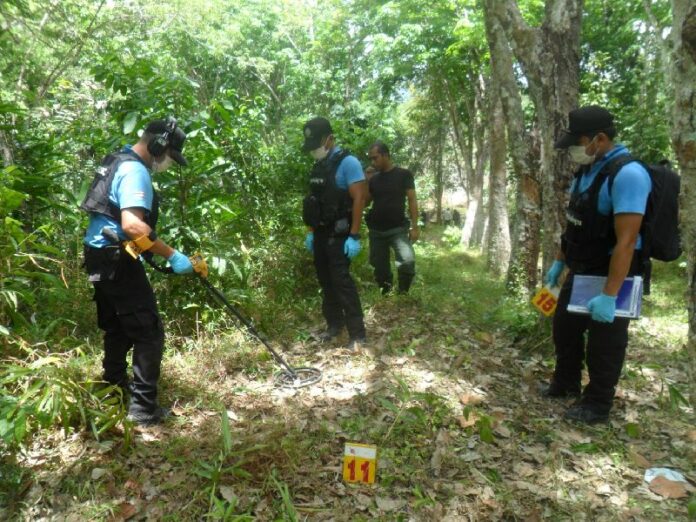
Police search for evidence at To Chud village in Pattani province on 26 March 2015

PATTANI — Police say seven soldiers wanted for killing four men during a raid in Pattani province failed to report to hear murder charges today.

The seven soldiers postponed the meeting “indefinitely,” said Pol.Maj.Gen. Kritsakorn Pleethanyawong, commander of Pattani police force.

The men were scheduled to report to Thung Yang Daeng Police Station to be formally charged with murder for their role in the deadly raid on To Chud village on 25 March.

Pol.Maj.Gen. Kritsakorn did not name the soldiers or comment on how police will respond to the postponement. 

The raid was conducted by a team of soliers, police, and paramilitary rangers in an effort to arrest suspected members of a local militant group who authorities believed were planning to stage attacks in the region. Police say the suspected insurgents opened fire on security officers, prompting them to shoot back and ultimately kill four men. Twenty-two others were also detained after the raid and taken to army camps for interrogation.

However, it later emerged that none of the deceased had any pre-existing records or arrest warrants related to the insurgency. Thirteen of the 22 detainees were also released from custody on 28 March without any charges. In response to an outcry from community leaders and relatives of the victims, Thai authorities agreed to convene a 15-member panel to investigate the incident.

Families of the four victims, who say the men were innocent, were also promised "fair" financial compensation. 

According to Isra News agency, anonymous flyers denouncing the raid were found in Pattani province today. "Shoot, kill, pay, over," some of the flyers read, presumably accusing Thai authorities of attempting to pay off victims’ families in an effort to put the controversy to rest. Some other flyers criticized the so-called "Thung Yang Daeng Model" touted by the Thai military as a novel measure to combat the southern insurgency. 

The deadly raid has highlighted the deep mistrust of Thai authorities among locals in the three southern border provinces, a predominantly Muslim region known as the Deep South.

An estimated 60,000 security officers are deployed in the area to battle separatist violence that broke out in 2004. Although a majority of the casualties have been killed by shadowy insurgents, security officers are often accused of employing excessive violence and violating human rights in the region. 


For comments, or corrections to this article please contact: [email protected]

You can also find Khaosod English on Twitter and Facebook
http://twitter.com/KhaosodEnglish
http://www.facebook.com/KhaosodEnglish
 
Advertisement

Southern Police Apologize for Deadly Village Raid

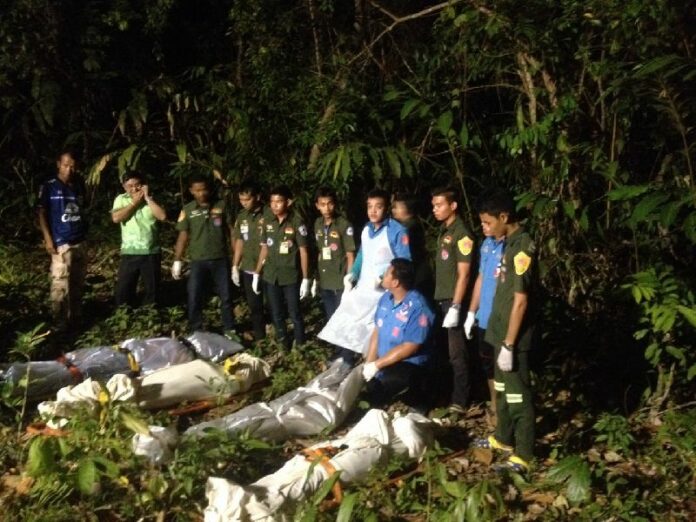
Rescue workers stand behind the corpses of the four men killed in the raid in To Chud Village, Pattani province, 25 March 2015.

PATTANI — The commander of Thailand's southern border police has formally apologized for a raid on a village in Pattani province that killed four men whose ties to a local secessionist group remain unclear.

The four men, all in their early twenties or thirties, were shot dead during an operation carried out by police, military, and paramilitary rangers on 25 March. Twenty-two other men were also arrested at the scene and taken to army camps. Thirteen of them were released several days later without charges.

\
Rescue workers stand behind the corpses of the four men killed in the raid in To Chud Village, Pattani province, 25 March 2015.

Police said they began shooting after they encountered gunfire from the suspects, who they believed were plotting attacks in connection with an Islamic insurgency that has claimed more than 6,000 lives in the region. 

Two of the deceased were initially identified as members of RKK, one of militant groups behind the secessionist movement. However, local residents and  community leaders contested the claim, and it later emerged that none of the four men had any pre-existing criminal records connected to the insurgency.

In response to the community's demands for an impartial review, Thai authorities formed a 15-member panel to investigate the incident. Their report will be finished by 3 April, officials said.

Police have made no further comments about whether the four victims were linked to the insurgency. 

Today, Pol.Maj.Gen. Anurut Kritsanakaraket, commander of the Southern Border Provinces Police Operation Center, apologized for the deadly raid. 

"I would like to apologize and express my sadness for the families of these young men who lost their lives," said Pol.Maj.Gen. Anurut, the first official to publicly apologize for the operation.

"This case has a lot of attention from the people. It's about the happiness of the people that we have to fulfill," Pol.Maj.Gen. Anurut said. "Today we have witnesses and individuals that need to be interrogated. I am serving as an adviser to the investigation. Police must make the facts clear quickly and inform the people." 

Pol.Maj.Gen. Anurut added that security officers have been instructed to adjust their procedures for future raids on suspected militants in the region. 

"We will form [small] teams to track down and arrest them instead of using heavy forces, which may lead to violence … When we use many weapons, society will look at the situation negatively," he said. 

Mae Jaloh, who was briefly detained in the raid, told reporters she and her son were in To Chud on the evening of 25 March because they had been hired to help clear termites from a house in the village.

They were talking to some residents and preparing their equipment when a group of black-clad security officers surrounded the community, she said.

"Some officers were in front of the house, some were at the rubber farm behind the house," Mae said. "Then I heard the officers shout 'fire!' and gunshots rang out."

According to Mae, after the gunfire died down the officers ordered everyone to lie down on the ground, including herself. She said an officer also pointed a gun at her face before arresting her. Mae was later released from Thung Yang Daeng Police Station at around 3 am the next day, and her son was released several days later.

The controversy surrounding the raid has struck upon the deep mistrust of Thai authorities among locals in the three southern border provinces, a predominantly Muslim region known as the Deep South.

An estimated 60,000 security officers are deployed in the area to battle separatist violence that broke out in 2004. Although a majority of the casualties have been killed by shadowy insurgents, security officers are often accused of employing excessive violence and violating human rights in the region. 


For comments, or corrections to this article please contact: [email protected]

You can also find Khaosod English on Twitter and Facebook
http://twitter.com/KhaosodEnglish
http://www.facebook.com/KhaosodEnglish

Advertisement

Southern Police Apologize for Deadly Village Raid

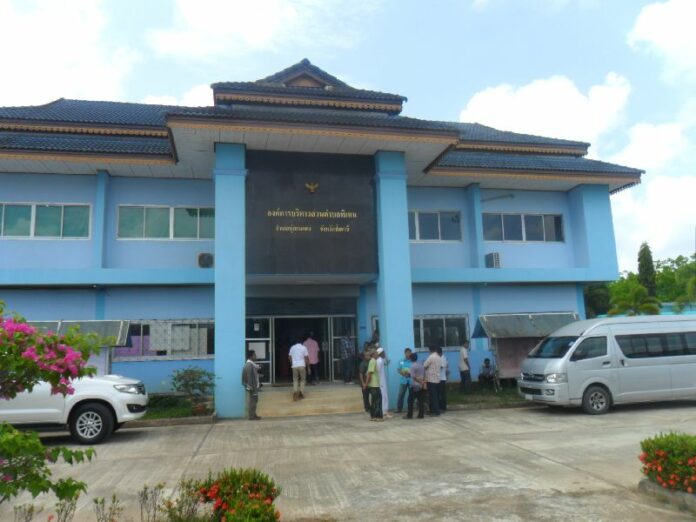
Photo of Piten Subdistrict Office in Pattani province, where the inquiry panel met to discuss the investigation on 31 March 2015.

PATTANI — The commander of Thailand's southern border police has formally apologized for a raid on a village in Pattani province that killed four men whose ties to a local secessionist group remain unclear.

The four men, all in their early twenties or thirties, were shot dead during an operation carried out by police, military, and paramilitary rangers on 25 March. Twenty-two other men were also arrested at the scene and taken to army camps. Thirteen of them were released several days later without charges.

\
Rescue workers stand behind the corpses of the four men killed in the raid in To Chud Village, Pattani province, 25 March 2015.

Police said they began shooting after they encountered gunfire from the suspects, who they believed were plotting attacks in connection with an Islamic insurgency that has claimed more than 6,000 lives in the region. 

Two of the deceased were initially identified as members of RKK, one of militant groups behind the secessionist movement. However, local residents and community leaders contested the claim, and it later emerged that none of the four men had any pre-existing criminal records connected to the insurgency.

In response to the community's demands for an impartial review, Thai authorities formed a 15-member panel to investigate the incident. Their report will be finished by 3 April, officials said.

Police have made no further comments about whether the four victims were linked to the insurgency. 

Today, Pol.Maj.Gen. Anurut Kritsanakaraket, commander of the Southern Border Provinces Police Operation Center, apologized for the deadly raid. 

"I would like to apologize and express my sadness for the families of these young men who lost their lives," said Pol.Maj.Gen. Anurut, the first official to publicly apologize for the operation.

"This case has a lot of attention from the people. It's about the happiness of the people that we have to fulfill," Pol.Maj.Gen. Anurut said. "Today we have witnesses and individuals that need to be interrogated. I am serving as an adviser to the investigation. Police must make the facts clear quickly and inform the people." 

Pol.Maj.Gen. Anurut added that security officers have been instructed to adjust their procedures for future raids on suspected militants in the region. 

"We will form [small] teams to track down and arrest them instead of using heavy forces, which may lead to violence … When we use many weapons, society will look at the situation negatively," he said. 

Mae Jaloh, who was briefly detained after the raid, said she and her son were in To Chud on the evening of 25 March because they had been hired to help clear termites from a house in the village.

They were talking to some residents and preparing their equipment when a group of black-clad security officers surrounded the community, she said.

"Some officers were in front of the house, some were at the rubber farm behind the house," Mae said. "Then I heard the officers shout 'fire!' and gunshots rang out."

According to Mae, after the gunfire died down the officers ordered everyone to lie down on the ground, including herself. She said an officer also pointed a gun at her face before arresting her. Mae was later released from Thung Yang Daeng Police Station at around 3 am the next day, and her son was released several days later.

The controversy surrounding the raid has struck upon the deep mistrust of Thai authorities among locals in the three southern border provinces, a predominantly Muslim region known as the Deep South.

An estimated 60,000 security officers are deployed in the area to battle separatist violence that broke out in 2004. Although a majority of the casualties have been killed by shadowy insurgents, security officers are often accused of employing excessive violence and violating human rights in the region. 


For comments, or corrections to this article please contact: [email protected]

You can also find Khaosod English on Twitter and Facebook
http://twitter.com/KhaosodEnglish
http://www.facebook.com/KhaosodEnglish
 

Advertisement

Vietnam Records Fastest First-Quarter Growth in Five Years

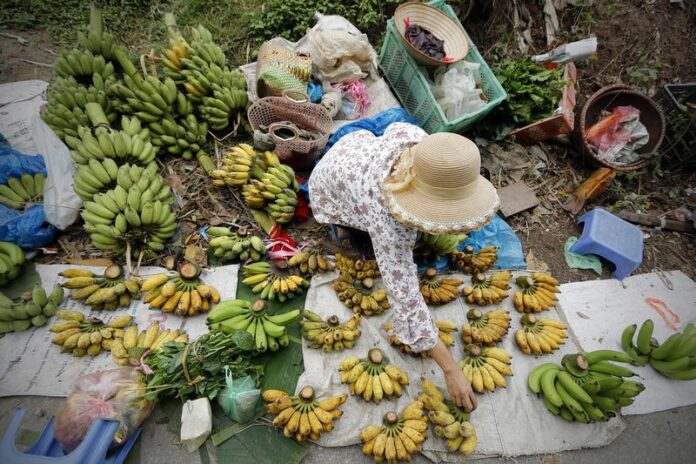
A woman sells bananas at a market in Hanoi, Vietnam, in a 2014 file photo. The country posted its fastest first-quarter growth for five years.

HANOI (DPA) — Vietnam's economy hustled to a growth rate of more than 6 per cent year-on-year in the first quarter, the prime minister said Wednesday, its fastest for the period since 2010.

"Gross domestic product grew 6.03 per cent in the first quarter of the year [from the same period a year earlier], the highest figure over the past five years," Nguyen Tan Dung said, citing the government's regular monthly economic report."

The figure has been carefully reviewed and is a real figure, calculated in a scientific manner, basing on international norms."

Experts have criticized Vietnam for failing to calculate economic data in line with international standards.

Vietnam's policymakers have set a target of 6.2 per cent gross domestic product growth this year while holding inflation to no more than 5 percent.


For comments, or corrections to this article please contact: [email protected]

You can also find Khaosod English on Twitter and Facebook
http://twitter.com/KhaosodEnglish
http://www.facebook.com/KhaosodEnglish
Advertisement

Photo of Suthep's 'Armed Escort' Explained

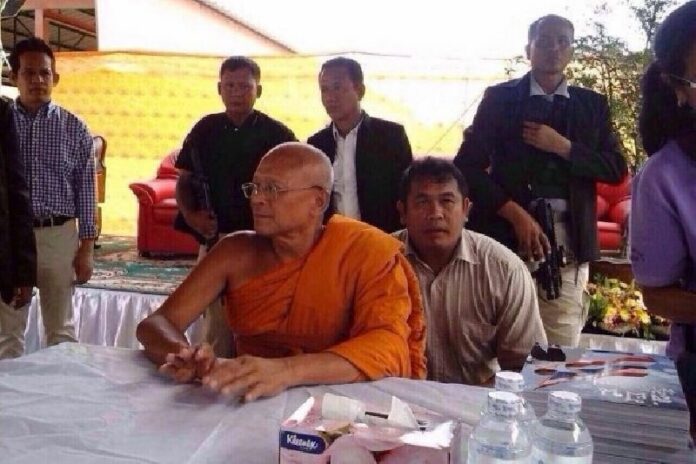
A widely-shared photo of Suthep Thaugsuban sitting in front of two armed men.

BANGKOK – The armed men seen standing next to conservative Thai activist-turned-monk Suthep Thaugsuban were not his personal guards, the monk’s brother said today.

Thani Thaugsuban was referring to a widely-shared photo of Suthep seated in a temple, flanked by two black-clad men who appear to be holding a submachine gun and an assault rifle.

\
A widely-shared photo of Suthep Thaugsuban sitting in front of two armed men.

According to Thani, the men were not his personal guards, as many internet users had speculated, but rather local security officers in Pattani, a southern province where authorities are combatting a simmering Islamic insurgency.

"Local officials worked to prevent any incident, and they dispatched some officers to take care of Phra Suthep," Thani told Manager ASTV. "Phra Suthep was not personally involved in the matter."  

The photo was shared by many Redshirt activists, including Sombat Boongam-anong, with many commentators questioning why Suthep was allowed to bring armed guards inside his temple.

Suthep resigned from his post as deputy chairman of Democrat Party to lead six months of street protests against the government of Prime Minister Yingluck Shinawatra starting in November 2013. The protests called for replacing Yingluck with an unelected "people's council" to implement national reforms. The protests culminated in the military coup on 22 May 2014 and Suthep entered monkhood shortly afterwards.

He is currently facing a possible impeachment trial for his role in authorizing the 2010 crackdown on Redshirt protesters that left over 90 people dead.

 
For comments, or corrections to this article please contact: [email protected]

You can also find Khaosod English on Twitter and Facebook
http://twitter.com/KhaosodEnglish
http://www.facebook.com/KhaosodEnglish
Advertisement

New Charter to Feature Gender Quota for MP Candidates

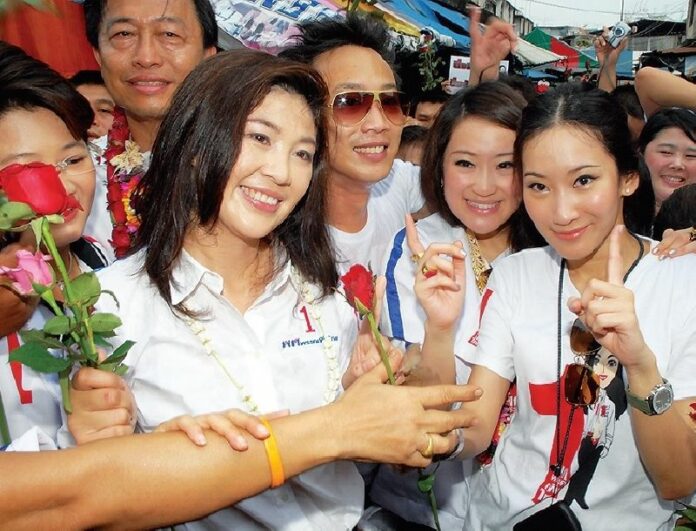
Yingluck Shinawatra canvassing for votes in Ubon Ratchathani province on 29 June 2011. She later became Thailand's first Prime Minister following the Pheu Thai Party's landslide victory in the July 2011 election.

BANGKOK – The drafters of the new constitution have approved the first gender quota in Thai history, requiring one third of political party list candidates be women.

The measure was approved by 17  of the Constitution Drafting Committee's 35 members in a secret ballot yesterday. Fifteen voted against the proposal and two abstained. 

The CDC was appointed by Thailand's ruling military junta to replace the constitution dissolved after the coup last May. 

\
Yingluck Shinawatra (left) canvassed for votes in  Bangkok on 30 June 2011. She was accompanied by the three children of her brother, former Prime Minister Thaksin Shinawatra.

"Political parties will have to nominate women in accordance with the constitution's requirement," CDC spokesperson Supattara Nakapiew said today. "They will have to arrange a quota for women in all of the six party lists in six regions, otherwise the party will not be able to send their candidates to elections." 

The CDC also plans to make Thailand’s party list system “open,” which means that voters will be able to rank the candidates. In the past, party leaders determined the ranking. Under the German-style mixed-member proportional (MMP) system envisioned by the drafters, slightly under half of MPS will be elected through the party list. The rest will be chosen by voters to represent specific constituencies.

Last month, divergent views about incorporating a gender quota into the new charter led women's rights advocate Thicha na Nakhon’s to resign from the drafting committee. Thicha had called for requiring one-third of all MPs and local councilors to be women. 

The measure passed by the CDC yesterday is more moderate, as it only applies to candidates. The committee also voted against extending the quota to candidates running for local administrative positions, on the grounds that "there might not be enough women to run in local elections," Supatta said. 

Thailand’s top governmental bodies are consistently dominated by men. As a result, issues related to women’s rights are rarely discussed in national political bodies. 

The current interim legislature, whose members were handpicked by the all-male junta, has one of those lowest percentages of female representation in recent years. Only 12 out of its nearly-200 members are women, amounting to six percent. The rest are male military officers, policemen, businessmen, and former politicians and bureaucrats.

The percentage of female MPs in the previous elected parliament was 15.8 percent, also below the global average of 20 percent. 

Although Yingluck Shinawatra was elected to be Thailand’s first female Prime Minster in 2011, many critics attributed her rise to power to the enduring influence of her brother, Thaksin Shinawatra, a former Prime Minister lionized by the Redshirt movement. When Yingluck was running for the premiership with the Pheu Thai party, her party’s slogan was “Thaksin thinks, Pheu Thai does.”

Speaking at today's press conference, CDC member Thawilwadee Bureekul thanked women's rights groups who campaigned for the gender quota. 

"It is an important page in history, that this constitution will increase roles of women," said Thawilwadee, "National budget arrangement will also have to consider gender equality."

Wirat Kalyasiri, a legal advisor to the Democrat Party, welcomed the gender quota and pledged that his party will comply with the requirement in the next election.

"The Democrat Party will have more female figures, and it won't be a problem to find female candidates, because our party has many talented and capable women," Wirat said, "Such as Khunying Kalaya Sophonpanich, deputy chairperson of Democrat Party; Pusadee Tamthai, deputy Governor of Bangkok, or Ratchada Thanadirek, Bangkok MP."

He added, "In my opinion, there are even more women interested in politics than men. Just look at the rallies of PCAD [the People's Committee for Absolute Democracy With the King As Head of State]. Women are very interested in politics. Out in the field of anti-corruption campaigns, women were very serious and dedicated." 

The CDC also made international headlines earlier this year for approving a clause that will explicitly prohibit any discrimination based on "gender" to cover those who do not identify as male or female.

The new charter – Thailand's 20th – is expected to be completed in September this year. The junta says an election will take place in early 2016, provided that the constitution has been finalized and the political climate is deemed stable.

Related coverage:
Women's Groups Divided in Push for Post-Coup Rights
Debate Over Women's Empowerment Behind Charter Drafter's Resignation


For comments, or corrections to this article please contact: [email protected]

You can also find Khaosod English on Twitter and Facebook
http://twitter.com/KhaosodEnglish
http://www.facebook.com/KhaosodEnglish

Advertisement

New Charter to Feature Gender Quota for MP Candidates

Pheu Thai Party candidate Yingluck Shinawatra (left) canvassed for votes in  Bangkok on 30 June 2011. She was accompanied by the three children of her brother, former Prime Minister Thaksin Shinawatra.

BANGKOK – The drafters of the new constitution have approved the first gender quota in Thai history, requiring one third of political party list candidates be women.

The measure was approved by 17  of the Constitution Drafting Committee's 35 members in a secret ballot yesterday. Fifteen voted against the proposal and two abstained. The CDC was appointed by Thailand's ruling military junta to replace the constitution dissolved after the coup last May. 

\
Yingluck Shinawatra canvassing for votes in Ubon Ratchathani province on 29 June 2011. She later became Thailand's first Prime Minister following the Pheu Thai Party's landslide victory in the July 2011 election. 

"Political parties will have to nominate women in accordance with the constitution's requirement," CDC spokesperson Supattara Nakapiew said today. "They will have to arrange a quota for women in all of the six party lists in six regions, otherwise the party will not be able to send their candidates to elections." 

The CDC also plans to make Thailand’s party list system “open,” which means that voters will be able to rank the candidates. In the past, party leaders determined the ranking. Under the German-style mixed-member proportional (MMP) system envisioned by the drafters, slightly under half of MPS will be elected through the party list. The rest will be chosen by voters to represent specific constituencies.

Last month, divergent views about incorporating a gender quota into the new charter led women's rights advocate Thicha na Nakhon’s to resign from the drafting committee. Thicha had called for requiring one-third of all MPs and local councilors to be women. 

The measure passed by the CDC yesterday is more moderate, as it only applies to candidates. The committee also voted against extending the quota to candidates running for local administrative positions, on the grounds that "there might not be enough women to run in local elections," Supatta said. 

Thailand’s top governmental bodies are consistently dominated by men. As a result, issues related to women’s rights are rarely discussed in national political bodies. 

The current interim legislature, whose members were handpicked by the all-male junta, has one of those lowest percentages of female representation in recent years. Only 12 out of its nearly-200 members are women, amounting to six percent. The rest are male military officers, policemen, businessmen, and former politicians and bureaucrats.

The percentage of female MPs in the previous elected parliament was 15.8 percent, also below the global average of 20 percent. 

Although Yingluck Shinawatra was elected to be Thailand’s first female Prime Minster in 2011, many critics attributed her rise to power to the enduring influence of her brother, Thaksin Shinawatra, a former Prime Minister lionized by the Redshirt movement. When Yingluck was running for the premiership with the Pheu Thai party, her party’s slogan was “Thaksin thinks, Pheu Thai does.”

Speaking at today's press conference, CDC member Thawilwadee Bureekul thanked women's rights groups who campaigned for the gender quota. 

"It is an important page in history, that this constitution will increase roles of women," said Thawilwadee, "National budget arrangement will also have to consider gender equality."

Wirat Kalyasiri, a legal advisor to the Democrat Party, welcomed the gender quota and pledged that his party will comply with the requirement in the next election.

"The Democrat Party will have more female figures, and it won't be a problem to find female candidates, because our party has many talented and capable women," Wirat said, "Such as Khunying Kalaya Sophonpanich, deputy chairperson of Democrat Party; Pusadee Tamthai, deputy Governor of Bangkok, or Ratchada Thanadirek, Bangkok MP."

He added, "In my opinion, there are even more women interested in politics than men. Just look at the rallies of PCAD [the People's Committee for Absolute Democracy With the King As Head of State]. Women are very interested in politics. Out in the field of anti-corruption campaigns, women were very serious and dedicated." 

The CDC also made international headlines earlier this year for approving a clause that will explicitly prohibit any discrimination based on "gender" to cover those who do not identify as male or female.

The new charter – Thailand's 20th – is expected to be completed in September this year. The junta says an election will take place in early 2016, provided that the constitution has been finalized and the political climate is deemed stable.

Related coverage:
Women's Groups Divided in Push for Post-Coup Rights
Debate Over Women's Empowerment Behind Charter Drafter's Resignation


For comments, or corrections to this article please contact: [email protected]

You can also find Khaosod English on Twitter and Facebook
http://twitter.com/KhaosodEnglish
http://www.facebook.com/KhaosodEnglish

Advertisement

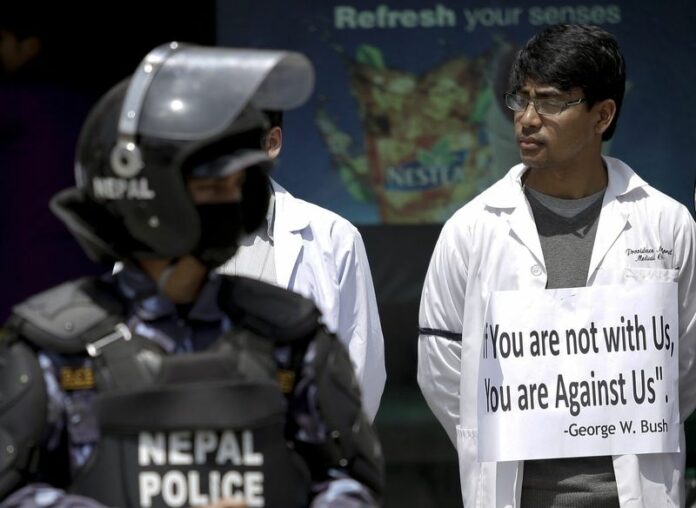
Nepal Doctors Strike in Support of Medical Education Reforms

A Nepalese resident doctor joins a rally in support of Dr. Govinda KC, on a hunger strike for better medical education and against government interference in the profession [DPA].

KATHMANDU (DPA) — Doctors in Nepal shut out-patient departments nationwide Wednesday in solidarity with a doctor who is on hunger strike demanding reforms, the Nepal Medical Association said.

An estimated 150,000 people were left without treatment by the move in support of KC Govinda, a senior surgeon at Kathmandu's Teaching Hospital, who is demanding more support for medical trainees.

The association said they would also close down emergency services if the government did not respond to KC's demands, including the establishment of an autonomous medical council, medical schools in rural areas and affordable fees for medical students.

"Unless you make medical education affordable, you cannot have skilled doctors and unless there are good doctors, patients will keep suffering," KC told Kantipur Television from his hospital bed on Tuesday. He has taken only water for 11 days.

He has also demanded that some allegedly corrupt officials be fired from Nepal's universities.

The government has said it would look into some of KC's demands.

It is the doctor's fifth hunger strike in six years. In 2009 he called for better safety for doctors in the workplace.

In January last year he demanded an end to political pressure on hospital appointments.

The government agreed to look into those demands, but KC went on strike again this month after authorities failed to take action.

 
For comments, or corrections to this article please contact: [email protected]

You can also find Khaosod English on Twitter and Facebook
http://twitter.com/KhaosodEnglish
http://www.facebook.com/KhaosodEnglish


Advertisement

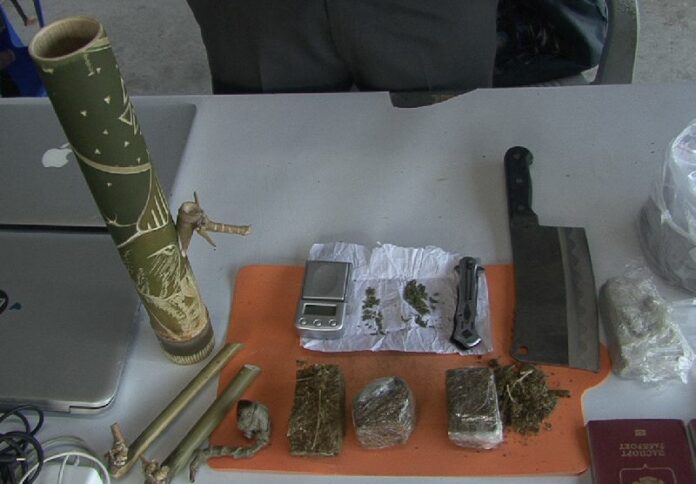
Russian Bong Sellers Arrested on Koh Pha Ngan

Police confiscated marijuana and a bong from two Russians in Koh Pha Ngan.

SURAT THANI — Police have arrested two Russians who allegedly sold homemade marijuana bongs via a Facebook page on the southern island of Koh Phan Ngan.

The arrest followed a police investigation into a now-deleted Facebook page, called Bong Russian Boss, which advertised homemade bamboo bongs and featured photos of the seller lying down in what appears to be marijuana plants. 

\
A screen shot of the now-deleted Facebook page. 

The Facebook page claimed to be operated by Russians on Koh Pha Ngan – an island in the Gulf of Thailand known for its raucous, drug-fueled monthly Full Moon Parties. 

Pol.Col. Prachum Ruengthong, superintendent of Koh Pha Ngan Police Station, said the operators of the Facebook page were arrested at their residence today. 

According to Pol.Col. Prachum, police found eight Russian nationals at the house, along with a marijuana bong and approximately 304 grams of marijuana. 

\
Police inspect
marijuana found at the house in Koh Phan Ngan, 1 April 2015.

Two 29-year-old Russian men, named Serge and Constantin, identified themselves as owners of the drugs and operators of the Facebook page, police say. 

"They made their own bongs to smoke marijuana with their friends, and then announced that they would sell the bongs to compatriots on the island, because they didn't think it would violate Thai laws," Pol.Col. Prachum said, adding that Constantin and Serge often host parties for other Russians at their residence.

Under Thai laws, bongs are not illegal, though the two Russians have been charged with possession of Category 5 Drugs (marijuana). Police also took down the personal details of the other six Russians but released them without charges. 


For comments, or corrections to this article please contact: [email protected]

You can also find Khaosod English on Twitter and Facebook
http://twitter.com/KhaosodEnglish
http://www.facebook.com/KhaosodEnglish
Advertisement

Hot News

LATEST NEWS

Bangkok
overcast clouds
30.5 ° C
32.2 °
30.5 °
76 %
4.9kmh
100 %
Sat
30 °
Sun
35 °
Mon
35 °
Tue
33 °
Wed
32 °