























30 C
Bangkok
Sunday, June 28, 2026
Home Blog Page 3034

Govt Officials to Help Prayuth With Press Briefings

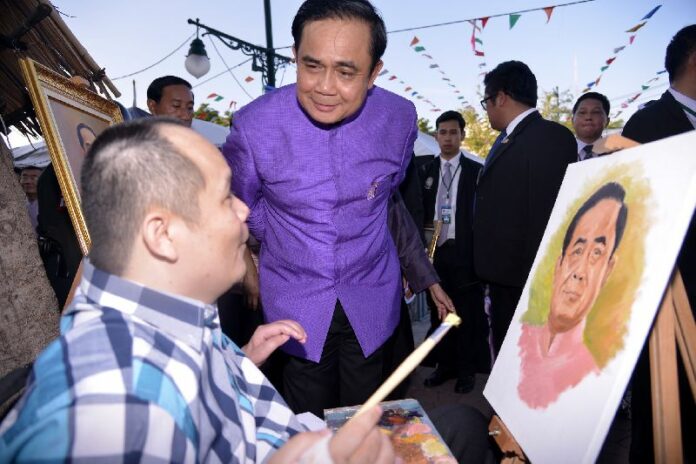
Gen. Prayuth Chan-ocha visiting a market next to the Government House in Bangkok, 31 March 2015.

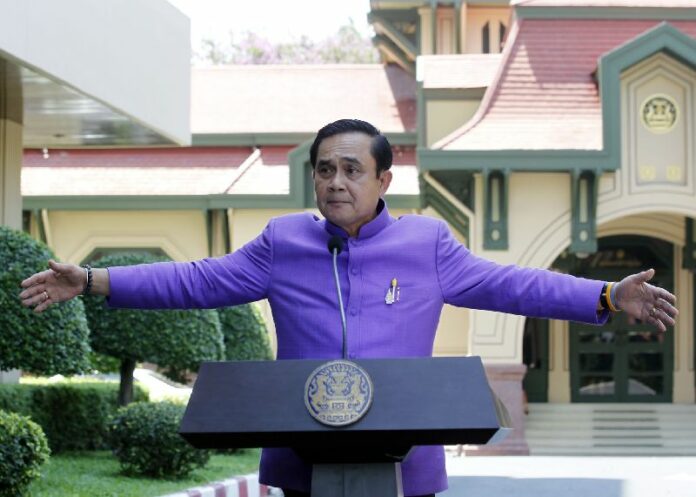
BANGKOK — Thai government officials will host new detailed press briefings every week to ensure that reporters "accurately" cover the government's works, junta chairman Gen. Prayuth Chan-ocha said today.

Starting next month, officials other than Gen. Prayuth will host the press conferences every Tuesday after Cabinet meetings.

\
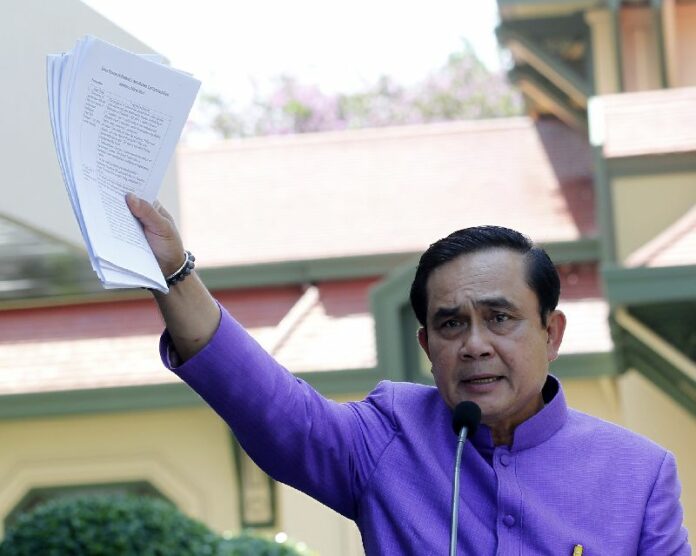
Gen. Prayuth Chan-ocha speaking to reporters at the Government House, 31 March 2015.

"We want to explain to media, and we want to create understanding between the state and the media to avoid any mistakes," Gen. Prayuth said.  

He called the sessions a "request for cooperation" that reporters are expected to dutifully attend.

"Every time we will ask for your cooperation on Cabinet meeting days, we will write down all of reporters' names, like in classrooms," he said. "I will really do this. I am not joking."

Gen. Prayuth also said officials other than himself will brief reporters because "if you only listen to me, you will only get general topics for the news. This is not any adjustment of news tactics of the government. I just want to let other people explain things to you. I have been talking on my own for a long time." 

Gen. Prayuth, who seized power from an elected government in a coup on 22 May 2014, is notorious for his unpredictable and often heated exchanges with the press. He rarely speaks from a script, and often launches into tirades against reporters for criticizing his administration.  

After the coup, the general imposed an order that forbids media agencies from publishing any news that may cause "divisions," "confusion," or incite violence in the country. 

In today's press conference, Gen. Prayuth stressed that the new press conferences should not be seen as an attempt to intimidate the media.

"I don't want to control the media, because I know I cannot control it. You are so powerful," Gen. Prayuth said. "And it is not an ice-breaking activity between the state and media, either. At this age, I think there's no more ice to break. You are not children. I only want you to understand the government." 

Gen. Prayuth also announced that he will cut back the air time of his weekly televised speech from approximately one hour to "20-30 minutes." The show, titled "Returning Happiness to People in the Nation," will also feature different Ministers who will explain about their works, the Prime Minister said. 

"I have talked for hours, I am tired," Gen. Prayuth explained. 


For comments, or corrections to this article please contact: [email protected]

You can also find Khaosod English on Twitter and Facebook
http://twitter.com/KhaosodEnglish
http://www.facebook.com/KhaosodEnglish
Advertisement

Redshirt Gets 25 years For Posting Lese Majeste on Facebook

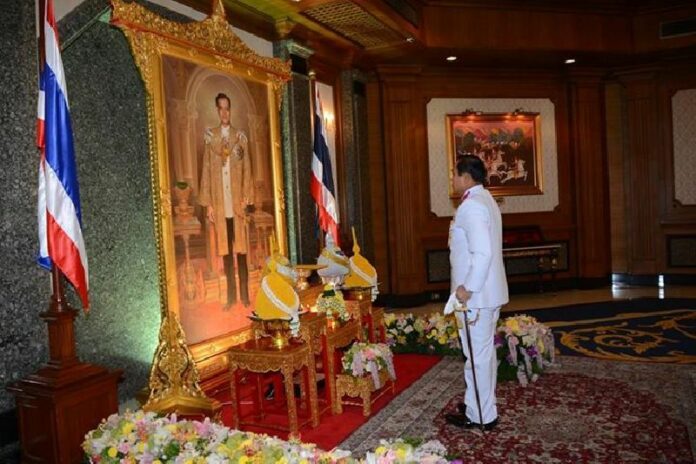
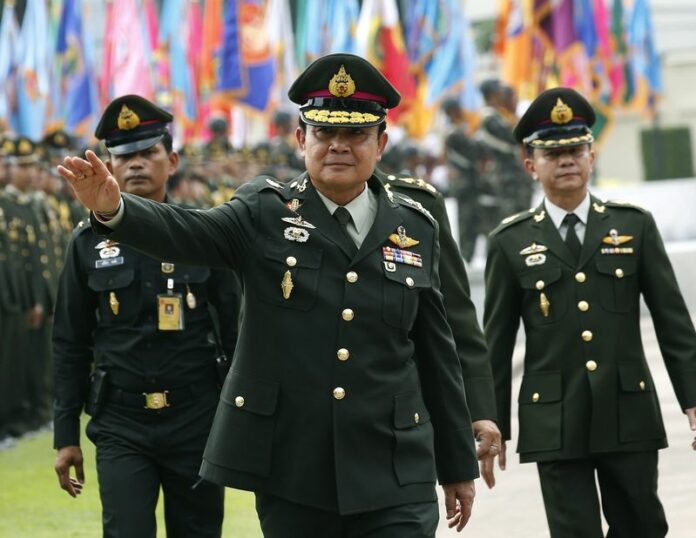
Gen. Prayuth Chan-ocha in the ceremony to receive the Royal Gazette issued by His Majesty the King that formally appointed him as the head of the National Council of Peace and Order (NCPO), 26 May 2014.

(Prachatai English)

BANGKOK – The military court sentenced a red-shirt businessman accused of posting content defaming the monarchy on Facebook to 50 years imprisonment, in camera trial, but the jail term was halved because the suspect pleaded guilty. 

The man who wants to remain anonymous, whose given name begins with T and surname with S, was accused of using two Facebook accounts under “Yai Daengdueat” (ใหญ่ แดงเดือด), an anti-establishment red shirt businessman, was found guilty on five counts under Article 112 of the Criminal Code, nicknamed lese majeste law, for posting five messages. 

The court sentenced him 10 years for each court. 

Read more here

Note: Khaosod English is not responsible for content on other websites.

Advertisement

Junta Clarifies Scope of Article 44’s Sweeping Power

Gen. Prayuth Chan-ocha speaking to reporters at the Government House on 31 March 2015.

BANGKOK — The broad powers granted to Thai junta chairman Gen. Prayuth Chan-ocha under Article 44 of the interim charter will be used to swiftly solve national problems without violating human rights, government officials say.

Gen. Prayuth announced today that he has asked for the King of Thailand’s permission to revoke martial law, which has been in place since the coup last May. The law will be replaced with Article 44 of the interim charter, Gen. Prayuth said.

Gen. Prayuth Chan-ocha speaking to reporters at the Government House on 31 March 2015.

Article 44 is effectively a carte blanche that authorizes the the junta chairman to issue “any order to disrupt or suppress” any act that “undermines public peace and order or national security, the Monarchy, national economics or the administration of State affairs, whether that act emerges inside or outside the Kingdom.”

These orders will be “deemed to be legal, constitutional and conclusive,” the Article states. Gen. Prayuth is not required to inform the government in advance of issuing an order, but simply to notify the interim parliament “without delay.”

Legal experts and human rights groups have expressed alarm over Article 44’s vague and sweeping scope, which they say endows Gen. Prayuth with a dangerous amount of unchecked power. The former army chief, who led the coup in May, is currently both chairman of the junta, formally known as the National Council for Peace and Order (NCPO), and Prime Minister of the interim government he appointed.

According to Maj.Gen. Sansern Kaewkamnerd, spokesperson of the Office of Prime Minister, Article 44 will be used in two ways.

First, the law will be invoked to solve various “national problems” in a fast and efficient manner, the spokesperson said, citing a recent warning from the International Civil Aviation Organization (ICAO) that a number of Thai airlines, including the state-owned Thai Airways, have failed to meet international safety standards.

“If we proceed with all the steps, of which there are 8-10 steps, it may take one year or one year and a half,” Maj.Gen. Sansern said. “Therefore, the Prime Minister has agreed to use the NCPO power under Article 44 of the interim constitution, which allows the NCPO chairman to solve problems in various sectors. It will be a constructive exercise of the power to reduce the number of steps, because we only have 30 days to solve this problem in accordance with the ICAO regulations. Within 30 days, we will send details about our solution about flight standards to the ICAO.”

According to Maj.Gen. Sansern, any order issued by Gen. Prayuth via Article 44 will have the same status as a law.

Article 44 will also be used to retain key powers granted to the military under martial law, he said.

“In fact, we only used only one or two chapters of martial law, such as allowing security officers to search properties and arrest and investigate individuals, but foreign [nations] don’t care about that,” said Maj.Gen. Sansern. “So, we found a new way to help the  international community feel relaxed about our exercise of power, and arranged for Article 44 to be used.”

The Thai junta’s use of martial law to arrest civilians without charges and try them in military courts has come under steady criticism from human rights organizations and democratic nations.

Speaking more bluntly to reporters today, Gen. Prayuth said he will not use Article 44 to violate the civil rights of anyone who is innocent.

“If you didn’t do anything wrong, why are worried?” Gen. Prayuth quipped when he was asked to comment on the law. “I insist that Article 44 will be used creatively in one aspect, and the other aspect is to deal with national security problems. If there’s any shooting and causing of chaos again, I will arrest them. I will arrest them immediately. We will use laws like this, otherwise we would have to wait for court warrants.”

He explained further that Article 44 will permit military officers to work on national security issues and assist various bureaucratic agencies.

“Don’t be afraid. I don’t know why are you so afraid, if you didn’t do anything wrong. Please help explain to the people,” the general added.

Asked whether he believes the invocation of Article 44 will improve the junta’s reputation abroad, Gen. Prayuth replied,

“The media has to help me explain. I don’t get it, why are you so troubled by this? Today, all of you know what the problems of this country are. Will you let the country collapse? I have to take responsibility for this matter. My wife and my children are troubled [by my duty]. But why am I still doing it? And why doesn’t the media write about what the previous government has done? Why don’t you write to make people understand that the previous government didn’t solve any problems?”

Advertisement

Junta Clarifies Scope of Article 44's Sweeping Power

Gen. Prayuth Chan-ocha speaking to reporters at the Government House on 31 March 2015.

BANGKOK — The broad powers granted to Thai junta chairman Gen. Prayuth Chan-ocha under Article 44 of the interim charter will be used to swiftly solve national problems without violating human rights, government officials say.

Gen. Prayuth announced today that he has asked for the King of Thailand's permission to revoke martial law, which has been in place since the coup last May. The law will be replaced with Article 44 of the interim charter, Gen. Prayuth said.

\
Gen. Prayuth Chan-ocha speaking to reporters at the Government House on 31 March 2015.

Article 44 is effectively a carte blanche that authorizes the the junta chairman to issue "any order to disrupt or suppress" any act that "undermines public peace and order or national security, the Monarchy, national economics or the administration of State affairs, whether that act emerges inside or outside the Kingdom."

These orders will be "deemed to be legal, constitutional and conclusive," the Article states. Gen. Prayuth is not required to inform the government in advance of issuing an order, but simply to notify the interim parliament "without delay." 

Legal experts and human rights groups have expressed alarm over Article 44’s vague and sweeping scope, which they say endows Gen. Prayuth with a dangerous amount of unchecked power. The former army chief, who led the coup in May, is currently both chairman of the junta, formally known as the National Council for Peace and Order (NCPO), and Prime Minister of the interim government he appointed.

According to Maj.Gen. Sansern Kaewkamnerd, spokesperson of the Office of Prime Minister, Article 44 will be used in two ways.

First, the law will be invoked to solve various "national problems" in a fast and efficient manner, the spokesperson said, citing a recent warning from the International Civil Aviation Organization (ICAO) that a number of Thai airlines, including the state-owned Thai Airways, have failed to meet international safety standards. 

"If we proceed with all the steps, of which there are 8-10 steps, it may take one year or one year and a half," Maj.Gen. Sansern said. "Therefore, the Prime Minister has agreed to use the NCPO power under Article 44 of the interim constitution, which allows the NCPO chairman to solve problems in various sectors. It will be a creative exercise of the power to reduce the number of steps, because we only have 30 days to solve this problem in accordance with the ICAO regulations. Within 30 days, we will send details about our solution about flight standards to the ICAO."

According to Maj.Gen. Sansern, any order issued by Gen. Prayuth via Article 44 will have the same status as a law.  

Article 44 will also be used to retain key powers granted to the military under martial law, he said.

"In fact, we only used only one or two chapters of martial law, such as allowing security officers to search properties and arrest and investigate individuals, but foreign [nations] don't care about that," said Maj.Gen. Sansern. "So, we found a new way to help the  international community feel relaxed about our exercise of power, and arranged for Article 44 to be used." 

The Thai junta's use of martial law to arrest civilians without charges and try them in military courts has come under steady criticism from human rights organizations and democratic nations. 

Speaking more bluntly to reporters today, Gen. Prayuth said he will not use Article 44 to violate the civil rights of anyone who is innocent.

"If you didn't do anything wrong, why are worried?" Gen. Prayuth quipped when he was asked to comment on the law. "I insist that Article 44 will be used creatively in one aspect, and the other aspect is to deal with national security problems. If there's any shooting and causing of chaos again, I will arrest them. I will arrest them immediately. We will use laws like this, otherwise we would have to wait for court warrants."

He explained further that Article 44 will permit military officers to work on national security issues and assist various bureaucratic agencies.

"Don't be afraid. I don't know why are you so afraid, if you didn't do anything wrong. Please help explain to the people," the general added.

Asked whether he believes the invocation of Article 44 will improve the junta’s reputation abroad, Gen. Prayuth replied,

“The media has to help me explain. I don't get it, why are you so troubled by this? Today, all of you know what the problems of this country are. Will you let the country collapse? I have to take responsibility for this matter. My wife and my children are troubled [by my duty]. But why am I still doing it? And why doesn’t the media write about what the previous government has done? Why don't you write to make people understand that the previous government didn't solve any problems?" 

For comments, or corrections to this article please contact: [email protected]

You can also find Khaosod English on Twitter and Facebook
http://twitter.com/KhaosodEnglish
http://www.facebook.com/KhaosodEnglish
Advertisement

Thailand's Military Government to Lift Martial Law

Thai Prime Minister Prayuth Chan-ocha at Thai army headquarters in Bangkok, Thailand, 30 September 2014. Thailand's military government on Tuesday asked King Bhumibol for permission to lift martial law. EPA/NARONG SANGNAK

BANGKOK (DPA) — Thailand moved to lift martial law Tuesday, with the premier saying he would instead start using the sweeping executive powers granted by the interim constitution.

Prime Minister Prayuth Chan-ocha told reporters he had asked King Bhumipol for permission to repeal the martial law act in place since the coup in May. The request is considered largely ceremonial.

Prayuth said he would enforce Section 44 of the interim constitution instead.

The text grants him the power to issue any order, "regardless of the legislative, executive or judicial force of that order," and has not been invoked to day.

Prayuth said he expects to use it this week to ensure that dissidents are tried in military courts and that authorities can detain suspects for seven days without charge, both clauses that existed under martial law.

Rights groups and some political leaders expressed criticism.

"To revoke martial law and exercise Section 44 instead is risky because the article gives the PM absolute authority," National Human Rights Commissioner Nirat Pitakwatchara said.

"During a time that the country is trying to promote national reform and solve inequality issues, I doubt that it's suitable to use Section 44 or martial law.

Deputy Prime Minister Prawit Wongsuwan said last week the section would only be used against people who were conspiring against the country and that "good people need not worry." 

For comments, or corrections to this article please contact: [email protected]

You can also find Khaosod English on Twitter and Facebook
http://twitter.com/KhaosodEnglish
http://www.facebook.com/KhaosodEnglish
Advertisement

Inquiry Over Fatalities in Deep South Raid Due 3 April

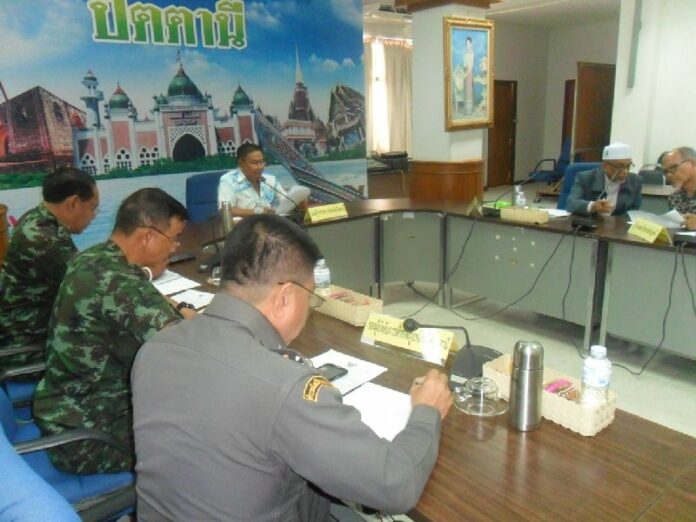
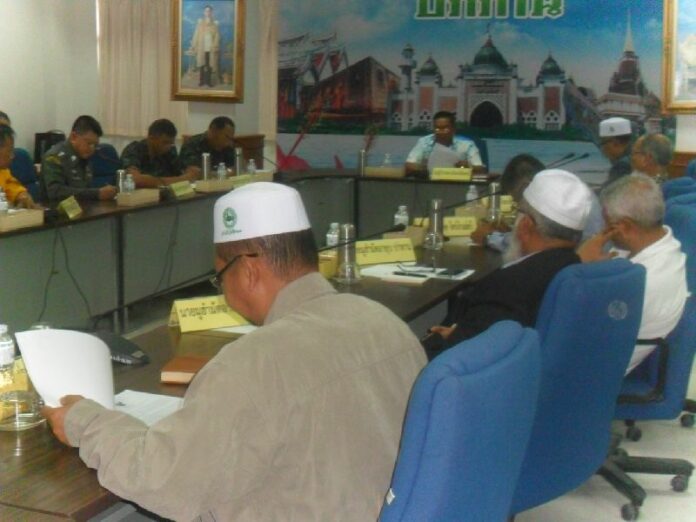
Inquiry panel meeting about the deaths of four men during a military raid in Pattani, 29 March 2015.

BANGKOK — An investigation into the killing of four suspected militants during a raid in the southern border province of Pattani will be completed by 3 April, according to a top member of Thailand’s military junta.

"We have formed a committee to investigate the facts," said Gen. Prawit Wongsuwan, deputy chairman of the junta. "State officials are not apathetic about what the local residents are concerned about. Right now we are proceeding in accordance with the laws, and the laws do not side with anyone."

\
The home of 
Mahama Senlae, whose 32-year-old son was killed in the raid, Pattani province.

He was referring to four men, all in their early twenties or thirties, who were shot dead during a raid carried out by police, military, and paramilitary rangers on a village in Thung Yang Daeng district of Pattani province on 25 March. Twenty-two other men were also arrested at the scene and taken to army camps. Thirteen of them were released several days later without charges.

Police said they opened fire after encountering resistance from the suspects, who they believed were plotting attacks in the area. Two of the deceased were initially identified as members of RKK, one of the Islamic militant groups behind a secessionist movement that has claimed more than 6,000 lives in the region. 

However, it later emerged that none of the victims had any pre-existing criminal records of participating in the secessionist movement, prompting relatives and community leaders to demand an impartial investigation into the raid. 

The father of Suhaimi Senlae, one of the victims killed in the raid, told Khaosod he was shocked to hear the accusation that his son was a member of the RKK militant group. 

"I don't know who I can ask for fairness on the behalf of my son and my family," said Mahama Senlae. 

Mahama said his son was even planning to volunteer for the Village Defense, a state-backed paramilitary unit, after two of his close relatives – one of whom was serving as a village defense volunteer – were recently shot dead by militants. 

"He [Suhaimi] wanted to replace his cousin who was killed," Mahama said. "The secretary of Thung Yang Daeng district already reached out to him. Why would my son be a member of RKK? The district office didn't check any information at all?" 

Officials in Pattani say they have convened a 15-member panel to carry out the inquiry. The panel includes local administrative officials, National Human Rights Commissioners, military officers, and representatives from the Central Islamic Committee of Thailand and Fatoni University, where two of the victims were enrolled as students. 

The incident highlights the deep mistrust of Thai authorities among locals in the three southern border provinces, a region known as the Deep South. An estimated 60,000 security officers are deployed in the area to battle separatist violence that broke out in 2004. Although a majority of casualties in the Deep South have been killed by the shadowy insurgents, security officers are often accused of employing excessive violence and violating human rights in the region. 

Pol.Maj.Gen. Kritsakorn Pleethanyawong, commander of Pattani police, told Manager news that security officers who led the raid will be charged with murder, though he did not specify when the charges will be pressed. 

"We will press charges against all related individuals for what happened, be it state officials or anyone else who are involved, for murder," Pol.Maj.Gen. Kritsakorn was quoted as saying. "I am not feeling troubled by this, because my supervisor has instructed me to proceed with this care fairly and straightforward. Who committed wrongdoing has to answer for the wrongdoing."

CORRECTION: The panel investigating the raid will consist of 15 members, not 17 members as was originally reported.

Related coverage:
Doubt Cast on Deep South Raid Casualties' Links to Insurgency 


For comments, or corrections to this article please contact: [email protected]

You can also find Khaosod English on Twitter and Facebook
http://twitter.com/KhaosodEnglish
http://www.facebook.com/KhaosodEnglish

Advertisement

Inquiry Over Fatalities in Deep South Raid Due 3 April

Inquiry panel meeting about the deaths of four men during a military raid in Pattani, 29 March 2015.

BANGKOK — An investigation into the killing of four suspected militants during a raid in the southern border province of Pattani will be completed by 3 April, according to a top member of Thailand’s military junta.

"We have formed a committee to investigate the facts," said Gen. Prawit Wongsuwan, deputy chairman of the junta. "State officials are not apathetic about what the local residents are concerned about. Right now we are proceeding in accordance with the laws, and the laws do not side with anyone."

\
The home of 
Mahama Senlae, whose 32-year-old son was killed in the raid, Pattani province.

He was referring to four men, all in their early twenties or thirties, who were shot dead during a raid carried out by police, military, and paramilitary rangers on a village in Thung Yang Daeng district of Pattani province on 25 March. Twenty-two other men were also arrested at the scene and taken to army camps. Thirteen of them were released several days later without charges.

Police said they opened fire after encountering resistance from the suspects, who they believed were plotting attacks in the area. Two of the deceased were initially identified as members of RKK, one of the Islamic militant groups behind a secessionist movement that has claimed more than 6,000 lives in the region. 

However, it later emerged that none of the victims had any pre-existing criminal records of participating in the secessionist movement, prompting relatives and community leaders to demand an impartial investigation into the raid. 

The father of Suhaimi Senlae, one of the victims killed in the raid, told Khaosod he was shocked to hear the accusation that his son was a member of the RKK militant group. 

"I don't know who I can ask for fairness on the behalf of my son and my family," said Mahama Senlae. 

Mahama said his son was even planning to volunteer for the Village Defense, a state-backed paramilitary unit, after two of his close relatives – one of whom was serving as a village defense volunteer – were recently shot dead by militants. 

"He [Suhaimi] wanted to replace his cousin who was killed," Mahama said. "The secretary of Thung Yang Daeng district already reached out to him. Why would my son be a member of RKK? The district office didn't check any information at all?" 

Officials in Pattani say they have convened a 15-member panel to carry out the inquiry. The panel includes local administrative officials, National Human Rights Commissioners, military officers, and representatives from the Central Islamic Committee of Thailand and Fatoni University, where two of the victims were enrolled as students. 

The incident highlights the deep mistrust of Thai authorities among locals in the three southern border provinces, a region known as the Deep South. An estimated 60,000 security officers are deployed in the area to battle separatist violence that broke out in 2004. Although a majority of casualties in the Deep South have been killed by the shadowy insurgents, security officers are often accused of employing excessive violence and violating human rights in the region. 

Pol.Maj.Gen. Kritsakorn Pleethanyawong, commander of Pattani police, told Manager news that security officers who led the raid will be charged with murder, though he did not specify when the charges will be pressed. 

"We will press charges against all related individuals for what happened, be it state officials or anyone else who are involved, for murder," Pol.Maj.Gen. Kritsakorn was quoted as saying. "I am not feeling troubled by this, because my supervisor has instructed me to proceed with this care fairly and straightforward. Who committed wrongdoing has to answer for the wrongdoing."

CORRECTION: The panel investigating the raid will consist of 15 members, not 17 members as was originally reported.


Related coverage:
Doubt Cast on Deep South Raid Casualties' Links to Insurgency 


For comments, or corrections to this article please contact: [email protected]

You can also find Khaosod English on Twitter and Facebook
http://twitter.com/KhaosodEnglish
http://www.facebook.com/KhaosodEnglish
Advertisement

Breakthrough as Myanmar Rebels, Government Agree Draft Accord

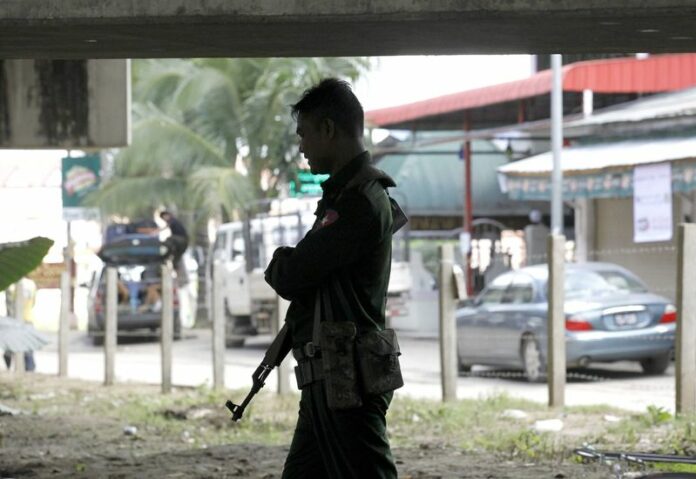
A soldier with the Myanmar Border Guard Forces performs sentry duty at the Friendship Bridge along the Thailand-Myanmar border in Myawaddy, eastern Myanmar, on October 3. The government of Myanmar and ethnic rebel groups on Monday agreed to a draft for a long-awaited ceasefire agreement, with officials saying it could be signed next month. EPA/LYNN BO BO

YANGON (DPA) — A long-awaited end to hostilities could be on the horizon in Myanmar after the government and ethnic rebel groups agreed Monday on a draft of a comprehensive ceasefire agreement, with officials saying it could be signed next month.

The new agreement would supersede individual deals the government has made with several armed groups and put into place a comprehensive, nationwide ceasefire.

The nationwide ceasefire agreement (NCA) draft was finished during a seventh round of talks between the government's Union Peacemaking Working Committee and representatives of the ethnic rebels.

"Now we have an all-inclusive draft for NCA, and we hope the signing will be in late April," said senior advisor Hla Maung Shwe of the EU-funded Myanmar Peace Centre.

The latest round of peace talks in Yangon began on March 17.

"It could be possible to have the signing ceremony after the water festival next month," said Naing Han Tha, leader of rebels' Nationwide Ceasefire Coordination Team.

However, even after the NCA signing, there is still a strong likelihood of clashes on the ground as there are still many things that need to be solved, he said.

"This is just a commitment to pursue the sustainable peace. Only political ways can solve these problems," he said.

The breakthrough comes as heavy fighting continues between the government forces and Kokang ethnic rebels in northern Kachin state, members of which are not party to the agreement.

Once the leaders from both sides approve the draft, it will be sent to the legislature for final approval. No changes to the draft are allowed during this process.

Myanmar's government has managed to sign separate ceasefire agreements with 14 out of the 16 ethnic rebel groups under President Thein Sein, the ex-general who came to power in 2011 and is seen by many as a reformist. The new agreement would build upon the 14 existing ones and take in the final groups.

The government of Myanmar has held out the option of signing the NCA with all 16 ethnic rebels since late 2013, which led to a series of drafts with rebel leaders to negotiate the draft's language.

According to the government's proposal, ethnic rebels would have to enter into a political dialogue after the NCA is signed. The signature has has been delayed for more than a year amid ongoing clashes in Myanmar's eastern and northern states, to say nothing of low levels of trust between the government and the rebels.

(Reporting by Kyaw Lynn, dpa)

Advertisement

Redshirt TV Channels Suspended For 'Inciting Unrest'

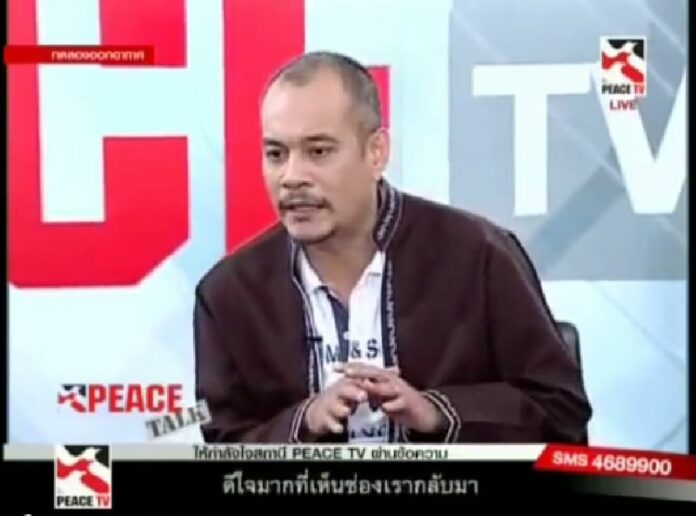
Core Redshirt leader Nattawut Saikua speaking on Peace TV in Sept 2014.

BANGKOK — Two satellite TV channels operated by Redshirt organizations have been suspended from the air for seven days for allegedly "inciting unrest" against the military junta.

The National Broadcasting and Telecommunication Commission (NBTC) ruled today that the channels, Peace TV and TV24 People's Station, violated the junta's order no. 97, which forbids media from fomenting violence or causing "divisions in the Kingdom." 

\
Core Redshirt leader
Jatuporn Prompan speaking on Peace TV in September 2014.

Sombat Leelapata, deputy sec-gen of the NBTC, told Manager news that the inquiry was spurred by a complaint from a national security agency that said the two channels were airing news programs and talk shows – some of which were hosted by Redshirt leaders such as Jatuporn Prompan and Nattawut Saikua – that may lead to chaos.

"The majority of those at the meeting concluded that such programs had content that could incite unrest and violate the NCPO’s order," Sombat was quoted as saying, referring to the junta's formal name, the National Council for Peace and Order. Sombat said the suspension will last for seven days. 

Both of Thailand’s Redshirt and Yellowshirt movements operate their own TV and radio channels featuring news programs, talk shows, and live broadcasts of their political rallies. Media agencies affiliated with the two groups played significant roles in the pro- and anti-government rallies last year that culminated in the May 2014 coup.

On 20 May 2014, then-army chief Gen. Prayuth Chan-ocha unilaterally imposed martial law and ordered all partisan media agencies to shut down, ostensibly to promote reconciliation among Thailand's rival political factions. Two days later, the general staged a coup d'etat and toppled the Redshirt-backed government. 

The partisan media outlets were later allowed to resume operations under the conditions that they change the names of their stations and refrain from broadcasting any material that could "incite unrest" or "cause confusion in society."

Redshirt leader Cherdchai Tantisirin told Khaosod today that he believes the NBTC is unfairly targeting Redshirt media agencies. 

"ASTV [Yellowshirt-run TV channel] is even more divisive than Redshirt TV channels," complained Cherdchai, one of the core leaders of the Redshirts official organization, the United Front of Democracy Against Dictatorship.

"[The junta] says they will repeal martial law, but at the same time, they shut down Redshirt TV," Cherdchai continued. "Their actions contradict their words. They shouldn't have done that. It will only make Gen. Prayuth Chan-ocha look like he intimidates the media without caring in the eyes of international communities. It will make Thailand look bad." 

Since seizing power in the 2014, Gen. Prayuth has regularly threatened to shut down media agencies that refuse to cooperate with his government or promote the junta's missions. Although he has stopped short of instituting full-scale media censorship, many Thai media agencies have exercised self-censorship in the face of the junta's intimidation tactics. 

"This morning, someone said the media needs to be impartial. No. I don't think they should say that. It isn't good," Gen. Prayuth advised reporters on 5 March 2015, Thailand's National Media Day. "What they should say is, first, media should report news that is factual. Second, they should support the government's efforts to move the country forward. And third, they should help reduce conflicts in society, and create understanding about the government's policies that give clear results."

 
For comments, or corrections to this article please contact: [email protected]

You can also find Khaosod English on Twitter and Facebook
http://twitter.com/KhaosodEnglish
http://www.facebook.com/KhaosodEnglish
Advertisement

Trust Prayuth with Article 44, Thai Govt Says

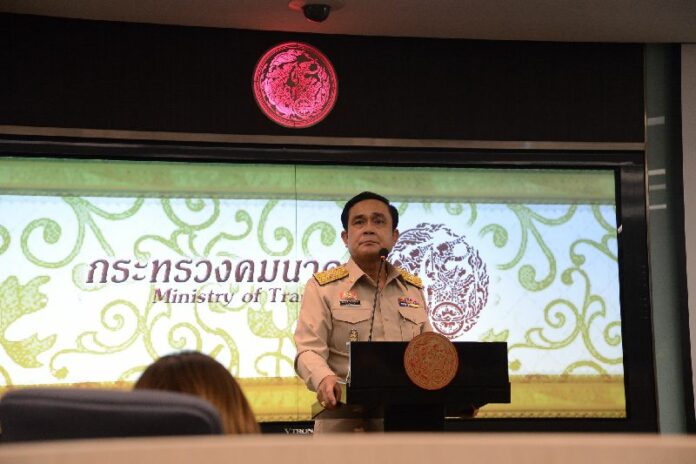
Gen. Prayuth Chan-ocha speaking at the Ministry of Transport, 30 March 2015.

BANGKOK — Although the plan to replace martial law with Article 44 of the interim constitution has been widely condemned by legal experts and rights advocates in Thailand, members of the military government publicly defended the proposal today, urging the public to trust that Gen. Prayuth Chan-ocha will judiciously exercise the Article’s broad powers.

"In the past, Gen. Prayuth has never used power in a wrong or excessive way," said Pornpetch Wichitcholchai, the chairman of the junta-appointed National Legislative Assembly. "I think the exercise of power under Article 44 will be done in a creative way."

\
Gen. Prayuth Chan-ocha speaking at the Ministry of Transport, 30 March 2015.

Gen. Prayuth announced last Friday that he may lift martial law, which has been in place since the coup last May, and replace it with Article 44 of the interim constitution, effectively a carte blanche to unilaterally intervene as he sees fit.

Under Article 44, the junta chairman may issue any order to "disrupt or suppress" an act that threatens to undermine national security, the monarchy, the economy, or the "administration of state affairs." These orders will be immediately deemed "legal, constitutional and conclusive," the article states.

"If [Gen. Prayuth] does good things and uses the law within proper boundaries, I believe Section 44 will be beneficial," Pornpetch said today. "From my own personal experience, the junta chairman has never used his powers harshly."

Gen. Prayuth, who is also Prime Minister, has refused to say when the transition will take place. Yesterday he told reporters, "It will happen when it does."

Human rights groups, legal experts, and politicians on both sides of the aisle have spoken out against the plan, arguing that Article 44 will only augment Gen. Prayuth’s ability to trample on civil liberties.

"At least martial law has the format of detaining individuals and trials, but Section 44 gives unlimited power to the Prime Minister," said Niran Pitakwatchara, chairman of the National Human Rights Commission (NHRC). "The government already has full control over the armed forces and the police. I want them to think whether it is appropriate to use Section 44 when there are reforms of many issues in the country, including problems about inequality."

Gen. Prawit Wongsuwan, deputy chairman of the junta, dismissed Niran’s concerns over the use of Section 44, which he said would be used to mimic the powers granted to the military by martial law.

"Martial law may look harsh in the eyes of foreigners, so we are considering to use Section 44 instead, in order to maintain peace and order," said Gen. Prawit, who also serves Minister of Defense. "The power will rest on the Prime Minister, who will know well what to do. Section 44 and martial law will have the same values, because they can be used to control situations. Section 44 will be focused on detention and searches, like martial law."

The general also urged the media to stop asking about the issue, because Gen. Prayuth has already "answered many times."

"I don't think I need to lecture anyone about this, because the law will be used for guarding against people who have ill will towards country. Therefore, good people need not to be worried. There will not be any violation of human rights."

Since seizing power in a military coup last May, the Thai junta has come under steady criticism from international human rights groups for using martial law to suppress civil liberties. The army has cited the 100-year-old law to arrest and detain individuals without charges, search properties without warrants, try civilians in martial courts, and ban public protests and political seminars. 

Related coverage:

For comments, or corrections to this article please contact: [email protected]

You can also find Khaosod English on Twitter and Facebook
http://twitter.com/KhaosodEnglish
http://www.facebook.com/KhaosodEnglish

Advertisement

Hot News

LATEST NEWS

Bangkok
overcast clouds
30 ° C
31.6 °
30 °
75 %
3.5kmh
98 %
Sat
30 °
Sun
34 °
Mon
34 °
Tue
33 °
Wed
32 °