27.2 C
Bangkok
Saturday, July 25, 2026
Home Blog Page 3038

Funeral Hands Out Free Lottery Tickets

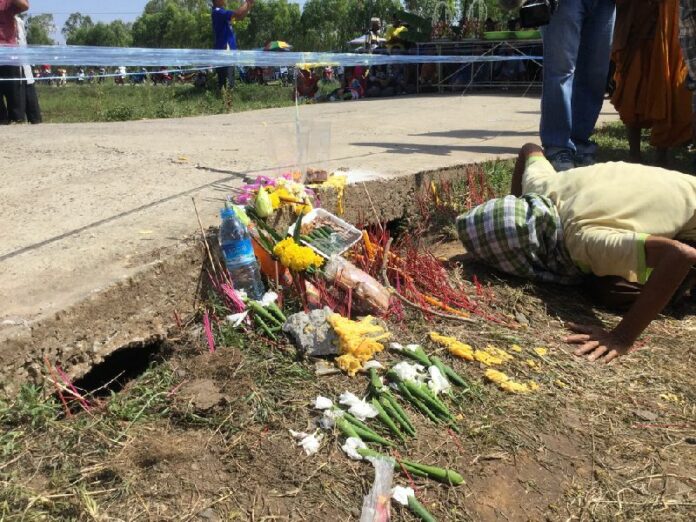
Residents of Surin province pray to a rise in the concrete they believe was formed by a local spirit, 14 May 2015.

AYUTTHAYA — The relatives of a late lottery seller in Ayutthaya province handed out over 300 lottery tickets at her cremation ceremony yesterday.

The tickets, which cost 30,000 baht in total, were distributed as souvenirs to honor the memory of Uthai Thongchart, who died on 10 May at the age of 57.

Uthai’s 44-year-old daughter, Israphorn Thongthai, said her her mother was a "fortune hunter" who sold lottery tickets in Petchburi province and participated in every bi-monthly draw.

"We did it for my mother, who liked to try her luck," Israphorn said. "And we want our neighbors who are lucky to win some prizes. The cremation for my mother was also held close to the next lottery draw [on 16 May]."

The state-run lottery is hugely popular in Thailand, with enthusiasts constantly on the hunt for supernatural signs that may hint at lucky numbers.

Today crowds of lottery hunters gathered to pray at a bump on a concrete road in Surin province. The worshipers said they believed the 10-inch rise in the concrete was caused by a local spirit, and could contain clues to lucky lottery numbers.

Wallop Ruengphorncharoen, chief officer of Mueang Surin District, said he would like residents to "exercise their wisdom." He also told reporters he has instructed officials to investigate the cause of the concrete bump. 

Lottery tickets currently cost around 120 baht, but Thailand's military government says it is working to lower the price.


For comments, or corrections to this article please contact: [email protected]

You can also find Khaosod English on Twitter and Facebook
http://twitter.com/KhaosodEnglish
http://www.facebook.com/KhaosodEnglish


Advertisement

Asian Countries Top International Achievement Tests in Math, Science

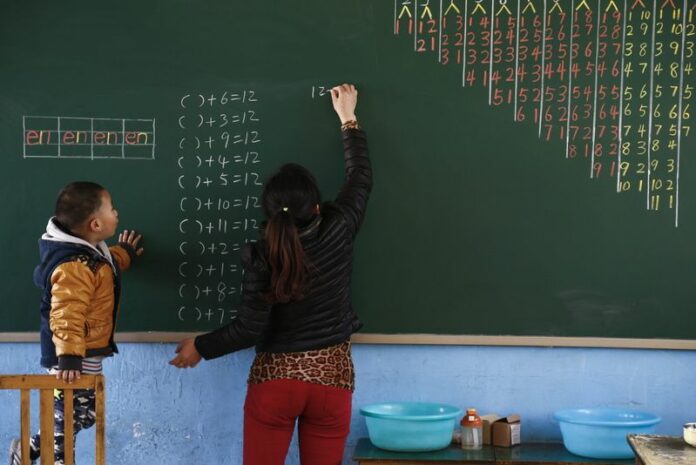
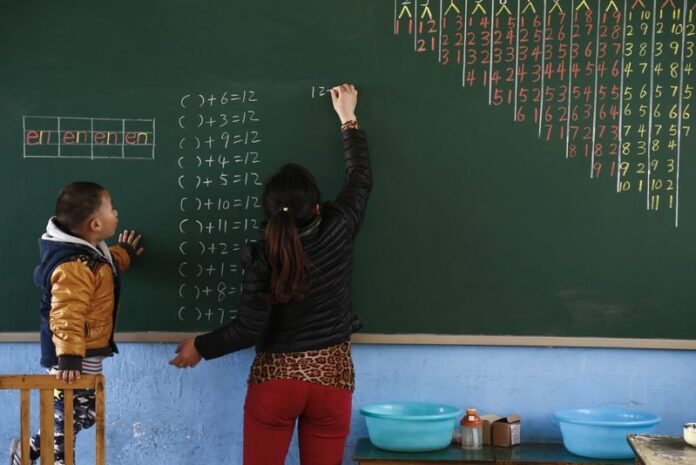
A Chinese kindergarten teacher writes math equations on a board as a young boy looks on at the Qiang Jian Wen Wu school in the west side of Beijing. EPA/ROLEX DELA PENA

KUALA LUMPUR (DPA) — Asian countries topped international achievement tests in mathematics and science, while African countries lagged at the bottom, according to a report published by the Organization for Economic Cooperation and Development (OECD).

Singapore headed the list of 76 countries included in the survey, followed by Hong Kong, South Korea, Japan and Taiwan, according to the report entitled Universal Basic Skills: What Countries Stand to Gain.

At the bottom were Ghana and South Africa while Germany was on the 13th spot behind another Asian country, Vietnam. Australia placed 14th, Britain 20th and the US 28th.

The report aims to provide a comprehensive picture of the quality of learning outcomes around the world, and estimates the long-term economic gains of improving access to education and improving quality.

It will be presented to the World Education Forum in South Korea next week.

"This is the first time we have a truly global scale of the quality of education," OECD's education director, Andreas Schleicher, told British broadcaster BBC.

"The idea is to give more countries, rich and poor, access to comparing themselves against the world's education leaders, to discover their relative strengths and weaknesses, and to see what the long-term economic gains from improved quality in schooling could be for them," he said.

(Reporting by John Grafilo)


For comments, or corrections to this article please contact: [email protected]

You can also find Khaosod English on Twitter and Facebook
http://twitter.com/KhaosodEnglish
http://www.facebook.com/KhaosodEnglish

Advertisement

Prayuth: Cabinet, Not Junta, Will Decide on Charter Referendum

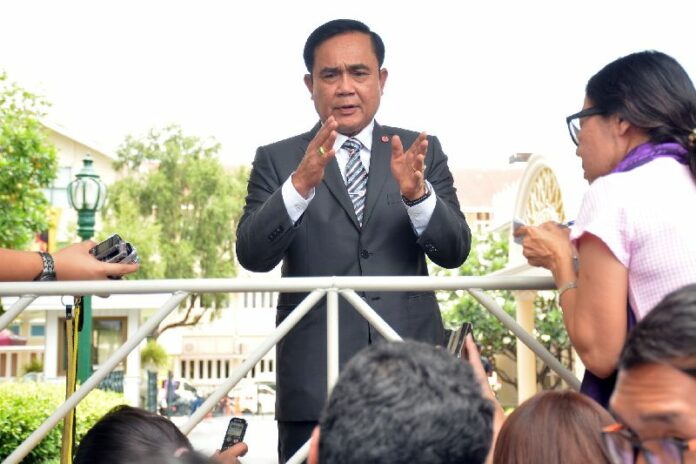
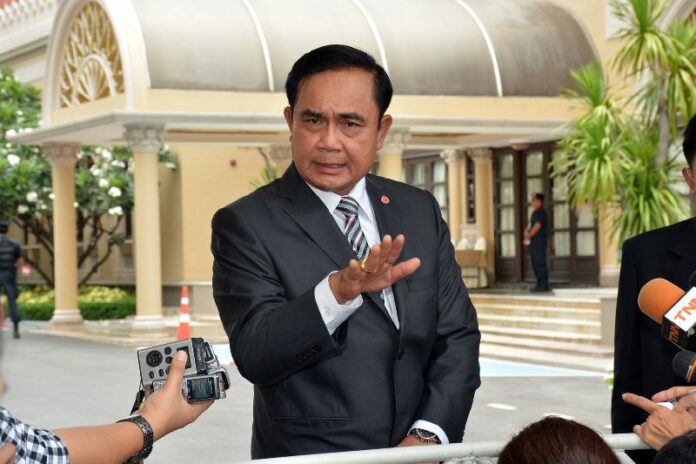
Junta chairman and Prime Minister Gen. Prayuth Chan-ocha at the Government House in Bangkok, 14 May 2015.

BANGKOK — Thailand's military ruler said his Cabinet will decide whether to hold a referendum on the new constitution written by a junta-appointed committee.

Gen. Prayuth Chan-ocha, who led the May 2014 coup, said he will endorse the decision reached by a majority of Cabinet members, who he selected after installing himself as Prime Minister last year.

\
Junta chairman and Prime Minister Gen. Prayuth Chan-ocha at the Government House in Bangkok, 14 May 2015.

The general, who is also chairman of the ruling junta, declined to comment further on the referendum question, saying he did not want to influence the Cabinet members before a formal voting session is held.

"If I say now, the people in the Cabinet will be too afraid to voice different opinions," he said. "I don't want that. So I cannot say anything right now."

The junta, whose official name is the National Council for Peace and Order (NCPO), dissolved the previous charter after toppling an elected government last May. 

Gen. Prauyth also explained that the Cabinet, not the junta, will decide on the referendum because "the NCPO is all soldiers. None of them are lawyers. Therefore, whether there will be a referendum, what topic, and how, I alone cannot [decide]. And the NCPO alone cannot either."

His announcement came after the junta-appointed Constitution Drafting Committee (CDC) voiced its official support for a referendum yesterday. A committee spokesperson said the recommendation would be presented to Gen. Prayuth in the form of a letter, though the junta chairman said he has yet to receive one.

"I have not received the letter," Gen. Prayuth said. "It's not like I can just receive it because the media reported about it. I have not received any letter. As for the next procedure, once I have received the formal letter, I will have the Cabinet deliberate on on the matter." 

If the majority of the Cabinet agrees to a referendum, the government will ask the National Legislative Assembly to amend the current interim constitution accordingly, Gen. Prayuth said. The interim charter, enacted by the junta after the coup, does not mention a referendum. 

Deputy Prime Minister Visanu Kruengam confirmed to reporters today that the Cabinet will meet on 19 May to vote on the referendum. If adopted, the poll would likely take place in December or January, several months after the charter is set to be finalized in September 2015.

"We cannot do it in a week's time," Visanu explained.

Like Gen. Prayuth, Visanu declined to offer his personal opinion whether there should be a referendum, saying "I cannot answer that, because I am one of the Cabinet. If I [answer], it will be seen as an opinion of the Cabinet. So, I don't want to speak through the media."

The junta’s charter draft has drawn criticism from pro-democracy activists and politicians from major parties. Critics say the current draft of the junta's charter establishes an uneven balance of power that cripples elected politicians and favors appointed "independent" agencies, whose members are historically allied with the traditional elite. The charter’s most controversial features include the establishment of a mostly-appointed Senate and the option for an unelected Prime Minister.

Some pro-democracy activists and politicians have proposed the junta organize a referendum that would allow voters to choose between the junta’s charter and the 1997 constitution, which was written by an elected assembly and is known as the "People’s Constitution" for its egalitarian nature.

Other activists in Thailand have campaigned for a referendum that would give Thais the chance to elect a fresh assembly of drafters to pen a new charter altogether.

In the referendum for the post-coup 2007 charter, which was also drafted by a junta-appointed council, voters were only permitted to accept or decline the document. Critics say that many voters reluctantly approved the junta’s charter out of fear that the undisclosed alternative would be worse.

Yesterday, Gen. Prayuth suggested he was irritated by the question of a referendum. In a speech at a forum on Thai agriculture in Nonthaburi province, he expressed frustration by the media's persistent questions on the topic.

"They keep asking me, will you do it, how will you do it, they just keep asking! What do they want from me?" Gen. Prayuth fumed. "The reporters have asked me so many times that I feel annoyed. I won't answer them about it anymore. I would rather spend time thinking about running the country."


 

For comments, or corrections to this article please contact: [email protected]

You can also find Khaosod English on Twitter and Facebook
http://twitter.com/KhaosodEnglish
http://www.facebook.com/KhaosodEnglish

Advertisement

Prayuth: Cabinet, Not Junta, Will Decide on Charter Referendum

Junta chairman and Prime Minister Gen. Prayuth Chan-ocha at the Government House in Bangkok, 14 May 2015.

BANGKOK — Thailand's military ruler said his Cabinet will decide whether to hold a referendum on the new constitution written by a junta-appointed committee.

Gen. Prayuth Chan-ocha, who led the May 2014 coup, said he will endorse the decision reached by a majority of Cabinet members, who he selected after installing himself as Prime Minister last year.

\
Junta chairman and Prime Minister Gen. Prayuth Chan-ocha at the Government House in Bangkok, 14 May 2015.

The general, who is also chairman of the ruling junta, declined to comment further on the referendum question, saying he did not want to influence the Cabinet members before a formal voting session is held.

"If I say now, the people in the Cabinet will be too afraid to voice different opinions," he said. "I don't want that. So I cannot say anything right now."

The junta, whose official name is the National Council for Peace and Order (NCPO), dissolved the previous charter after toppling an elected government last May. 

Gen. Prauyth said the Cabinet, not the junta, will decide on the referendum because "the NCPO is all soldiers. None of them are lawyers. Therefore, whether there will be a referendum, what topic, and how, I alone cannot [decide]. And the NCPO alone cannot either."

His announcement came after the junta-appointed Constitution Drafting Committee (CDC) voiced its official support for a referendum yesterday. A committee spokesperson said the recommendation would be presented to Gen. Prayuth in the form of a letter, though the junta chairman said he has yet to receive one.

"I have not received the letter," Gen. Prayuth said. "It's not like I can just receive it because the media reported about it. I have not received any letter. As for the next procedure, once I have received the formal letter, I will have the Cabinet deliberate on on the matter." 

If the majority of the Cabinet agrees to a referendum, the government will ask the National Legislative Assembly to amend the current interim constitution accordingly, Gen. Prayuth said. The interim charter, enacted by the junta after the coup, does not mention a referendum. 

Deputy Prime Minister Visanu Kruengam confirmed to reporters today that the Cabinet will meet on 19 May to vote on the referendum. If adopted, the poll would likely take place in December or January, several months after the charter is set to be finalized in September 2015.

"We cannot do it in a week's time," Visanu explained.

Like Gen. Prayuth, Visanu declined to offer his personal opinion whether there should be a referendum, saying "I cannot answer that, because I am one of the Cabinet. If I [answer], it will be seen as an opinion of the Cabinet. So, I don't want to speak through the media."

The junta’s charter draft has drawn criticism from pro-democracy activists and politicians from major parties. Critics say the current draft of the junta's charter establishes an uneven balance of power that cripples elected politicians and favors appointed "independent" agencies, whose members are historically allied with the traditional elite. The charter’s most controversial features include the establishment of a mostly-appointed Senate and the option for an unelected Prime Minister.

Some pro-democracy activists and politicians have proposed the junta organize a referendum that would allow voters to choose between the junta’s charter and the 1997 constitution, which was written by an elected assembly and is known as the "People’s Constitution" for its egalitarian nature.

Other activists in Thailand have campaigned for a referendum that would give Thais the chance to elect a fresh assembly of drafters to pen a new charter altogether.

In the referendum for the post-coup 2007 charter, which was also drafted by a junta-appointed council, voters were only permitted to accept or decline the document. Critics say that many voters reluctantly approved the junta’s charter out of fear that the undisclosed alternative would be worse.

Yesterday, Gen. Prayuth suggested he was irritated by the question of a referendum. In a speech at a forum on Thai agriculture in Nonthaburi province, he expressed frustration by the media's persistent questions on the topic.

"They keep asking me, will you do it, how will you do it, they just keep asking! What do they want from me?" Gen. Prayuth fumed. "The reporters have asked me so many times that I feel annoyed. I won't answer them about it anymore. I would rather spend time thinking about running the country."

 

For comments, or corrections to this article please contact: [email protected]

You can also find Khaosod English on Twitter and Facebook
http://twitter.com/KhaosodEnglish
http://www.facebook.com/KhaosodEnglish

Advertisement

Over 200 Million Baht Seized From Suspected Human Traffickers

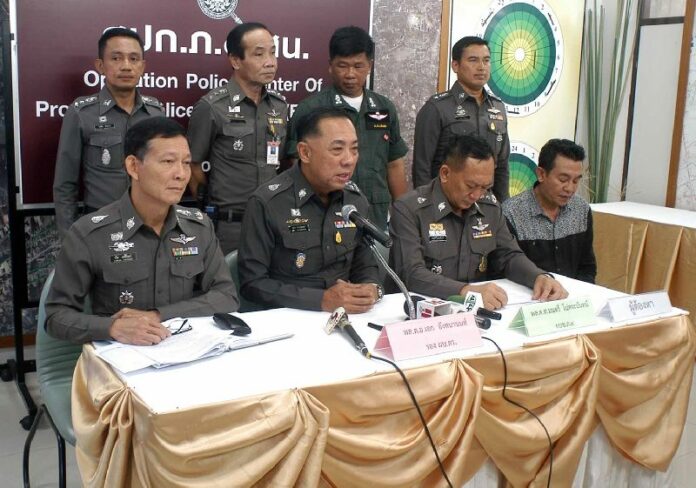
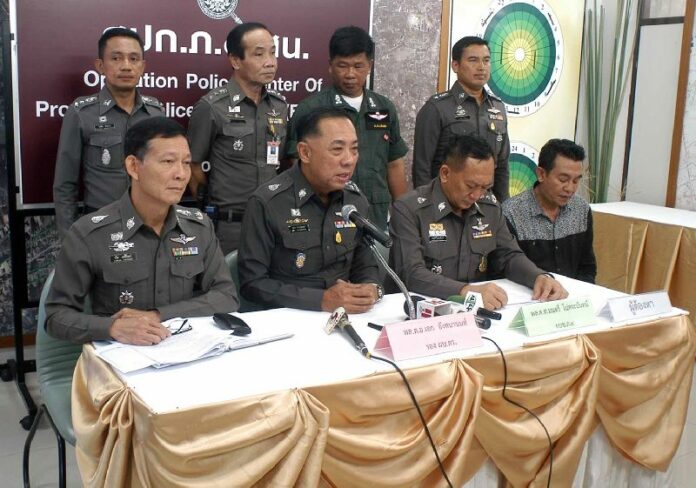
Police press conference in Songkhla province, 14 May 2015.

BANGKOK — Thai authorities say they have seized more than 200 million baht in assets from a network of alleged human traffickers operating in southern Thailand.

The assets, worth approximately 204 million baht, were seized from suspects in Ranong, Satun, and Nakhon Si Thammarat provinces this week, said Pol.Gen. Aek Angsananont, deputy chief of Royal Thai Police.

Thailand’s Anti-Money Laundering Office (AMLO) is currently looking for any evidence that links the assets to human trafficking operations in the region. 

\
The fifth and largest refugee detention camp found by police in the jungle in Songkhla, 12 May 2015.

After discovering a detention camp and mass grave of Rohingya corpses in the jungle near the Thai-Malysian border on 1 May, Thai authorities have launched an unprecedented crackdown on the well-established human smuggling operation in southern Thailand.

Over the past two weeks, four more large camps and at least 70 smaller sites have been found in the mountainous border region.

Police believe the camps were used by brokers to detain Rohingya and Bangladeshi refugees and demand hefty ransom fees from their relatives before smuggling them into Malaysia. 

Local Thai officials have historically offered protection to the human smugglers by looking the other way in exchange for bribes. 

Sixty-one arrest warrants have been issued in connection with the trafficking network since the beginning of the month, said Pol.Maj.Gen. Paween Pongsirin, deputy commander of Eighth Region Police. Twenty-six people have been arrested so far, with the latest suspect surrendering to police this morning. 

Several of the suspects are local Thai officials, including the mayor of Songkhla's Padang Besar district, where many of the camps are located.

Police say the ringleader of the regional trafficking network is Patchuban Angchotipan, aka Ko Tong, a former local administrative official and resort owner in Satun province who is still on the run.

\
Rohingya and Bangladeshi migrants are processed by authorities in Songkhla province on 10 May 2015.

Since the crackdown, security officers have encountered at least 276 refugees in Thailand who were left to fend for themselves after they were reportedly abandoned by their brokers. Many of the migrants showed signs of physical abuse and malnutrition. Some survivors of the camps said traffickers beat and even murdered captives whose families refused to send money.

Many of the refugees have been identified as Rohingya Muslims, a persecuted minority from western Myanmar. The others hail from Bangladesh, where an estimated 300,000 Rohingyas live in impoverished refugee camps.

The United Nations' refugee agency estimates that 25,000 people fled Myanmar and Bangladesh on boat in the first quarter of 2015, a number twice as high as the same period last year. The majority of those people were brought to jungle camps in Thailand, where starvation, beatings, and other abuse was common, according to the UN report.

The crackdown on Thai soil has disrupted traditional smuggling routes in the region and spurred many traffickers to abandon their ships at sea. Nearly 2,000 migrants have landed in Malaysia and Indonesia in the past week, and an estimated 8,000 are thought to be stranded off shore, as countries in the region hesitate to tackle the mounting humanitarian crisis. 

Pol.Maj.Gen. Paween said officers and their interpreters are questioning the suspected trafficking victims intercepted by police Thailand, whose testimonies will be used as evidence against the suspects facing trafficking charges.

Meanwhile, security officers raided five properties in Satun province to look for five suspects charged with human trafficking, but the suspects had already fled their homes. 

For comments, or corrections to this article please contact: [email protected]

You can also find Khaosod English on Twitter and Facebook
http://twitter.com/KhaosodEnglish
http://www.facebook.com/KhaosodEnglish

 
Advertisement

Over 200 Million Baht Seized From Suspected Human Traffickers

Police press conference in Songkhla province, 14 May 2015.

BANGKOK — Thai authorities say they have seized more than 200 million baht in assets from a network of alleged human traffickers operating in southern Thailand.

The assets, worth approximately 204 million baht, were seized from suspects in Ranong, Satun, and Nakhon Si Thammarat provinces this week, said Pol.Gen. Aek Angsananont, deputy chief of Royal Thai Police.

Thailand’s Anti-Money Laundering Office (AMLO) is currently looking for any evidence that links the assets to human trafficking operations in the region. 

\
The fifth and largest refugee detention camp found by police in the jungle in Songkhla, 12 May 2015.

After discovering a detention camp and mass grave of Rohingya corpses in the jungle near the Thai-Malysian border on 1 May, Thai authorities have launched an unprecedented crackdown on the well-established human smuggling operation in southern Thailand.

Over the past two weeks, four more large camps and at least 70 smaller sites have been found in the mountainous border region.

Police believe the camps were used by brokers to detain Rohingya and Bangladeshi refugees and demand hefty ransom fees from their relatives before smuggling them into Malaysia. 

Local Thai officials have historically offered protection to the human smugglers by looking the other way in exchange for bribes. 

Sixty-one arrest warrants have been issued in connection with the trafficking network since the beginning of the month, said Pol.Maj.Gen. Paween Pongsirin, deputy commander of Eighth Region Police. Twenty-six people have been arrested so far, with the latest suspect surrendering to police this morning. 

Several of the suspects are local Thai officials, including the mayor of Songkhla's Padang Besar district, where many of the camps are located.

Police say the ringleader of the regional trafficking network is Patchuban Angchotipan, aka Ko Tong, a former local administrative official and resort owner in Satun province who is still on the run.

\
Rohingya and Bangladeshi migrants are processed by authorities in Songkhla province on 10 May 2015.

Since the crackdown, security officers have encountered at least 276 refugees in Thailand who were left to fend for themselves after they were reportedly abandoned by their brokers. Many of the migrants showed signs of physical abuse and malnutrition. Some survivors of the camps said traffickers beat and even murdered captives whose families refused to send money.

Many of the refugees have been identified as Rohingya Muslims, a persecuted minority from western Myanmar. The others hail from Bangladesh, where an estimated 300,000 Rohingyas live in impoverished refugee camps.

The United Nations' refugee agency estimates that 25,000 people fled Myanmar and Bangladesh on boat in the first quarter of 2015, a number twice as high as the same period last year. The majority of those people were brought to jungle camps in Thailand, where starvation, beatings, and other abuse was common, according to the UN report.

The crackdown on Thai soil has disrupted traditional smuggling routes in the region and spurred many traffickers to abandon their ships at sea. Nearly 2,000 migrants have landed in Malaysia and Indonesia in the past week, and an estimated 8,000 are thought to be stranded off shore, as countries in the region hesitate to tackle the mounting humanitarian crisis. 

Pol.Maj.Gen. Paween said officers and their interpreters are questioning the suspected trafficking victims intercepted by police Thailand, whose testimonies will be used as evidence against the suspects facing trafficking charges.

Meanwhile, security officers raided five properties in Satun province to look for five suspects charged with human trafficking, but the suspects had already fled their homes. 

For comments, or corrections to this article please contact: [email protected]

You can also find Khaosod English on Twitter and Facebook
http://twitter.com/KhaosodEnglish
http://www.facebook.com/KhaosodEnglish

 
Advertisement

Asian Countries Top International Achievement Tests in Math, Science

A Chinese kindergarten teacher writes math equations on a board as a young boy looks on at the Qiang Jian Wen Wu school in the west side of Beijing. EPA/ROLEX DELA PENA

KUALA LUMPUR (DPA) — Asian countries topped international achievement tests in mathematics and science, while African countries lagged at the bottom, according to a report published by the Organization for Economic Cooperation and Development (OECD).

Singapore headed the list of 76 countries included in the survey, followed by Hong Kong, South Korea, Japan and Taiwan, according to the report entitled Universal Basic Skills: What Countries Stand to Gain.

At the bottom were Ghana and South Africa while Germany was on the 13th spot behind another Asian country, Vietnam. Australia placed 14th, Britain 20th and the US 28th.

The report aims to provide a comprehensive picture of the quality of learning outcomes around the world, and estimates the long-term economic gains of improving access to education and improving quality.

It will be presented to the World Education Forum in South Korea next week.

"This is the first time we have a truly global scale of the quality of education," OECD's education director, Andreas Schleicher, told British broadcaster BBC.

"The idea is to give more countries, rich and poor, access to comparing themselves against the world's education leaders, to discover their relative strengths and weaknesses, and to see what the long-term economic gains from improved quality in schooling could be for them," he said.

(Reporting by John Grafilo)


For comments, or corrections to this article please contact: [email protected]

You can also find Khaosod English on Twitter and Facebook
http://twitter.com/KhaosodEnglish
http://www.facebook.com/KhaosodEnglish

Advertisement

Malaysia Denies Migrant Boat Reports

KUALA LUMPUR (DPA) — Malaysian police Thursday denied reports of a boat carrying hundreds of Rohingyas from Myanmar and Bangladeshis said to have been turned away from its coast.

"There is no truth to reports that another boat full of suspected illegal migrants was seen off our shores," a senior police official told dpa on condition of anonymity.

\
A Malaysian official marks an Rohinghya migrant in Kuah, on Langkawi island, May 2015, EPA/STR 

Media reports earlier said a boat with more than 500 migrants had been turned away by Malaysian authorities off the coast of northern Penang state late Wednesday.

A maritime surveillance official told dpa they were still working to confirm reports of a migrant boat seen heading to Penang.

"I do not have knowledge of the report that we have turned away boat people," he added.

Earlier in the week more than 1,000 migrants from Myanmar and Bangladesh were found to have landed on the nearby island of Langkawi.

Related coverage:
8,000 Refugees Reportedly Adrift in South-East Asia
Thai Government Mulls Opening Refugee Camps for Rohingyas


For comments, or corrections to this article please contact: [email protected]

You can also find Khaosod English on Twitter and Facebook
http://twitter.com/KhaosodEnglish
http://www.facebook.com/KhaosodEnglish

Advertisement

Democrat Demands New Inquiry Into 2010 Grand Palace Attack

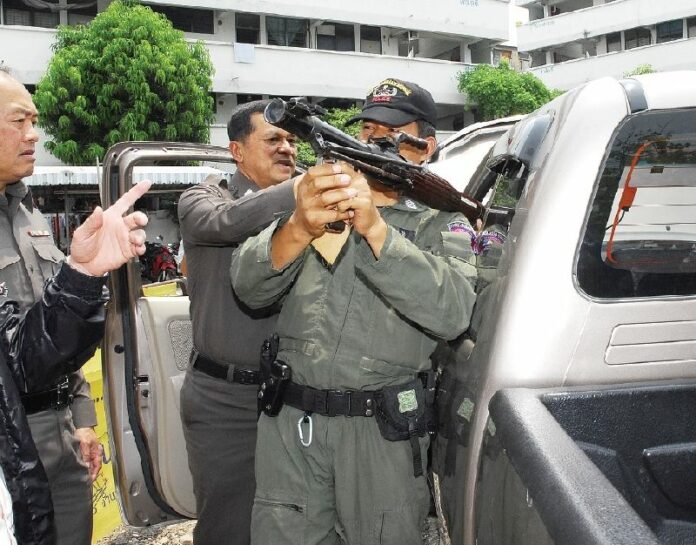
A police officer shoulders an unarmed RPG during a ballistic test at Ministry of Defense, 21 March 2010.

BANGKOK — A Democrat Party politician has demanded the Division of Special Investigation (DSI) launch a fresh investigation into a rocket attack near the Grand Palace in Bangkok in 2010.

The attack took place on the night of 20 March 2010, while tens of thousands of Redshirt demonstrators were occupying nearby Ratchadamnoen Avenue to demand the Democrat-led government call a new election.

Police say a rocket propelled grenade (RPG) was fired at the Temple of Emerald Buddha, a sacred site located in the same compound as the Grand Palace, but missed and slammed into an electric pole next to the Ministry of Defense instead. No one was injured in the attack. 

Bundit Sitthithum, a Redshirt supporter and former police officer, was arrested and accused of firing the rocket. He was found guilty and sentenced to 38 years in prison in December 2011, but later acquitted in a court of appeals, which cited insufficient evidence and contradictory testimony from witnesses.

Wachara Petchthong, a former Democrat Party MP, urged the DSI to re-open the case duing a press conference at the Democrat Party's headquarters in Bangkok today. Wachara also specifically criticized former DSI chief Tharit Pengdith for dropping charges against a police colonel who he believes was the mastermind of the attack. 

Wachara also asked the DSI to investigate Arisman Pongruangrong, a prominent Redshirt activist who urged Redshirt protesters in January 2010 to bring gasoline to the next mass rally in Bangkok. He also warned in the speech that if the military attempts to disperse the protests, Redshirts will turn the capital city "into a sea of fire." 
Five months after the speech, arson attacks broke out across Bangkok during the military crackdown on Redshirt protests on 19 May 2010. Democrat Party politicians have accused Arisman and other Redshirt leaders of engineering the attacks.  

Wachara said he will personally submit his demands to Gen. Paiboon Khumchaya, Minister of Justice, on 14 May.


For comments, or corrections to this article please contact: [email protected]

You can also find Khaosod English on Twitter and Facebook
http://twitter.com/KhaosodEnglish
http://www.facebook.com/KhaosodEnglish

Advertisement

Ball in Junta's Court After Charter Drafters Endorse Referendum

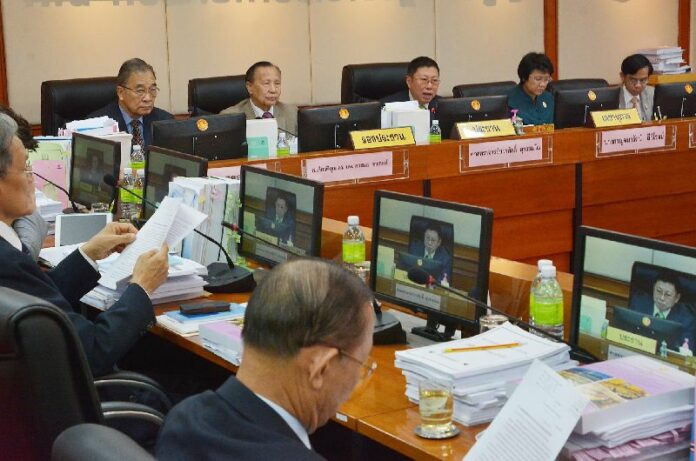
The Constitutional Drafting Committee (CDC) decided to endorse a referendum during a meeting on 13 May 2015.

BANGKOK — The Constitutional Drafting Committee (CDC) will formally ask the ruling military junta to organize a referendum on the new constitution, a spokesperson said.

The CDC, a body appointed by the junta to replace the charter dissolved after the May 2014 coup, reached a consensus on the question of a referendum after a two-hour meeting today, said Gen. Lertrat Rattanavanich.

\
Junta chairman Gen. Prayuth Chan-ocha will have the final say on a referendum, 12 May 2015.

The committee will now submit its opinion to the junta and the Cabinet, both of which are led by coup leader Gen. Prayuth Chan-ocha, who will have the final say.  

According to Gen. Lertrat, the CDC agreed that as the highest body of law, the constitution requires "social consensus." Gen. Lertrat also noted that there was a referendum for the previous constitution, which was written after the 2006 coup. 
"In this [current] draft of the constitution, we focus on the participation of the citizens as our main principle," Lertrat told reporters. "Therefore, there should be a referendum."

Gen. Lertrat said the constitution will be considered legally "accepted" if more than half of the country’s eligible voters participate in the poll, and more than half the participants vote in favor of the charter. According to these conditions, at least 11.75 million people would need to approve the constitution for it to pass.

Other details about the format and options put forth in the referendum will be left to the junta to decide, Gen. Lertrat said.  

Asked whether he believes a referendum will derail the junta's "road map" to democracy, which calls for a national election in early 2016, Gen. Lertrat replied, "I don't think it will affect the road map, because some political parties said themselves that they can wait another year for an election."

Gen. Prayuth, who has neither endorsed nor ruled out a referendum, has expressed concern that the vote will push back the timeline for elections.

The junta’s charter draft has been widely condemned by pro-democracy activists and politicians on both sides of the aisle. Critics say the constitution cripples elected politicians with an uneven balance of power that favors appointed watchdog groups, whose members are historically allied with the traditional elite. The charter’s most controversial features include the establishment of a mostly-appointed Senate and the option for an unelected Prime Minister.

Some pro-democracy activists and politicians have proposed the junta organize a referendum that would allow voters to choose between the junta’s charter and the 1997 constitution, which was written by an elected assembly and is known as the “People’s Constitution” for its egalitarian nature.

Other activists in Thailand have campaigned for a referendum that would give Thais the chance to elect a fresh assembly of drafters to pen a new charter altogether.

In the referendum for the 2007 charter, which was also drafted by a junta-appointed council, voters were only permitted to accept or decline the document. Critics say that many voters reluctantly approved the junta’s charter out of fear that the undisclosed alternative would be worse.

Gen. Lertrat added that the CDC has also dismissed a suggestion by a member of the junta-appointed National Reform Council (NRC) that the junta to stay in power for two more years. 


For comments, or corrections to this article please contact: [email protected]

You can also find Khaosod English on Twitter and Facebook
http://twitter.com/KhaosodEnglish
http://www.facebook.com/KhaosodEnglish

Advertisement

Hot News

LATEST NEWS

Bangkok
overcast clouds
27.2 ° C
27.2 °
24.4 °
81 %
2.7kmh
99 %
Sat
36 °
Sun
32 °
Mon
30 °
Tue
31 °
Wed
30 °