































33.3 C
Bangkok
Saturday, July 25, 2026
Home Blog Page 3040

Thai Government Mulls Opening Refugee Camps for Rohingyas

A police officer documenting Rohingya and Bangladeshi migrants found in Songkhla province on 10 May 2015.

BANGKOK — Thai junta chairman Gen. Prayuth Chan-ocha said the government is "in talks" about potentially opening refugee camps for Rohingyas who have fled ethnic persecution in Myanmar.

"We are discussing it," Gen. Prayuth said, "because in order to do anything, we have to consider many aspects, such as national security, because our main goal is to take care of Thai people. But human rights cannot be denied either."

\
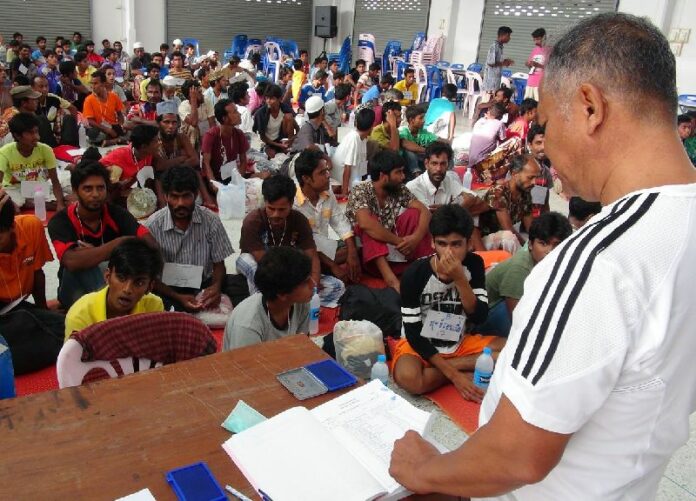
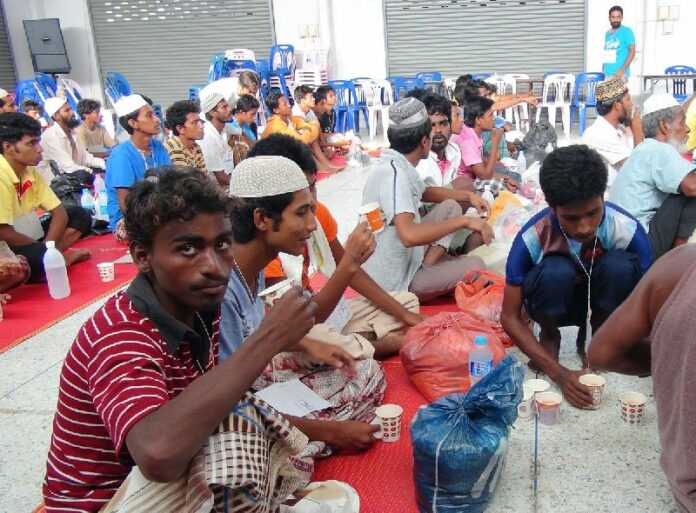
Rohingya and Bangladeshi migrants are processed by authorities in Songkhla province on 10 May 2015.

The commander of the Royal Thai Police, Pol.Gen. Somyot Pumpangmuang, suggested setting up the camps yesterday in response to the nearly 300 refugees that have been rescued by police in southern Thailand over the past twelve days. The refugees appeared to have been abandoned by their smugglers after word spread of Thai police’s crackdown on trafficking operations in the region.

Tens of thousands of Muslim Rohingyas have fled Myanmar, where they are denied citizenship, to escape violent persecution by radical Buddhists that erupted in 2012. Around 300,000 stateless Rohingya are also estimated to live in destitute refugee camps in bordering Bangladesh.  Many refugees have paid smugglers to ferry them to other countries, such as Muslim-friendly Malaysia, only to be exploited by traffickers in Thailand who hold them for ransom or sell them into slavery.

In the past, Rohingyas intercepted by Thai authorities have been tried in court on charges of illegal entry and deported. Since neither Myanmar nor Bangladesh authorities recognize Rohingyas as citizens, many refugees have languished in temporary shelters as authorities struggle to solve the legal limbo. 

Pol.Gen. Somyot's remark yesterday was the first time a high-ranking Thai official has suggested an alternative policy for dealing with the influx of Rohingya migrants.  

Speaking to reporters today, Gen. Prayuth said he would also consult the governments of neighboring countries and international organizations about how to proceed with the refugee crisis. Currently, Rohingyas who enter Thailand without permission "will be handled in accordance with the laws," the general said. 

"Thailand is only a transit country," Gen. Prayuth said. "The destination countries are not Thailand. It's a transnational crime movement. We are only involved as a transit country. So we have to solve problems by asking for cooperation from other countries."

Since the crackdown on Thai soil began earlier this month, the number of migrants arriving by boat to other Southeast Asian countries has surged. Over the weekend, more than 1,500 migrants from Myanmar and Bangladesh were rounded up by police after arriving in Malaysia and Indonesia.

An official from the International Organization for Migration said today that at least 8,000 migrants are believed to be stranded off shore. 

Meanwhile, Anusit Kunakorn, director of the National Security Council (NSC), told Thai News Agency that he believes establishing refugee camps for Rohingyas in Thailand may "affect national security." 

"I believe the problem about Rohingyas must be solved by many countries together. This is not a burden of Thailand," Anusit was quoted as saying. "The origin and destination countries, including the United Nations, have to solve this problem together."

Anusit also said the Thai government should address the root causes of the crisis and focus on persuading the Myanmar government to be more tolerant of the Rohingyas.  

Read more:
 
For comments, or corrections to this article please contact: [email protected]

You can also find Khaosod English on Twitter and Facebook
http://twitter.com/KhaosodEnglish
http://www.facebook.com/KhaosodEnglish
Advertisement

Thai Government Mulls Opening Refugee Camps for Rohingyas

Rohingya and Bangladeshi migrants are processed by authorities in Songkhla province on 10 May 2015.

BANGKOK — Thai junta chairman Gen. Prayuth Chan-ocha said the government is "in talks" about potentially opening refugee camps for Rohingyas who have fled ethnic persecution in Myanmar.

"We are discussing it," Gen. Prayuth said, "because in order to do anything, we have to consider many aspects, such as national security, because our main goal is to take care of Thai people. But human rights cannot be denied either."

\
A police officer documenting Rohingya and Bangladeshi migrants found in Songkhla province on 10 May 2015.

The commander of the Royal Thai Police, Pol.Gen. Somyot Pumpangmuang, suggested setting up the camps yesterday in response to the nearly 300 refugees that have been rescued by police in southern Thailand over the past twelve days. The refugees appeared to have been abandoned by their smugglers after word spread of Thai police’s crackdown on trafficking operations in the region.

Tens of thousands of Muslim Rohingyas have fled Myanmar, where they are denied citizenship, to escape violent persecution by radical Buddhists that erupted in 2012. Around 300,000 stateless Rohingya are also estimated to live in destitute refugee camps in bordering Bangladesh.  Many refugees have paid smugglers to ferry them to other countries, such as Muslim-friendly Malaysia, only to be exploited by traffickers in Thailand who hold them for ransom or sell them into slavery.

In the past, Rohingyas intercepted by Thai authorities have been tried in court on charges of illegal entry and deported. Since neither Myanmar nor Bangladesh authorities recognize Rohingyas as citizens, many refugees have languished in temporary shelters as authorities struggle to solve the legal limbo. 

Pol.Gen. Somyot's remark yesterday was the first time a high-ranking Thai official has suggested an alternative policy for dealing with the influx of Rohingya migrants.  

Speaking to reporters today, Gen. Prayuth said he would also consult the governments of neighboring countries and international organizations about how to proceed with the refugee crisis. Currently, Rohingyas who enter Thailand without permission "will be handled in accordance with the laws," the general said. 

"Thailand is only a transit country," Gen. Prayuth said. "The destination countries are not Thailand. It's a transnational crime movement. We are only involved as a transit country. So we have to solve problems by asking for cooperation from other countries."

Since the crackdown on Thai soil began earlier this month, the number of migrants arriving by boat to other Southeast Asian countries has surged. Over the weekend, more than 1,500 migrants from Myanmar and Bangladesh were rounded up by police after arriving in Malaysia and Indonesia.

An official from the International Organization for Migration said today that at least 8,000 migrants are believed to be stranded off shore. 

Meanwhile, Anusit Kunakorn, director of the National Security Council (NSC), told Thai News Agency that he believes establishing refugee camps for Rohingyas in Thailand may "affect national security." 

"I believe the problem about Rohingyas must be solved by many countries together. This is not a burden of Thailand," Anusit was quoted as saying. "The origin and destination countries, including the United Nations, have to solve this problem together."

Anusit also said the Thai government should address the root causes of the crisis and focus on persuading the Myanmar government to be more tolerant of the Rohingyas.  

For comments, or corrections to this article please contact: [email protected]

You can also find Khaosod English on Twitter and Facebook
http://twitter.com/KhaosodEnglish
http://www.facebook.com/KhaosodEnglish

Advertisement

Songkhla Governor Pleads for More Rohingya Interpreters

Security officers patrol a rive in Satul province looking for human traffickers and refugees, 10 May 2015.

SONGKHLA — The governor of the southern province of Songkhla, where nearly 300 refugees from Myanmar and Bangladesh have been rescued this month, is pleading for more interpreters from the central government.

The refugees, who were found wandering the jungle after being abandoned by human smugglers, are a mix of Bangladeshis and Rohingyas, a Muslim minority from Myanmar.

\
Police found a group of 26 migrants from Myanmar and Bangladesh in Songklha on 10 May, 2015.

Songkhla's Governor, Thamrong Charoenkul, said there are currently only five interpreters who can speak Rohingya or Bengali. He said he has requested more interpreters from the Ministry of Social Development and Human Security in Bangkok. 

"There are obstacles in our categorizing process to determine which persons are victims of human trafficking and which entered the Kingdom illegally,"  Thamrong said. "Songkhla has only five interpreters, which is insufficient." 

Police believe the migrants, who are now being housed in a temporary shelter, were abandoned by their brokers after Thai authorities ordered a sweep of the province following the discovery of a suspected trafficking camp and a mass grave of Rohingya corpses on 1 May. 

The Rohingyas hail from western Myanmar, where they face violent persecution from the local Buddhist population and are denied citizenship by the state. Around 300,000 stateless Rohingya are also estimated to live in destitute refugee camps in bordering Bangladesh.

Since 2012, tens of thousands of Rohingyas have boarded boats to escape Myanmar and start new lives in other countries, such as Muslim-friendly Malaysia. The crowded boats often stop in Thailand, where those who survive the perilous sea journeys are detained in jungle camps until family members cough up exorbitant ransom fees.  

Many of the migrants encountered by police this week showed signs of physical abuse and malnutrition. Some survivors of the camps said traffickers beat and even murdered refugees whose families refused to send money.

Thai police have issued 51 arrest warrants in connection with the detention camps, said Pol.Gen. Aek Angsananont, deputy commander of Royal Thai Police. So far, 19 people have been arrested and 32 others are still on the run, including the suspected kingpin of a regional trafficking network. 

The alleged ringleader was identified as Patchuban Angchotipan, aka Ko Tong, a former local administrative official and owner of several resorts in Satun province.

Pol.Gen. Aek said some of the suspects are believed to have fled to Malaysia, and that the Thai government will request Malaysian authorities to deport them back to Thailand.

According to Pol.Gen. Aek, 276 refugees have been found in the past 12 days. Police say 213 of them entered the country illegally, while 63 others are victims of human trafficking. Police have also detained four traffickers who posed as refugees

Since the crackdown on Thai soil, there has been a spike in the number of migrants arriving by boat to other southeast Asian countries. Over the weekend, more than 1,500 migrants from Myanmar and Bangladesh were rounded up by police in Malaysia and Indonesia.

An official from the International Organization for Migration said at least 8,000 migrants are believed to be stranded off shore. 

 
For comments, or corrections to this article please contact: [email protected]

You can also find Khaosod English on Twitter and Facebook
http://twitter.com/KhaosodEnglish
http://www.facebook.com/KhaosodEnglish

Advertisement

Mentally Ill Woman Jailed for Kicking King's Portrait

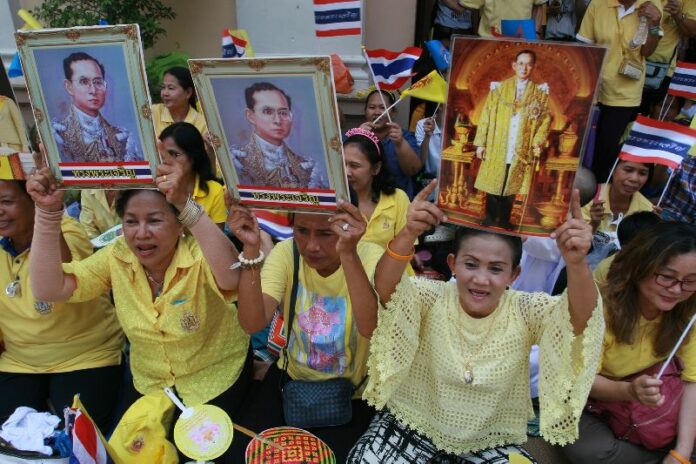
Bangkokians line the street in celebration as King Bhumibol's motorcade leaves Siriaj Hospital, 10 May 2015.

BANGKOK — A 65-year-old woman has been sentenced to one year in prison for publicly kicking a portrait of His Majesty the King, despite being recognized as mentally unstable by the court.

Thitinand Kaewchantranond, 65, was arrested after she reacted angrily to a Constitutional Court verdict in July 2012 that prevented the Pheu Thai-led government from amending the 2007 constitution. 

\
Bangkokians line the street in celebration as 
King Bhumibol's motorcade leaves Siriaj Hospital, 10 May 2015.

Thitinand and other supporters of the Pheu Thai Party were gathering in front of the courthouse on Chaeng Wattana Road when the verdict was read. According to prosecutors, Thitinand kicked and stomped on a portrait of King Bhumibol in protest.

A lower court found her guilty of insulting the monarchy, a crime known as lese majeste, but suspended her two-year sentence because she was deemed mentally ill. A psychiatrist who treated Thitinand testified in court that she was diagnosed with bipolar disorder and had sought treatment in Thai and New Zealand hospitals. 

Thitinand was cleared of serving a prison term but ordered by the court to receive psychiatric counseling and report to authorities every six months for two years. 

However, the prosecutor appealed the ruling, and today a Court of Appeal sentenced Thitinand to one year in prison.

According to Matichon newspaper, the court described Thitinand's action as "a severe crime" that warrants a punishment "to prevent others from repeating such action." 

Although the court acknowledged that Thitinand was mentally ill and upheld the mandatory psychiatric treatment, it ruled that the defendant "could have exercised some restraint" when she committed the wrongdoing, Matichon reported. 

Any comments or actions deemed libelous toward the Royal Family are punishable by up to 15 years in prison, according to Section 112 of the Thai Criminal Codes. 

Critics of the law say it is used to stifle freedom of expression and prosecute political opponents in Thailand.

Somsak Jeamteerasakul, historian and prominent critic of the Thai monarchy, compared today's verdict to a court ruling in 2007, which suspended the jail term of a motorist who killed a pedestrian because he was deemed mentally unstable.

"It is clear that for Thai court, lifting your feet toward a portrait is more severe than deliberately driving onto a footpath and killing a person," Somsak wrote on his official Facebook account. "This is a caveman culture. Disrespecting a portrait is more severe than hurting a person's life." 

Somsak fled Thailand shortly after the coup d'etat in May 2014 and is currently living in exile in Europe. 

Although lese majeste is most commonly used to prosecute people who say or write critical remarks about the monarchy, it is also used to punish symbolic acts of defamation.

In  March 2007, Swiss national Oliver Jufer was sentenced to 10 years in prison for spray-painting over a portrait of King Bhumibol in Chiang Mai. The King granted Jufer a royal pardon a month later, and he was deported from Thailand, where he had been living for more than a decade.

In August 2013, the court sentenced a Pheu Thai supporter to three years in jail for burning a mock coffin bearing the name of King Bhumibol's top adviser, known officially as the Privy Councillor, even though lese majeste does not cover the Privy Council. 

For comments, or corrections to this article please contact: [email protected]

You can also find Khaosod English on Twitter and Facebook
http://twitter.com/KhaosodEnglish
http://www.facebook.com/KhaosodEnglish

Advertisement

Mentally Ill Woman Jailed for Kicking King's Portrait

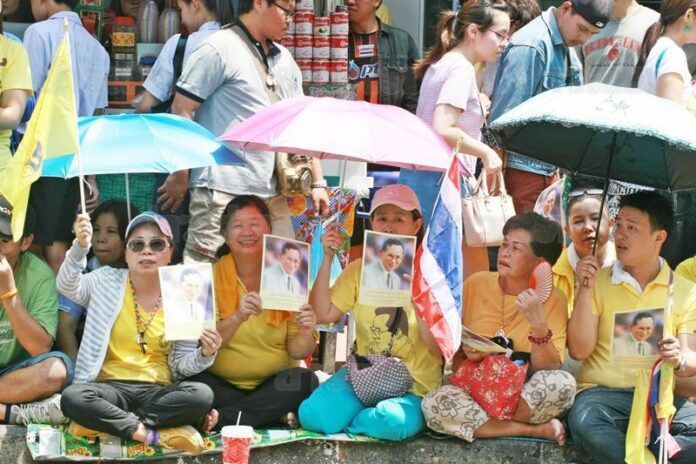
Royalists line the street as King Bhumibol leaves Siriaj Hospital in Bangkok, 10 May 2015.

BANGKOK — A 65-year-old woman has been sentenced to one year in prison for publicly kicking a portrait of His Majesty the King, despite being recognized as mentally unstable by the court.

Thitinand Kaewchantranond, 65, was arrested after she reacted angrily to a Constitutional Court verdict in July 2012 that prevented the Pheu Thai-led government from amending the 2007 constitution. 

\
Bangkokians line the street in celebration as
King Bhumibol's motorcade leaves Siriaj Hospital, 10 May 2015.

Thitinand and other supporters of the Pheu Thai Party were gathering in front of the courthouse on Chaeng Wattana Road when the verdict was read. According to prosecutors, Thitinand kicked and stomped on a portrait of King Bhumibol in protest.

A lower court found her guilty of insulting the monarchy, a crime known as lese majeste, but suspended her two-year sentence because she was found to be mentally ill. A psychiatrist who treated Thitinand testified in court that she was diagnosed with bipolar disorder.

The court also ordered Thitinand to receive psychiatric treatment and report to authorities every six months for two years. 

However, the prosecutor appealed the ruling, and today a Court of Appeal sentenced Thitinand to one year in prison.

According to Matichon newspaper, the court described Thitinand's action as "a severe crime" that warrants a punishment "to prevent others from repeating such action." 

Although the court acknowledged that Thitinand was mentally ill and upheld the mandatory psychiatric treatment, it ruled that the defendant "could have exercised some restraint" when she committed the wrongdoing, Matichon reported. 

Any comments or actions deemed libelous toward the Royal Family are punishable by up to 15 years in prison, according to Section 112 of the Thai Criminal Codes. 

Critics of the law say it is used to stifle freedom of expression and prosecute political opponents in Thailand.

Somsak Jeamteerasakul, historian and prominent critic of the Thai monarchy, compared today's verdict to a court ruling in 2007, which suspended the jail term of a motorist who killed a pedestrian because he was deemed mentally unstable.

"It is clear that for Thai court, lifting your feet toward a portrait is more severe than deliberately driving onto a footpath and killing a person," Somsak wrote on his official Facebook account. "This is a caveman culture. Disrespecting a portrait is more severe than hurting a person's life." 

Somsak fled Thailand shortly after the coup d'etat in May 2014 and is currently living in exile in Europe. 

Although lese majeste is most commonly used to prosecute people who say or write critical remarks about the monarchy, it is also used to punish symbolic acts of defamation.

In  March 2007, Swiss national Oliver Jufer was sentenced to 10 years in prison for spray-painting over a portrait of King Bhumibol in Chiang Mai. The King granted Jufer a royal pardon a month later, and he was deported from Thailand, where he had been living for more than a decade.

In August 2013, the court sentenced a Pheu Thai supporter to three years in jail for burning a mock coffin bearing the name of King Bhumibol's top adviser, known officially as the Privy Councillor, even though lese majeste does not cover the Privy Council. 

For comments, or corrections to this article please contact: [email protected]

You can also find Khaosod English on Twitter and Facebook
http://twitter.com/KhaosodEnglish
http://www.facebook.com/KhaosodEnglish
Advertisement

8,000 Refugees Reportedly Adrift in South-East Asia

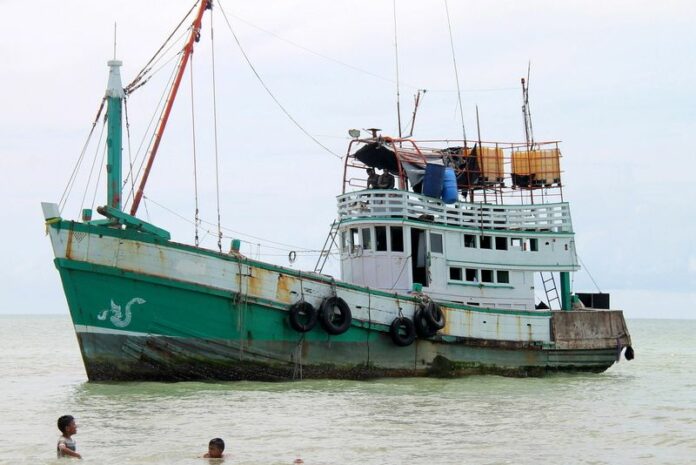
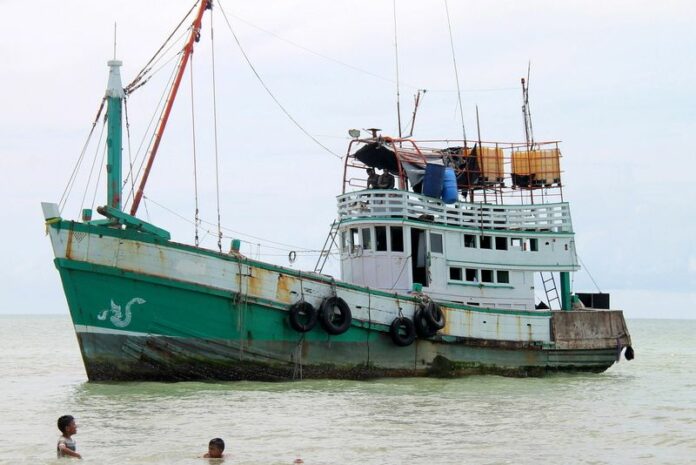
A picture made available on 12 May 2015 shows a traditional Thai style fishing boat which was used by Myanmar Rohingya refugees, stranded in Seunedon village of North Aceh, Sumatra, Indonesia, 11 May 2015 [DPA]

BANGKOK (DPA) — More than 8,000 migrants were adrift off the coasts of Thailand, Malaysia and Indonesia, an IOM official said Tuesday, posing a potential humanitarian crisis for the region's governments.

"Thailand has effectively stopped smuggling through its borders," said Jeffrey Labovitz, the International Organization for Migration's chief of mission in Thailand.

\
Rescued, Humahai, a Rohingya migrant from Myanmar crying in Lhok Sukon Sport Stadium, North Aceh, Sumatra, Indonesia, 11 May 2015. [DPA]

"As a result we think that there are [more than 8,000] people stranded off shore" in the region, mostly refugees and economic migrants from Bangladesh and Myanmar, he said.

Labovitz said many of the migrants face malnutrition, cramped quarters and contagious diseases.

Thailand's navy and the army have set up a task force against trafficking, said a navy official who declined to be named.

Boats with migrants or refugees that reach Thailand "will be processed in accordance with the law."

"Victims of trafficking will be offered assistance," he added.

Migrants found entering the country illegally face deportation or internment. Rights group say they are sometimes held indefinitely.

Labovitz called for the Thai, Myanmar and Malaysian governments to find a solution to get the migrants off the boats and provide assistance.

Economic migrants from Bangladesh and Rohingyas fleeing persecution in Myanmar often make their way through Thailand seeking opportunities in Malaysia and Indonesia, and are often targeted for exploitation on the way by human traffickers and other smugglers.


For comments, or corrections to this article please contact: [email protected]

You can also find Khaosod English on Twitter and Facebook
http://twitter.com/KhaosodEnglish
http://www.facebook.com/KhaosodEnglish

Advertisement

8,000 Refugees Reportedly Adrift in South-East Asia

A picture made available on 12 May 2015 shows a traditional Thai style fishing boat which was used by Myanmar Rohingya refugees, stranded in Seunedon village of North Aceh, Sumatra, Indonesia, 11 May 2015 [DPA]

BANGKOK (DPA) — More than 8,000 migrants were adrift off the coasts of Thailand, Malaysia and Indonesia, an IOM official said Tuesday, posing a potential humanitarian crisis for the region's governments.

"Thailand has effectively stopped smuggling through its borders," said Jeffrey Labovitz, the International Organization for Migration's chief of mission in Thailand.

\
Migrants from Myanmar and Bangladesh at a police station in Kuah, Langkawi, Kedah, Malaysia, 11 May 2015.

"As a result we think that there are [more than 8,000] people stranded off shore" in the region, mostly refugees and economic migrants from Bangladesh and Myanmar, he said.

Labovitz said many of the migrants face malnutrition, cramped quarters and contagious diseases.

Thailand's navy and the army have set up a task force against trafficking, said a navy official who declined to be named.

Boats with migrants or refugees that reach Thailand "will be processed in accordance with the law."

"Victims of trafficking will be offered assistance," he added.

Migrants found entering the country illegally face deportation or internment. Rights group say they are sometimes held indefinitely.

Labovitz called for the Thai, Myanmar and Malaysian governments to find a solution to get the migrants off the boats and provide assistance.

Economic migrants from Bangladesh and Rohingyas fleeing persecution in Myanmar often make their way through Thailand seeking opportunities in Malaysia and Indonesia, and are often targeted for exploitation on the way by human traffickers and other smugglers.


For comments, or corrections to this article please contact: [email protected]

You can also find Khaosod English on Twitter and Facebook
http://twitter.com/KhaosodEnglish
http://www.facebook.com/KhaosodEnglish
Advertisement

Supreme Court Rejects Appeal from Underage Motorist Who Killed 9

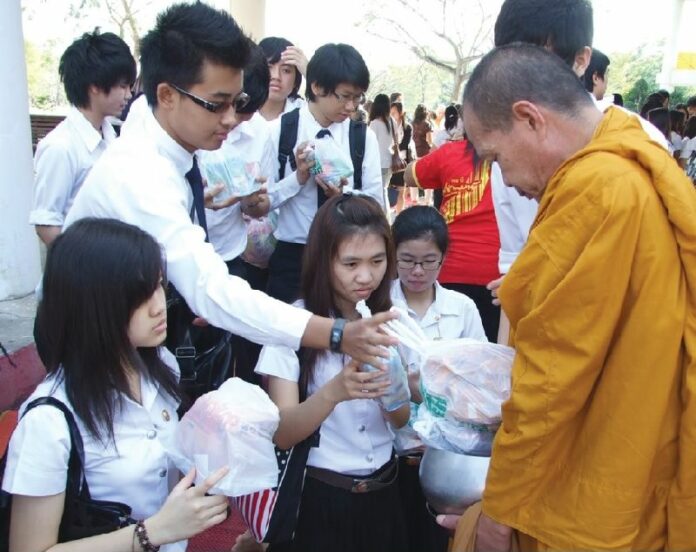
Thammasat University students making merit in memory of the victims of a van crash that killed included 4 university students and 4 academics on 10 Jan 2011.

BANGKOK — Thailand’s Supreme Court has rejected an appeal from a 21-year-old woman who was found guilty of killing nine people while she was driving without a license in 2010.

Orachorn “Praewa” Thephasadin Na Ayudhya was 17 when she crashed her car into a public minivan operating the Thammasat University-Victory Monument route on 27 December, 2010. The crash killed nine people, including four university students, four academics, and the van’s driver.

Police said she was driving her mother’s car without a license. Under Thai laws, you must be 18 or older to drive a car.

A lower court found Orachorn guilty of reckless driving leading to deaths of others, and handed her a three year suspended prison sentence and mandatory community service. She was also barred from driving until she is 25. A Court of Appeal later upheld the ruling and increased her suspended sentence to four years.

In her appeal to the Supreme Court, Orachorn said she had no intention to drive recklessly, and urged the court to reduce her sentence. However, the Supreme Court rejected her appeal this afternoon.

The verdict was read in a closed session and reporters were not allowed to observe.

The deadly crash drew widespread attention from Thai society, with many commentators on social media voicing suspicions that Orachorn was spared from prison because of her influential family. Her brother is a famous actor and model, and her uncle and grandfather were high-ranking military commanders. Public outrage was also partly fueled by a photo of Orachon in which appeared to be calmly texting at the site of the accident.

Issariya Thanachawan, a lawyer who represented the victims’ families, told reporters that today’s verdict has allowed a Civil Court to proceed with a collective lawsuit against Orachon, in which the families have asked Orachorn to pay 120 million baht in financial compensation. The Civil Court had delayed the lawsuit while the criminal case was ongoing.

Thongpoon Panthong, the mother of the minivan driver who died in the crash, said she was ready to put the legal battle behind her.

“I want the case to be over quickly. Today, it’s like my wound has started to heal, but it keeps being pried open,” Thongpoon said. “To this day, there has been no compensation from the defendant at all. She has never spoken to us. She has never phoned us.”

Advertisement

Former Anti-Govt Protest Leaders to Run as Democrats in Next Election: Chumpol

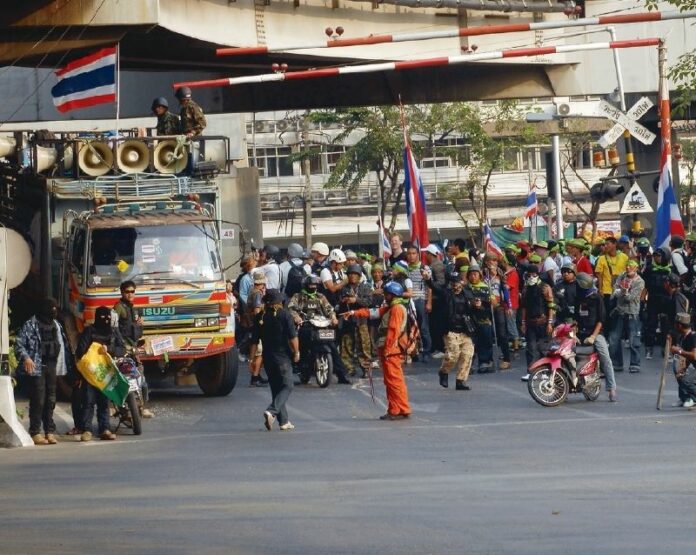
PCAD protesters, including several armed militants, arrived at Laksi District Office to prevent distribution of ballot papers, 1 February 2014

BANGKOK — Leaders of the ultra-conservative movement that sought to topple the former government will run for office after the new constitution is enacted, one of the movement's core leaders said in an interview.

The anti-government movement, named the People's Committee for Absolute Democracy With the King as Head of State (PCAD), was led by nine former MPs who resigned from the Democrat party to join the street protests in November 2013.

Chumpol Julasai, a former Democrat politician and co-founder of the group, told Daily News in an interview on 10 May that almost all of the former politicians will re-join the Democrat Party ticket for the next election, the first since the May 2014 coup.

"When the new constitution is promulgated, PCAD [leaders] will move back to Democrat Party to run as MP candidates for the party," Chumpol was quoted as saying.

The exception will be Suthep Thaugsuban, former deputy chairman of the Democrat Party and secretary-general of PCAD, who will not return to politics, but continue to live as a monk in Surat Thani province.

Chumpol's comments provided the first clue to the PCAD leaders’ plans for post-coup politics. Since the military takeover last year, the movement’s core activists have kept a relatively low profile, in part to comply with the junta's ban on political activities. 

\
PCAD protesters, including several armed militants, arrived at Laksi District Office to prevent distribution of ballot papers, 1 February 2014 

The ruling junta, which has largely enacted the PCAD’s platform, says the next poll is scheduled to take place in early 2016.

In the interview with Daily News, Chumpol praised the junta for achieving many goals, such as cracking down on corruption, national security threats, and human trafficking.

"If Gen. Prayutha Chan-ocha, Prime Minister and chairman of the [junta], manages to solve economic problems, the government will be able to stay for a long time, because people will be happy," Chumpol said.

According to Daily News, Chumpol also dismissed calls from pro-democracy activists to organize a referendum for the junta's new charter, calling it "a waste of money."

Boycotting the last election

The PCAD protests broke out in late 2014 after the Pheu Thai-led government attempted to pass an amnesty bill that would have pardoned former PM Thaksin Shinawatra, a controversial leader who was ousted in a coup in 2006 and convicted in absentia of a corruption charge.

The protest movement attracted tens of thousands of supporters, and eventually set its eyes on toppling the government led by Thaksin’s sister, Yingluck Shinawatra.

In response to the escalating protests, Yingluck dissolved the House and called a snap election on 2 February 2014.

The PCAD and Democrat Party boycotted the poll, insisting that major reforms be implemented by appointed leaders before a new election. The PCAD also blocked polling stations on 2 February, preventing voters in some parts of Thailand from casting their ballots. 

The Constitutional Court later nullified the election on the grounds that voting did not occur on the same day throughout the Kingdom.

While the besieged caretaker government struggled to set a date for a new election, the military intervened and staged a coup d'etat on 22 May 2014. 

 
For comments, or corrections to this article please contact: [email protected]

You can also find Khaosod English on Twitter and Facebook
http://twitter.com/KhaosodEnglish
http://www.facebook.com/KhaosodEnglish
Advertisement

187 Rescued Refugees to be Prosecuted for Illegal Entry in Thailand

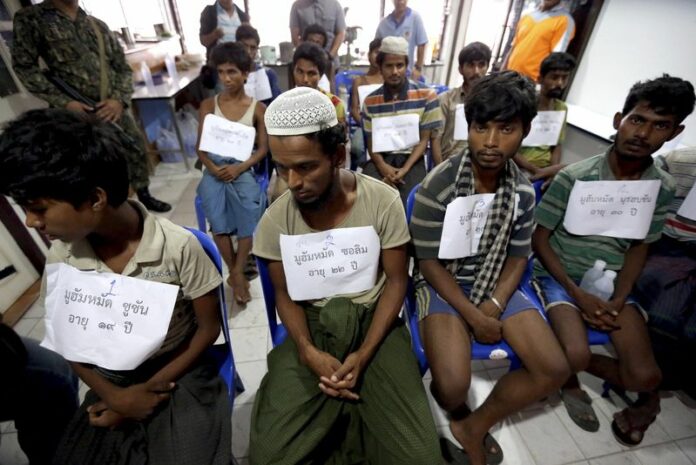
Suspected ethnic Rohingya migrants, who were rescued by Thai officials from a jungle, are detained at the city hall in the Thai-Malaysian border district of Hat Yai, Songkhla province 7 May 2015. EPA/STR

SONGKHLA — Police say 187 migrants who were abandoned by their brokers in Thailand and recently rescued by authorities will be prosecuted on charges of illegal entry into the country.

Police have encountered a total of 250 refugees from Myanmar and Bangladesh wandering through the jungle in Songkhla province over the past ten days, said Pol.Gen. Aek Angsananont, deputy commander of the Royal Thai Police.

A sweep of the southern province's mountainous border-region was ordered after police found an abandoned detention camp and a mass grave of Rohingya corpses on 1 May. 

\
Suspected ethnic Rohingya migrants, who were rescued by Thai officials from a jungle, are detained at the city hall in the Thai-Malaysian border district of Hat Yai, Songkhla province 7 May 2015. EPA/STR

According to Pol.Gen. Aek, 187 of the refugees will be prosecuted for illegally entering Thailand, while 63 have been categorized as victims of human trafficking. 

He added that female police officers have been dispatched to assist women and children at the temporary shelter in Rattaphum district. 

Many of the refugees have been identified as Rohingya, a persecuted Muslim minority that has left Buddhist-majority Myanmar in droves since religious violence broke out in 2012.

Tens of thousands of Rohingyas have paid human smugglers to bring them on perilous boat journeys to other countries, such as Muslim-friendly Malaysia. The boats often stop in Thailand, where refugees are hidden in the jungle until it is safe to cross overland into Malaysia, or detained until family members cough up exorbitant ransom fees. Many of the refugees encountered by police showed signs of physical abuse and malnutrition.

Thai police have discovered four abandoned detention camps in Songkhla province since the beginning of the month. Seventeen people have been arrested in connection with the camps, including several local Thai officials, and at least 50 police officers in the area have been transferred.

The crackdown comes as Thai authorities hope for an upgrade in the US’s upcoming report on human trafficking. Last year Thailand was moved down to the report’s lowest category for failing to meet the minimum standards to combat trafficking.Human rights groups say Thai authorities have been aware of trafficking operations inside the country's borders for years, but mostly turned a blind eye in exchange for bribes. 

Police are still looking for 33 other suspects, including Patchuban Angchotipan, aka Ko Tong, a former local administrative official and owner of several resorts in Satun province.

"He is the head of human trafficking operations in Satun," Pol.Gen. Aek told reporters. "There are five networks working together, with around 29 operators. All of these have been issued with arrest warrants. They brought in Rohingyas and Bangladeshis and sent them to Malaysia."

Police believe Patchuban and several other suspects have already fled the country, Pol.Gen. Aek said. He added that anyone with clues about the human trafficking network can alert police at the hotline 1300, or dial 074-258-444.

Since the crackdown on Thai soil, there has been a spike in the number of migrants arriving by boat to other southeast Asian countries. Over the weekend, more than 1,500 migrants from Myanmar and Bangladesh were rounded up by police in Malaysia and Indonesia.

According to the UN, around 25,000 Rohingya refugees and Bangladeshis fled on boats between January and March of 2015, a number twice as high as the same period last year.

 
For comments, or corrections to this article please contact: [email protected]

You can also find Khaosod English on Twitter and Facebook
http://twitter.com/KhaosodEnglish
http://www.facebook.com/KhaosodEnglish

Advertisement

Hot News

LATEST NEWS

Bangkok
overcast clouds
33.3 ° C
33.3 °
32.7 °
57 %
5.7kmh
94 %
Sat
35 °
Sun
32 °
Mon
30 °
Tue
31 °
Wed
32 °