31.6 C
Bangkok
Sunday, June 28, 2026
Home Blog Page 3093

Thai Ex-Premier Faces Criminal Charges Ahead of Impeachment Decision

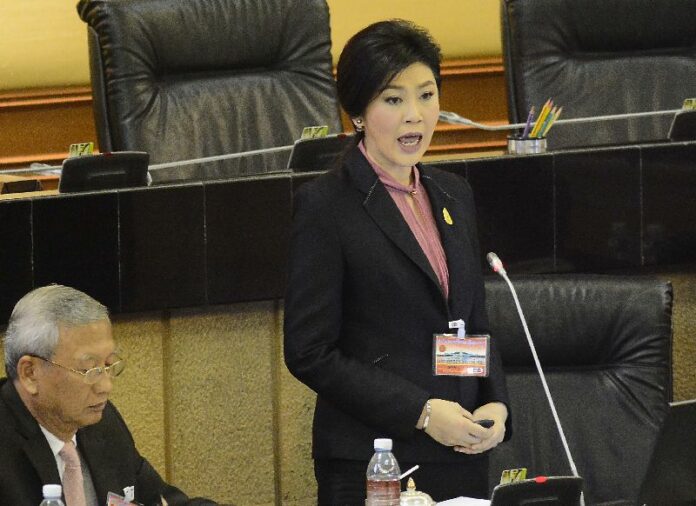
Former Thai prime minister Yingluck Shinawatra speaking to National Legislative Assembly (NLA) during impeachment proceedings against her, Jan 2015.

By Cod Satrusayang

BANGKOK (DPA) — Former Thai premier Yingluck Shinawatra was to face criminal charges stemming from corruption allegations, officials said Friday.

The attorney general will pursue the charges before the country's Supreme Court, a representative told reporters.

\
Yingluck Shinawatra answers to the questions of the National Legislative Assembly (NLA) during impeachment proceedings against her, at Parliament House in Bangkok, Thailand, 22 January 2015.  EPA/NARONG SANGNAK

If found guilty of the criminal charges, Yingluck could face up to 10 years in prison, the spokesman for the attorney general's office said.

The move comes hours ahead of a scheduled announcement over her possible impeachment by Thailand's military-appointed legislature over a rice subsidy scheme.

Yingluck is accused of dereliction of duty in her government's rice-pledging scheme, which the anti-corruption agency said cost the country 4 billion dollars in waste and fraud.

If found guilty on that front, Yingluck would face a five-year ban from politics and a retroactive impeachment.

In Thursday's final hearing before the decision, Yingluck denied all charges against her.

She was removed from office in May 2014 by the Constitutional Court after months of street demonstrations, including by farmers who had not been paid under the rice scheme.

The rest of her government was ousted later that month by a military coup that installed the current legislature and cabinet.


For comments, or corrections to this article please contact: [email protected]

You can also find Khaosod English on Twitter and Facebook
http://twitter.com/KhaosodEnglish
http://www.facebook.com/KhaosodEnglish

Advertisement

23-Year-Old British Tourist Found Dead on Koh Tao

A photo of Haat Sai Ri Beach on Koh Tao posted on what appears to be Christina Annesley's twitter account, two days before she was found dead in her bungalow on Koh Tao. https://twitter.com/chrstinadarling

SURAT THANI — A 23-year-old British tourist was found dead yesterday on the southern island of Koh Tao, where two British backpackers were brutally murdered last September.

The woman, who British media have identified as Christina Annesley, was found dead in her bungalow on Haat Sai Ri Beach, the same beach that the bodies of British tourists David Miller, 24, and Hannah Witheridge, 23, were found on in September 2014.

A police officer, who asked not to be named, said there was no apparent wounds on the deceased's body. There was also no sign of intrusion or theft in her bungalow, according to the officer. Her body has been sent to Surat Thani Hospital for autopsy, he said. 

The officer added that the bungalow is owned by Montriwat Toowichian, the same man who managed the bar where Miller and Witheridge were last seen on the night of 14 September, hours before their deaths. 

According to British media, a Foreign Office spokesperson confirmed the death of a British national in Thailand. 

"We are providing consular assistance to the family at this difficult time," the spokesperson was quoted as saying.

The Telegraph reported that Annesley's mother posted on Facebook that her daughter died of "natural causes" in Thailand.

The grisly murder of Miller and Witheridge made headlines around the globe last year and damaged Koh Tao's reputation as a popular diving destination for foreigners.

Two 21-year-old Burmese migrant workers are currently being held in prison for allegedly murdering Miller and raping and murdering Witheridge. The two suspects have denied the charges.


For comments, or corrections to this article please contact: [email protected]

You can also find Khaosod English on Twitter and Facebook
http://twitter.com/KhaosodEnglish
http://www.facebook.com/KhaosodEnglish

Advertisement

23-Year-Old British Tourist Found Dead on Koh Tao

SURAT THANI — A 23-year-old British tourist was found dead in her bungalow yesterday on the southern island of Koh Tao, where two British backpackers were brutally murdered last September.

The woman, who British media have identified as Christina Annesley, was found dead in her bungalow on Haat Sai Ri Beach, the same beach that the bodies of British tourists David Miller, 24, and Hannah Witheridge, 23, were found on in September 2014.

A police officer, who asked not to be named, said there was no apparent wounds or signs of struggle on the deceased's body. There was also no sign of intrusion or theft in her bungalow, according to the officer. Her body has been sent to Surat Thani Hospital for autopsy, he said. 

The officer added that the bungalow is owned by Montriwat Toowichian, the same man who managed the bar where Miller and Witheridge were last seen on the night of 14 September, hours before their deaths. 

According to British media, a Foreign Office spokesperson confirmed the death of a British national in Thailand. 

"We are providing consular assistance to the family at this difficult time," the spokesperson was quoted as saying.

Two Burmese migrant workers are currently being held in prison on charges of murdering Miller and Witheridge. The two suspects have denied the charges. 

The deaths of the two Britons last year made headlines around the globe and damaged Koh Tao's reputation as a popular diving destination for foreigners.

For comments, or corrections to this article please contact: [email protected]

You can also find Khaosod English on Twitter and Facebook
http://twitter.com/KhaosodEnglish
http://www.facebook.com/KhaosodEnglish

Advertisement

Rights Groups Scrutinize Junta’s Anti-Trafficking Efforts in Fishing Industry

Barbara Walton, EPA

BANGKOK — Wanchai Benjapat says there is only one way to describe the conditions of the Thai fishing boat he worked on for 10 months: unendurable.

And yet, he was given no other choice. “You can endure it or not,” he explained, “but you still have to do it.”

Wanchai is one of thousands of Thai, Burmese, and Cambodian men who have languished under slavish working hours, inhumane living conditions, beatings, and other forms of abuse on Thai fishing boats. Many of the fishermen are deceived into working on the fleets; they are lured by agents with fake job offers, only to be sold like slaves to the ship's captains.

“Some of these people have never been on a boat before,” said Patima Tungpuchayakul from the Seafarers Labour Rights Promotion Network Foundation. “Some are drugged to get on board. Some are never paid.”

According to the International Labour Organization, nearly 17 per cent of workers on Thai fishing boats have been subjected to forced labor.

Hundreds of workers ultimately abandon the ships to escape the torturous conditions, risking their lives and often ending up stranded on islands off of Indonesia where they live for years. Patima says that many of the fishermen her organization rescues from the islands are physically crippled from the abuse they suffered on the ships, and more than half of them exhibit serious emotional and psychological problems.

Thailand’s military junta, which seized power in a coup last May, has vowed to clean up the fishing industry and reverse Thailand’s standing as one of the worst centers for human trafficking in the world. This reputation was cemented  last year when Thailand was downgraded to the lowest ranking in the United States’ annual Trafficking in Persons (TIP) Report for failing to meet the minimum standards needed to eliminate trafficking. The report cited instances of Thai police and military officers profiting from the smuggling of undocumented migrants onto Thai fishing vessels.

As the military government prepares to submit a follow-up report to the US by March, officials have begun publicizing new anti-trafficking measures, including tougher legislation to protect workers in the fishing industry, plans to install fishing boats with vessel monitoring systems (VMS), and the formation of new committees tasked with studying and eradicating trafficking in all of its forms.

According to officials, Thailand has made significant progress in tackling trafficking over the past six months, outperforming other countries placed in the lowest ‘Tier 3’ category of the US's report.

However, human rights advocates remain skeptical of the government’s new measures.

“It’s still a lot of talk and not much action,” said Phil Robertson, the deputy director of Human Rights Watch's Asia division, at a panel discussion on human trafficking in Bangkok. “Correcting a few documents, changing a ministerial regulation — that’s not a substitute for real action.”

Robertson stressed that a number of obstacles must be surmounted for the new measures, such as a vessel tracking system, to be effective. He cited the high proportion of boats that never register with port authorities in the first place, and the lack of fuel made available to marine police, who say they don’t have enough to properly patrol the seas.

It also remains unclear how some new regulations, such as the requirement that workers get 10 hours of rest per day, will be enforced when the boats are at sea.

Chaleerat Sangsuwan, who works for the Anti-Trafficking Alliance, agreed that the key obstacles to curbing trafficking are corruption and weak law enforcement, not a lack of legislation. There are already a number of legal tools available to address trafficking, she said, yet all too often they fail to translate into concrete action.

“In reality these tools are often just words,” said Chaleerat. “They are things spoken in meetings and they don’t have an impact on the ground.”

Trafficking in Thailand’s fishing sector is driven in large part by a labor shortage, with the vast majority of Thais unwilling to subject themselves to the industry’s horrific working conditions. While the ships are predominately manned by migrant workers from neighboring countries and vulnerable groups like the stateless Rohingya, the number of Thais being deceived into slaving on the boats has reportedly risen in recent years. Earlier this week, police arrested two men suspected of duping Thais from rural provinces into working on the ships. 

Up until two days ago when the proposal was finally scrapped, the Thai government was planning on sending Thai prisoners to work on fishing boats in an effort to address the industry's labor shortage. The plan, which was announced in December, was heavily criticized by human rights groups.

“It was an astonishingly bad idea,” Human Rights Watch’s Robertson said yesterday. “It shows a lack of understanding among the government about what actually needs to be done to address the problem of human trafficking on fishing boats.”

Wanchai, who spent ten months on a fishing boat in Indonesian waters, said he wants Thailand to prove that it values human lives above the number of fish that can be caught in a day. 

A developed country should value its human resources,” said Wanchai. “What we see today is that human lives are given less value than physical objects.”

(Reporting by Sally Mairs)
 

For comments, or corrections to this article please contact: [email protected]

You can also find Khaosod English on Twitter and Facebook
http://twitter.com/KhaosodEnglish
http://www.facebook.com/KhaosodEnglish

Advertisement

Thai Internet Freedom Threatened by Junta's New Bill, NGO Warns

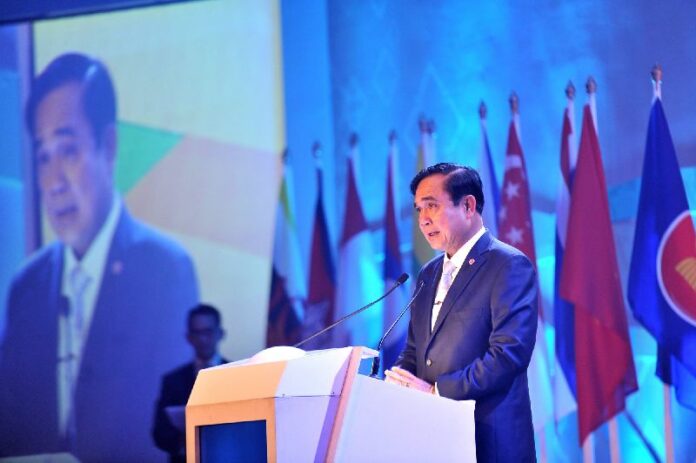
Thai junta chairman and PM Gen. Prayuth Chan-ocha, 22 Jan 2015.

BANGKOK – The director of an internet freedom advocacy group in Thailand has warned that the military junta's Cyber Security bill could spell the end of internet privacy for Thais.

If passed, the Cyber Security Act would allow Thai authorities to access any private information on computer systems without obtaining a court warrant. 

"We are not saying that the state can't have the power to deal with online crimes that have been increasing in the present time," said Arthit Suriyawongkul, who leads the Thai Netizen Network. "But too much power will lead to a violation of privacy."

His comment came one day after junta chairman and Prime Minister Prayuth Chan-ocha pledged to push forward with a draft of the bill, which would grant state authorities sweeping power to monitor the internet in the name of safeguarding "national cyber security."

Arthit, a veteran activist who campaigns for internet freedom in Thailand, raised concerns that the broad power authorized by the Cyber Security Act would be effectively unchecked. As it stands now, there are no requirements for officials to apply for search warrants, or punishments in place for officials whose actions cause damages.

Although the military government described the act as a legislation promoting the "digital economy," Arthit said the bill looks more like a weapon of surveillance wielded by national security agencies. 

Arthit said the Thai Netizen network and five other NGO groups will submit a formal letter of protest against the Cyber Security Act to the junta-appointed National Reform Council (NRC) next week. 

A draft of the Cyber Security Act, which is available on the Thai Cabinet’s website, authorizes officials to "access any channel of information and communication, including mails, telegrams, telephones, fax, computer, or any other type of electronic and telecommunication equipment" deemed necessary by the authorities.

The bill states that officials can exercise those powers per orders from the National Cyber Security Council (NCSC), which will be formed by the Cabinet. 

The draft of the bill also authorizes the council to "summon any state agency or individual to give testimony or submit any document beneficial to the operation of this Act," and to "request" any state or private agency to "perform any task" to protect national cyber security as decided by the council.

The draft was approved by the Cabinet on 6 January, and is now awaiting a vote by the National Legislative Assembly, a body appointed by the junta last year.

When a reporter raised concerns about the bill's potential violation of privacy to Gen. Prayuth on Tuesday, the Prime Minister angrily replied, "I will pass it. You have a problem with that? Otherwise, why the hell am I the Prime Minister? Why am I the Prime Minister?"

Gen. Prayuth repeated his intention to pass the law in a speech at Centara Grand Hotel in Bangkok yesterday. "They don't talk about the good things in this bill," he complained, "I am not spying on you. I am not violating your privacy."

He also argued that more stringent internet laws are needed to combat lese majeste (insulting the monarchy), because many websites that allow criticism of the Thai monarchy are based in foreign countries, beyond the authority of the Thai government.

"We can't shut them down. Foreigners don't have the same laws that we do," Gen. Prayuth explained. "So why don't we make our country peaceful and safe? Our country is not like their countries. Thai people are not like farangs [Thai slang for Westerners]. We eat rice. They eat bread. It's totally different."

Thailand already has two draconian pieces of legislation used by authorities to restrict freedom of expression on the internet: the lese majeste law, which criminalizes any criticism of the monarchy, and the Computer Crime Act.

The Computer Crime Act, which carries a maximum penalty of five years in prison and a 100,000 baht fine, outlaws any use of a computer system that affects "national security," "spreads false information," or damages the "good morality of the people."  

Human rights organizations say that freedom of expression has dropped sharply since the Thai military seized power on 22 May 2014. Gen. Prayuth, who was appointed Prime Minister by a legislature whose members he handpicked, has banned protests and public criticism of his regime, intimidated the media, and ordered hundreds of activists to be briefly detained in military camps for "attitude readjustment."


For comments, or corrections to this article please contact: [email protected]

You can also find Khaosod English on Twitter and Facebook
http://twitter.com/KhaosodEnglish
http://www.facebook.com/KhaosodEnglish

Advertisement

Rights Groups Scrutinize Junta’s Anti-Trafficking Efforts in Fishing Industry

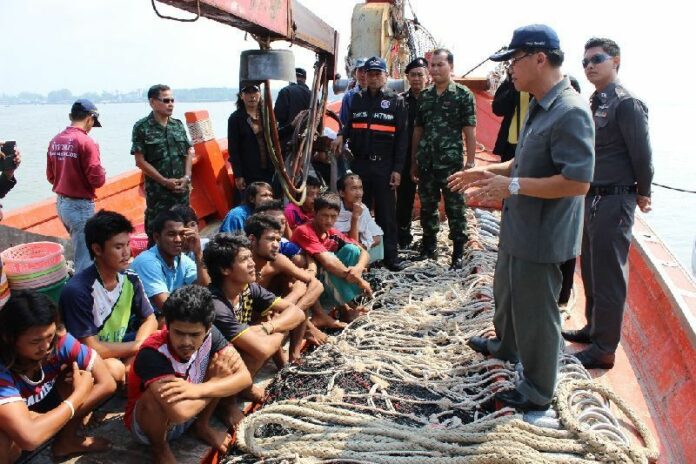
Marine police in Satul province inspected fishing boats manned by Burmese workers to look for potential human traffickers and drug use, 19 June 2014.

BANGKOK — Wanchai Benjapat says there is only one way to describe the conditions of the Thai fishing boat he worked on for 10 months: unendurable.

And yet, he was given no other choice. “You can endure it or not,” he explained, “but you still have to do it.”

Wanchai is one of thousands of Thai, Burmese, and Cambodian men who have languished under slavish working hours, inhumane living conditions, beatings, and other forms of abuse on Thai fishing boats.

Many of the crewmembers are deceived into working on the fleets; they are lured by fake job offers from agents who ultimately sell them like slaves to the ship’s captains.

“Some of these people have never been on a boat before,” said Patima Tungpuchayakul from the Seafarers Labour Rights Promotion Network Foundation. “Some are drugged to get on board. Some are never paid.”

According to the International Labour Organization, nearly 17 per cent of workers on Thai fishing boats have experienced forced labor.

Hundreds of workers abandon the ships to escape the torturous conditions, risking their lives and often ending up stranded —  with no money or belongings — on islands off of Indonesia where they live for years. 

Patima says that many of the fishermen rescued by her organization are physically crippled from the abuse they suffered on the ships, and more than half of them exhibit serious emotional and psychological problems.

Since seizing power in coup d'etat last May, Thailand’s military junta has vowed to eradicate trafficking and reverse Thailand’s standing as one of the worst centers for human trafficking in the world.

This reputation was cemented  last year when Thailand was downgraded to the lowest ranking in the United States’ annual Trafficking in Persons (TIP) Report for failing to meet the minimum standards needed to eliminate trafficking. The reportcited instances of Thai police and military officers who allegedly profited from the smuggling of undocumented migrants onto Thai fishing vessels.

As the military government prepares to submit a follow-up report to the US by March, officials have begun publicizing new anti-trafficking measures, including tougher legislation to protect workers in the fishing industry, plans to install fishing boats with vessel monitoring systems (VMS), and the formation of new committees tasked with studying and eradicating trafficking in all of its forms.

According to officials, Thailand has made significant progress in tackling trafficking over the past six months, and has outperformed other countries placed in the lowest ‘Tier 3’ category of the US's report.

However, human rights advocates remain skeptical of the government’s new measures.

“It’s still a lot of talk and not much action,” said Phil Robertson, the deputy director of Human Rights Watch's Asia division, at a panel discussion on human trafficking at Bangkok’s foreign correspondent’s club. “Correcting a few documents, changing a ministerial regulation — that’s not a substitute for real action.”

Robertson stressed that a number of obstacles must be surmounted for the new measures, such as a vessel tracking system, to be effective. He cited the high proportion of boats that never register with port authorities in the first place, and the lack of fuel made available to marine police, who say they don’t have enough to properly patrol the seas.

It also remains unclear how some new regulations, such as the requirement that workers get 10 hours of rest per day, will be enforced when the boats are at sea.

Chaleerat Sangsuwan, who works for the Anti-Trafficking Alliance, agreed that the key obstacles to curbing trafficking are corruption and weak law enforcement, not a lack of legislation. There are already a number of legal tools available to address trafficking, she said, yet all too often they fail to translate into concrete action.

“In reality these tools are often just words,” said Chaleerat. “They are things spoken in meetings and they don’t have an impact on the ground.”

Trafficking in Thailand’s fishing sector is driven in large part by a labor shortage, with the vast majority of Thais unwilling to subject themselves to the industry’s horrific working conditions. While the ships are predominately manned by migrant workers from neighboring countries and vulnerable groups like the stateless Rohingya, the number of Thais being deceived into slaving on the boats has reportedly risen in recent years. Earlier this week, police arrested two men suspected of duping Thais from rural provinces into working on the boats. 

Up until two days ago when the proposal was finally scrapped, the Thai government was planning to send Thai prisoners to work on fishing boats in an effort to address the industry's labor shortage. The plan, which was announced in December, was heavily criticized by human rights groups.

“It was an astonishingly bad idea,” Human Rights Watch’s Robertson said. “It shows a lack of understanding among the government about what actually needs to be done to address the problem of human trafficking on fishing boats.”

Wanchai, who spent ten months on a fishing boat in Indonesian waters, said its time for Thailand to value human lives above the number of fish that can be caught in a day. 

“A developed country should value its human resources,” said Wanchai. “What we see today is that human lives are given less value than physical objects.”


For comments, or corrections to this article please contact: [email protected]

You can also find Khaosod English on Twitter and Facebook
http://twitter.com/KhaosodEnglish
http://www.facebook.com/KhaosodEnglish


Advertisement

Suspected 'Drive-By Dog Shooter' Surrenders to Police

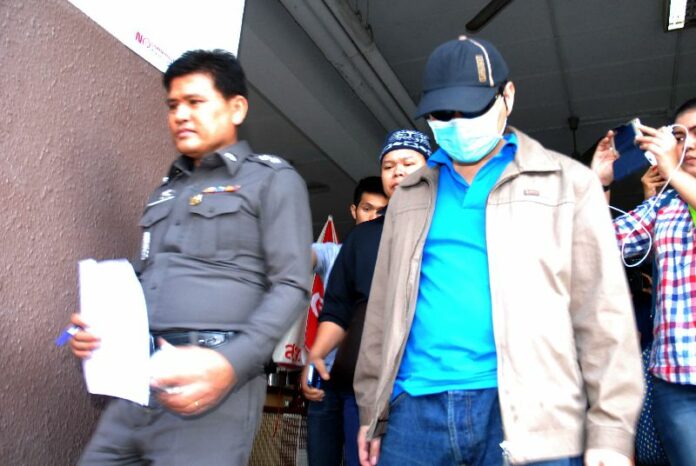
Wicha Boonluelak (R) identified himself as the man who shot a nine-year-old female dog named "Sue Bue" on Lat Prao Road on 13 January. He surrendered to police on 22 Jan 2015.

BANGKOK — The motorist who allegedly shot and killed a stray dog in Bangkok last week surrendered himself to police today.

Wicha Boonluelak, 32, identified himself as the man who police have accused of shooting a nine-year-old female dog named "Sue Bue" on Lat Prao Road on 13 January. The incident was captured on CCTV footage.

Witnesses told police that Sue Bue was barking at the car before the driver got out of the vehicle and fired at her. The dog later died at an animal hospital. Panita Sunthornrat, a 45-year-old resident in the area, then filed a complaint with police, urging them to prosecute the driver with the newly-passed animal protection law.

Police have charged Wicha with animal cruelty, possessing a firearm without a permit, using firearm in residential area without due cause, and carrying a firearm into residential area without due cause.

Wicha and his lawyer met with police at Chokechai Police Station at around 8 am today. He denied all charges and told police that he would only give testimony in the court. 

Panita, the woman who filed the charges, told reporters today that she would like to thank police officers for taking the case seriously.

"I wish I could have asked the suspect why was he so cruel to shoot a dog to death just because she was barking at him?" Panita said. "If that dog harms or damages anyone's property, I would be willing to take all responsibility, because I treat her like my own dog."

She added that she hoped the animal protection law, the first legislation in Thailand to explicitly criminalize animal cruelty, will set a new social standard by forcing anyone attacked by a dog to take legal action against the dog's owner instead of exacting vengeance on the dog. 

"In case of stray animals, the person who has been feeding those dogs can be held responsible," Panita suggested. 

The Animal Welfare Protection Act was passed by the junta's interim parliament in November 2014. Under the law, those found guilty of animal cruelty face up to two years in prison and a 40,000 baht fine.  

CORRECTION: The original version of this article falsely stated that Wicha Boonluelak identified himself to police as the man behind the dog shooting, whereas he only identified himself as the man police were searching for in connection with the crime.
 
 
For comments, or corrections to this article please contact: [email protected]

You can also find Khaosod English on Twitter and Facebook
http://twitter.com/KhaosodEnglish
http://www.facebook.com/KhaosodEnglish

Advertisement

Rival Technical Students Forced To Clean Up Their Act

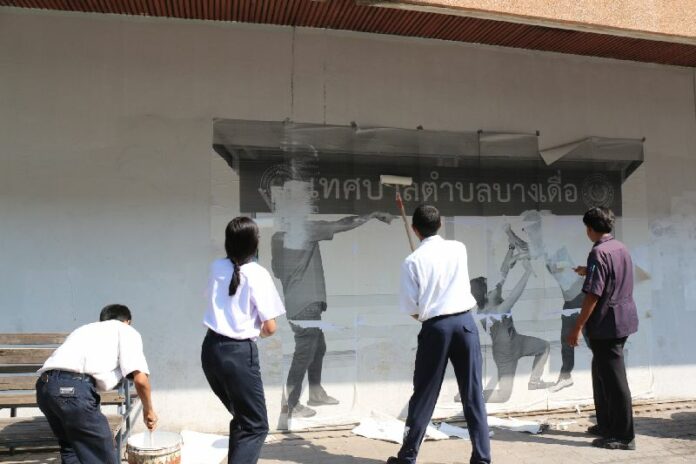
Dozens of students from Pathum Thani Technical College, Pathum Thani Technological College, and Laem Thong Technology College were escorted by their teachers to remove graffiti from the walls of buildings in Hor Saeng Chai market and nearby areas, 22 Jan 2015.

PATHUM THANI — Students from three technical colleges in Pathum Thani were ordered to paint over the gang signs they allegedly sprayed on walls in the town center, in an effort to reduce rivalries among the students.

Dozens of students from Pathum Thani Technical College, Pathum Thani Technological College, and Laem Thong Technology College were escorted by their teachers to remove graffiti from the walls of buildings in Hor Saeng Chai market and nearby areas today. 

\

Rival gangs of technical students in Thailand often graffiti walls with their school emblems and other taunting messages to proclaim their "control" over certain "territories." 

The rivalries between students occasionally turn violent and even deadly. On 16 January, two techincal students were shot dead on their way to school in Pathum Thani province, in what police suspect was a gang-related assassination. A week prior to the incident, passengers riding a public bus in province were forced to evacuate when nearly a dozen technical students reportedly attacked the vehicle because it was carrying students from a rival school.

Pitchet Sukhon, deputy director of Pathum Thani Technical College, said he hoped students from the three colleges will talk more and understand each other better because of today's cleanup activities. 

"We hope it will reduce the problem of student fights, and we think the students should keep doing good things for the society," Pitchet said.

He added that the school administrators also plan to invite rival students to have meals together and "adjust their attitudes" towards one another. 


For comments, or corrections to this article please contact: [email protected]

You can also find Khaosod English on Twitter and Facebook
http://twitter.com/KhaosodEnglish
http://www.facebook.com/KhaosodEnglish

Advertisement

Khaosod Acquitted of Buddha Issara's Libel Charge

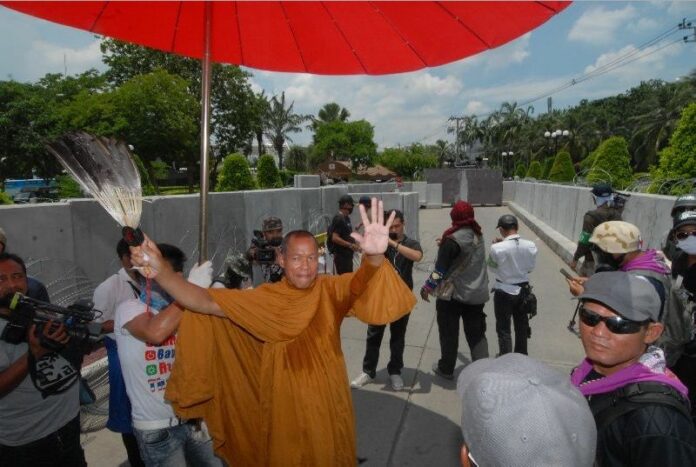
File photo of Buddha Issara, a core leader of the anti-government movement against former PM Yingluck Shinawatra, on 9 May 2014.

BANGKOK — Khaosod newspaper has been acquitted of libel charges filed by Buddha Issara, an ultra-royalist Buddhist monk who led protests against the former government last year.

Buddha Issara, a core leader of the People's Committee for Absolute Democracy With the King As Head of State (PCAD), sued Matichon and Khaosod newspapers, which own Khaosod English, in April 2014.

The monk accused the newspapers of libel for publishing comments from the head of the Office of National Buddhism (ONAB) that criticized Buddha Issara for ordaining novices at a protest site on Chaeng Wattana Road in northern Bangkok.

According to the ONAB director-general, Nopparat Benjawatananun, Buddha Issara was not qualified to preside over the ordinations.

Today the Criminal Court threw out the lawsuit on the grounds that Buddha Issara’s libel charge "did not have sufficient basis."

\
Buddhist monk and anti-government activist Buddha Issara leads protesters to the CAPO headquarters, May 2014.

From January – May of last year Buddha Issara led the PCAD's semi-autonomous hardline faction in northern Bangkok. The guards protecting his unit made headlines with their violent run-ins with innocent bystanders, police officers, and rival pro-government protesters. 

Throughout the protests, Buddha Issara repeatedly called for former Prime Minister Yingluck Shinawatra to be replaced by an unelected leader. He argued that His Majesty the King had the royal authority to unilaterally appoint a new Prime Minister.

The PCAD protests came to an end on 22 May 2014 when Gen. Prayuth Chan-ocha staged a military coup against the elected government. PCAD leaders, including Buddha Issara, have been kept a relatively low profile ever since.

In a separate hearing today, the court also dismissed a libel charge filed against Khaosod and Matichon by the former chief of Thai police force, Pol.Gen. Seripisut Temiyavet, who sued the newspapers in 2008 for publishing a series of articles that he said damaged his reputation.

According to the court's verdict, Khaosod and Matichon were merely "publishing criticism as media agencies," which cannot be classified as defamation. 

Defamation is a criminal offense in Thailand, defined under Thai law as any statement made by one party that is likely to impair the reputation of another party or expose the latter to hatred. The offense is punishable by up to two years in prison and a fine of 200,000 baht.

The law has been frequently criticised by rights activists, who say it is abused by authorities and large corporations to silence critics and create a climate of fear.

For comments, or corrections to this article please contact: [email protected]

You can also find Khaosod English on Twitter and Facebook
http://twitter.com/KhaosodEnglish
http://www.facebook.com/KhaosodEnglish

Advertisement

Thailand's "Superficial" Gay-Friendly Image

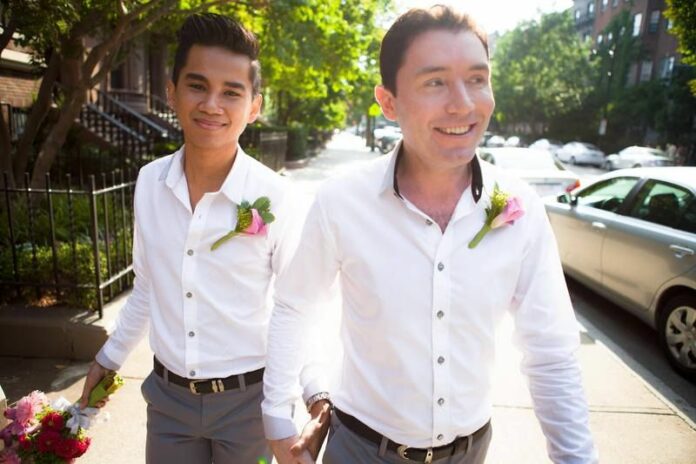
Chakgai Jermkwan (L) and Sean L'Estrange (R) seen walking down the street in Boston, Massachusetts, USA on their wedding day, August 12, 2012. Despite its gay-friendly image, conservative and Buddhist-majority Thailand has not always been a welcoming place for the local lesbian, gay, bisexual and transgender (LGBT) community. [DPA].

By Siraphob Thanthong-Knight

BANGKOK (DPA) — In the lively Silom district of central Bangkok, customers pile into a small, noisy gay bar on a busy Saturday night.

Chakgai Jermkwan and his partner Sean L'Estrange co-own the popular venue, which is located on a narrow street lined with gay bars.

The couple has been together for eight years and was legally married three years ago in Boston, Massachusetts.

"We are a married couple in the US but here in Thailand, we are just two friends in the eye of the law," Chakgai said.

"If something bad happened to him tomorrow, I wouldn't have a say in anything," Sean added. "I would be nothing."

\
Silom district in downtown Bangkok on January 15, 2015 [DPA].

Thailand welcomes lesbian, gay, bisexual and transgender (LGBT) visitors: its tourism authority targets the LGBT market, and Bangkok is often the only Asian city included on lists of gay-friendly tourist destinations around the world.

There is no law against homosexuality in Thailand, unlike in some other countries in the region.

However, Thai society is less accepting of its own lesbian, gay, bisexual and transgender communities.

Among Thais between 15 and 24 years old, 56 per cent think homosexuality is wrong, according to recent research by Khon Thai Foundation, a non-profit organization.

By comparison, more than 70 per cent of young people in Japan, South Korea, the Philippines and western European countries think that homosexuality should be accepted by society at large, according to the Pew Research Center, an American think-tank.

In a country where nearly 95 per cent of people are Buddhists, some believe that gay or transgender people suffer from bad karma for committing adultery in their past lives.

"I find it surprising that Thailand, being one of the most gay-friendly countries [for foreigners], does not have laws that support and protect the LGBT community," said L'Estrange, an Irish-American who has lived in Thailand for almost 10 years.

Thailand has no laws against discrimination toward LGBT people, and a recent surrogacy bill defines parents as members of heterosexual couples only. Same-sex marriage is neither licensed nor recognized.

Although a partnership bill has been drafted and will be submitted to the parliament, gay rights activists have concerns about it.

The Anjaree Group, Thailand's largest lesbian and gay rights activist organization, has criticized the bill for not granting homosexual couples the same rights as heterosexual couples.

The proposed Civil Partnership Act includes the right to use one's spouse's surname, the right to end the partnership and property rights. But it also raises the age of legal consent from 17 to 20 and does not include joint adoption or parental rights.

"Although we won't get all the rights we deserve, at least it'll be a good start," said Chakgai.

\
Sean and Chakgai in their bar in Silom Soi 4, Bangkok on January 15, 2015 [DPA].

Transgenders, locally referred to as "kathoey," are more common in Thailand than perhaps in any other country in the world, but they too complain of discrimination.

It is estimated that 1 in 166 men in Thailand is kathoey, compared to 1 in 2,500 in the United States, according to research by the University of Hong Kong.

It was not until 2011 that the Ministry of Defence stopped classifying kathoey – men living as women, not limited to those who have undergone gender reassignment surgery – as people with permanent psychological problems.

Again, the legal framework seems to lag behind. Transgender females are still identified as male in their passports, for instance, although there have been hints that kathoey may get formal recognition under the country's next constitution.

"Society seems to have space for transgenders [only] specific to the entertainment and tourism industry," said Kath Khangpiboon, the only transgender lecturer at Bangkok's Thammasat University.

"I am very fortunate that the university considered me for my ability, but most transgenders do not get that chance," said the social welfare professor. "I have heard many stories of employers telling transgender women to go cut their hair or dress like a man in order to get the job."

"The country's liberal image is superficial," she said.

Changing image into reality may require a more concerted effort from the authorities and the LGBT community.

"There are no openly gay people in high-ranking offices who can influence the change in both law and attitude," said Suppakorn Chudabala, a gay rights researcher. "The local LGBT community needs to be more active as well."

Kertchoke Kasemwongjit, from the Ministry of Justice, the head of the team drafting the same-sex partnership bill, agrees that more activism is needed.

"We need more support from LGBT people to implement changes in the law," he said.

"The first step in advocating for LGBT rights is to educate people that being homosexual or transsexual is not wrong," Suppakorn said.

"People need to stop thinking that heterosexual is a norm and understand that sexuality is diverse."

"We are not asking for any privileges," said Chakgai, the bar owner. "We just want to be treated equally, like everyone else."


For comments, or corrections to this article please contact: [email protected]

You can also find Khaosod English on Twitter and Facebook
http://twitter.com/KhaosodEnglish
http://www.facebook.com/KhaosodEnglish

Advertisement

Hot News

LATEST NEWS

Bangkok
overcast clouds
31.6 ° C
32.7 °
31.6 °
99 %
5.2kmh
100 %
Sun
30 °
Mon
34 °
Tue
33 °
Wed
31 °
Thu
29 °