





























34.4 C
Bangkok
Monday, June 8, 2026
Home Blog Page 3167

Pyramid Cult Leader Appointed to Reform Public School Curriculum

BANGKOK — A prominent scientist has started an online petition protesting the recent appointment of a cult leader and UFO believer to lead a national education reform panel in Thailand.

“The appointing of [Mr. Art-ong Jumsai Na Ayudhya] to be in charge of Thai education by OBEC is truly unacceptable,” Jessada Denduangboripant, a scientist from Chulalongkorn University, wrote on his Facebook.

Mr. Art-ong was appointed by the Office of Basic Education Commission (OBEC) to lead a subcommittee tasked with "revising and reforming" the national curriculum earlier this week, following a suggestion by the military junta to overhaul Thailand's education system. 

The committee will debate issues such as whether Thai students have too much homework and whether public schools' teaching schedules are appropriate for a modern-day lifestyle, said OBEC official Kamol Rordklai on 26 August.

Yet Mr. Art-ong’s appointment has alarmed many Thai scientists because of his association with a "pyramid cult" and endorsement of pseudo-scientific ideas. 

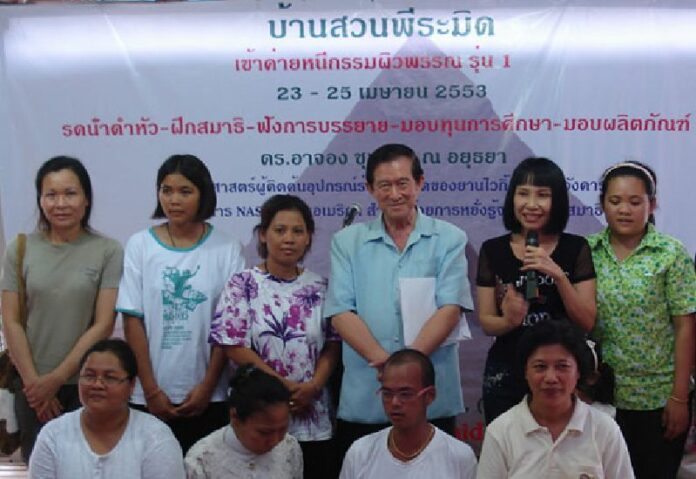
Mr. Art-ong, an engineer who reportedly collaborated with NASA on several projects, is heavily involved with the Baan Suan Pyramid movement, a cult that claims to posses the ability to heal sick people with "pyramid power" and boasts a lineage to ancient Egyptian "sorcerers." Mr. Art-ong gave lectures at many of the group's gatherings, including an occasion in which he claimed "pyramid power" can slow down the decay of fruit.

Mr. Art-ong  has also expressed his belief in extra-terrestrials; he asserted in one lecture that he could communicate with the "UFOs" that were hovering over the earth. 

As of the time this article is published, international astrophysicists have unanimously agreed that Earth has not been visited by any extraterrestrial civilisations.

To protest his appointment, Chulalongkorn University scientist Mr. Jessada launched an online petition calling for the removal of Mr. Art-ong from the OBEC subcommittee.

"If Dr. Art-ong, a believer in pseudoscience, has the role in reforming curriculum, he may use beliefs that are not based on credible science to affect his decisions about reforming the curriculum," the petition reads. "It may lead to teaching false beliefs to Thai youth."

The petition concludes by stating that "good education will enable our youths today to grow up as important figures in the future" and urging the OBEC to reconsider its decision.

Over 1,000 people have signed the petition so far.

Mr. Jessada is a vocal opponent to pseudoscience and paranormal beliefs in Thailand. He became widely known when he called for scientific test of "GT200" devices, a version of fake bomb-detecting device sold by a British businessman to Thailand's armed forces several years ago. 

After initial resistance, Thai authorities conducted the test in early 2010. The result established the GT200's accuracy to be as good as random chance, forcing then-Prime Minister Abhisit Vejjajiva to suspend the use of GT200 devices across the country. However, top army leaders and security officials continued to defend the devices long after the test.

A former prominent defender of GT200 devices, Pornthip Rojanasunand, was recently re-appointed as the head of Central Institute of Forensic Science.

Correction: The original version of the article incorrectly described Mr. Art-ong as a physicist. He is in fact an engineer.


For comments, or corrections to this article please contact: [email protected]

You can also find Khaosod English on Twitter and Facebook
http://twitter.com/KhaosodEnglish
http://www.facebook.com/KhaosodEnglish
 

Advertisement

16-Year-Old Student Dies During Hazing

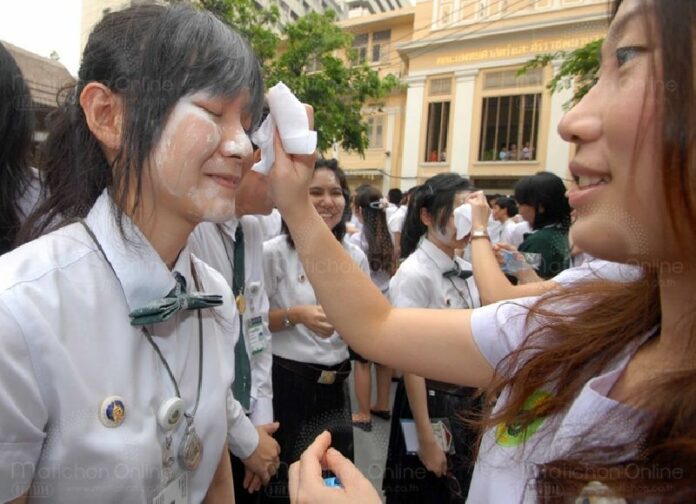
Students from Faculty of Medicine Siriraj Hospital, Mahidol University, wear mock make-up during a rub nong ceremony in Bangkok on 28 January 2012.

PRACHUAP KHIRI KHAN — A 16-year-old student diagnosed with leukemia died yesterday following a night of hazing by his senior classmates.

The student was brought to the emergency room yesterday morning by a group of other students, staff at Krung Thep Hua Hin Hospital in Prachuap Kiri Khan province told police.

The group told medical staff the student had drowned, and then quickly left the hospital, staff said.

Medical staff immediately rushed the student, identified as Pokai Saengrojrat, to the emergency room but discovered he had been dead for an hour.

Police say the Mr. Pokai was a part of a group of 40 students from a school in Pathum Thani that were participating in hazing activities on Sai Noi Beach. The purpose of the trip was to “initiate” new students through a series of rituals, known among Thais as rub nong.

Vendors at the beach told police they saw the students making campfires, drinking, and organising many hazing activities throughout the night of 29 August.

Em-orn Kongkaew, a restaurant owner on Sai Noi beach, said she saw senior students order freshmen to line up in the sea at around 11 pm and kick them one by one, causing the students to fall back into the water. The activities continued until morning, when the senior students noticed that one of the freshmen was lying face down on the sand and brought him to hospital, Ms. Em-orn said.

“I feel pity for the boy who died, because he was so young. I feel sorry for his parents,” Ms. Em-orn said, “The authorities should take care of this. I don’t want any other further rub nong incidents  that kill people like this.”

Mr. Pokai’s parents told police their son was diagnosed with leukemia many years ago, although his condition has been improving over the last four years.

“My son asked for our permission to go on a trip to the sea with his friends and senior classmates, so we let him go,” said Mr. Pokai’s father, Panupong Saengrojrat. “I told him not to drink any alcohol, which he agreed to. But I received phone call from his friends this morning that he was at the hospital. We hurried to see him but he already passed away.”

Mr. Pokai’s classmates surrendered themselves to police after Mr. Pokai’s parents arrived at the hospital, police say.

Police detained 30 of the students and interrogated them, along with other witnesses on the beach. However, police said they have not pressed any charges, as they are still waiting for official autopsy reports to determine the cause of Mr. Pokai’s death.

“The students who participated in rub nong activities insisted Mr. Pokin died on his own, not because he was assaulted,” said Pol.Col. Ranapob Pattana, an officer at Hua Hin Police Station. “However, I have sent the body for autopsy at the Police Hospital to find a clear cause of death.”

Rub nong rituals are common in many Thai universities and schools. While a number of universities opt for friendly initiation ceremonies, some schools are known for violent and abusive rub nong activities that involve assaulting students and forcing them to drink alcohol.

In recent years progressive student activists have campaigned to end rub nong practices, but defenders of the tradition say it helps promote the ideals of SOTUS – Seniority, Order, Tradition, Unity, and Spirit – among freshmen.

In July 2008, a student at Uthenthawai University died after he was reportedly beaten by a group of senior students during a rub nong ritual.


Advertisement

Cause Of Redshirt Prisoner's Death 'Unclear'

The United Front of Democracy Against Dictatorship (UDD), the umbrella organisation of the Redshirt movement, hosted a funeral for Mr. Surakrit at Bang Hua Suea Temple in Samut Prakarn province, 30 August 2014.

BANGKOK — The cause of a 36-year-old Redshirt’s sudden death in prison this week is still unclear, says a physician who participated in a preliminary autopsy.

Surakrit Chaimongkol died on 28 August while he was awaiting trial for a murder charge inside Bangkok Remand Prison. According to prison officials, Mr. Surakrit died from an asthma attack, but his family suspects he may have been beaten to death.

Salaktham Tojirakarn, a physician and son of a prominent Redshirt leader, said the initial autopsy revealed a large amount of bleeding in Mr. Surakrit’s digestive system and some "bruises" on his body, but stressed that it is too early to determine a clear cause of death. 

"Mr. Surakrit may have died from inflammation in his stomach, caused by an infection in his blood or some sort of poison," Mr. Salaktham said, "We have to wait for [further] examinations."

He continued, "The bruises on the body that his relatives suspect are the cause of his death cannot be clearly determined either … When a person has a low level of blood platelets, bruises may appear on the skin."

The physician estimated that more information about Mr. Surakrit's death will be available in two weeks.

Mr. Surakrit was charged with murder for allegedly shooting and killing Suthin Tharatin, an anti-government protest leader who was leading a rally to disrupt voting near a polling station in Bangkok's Bang Na district on 26 January. The courts denied his request for a release on bail.

The United Front of Democracy Against Dictatorship (UDD), the umbrella organisation of the Redshirt movement, hosted a funeral for Mr. Surakrit last night at Bang Hua Suea Temple in Samut Prakarn province. 

Speaking at the funeral, UDD leader and former MP Worachai Hema urged Redshirts to refrain from drawing any conclusions about Mr. Surakrit's death, but also said authorities should do more to protect Redshirt suspects currently held in prison.

"Brother Surakrit is a man who campaigned for democracy. I want the NCPO to take good care of UDD brothers and sisters who are in prison at the moment. Please don't let any other person die in this way," said Mr. Worachai, referring to the military junta's National Council for Peace and Order.

He added, "Please don't hurt UDD people. UDD supporters who have been arrested are not villains. They were merely accused and suspected of committing crimes."

However, Mr. Surakrit's mother, Arie Chaimongkol, insisted that her son's death was unnatural.

“I think my son was definitely beaten to death, because when I visited him in prison he told me that 'Mom, if you don't bail me out, I will surely die,'" Ms. Arie said.

According to Ms. Arie, when she visited her son in prison on 21 August Mr. Surakrit told her he feared for his life because a certain individual threatened to kill "every Redshirt" in the jail. 

Ms. Arie said she will not cremate her son's body until "fairness" has been achieved. 

Scores of Redshirt supporters and a smaller number of Yellowshirt activists are currently being held in prison for politically-related charges, such as causing unrest, defying the military junta, and insulting the monarchy.

Thai prisons are notorious for their overcrowding, unsanitary conditions, and abuse by other inmates and prison guards. Human rights activists have also criticised the practice of denying bail to political prisoners and housing them in the same facilities as convicts of violent crimes.


For comments, or corrections to this article please contact: [email protected]

You can also find Khaosod English on Twitter and Facebook
http://twitter.com/KhaosodEnglish
http://www.facebook.com/KhaosodEnglish
Advertisement

HM King's Health Improved, Palace Says

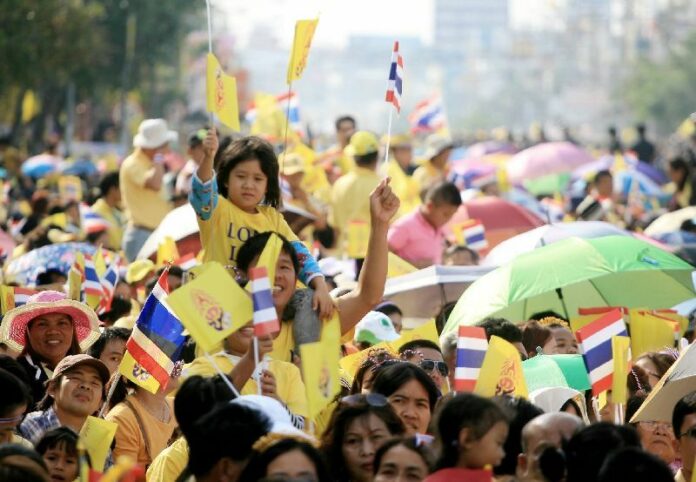
Crowds of Thais celebrating His Majesty the King's birthday, 5 December 2013.

BANGKOK — The King of Thailand has recovered from gastritis and is no longer having difficulty eating, the Royal Household Bureau said in a statement yesterday.

According to the statement, a medical examination of King Bhumibol's stomach, intestines, liver, and kidney reveals that his health has greatly improved since he was admitted to the hospital several weeks ago.

"We discovered that His Majesty's diet has improved. We discovered that there is no inflammation in his body," the statement said.

His Majesty the King is also no longer receiving nutrients intravenously and has even gained some weight, the statement said.

King Bhumibol has been residing at Bangkok's Siriraj Hospital since 6 August, when he was admitted for an annual medical examination. He was diagnosed with mild gastritis and fed intravenously because of his difficulty eating.  

His Majesty the King spent many months at Siriraj Hospital in 2011 to undergo surgeries and other medical operations. Prior to his latest hopsital stay, King Bhumibol was recovering at his summer retreat, Klai Kang Won Palace.

The king has rarely appeared in public in recent years. Although he made a brief appearance on 22 July when he endorsed the 2014 interim charter, King Bhumibol was not present at the inauguration ceremony for junta chairman and Prime Minister Prayuth Chan-ocha on 25 August.

The Royal Household Bureau has not said when His Majesty the King will leave the hospital. 


For comments, or corrections to this article please contact: [email protected]

You can also find Khaosod English on Twitter and Facebook
http://twitter.com/KhaosodEnglish
http://www.facebook.com/KhaosodEnglish
Advertisement

Redshirt Suspect Dies In Prison, Mother Suspects Foul Play

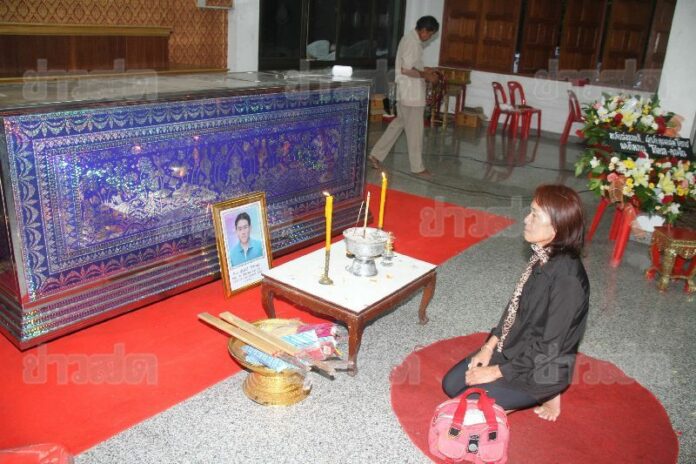
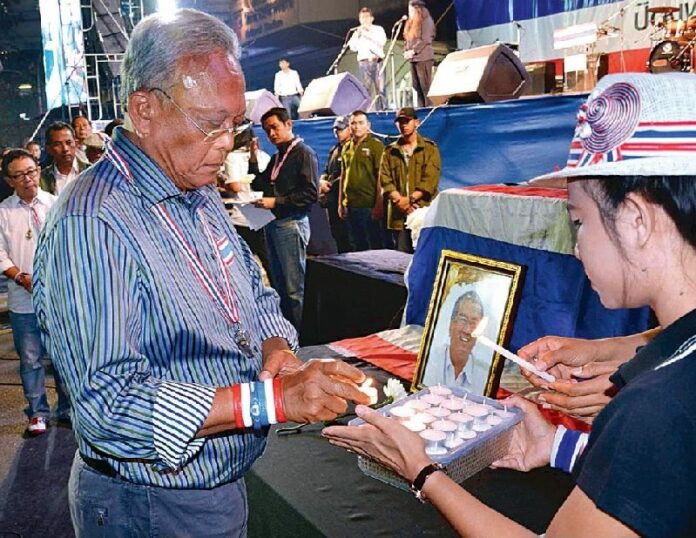
PCAD leader Suthep Thaugsuban lit a candle in front of the coffin of Suthin Tharatin hours after his death on 26 January 2014.

BANGKOK — A 36-year-old Redshirt demonstrator accused of murdering a Yellowshirt activist in January died in prison yesterday while awaiting trial, raising suspicions of foul play among his family and friends.

Surakrit Chaimongkol was incarcerated at Bangkok Remand Prison for allegedly shooting and killing Suthin Tharatin, a core leader of the People's Committee for Absolute Democracy With the King As Head of State (PCAD) who was leading a rally to disrupt voting near a polling station in Bangkok's Bang Na district on 26 January.

According to director of the Corrections Department Wittaya Suriyawong, Mr. Surakrit had an asthma attack on 28 August. Although officials rushed him to hospital immediately, Mr. Surakrit died that evening, Mr. Wittay said. 

Mr. Wittaya said police officers, attorneys-general, and physicians will jointly perform an autopsy on Mr. Surakrit to determine a clear cause of death "soon."

"Let me stress that he wasn't harmed by anyone." Mr. Wittaya said. 

Sorasith Chongcharoen, director of Bangkok’s Remand Prison, admitted that Mr. Surakrit had no previous history of asthma, but insisted that the suspect died of a medical condition and not because he was mistreated in any way.

"During his time in prison, Mr. Surakrit had no problem with other inmates, and he was never harmed," said Mr. Sorasith.

However, Mr. Surakrit’s mother, Arie Chaimongkol, said she is concerned about the cirucmstances of her son's death.

"I feel very suspicious,” Ms. Arie told Khaosod. “I don't believe he died because of medical condition.”

According to Ms. Arie, when she visited her son in prison on 21 August he told her feared for his life because a certain individual threatened to kill "every Redshirt" in the jail. 

Mr. Surakrit also told her he was coerced by unidentified individuals in prison to confess about his actions and reveal the names of the people who commanded him to commit the alleged murder.

She added that Mr. Surakrit previously requested a release on bail, but was denied by the Criminal Court.

Thai prisons are notorious for overcrowding, unsanitary conditions, and abuse by other inmates and prison guards. Human rights activists have also criticised the practice of denying bail to political prisoners and housing them in the same facilities as convicts of violent crimes.

In 2012, a 64-year-old man charged with lese majeste (insult of monarchy) died in prison while waiting for an appeal, reportedly due to his poor health. Ampon Tangnoppakul was sentenced to 20 years in prison in 2011 for allegedly sending a series of text messages to the secretary of then-Prime Minister Abhisit Vejjajiva that contained remarks critical of the Thai monarchy.

Mr. Ampon insisted that he did not even know how to use a mobile phone.


For comments, or corrections to this article please contact: [email protected]

You can also find Khaosod English on Twitter and Facebook
http://twitter.com/KhaosodEnglish
http://www.facebook.com/KhaosodEnglish
Advertisement

Redshirt Suspect Dies In Prison, Mother Suspects Foul Play

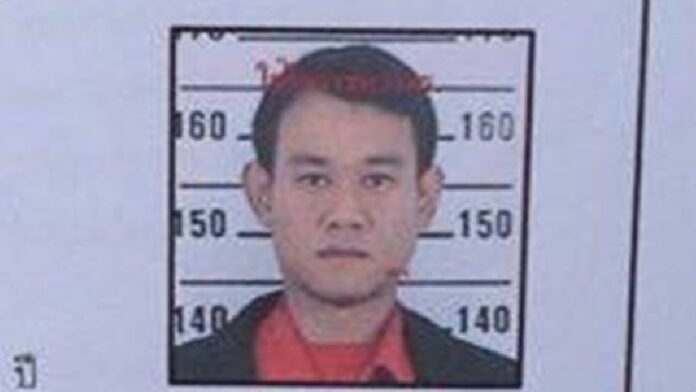
Surakrit Chaimongkol, who was accused of murdering a Yellowshirt activist in January, died in prison on 28 August  2014 while awaiting trial.

BANGKOK — A 36-year-old Redshirt demonstrator accused of murdering a Yellowshirt activist in January died in prison yesterday while awaiting trial, raising suspicions of foul play among his family and friends.

Surakrit Chaimongkol was incarcerated at Bangkok Remand Prison for allegedly shooting and killing Suthin Tharatin, a core leader of the People's Committee for Absolute Democracy With the King As Head of State (PCAD) who was leading a rally to disrupt voting near a polling station in Bangkok's Bang Na district on 26 January.

According to director of the Corrections Department Wittaya Suriyawong, Mr. Surakrit had an asthma attack on 28 August. Although officials rushed him to hospital immediately, Mr. Surakrit died that evening, Mr. Wittay said. 

Mr. Wittaya said police officers, attorneys-general, and physicians will jointly perform an autopsy on Mr. Surakrit to determine a clear cause of death "soon."

"Let me stress that he wasn't harmed by anyone." Mr. Wittaya said. 

Sorasith Chongcharoen, director of Bangkok’s Remand Prison, admitted that Mr. Surakrit had no previous history of asthma, but insisted that the suspect died of a medical condition and not because he was mistreated in any way.

"During his time in prison, Mr. Surakrit had no problem with other inmates, and he was never harmed," said Mr. Sorasith.

However, Mr. Surakrit’s mother, Arie Chaimongkol, said she is concerned about the cirucmstances of her son's death.

"I feel very suspicious,” Ms. Arie told Khaosod. “I don't believe he died because of medical condition.”

According to Ms. Arie, when she visited her son in prison on 21 August he told her feared for his life because a certain individual threatened to kill "every Redshirt" in the jail. 

Mr. Surakrit also told her he was coerced by unidentified individuals in prison to confess about his actions and reveal the names of the people who commanded him to commit the alleged murder.

She added that Mr. Surakrit previously requested a release on bail, but was denied by the Criminal Court.

Thai prisons are notorious for overcrowding, unsanitary conditions, and abuse by other inmates and prison guards. Human rights activists have also criticised the practice of denying bail to political prisoners and housing them in the same facilities as convicts of violent crimes.

In 2012, a 64-year-old man charged with lese majeste (insult of monarchy) died in prison while waiting for an appeal, reportedly due to his poor health. Ampon Tangnoppakul was sentenced to 20 years in prison in 2011 for allegedly sending a series of text messages to the secretary of then-Prime Minister Abhisit Vejjajiva that contained remarks critical of the Thai monarchy.

Mr. Ampon insisted that he did not even know how to use a mobile phone.


For comments, or corrections to this article please contact: [email protected]

You can also find Khaosod English on Twitter and Facebook
http://twitter.com/KhaosodEnglish
http://www.facebook.com/KhaosodEnglish
Advertisement

Rubber Farmer Self-Immolates As Crop Price Plunges

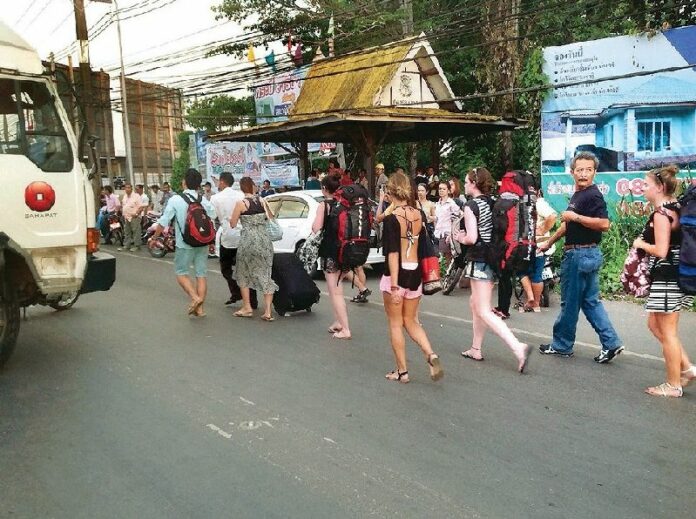
Foreign tourists were forced to walk past a road blockaded by rubber farmers to reach Surat Thani airport on 3 September 2013.

NAKHON SI THAMMARAT — A rubber farmer in Nakhon Si Thammarat province committed suicide yesterday amid the plunging price of raw rubber, a staple crop for many farmers is southern Thailand.

Pithakchai Kongthongkam, 31, doused his body with petrol and lit himself on fire at his home in Thoong Song district yesterday, police say.

Mr. Pithakchai's widow, Sujitra Srisawang, told police that her husband was distressed by the recent drop in the rubber prices, which threatened his livelihood as a rubber farmer.

"The price for rubber used to be at 70-80 baht per kilogram. Our family had an earning of 500-600 baht per day, enough to get by,” Ms. Sujitra said. “But in these days the rubber price dropped to only 40 baht per kilogram, which means one third of our earnings disappeared.”

Thailand is the world’s largest producer and exporter, but falling global demand has caused rubber prices to drop 24 percent this year.

Ms. Sujitra added that her husband was forced to borrow money from neighbours and employers to take care of the family. "It's likely that my husband was so stressed he decided to kill himself," Ms. Sujitra said. 

However, officers at Kapang Police Station said Mr. Pithakchai was recently arrested by police and charged with drug abuse, which may have played a role in his suicide.

While the motive behind Mr. Pithakchai's suicide remains unclear, the drop in rubber prices has caused a genuine crisis for rubber farmers in southern Thailand, whose livelihoods depend on the crop.

Late last year, southern rubber farmers protested the government at the time and requested a guaranteed price of 80-100 baht per kilogram for their crops. Although many rubber farmers supported the 22 May military coup that ousted the former government, Thailand's new military regime has not taken up the proposal either.

Instead of subsidies, the junta has promised sustained "structural" measures to solve the problem, such as providing soft loans for famers to purchase fertilizer.

However, some economists have expressed concern that the causes of the rubber price crisis may be too complicated for the military junta to understand.

"I cannot see any clear direction from the new government to solve the plunging robber price," said Withee Supithak, president of Federation of Industry of Thailand's southern division, "I am not sure how much [military officers] will understand the problem about rubber price, because it's an issue that many previous governments tried to solve but failed."

He added, "It's a really complex issue. It will take a long time, continuity in policies, and serious enforcement to solve the problem."


For comments, or corrections to this article please contact: [email protected]

You can also find Khaosod English on Twitter and Facebook
http://twitter.com/KhaosodEnglish
http://www.facebook.com/KhaosodEnglish
Advertisement

Rubber Farmer Self-Immolates As Crop Price Plunges

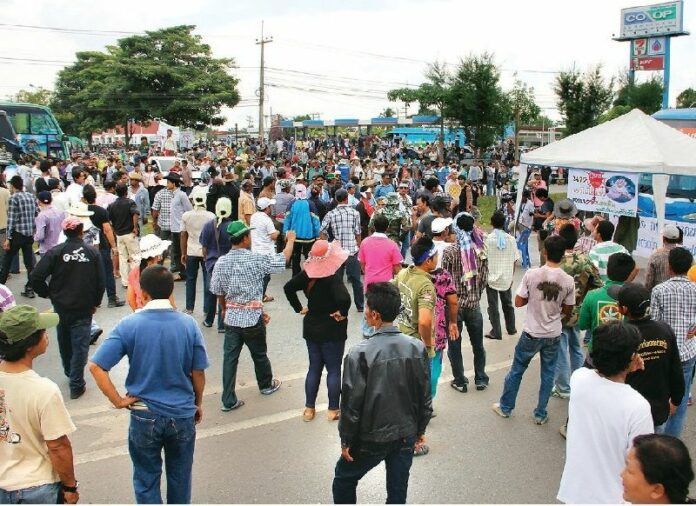
Rubber farmers block a road in Surat Thani province to demand guaranteed price for their crops on 3 September 2013.

NAKHON SI THAMMARAT — A rubber farmer in Nakhon Si Thammarat province committed suicide yesterday amid the plunging price of raw rubber, a staple crop for many farmers is southern Thailand.

Pithakchai Kongthongkam, 31, doused his body with petrol and lit himself on fire at his home in Thoong Song district yesterday, police say.

Mr. Pithakchai's widow, Sujitra Srisawang, told police that her husband was distressed by the recent drop in the rubber prices, which threatened his livelihood as a rubber farmer.

"The price for rubber used to be at 70-80 baht per kilogram. Our family had an earning of 500-600 baht per day, enough to get by,” Ms. Sujitra said. “But in these days the rubber price dropped to only 40 baht per kilogram, which means one third of our earnings disappeared.”

Thailand is the world’s largest producer and exporter, but falling global demand has caused rubber prices to drop 24 percent this year.

Ms. Sujitra added that her husband was forced to borrow money from neighbours and employers to take care of the family. "It's likely that my husband was so stressed he decided to kill himself," Ms. Sujitra said. 

However, officers at Kapang Police Station said Mr. Pithakchai was recently arrested by police and charged with drug abuse, which may have played a role in his suicide.

While the motive behind Mr. Pithakchai's suicide remains unclear, the drop in rubber prices has caused a genuine crisis for rubber farmers in southern Thailand, whose livelihoods depend on the crop.

Late last year, southern rubber farmers protested the government at the time and requested a guaranteed price of 80-100 baht per kilogram for their crops. Although many rubber farmers supported the 22 May military coup that ousted the former government, Thailand's new military regime has not taken up the proposal either.

Instead of subsidies, the junta has promised sustained "structural" measures to solve the problem, such as providing soft loans for famers to purchase fertilizer.

However, some economists have expressed concern that the causes of the rubber price crisis may be too complicated for the military junta to understand.

"I cannot see any clear direction from the new government to solve the plunging robber price," said Withee Supithak, president of Federation of Industry of Thailand's southern division, "I am not sure how much [military officers] will understand the problem about rubber price, because it's an issue that many previous governments tried to solve but failed."

He added, "It's a really complex issue. It will take a long time, continuity in policies, and serious enforcement to solve the problem."


For comments, or corrections to this article please contact: [email protected]

You can also find Khaosod English on Twitter and Facebook
http://twitter.com/KhaosodEnglish
http://www.facebook.com/KhaosodEnglish
Advertisement

2010 Unrest Ruling: Victims' Families Request Appeal

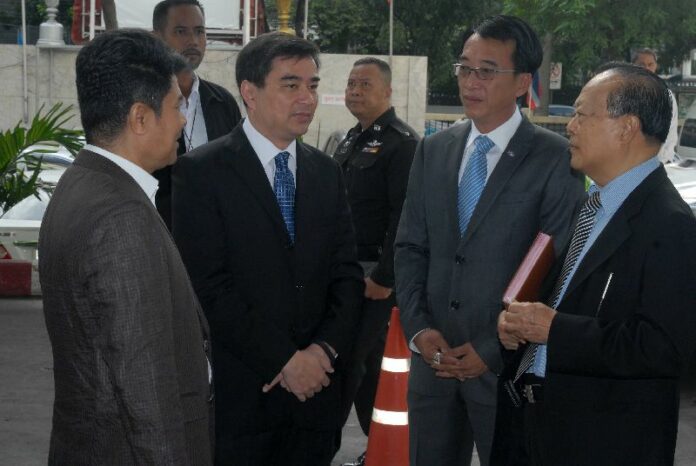
Former Prime Minister Abhisit Vejjajiva (second from the left) at the Criminal Court on 28 August 2014.

BANGKOK — The families of victims killed in a military crackdown on protesters in 2010 have requested to appeal a court verdict yesterday that dropped murder charges against the government leaders who ordered the operation.

Yesterday, the Criminal Court dismissed a murder case filed against former Prime Minister Abhisit Vejjajiva and his deputy Suthep Thaugsuban over their authorization of the crackdown in 2010, citing a lack of jurisdiction. 

According to the court, Mr. Abhisit and Mr. Suthep must be tried by the Supreme Court's Division of Political Office Holders because the two men were in political office when the alleged crimes were committed. It is now up to the National Anti-Corruption Committee (NACC) to take up the case.

But relatives of the victims who died in the crackdown and their lawyers are urging the Attorney-General to appeal the court ruling. 

"I believe it’s well within the authority of the Criminal Court to deliberate on the case," said Chokechai Angkaew, a lawyer who represents the victims' families. "Murdering people has nothing to do with political office."

The decision on whether to appeal the case rests with the Office of Attorney-General, who is currently "studying the case," its spokesperson, Wanchai Rujjanawong, said yesterday. 

"This case is unprecedented," Mr. Wanchai said , "I cannot say much at the moment. We have to give time to the working team of the Attorney-General who is responsible for the case."

The Attorney-General prosecutor has 30 days to file an appeal. 

Waiting for justice

The military crackdown in 2010 was an effort to quash mass Redshirt protests against Mr. Abhisit’s administration that began in March of that year.

More than 90 people, mostly civilians, were killed in clashes between security forces and demonstrators. The Division of Special Investigation (DSI) charged Mr. Abhisit and Mr. Suthep with murder and attempted murder in late 2010 for authorizing the military operation. 

Although Mr. Abhisit and Mr. Suthep denied the charges, insisting that the fatalities were caused by militants allied to the protesters, court inquests have shown that soldiers operating under the government's orders were responsible for a majority of the deaths in the crackdown.

"I still want to see the wrongdoers punished," said Teerawat Chumchan, whose brother Attachai Chumchan was shot dead by soldiers near the entrance to Wat Pathumwanararm Temple on 19 May 2010. "But I can't do anything about it. I'm waiting for the prosecutor to file an appeal, and then I will consult with my lawyer about what to do." 

Phayao Akhard, the mother of a volunteer medic who was shot dead inside Wat Pathumwanararm Temple on the final day of the crackdown, said she is preparing a letter to junta leader and Prime Minister Prayuth Chan-ocha asking to provide"justice" to the families of the victims.

"I never thought that it would happen," Ms. Phayao said. "As a family that lost my loved one, I will continue to seek justice for my daughter."

The New York-based Human Rights Watch (HRW) condemned the ruling in a report released today, calling it a “serious setback for accountability efforts in Thailand” and “an affront to basic justice and international law.”

The verdict fits into a larger trend of impunity, the report said, citing the repeated failure of governments since 2010 to prosecute those responsible for the violence.  

 “An important lesson from 2010 is that failure to end impunity will fuel future lawlessness and violence in Thailand,” said Brad Adams, HRW’s Asia Director. “This is particularly important now, when Thailand is living under a military junta that controls all state powers.”

Since staging a coup d'etat on 22 May, Thailand's military junta has banned public protests and intimidated the media in an effort to silence dissent. Over the past three months, the junta has arrested dozens of anti-coup protesters, many of whom are now facing trial in martial court. 

Suriyan Polsrila, the widow of a Redshirt demonstrator shot dead by the military in 2010, says she is shocked by the verdict, but unsure of what to do next.

"I don't want to criticise anything at this time, because, as we all know, anyone who campaigns about anything gets arrested."


For comments, or corrections to this article please contact: [email protected]

You can also find Khaosod English on Twitter and Facebook
http://twitter.com/KhaosodEnglish
http://www.facebook.com/KhaosodEnglish
Advertisement

2010 Unrest Ruling: Victims' Families Request Appeal

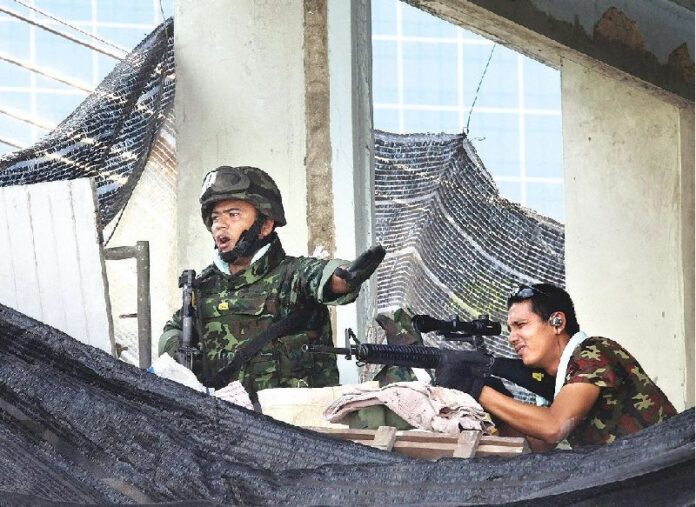
A military sniper shoots at Redshirt protesters near Lumpini Park on 15 May, 2014.

BANGKOK — The families of victims killed in a military crackdown on protesters in 2010 have requested to appeal a court verdict yesterday that dropped murder charges against the government leaders who ordered the operation.

Yesterday, the Criminal Court dismissed a murder case filed against former Prime Minister Abhisit Vejjajiva and his deputy Suthep Thaugsuban over their authorization of the crackdown in 2010, citing a lack of jurisdiction. 

According to the court, Mr. Abhisit and Mr. Suthep must be tried by the Supreme Court's Division of Political Office Holders because the two men were in political office when the alleged crimes were committed. It is now up to the National Anti-Corruption Committee (NACC) to take up the case.

But relatives of the victims who died in the crackdown and their lawyers are urging the Attorney-General to appeal the court ruling. 

"I believe it’s well within the authority of the Criminal Court to deliberate on the case," said Chokechai Angkaew, a lawyer who represents the victims' families. "Murdering people has nothing to do with political office."

The decision on whether to appeal the case rests with the Office of Attorney-General, who is currently "studying the case," its spokesperson, Wanchai Rujjanawong, said yesterday. 

"This case is unprecedented," Mr. Wanchai said , "I cannot say much at the moment. We have to give time to the working team of the Attorney-General who is responsible for the case."

The Attorney-General prosecutor has 30 days to file an appeal. 

Waiting for justice

The military crackdown in 2010 was an effort to quash mass Redshirt protests against Mr. Abhisit’s administration that began in March of that year.

More than 90 people, mostly civilians, were killed in clashes between security forces and demonstrators. The Division of Special Investigation (DSI) charged Mr. Abhisit and Mr. Suthep with murder and attempted murder in late 2010 for authorizing the military operation. 

Although Mr. Abhisit and Mr. Suthep denied the charges, insisting that the fatalities were caused by militants allied to the protesters, court inquests have shown that soldiers operating under the government's orders were responsible for a majority of the deaths in the crackdown.

"I still want to see the wrongdoers punished," said Teerawat Chumchan, whose brother Attachai Chumchan was shot dead by soldiers near the entrance to Wat Pathumwanararm Temple on 19 May 2010. "But I can't do anything about it. I'm waiting for the prosecutor to file an appeal, and then I will consult with my lawyer about what to do." 

Phayao Akhard, the mother of a volunteer medic who was shot dead inside Wat Pathumwanararm Temple on the final day of the crackdown, said she is preparing a letter to junta leader and Prime Minister Prayuth Chan-ocha asking to provide"justice" to the families of the victims.

"I never thought that it would happen," Ms. Phayao said. "As a family that lost my loved one, I will continue to seek justice for my daughter."

The New York-based Human Rights Watch (HRW) condemned the ruling in a report released today, calling it a “serious setback for accountability efforts in Thailand” and “an affront to basic justice and international law.”

The verdict fits into a larger trend of impunity, the report said, citing the repeated failure of governments since 2010 to prosecute those responsible for the violence.  

 “An important lesson from 2010 is that failure to end impunity will fuel future lawlessness and violence in Thailand,” said Brad Adams, HRW’s Asia Director. “This is particularly important now, when Thailand is living under a military junta that controls all state powers.”

Since staging a coup d'etat on 22 May, Thailand's military junta has banned public protests and intimidated the media in an effort to silence dissent. Over the past three months, the junta has arrested dozens of anti-coup protesters, many of whom are now facing trial in martial court. 

Suriyan Polsrila, the widow of a Redshirt demonstrator shot dead by the military in 2010, says she is shocked by the verdict, but unsure of what to do next.

"I don't want to criticise anything at this time, because, as we all know, anyone who campaigns about anything gets arrested."


For comments, or corrections to this article please contact: [email protected]

You can also find Khaosod English on Twitter and Facebook
http://twitter.com/KhaosodEnglish
http://www.facebook.com/KhaosodEnglish
Advertisement

Hot News

LATEST NEWS

Bangkok
overcast clouds
34.4 ° C
34.4 °
32.7 °
71 %
4.2kmh
99 %
Mon
33 °
Tue
34 °
Wed
35 °
Thu
31 °
Fri
30 °