























32.7 C
Bangkok
Tuesday, July 21, 2026
Home Blog Page 3201

A Rose By Any Other Name

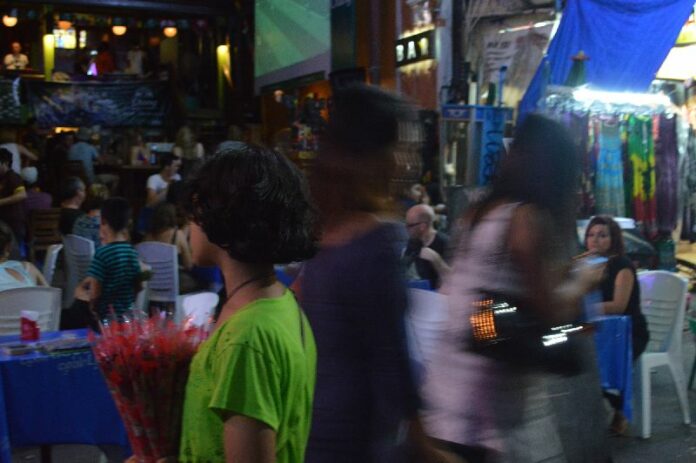
A girl selling roses on Khaosan Road in Bangkok.

A story of naive tourists, desperate parents, and negligent police

BANGKOK — Three months ago, a squad of Thai police arrived on Khaosan Road, one of Bangkok’s most popular nightlife destinations for tourists and local revelers. The police returned to their headquarters in Northern Bangkok later that night with five children, all of them Burmese and under the age of ten. The next morning, two more children were brought in with a man who one child referred to as his “boss.”

The children had been selling roses to tourists on Khaosan Road and were suspected to be victims of human trafficking. Several months later, those seven children are now living in state shelters and the “boss,” Maung Miang U, is awaiting trial in Bangkok’s Remand Prison. Maung Miang, who is 22 and also Burmese, confessed to bringing three of the children from their home in Myanmar to sell flowers in Bangkok.

“Their father was poor and didn’t have money, so I helped,” Maung Miang told Khaosod English from inside Bangkok’s Remand Prison. “The parents willingly gave the kids to me.”

Maung Miang said he sent 1,500 baht from the children’s rose sales back to their parents in Myanmar every month. However, the children who sell roses on Khaosan Road can bring in twice that amount in a single night. Maung Miang declined to answer a question about where the rest of the money went.

\
A girl selling roses on Khaosan Road in Bangkok.

Rose-selling children have become of regular feature of Bangkok’s top nightlife locales. The children, some as young as five-years-old, weave through crowds of tourists and local partiers, peddling red roses until the bars close.

But unlike the child beggars in Bangkok, most of whom are Cambodian and travel to Thailand with their mothers, the rose-selling children are almost all Burmese and have come to Bangkok without their families. Many of them are sent by their parents, who expect to receive monthly payments and see their children returned after a short time. More often than not, the money stops and the kids never come home.

“I let them go because I didn’t know anything,” said Mya Hla Tin*, a Burmese woman who gave two of her sons to a man who promised to take them to sell roses in Bangkok and send back money every month. She had no idea that she would stop receiving money after only a few months, or that her children’s “caretaker” in Bangkok would refuse to send her sons back.

“I was in complete trouble,” Mya Hla Tin recounted. “I couldn’t earn enough to pay the house rent.”

According to Vittanatpat Rattanawarepong, who runs the Stop Child Begging campaign for the Mirror Foundation in Bangkok, at least 500 children have been trafficked in this manner to sell roses in tourist destinations around Thailand. Less than a quarter of them are ever returned to their families.

Because many of the families are Burmese migrants living in Thailand illegally, they afraid to ask government officials for help, said Vittanatpat.

“Families come to us and show pictures from 10 years ago and say they haven’t seen their kids since.”

A lack of follow through  

Bangkok’s Khaosan Road, a world-famous “backpacker ghetto,” is jam-packed with bars, nightclubs, Burger Kings, and touristy trinket shops. But the first building tourists see when they enter the street’s western entrance is a police station.

“Many things happen here,” said Sanga Ruangwattanaku, the president of the Khaosan Road business association. “I won’t call them illegal, but let’s just say they are against the law.”

According to Sanga, local police are fully aware of the rose-selling children’s “situations.”

“They are not paid off, but they collect fees,” Sanga said. “They will do a certain job in a certain period, and close one eye during another period.”

Police from the Chanasongkram station on Khaosan Road declined to comment.

The most recent raid on Khaosan Road took place on 19 June, when Thailand’s military rulers were scrambling to make up for a year of bad press surrounding the country’s dismal record of combating human trafficking.

It was the day before the United States was set to release its annual Trafficking in Persons Report, which ultimately downgraded Thailand for failing to meet the minimum standards needed to eliminate trafficking.  Thailand is now a member of the “Tier 3” category, alongside countries like Iran, Syria, and North Korea.

According to the report, “local and national-level police officers established protective relationships with traffickers in trafficking hot-spot regions to which they were assigned.”

Officials and NGO workers interviewed by Khaosod English consistently reported that Thai police only stage raids on Khaosan Road and similar areas when they need to fill a quota or take advantage of a PR opportunity.

“The police in the local area don't really want to handle cases like this,” said Vittanatpat from the Mirror Foundation. “Human trafficking cases require many units to work together, but no one wants to take care of it so they throw the cases between departments.”

\
Khaosan Road in Bangkok.

Ever since the June raid, the rose-selling children on Khaosan Road have been less visible. One of the regular rose-selling girls now appears to be working at a kebab stand. The others have only been seen sporadically, unlike the consistent seven-day-a-week schedule they maintained before the raid. However, the presence of rose-selling children in other areas around Bangkok, such as Asoke and Ekkamai, remains the same.

The periodic police raids do thankfully rescue some children from this exploitation. Yet all too often they leave the trafficking infrastructure intact. As a result, it doesn't matter how many children are rescued because it’s only a matter of time before traffickers find news ones to replace them.

Before June, the last raid on rose-selling children in Bangkok was in 2008; just like the most recent raid, the only person arrested was the children’s “caretaker” in Bangkok. Again and again, the brokers who strike deals with the children’s parents and transport the kids to Bangkok are left untouched.  

“When children are rescued or able to flee back home, the agents in Bangkok will simply contact their middlemen at the original province to supply more kids,” explains Vittanatpat.

'Fun and games'

While new Burmese parents must be periodically approached to replenish the “supply,” the demand side of the rose-selling market never changes. The enterprise is funded by a steady flow of cash from the pockets of tourists in places like Khaosan Road.

The youngest of the rose-selling children stumble absently around Khaosan Road’s chaotic party scene, winning tourists over with their innocence. But the older children have devised more complicated schemes. Speaking basic English, they make jokes, play hand games, and charm customers into buying a rose or two. But their smiles are fleeting, fading as soon as the sale is made.

Many of the tourists on Khaosan Road buy roses thoughtlessly; they are drunk, the children are cute, and what’s 20 baht anyways? Furthermore, Khaosan Road —  known as the “gateway to southeast Asia” —  is a common pit-stop for backpackers setting out to travel around the region.  As a result, many of the partiers who end up on Khaosan have only been in Thailand, and perhaps Asia, for a day or two.

“For many people it’s their first Asian experience,” explained Andrew Fortnum, who leads trips for Free and Easy Traveler across Thailand. “They’re not really sure or clear of what is typical.”

Unable to tell the difference between a Thai and Burmese child, many tourists assume the rose-sellers are just local kids trying to help their families.

“It’s fun for us, and it’s money for them,” said a 20-something German tourist when asked why he bought a rose. “It’s a win-win situation.”

Though some well-intentioned tourists may genuinely believe that buying a rose will help the impoverished-looking children, in reality, their money is precisely what’s keeping them enslaved.

“It’s basic economics,” said Vittanatpat from the Mirror Foundation. “If there's no buyer, there will be no seller. What's the point of buying more kids if nobody wants to buy the flowers?”

\
A community in Mae Sot, where many of the rose-selling children are from.

Uncertain futures

Nyi Nyi, an nine year old Burmese boy, sold roses for more than a year before he was rescued by police. But the other Burmese girl he lived with wasn’t as lucky. According to Nyi Nyi, she was too scared to tell police the truth.

“She was scared that she would be beaten,” Nyi Nyi said. “When we couldn’t sell [enough flowers], we were violently beaten.”

Although dozens of rose-selling children can be seen on Khaosan Road any given night, only a couple of them make it into the shelter system every year, says Ms. Kanoknop, a social worker at the The Pakkred Reception Home for Boys.

And yet those children still face a long road home. Stage agencies and NGOs in Thailand and Myanmar must cooperate to sort through legal matters, locate and evaluate the children’s families, and facilitate the repatriation process. All together, the children may need to stay in shelters for over a year.

Social workers are currently working to locate the parents of the three children rescued in June who lived with Maung Miang and have been identified as victims of trafficking. One of the children, a seven year old boy, has already testified before state lawyers. Maung Miang has been charged with child trafficking and could face up to 15 years in prison.

But the story behind the four other children picked up in the same police raid remains unclear.

According to social workers at the shelter, the two other Burmese boys rescued that night did not live with their parents in Bangkok —  their parents live in Myanmar and Mae Sot, a town 500 km northwest of Bangkok that borders Myanmar and has been a target for human traffickers for years. Yet these children are not being treated as victims of trafficking, said Kanoknop, a social worker at shelter.

“It’s up to police,” Kanoknop explained. “The police determined that they are not victims of human trafficking.”

However, police from the Anti-Trafficking Division provided a different account.

“Since the shelter home has not contacted the police at all, we believe they have been determined to be non-victims,” said Pol.Col. Chitpop Tomuan, who was responsible for the June raid. “For [the other four children’s] situation, you should talk directly to the shelter home because it is their responsibility.”

Pol.Col. Chitpop said his department is not planning to stage another raid in the near future or investigate any other suspected traffickers.

According to Thailand’s 2008 Anti-Trafficking in Persons Act, child trafficking is defined as “procuring, buying, selling, vending, bringing from or sending to, detaining or confining, harboring, or receiving a child” for the purpose of exploitation.

With strict rules protecting the privacy of the children, it’s difficult to know the details of their stories. Yet no one involved in the case has been able to explain why only three of the children are being treated as victims of trafficking. Perhaps there is a true legal basis for the differentiation, or perhaps, like many others, their case is simply falling through the cracks.

(Reporting by Sally Mairs)


*The names of trafficking victims and their families have been changed to protect their privacy.


For comments, or corrections to this article please contact: [email protected]

You can also find Khaosod English on Twitter and Facebook
http://twitter.com/KhaosodEnglish
http://www.facebook.com/KhaosodEnglish
Advertisement

World 'Understands' Thai Coup: UN Ambassador

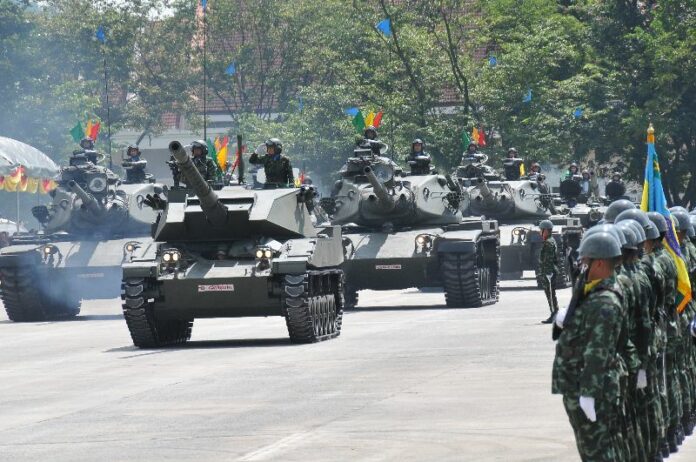
Soldiers salute NCPO chairman & Prime Minister Gen. Prayuth Chan-ocha during a military parade to honour his retirement as army chief in Nakhon Nayok, 29 September 2014

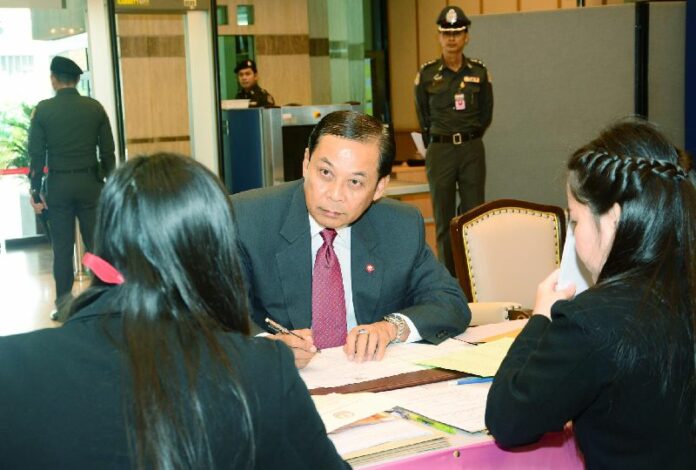
BANGKOK— According to Thailand's ambassador to the United Nations, the international community now "understands" the necessity of the 22 May military coup.

"I have explained to international delegates the need of the current administration to step in," said the diplomat, Norachit Sinhaseni. "It was for the sake of ending violence and conflicts." 

He continued, "Those who misunderstand the coup are decreasing, while many countries praise the Thai government for its effort to create peace and stability, which is clearly successful."

Mr. Norachit's comment came a day after Gen. Thanasak Patimapakorn, Deputy Prime Minister and Minister of Foreign Affairs, addressed the UN 69th General Assembly at New York City, USA. In his speech, Gen. Thanasak repeated the junta's narrative that the military was forced to prevent violence between Thailand's opposing political factions from spiraling out of control.

The general also promised the UN that the junta's National Council for Peace and Order (NCPO) will steer Thailand back toward electoral democracy in the near future. 

"Let there be no doubt that Thailand is not retreating from democracy," Gen. Thanasak said.

The NCPO staged a coup on 22 May after six months of protests against former Prime Minister Yingluck Shinawatra. The anti-government protesters wanted to replace Ms. Yingluck's administration with an unelected "People's Council" and repeatedly called on the military to intervene on their side. Opposing pro-government supporters descended on the capital in the weeks leading up to the coup to rally in favor of addressing political differences at the ballot box.

Since seizing power on 22 May, the coupmakers have largely carried out the demands of the anti-government protesters by suspending democracy to pursue widespread national reforms. 

The coup drew condemnation from a number of western countries, including the United States, Australia, and the European Union. 

But Sihasak Puangketkaew, Permanent Secretary of the Ministry of Foreign Affairs, insisted that Gen. Thanasak's visit to the UN has been "successful" in convincing western nations to understand the situation in Thailand.

"It was a good opportunity for Thailand to explain to them about the political situation in our country, in order to raise the confidence of the audience in Thailand," Mr. Sihasak said.

Gen. Thanasak's trip to the UN is the first official visit to a western nation by a member of Thailand's military junta. Meanwhile, Gen. Prayuth Chan-ocha, Prime Minister and junta leader, is said to be planning a trip to Myanmar in the near future.


For comments, or corrections to this article please contact: [email protected]

You can also find Khaosod English on Twitter and Facebook
http://twitter.com/KhaosodEnglish
http://www.facebook.com/KhaosodEnglish
Advertisement

Junta Appoints More Military Men To NLA

A member of the NLA reporting for duty, 29 Sept 2014.

BANGKOK — Thailand’s military junta has appointed 28 new members to the National Legislative Assembly (NLA), more than half of whom are military officers.

The new batch of NLA members, like the current ones, were handpicked by the junta's National Council for Peace and Order (NCPO). His Majesty the King reportedly endorsed the list yesterday. 

The NLA, which is part of the junta’s interim government, was formed in July and is expected to govern the country for at least a year.

Of the 28 new NLA lawmakers, 17 are military officers and the rest are former politicians and business executives. More than half of the original 193 members are also active or retired military or police officers.

A number of media agencies and anti-junta critics have branded the military-stacked NLA as a rubberstamp parliament for the NPCO. Last month, the lawmakers unanimously voted NCPO chairman Gen. Prayuth Chan-ocha into the premiership; he was the only candidate running. 

Under the 2014 temporary charter, Thailand’s interim government consists of the NCPO, NLA, Gen. Prayuth's Cabinet, and the yet-to-be-formed National Reform Council (NRC) and Constitutional Drafting Committee. The junta has promised a national election by late 2015 on the condition that "reforms" and "reconciliation" have been achieved.

The junta is expected to announce the list of the NRC in the coming weeks. 

For comments, or corrections to this article please contact: [email protected]

You can also find Khaosod English on Twitter and Facebook
http://twitter.com/KhaosodEnglish
http://www.facebook.com/KhaosodEnglish

Advertisement

Crimes Against Tourists in Thai Beach Towns Continue

Minister of Sports and Tourism Kobkarn Wattanavrangkul met with officials on Koh Tao island to discuss about the investigation into the murder of two Britons there, 28 Sep 2014

PHUKET — Two more crimes against foreigners in Thailand were reported over the weekend, only two weeks after the country was rocked by the grisly murder of two British tourists on the resort island of Koh Tao.

This past weekend, a Russian tourist was allegedly raped in Phuket, while a body of an unidentified foreigner was found off the coast of Koh Samet in the the Gulf of Thailand.

According to police, a Russian tourist said she was walking back to her hotel from the nightlife district of Patong on Saturday when a Thai man offered her a ride on his motorcycle. 

Instead of bringing her to the hotel, he took the tourist to his residence and sexually assaulted her, police say. He then reportedly returned her back to her hotel, where she immediately called police.

After studying CCTV footage, police identified the suspect as Somdet Srisai, 33, and arrested him. 

Police officers say Mr. Somdet confessed to the crime and said he brought the victim to his residence to help her "sober up," but then decided to rape her because "she was beautiful."

According to police, Mr. Somdet said he did not expect the victim to report the crime.

Mr. Somdet has been charged with sexual assault and is currently detained by police. 

Meanwhile on Sunday, the body of an unidentified foreigner was found off the coast of Koh Samet, a popular tourist destination in the Gulf of Thailand.

Police described the deceased as a male 170-cm-tall Caucasian wearing a black T-shirt and short black pants at the time of his death.

Police say they found a wound caused by a blunt object on the back of his head and "numerous" bruises on his body, suggesting that he was murdered before being dumped into the sea.

The incident is under investigation.

The two crimes against foreigners came amid the ongoing controversy over the murder of two British tourists on Koh Tao island in southern Thailand two weeks ago.

Police have yet to name suspect or make any arrests in connection with the murder of David Miller, 24, and Hannah Witheridge, 23. The faltering investigation has come under harsh criticism from international media after police gave a series of contradicting and confusing statements to the press.

Petty crimes against foreigners are common in Thailand, where approximately 26 million tourists travel to each year, but the murder of foreigners is relatively rare. In the past weeks Thai authorities have expressed concern that the murder of the two Britons will damage the national tourism industry. 


For comments, or corrections to this article please contact: [email protected]

You can also find Khaosod English on Twitter and Facebook
http://twitter.com/KhaosodEnglish
http://www.facebook.com/KhaosodEnglish
Advertisement

Soldiers Find Guns, Nearly 1 Mil. Baht In Temple Raid

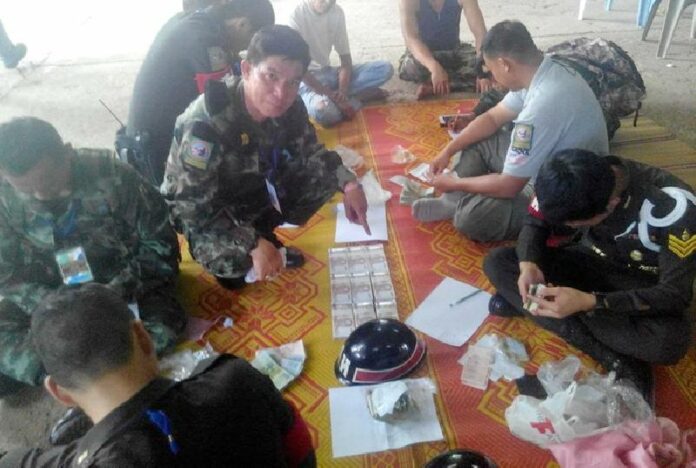
Soldiers confiscated nearly one million baht in cash and several firearms during a surprise raid on a Buddhist temple in Sukhotai province, 26 Sept 2014.

SUKHOTAI — Soldiers confiscated nearly one million baht in cash and several firearms during a surprise raid on a Buddhist temple in Sukhotai province this morning.

Maj.Gen. Padung Yingpaiboonsook, a local commander of the junta's National Council for Peace and Order (NCPO), conducted the raid of Sawang Arom Temple following complaints from local residents about the "inappropriate behaviour" of monks at the temple.

Soldiers said they found two firearms, radio equipment, pornographic materials, and approximately 966,000 baht in cash in the search. 

Cpt. Chirapat Sonsakul, deputy commander of the NCPO's intelligence unit in the province, said the abbot collected the money by soliciting donations from local residents, ostensibly to repair one of the chapels on the compound. However, the renovation never took place and the abbot and his deputy pocketed the money for themselves, Cpt. Chirapat said. 

Cpt. Chirapat said the abbot will be prosecuted for possessing unregistered firearms and conducting donation fraud.

Since the military staged a coup against the elected government on 22 May, soldiers have taken an active role as law enforcement officers. Under the authority of martial law, which the army imposed two days before the coup, soldiers are not required to obtain search warrants before staging raids. Over the past few months, soldiers have busted a handful of organised crime networks, gambling rings, and drug dealers. 


For comments, or corrections to this article please contact: [email protected]

You can also find Khaosod English on Twitter and Facebook
http://twitter.com/KhaosodEnglish
http://www.facebook.com/KhaosodEnglish

Advertisement

3 Students Charged For 2006 Coup Commemoration

(Prachatai English)

BANGKOK – In a bid to threaten anti-coup activists, the police on Thursday summoned three student activists after they commemorated the 2006 coup d’état on 19 September and charged them with littering a pedestrian bridge.  
 
On Thursday, Sirawith Sirathiwat, Seaksan Saisueb, and Thongdam Keawphanpruek, student activists from the League of Liberal Thammasat for Democracy (LLTD) were ordered to report to the police at Sutthisan Police Station. 

Read the rest of the story here.


Note: Khaosod English is not responsible for content on other websites.

Advertisement

Army To Hold Massive Parade For Prayuth's Retirement

Secretary-general of the NCPO, Gen. Udomdej Sitabutr, has been chosen to succeed Gen. Prayuth as the new commander-in-chief of the army.

BANGKOK — The Royal Thai Army is planning an extravagant parade for next week to honour junta leader and Prime Minister Prayuth Chan-ocha's retirement as army chief.

The parade is meant to celebrate Gen. Prayuth and over 200 other generals who will retire from their posts this October, said Col. Sirichan Ngathong, deputy spokesperson of the Royal Thai Army.

"It is an important ceremony to thank and praise the diligence and good deeds of those who about to retire," Col. Sirichan explained.

According to Col. Sirichan, the parade will start at 9 am on 29 September at Chulalomklao Royal Military Academy in Nakhon Nayok province, an hour northeast of Bangkok.

The parade is slated to feature troops from five army battalions and a wide array of military vehicles, including tanks, armoured personnel carriers, helicopters, and artillery pieces. A squadron of jet fighters is also expected to fly over at the parade and release red, white, and blue smoke – the colours of the Thai flag.

"The public is invited to view the ceremony and the parade, too" Col. Sirichan added.

Gen. Prayuth, who led the 22 May coup earlier this year, has been chief of the Thai army since 2010. After retiring from his position in October, Gen. Prayuth will retain his posts as head of the junta's National Council for Peace and Order (NCPO) and Prime Minister of Thailand.

Secretary-general of the NCPO, Gen. Udomdej Sitabutr, has been chosen to succeed Gen. Prayuth as the new commander-in-chief of the army.


For comments, or corrections to this article please contact: [email protected]

You can also find Khaosod English on Twitter and Facebook
http://twitter.com/KhaosodEnglish
http://www.facebook.com/KhaosodEnglish
Advertisement

Koh Tao Murder: Police 'Willing' To Probe Abuse of Burmese Suspects

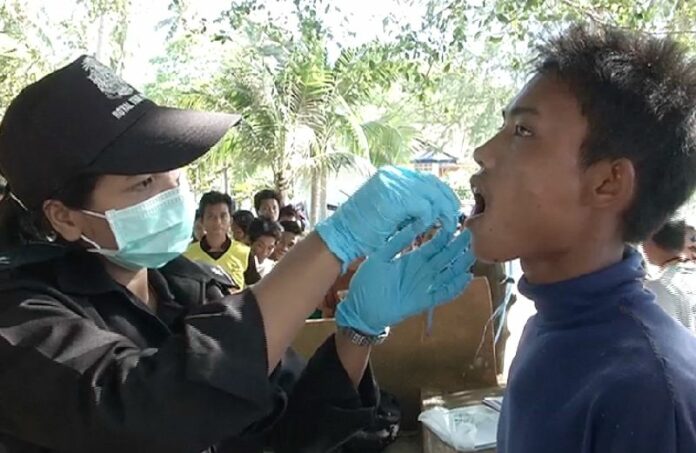
Police collect DNA samples from Burmese workers on Koh Tao during investigation into murder of 2 British tourists, 24 Sept 2014.

SURAT THANI — A senior Thai police officer has promised to investigate the claim that police abused Burmese migrant workers while interrogating them about the murder of two British tourists in southern Thailand last week.

"If there is an allegation of police officers committing wrongful acts, we are willing to investigate the matter," said Pol.Maj.Gen. Suwat Chaengyodsuk, a deputy commander of Metropolitan Police Bureau leading the investigation into the murders.

Pol.Maj.Gen. Suwat was responding to a report by Irrawaddy, which alleged that police beat two Burmese migrant workers while interrogating them about the murder of David Miller and Hannah Witheridge.

Scores of Burmese workers on Koh Tao island have been rounded up and questioned by police since the bodies of Mr. Miller, 24, and Ms. Witheridge, 23, were found on one of the island's beaches on 15 September. 

Police have also started collecting DNA samples from many Burmese workers on the island following speculation that Burmese migrants were responsible for the murder, though police have yet to produce any evidence to support the suspicion. 

Thailand is home to more than one million Burmese migrant workers, many of whom are not officially registered with authorities. Their lack of legal protection, coupled with widespread discrimination against Burmese people in Thailand, means they are often subject to abuse by employers, police, and human traffickers.

"We feel like we are not safe as there are no people to help us," a Burmese worker on Koh Tao named Soe Min Htet told the Irrawaddy. "Here, our citizens are vulnerable to unfair treatment and are always looked down upon."

Yet Pol.Maj.Gen. Suwat insisted that the investigation is being conducted appropriately and in accordance with human rights principles. 

"I have always stressed to the officers that our performance must consider human rights, too," Pol.Maj.Gen. Suwat said.

The officer also said he welcomed reports from both Thai and foreign press that are critical of the police investigation. 

"As for the criticism that our working on the case has been slow, I welcome these criticisms from people and the global community. They are like mirror that reflects our performance," Pol.Maj.Gen. Suwat told reporters.

His comments came in stark contrast to remarks made by a number of other high-ranking officials, including junta leader and Prime Minister Prayuth Chan-ocha, who accused the foreign media of "hindering" and interfering with the Thai police investigation. 

Hundreds of police officers have been dispatched to the 21 sq. km island to assist with the investigation in the past week. However, authorities have yet to make any arrests as forensic tests have reportedly cleared all potential suspects from a connection to the murder.

Related articles:
Britons' Murder: Lacking Evidence, Police Target Burmese Migrants
Britons' Murder: Police Claim Investigation Hindered By Media
Bangkok Suspect Cleared of Connection To Britons' Murder


For comments, or corrections to this article please contact: [email protected]

You can also find Khaosod English on Twitter and Facebook
http://twitter.com/KhaosodEnglish
http://www.facebook.com/KhaosodEnglish
 

Advertisement

NLA Grants Itself Open-Ended Impeachment Power

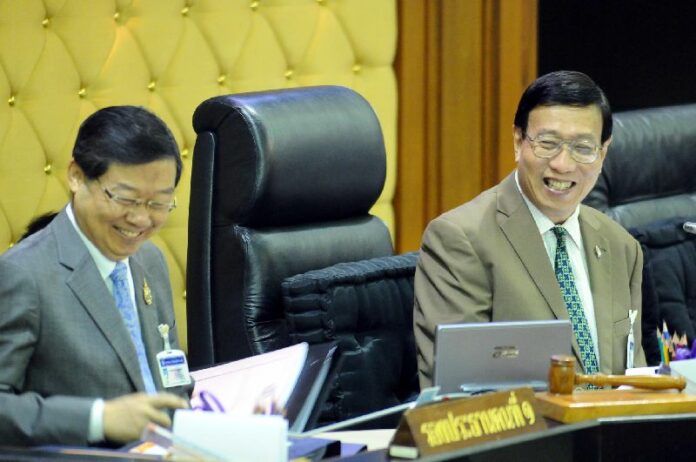
The chairman (R) and deputy chairman (L) of the NLA at a meeting that granted the legislature the power to impeach political office holders, 25 Sept 2014.

BANGKOK — The military-dominated National Legislative Assembly has granted itself the authority impeach political office holders, without elaborating on the the scope of the new power or how it will be put to use.

The newly-enacted power was included in the NLA Meeting Regulation No. 149, which passed by a vote of 148 against four abstentions yesterday. 

In the past, impeached individuals have been banned from politics for five years.

The move has drawn criticism that the junta-appointed NLA is overstepping its bounds, as the 2014 Interim Charter does not include a provision on impeachment, unlike the now-defunct 2007 Constitution. 

It is also unclear whether the new regulation permits the NLA to impeach former political office holders, a move that would empower the military-dominated parliament to block members of the government toppled in the 22 May coup from returning to office.

Prior to the coup, the NACC declared former Prime Minister Yingluck Shinawatra guilty of alleged negligence that led to corruption and attempted to pass her case to the Senate for an impeachment vote in early May. This came after Ms. Yingluck had already been removed from office in a judicial ruling.

Yet the push for impeachment fell through after the junta dissolved the Senate two days after the coup.

Sansern Polchiak, sec-gen of the NACC, said on 6 September that the anti-graft body is now looking to the NLA to impeach Ms. Yingluck for her alleged corruption, though there has been no development in the case so far. 

Since staging the coup on 22 May, the military junta's National Council for Peace and Order (NCPO) has attempted to dismantle the influence of the former government and its de facto leader, Ms. Yingluck’s brother and former Prime Minister Thaksin Shinawatra.

Political parties backed by the Shinawatras have won every national election since Mr. Thaksin, a former telecoms tycoon, rose to power in 2001. Mr. Thaksin is currently living in self-imposed exile to avoid corruption convictions, but is thought to retain signficant sway over Thai politics. 

After staging the 22 May coup d’etat, the NCPO briefly detained hundreds of politicians and activists considered loyal to the former government, and reshuffled bureaucratic and police positions in an attempt to sideline Mr. Thaksin’s allies. The NCPO’s interim government is expected to draft a charter will restrict the power of the next elected government.


For comments, or corrections to this article please contact: [email protected]

You can also find Khaosod English on Twitter and Facebook
http://twitter.com/KhaosodEnglish
http://www.facebook.com/KhaosodEnglish


Advertisement

Britons' Murder: Police Claim Investigation Hindered By Media

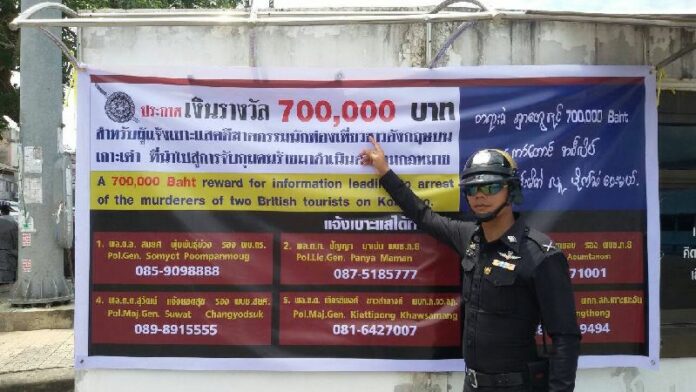
A banner hung on Koh Tao promising 700,000 baht reward for providing information that leads to the arrest of a culprit behind the Koh Tao muders. 24 Sep 2014.

BANGKOK — Thai police have accused foreign journalists and social media users of muddling their ongoing investigation into the murder of two British tourists in southern Thailand last week.

The Thai police have come under fire in recent days for providing contradictory statements to the press during their effort to find those responsible for the murders of David Miller, 24, and Hannah Witheridge, 23, whose battered bodies were found on a beach on Koh Tao island ten days ago. Police have yet to name an official suspect. 

But Pol.Maj.Gen. Panya Mamen, commander of 8th Region Provincial Police, said yesterday that the investigation has been hampered by foreign media coverage. He referred specifically to a story picked up by the British press about Sean McAnna, a Scottish backpacker who said he was threatened by two "mafia" on the island earlier this week.

According to Pol.Maj.Gen. Panya, police found no substance behind Mr. McAnna's accusation.

"The officers shouldn't have believed the foreign press. The time in the investigation was wasted," Pol.Maj.Gen. Panya said.

Meanwhile, chief of the Royal Thai Police, Pol.Gen. Somyot Pumphanmuang blamed the confusion surrounding the murder investigation on social media. 

"Police had to waste their time following leads from these rumours," Pol.Gen. Somyot told reporters yesterday.

He also cited the case of Mr. McAnna and insisted that his claim was unfounded, as one of the two men who allegedly intimidated him already "showed his innocence" yesterday. The two Thai men, who run the bar where Mr. Miller and Ms. Witheridge were last seen, are no longer being treated as suspects in the case, Pol.Gen. Somyot added.

Pol.Gen. Somyot also blasted the media for reporting that a primary suspect was thought to be in Bangkok after fleeing the island in the wake of the murders. According to Pol.Gen. Somyot, the police never sought a suspect in Bangkok, despite earlier comments from Koh Tao police officers that clearly stated otherwise.  

The suspect, Warot Tuwichian, 22, has been cleared of any connection to the murder, police say.

"I am not feeling pressured by the foreign media, but I am not being negligent neither," Pol.Gen. Somyot said. "I don't want to talk about [the investigation] to the press right now, lest my statements contradict with the officers in charge of the investigation."

Junta leader and Prime Minister Prayuth Chan-ocha also weighed in on the ongoing investigation by telling the press today to "show some respect" to the police.

"You say police are incompetent. I ask: will they have enough morale to work? What about other cases? Just because of this one case, should the entire police force be damaged, too?" Gen. Prayuth said to reporters at the Government House today. "Of course not. Therefore, whenever you talk, you must give some respect and dignity to the officers. There are good officers and there are bad officers."

He added, "You’ve been insulting them since the first day. If Thais are insulting Thais, what can they ever hope to achieve?"

Gen. Prayuth asked the press to refrain from "reproducing" the negative views displayed by foreign media about the investigation. "The nation is damaged. We should fix our mistakes. If we don't fix it, who will help us fix it? Will TIME help us fix it?"

Gen. Prayuth appeared to be referring to a recent article published in TIME titled "What the Murder of Two British Tourists Tells Us About Thailand’s Dark Side." 

When a reporter said foreign media merely want to guide the police investigation in the right direction, Gen. Prayuth responded angrily. "TIME should send their people here to guide us," he said. "You like to accept other people's power, I don't understand. Go ahead. If there's any information, they should find it and send it to us officially."


For comments, or corrections to this article please contact: [email protected]

You can also find Khaosod English on Twitter and Facebook
http://twitter.com/KhaosodEnglish
http://www.facebook.com/KhaosodEnglish
Advertisement

Hot News

LATEST NEWS

Bangkok
overcast clouds
32.7 ° C
32.7 °
30.5 °
59 %
4.6kmh
96 %
Tue
31 °
Wed
35 °
Thu
32 °
Fri
31 °
Sat
34 °