



























28.3 C
Bangkok
Tuesday, July 14, 2026
Home Blog Page 3247

Junta To Hold Power Over Interim Govt, Prayuth Says

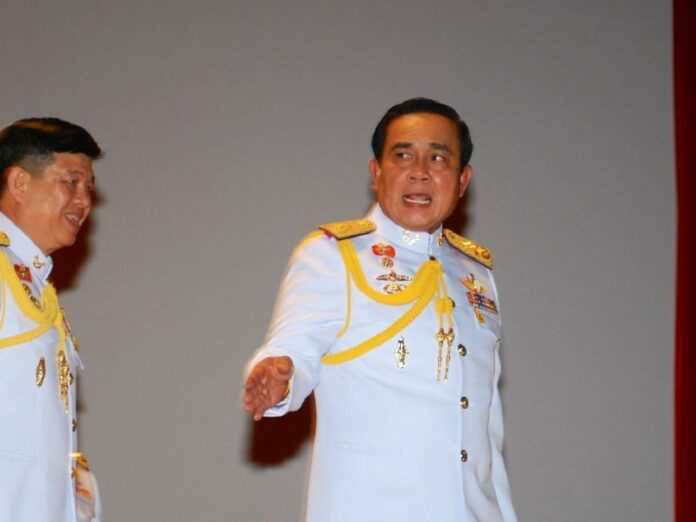
Gen. Prayuth Chan-ocha, chairman of Thailand's military junta.

BANGKOK — The chairman of Thailand’s military junta has confirmed that he will retain considerable power over the interim civilian government that is expected to be formed in the coming months.

Gen. Prayuth Chan-ocha, leader of the ruling National Council for Peace and Order (NCPO), said in a televised speech last night that the new government will be responsible for administrative works while the NCPO will maintain control over issues related to national security.

"Cooperation between the two branches will be based on consultations, joint meetings, exchanges of information and other forms of meetings when needed," Gen. Prayuth said, according to the official transcript released by the Thai Government House. "Suggestions and proposals will be taken up by the government for implementation measures."

"Other issues will come in the form of recommendations by the NCPO to the government," Gen. Prayuth added.

His comments confirmed the speculation that the NCPO will continue to play a significant role even after a civilian government is formed, which is expected to take place by September of this year.

According to an anonymous source quoted by the pro-coup newspaper Naewna last week, the NCPO may include a section in the provisional constitution that will allow it to veto any action by the interim government. 

Gen. Prayuth did not go into detail about the new constitution in his hour-long speech last night, but he did reveal that the charter will consist of 50 sections and will be designed to allow the new government to solve the country's problems in a fast, efficient manner. He also hinted that the charter may not be perfect.

"There may be some limitations in the provisional constitution," Gen. Prayuth said, without elaborating. 

Gen. Prayuth says he led the 22 May coup d'etat to put an end to months of political deadlock and prevent an escalation of violence between Thailand's rival political factions.

Starting last November, anti-government protesters embarked on six month protest campaign to topple the government of former Prime Minister Yingluck Shinawatra and replace it with an unelected "people's council." In the weeks leading up to the coup, pro-government activists also descended on the capital city to demonstrate their support for the former government and demand new elections. 

Since seizing power, the NCPO has retained full control over the country's administration and issued a harsh crack down on dissidents and vocal political figures, all in the name of "returning happiness to the people."

Hundreds of politicians, activists, academics, and journalists—the majority of whom are supporters of the former government— have been detained by the NCPO and released on the condition that they will not participate in any political activities. 

According to the Gen. Prayuth's roadmap for the country, an interim government will be formed in September and tasked with revising the constitution and reforming Thailand's electoral system. The next election will be not be held in October 2015, and only if conditions are stable, he says. 


For comments, or corrections to this article please contact: [email protected]

You can also find Khaosod English on Twitter and Facebook
http://twitter.com/KhaosodEnglish
http://www.facebook.com/KhaosodEnglish
Advertisement

Junta To Hold Power Over Interim Govt, Prayuth Says

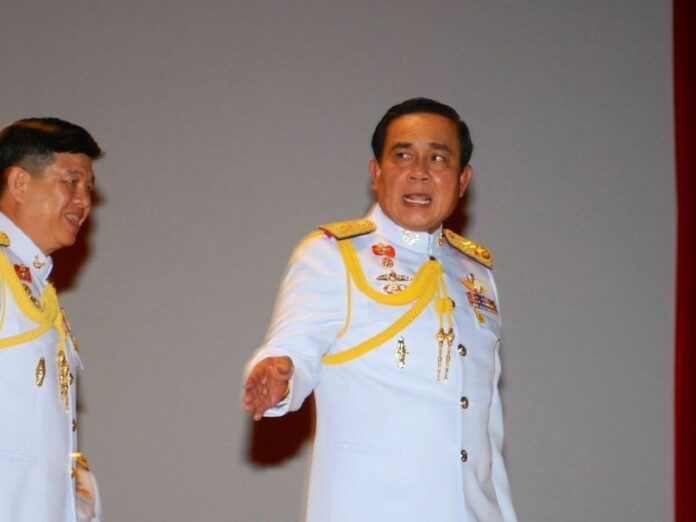
Gen. Prayuth Chan-ocha, chairman of Thailand's military junta.

BANGKOK — The chairman of Thailand’s military junta has confirmed that he will retain considerable power over the interim civilian government that is expected to be formed in the coming months.

Gen. Prayuth Chan-ocha, leader of the ruling National Council for Peace and Order (NCPO), said in a televised speech last night that the new government will be responsible for administrative works while the NCPO will maintain control over issues related to national security.

"Cooperation between the two branches will be based on consultations, joint meetings, exchanges of information and other forms of meetings when needed," Gen. Prayuth said, according to the official transcript released by the Thai Government House. "Suggestions and proposals will be taken up by the government for implementation measures."

"Other issues will come in the form of recommendations by the NCPO to the government," Gen. Prayuth added.

His comments confirmed the speculation that the NCPO will continue to play a significant role even after a civilian government is formed, which is expected to take place by September of this year.

According to an anonymous source quoted by the pro-coup newspaper Naewna last week, the NCPO may include a section in the provisional constitution that will allow it to veto any action by the interim government. 

Gen. Prayuth did not go into detail about the new constitution in his hour-long speech last night, but he did reveal that the charter will consist of 50 sections and will be designed to allow the new government to solve the country's problems in a fast, efficient manner. He also hinted that the charter may not be perfect.

"There may be some limitations in the provisional constitution," Gen. Prayuth said, without elaborating. 

Gen. Prayuth says he led the 22 May coup d'etat to put an end to months of political deadlock and prevent an escalation of violence between Thailand's rival political factions.

Starting last November, anti-government protesters embarked on six month protest campaign to topple the government of former Prime Minister Yingluck Shinawatra and replace it with an unelected "people's council." In the weeks leading up to the coup, pro-government activists also descended on the capital city to demonstrate their support for the former government and demand new elections. 

Since seizing power, the NCPO has retained full control over the country's administration and issued a harsh crack down on dissidents and vocal political figures, all in the name of "returning happiness to the people."

Hundreds of politicians, activists, academics, and journalists—the majority of whom are supporters of the former government— have been detained by the NCPO and released on the condition that they will not participate in any political activities. 

According to the Gen. Prayuth's roadmap for the country, an interim government will be formed in September and tasked with revising the constitution and reforming Thailand's electoral system. The next election will be not be held in October 2015, and only if conditions are stable, he says. 


For comments, or corrections to this article please contact: [email protected]

You can also find Khaosod English on Twitter and Facebook
http://twitter.com/KhaosodEnglish
http://www.facebook.com/KhaosodEnglish
 

Advertisement

Late Cambodian King's Ashes Paraded Through Capital

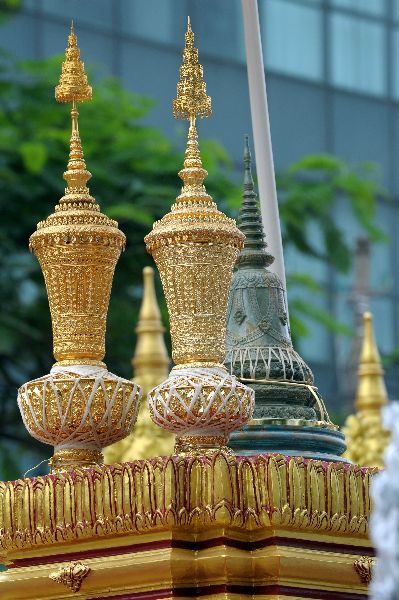
PHNOM PENH (DPA) – A golden float carrying the ashes of late Cambodian King Norodom Sihanouk was paraded through the streets of Phnom Penh on Friday, destined for the Silver Pagoda at the Royal Palace, where they were to be interred.

Phnom Penh (dpa) – A golden float carrying the ashes of late Cambodian King Norodom Sihanouk was paraded through the streets of Phnom Penh on Friday, destined for the Silver Pagoda at the Royal Palace, where they were to be interred.

While most Khmer kings' ashes are placed at a temple on Odong mountain outside the capital, Sihanouk requested that his be placed in the Silver Pagoda next to those of his daughter Kantha Bopha, who  died in 1952, aged 4, of cancer.

King Norodom Sihanouk died in October 2012 at age 89, sparking an outpouring of national grief. His body was cremated in February 2013.

The colourful procession included dozens of Buddhist monks and three ornate floats. The one carrying Sihanouk's ashes featured the head of an elephant and the body of a lion, a mythological Hindu character known as a Gajasingha.

Another float was shaped like a mythical Cambodian bird, and another like a three-headed golden snake.

Hundreds of people wearing official white mourning garb, holding lotus flowers, watched from the sidewalk as the procession made its way through central Phnom Penh and back to the Palace, where King Norodom Sihamoni and the Queen Mother waited.

Pao Phanith, a 15-year-old student, said he came to witness the procession because he wanted to celebrate the life and reign of Sihanouk, who features prominently in national history classes.

"He's my hero," the student said shyly.

While much-loved, King Norodom was also a controversial figure. In 1953, he won independence for Cambodia from France, but later he entered into an alignment with the Khmer Rouge, the brutal regime responsible for the deaths of 1.7 million Cambodians in the 1970s.

Friday was declared a public holiday. On Saturday, the ashes were to be formally interred in the presence of the royal family, Prime Minister Hun Sen and other officials.

Advertisement

Thai Professor's Passport Revoked by Junta

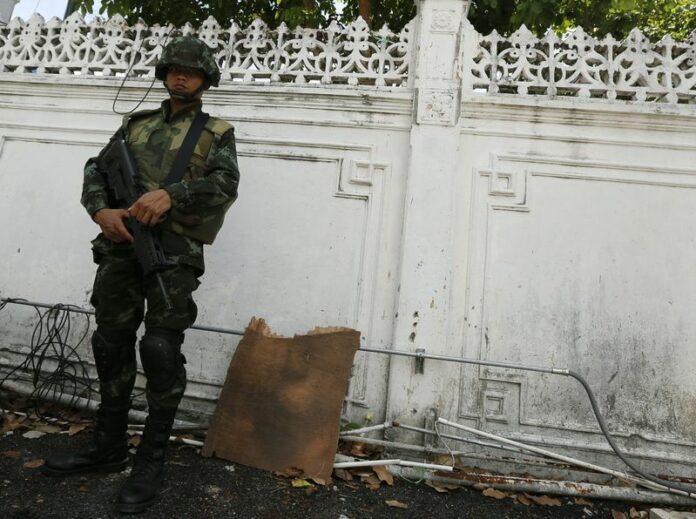
A Thai soldier stands guard inside the Government House in Bangkok, 04 June 2014. Thailand's military government revoked on Friday the passport of a noted academic who has been highly critical of the coup from abroad [DPA].

BANGKOK (DPA) — Thailand's military government has revoked the passport of a noted academic who has been highly critical of the May 22 coup from abroad.

The department of consular affairs took the action after Pavin Chachavalpongpun failed to heed a summons by the ruling junta.

The passport revocation is "part of normal procedure when someone is fleeing an arrest warrant," a Ministry of Foreign Affairs official said on condition of anonymity.

Pavin is an associate professor at Kyoto University in Japan who is an outspoken critic of the junta.

The military seized power after several months of political deadlock, demonstrations and street violence.

Advertisement

Thailand to EU: Give Us Time To Ensure 'Moral' Elections

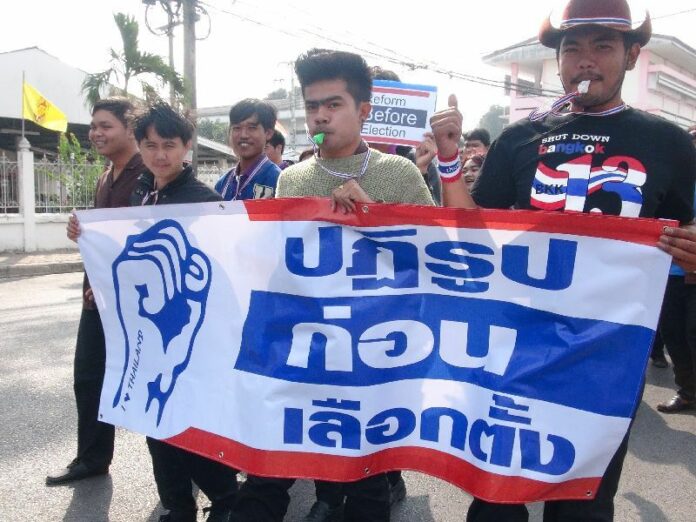
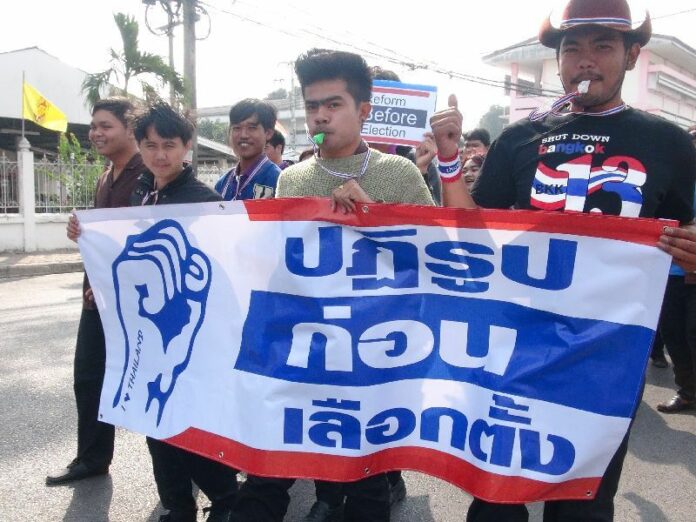
Anti-government protesters with the banner "Reform Before Election" in Prachuap Khiri Khan province, 23 January 2014.

BANGKOK — A Thai Election Commissioner says he told a representative of the European Union that Thailand's electoral system must be reformed to ensure that only "moral" people will be voted into office.

Somchai Srisuthiyakorn, a member of Thailand's Election Commission (EC), met with EU policy official Balthazar Benz yesterday to discuss the political situation in Thailand following the military coup on 22 May.

According to Mr. Somchai, the EU representative asked about many political issues, including the national reforms promised by the military junta, when the next election will be held, and the nature of the new charter, which has yet to be unveiled to the public.

"I have given my perspective to the EU that they should understand the situation in Thailand," Mr. Somchai said. "I don't want them to look at elections as only rituals, or think that having an election means there's democracy."

He also reportedly told Mr. Benz that, "A good election has to produce moral people who are capable of running the country and contributing to society. It's not that we don't care about democracy or elections, but we will only have an election when everything is ready."

Mr. Benz was told that Thailand is currently "fixing" many rules to ensure that a free and fair election is possible, Mr. Somchai said.

"Please allow us some time to fix what went wrong. I believe that if everything follows the system we have laid down, the country will be peaceful."

He added that the new election might be held by October 2015, give or take two months, depending on whether the new constitution will need to be put to a referendum first. If a referendum is needed, a new poll will be possible by December 2015, Mr. Somchai said.

Earlier this year, Mr. Somchai showed repeated reluctance to organise elections called by the former government after the House was dissolved in December 2013 and Prime Minister Yingluck was removed in a court decision in May.  Mr. Somchaiargued that Thailand was "too divisive" for a new poll.

When anti-government protesters launched a campaign to disrupt the 2 February snap poll called by Ms. Yingluck, Mr. Somchai and other leading members of the EC refused to condemn their actions, causing many to accuse the EC of conspiring with anti-government protesters to topple Ms. Yingluck's administration.

The 2 February election was eventually nullified in a court decision because voting did not take place everywhere across the country on the same day as a result of the protesters’ disruptions. 

Thailand's military junta dissolved the cabinet and both houses of parliament after seizing power on 22 May but has allowed independent agencies like the EC and the courts to stay on. 


For comments, or corrections to this article please contact: [email protected]

You can also find Khaosod English on Twitter and Facebook
http://twitter.com/KhaosodEnglish
http://www.facebook.com/KhaosodEnglish
Advertisement

Thailand to EU: Give Us Time To Ensure ‘Moral’ Elections

Anti-government protesters with the banner "Reform Before Election" in Prachuap Khiri Khan province, 23 January 2014.

BANGKOK — A Thai Election Commissioner says he told a representative of the European Union that Thailand’s electoral system must be reformed to ensure that only “moral” people will be voted into office.

Somchai Srisuthiyakorn, a member of Thailand’s Election Commission (EC), met with EU policy official Balthazar Benz yesterday to discuss the political situation in Thailand following the military coup on 22 May.

According to Mr. Somchai, the EU representative asked about many political issues, including the national reforms promised by the military junta, when the next election will be held, and the nature of the new charter, which has yet to be unveiled to the public.

“I have given my perspective to the EU that they should understand the situation in Thailand,” Mr. Somchai said. “I don’t want them to look at elections as only rituals, or think that having an election means there’s democracy.”

He also reportedly told Mr. Benz that, “A good election has to produce moral people who are capable of running the country and contributing to society. It’s not that we don’t care about democracy or elections, but we will only have an election when everything is ready.”

Mr. Benz was told that Thailand is currently “fixing” many rules to ensure that a free and fair election is possible, Mr. Somchai said.

“Please allow us some time to fix what went wrong. I believe that if everything follows the system we have laid down, the country will be peaceful.”

He added that the new election might be held by October 2015, give or take two months, depending on whether the new constitution will need to be put to a referendum first. If a referendum is needed, a new poll will be possible by December 2015, Mr. Somchai said.

Earlier this year, Mr. Somchai showed repeated reluctance to organise elections called by the former government after the House was dissolved in December 2013 and Prime Minister Yingluck was removed in a court decision in May.  Mr. Somchai argued that Thailand was “too divisive” for a new poll.

When anti-government protesters launched a campaign to disrupt the 2 February snap poll called by Ms. Yingluck, Mr. Somchai and other leading members of the EC refused to condemn their actions, causing many to accuse the EC of conspiring with anti-government protesters to topple Ms. Yingluck’s administration.

The 2 February election was eventually nullified in a court decision because voting did not take place everywhere across the country on the same day as a result of the protesters’ disruptions.

Thailand’s military junta dissolved the cabinet and both houses of parliament after seizing power on 22 May but has allowed independent agencies like the EC and the courts to stay on.

Advertisement

Video of Police Slapping Murder-Rape Suspect Causes Stir

Wanchai Saengkhao, the State Railway of Thailand (SRT) employee who police say confessed to raping and murdering a 13-year-old girl on a night train on 6 July. [July 8, 2014].

BANGKOK — A video of a police officer smacking a rape and murder suspect during his interrogation has highlighted divisions in Thai society over how rape crimes should be punished.

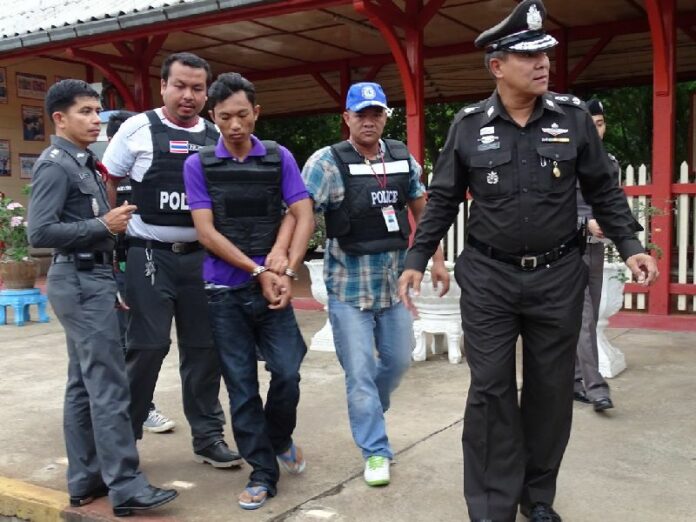
In the four-second video, which first surfaced on social media on 9 July, a police officer can be seen assaulting Wanchai Saengkhao, the State Railway of Thailand (SRT) employee who police say confessed to raping and murdering a 13-year-old girl on a night train on 6 July.

Many commentators on social media have applauded the action depicted in the video, arguing that Mr. Wanchai deserves much more than a smack or two for his alleged crime. 

"I am so tired of these beautiful-world and human rights people who defend this animal from hell," one commentator wrote. "If the person who was raped were your relative, will you really do nothing? Even though I am not her relative, I want to stamp this fucking monster to death under my feet."

Outrage over the rape and death of the 13-year-old girl has recently ignited an online campaign for punishing convicted rapists with the death penalty. Under current Thai laws, those convicted of rape can face 5-20 years in prison. 

However, the video has also raised concerns among some that Mr. Wanchai’s confession may have obtained under duress; Thai police have a history of coercing suspects to confess during interrogation.

"We have to respect laws," wrote another commentator. "Don't use our affection or disaffection to judge. A police officer hurting a suspect [like this] could be considered a criminal case as well." 

Mr. Wanchai is currently being detained at Prachuap Kiri Khan Provincial Prison. Prison officials said Mr. Wanchai will be under special watch to prevent him from committing suicide or being assaulted by other inmates after a rape suspect was beaten to death in prison yesterday.

Police have charged Mr. Wanchai with murder, sexual assault, theft, and drug abuse. 

Meanwhile, the case also took a supernatural turn, with mother of the victim reportedly claiming that she was visited in her dreams by her dead daughter.

According to a report on Matichon, the victim's mother said her daughter has informed her that Mr. Wanchai wasn't the only suspect, and that "there were many people" who killed her. 

The victim also claimed to continue to haunt the train where she was murdered, her mother said.

Read more:
Rape-Murder Suspect Exposes State Railway's Shortcomings 
Editorial: Death Penalty Is Not The Solution To Rape


For comments, or corrections to this article please contact: [email protected]

You can also find Khaosod English on Twitter and Facebook
http://twitter.com/KhaosodEnglish
http://www.facebook.com/KhaosodEnglish
Advertisement

Rape Suspect Beaten to Death In Prison

Prasin Nunkaew, 41, was arrested on 9 July 2014 charged with raping his stepdaughter. Today, he was beaten to death by other inmates in Trang Remand Prison.

TRANG — A man accused of sexually assaulting his seven-year-old stepdaughter has been beaten to death in prison, police say, a day after he insisted he was innocent.

Prasin Nunkaew, 41, was arrested yesterday and charged with raping his stepdaughter on 6 July at a rubber farm in Trang district. Mr. Prasin's wife filed the complaint to the police.

In a press conference held yesterday, police said Mr. Prasin disputed the charge and insisted on his innocence. He was later transferred to Trang Remand Prison to await trial.

However, this morning the prison officials discovered that Mr. Prasin had been beaten to death by fellow inmates in his holding cell after a fight broke out, said Pol.Cpt. Methee Pinyoprakarn, an officer at Trang Police Station.

Pol.Cpt. Methee claimed that the fight was not related to Mr. Prasin's rape charge, but failed to provide an explanation for the beating. He said the police are investigating the incident. 

The incident came at a time when Thai society and media are gripped by thestory of 13-year-old girl who was raped and murdered on a night train. An employee of the State Railway of Thailand (SRT) has been arrested and police say he has confessed to raping the girl in a sleeping car before throwing her body overboard. 

The case has ignited a online campaign for punishing convicted rapists with the death penalty. Under current Thai laws, those convicted of rape can face 5-20 years in prison. 

Today, Thai actress Panadda Wongpoodee and a dozen of students staged a small pro- death penalty demonstration at a train station in Nakhon Si Thammarat. Contestants of the 2014 Miss Grand Thailand beauty pageant also submitted a proposal to Thailand's military government requesting the same measure. 


Read more:
Rape-Murder Suspect Exposes State Railway's Shortcomings 
Editorial: Death Penalty Is Not The Solution To Rape
Junta Reminds Pro-Death Penalty Demonstrators of Ban On Public Gatherings


For comments, or corrections to this article please contact: [email protected]

You can also find Khaosod English on Twitter and Facebook
http://twitter.com/KhaosodEnglish
http://www.facebook.com/KhaosodEnglish
Advertisement

Rape Suspect Beaten to Death In Prison

Prasin Nunkaew, 41, was arrested on 9 July 2014 charged with raping his stepdaughter. Today, he was beaten to death by other inmates in Trang Remand Prison.

TRANG — A man accused of sexually assaulting his seven-year-old stepdaughter has been beaten to death in prison, police say, a day after he insisted he was innocent.

Prasin Nunkaew, 41, was arrested yesterday and charged with raping his stepdaughter on 6 July at a rubber farm in Trang district. Mr. Prasin's wife filed the complaint with police.

In a press conference held yesterday, police said Mr. Prasin disputed the charge and insisted on his innocence. He was later transferred to Trang Remand Prison to await trial.

However, this morning the prison officials discovered that Mr. Prasin had been beaten to death by fellow inmates in his holding cell after a fight broke out, said Pol.Cpt. Methee Pinyoprakarn, an officer at Trang Police Station.

Pol.Cpt. Methee claimed that the fight was not related to Mr. Prasin's rape charge, but failed to provide an explanation for the beating. He said the police are investigating the incident. 

The incident came at a time when Thai society and media are gripped by the story of 13-year-old girl who was raped and murdered on a night train. An employee of the State Railway of Thailand (SRT) has been arrested and police say he has confessed to raping the girl in a sleeping car before throwing her body overboard. 

The case has ignited a online campaign for punishing convicted rapists with the death penalty. Under current Thai laws, those convicted of rape can face 5-20 years in prison. 

Today, Thai actress Panadda Wongpoodee and a dozen of students staged a demonstration at a train station in Nakhon Si Thammarat advocating for the execution of rape convicts. Contestants of the 2014 Miss Grand Thailand beauty pageant also submitted a proposal to Thailand's military government requesting the same measure. 


Read more:
Rape-Murder Suspect Exposes State Railway's Shortcomings 
Editorial: Death Penalty Is Not The Solution To Rape
Junta Reminds Pro-Death Penalty Demonstrators of Ban On Public Gatherings


For comments, or corrections to this article please contact: [email protected]

You can also find Khaosod English on Twitter and Facebook
http://twitter.com/KhaosodEnglish
http://www.facebook.com/KhaosodEnglish
 

Advertisement

Junta Reminds Pro-Death Penalty Demonstrators of Ban On Public Gatherings

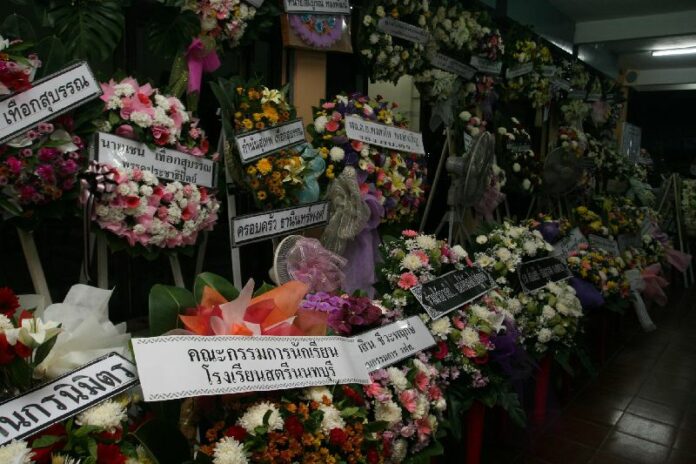
Wreaths placed during the funeral of a 13-year-old girl who was raped and murdered on a night train over the weekend.

BANGKOK — Thailand's military junta has warned those advocating for the execution of rapists not to violate the ban on public gatherings.

The National Council for Peace and Order (NCPO) issued the warning after famous Thai actress Panadda Wongpoodee and a dozen of students staged a small demonstration at a train station in Nakhon Si Thammarat province to voice their support for punishing convicted rapists with the death penalty. 

Plans for another rally at Siam Paragon shopping mall in Bangkok this Saturday have also been circulated on social media. Convicted rapists currently face 5-20 years in prison. 

The outrage follows the rape and murder of a 13-year-old girl on a night train over the weekend. Police say a state railway employee confessed to sexually assaulting the victim in a sleeping car and throwing her out of the window afterwards. The suspect, Wanchai Saengkhao, is facing charges of premeditated murder, sexual assault, and drug abuse.

"These demonstrations are held under martial law," Col. Winthai Suwaree, a spokesperson of the NCPO, said today. "All types of demonstrations, whether about political or other issues, violate martial law."

The NCPO has harshly enforced its ban on public gatherings against protesters who participate in any kind of anti-coup demonstrations, including flashing the three-finger salute or eating sandwiches. However, the NCPO has not made a single arrest of anyone participating in a pro-coup or pro-army rally. Those who violate the NCPO's ban on protests may face a trial in military court and up to two years in prison.

Col. Winthai suggested that instead of demonstrating or organising rallies, those who would like to change the punishment for rape crimes should submit proposals to NCPO chairman Gen. Prayuth Chan-ocha. 

"[The NCPO] is a functioning agency. That is the most appropriate channel at this moment," Col. Winthai added, though he refused to comment on whether the NCPO agrees with the pro-death penalty campaign. 

Today, contestants of the 2014 Miss Grand Thailand beauty pageant did in fact submit a proposal to the NCPO in favor of revising the criminal code to include execution as a punishment for rape. 

The proposal also requested increased security across the country with at least two security personnel guarding “risk” areas, an information campaign teaching women about self-defense methods, and new NCPO policies to deter criminals.

“Miss Grand Thailand 2014 greatly hopes to see a revision in the law for the increased safety of women so that offenders will not get off scot-free in our society or receive too light a sentence,” said Miss Grand Thailand Director Nawat Isarnkraisiln, who accompanied the pageant contestants today.

Read more:
Rape-Murder Suspect Exposes State Railway's Shortcomings 
Editorial: Death Penalty Is Not The Solution To Rape


For comments, or corrections to this article please contact: [email protected]

You can also find Khaosod English on Twitter and Facebook
http://twitter.com/KhaosodEnglish
http://www.facebook.com/KhaosodEnglish

Advertisement

Hot News

LATEST NEWS

Bangkok
overcast clouds
28.3 ° C
28.3 °
28.3 °
81 %
1.6kmh
100 %
Tue
38 °
Wed
39 °
Thu
32 °
Fri
32 °
Sat
36 °