


























30 C
Bangkok
Tuesday, July 7, 2026
Home Blog Page 3269

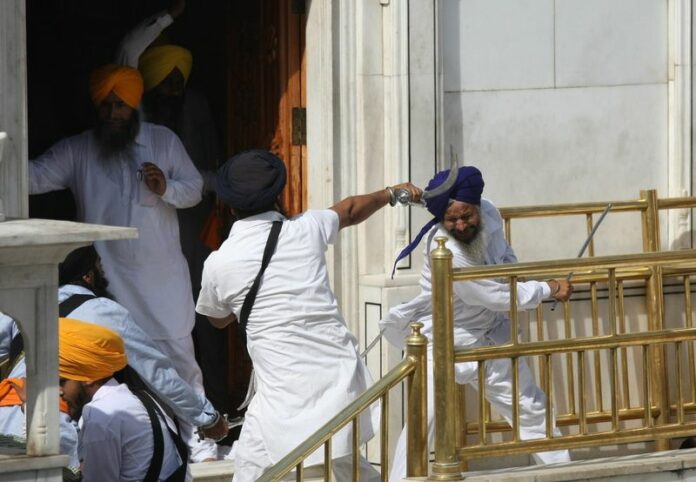
Sikhs Clash at Golden Temple in India On Assault Anniversary

Members of Sikh radical groups clash with Shiromani Gurudwara Prabhandak Committee (SGPC) supporters, after a prayer and remembrance meeting for the Sikh separatists who lost their lives during Operation Blue Star in 1984 at the Golden Temple EPA/RAMINDER PAL SINGH

NEW DELHI (DPA) — At least six people were injured in clashes Friday as members of the Sikh community gathered at the Golden Temple in the northern Indian town of Amritsar to mark the 30th year of a military assault on the temple complex.

The clashes followed a scuffle over the microphone being used to address the gathering, said an official from the Shiromani Gurudwara Prabandhak Committee (SGPC), the top Sikh religious body.

Television pictures showed sword-wielding Sikhs clad in traditional dress and turbans attacking each other.

SGPC official Dalmegh Singh said the task force of the SGP which looks after security at the Golden Temple, the Sikhs' holiest shrine, had soon brought the situation under control.

"Six people suffered injuries and have been admitted to hospital," Singh said.

"We are very sad that such clashes have taken place on this saddest of days when we remember all those innocent people who died," said Prem Singh Chandumajra of the Shiromani Akali Dal, the party which runs the government in Punjab state.

"It is unfortunate the sanctity of the Golden Temple has been disturbed," Chandumajra, who was present at the temple, was quoted as saying by NDTV news channel.

The Golden Temple is located in Punjab, which has a majority Sikh population.

The Indian army carried out a six-day raid on the Golden Temple in June 1984, in an attempt to remove Sikh militants, who had been holed up inside for several years.

Hundreds of people including soldiers were killed, according to the Indian government. Sikh groups dispute the figures, saying thousands died, including many innocent pilgrims.

Months after the raid, Indian prime minister Indira Gandhi was assassinated by two Sikh bodyguards, in what was believed to be a revenge attack.
 

Advertisement

Mythical Beast Found In Construction Pool, Villagers Say

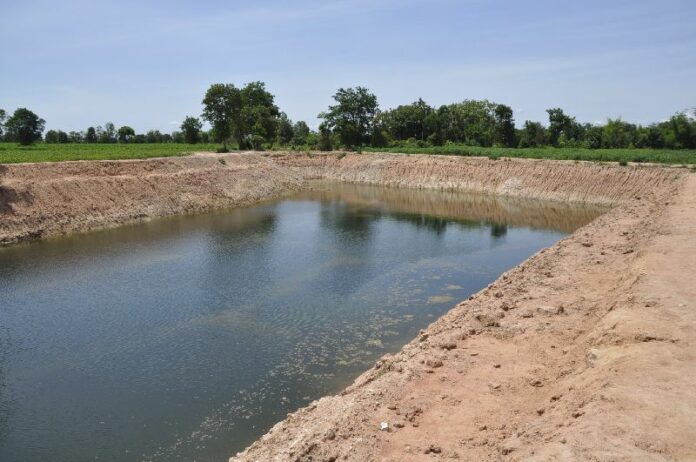
A pool said to contain the mythical "Naga," in Bueng Ta Ko village in Nakhon Ratchasima province.

NAKHON RATCHASIMA — Local residents claim that they have spotted the "Naga," a many-headed dragon from Buddhist mythology, in a construction pond near Bueng Ta Ko village in Nakhon Ratchasima province.

Yongyuth Noppolkrang, 42, said he hired a contractor to dig a pool in his plot of land six months ago for his fresh water bottling plant. He claimed that workers encountered a "miracle" after digging 7 metres under ground. 

"The colour of the water kept changing each day," Mr. Yongyuth said, "It turns into green, light blue, dark blue, purple."

The news of the "miracle" convinced villagers that the Great Naga must be residing in the pool. Locals quickly erected a shrine with flowers, candles, and other offerings for the mythical creature, and began conducting religious rituals by the pool.

One of the worshippers claimed to have seen the Naga swimming on the surface two weeks ago.

Cha Kleepputcha, 64, a resident of Bueng Ta Ko village, said she was attending a ceremony to ask for blessings from the Naga at 5 pm on 2 June when she noticed a "strange wave" in the water, followed by glimpse of shimmering colour beneath the wave.

She was convinced it was the Naga swimming. The dragon even "reared its head clearly for five seconds," Ms. Cha said.

"Everyone at the ceremony was so excited," she said, adding that the villagers were sure that the Naga will bring great fortune to their community.

The villagers also told our correspondent that some believers asked the Naga for luck and subsequently won the lottery, while those who drank water from the construction pool quickly recovered from illnesses. 

Due to the daily rituals being performed at the pool, Mr. Yongyuth said he has halted construction of the water plant. 

Meanwhile, Urom Kaewchan, the director of the provincial Department of Groundwater Resources, suggested that the phenomenon could be explained in another weay. According to Mr. Urom, the glittering was likely caused by a reaction between two types of water that were mixed during the pool's construction.

"When the sunlight reflects on the water, it glistens and may have caused onlookers to think it was the silvery and golden body [of the Naga]," Mr. Urom explained. "As for the changing of water's colour, it may have been because of a reaction between the saltwater and the sunlight."

The tale of the Naga is a well-known folk lore among Northeastern Thais. The most famous ceremony related to the tale of Naga takes place every November during the full moon, when thousands gather on the bank of Mekong River in Nongkhai province in hope of seeing the "Great Fireballs of Naga" explode over the river.


For comments, or corrections to this article please contact:[email protected]

You can also find Khaosod English on Twitter and Facebook
http://twitter.com/KhaosodEnglish
http://www.facebook.com/KhaosodEnglish

Advertisement

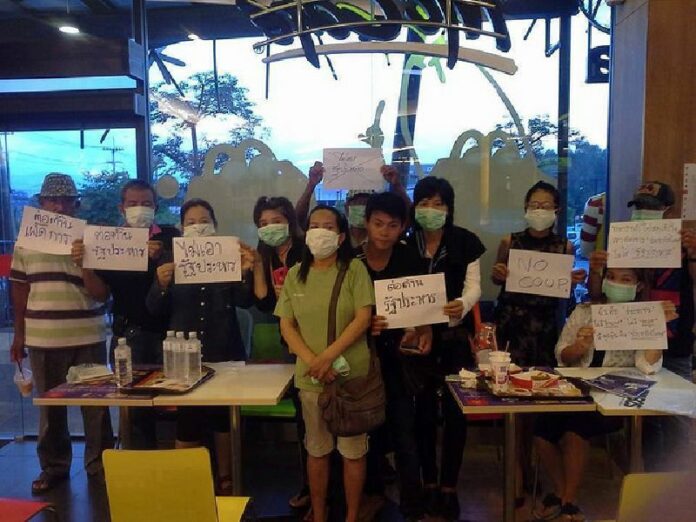
Chiang Rai Martial Court Summons Anti-Coup Protesters

(Prachatai English)

The Military Court in northern Chiang Rai province has summoned seven anti-junta protesters to report themselves on Tuesday, June 10, 9.30am, reportedly to acknowledge charges on public assembly of more than five people. 

Read more of the story


Note: Khaosod English is not responsible for content on other websites.

Advertisement

Tourist Arrivals For May Down 11 Percent

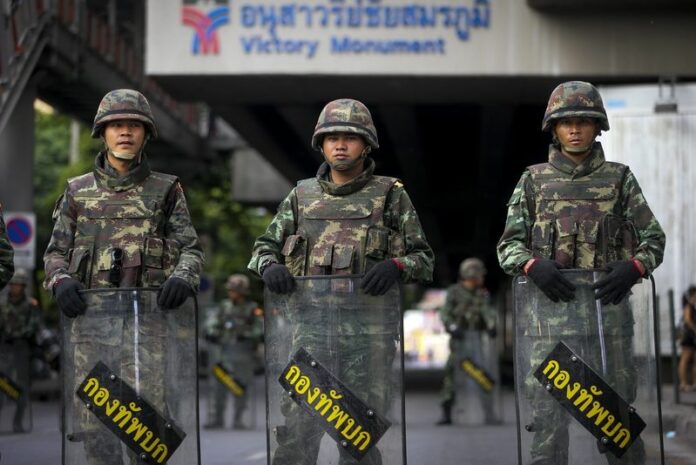
Soldiers at Victory Monument in Bangkok, May 2014.

BANGKOK (DPA) — International tourist arrivals to Thailand fell almost 11 per cent last month in the wake of regular political protests and a military coup on May 22, media reports said Friday.

A total of 1,736,744 tourists visited the kingdom in May, down 10.7 per cent compared to the same period last year, the Bangkok Post reported, citing the Tourism and Sports Ministry's latest figures.

Army chief General Prayuth Chan-ocha seized power on May 22, in a move he said was aimed at ending months of street protests in the capital and political paralysis in the country.

The ruling junta put the country under martial law and imposed a curfew, which was on Tuesday lifted in the country's main beach destinations: Pattaya, Phuket and Samui.

"Business was down 22 per cent for us last month," said Luzi Matzig, director of the Asian Trails Company that specializes in European tourists.

Tourism, which accounts for about 10 per cent of Thailand's gross domestic product, was already suffering before the coup, impacted by seven months of near daily anti-government protests in the capital.

During the first five months of this year, 10,357,388 international tourist visited Thailand, down 5.9 per cent, according to Tourism Department figures. More than 26 million tourists visited Thailand in 2013.
 

Advertisement

Military Exempts Full Moon Party From Curfew

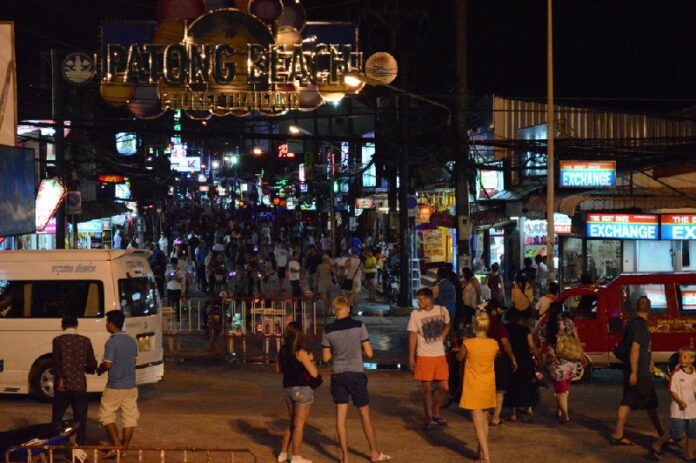
Tourists return to the streets on Patong Beach, Phuket, following the lifting of curfew, 4 June 2014.

BANGKOK — The military junta has agreed to exempt this month’s Full Moon Party on Koh Pha Ngan Island from the nationwide curfew, allowing revelers to party from dusk-til-dawn as is tradition.

Kho Pha Ngan's all-night full moon parties, held every month on the days before and after a full moon, regularly attract thousands of carousers, the majority of whom are tourists. 

In an announcement issued today by the military command in Surat Thani province, the military said a "thorough questioning" has established that the Full Moon Party "has no connection to politics, demonstrations, or violation of previous announcements by the National Council of Peace and Order in any way."

Therefore, the military has agreed to lift the curfew over Haad Rin Beach on Koh Pha Ngan island, where the dusk-till-dawn party will be held from 9-13 June, as requested by the party's organisers. It is understood that the rest of Koh Pha Ngan island will remain under the military’s midnight to 4am curfew.  

The announcement makes Haad Rin Beach the fourth tourist destination in Thailand to enjoy curfew exemption, after the military lifted the curfew on Pattaya, Phuket, and Samui island two days ago.

Representatives of the tourist industry have been pressing the NCPO to lift the curfew in other major tourist destinations, citing the financial ruin it has brought upon bars and nightclubs that have already suffered through an unusually anemic tourist season because of the country’s political turmoil. 

It is estimated that the Thailand's political crisis, which ignited last November, has cost the the tourism industry over 20 billion baht. 

The NCPO imposed a 10pm-5am curfew over the entire country when it seized power from the elected government on 22 May, but later eased the forbidden hours to between 12pm and 4am.  The military has argued that the curfew is necessary to maintain peace and order following the sporadic political violence that left almost 30 dead over the course of six months. 

Despite pleas from the tourist industry, a spokesperson of the NCPO said Thais should not expect the nationwide curfew to wholly-lifted any time soon. 

Army spokesperson Col. Winthai Suwaree explained that army's security and intelligence units will ease the curfew on a case-by-case basis, depending on which areas have seen a restoration of peace and order.

"It depends on the peace and order. Incidents of unrest may be lurking so we need to deliberate carefully over all aspects," Col. Winthai said at a press conference today.

When asked whether the NCPO will consider easing the curfew for the beginning of FIFA World Cup on 12 June, Col. Winthai replied that the matter is still under deliberation. He said the junta has not made any plans to repeal the curfew specifically for the football season.

Football is extremely popular in Thailand, and World Cup matches typically bring huge crowds to restaurants and bars across the country. This year's FIFA World Cup will kick off in Brazil on 12 June. 


For comments, or corrections to this article please contact:[email protected]

You can also find Khaosod English on Twitter and Facebook
http://twitter.com/KhaosodEnglish
http://www.facebook.com/KhaosodEnglish

Advertisement

Soldier Flees After Committing Lewd Act At TV Station

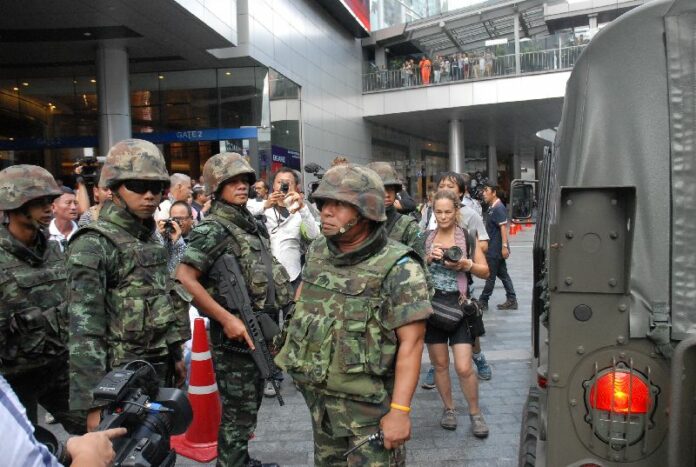
Soldiers at the anti-coup protest at Terminal 21 in Bangkok on 1 June 2014.

BANGKOK — The military says it is trying to locate a soldier who has been accused of masturbating in front of an anchorwoman at the TV station he was assigned to guard.

Witnesses say the soldier, who was armed with M16 rifle and bulletproof armour at the time, barged into the dressing room of an anchorwomen at the headquarters of Channel 9 TV at around 4 am this morning. 

The soldier spent over 15 minutes wandering around the dressing room and "smiling" to the staff and reporters who were preparing for the morning news show before a hairdresser asked him why he was there.

To the shock of everyone in the room, the soldier replied by suddenly unzipping his pants and beginning to masturbate, witnesses said. The hairdresser quickly left the room and informed the other soldiers who were stationed nearby. 

The soldier managed to slip away before other troops arrived at the scene, witnesses told Khaosod. He reportedly left his rifle and combat armour just outside the TV station compound.

The soldier was described as tall and lean with a tattoo on his arm. He is thought to belong the 2nd Infantry Battalion, whose soldiers have been occupying the TV station since the coup d'etat on 22 May to enforce the military's restrictions on media content.

The Commander of the 2nd Infantry Battalion, Col. Teerapong Chutinan, met with the anchorwoman today to apologize and present her with a basket of fruit. 

Col. Teerapong assured the anchorwoman that the military is currently trying to locate the soldier and prosecute him for his alleged crime. The commander added that an initial investigation shows the soldier is a native of Surin province. 

Suwit Sutthiprapa, producer of the morning news show at Channel 9, said he has been informed by military representatives that the commander of the soldiers guarding the station will be punished as well.


For comments, or corrections to this article please contact:[email protected]

You can also find Khaosod English on Twitter and Facebook
http://twitter.com/KhaosodEnglish
http://www.facebook.com/KhaosodEnglish

Advertisement

Over 360 New Species Discovered in Mekong Region

Some 367 new species have been discovered in the Greater Mekong Region, including a skydiving gecko, an eyeless spider and a fish whose sex organ is just behind its mouth. Photo: Jodi J L Rowley, Australian Museum

YANGON (DPA) — Some 367 new species have been discovered in the Greater Mekong Region, including a skydiving gecko, an eyeless spider and a fish whose sex organ is just behind its mouth, the World Wide Fund for Nature (WWF) said Thursday.

"These species discoveries affirm that the Greater Mekong is truly one of the world's richest and most biologically diverse regions," Michelle Owen, WWF-Myanmar Conservation Programme Manager said.

The region is defined by the river which runs from southern China to Myanmar, Laos, Thailand, Cambodia and empties into the sea on the Vietnamese coast.

"The fact that 26 species were discovered in relatively unexplored Myanmar highlights the urgent need to invest in conservation and ensure biodiversity is considered as part of a sustainable and green development approach," Owen said as the group launched its Mysterious Mekong report.

Myanmar was relatively closed to scientific research when the country was under junta rule between 1988 to 2010.

Among the new species found in Myanmar was a dragonfish with "maze-like markings" and a catfish with a flame-shaped "suction cup" on its throat.

In Thailand's Kaeng Krachan National Park, which borders Myanmar to the west, researchers found the parachute gecko, named Ptychozoon kaengkrachanense, which extends flaps of skin on its flanks and between its toes to help it glide down from branch to tree trunk.

Another newcomer to the list of South-East Asian species was a giant flying squirrel (Biswamoyopterus laoensis), based on the discovery of one individual at a meat market in Laos.

In Vietnam, researchers found a tiny, almost transparent, fish (Phallostethus cuulong) that has its sex organs just behind its mouth. "It mates head-to-head," said the WWF report, with the male using its sex organ, or priapium, to hook onto the female.
 

Advertisement

Vietnam Video Shows Chinese Vessel "Rammed" Fishing Boat

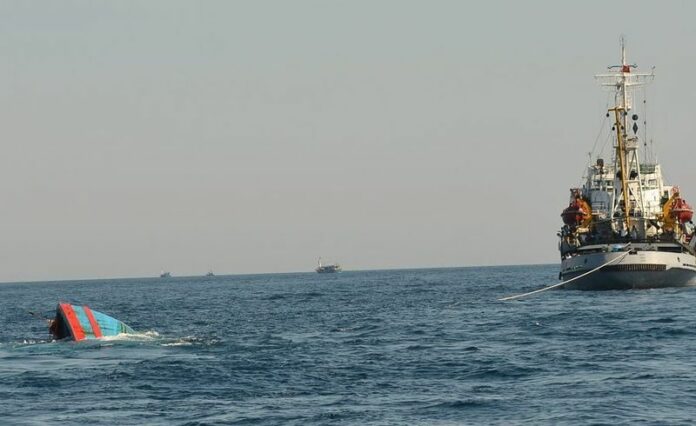
A photograph made available 30 May 2014 shows a Vietnamese sinking boat (L) which was allegedly rammed by Chinese vessels near disputed Paracel Islands, EPA/BICH TRAM

HANOI (DPA) — A video released on Vietnamese news sites Thursday shows that a Chinese vessel was to blame for the sinking of a Vietnamese fishing boat last week, state-run media reported.

The video shows a large vessel sailing towards the fishing boat and ramming the stern until the boat turns and sinks.

A fisherman on a nearby boat shot the video.

The identity of the ramming vessel was not clear.

The incident reportedly took place on May 25. The 10 crew members of the fishing boat were rescued.

China's official news agency Xinhua said the Vietnamese vessel capsized after "harassing and colliding" with a Chinese fishing boat.

China's claim that the Vietnamese boat was to blame was irrational, the captain of the boat Dang Van Nhan was quoted in Thanh Nien newspaper as saying.

"The Chinese boat was six times bigger than ours. It has a steel hull, while our boat is made of wood. Why would we want to ram into it?" he said.

China has reportedly increased harassment of Vietnamese vessels near a state-owned oil rig, which Beijing deployed on May 1 to waters also claimed by Vietnam.

The Vietnamese government says more than 130 Chinese ships are operating in the area, which is located about 120 nautical miles from Vietnam's coast.

Advertisement

Chiang Rai Officials Intercept Drug Smuggling Ring, Seize 2 Million Baht in Meth

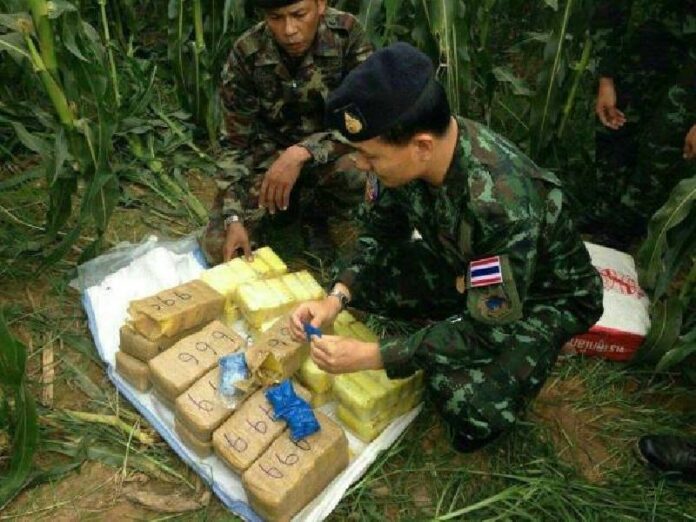
Chiang Rai authorities seize 1.2 million meth pills, worth Bt360 million, smuggled across Mekong River to Thailand, abandoned in Chiang Saen district corn field (Chiang Rai Times).

(Chiang Rai Times)

CHIANG RAI – Army Rangers and anti- narcotics suppression officials in Chiang Rai have intercepted a drug smuggling ring, seizing more than 1 million methamphetamine tablets being smuggled from Myanmar into Thailand.

The meth pills, worth more than 200 million baht, were being transported via the Ruak River bordering Thailand and Myanmar in Chiang San District of the province.

Read more here

Note: Khaosod English is not responsible for content on other websites.

Advertisement

Search For Fugitive Redshirt Leads Soldiers To Illegal Casino Instead

Paloma Hotel, Phitsanulok province, 4 June 2014.

PHITSANULOK — More than 100 soldiers raided a hotel in Phitsanulok province searching for a fugitive anti-coup activist, but stumbled upon an illegal casino operation instead.

The soldiers raided the Paloma Hotel in Mueang district yesterday looking for Sombat Boonngarm-anong, who refused to comply with the military junta’s summons and has been organising anti-coup protests from hiding.

During the raid, soldiers discovered a large hall inside the hotel that had been converted into an illegal casino offering a diverse range of games, including Thai poker, Hi Lo, and Rummy. There were also several official signs detailing the "house rules."

One sign read:  "If you gamble, you have to accept your losses. Don't be thick-faced or do things that will make people hate you. Your actions will bring a bad reputation to our gambling den and yourself. Understand?"

There were no gamblers at the time of the raid, but soldiers detained two staff who were reportedly in charge of overseeing the casino. They told the troops that it was closed down shortly after the army imposed martial law.

The hotel’s manager, Araya Arisombat, insisted that the hotel administration was not aware of the extensive casino operation that had been taking place under its roof. Mr. Araya has been summoned to the local military headquarters for further questioning, said Col. Noppon Ruenchan, the commander who led the raid. 

The army thought Mr. Sombat might be hiding in the Paloma Hotel because other prominent Redshirt leaders have stayed and organised political lectures there in the past, Col. Noppon told reporters.

Mr. Sombat, who is also known as the Dotted Editor, wrote on his Facebook yesterday that he has never stayed at the Paloma hotel. 

He also accused the military of using the search as a pretext for raiding the hotel's casino. 

"From now on, people who want to open a new casino already know who they have to pay extra money to, otherwise there will be raids on the Dotted Editor in every casino," Mr. Sombat wrote.

Mr. Sombat has been in hiding since the National Council of Peace and Order (NCPO) seized power and summoned him, along with hundreds of other activists, to surrender to the military. 

A veteran activist who campaigned against the previous military coup in 2006, Mr. Sombat helped organise the recent anti-coup "flash mobs" that popped up in Bangkok over the weekend. The military responded by freezing his bank account and deploying hundreds of troops to block potential venues of the anti-coup protests. 

 
For comments, or corrections to this article please contact:[email protected]

You can also find Khaosod English on Twitter and Facebook
http://twitter.com/KhaosodEnglish
http://www.facebook.com/KhaosodEnglish


Advertisement

Hot News

LATEST NEWS

Bangkok
overcast clouds
30 ° C
30 °
25.5 °
83 %
3.9kmh
100 %
Mon
30 °
Tue
35 °
Wed
34 °
Thu
33 °
Fri
30 °