30 C
Bangkok
Thursday, June 18, 2026
Home Blog Page 3399

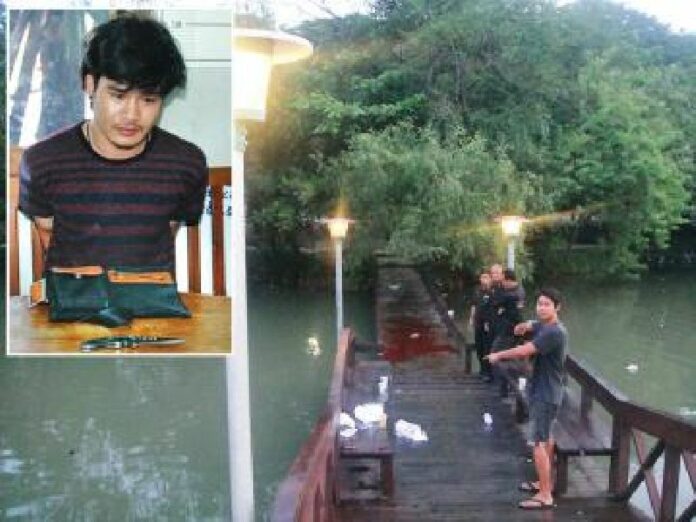
University Student Stabbed Dead After Drunken Fistfights

(11 August) A student has been arrested in Nakorn
Pathom province after he reportedly stabbed a senior student to death following a drunken, heated
verbal exchange


Police were alerted in the morning to investigate the fight
in Silpakorn University Campus in Nakhon Prathom 

Province. At the scene
they found Mr. Patrawith ?Dear? Wattanawetchasak, 29, severely injured near Sra Kaew
pond.


Mr. Patrawuth was sent to the hospital,
where he later died.


Mr. Patrawuth′s friends told
the police that Mr. Ronnachai Jutin, 22, an Engineer Student from the same university was the
murderer.


A friend of the victim said that his group
and Mr. Ronnachai′s group engaged in a fistfight before Mr. Patrawuth punched Mr. Ronnachai in the
face. Mr. Ronnachai then allegedly stabbed Mr. Patrawuth with a pocket knife before he fled the
scene.


Police then found Mr. Ronnachai sleeping in
the Teacher′s rest room in the University, and arrested him once they found a knife that appeared to
be used in the crime in Mr. Ronnachai’s pocket.


The suspect later confessed stabbing Mr. Patrawuth, but argued that he only did so in
order to defend himself. He also admitted that he was intoxicated at the time


When the family members of Mr. Patrawuth visited the Police
station for investigation, they encountered Mr. Ronnachai there, and they immediately tried to
assault him. The police had to intervene with the situation, and took Mr. Ronnachai away for further
interrogation.

Advertisement

German Arrested For Child Abuse In Pattaya

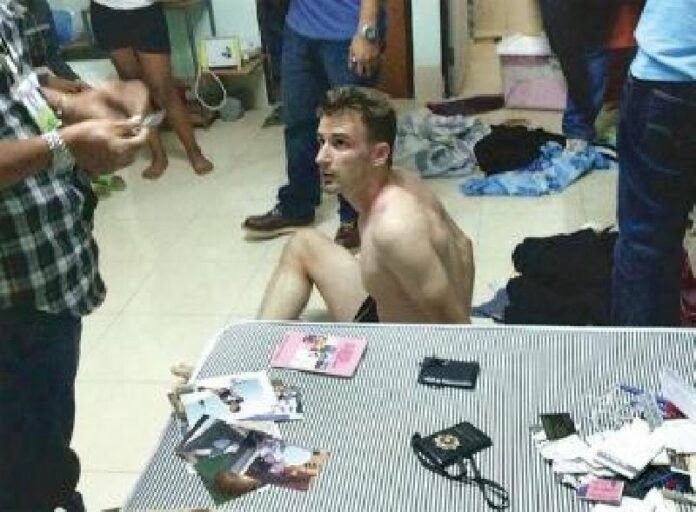
(11 August) Police in Pattaya, Chon buri Province, arrested a German expat after they
received reports indicating that he had been luring underage girls for
sex.
The suspect has been identified as Mr. Pascal Conner, 32.

When they arrested Mr. Conner, the police
said, they also found a cellphone which stores many recorded sex-tapes between Mr. Conner and many
girls reportedly aged under 15.

Police told the reporters that many people reported that Mr. Conner claimed to be a police
coordinator, an interpreter, and a German teacher in the district as he lured the victims to his
residence. 

Police also found that Mr. Conner had overstayed his visa, and expected to proceed with
legal prosecution against him soon.
Advertisement

NHRC Accused Of Whitewashing Authorities' Hands In 2010 Crackdown

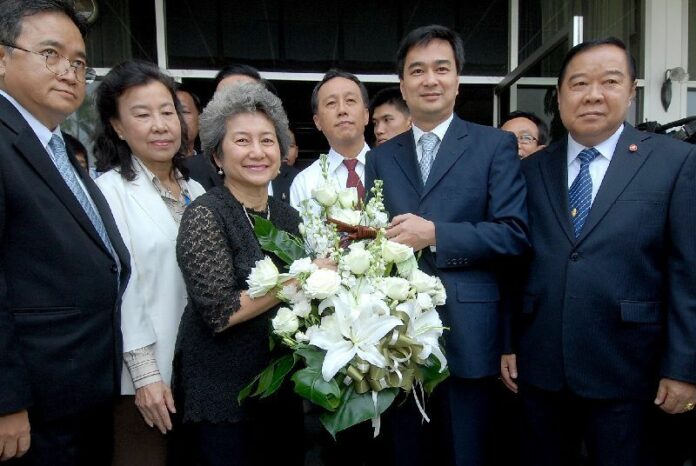
Ms. Amara Pongsapitchaya, chairwoman of National Human Rights Committee (NHRC), offering flowers to then Prime Minister Abhisit Vejjajiva on 18 March 2010, thanking him for "displaying restraint" toward Redshirts protesters.

BANGKOK – Thailand′s top human rights commission has been blasted by a number of activists and academics for its report on the 2010 political violence which, the critics say, shifts most of the blames on the side of the protesters rather than the authorities.

 Now recognised as the Kingdom′s worst political violence in decades, the events in 2010 started in mid-March when Redshirts protesters rallied to demand then-Prime Minister Abhisit Vejjajiva dissolve the Parliament and resign, charging that Mr. Abhisit did not come to power via an election which counts as an undemocratic procedure.

The protests later escalated as the Redshirts occupied the financial district of the capital city. A military operation was launched to dislodge them on 10 April, but ultimately failed. In the following weeks Bangkok saw sporadic – sometimes deadly – clashes that pitched the Redshirts against the security forces and counter-protesters.

In May 2010, Mr. Abhisit, as head of the Centre for Resolution of Emergency Situation (CRES), authorised a full-scale military assault on the protesters? encampments. After days of intense clashes and more bloodshed, the Redshirts leaders called off the protests and surrendered to police on 19 May 2010. Arson attacks on private and state properties followed throughout the day.

More than 90 people were killed during the violence in April-May 2010. The fatalities include the protesters, soldiers, rescue workers, foreign journalists, and even some onlookers.

Much has been debated and studied about the 2010 crackdown, and yesterday the National Human Rights Committee (NHRC) became the latest to offer its perspective on the contentious issue by releasing a report analysing the events from 12 March – 19 May 2010 in order to "conclude a lesson" and serve as a guideline for the government. 

The report, around 90 pages long, can be summed up in 2 points: that the security forces did commit several inappropriate actions – such as dropping teargas from the helicopters onto the crowd below and censoring a number of websites – but the bigger issue is that it was the Redshirts who "violated human rights" by engaging in unlawful protests and provoking the authorities.

The Redshirts under the leadership of the National United Front for Democracy Against Dictatorship (UDD), the report said, violated the laws by organising a protest at Ratchaprasong Intersection, the heart of Bangkok′s financial district. The move equals to provoking violence, according to NHRC.

Therefore, the NHRC said, it is entirely lawful that Mr. Abhisit formed up the CRES and declared emergency laws. The decision by the CRES to censor the UDD? cable TV channel is also justified by the report as a necessary way to block "inflammatory" speeches of the Redshirts.

The casualties during the crackdowns in April and May 2010 were results of clashes between the security forces and shadowy armed militants allegedly allied to the protesters, according the report. Meanwhile, the arson attacks on 19 May 2010 were seen by the report as a tactic of the UDD to cause widespread disruption

Even the deaths of 6 civilians at Wat Pathumwanararm Temple, declared as ′safe zone? for fleeing protesters by the authorities, were described as a consequence of alleged gunfights between the militants and the soldiers near the temple – a clear contradiction to the court inquest which deemed last week that no armed militants were seen in the area, and that the deaths were caused solely by the military personnel.

Critics said the report is biased against the protesters, because it appears to explain the 2010 crackdown entirely as a confrontation between 2 armed groups and ignores many well-documented scenarios in which the military indiscriminately fired at unarmed civilians.

The report is also accused of devoting overwhelming details on the mistakes of the Redshirts instead of the authorities. For example, the NHCR report took pain to mention a single episode in which Redshirts guards stormed into Chulalongkorn Hospital to look for soldiers said to be hiding there. The NHCR ruled that such action by the protesters clearly violated human rights.

Mr. Sombat Boon-ngarmanong, coordinator of a progressive Redshirts faction called ?Red Sunday?, said when he read the NHCR report "I felt like I was reading a report written by CRES itself", as many details appear to reinforce the narrative of the authorities at the time.

For example, he said, the report hardly mentioned the deployment of military snipers in urban areas who are said to have caused many injuries and deaths. Apparently, according to Mr. Sombat, the committee seemed to adopt the same idea as Mr. Suthep Thuegsuban, then Deputy Prime Minister,  that there were no snipers in the crackdown at all.

Furthermore, Mr. Sombat said, the report curiously criticised the Redshirts for bringing women and children to the protests, saying it violated human rights – the same charge CRES employed against the Redshirts.

"Other protests around the world included presence of women and children as well. Would the NHRC also accuse them all of using human shields? And by the way, if bringing women and children to protests is violation of human rights, what about the military who shot at these women and children?" Mr. Sombat said.

Mr. Sombat told our correspondent it is agreeable to say that the UDD overstepping the boundaries of lawful assembly, but it is totally unacceptable to say that the government′s reaction to the protest was based on ‘necessity and went in accordance with the constitution’ as the report suggested.

In his opinion, Mr. Sombat believed that the committee did not try to indicate any mistakes made by the government official and seemed reluctant to say that the government is violating human rights.

“I would like to call it the ‘Abhisit report′, rather than the NHRC report” said Mr. Sombat, “I would also like to ask the committee to resign, so they would not be a burden on our next generation”.

Mr. Panad Tassaneeyanon, a legal expert and a former dean of the Faculty of Law at Thammasat University, voiced his concern that the authorities at the time might use this report as an excuse to avoid any legal prosecution against them for their roles in the crackdown by insisting that they were acting within lawful conducts.

In a telephone interview, Mr. Panad said it is unacceptable that the report only encouraged financial compensation to the victims and their families but did not insist on the necessity of criminal prosecution against the security forces in order to hold them accountable for their atrocities. "It will lead to the same culture of impunity in Thailand," Mr. Panad said of the NHRC report.

Meanwhile, Mr. Sirote Klampaiboon, a lecturer in political science at Thammasart University, told our correspondent after having read the report he had the impression that NHRC somehow saw actions of the protesters like storming into hospital and blocking traffic more condemnable than the use of live ammunition and excessive violence on unarmed civilians by the security forces.

"The protesters should be punished by laws, not by military crackdown with live ammunition," Mr. Sirote said.

Other critics questioned the NHRC report′s credibility, as the committee reportedly invited 1,036 witnesses from the incident for information, but only 184 turned up for the interviews, and most of them were reluctant to mention any specific details about the military crackdown.

In her defense, Ms. Amara Pongsapitchaya, the chairwoman of the NHRC, told Khaosod that she did state very clearly in her report that the Abhisit administration did violate human rights too by announcing the emergency laws which granted the government a sweeping power in 2010.

However, she insisted that the invocation of such powers were "acceptable" because the former government was observing the situation closely and only used the laws when it was clear that the protests were about to turn violent.

Asked why she criticised Prime Minister Yingluck Shinawatra′s invocation of Internal Security Act to handle the anti-government protests last week, Ms. Amara said the government pre-emptively resorted to the laws which is unnecessary.

Later last night, Ms. Amara went on a TV debate with Ms. Kwanrawee Wang-udom, a representative of the nonpartisan People′s Information Center For April-May 2010 Crackdown (PIC), hosted by Kom Chad Luek channel. Questioned by Ms. Kwanrawee, who did extensive research on the crackdown, and the debate host, Ms. Amara offered very little defence of her work.

She appeared incoherent and even distracted throughout the interview, especially when pressed to explain about contentious issues such as the armed militants and deaths in Wat Pathumwanararm. Many of her replies were simply "I have not looked into that", or "I am not sure about that".

Once, Ms. Amara even claimed that she did not know who fired the first shot in the crackdown. While Ms. Kwanrawee insisted that evidences and witnesses clearly stated the military fired their weapons without any warning on 10 April 2010, Ms. Amara said she was not sure about the details. However, she said she had talked to members of security forces who told her it was impossible that they fired the first shots.

Ms. Kwanrawee eventually challenged Ms. Amara later, "You work for the NHRC. You are supposed to gather information independently. You can?t simply ask for information from the authorities".


For comments, or corrections to this article please contact: [email protected]

You can also find Khaosod English on Twitter and Facebook
http://twitter.com/KhaosodEnglish
http://www.facebook.com/KhaosodEnglish


Advertisement

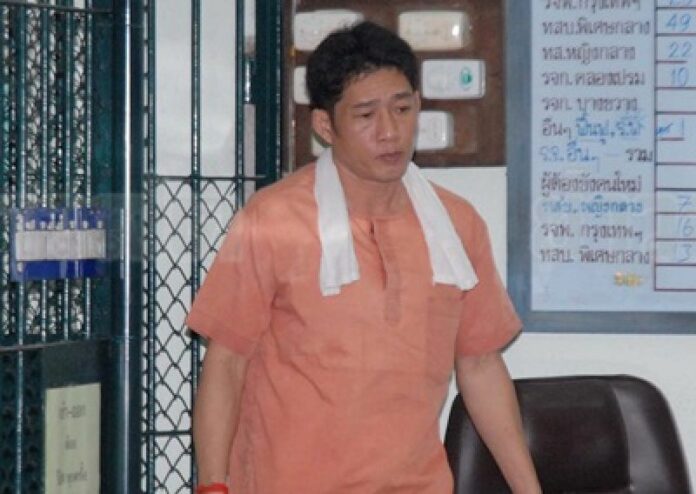
Court Acquits Policeman Accused Of Launching RPG Attacks

(9 August) Court of
Appeals dismissed the case of a former policeman accused of firing RPG at the Ministry of Defence
building during the turbulent month of March 2010.

Mr. Bundit Sitthitam was arrested and
charged with the attacks on the Ministry just as the Redshirts protests were beginning in Bangkok.

Prosecutors argued that he was a Redshirt sympathiser who launched the attacks along with
other individuals in order to terrorise the government at the time to dissolve the Parliament as a
part of the Redshirts tactics to cause violent, chaotic situations in the capital city.

The
RPG missile missed its target and hit into
telephone cable equipment operated by TOT Communication Company
instead,
causing 39,421 baht in damage according to the police.

The Criminal Court
initially found him guilty in December 2011 and sentenced him to 38 years in jail. However, Mr.
Bundit insisted he was innocent and appealed the decision.

Today, the Court ruled in Mr.
Bundit′s favour, noting that witnesses failed to agree on even the identity of the attackers and
there were many questionable details in the case.

For example, some witnesses claimed Mr.Bundit was
the driver of the car at the scene, while some argued that he was a passenger. Moreover, some
believed he was wearing a hat, but some others told the court he was not.

Since it could not
be proven beyond reasonable doubt that Mr. Bundit was the attacker, the judges said, they decided to
acquit Mr. Bundit.

However, the prosecutors said they would fight the case to the Supreme
Court, and the Court of Appeals has ordered that Mr. Bundit remain in jail as the case is being
processed up to the higher court.

Nevertherless, Mr. Bundit was visibly overwhelmed
by the Court′s decision to acquit him; he started to cry as the judges read the verdict throwing out
the case. He told our correspondent while he was being escorted back to the jail that “I have been
waiting for this day for so long. It proves that justice still exists”.

Mr. Bundit repeated
that he had not done anything wrong and will fight until the end.

As for the Amnesty Bill, he
believed it would be difficult to pass through the Parliament, as the politics is still divided into
two conflicting camps.

He refused to comment about the suggestions from Democrat Party MPs
that the amnesty should not be given to criminals and those who had been convicted by the court like
him. However, he thought it is acceptable to give amnesty to Mr. Abhisit Vejjajiva, the Prime
Minister at the time of his arrest, if the move ‘brings peace to the society.’

Advertisement

Army Chief Says Soldiers Did Not Kill 6 Wat Pathum Victims

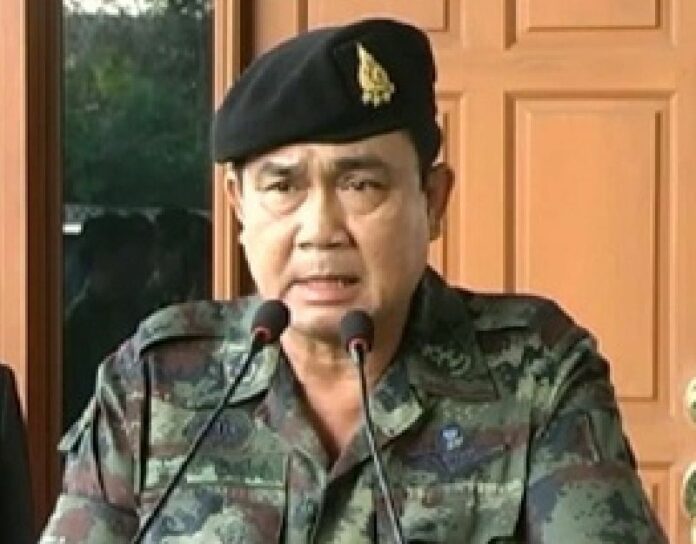
Gen. Prayuth Chan-ocha

BANGKOK – The chief of Royal Thai Army insisted that the military was not involved in the deaths of 6 civilians shot dead as they sought shelter inside a temple during the 2010 military crackdown.

His comment contradicts the recent court inquest which confirmed that the 6 victims, including a volunteer nurse, were killed by soldiers stationed near Wat Pathumwanararm Temple. The military has always denied any involvement, despite stacks of evidences and witness' accounts.

Gen. Prayuth Chan-ocha said the court decision is not final, and the court is still investigating further details pertaining to the case. Only witnesses from the victims' side had been present at the court, he said, and the army had not had their chance to defend themselves.

He acknowledged that the court decision has to be accepted and the process should proceed "in accordance with the legal system." Nonetheless, the army chief insisted that he never gave order to kill civilians. None of his commanding officers ever admitted they had shot any civilian, he added.

“Ever since I joined the army, I have never seen anyone ordering soldiers to kill the people,” Gen. Prayuth told reporters. “So, to those who still think that soldiers killed people, please stop saying it.” 

Gen. Prayuth added, “What happened during the protest was that the army only tried to keep the situation under control. We have our legal team to closely observe the issue … please stop looking at the army as the accused.” 

Earlier, the mother of the volunteer medic shot dead inside the temple compound returned to Wat Pathum to conduct a ceremony in tribute to her daughter, accompanied by relatives who lost their loved ones in other incidents throughout the violence in April-May 2010.

Ms. Payao Akhard lit incense sticks and laid flowers, telling her dead daughter that they have justice at last.

“After 3 years, the court finally announced that the Army officers are to be responsible for this” said Ms. Payao, referred to the court inquest which detailed  that Ms. Kamonkate Akhard and other victims were gunned down by soldiers stationed on the overlooking Skytrain track on 19 May 2010.

“No one can deny these facts” said Ms. Payao.

At the end of ceremony, Mr. Pansak Srithep, a father of 17 year old student killed – allegedly by the soldiers – in May 2010, read out a poem dedicated to the memory of those perished in the violence.

Ms. Payao said that the court inquest is just a beginning, and that she, Mr. Pansak, and other families of the victims would do their best to push for justice on behalf of their loved ones.

On the same day, Ms. Bang-orn Ponsen, 52, the mother of Mr. Panupong Ponsen, the Redshirt protester convicted of burning the office of Mahasarakham Provincial Authority in Mahasarakham province, asked the anti-government protesters to stop opposing the Amnesty Bill, which would offer amnesty to protesters charged with crimes related to the 2010 protests.

She said that her family has endured financial difficulty during Mr. Panupong′s 2-year imprisonment because he was the main breadwinner of the family. Even though Mr. Panupong has been temporarily released from jail, her family still suffers because no one would hire Mr. Panupong due to his criminal charges, according to Ms. Bang-orn.

Ms. Bangorn also asked people to be kind enough to give her son a job, as she needs to take care of her grandson and a mentally disabled son.

She told our correspondent that she agrees with the Amnesty Bill, believing that it will bring peace to the country. "Please stop protesting the Bill and think of the country," Ms. Bang-orn said.


For comments, or corrections to this article please contact: [email protected]

You can also find Khaosod English on Twitter and Facebook
http://twitter.com/KhaosodEnglish
http://www.facebook.com/KhaosodEnglish

Advertisement

Irreconcilable 2010 Crackdown Narratives Plague Amnesty Debate

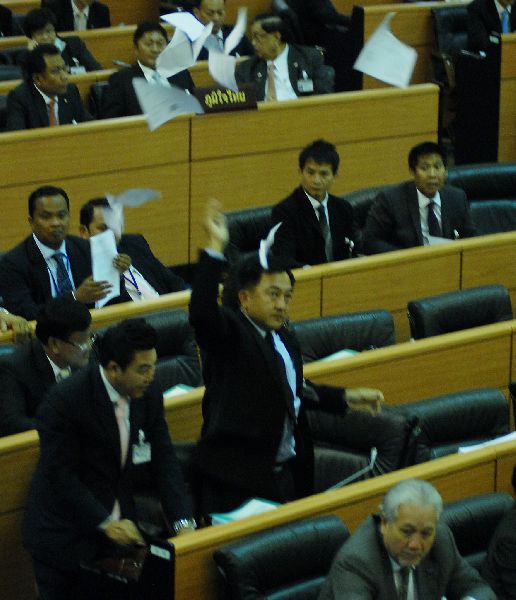
A Democrat MP tears the draft of Amnesty Bill to pieces as he exits the Parliament

BANGKOK — Deliberation on the government-sponsored draft of the amnesty bill in Parliament yesterday was punctuated by heated arguments, heckling, and drastically divergent narratives of what happened during the 2010 crackdown – the central issue that the amnesty bill was designed to resolve.

Proposed by Worachai Hema, an MP of the ruling Pheu Thai Party, the bill promises amnesty to protesters charged or convicted of crimes during political protests in recent years, including both Redshirt and rival Yellowshirt demonstrators. 

The crimes range from looting and resisting arrests, to arson attacks and discharging firearms at security forces.

The bill, Worachai explained, was written to offer legal absolution to these "political prisoners" who committed the crimes as a form of resistance to authorities. 

However, Democrat Party politicians Abhisit Vejjajiva and Suthep Thaugsuban, who served as Prime Minister and Deputy Prime Minister during the crackdown, would still face legal prosecution for their roles in authorising the military operation that left over 90 people dead, mostly civilians.

The leaders of the official Redshirts organisation, the National United Front of Democracy Against Dictatorship (UDD), would also continue to face charges of "terrorism."

The Democrat Party has opposed the bill, saying it would give amnesty to criminals who killed security forces and damaged private and state properties.

Many Democrat leaders voiced concern that the Pheu Thai Party might try to secretly amend the bill to include former Prime Minister Thaksin Shinawatra, the brother of Prime Minister Yingluck Shinawatra who is living in self-imposed exile to evade a corruption conviction over a land purchase. 

Democrat MPs, who are known for their royalist stance, also cast the bill as 'get out of jail free card' for prisoners convicted of lese majeste (insulting the monarchy). However, Pheu Thai MP and Redshirt leader Nattawut Saikuea pushed back against that claim.

"The objective of this law is to grant amnesty to people of every shirt colour, but it does not extend to those who commit the crimes under Section 112 of the Criminal Laws," said Nattawut, referring to the lese majeste law.

Other Pheu Thai MPs spoke in Parliament about "the cruel government" under Abhisit that murdered unarmed protesters, which quickly drew protests from Democrats who insisted that the government at the time acted with restraint, and that it was the protesters who engaged in thuggish and unlawful behaviours, such as burning down buildings.

The exchanges highlighted the conflicting narratives about the violence that occured during the military operation between April-May 2010.

According to the Redshirt and Pheu Thai narrative, the protesters are entirely innocent. Occasional gunfire with security forces and the arson attacks that occured on the last day of the protest are attributed to unknown militants or even covert agents of the government, according to this view.

While the court has acquitted many Redshirts originally charged with such crimes, strong evidence still suggests that Redshirts, or their allies, were responsible for some of the violence. For example, video footage from 10 April 2010 shows militants embedded in the Redshirt crowds shooting at oncoming soldiers.

However, the Democrat Party's account of the unrest often appears even more ludicrious, with some politicians arguing that the military operating under Abhisit′s government did not kill any civilians or protesters during the crackdown – a bold claim considering more than 90 people died between April-May 2010.

The Democrats have blamed these deaths solely on the so-called Blackshirts, the shadowy armed militants believed to be allied with the Redshirts. However, the claim contradicts substantial evidence and witnesses accounts that point to soldiers, who were authorised to use live ammunition, as responsible for many deaths in the crackdown.

The latest court inquest into deaths during the crackdown revealed that six civilians at Wat Pathunwanararm Temple were killed on 19 May 2010 by members of the military, even though the temple was declared a "safe zone" by authorities.

Democrat MPs present at today's parliamentary session continued to deny the findings of the inquests. For example, Suthep, the former Deputy Prime Minister, flatly denied that the military ever used excessive violence against protesters.

"The soldiers were loyal to His Majesty the King. They knew they were the nation′s troops. They acted according to my orders within the lawful power," Suthep said before Parliament. 

He went even further, stating that the military had never deployed any snipers, contrary to what Pheu Thai MPs have claimed. The remark was protested by Khattiyar Sawasdipol, a Pheu Thai MP and daughter of a Redshirt-allied retired general who was mortally wounded by snipers near the protest site on 13 May 2010.

Appearing incensed, Khattiyar showed pictures of her bloodied father, Maj.Gen. Khattiya Sawasdipol, moments after he was shot by snipers.

"Suthep is lying right inside the Parliament," she charged.

Suthep responded by saying that he genuinely does not know who was responsible for Maj.Gen. Khattiya′s death, but suggested, "Maybe your father was shot by one of your own people?"

Pheu Thai MPs were immediately stirred and shouted angrily before the House Speaker ordered them to calm down. Afterwards, Khattiyar calmly told Suthep, with hints of suppressed anger in her voice, that people already know who murdered her father anyways.

The debate was soon brought to a close. A committee, including members of the Democrat Party, was established to amend the motion, estimated to take around seven days.


For comments, or corrections to this article please contact: [email protected]

You can also find Khaosod English on Twitter and Facebook
http://twitter.com/KhaosodEnglish
http://www.facebook.com/KhaosodEnglish

Advertisement

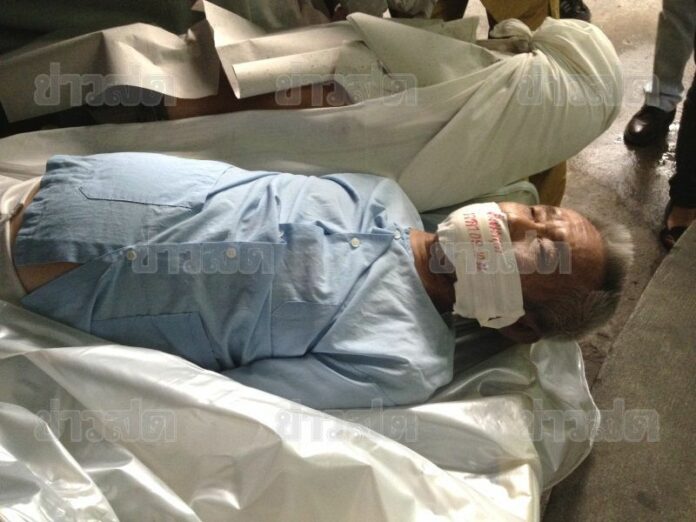
'Uncle SMS' Abandoned By Prison Staff Prior To His Death

The body of Mr. Amphon Tangnoppakul being carried by prison officials

(9 August) A doctor told
the court yesterday that the elderly man jailed for allegedly insulting the monarchy did not receive
adequate medical assistance during his imprisonment – the negligence that ultimately led to his
death whilst in prison.

Mr. Amphon Tangnoppakul, famously known as ?Uncle SMS?, was accused
and later found guilty in 2010 of sending a secretary of then-Prime Minister Abhisit Vejjajiva
series of messages that the court deemed insulting to the monarchy. Mr. Amphon, who was 62 at the
time of his trial, was sentenced to 20 years in jail.

?Uncle SMS? later died of underlying
health problems on 8 May 2012, sparking uproar among civil rights activists who argued that lese
majeste (insult of monarchy) posed a threat to free speech in Thailand, while others criticised Thai
prison system for its disregard of inmates? welfare.

His wife, Ms. Rosmalen Tangnoppakul,
requested the court to investigate the circumstance of his death. The court has heard that the
autopsy, overseen by Dr. Kittibhumi Juthasmit, the director of Phoo Singha Hospital in Sri Saket
province, revealed plaques formed inside Mr. Amphon′s artery, covering up to 60% of the area. The
blocking resulted in Mr. Amphon′s fatal heart failure.

Dr. Kittibhumi said the prison′s
hospital should have had equipment to rescue Mr. Amphon before he died.

Such condition does
not require any specific equipment at all said Dr. Kittibhummi, They only need a tube and a
syringe to pump out the liquid in Mr. Amphon′s body, yet such basic equipment is somehow
unavailable in the facility.

The judges said they would make further announcement about the
specific cause of Mr. Amphon′s death again on 30 October.

However, for Ms. Rosmalen – Mr.
Amphon′s wife – the testimony is enough evidence that her elderly husband was mistreated and
neglected by the prison officials.

She tearfully told our correspondent she would use the
testimony as a basis of her lawsuit against the Department of Corrections for abandoning Mr. Amphon
to his death. She said she would sue the Department via the Administrative Court.

The royal
family remains highly sensitive subject in Thailand. Individuals convicted of lese majeste can face
up to 15 years in prison per offence.

Meanwhile, Prachatai reports that Asia Books, one of the
largest bookstore chains in Thailand, has ordered 2 book titles that touch on the Thai monarchy to
be withdrawn from their shelves. The decision was reportedly due to political
sensitivity.

The 2 books (both written in Thai) were Dream the Impossible Dream,
about the attempts by the royalist faction to regain power after the 1932 democratic revolution in
Siam, and Gentlemen-in-Waiting, which details the relationship between King Rama VI and his
male palace servants.

Advertisement

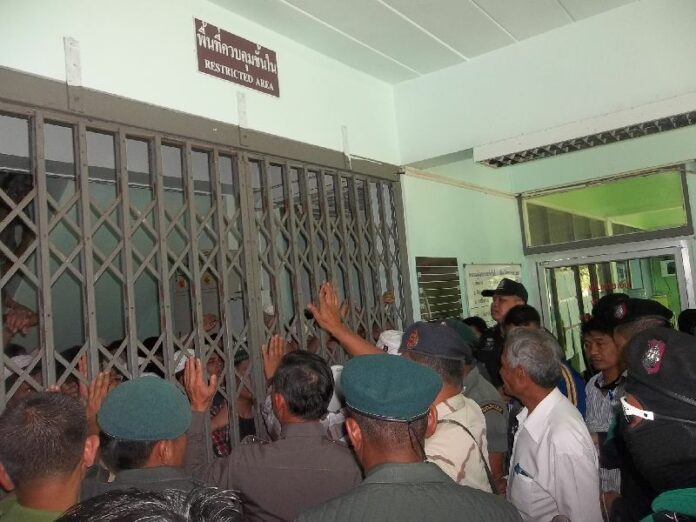
Rohingya Refugees Clash With Police At Phang Nga Center

(9 August) Security force
used batons and water cannons to quell groups of Rohingya asylum seekers who protested over rights
to practise Islamic prayer yesterday in Phang Nga Province.

Over 250 refugees caused mass
breakout from their quarters in the province′s detention centre, but the police officers managed to
bar the detainees from leaving the facility by holding them behind the main gate. Soon the police
were reinforced by riot control units and rescue workers.

The protesters demanded the right
to perform religious rites marking the end of Ramadan, the Islamic fasting season. The authorities
said they would only allow the group to perform the prayers outside the building in groups of 5 at a
time, but the Rohingya detainees rejected the offer and continued to shake the metal gate, intent on
breaking out.

The police responded by beating the protesting Rohingya with their batons,
while others fetched a local Imaam. The cleric arrived at the centre and convinced the detainees to
stay calm, and later he led a mass prayer with the Rohingyas as they stayed inside the
facility.

However, the detainees tried to break out from the gate again soon afterwards, so
the security forces decided to fire water cannons at the gate to keep the protesters at bay, but the
measure failed as the Rohingya kept surging back at the gate.

Some police officers voiced concern that
if the refugees broke out, they might cause harm to the society, as there are many provincial
authorities’ offices and a kindergarten in the area.

A number of officers requested
the tear gas to be fired to disperse the crowds, but the requests were rejected by the commanding
officers who ordered the gate to be reinforced instead. The officers were instructed to stand down
and let the rioting Rohingya become exhausted on their own.

Once the riots subsided, the riot
police moved into the building and sorted out instigators within the groups. The leaders were
separated and sent to other police stations in the province. Nevertheless, the unrest soon erupted
again. Some shouted that they wanted to be transferred to a third country instead of being holed up
in the facility.

Eventually around 17.00, after 8 hours of confrontation, the police finally
secured the facility and resolved the situation. The refugees were separated into groups and
transported to be detained in local police stations.

According to human rights activists and
news reports, the mostly-Muslim Rohingya ethnics suffer routine persecution in Myanmar. Many of the
Rohingya fled the country, and Thai Navy regularly intercepted their boats.

However, rights
groups also detailed abuse of Rohingya refugees at the hands of Thai authorities and the poor
condition of their detention centres.

Advertisement

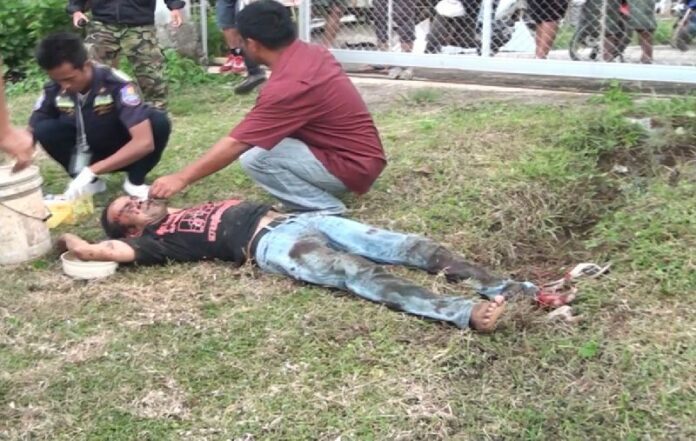
Redshirts Leader's Bodyguard Injured By Explosion

(8 August) A bodyguard of
the bombastic Redshirts leader Mr. Kwanchai Pripana was injured after he encountered an explosive on
the lawn of the radio station frequently visited by Mr. Kwanchai in Udon Thani
province.

Mr. Jaroon Suphata, 45, encountered the explosive when he was digging at the lawn outside
the radio station, according to the police.
One witness told our correspondent that Mr.
Jaroon was making a watercourse before he noticed a piece of roof-tile, which has been suspiciously
left on the ground.

He later used the shovel to lift it up and suddenly the bomb exploded,
severely wounding him in the two legs and the abdomen.

Mr. Kwachai, who serves as the
provincial representative for the National United Front of Democracy Against Dictatorship (UDD), was
not in the area at the time, as he was in Bangkok to observe the anti-government protests. It is not
clear why Mr. Jaroon did not accompany Mr. Kwanchai to Bangkok.

Speaking from Bangkok, Mr.
Kwanchai said that he had heard about the incident and is travelling to visit Mr. Jaroon as soon as
he can.

The Redshirts leader, known for his aggressive and confrontational behaviour,
suggested the incident is politically motivated, saying that he and his fellow activists are only
fighting for democracy but many people are using harmful weapons to eliminate us.

He and
his friends are victims of a deadly political game, Mr. Kwanchai said, and he claimed that a few
days earlier someone has placed a bomb just outside his house, but the explosive was
inactive.

Mr. Kwanchai vowed that he would do whatever he could to bring justice, since Mr.
Jaroon is his personal guard.

However, Mr. Kwanchai himself is also facing a different legal
issue in Bangkok, where he was seen wearing riot police uniform near the protest sites without clear
authorisation from the police force. Media reports suggest that he might be subject to criminal
investigation.

Advertisement

DSI To Question 'Janie' About Her Fugitive Father-in-Law

(8 August) The Thai
public appears to be momentarily distracted from the ongoing political battle by the surprise
announcement of marriage between a famous actress and the son of a former politician, who is currently
on the run from Thai authorities.

After weeks of intense rumours and speculation about their relationship,
Ms. Janie Thienphosuwan and Mr. Chonsawad Assavahame finally spoke out on the matter in a press
conference at Mr. Chonsawad′s mansion in Samut Prakarn Province.

Although juicy gossips about
celebrities? relationships are common occurrence, the case of Ms. Janie is intriguing for many Thais
in its own right: not only is Mr. Chonsawad known to be married to an award-winning singer, he is
the son of Mr. Wattana Assavahame, the former
leader of the now disbanded
Pheu Phaendin Party
convicted of corruption cases.

In 2008, Mr. Wattana, as
Minister of Interior Affairs, was found guilty
of for conspiring with his colleagues to illegally buy and sell lands in Samut Prakarn Province for
a 23 billion baht wastewater treatment plant operated by the government.

Mr. Wattana
escaped his sentence during his release on bail. His whereabouts remain unknown, and Thai authorities
had vowed in the past to hunt him down.

No question about Mr. Wattana was raised today
throughout the press conference at Mr. Chonsawad′s family estate, where he stunned the nation by
announcing that he and Ms. Janie had just married hours earlier. They showed their wedding
certificates to the press, pointing to the time of 09.09 – a time deemed auspicious by the
couple.

Seated next to Ms. Janie, Mr. Chonsawad also apologised for keeping the relationship
a secret for so long, and said that everything happened because of love. He also denied rumours that
Ms. Janie is pregnant with his child, and showed the document from a hospital about Ms. Janie′s
health as a proof.

As for his ex-wife, Ms. Nanthida ‘Too’ Kaewbuasai, he said they had never officially
registered for marriage in the first place, and they had been virtually separated for 10 years now.
We only stayed together for the sake of our child, he said.

Asked about the dowry, Mr.
Chonsawad said his entire life from now on is the dowry for Ms. Janie. Nevertheless, media reports
indicate that Mr. Chonsawad also gave Ms. Janie a 7 karat diamond ring.

Meanwhile, the first
wedding gift to the newly weds was an order issued by the Division of Special Investigation (DSI) for
the couple to appear before its detectives in order to be questioned about Mr. Wattana′s
whereabouts.

The order came after a few days after a leaked photo showed Ms. Janie and Mr. Chonsawad with Mr.
Wattana at an unidentified place, believed by some netizens to be a hotel in Macau.

Mr.
Tharit Pengdit, chief of the DSI, said that it is his duty to look for fugitive convicts like Mr.
Wattana. If the former minister is confirmed to be hiding abroad, he said, the DSI will seek
cooperation from that nation′s government for extradition of Mr. Wattana.

Mr. Tharit′s
comments came few days after an official at the Office of Attorney General suggested that the police
should do more in locating Mr. Wattana. The case also received notable attention in much of social
network, where commentators grumble that the Thai police are never capable of bringing ig names
to justice.

Not everyone welcomes the attention Ms. Janie and Mr. Chonsawad are receiving, however.
Some anti-government activists complained that the news divert citizens? attention away from the
fierce debate on draft of government-sponsored Amnesty Bill in the Parliament.

The draft
promises legal absolution to protesters charged with or serving the sentences for crimes they
allegedly committed during 2010 Redshirts protests in Bangkok. Opposition party and its allies view
the draft as an attempt to whitewash criminal thugs who attacked soldiers and ?burned down the
city?.

Mr. Suriyasai Katasila, the coordinator for anti-government Green Party, posted on his
Facebook criticising Thai society for being obsessed with the marriage of
Mr. Chonsawad and Ms. Janie when they
should be concerned with the Amnesty Bill debate.

But I think the Thai society is not
going to give amnesty to Janie, though, Mr. Suriyasai noted with humour, referring to some netizens
who accuse Ms. Janie of marrying for the money and stealing someone′s husband.

The leadership
of
People′s Force for Democracy to Overthrow
Thaksinism (Pefot), which is staging protests against the government, has gone even further, posting
on their Facebook that the news about Ms. Janie and Mr. Chonsawad is result of conspiracy engineered
by former Prime Minister Thaksin Shinawatra to bury the issue about Amnesty Bill.

The
Facebook post also alleges that Matichon Group, owner of Khaosod, receives Mr. Thaksin′s money to
publicise the news about the couple.

Advertisement

Hot News

LATEST NEWS

Bangkok
overcast clouds
30 ° C
35.5 °
30 °
74 %
5.3kmh
100 %
Thu
29 °
Fri
35 °
Sat
36 °
Sun
36 °
Mon
36 °