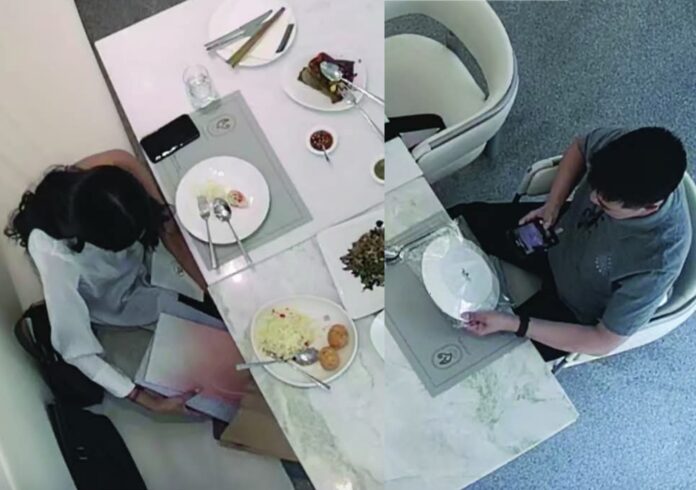
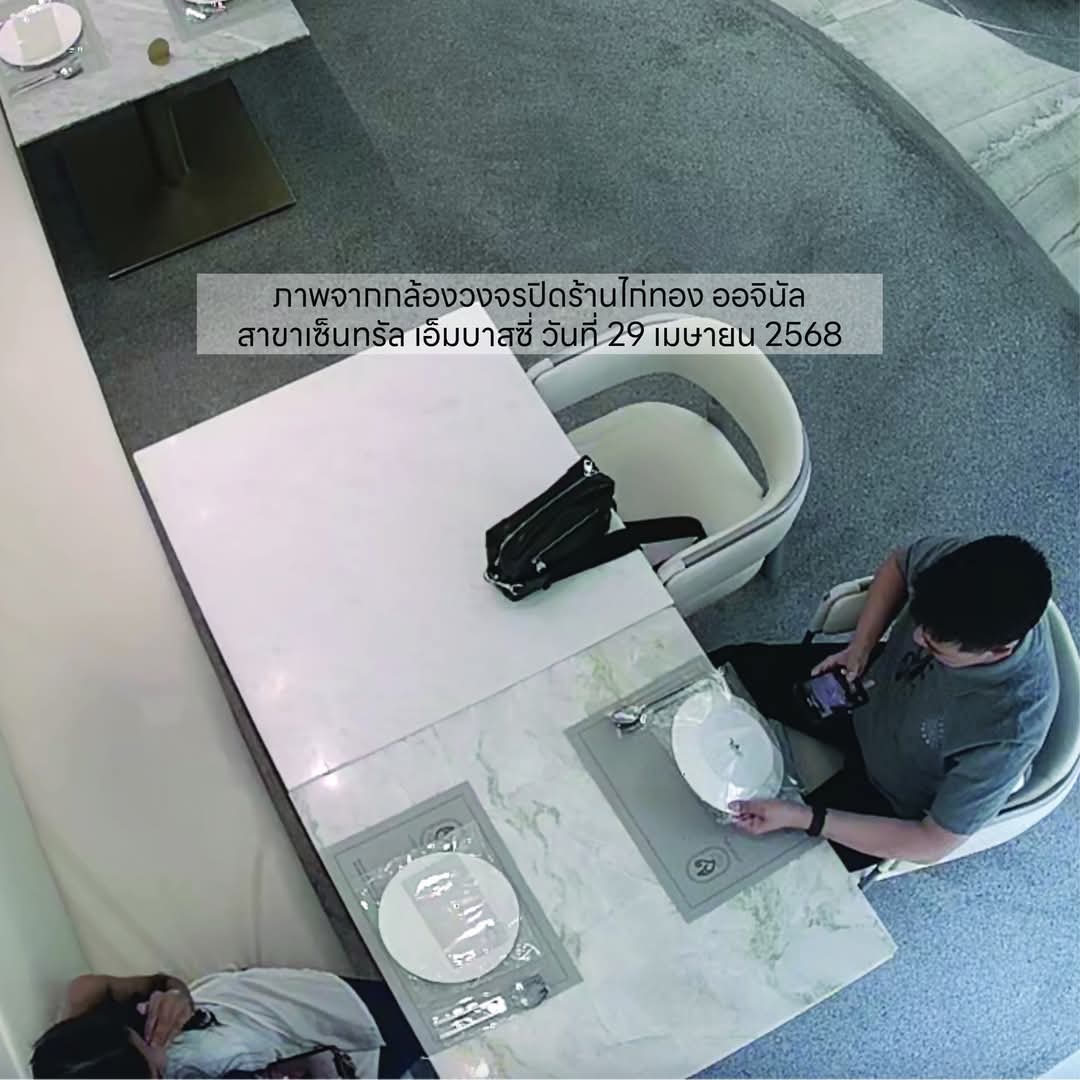
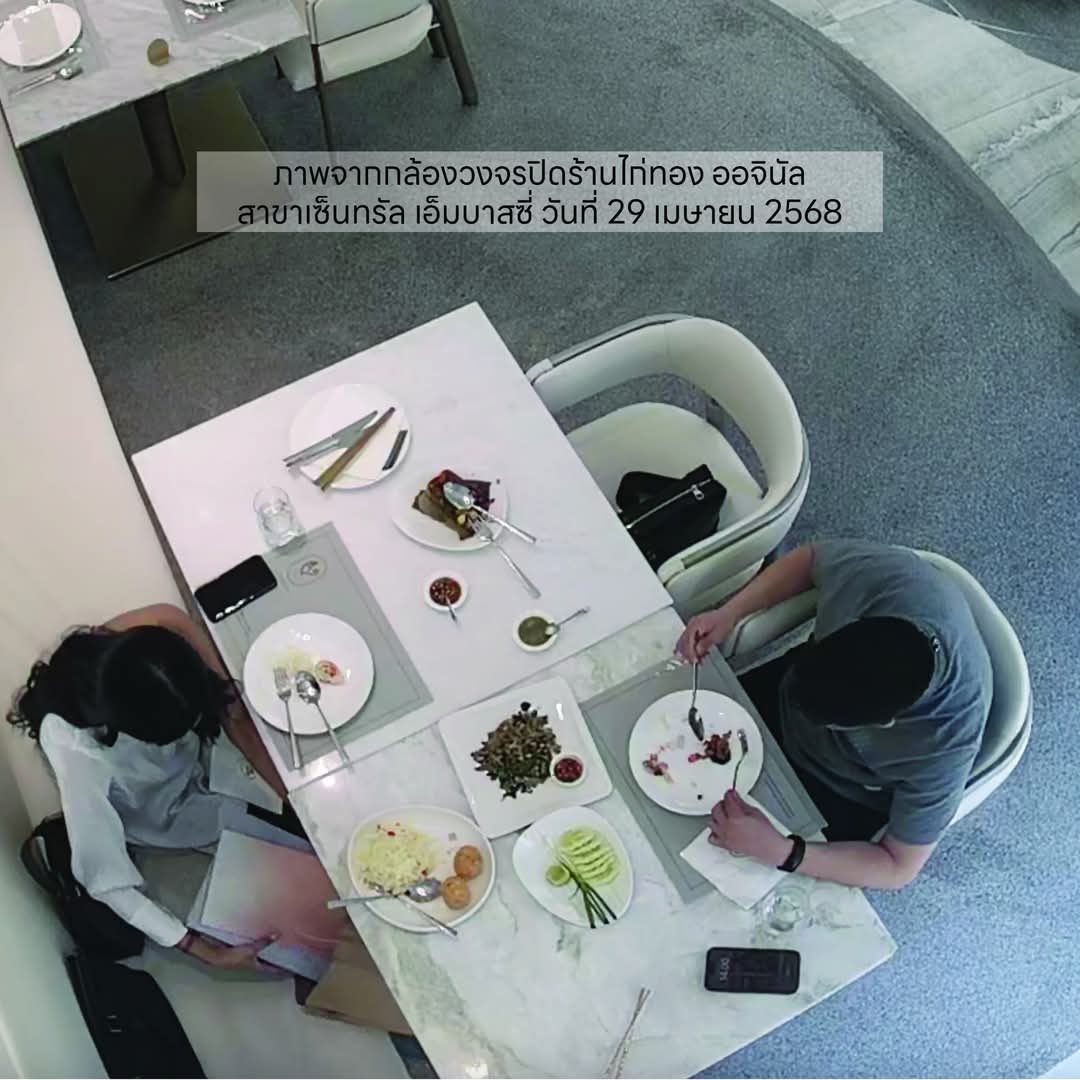
CCTV footage from one of Kaithong's branch at Central Embassy reveals a foreign male customer using his mobile phone to photograph the restaurant's menu, while a female customer takes the restaurant's menu book into her bag, on April 29, 2025.
BANGKOK — A famous Thai restaurant ‘Kaithong Original‘ posted a message on its Facebook page in both Thai and English on May 2 stating that it has filed a police report to prosecute two foreigners who exhibited behavior of stealing the restaurant’s menu.
Kaithong Original stated that on April 29, the restaurant’s headquarters received a report from one of their branches. According to the report, around the afternoon of that day, two foreign customers (a man and a woman) came to have lunch.
“During their time at the restaurant, the male customer used his mobile phone to take detailed photographs of every page of both the food and dessert menus.”
Following this, the female customer placed both menus, which are large-format copies designated strictly for in-house use, into her personal bag and carried them out of the restaurant. The male customer remained at the table during the entire incident and appeared fully aware of her actions.”
CCTV footage from Kaithong’s branch at Central Embassy reveals a foreign male customer using his mobile phone to photograph the restaurant’s menu, on April 29, 2025.
After receiving the report, Kaithong Original’s head office conducted further investigation and reviewed the CCTV footage. Verification of the name appearing on the payment receipt revealed that the male customer is the owner of several Thai restaurants based in Indonesia, operating under multiple brand names.
“The actions of both individuals demonstrate a clear lack of respect for the property of others and represent a serious breach of professional ethics, particularly between businesses operating within the same industry.”
CCTV footage from Kaithong’s branch at Central Embassy reveals a female customer taking the restaurant’s menu book into her bag, on April 29, 2025.
Kaithong Original added that they have filed an official police report with the local authorities. Both civil and criminal proceedings have been initiated in accordance with Thai law. The restaurant also emphasized to state the following:
The intentional removal of the restaurant’s property without permission constitutes a criminal offense.
We urge the individuals involved to take full responsibility for their actions and return the property immediately.
The restaurant will take all appropriate measures to prevent unauthorized use, imitation, or recurrence of such behavior in the future.
They thank their valued customers for their continued support and reaffirm our commitment to upholding the highest standards of ethics and the integrity behind everything they do.
“We hope this incident serves as a reminder to the wider food and hospitality community that mutual respect is the foundation of professionalism and must never be overlooked.”
Kaithong Original Facebook page
Kaithong Original opened in 1998 as a 6-seater eatery, cooking “on demand.” The original restaurant was called ‘Gum Gai Kaithong,’ where “Gum Gai” is Cantonese language used in Hong Kong meaning “Golden Chicken.”
The first branch was in Muang Thong Thani, with Chinese-style decoration, before changing its name to ‘Kaithong Original’ during the era of Saeng-arun Montreewat, the second-generation heir who renovated the restaurant and modernized the brand. It has expanded to 4 branches: Muang Thong Thani, Central Festival EastVille, Central Phuket Floresta, and Central Embassy.
According to Michelin Guide, the family-run establishment, is renowed for its traditional recipes, serving fresh meat and seafood flavours in simple yet refined and lightly seasoned dishes. Catering to different tastes, the stir-fried liver with garlic is made with either pork or chicken liver.
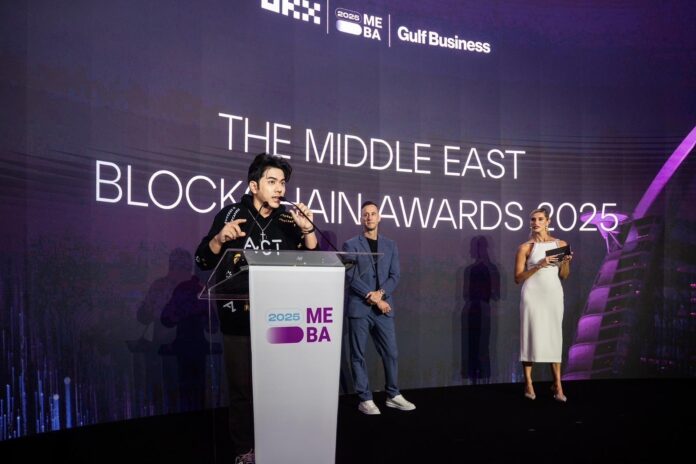
‘Acme Worawat’ has made history with the recognition of the “Most Influential Person in Blockchain and Crypto 2025” accolade at the globally renowned Middle East Blockchain Awards 2025, staged at the iconic Burj Al Arab in Dubai. The ceremony, which occurred on 29 April 2025, attracted attendance from influential figures across various sectors shaping the future of Web3, Artificial Intelligence (AI), and Decentralized Finance (DeFi).
Acme Worawat has become the first and only Thai national to receive this prestigious international accolade, following deliberation by a distinguished panel at MEBA 2025. The selection committee comprised notable figures such as:
Dr. Marwan Al Zarouni, CEO of AI at the Dubai Department of Economy and Tourism, Founder & CEO of the Dubai Blockchain Centre, and recipient of the Special Recognition Award
Gareth Van Zyl – Editor, Gulf Business
Scott Melker – Host of The Wolf of All Streets and #CryptoTownHall
Saqr Ereiqat – Secretary General, Digital Assets Association of Dubai
Megan Plisky, also known as “Crypto Megan”, a leading advocate for the advancement of the cryptocurrency, NFT, and Web3 ecosystems
The inclusion of invited judges from the blockchain, fintech, and AI sectors further emphasised the region’s strategic significance in the progression of emerging technologies.
Acme Worawat stated, “It is a tremendous honour to receive the ‘Most Influential Person in Blockchain and Crypto 2025’ award. This recognition constitutes a collective achievement by all $ACT(ACET) holders. ACT started with zero initial supply and was propelled by individuals who invested their own assets to create and sustain its value. ACT exists because of the people and will remain the people’s asset forever—ACT is The People.”
Acme Worawat, also known as Worawat Narknawdee, is a self-made Thai entrepreneur and investor widely recognised as one of the pioneers of the blockchain and cryptocurrency sector in Asia. His engagement with the industry commenced in 2012 through Bitcoin mining, culminating in his current ownership of over 11,000 BTC. He founded ACT(ACET), a globally recognised blockchain-powered digital asset that has attracted more than 159,368 holders and recorded a trading volume exceeding $470 million or approximately THB 15.98 billion. His investment activities in the United Arab Emirates exceed $300 million, encompassing the fintech, luxurious real estate, and premium hospitality sectors. In addition, he established Traderist, an organisation committed to financial literacy advancement and personal life skill development. For over 13 years, he has contributed to empowering individuals worldwide at no cost, promoting success, and encouraging the capacity to support others.
The Middle East Blockchain Awards—an event which marks the convergence of investors, developers, and thought leaders in the future of technology—continues to reinforce the United Arab Emirates’ status as “a global centre for digital asset innovation.”
Sasin School of Management, together with main sponsor SCG Chemicals (SCGC), a leading innovator in the polymer business and integrated solutions for sustainability, proudly launches the Bangkok Business Challenge (BBC) 2025 powered by SCGC.
BANGKOK — The Bangkok Business Challenge (BBC) 2025, powered by SCG Chemicals (SCGC), is set to showcase innovative student startups at Sasin School of Management from May 22-24 in Bangkok.
Now in its 23rd year, the competition stands as Asia’s longest-running global student startup event, providing university students a platform to present sustainable, innovation-driven business solutions.
This year’s competition theme, “Growing Impactful Ventures,” encourages students from around the world to develop bold ideas addressing economic, social, and environmental challenges while creating opportunities for networking and international collaboration.
According to Dibyendu Bose, Deputy Director of Strategy, Innovation & Impact at Sasin School of Management, “At Sasin, we are committed to developing future leaders who can create real-world, sustainable impact.” Bose noted that nearly half of participating teams are focusing on emerging sectors such as MedTech, HealthTech, Agri Tech, and AI, demonstrating the shifting priorities in today’s entrepreneurial landscape.
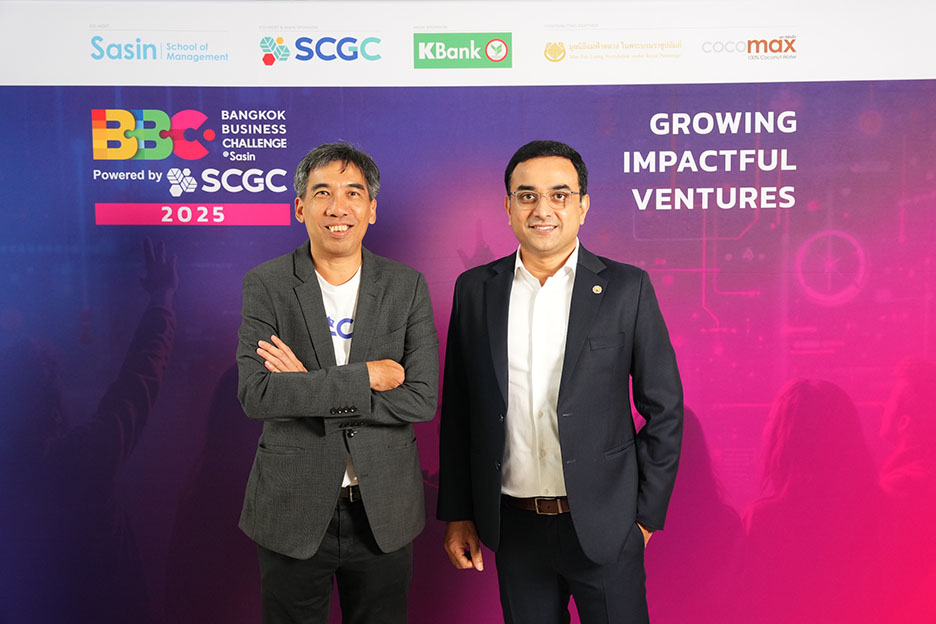
Dr. Suracha Udomsak, SCGC’s Chief Operations and Innovation Officer, and Dibyendu Bose, Deputy Director of Strategy, Innovation & Impact at Sasin School of Management
Dr. Suracha Udomsak, Chief Operations and Innovation Officer at SCGC, emphasized the company’s commitment to polymer innovation and sustainable solutions.
“Our collaboration with Sasin to co-host the Bangkok Business Challenge 2025 powered by SCGC is a model for innovation and solution development,” said Udomsak. He highlighted that the competition creates opportunities for diverse ideas to transform into viable businesses, calling startups “a vital force in driving innovation in today’s complex business landscape.”
Interest in the competition has grown significantly, with 308 team applications received this year—an 11% increase from 2024. The applications represent 82 academic institutions, including 32 universities participating for the first time.
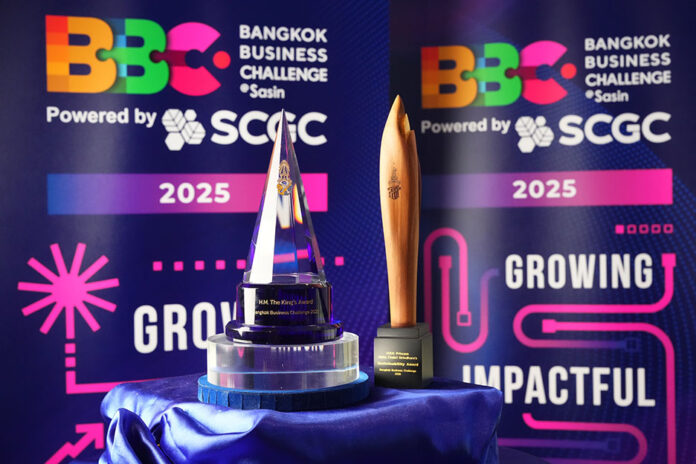
A distinguished panel of experienced judges will evaluate the teams, selecting those with the strongest, most impactful business ideas. Top performers will receive prestigious awards including the HM The King’s Award and the HRH Princess Maha Chakri Sirindhorn’s Sustainability Award, along with cash prizes totaling over $42,000 USD (approximately 1,500,000 THB).
The competition reflects growing global interest in sustainable business practices and demonstrates how academic institutions and corporate partners can collaborate to foster the next generation of impactful entrepreneurs.
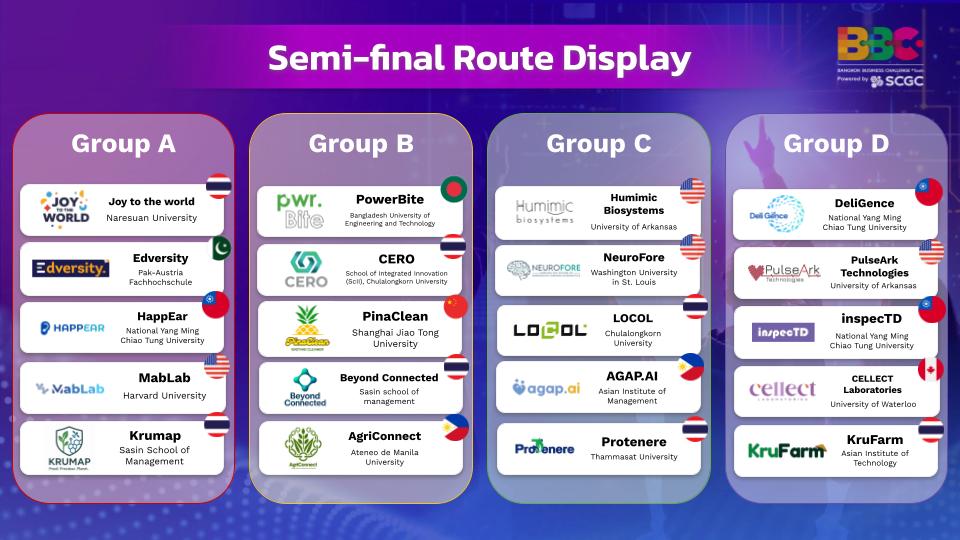
20 teams have advanced to the semi-finals.
The 20 teams advancing to the semi-finals are:
1. AGAP.AI, Asian Institute of Management, Philippines
2. AgriConnect, Ateneo de Manila University, Philippines
3. Beyond Connected, Sasin School of Management, Thailand
4. CELLECT Laboratories, University of Waterloo, Canada
5. CERO, School of Integrated Innovation (ScII), Chulalongkorn University, Thailand
6. DeliGence, National Yang Ming Chiao Tung University, Taiwan
7. Edversity, Pak-Austria Fachhochschule: Institute of Applied Sciences and Technology, Pakistan
8. HappEar, National Yang Ming Chiao Tung University, Taiwan
9. Humimic Biosystems, University of Arkansas, United States of America
10. inspecTD, National Yang Ming Chiao Tung University, Taiwan
11. Joy to the world, Naresuan University, Thailand
12. Krufarm, Asian Institute of Technology, Thailand
13. Krumap, Sasin School of Management, Thailand
14. LOCOL, Chulalongkorn University, Thailand
15. MabLab, Harvard University, United States of America
16. NeuroFore, Washington University in St. Louis, United States of America
17. PinaClean, Shanghai Jiaotong University, China
18. PowerBite, Bangladesh University of Engineering and Technology, Bangladesh
19. Protenere, Thammasat University, Thailand
20. PulseArk Technologies, University of Arkansas, United States of America
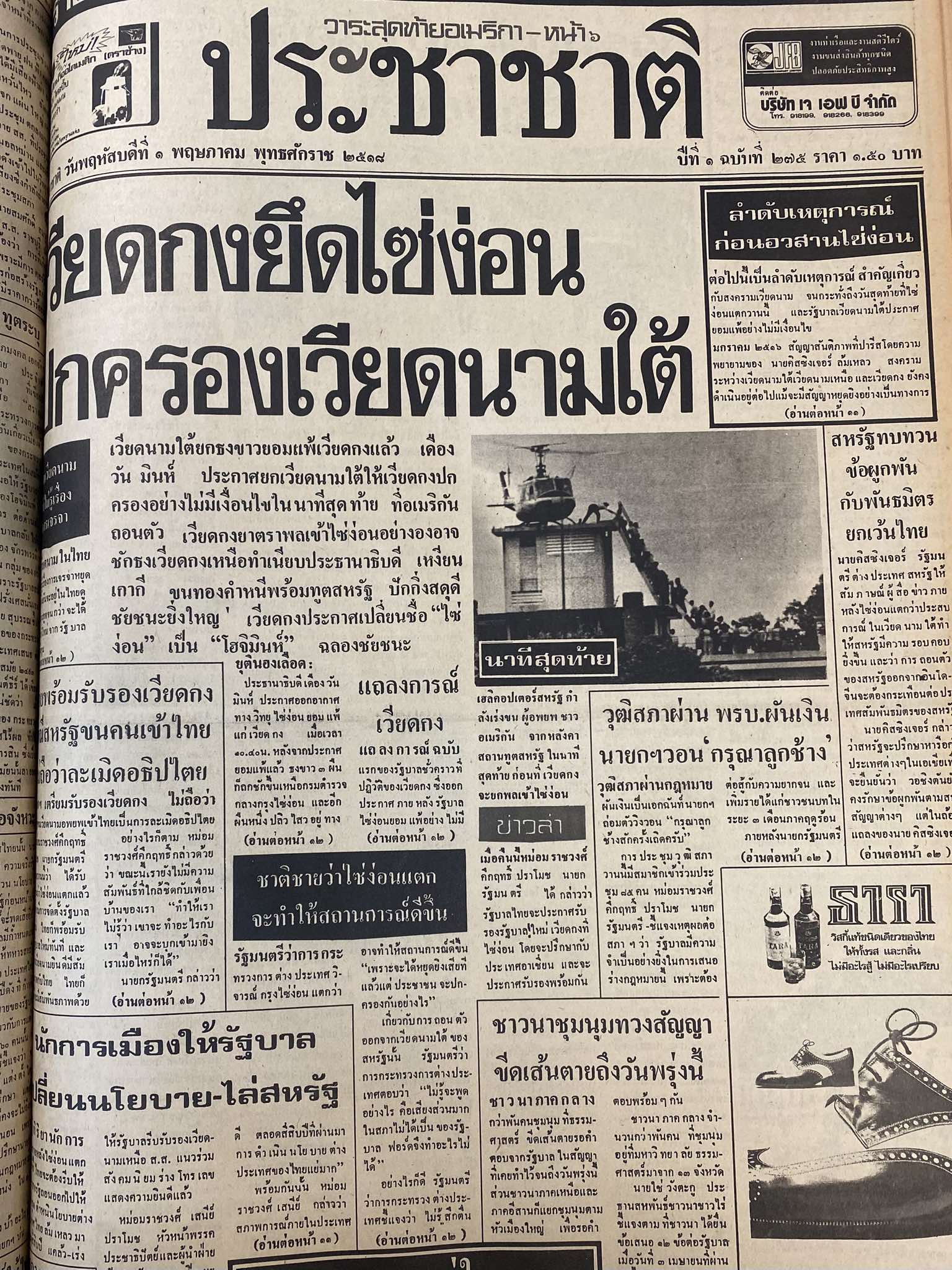
Front page of "Prachachat" Thai newspaper, May 1, 1975, reporting the Viet Cong's capture of Saigon.
BANGKOK — The fall of Saigon on April 30, 1975, marked the end of a 35-year war period that began with resistance against French colonization, continued through the Japanese occupation, and concluded with the expulsion of American forces. On that day, Viet Cong troops successfully captured the capital of South Vietnam.
Thailand’s leading newspaper “Prachachat” reported this world-changing event with the headline “Viet Cong Captures Saigon, Rules South Vietnam” in its May 1, 1975 edition. The newspaper detailed how Dương Văn Minh announced surrender to the Viet Cong via Saigon radio at 10:40 AM.
“After the surrender announcement, three white flags were raised over the Central Police Department in Saigon, with another fluttering in the northern suburbs, just four hours after the last American soldier jumped onto a helicopter to escape the city,” the newspaper reported.
Victorious North Vietnamese troops aboard a tank take a position outside Independence Palace in Saigon, April 30, 1975
The report also noted that the United States had been involved in the Vietnam War for 30 years, resulting in 56,000 American deaths, 150,000 injuries, and affecting the lives of more than ten million Vietnamese people.
The end of the “Republic of South Vietnam” came as a result of the “Nixon Doctrine,” implemented by President Richard Nixon, who sought to withdraw the United States from the Vietnam War. This naturally meant that the US no longer needed to maintain military forces and bases in Thailand for operations in Indochina.
Thailand Congratulates the Fall of Saigon
Thailand’s Ministry of Foreign Affairs issued a statement saying, “The long-suffering of Vietnam has ended, and the dream of all Vietnamese people to reunify their country has now become a reality. We extend our best wishes and hope for their success, and we hope that with peace in Indochina, Southeast Asia will be able to develop its resources for the benefit of everyone.”
The rapid advance of the Viet Cong, who took just 2 months to control all of South Vietnam’s territory (Image from the book “How We Won the War” by General Vo Nguyen Giap and General Van Tien Dung, published by Thailand’s Army Operations Department).
Major General Chatichai Choonhavan, then Thailand’s Minister of Foreign Affairs, commented on the fall of Saigon, suggesting that the situation might improve because the fighting would finally stop, leaving governance to the people. Meanwhile, M.R. Seni Pramoj, leader of the Democrat Party and the opposition in parliament, stated, “Thailand can no longer dream that after Saigon falls, Bangkok won’t fall. It will come to us someday.”
M.R. Seni further emphasized that “Thailand must not remain passive about the situation. We should begin relations with China, as well as Cambodia and Vietnam. We need to revise our foreign policy. If American troops withdraw, it would be beneficial. Over the past 40 years, Thailand’s foreign policy implementation has been terrible.”
Difficult Negotiations for US Military Withdrawal
Mr. Anand Panyarachun, former Permanent Secretary of the Ministry of Foreign Affairs, later reflected in an interview 40 years after the event that establishing diplomatic relations with the People’s Republic of China in 1975 (July 1) faced relatively little pressure compared to the negotiations for US military withdrawal, which encountered significant resistance.
Front page of “Prachachat” Thai newspaper, May 1, 1975, reporting the Viet Cong’s capture of Saigon.
The M.R. Kukrit government wanted the United States to recognize that Thailand’s foreign policy decision-making process had changed since the pre-October 14 era, and that this government had decided to withdraw American troops.
In his foreign policy statement to parliament on March 19, 1975, M.R. Kukrit Pramoj clearly stated, “To create balance in relationships with superpowers, this government will ensure the withdrawal of foreign troops from Thailand within one year.” At that time, the United States still had 25,000 troops and 350 aircraft stationed in Thailand.
Seven Principles of New ground rules
A report on “Thailand’s Foreign Policy Adjustment (1973 to 1976)” states that Anand Panyarachun, who headed the negotiations for US troop withdrawal, spoke about “New ground rules” for a new framework of relations based on seven principles:
Placing US assets and personnel under Thai legal jurisdiction
Prohibiting use of US resources to threaten any nation’s sovereignty
Requiring activity reports to the Thai government
Replacing American personnel with Thai staff for training purposes
Limiting US personnel numbers to Thai-approved levels
Providing US technical officers with the same privileges as those from other countries
Capping cooperation agreements at two years, with options for renewal or early termination
Helicopters carrying Vietnamese refugees landing on the USS Midway, an American aircraft carrier. This was part of Operation Frequent Wind to evacuate American civilians and some Vietnamese from Saigon between April 29-30, 1975, with more than 7,000 people evacuated by helicopter.
Conflicts Between Military and Civilian Officials
The Matichon Information Center reported that the Ramasoon Camp issue not only deteriorated Thai-US relations but also created conflicts within the Thai bureaucracy—between the Ministry of Foreign Affairs and the Ministry of Defense, or in other words, between military and civilian officials. Similarly, conflicting mass movements emerged: one led by the Student Center of Thailand demanding US base withdrawals, and another right-wing group opposing communist threats.
Thai military leaders were extremely concerned about the US withdrawal from Thailand, with rumors of a potential coup during M.R. Kukrit’s government. Signs included General Boonjai Bamrungpong, Commander-in-Chief of the Royal Thai Army, ordering military readiness in 1976, and warnings that a coup might occur before the general election on April 4, 1976.
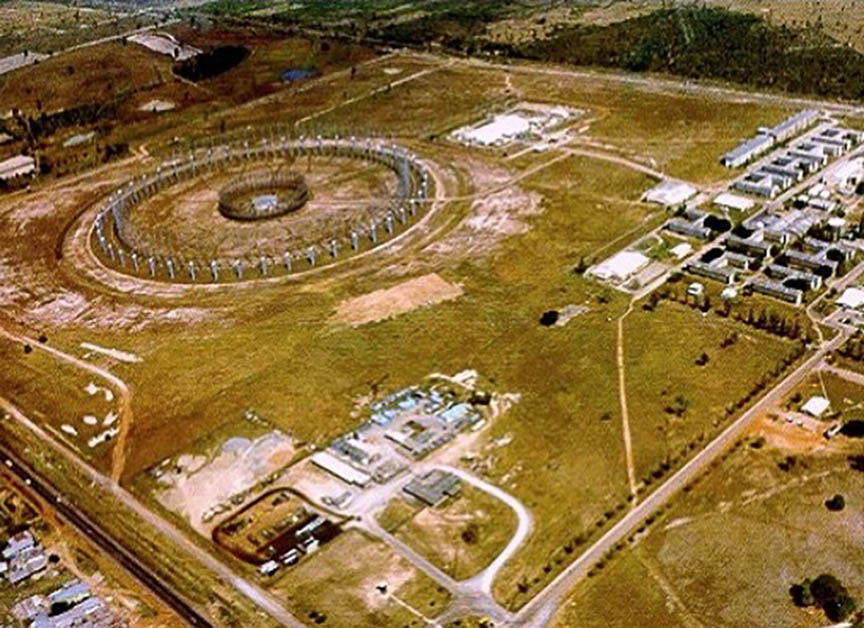
Takhli Air Base in Nakhon Sawan, one of seven US Air Force bases in Thailand. This photo was taken in 1965.Ramasoon Camp in Udon Thani, operated by the US Army Security Agency (ASA). This photo was taken in 1973.
Nevertheless, M.R. Kukrit’s foreign policy led to the closure of US bases in the Northeast on January 31, 1976, and the withdrawal of US troops from Thailand.
Ultimately, the April 4 election results showed M.R. Kukrit receiving only 23,634 votes, losing to Samak Sundaravej who received 33,335 votes in Dusit district, where most eligible voters were military personnel.
Establish Relations with Vietnam
The subsequent government led by M.R. Seni Pramoj as Prime Minister, with Pichai Rattakul as Minister of Foreign Affairs, attempted to establish relations with the Democratic Republic of Vietnam. Pichai and Anand Panyarachun traveled to negotiate with the Vietnamese government in Hanoi in August 1976, reaching an agreement for a joint statement to establish diplomatic relations, pending cabinet approval.
Pichai had to send three telegrams to the Ministry of Foreign Affairs to request cabinet approval, with Minister Lek Nana waiting for negotiation results. This revealed an obstacle in policy implementation, as noted in the report on Thailand’s foreign policy adjustment.
“It turned out that the right-wing coalition government partners disagreed, fearing various consequences. I sent a third telegram to Khun Lek, telling him to inform Professor Seni that this was government policy already announced to parliament. We had now succeeded and merely needed cabinet approval. As leader of the Democrat Party and head of government, he couldn’t just sit idly—he needed to make a decision.”
Eventually, the cabinet approved the Foreign Minister’s signing, establishing diplomatic relations with Vietnam that continue to this day.
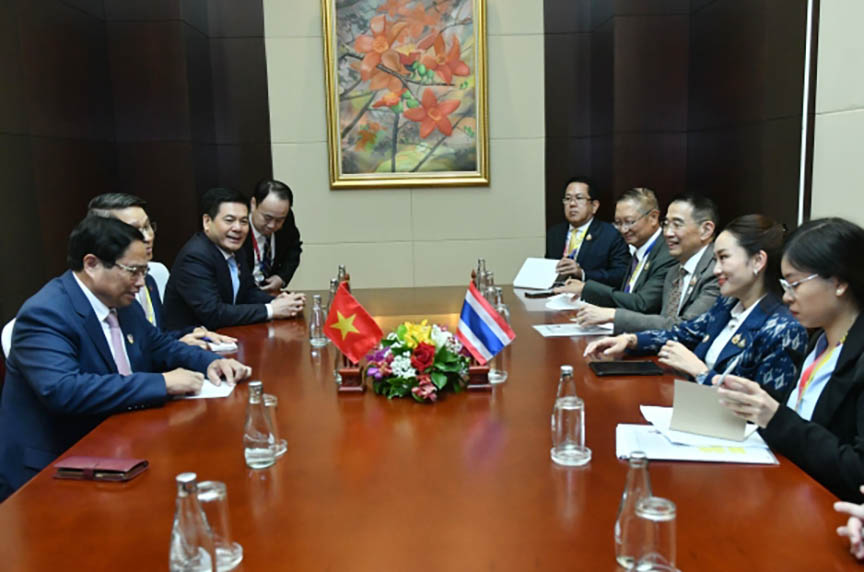
Thailand’s Prime Minister Paetongtarn Shinawatra has a pull-aside meeting with Vietnam’s Prime Minister Pham Minh Chinh during the 44th and 45th ASEAN summits, on October 9, 2024.
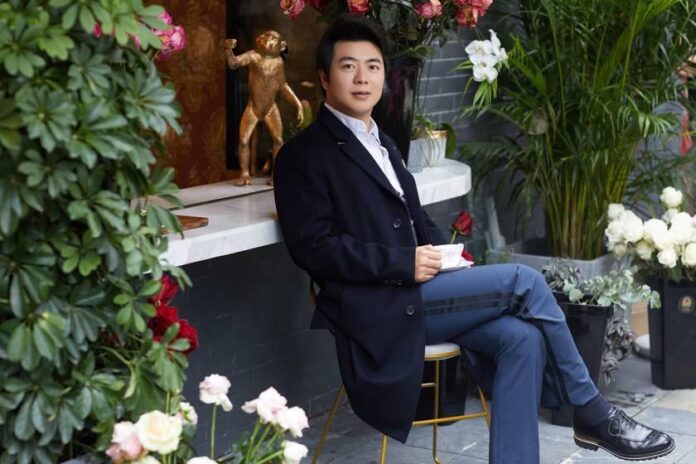
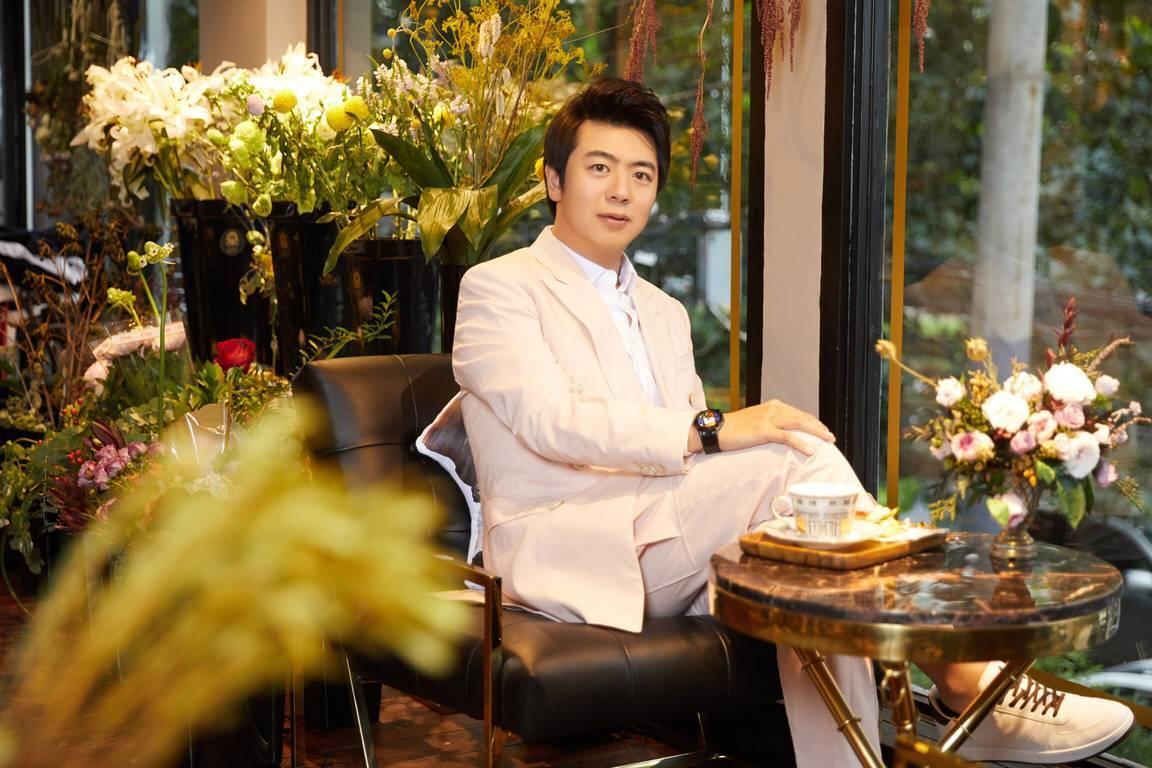
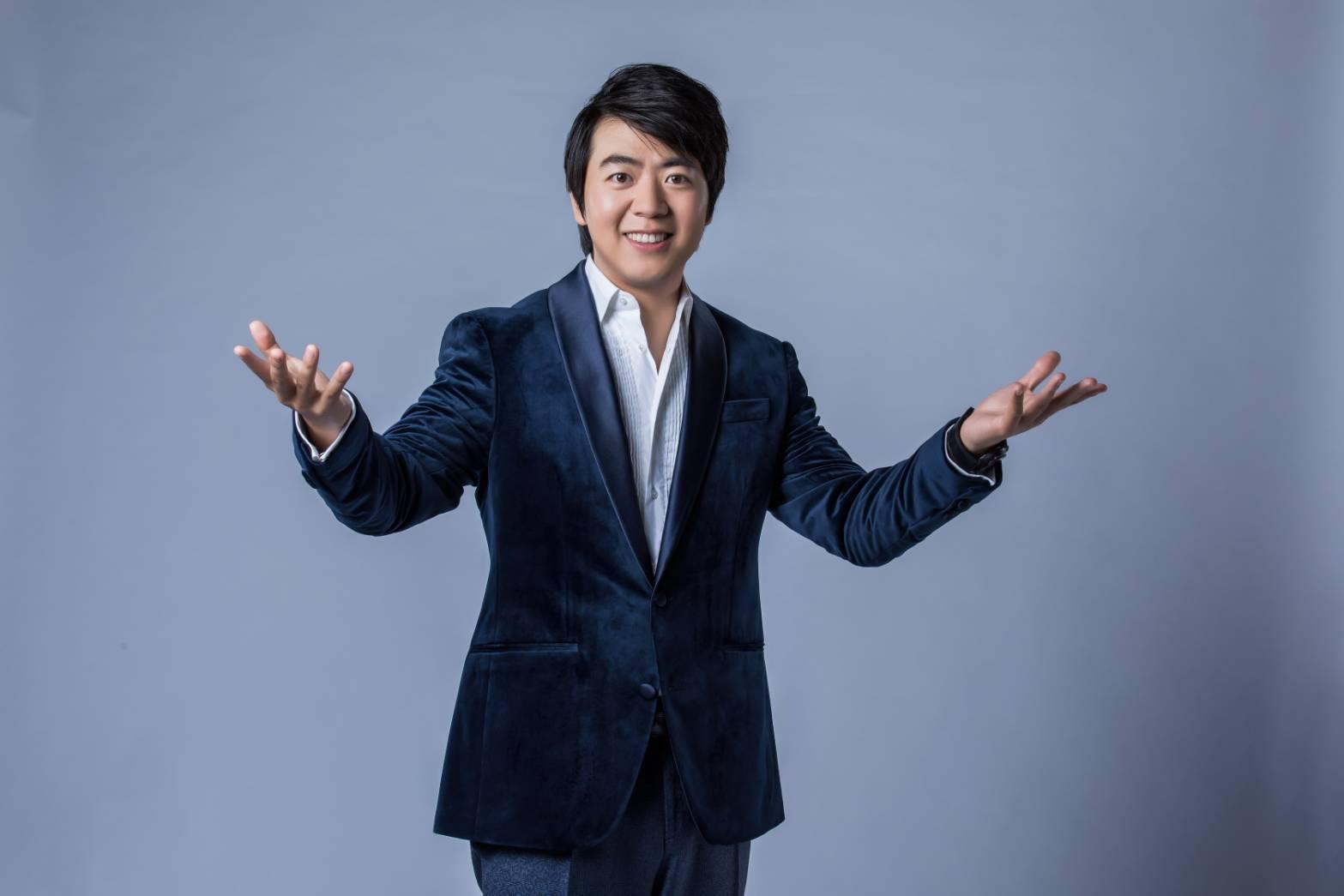
The world-renowned pianist Lang Lang will make his highly anticipated debut performance in Bangkok on May 31, 2025, at Thailand Cultural Centre starting at 7:30 pm, with a piano recital.
This exclusive concert is presented by the Royal Bangkok Symphony Orchestra Foundation, supported by B.Grimm. Lang Lang’s first-ever performance in Thailand offers audiences a once-in-a-lifetime opportunity to experience the virtuosity of one of the greatest pianists of our time.
Lang Lang, the world-renowned superstar pianist, educator, and philanthropist, is celebrated as one of the most influential figures in the arts today. Known for his versatility, he has performed for billions at the Beijing Olympic Opening Ceremony.
He is a passionate advocate for music education, having founded the Lang Lang International Music Foundation in 2008 to support young musicians and promote music education.
In 2013, he was named a UN Messenger of Peace, focusing on global education. Lang Lang’s efforts to make classical music more accessible have earned him numerous honours, including the Crystal Award at Davos, the German Federal Merit Award, and the French Order of Arts and Letters Medal. He holds honorary doctorates and has performed for international leaders, including four U.S. presidents and Pope Francis.
The program promises to be an unforgettable celebration of passion through the powerful language of music. Lang Lang will perform an exquisite selection of works by iconic composers, curated to evoke the spirit of romance, from Fauré’s lyrical Pavane, the intense expressiveness of Schumann’s Kreisleriana, and Chopin’s passionate Mazurkas and dramatic Polonaise.
Each piece will allow Lang Lang to showcase his dazzling technique, versatility, and ability to connect deeply with his audiences. This concert is an extraordinary treat for classical music lovers and a perfect way to celebrate the season of love.
This recital promises to deliver artistry and a heartfelt experience that will leave a lasting impression. Don’t miss the chance to witness the magic of Lang Lang.
Tickets are available at Thaiticketmajor. The top price ticket includes the following benefits:
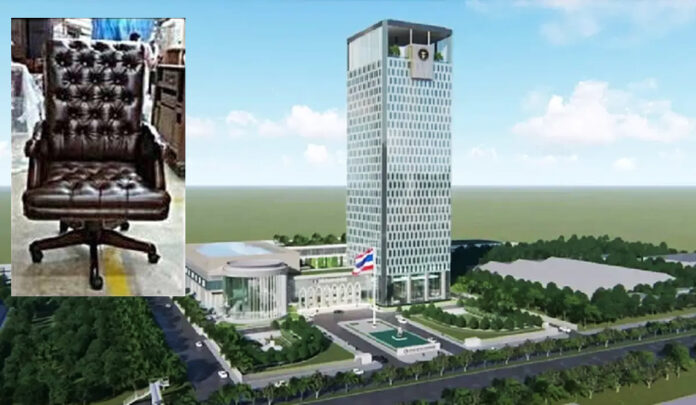
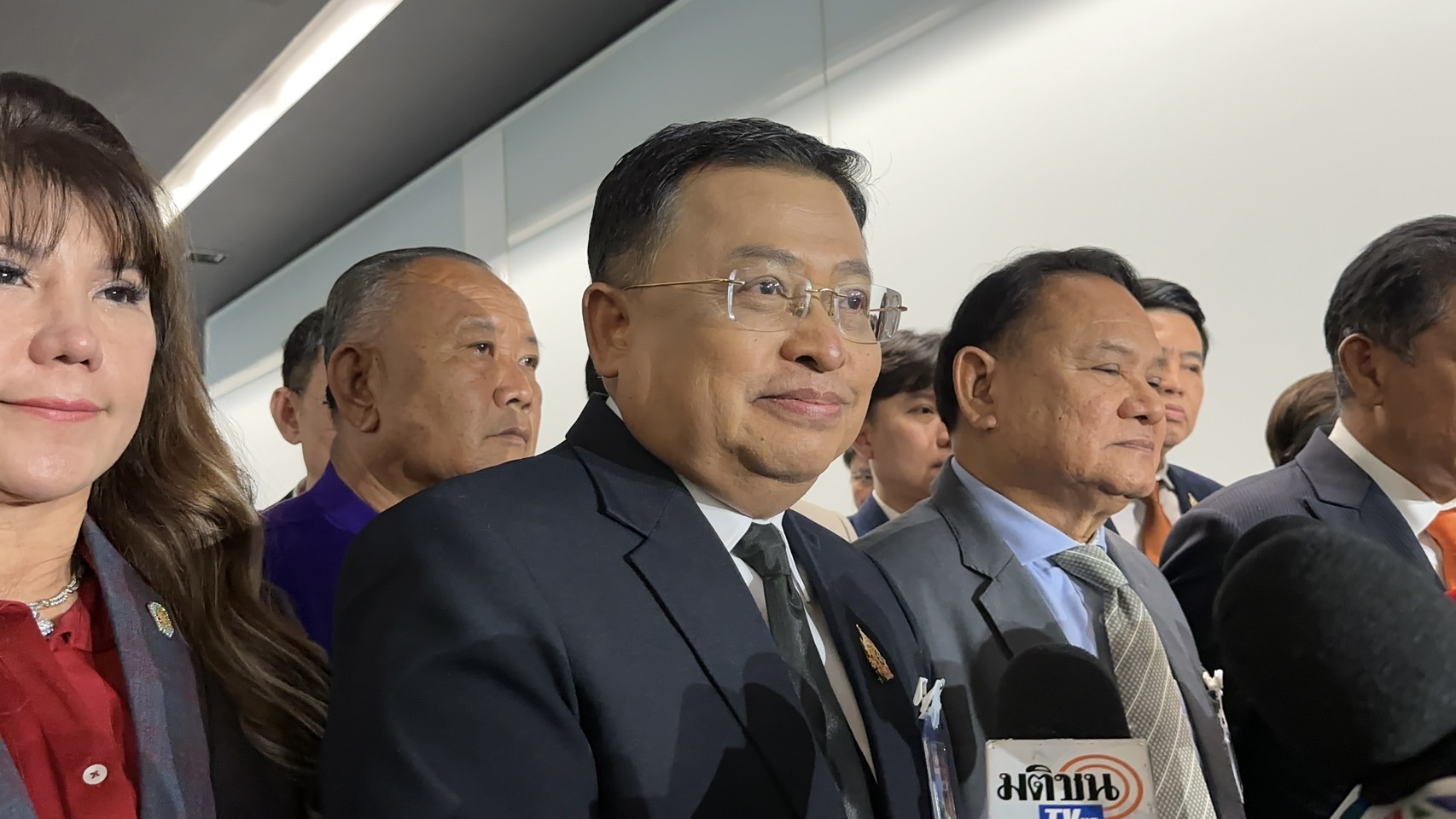
SAO Auditor General Monthian Charoenphol explained that expensive chairs are limited to those for the chairperson and committee members in meeting rooms.
BANGKOK — The State Audit Office (SAO) Auditor General has responded to allegations regarding expensive furniture and amenities in the office’s new headquarters, which collapsed during construction due to an earthquake in Myanmar.
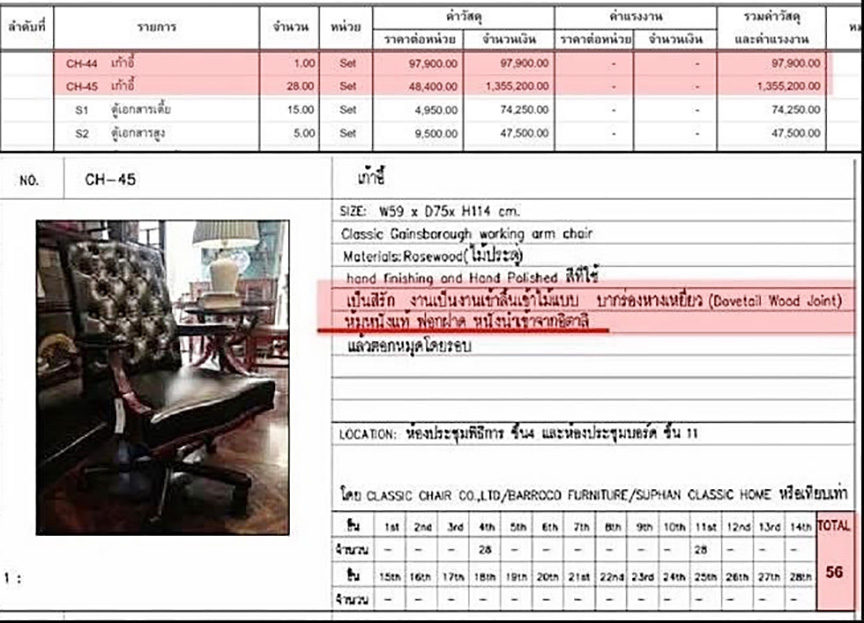
During a hearing before the House of Representatives’ Anti-Corruption Committee on April 30, SAO Auditor General Monthian Charoenphol clarified that the furniture mentioned in social media controversies had not actually been purchased.
He explained that the design specifications merely indicated what equipment would be used on each floor and potential vendors, but actual procurement could only occur after construction was completed.
Monthian further stated that once construction is finished, they would need to determine if the furniture meets government standards. He noted that for government agencies, design modifications that add features increase costs, while reducing features decreases costs. Currently, the SAO’s design has resulted in cost reductions.
SAO Auditor General Monthian Charoenphol
When questioned about reports of shower heads costing over 10,000 baht ($300) and meeting room chairs at 90,000 baht ($2,700) each, Monthian responded that the SAO has 2,400 staff members, with over 80% using standard chairs costing 10,000-20,000 baht ($300-600) each.
He explained that expensive chairs are limited to those for the chairperson and committee members in meeting rooms, details of which can be verified through the Comptroller General’s Department. Regarding the shower heads, he stated there were two designs that, when combined, resulted in the higher price.
“The chair issue corresponds to position status. When comparing executive positions in the office, they are equivalent to ministerial level, which is in accordance with the law. You can verify what position the chairperson is equivalent to,” Monthian stated.
SAO Auditor General Monthian Charoenphol clarified that the furniture mentioned in social media controversies had not actually been purchased.
He also denied reports of a movie theater in the building, clarifying that all rooms are meeting rooms, simply designated as different types such as “classroom” or “theater” style. The SAO does not have a movie viewing room.
The Auditor General expressed appreciation for the opportunity to provide clarification and welcomed investigations by all relevant agencies, including government committees, the Department of Special Investigation, police investigators, and other agencies.
“The SAO is an audit organization. We don’t rely on feelings or news reports to audit us. We must adhere to laws and regulations. Everything is scientific and document-based. We are willing to cooperate with audit committees and parliamentary committees with all existing documents and regulations. We are ready to cooperate, but everything must stand on the foundation of correctness,” he concluded.
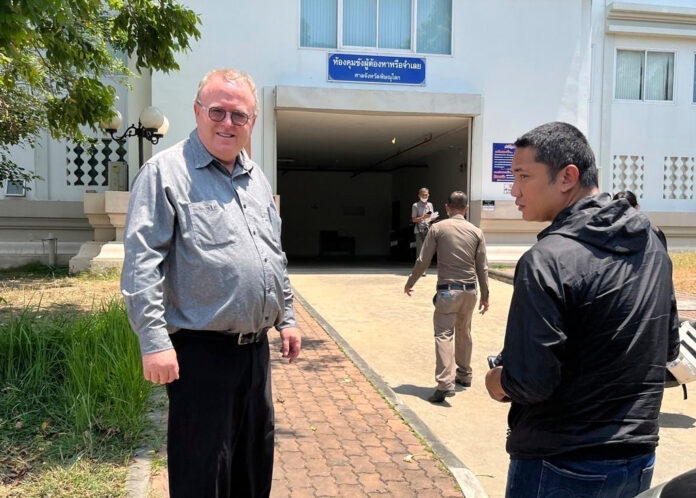
FILE - U.S. political science lecturer Paul Chambers,left, of Thailand's Naresuan University, stands outside the police station in Phitsanulok, Thailand, where he was arrested on Tuesday, April 8, 2025, on charges of insulting the monarchy. (AP Photo, file)
BANGKOK (AP) — State prosecutors in Thailand announced Thursday that they don’t intend to press charges against an American academic arrested for royal defamation, an offense punishable by up to 15 years in prison.
The arrest last month of Paul Chambers, a political science lecturer at Naresuan University in the northern province of Phitsanulok, had drawn concern from the academic community, especially from Asian studies scholars around the world, as well as the U.S. government
The decision not to prosecute the 58-year-old Oklahoma native doesn’t immediately clear him of the charge of insulting the monarchy— also known as “lèse majesté” — or a related charge of violating the Computer Crime Act, which covers online activities.
The announcement said that the Phitsanulok provincial prosecutor will request the provincial court to drop the charges and forward the case file and nonprosecution order to the commissioner of Provincial Police Region 6, covering Phitsanulok, who may review and contest the decision.
Chambers, a 58-year-old Oklahoma native with a doctorate in political science from Northern Illinois University, was arrested in early April on a complaint made by the northern regional office of the army’s Internal Security Operations Command.
He has studied the power and influence of the Thai military, which plays a major role in politics. It has staged 13 coups since Thailand became a constitutional monarchy in 1932, most recently 11 years ago.
The army’s Internal Security Operations Command told a parliamentary inquiry that it filed the complaint based on a Facebook post that translated words from a website operated by ISEAS–Yusof Ishak Institute, a think tank in Singapore, about a webinar on Thai politics that included Chambers as a participant.
Chambers’ supporters said that the blurb for the webinar, which was cited in his charge sheet as evidence, wasn’t written by him.
He had been jailed in April for two nights after reporting himself to the Phitsanulok police, and then granted release on bail, with several conditions, including wearing an ankle monitor. A court on Tuesday allowed him to take off the device.
Chambers’ visa was revoked at the time of his arrest on the basis of an immigration law barring entry to foreigners who are deemed likely to engage in activities contrary to public order or good morals, prostitution, people smuggling and drug trafficking. It wasn’t immediately clear whether the revocation will stand.
“This case reinforces our longstanding concerns about the use of lèse majesté laws in Thailand,” a U.S. State Department statement said after Chambers’ arrest. ”We continue to urge Thai authorities to respect freedom of expression and to ensure that laws are not used to stifle permitted expression.”
Thailand’s lèse majesté law calls for three to 15 years imprisonment for anyone who defames, insults or threatens the king, the queen, the heir apparent or the regent. Critics say it’s among the harshest such laws anywhere and also has been used to punish critics of the government and the military.
The monarchy has long been considered a pillar of Thai society and criticizing it used to be strictly taboo. Conservative Thais, especially in the military and courts, still consider it untouchable.
However, public debate on the topic has grown louder in the past decade, particularly among young people, and student-led pro-democracy protests starting in 2020 began openly criticizing the institution.
That led to vigorous prosecutions under the previously little-used law. The legal aid group Thai Lawyers for Human Rights has said that since early 2020, more than 270 people — many of them student activists — have been charged with violating the law.
CCTV footage shows the suspect, identified only as Mr. Leonardo Hernandez (an alias), inviting two friends to join him.
BANGKOK — A 26-year-old Filipino student has been arrested by Thai Immigration Police for orchestrating an elaborate fraud scheme that targeted multiple luxury hotels across Bangkok, resulting in hundreds of thousands of baht in damages.
The suspect, identified only as Mr. Leonardo Hernandez (an alias), was apprehended on April 25 near his university residence in Pathum Thani following a series of complaints from high-end hotels throughout the capital.
According to investigators, Hernandez developed a sophisticated scam where he would book 4-5 night stays at luxury hotels using a credit card, specifically requesting two airport limousine transfers—one for himself and another for his “father” who would supposedly arrive the following day.
Despite already living in Thailand, the suspect would travel to the airport via public transportation, board the pre-arranged limousine, and check into the hotel. Upon arrival, he would inform staff that his passport and funds were with his father who would be arriving in the second scheduled car.
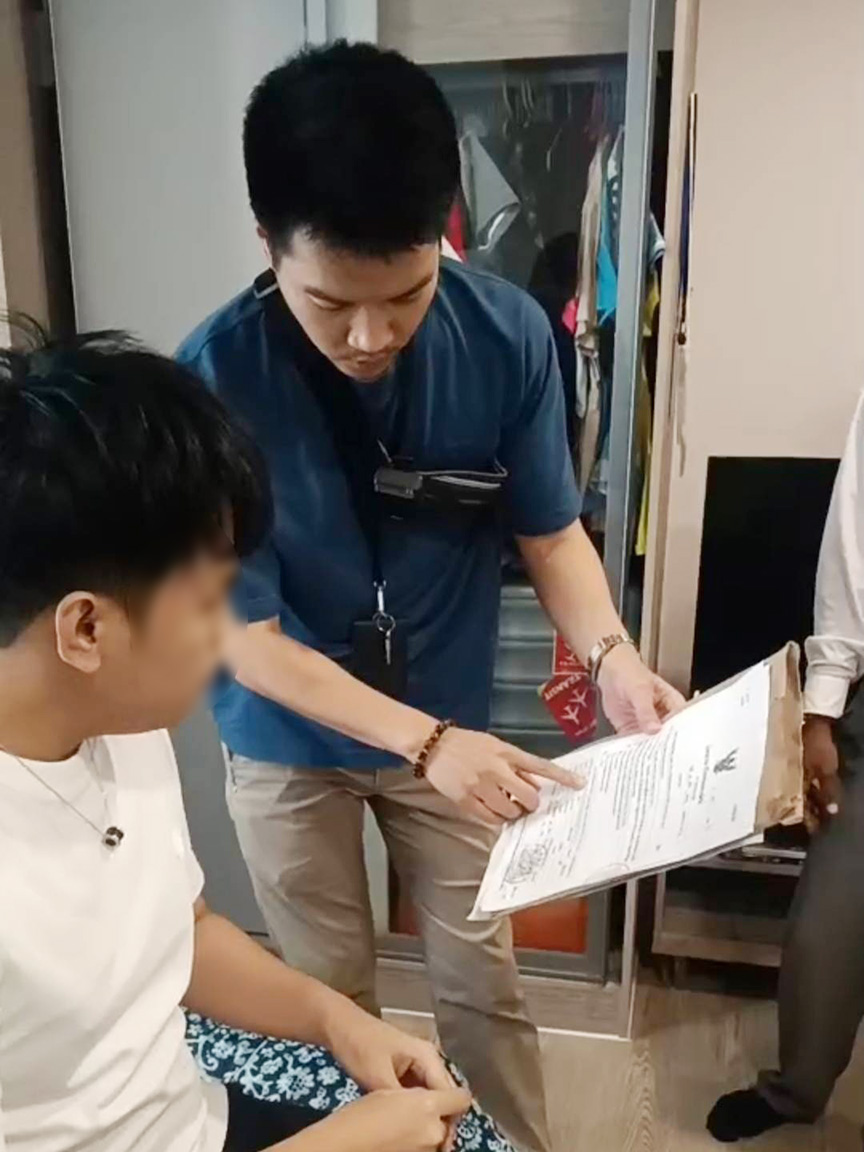
Police officers explain the charges to the suspect, identified only as Mr. Leonardo Hernandez (an alias), during his arrest on April 25 near his university residence in Pathum Thani in Bangkok.
“The hotels, following standard booking protocols, allowed him to check in and access services while waiting for the second guest,” a police spokesperson explained.
Once settled in his room, Hernandez reportedly took full advantage of room service, dining facilities, and other premium amenities, often inviting two or three friends to join him. When the scheduled pickup time for his “father” arrived and no one appeared, hotel staff would become suspicious—but by the following morning, the suspect had already vanished.
Police reports indicate that several prestigious hotels along the Chao Phraya River, in Bangkok’s central business district, and most recently in the upscale Chidlom area had fallen victim to this scheme.
The breakthrough in the case came when investigators discovered that the suspect was not a tourist but enrolled at a well-known university in Pathum Thani province. After gathering sufficient evidence, authorities secured an arrest warrant.
Immigration Police, acting under the supervision of Police Lieutenant General Panumas Boonyalak, Immigration Commissioner, tracked and arrested Hernandez near his university accommodation. He has been charged with fraud by deceit, involving false representation and wrongful acquisition of goods and services.
The suspect has been transferred to investigating officers for further legal proceedings as authorities continue to calculate the total financial damages caused by his deception.
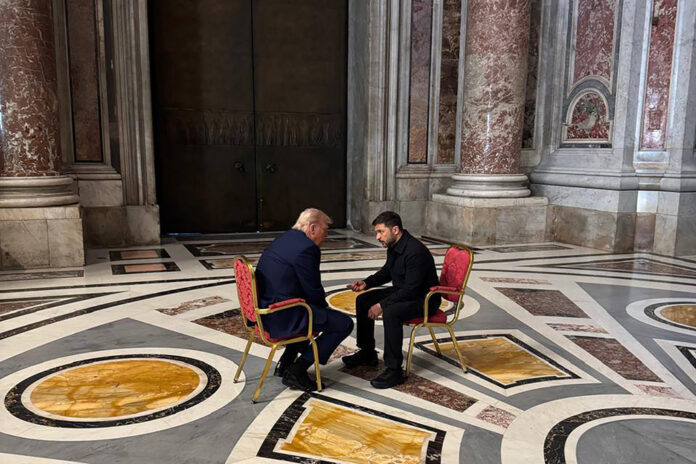
Ukraine's President Volodymyr Zelenskyy, right, and President Donald Trump, talk as they attend the funeral of Pope Francis in Vatican, Saturday, April 26, 2025.(Ukrainian Presidential Press Office via AP)
KYIV, Ukraine (AP) — After months of tense negotiations, the U.S. and Ukraine signed a deal that is expected to give Washington access to the country’s critical minerals and other natural resources, an agreement Kyiv hopes will secure long-term support for its defense against Russia.
According to Ukrainian officials, the version of the deal signed Wednesday is far more beneficial to Ukraine than previous versions, which they said reduced Kyiv to a junior partner and gave Washington unprecedented rights to the country’s resources.
The agreement — which the Ukrainian parliament must ratify — would establish a reconstruction fund for Ukraine that Ukrainian officials hope will be a vehicle to ensure future American military assistance. A previous agreement was nearly signed before being derailed in a tense Oval Office meeting involving U.S. President Donald Trump, U.S. Vice President JD Vance and Ukrainian President Volodymyr Zelenskyy.
“We have formed a version of the agreement that provides mutually beneficial conditions for both countries. This is an agreement in which the United States notes its commitment to promoting long-term peace in Ukraine and recognizes the contribution that Ukraine has made to global security by giving up its nuclear arsenal,” Economy Minister Yulia Svyrydenko, who signed the deal for Ukraine, said in a post on Facebook.
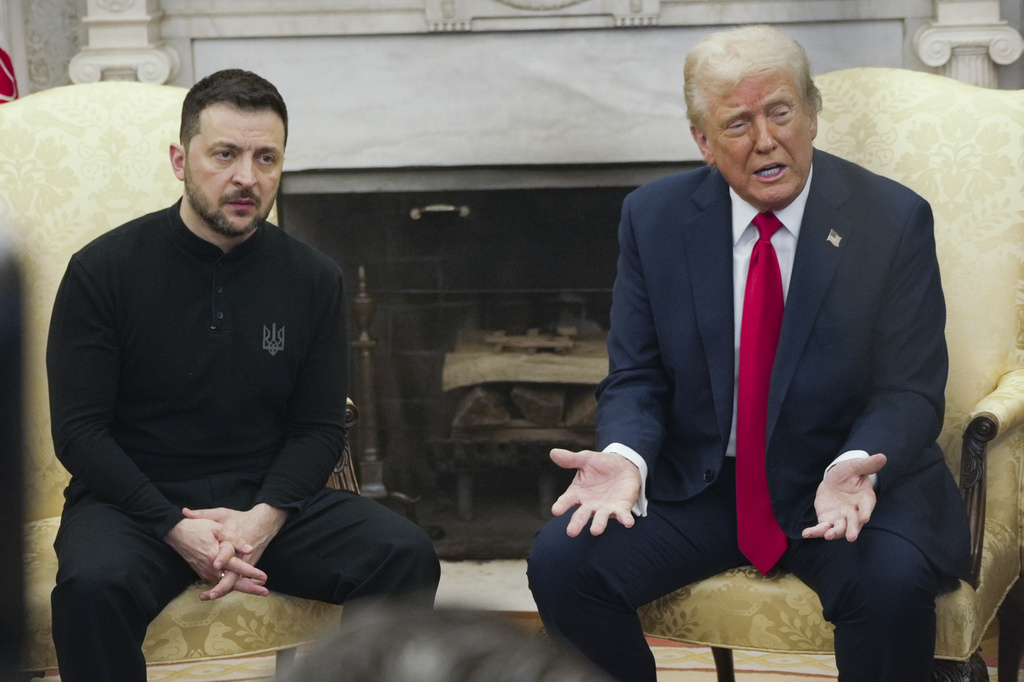
President Donald Trump, right, meets with Ukrainian President Volodymyr Zelenskyy in the Oval Office at the White House, Friday, Feb. 28, 2025, in Washington. (AP Photo/ Mystyslav Chernov)
The signing comes during what U.S. Secretary of State Marco Rubio said would be a “very critical” week for U.S.-led efforts to end the war that appear to have stalled. Ukraine sees the deal as a way to ensure that its biggest and most consequential ally stays engaged and doesn’t freeze military support, which has been key in its 3-year-old fight against Russia’s full-scale invasion.
“This agreement signals clearly to Russia that the Trump administration is committed to a peace process centered on a free, sovereign, and prosperous Ukraine over the long term,” Treasury Secretary Scott Bessent, who signed for the U.S., said in a statement.
Here is a look at the deal.
What does the deal include?
The deal covers minerals, including rare earth elements, but also other valuable resources, including oil and natural gas, according to the text released by Ukraine’s government.
It does not include resources that are already a source of revenue for the Ukrainian state. In other words, any profits under the deal are dependent on the success of new investments. Ukrainian officials have also noted that it does not refer to any debt obligations for Kyiv, meaning profits from the fund will likely not go toward the paying the U.S. back for its previous support.
Officials have also emphasized that the agreement ensures full ownership of the resources remains with Ukraine, and the state will determine what can be extracted and where.
The text of the deal lists 55 minerals but says more can be agreed to.
Trump has repeatedly expressed interest in Ukraine’s rare earth elements, and some of them are included in the list, as are other critical minerals, such as titanium, lithium and uranium.
What are rare earth elements?
They are a group of 17 elements that are essential to many kinds of consumer technology, including cellphones, hard drives and electric and hybrid vehicles.
China is the world’s largest producer of rare earth elements, and both the U.S and Europe have sought to reduce their dependence on Beijing, Trump’s chief geopolitical adversary.
They include elements such as lanthanum, cerium and scandium, which are listed in the deal.
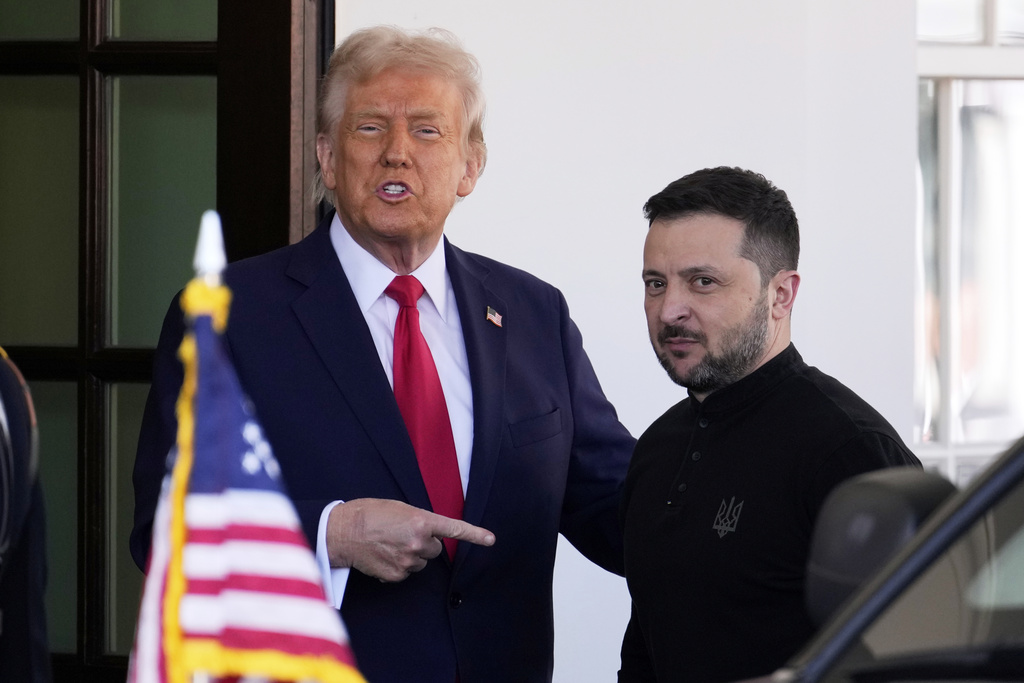
President Donald Trump welcomes Ukraine President Volodymyr Zelenskyy at the White House in Washington, Friday, Feb. 28, 2025. (AP Photo/Ben Curtis)
How will the fund work?
The agreement establishes a reconstruction investment fund, and both the U.S. and Ukraine will have an equal say in its management, according to Svyrydenko.
The fund will be supported by the U.S. government through the U.S. International Development Finance Corporation agency, which Ukraine hopes will attract investment and technology from American and European countries.
Ukraine is expected to contribute 50% of all future profits from government-owned natural resources into the fund. The United States will also contribute in the form of direct funds and equipment, including badly needed air defense systems and other military aid.
Contributions to the fund will be reinvested in projects related to mining, oil and gas as well as infrastructure.
No profits will not be taken from the fund for the first 10 years, Svyrydenko said.
Trump administration officials initially pushed for a deal in which Washington would receive $500 billion in profits from exploited minerals as compensation for its wartime support.
But Zelenskyy rejected the offer, saying he would not sign off on an agreement “that will be paid off by 10 generations of Ukrainians.”
What is the state of Ukraine’s minerals industry?
Ukraine’s rare earth elements are largely untapped because of state policies regulating the industry, a lack of good information about deposits, and the war.
The industry’s potential is unclear since geological data is thin because mineral reserves are scattered across Ukraine, and existing studies are considered largely inadequate, according to businessmen and analysts.
In general, however, the outlook for Ukrainian natural resources is promising. The country’s reserves of titanium, a key component for the aerospace, medical and automotive industries, are believed to be among Europe’s largest. Ukraine also holds some of Europe’s largest known reserves of lithium, which is required to produce batteries, ceramics and glass.
In 2021, the Ukrainian mineral industry accounted for 6.1% of the country’s gross domestic product and 30% of exports.
An estimated 40% of Ukraine’s metallic mineral resources are inaccessible because of Russian occupation, according to data from We Build Ukraine, a Kyiv-based think tank. Ukraine has argued that it’s in Trump’s interest to develop the remainder before Russian advances capture more.
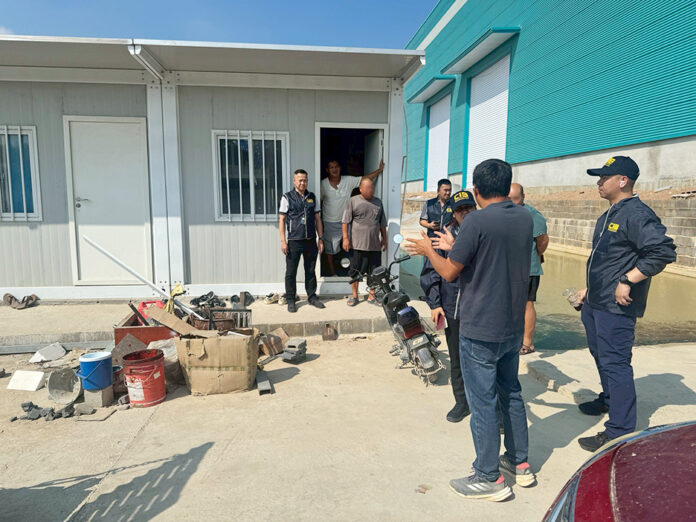
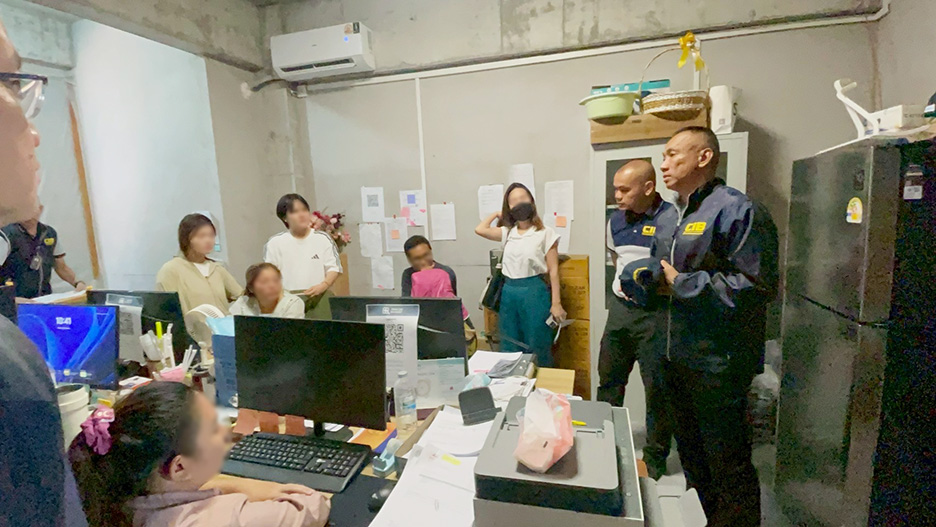
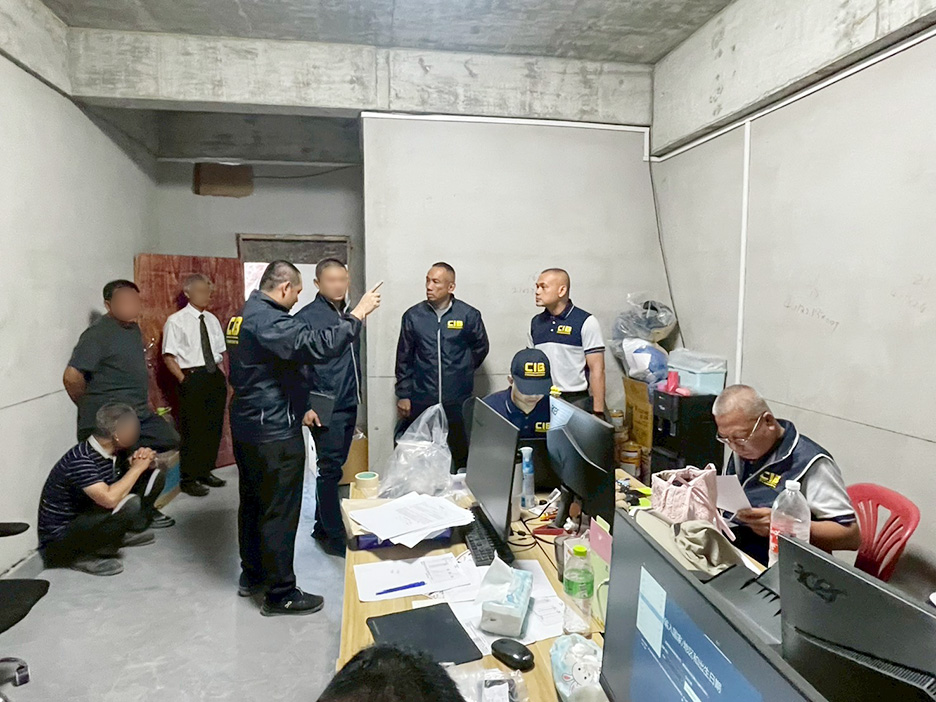
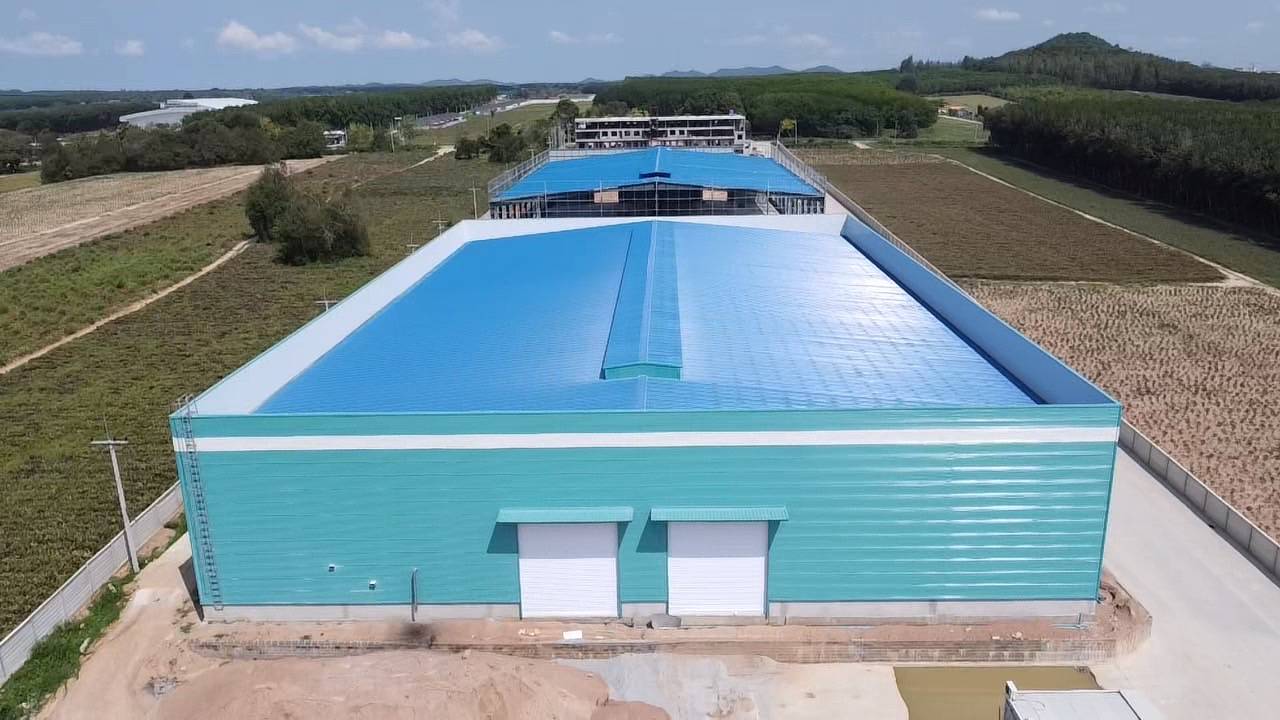
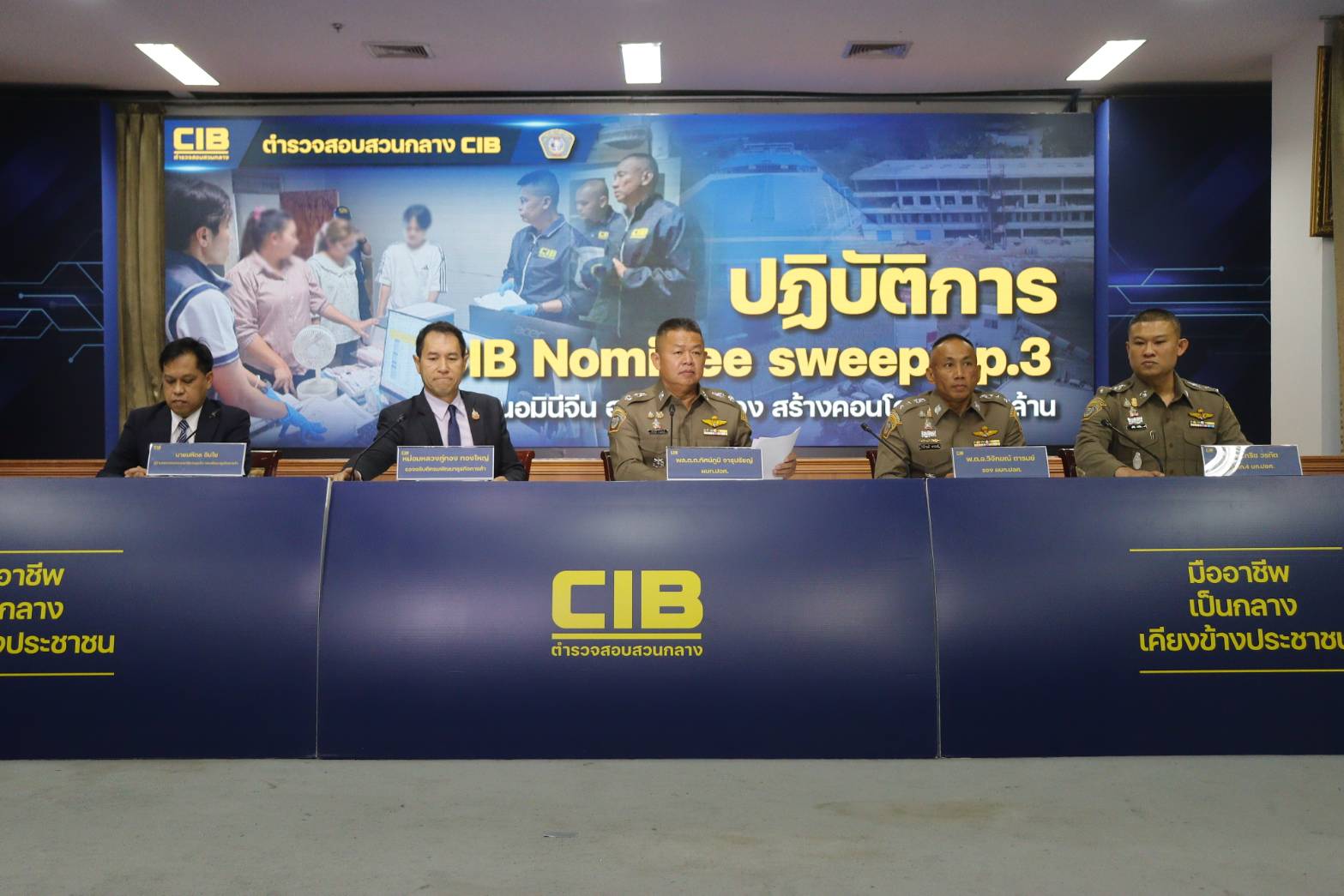
Thai Police launch "CIB Nominee Sweep EP.3" investigation, inspecting suspicious companies and construction sites in Rayong province, where they found operations run almost entirely by Chinese nationals. Photo released May 1, 2025.
BANGKOK — The Central Investigation Bureau (CIB) has announced the successful results of their “CIB Nominee Sweep EP.3” operation, dismantling a Chinese nominee network that had acquired land in Rayong province to build luxury condominiums valued at 2 billion baht (approximately $60 million).
The operation revealed Chinese executives managing an integrated construction operation intended to create housing exclusively for Chinese nationals.
Police Major General Tassanapoom Jaruprak, Commander of the Economic Crime Suppression Division (ECD), stated that this follows previous crackdowns on foreign businesses in Phuket and Bangkok’s Huay Kwang district. Those operations uncovered the use of shell companies or nominees—Thai citizens acting as fronts for foreign ownership. This third phase of the operation investigated four legal entities suspected of concealing actual Chinese investors.
Thai Police launch “CIB Nominee Sweep EP.3” investigation, inspecting suspicious companies and construction sites in Rayong province, where they found operations run almost entirely by Chinese nationals. Photo released May 1, 2025.
The investigation found that these four companies—one Hong Kong-based and one Thai—had purchased 72 rai (approximately 28.5 acres) of land across Chonburi and Rayong provinces. The land was being developed into a residential complex featuring ten 8-story buildings with 1,821 units, with a total project value exceeding 2 billion baht. The project is currently under construction.
“The criminal structure involves complex layering of company shareholdings to complicate investigations,” authorities explained. “Chinese representatives were sent to manage all aspects of the construction operations—from establishing their own concrete production company to employing Chinese engineers, designers, electricians, plumbers, and laborers for the entire project.”
“Financial investigations also revealed money transfers from Chinese investment companies registered in Hong Kong Special Administrative Region, with over 500 million baht circulating through company accounts—clearly indicating that these businesses are actually owned by Chinese investors,” officials added.
Thai Police launch “CIB Nominee Sweep EP.3” investigation, inspecting suspicious companies and construction sites in Rayong province, where they found operations run almost entirely by Chinese nationals. Photo released May 1, 2025.
Police Colonel Krit Worathat, Superintendent of the ECD’s 4th Division, provided additional details, noting that the companies are interconnected through their accounting practices and personnel. Authorities inspected three locations in Rayong and Chonburi, finding closed systems where one company was established specifically to produce concrete for the construction project.
Authorities have initially seized various documents and assets including seven land deeds covering approximately 72 rai, 48 Thai and Chinese bank account books with combined balances of 72 million baht, two laptop computers, three mobile phones, one land purchase agreement, six company stamps, and seven bank security tokens as evidence.
Thai Police launch “CIB Nominee Sweep EP.3” investigation, inspecting suspicious companies and construction sites in Rayong province, where they found operations run almost entirely by Chinese nationals. Photo released May 1, 2025.
Legal proceedings are divided into two parts. The first concerns violations of the Foreign Business Act and the Land Code, targeting company directors and shareholders, all of whom have denied the allegations. The second part involves prosecuting illegal foreign workers, who will be processed by local police and deported.
The ECD will forward land documentation to the Land Department for legal proceedings, which may require adjusting the shareholding structure to increase Thai ownership. If not resolved within the specified timeframe, a Land Department committee will petition the court to force the sale of the land to Thai nationals.
Those facing charges include five Thai and Chinese company directors and shareholders, two designers, two site supervisors, and two Chinese concrete and plumbing technicians.
Police Major General Tassanapoom Jaruprak, Commander of the Economic Crime Suppression Division (center), leads the press conference announcing the results of “CIB Nominee Sweep EP.3” operation targeting Chinese nominees, at the Central Investigation Bureau headquarters on May 1, 2025..