



























28.8 C
Bangkok
Wednesday, June 24, 2026
Home Blog Page 378

Xi says China Will Stand with Southeast Asian Countries in Face of Economic Shocks

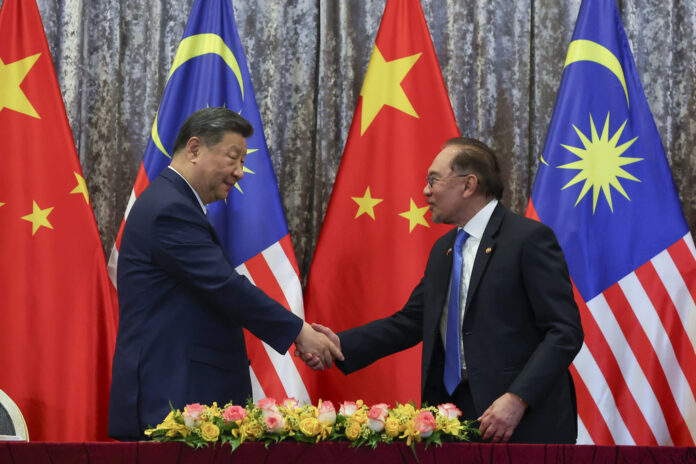
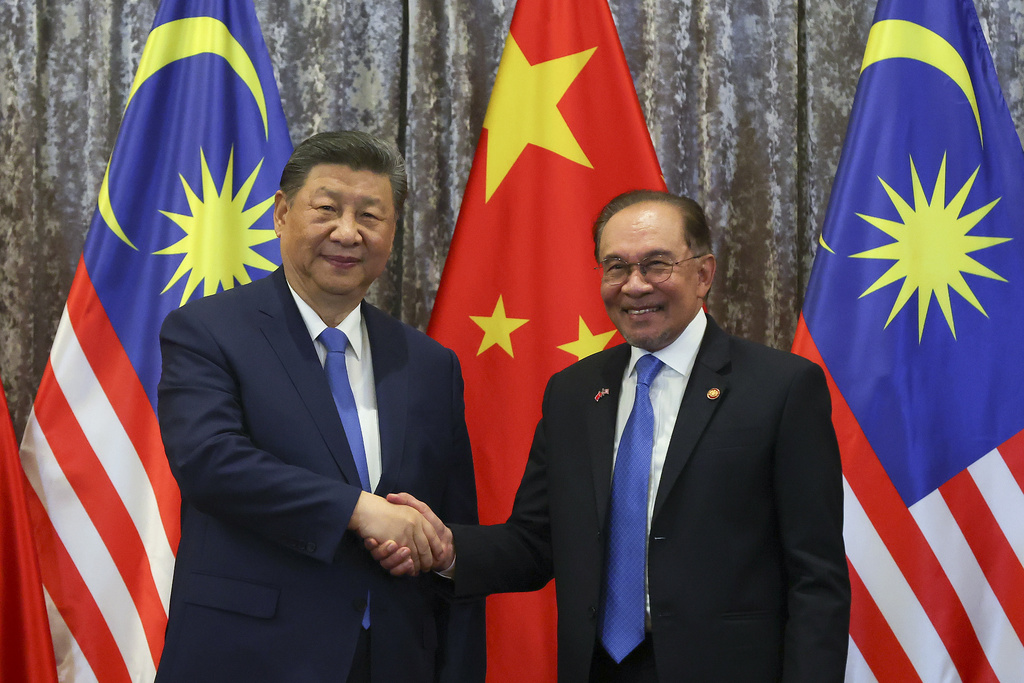
Chinese President Xi Jinping, left, and Malaysian Prime Minister Anwar Ibrahim shake hand after witnessing Exchange of Agreement session between the two countries at the official residence of the prime minister in Putrajaya, outside Kuala Lumpur, Malaysia, Wednesday April 16, 2025. (Fazry Ismail/Pool Photo via AP)

BANGKOK (AP) — Chinese leader Xi Jinping told Malaysia’s leader Wednesday that China will be a collaborative partner and stand with its Southeast Asian neighbors in the wake of global economic shocks.

“In the face of shocks to global order and economic globalization, China and Malaysia will stand with countries in the region to combat the undercurrents of geopolitical … confrontation, as well as the counter-currents of unilateralism and protectionism,” Xi, who was on a state visit to Malaysia as part of his Southeast Asia tour, said in remarks at a dinner with Malaysian Prime Minister Anwar Ibrahim.

“Together we will safeguard the bright prospects of our Asian family,” he added.
AP25106461445454
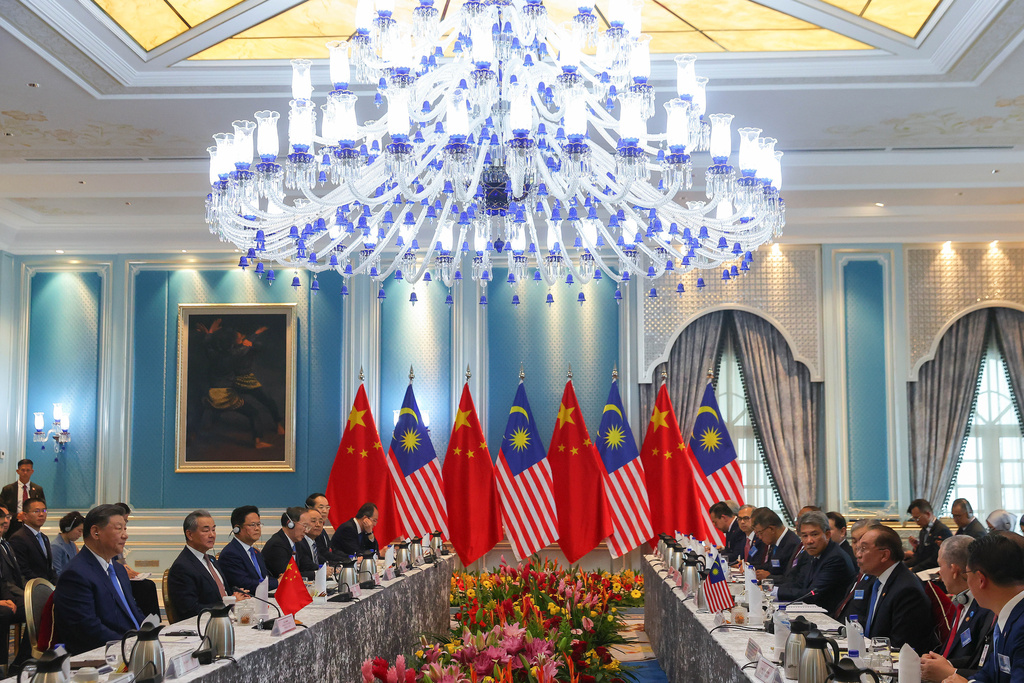
Chinese President Xi Jinping, left, and Malaysian Prime Minister Anwar Ibrahim, third from right, attend the bilateral meeting between the Malaysian and the Chinese delegation, at the official residence of the Malaysian prime minister in Putrajaya, outside Kuala Lumpur, Malaysia, Wednesday April 16, 2025. (Fazry Ismail/Pool Photo via AP)

Xi is visiting Vietnam, Malaysia and Cambodia this week, days after U.S. President Donald Trump’s tariff announcements disrupted the global economy, and he has used the trip to promote Beijing as a source of stability in the region. Although the trip was likely planned before the tariffs uncertainty, it was a chance for Beijing to shore up its own relationships in the region and look for ways to mitigate the 145% tariffs that Trump has kept on China, even as he paused tariffs for other countries.

Malaysia’s leader was effusive in his welcome of Xi and praised China as a leader, while issuing thinly veiled criticism against the U.S.

“What we are witnessing today is not an honest reckoning with the imperfections of globalization, but a retreat into economic tribalism. Market access is being weaponized,” Ibrahim said. “In these trying times, the world yearns for steadiness, reliability and a common purpose. We see this in China’s conduct.”

Xi has promised Malaysia and Vietnam greater access to Chinese markets on his visits, although few details were shared.

He also mentioned further developing cooperation in green tech and artificial intelligence in his meeting with Malaysia’s king, Sultan Ibrahim Iskandar, on Wednesday, according to the official Xinhua News.
AP25106433103884
Chinese President Xi Jinping, left, and Malaysian Prime Minister Anwar Ibrahim shake hand after witnessing Exchange of Agreement session between the two countries at the official residence of the prime minister in Putrajaya, outside Kuala Lumpur, Malaysia, Wednesday April 16, 2025. (Fazry Ismail/Pool Photo via AP)

Malaysia is home to several Belt and Road Initiative projects, including a $11.2 billion Chinese railway project, which Xi discussed in his meeting with the king. China is also its largest trading partner and a top source of foreign direct investment.

Xi kicked off his tour with a state visit to Vietnam, and arrived in Kuala Lumpur, Malaysia’s capital, for a three-day visit Tuesday. He met with Prime Minister Anwar Ibrahim on Wednesday.

In Hanoi, Xi had a meeting with Vietnam’s Communist Party General Secretary To Lam, as well as senior leaders including the president and prime minister. China and Vietnam signed a series of memorandums on cooperation in supply chains and a joint railway project, and Xi also promised greater access for Vietnamese agricultural exports to China, although few details were made public about the agreements.

On Wednesday, China’s Ministry of Commerce confirmed that China and Vietnam had signed a memorandum “to build a smooth, stable, and resilient industrial chain and supply chain…, and further deepen trade and investment cooperation” between businesses from the two countries, without any further details.

China had also agreed to deepen its defense partnership with Vietnam, according to the Ministry of Defense, which issued a statement Wednesday. The statement did not specify details. The two sides agreed to “enhance cooperation in areas such as political work, maritime security, joint exercises and personnel training, and elevate the military-to-military relations to a new level.”

—-
Advertisement

Pattaya Security Guards Defend Actions in Foreign Tourist Brawl

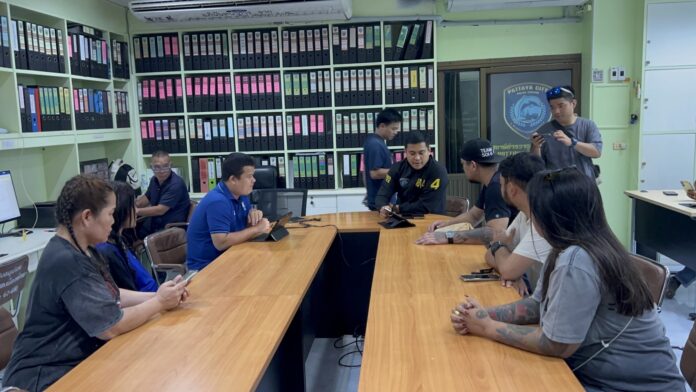
Two security guards are summoned for questioning at Pattaya City Police Station on April 15, 2025

PATTAYA — Authorities are investigating a violent altercation between Thai locals and foreign tourists that was captured on video and widely circulated on social media, sparking public outrage.

Two security guards, identified as 36-year-old Non and 37-year-old Nick, were summoned for questioning at Pattaya City Police Station on April 15 along with the night club’s manager and a female staff member who claimed she was sexually harassed by foreign tourists.

During questioning, both security guards admitted they were the individuals appearing in the viral video. They explained that the incident began when two heavily intoxicated foreign tourists entered the venue and behaved aggressively toward female staff members, inappropriately touching them with unsuitable gestures.

“We initially tried to escort him out of the premises,” said one of the guards. “The manager even attempted to calm him down, but he refused to listen and continued to provoke other tourists.”

guard pattaya25
Screenshots show one guard punching the tourist in the face, causing him to fall.

According to the guards’ testimony, the situation escalated when the tourist poured beer over one guard’s head and challenged them to a Muay Thai fight. The confrontation turned physical, with one guard punching the tourist in the face, causing him to fall. The scene quickly devolved into chaos involving both Thai and foreign bystanders.

Both security guards expressed remorse for their actions, apologizing to the public for their lack of restraint that resulted in damaging Thailand’s image. However, they also asked for understanding regarding the tourists’ provocative behavior.

May, the female staff member, reported that one of the foreign tourists picked her up without permission despite not being a customer, causing her head to hit an air conditioner. She added that another new employee was also harassed and is now afraid to return to work due to the traumatic experience.

Police Lieutenant Colonel Arut Sapanon, Deputy Superintendent of Pattaya City Police, stated that authorities are gathering evidence to ensure fairness for all parties involved. He noted that the foreign tourist has not yet filed any complaints.

Local administrative officials and police officers immediately inspected the establishment after the incident. The venue has temporarily closed as a gesture of responsibility and apology to officials, the public, and the tourists involved.

_____

Advertisement

US Moves Ahead on Tariffs with Investigations into Computer Chips and Pharmaceuticals

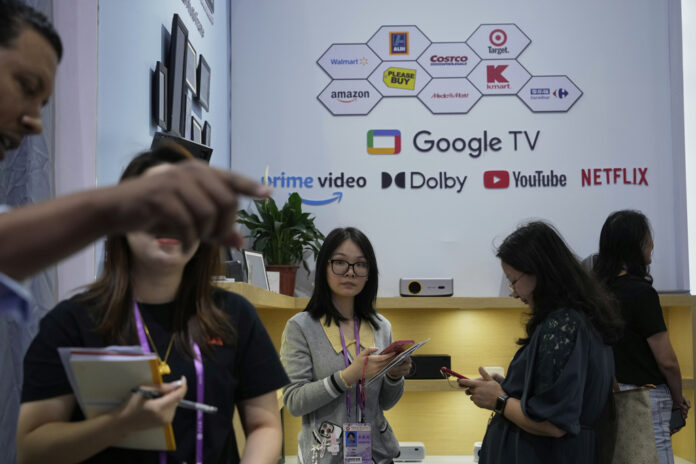
Sales rep promote projectors at the 137th Canton Fair in Guangzhou in southern China's Guangdong province on Tuesday, April 15, 2025. (AP Photo/Ng Han Guan)

BANGKOK (AP) — The Trump administration has taken its next steps toward imposing more tariffs on key imports, launching investigations into imports of computer chips, chip making equipment and pharmaceuticals.

The Department of Commerce posted notices about the probes late Monday on the Federal Register, seeking public comment within three weeks. It had not formally announced them earlier.

Although President Donald Trump paused most of his biggest tariff hikes last week for 90 days, apart from those for imports from China, he has said he still plans tariffs on pharmaceutical drugs, lumber, copper and computer chips.

The Commerce Department said it is investigating how imports of computer chips, equipment to make them and products that contain them — which include many daily necessities such as cars, refrigerators, smart phones and other items — affect national security. Section 232 of the Trade Expansion Act of 1962 permits the president to order tariffs for the sake of national security.

The probe includes assessing the potential for U.S. domestic production of computer chips to meet U.S. demand and the role of foreign manufacturing and assembly, testing and packaging in meeting those needs.

AP25105191329993
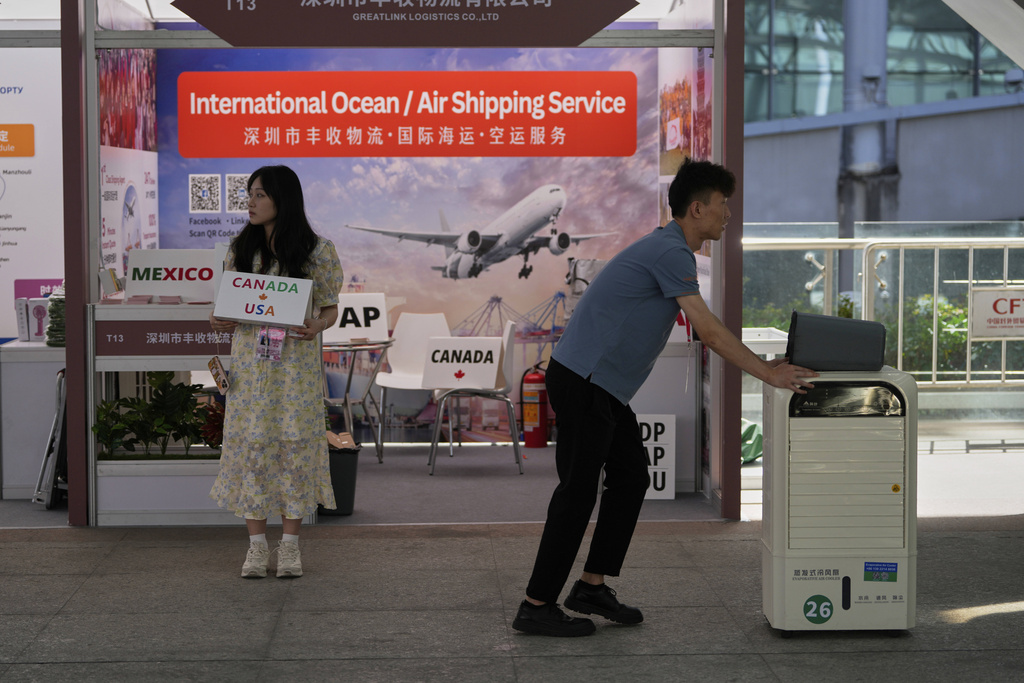
A worker holds up a sign for “Canada USA” in front of a logistics company at the 137th Canton Fair in Guangzhou in southern China’s Guangdong province on Tuesday, April 15, 2025. (AP Photo/Ng Han Guan)

Among other aspects of the entire computer chip supply chain, the government intends to also study the risks of having computer chip production concentrated in other places and the impact on U.S. competitiveness from foreign government subsidies, “foreign unfair trade practices and state-sponsored overcapacity.”

After Trump said electronics would not be included in what his administration calls “reciprocal” tariffs of up to 50% on some nations, U.S. Commerce Secretary Howard Lutnick explained in an interview on ABC News that pharmaceuticals, semiconductors and autos will be handled with “sector specific” tariffs.

“And those are not available for negotiation,” Lutnick said. “They are just going to be part of making sure we reshore the core national security items that need to be made in this country. We need to make medicine in this country,” he said. “We need to make semiconductors.”

The investigation into pharmaceutical imports includes ingredients used to make such drugs and touches on many of the same aspects of relying on imports to make them.

Asked about his plans for more tariffs on pharmaceuticals, Trump said Monday, “Yeah, we’re going to be doing that.”

He said it would be in the “not too distant future.”

“We’re doing it because we want to make our own drugs,” he said.

AP25105191251110
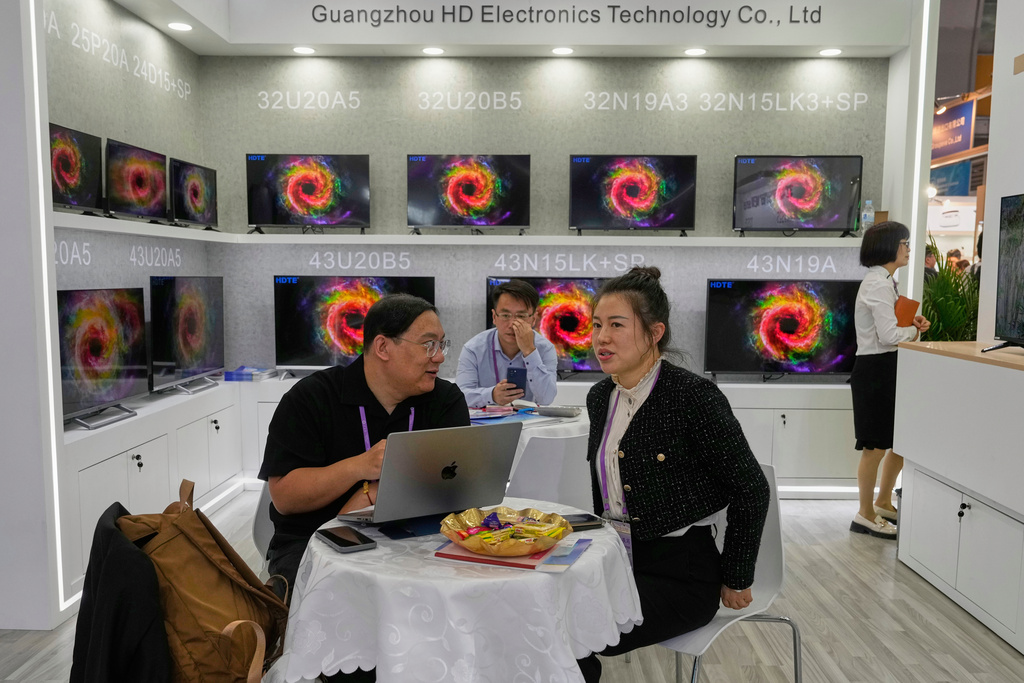
Visitors sit near television sets made by Guangzhou HD Electronics Technology Co. Ltd displayed at the 137th Canton Fair in Guangzhou, southern China’s Guangdong province on Tuesday, April 15, 2025. (AP Photo/Ng Han Guan)

More than 70% of the materials, or active pharmaceutical ingredients, used to make medicines made in the United States are produced in other countries, with India, the European Union and China leading suppliers. The U.S. produces about a fifth of all pharmaceuticals made worldwide, but consumes about 45%, far more than any other country.

The U.S. also is a major producer of semiconductors, but only in some areas. It relies heavily on imports from Taiwan and South Korea for certain kinds of advanced chips. In particular, Taiwan dominates advanced logic chip production at 92% of all fabrication capacity according to the International Trade Administration, with South Korea making 8%.

Products like laptops, smartphones and the components needed to make them accounted for nearly $174 billion in U.S. imports from China last year. The administration’s plans suggest that such electronics will still be taxed by previous (non-“reciprocal”) tariffs — and potentially under additional, sector-specific levies.

Although major computer chip makers like Taiwan Semiconductor Manufacturing Corp. are investing heavily in U.S. manufacturing facilities, partly due to incentives put in place during former President Joe Biden’s time in office, the costly process of changing entire supply chains would take years.

Separately, the Commerce Department said Monday that it was withdrawing from a 2019 agreement that had suspended an antidumping investigation into imports of fresh tomatoes from Mexico, effective in 90 days. It said the current arrangement failed to protect U.S. growers from “unfairly priced” imports of tomatoes. Most tomatoes from Mexico will be subject to a 20.91% tariff, it said.

_______

Advertisement

Swedish Driver Crashes After Reaching for Water Bottle in Buriram

swedish
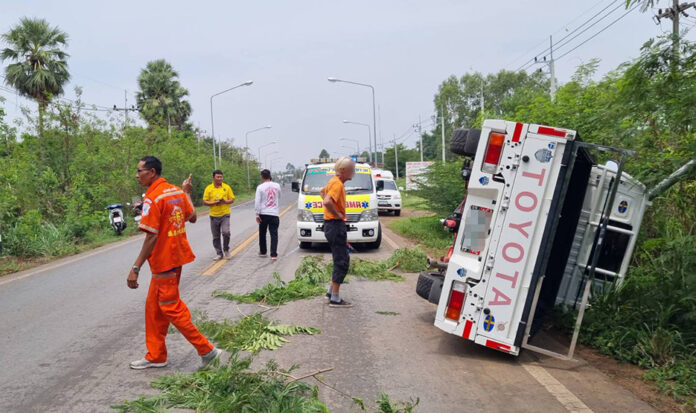
A Swedish man stands observing his overturned vehicle on the side of Lahansai-Ban Kruad road after he lost control of the car while bending down to pick up a water bottle, April 15, 2025.

BURIRAM —  A 65-year-old Swedish man was involved in a car accident in Buriram province after he attempted to retrieve a fallen water bottle while driving, causing his vehicle to overturn and crash into a streetlight.

The incident occurred on April 15 on the Lahansai-Ban Kruad road. Police Lieutenant Colonel Manop Thongphlapphla, investigating officer at Lahansai Police Station, responded to reports of the accident.

At the scene, officers found a white 2025 Toyota All New Hilux Champ pickup truck overturned on its right side after colliding with and knocking down a streetlight pole. The driver, identified as 65-year-old Swedish national “Mr. Mats,” sustained minor injuries with scratches on his arms and legs.

According to authorities, rescue workers attempting to assist Mr. Mats were met with irritation and resistance. The situation was only resolved when his Thai wife arrived at the scene and helped communicate with him.

swedish buriram2
A Swedish man stands beside his overturned vehicle on the side of Lahansai-Ban Kruad road after he lost control of the car while bending down to pick up a water bottle, April 15.

His wife later explained that her husband has been living in Ban Sam Khoei, Tachong sub-district, Lahansai district, Buriram province for several years. She said he had been driving home after dining out when a water bottle fell to the floor near the pedals. When he bent down to retrieve it and looked up again, the vehicle had already lost control, overturning and hitting the streetlight.

She added that her husband’s agitated behavior toward rescue workers might have been due to shock from the accident combined with anxiety related to previous surgery he had undergone.

Police Lieutenant Colonel Manop cautioned drivers about the dangers of reaching for items while driving. “This incident serves as a warning to all drivers. If a water bottle or any object falls near the pedals, never bend down to pick it up while driving. Instead, slow down, pull over to the left side of the road, stop the vehicle, and then retrieve the item. Reaching down while the vehicle is in motion can lead to accidents,” he said.

The damage to the streetlight will be addressed in further discussions with local authorities.

________

Advertisement

Missing Welsh Tourist Found Safe in Krabi, Thailand

welsh
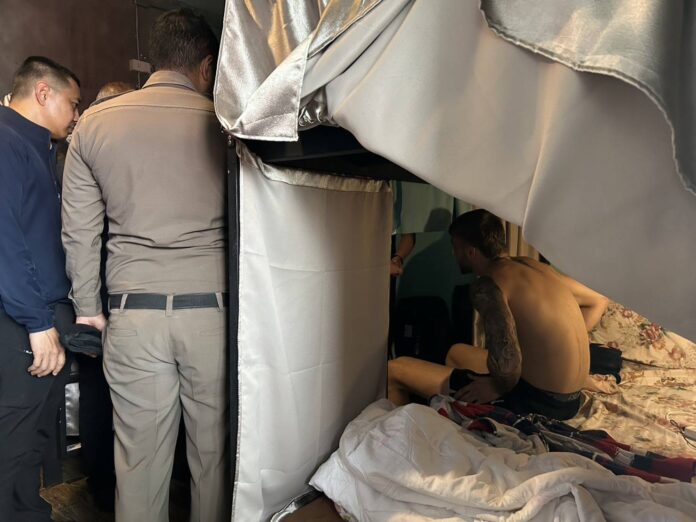
Immigration police discover a 26-year-old Welsh tourist who had been reported missing by his family since March, in a hotel in Paknam sub-district, Muang district, Krabi Province on April 15, 2025.

KRABI —  Thai authorities have successfully located a 26-year-old Welsh tourist who had been reported missing by his family since March. Daniel, a British citizen from Wales, was found safe on Phi Phi Island in Krabi province after an extensive search that began in Bangkok.

The case gained attention when Daniel’s family reported him missing to the Dyfed-Powys Police in Wales after losing contact with him since March 16. Lieutenant General Phanumas Boonyalak, commander of the Immigration Bureau, directed Krabi provincial police to launch a search operation for the young man.

Immigration officers initially traced Daniel’s last known location to a hostel named “Hangover” in Bangkok. Further investigation of database records revealed that before his disappearance, he had traveled to Phi Phi Island, prompting authorities to focus their search efforts in Krabi province.


Utilizing the Immigration Bureau’s Biometrics Information System, Krabi immigration officers eventually located Daniel at The Great P Hotel, Maharaj Soi 2 in Paknam sub-district, Muang district, Krabi on April 15. Officials confirmed he was safe and immediately notified his worried family.

Daniel refused to provide information to the authorities, and when inquiring from other tourists in the same hotel who had previously spoken with the Welsh man, they learned that he likely had some personal issues with his family back home. He reportedly told fellow travelers that he “didn’t want to go back home.”

welsh2
A 26-year-old Welsh tourist who had been reported missing by his family since March, is found safe on Phi Phi Island, Krabi Province on April 15, 2025.

Prior to this, a similar case occurred when the family of a young man from Johannesburg was searching for James, a 27-year-old who arrived in Thailand at Suvarnabhumi Airport on January 20, 2025. His relatives were unable to contact him afterward. Eventually, police investigated and found him safe and well in the downtown area of Bangkok.

Following these incidents, Immigration police have issued a public reminder to hotel operators about the importance of reporting foreign guests’ stays in accordance with Section 38 of the Immigration Act of 1979. This compliance helps authorities track missing tourists in Thailand more efficiently.

_________

Advertisement

Singapore Dissolves Parliament, Paving the Way for May 3 General Election

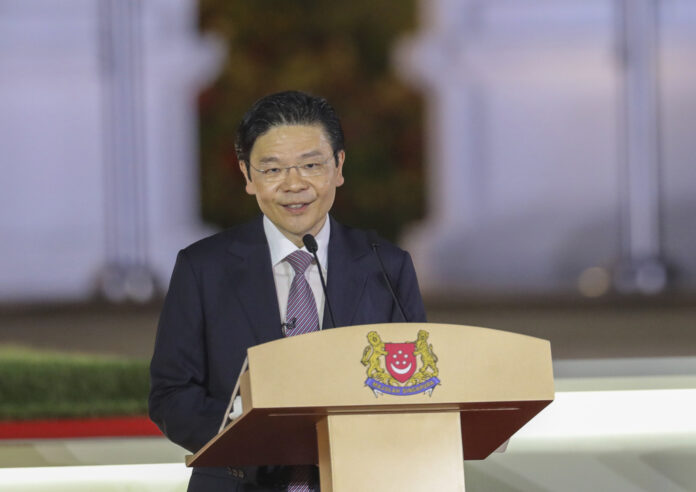
Singapore's new Prime Minister Lawrence Wong makes a speech after being sworn in at the Istana in Singapore, Wednesday, May 15, 2024. (Ministry of Communications and Information via AP)

Singapore’s parliament was dissolved Tuesday, paving the way for general elections in which the city-state’s long-ruling People’s Action Party will seek to strengthen its dominance under Prime Minister Lawrence Wong.

The election will be held on May 3, the Elections Department said later in the afternoon. Victory is virtually assured for the PAP, which has led Singapore since its independence in 1965.

“We are witnessing profound changes in the world. It is becoming more uncertain, unsettled and even unstable,” Wong wrote on Facebook. “The global conditions that enabled Singapore’s success over the past decades may no longer hold. That is why I have called this General Election,” adding that Singaporeans should choose ”the team to lead our nation.”

AP25105270619461
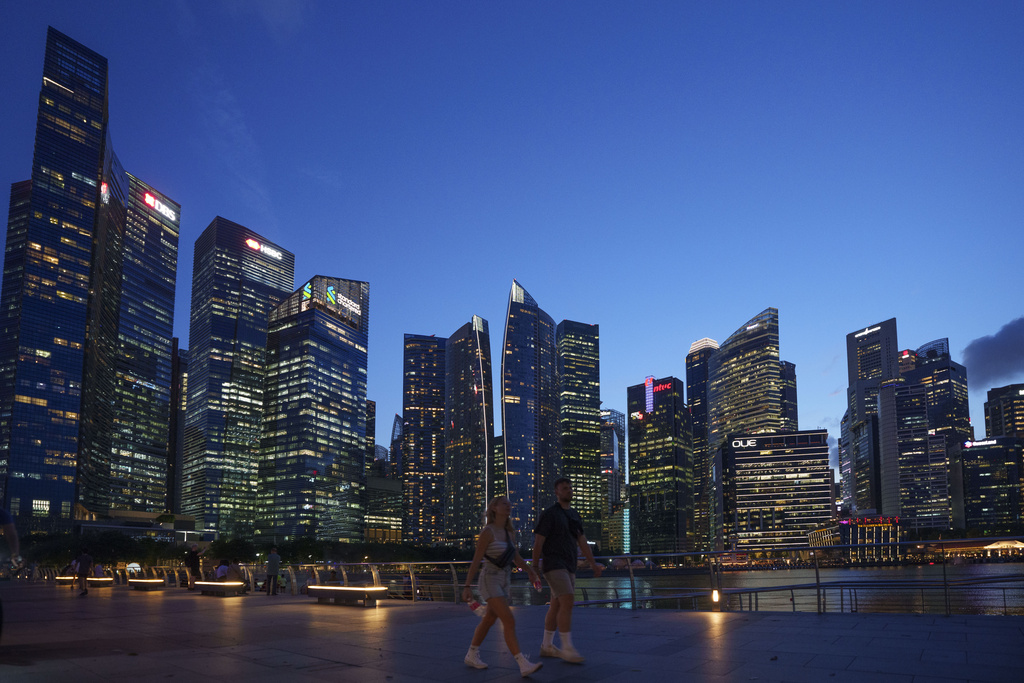
FILE – Tourists walk in front of the Central Business District during sunset in Singapore, on May 30, 2024. (AP Photo/Vincent Thian, File)

Wong, who was sworn in as Singapore’s fourth leader in May last year, wants to clinch a stronger win after the PAP suffered a setback in 2020 polls over voters’ rising discontent with the government.

He succeeded Lee Hsien Loong, who stepped down after two decades at the helm. Lee’s departure marked the end of a family dynasty started by his father, Lee Kuan Yew, Singapore’s first leader who built the former colonial trading outpost into one of the world’s richest nations during 31 years in office.

In the 2020 polls held during the COVID-19 pandemic, the PAP maintained its supermajority with 83 out of 93 seats. But it ceded more seats to the opposition, which increased its parliamentary representation from six to 10, the highest ever. The PAP’s share of popular support also slipped to a near-record low of 61%.

As Wong heads into his first general election as PAP chief, he has sought to reach out to disgruntled younger voters. He launched a “Forward Singapore” plan that aims to give Singaporeans a say in how to develop a more balanced, vibrant and inclusive agenda for the next generation.

The PAP will field more than 30 new candidates to refresh the party. Wong has warned that “who you have in the cockpit matters” amid economic uncertainties as U.S. tariffs hit the global trading system.

“The biggest contest we face isn’t between political parties, it’s Singapore vs the world,” Wong said in a Facebook post earlier this week. “Our mission … is clear: to keep our nation a shining beacon of stability, progress and hope.”

While Singapore has flourished as one of the world’s wealthiest nations, it has also become one of the most expensive cities to live in. The PAP has been criticized for tight government control and a government-knows-best stance, media censorship and the use of oppressive laws against dissidents.

Issues like widening income disparity, increasingly unaffordable housing, overcrowding caused by immigration and restrictions on free speech have also loosened the PAP’s grip on power.

____

Advertisement

ASEAN Chair Anwar Visits Thailand as Thai Team Flies to US on April 17

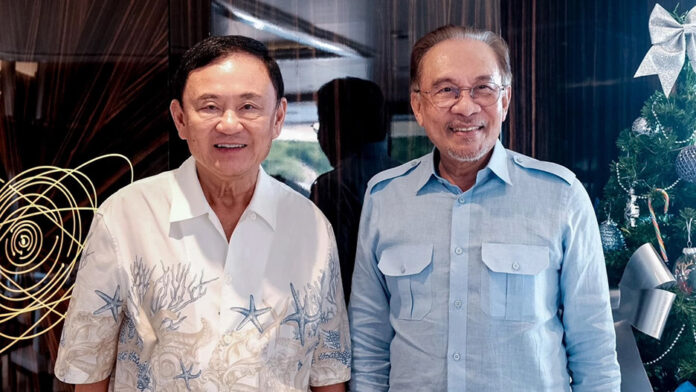
Thaksin Shinawatra and Anwar Ibrahim

BANGKOK —  Malaysian Prime Minister Anwar Ibrahim, who also holds the current ASEAN chairmanship, will visit Thailand on April 17. He is expected to convene a meeting with the ASEAN chair’s advisers, including Thaksin Shinawatra, to present a united front to the US government following the recent announcement of tariffs. ASEAN plans to hold friendly talks rather than exert pressure.

Thaksin Shinawatra, in his role as advisor to the ASEAN chair, said in an interview on April 14 that Prime Minister Anwar Ibrahim will travel to Thailand for a working visit to meet with the government and the Thai prime minister.

In addition, several advisers to the ASEAN chairmanship from various member states have been invited to discuss internal regional challenges, ASEAN’s production base and how the bloc can strengthen its role in talks with the US, including issues related to peace in Myanmar.

In the face of growing expectations that ASEAN unity can strengthen its negotiating power, Thaksin emphasized: “We are not going there to negotiate on a give-and-take basis. We will speak from the perspective that most ASEAN countries are still developing and need substantial capital from developed countries to strengthen themselves.”

AP25100344947101
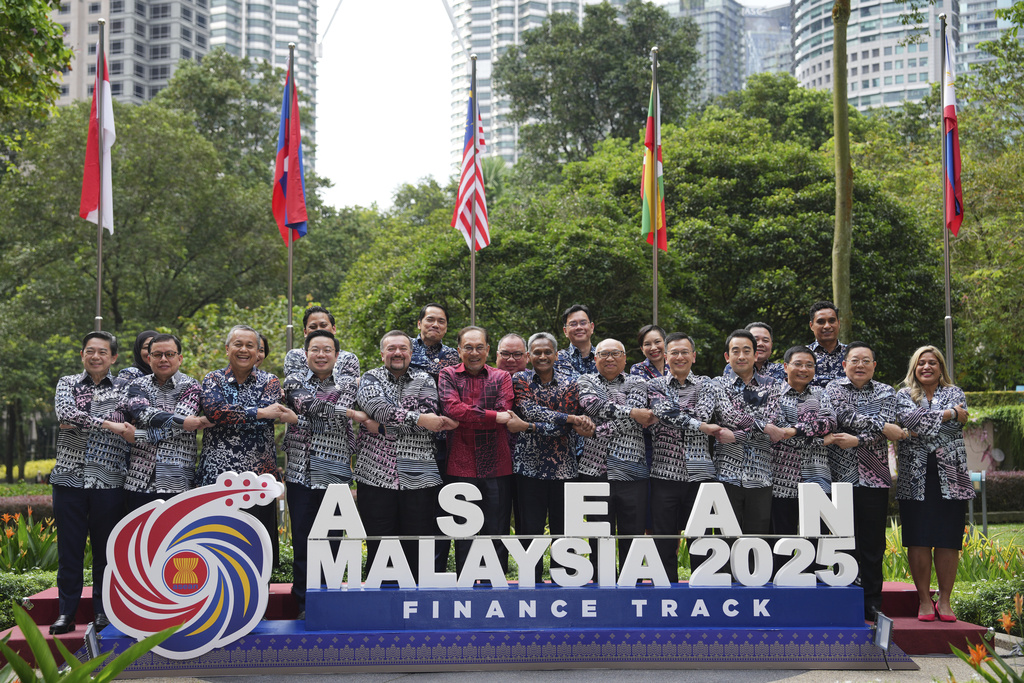
Malaysian Prime Minister Anwar Ibrahim, center in red, joins hands with ASEAN finance ministers and bank governors for a group photograph after the two days’ ASEAN Finance Ministers and Bank Governors meeting in Kuala Lumpur, Malaysia, Thursday, April 10, 2025. (AP Photo/Vincent Thian)

“We want the US government to understand the role of ASEAN, especially its strategic importance to the region, which is of great importance to the US. We will engage as a partner and not negotiate under pressure,” Thaksin said.

Asked if he could predict how Trump’s team would approach ASEAN, Thaksin said he knew most of them, adding that “many people in Trump’s circles are known to me”

Commerce Minister Phichai Naripthaphan also announced that he had participated in a virtual meeting with the economic ministers of all 10 ASEAN countries and Timor-Leste to discuss strategic responses to the new US trade policy. The ASEAN countries agreed to issue a joint statement reaffirming their position as a “comprehensive strategic partner” of the United States.

Meanwhile, Deputy Prime Minister and Finance Minister Pichai Chunhavajira will join the delegation traveling to the United States on Thursday, April 17. In preparation for the trip, Pichai has already convened a special meeting with the US tax negotiation working group and Thailand’s economic policy advisory team at Phitsanulok House. The meeting included key advisors Pansak Vinyaratn and Dr. Supawut Saichua, who will accompany the delegation to strengthen Thailand’s position in the upcoming discussions with US officials.

twin pichai2
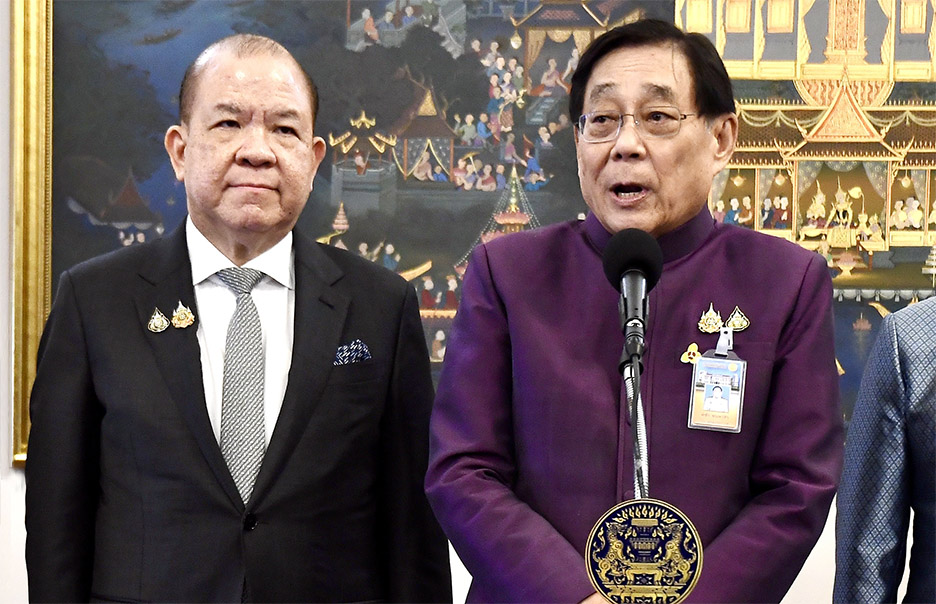
Deputy Prime Minister and Finance Minister Pichai Chunhavajira (right) announces the results of the Trump tariff policy response committee meeting, stating that he and Commerce Minister Pichai Naripattapun (left) will travel together to negotiate with U.S. trade representatives, April 11, 2025.

ASEAN proposed constructive negotiations to ease trade tensions and find balanced solutions under the ASEAN-US Strategic Trade and Investment Partnership (STIP). The bloc is committed to maintaining long-term ties in trade, investment and supply chain security in the region.

They will also advance cooperation with the US in high-potential sectors such as digital technology, AI, food, renewable energy, advanced manufacturing, electric vehicles, semiconductors, health, logistics and agriculture— with the aim of creating new opportunities for the region. ASEAN also reaffirmed its commitment to multilateral trading systems and stated that it would not retaliate against the US.

The meeting also agreed to establish a special task force, the ASEAN Geoeconomics Task Force, to monitor, assess and propose policy responses to maximize the benefits of US economic strategies for ASEAN. The task force will promote cooperation at both government and private sector levels.

Minister Phichai added that he has been in contact with Jamieson Greer, the US Trade Representative (USTR) since December 2024. The USTR has agreed to hold talks with Thailand and both sides are currently coordinating the date for the meeting. This initiative is in line with the mandate of Thai Prime Minister Paetongtarn Shinawatra.

____________

Advertisement

Former Malaysian Leader Abdullah Ahmad Badawi Dies at 85

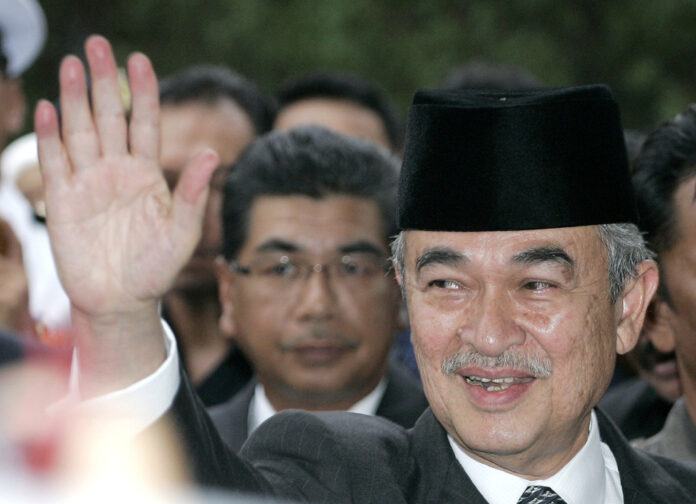
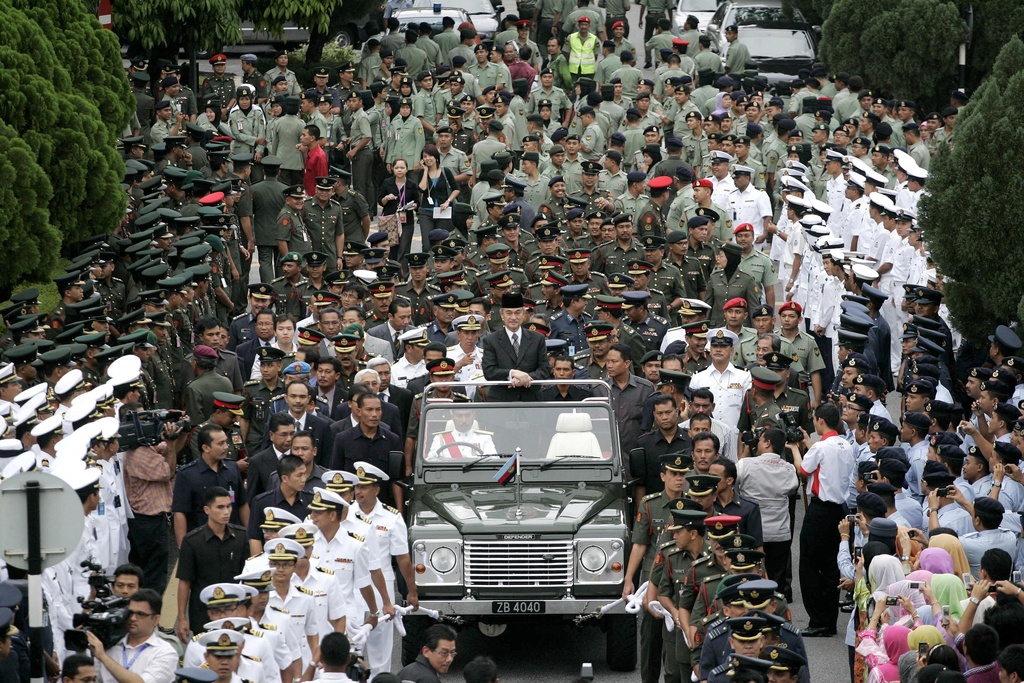
FILE - Malaysian outgoing Prime Minister Abdullah Ahmad Badawi, also Defense Minister, waves during a farewell ceremony in Kuala Lumpur, Malaysia, Thursday, April 2, 2009. (AP Photo/Lai Seng Sin, File)

KUALA LUMPUR, Malaysia (AP) — Former Malaysian Prime Minister Abdullah Ahmad Badawi, a moderate who extended the country’s political freedoms but was criticized for lackluster leadership, has died of heart disease. He was 85.

Abdullah entered the critical care unit at the National Heart Institute on April 25, 2024 after being diagnosed with spontaneous pneumothorax, a collapsed lung that occurs without any apparent cause.

Affectionately known as “Pak Lah,” Abdullah was admitted to Kuala Lumpur’s State Institute of Heart on Sunday after experiencing breathing difficulties where he was closely monitored by a cardiac specialists team, but he passed away on Monday at 7:10 p.m. despite all medical efforts, said the hospital in a statement.

Abdullah, Malaysia’s fifth leader, served from 2003 to 2009, when he was pressured to resign to take responsibility for the governing coalition’s dismal results in national elections. He kept a low profile after leaving politics.

AP25104477830622
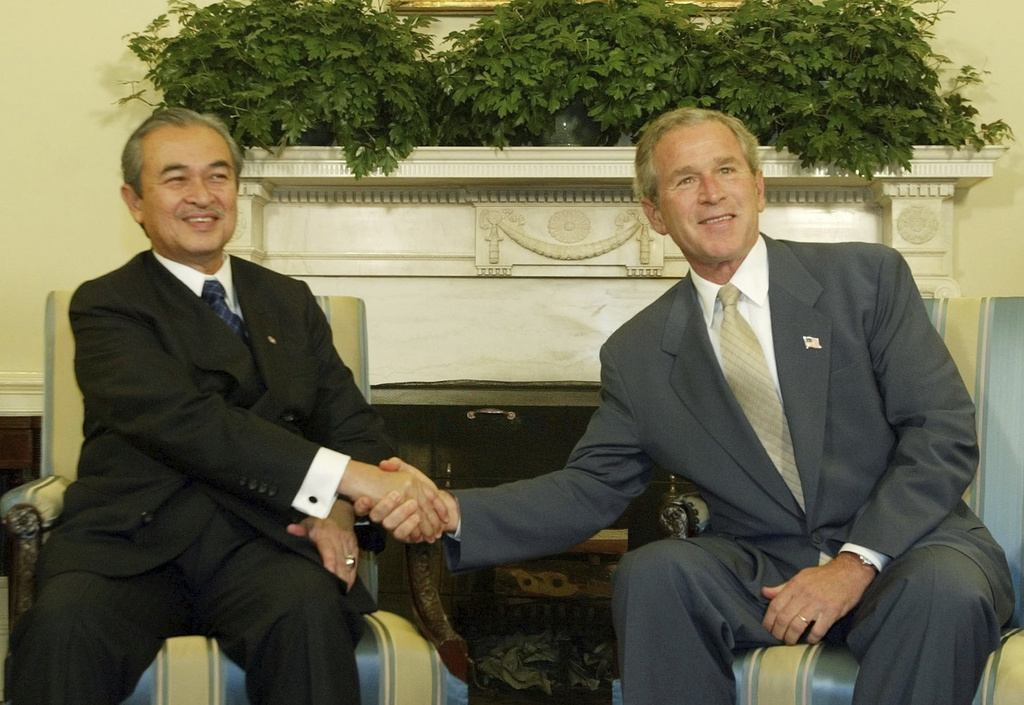
FILE – President George W. Bush, right, greets Malaysian Prime Minister Abdullah Ahmad Badawi in the Oval Office of the White House, Monday, July 19, 2004, in Washington. (AP Photo/Pablo Martinez Monsivais, File)

In 2022, his son-in-law, Khairy Jamaluddin, disclosed that Abdullah had dementia that was progressively worsening. He said Abdullah had trouble speaking and could not recognize his family.

Abdullah took office in October 2003, riding a wave of popularity as he replaced Mahathir Mohamad, a domineering, sharp-tongued leader known for his semi-authoritarian rule during 22 years in office.

A seasoned politician who held many Cabinet positions, Abdullah was handpicked by Mahathir, who believed a soft-spoken, unambitious leader would maintain his policies.

Initially, Abdullah won support with promises of institutional reforms and his brand of moderate Islam. He was known fondly as “Pak Lah” or Uncle Lah. He pledged greater political freedoms with more space for critics, and vowed to end corruption after a government minister was hauled to court on graft allegations.

AP25104477839528
FILE – Malaysian outgoing Prime Minister Abdullah Ahmad Badawi, also Defence Minister, center, looks on during a farewell ceremony organised by the Defence Ministry in Kuala Lumpur, Malaysia, Thursday, April 2, 2009. (AP Photo/Lai Seng Sin, File)

“During his rule, the country transitioned from a very authoritarian rule under Mahathir to a more multifaceted regime. It provided some breathing space for many Malaysians after more than two decades of very suffocating rule,” said Oh Ei Sun from Singapore’s Institute of International Affairs.

Months after taking office, Abdullah led his National Front governing coalition to a landslide victory in a 2004 general election seen as a stamp of approval of his leadership. That helped him partially step out of Mahathir’s shadow, but the euphoria didn’t last.

In the following years, Abdullah faced criticism inside and outside his party for generally lackluster and ineffectual leadership. He didn’t follow through on promises to eradicate corruption, reform the judiciary and strengthen institutions such as the police and the civil service.

Critics slammed Abdullah for concurrently taking on the finance minister and internal security minister posts. He was often criticized for dozing off during meetings or at public events, which he blamed on a sleep disorder. Khairy, his son-in-law, led a team of advisers in the Prime Minister’s Office whom critics said influenced Abdullah’s decisions and controlled access to him.

Abdullah also fell out with Mahathir after he axed some of the former leader’s projects, including a proposed bridge to Singapore. Mahathir turned into one of his fiercest critics and accused Abdullah of nepotism and inefficiency..

While Abdullah was viewed as a weak leader, he ushered in limited freedom of speech and allowing a more critical media. Conservatives in his party said that was his undoing as it bolstered a newly resurgent opposition led by reformist Anwar Ibrahim. Anwar, Malaysia’s current leader, became prime minister after 2022 elections.

In late 2007, Abdullah faced a series of massive street protests on issues including fuel hikes, demands for electoral reforms and fairer treatment for ethnic minorities. The protests shook his administration. Police cracked down on the rallies and Abdullah warned he would sacrifice public freedoms for stability.

In the March 2008 general election, his National Front suffered one of its worst results in a huge blow to Abdullah. It failed to secure a two-thirds legislative majority for the first time in 40 years, yielding 82 seats to the opposition in the 222-member Parliament. It also lost an unprecedented five states.

Abdullah initially refused to step down, but pressure grew. Mahathir quit the United Malays National Organization, the linchpin of the governing coalition, to protest Abdullah’s leadership. Dissidents within UMNO openly called on him to resign to take responsibility for the dismal election performance.

Abdullah caved in and handed over power to his deputy, Najib Razak, in April 2009.

Born in the northern state of Penang on Nov. 26, 1939, Abdullah came from a religious family. His grandfather was the first mufti, or Islamic jurist, of Penang. Abdullah received a bachelor’s degree in Islamic Studies from the University of Malaya.

AP25104477814972
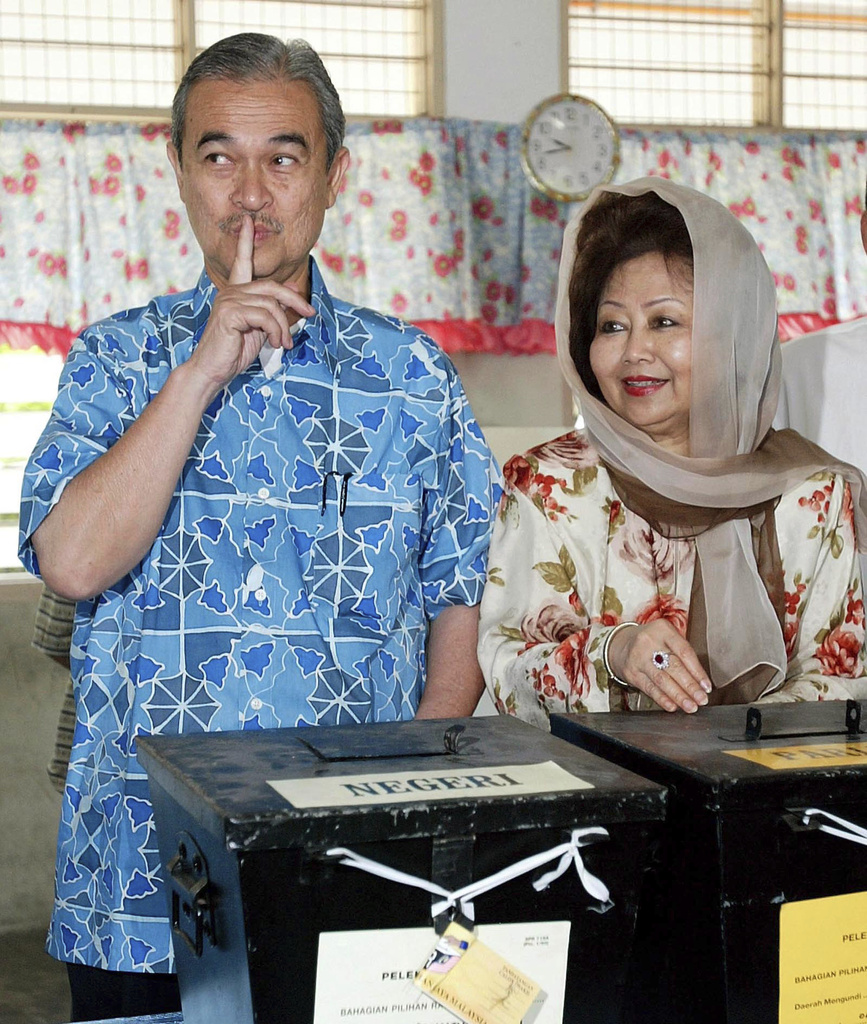
FILE – Malaysian Prime Minister Abdullah Ahmad Badawi, left, gestures as his wife Endon Mahmood looks on after casting their votes during the general election at a polling center in Kepala Batas, northern Malaysia, March 21, 2004. (AP Photo/Andy Wong, File)

After graduating, he entered the civil service for 14 years before resigning in 1978 to become a member of parliament. During a bitter dispute within UMNO in the 1980s, Abdullah sided with a group that opposed Mahathir. After Mahathir prevailed, Abdullah was sacked as defense minister but was later brought back into the Cabinet as foreign minister in 1991.

In January 1999, Abdullah was appointed deputy prime minister and home affairs minister before succeeding Mahathir as prime minister in 2003.

Abdullah’s first wife, Endon Mahmood, died in 2005 after a battle with breast cancer. They have two children and seven grandchildren. He remarried two years later to Jeanne Abdullah, who was earlier married to the brother of Abdullah’s first wife. She has two children from her previous marriage.

_________

Advertisement

China’s Xi Says There Are ‘No Winners’ in a Tariff War As He Visits Southeast Asia

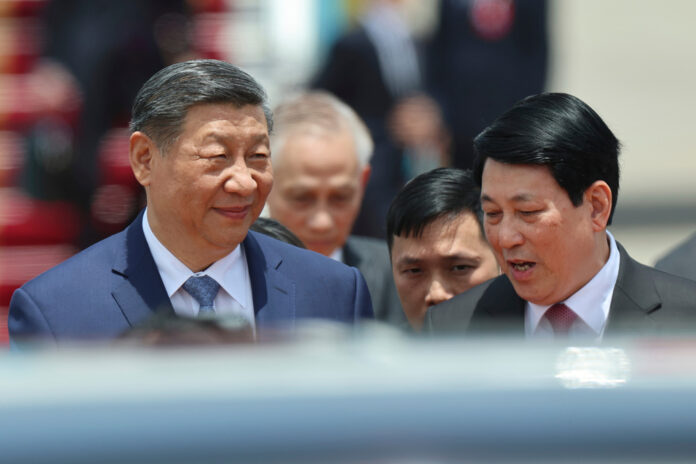
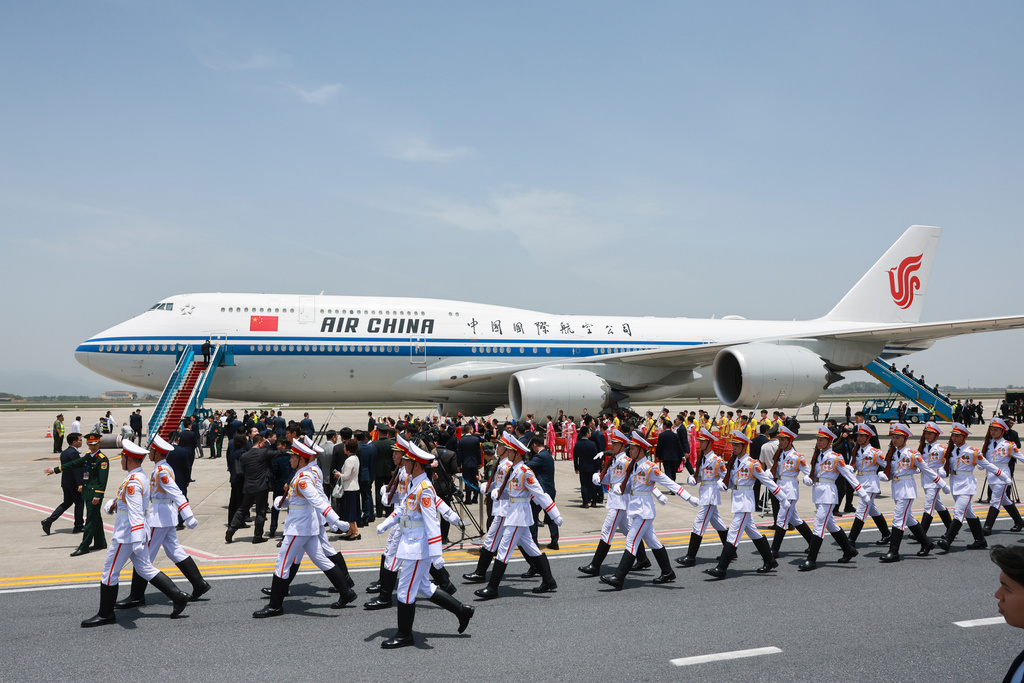
Chinese President Xi Jinping, left, speaks with Vietnam's President Luong Cuong on his arrival at the Noi Bai International Airport in Hanoi, Vietnam Monday, April 14, 2025. (Athit Perawongmetha/Pool Photo via AP)

HANOI, Vietnam (AP) — China’s leader Xi Jinping started a week of diplomacy in Southeast Asia with a visit to Vietnam on Monday, signaling China’s commitment to global trade, just after U.S. President Donald Trump upended the global economy with his latest tariffs moves.

Although Trump has paused some tariffs, China was the outlier, as he has kept in place 145% tariffs on the world’s second-largest economy.

China’s exports jumped 12.4% in March from a year earlier as companies rushed to beat increases in U.S. tariffs imposed by Trump, the government said Monday.

Imports fell 4.3% to $211.3 billion in March, the customs administration reported, far exceeded by exports worth $313.9 billion, leaving a trade surplus of $102.6 billion.

China’s trade surplus surged to a record $992.2 billion in 2024 and its exports climbed 5.4%, helping to make up for sluggish growth at home as the country slowly recovers from a crisis in its property market and lingering impacts of the COVID-19 pandemic.

AP25104188642653
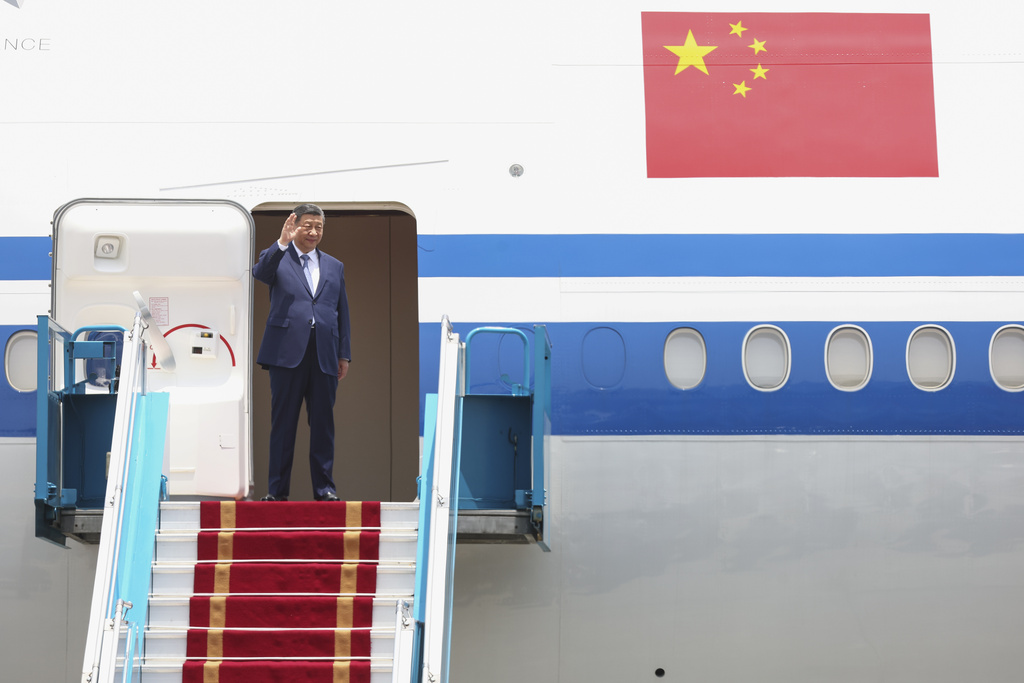
Chinese President Xi Jinping waves as he arrives for a two-day state visit, at Hanoi’s Noi Bai International Airport, Vietnam, Monday, April 14, 2025.
(Athit Perawongmetha/Pool Photo via AP)

After taking office, Trump first ordered a 10% increase in tariffs on imports from China. He later raised that to 20%. Now, China is facing 145% tariffs on most of its exports to the United States, based on the most recent revisions in Trump’s trade policies.

China’s trade surplus with the United States was $27.6 billion in March as its exports rose 4.5%. It logged a surplus of $76.6 billion with the U.S. in January-March even though exports were up only 2.3% the first two months of the year.

Xi’s visit this week lets China show Southeast Asia it is a “responsible superpower in the way that contrasts with the way the U.S. under President Donald Trump presents to the whole world,” said Nguyen Khac Giang, a visiting fellow at Singapore’s ISEAS–Yusof Ishak Institute.

China also can work to shore up its alliances and find solutions for the high trade barrier that the U.S. has on Chinese exports.

“There are no winners in a trade war, or a tariff war,” Xi wrote in an editorial jointly published in Vietnamese and Chinese official media. “Our two countries should resolutely safeguard the multilateral trading system, stable global industrial and supply chains, and open and cooperative international environment.”

He arrived in Hanoi on Monday and will be in Vietnam for two days as part of the state visit.

AP25104204268028
The plane carrying Chinese President Xi Jinping arrives at the Noi Bai International Airport in Hanoi, Vietnam Monday, April 14, 2025. (Athit Perawongmetha/Pool Photo via AP)

While Xi’s trip likely was planned earlier, it has become significant because of the tariff fight between China and the U.S., the world’s two largest economies. In Vietnam, Xi will meet with Vietnam’s Communist Party General Secretary To Lam, as well as the Prime Minister Pham Minh Chinh.

“The trip to Vietnam, Malaysia, and Cambodia is all about how China can really insulate itself against the from Trump,” said Nguyen, pointing out that since Xi became the president of China in 2013, he has only visited Vietnam twice. This is his third visit and comes just a year after he last visited in December 2023.

The timing of the visit sends a “strong political message that Southeast Asia is important to China,” said Huong Le-Thu at the International Crisis Group. She said that given the severity of Trump’s tariffs and despite the 90-day pause, Southeast Asian nations were anxious that the tariffs, if implemented, could complicate their development.

“Xi’s trip is to showcase how China is the opposite to the coercive and self-interested U.S. There will be a lot of expectations about what type of leadership and initiatives China is going to come up with at this time of crisis,” she said.

AP25104204177938
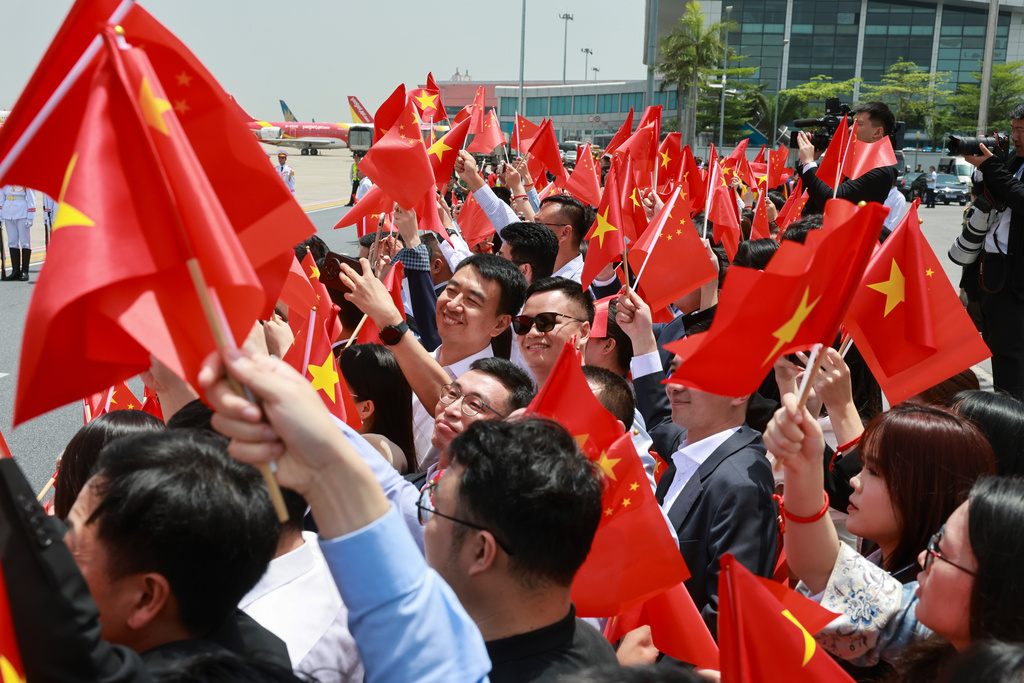
People wave Chinese flags as the plane carrying Chinese President Xi Jinping arrives at the Noi Bai International Airport in Hanoi, Vietnam Monday, April 14, 2025. (Athit Perawongmetha/Pool Photo via AP)

Vietnam is experienced at balancing its relations with the U.S and China. It is run under a Communist, one-party system like China but has had a strong relationship with the U.S.

In 2023, it was the only country that received both U.S. President Joe Biden and China’s Xi Jinping. That year it also upgraded the U.S. to its highest diplomatic level, the same as China and Russia.

Vietnam was one of the biggest beneficiaries of countries trying to decouple their supply chains from China, as businesses moved here. China is its biggest trading partner, and China-Vietnam trade surged 14.6% year-on-year in 2024, according to Chinese state media.

But the intensification of the trade war has put Vietnam in a “very precarious situation” given the impression in the U.S. that Vietnam is serving as a backdoor for Chinese goods, said Giang, the analyst at Singapore’s ISEAS–Yusof Ishak Institute. Vietnam had been hit with 46% tariffs under Trump’s order before the 90-day pause.

China and Vietnam have real long-term differences. They have disputes over territory in the South China Sea, and Vietnam has faced off with China’s coast guard but does not often publicize the confrontations.

After Vietnam, Xi is expected to go to Malaysia next and then Cambodia.

—-

Advertisement

‘Magic 2025’ to Boost Target of 2.3M Indian Tourists to Thailand

Corporate Incentive tour group participants attend 'Magic 2025' at IMPACT Arena, Muang Thong Thani, from April 11-15, 2025.

BANGKOK — The Tourism Authority of Thailand (TAT), in partnership with Zebra Events & Exhibition Pvt. Ltd., is hosting “Magic 2025,” a major corporate incentive program for 10,000 Indian direct marketing sales representatives from April 11-15, 2025, at the IMPACT Arena in Muang Thong Thani, Nonthaburi Province.

The event aims to train representatives in tourism and lifestyle products and services while promoting Thailand as a premium destination for high-spending corporate travelers. Police Major General Pongsayam Meekhanthong, Deputy Commissioner of the Tourist Police, officially welcomed participants at the Challenger Hall.

“Magic 2025” is part of TAT’s strategy to promote Thailand through the lens of showcase the country’s capabilities as a comprehensive MICE (Meetings, Incentives, Conferences, and Exhibitions) destination. The initiative seeks to expand the corporate tourism base and increase tourism industry spending while developing long-term tourism promotion strategies for Thailand.

indian magic2
Corporate Incentive tour group participants attend ‘Magic 2025’ at IMPACT Arena, Muang Thong Thani, from April 11-15, 2025.

Strong Growth in Indian Tourism Market

India has emerged as a key tourism market for Thailand, with visitor numbers reaching a record-breaking 2.1 million in 2024. From January 1 to April 9, 2025, Thailand has already welcomed 597,709 Indian tourists, with 75.20% traveling independently and 24.80% in tour groups. Notably, 66.59% were first-time visitors.

Indian travelers visit Thailand for various purposes, including leisure, business, and special celebrations such as weddings and anniversaries. The peak tourism seasons align with India’s travel periods, particularly during January-February and December, when visitors from northern and northeastern Indian states travel to Thailand in large numbers.

Bangkok, Chonburi, Phuket, Krabi, and Surat Thani remain the most popular destinations, catering to diverse tourist segments including families, millennials, health and wellness enthusiasts, wedding and honeymoon travelers, golf tourists, and emerging groups such as women travelers, senior citizens, self-drivers, and adventure seekers.

During the Songkran festival, participants will also join the Maha Songkran World Water Festival 2025, reinforcing the “Amazing Thailand Grand Tourism and Sports Year 2025” policy through grand festivities held throughout the country.

indian visitors
Indian tourists participated in the colorful Festival of Colours (HOLI) Pattaya Thailand at Pattaya Klang Beach on March 11, 2023.

Factors Supporting Market Growth

The growth of the Indian tourism market is supported by several factors, including population growth and changing consumer behaviors, with more Indians prioritizing lifestyle spending and traveling abroad multiple times a year.

Additionally, the special 60-day visa exemption measure effective from July 15, 2024, has made it easier for Indian tourists to visit Thailand. These factors present Thailand with an opportunity to showcase its charm and attract quality tourists from India.

Given these favorable conditions, TAT has set an ambitious target of 2.3 million Indian visitors for 2025, with expected tourism revenue reaching 101.6 billion baht ($3 billion).

___________

Advertisement

Hot News

LATEST NEWS

Bangkok
few clouds
28.8 ° C
28.8 °
28.8 °
71 %
4.1kmh
13 %
Tue
29 °
Wed
38 °
Thu
39 °
Fri
37 °
Sat
37 °