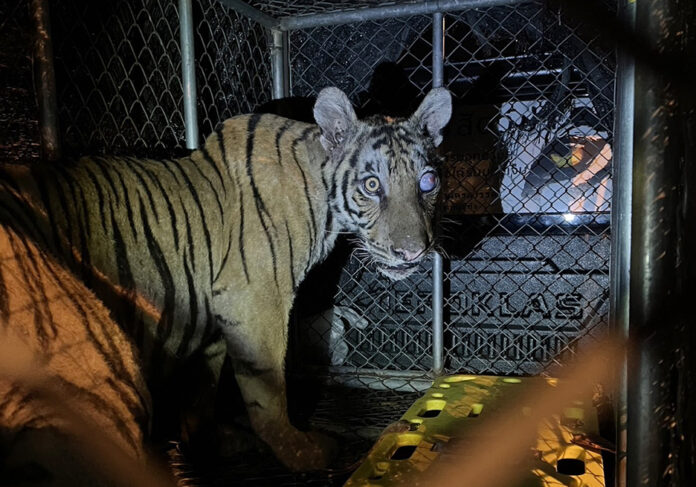
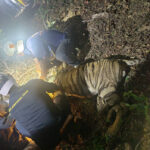
The poor tiger was blind in her left eye and had a corneal ulcer. (Photo: Conservation Area Administration Office 12)
KAMPHAENG PHET – Officials from Khlong Lan National Park, along with related agencies and a team from the World Wildlife Fund (WWF), successfully captured a skinny tiger that had wandered into a village in Khlong Lan National Park in Kamphaeng Phet Province on Tuesday after a five-day operation involving more than 60 officials.
An initial health check revealed that the tiger was a 2-year-old female that was 1.5 meters long and 60 centimeters high. Originally, officials mistook her for a male.
The Facebook page “Thailand Tiger Project DNP” posted a photo of the young tiger that was caught in the forest on Monday night, Feb.19 in Khlong Lan National Park in Kamphaeng Phet Province.
Mr. Phanudech Kerdmali, President of the Seub Nakhasathien Foundation, named the tiger “Bala Gol” or “Khlong Lan”,” which is the name for a tiger in the Karen language. He explained to the villagers that Bala Gol did not want to cause any trouble. She was just hungry because her mother could no longer look after her and she had to go out and find food herself.
“The conflict between wildlife and communities living near protected forests is becoming more frequent. The best solution is to find ways for them to coexist,” he said.
At 11 a.m. on Saturday, February 13, a tiger was discovered guarding a pig carcass. It was around 80 metres from the local’s home. The search crew was about to shoot the tranquillizer, but the tiger alerted in time and jumped free from the encirclement.
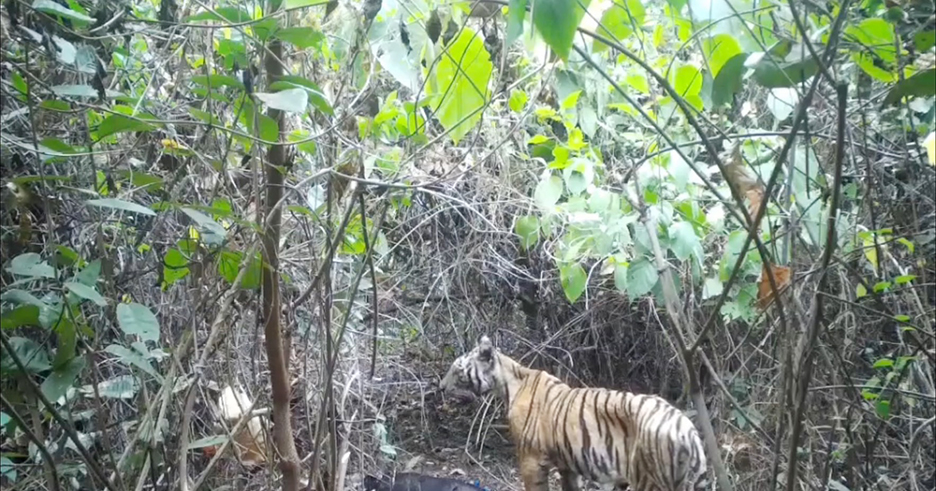
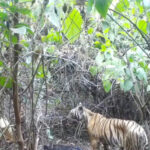
The officials then split into teams to monitor the village and surround the 30-rai area of tamarind and bamboo forest where the tiger was suspected. At around 9:50 pm on February 19, a camera trap set up by WWF Thailand recorded the tiger coming back behind the waterfall temple, Khlong Lan Waterfall Meditation Center, to eat the bait that had been set out. The tiger then stepped on a leg-hold trap. The officers then fired the tranquilizer dart.
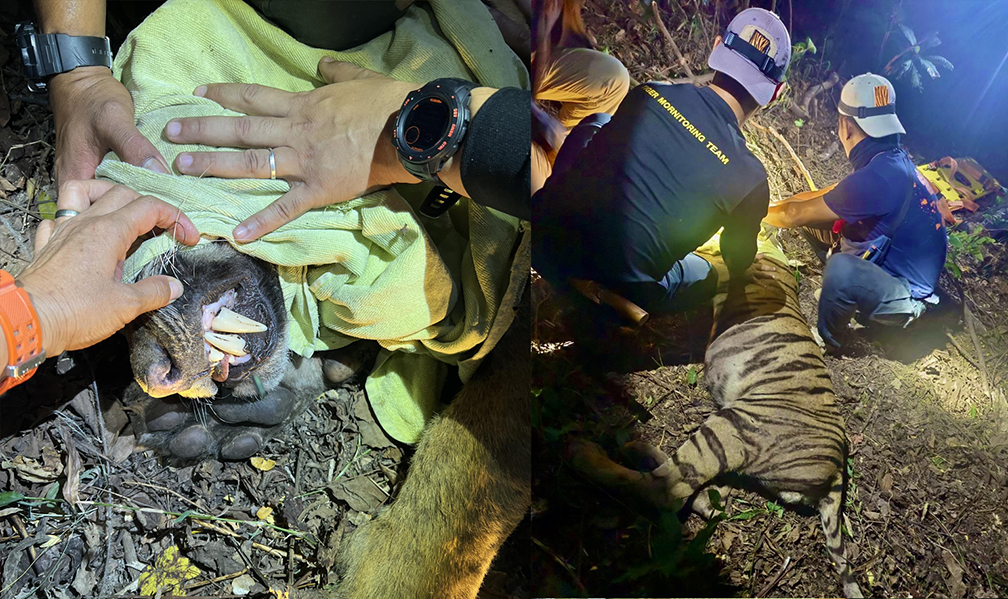
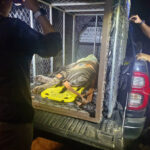
A veterinarian from the Huai Kha Khaeng Wildlife Breeding Station coordinated with park officials on the scene to quickly move the tiger out of the forest and into a waiting cage. This was done in a hurry as there was a risk of the tranquilizer wearing off during the 100-kilometer drive to the Khao Nang Ram Wildlife Research Station in Huai Kha Khaeng Wildlife Sanctuary, Tambon Rabam, Lan Sak District, Uthai Thani Province.
According to Phanudech Kerdmali, President of the Seub Nakhasathien Foundation, Bala Gol the tiger just hungry because her mother could no longer look after her and she had to go out of the forest and find food herself.
The tiger weighed around 80–90 kilograms. Even though she had gained weight by eating the bait over several days, she was in poor physical condition (body condition score 2–2.5). She suffered a corneal ulcer, left eye blindness, and a tiny left paw cut. Before being driven, the vet gave her antibiotics, vitamins, and treatments for her pale pink gums.
Officials from Huai Kha Khaeng Wildlife Sanctuary, Khao Nang Ram Wildlife Research Station, Huai Kha Khaeng Wildlife Breeding Station and a veterinarian from the Conservation Area Administration Office 12 (Nakhon Sawan) will take care of the tiger’s care and rehabilitation. Bala Gol will be fitted with a radio collar to track her movements before she is released back into the wild.
Karen Namtok villagers in Khlong Lan District, Kamphaeng Phet Province, photographed a skinny tiger walking on the road on Feb.16, 2024.
Karen Namtok villagers photographed a skinny tiger hiding in the cassava and sweet tamarind forests.
A camera trap set up by WWF Thailand recorded the tiger in the Khlong Lan National Park, on Feb 18, 2024.
An initial health check revealed that the tiger was a 2-year-old female that was 1.5 meters long and 60 centimeters high.
The officials on the scene quickly move the tiger out of the forest and into a waiting cage on Feb.20, 2024.
Bala Gol the tiger just hungry because her mother could no longer look after her and she had to go out of the forest and find food herself.
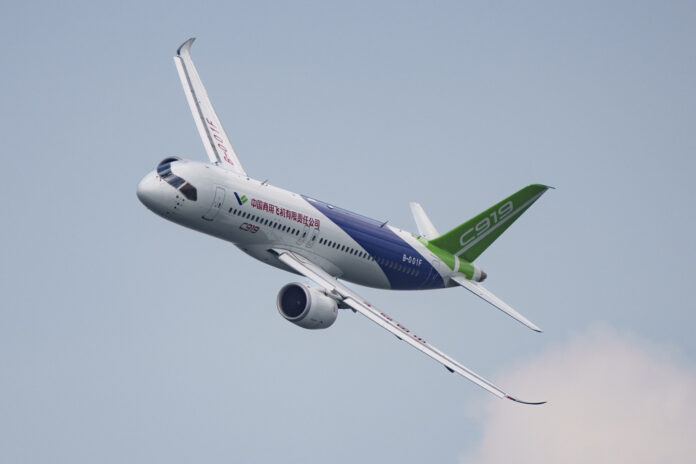
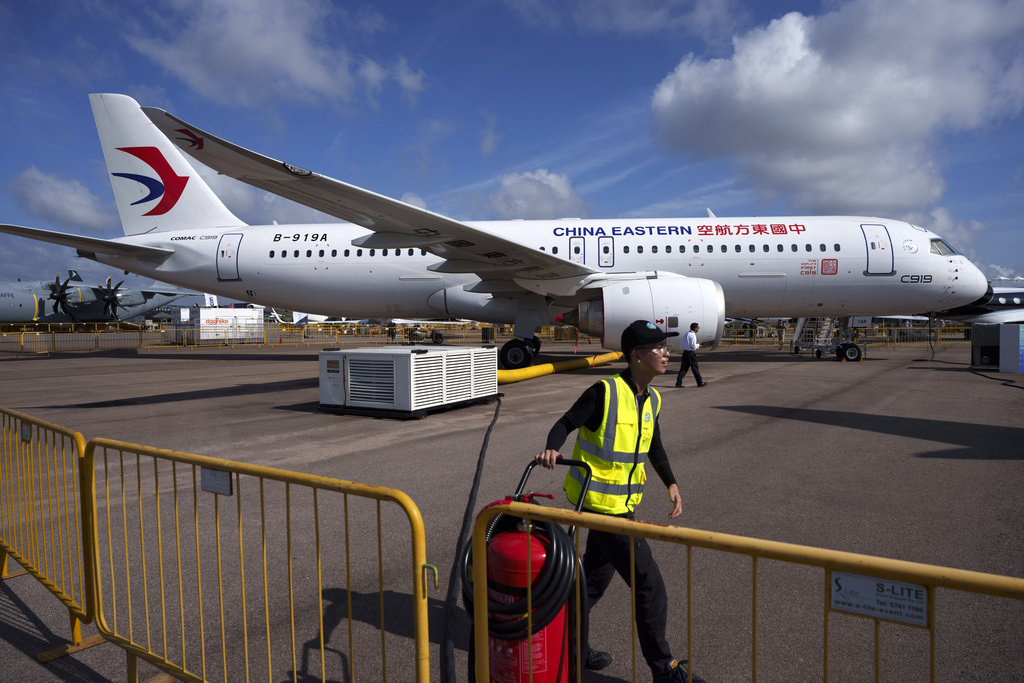
A China's COMAC C919 aircraft flies during the first day of the Singapore Airshow in Singapore, Tuesday, Feb. 20, 2024. (AP Photo/Vincent Thian)
SINGAPORE (AP) — The Singapore Airshow – Asia’s largest – kicks off Tuesday with an array of aerial displays including some by China’s COMAC C919 narrow-body airliner.
It’s the first time Singapore has opened the event to the public since 2020, when a scaled-down version went ahead as the COVID-19 pandemic was just starting.
The biennial show comes as Asia’s aviation sector is taking off following the hard years of the pandemic, when many countries in the region closed their borders to most international travel.
Subhas Menon, director general of the Association of Asia Pacific Airlines, said that this year’s show was “back in full swing” with over 1,000 exhibitors.
“The Singapore Airshow is a good opportunity for exhibitors to show off the direction they’re going, in terms of technology like autonomous vehicles and so forth,” Menon said in an interview Tuesday.
Aircraft models of China’s COMAC C919 and AR J21 are on display at the COMAC pavilion during the first day of the Singapore Airshow in Singapore, Tuesday, Feb. 20, 2024. (AP Photo/Vincent Thian)
He said passenger loads in the region are nearly back to pre-COVID levels, and that Asia Pacific is expected to account for 50% of the growth in air travel demand this year.
But even as the aviation sector bounces back, the industry faces a broader supply chain crunch, with parts and plane shortages and shortages of personnel, from air crews to pilots.
“Supply chain issues are definitely affecting the timely delivery of aircraft and spares, and that’s one of the reasons why capacity growth is lagging behind traffic growth,” Menon said.
“We do not know when this will ease as it’s related to trade tensions and geopolitical problems that are happening around the world,” he said.
On Tuesday, China’s Tibet Airlines finalized an order for 40 C919 passenger jets and 10 ARJ21 regional jets from the Commercial Aircraft Company of China (COMAC). The two companies signed the deal on the sidelines of the airshow.
COMAC’s C919 is a narrow-body airliner, similar to the Airbus A320neo and Boeing’s 737 Max jets. COMAC designed many of the C919’s parts but some of its key components, including its engine, are still sourced from the West.
The orders come as COMAC attempts to position itself as a viable option for single-aisle jets, as companies like Boeing and Airbus grapple with a backlog of orders.
A China’s Comac C919 aircraft is displayed during the first day of Singapore Airshow in Singapore, Tuesday, Feb. 20, 2024.(AP Photo/Vincent Thian)
The company has received over 1,000 orders for its C919, according to Chinese media, although the plane is currently only certified in mainland China. Four C919s are currently operational with China Eastern Airlines.
Highlights of this year’s show include an aerial display of China’s C919. Airbus will also be showcasing its widebody A350-1000 aircraft.
The C919’s debut at the show is the first time the jet has made a trip outside Chinese territory, though the aircraft performed a fly-past in Hong Kong in December in its its first foray outside of mainland China.
The Republic of Singapore Air Force will deploy an F-15SG fighter jet and an AH-64D Apache helicopter for its aerial display. The U.S. Air Force’s B-52 Stratofortress will also make a fly-past on Thursday.
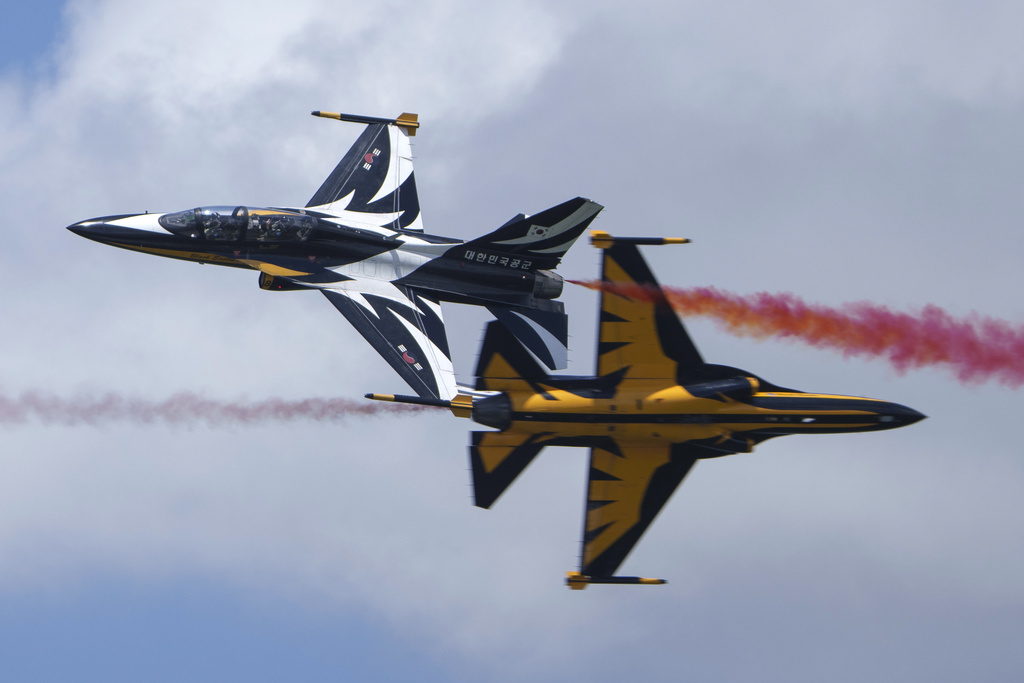
The lineup also includes the Republic of Korea Air Force’s Black Eagles, the Indonesian Air Force’s Jupiter and the Royal Australian Air Force’s Roulettes. The Indian Air Force’s Sarang aerial display team will showcase its aerial acrobatics.
U.S. aircraft manufacturer Boeing will not be featuring any passenger jets at the show. The firm is under scrutiny after a midflight blowout of a fuselage panel on one of its 737 Max 9 jets last month.
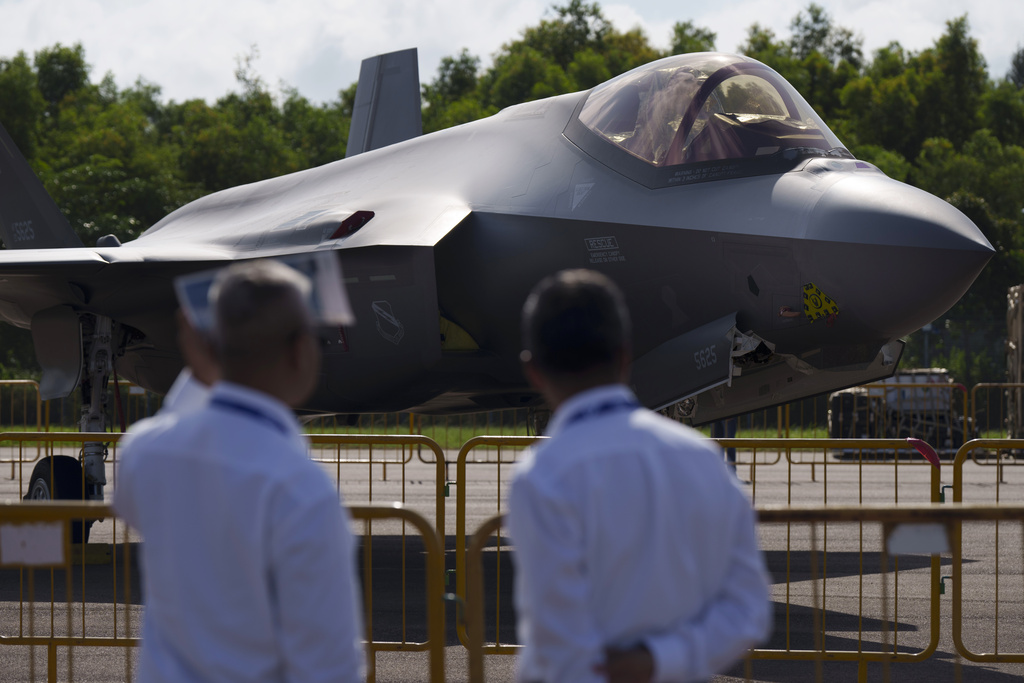
Visitors stand near an F35A aircraft on display during the first day of the Singapore Airshow in Singapore, Tuesday, Feb. 20, 2024. (AP Photo/Vincent Thian)
This year’s airshow is also expected to spotlight sustainable aviation, with Airbus using a blend of sustainable aviation fuel made of feedstock from cooking oil and tallow, together with conventional jet fuel for the A350-1000 aircraft in its aerial display.
Hyundai’s U.S.-based Supernal unit, which specializes in advanced mobility aircraft such as air taxis, is also an exhibitor in this year’s airshow.
The event, which runs from Feb. 20 to 25, is expected to draw more than 50,000 visitors. Over 1,000 companies from over 50 countries are participating.
South Korea’s Air Force’s Black Eagles performs during first day of Singapore Airshow in Singapore, Tuesday, Feb. 20, 2024. (AP Photo/Vincent Thian)
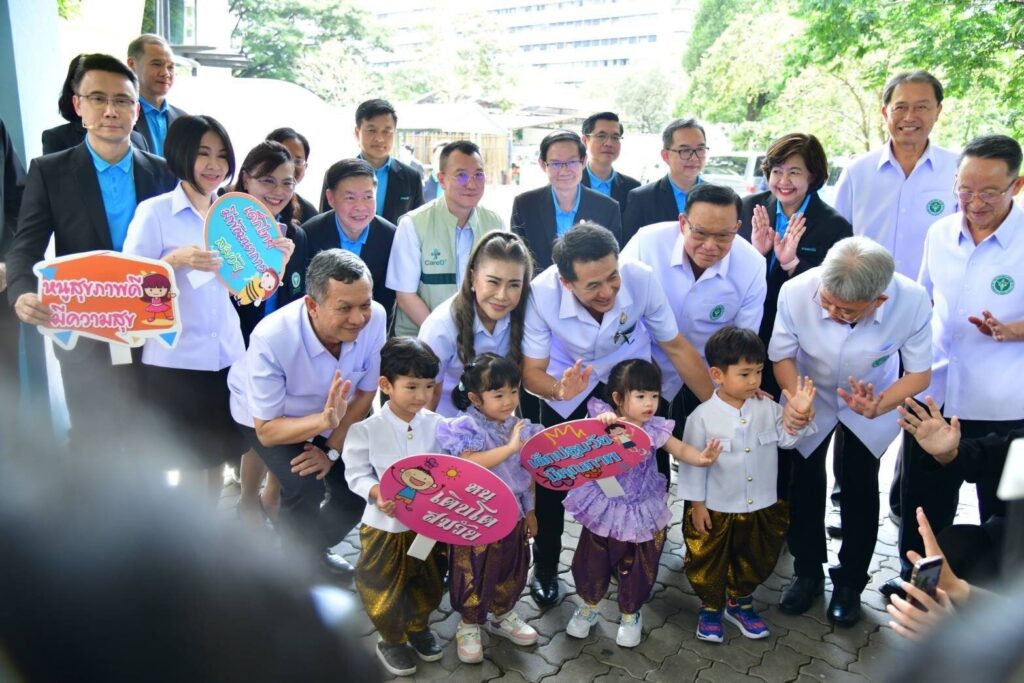
BANGKOK – The Public Relations Department said on Monday that the government is embarking on a “groundbreaking mission” to promote childbirth and make it a national priority by March.
It includes introducing the “Give Birth, Great World” initiative, steered by the Ministry of Public Health.
“Fertility clinics in hospitals are gearing up to provide all-encompassing support, including planning, diagnosing, and treating infertility. With the introduction of advanced reproductive technologies like intrauterine insemination (IUI) and in vitro fertilisation (IVF), new avenues are being opened for those dreaming of parenthood, promising a brighter future and stronger human capital.”
Health minister Cholanan Srikaew and public health officials pose with children at an event to boost the birth rate on Nov. 15, 2023.
It adds that “efforts are underway to enhance work-life balance, extend financial aid to families, streamline parental leave, and champion inclusive laws for all eager to start families. These pivotal measures aim to counteract the dwindling birth rates.”
Thailand, the department adds, faced a historically low birth rate with only 485,085 new births in 2022 and a continuous population decline.
“Thailand risks seeing its population diminish to a mere 33 million in the next six decades, posing serious threats to labour availability and economic stability.”
“The nation is rallying to come together in support of this crucial initiative, aiming to cultivate a thriving and populous Thailand. Let’s spread the word, embracing this call to action for growth and joy for generations to come,” it says.
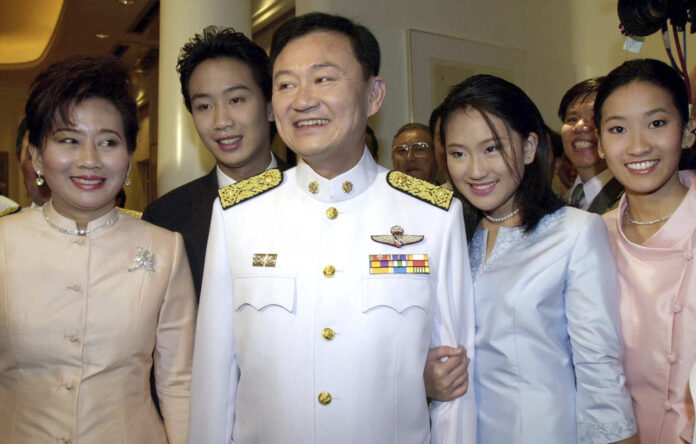
FILE - Newly-elected Thai Prime Minister Thaksin Shinawatra, center, is photographed with his wife Pojamarn, left, son Parntongtae, second left, and daughters Paetongtarn, right, and Pintongta, second right, after receiving the royal command appointed him as Thailand's 23rd prime minister at a ceremony at his residence in Bangkok Friday, Feb. 9, 2001. (AP Photo/Sakchai Lalit,File)
He was detained in a hospital for six months and on Sunday, Thaksin was released on parole for corruption-related offenses.
Here’s a look at what may lie ahead for one of Southeast Asian most controversial politicians:
HOW DID THAKSIN BECOME POPULAR?
Thaksin Shinawatra, 74 , was twice elected prime minister, only to see his second term cut short by a military coup in 2006.
A former police official, Thaksin made fortune in telecommunications and used it to found his own Thai Rak Thai party in 1998. He promoted populist policies that appealed to lower income citizens, particularly in rural areas where most voters live. He was elected in a landslide victory in 2001, and reelected in 2005.
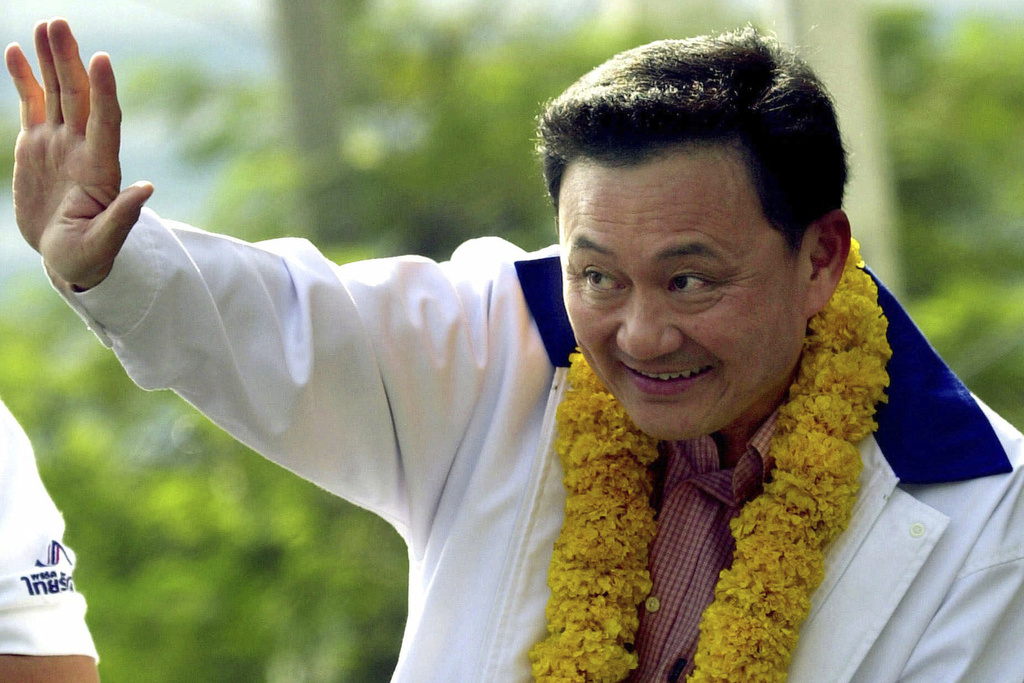
FILE – Thai telecommunication tycoon and leader of Thai Rak Thai Party Thaksin Shinawatra waves during campaign rally in Bangkok Tuesday, Dec. 26, 2000. (AP Photo/Sakchai Lalit, File)
His supporters credited him for spreading the benefits of growth in a country with big gaps between rich and poor. He became a symbol of hope for policies benefiting the rural population that was mostly neglected by previous governments. The measures pushed by Thaksin included the universal health care — a major accomplishment — village development funds and support of rural industries and development.
WHO ARE HIS ENEMIES?
His massive popularity and unprecedented electoral support had rocked the long established political order in Thailand. It earned Thaksin powerful enemies among the country’s conservative forces, including the army. They saw him as a threat to the monarchy, revered as the bedrock of Thai national identity.
But there were other red flags: he was intolerant of criticism, especially in mass media, and failed to distance his wide-ranging business interests from governance. He was accused of mishandling complaints of minority Muslims in Thailand’s southernmost provinces, prolonging the conflict there, while human rights groups blame his war on illegal drugs for more than 2,000 extrajudicial killings of suspected traffickers.
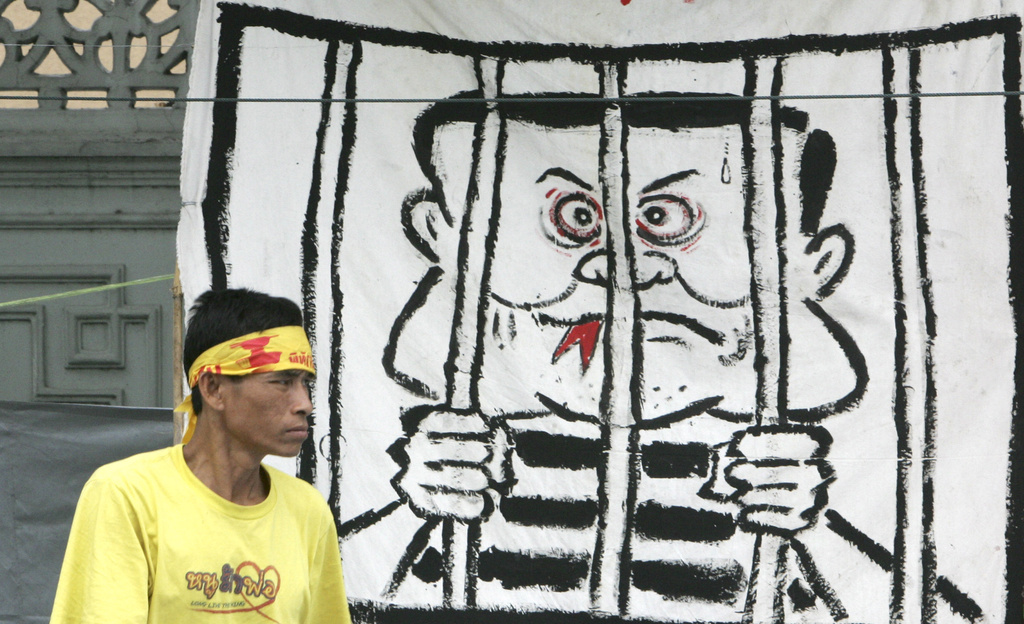
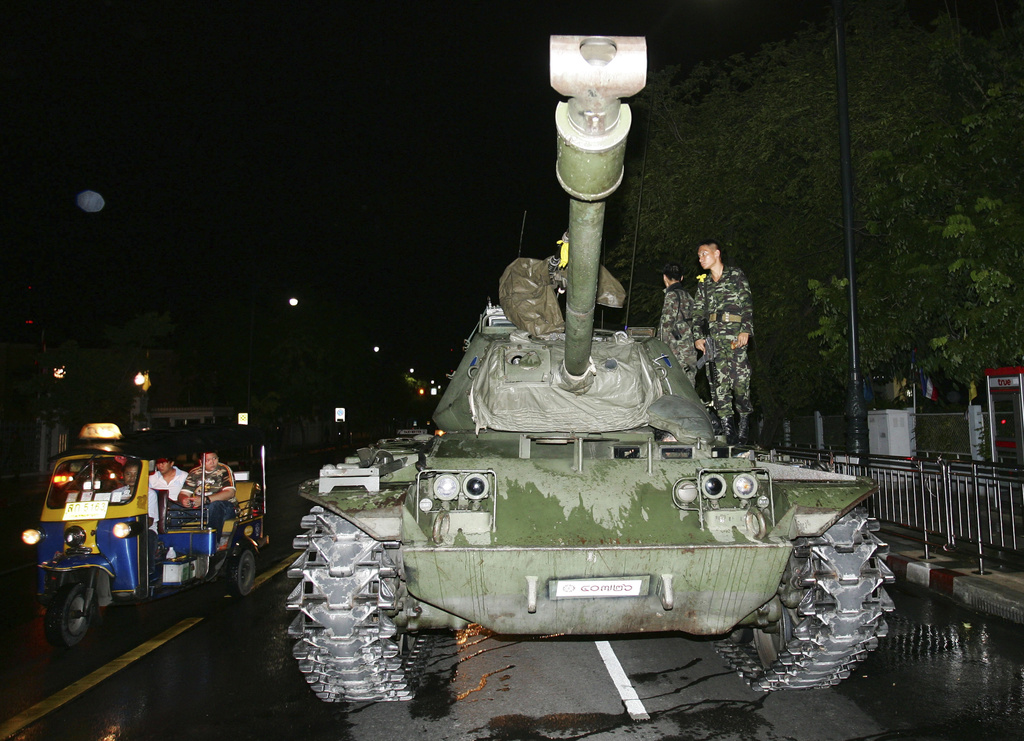
FILE – An anti government protester walks past a poster depicting ousted Thai Prime Minister Thaksin Shinawatra behind bars outside Government House in Bangkok, Thailand, Thursday July 3, 2008.(AP Photo/Sakchai Lalit, File)FILE – The Thai military ride on a tank launched a coup against Prime Minister Thaksin Shinawatra next to Government house in Bangkok, Thailand, Tuesday Sept. 19, 2006. (AP Photo/Sakchai Lalit,File)
His ouster in the coup in 2006 sparked nearly two decades of deep political polarization that pitted his supporters, particularly the less well-off who benefited from his policies, against a range of opponents including members of the urban classes, fervent royalists and the army.
Thaksin has rejected legal charges against him, mostly corruption-related, as politically motivated.
He had been abroad when the army took power but returned in 2008, after a new friendly civilian administration briefly ruled Thailand. However, he skipped bail that same year just before he was sentenced in connection with a real estate deal. He fled abroad, splitting his time mostly between London and Dubai and attending to a variety of business interests. In 2007, he had purchased the Premier League football club Manchester City, but he sold it about a year later.
IS THAKSIN STILL RELEVANT?
After his ouster, Thaksin remained a highly beloved figure to millions of voters who saw him as a symbol of a government that looked after their interests. Time and again, Thaksin-backed parties prevailed in national elections, but were unable to stay in office for long due to legal challenges — firmly aligned with the conservative establishment — and destabilizing street protests engineered by Thaksin’s die-hard foes.
Militant street action in 2010 by his supporters that virtually shut down central Bangkok for two months was suppressed by the army, with at least 90 people killed in the violence.
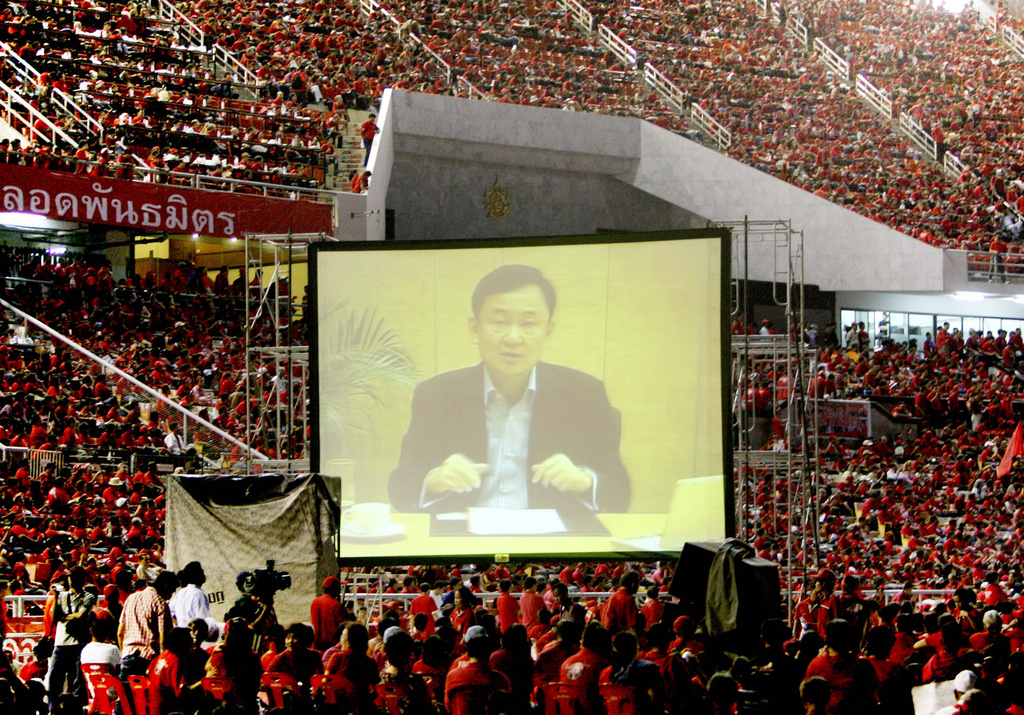
FILE – Pro-government and supporters of ousted Prime Minister Thaksin Shinawatra listen ousted Prime Minister Thaksin Shinawatra to speak from overseas exile to his supporters at Rajamangala national stadium in Bangkok, Thailand Saturday, Nov. 1, 2008. T(AP Photo/Sakchai Lalit,File)
In 2011, Thaksin’s sister Yingluck Shinawatra led the Pheu Thai party to an landslide election victory. But her government then floated a proposal for a political amnesty that could allow Thaksin to escape imprisonment, triggering a series of protests that turned violent, leading to another coup in 2014 that installed a purely military government. It stayed in place until 2019.
Thaksin’s desire to return home seemed finally possible as Thais last year headed to a general election in which the Pheu Thai party had been considered the frontrunner.
However, it fell behind the more progressive Move Forward party, whose proposals to reform the monarchy and the military resonated with large numbers of voters who were disenchanted by the army-backed governments.
Move Forward’s victory had rattled Thailand’s conservative establishment, apparently driving them to favor reconciliation with their old enemy Thaksin and his political machine over what looked to be a more dangerous threat to their interests.
The result was a governing coalition between military-backed conservative parties and Pheu Thai. Thaksin’s dramatic return came on the day the Pheu Thai party won enough votes in Parliament to lead the government. The party, in return, softened its anti-military line and many reform plans it had promised during the campaign.
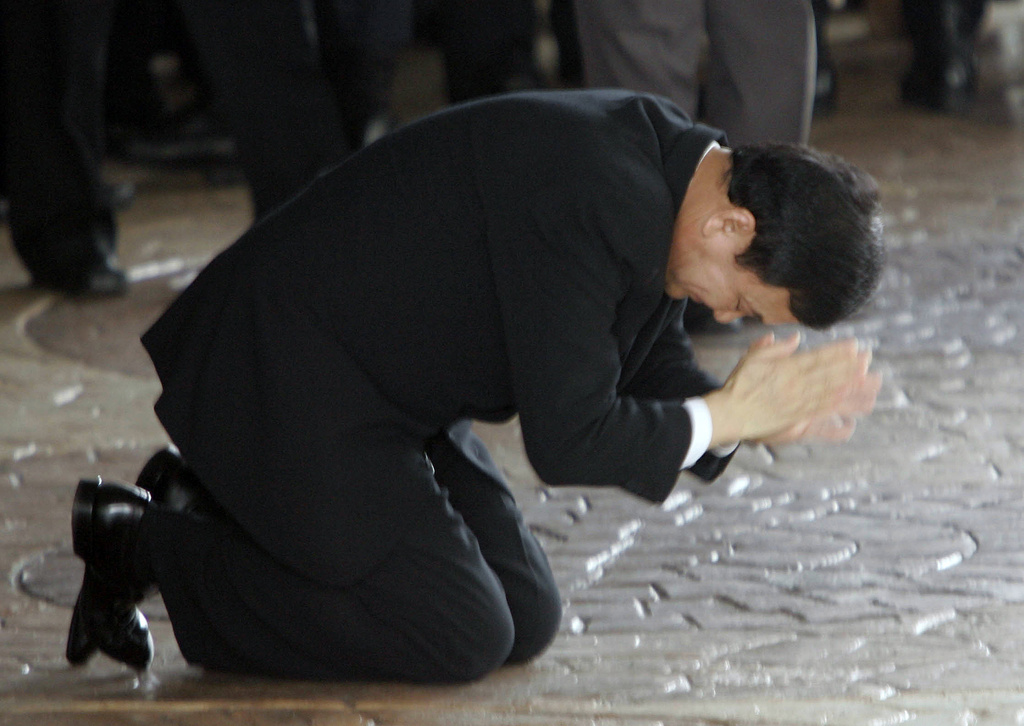
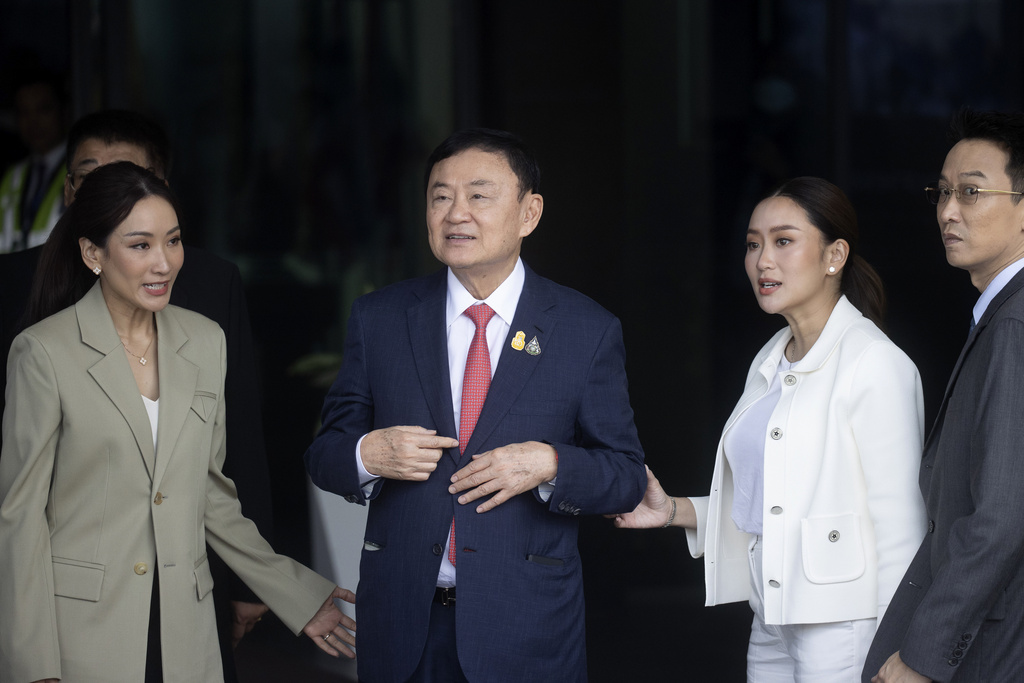
FILE – Deposed Prime Minister Thaksin Shinawatra knees down and greets on the ground after walking out of VIP room at Suvarnabhumi international airport shortly after his arrival Thursday, Feb. 28, 2008 in Bangkok, Thailand.(AP Photo/Apichart Weerawong,file)Thailand’s former Prime Minister Thaksin Shinawatra, second left, walks with his son Panthongtae, his daughters Pinthongta and Paetongtarn, second right, as he arrives at Don Muang airport in Bangkok, Thailand, Tuesday, Aug. 22, 2023. (AP Photo/Wason Wanichakorn)
ROYAL CLEMENCY
After returning to Bangkok in August last year, Thaksin was sent straight to prison to start serving his eight-year term. He was moved almost immediately to a hospital on grounds of ill health, and had his sentence commuted to a year by King Maha Vajiralongkorn. He remained in the hospital until he was paroled.
He emerged in public for the first time after six months, driven from the hospital to his residence in western Bangkok with a neck brace and an arm sling. Critics have charged that his abbreviated prison stay and relatively comfortable confinement in a hospital was a special privilege that reflected a deal he and his party made with their conservative foes.
Former Thai Prime Minister Thaksin Shinawatra, right, sits in a vehicle with his daughter Paetongtarn in front of his residence after being released on parole, Sunday, Feb. 18, 2024, in Bangkok, Thailand. (AP Photo/Wason Wanichakorn)
It is widely speculated that after the release, Thaksin will resume political activities and wield commanding influence over the Pheu Thai party. His daughter Paetongtarn heads the party and is considered a future prospective prime minister.
Thaksin meanwhile has not yet cleared all legal hurdles. The Office of the Attorney General said it is still investigating a charge of royal defamation that were made against Thaksin almost nine years ago. It could land him up to 15 years in prison if he is ever convicted.
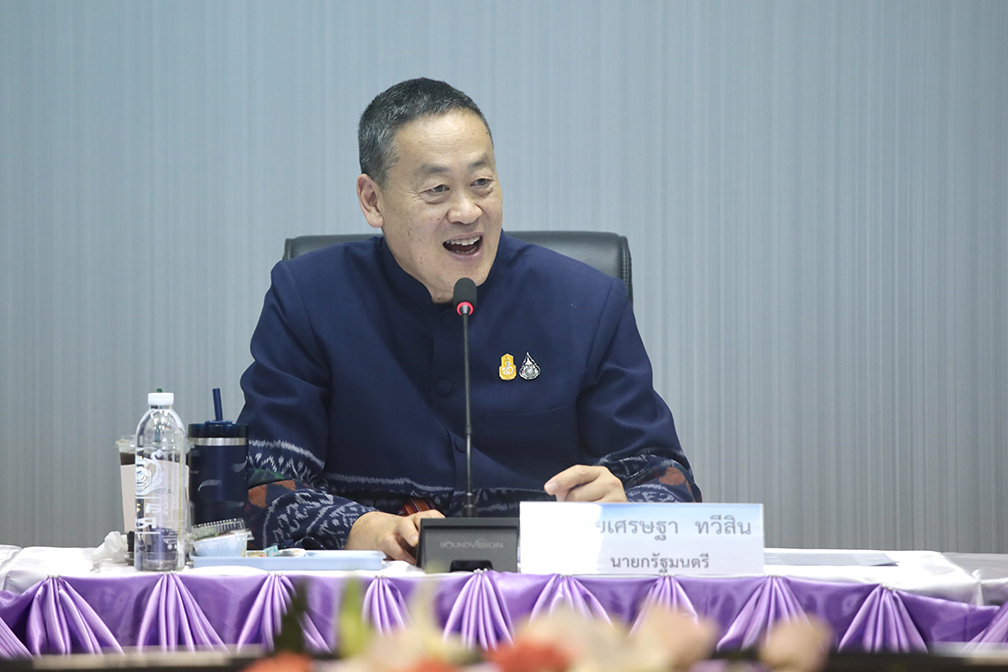
BANGKOK – Once again, the Thai Prime Minister has requested that the Bank of Thailand consider reducing policy interest rates in order to help people during this period of low inflation. He pleaded late at night.
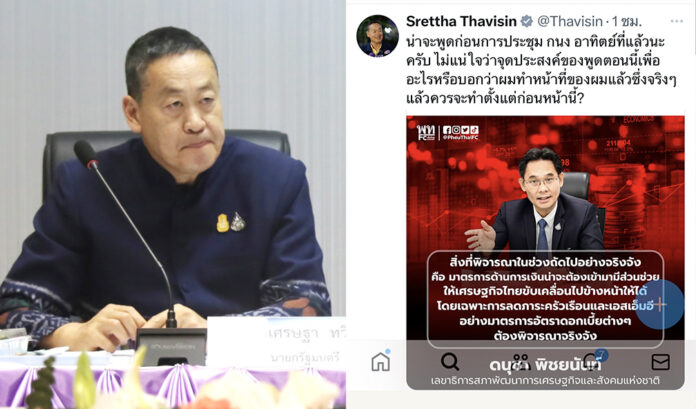
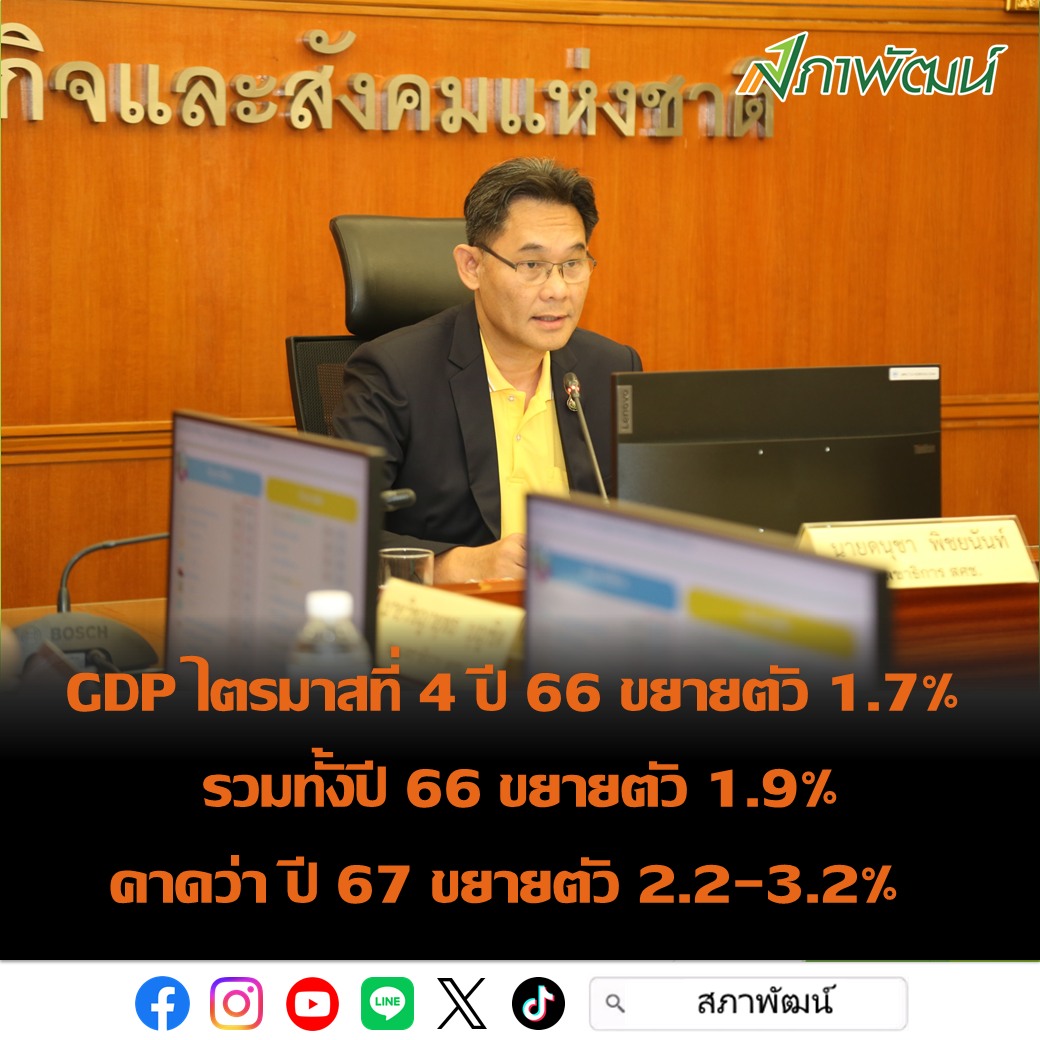
Prime Minister Srettha Thavisin addressed a message on the X in the middle of the night, pointing out that the Office of the National Economic and Social Development Council (NESDC) announced on Monday, February 19, that the Thai economy is in a critical state.
He noted that Danucha Pitchayanan, Secretary-General of the NESDB, emphasised that financial measures must be applied to assist propel the Thai economy forward, particularly by reducing the burden on individuals and SMEs through careful consideration of various interest rate measures.
“The NESDB Secretary-General agrees that interest rates should be reduced. I’d like to request that the Monetary Policy Committee hold an emergency meeting to discuss cutting interest rates before the regular meeting,” he added.
PM Settha also criticised Mr. Danucha, saying, “You should have spoken at the MPC meeting last week. I’m not sure what the goal of the remarks is, except to say that you did your job when you should have done it earlier.”
Danucha Pitchayanan, Secretary-General of the NESDB, holds a press conference to announce the Thai Gross Domestic Product (GDP) in the fourth quarter of 2023 and the economic projection for 2024.
Earlier, the Prime Minister answered questions from the media in Udon Thani Province on his request to the Bank of Thailand (BoT) to consider lowering interest rates, but received no response. The PM stated that he had spoken with Mr. Danucha, and Mr. Danucha stated that he had spoken with the governor of the Bank of Thailand that it is time to lower interest rates.
“So I asked him, Why don’t you speak in public? and use clear words. The NESDB Secretary-General, the Governor of the Bank of Thailand, and I are all economics graduates. We’re not here to defeat each other. But is it time for interest rate cuts yet?”The Prime Minister said.
He went on to remark, “I’m not just going to reduce interest rates. However, as we can see from the data, lowering interest rates is also a method of easing the burden on Thais as a whole. For example, we are working to provide the digital wallet scheme as soon as possible.”
According to the NESDC press release on February 19, 2024, the Thai economy in the fourth quarter of 2024 expanded only by 1.7 percent (%YoY), accelerating from a growth of 1.4 percent in the previous quarter. After being seasonally adjusted, the economy decreased by 0.6 percent from the third quarter (%QoQ sa). In 2023, the Thai economy expanded by 1.9 percent, decelerating from a 2.5-percent expansion in 2022.
BANGKOK – Prime Minister and Minister of Finance Srettha Thavisin said on February 19 that he had received reports of a large number of Russian tourists travelling to Thailand, but there are insufficient flights.
As a result, the Prime Minister stated that he would consult with Thai Airways about restarting the flight between Moscow and Bangkok. Thai Airways had already resumed flights between Istanbul and Bangkok; thus, he hopes that flights between Moscow and Bangkok will revive as well.
Srettha Thavisin
The Prime Minister stated that since the end of last year, when the visa exemption for Russian tourists expanded from 30 to 90 days, Russian travellers have entered Thailand throughout the Russian winter and stayed for prolonged periods of time. More than one million Russian tourists have expressed a willingness to visit Thailand this year, which is regarded welcome.
In October 2023, the Thai government approved a unilateral and temporary tourist visa exemption scheme for holders of Russian passports or travel documents entering the Kingdom of Thailand between November 1, 2023, and April 30, 2024, allowing them to stay for no more than 90 days. This intends to make it easier for Russian tourists to visit Thailand while also strengthening people-to-people ties between the two countries.
Thai Airways
Thai Airways International Public Company Limited (THAI) previously launched the round-trip Bangkok-Moscow route with its inaugural flight on November 1, 2005, operating 3 flights per week.
On March 24, 2020, Thai Airways announced that it would temporarily restrict flights to Europe, including Moscow, due to a pandemic. Several countries have stepped up their preventive measures, including countrywide lockdowns.
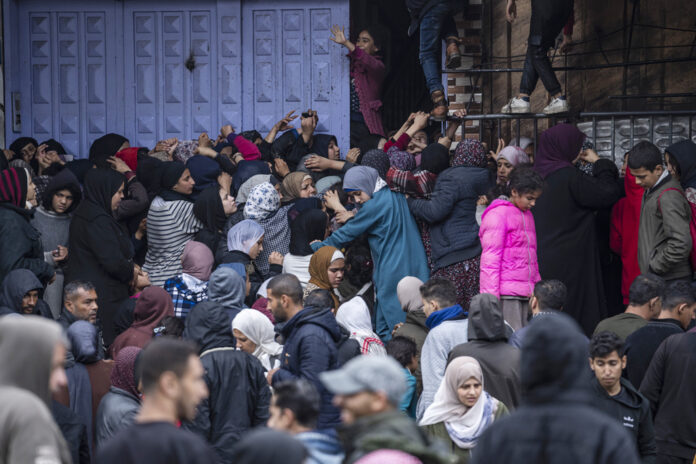
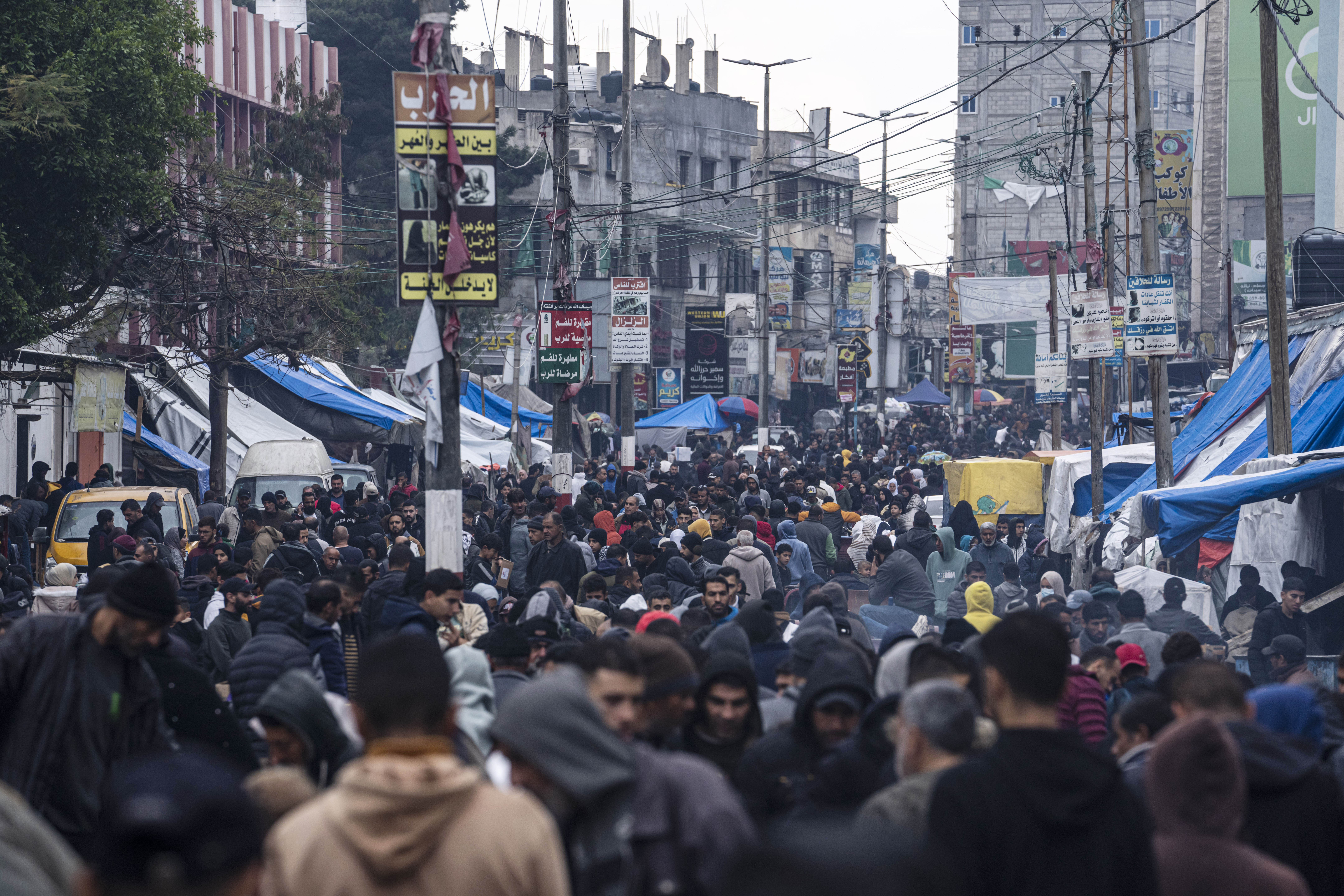
Palestinian crowds struggle to buy bread from a bakery in Rafah, Gaza Strip, Sunday, Feb. 18, 2024. (AP Photo/Fatima Shbair)
RAFAH, Gaza Strip (AP) — More than 29,000 Palestinians have been killed in the Gaza Strip since the start of the Israel-Hamas war, the territory’s Health Ministry said Monday, marking another grim milestone in the deadliest round of violence in the history of the Israeli-Palestinian conflict.
Israeli Prime Minister Benjamin Netanyahu has vowed to continue the offensive until “total victory” against Hamas, raising fears that troops will soon move into the southernmost town of Rafah on the Egyptian border, where over half of Gaza’s 2.3 million people have sought refuge from fighting elsewhere.
The United States, Israel’s top ally, says it is still working with mediators Egypt and Qatar to try to broker another cease-fire and hostage release agreement. But those efforts appear to have stalled in recent days, and Netanyahu angered Qatar, which has hosted Hamas leaders, bycalling on it to pressure the militant group.
Prime Minister Benjamin Netanyahu speaks during a gathering of Jewish leaders at the Museum of Tolerance in Jerusalem, Sunday, Feb. 18, 2024. (AP Photo/Ohad Zwigenberg)
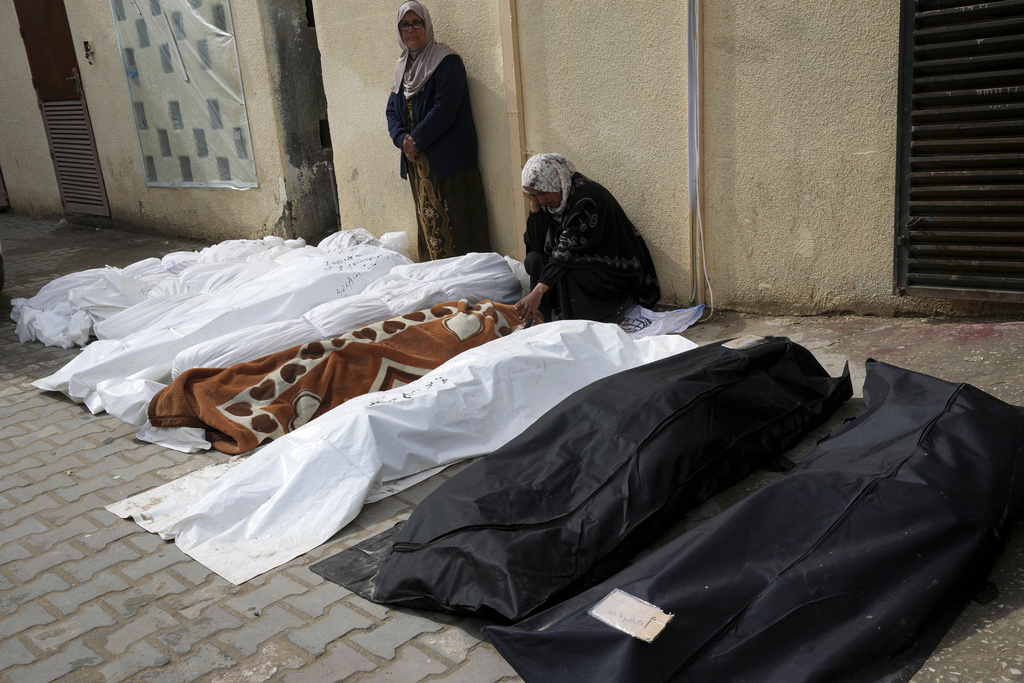
The Health Ministry said 107 bodies were brought to hospitals in the last 24 hours. That brings the total number of fatalities to 29,092 since the start of the war.
The ministry does not distinguish between civilians and combatants in its records, but says around two-thirds of those killed were women and children. More than 69,000 Palestinians have been wounded, overwhelming the territory’s hospitals, less than half of which are even partially functioning.
The Health Ministry is part of the Hamas-run government in Gaza but maintains detailed records of casualties. Its figures from previous wars in Gaza have largely matched those of U.N. agencies, independent experts and even Israel’s own tallies.
The war began when Hamas-led militants stormed into southern Israel from Gaza on Oct. 7, killing some 1,200 people, mostly civilians, and taking around 250 hostage.
More than 100 captives were released during a weeklong cease-fire in November in exchange for 240 Palestinians imprisoned by Israel. Militants still hold around 130, a fourth of them believed to be dead.
Palestinians mourn over their relatives killed in the Israeli bombardments of the Gaza Strip at Al Aqsa Hospital in Deir al Balah, Gaza Strip, on Sunday, Feb. 18, 2024. (AP Photo/Adel Hana)
Israel says it has killed over 10,000 Palestinian militants, without providing evidence. The military says it tries to avoid harming civilians and blames the high death toll on Hamas because the militant group fights in dense residential neighborhoods. The military says 236 of its soldiers have been killed since the start of the ground offensive in late October.
The war, which shows no sign of ending, has driven around 80% of the Palestinians in Gaza from their homes and has left a quarter of the population starving, according to U.N. officials.
On Sunday, Benny Gantz, a retired general and a member of Netanyahu’s three-man War Cabinet, warned that the offensive would expand to Rafah if the hostages are not freed by the start of the Muslim holy month of Ramadan, which is expected to begin around March 10. The month of dawn-to-dusk fasting is often a time of heightened tensions in the region.
The United States says it is still pushing for a truce and hostage-release, and that it would veto a U.N. Security Council resolution calling for an immediate cease-fire because it conflicts with those efforts.
Hamas has said it won’t release all of the remaining hostages until Israel ends the war and withdraws from Gaza. It is also demanding the release of hundreds of Palestinian prisoners, including top militants.
International aid agencies say Gaza is suffering from shortages of food, medicine and other basic supplies as a result of the war between Israel and Hamas. (AP Photo/Fatima Shbair)
Netanyahu has rejected those demands, calling them “delusional.” In a speech before American Jewish leaders on Sunday, he said pressure should be applied on Qatar, which played a key role in mediating last year’s cease-fire and hostage release deal.
“Qatar can press Hamas as no one else can. They host Hamas leaders, Hamas is dependent on them financially,” Netanyahu said. “I urge you to press Qatar to press Hamas because we want our hostages released.”
Qatar’s Foreign Ministry spokesperson, Majed al-Ansari, dismissed Netanyahu’s remarks as “a new attempt to stall and prolong the war for reasons that have become obvious to everyone,” alluding to the Israeli leader’s domestic political troubles.
Qatar denies funding Hamas and says its provision of aid to Gaza in recent years was carried out in full coordination with Israel, the U.S. and other parties.
“The Israeli prime minister knows very well that Qatar has been committed from day one to mediation efforts, ending the crisis and freeing the hostages,” al-Ansari said.
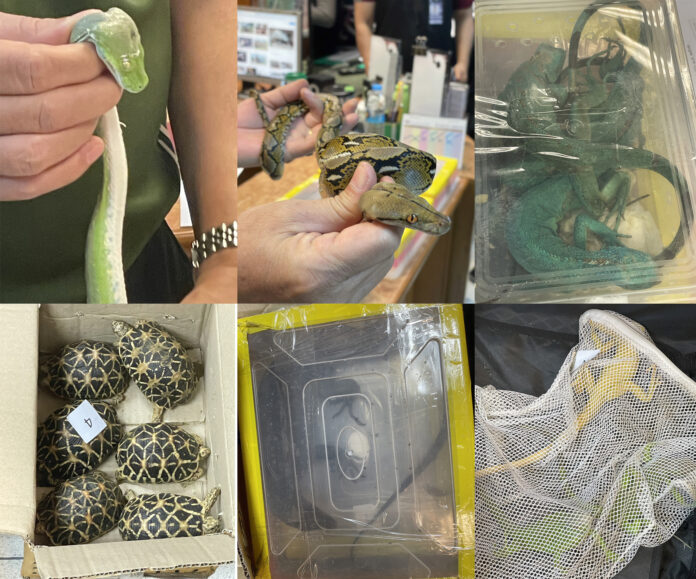
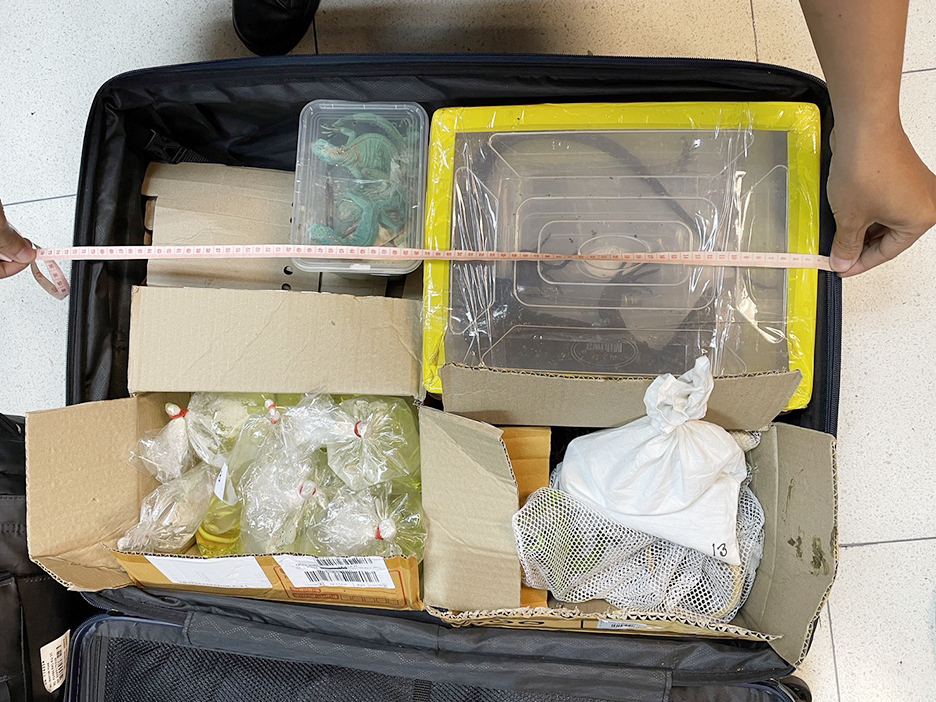
The animals were discovered in the luggage of a Mongolian passenger.
SUVARNABHUMI – Thai authorities apprehended a Mongolian passenger who attempted to transport live animals out of the Kingdom, including CITES-listed animals.
The Suvarnabhumi Airport Customs Control Section of the Investigation and Suppression Department collaborated with the National Park Department. Wildlife and Plant Conservation Department of Fisheries and Airports of Thailand Public Company Limited takes this kind of smuggling very seriously.
This Mongolian man attempted to go to Mongolia’s capital, Ulaanbaatar, from Suvarnabhumi Airport, where animals were detected under control under the Convention on International Trade in Endangered Species of Wild Fauna and Flora (CITES).
The Mongolian passenger’s suitcase is filled with wild animals.A Siamese fighting fish
The animals discovered in the luggage include two Komodo dragons and six Indian star tortoises, both of which are on the CITES list Appendix I, as well as eight iguanas, five Burmese pythons, and one reticulated python on Appendix II.
In addition, 46 live fish were discovered, including 22 guppies and two Siamese fighting fish. All of the animals in the passenger’s luggage were intended for check-in on the plane.
Mr. Panthong Loikunnan, a Customs Department official, stated that the passenger’s attempt to export out of the Kingdom is already illegal under the Convention on International Trade, which regulates specific species, including CITES-listed wild animals and plants. The man also violated the Wildlife Preservation and Protection Act, the Animal Epidemics Act, and the Royal Fisheries Decree.
BANGKOK – Sudawan Wangsupakitkosol, Minister of Tourism and Sports, announced that “The White Lotus” series productions, which Lisa, a Thai-born superstar of K-pop Blackpink, will join in the series Season 3, have begun in Koh Samui, Phuket, and Bangkok.
On Instagram, the show’s official account, “thewhitelotus and streamonmax,” last week shared a picture of a clapperboard and stated that “unforgettable experiences are in the making at #TheWhiteLotus. We are eager to welcome new guests to our resort in Thailand.”
On February 13, it was revealed that Lisa Blackpink is joining the cast of the third season to make her acting debut.
Instagram: lalalalisa_m
The Tourism Authority of Thailand (TAT) is supporting the use of filming locations in Koh Samui, Phuket, and Bangkok and expects that the series, similar to “The Beach,” will create demand among viewers to follow in her footsteps and visit Thailand.
“The government has supported foreign film productions to come and shoot in Thailand. This is done through incentives such as a cash rebate of 20-30 percent of the total investment,” the tourism minister said.
She expalined the main benefit is 20 percent for investments of at least 100 million baht. Further concessions can be up to 10 percent. There is also an additional discount of 3 percent if 50 percent of the shooting days take place in secondary tourist cities. A further 5 percent is granted for the promotion of soft power and Thailand’s positive image and 3 percent for the recruitment of key Thai personnel.”
There is currently a maximum spending cap of 750 million baht for films shot in Thailand. The Ministry of Tourism is proposing that the government consider whether or not to lift the cap for big-budget films that require more than 750 million baht to shoot in Thailand. This would accommodate film productions that need to spend large sums, which would also lead to high domestic spending.
The data shows that in 2019, before the COVID-19 pandemic, Thailand earned 4.46 billion baht from foreign film productions. In 2021, despite the ongoing pandemic, film productions still came to Thailand, generating 5 billion baht in revenue. Revenues for 2022-2023 was around 6 billion baht.
Bangkok Produce and Alliances Spearhead Cutting-Edge Traceability and Satellite Tech to Battle PM2.5 Problem
Bangkok Produce Merchandising Public Company Limited, a subsidiary of the leading agri-food conglomerate Charoen Pokphand Foods Public Company Limited (CP Foods), is at the forefront of a unified campaign with governmental bodies, business partners, and farmers to address the ongoing PM2.5 dust challenge.
This initiative encourages farmers to cease the practice of crop burning in preparation for the upcoming planting season, as part of the “Partner to Green: Corn Suppliers Fighting Haze Alliance Project.”
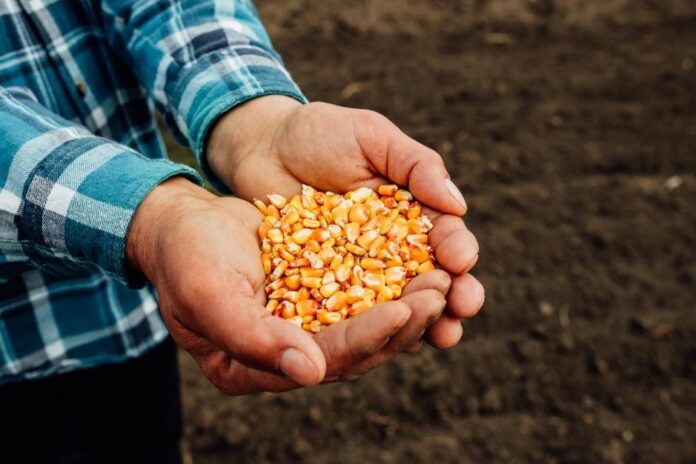
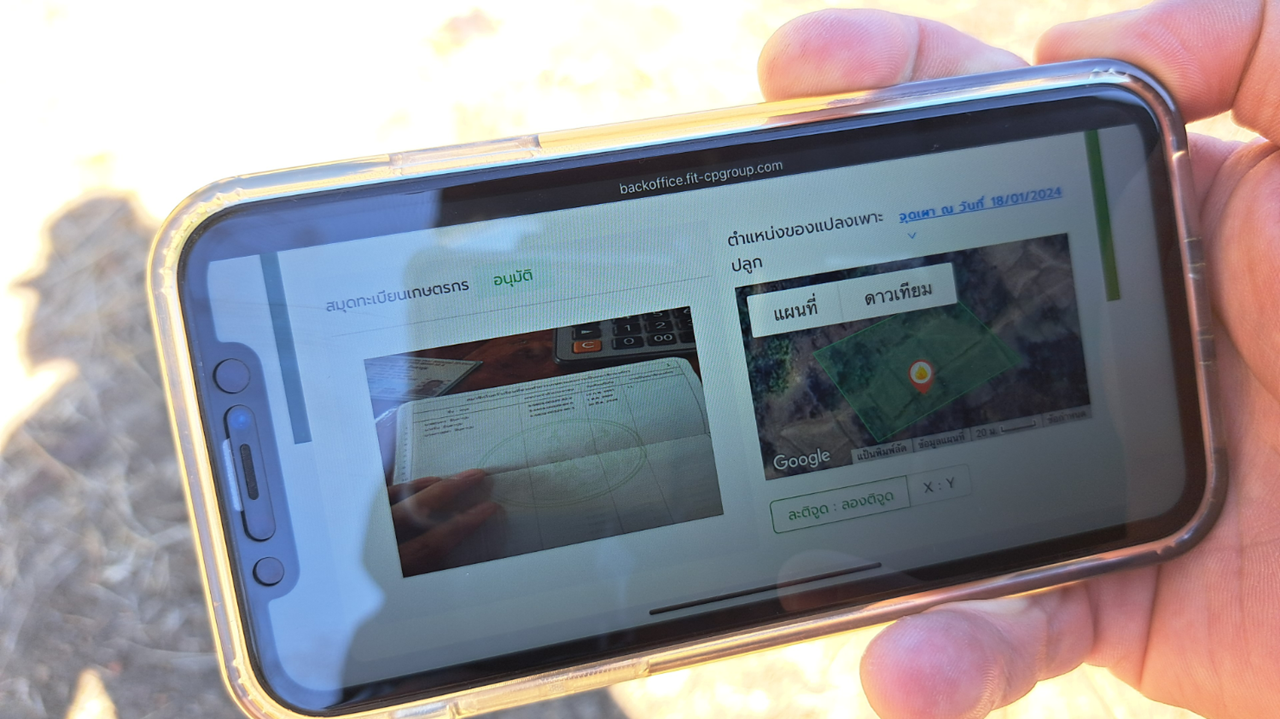
The alliance employs Satellite Imaging Technology to significantly diminish, and ultimately aim to eradicate, the burning practices in its corn supply chain. The company invites the Thais people to help monitor and report crop burning incidents via the “F.Farm” application, fostering a collaborative approach to mitigate environmental concerns.
The “Partner to Green: Corn Supplier Allies Fighting Haze” scheme, initiated by Bangkok Produce, signifies a coordinated endeavor between public institutions, private sectors, and corn growers, organized as a Public-Private Partnership. This strategy aims to manage the corn supply chain for animal feed responsibly.
Focused on environmental preservation and public health protection, this program aligns with Charoen Pokphand Group’s policy to refrain purchasing or importing corn from deforested areas and locations susceptible to crop burning. The initiative involves sharing daily satellite imagery updates of hotspots with local corn collectors, thereby enabling targeted monitoring of burning activities.
When burning is detected, company officials and partners quickly visit the site to engage with farmers and verify the incidents. Should repeated burning be identified, the company will enforce a suspension of corn purchases from the implicated plot for one year.
Furthermore, Bangkok Produce advocates for public engagement in overseeing agricultural burning activities. This advocacy is supported through a reporting channel for corn crop burning via the “F.Farm” application or the corn traceability system website. This collaborative effort seeks to eradicate smoke and haze issues, leveraging the Corn Traceability system developed by Bangkok Produce since 2016 for sourcing traceable animal feed corn.
This system digitally records essential farmer information and cultivation plots, ensuring the sourced corn is from explicit source, non-deforested, and non-burnt areas. The integration of blockchain technology has enhanced the data’s reliability and transparency.
In addition to efforts to halt crop burning and mitigate smoke and haze sources, Bangkok Produce has partnered with government agencies to impart knowledge to corn farmers, raising them to Good Agricultural Practices (GAP) standards for more effective and sustainable cultivation.
The “F.Farm” app development supports corn growers by providing access to vital information, such as rainfall, temperature, and fertilization tips, aiding in boosting productivity and income, and promoting a responsible corn supply chain for animal feed.
Launched in 2016, the corn traceability system was Thailand’s inaugural initiative for sourcing a feed raw material capable of tracing back to its origin. Currently, over 40,000 corn farmers and more than 600 agricultural collectors are enrolled to market their produce through the system, covering an area exceeding 2 million rai. This ensures that the food’s origin is not linked to deforestation or burning practices, contributing to the resolution of the haze and PM 2.5 issues and the sustainable reduction of greenhouse gas emissions.
This initiative underscores Bangkok Produce and CP Foods’ commitment to responsible agricultural sourcing and traceability. Bangkok Produce is expanding the corn traceability system to seven countries, including Laos, Cambodia, Vietnam, Myanmar, the Philippines, India, and Bangladesh, with a plan to digitize corn sourcing data from Myanmar within this year as well.