





























37.8 C
Bangkok
Friday, June 26, 2026
Home Blog Page 972

Get Ahead of Competitors with Digital Marketing in Bangkok

Beat Your Competitors with Digital Marketing in Bangkok

Business competition is a constant struggle. Every time you think your brand is on the winning track, a new brand is launched, or a competitor launches a new product that threatens your success in the marketplace. To effectively market online, you have to be constantly working at it. But you and your employees only have so much time in a day. Effective digital marketing in Bangkok requires that your brand team up with an agency that provides this consistent focus on the digital marketing side of things so that you can concentrate on the business of your brand.

Roles of Effective Digital Marketing

By partnering with an experienced and talented digital marketing agency in Bangkok, you effectively threaten the market share of your industry competitors. You’ve freed yourself and your employees to do what you do best. You can produce the very best products your brand is capable of to capture the attention of your target customers.  

While you concentrate on your business, you turn over your digital marketing to a team that has years of experience in the field. They know how to increase your brand awareness across the internet, improve your conversion rates and drive a big increase in the amount of traffic to your website. 

As Involved as You Want to Be

Initially, it’s important that you be involved as your brand’s marketing strategy is being formulated and a plan of action is being put together. But the beautiful thing about teaming up with an experienced partner is that once the marketing parameters have been defined, you can be as involved in the day-to-day marketing activities as you want to be or leave the marketing to the experts. 

An experienced digital marketing agency can perform an audit on your website, improve the site, and implement the tasks outlined in the marketing strategy. 

They can take care of refreshing the content on your website to include all the relevant keywords used by people searching for your type of products. This content can also be improved to be more informative and provide a clearer understanding of your brand message, products, and features. 

They can embark on a campaign of link building that will increase brand awareness on sites where your target audience may not be familiar with your brand. 

They’ll also begin several social media and display ad campaigns across the relevant platforms frequented by your audience demographic. The sales and conversion data will be recorded and presented to you regularly in an easy-to-understand graphic format. You can make any adjustments to the strategy based on the data that you think might improve the brand’s performance.  

Partner with One of the Best

Primal is an award-winning digital marketing agency in Bangkok that can free you and your employees from all the chores and responsibilities of digital marketing. Find out more about the benefits of teaming up with an experienced digital marketing agency. Contact Primal today to schedule a consultation. 
Advertisement

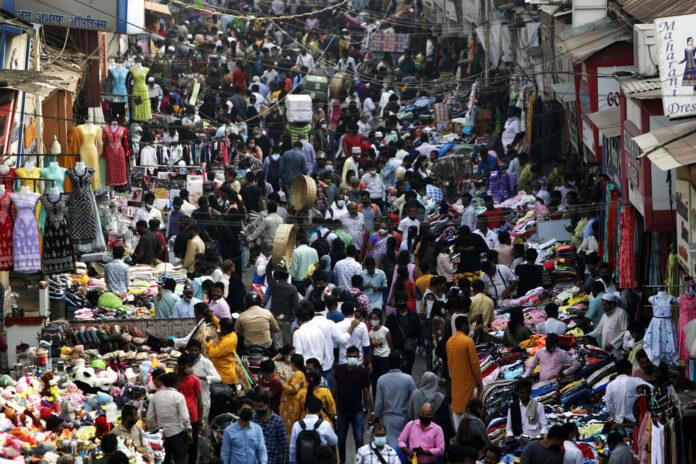
UN Projects World Population Will Reach 8 Billion on Nov. 15

FILE - Indians wearing face masks as a precaution against the COVID-19, crowd a market, in Mumbai, India, on Jan. 7, 2022. Photo: Rajanish Kakade / AP File

UNITED NATIONS (AP) — The United Nations estimated Monday that the world’s population will reach 8 billion on Nov. 15 and that India will replace China as the world’s most populous nation next year.

In a report released on World Population Day, the U.N. also said global population growth fell below 1% in 2020 for the first time since 1950.

According to the latest U.N. projections, the world’s population could grow to around 8.5 billion in 2030, 9.7 billion in 2050 and a peak of around 10.4 billion during the 2080s. It is forecast to remain at that level until 2100.

The report says more than half the projected increase in population up to 2050 will be concentrated in just eight countries: Congo, Egypt, Ethiopia, India, Nigeria, Pakistan, the Philippines and Tanzania.

The report, “World Population Prospects 2022,” puts the world’s population at 7.942 billion now and forecasts it will reach 8 billion in mid-November.

John Wilmoth, director of the U.N. Population Division, said at a news conference to release the report that the date when the U.N.’s projection line crosses 8 billion is Nov. 15.

But, he noted, “we do not pretend that that’s the actual date … and we think that the uncertainty is at least plus or minus a year.”

Nonetheless, U.N. Secretary-General Antonio Guterres called 2022 a “milestone year,” with “the birth of the Earth’s eight billionth inhabitant.”

“This is an occasion to celebrate our diversity, recognize our common humanity, and marvel at advancements in health that have extended lifespans and dramatically reduced maternal and child mortality rates,” Guterres said in a statement. “At the same time, it is a reminder of our shared responsibility to care for our planet and a moment to reflect on where we still fall short of our commitments to one another.”

The report projects that next year India, with a current population of 1.412 billion, will surpass China, with a current population of 1.426 billion, but Wilmoth said there is more uncertainty about that date than the Earth reaching 8 billion inhabitants on Nov. 15.

Wilmoth said the U.N. moved the date forward from 2027, especially as a result of China’s 2020 census. India had been planning its census in 2021, but he said it was delayed because of the pandemic. The U.N. will reassess its projection after it takes place.

The U.N. projects that in 2050 the United States will remain the third most populous country in the world, behind India and China. Nigeria is projected to be No. 4, followed by Pakistan, Indonesia, Brazil, Congo, Ethiopia and Bangladesh. Russia and Mexico, which are in the top 10 most populous countries in 2022, are projected to lose their ninth and 10th spots in 2050.

“The population of 61 countries or areas are projected to decrease by 1% or more between 2022 and 2050,” the report says.

“In countries with at least half a million population, the largest relative reductions in population size over that period, with losses of 20% or more, are expected to take place in Bulgaria, Latvia, Lithuania, Serbia and Ukraine.”

In other highlights, the report said global life expectancy improved almost 9 years from 1990 — to 72.8 years for babies born in 2019 — and is projected to reach 77.2 years in 2050 as death rates continue to decrease. But in 2021, it said, life expectancy in the world’s poorest countries lagged 7 years behind the global average.

As for gender balance, the report says, “Globally, the world counts slightly more men (50.3%) than women (49.7%) in 2022.” “This figure is projected to slowly invert over the course of the century,” it says. “By 2050, it is expected that the number of women will equal the number of men.”

The share of working age people between ages 25 and 64 has been increasing in most countries of sub-Saharan Africa, parts of Asia and in Latin America and the Caribbean “thanks to recent reductions in fertility,” the report says.

The U.N. said this “demographic dividend” provides an opportunity for accelerated economic growth for those countries.

In another trend, the report said, “the population above age 65 is growing more rapidly than the population below that age.”

“As a result, the share of global population at age 65 and above is projected to rise from 10% in 2022 to 16% in 2050,” it said.

Wilmoth said high life expectancy and very low levels of fertility and birth rates in European countries, Japan, North America, Australia and New Zealand are driving the tendency toward rapid population aging, and eventually potential population declines.

As a result, over the next few decades, international migration “will be the sole driver of population growth in high-income countries,” the report said.

“By contrast, for the foreseeable future, population increase in low-income and lower-middle-income countries will continue to be driven by an excess of births over deaths,” it said.

___

Story: Edith M. Lederer.

Advertisement

Far Out: NASA Space Telescope’s 1st Cosmic View Goes Deep

This image provided by NASA on Monday, July 11, 2022, shows galaxy cluster SMACS 0723, captured by the James Webb Space Telescope. Photo: NASA/ESA/CSA/STScI via AP

Our view of the universe just expanded: The first image from NASA’s new space telescope unveiled Monday is brimming with galaxies and offers the deepest look of the cosmos ever captured.

The first image from the $10 billion James Webb Space Telescope is the farthest humanity has ever seen in both time and distance, closer to the dawn of time and the edge of the universe. That image will be followed Tuesday by the release of four more galactic beauty shots from the telescope’s initial outward gazes.

The “deep field” image released at during a brief White House event is filled with lots of stars, with massive galaxies in the foreground and faint and extremely distant galaxies peeking through here and there. Part of the image is light from not too long after the Big Bang, which was 13.8 billion years ago.

President Joe Biden marveled at the image that he said showed “the oldest documented light in the history of the universe from over 13 billion — let me say that again — 13 billion years ago. It’s hard to fathom.”

The busy image with hundreds of specks, streaks, spirals and swirls of white, yellow, orange and red is only “one little speck of the universe,” NASA Administrator Bill Nelson said.

“What we saw today is the early universe,” Harvard astronomer Dimitar Sasselov said in a phone interview after the reveal.

Sasselov said he and his colleague Charles Alcock first thought “we’ve seen this before.” Then they looked closer at the image and pronounced the result not only beautiful but “worth all that waiting” for the much-delayed project.

And even more is coming Tuesday. The pictures on tap include a view of a giant gaseous planet outside our solar system, two images of a nebula where stars are born and die in spectacular beauty and an update of a classic image of five tightly clustered galaxies that dance around each other.

The world’s biggest and most powerful space telescope rocketed away last December from French Guiana in South America. It reached its lookout point 1 million miles (1.6 million kilometers) from Earth in January. Then the lengthy process began to align the mirrors, get the infrared detectors cold enough to operate and calibrate the science instruments, all protected by a sunshade the size of a tennis court that keeps the telescope cool.

The plan is to use the telescope to peer back so far that scientists will get a glimpse of the early days of the universe about 13.7 billion years ago and zoom in on closer cosmic objects, even our own solar system, with sharper focus.

How far back past 13 billion years did that first image look? NASA didn’t provide any estimate Monday. Outside scientists said those calculations will take time, but they are fairly certain somewhere in the busy image is a galaxy older than humanity has ever seen, probably back to 500 million or 600 million years after the Big Bang.

“It takes a little bit of time to dig out those galaxies,” University of California, Santa Cruz, astrophysicist Garth Illingworth said. “It’s the things you almost can’t see here, the tiniest little red dots.”

“This is absolutely spectacular, absolutely amazing,” he added. “This is everything we’ve dreamed of in a telescope like this.”

Webb is considered the successor to the highly successful, but aging Hubble Space Telescope. Hubble has stared as far back as 13.4 billion years. It found the light wave signature of an extremely bright galaxy in 2016. Astronomers measure how far back they look in light-years with one light-year being 5.8 trillion miles (9.3 trillion kilometers).

“Webb can see backwards in time to just after the Big Bang by looking for galaxies that are so far away that the light has taken many billions of years to get from those galaxies to our telescopes,” said Jonathan Gardner, Webb’s deputy project scientist said during a June media briefing.

The deepest view of the cosmos “is not a record that will stand for very long,” project scientist Klaus Pontoppidan said during the briefing, since scientists are expected to use the Webb telescope to go even deeper.

At 21 feet (6.4 meters), Webb’s gold-plated, flower-shaped mirror is the biggest and most sensitive ever sent into space. It’s comprised of 18 segments, one of which was smacked by a bigger than anticipated micrometeoroid in May. Four previous micrometeoroid strikes to the mirror were smaller. Despite the impacts, the telescope has continued to exceed mission requirements, with barely any data loss, according to NASA.

NASA is collaborating on Webb with the European and Canadian space agencies.

“I’m now really excited as this dramatic progress augurs well for reaching the ultimate prize for many astronomers like myself: pinpointing “Cosmic Dawn” — the moment when the universe was first bathed in starlight,” Richard Ellis, professor of astrophysics at University College London, said by email.

___

Story: Seth Borenstein. AP Aerospace Writer Marcia Dunn contributed.

Advertisement

“AIS Aunjai Cyber” teams with “Joylada” on Edutainment strategy to level up Thai digital skills First ever Digital Literacy concept of “Chat Novels” to educate cyber threats  Highlighting 7 key skills to cope with cyber threats

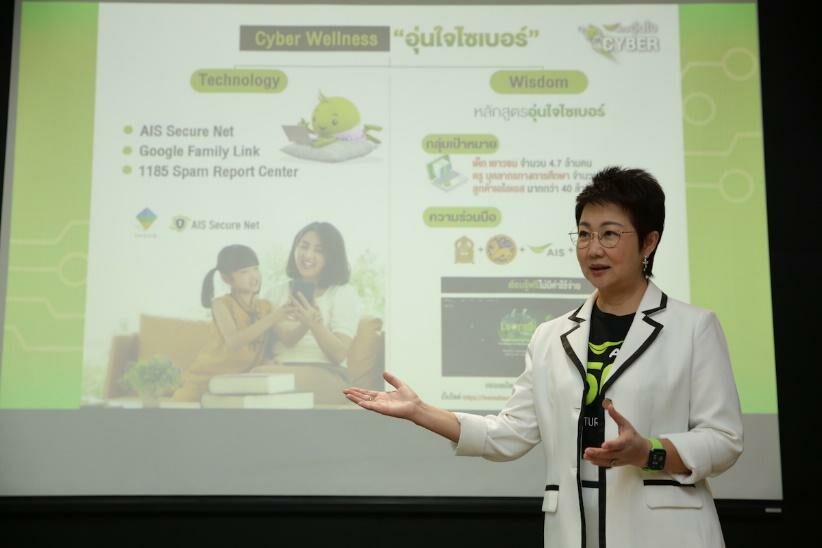
Alongside its mission of rolling out digital infrastructure for Thai people, AIS has a commitment to promote Digital Literacy among customers, public at large and society. People should be aware of the many forms of cyber threat from the Internet or social media. As a leading digital life service provider, AIS works hand in hand with a wide range of partners from both the state and private sectors, with an aim of creating a new standard index of digital skills for Thais and developing the Aunjai Cyber course on platforms giving Thais access to learn and measure their level of dealing with various kinds of cyber threat.

To expand the education content to variety of group especially the NEXT GEN under “Edutainment Strategy” to deploy a distinctive and creative new format of presentation. This is how AIS came to partner “Joylada”, Thailand’s leading storytelling chat platform with over 10 million downloads. The two partners have complementary strengths with know-how and tech from AIS, while Storytelling about cyber threats comes in the form of 7 chat novels emphasizing 7 key skills everyone should know in the cyber age, under the campaign, “Let’s Level up our knowledge for digital happiness.”

image3 132

Saichon Submakudom, Head of Public Relations at AIS, noted that user safety is a matter of building cyber-immunity and preventing risks from internet usage. It is about promoting Digital Literacy, a crucial mission for AIS as a network service provider and Thailand’s leading digital life service provider. The AIS Aunjai Cyber program has two main lines of action:

1.) Building know-how, stimulating awareness, and promoting the digital skills to cope with hazards and impacts from misuse of the internet and other technology. The company has formed a wide range of partnerships, such as with King Mongkut University of Technology Thonburi and the Department of Mental Health, to develop a course promoting digital literacy among Thai netizens, audited by the Ministry of Education. It is the first course in Digital Literacy of its kind in Thailand and enables us to take Thai society to the next level by creating new standards of learning and measuring digital skills.

2.) Protecting against cyber threats by developing tech tools and digital services such as AIS Secure Net, Google Family Link, and at latest, the 1185 hotline of the AIS Spam Report Center. 

As Saichon explained, “Last year, we held a contest of marketing communication plans in collaboration with the Faculty of Management at Kasetsart University’s Sriracha campus. The research results revealed by the students were fascinating in relation to the young generation’s consumption of media. Social media is not the only channel for this generation, as there is a range of new platforms accommodating modern lifestyles such as Joylada. This is the most popular storytelling chat platform and matches our intentions to communicate the content of this course in exciting new forms and methods, called Edutainment. Technical or academic content is easily transformed to be much more interesting. Therefore, we started collaborating with Joylada, to convert the content of our course into a chat story for the first time in Thailand. It gets across the issues of cyber threats and ways to deal with them, as well as basic digital skills for Thai people, spread over seven stories on the Joylada platform.”

image2 13

Sattra Viriyacharoentham, Joylada Managing Director, added, “We are extremely excited to be part of the AIS Aunjai Cyber Program, because cyber threats are having an increasing impact on a wider number of people. As a platform which is part of the younger generation’s lifestyle, with over 10 million downloads, which also gives high priority to this matter, we want the Joylada community to be a creative and safe space for our users. This collaboration with AIS enables us to leverage our platform’s capabilities while bringing in writers and content creators to join in creating content from the Aunjai Cyber course into 7 chats novels. These will illuminate various aspects of cyber threats, which will give readers both entertainment from the story content and awareness of how to deal with cyber threats. In the long run, we want our Joylada community to be part of addressing society’s issues, and particularly taking on cyber threats with our unique capabilities.”

image5 92

The collaboration between AIS Aunjai Cyber and Joylada is presenting content and facts about cyber threats from the Aunjai Cyber Course. These have been created into 7 chat novels by the most popular writers on Joylada, reflecting 7 issues and 7 skills to recognize cyber threats when they arise from the use of the Internet or online media.

  • Cyber Balance – Skills for screen management
  • Cyber Security – Managing personal cyber security
  • Cyber Ability – Up-to-date skills and knowledge
  • Cyber Safety – From online cyber-bullying
  • Cyber Identification – Cyber citizen’s ID / Cyber Empathy – Cyber manners
  • Cyber Rights – Managing privacy
  • Cyber Communication – Online footprint

All of the content is created to be fun and easy to understand in the Joylada style, with the chat novels disseminated through the Joylada app and the Microsite (joylada.com/aisxjoylada). There are also many other activities to creatively and safely promote online know-how and skills. Anytime somebody reads something, a donation is made to Childline Thailand Foundation’s SaiDek 1387 hotline, the under the campaign “Let’s level up”.

image4 118

Saichon concluded, “We never stop asking questions to find out new ways for Thai people to gain digital skills and understanding to keep up with cyber threats. We will continue to work with partners to expand the requisite know-how and tools to every segment of Thai society. As of today, AIS has enhanced its goals to promote Digital Literacy to a new standard, with a tangible index of skill levels to cope with cyber threats. This process will enable us to deliver our mission of promoting Digital Literacy sustainably.”

Advertisement

CP Foods joins forces with SeaBOS to advance Ocean Sustainability Efforts

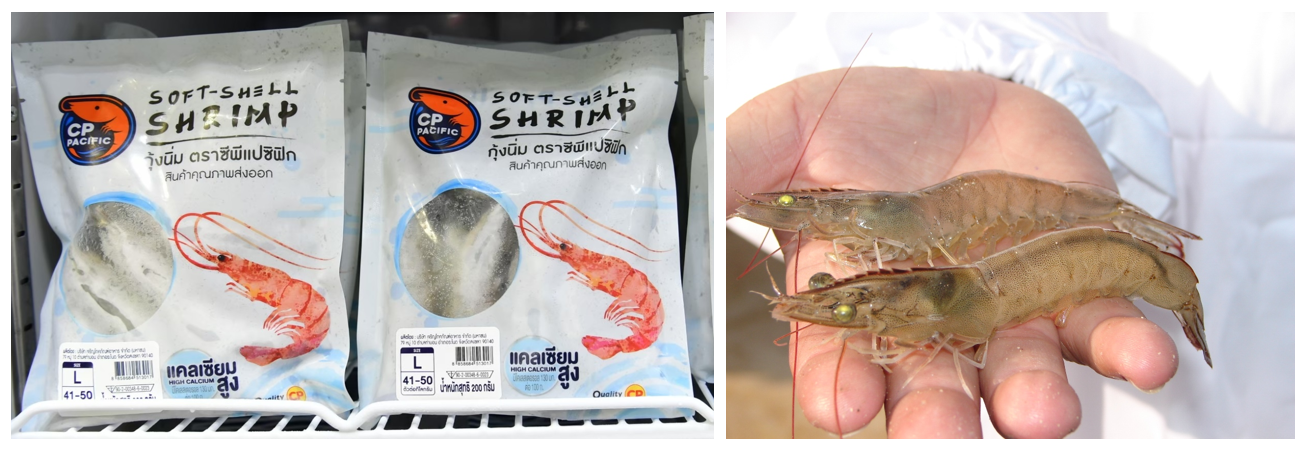
Charoen Pokphand Foods PCL (CP Foods), Thai agro-industrial conglomerate and leading global shrimp producer, jointly announced progress made on reducing antibiotics in aquaculture and seafood sustainability efforts as a part of the Seafood Business for Ocean Stewardship (SeaBOS) initiative.

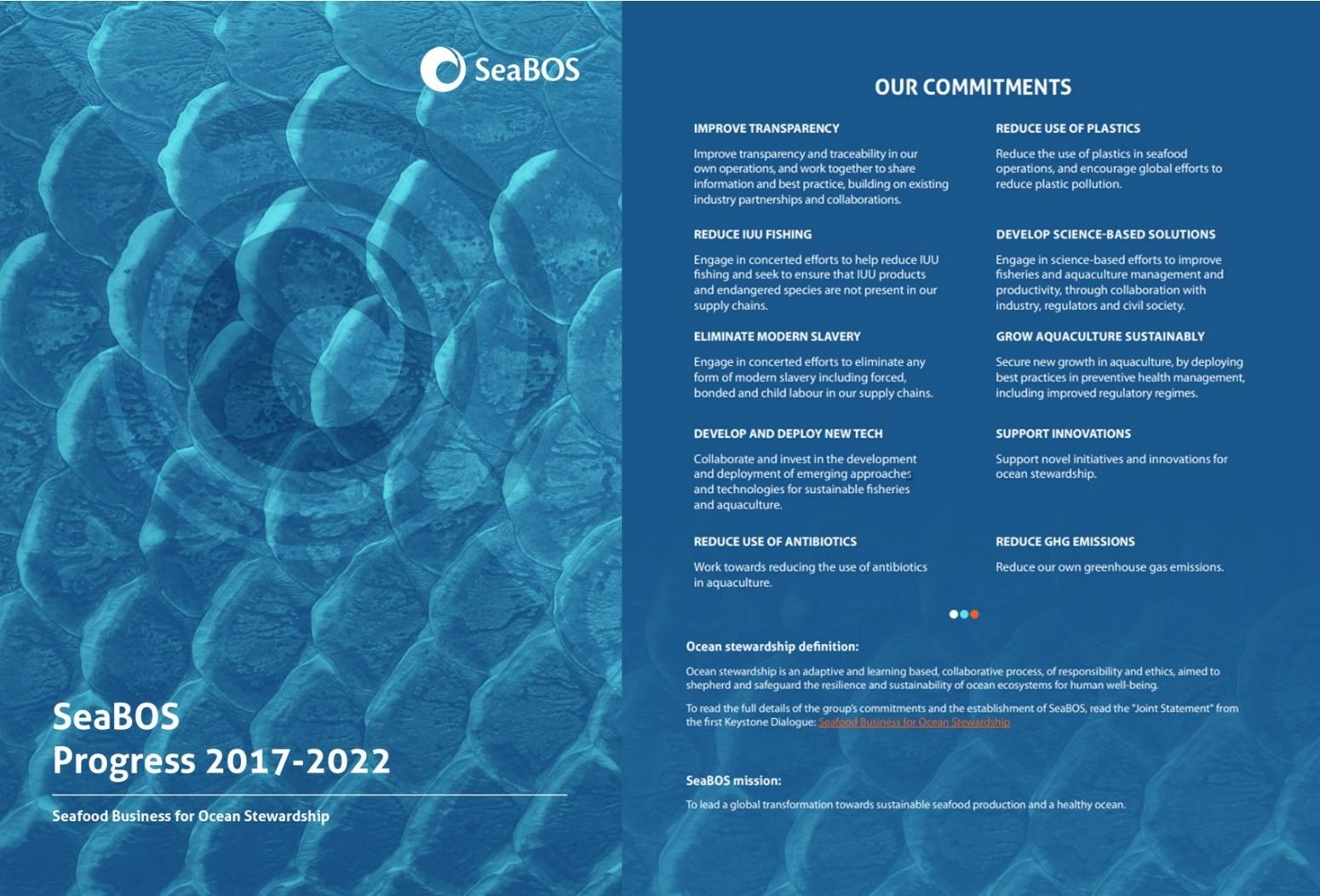
SeaBOS recently launched SeaBOS Progress report 2017-2022, following commitments made at the 2017 UN Ocean Conference.

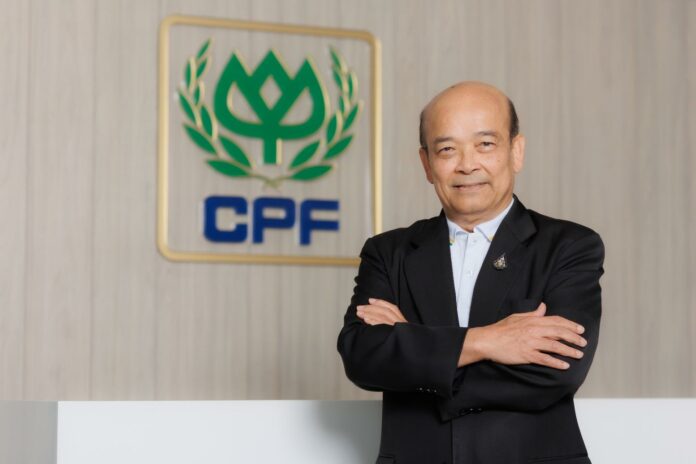
Dr. Sujint Thammasart, DVM, Chief Operating Officer – Aquaculture Business of CP Foods and sponsor of Task Force III, said that the company, as a member of SeaBOS for international cooperation in protecting the oceans, natural resources, and marine environment to move towards the goals of conservation of ecosystems and responsible production of quality seafood for humans in a sustainable manner. 

image5 5

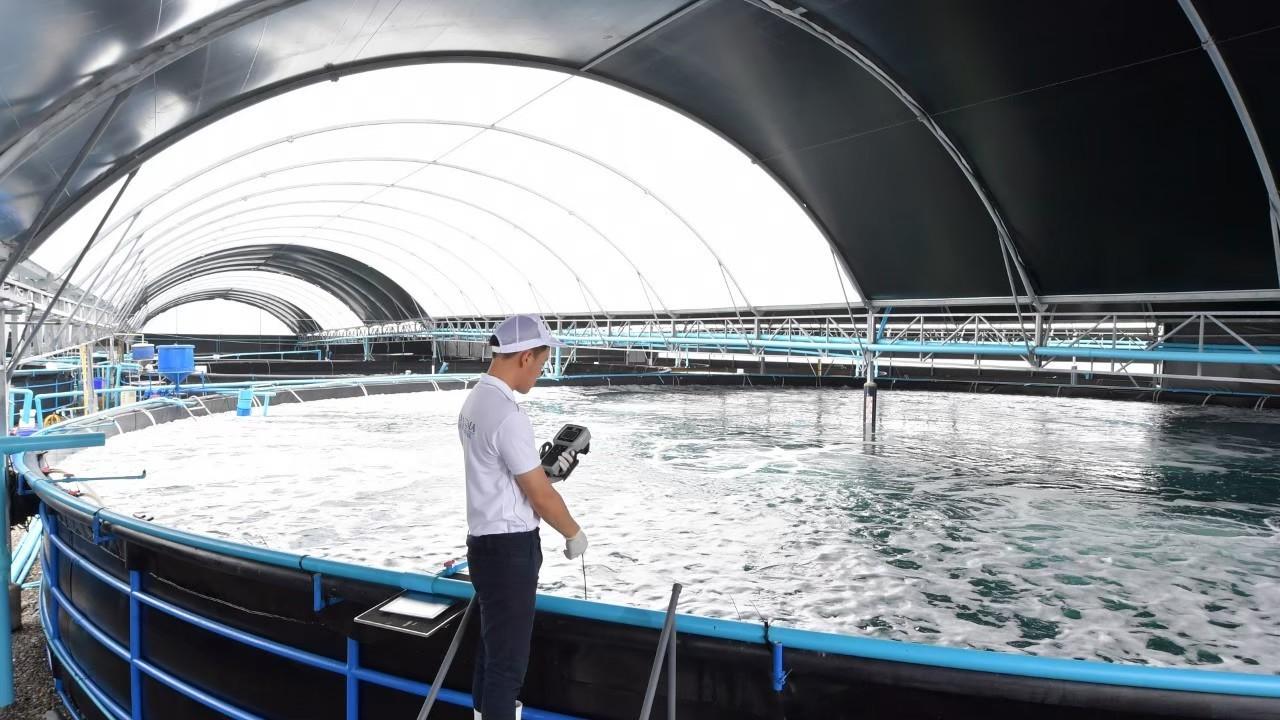
He said CP Foods is among lead companies in Task Force III – Working with governments and AMR. The Task Force aims at developing solutions with governments on key threats to sustainable seafood and ocean health. The work includes improving the knowledge and understanding surrounding health, climate, and societal benefits of sustainable seafood production. Special focus is on achieving improved antibiotic stewardship in SeaBOS and the industry. This is to avoid the development and spread of antimicrobial resistance, in humans and animals. Dr. Sujint added that these efforts are in line with the principles of animal welfare to which CP Foods has strictly adhered and applied in its business operations.

image3 6

“The working group will work together to finalize the SeaBOS Antibiotics Code of Conduct” by October 2022, and the SeaBOS member companies will implement the Code of Conduct in their own businesses as well as transferring it to suppliers in their supply chains of both animal feed production and aquaculture farms,” Dr. Sujint said.

CP Foods has prioritized the antimicrobials policy as follows; 1) requiring those antimicrobials that are medically important for human medicine shall be used only for therapeutic uses under veterinary oversight 2) elimination of the use of shared-class antimicrobials which are medically important for human medicine for growth promotion purposes globally , and 3) work with global experts and partner with all stakeholders to identify new and better ways to care for animals to enhance animal welfare and to reduce the need for antimicrobials. CP Foods is applying the policy throughout the global food supply chain and collaborating with all parties in appropriately protecting the health of people, animals and the global community under the “One Health” approach.

image4

Aside the phasing-out of antibiotics, there is a mutual agreement on applying global regulations throughout the supply chain, promoting legal fishing, eliminating illegal labour, developing traceability systems, refraining from using antibiotics, and reducing greenhouse gas emissions and the use of plastic through cooperation in technology, research and development coupled with implementation and practicality. 

CP Foods has made multiple efforts to tackle the most urgent challenges in the seafood sector.  For example, CP Foods has collaborated with the Labour Protection Network Foundation under the “Labour Voice and Worker Training Program”. A key goal of the program is to certify over 200 shrimp farms and factories across the country in accordance with labour standards by 2022. 

image6 3

Moreover. The company co-founded the Fishermen Life Enhancement Center project (FLEC), a platform where the fishermen can receive advice in multiple topics such as work, health, and daily life.

Such collaborative programs have helped the company promote labour protection and employees’ well-being and manage risks of human trafficking and forced labour. The effort aims at eliminated IUU problem in Thailand.

image1 7

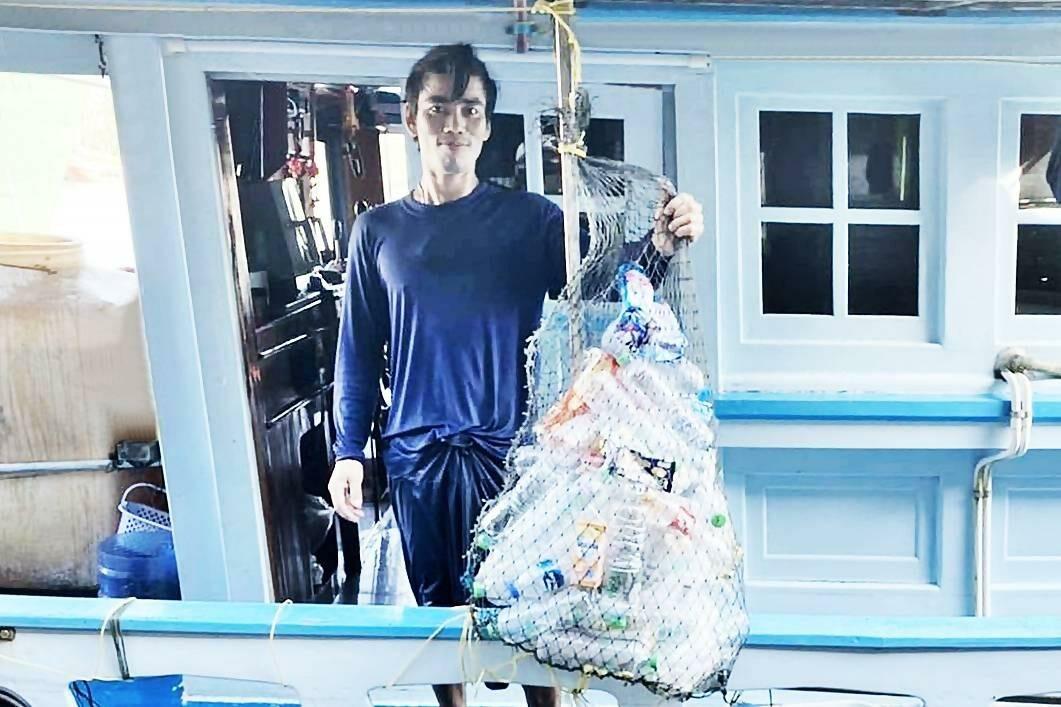
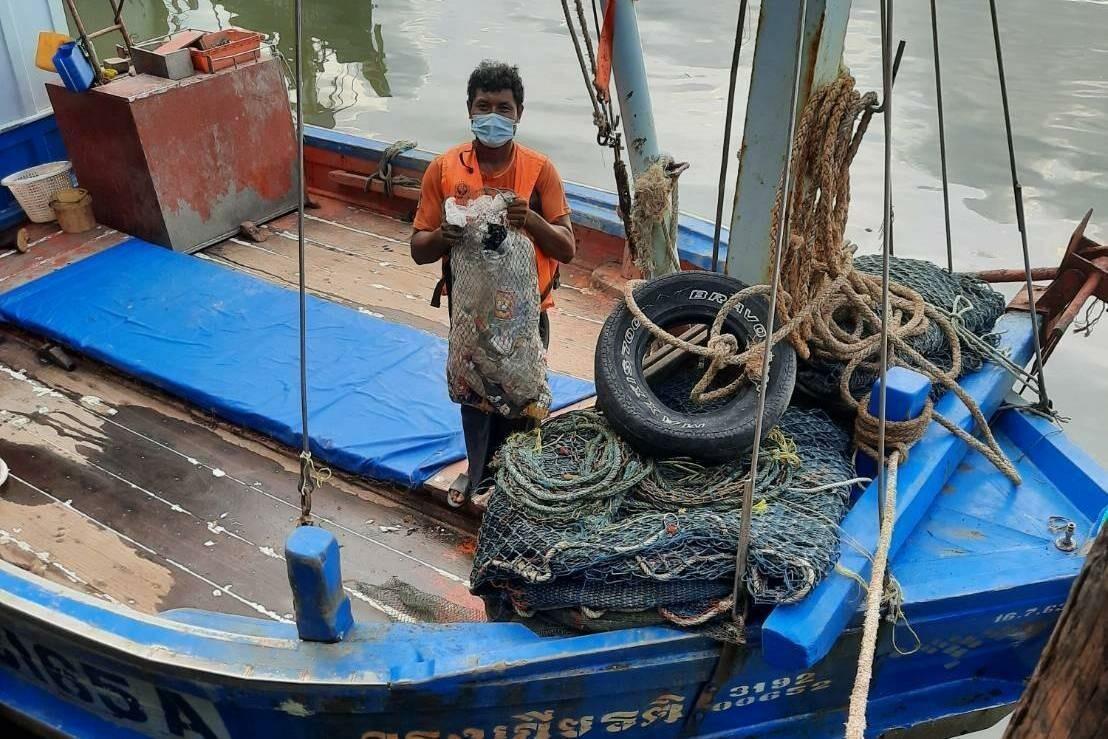
The company also placed importance upon eliminating ocean plastic waste problems. As a result, the company launched the “Ocean Trashformation project” in 2021 to reduce plastic waste in the ocean by collecting plastic waste from fishing activities and recycling them into valuable products. This is to promote the recycling of plastics and the use of less damaging products, including generating additional income for people in the community. 

Dr. Sujint also congratulated SeaBOS initiative for launching its much-anticipated SeaBOS progress report after 5 years of collaboration with partners in science and business.

Read more about our launch here https://seabos.org/seabos-launches-first-progress-report-collaboration-starting-to-generate-results/ and https://seabos.org/wp-content/uploads/2022/06/SeaBOS-progress-report-2017-2022.pdf

About SeaBOS

Seafood Business for Ocean Stewardship (SeaBOS) is a group of ten of the world’s largest seafood companies that are collaborating with science to implement a joint vision to support more sustainable seafood production and improved ocean health. The initiative connects capture fisheries with feed producers and aquaculture businesses across Asia, Europe, and North America. 

Together, SeaBOS companies represent over 10% of the world’s seafood production and comprise 

over 600 subsidiary companies.

Advertisement

CP Foods operations win recognitions from Zero Accident Campaign

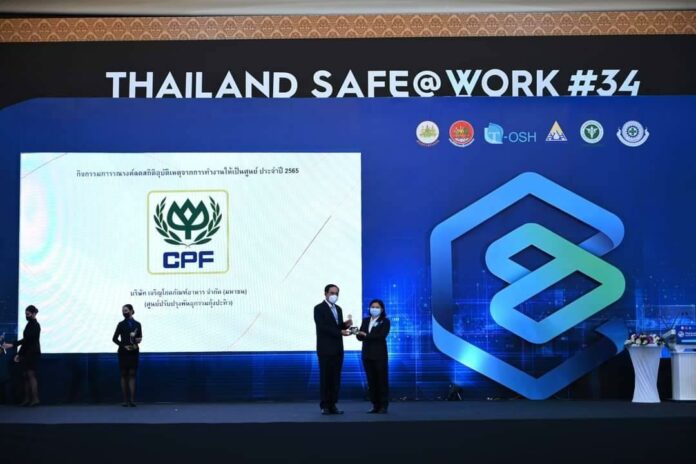
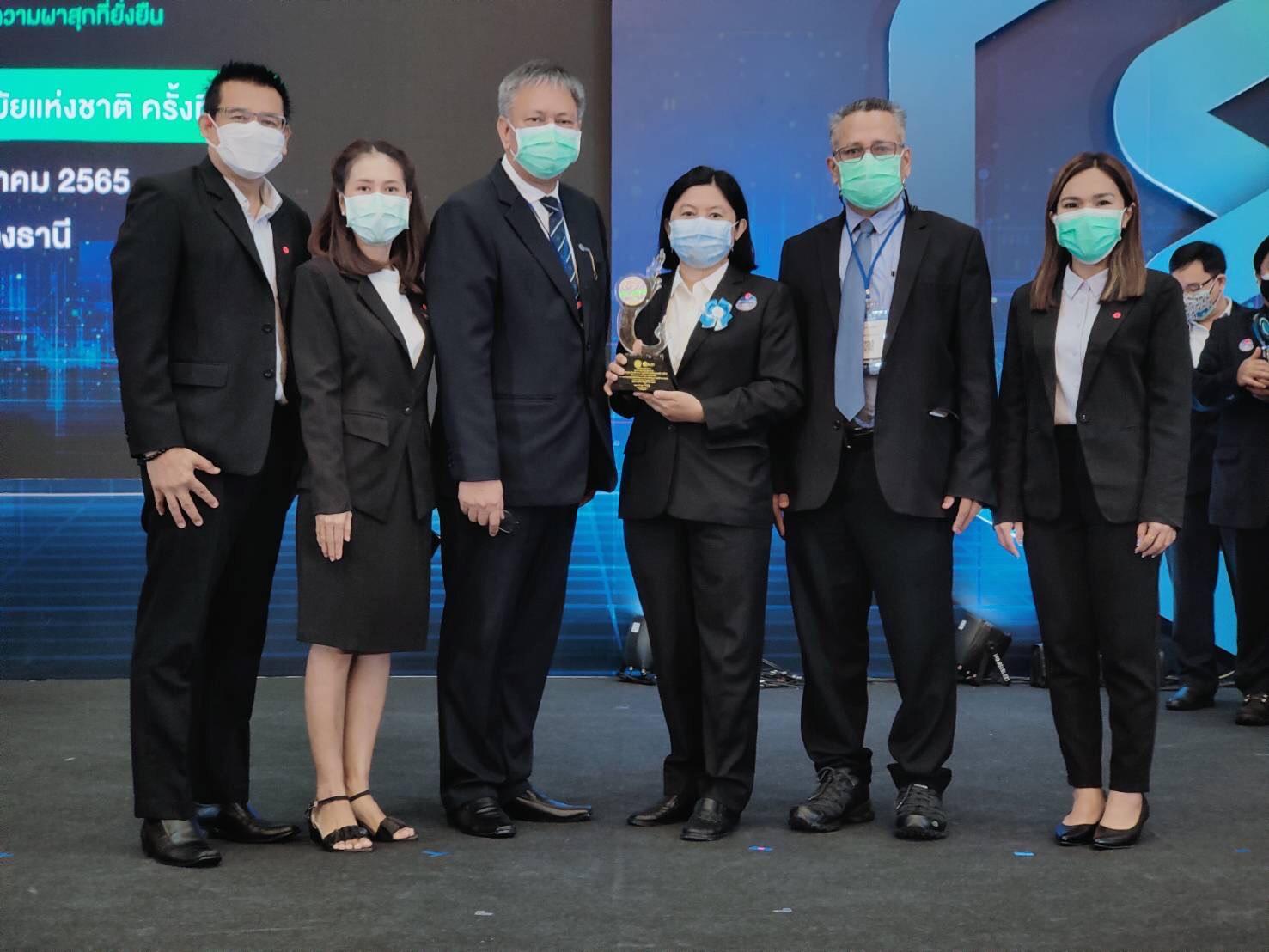
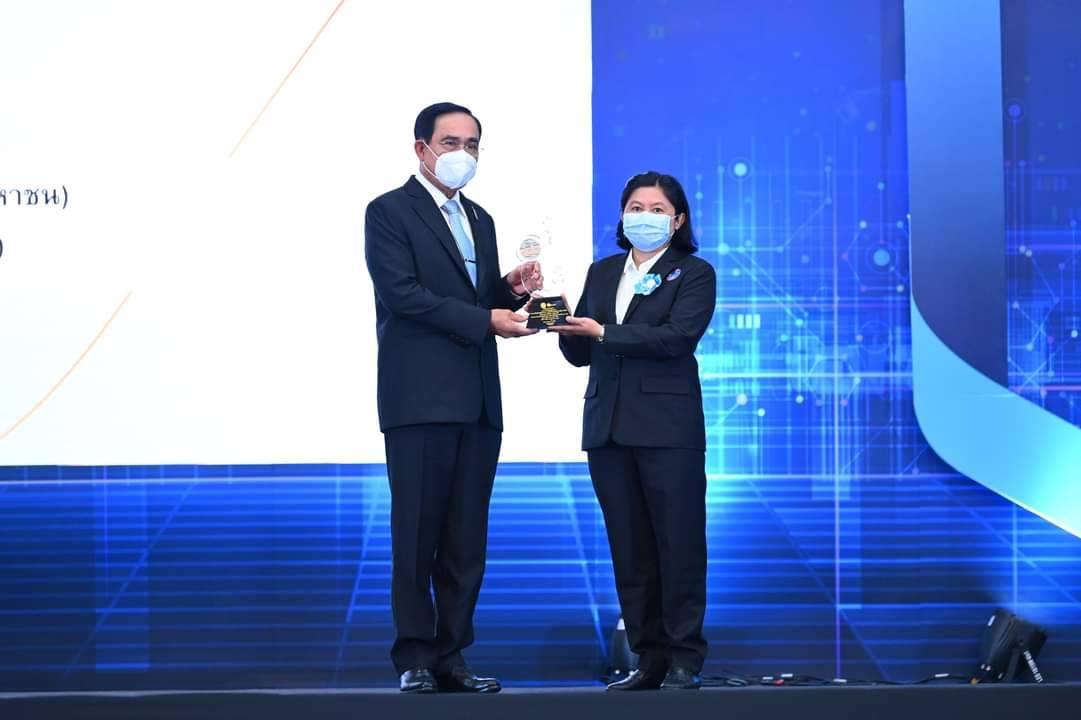
CPF Pathio Shrimp Genetic Improvement Center, Chumphon Province; and Tha Bon Shrimp Hatchery, Songkhla Province was awarded the platinum class plaque of honor under “Zero Accident Campaign 2022 from Thailand Institute of Occupational Safety and Health (Public Organization). Other 16 CP Foods’ operations also received the safety recognitions.

image4 4

The platinum award is given to recognize company’s occupational health and safety excellence with over 10 million continuous working hours without accident for five consecutive years. This prestigious recognition was given by Thailand’s Prime Minister General Prayut Chan-ocha.

image3 5

Asides two top awards, 2 Silver Class 4 Bronze class and 10 recognition awards were given to CP Foods’ operations.

image6 2

image5 4

image1 6

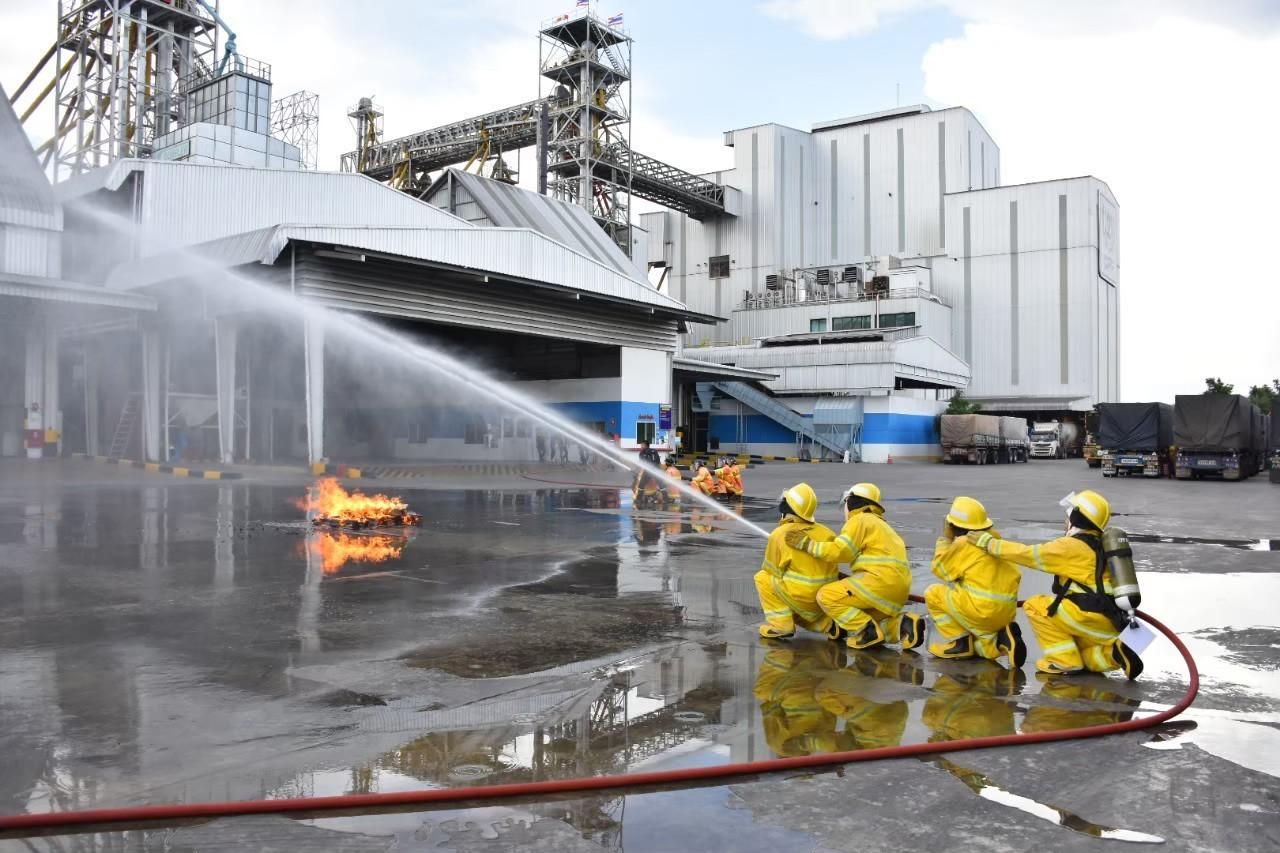
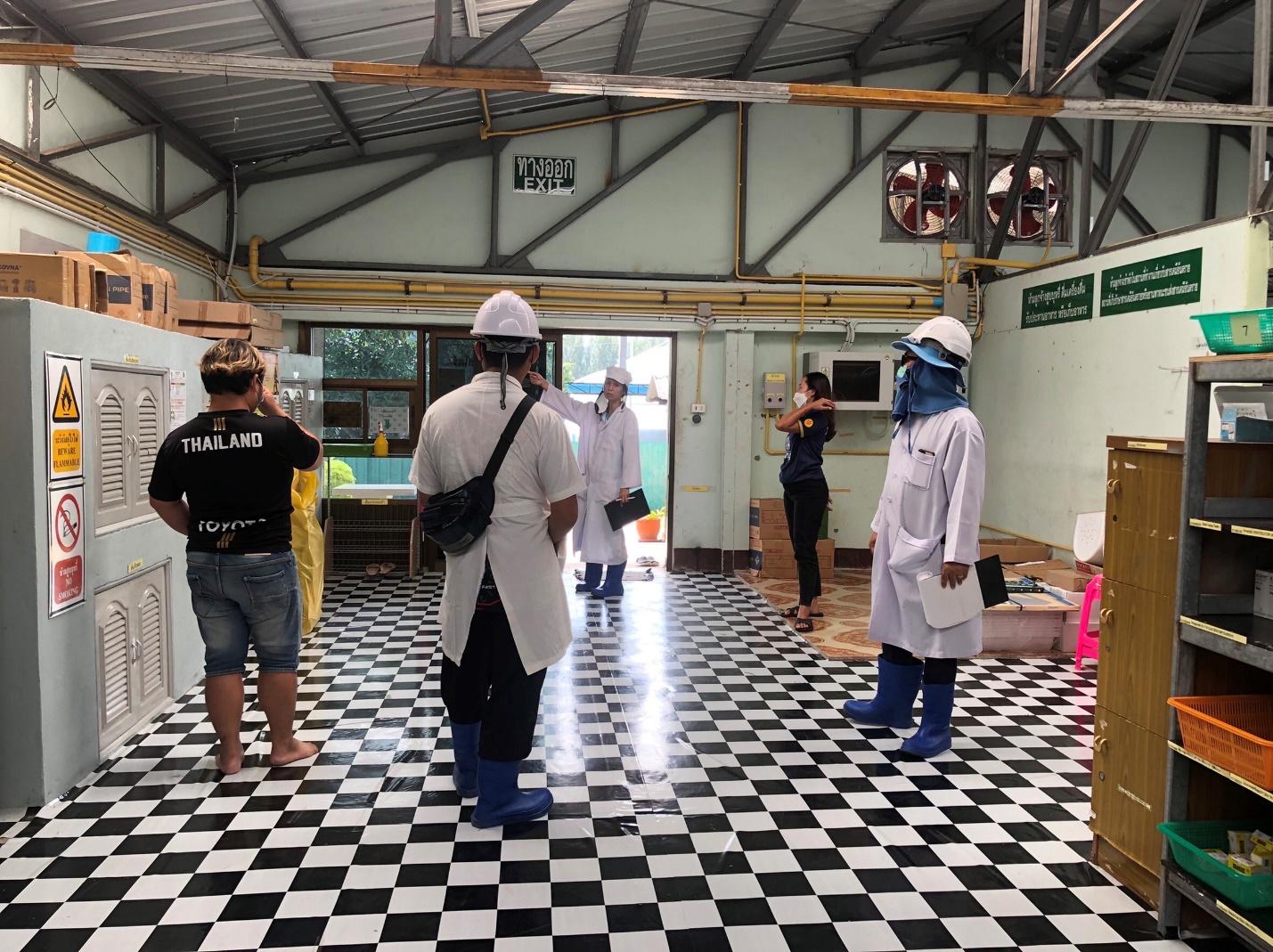
CP Foods places great importance upon Occupational health and safety for all employees and contractors who work in the company value chain. The company implements various projects to engrain safety culture at work. The efforts are in accordance with the CPF SHE & En Policy, with a strategy to create employee participation to drive the development of the management system, ensuring that all of the workers come to work with the highest safety.

Advertisement

C.P. Vietnam receives certificates of merit from Vietnam Youth Federation

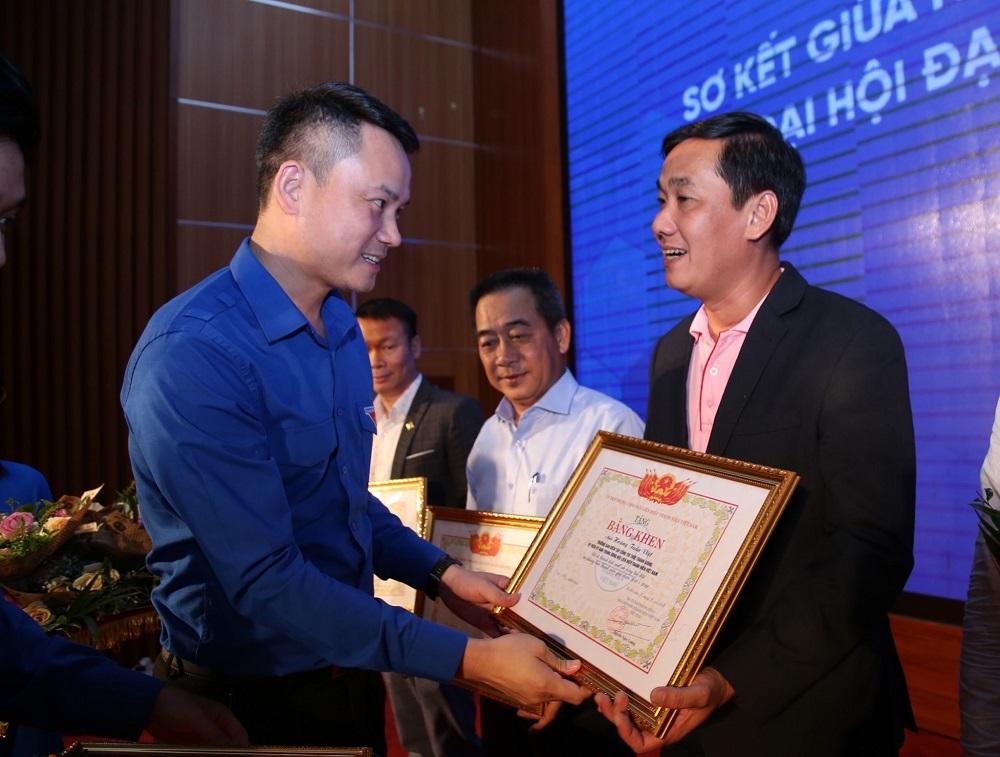
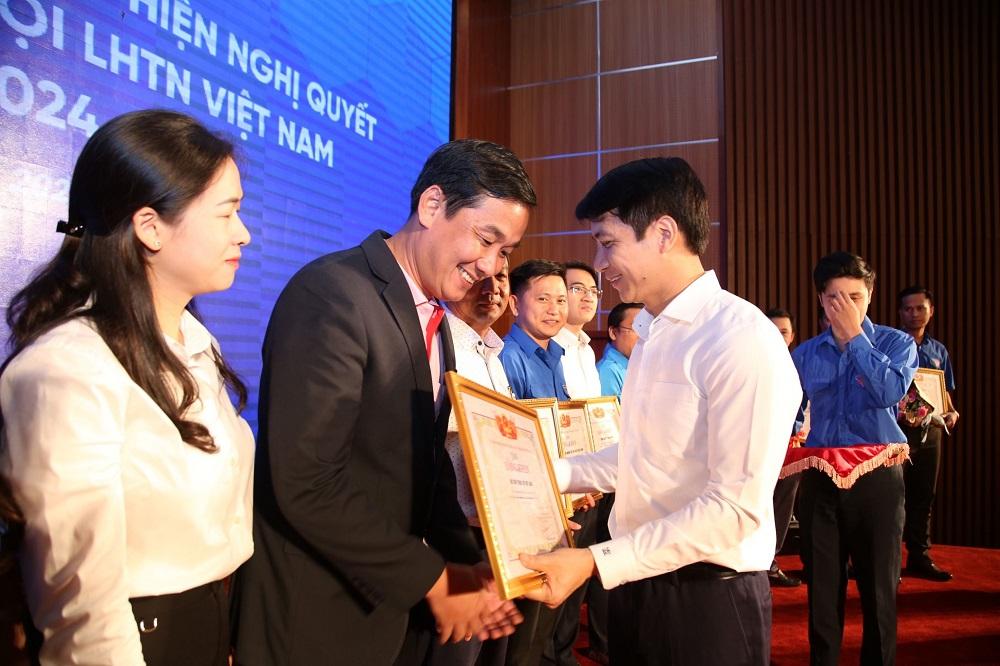
CP Vietnam Corporation received two certifications of merit from the Vietnam Youth Federation, consisting of: “Outstanding work” Award, given to C.P.Vietnam’s Youth Federation and the honorary award in the category of “Constant collaborating in the activities of the Federation during the year 2019 – 2022” to the “CPV’s Donation Fund”.

image3 4

image2 5

The recognitions reflects both organizations long-time efforts to the Federation, carrying out beneficial activities and improving the quality of life of Vietnamese people. The certifications were received by Mr. Nguyen Quoc Khang, the company representative.

image4 3

“CPV’s Donation Fund” and C.P.Vietnam’s Youth Federation was established by executives and employees of the Company since 2010 and 2014 respectively to create positive impacts to the people in Vietnam in line with CP Foods’ core philosophy “3-Benefit” principle for the Country, People, and, lastly, for the Company”. Hence, promoting youth movement, which is the foundation of the country’s development, and their spirits of volunteerism is one of the company’s missions.

Throughout the years, multiple projects have been made in support of the youth federation and the society such as the blood donation project, Volunteer Medical Unit Project, and other projects to help vulnerable groups in society, such as people with disabilities, students in poverty, victims of natural disasters, and etc.

Advertisement

Abe’s Killing Haunts Japan With Questions on Homemade Guns

FILE - Tetsuya Yamagami, center, holding a weapon, is detained near the site of gunshots in Nara, western Japan, Friday, July 8, 2022. The 40-centimeter-long (16-inch) firearm that was used to kill former Prime Minister Shinzo Abe on Friday as he campaigned for his ruling party in Nara, western Japan, looked crude, more like a propellant made of pipes taped together and filled with explosives. Photo: Nara Shimbun / Kyodo News via AP File

TOKYO (AP) — The shooting sent shudders through low-crime, orderly Japan: A prominent politician was killed by a man emerging from a crowd, wielding a homemade firearm so roughly constructed it was wrapped in tape.

The 40-centimeter-long (16-inch) weapon used to kill former Prime Minister Shinzo Abe on Friday as he campaigned for his ruling party in western Japan, looked crude, more like a propellant made of pipes taped together and filled with explosives.

A raid of the suspect’s home, a one-room apartment in Nara, turned up several such guns, police said. Unlike standard weapons, homemade guns are practically impossible to trace, making an investigation difficult.

Firearms are rarely used in Japan, where most attacks involve stabbings or dousing a place with gasoline and setting it ablaze, or running haywire on the street in a vehicle.

Strict gun control laws likely forced the attacker to make his own weapon. Tetsuya Yamagami, who was arrested on the spot, was a former member of Japan’s navy and knew how to handle and assemble weapons.

Crime experts say instructions on how to make guns are floating around on the internet and guns can be made with a 3D printer.

Some analysts characterized the attack on Abe as “lone-wolf terrorism.” In such cases, the perpetrator plots and acts alone, with the solitary nature of the crime also making it difficult to detect in advance.

The motive for Abe’s assassination remains unclear. Police said Yamagami told investigators he acted because of Abe’s rumored connection to an organization he resented but had no problem with the former leader’s political views. Media reports said it was a religious organization.

Japan has seen attacks on politicians in the past. In 1960, Abe’s grandfather, then-Prime Minister Nobusuke Kishi, was stabbed but survived. In 1975, when then-Prime Minister Takeo Miki was assaulted at the funeral for former Prime Minister Eisaku Sato, Abe’s great-uncle, Japan set up a security team modeled after the American Secret Service.

Hideto Ted Osanai, chief executive at the International Bodyguard Association in Japan, and other experts believe that the Japanese may have merely learned superficial things like escort formation rather than the prevention mindset critical to security.

“Japanese are so used to leading peaceful lives, the security guards were caught asleep,” says Yasuhiro Sasaki, president of Safety-Pro, a Tokyo-based security company.

Sasaki said he couldn’t believe that no one moved to protect Abe in the seconds between the first and the second shot, a scene shown over and over on national TV.

Guards should have acted by physically pulling Abe away from danger, Sasaki said. More critically, he wondered why weren’t they aware of a suspicious person approaching, drawing what could be a weapon from a bag?

Isao Itabashi, chief of the research division at the Council for Public Policy, which oversees such risks, said that providing security during an election campaign was challenging when the whole point is for politicians to get close to people.

Unlike the U.S., the use of bulletproof glass is relatively scant in Japan, and security officials rarely resort to shooting potential attackers.

“The presumption here is that people are not armed,” Itabashi said.

Osanai worried more people may make their own weapons like the one used in Abe’s assassination in “copycat crimes.” He noted a trend of disgruntled people turning to random crimes, indiscriminately targeting victims.

“Japan’s conformist culture makes it difficult for some people to live freely, and they put great pressure on themselves. When they blame themselves, they turn to suicide. When they blame others, they turn to indiscriminate crimes,” he said.

Last year, a man wearing a Joker costume brandished a knife and started a fire on a Tokyo train, injuring 17 people. In December 2021, arson at a clinic in Osaka killed 25 people. In 2019, another arson in a Kyoto animation studio killed 36 people.

___

Story: Yuri Kageyama.

Advertisement

Blinken Hits at ASEAN for Lack of Pressure on Myanmar

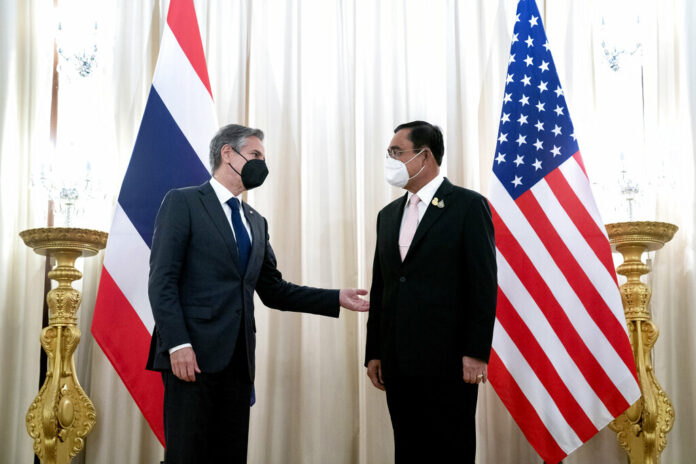
United States Secretary of State Antony Blinken, left, meets with Thailand's Prime Minister Prayut Chan-o-cha at the Government House in Bangkok, Sunday, July 10, 2022. Photo: Stefani Reynolds / Pool Photo via AP

BANGKOK (AP) — U.S. Secretary of State Antony Blinken is criticizing Southeast Asian nations for not doing enough to press Myanmar’s military government to return the country to the path of democracy following last year’s power seizure.

But as Blinken lamented the lack of progress in Myanmar, also known as Burma, he also moved to strengthen U.S. ties with key regional ally Thailand — part of efforts to counter Chinese influence across the Indo-Pacific.

Speaking at a news conference in Bangkok, Blinken said it was “unfortunate” that repression in Myanmar was continuing nearly 18 months after the military takeover. And, he said he was disappointed that Myanmar’s neighbors weren’t applying pressure for it to end.

“I think it’s unfortunately safe to say that we’ve seen no positive movement,” Blinken told reporters. “On the contrary, we continue to see the repression of the Burmese people who continue to see violence perpetrated by the regime.”

He blasted Myanmar’s military leaders for jailing or forcing almost the entire opposition to flee and for worsening the grim humanitarian situation by not delivering the kind of assistance and supplies that are needed to improve conditions.

Blinken then took aim at Myanmar’s neighbors in the Association of Southeast Asian Nations, which has been attempting to convince the military into implementing a five-point plan to return the country to a democratic path.

“All countries have to continue to speak clearly about what the regime is doing in its ongoing repression and brutality,” he said. “We have an obligation to the people of Burma to hold the regime accountable. Regional support for the regime’s adherence to the five-point plan developed by ASEAN is also critical. That has not happened.”

He added that all members of ASEAN “need to hold the regime accountable for that, continue to demand an immediate cessation of violence, the release of political prisoners and the restoration of Burma’s democratic path.”

Just last week, Myanmar hosted a regional gathering of officials in what the opposition said was a direct contravention of the ASEAN peace plan following the ouster of civilian leader Aung San Suu Kyi.

Suu Kyi’s ouster in February 2021 triggered widespread peaceful protests that were violently suppressed and evolved into armed resistance, and the country has slipped into what some U.N. experts characterize as a civil war.

Blinken traveled to Thailand after attending a meeting of foreign ministers from the Group of 20 rich and large developing countries in Indonesia, where he accused China of siding with Russia over the war in Ukraine and said that support was complicating already fraught relations between Washington and Beijing.

After meeting China’s Foreign Minister Wang Yi in Bali on Saturday, Blinken warned that Chinese support for Russia on Ukraine poses a threat to the rules-based international order. Blinken’s visit to Thailand was intended to bolster at least one small part of that order.

In Bangkok, Blinken signed two cooperation agreements with his Thai counterpart, pledging to expand strategic cooperation with Thailand and improve the resilience of supply chains.

Although modest, the deals fit into the administration’s broader strategy for the Indo-Pacific, which is aimed at blunting China’s increasing assertiveness and offering alternatives to Beijing-sponsored development that many U.S. officials regard as a trap for smaller, poorer nations.

Blinken did not mention China by name in his comments with Thai Prime Minister Prayuth Chan-ocha or Foreign Minister Don Pramudwinai. But after signing the deals, he said the U.S. and Thailand “share the same goal of a free, open, interconnected prosperous, resilient and secure Indo-Pacific.”

American officials use that phrase often to refer to the prevention of Chinese dominance in the region and U.S. Defense Secretary Lloyd Austin had similar comments when he visited Bangkok last month and met Prayuth.

Thailand is already a member of President Joe Biden’s Indo-Pacific Economic Forum, a bloc that was created earlier this year with the aim of curbing the momentum of China’s Belt and Road Initiative, which has poured billions of dollars into development and infrastructure projects throughout Asia and elsewhere.

Like its predecessors, the Biden administration has watched China’s rapid growth warily and sought to hold it to international standards without significant success.

The U.S. and like-minded democracies are trying to discourage developing Southeast Asian and other countries from entering large-scale infrastructure and development projects with China unless they are proven economically feasible, structurally sound and environmentally safe.

“What we’re about is not asking countries to choose but giving them a choice when it comes to things like investment and infrastructure, development assistance, et cetera,” Blinken said in Bali. “What we want to make sure is that we’re engaged in a race to the top — that is, we do things to the highest standards — not a race to the bottom where we do things to the lowest standards.”

U.S. officials from multiple administrations have criticized China for exploiting smaller nations by luring them into unfair or deceptive agreements.

“My hope would be that if, as China continues to engage itself in all of these efforts that it engages in a race to the top, that it raise its game,” Blinken said. “That would actually benefit everyone.”

Before returning to Washington, Blinken will travel on Monday from Bangkok to Tokyo, where he will make a brief condolence call on senior Japanese officials following the assassination on Friday of former Prime Minister Shinzo Abe.

___

Story: Matthew Lee.

Advertisement

Opinion: Paternity Leave: Sweden’s Latest Export to Thailand?

A photo of Roengchai Yenkhuntos, 34, a sales supervisor at IKEA Thailand, his wife, and his baby taken when he took a fully paid paternity leave two years ago. Photo: Roengchai Yenkhuntos / Courtesy.

One day late last month I met the Swedish Ambassador to Thailand Jon Åström, who has invited me for a one-on-one meeting. For half an hour, Ambassador Gröndahl did not try to sell more Gripen fighter jets (I am not Prayut Chan-o-cha or the air force chief) or more IKEA furniture (I already bought a few bookcases) but tried to convince me that it would be best for Thailand to adopt right to parental leave for male employees and government officials.

He said this is an investment and Sweden, arguably one of the happiest societies on Earth, invested in it for nearly fifty years now, or since 1974 to be exact.

“Parenting should be a teamwork,” Gröndahl said, adding that “it’s equally important for the child to have to [early babyhood] bond with both parents.”

Gröndahl said over the months ahead, he will try to sell the idea to Thai legislators and senior executives at major Thai companies. In fact, the embassy already held a public event last month to acquaint the Thai public about parental leave, a right that the ambassador said has no exact Thai-language term.

The Swedish ambassador was correct. We only have a word for maternity leave. It is called la Lloyd (ลาคลอด), which literally means “a leave to deliver a baby” and it implies that only women deliver a baby.

Twelve Swedish companies in Thailand, including IKEA, are now serving as examples and leading the way, though Gröndahl hopes more companies in Thailand, including Thai companies will join sooner than later. The ambassador himself took six months leave to help his diplomat wife care for their daughter 14 years ago.

“It was one of the best times in my life,” the ambassador said, speaking at his Scandinavian modern office on Sukhumvit Road. “It was nice to have a break from work. I learned a lot. I was fortunate to have a couple of male friends. They were also on paternity leave,” he recalled, adding that they met at a walk for a walk.

The Swedish ambassador said enable his wife to make an easier return to work, also about women emancipation and a healthier society. “I think our marriage benefited from this… I do strongly believe that you create a bond even if [your baby] doesn’t remember.”

Being a journalist as I am, I told Gröndahl that must have been a difficult side to paternity leave, right? “You get exhausted by simply constantly have to watch over someone… I was tired sometimes and I did not get much sleep?”

Ambassador Gröndahl is currently on his summer vacation as I write this article, but he vowed to try to convince Thai firms and organizations to adopt paternity leave when he is back in Bangkok, even for one month leave, like IKEA in Thailand, during the second phase of his push.

“I guess there are sectors that would be easier. May be state entities… SMEs should be encouraged… It might have an initial cost but [one gets] happier employees.”

I asked if this is a directive from Stockholm for him to be evangelical about parental leave and whether there is a hidden agenda. “There is no hidden agenda. We [in Sweden] truly believe it is good for everyone. There is no commercial angle to this… There is no personal instruction from Stockholm.”

I let Gröndahl spoke for half an hour although I was sold even within the first 10 minutes of our encounter. This does not mean I have no reservation, however. Many Thai companies and government organizations will likely see it as a loss of productivity and income – a zero sum game.

Some may argue Thailand is not wealthy enough to be able to afford such “luxury” as labor right. But again, our rights to annual leave and even weekends were not granted by employers outright but part of a class struggle. It is also about convincing employers to see the big picture and invest long-term.

We will have to see which Thai organization, private or public, will be sold. The ambassador in fact had recently met with the popular new Bangkok governor Chadchart Sittipunt. May be the governor can try a pilot project? What about those big Thai corporations that love preaching corporate social responsibility (CSR)? How about the Ministry of Human Development?

I rang IKEA Thailand up to hear about their experience in the kingdom after my meeting to the ambassador. Christian Dassonville, Country Human Resource Manager at IKEA Thailand told me 35 Thai male staff have benefitted from the company’s paternity leave right since 2017.

“They don’t really expect when they joined the company. It is something they really appreciate,” said Dassonville. “We don’t force them. It is not an obligation. We are really trying to create an environment where both genders are treated equally. That creates a lot of loyalty and really made a big difference.”

Dassonville then gave a final sale pitch which was most appropriate for IKEA. “We believe the home is a very important place.”

I asked Dassonville what he thought of the chance Thai companies adopt paternity leave right. “I do believe that the one month should be something the [Thai] companies could absorb, work wise,” he said, adding he is not without Hooe but it will take time.

Roengchai Yenkhuntos, 34, a sales supervisor at IKEA Thailand was one of the staff who took fully paid paternity leave. He told me his in laws were surprised when learned about it. “I told then this is my right. He helped his wife, a university lecturer to laundry clothes and other things. It makes for a happier employees.”

Roengchai then sent me a few happy photos of him, his wife, and baby taken two years ago. “It helps balance life and work.”

Advertisement

Hot News

LATEST NEWS

Bangkok
broken clouds
37.8 ° C
37.8 °
36.6 °
54 %
3.7kmh
71 %
Fri
38 °
Sat
36 °
Sun
37 °
Mon
37 °
Tue
36 °