A healthcare worker prepares a dose of the Oxford-AstraZeneca vaccine for COVID-19, at the Oswaldo Cruz Foundation headquarters in Rio de Janeiro, Brazil on Jan. 23, 2021.Photo: Bruna Prado / AP
BANGKOK — Thailand’s long awaited vaccination program against COVID-19 will officially start on Valentine’s Day, a senior health official said Monday, as the country reported two new deaths from the coronavirus.
The first group to be inoculated with vaccines jointly developed by British-Swedish pharmaceutical AstraZeneca and Oxford University will include frontline health workers like doctors and nurses – as well as certain government leaders, for promotional purposes.
“Feb. 14 is the planned date,” Tawee Chotpitayasunondh, an expert at the National Communicable Disease Committee, said by phone. “There are still a lot of factors to be considered, but we want to administer the vaccines as soon as they arrive.”
Thailand has ordered 61 million doses of AstraZeneca vaccine, which was approved for emergency use by the Food and Drug Administration last week.
Although most of the doses will be produced domestically by Siam BioScience, a company wholly owned by the palace, the government is set to import 200,000 doses of AstraZeneca vaccine from abroad to fill the gap before local production could be rolled out in May.
The first shipment of 50,000 doses is expected to arrive next month, health minister Anutin Charnvirakul said on Wednesday. The rest of the shipment is set to arrive in March and April, he added.
Tawee also hinted that some of the jabs will be reserved for certain senior government officials to raise public confidence in the vaccine, though he refused to name names.
“There will be a promotional campaign,” Tawee said. “But healthcare workers will certainly be prioritized.”
It remains unclear how the first group will be selected for inoculation. Government officials previously said “vulnerable groups” in five provinces of Samut Sakhon, Chonburi, Trat, Rayong, and Chanthaburi would be given a priority due to the severity of the local outbreak.
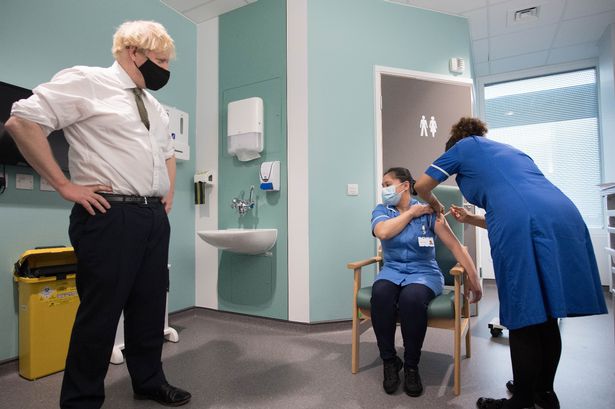
Britain’s Prime Minister Boris Johnson watches as nurse Jennifer Dumasi is injected with the Oxford-AstraZeneca Covid-19 vaccine, during a visit to view the vaccination programme at the Chase Farm Hospital in north London, Monday Jan. 4, 2021, part of the Royal Free London NHS Foundation Trust. (Stefan Rousseau/Pool Photo via AP)
Apart from AstraZeneca vaccines, the government also placed order on two million doses of vaccine developed by Chinese pharmaceutical Sinovac.
Health officials had said earlier this month that the first 200,000 doses of Sinovac vaccines will be shipped to Thailand by the end of February – but the Thai FDA has yet to grant an approval for its use, despite the ever narrower timeframe.
Thailand reported two new deaths from the coronavirus on Monday, along with 187 new cases of infection.
The country’s 74th victim to die from the virus was identified as a 61-year-old British citizen who fell ill whilst staying at a quarantine facility. The 75th victim was a 56-year-old woman who reportedly contracted the virus from her husband, who worked at a seafood market in Samut Sakhon province, pandemic response center spokeswoman Apisamai Srirangsan said in a news conference.
The country’s total tally of coronavirus infections now stands at 13,687.
Pro-democracy activist Chonthicha “Kate” Jangrew speaks to reporters on May 22, 2019.
BANGKOK — Pro-democracy activist Chonthicha “Kate” Jangrew became the latest person to be charged with defaming the monarchy – an offense that has seemingly turned into a political weapon against government critics.
Speaking on the phone Monday morning before reporting to the police, Chonticha urged the international community to keep up the pressure on the ongoing crackdown under Article 112 of the Criminal Codes, aka lese majeste. As many as 56 people are now charged under the offense in a spate of just three months, her attorney said.
“People around the world are watching the enforcement of Article 112,” the activist said. “The use of the law is embarrassing the Thai government even more. I’d like to invite the international community and organizations to keep a close watch on this matter.”
Chonticha, who led numerous protests against the government in 2020, predicted that more lese majeste complaints would be lodged in the near future against those calling for reforms of the monarchy.
“The cases will just keep rising,” she said. “We also have to question the monarchy, why they let the case number increase.”
The activist said she received the police summons informing her that she was charged with Article 112 on Thursday, but the document did not specify what alleged wrongdoing she might have committed. Chonticha is one of the leaders behind the protest movement that sought to oust PM Prayut Chan-o-cha, draft a more democratic charter, and reform the royal institution.
Lese majeste bans threats or insults made toward the King, Queen, Regent, and Heir Apparent. Violators face up to 15 years in jail, per count.
But the head of Thai Lawyers for Human Rights, a group that’s representing lese majeste suspects in court, said police appear to accept any royal defamation complaints against the dissidents regardless of the circumstances.
“We’ve seen that it’s a problem. The police accepted every complaint,” Yaowalak Anuphan said. “We have to question the police. The police claim that they receive the complaint, so they must proceed with it, [but] Article 112 is now a political weapon. It’s very sweeping.”
The attorney also warned such arbitrary and indiscriminate use of lese majeste will eventually erode the public trust in the law enforcement.
“Eventually, Article 112 will become a law without rules,” Yaowalak said.
Police spokesman Col. Kissana Phathanacharoen was not available to comment as of press time Monday.
The use of lese majeste was absent for several years, until it made a return in November, shortly after PM Prayut Chan-o-cha said the authorities would use every available law in the book to punish those accused of insulting His Majesty the King.
Some democracy advocates have been charged with multiple counts of lese majeste, which could land them in lengthy jail terms. For instance, Rayong-based activist Panupong “Mike” Jadnok will hear the seventh lese majeste charge pressed against him later today, his lawyer said.
In Lampang province, five people also reported themselves to police over lese majeste charges, the Thai Lawyers for Human Rights Group reports.
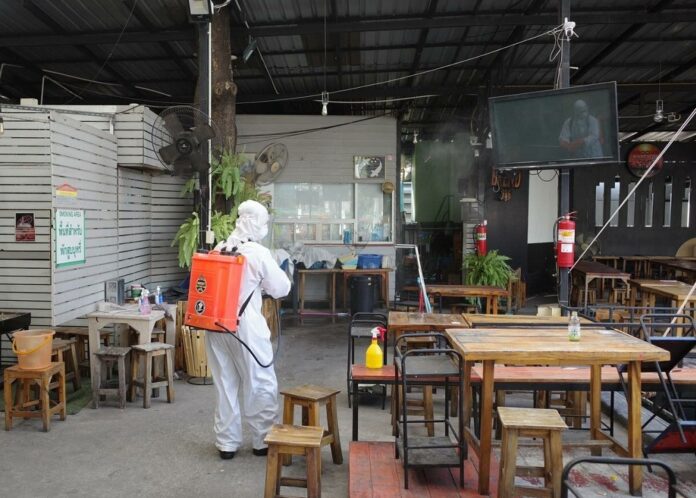
Workers disinfect a restaurant in Bangkok on Jan. 5, 2021.
BANGKOK— Dine-in services may be soon extended beyond the current closure time of 9pm mandated by the government’s coronavirus response center, pending a Cabinet approval.
The COVID-19 Situation Administration Center said it will propose the extension to the Cabinet when it convenes for a meeting on Tuesday.
The move came a day after Thai Chamber of Commerce chairman Klin Sarasin said on Sunday that the relaxed measures would help revive restaurant businesses.
The proposal makes no mention of serving alcohol in restaurants, which has been prohibited since the dine-in service restriction was imposed on Jan. 4.
Thanakorn Kupjit, sec-gen of the Thai Alcohol Beverage Business Association, said that the government should reconsider the ban.
“Not only does the ban affect alcohol sales, but it also adversely affects restaurants by decreasing their earnings,” Thanakorn said. “Allowing food to be served with alcohol will crease more income for the entire country.”
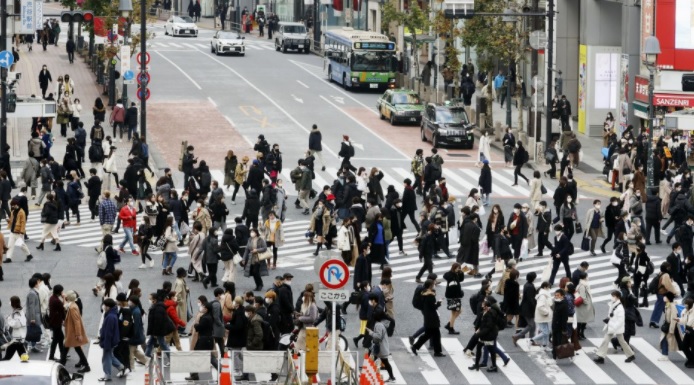
TOKYO (Kyodo) — At least 15,058 people were on the waiting list for a hospital or a designated accommodation after testing positive for the novel coronavirus earlier this month in the 11 prefectures covered by a state of emergency, a Kyodo News survey found Sunday, as public health centers have been swamped with surging numbers of new cases.
The number as of last Tuesday marks a sharp increase from a month earlier, including in Tokyo where it almost quintupled. In Japan, local public health centers are in charge of arranging for hospitalization of people infected with the virus, or appointment with an accommodation facility for people with mild symptoms.
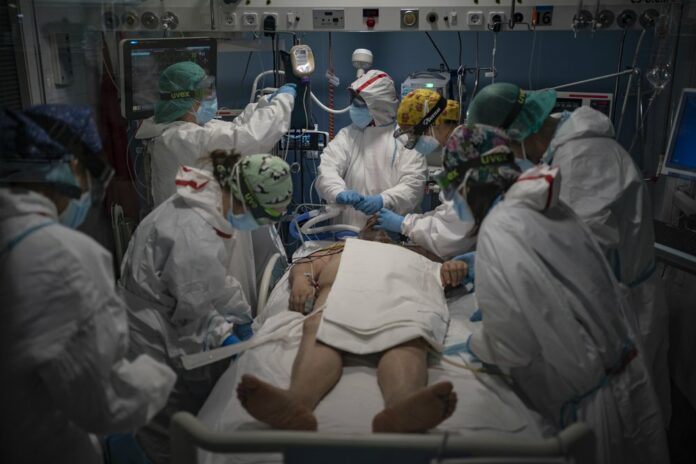
A COVID-19 patient receives treatment in the ICU of the Hospital del Mar, in Barcelona, Spain, Tuesday, Jan. 19, 2021. (AP Photo/Felipe Dana)
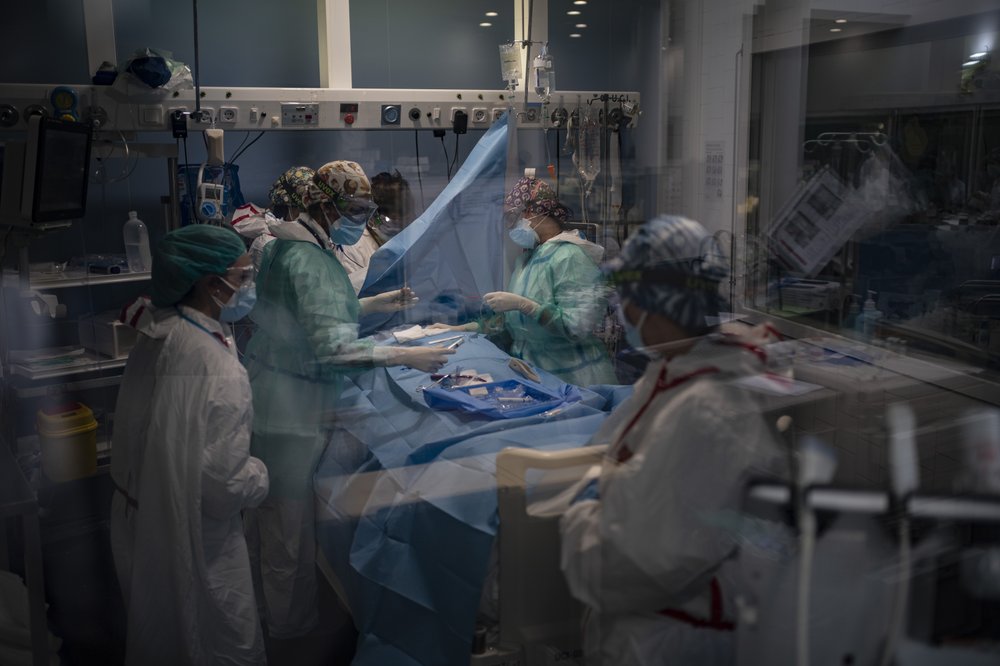
BARCELONA, Spain (AP) — The unrelenting increase in COVID-19 infections in Spain following the holiday season is again straining hospitals, threatening the mental health of doctors and nurses who have been at the forefront of the pandemic for nearly a year.
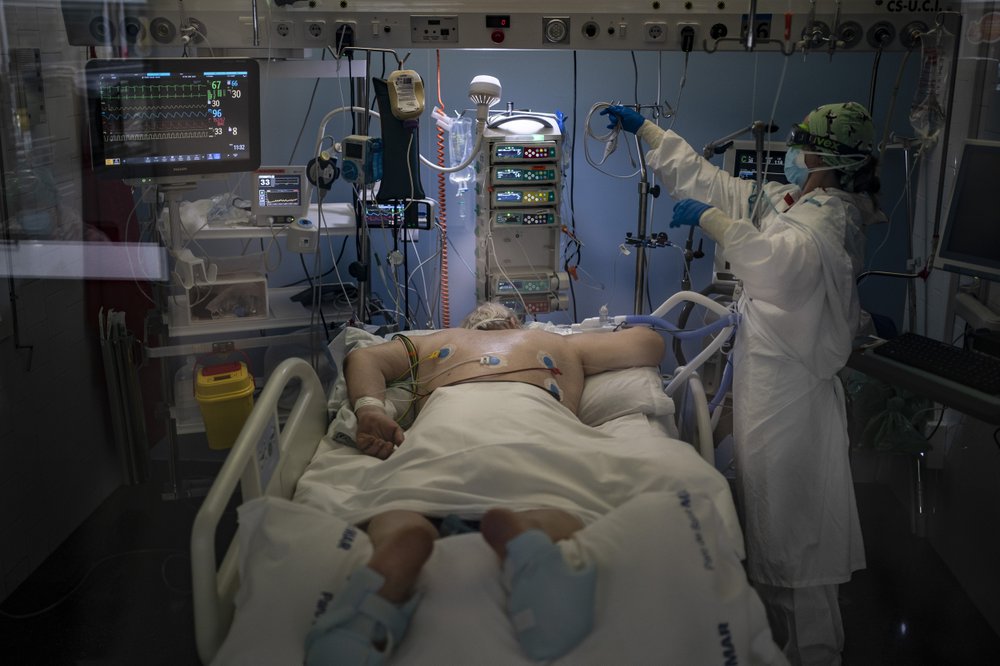
In Barcelona’s Hospital del Mar, the critical care capacity has more than doubled and is nearly full, with 80% of ICU beds occupied by coronavirus patients.
“There are young people of 20-something-years-old and older people of 80-years-old, all the age groups,” said Dr. Joan Ramon Masclans, who heads the ICU. “This is very difficult, and it is one patient after another.”
Even though authorities allowed gatherings of up to 10 people for Christmas and New Year celebrations, Masclans chose not to join his family and spent the holidays at home with his partner.
“We did it to preserve our health and the health of others. And when you see that this isn’t being done (by others) it causes significant anger, added to the fatigue,” he said.
A study released this month by Hospital del Mar looking at the impact of the spring’s COVID-19 surge on more than 9,000 health workers across Spain found that at least 28% suffered major depression. That is six times higher than the rate in the general population before the pandemic, said Dr. Jordi Alonso, one of the chief researchers.
In addition, the study found that nearly half of participants had a high risk of anxiety, post-traumatic stress disorder, panic attacks or substance- and alcohol-abuse problems.
Spanish health care workers are far from the only ones to have suffered psychologically from the pandemic. In China, the levels of mental disorders among doctors and nurses were even higher, with 50% reporting depression, 45% reporting anxiety and 34% reporting insomnia, according to the World Health Organization.
“It is pretty awful at the moment in the world of medicine,” Dr. Andrew Goddard, president of the Royal College of Physicians, said in a statement accompanying the study. “Hospital admissions are at the highest-ever level, staff are exhausted, and although there is light at the end of the tunnel, that light seems a long way away.”
A COVID-19 patient receives treatment in the ICU of the Hospital del Mar, in Barcelona, Spain, Tuesday, Jan. 19, 2021. (AP Photo/Felipe Dana)
Dr. Aleix Carmona, a third-year anesthesiology resident in Spain’s northeastern region of Catalonia, didn’t have much ICU experience before the pandemic hit. But as surgeries were cancelled, Carmona was summoned to the ICU at the Moisès Broggi hospital outside Barcelona to fight a virus the world knew very little about.
“In the beginning, we had a lot of adrenaline. We were very frightened but we had a lot of energy,” Carmona recalled. He plowed through the first weeks of the pandemic without having much time to process the unprecedented battle that was unfolding.
It wasn’t until after the second month that he began feeling the toll of seeing first-hand how people were slowly dying as they ran out of breath. He pondered what to tell patients before intubating them. His initial reaction had always been to reassure them, tell them it would be alright. But in some cases he knew that wasn’t true.
“I started having difficulty sleeping and a feeling of anxiety before each shift,” Carmona said, adding that he would return home after 12 hours feeling like he had been beaten up.
For a while he could only sleep with the help of medication. Some colleagues started taking anti-depressants and anti-anxiety drugs. What really helped Carmona, though, was a support group at his hospital, where his co-workers unloaded the experiences they had bottled up inside.
But not everyone joined the group. For many, asking for help would make them seem unfit for the job.
“In our profession, we can handle a lot,” said David Oliver, a spokesman for the Catalonia chapter of the SATSE union of nurses. “We don’t want to take time off because we know we will add to the workload of our colleagues.”
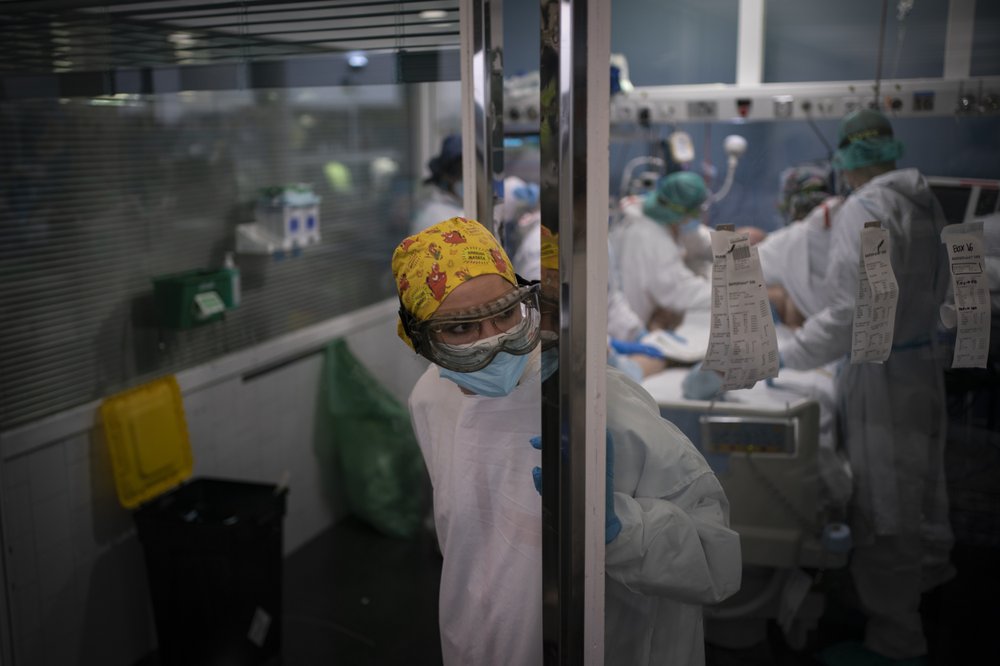
In this Jan. 19, 2021 file photo, a health worker looks out from an ICU unit as a COVID-19 patient receives treatment in the Hospital del Mar, in Barcelona, Spain. (AP Photo/Felipe Dana)
The most affected group of health care workers, according to the study, were nurse’s aides and nurses, who are overwhelmingly women and often immigrants. They spent more time with dying COVID-19 patients, faced poor working conditions and salaries and feared infecting family members.
Desirée Ruiz is the nurse supervisor at Hospital del Mar’s critical care unit. Some nurses on her team have asked to take time off work, unable to cope with the constant stress and all the deaths.
To prevent infections, patients are rarely allowed family visits, adding to their dependency on nurses. Delivering a patient’s last wishes or words to relatives on the phone is especially challenging, Ruiz said.
“This is very hard for … people who are holding the hand of these patients, even though they know they will end up dying,” she said.
Ruiz, who organizes the nurses’ shifts and makes sure the ICU is always staffed adequately, is finding it harder and harder to do so.
A COVID-19 patient receives treatment in the ICU of the Hospital del Mar, in Barcelona, Spain, Tuesday, Jan. 19, 2021. (AP Photo/Felipe Dana)
Unlike in the summer, when the number of cases fell and health workers were encouraged to take holidays, doctors and nurses have been working incessantly since the fall, when virus cases picked up again.
The latest resurgence has nearly doubled the number of daily cases seen in November, and Spain now has the third-highest COVID-19 infection rate in Europe and the fourth-highest death toll, with more than 55,400 confirmed fatalities.
But unlike many European countries, including neighboring Portugal, the Spanish health minister has for now ruled out the possibility of a new lockdown, relying instead on less drastic restrictions that aren’t as damaging to the economy but take longer to decrease the rate of infections.
Alonso fears the latest surge of virus patients could be as detrimental to the mental health of medical staff as the shock of the pandemic’s first months.
“If we want to be cared for adequately, we also need to take care of the health care workers, who have suffered and are still suffering,” he said.
Charoen Pokphand Foods PCL (CP Foods) has issued additional preventive measures against the spread of new coronavirus (COVID-19), to assure consumers of food safety.
Mr. Siripong Arunrattana, Chief Operating Officer – Livestock Business as chairman of CP Foods Covid-19 Monitoring and Management Center, revealed that additional strict preventive measures would be implemented at office buildings, farms and other operating sites in response to the government’s imposition of stringent rules in some areas with high infection rates. CP Foods has worked closely with government agencies to ensure compliance and new guidelines have been issued to all operating sites.
Under the new guidelines, CP Foods requires all employees and workers to: 1) report their timeline in “CPF Connect” application on a daily basis as well as the government-sponsored “Thaichana” and “MorChana” applications, to facilitate risk assessment and handling in case of entry into areas at risk of COVID-19 infections 2) follow health instructions like wearing face masks all the time, eating clean and safe food, keeping at least 2 meters of distance from others, and correctly and regularly washing hands and 3) work from home to reduce the density and lower the probability of the spread of the COVID-19.
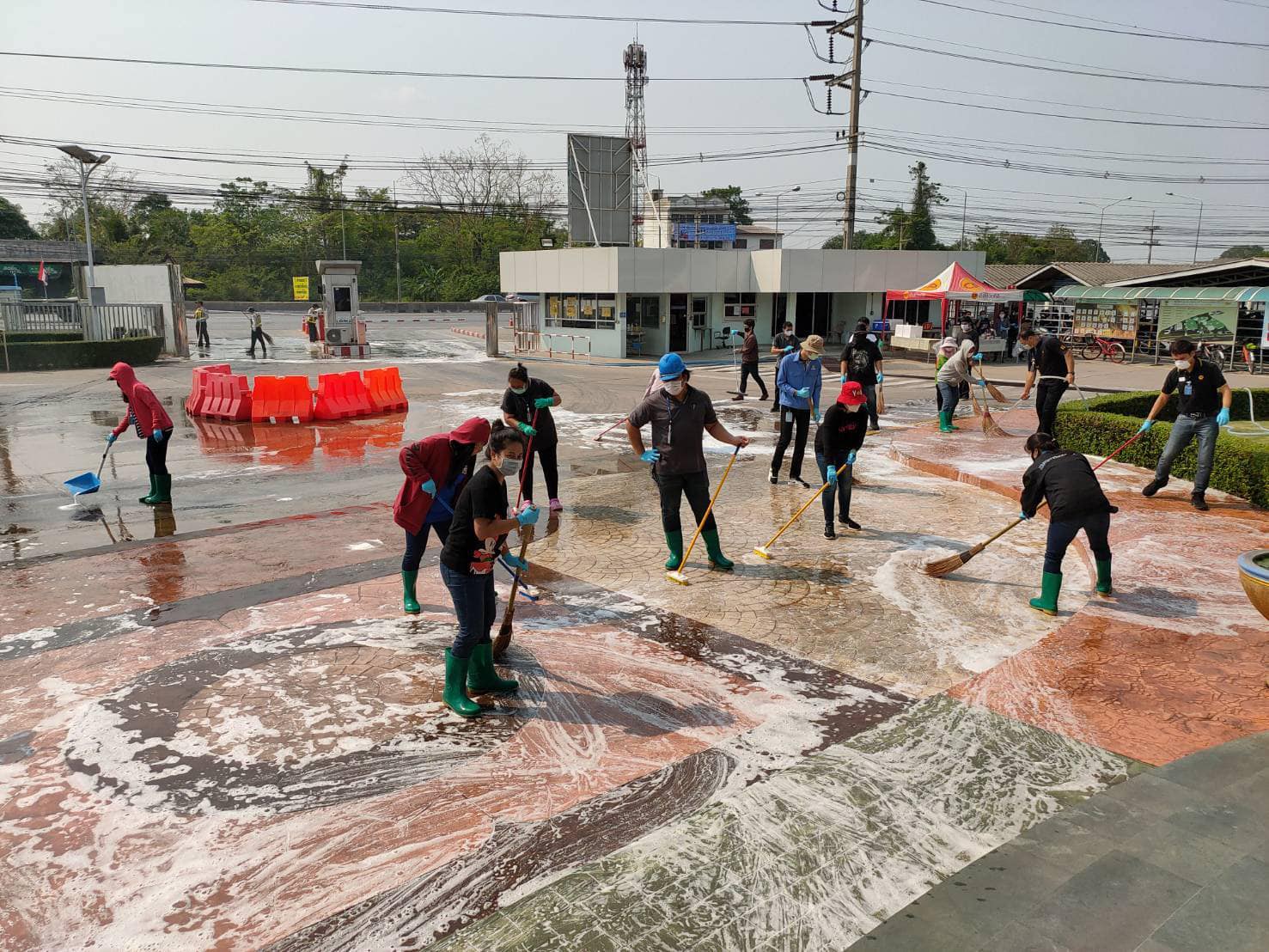
For maximum safety, CP Foods issued new orders that demand all workplaces to: 1) implement stringent screening process for outside delivery persons and providing them reserved space to reduce the probability of the spread 2) increase cleaning frequency to at least every 30 minutes 3) keep employees in canteens at least 2 meters apart from others and barring them from sharing eating tools 4) clearly mark the floor to inform people of the acceptable safe social distance at all areas where congestion is likely and 5) organize weekly Big Cleaning activities that include air-conditioner cleaning to reduce the spread of COVID-19.
“CP Foods outlines the following measures to stop the spread if an employee at office buildings, farms or other businesses contract COVID-19: 1) close off the area for Big Cleaning and disinfectant that include all materials touched by the employee and 2) put his/her co-workers under 14-day quarantine,” Mr. Siripong said.
He added that CP Foods has placed emphasis on safety for both Thai and foreign workers since the outbreak in early March 2020. In preparing food for migrant workers, the company delivers separate meal sets. Thai workers have been urged not to use public transportation services. All operating sites – feed mills, farms and processing plants – must exercise CP Foods safety measures to assure consumers that CP Foods uses advanced technology and its products meet international standards and allow traceability throughout the supply chain.
As a world-class food producer, CP Foods issued the new guidelines on top of its preventive measures, specifically to protect workers in all dimensions. The stringent rules were implemented out of realization that workers’ health and safety is the heart of the operations and a guarantee of zero disruption to the Company’s objective in delivering sufficient volume of quality and safe food for all.
This April 1, 2013 file photo shows talk show host Larry King attends a season-opening baseball game between the Los Angeles Dodgers and the San Francisco Giants in Los Angeles. (AP Photo/Jae C. Hong, File)
“Someone asked me the other day, `What do you want your obit to read?′ I read obituaries every day. Today there was two 83s, an 81, an 87, and a 71. I see the ages right away. I wanted my obit to read, `Oldest man who ever lived passed away today. He was shot in the head and died immediately by an angry husband as he was sleeping with the former Playmate of the Year. He was 136 years old. It took three days to wipe the smile off his face.′” – Larry King, 2017.
LOS ANGELES (AP) — Larry King, the suspenders-sporting everyman whose broadcast interviews with world leaders, movie stars and ordinary Joes helped define American conversation for a half-century, died Saturday. He was 87.
King died at Cedars-Sinai Medical Center in Los Angeles, Ora Media, the studio and network he co-founded, tweeted. No cause of death was given, but CNN reported Jan. 2 that King had been hospitalized for more than a week with COVID-19. His son Chance also confirmed King’s death,CNN reported.
A longtime nationally syndicated radio host, from 1985 through 2010 he was a nightly fixture on CNN, where he won many honors, including two Peabody awards.
With his celebrity interviews, political debates and topical discussions, King wasn’t just an enduring on-air personality. He also set himself apart with the curiosity he brought to every interview, whether questioning the assault victim known as the Central Park jogger or billionaire industrialist Ross Perot, who in 1992 rocked the presidential contest by announcing his candidacy on King’s show.
In this Oct. 7, 1999 file photo, Donald Trump, right, is interviewed by Larry King during a taping of “Larry King Live,” in New York. (AP Photo/Marty Lederhandler, File)
In its early years, “Larry King Live” was based in Washington, which gave the show an air of gravitas. Likewise King. He was the plainspoken go-between through whom Beltway bigwigs could reach their public, and they did, earning the show prestige as a place where things happened, where news was made.
King conducted an estimated 50,000 on-air interviews. In 1995 he presided over a Middle East peace summit with PLO Chairman Yasser Arafat, King Hussein of Jordan and Israeli Prime Minister Yitzhak Rabin. He welcomed everyone from the Dalai Lama to Elizabeth Taylor, from Mikhail Gorbachev to Barack Obama, Bill Gates to Lady Gaga.
Especially after he relocated to Los Angeles, his shows were frequently in the thick of breaking celebrity news, including Paris Hilton talking about her stint in jail in 2007 and Michael Jackson’s friends and family members talking about his death in 2009.
King boasted of never overpreparing for an interview. His nonconfrontational style relaxed his guests and made him readily relatable to his audience.
“I don’t pretend to know it all,” he said in a 1995 Associated Press interview. “Not, `What about Geneva or Cuba?′ I ask, `Mr. President, what don’t you like about this job?′ Or `What’s the biggest mistake you made?′ That’s fascinating.”
In this Dec. 16, 1999 file photo, Republican presidential candidate Texas Gov. George W. Bush jokes with CNN’s Larry King after finishing the “Larry King Live” show from the Wildhorse Saloon in Nashville, Tenn. (AP Photo/John Russell, file)
At a time when CNN as the lone player in cable news was deemed politically neutral, and King was the essence of its middle-of-the-road stance, political figures and people at the center of controversies would seek out his show.
And he was known for getting guests who were notoriously elusive. Frank Sinatra, who rarely gave interviews and often lashed out at reporters, spoke to King in 1988 in what would be the singer’s last major TV appearance. Sinatra was an old friend of King’s and acted accordingly.
“Why are you here?” King asks. Sinatra responds, “Because you asked me to come and I hadn’t seen you in a long time to begin with, I thought we ought to get together and chat, just talk about a lot of things.”
King had never met Marlon Brando, who was even tougher to get and tougher to interview, when the acting giant asked to appear on King’s show in 1994. The two hit it off so famously they ended their 90-minute talk with a song and an on-the-mouth kiss, an image that was all over media in subsequent weeks.
In this Feb. 15, 2000 file photo, Larry King, host of CNN’s Larry King Live, asks a question to the Republican presidential candidates, from left, Sen. John McCain, Alan Keyes, and Gov. George W. Bush of Texas, during the Republican presidential debate in Columbia, S.C. (AP Photo/Eric Draper, Pool)
After a gala week marking his 25th anniversary in June 2010, King abruptly announced he was retiring from his show, telling viewers, “It’s time to hang up my nightly suspenders.” Named as his successor in the time slot: British journalist and TV personality Piers Morgan.
By King’s departure that December, suspicion had grown that he had waited a little too long to hang up those suspenders. Once the leader in cable TV news, he ranked third in his time slot with less than half the nightly audience his peak year, 1998, when “Larry King Live” drew 1.64 million viewers.
His wide-eyed, regular-guy approach to interviewing by then felt dated in an era of edgy, pushy or loaded questioning by other hosts.
Meanwhile, occasional flubs had made him seem out of touch, or worse. A prime example from 2007 found King asking Jerry Seinfeld if he had voluntarily left his sitcom or been canceled by his network, NBC.
“I was the No. 1 show in television, Larry,” replied Seinfeld with a flabbergasted look. “Do you know who I am?”
Always a workaholic, King would be back doing specials for CNN within a few months of performing his nightly duties.
He found a new sort of celebrity as a plainspoken natural on Twitter when the platform emerged, winning over more than 2 million followers who simultaneously mocked and loved him for his esoteric style.
“I’ve never been in a canoe. #Itsmy2cents,” he said in a typical tweet in 2015.
In this Jan. 26, 1994 file photo, Oliver North talks to television show host Larry King prior to the start of CNN’s ‘Larry King Live’ in Washington. (AP Photo/Shayna Brennan, File)
His Twitter accountwas essentially a revival of a USA Today column he wrote for two decades full of one-off, disjointed thoughts. Norm Macdonald delivered a parody version of the column when he played King on “Saturday Night Live,” with deadpan lines like, “The more I think about it, the more I appreciate the equator.”
King was constantly parodied, often through old-age jokes on late-night talk shows from hosts including David Letterman and Conan O’Brien, often appearing with the latter to get in on the roasting himself.
King came by his voracious but no-frills manner honestly.
He was born Lawrence Harvey Zeiger in 1933, a son of Jewish immigrants from Eastern Europe who ran a bar and grill in Brooklyn. But after his father’s death when Larry was a boy, he faced a troubled, sometimes destitute youth.
A fan of such radio stars as Arthur Godfrey and comedians Bob & Ray, King on reaching adulthood set his sights on a broadcasting career. With word that Miami was a good place to break in, he headed south in 1957 and landed a job sweeping floors at a tiny AM station. When a deejay abruptly quit, King was put on the air — and was handed his new surname by the station manager, who thought Zeiger “too Jewish.”
A year later he moved to a larger station, where his duties were expanded from the usual patter to serving as host of a daily interview show that aired from a local restaurant. He quickly proved equally adept at talking to the waitresses, and the celebrities who began dropping by.
By the early 1960s King had gone to yet a larger Miami station, scored a newspaper column and become a local celebrity himself.
At the same time, he fell victim to living large.
“It was important to me to come across as a ‘big man,”’ he wrote in his autobiography, which meant “I made a lot of money and spread it around lavishly.”
He accumulated debts and his first broken marriages (he was married eight times to seven women). He gambled, borrowed wildly and failed to pay his taxes. He also became involved with a shady financier in a scheme to bankroll an investigation of President John Kennedy’s assassination. But when King skimmed some of the cash to pay his overdue taxes, his partner sued him for grand larceny in 1971. The charges were dropped, but King’s reputation appeared ruined.
King lost his radio show and, for several years, struggled to find work. But by 1975 the scandal had largely blown over and a Miami station gave him another chance. Regaining his local popularity, King was signed in 1978 to host radio’s first nationwide call-in show.
Originating from Washington on the Mutual network, “The Larry King Show” was eventually heard on more than 300 stations and made King a national phenomenon.
A few years later, CNN founder Ted Turner offered King a slot on his young network. “Larry King Live” debuted on June 1, 1985, and became CNN’s highest-rated program. King’s beginning salary of $100,000 a year eventually grew to more than $7 million.
A three-packs-a-day cigarette habit led to a heart attack in 1987, but King’s quintuple-bypass surgery didn’t slow him down.
Meanwhile, he continued to prove that, in his words, “I’m not good at marriage, but I’m a great boyfriend.”
In this Thursday, Aug. 26, 1999, file photo, talk show host Larry King wipes his eyes after laughing at a joke by comedy legend Jerry Lewis, on the set of “Larry King Live” at CNN Studios in the Hollywood section of Los Angeles. (AP Photo/Chris Pizzello, File)
He was just 18 when he married high school girlfriend Freda Miller, in 1952. The marriage lasted less than a year. In subsequent decades he would marry Annette Kay, Alene Akins (twice), Mickey Sutfin, Sharon Lepore and Julie Alexander.
In 1997, he wed Shawn Southwick, a country singer and actress 26 years his junior. They would file for divorce in 2010, rescind the filing, then file for divorce again in 2019.
The couple had two sons, King’s fourth and fifth kids, Chance Armstrong, born in 1999, and Cannon Edward, born in 2000. In 2020, King lost his two eldest children, Andy King and Chaia King, who died of unrelated health problems within weeks of each other.
He had many other medical issues in recent decades, including more heart attacks and diagnoses of type 2 diabetes and lung cancer.
Through his setbacks he continued to work into his late 80s, taking on online talk shows and infomercials as his appearances on CNN grew fewer.
“Work,” King once said. “It’s the easiest thing I do.”
Funeral arrangements and a memorial service will be announced later in coordination with the King family, “who ask for their privacy at this time,” according to the tweet from Ora Media.
___
Former AP Television Writer Frazier Moore contributed biographical material to this report.
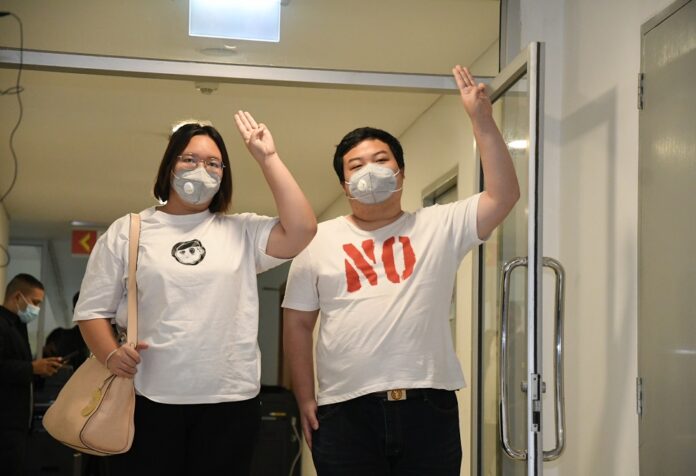
Pro-democracy activists Parit Chiwarak and Panusaya Sithijirawattanakul report to the police on Jan. 22, 2021, to hear charges of lese majeste and cybercrime pressed against them.
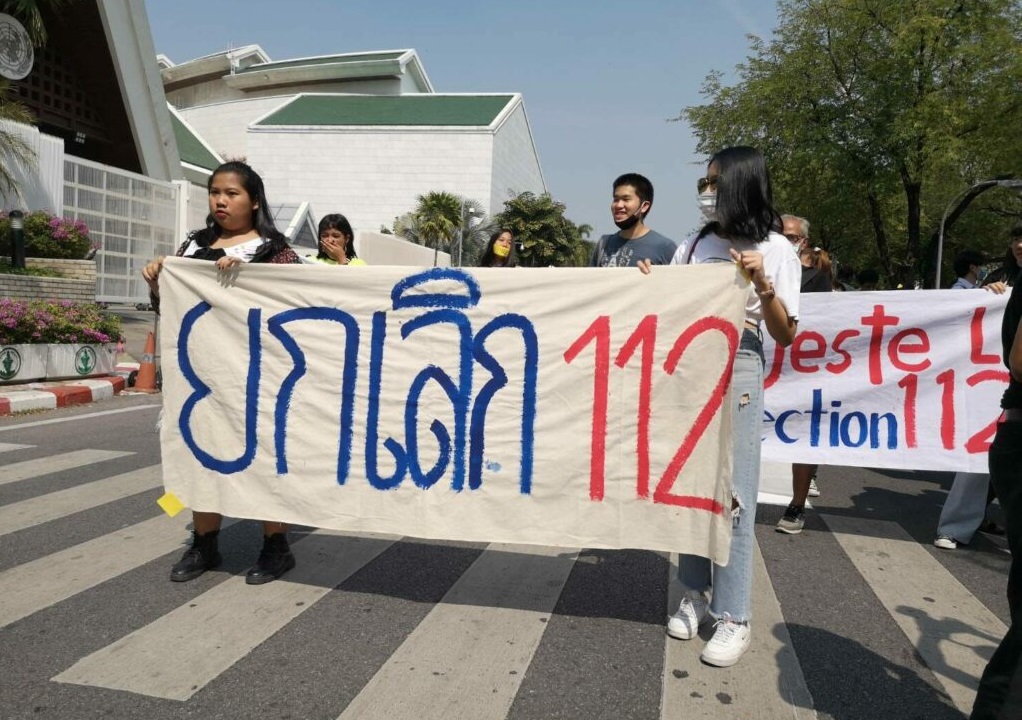
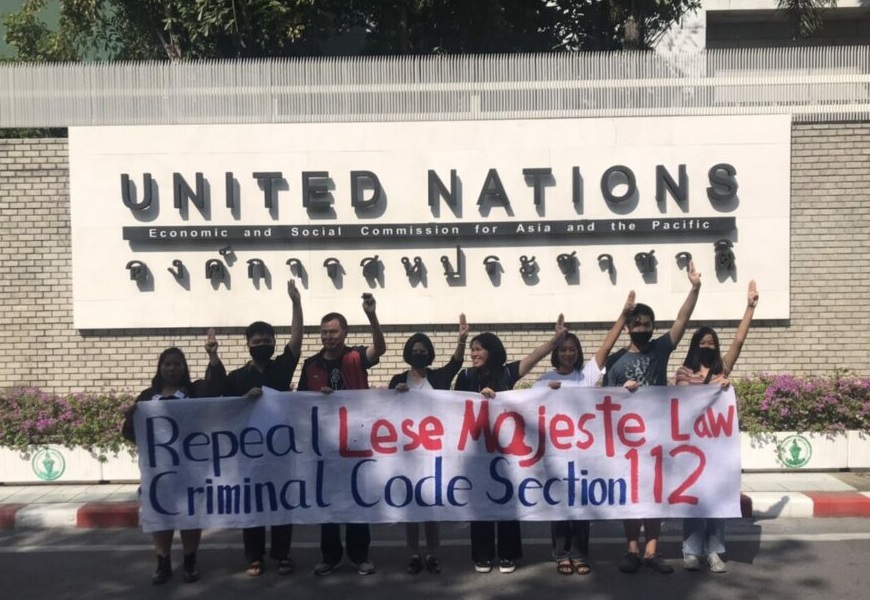
Many Thais who are against the lese majeste law have chosen different words to describe it. Many have done so since the new uptick in charges under the law – 55 people are now charged over the past few months.
The sentencing of a 64-year-old woman and former government official, Anchan Preelert, to 43 years in prison on Tuesday for sharing anti-monarchy audio files 29 times sent a shockwave beyond Thailand and was reported widely.
London-based Amnesty International as well as free-speech advocacy group ARTICLE 19 issued strong-worded statements.
“In recent weeks, the Thai government has launched numerous new investigations against perceived critics of the monarchy and has moved quickly to conclude cases that have laid dormant for several years. The authorities’ renewed enthusiasm for lese majeste cases marks a dark turn in an already disturbing crackdown on freedom of expression in Thailand,” said Matthew Bugher, head of Asia Programme at ARTICLE 19 in the statement released on Thursday.
In Bangkok, veteran Southeast Asia correspondent for BBC Jonathan Head BBC expressed his own views on Twitter on Friday after the applied bail by Anchan was rejected with the court citing that to allow her to be bailed, would be “causing trauma to those loyal to the Thai monarchy”.
“This sums up the madness of lese majeste, and the warped reasoning it produces. How many royalists were ‘traumatized’ by the podcasts this lady posted? How many even heard them? Does the judge know?” Head’s tweet partly read.
This sums up the madness of lese majeste, and the warped reasoning it produces. How many royalists were ‘traumatized’ by the podcasts this lady posted? How many even heard them? Does the judge know? Any why ‘traumatized’ simply by critical comments about the monarchy? https://t.co/Rc9jTXcL0V
The word “madness” was chosen by Head to describe the law. What about you? What word would you choose?
A caveat is that one should not be surprised if some Thais choose words like “just”, “fair”, or “appropriate” for there are royalists and ultra-royalists who think the law is reasonable and needed to protect the monarchy.
And this is where Thailand stands, it’s deeply divided still and no one should assume that there exists a consensus on what to do with the law.
Last week, I was told by Move Forward Party secretary general Chaitawat Tulahorn on the phone that his party will soon push to amend the lese majeste law, along with other libel laws, in parliament. But even that, it would be difficult to expect support from other opposition parties, not to mention the ruling party and its coalition partners.
Demonstrators call for abolition of lese majeste offense in front of the United Nations office in Bangkok on Dec. 10, 2020.
When I asked Pichai Naripthaphan, a deputy leader of the opposition Pheu Thai Party about whether his party would support such a move, Pichai sounded cautious and told: “We have yet to discuss the matter. The matter is sensitive.”
The chosen word is “sensitive”. Meanwhile deputy ruling Phalang Pracharath Party Paiboon Nititawan told me last week the party will definitely oppose any move to amend the law. I received a similar reply from Democrat Party spokesman Ramet Rattanachaweng on the same day.
This means Thailand is not at a tipping point where there exists a consensus as to what to do with the law yet.
The tipping point could arrive if more and more end up being charged and imprisoned, however.
On Wednesday, the Digital Economy and Society Ministry filed a lese majeste lawsuit against Progressive Movement leader Thanathorn Juanroongruangkit for questioning the government’s COVID-19 vaccination plan involving Siam Bioscience, a company wholly owned by the Crown, which was given the right to produce vaccines domestically through a contract with UK-based AstraZeneca.
Demonstrators call for abolition of lese majeste offense in front of the United Nations office in Bangkok on Dec. 10, 2020.
This led many to questions: how could a company owned by the Crown be protected under the lese majeste law when the law itself, which carries 15-year maximum imprisonment term, stated that the law protects the King, Queen, Heir apparent and Regent.
When a law ceases to become just in the eyes of enough people, it loses its efficacy. It draws more criticism and not just against the law, but the government and the monarchy as well.
At that point, the use of an unjust law will in fact become counter-productive. (I think it’s already the case.)
Judging from new phenomena like the reported young moviegoers not standing up to pay respect to the Royal Anthem played before film screening at cinemas (and I have seen that with my own eyes more than once over the past months) and the recent persisting public protests against the law, it could be said that Thailand is moving ever closer towards the tipping point.
The tipping point is likely the turning point for not just the controversial lese majeste law but Thailand and the monarchy itself.
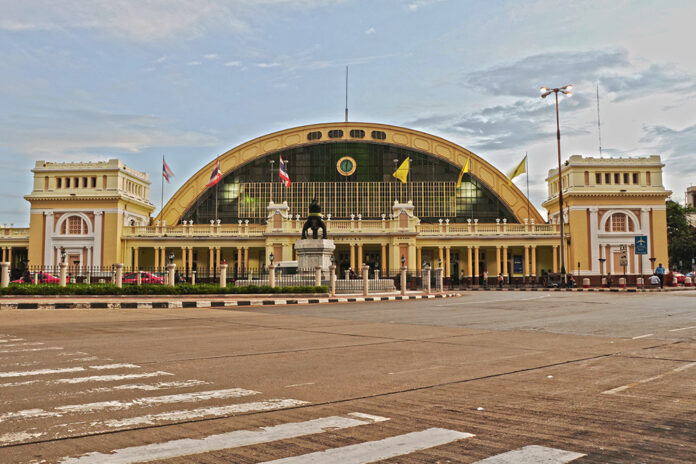
Exterior of Bangkok Railway Station, or Hua Lamphong. Photo: Supanut Arunoprayote / Wikimedia Commons
BANGKOK — The historic Bangkok Railway Station, or Hua Lamphong, will cease its operation later this year after a century of service, state railway officials said Friday.
The terminal will be closed down as soon as the newly built Bang Sue Grand Station opens to the public, possibly in November, according to public transport authorities. The abrupt announcement raised concerns that commuters, including many in the working class, will once again bear the brunt of chaos during the transition.
“We’re preparing plans for it,” State Railways of Thailand spokesman Aekkarat Sriarayanpong said by phone. “We’re still in the process of coordinating with relevant agencies. The Bang Sue Grand Station will become the country’s main transit hub so there are a lot of details to be considered.”
He said the plan was laid out by PM Prayut Chan-o-cha and transport minister Saksayam Chidchob, who want to see the sprawling complex of Bang Sue Grand Station becoming the new hub of rail transportation.
Bang Sue Grand Station is located about eight kilometers north of Hua Lamphong. Once it opens, the 341 billion baht station will serve all SRT regional train lines, the MRT Blue Line, and the Airport Rail Link, as well as any high-speed trains in the future.
Bang Sue Grand Station under construction.
Aekkarat could not give any further details about the plan, including the exact date of the closure. But transport minister Saksayam told reporters earlier this week that trains would start departing from Bang Sue Grand Station as early as November. He billed it as a solution to Bangkok’s traffic woes.
“Once the Red Line becomes operational this November, Hua Lamphong station will be closed immediately,” Saksayam said on Monday. “There will be no trains running on the ground into the city, so we can solve traffic problems as planned. This includes freight trains as well.”
The government has yet to make any official announcement on the matter. And there are already signs that the change will cause some inconvenience for the passengers.
Saksayam said certain train lines are not yet connected to the Bang Sue Grand Station. They will terminate at stations in the suburbs of Bangkok instead, and passengers will need to transfer to the Red Line trains to get into the city, he said.
“The Bang Sue Grand Station will become the center of the SRT rail network,” Saksayam said. “I have instructed the SRT to prepare integration plans of long-distance trains. For example, the SRT Southern Line will terminate at Bang Bumru station, where passengers can transfer to the Red Line and take a train ride to Bang Sue station.”
Hua Lamphong Station is nearly deserted on April 13, 2020, the first day of Thai New Year holidays amid the coronavirus outbreak.
The Red Line will consist of a 41 kilometers-long electrified commuter rail, connecting Bangkok’s suburbs of Taling Chan in the west and Rangsit in the north to Bang Sue.
Jirawat Jungwat, the founder of a Facebook page dedicated to public transportation developments, said the shutdown of Hua Lamphong station will cause inconvenience to commuters if there are no adequate backup plans by the transport authorities.
“Many people take trains to work in the capital daily. If trains are to be stopped at Bang Sue, there should be a shuttle service to link with Hua Lamphong,” Jirawat, who runs “Thailand Infrastructure” page, said by phone.
“Moreover, most of the existing trains are not designed for indoor stations like Bang Sue,” he said. “They produce a lot of exhaust which can fill up the platforms.”
Jirawat suggested commuter services should be allowed to run into Hua Lamphong, while leaving long-distance trains at Bang Sue. He also criticized Saksayam for seeing the public transport system as part of the traffic congestion in the capital.
Bang Sue Grand Station seen in September 2020.
“It’s a completely wrong mindset to lay blame on trains,” Jirawat said. “If people can’t conveniently take trains to the city center, they will end up on roads and cause even greater traffic problems. The minister should work out solutions first before announcing such a radical change.”
Bangkok Railway Station, or Hua Lamphong, opened to the public on June 25, 1916, and has since served as the starting point of train journeys to all regions of Thailand. The station was used by an average of 70,000 passengers per day before the pandemic struck in early 2020, severely affecting interprovincial travel.
The Neo-Renaissance building features a distinctive glass arch on its facade, a work by Mario Tamagno. The Italian architect also designed other icons in the capital such as the Ananta Samakhom Throne Hall and the Neilson Hays Library.
Officials had said that Hua Lamphong will be turned into a museum.
A screenshot of the CCTV footage of the four men who allegedly stole shoes from an apartment in Samut Prakan province.
Update: Police on Saturday said all of the four suspects, aged 15 – 17, were arrested and charged with theft.
SAMUT PRAKAN — Police on Friday they are seeking the arrests of four men who allegedly stole a pair of sneakers from an apartment in Samut Prakan province before returning them with an “I love you” sign in front of the security camera.
The four men stole the shoes from a woman’s residence in Bang Phli district on Jan. 10, police said. The woman later filed a police complaint and sent a security camera footage of the theft to the Line chat group for her apartment asking for information.
Of course, nothing gets the word out better than a Line group filled with neighbors.
Around 4am on Jan. 15, the four men returned to the front of the room and returned the stolen shoes, made sarang hae yo signs, waved a mocking goodbye to the CCTV, and fled the scene. The move convinced the victim and the police that the men must have been her neighbors.
“We interviewed more witnesses and have identified who the four men are,” Col. Wirot Tutso of Bang Phli police said by phone Friday. “They’re neighbors.”
Wirot added that police are applying for arrest warrants for the suspects. Charges of theft can be pursued even after the perpetrators return the stolen property.
Residents of the housing project also told reporters they’ve often been targeted with petty theft in the wee hours of the morning.
For the uninitiated, “sarang hae yo” means “I love you” in Korean. The gesture is popularized through the waves of K-pop music and dramas in Thailand.
In 2016, Bangkok’s then-police chief went as far as suggesting that rival gangs of vocational students use such “sarang hae yo” to communicate love instead of brawling with each other. To everyone’s surprise, the campaign failed.